Nejat Society
  • Home
  • Articles
  • Media
    • Cartoons
    • NewsPics
    • Photo Gallery
    • Videos
  • Publications
    • Books
    • Nejat NewsLetter
    • Pars Brief
  • About Us
  • Contact us
  • Editions
    • عربي
    • فارسی
    • Shqip
Nejat Society
Nejat Society
  • Home
  • Articles
  • Media
    • Cartoons
    • NewsPics
    • Photo Gallery
    • Videos
  • Publications
    • Books
    • Nejat NewsLetter
    • Pars Brief
  • About Us
  • Contact us
  • Editions
    • عربي
    • فارسی
    • Shqip
© 2003 - 2024 NEJAT Society. nejatngo.org
Duplicity of the MEK nature

The Lebanese advocate of Mujahedin_e Khalq defect the group

Lebanese cleric Allameh Sayed Mohamad Ali El Husseini had acted as the chief advisor to Maryam Rajavi on Islamic and Arabic issues. He participated in many events and meetings with Rajavi and she heaped praise on him for many years.

This week he came to Paris to take part in Islamic Scholars Against Terrorism week. While in Paris he met with a group of former MEK members and announced that he is no longer working for Rajavi and the MEK. He explained that as a cleric who believes in peace and harmony throughout the world the MEK deceived him into giving them his support.

He said now he has talked with people outside the MEK they have made it clear how he was fooled.

“I now see that the way the MEK act is not compatible with human rights or Islam. So, I went back and questioned them. I started with basic beliefs. I asked, ‘if you are Muslim why don’t you pray?’ They said ‘it is not important because the leadership is in charge of our sins’. Then I asked, ‘these things you did against your own members that made them leave you, what explanation do you have?’ They told me ‘they are all agents of the Iranian regime and you shouldn’t have been talking with them’. After this I realised they don’t want to explain themselves and are just evading my questions.”

The same day that El Husseini spoke out, the MEK quickly issued a long statement by the National Council of Resistance of Iran (NCRI) in Farsi and Arabic (because he didn’t say anything in English), swearing at him and saying, ‘he is an agent of the regime but we already knew that’. At same time, the MEK deleted every trace of his connection to them on their websites. Still they couldn’t erase quotes from him and the MEK in media like Al Arabiya and elsewhere.

After this issue was made public, many former MEK, including those in Albania, issued a joint statement of support for him. Some wrote open letters to Rajavi mocking her, saying ‘this trick that everyone is a saint while with you and when they leave they are an agent of regime doesn’t hold water, especially when you claim you already knew. Can you tell us now who the next agent is that you know about before they leave?’

Source: Iran Interlink weekly digest

July 16, 2017 0 comments
FacebookTwitterPinterestWhatsappTelegramSkypeEmail
Missions of Nejat Society

Nejat Society representatives in Interpol’s Project Kalkan meeting

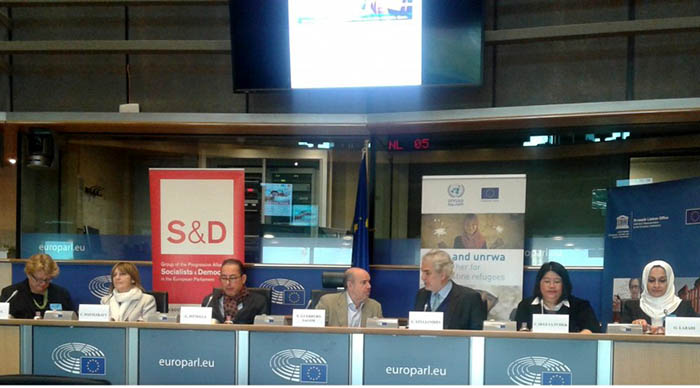
Three members of Nejat NGO participated the latest meeting of Interpol’s Project Kalkan hosted by Iran.

Representatives of 29 Interpol member countries were in Tehran to review cooperation and explore ways of enhancing technical assistance in combating terrorism within the framework of Project Kalkan.

The two day (10 and 11 July) meeting was the latest in a series of specialized exchanges, according to the Interpol website. Sharing best practices and identifying gaps in intelligence in order to better contain and disrupt transnational terrorist activities was also part of the bound-table sessions and cause study exchanges.

Interpol secretary General Jurgen Stock said the project created in 2004, represented a turning point in global information sharing on counter terrorism.

The meeting was attended by the Iranian Police Chief Brigadier General Hossein Ashtari and 75 security authorities of other countries.

A delegation from Nejat Society also attended the meeting. Ebrahim Khodabandeh and Zahra Mir Bagheri, former members of the Mujahedin Khalq Organization ( the MKO) and Narges Beheshti  the sister of an MKO member who is taken as hostage by the group leaders, participated the conference.

The delegation of Nejat Society had separate visits with security officials explaining how the cult of Rajavi functions as a terrorist group.

They warned the officials about the threat of the cult-like MKO for many countries including Iran, Albania, France and their neighbors.

Nejat Society representatives also held a photo exhibition on the crimes committed by the MKO. The photos could draw the attention of the security officials who were present at the event.

Khodabandeh who was a member of the cult of Rajavi for 23 years explained about the photos for Mr. Stock. He asked the Secretary General of Interpol to issue a statement on terror acts and cult-like attitudes of the MKO. Mr. Stock promised to be working on the issue.

Khodabandeh talked to most of counter terrorism officials from all over the world, informing them about the menaces of the Cult of Rajavi. He warned the representatives of Greece, Italy and Romania about the threat that might be caused by over 2000 brainwashed members of the MKO who are located in their neighboring country. The Greek representative replied that the issue is really crucial and not enough attention has been paid to it yet.

A representative from France told Khodabandeh that the French Counter terrorism police is still supervising the group, after its leader was brought to trial in June 2003. He admitted that unfortunately politics has functioned beyond security that Maryam Rajavi is free now.

Nejat delegation spoke of the pains and sufferings of the families whose loved ones are still imprisoned in the MKO camps, isolated from the free world. Ms. Narges Beheshti asked the authorities to aid her family and other families of MKO members contact their loved ones in the terrorist cult of Rajavi.

July 15, 2017 0 comments
FacebookTwitterPinterestWhatsappTelegramSkypeEmail
Iran Interlink Weekly Digest

Iran Interlink Weekly Digest – 196

++ Lebanese cleric Allameh Sayed Mohamad Ali El Husseini had acted as the chief advisor to Maryam Rajavi on Islamic and Arabic issues. He participated in many events and meetings with Rajavi and she heaped praise on him for many years. This week he came to Paris to take part in Islamic Scholars Against Terrorism week. While in Paris he met with a group of former MEK members and announced that he is no longer working for Rajavi and the MEK. He explained that as a cleric who believes in peace and harmony throughout the world the MEK deceived him into giving them his support. He said now he has talked with people outside the MEK they have made it clear how he was fooled. “I now see that the way the MEK act is not compatible with human rights or Islam. So, I went back and questioned them. I started with basic beliefs. I asked, ‘if you are Muslim why don’t you pray?’ They said ‘it is not important because the leadership is in charge of our sins’. Then I asked, ‘these things you did against your own members that made them leave you, what explanation do you have?’ They told me ‘they are all agents of the Iranian regime and you shouldn’t have been talking with them’. After this I realised they don’t want to explain themselves and are just evading my questions.” The same day that El Husseini spoke out, the MEK quickly issued a long statement by the National Council of Resistance of Iran (NCRI) in Farsi and Arabic (because he didn’t say anything in English), swearing at him and saying, ‘he is an agent of the regime but we already knew that’. At same time, the MEK deleted every trace of his connection to them on their websites. Still they couldn’t erase quotes from him and the MEK in media like Al Arabiya and elsewhere. After this issue was made public, many former MEK, including those in Albania, issued a joint statement of support for him. Some wrote open letters to Rajavi mocking her, saying ‘this trick that everyone is a saint while with you and when they leave they are an agent of regime doesn’t hold water, especially when you claim you already knew. Can you tell us now who the next agent is that you know about before they leave?’

++ Mehdi Hassan’s article ‘Here’s why Washington hawks love this cultish Iranian exile group’ was translated by prominent translator N Nourizadeh. This was published by Iran-Interlink and has since been widely circulated and referenced in Farsi and Arabic articles.

++ On behalf of Nejat Society Ebrahim Khodabandeh, Zahra Mirbagheri and Narges Beheshti attended this week’s Kalkan (Interpol) conference which is held every year to build cooperation between countries to fight crime and terrorism. The conference was attended by 75 high ranking security and anti-terror officials from 29 countries. Khodabandeh talked with Jürgen Stock, Secretary General of Interpol, about the issue of extradition, explaining how his own extradition to Iran was in fact not a bad thing. Nejat Society advocated on behalf of families of MEK members who say they wouldn’t mind if their loved ones were extradited to Iran because the issue is no longer about their crimes for which some have been pardoned. They stressed that nobody in Iran intends to do them harm. What the families want is a way to rescue their loved ones and bring them home. Beheshti talked about her two brothers. One was killed inside Iraq by the MEK for disobedience and the other has been transferred to Albania where she has no access to him and doesn’t know what hardship he is suffering. She said, “I don’t want to lose my other brother. If there is anything the law can do to take him out of the hands of the MEK we would appreciate it”.

In English:

++ In his above-mentioned article published in The Intercept, Mehdi Hassan focuses on what makes the MEK really despicable and dangerous – it is a cult. “Have U.S. political, intelligence, and military elites learned nothing from their Mesopotamian misadventure and the disastrous contribution of Iraqi exiles such as Chalabi? Well, the brainwashed fanatics of the MEK make the INC look like the ANC.

“It is difficult, therefore, to disagree with the verdict of Elizabeth Rubin of the New York Times, who visited the MEK at Camp Ashraf back in 2003 and later ‘spoke to men and women who had escaped from the group’s clutches’ and ‘had to be reprogrammed’. The MEK, warned Rubin in 2011, ‘is not only irrelevant to the cause of Iran’s democratic activists, but a totalitarian cult that will come back to haunt us’.”

++ MEK former Anne Khodabandeh gave a presentation at the International Cultic Studies Association (ICSA) annual conference in Bordeaux on July 1st. Drawing on her own experience inside the MEK and then as a counter-cult activist and campaigner, Khodabandeh linked the current need for public and professional awareness of how radicalisation takes place to the wider need to criminalise the deceptive and brainwashing behaviours behind all cases of cultic abuse.

++ Jim Lobe in Lobelog examines the latest ‘foreign policy’ trend in relation to Iran. The title ‘New Neocon Mantra: Iran, like Soviet Union, on Verge of Collapse’, is self-explanatory. Lobe deconstructs the argument and finds it devoid of any substance. The article, however, lists a number of anti-Iran pundits who are making this claim and their links to the MEK. Lobe concludes that it “makes me think that the White House is indeed seriously considering supporting the group as at least one part of its Iran policy. I suspect we’ll find out soon enough.”

++ Mazda Parsi for Nejat Society warns ‘Iran hates the MEK even if it buys the support of more retired figures’. Parsi points out that although support for the MEK from Arab figures like Prince Turki al-Faisal who are known for their animosity towards Iran is to be expected, American sponsors are motivated by money. “The Arabia Deserta correspondent [Ghuloum] accurately believes that the MKO’s and its supporters’ propaganda for regime change in Iran is originated in their ‘self-delusion’ about Iran and the Middle East. ‘They all must know it is pure nonsense, but the again money is too good for all participants, and the futile message sounds good to many extreme right-wing US media outlets,’ he states. ‘Besides, the Israeli Lobby and the newly influential Saudi lobby and the sources of oil money in Washington like it’.”

++ In an interview in Tehran Times Iran’s Foreign Ministry spokesman, Bahram Qassemi, talks about Iran’s relations with the European Union. He points out that with the increasing economic and trade cooperation, the French government “should have come to an understanding about Mojahedin-e Khalq as an extreme and violent group with a repugnant record heavy with terrorist activities, and should clear up this ambiguous point in mutual relations. Needless to say, the Iranian people know that such a retrogressive and decadent organization with reactionary beliefs, whose history is filled with terror, killings and sectarianism, has died long time ago. Despite the growing relations between the two countries, this is a moot point in the French government’s record because terrorism and violence and anti-terrorism battle is not limited to one specific group or region. Tehran’s protest to Paris is for France’s double standards.”

++ Habilian Association, which represents victims of MEK terrorist violence in Iran, focuses attention on the extremist views of Newt Gingrich the former Speaker of the U.S. House of Representatives and unsuccessful GOP presidential candidate who is a vocal advocate of right-wing social policies and a militarist U.S. defence posture. Comments by Gingrich reveal him to be a “sponsor of terrorism” and an Islamophobe. Gingrich left a campaign trail to fly to Paris to attend Maryam Rajavi’s Villepinte show. “The timing of Gingrich’s appearance at the MEK gala was awkward for Trump, since the candidate had spent part of the previous week arguing that the late Iraqi dictator, while being ‘a really bad guy’, deserved some credit because ‘he killed terrorists’.

“’He did that so good’, Trump told supporters in North Carolina on Tuesday. ‘They didn’t read them the rights; they didn’t talk; they were a terrorist, it was over’.

“Four days later, Gingrich reminded the world that Saddam, in fact, had a history of support for terrorist groups like the MEK, whose members helped foment the 1979 revolution, in part by killing American civilians working in Tehran, and then lost a bitter struggle for power to the Islamists.”

++ Genc Milloja writing in the Albanian Daily News points out that the attendance of three Albanian ministers at the MEK Villepinte event is contrary to their government’s foreign policy in relation to Iran. “Albania’s foreign policy has never got involved in other countries’ internal affairs.” Instead, a visit by Foreign Minister, Ditmir Bushati to Tehran in January this year laid down positive expectations for future trade, tourism and cultural relations in a strengthened legal framework of cooperation. At the same time, the article points out that the presence of 3000 MEK in Albania presents a security threat for Europe which will prevent any moves toward Albania’s accession into the EU.

++ Tasnim News reported President Rouhani’s speech in a cabinet session on Wednesday. Rouhani talked about the recent Daesh terrorist attack in Tehran and the liberation of Mosul. He denounced the savagery of Daesh in Iraq and Syria, saying “the Iranian people are ‘not unfamiliar’ with such savage acts. Iran witnessed ‘slayers’ similar to the Daesh terrorists in the early years after the revolution, the president said, referring to MKO.”

July 14, 2017

July 15, 2017 0 comments
FacebookTwitterPinterestWhatsappTelegramSkypeEmail
Mujahedin Khalq Organization as a terrorist group

Iran Biggest Victim of Terrorism: Police Official

Iran has been the biggest victim of terrorism in recent decades as various terrorist groups have killed its people, a police official said, noting, however, that the country has spared no effort to improve security across the region.

“The Islamic Republic of Iran has made great efforts to provide security in the region over the past few decades. Meanwhile, it has been also the biggest victim of terrorism,” Major Najafi, representing Iran’s Police, said at a regional meeting of the International Police Organization (INTERPOL), held in Tehran on Monday.

He said many terrorist groups have harmed Iran after the victory of the Islamic Revolution in 1979, and have killed thousands of Iranian nationals from different walks of life.

Pointing to the supports that the terrorist groups have received from both the regional and Western governments to damage Iran, Major Najafi mentioned Daesh (ISIL) terrorist group, Jaish al-Adl, al-Nusra Front (also known as the Jabhat Fatah al-Sham), PJAK (the branch of PKK terrorist group in Iran), and the terrorist Mojahedin-e Khalq Organization (MKO), which alone has assassinated more than 12,000 Iranians.

The 13th working group meeting of Interpol under the framework of Project Kalkan kicked off in Tehran on Monday, focusing on tactics to fight off terrorism.

Counter-terrorism experts from 29 countries have attended the two-day meeting to discuss the ways to strengthen regional and international cooperation in the fight against foreign terrorist fighters (FTFs).

P.S: a delegation from Nejat Society also participated the Project Kalkan meeting. The delegation consisted of Mr. Ebrahim Khodabandeh, Ms. Zahra Sadat Mir Bagheri and Ms. Narges Beheshti. The Nejat Delegation met different security officials of the participating countries and illuminated the characteristics of the Mujahedin-e Khalq group as a destructive terror cult.

July 13, 2017 0 comments
FacebookTwitterPinterestWhatsappTelegramSkypeEmail
Iran

Iran: Iran-EU ties speeding up. France should have come to an understanding about MEK

Exclusive – Iran and the European Union can make good trade partners as their economics are “complementary”, Foreign Ministry spokesman Bahram Qassemi says.

“The complementary status of Iran’s economy with those of certain European countries” has, among others, provided a fertile ground for economic cooperation to flourish, he tells The Tehran Times.

In what follows, a full transcript of the interview has been given:

Q: How do you evaluate the current state of Iran-EU relations and its future? What is symbolic significance of the new deal between the National Iranian Oil Company and France’s Total?

A: Presently, relations between Iran and Europe are in a favorable condition. Iran and European countries, or generally the European Union, have many things in common in terms of politics, economy and even culture, despite having some disagreements which might be rooted in cultural, historical, and geographical differences between the Christian Europe and the Islamic Iran.

Given the long history of Iran’s relations with this continent’s important countries; absence of negative public opinion among Iranians towards certain important European countries such as Germany, Italy, Spain, Sweden, France and so forth; the complementary status of Iran’s economy with those of certain European countries; a considerable number of Iranian diaspora in the continent; industrial, technical and financial opportunities in many EU countries; a more realistic understanding of Iran’s place in the world among Europeans and their attentiveness to Iran’s history, culture and civilization have all provided the opportunity to explore more avenues for cooperation.

Therefore, if Europe manages to remain unaffected by some ups and downs as well as certain international developments according to its independent European outlook in analyzing the situation in Iran and the region, one can be hopeful about the future of such relations and expansion of ties. Of course, after resolving Iran’s nuclear issues within the framework of negotiations between Iran and the 5+1 group, Iran’s economic relations started to flourish. Such trend is speeding up.

Of course, at the wake of BARJAM (the Persian acronym for the Iran nuclear deal), the groundwork was laid for big European and non-European companies to cooperate with Iran. Given their take on Iran’s status and potential, these companies are making attempts to make a comeback to Iran’s lucrative market.

Total’s return to Iran in the current situation is an example of this. Its presence in Iran, in addition to being an economic activity or cooperation, conveys a message that sanctions have come to an end in Iran, and Europe is determined about continued implementation of BARJAM. This shows growing awareness about Iran’s vital status as a stable, wealthy and influential country in the region and world.

Q: What’s your analysis of the recent report by the UN secretary general to the Security Council regarding Iran’s compliance with BARJAM and isolation of the U.S. at the council?

A: At the recent meeting in the UN Security Council, an opportunity was created for the world and perceptive political and international analysts to see how the European countries defend the continued implementation of BARJAM and cooperation with Iran, while observing America’s isolation as well as its abstract and unrealistic and hostile outlook [toward Iran].

Q: Despite the rapidly increasing ties between Tehran and Paris, Foreign Minister Zarif has described the Mojahedin-e Khalq (MEK or MKO) organization as a “moot point” in mutual relations. Has Iran expressed concerns over this issue to the French government? If so, have they responded?

A: It seems that the French government should have come to an understanding about Mojahedin-e Khalq as an extreme and violent group with a repugnant record heavy with terrorist activities, and should clear up this ambiguous point in mutual relations. Needless to say, the Iranian people know that such a retrogressive and decadent organization with reactionary beliefs, whose history is filled with terror, killings and sectarianism, has died long time ago. Despite the growing relations between the two countries, this is a moot point in the French government’s record because terrorism and violence and anti-terrorism battle is not limited to one specific group or region. Tehran’s protest to Paris is for France’s double standards.

Q: A Canadian court of appeal has upheld a previous ruling by a U.S. court, which required Iran to pay around $1.7 billion in damages to “American victims of terrorism.” What’s your reaction?

A: The Islamic Republic regards recognition of U.S. courts’ rulings in absentia as counter to the international judicial norms in such cases. Principally, the issuance of a ruling against a foreign country runs counter to the principle of equality of states and is in violation of their immunity under international law. The Islamic Republic of Iran reserves the right to oppose the ruling and follow up on it. Obviously, irrespective of internal power divisions in Canada, the Canadian administration would be directly liable for any possible material and spiritual damage caused by various branches of the country as a result of such measures.

Q: The Qatar crisis still remains unresolved. Since the crisis, what role has Iran played through consultations with other countries? In case the situation worsens, how would Tehran react?

A: Iran attaches great importance to the security and stability of the region and since the beginning of the Persian Gulf crisis, the Islamic Republic has been in extensive consultations with various countries in the region and across the world. Given the numerous wars and conflicts in the region in recent decades, it cannot endure another war or crisis. Iran has always endeavored in the path of peace, stability and security of the region. We hope that the problems among countries get resolved through dialogue and peaceful means. We wish for peace, political and economic development and safety of our neighbors and other countries across the world.

Q: Would tension between Iran and Saudi Arabia intensify now that Mohammed bin Salman, who is hostile to Iran, has been promoted to the position of crown prince?

A: Iran is not interested in heightening tension with Saudi Arabia, and hopes that the rulers of that country come to the realization that with increased tensions and hostility, they would lose more than others. Undoubtedly, history has taught all countries, especially in the region, that relying on trans-regional powers would not bring security and stability. Stability and security cannot be bought. Stability and security are possible through interaction with neighbors and in a context of multilateral regional cooperation where all countries get involved. The appointment of the new crown prince in Saudi Arabia is an internal affair of that country.

Q: Have there been consultations between Iran, Turkey and Russia on deploying forces in Syria’s de-escalation zones?

A: In the expert meetings, the three countries have discussed the issue comprehensively.  Once the process to establish de-escalation zones is over undoubtedly all three countries will announce the agreements and mechanisms through which they reached an accord.

By Ali Kushki and M.A.saki

July 12, 2017 0 comments
FacebookTwitterPinterestWhatsappTelegramSkypeEmail
Mujahedin Khalq; A proxy force

Crazy dreams of a sponsor of terrorism: from colonizing the Moon to World War III

Newt Gingrich, the former Speaker of the U.S. House of Representatives and unsuccessful GOP presidential candidate, is a vocal advocate of right-wing social policies and a militarist U.S. defense posture. A former fellow at the neoconservative American Enterprise Institute (AEI), Gingrich has been an important Republican Party figure for decades. He was a key force behind the 1994 “Contract with America” and in recent years has become a vociferous proponent of the notion that the United States faces an existential threat from Islamic terrorists, who he claims “want to kill us because they want to kill us.”[1]

After the massacre of 14 individuals in San Bernardino, California, in December 2015 by two individuals sympathetic to the Islamic State (ISIS), Gingrich argued that the Obama White House was, for ideological reasons, blind to the threat of “Islamic supremacists.” Along with co-author William Forstchen, Gingrich argued in an editorial after the attacks that gun-free zones at schools were absurd and suggested that “former military or law enforcement” figures carrying concealed weapons would protect school children from ISIS.[2]

Gingrich also vociferously opposed the historic July 2015 nuclear deal between Iran and six world powers including the United States. In an op-ed for the Washington Times, Gingrich wrote, “The deal is no victory for peace. It’s a surrender to a violent and dangerous regime.”[3]

He also attacked Secretary of State John Kerry for his role in negotiating the agreement: “Secretary of State John Kerry entered politics 45 years ago on a platform of opportunistic anti-Americanism and false peace with totalitarianism. Then as now mistaking dishonor for political heroism, Mr. Kerry lied to the American people to justify his preferred policy of weakness and surrender. And as he proved this week, he’s still at it, with Mr. Kerry the ‘peacemaker’ in the leading role.”[4]

Obama Opposition and Anti-Islam Rhetoric

Since the election of President Barack Obama, Gingrich’s rhetoric has appeared to grow increasingly strident, particularly with respect to Islam and the administration’s efforts to confront it, and lambasting the president for everything from health care reform to foreign policy.

In a May 2009 op-ed for the Washington Examiner, Gingrich argued that worries among elites that the United States is growing increasingly liberal in the “Era of Obama” are unfounded. He wrote: “Americans are increasingly out of synch with the liberal Washington establishment,”Gingrich wrote.”But what are they getting from their leaders in Washington? Plans to send Guantanamo terrorists to American communities and other far left proposals that will damage our national security. … The faint hissing sound you are beginning to hear is the air slowly leaking out of the Washington conventional wisdom. The question is, anyone in the elites listening?”[5]

Gingrich has frequently blasted the Obama administration’s approach to foreign policy, calling it “weak” and “amateur,”[6] and claiming that the president’s foreign policy vision is a “fantasy” that “completely misunderstands reality.”[7] He has also implied that Obama’s strategy is un-American, telling Fox’s Sean Hannity once that the country “need[s] an American foreign policy, based on American interests.”[8]

His attacks have often focused on Muslim cultural issues, arguing that during the Obama era there has been an “Islamist cultural-political offensive designed to undermine and destroy our civilization” but that  “elites are the willing apologists for those who would destroy them.”[9] For instance, during the heated debate in 2010 over whether to allow construction of a mosque near the site of the 9/11 attacks, Gingrich argued that the construction should be prohibited “so long as there are no churches or synagogues in Saudi Arabia. The time for double standards that allow Islamists to behave aggressively toward us while they demand our weakness and submission is over.”[10]

Washington Postcolumnist Richard Cohen responded: “[I]t is not the government of Saudi Arabia that seeks to open a mosque in Lower Manhattan, but a private group. In addition, and just for the record, Saudi Arabia does not represent all of Islam and, also just for the record, the al-Qaeda terrorists who murdered nearly 3,000 people on Sept. 11, 2001, would gladly have added the vast Saudi royal family to the list of victims.”[11]

Gingrich’s diatribe was published on the website of the group Renewing American Leadership, which he founded in 2009 to unite the conservative base in the United States, and which is”dedicated to defending and advancing American civilization by restoring our Judeo-Christian heritage.”[12]

Channeling neoconservative discourse honed by Norman Podhoretz and others regarding the “existential” threats to the United States and Israel, Gingrich has repeatedly characterized “radical Islamism” as a totalitarian ideology aimed at taking over the world. In an op-ed for the right-wing Human Events, he wrote: “Radical Islamism is more than simply a religious belief. It is a comprehensive political, economic, and religious movement that seeks to impose sharia—Islamic law—upon all aspects of global society. … Radical Islamists see politics and religion as inseparable in a way it is difficult for Americans to understand. Radical Islamists assert sharia’s supremacy over the freely legislated laws and values of the countries they live in and see it as their sacred duty to achieve this totalitarian supremacy in practice.”[13]

Militarist Activism

After leaving Congress in 1999, Gingrich became a fellow at both AEI and the hawkish Hoover Institution, and joined the “leadership council” of the Clifford May-run Foundation for Defense of Democracies, a neoconservative pressure group founded in the wake of 9/11 to push for an expansive “war on terror.” He also served as a member of the Committee on the Present Danger, an advisor to the Committee for the Liberation of Iraq, and a Fox News analyst.

In his 2008 AEI speech, Gingrich echoed neoconservative talking points while highlighting Iran as a primary target for a new U.S. intervention. Describing Iran as “a dictatorship dedicated to Islamic Fascism and … a mortal threat to our survival,” he called for using military force if necessary to change the country’s regime, saying, “If we do not stand up against a Holocaust-denying, genocide-proposing, publicly self-defined enemy of the United States, why should we expect anyone else to do so?”[14]

Soon after taking office, President George W. Bush invited Gingrich to serve on the Pentagon’s Defense Policy Board, an advisory body heavily influenced by its neoconservative and hardline Republican members, including Richard Perle (as chair), James Woolsey, Ken Adelman, Eliot Cohen, and Dan Quayle. When appointed in November 2001, Gingrich was one of eight Hoover Institution fellows simultaneously tapped for the thirty-one-member board.

During the immediate aftermath of the 2003 U.S. invasion of Iraq, Gingrich joined many of his AEI colleagues in blaming the State Department and then-Secretary of State Colin Powell for undermining the Bush administration’s foreign policy, and for Washington’s troubled relations with many U.S. allies.

He also called Powell’s stated plan to visit Syria “ludicrous,” despite the fact that Powell would have been doing so at Bush’s request. When asked about Gingrich’s characterization, a Pentagon spokesperson said, “Plain and simple, Gingrich speaks for Gingrich.” Paul Begala, a former aide to President Bill Clinton, remarked, “There’s nothing the Democrats would like more” than to see Gingrich reemerge in the spotlight. “He’s terribly bright, but he’s more far right than he is bright. He’s become the embodiment of what most Americans hate about right-wingers.”[15]

Gingrich has argued that the United States is confronting an existential threat in the war on terror. In a 2006 op-ed for the Wall Street Journal, Gingrich compared President Abraham Lincoln’s preparations for the Civil War to President George W. Bush’s efforts to prosecute the war on terror, arguing that where Lincoln succeeded, Bush was failing.

Bush’s strategies had three flaws, Gingrich opined: “(1) They do not define the scale of the emerging World War III, between the West and the forces of militant Islam. … (2) They do not define victory in this larger war as our goal, and so the energy, resources, and intensity needed to win cannot be mobilized. (3) They do not establish clear metrics of achievement and then replace leaders, bureaucrats, and bureaucracies as needed to achieve those goals.”[16]

In a September 14, 2006 Fox News appearance, Gingrich said: “I think we’re seeing around the world an emerging Third World War from North Korea to Pakistan to India to Afghanistan to Iraq and Iran to the increasing alliance between Venezuela and Iran to the British terrorists who are getting trained in Pakistan. But I think if we could design powerful enough strategies, as we did in the Cold War to contain the Soviets, we might be able to avoid it actually degenerating into a world war.”[17]

Gingrich went on to call for regime change in Iran and North Korea and criticize the Bush administration’s handling of the war on terror. “I don’t think that the administration has yet come to grips with how big and complex this is,” he told news anchor Greta van Susteren.[18]

Gingrich’s primary claim to fame has been the 1994 “Contract with America,” a slate of Republican legislative proposals, which liberal critics called the”Contract on America.”In promoting the so-called contract, Gingrich used existential language similar to his current war on terror rhetoric—claiming, for instance, that “what is ultimately at stake … is literally the future of American civilization as it has existed for the last several hundred years.” Such language, scholar Shadia Drury wrote, is eerily reminiscent of the “sense of crisis” in Western civilization that political philosopher Leo Strauss, an early influence on Irving Kristol and many other neoconservatives, once promulgated.[19]

Doubts about U.S. Interventionism

In August 2013, even as he maintained his emphasis on fighting”radical Islam,”Gingrich appeared to express a change of heart about the interventionist militarism he had long placed at the center of his foreign policy views.”I am a neoconservative,”he told the right-wing Washington Times.”But at some point, even if you are a neoconservative, you need to take a deep breath to ask if our strategies in the Middle East have succeeded.” He added,”I think we really need a discussion on what is an effective policy against radical Islam, since it’s hard to argue that our policies of the last 12 years have effective.”[20]

Though Gingrich steadfastly supported the wars in Afghanistan and Iraq, he told conservative radio host Laura Ingraham in an interview that”I have to look back and say the way that they were executed failed, and maybe we should have known better, those of us who supported them.”[21] In further comments to the Times, Gingrich also categorically ruled out supporting U.S. intervention in Syria’s civil war and added that he found it”hard to argue the chaos in Syria, Iraq, Libya and Lebanon make for a better future.”[22]

Distancing himself from the”democracy promotion”agenda of the George W. Bush years, Gingrich said that he would”look at the whole question of how we think of the governments in other countries.”He went on to suggest that a new military dictatorship in Egypt would be preferable to the country’s recently deposed Muslim Brotherhood government, which was democratically elected but later toppled by the military in the wake of anti-government demonstrations.[23]

Gingrich also expressed admiration for Republican Sens. Rand Paul and Ted Cruz, saying that they were”among the few people willing to raise the right questions.”The libertarian-leaning Rand Paul in particular, the son of Gingrich’s erstwhile GOP rival Ron Paul, has expressed concerns about U.S. interventions abroad and violations of civil liberties at home.”The establishment will grow more and more hysterical the more powerful Rand Paul and Ted Cruz become,”added.[24]

Pointing out Gingrich’s past closeness with staunchly hawkish Bush administration figures like John Bolton and David Wurmser, the Huffington Post observed that his comments marked”a reversal for the former speaker, who pressed for invasion in Iraq and Afghanistan and .has frequently touted his pro-Israel views, calling Palestinians an ‘invented’ people.”[25]

Other observers, however, were less surprised.”Gingrich has long been known for his desire to fundamentally change the way the politicians view certain issues,”noted a writer for ThinkProgress,”so his decision to throw his support behind the Pauls and Cruzes of the party shouldn’t come as too far out of left-field. And he’s been known to quickly change his foreign policy views when it appears it would be politically beneficial to do so.”The writer noted, however, that Gingrich’s apparent about-face does”mark a shift from the 2012 campaign for the GOP Presidential nod, in which Newt was for a time the front-runner. Unlike Paul, Gingrich said during the campaign that he would support an Israeli strike against Iran, if ‘only as a last recourse and only as step toward replacing the regime.'”[26]

Presidential Campaigns

Gingrich announced his 2012 presidential candidacy on Fox News, telling Fox’s Sean Hannity, “I am a candidate for president of the United States … because I think if you apply the right principles to achieve the right results, that we can win the future together. And I don’t think that having a president who applies the wrong principles and gets the wrong results is going to lead to winning the future.”[27]

Gingrich’s presidential ambitions were met with considerable skepticism from both the left and the right. However, his campaign was buoyed by massive injections of cash from Sheldon Adelson, a controversial casino magnate and key financial backer of right-wing “pro-Israel” groups in the United States. In early 2012, Adelson contributed $5 million to a super-PAC supporting Gingrich, Winning Our Future, that spent lavishly on negative TV ads against rival presidential candidate Mitt Romney, which were widely believed to have helped Gingrich win the South Carolina primary.[28] Adelson’s spouse, Miriam, followed up with an additional $5-million donation to the PAC aimed at influencing the 2012 Florida primary.[29]

The Adelsons’ support for Gingrich drew criticism from many rightwing figures because it financed attack ads against Romney’s business record, putting rapacious capitalism in a negative light. The support also underscored the impact that the controversial 2010 Supreme Court ruling on Citizens United, which allowed unregulated donations in election campaigns, was having on politics. Reported the New York Times: “Those attacks, which focused on Mr. Romney’s wealth and private equity career, also drew condemnation from many conservatives, who said Mr. Gingrich’s allies were undercutting free-market capitalism and amplifying class-warfare arguments being made by Democrats and Occupy Wall Street demonstrators. In making the couple’s second $5 million contribution, Dr. Adelson expressed a wish to Winning Our Future officials that the money be used ‘to continue the pro-Newt message,’ one of the people familiar with the contribution said, rather than attack Mr. Romney. The Adelsons’ contributions on Mr. Gingrich’s behalf illustrate how rapidly a new era of unlimited political money is reshaping the rules of presidential politics and empowering individual donors to a degree unseen since before the Watergate scandals.”[30]

For his part, when queried about why Adelson supported his campaign, Gingrich said in an interview on NBC: “He knows I’m very pro-Israel. That’s the central value of his life. I mean, he’s very worried that Israel is going to not survive.”[31]

On the campaign trail, Gingrich’s foreign policy views at times seemed confused and misleading. For example, when President Barack Obama announced that he would enforce a no-fly zone in Libya in late March 2011, Gingrich lambasted the president for displaying “amateur opportunism.” A few weeks earlier, however, Gingrich had said that if it were up to him he would “exercise a no-fly zone this evening.” He told Fox News’ Greta van Susteren: “The United States doesn’t need anybody’s permission. All we have to say is that we think that slaughtering your own citizens is unacceptable and that we’re intervening.”[32]

After Gaddafi was killed, Gingrich joined a chorus of voices questioning the new Libyan government. “We do not know,” he told the Orlando Sentinel, “whether the new Libyan government will be a modernizing, pro-Western government, or a religious fanatic, anti-Western government.”[33]

Gingrich also contradicted himself with respect to the Obama administration’s withdrawal of U.S. troops from Iraq. In October 2011, Gingrich declared the occupation of Iraq “lost,” but attributed the failure to the mission itself. “This is not about Obama,” he said. “This is about the general effort that far transcends Iraq. That we have to really reassess our strategies in the region and what we think we [can] accomplish. The president is right. You can’t just leave 3,000 or 5,000 troops there. They would simply become targets. If you’re not going to occupy the country, you have to withdraw.” And yet, only two days later he told a group in Iowa, “The president has announced what will be seen by historians as a decisive defeat for the U.S. in Iraq.”[34]

With regard to Iran, Gingrich was rather more explicit. Arguing that Tehran has been”waging war against us since 1979,”he has explicitly espoused an emphatic regime-change line, telling CNN in October 2011,”Our goal should be the replacement of the Iranian dictatorship.”

Double Standards

Gingrich’s numerous personal scandals, which appear to contrast sharply with his vociferous promotion of “family values,” have also spurred skepticism. Several rightist commentators, like Peter Wehner, a contributor to the neoconservative flagship Commentary, highlighted Gingrich’s past marital infidelities as a significant hurdle for his nomination prospects.[35]

Others, like David Frum, a former fellow at the American Enterprise Institute, argued that the infidelity pointed to deeper problems. Questions about the context of Gingrich’s marital affairs are “fair and interesting points,” wrote Frum in the National Post, “but they do not address the reason that Gingrich’s personal life has been—and will be—so politically lethal. It’s not the infidelity. It’s the arrogance, hypocrisy, and—most horrifying to women voters—the cruelty. Anyone can dump one sick wife. Gingrich dumped two. And that second dumped wife is talking to the media.”[36]

Gingrich defended his marital infidelity on the basis of his passion for his work, saying in a 2011 interview with the Christian Broadcasting Network, “There’s no question at times of my life, partially driven by how passionately I felt about this country, that I worked far too hard and things happened in my life that were not appropriate.”[37]

After losing several key primary votes to his GOP rivals, Gingrich suspended his presidential campaign in May 2012. At the press conference announcing his withdrawal, Gingrich said that he would remain politically active and even revisited his oft ridiculed idea from the campaign trail that the United States should establish a moon colony, saying:”I’m not totally certain I will get to the moon colony. I am certain [my grandchildren] Maggie and Robert will have that opportunity to go and take it. I think it’s almost inevitable, on just the sheer scale of technological change.”[38]

Gingrich has long fashioned himself presidential material, based in part on his get-tough stance on national security. In mid-2006, for example, he appeared to be floating a platform for the 2008 presidential race. In a speech at AEI, he called the war on terror “World War III,” and implied he would be a better wartime leader than George W. Bush. The neoconservative mouthpiece the Weekly Standard gave Gingrich’s speech a glowing review. “His rivals should take note. The first speech of the 2008 presidential campaign was delivered on the fifth anniversary of September 11, 2001.”[39]

Gingrich eventually decided not to run that year, citing potential conflicts of interest related to his advocacy group American Solutions for Winning the Future, which claims to seek solutions to immigration, national defense, education, and other national issues.[40] According to some observers, Gingrich’s 2012 presidential campaign could have had similar conflicts of interest related to American Solutions and his numerous other private endeavors. One observer told Talking Points Memo, “Once he declares, the free charter plane rides are more or less over. They [Gingrich’s various organizations] are all corporations, so they can’t do anything that would subsidize the campaign.”[41]

Support for the MeK

NEWT GINGRICH, WHO is being vetted to be Donald Trump’s running mate and appeared with the candidate in Cincinnati on Wednesday, left the campaign trail this weekend for an unusual reason. The former speaker of the House had to fly to Paris to appear at a gala celebration for the Mojahedin-e Khalq, or People’s Mujahedin, an Iranian exile group that wants Washington’s backing for regime change in Iran.

In his remarks, Gingrich heaped praise on the MEK’s efforts and congratulated the group on the presence of another dignitary, Prince Turki al-Faisal, a senior member of the Saudi royal family and former head of that nation’s intelligence service.

What Gingrich failed to mention in his enthusiastic endorsement of the MEK, however, is that the Iranian dissidents previously spent three decades trying to achieve their aim through terrorist attacks, and some of their first victims were Americans. He also avoided talking about the fact that the group’s terrorist cell was once based in Iraq, where it was armed and protected by Saddam Hussein.

The timing of Gingrich’s appearance at the MEK gala was awkward for Trump, since the candidate had spent part of the previous week arguing that the late Iraqi dictator, while being “a really bad guy,” deserved some credit because “he killed terrorists.”

“He did that so good,” Trump told supporters in North Carolina on Tuesday. “They didn’t read them the rights; they didn’t talk; they were a terrorist, it was over.”

Four days later, Gingrich reminded the world that Saddam, in fact, had a history of support for terrorist groups like the MEK, whose members helped foment the 1979 revolution, in part by killing American civilians working in Tehran, and then lost a bitter struggle for power to the Islamists. After they were forced to flee Iran in 1981, the MEK’s members set up a government-in-exile in France and established a military base in Iraq, where they were given arms and training by Saddam as part of a strategy to destabilize the theocratic government in Tehran that he was at war with.

In recent years, as The Intercept has reported, the MEK has poured millions of dollars into reinventing itself as a moderate political group ready to take power in Iran if Western-backed regime change ever takes place. To that end, it lobbied successfully to be removed from the State Department’s list of foreign terrorist organizations in 2012. The Iranian exiles achieved this over the apparent opposition of then-Secretary of State Hillary Clinton, in part by paying a long list of former United States officials hefty speaking fees of between $10,000 to $50,000 for hymns of praise like the one Gingrich delivered on Saturday in Paris, where the MEK’s political wing held its annual “Free Iran” gala.

But, according to Ariane Tabatabai, a Georgetown University scholar, the “cult-like dissident group,” whose married members were reportedly forced to divorce and take a vow of lifelong celibacy, “has no viable chance of seizing power in Iran”:

If the current government is not Iranians’ first choice for a government, the MEK is not even their last — and for good reason. The MEK supported Saddam Hussein during the Iran-Iraq War. The people’s discontent with the Iranian government at that time did not translate into their supporting an external enemy that was firing Scuds into Tehran, using chemical weapons and killing hundreds of thousands of Iranians, including many civilians. Today, the MEK is viewed negatively by most Iranians, who would prefer to maintain the status quo than rush to the arms of what they consider a corrupt, criminal cult.

Despite how little reality there is behind the claim that the MEK’s political wing, the National Council of Resistance of Iran, is a force for democratic change, Gingrich was joined at the group’s gala in Paris by a bipartisan group of former U.S. officials, including former U.N. ambassadors John Bolton and Bill Richardson, a former attorney general, Michael Mukasey, the former State Department spokesperson P.J. Crowley, the former Homeland Security Adviser Frances Townsend, the former Congressman Patrick Kennedy, and the former Vermont governor Howard Dean. The gala was even hosted by Linda Chavez, a former Reagan administration official who has loudly opposed Donald Trump’s nomination.

Gingrich is just one of many former officials and ex-politicians over the last few years to become vocal advocates for the MEK and the so-called National Council for Resistance of Iran, the political umbrella organization that includes the cult. He was backing them when they were still listed as a foreign terrorist organization, and remains one of their high-profile American supporters.

Americans should be very concerned that so many prominent politicians and former officials have thrown in with such a despicable organization, not least because it risks dragging the U.S. towards open conflict with Iran. It also shows how willing so many of our politicians and former officials are to side with any group, no matter how disreputable, because it happens to be hostile to Iran’s current government. That’s a dangerous habit, and one that will contribute to the warping of our foreign policy debates in the future.

Books

Gingrich has written several books on politics and history. His 2005 Winning the Future: A 21st Century Contract with America expanded his ideas from the previous decade. A description of the book on the AEI website says, “Newt is back with a plan for American greatness that includes how to win the war on terror … how to reestablish God in American public life … how to reform Social Security … [and] how to restore patriotism to American schools…”[42]

AEI’s summary of Gingrich’s Drill Here, Drill Now, Pay Less (Regnery, 2008) says the book: “[A]rgues that the pinch Americans are feeling at the pump is not a blip in the economy but a looming crisis—affecting not only the price of gas, but the price of food, the strength of our economy, and our national security. To meet this crisis, Gingrich lays out a national strategy that will … require Congress to unlock our oil reserves and remove all the impediments and disincentives that unnecessary government regulation has put in the way of American energy independence.”[43]

Rediscovering God in America (2006, Integrity Publishers) is a paean to Christian Right arguments that liberals have weakened the United States by undermining the role of religion. In the opening of the book, which was a 2007 New York Times bestseller, Gingrich argues, “There is no attack on American culture more deadly and more historically dishonest than the secular effort to drive God out of America’s public life.”

According to Publishers Weekly: “The book’s arguments are predictable: Gingrich claims that references to God are sprinkled everywhere in our nation’s founding documents; that most Americans believe in God; and our classrooms and courtrooms are the laboratories where such belief is being irrevocably eroded. He trots out quotations from founding fathers that suggest their allegiance to Christianity, or at least to theism, but conveniently ignores evidence that some of these men—particularly Benjamin Franklin and Thomas Jefferson—believed religion should have little, if any, role in the nation’s government.”[44]


Sources

[1] Quoted in Andy Kroll, “Newt Gingrich’s Muslim Brotherhood Fearmongering,” Mother Jones, February 10, 2011,http://motherjones.com/mojo/2011/02/newt-gingrichs-muslim-brotherhood-fearmongering.

[2] Newt Gingrich and William Forstchen, “Will Gun Free Zones Protect Our Children From ISIS?” Washington Times, December 4, 2015,http://www.gingrichproductions.com/2015/12/will-gun-free-zones-protect-our-children-from-isis/.

[3] Newt Gingrich, “John Kerry and lies about Iran,” Washington Times, July 21, 2015, http://www.washingtontimes.com/news/2015/jul/21/newt-gingrich-john-kerry-and-lies-about-iran/.

[4] Newt Gingrich, “John Kerry and lies about Iran,” Washington Times, July 21, 2015, http://www.washingtontimes.com/news/2015/jul/21/newt-gingrich-john-kerry-and-lies-about-iran/.

[5] New Gingrich, “Sleepwalking into Disaster,” Washington Examiner, May 22, 2009.

[6] The Sean Hannity Show, February 10, 2011

[7] Talking Points Memo, “Newt: Obama Foreign Policy Based On ‘Fantasy,’ ‘Could Get An Awful Lot Of People Killed’,”http://tpmlivewire.talkingpointsmemo.com/2010/04/newt-obama-foreign-policy-based-on-fantasy-could-get-an-awful-lot-of-people-killed-video.php.

[8] The Sean Hannity Show, May 11, 2011

http://www.foxnews.com/on-air/hannity/transcript/gingrich-comes-out-swinging-against-obama-after-announcing-presidential-bid?page=2.

[9] Newt Gingrich, “Gingrich: No Cordoba at Ground Zero,” Renewing American Leadership, July 21, 2010.

[10] Newt Gingrich, “Gingrich: No Cordoba at Ground Zero,” Renewing American Leadership, July 21, 2010.

[11] Richard Cohen, “Newt Gingrich, pushing prejudice at Ground Zero,” Washington Post, August 3, 2010.

[12] Justin Elliott, “Newt Gingrich fund-raises on anti-mosque effort,” Salon.com, The War Room, July 30, 2010,http://www.salon.com/news/politics/war_room/2010/07/30/gingrich_fundraises_on_mosque.

[13] Newt Gingrich,”No Mosque at Ground Zero,”Human Events, July 28, 2010, http://www.humanevents.com/article.php?id=38282.

[14] Jim Lobe, “Gingrich on the Campaign Trail,” Right Web, September 18, 2006. http://www.rightweb.irc-online.org/articles/display/Gingrich_on_the_Campaign_Trail

[15] Will Lester, “Newt’s Back,” Chicago Sun-Times, April 27, 2003.Ben Ar

[16] Newt Gingrich, “Bush and Lincoln,” Wall Street Journal, September 7, 2006.

[17] “Fox on the Record with Greta van Susteren,” Fox News, September 14, 2006.

[18] “Fox on the Record with Greta van Susteren,” Fox News, September 14, 2006.

[19] Shadia Drury, Leo Strauss and the American Right (New York: St. Martin’s Press, 1997), pp. 21-22.

[20] Ralph Hallow,”Newt Gingrich sees major Mideast mistakes, rethinks his neocon views on intervention,”Washington Times, August 4, 2012,http://www.washingtontimes.com/news/2013/aug/4/newt-gingrich-rethinks-neoconservative-views/print/.

[21] RealClearPolitics,”Gingrich: Republican Party Needs A Debate On National Security,”August 2, 2013,http://www.realclearpolitics.com/video/2013/08/02/gingrich_republican_establishment_is_growing_hysterical.html.

[22] Ralph Hallow,”Newt Gingrich sees major Mideast mistakes, rethinks his neocon views on intervention,”Washington Times, August 4, 2012,http://www.washingtontimes.com/news/2013/aug/4/newt-gingrich-rethinks-neoconservative-views/print/.

[23] Ralph Hallow,”Newt Gingrich sees major Mideast mistakes, rethinks his neocon views on intervention,”Washington Times, August 4, 2012,http://www.washingtontimes.com/news/2013/aug/4/newt-gingrich-rethinks-neoconservative-views/print/.

[24] RealClearPolitics,”Gingrich: Republican Party Needs A Debate On National Security,”August 2, 2013,http://www.realclearpolitics.com/video/2013/08/02/gingrich_republican_establishment_is_growing_hysterical.html.

[25] Mollie Reilly,”Newt Gingrich Rethinks Stance On U.S. Military Interventions,”Huffington Post, August 4, 2013,http://www.huffingtonpost.com/2013/08/04/newt-gingrich-military-interventions_n_3705208.html.

[26] Hayes Brown,”Newt Gingrich Abandons Neocons, Joins Rand Paul In GOP Foreign Policy Civil War,”Think Progress, August 5, 2013,http://thinkprogress.org/security/2013/08/05/2410891/gingrich-neocon-flip/.

[27] Fox News,”Exclusive: Gingrich Comes Out Swinging Against Obama in First Interview as Presidential Candidate | Hannity,” May 11, 2011,http://www.foxnews.com/on-air/hannity/transcript/gingrich-comes-out-swinging-against-obama-after-announcing-presidential-bid.

[28] Nicholas Confessore, ‘Super PAC’ for Gingrich to Get $5 Million Infusion, New York Times, January 23, 2012,http://www.nytimes.com/2012/01/24/us/politics/super-pac-for-gingrich-to-get-5-million-infusion.html.

[29] Nicholas Confessore, ‘Super PAC’ for Gingrich to Get $5 Million Infusion, New York Times, January 23, 2012,http://www.nytimes.com/2012/01/24/us/politics/super-pac-for-gingrich-to-get-5-million-infusion.html.

[30] Nicholas Confessore, ‘Super PAC’ for Gingrich to Get $5 Million Infusion, New York Times, January 23, 2012,http://www.nytimes.com/2012/01/24/us/politics/super-pac-for-gingrich-to-get-5-million-infusion.html.

[31] Quoted in Mondoweiss, “Gingrich says his backer’s ‘central value’ is Israel (and NBC drops the subject),” Mondoweiss, January 18, 2012,http://mondoweiss.net/2012/01/gingrich-says-his-backers-central-value-is-israel-and-nbc-has-no-more-to-say-on-the-subject.html.

[32] Amy Bingham, “GOP Candidates Praise Gadhafi’s Death, Opposed U.S. Role,” ABC News, The Note, October 20, 2011,http://abcnews.go.com/blogs/politics/2011/10/gop-candidates-praise-gadhafis-death-opposed-us-role/.

[33] Orlando Sentinel, “Gingrich Reacts to Gaddafi’s Death, Troop Withdrawal,” http://www.orlandosentinel.com/videogallery/65573339/News/Newt-Gingrich-reacts-to-Gaddafi-troop-withdrawal.

[34] Ben Armbruster, “Gingrich Suggests Obama Is Ushering ‘Defeat’ In Iraq, Two Days After Saying He’s ‘Right’ To Withdraw,” Think Progress, October 24, 2011, http://thinkprogress.org/security/2011/10/24/351971/gingrich-suggests-obama-is-ushering-defeat-in-iraq-two-days-after-saying-hes-right-to-withdraw/.

[35] Peter Wehner, “On Infidelity and Presidents,” Commentary, Contentions, March 8, 2011http://www.commentarymagazine.com/2011/03/08/on-infidelity-and-presidents/.

[36] David Frum, “David Frum: Family values and the Newt Gingrich question,” National Post, March 9, 2011,http://fullcomment.nationalpost.com/2011/03/09/david-frum-family-values-and-the-newt-gingrich-question/.

[37] The Brody File,”Newt Gingrich tells The Brody File he ‘felt compelled to seek God’s forgiveness’” Christian Broadcasting Network, March 8, 2011,http://blogs.cbn.com/thebrodyfile/archive/2011/03/08/newt-gingrich-tells-brody-file-he-felt-compelled-to-seek.aspx.

[38] Felicia Sonmez, “Gingrich ends campaign; no outright endorsement for Romney,” Washington Post, May 2, 2012.

[39] Matthew Continetti, “Eye of the Newt,” Weekly Standard, September 12, 2006.

[40] Bob Drogin, “Gingrich to sit out presidential race,” Los Angeles Times, September 30, 2007,http://articles.latimes.com/2007/sep/30/nation/na-gingrich30

[41] Ryan Reilly,”Plane Rides Will End, But Newt Inc. Will ‘Aggressively Move Forward’ After Gingrich Announcement,” TPM, May 11, 2011,http://tpmmuckraker.talkingpointsmemo.com/2011/05/newt_inc_to_aggressively_move_forward_after_gingrich_announcement.php?ref=fpa.

[42] AEI Books, Winning the Future: A 21st Century Contract with America, http://www.aei.org/book/803.

[43] AEI Books, Drill Here, Drill Now, Pay Less, http://www.aei.org/book/964.

[44] Review of Newt Gingrich’s Rediscovering God in America, Publishers Weekly, June 26, 2006.


July 11, 2017 0 comments
FacebookTwitterPinterestWhatsappTelegramSkypeEmail
Mujahedin Khalq Organization's Propaganda System

Iran Hates MEK even if it buys the support of more retired figures

Once more, the Cult of Rajavi (the MKO) launched its annual propaganda operation in Paris without the presence of Massoud Rajavi. Instead, a long list of retired politicians were present at the so-called great gathering to speak on behalf of the group declaring their hostile stance against Iran. The lavish MKO-run rally was making efforts to show the group off as the representative of the Iranian public while the Iranians were flooding tweeter with thousands of messages with hashtags #IranHatesMEK, #No2MEK and #No2Rajavi, on July 1st, 2017.

The meeting was also attended by Arab figures who share their animosity and hatred for Iran with Mujahedin Khalq.  Prince Turki al-Faisal was again one of  the key speakers of the event. The audience have probably not forgotten his last year’s huge gaffe to announce the death of Massoud Rajavi at the tribune of the event. The Saudi prince assured the cult of Rajavi about its financial resources in order to keep on its treasonous agenda against the Iranian people.

Mohammed Haider Ghuloum of Arabia Deserta website explains how the MEK got along with the Saudi authorities after the collapse of the Iraqi dictator. “After the 2003 invasion of Iraq by Western powers, with strong Arab help, the MEK/MKO moved to a huge camp outside Baghdad,” he writes. “When the Iraqi elections brought a Shi’a-Kurdish-dominated government, the MEK/MKO found new sponsors and financiers: Arab kings and princes. They also were eventually, and painstakingly, forced to move out of Iraq.”

As the long-life, enraged, regional rival of the Islamic Republic, Saudi Arabia’s warm relationship with the MKO is expectable –just like its sponsorship for Takfiri groups including the ISIS. Actually,the MKO-run rallies provide an opportunity for the Saudi officials to voice their hatred and anger against Iranians. However, Turki al-Faisal’s comments should not be taken seriously. Paradoxically, the Saudi prince, who claims Iran’s presidential elections are undemocratic and asks for the trial of the Iranian authorities lives in a monarchy where the most basic rights of humans are violated every day.

On the other hand, the American sponsors of the MKO are motivated by one single thing which is money. Based on numerous documents published on the MKO history by the US government, they probably have enough information about the violent past of the MKO as well as its cult-like nature but seemingly they prefer to ignore the true facts about their good terrorists.

The allegedly sympathetically dealings between the MKO and former high profiles of the United States also demonstrates the huge hypocrisy of the group leaders. About half a century ago, the Mujahedin Khalq Organization was established as an anti-American, anti-Imperialism and anti-Zionism movement. “There is an irony in such US support for the MEK, albeit coming from figures no longer in positions of power,” according to Albawaba website. “The organization took an aggressive anti-US and anti-Israeli stance in the 1970s, enthusiastically backing the taking of hostages at the US embassy, according to some reports. In fact, they are accused of being behind the killings of six Americans during that period.”

Alwababa cites a 1992 state department report asserting that”exploiting western opprobrium of the behavior of the current government of Iran, the (MEK) posit themselves as the alternative”. “To achieve that goal,” the report continued, “they claim they have the support of a majority of Iranians. This claim is much disputed by academics and other specialists on Iran, who assert that in fact the MEK have little support among Iranians.”

Ghuloum of Arabia Deserta also writes: “They all probably know that this organization has little if any support or credibility inside Iran, that its siding with Saddam Hussein’s Baathist regime was probably an unforgivable act. So, it is a waste of American time and money to emphasis it. But the money received is too good for them to resist.”

The Arabia Deserta correspondent accurately believes that the MKO’s and its supporters’ propaganda for regime change in Iran is originated in their “self-delusion” about Iran and the Middle East. “They all must know it is pure nonsense, but the again money is too good for all participants, and the futile message sounds good to many extreme right-wing US media outlets,” he states. “Besides, the Israeli Lobby and the newly influential Saudi lobby and the sources of oil money in Washington like it.”

Indeed, the MKO is the most despised terrorist group among Iranians. Out of the nearly 17,000 Iranians killed in terrorist assaults since the 1979 Revolution, about 12,000 have fallen victim to MKO’s acts of terror. The hashtag”Iran hates MEK”accompanied with Iranians’ accounts and experiences of the MKO atrocities is the slap in the face of the Rajavis and their paid sponsors.

By Mazda Parsi

July 10, 2017 0 comments
FacebookTwitterPinterestWhatsappTelegramSkypeEmail
Mark Dubowitz
The cult of Rajavi

New Neocon Mantra: Iran, like Soviet Union, on Verge of Collapse

Iran hawks suddenly have a new mantra: the Islamic Republic is the Soviet Union in the late 1980s, and the Trump administration should work to hasten the regime’s impending collapse.

It’s not clear why this comparison has surfaced so abruptly. Its proponents don’t cite any tangible or concrete evidence that the regime in Tehran is Somehow on its last legs. But I’m guessing that months of internal policy debate on Iran has finally reached the top echelons in the policy-making chaos that is the White House these days. And the hawks, encouraged by Secretary of State Rex Tillerson’s rather offhand statement late last month that Washington favors “peaceful” regime change in Iran, appear to be trying to influence the internal debate by arguing that this is Trump’s opportunity to be Ronald Reagan. Indeed, this comparison is so ahistorical, so ungrounded in anything observable, that it can only be aimed at one person, someone notorious for a lack of curiosity and historical perspective, and a strong attraction to “fake news” that magnifies his ego and sense of destiny.

This new theme seemed to have come out of the blue Tuesday with the publication on the Wall Street Journal’s comics—I mean, op-ed—pages of a column entitled “Confront Iran the Reagan Way” by the South Africa-born, Canada-raised CEO of the Likudist Foundation for Defense of Democracies (FDD), Mark Dubowitz. I wish I could publish the whole thing (which is behind a paywall), but a couple of quotes will have to suffice:

In the early 1980s, President Reagan shifted away from his predecessors’ containment strategy toward a new plan of rolling back Soviet expansionism. The cornerstone of his strategy was the recognition that the Soviet Union was an aggressive and revolutionary yet internally fragile regime that had to be defeated.

Reagan’s policy was outlined in 1983 in National Security Decision Directive 75, a comprehensive strategy that called for the use of all instruments of American overt and covert power. The plan included a massive defense buildup, economic warfare, support for anti-Soviet proxy forces and dissidents, and an all-out offensive against the regime’s ideological legitimacy.

Mr. Trump should call for a new version of NSDD-75 and go on offense against the Iranian regime.

…the American pressure campaign should seek to undermine Iran’s rulers by strengthening the pro-democracy forces that erupted in Iran in 2009, nearly toppling the regime. Target the regime’s soft underbelly: its massive corruption and human-rights abuses. Conventional wisdom assumes that Iran has a stable government with a public united behind President Hassan Rouhani’s vision of incremental reform. In reality, the gap between the ruled and their Islamist rulers is expanding.

….The administration should present Iran the choice between a new [nuclear] agreement and an unrelenting American pressure campaign while signaling that it is unilaterally prepared to cancel the existing deal if Tehran doesn’t play ball.

Only six years after Ronald Reagan adopted his pressure strategy, the Soviet bloc collapsed. Washington must intensify the pressure on the mullahs as Reagan did on the communists. Otherwise, a lethal nuclear Iran is less than a decade away.

Dubowitz, who clearly has allies inside the administration, asserts that parts of this strategy are already being implemented. “CIA Director Mike Pompeo is putting the agency on an aggressive footing against [the Iranian regime’s terrorist] global networks with the development of a more muscular covert action program.” Dubowitz predictably urges “massive economic sanctions,” calls for “working closely with allied Sunni governments,” and argues—rather dubiously—that “Europeans …may support a tougher Iran policy if it means Washington finally gets serious about Syria.” As for the alleged domestic weaknesses of the regime, let alone its similarity to the USSR in its decline, he offers no evidence whatever.

I thought this was a crazy kind of one-off by FDD, which, of course, houses former American Enterprise Institute (AEI) Freedom Scholar Michael Ledeen, who has been predicting the imminent demise of the Islamic Republic—and Supreme Leader Khamenei—for some 20 years or so. Ledeen also co-authored former National Security Adviser Michael Flynn’s bizarre 2016 autobiography and no doubt tutored the NSC’s 31-year-old intelligence director, Ezra Cohen-Watnick, whose conviction that the regime can be overthrown has been widely reported.

But then a friend brought to my attention a short piece posted Wednesday on The Washington Post’s website by Ray Takeyh, a Council on Foreign Relations Iran specialist who in recent years has cavorted with Dubowitz and FDD and similarly inclined Likudist groups, notably the Jewish Institute for National Security Affairs (JINSA). Entitled “It’s Time to Prepare for Iran’s Political Collapse,” it also compared Iran today with the Soviet Union on the verge.

Today, the Islamic republic lumbers on as the Soviet Union did during its last years. It professes an ideology that convinces no one. It commands security services that proved unreliable in the 2009 rebellion, causing the regime to deploy the Basij militias because many commanders of the Revolutionary Guards refused to shoot the protesters.

…Today, the Islamic republic will not be able to manage a succession to the post of the supreme leader as its factions are too divided and its public too disaffected.…

The task of a judicious U.S. government today is to plan for the probable outbreak of another protest movement or the sudden passing of Khamenei that could destabilize the system to the point of collapse. How can we further sow discord in Iran’s vicious factional politics? How can the United States weaken the regime’s already unsteady security services? This will require not just draining the Islamic republic’s coffers but also finding ways to empower its domestic critics. The planning for all this must start today; once the crisis breaks out, it will be too late for America to be a player.

Once again, actual evidence for the regime’s fragility is not offered. Indeed, although he claims that the 2009 “Green Revolt” “forever delegitimized the system and severed the bonds between state and society,” he fails to note that May’s presidential election resulted in a landslide win for President Hassan Rouhani with 73 percent voter turnout, or that reformist candidates swept the local council polls in most major cities, or that the leader of the reformist movement, leaders of the Green Movement, and prominent political prisoners encouraged participation. Nor does he address the question of whether Washington’s intervention in Iran’s internal politics—in whatever form—will actually help or harm efforts by the regime’s “domestic critics” to promote reform, particularly in light of the recent disclosures of the extent and persistence of U.S. intervention in the events leading up to and including the 1953 coup that ousted the democratically elected prime minister, Mohammad Mossadeq. Or whether last month’s terrorist attack by ISIS in Tehran might have strengthened the relationship between society and state.

This is not to deny that the regime is both oppressive and highly factionalized, but why is it suddenly so vulnerable—so much like the Soviet Union of the late 1980s—compared to what it was five or ten or 20 or 25 years ago? Only because Khamenei is likely to pass from the scene sooner rather than later? That seems like a weak reed on which to base a policy as fraught as what is being proposed.

Again, I’m not sure that this Iran=USSR-at-death’s-door meme is aimed so much at the public, or even the foreign-policy elite, as it is toward the fever swamps of a White House run by the likes of Steve Bannon or Stephen Miller or Cohen-Watnick. But here’s why a little more research into the new equation really got my attention.

Dubowitz’s article, it turns out, was not the first recent reference. The most direct recent reference was offered by none other than former Sen. Joseph Lieberman, who incidentally is one of three members of FDD’s “Leadership Council,” in a speech before none other than the annual conference of the Mojahedin-e Khalq (MEK) and its cult leader, Maryam Rajavi, outside Paris July 1. Seemingly anticipating Takeyh (plus the Rajavi reference), Lieberman declared:

Some things have changed inside Iran, and that’s at the level of the people. You can never suppress a people, you can never enslave a people forever. The people of Iran inside Iran have shown the courage to rise up… To just talk about that, to just talk about that, to hold Madam Rajavi’s picture up in public places, is a sign of the unrest of the people and the growing confidence of the people that change is near. The same is true of the remarkable public disagreements between the various leaders of the country…It is time for America and hopefully some of our allies in Europe to give whatever support we can to those who are fighting for freedom within Iran.

He then went on, “Long before the Berlin Wall collapsed, long before the Soviet Union fell, the United States was supporting resistance movements within the former Soviet Union”—an apparent reference, albeit not an entirely clear one — to the Reagan Doctrine and its purported role in provoking the Communist collapse.

And, in a passage that no doubt expressed what at least Dubowitz and his allies think but can’t say publicly at this point:

The Arab nations are energized under the leadership of King Salman and Crown Prince [Mohammed] bin Salman. [Saudi Prince (and former intelligence chief) Turki Al Faisal Al Saudi addressed the “Free Iran Gathering” just before Lieberman.] They’re more active diplomatically and militarily as part of a resistance against the regime in Iran than we’ve ever seen before. And of course for a long time the state of Israel, because its very existence is threatened by the regime in Iran, has wanted to help change that regime. So you have coming together now a mighty coalition of forces: America, the Arab world, and Israel joining with the Resistance, and that should give us hope that we can make that [regime] change.

Putting aside the question of just how popular or unpopular Madam Rajavi is in Iran for a second, there are a number of truly remarkable things about Lieberman’s speech. How much will it help “the resistance” in Iran to be seen as supported by the Saudis and the “Arab nations?” And how will it help to boast about Israel’s assistance when most Iranians already appear to believe that the Islamic State is a creation of the Saudis and/or Israel? Is there any “mighty coalition” more likely to permanently alienate the vast majority of Iranians? Is it possible that the MEK has become an IRGC counter-intelligence operation? It’s very clear indeed that the group is lobbying heavily—and spending lavishly—to become the administration’s chosen instrument for achieving regime change. But advertising Saudi and Israeli support for the enterprise will likely make that goal more elusive. The MEK’s reputation in Iran was bad enough, but this is really over the top.

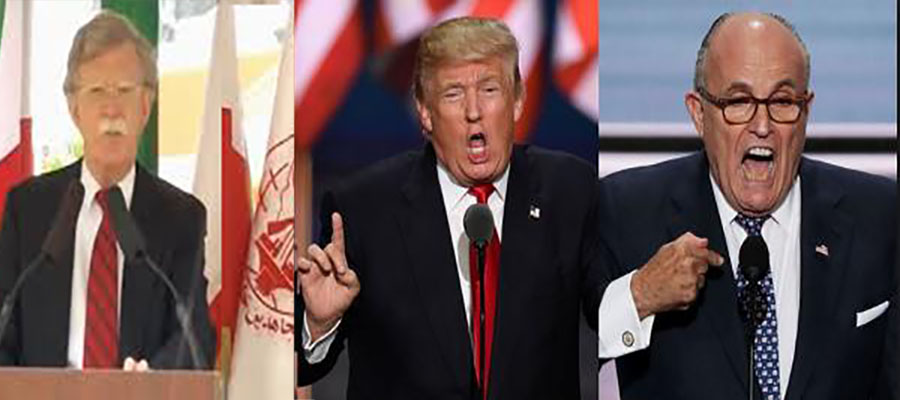
Lieberman no doubt received ample compensation for saying what he said. Other former prominent US officials, including John Bolton, Rudy Giuliani, and Gen. Jack Keane—all of whom probably have closer ties than Lieberman to the White House – also spoke at the MEK event, which, incidentally, makes me think that the White House is indeed seriously considering supporting the group as at least one part of its Iran policy. I suspect we’ll find out soon enough.

July 9, 2017 0 comments
FacebookTwitterPinterestWhatsappTelegramSkypeEmail
Mujahedin Khalq; A proxy force

Here’s Why Washington Hawks Love This Cultish Iranian Exile Group

What were a Saudi prince, a former Republican House Speaker and a former Democratic vice-presidential candidate doing together in a suburb of Paris last weekend?

Would you be surprised to discover that Prince Turki Bin Faisal, Newt Gingrich and Joe Lieberman were speaking on behalf of a group of Iranian exiles that was officially designated a “Foreign Terrorist Organization” by the United States government between 1997 and 2012?

Iran hawks long ago fell head over heels for the Mojahedin-e Khalq, known as the MEK, and loudly and successfully lobbied for it to be removed from the State Department list of banned terror groups in 2012. Formed in Iran in the 1960s, the MEK, whose name translates to “Holy Warriors of the People,” was once an avowedly anti-American, semi-Marxist, semi-Islamist group, pledged to toppling the U.S.-backed Shah by force and willing to launch attacks on U.S. targets. The MEK even stands accused of helping with the seizure of hostages at the U.S. embassy in Tehran; the group condemned the hostages’ release as a “surrender” to the United States. But after the Iran’s clerical rulers turned on the group in the early 1980s, its leaders fled the country and unleashed a series of bombings across Iran.

These days, the organization — run by husband and wife Massoud and Maryam Rajavi, though the former’s whereabouts are unknown and he is rumored to be dead — claims to have renounced violence and sells itself to its new American friends as a 100 percent secular and democratic Iranian opposition group. The biggest problem with the MEK, however, is not that it is a former terrorist organization. Plenty of violent groups that were once seen as “terrorists” later abandoned their armed struggles and entered the corridors of power — think of the Irish Republican Army or Mandela’s African National Congress.

Nor is it that the MEK lacks support inside of the Islamic Republic, where it has been disowned by the opposition Green Movement and is loathed by ordinary Iranians for having fought on Saddam Hussein’s side during the Iran-Iraq war.

Rather, the biggest problem with U.S. politicians backing the MEK is that the group has all the trappings of a totalitarian cult. Don’t take my word for it: A 1994 State Department report documented how Massoud Rajavi “fostered a cult of personality around himself” which had “alienated most Iranian expatriates, who assert they do not want to replace one objectionable regime for another.”

You think only people inside of dictatorships are brainwashed? A 2009 report by the RAND Corporation noted how MEK rank-and-file had to swear “an oath of devotion to the Rajavis on the Koran” and highlighted the MEK’s “authoritarian, cultic practices” including ‘mandatory divorce and celibacy” for the group’s members (the Rajavis excepted, of course). “Love for the Rajavis was to replace love for spouses and family,” explained the RAND report.

You think gender segregation inside of Iran is bad? At Iraq’s Camp Ashraf, which housed MEK fighters up until 2013, lines were “painted down the middle of hallways separating them into men’s and women’s sides,” according to RAND, and even the gas station there had “separate hours for men and women.”

You might understand why a Saudi prince, former New York mayor Rudy Giuliani, or uber-hawk and former Bush administration official John Bolton — who all attended the Paris rally — might be willing to get behind such a weird collection of fanatics and ideologues. But what would make a liberal Democrat from Vermont such as Howard Dean — who has suggested Maryam Rajavi be recognized as the president of Iran in exile — want to get into bed with them? Or Georgia congressman and civil rights hero John Lewis, who spoke out in favor of the MEK in 2010?

Could it be because of the old, if amoral, adage that “the enemy of my enemy is my friend”? Perhaps. Could it be the result of ignorance, of senior U.S. figures failing to do due diligence? Maybe.

Or could it be a consequence of cold, hard cash? “Many of these former high-ranking U.S. officials — who represent the full political spectrum — have been paid tens of thousands of dollars to speak in support of the MEK,” revealed a wide-ranging investigation by the Christian Science Monitor in 2011.

In Washington, D.C., money talks. Whether you’re a Democrat like Dean or a Republican like Bolton, a former head of the CIA like Porter Goss or an ex-head of the FBI like Louis Freeh, what seems to matter most is that the MEK can cut fat checks.

Take Gingrich, who once lambasted Barack Obama for “bowing to the Saudi king” but has himself been caught on camera bowing to Maryam Rajavi. The former House speaker bizarrely compared Rajavi to George Washington in his speech in Paris over the weekend.

Or Giuliani, “America’s Mayor” and self-styled anti-terror hawk, who nevertheless has had no qualms accepting thousands of dollars since 2010 to shill for a group that murdered six Americans in Iran in the mid-1970s; joined with Saddam Hussein to repress Iraq’s Kurds in the early 1990s; allegedly worked with Al Qaeda to make bombs in the mid-1990s; and fought against U.S. troops in Iraq in 2003.

Have these people no shame? To quote Suzanne Maloney, an Iran analyst at Brookings and a former adviser to the State Department: “How cheaply Gingrich/Guiliani/Bolton/Lieberman value their own integrity to sell out to MEK cult.”

Meanwhile, regime change in Tehran is very much back on the agenda in Donald Trump’s Washington. Candidate Trump, who blasted George W. Bush’s Middle East wars of aggression, has been replaced by President Trump, who appointed Iran hawks such as James Mattis and Mike Pompeo to run the Pentagon and the CIA, respectively; counts MEK shills such as Giuliani and Gingrich among his closest outside advisers; and appointed Elaine Chao, who took $50,000 from the Rajavis for a five-minute speech in 2015, to his cabinet.

Let’s be clear: The Trump administration, the Saudis and the Israelis — who have “financed, trained and armed” the MEK in the past, according an NBC News investigation — are all bent on toppling Iran’s clerical rule; they long for a bad sequel to the Iraq war. And Maryam Rajavi’s MEK is auditioning for the role of Ahmed Chalabi’s Iraqi National Congress: The group’s 3,000-odd fighters, according to former Democratic senator-turned-MEK-lawyer Robert Torricelli last Saturday, are keen to be the “point of the spear.”

That way madness lies. Have U.S. political, intelligence, and military elites learned nothing from their Mesopotamian misadventure and the disastrous contribution of Iraqi exiles such as Chalabi? Well, the brainwashed fanatics of the MEK make the INC look like the ANC.

It is difficult, therefore, to disagree with the verdict of Elizabeth Rubin of the New York Times, who visited the MEK at Camp Ashraf back in 2003 and later “spoke to men and women who had escaped from the group’s clutches” and “had to be reprogrammed.” The MEK, warned Rubin in 2011, “is not only irrelevant to the cause of Iran’s democratic activists, but a totalitarian cult that will come back to haunt us.”

By Mehdi Hasan, the intercept

July 8, 2017 0 comments
FacebookTwitterPinterestWhatsappTelegramSkypeEmail
Mujahedin Khalq; A proxy force

The Saudi Embrace of the MEK

The Washington Times reports on the latest Mujahideen-e Khalq (MEK) rally:

Thousands of supporters of an Iranian dissident group rallied here Saturday for the overthrow of Tehran’s theocratic regime at an event that featured speeches by several Trump administration allies — including Newt Gingrich and Rudolph W. Giuliani — as well as the former head of Saudi intelligence.

Gingrich and Giuliani and the other Americans that appeared at the rally have been shilling for the MEK for years, so it isn’t all that surprising that they would turn up again. However, this is the second time that a Saudi prince has appeared at an MEK event, and that suggests that Riyadh is either directly supporting the group or wants everyone to think that they are. Siding with a government hostile to Iran would be nothing new for the MEK, which worked for Saddam Hussein during the Iran-Iraq war. The Saudi embrace of a group so widely loathed in Iran is also consistent with their poor understanding of the politics of their neighbors and the Saudi leadership’s overall poor judgment.

The MEK is hated in Iran for its role in the war and for its terrorism against Iranians over the years. No one genuinely interested in the freedom of Iranians would have anything to do with such a group, but of course Saudi and American hard-liners couldn’t care less about Iranian freedom. They are simply looking for ways to stoke conflict with Iran, and they see this as a way to do that. Their desire for toppling Iran’s government is so great that they will pretend that a deluded cult is a legitimate opposition group because they think it creates the illusion that many Iranians share their goals. In reality, most Iranians don’t want regime change, and they definitely don’t want it forced upon them from the outside by people that clearly hate them.

By Daniel Larison,

July 6, 2017 0 comments
FacebookTwitterPinterestWhatsappTelegramSkypeEmail
Newer Posts
Older Posts

Recent Posts

  • The black box of the torture camps of the MEK

    December 24, 2025
  • Pregnancy was taboo in the MEK

    December 22, 2025
  • MEPs who lack awareness about the MEK’s nature

    December 20, 2025
  • Why did Massoud Rajavi enforce divorces in the MEK?

    December 15, 2025
  • Massoud Rajavi and widespread sexual abuse of female members

    December 10, 2025
  • Facebook
  • Twitter
  • Instagram
  • Youtube

© 2003 - 2025 NEJAT Society . All Rights Reserved. NejatNGO.org


Back To Top
Nejat Society
  • Home
  • Articles
  • Media
    • Cartoons
    • NewsPics
    • Photo Gallery
    • Videos
  • Publications
    • Books
    • Nejat NewsLetter
    • Pars Brief
  • About Us
  • Contact us
  • Editions
    • عربي
    • فارسی
    • Shqip