Nejat Society
  • Home
  • Articles
  • Media
    • Cartoons
    • NewsPics
    • Photo Gallery
    • Videos
  • Publications
    • Books
    • Nejat NewsLetter
    • Pars Brief
  • About Us
  • Contact us
  • Editions
    • عربي
    • فارسی
    • Shqip
Nejat Society
Nejat Society
  • Home
  • Articles
  • Media
    • Cartoons
    • NewsPics
    • Photo Gallery
    • Videos
  • Publications
    • Books
    • Nejat NewsLetter
    • Pars Brief
  • About Us
  • Contact us
  • Editions
    • عربي
    • فارسی
    • Shqip
© 2003 - 2024 NEJAT Society. nejatngo.org
MEK members in Albania
Albania

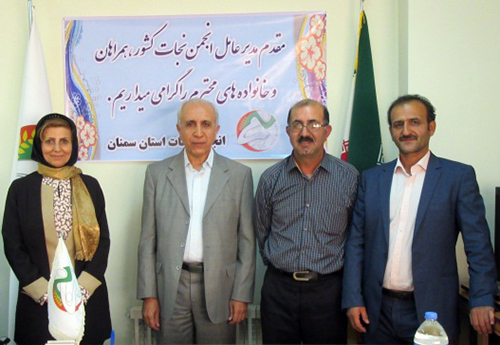
4 people left the MEK in Albania

Three days after the Mujahedin-e Khalq Cult’s propaganda show in France, two members left the group in Albania each with some 39 years of membership in the group.

Siavosh Seifi and Mahmoud Mambini are two individuals who managed to leave the group in Tirana,Albania.

Another two MKO members; Pouria Nouri and Jaafar Aghai, also have left last week, reports say.

Iran Interlink weekly Digest reports the defection of these members asserting:

There are currently fewer than 2100 MEK members in Albania. The disintegration of the group is gaining momentum and formers in Albania predict it will be only a matter of weeks before this figure reaches less than 2000. The acceleration in defections is attributed to ‘the Villepinte effect’. That is, lavish and ostentatious spending while the members in Albania don’t have enough to eat.

Another cause has been Maryam Rajavi’s presentation of the MEK’s precious book of anti-Imperialist martyrs to Senator John McCain as a gift.

The defectors say, ‘we were fooled by Massoud Rajavi all these years but Maryam can’t even do that and only wants to party and show off’.

July 30, 2017 0 comments
FacebookTwitterPinterestWhatsappTelegramSkypeEmail
Iran

US-Iran relations (And Mojahedin Khalq, MEK, Rajavi cult)

THE alliance that defeated the militant Islamic State group in Mosul was unusual. Fighting alongside the Iraqi army were not only US forces but also Iran-backed militias. A few weeks ago, with IS on the point of defeat, I spoke to a US officer in Baghdad and suggested he might want to praise Tehran for having stood shoulder to shoulder with Washington in such an important military effort. He declined the offer.

America’s loathing of the Iranian clerical regime knows few bounds. In March 2003, the US desperately needed to understand the strength of Al Qaeda in Iraq. Having invaded the country and initially swept through it, the occupying US forces soon came to fear that an insurgency was getting under way. They needed to know the extent to which Al Qaeda was the source of that opposition. After all, 9/11 was still fresh in the memory and Al Qaeda was US enemy number one.

State Department official Ryan Crocker, accompanied by president Bush’s special envoy to Afghanistan, Zalmay Khalilzad, approached Tehran. The US diplomats were aware that, in the immediate aftermath of 9/11, some senior Al Qaeda operatives and some of Osama bin Laden’s relatives had found a safe haven in Iran.

Iran made a unique offer. The US turned it down.

Tehran’s motives for taking in these Sunni jihadists and giving them sanctuary remain unclear but it seems likely that one factor in the decision to accept them was the idea that Tehran would have a diplomatic card to be played at some date in the future. And with the US showing an interest, Tehran figured the time to play that card had come.

Iran made an extraordinary offer: if the US would hand over the leaders of an obscure Iraq-based cult called the People’s Mujahideen of Iran or Mujahideen-i-Khalq (MEK), that opposed the Iranian government, Tehran would give the US most of Al Qaeda’s military council and bin Laden’s family. Astonishingly, the Bush White House turned down that opportunity.

The story of the MEK itself illustrates the depth of the US hostility to Iran. At the time of the Iranian revolution, the MEK tried to combine Islamic revolutionary fervour with a leftish and feminist agenda that attracted support on the university campuses. Although the group denies it, there is overwhelming evidence that it had killed Americans before the revolution and was fully involved in the 1979 siege of the US embassy. Despite that history, Washington has subsequently come to embrace the MEK as a potential source of opposition to the clerical regime.

In 2012, Hillary Clinton gave into a very well-financed lobbying campaign and officially delisted the MEK as a terrorist organisation. As a result, the organisation now has an office in Washington. At a recent party conference in Paris, the MEK attracted American luminaries such as Rudy Guliani and former senator Joe Lieberman.

I once asked a serving member of the US Senate, who did not support the MEK and who was known for his deep knowledge of the Middle East, to explain why so many his colleagues backed the organisation. “Beats me,” he said. “Sometimes colleagues ask my advice, saying they have been approached by the MEK and want to know whether they should support them.”

“And what do you say?” I asked.

“I say that since the MEK killed Americans there is always a risk of a voter asking why their senator is backing a group that killed their relative. You have to be careful of that kind of thing.”

“And does that put them off?”

“Sometimes.”

For all the mutual vitriol between Iran and the US, a case can be made that Iran’s Shia Islamists could be more natural allies of the US than the Sunni states that sponsor violent jihadists. On the few occasions that their views are revealed, many young Iranians show that despite having absorbed a lifetime of propaganda about the Great Satan they remain attracted by Western values. Many Sunni youths in the Middle East have far greater distrust of the West than their Shia equivalents. It is no accident that the 9/11 attackers came not from Iran, but from Sunni states.

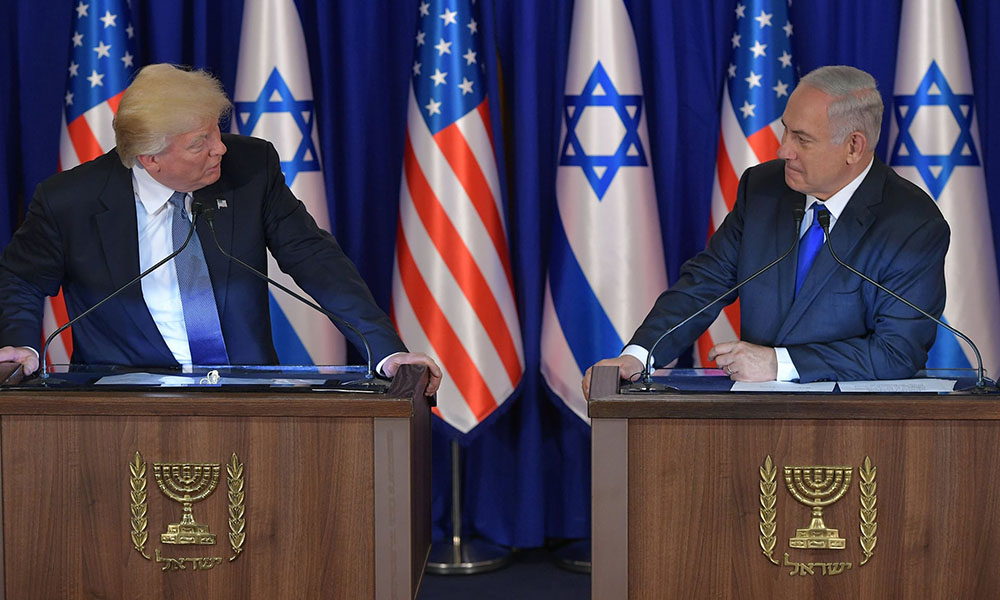
For many years, it was argued that the US hostility to Iran could be traced back to the US embassy siege of 1979. The humiliation suffered by the US at that time was keenly felt and left a deep mark. Yet the US has got over far greater humiliations — for example, at the hands of the North Vietnamese. Today, US presidents are quite comfortable visiting Hanoi despite what happened there. The difference, perhaps, relates to Israel. Ever since the destruction of Iraq, Prime Minister Netanyahu has made no secret of his view that Iran now poses the most significant threat to the state of Israel. By continuing to oppose Iran, the US is supporting its closest ally.

The writer is a British journalist and author of Pakistan: Eye of the Storm.

Owen Bennett-Jones, Dawn,

July 29, 2017 0 comments
FacebookTwitterPinterestWhatsappTelegramSkypeEmail
UK

Ostracism of Mojahedin Khalq in Europe may lead to expulsion to Albania

The UK government has again rejected any possibility of Maryam Rajavi, de facto leader of the Mojahedin Khalq (MEK), entering the UK. Rajavi is currently based in France but visited Albania over several weeks earlier this year to be with her followers who are now based there.

This emphatic stance from the UK government toward Rajavi and the MEK highlights the opprobrium with which the group is viewed in parliamentary circles right across Europe. A recent report from the European Parliament also brought the continued presence of the MEK in Europe into question. The new President of France, Emmanuel Macron, has a clear choice – whether to move to close down the MEK’s headquarters in the popular tourist village of Auvers-sur-Oise and expel the members to Albania where there are no concerns for their safety, or to continue to host the controversial group, allowing Rajavi to advocate violent regime change toward Iran from the French capital.

–

House of Parliament, UK, July 2017:


To ask the Secretary of State for the Home Department, whether it is her policy to allow Maryam Rajavi into the UK.


In 2014 the Supreme Court upheld the Home Secretary’s decision to maintain the exclusion of Maryam Rajavi.


theyworkforyou.com

July 27, 2017 0 comments
FacebookTwitterPinterestWhatsappTelegramSkypeEmail
Duplicity of the MEK natureMujahedin Khalq Organization's Propaganda System

France’s safety is the main victim of MKO’s traffic

Mujahidin-e Khalq Organization held a meeting in Paris. The meeting is a propaganda for survival rather than making a practical measure or plan and future objectives.

Actually, what just Mujahedin want to say, that also costs them millions of dollars, is that we still exist and the enemies of Iran can invest on us to fight the Islamic Republic of Iran.

It should be noted as Mujahedin themselves know that pro-MKO intelligence services estimated Iranians have deep-seated hatred towards the organization. Plotting issues such as an alternative to the Iranian regime, its overthrow and …are just in publicity levels. Altogether, the organization with all of its factors, capacities and possibilities is an opposition to the Islamic Republic. So, Iran’s enemies have to strengthen groups such as MKO, hoping for some kind of nuisance.

However, it should not be expected a vast impression for MKO and its meeting in Paris. The radius of this move has not go further than Villepinte hall and a couple hour media advertisement before and after the meeting. Reviewing this meeting can explain the glitter of this ad.

Retired and rental speakers

A glance at the media movements and the organization’s supporters reveal that all the participant and well-known politicians who attended the group’s gathering believe that they have been retired and they do not expect to back to power that make such a deal with MKO.

John Bolton, Gingrich, Lopez, Turki al-Faisal and so on, all of them have no longer a position in the power structures of their respective countries and merely see attending MKO’s meeting as business. The difference is the position and history of each of these politicians is effective in increasing or decreasing the amount.

Looking at the checkbook of Mujahedin, it would be realized that they spent 80,000 dollars for a two-minute speech in some cases. The thing is, MKO members write their speech notes. More precisely, speakers are reserved for an hour in MKO’s meetings.

Rudolph Giuliani attended the recent MKO’s meeting in Villepinte. His behavior is an example that these people do not care to sabotage their political future for business. Giuliani, the former mayor of New York City, intended to take a post in Donald Trump’s cabinet after he took the office. Therefore, he kept his distance with the organization and its campaign, but his presence at the meeting shows that he do not hope to back to power so he returned to his old business.

Rented crowd

The crowd present at the hall mostly were European tourists and some homeless people except organization’s official and associated members in Europe who usually sit in first lines. Some of them don’t know anything about politics and even don’t have the slightest connection with the issue. They came to the meeting that they were promised a one-day trip to Paris with a transfer fee, free food, and even some pocket money. Many European students or asylum seekers who attended the meeting in the past years talked about its quality. It reveals that Mujahedin don’t have enough people in Europe, even to fill Villepinte hall.

Of course, Mujahedin became smarter this year and bring figures from East Asia, West Asian Arabs, and Afghan and Pakistani nationals instead of colored people who were found abundantly in the meeting each year. So it created a more common face for its meeting.

Digits that have been published from the meeting, indicate that each refugee daily receives about 30 to 50 euros plus free food, and whoever could bring 20 to 30 people to the meeting will get around 1,500 euros.

Institutions and contractual associations

There are always some institutions and associations that issued a statement in support of MKO or signed Mujahedin’s petition and statement.  An interesting point about these institutions, which generally are related to the countries that MKO agents are active in, is that there isn’t any well-known individual in these institutions and they didn’t do anything except supporting and confirming Mujahedin.

These two reasons from among dozens of other signs prove that these associations, as previously seen in MKO’s activities, cover division organizations that don’t have any background except a name and a registration, and don’t have any other use as well.  The covering institutions are used to show a widespread supporting circle for the organization. In the past, they are also used to get money in the form of charity in the name of different damaged groups; but they worked in the favor of the terrorist organization. However, this method is still active in the European region.

“Syria’s solidarity with the grand gathering of resistance in Paris” is a massage issued by these institutions at the recent meeting. Like before, it don’t has a specific background and isn’t supported by well-known people.

Meanwhile, the existence of a real association and forum can also be investigated in Paris. A cohort consists of the separated members of this cult want to put an end to the terrorist activities in the heart of Europe, by disclosing hundreds and perhaps thousands of pages of documents and evidence. These people are the living evidence of human rights abuses, assassinations, torture and … committed by the organization. Now they are working on their own for the fight against this organization.

The final victim is France’s safety!

The missing MKO leader Massoud Rajavi was remembered viewing an archival footage at this year’s meeting. MKO leader Maryam Rajavi has entered the hall while she was escorted by 15 male and female bodyguards. It show that hypocrites do not feel safe, this year!

The French should worry most, about the safety! France and especially Paris has been involved with the terrorist attacks in the past two years. Today’s security situation is a matter of concern. Under these conditions, a group of 30 years of terror and crime freely commutes and holds a meeting there. Not in-depth review, it’s easy to understand that obtaining such a wrong approach threatens the security of the whole country!

Iraq, in the heart of crisis and terror, expelled terrorists to restore its security, it throw out the MKO agents forever who conducted numerous terrorist operations in the country. In such circumstances, it shouldn’t be so hard to understand for the French government that giving terrorists an opportunity now will affect the French nation someday.

In the end, closing the Mujahedin case requires a real determination. Western governments, including France, can be its main pillars, in one condition, that they put the real fight against terrorism as the decision criteria rather than their political objectives.

whatsupic.com

July 26, 2017 0 comments
FacebookTwitterPinterestWhatsappTelegramSkypeEmail
Mujahedin Khalq Organization as a terrorist group

Mojahedin Khalq presence in Albania highlights security risks for Europe

Mojahedin Khalq (MEK) presence in Albania highlights security risks for Europe

Maryam Rajavi welcomes a distinguished delegation including John R. Bolton from US -Grand Gathering for a Free Iran- Paris, July 1, 2017

Advertising campaigns don’t come cheap and those paying want value for money. The Mojahedin Khalq (MEK) annual event at Villepinte in France to celebrate so-called armed struggle and promote violent regime change against Iran is about showcasing the MEK to build a brand presence in political and media circles. The Mojahedin Khalq (MEK) brand, like any other brand, depends for its success on advertisement and consumer support.

Support for the MEK is strongest in America where reports that the Trump administration will adopt a policy of regime change toward Iran has led to speculation this will involve the MEK. Clearly the anti-Iran elements which pay for the MEK believe they are getting value for money.

What does the MEK offer for their dollar?

First and foremost, anyone who believes the MEK has renounced violence and terrorism should revisit their recent history (perhaps consult their Farsi language websites for MEK narratives rather than the English language NCRI propaganda). After losing their benefactor Saddam Hussein in 2003 the MEK, from its Iraqi base in Camp Ashraf and headquarters in Paris, engaged in active support for the Saddamist led insurgency which was expanded by AQI and more recently the failed efforts of Daesh to overrun Baghdad.

It took twelve years for the government of Iraq to succeed in its demand that America remove the group from Iraq. Taking the MEK off America’s terrorism list in 2012 (followed by British and European Union terrorism lists) was a pragmatic move to allow the relocation of the group in third countries. Of course, the American government had no intention of relocating the group to the US. Why would they when France and Albania would host the group instead.

The MEK has never dropped its agenda of supporting terrorism. Even after arriving in Albania, the MEK’s support for Daesh and violent extremists has been fully in step with prominent war-mongers; those who don’t mind the violent imposition of an inhumane so-called caliphate on millions of citizens in the Middle East so long as Iran is contained.However, this US-centric view of the situation is not echoed by Europe. The visits by John Bolton and Senator John McCain to the MEK in Tirana remind us that Albania shares a land border with the EU via Greece and with other troubled Balkan states. Albania’s de facto role as a bridge between Europe and areas of conflict in the Middle East has been of concern for international security officials for some time. The relocation of 2700 radicalised MEK members there was hardly likely to offer them any comfort.

Indeed, conditions in Albania mean the group has a much more open hand to pursue its agenda now it has left Iraq. Although the MEK has given up on its own ability to force regime change on Iran, the group will, of course, work to harm Iran’s interests in any way it is able or as it is instructed. As a mercenary force, the MEK is equipped to train, advise and facilitate terrorist and intelligence activity. The recent ISIS attacks in Tehran which bear the hallmarks of MEK involvement at some stage are a stark example of this capability. Interpol warns of at least 173 suspected members of a Daesh suicide brigade heading for Europe. The MEK are experts in people smuggling.

So, when the well-paid speakers at the Villepinte event in France advocate violent regime change, it is this MEK mercenary paramilitary group which is being advertised, rather than a political wish list written in Washington.

Because of this, the participation of three members of Albania’s parliament in this event ought to be of great concern in Europe. In 2014 Albania became an official candidate for accession to the European Union. Notwithstanding efforts to combat the drug cartels, arms smuggling and people trafficking gangs which prevail there, corruption and organised crime are still a problem.

Maryam Rajavi and Senator Lieberman and his wife at the free Iran Gathering – 1 July 2017

Although Albania’s officially stated foreign policy promotes non-interference in other countries’ internal affairs, some deputies find advocacy for the MEK irresistible.

The head of the Republican Party Fatmir Mediu in a wonderful attempt to ignore the MEK’s totalitarian nature ludicrously encouraged MEK members in the audience to ‘vote for their future’. The MEK is a cult, its members are held in a state of modern slavery. They do not even have a say over their everyday lives let alone a vote. This makes the presence of Deputy Interior Minister Elona Gjebrea even more troubling. Europeans know her as the minister for anti-trafficking. However, she has turned a blind eye to the living conditions of the MEK members in her own country.

Socialist Party deputy and former Premier Pandeli Majko echoed the MEK’s demand for regime change and stated that these radicalised MEK members are now Albanian citizens. Was this simply rhetoric?

If the Rama government has truly provided MEK members with Albanian passports, their free movement across Europe will allow into the European Union and Schengen area a new army of radicalized extremists, which would be a new threat to the West. France, which has hosted the MEK headquarters for over three decades, always refused to give the members national passports.

While the EU views the MEK as a security threat which would damage accession, there are many other elements who actually benefit from the insecurity and corruption in the Balkan region which allows gangs and groups like the MEK freedom to operate outside any laws and norms. One thing can be agreed however, neither the US nor the EU want Albania to join the EU any time soon.

Indeed, with trade deals between European Union countries and Iran increasing, the continued presence of the MEK in EU countries is increasingly problematic.

However, although the MEK are experts at intimidation and propaganda, in reality the expulsion of the MEK from Europe should be neither controversial nor unexpected. No government in Europe supports the presence of extremists in their midst and the MEK has a long history of extremist behaviour and messaging. The self-immolations in western capitals are an example of their actual behaviour, while the Villepinte celebration of armed struggle and advocacy of violent regime change is incompatible with European countries’ values and wider approach to counter-terrorism.

Previously the MEK in Europe couldn’t be expelled to Iraq because their human rights could not be guaranteed. This is not the case in Albania. Maryam Rajavi happily spent some weeks there earlier this year. President Macron can either bite the bullet and expel this unwanted group at long last, or continue to tolerate the MEK on French soil as leverage to extract further concessions from the Trump administration. Either way, the fact remains that the real problem lies in Albania. A security and humanitarian problem that will not go away.

By MASSOUD AND ANNE KHODABANDEH, Balkans Post,

July 25, 2017 0 comments
FacebookTwitterPinterestWhatsappTelegramSkypeEmail
Maryam Rajavi
Mujahedin Khalq Organization's Propaganda System

Iran and the Holy Warrior Trap

Is the West about to make the same mistake with Iran that it made with Afghanistan when it backed the Sunni mujahedin against the Soviet invaders? The Soviets ultimately were driven from Afghanistan by these Muslim zealots, but their support by the United States and NATO cleared the way for the emergence of the Taliban, and it helped spawn al-Qaeda and ultimately a hydra head of spin offs such as the Islamic State, al-Nusra, Boko Haram, and other violent Islamic groups.

The new mistake taking shape lies in the West’s growing support for Iranian Shiite mujahedin who are bent on overthrowing Iran’s clerical regime. These people go by various names, usually Mujahedin-e Khalq (MEK) or the People’s Mujahedin of Iran (PMOI), the translation of Mujahedin-e Khalq.

The name is revealing: mujahedin is derived from the word “jihad,” and it means “holy warriors fighting for the cause of Allah.” The word “people’s” signals the Marxist orientation. MEK, therefore, can be loosely translated as “Marxists Fighting for the Cause of God and the People,” or even more loosely, “Leftist Muslims Fighting for the Cause of God and the People.” They aggressively lobby the West for support through their political wing, the National Council of Resistance of Iran (NCRI). This organization claims to be the political umbrella group of Iranian dissidents, but it is indistinguishable from the MEK so that MEK’s goals are NCRI goals.

The MEK charter for a future Iran, outlined in the biography of the movement’s perennial leader Maryam Rajavi, is certainly tailored to appeal to the Western mentality. It guarantees freedom of speech and assembly, religious freedom, the rule of law, respect for human rights, trial by jury, a pluralistic political system, leaders raised to power by the ballot box, and other guarantees, such as a non-nuclear Iran. It claims to follow a modern and progressive Islam. It also advocates “national capitalism,” words that suggest national ownership or control of the means of production. The proposed charter is heavy on women’s issues: “Women will enjoy social, political, and cultural rights absolutely equal to those of men,” it states. The organization itself, however, is overly women-friendly. The 1,000-member central committee of the NCRI is exclusively female, and the military commanders of the MEK are predominantly female, making the MEK/NCRI essentially a matriarchy.

Western support for this group can be seen at the lavish “Free Iran” events the NCRI sponsors every year in Paris. These gatherings feature parades of the flags of countries allegedly supporting the NCRI, mind-numbing repetition of slogans, and a flow of speakers and entertainers championing the cause. This year’s event, held in a northern suburb of Paris on July 1, even featured a sizeable contingent of female mujahedin of rank wearing their signature blood-red head scarves.

The American speakers this year included Newt Gingrich, who declared, “You will someday be proud to say you were a part of what freed Iran,” and Linda Chavez, who said that the Iranian resistance organization “gives me hope.” They were joined by Rudy Giuliani, John Bolton, Tom Ridge, Michael Mukasey and other high profile American and European political figures. They lavished praise on the Iranian mujahedin and Rajavi, a controversial figure with a lot of terror and cult baggage she would prefer people didn’t know about.

The NCRI/MEK’s claim that it will be the champion of freedom, democracy, and human rights in a future Iran needs to be examined against the history of the mini-societies that it has already created where it enjoyed total control, most notably at former strongholds in Iraq where a social order based on the MEK/Rajavi ideology was established. These were MEK laboratories for a future Iran, particularly at a huge self-administered base called Camp Ashraf.

These camps in Iraq were the product of the falling out between Khomeini and his erstwhile leftist supporters that occurred after the collapse of the Pahlavi monarchy in 1979. The agitation and terror undertaken by the radical left were crucial to the [Ayatollah] Khomeini takeover of Iran. But once [Ayatollah]Khomeini gained control, the leftists found themselves excluded, and it then became a violent struggle between the Marxist/Socialist movements and [Ayatollah]Khomeini’s exclusive clerical rule. […]

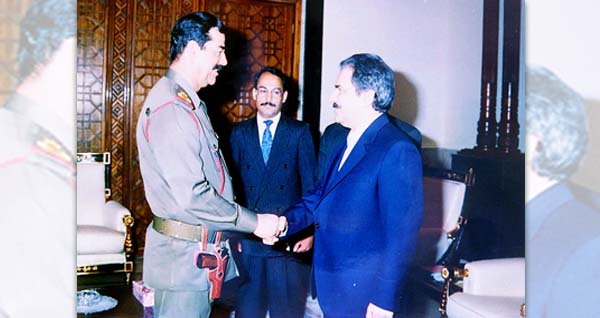
Under Saddam’s protection, MEK leaders led by Maryam Rajavi’s husband Massoud Rajavi, who took over leadership of the MEK in 1979, set up several self-governing camps. The largest was Camp Ashraf, started on barren land 40 miles north of Baghdad that MEK transformed into a functioning town of 3,500 people. After the American invasion of Iraq in 2003, the camp surrendered its weapons to American forces, but retained self-rule at Ashraf and other camps. The American military faced an unusual situation in that the U.S. State Department had labeled the MEK a terrorist organization for killing Americans and bombing American interests in Iran during the 1970s, yet the military had to protect the MEK due to its ambiguous legal status in Iraq.

A 2009 RAND study, commissioned to help the military understand what it had inherited, painted an unflattering, deeply disturbing picture of life in the camp:

“(Rajavi transformed) the MEK from an activist dissident group into an inward-looking cult. Rajavi instituted what he termed an “ideological revolution” in 1985, which, over time, imbued the MEK with many of the typical characteristics of a cult, such as authoritarian control, confiscation of assets, sexual control (including mandatory divorce and celibacy), emotional isolation, forced labor, sleep deprivation, physical abuse, and limited exit options.”

Based on interviews with former MEK members who were at the camp and American and Iraqi military authorities, the RAND study also found that the MEK practiced deceptive recruiting methods to lure Iranians to the camp:

“For example, Iranians taken prisoner by Saddam’s forces during the Iran-Iraq War were promised repatriation to Iran if they transferred from Iraqi prison camps to MEK facilities. Iranian expatriates in third countries were told that they would be granted asylum in European countries. They were also given offers of employment as translators, along with promises of land and spouses. Some Iranians were enticed to MEK camps by offers of free visits with family members. Others who paid to be smuggled out of Iran found themselves trafficked to MEK camps rather than to their intended destinations. Although the exact figure is not known, it is estimated that approximately 70 percent of MEK members now in Iraq joined the group after its relocation there and subsequent decline in popularity. Many of them were victims of these fraudulent recruiting practices.”

Both real volunteers and people deceived into traveling to the camp were trapped in Ashraf’s cult environment. The MEK leadership confiscated their identity documents, and if they asked to leave they were threatened with being sent back to Iran where they would face persecution, or with prosecution in Iraq for illegal entry. They had nowhere to go. All were subjected to the grueling indoctrination of the camp.

These are spooky people. There are numerous videos on You Tube showing male and female mujahedin in large military formations at Camp Ashraf singing revolutionary songs, absorbing harangues by female MEK leaders, and listening to endless chants of Koran verses. The women, standing stiffly with severe appearance, wear blood-red revolutionary head scarves. Hours of videos show uniformed men stepping up one by one before a panel of female leaders to declare their willingness for martyrdom. Other videos show endless uniform applause for the leaders at mass events, and MEK soldiers, male and female, are seen goose-stepping through Ashraf parade grounds in precision formations.

And we are to believe it is these people who will be the champions of freedom, democracy, and human rights in a future Iran? Given the extremely top-heavy female leadership of MEK/NCRI, one has to wonder if the organization contains the seeds of a future Iranian feminist tyranny.

One also has to wonder if Gingrich, Bolton, Giuliani and other Rajavi enthusiasts have done their homework. It’s hard to find anything positive on the internet about the PMOI/MEK that wasn’t generated by NCRI’s propaganda machinery. Even Wikipedia slams it as a cult built around the personality of Maryam Rajavi and her husband Massoud, who disappeared in 2003 and was recently declared dead.

Or maybe the political grandees who show up in Paris every year to enthuse over Rajavi and the NCRI have done their homework. Perhaps they see these militant Shiite leftists as perfect tools to bring about the end of Iran’s theocratic dictatorship, just as Sunni mujahedin were once used against the Soviets. Blood for power? Who knows what’s cooking behind the scenes, but with the Trump administration allying itself with Saudi Arabia, Israel, and other countries with the expressed goal of bringing an end to the Iranian mullocracy, the kitchen is certainly getting hot.

Americans, however, should pause and look into the historical rearview mirror. It gives a lesson of unanticipated consequences for using holy warriors in the cause of Allah to achieve Western goals. If using PMOI/MEK/NCRI is part of an emerging strategy to overturn the Iranian theocracy, as Gingrich implied in his Paris speech, the world may well end up with Maryam Rajavi ruling for life over an Iran that she and her followers have transformed into one vast Camp Ashraf.

By F.W. Burleigh, Western Free Press

July 24, 2017 0 comments
FacebookTwitterPinterestWhatsappTelegramSkypeEmail
Palestinian President Mahmoud Abbas
Mujahedin Khalq; A proxy force

Abu Mazen plays losing hand badly in Gaza Strip

Fatah-Egypt at “bone-breaking stage”

Adnan Abu Amer writes that “the relationship between Fatah and Egypt has reached the bone-breaking stage, especially with [Palestinian President Mahmoud] Abbas as head of the movement.”

Abbas has played a weak hand as badly as one could imagine it being played. His plan to pressure Hamas by cutting both staff salaries and electricity in the Gaza Strip has earned him the wrath of the people there. Egyptian President Abdel Fattah al-Sisi rejected Abbas’ plan, contributing to a downward spiral in Fatah’s ties with Cairo.

Adding insult to injury, Egypt and the United Arab Emirates (UAE) choreographed a deal between Hamas and Mohammed Dahlan, Fatah’s former head in Gaza and Abbas’ bitter rival, to provide badly needed fuel during the Eid al-Fitr holiday last month.

Dahlan, who comes from the Khan Yunis refugee camp in the Gaza Strip, was once a blood enemy of Hamas. In addition to street battles with Hamas while with Fatah, Dahlan was implicated in an American plot to overthrow the elected Hamas government in 2006. Dahlan was forced into exile in the UAE in 2012 after Abbas accused him of corruption, for which Dahlan was tried in absentia, and complicity in the murder of PLO leader Yasser Arafat. Dahlan relocated to the UAE where he became an adviser to Mohammed bin Zayed Al Nahyan, the crown prince of Abu Dhabi and deputy supreme commander of the UAE armed forces.

Shlomi Eldar explains that Samir al-Mashharawi, Dahlan’s right-hand man, who has recently returned to Gaza, had provided refuge to Hamas leader Ismail Haniyeh in 2004 to evade Israeli attack helicopters, forging an unusual personal bond.

Al-Monitor has covered how Hamas has been on defense since the US-Saudi-Islamic summit in May, when it was lumped with Hezbollah, the Islamic State and al-Qaeda on the list of deplorables. These developments led Hamas to consider better ties with Iran and Russia. Like Abbas, Hamas holds a weak hand, but seems to be playing it better. Hamas has so far outmaneuvered Abbas in relations with Egypt and the UAE, and by leveraging Dahlan.

Of course, Dahlan’s return, if it happens, would hardly be a win for Hamas. If Hamas allows him to return, Dahlan would be little more than a Trojan horse, giving Cairo and Abu Dhabi the foothold they have desired to eventually unseat the Islamic Resistance Movement, which both countries associate with the Muslim Brotherhood.

Meanwhile, as Fatah-Egypt relations were hitting a new low, the Palestinian Authority sent a parliamentary delegation to take part in a conference organized by the People’s Mujahedeen Organization of Iran (Mujahedeen-e-Khalq), perhaps as a sop to Saudi Arabia, upon which Abbas depends for support.

Ahmad Melhem writes, “In light of the PA’s adherence to Saudi positions on most of the region’s issues and the political and financial support it receives from Riyadh on the one hand and the support Iran provides to resistance factions, especially Hamas and Islamic Jihad on the other, the relations between Iran and the PA continue to deteriorate, with no sign of the slightest improvement.”

Qatar and Iraq

Mustafa Saadoun reports that Qatar, which is seeking improved relations with Iraq, continues to host family members and loyalists of former Iraqi dictator Saddam Hussein, as well as other prominent Sunni Iraqi opposition politicians.

“Among the most prominent figures hosted by Qatar are the wife of the late Iraqi President Saddam Hussein, Sajida Khairallah Talfah; the last foreign minister in Saddam’s regime, Naji Sabri al-Hadithi; and Saddam’s longtime aide [and Saddam’s brother in law] Arshad Yassin,” writes Saadoun.

He continues, “There are also other Iraqi figures in Qatar, such as Abdul Hakim al-Saadi, brother of Abdul Malik al-Saadi, who is considered the most prominent Sunni cleric in Iraq; Tariq al-Hashemi, the former vice president whom Iraq convicted of terrorism; and other academic and military oppositionists.”

Saadoun explains that Qatar is unlikely to deport or hand over any of their Iraqi guests, which provide Doha with leverage on Iraq as well as other Gulf countries.

“Qatar probably doesn’t want to take the same step the Iraqi government took when it deported members of the Mujahedeen-e-Khalq of Iran and gave up a card it could have exploited to strong-arm Iran,” Saadoun writes. “Doha will not be deporting any Iraqi opposition member at Iraq’s request because the opposition can always be used as leverage. Doha will remain an important location for the Iraqi opposition, if not a center of support for it, especially for the Sunni Islamic parties that draw from the Muslim Brotherhood ideology, because the opposition is not only a pressure card on Iraq but also on Qatar’s fellow Gulf Cooperation Council members.”

Russia wary of Turkish military in Syria

Fehim Tastekin writes that both the United States and Russia are wary of Turkish military intervention in Syria.

“What is always overlooked in the tense politics between Turkey and the Kurds is that an amplified Turkish military presence disturbs both Russia and Syria. … Russia does not want the deployment of the Turkish army and Syrian Hayat Tahrir al-Sham. Moscow wants to use military police detachments from friendly, Muslim countries such as Kazakhstan, Kyrgyzstan and Uzbekistan to enforce law and order at Idlib. After the Syrian army took over Aleppo, Russia deployed a 250-strong elite military police force from Chechnya and Ingushetia,” Tastekin reports.

Last week, this column explained how the prospects of US-Russian coordination in Syria could serve to weaken Moscow’s leverage with regional players and present opportunities for Turkey to be a spoiler, including through Ankara’s improved ties with Tehran. All this depends on Turkish President Recep Tayyip Erdogan being able to manage the deft diplomacy required to right his costly intervention in Syria.

“Moscow sees the ‘Turkish threat’ as a useful instrument of political manipulation, but fears it would further complicate the process,” Tastekin writes. “The United States fears a Turkish operation against Afrin will hamper the operation at Raqqa, where the US-backed Syrian Democratic Forces (of which the YPG [People’s Protection Units] is a part) is trying to drive out IS. An interruption to that effort would further deepen the US-Turkey rift. … Ankara was comforted a bit by several factors: the US intention to deploy at Tabqa air base; its targeting of Syrian regime forces approaching the training base the United States had set up at the Jordanian border; and, finally, its shooting down of the Syrian plane. But he agreement between the United States and Russia last week for a deconfliction area that will cover Daraa, Suwayda and Quneitra could have opened the door a bit for cooperation between the two major powers. This meant Turkey’s effort of taking advantage of a split between the two powers was futile.”

Almonitor, 

July 23, 2017 0 comments
FacebookTwitterPinterestWhatsappTelegramSkypeEmail
Ann Singleton
The cult of Rajavi

Radicalisation Awareness: An Opportunity to Criminalise Cultic Abuse

Presentation at the ICSA Conference, Bordeaux, July 2017 – Theme of Conference: Cultic Dynamics and Radicalization

Introduction by ICSA:

After twenty years in the terrorist cult Mojahedin-e Khalq, Anne (with her husband Massoud Khodabandeh) established the English language www.iran-interlink.org website in 2001 to expose the group as a cult and support former members. Anne works with families of MEK campaigning to rescue their loved ones. Anne has written extensively about the MEK and wider cult issues and authored two books (Saddam’s Private Army, 2003 and The Life of Camp Ashraf, 2011). (2010-2015) Trustee of The Family Survival Trust, Anne ran the Helpline during that time, giving advice and support to families affected by cults. Since January 2016, Anne has worked freelance under the UK Prevent Duty as Open Minds. With nearly forty years’ experience of research and experience as activists, campaigners, writers and practitioners, Open Minds has been established as a leading authority on cultic abuse and terrorism. In consultation with a leading UK Safeguarding expert, Anne developed the ‘cultic abuse’ model to explain how radicalisation takes place for the public sector (education, health, local government, etc. are now legally obliged to recognise, report and prevent radicalisation at work) as well as the voluntary sector, faith groups and businesses – which do not fall under the statutory obligation. anne.khodabandeh@gmail.com)

Presentation:

I am not a researcher or academic or legal expert. Instead I am an expert in activism, campaigning and writing. I am a practitioner under the UK’s Prevent Duty. I want to talk today about why I believe that the current climate of seeking ways to counter radicalisation for violent extremism and terrorism is the best opportunity we have to criminalise all cultic abuse.

My background is in terrorism. I spent two decades involved in a foreign terrorist organisation called the Mojahedin Khalq (MEK). Only when I left did it become clear that I had been in a cult and that my experiences were the same as survivors of any other cult.

When I left, instead of pursuing academic research, I took up activism to directly challenge the group. Since I had worked in the ‘public relations’ department of the MEK, I had a very good education in how to counter them when I left.

In 2001 after I had my son and stayed at home, my husband and I set up a website Iran-Interlink.org and began serious campaign work and activism aimed at rescuing the other members of the cult. We later set up another site cultsandterror.com to specifically make this link in the English language. Working in Europe, Iraq and now Albania, to date we have been instrumental in helping over a thousand people to leave and to de-radicalise, even before it became fashionable. We work very closely with families.

Because of our work this FTO now recognised worldwide as a cultic group as well as terrorist entity.

Prevent and Channel are familiar territory for us.

In September 2015 in my role of Trustee for the Family Survival Trust I attended a Conference on Radicalisation. During the Conference, I managed to speak with the Senior Civil Servant who was responsible for rolling out the Prevent Duty in the public sphere. I asked why he had talked about radicalisation but hadn’t talked about HOW people are Radicalised.

His reply stunned me; ‘Oh, we know how they do it, we’ve got hold of the manuals’.

Well, my husband trained people for suicide missions and I can assure you, he never once used a manual. It was then clear that the government was receiving advice from so-called experts who had no experience or apparently real knowledge of how people are radicalised.

In October, I joined up with Abigail Clay, one of the country’s leading experts on Safeguarding in Education. We quickly understood each other’s perspective and developed educational presentations for the Prevent Duty.

I now give presentations under the title ‘From Attraction to Action: Understanding Radicalisation as Cultic Abuse to Support Prevent and Channel’.

What has become clear is that although the government might not ‘get it’, certainly front-line practitioners do. At least, they don’t run away when we mention the brainwashing word. Indeed, I believe that not only practitioners but also the public are streets ahead of politicians and civil servants in accepting this reality.

It is also clear that there are gaps in ‘where we’re coming from’ when dealing with the phenomenon of Radicalisation.

Cult experts are now moving away from defining what a cult is and are examining what they do.

Counter terrorism experts want to remain on familiar ground. Their focus is heavily research based in preference to empirical evidence – such as formers’ testimony.

A lot of research and attention is paid to the ideology of various Violent Extremist and Terrorist groups, but cult experts understand that the ideology used by recruiters is simply a recruiting script based on genuine grievances and is not an actual belief system which can be subjected to philosophical or logical examination.

The focus of counter terrorism experts on who gets radicalised draws attention away from the people who do the recruiting. Cult experts know that anyone can be susceptible to manipulation at some point in their life.

Again, the idea that someone can be radicalised ‘by the Internet’ has gained a lot of attention, but it is like saying someone was made into a gambling addict by ‘the Internet’. In both cases there is human agency behind what is being consumed online. We need to focus attention on who is behind the online messaging.

In my experience, the number of reasons why people get involved in Violent Extremism and Terrorism is exactly equal to the number of people involved. In other words, trying to find out what makes any one person vulnerable to radicalisation is like asking why people have car accidents.

In the end, neither a ‘what is a cult’ nor logic based research programmes really get to the difficult heart of the problem. Both are peering down the telescope from the wrong end.

They almost get it. There is recognition that there is a relationship – the recruit and the recruiter and that a process takes place – that is, what happens in this relationship to change a normal person into a monster. There is also not enough focus on the idea that radicalisation is a process not an event. It took me ten years of involvement before I packed up everything and went full time with the Mojahedin. It didn’t happen overnight, but from almost the very beginning I was on a pathway that I didn’t recognise and couldn’t leave.

Even so, after years of writing about this subject, radicalisation has undergone an evolution. It is no longer the same as when I was recruited and brainwashed by a cult leader. Now, we cannot say that ISIS is a cult per se. There are many people involved who simply have a gun, have come from another arena of war, Iraq, Libya, and who have nothing to lose because their homes, families and lives have been bombed out of existence. They are mercenaries.

However, that is not the same as what is happening in the west where people are being radicalised through cultic abuse.

Because there is a reluctance to acknowledge brainwashing, this concept gets no further. It’s easier and ‘cleaner’ to focus on the ideology and think of counter arguments, rather than understand the murky world of mind control.

Safeguarding experts however have to get to grips with some of the most harrowing issues in society today. They START with the idea that where abuse takes place there will be a victim and a perpetrator.

Because they already deal with these issues, it is not a giant leap to understand that the same elements of coercion and psychological manipulation take place in the Radicalisation process. The added element is the use of an ideology or belief system to attract and indoctrinate recruits.

A further complication is that in Safeguarding it is usually fairly straightforward to identify victims. But in the case of Radicalisation, the victim believes they are a victor. Anybody who has been in a cult knows that feeling of superiority which is instilled into us, that made us feel we were on a higher plane than ordinary people.

And because their deceptive recruitment relies on the victim becoming infatuated with the ideology, the actual perpetrator is not always easy to identify. This is why the internet poses such a barrier to finding perpetrators.

I will move sideways now and talk about efforts that have already been made to criminalise cultic abuse.

The UK has made huge progress in how it deals with abusive behaviour involving elements of deception, coercion and psychological manipulation. In the areas of modern slavery, coercive control in domestic violence, grooming for child sexual exploitation and more recently cases of stalking. These are all now included in legislation as criminal behaviours. What is missing is cultic abuse. It is very similar to and employs the same methods as these cases. But it also uses an ideology or belief system to attract and indoctrinate recruits.

For many, many years, The Family Survival Trust has tried to get legislation passed to outlaw the abusive practices of cults. In the Autumn of 2015 we made efforts to have amendments made to existing and proposed laws in the UK. Tom Sackville, our Chair, who had served as a Conservative Home Minister under John Major, was successful in getting Sir Edward Garnier, Michael Gove and Dominic Grieves to look at our proposals. These are the people involved in writing legislative papers. So this was an important achievement.

We were very encouraged by a statement made by David Cameron who was Prime Minister at the time. It appeared that the government finally understood the problem in a way that had previously not been apparent. Cameron even used the words ‘cult leader’.

But nothing happened after this. We are still waiting for the dangerous persuaders to become the target of legislation. Still waiting behind ‘what makes people vulnerable to radicalisation?’

I will explain now, using the presentation I use in my Prevent work, why I believe this additional legislation is not happening.

This slide usually raises a laugh. But there is a serious point behind this. Onions come in different sizes, colours and shapes. We can label them – ISIS, AQ, KKK, EDL, Moonies, Scientology, JWs, the list goes on. These ‘onions’ are the organisational structures which we call cults and which allow for the brainwashing of recruits.

Although they appear different on the outside because of their vastly different ideologies or belief systems, if we cross section any onion, it looks the same as the others. Anyone who has been in a cult will recognise this hierarchical structure and the secrecy which surrounds it. Each level has its own role. People are promoted or demoted from one layer to another. But the inner workings of the group are kept secret and impenetrable to the outside world.

Outside this sphere of influence is what I call the cocoon of collusion. This means that because the group is not subjected to external control, regulation or other interference, it can grow at will. In some cases, it is even fed by the current circumstance in which it finds itself.

In the current climate of radicalisation, do we really understand for instance why a young maths student would suddenly take up arms in Kurdistan and join counter-ISIS fighters. What was disturbing for me was that the newspapers, even her own family, heralded her as a hero. But when I read that she had ‘fallen in love with the ideology’ alarm bells went off in my head. This was the same story as mine. I joined a western backed terrorist group, so nobody thought to warn me against them.

Getting back to our efforts to have cultic abuse criminalised by making amendments to existing and proposed legislation, two cases erupted at the same time. Both involving cults and both leading to failures because they relied on existing laws and practices.

In the Anne Craig case, a self-styled therapist targeted young women from very wealthy backgrounds. You see here the plaintiff is a Countess. The girls mostly attended a prestigious private educational institute. Unfortunately, the lawyer hired by some of the families tried to use the civil law of undue influence to prosecute Craig. I perhaps shouldn’t use the word charlatan, but that’s what springs to mind. The lawyer gets paid for pursuing a hopeless case.

The law of undue influence has existed in UK civil law for over 400 years. The problem for us is that the victim themselves must bring the case against the perpetrator. This means that anyone still in a cult won’t do so and their families can’t do so on their behalf. It also depends on proving that the victim was ‘vulnerable’. Under this law this has very specific definition and usually means somebody who doesn’t have mental capacity due to their young age because they are children or because they are elderly and may not be as alert as before or because they have mental health or disability problems. This is clearly not the case with many victims of cultic abuse.

I had the opportunity to consult with Sir John Nutting QC, one of the country’s top criminal barristers. He explained why using civil law to pursue cases involving cultic abuse was inappropriate and ineffective. Instead, criminal law needed to be created to allow police to pursue perpetrators and for the prosecution service to bring cases to court independently of the victims.

Around this time,  Aravindan Balakrishnan was convicted of rape and false imprisonment under the new Modern Slavery Act of 2015. The unusual nature of the case meant it attracted huge media interest but in spite of big headlines describing it as a Maoist Cult, there was no sense that anyone actually understood what the three women victims had been through.

On investigation, I discovered that the anti-slavery organisation which rescued the women – and I must say do some truly excellent work with victims of slavery – was located only a mile from where I live. I visited them and asked about how the women had been de-programmed. The charity had never heard of cultic abuse and a psychologist had treated them for ‘Stockholm Syndrome’. But nobody could understand why they wouldn’t hate their persecutor and in fact one of the women returned to the cult determined to clear his name of all wrongdoing.

I said there were two cases, but I have added a third. This was a five-minute conversation on the Helpline but had a profound effect on me because I felt so helpless. It was late Sunday afternoon when the phone rang. It was a vicar. He explained he had a young couple with him who had just left a cult and he had no resources to help them. When I spoke to the couple they said they had made the momentous decision to leave without any preparation but knew that if they didn’t leave then they never would. They had only a beaten up old car and three hundred pounds. They had no family and nowhere to go. When they asked where they should go, what should they do to get help, I had no answer. The council has no obligation to house adult homeless people. Places like women’s refuges have no provision for ex cult members. In fact, because this is not a legally or even socially recognised problem, there is no help or provision for such people. As I discovered, Helplines can’t house people.

Now, for full disclosure, I will state that I have no legal training, but work I did in my cult had equipped me in ‘political speak’ – we wrote White Papers, Early Day Motions, Constituency Composites on behalf of parliamentarians. Using these skills, I came up with a quasi-legal definition of what cultic abuse is which seems to cover the whole thing.

So, I would like to encourage everyone to try to push this issue and see if we cannot emulate the campaigns of the coercive control and modern slavery lobbies.

We are today where the campaigners against coercive control were twenty years ago. There is still an uphill struggle before we can educate and inform sufficiently for legislators and prosecutors to take this seriously.

What we can do.

Call it cultic abuse – apologies to those who like the phrase ‘undue influence’ but if we are to push for legislation we cannot be slack in our use of terms. The law of undue influence is no help to victims or their families. We need to criminalise on the basis of abuse.

There is an over-abundance of evidence to back a campaign. Do not doubt that the experiences of formers will be taken seriously. We got a report made by Human Rights Watch called ‘No Exit’, based on victim testimony. Even when the MEK objected and denied everything in the report saying the witnesses were ‘agents of the Iranian regime’ and therefore would say anything to discredit the organisation, Human Rights Watch stuck by its original report. It’s usually about finding the right people to listen, and persistence.

Cult experts can be confident that the process of cultic abuse shares the same mechanisms with radicalisation. Perhaps it is up to us to be more assertive in contacting counter terrorism personnel and offering our insights.

It is also helpful to tread in others’ footsteps. Contact other organisations which have lobbied for other kinds of abuse to gain legal traction. For example, the Salvation Army led the campaign for the Modern Slavery Act.

Campaigners can also press for better training among lawyers and the police. Even existing laws can be used by former cult members to bring prosecutions. However, it is clearer than ever that as successful prosecutions are brought under the coercive control element of the Serious Crime Act 2015, we should be more insistent that cultic abuse be equally recognised in law.

Another big issue for many counter cult people is the portrayal of cult issues in the media. We must complain. This also applies to cases of radicalisation which are misrepresented, like the case of Kimberly I spoke of earlier.

Many people don’t want to talk to their MP about this. MPs are largely ignorant on this issue and worried about matters of ‘freedom of belief’. It is up to us to educate them. If we describe what happens as a form of abuse, there may not be any votes in it, but our political representatives have a moral and social duty to act.

As an activist and campaigner, I will end by encouraging more people to get involved in lobbying for change. The Prevent Duty is an opportunity to bring to young people’s attention the devious, deceptive ways they can be subjected to malign persuasion – whether from radicalisers or cult recruiters.

And finally – let’s lobby to change the law.

July 19, 2017 0 comments
FacebookTwitterPinterestWhatsappTelegramSkypeEmail
Duplicity of the MEK nature

The MEK is a weird political cult

This Group Hopes to Push America toward Regime Change in Iran

American policymakers and pundits have an unfortunate history of embracing odious foreign political movements that purport to be democratic. During the Cold War, embarrassing episodes included Washington’s support for the Nicaraguan Contras and Jonas Savimbi’s National Union for the Total Independence of Angola. The post–Cold War era provides ample evidence that influential Americans have not learned appropriate lessons from those earlier blunders. The Clinton administration made common cause with the Kosovo Liberation Army, which proceeded to commit numerous war crimes during—and following—its successful war of secession against Serbia. Both the Clinton and George W. Bush administrations allied with Ahmed Chalabi’s Iraqi National Congress (INC). The INC’s false intelligence regarding Saddam Hussein’s alleged weapons of mass destruction, which the New York Times and other prominent media outlets reflexively circulated, was one of the major factors that prompted the United States to launch its ill-starred military intervention in Iraq.

There is mounting danger that the Trump administration is flirting with committing a similar blunder—this time in Iran. Secretary of State Rex Tillerson was asked explicitly by Rep. Ted Poe whether the United States supported a policy of regime change in Iran when he testified before the House Foreign Affairs Committee in June 2017. Poe argued that “there are Iranians in exile all over the world. Some are here. And then there’s (sic) Iranians in Iran who don’t support the totalitarian state.” Tillerson replied that the administration’s policy toward Iran was still “under development,” but that Washington would work with “elements inside Iran” to bring about the transition to a new government. In other words, regime change is now official U.S. policy regarding Iran.

That strategy entails numerous problems. An especially troubling one is that the most intense opposition force (inside and especially outside Iran) is the Mujahedeen Khalq (MEK). Although Tillerson did not explicitly mention the MEK, any U.S. promotion of dissidents would almost certainly have to include that faction. More moderate reformists have repeatedly rejected an American embrace, justifiably concerned that such an association would destroy their domestic credibility. Indeed, a significant segment of Iranian moderates endorsed President Hassan Rouhani and were a major factor in his decisive reelection victory over a hard-line opponent in the 2017 election.

The MEK’s history should cause any sensible U.S. administration to stay very, very far away from that organization. The MEK is a weird political cult built around a husband and wife team of Massoud and Maryam Rajavi. It has been guilty of numerous terrorist acts and was on the U.S. government’s formal list of terrorist organizations until February 2012. The group did not even originate as an enemy of Iran’s clerical regime. It began long before that regime came to power, and its original orientation seemed strongly Marxist. The MEK was founded in 1965 by leftist Iranian students opposed to the Shah of Iran, who was one of Washington’s major strategic allies. And the United States was very much in the MEK’s crosshairs during its early years. During the late 1960s and throughout the 1970s, the MEK directed terrorist attacks that killed several Americans working in Iran.

The MEK’s worrisome track record has not deterred prominent Americans from endorsing the organization. In the months preceding the State Department’s decision to delist the MEK, dozens of well-known advocates—primarily but not exclusively conservatives—lobbied on behalf of the group. Vocal supporters included former CIA directors R. James Woolsey Jr. and Porter Goss, former FBI director Louis J. Freeh, as well as Tom Ridge and Michael Mukasey, both cabinet secretaries in George W. Bush’s administration. Several members of Congress, including Rep. Dana Rohrabacher, were also prominent advocates. Rohrabacher stated confidently that the MEK seeks “a secular, peaceful, and democratic government.” Other proponents included former New York City Mayor Rudy Giuliani, former House Speaker Newt Gingrich and Sen. John McCain. Gingrich has been especially enthusiastic about the MEK over the years, describing it as the vanguard of “a massive worldwide movement for liberty in Iran.” More recently, Gingrich showed up along with former Democratic senator and former vice president nominee Joe Lieberman at a conference in Paris to laud the MEK.

Such enthusiasm has increased since its delisting as a terrorist organization. The House Foreign Affairs Committee even invited Maryam Rajavi to testify at a hearing on strategies for defeating ISIS. The decision to give Rajavi a platform for her broader agenda was not that surprising. Many of the committee’s members (especially GOP members) are staunch advocates of a regime-change strategy toward Iran. The MEK serves the same function for such hawks as Chalabi and the INC did in the prelude to the U.S. invasion of Iraq.

Americans have reason to be wary when prominent advocates of an extremely hard-line policy toward Iran also want “vigorous support for Iran’s opposition, aimed at regime change in Tehran,” as former U.S. ambassador to the United Nations John Bolton recommends. Given his vocal cheerleading for the MEK in recent years, there is little doubt that he is not referring to the moderate, anti-clerical “Green coalition” inside that country, but to the MEK.

Therein lies the principal danger of Tillerson’s embrace of a regime-change strategy toward Iran. Granted, he referred to U.S. support for peaceful regime change, but the MEK’s American backers show no signs of making that distinction. The MEK has spent hundreds of thousands of dollars cultivating their support, and such gullible (or venal) Americans continue to tout the organization as a genuine democratic movement with strong support inside Iran. The extent of the financial entanglements is deeply troubling. Many prominent American supporters have accepted fees of $15,000 to $30,000 to give speeches to the group. They also have accepted posh, all-expenses-paid trips to attend MEK events in Paris and other locales. Former Pennsylvania Gov. Ed Rendell confirmed in March 2012 that the MEK had paid him a total of $150,000 to $160,000, and it appeared that other “A-list” backers had been rewarded in a similar fashion. Needless to say, accepting such largesse from a highly controversial foreign political organization—and one that was still listed as a terrorist organization at the time—should raise justifiable questions regarding the judgment, if not the ethics, of the recipients.

U.S. opinion leaders are playing a dangerous and morally untethered game by flirting with the likes of the MEK. Daniel Larison, a columnist for the American Conservative, recently highlighted the problem with their approach. “I have marveled at the willingness of numerous former government officials, retired military officers, and elected representatives to embrace the MEK,” he wrote. “There’s no question that they are motivated by their loathing of the Iranian government, but their hostility to the regime has led them to endorse a group that most Iranians loathe.” The last point is not mere speculation. The MEK aided Saddam Hussein’s war against Iran in the 1980s, and even Iranians who detest the clerical regime regard the MEK as a collection of odious traitors.

President Trump should learn from the follies of his predecessors who backed the agendas of foreign groups that purported to be democratic but turned out to be nothing of the sort. There are ample warning signs about the real nature of the MEK. The administration needs to avoid that organization like the plague.

By Ted Galen Carpenter, The National Interest

Ted Galen Carpenter, a senior fellow at the Cato Institute and a contributing editor at the National Interest, is the author of ten books, the contributing editor of ten books and the author of more than 650 articles on international affairs.


July 19, 2017 0 comments
FacebookTwitterPinterestWhatsappTelegramSkypeEmail
Duplicity of the MEK nature

Gary Sick: To understand MEK we need to understand the source of its revenue

Columbia University’s Gary Sick spoke to The Iranist about conspiracy theories pertaining the Islamic Republic, Tehran’s trajectory, and Donald Trump’s Iran policy.

THE IRANIST: You served on the National Security Council in President Jimmy Carter’s administration. Do you have any regrets about how foreign relations with Iran were handled before the 1979 revolution?

GARY SICK: Except for the fact that we got it all wrong, I guess everything was fine. My book, All Fall Down: America’s Fateful Encounter with Iran, was supposed to indicate that nobody—certainly no one in the Carter administration or anywhere else—thought that we understood everything going on. The reality is that no one got it right. And to all the people now who feel the revolution was preordained and predictable and that everyone should have seen it coming, there was no one like that at the time. No one was saying it was going to be a revolution. Almost everybody knew that Shah Mohammad Reza Pahlavi had overwhelming superiority—support, organization, money. We were all wrong. Everyone involved in the events of those days now agrees on that.

THE IRANIST: What do you say to those who believe that the Carter administration backed Ayatollah Ruhollah Khomeini and that the Islamic Revolution was preplanned?

GARY SICK: As someone who was close to Carter and working with him on that subject at the time, that notion is ludicrous. Having Khomeini in Iran was exactly the last thing in the world that Carter wanted. Basically, what is happening—like all conspiracy theories—is that people want to explain away things that were painful. They don’t want to be seen as responsible for things themselves. To the people who say, “Weren’t you really responsible for getting Khomeini into power?” I say to them, “Where were you at the time? Where were the people who were supposed to be standing up for the shah at the time?” They disappeared and went over the horizon.

I understand why people want to find a scapegoat. But the reality is everyone got it wrong and the people who suffered the most have reason to be unhappy with the way things went.

THE IRANIST: What are your thoughts about the 1953 coup documents being released?

GARY SICK: With regard to the 1953 coup—or countercoup, as it is referred to—that was a matter which involved CIA resources and methods. In many cases, the people involved were very anxious. As time went on—particularly since the United States was involved in efforts to negotiate with Iran both before and during the period of the JCPOA [Joint Comprehensive Plan of Action, or the Iran nuclear deal]—there was a reluctance to put out information that could interfere with that process.

Whether that was right or wrong, I cannot say. Many historians were very upset about the fact the documents were not released and held for many years. They are out now and I think what we see is what we are going to get.

THE IRANIST: How do you find the Trump administration’s handling of relations with Iran right now?

GARY SICK: They basically came in with the idea that Iran was the enemy, and they have not changed their attitude. They are not interested in making a deal with Iran. They are not interested in whatever positive benefits that could come of cooperating with Iran, like in Afghanistan and other places where our interests coincide. They are out to oppose Iran in any way they can. And at the same time, there are a lot of people in the administration who want to see regime change in Iran. It is a very dangerous thing.

I was not a Donald Trump supporter by any means, but I was pleased that when he came into office, he said, “Let’s reduce our presence in the Middle East. We’re overcommitted and we’re paying too high of a price for all of this. It has nothing to do with us.” I think he was right. I thought it was very constructive and it was the one area where I could really support Trump. After a few months in office, he seems to have changed course entirely. Now he has surrounded himself with a group of generals, and basically delegated responsibility to them for increasing military presence in the region. We have a presence in virtually every part of the Middle East. Everything Trump said [regarding foreign policy] during the presidential campaign has not taken place. In fact, it’s going the opposite way. That does bother me very much because I think of all the things that could happen in the near future, which is truly disastrous for the Middle East and the United States, would be getting into a shooting conflict where we find ourselves spending enormous amounts of money without any positive outcome at all. We seem to be looking for military answers to all our problems.

THE IRANIST: U.S. Secretary of State Rex Tillerson recently talked about regime change in Iran. Why hasn’t Washington learned that regime change isn’t the way to go?

GARY SICK: Regime change is always a tempting idea. Governments everywhere think if they can just change the government or change the rulers, everything would then be fine. That usually backfires, and there are unintended consequences. They haven’t learned their lesson because they believe all their problems are tied to one ruler in one place.

THE IRANIST: The Trump administration has been rather vague as to what “regime change” means. What do you think they have mind?

GARY SICK: At the moment, I’m not sure we can say the Trump administration has a point of view; it has multiple views. By the way, it is not unusual for the U.S. government to have multiple views. However, it is unusual to have them out in the open so blatantly. Clearly, right now there is infighting in the U.S. government, comparable to the worst kind under the Nixon administration and the famous ones between National Security Advisor Zbigniew Brzezinski and Secretary of State Cyrus Vance under Carter. This rises to the level of some of the worst infighting in White House history.

THE IRANIST: Do you think the Trump administration could be considering the formerly designated terrorist organization, the Mojahideen Al-Khalq (MEK), as an option for regime change?

GARY SICK: I don’t know how much influence the Mojahideen Al-Khalq has. One question that is asked often but has no answer is, “Where is all that money coming from?” The MEK is paying $50,000 to $100,000 for people to deliver a speech that basically preaches their message of violent overthrow of the Iranian government. We would understand the MEK better if we understood the sources of its revenue. Those sources are significant and they have a wealth of political influence.

THE IRANIST: Do you think a war with Iran is a possibility over what is happening in Syria?

GARY SICK: We are in fact fighting on the same side, in opposition to ISIS, but we are on opposite sides when it comes to Syria and what happens there. As we have seen, Iranian aircraft and drones have been shot down south of Raqqa, the ISIS capital. As the fight against ISIS progresses, people are looking at what the aftermath is going to be and are concerned Iran and Syria will benefit from the downfall of ISIS. And then matters complicate further: Russia is basically allied with Iran and Syria, but these three nations also have their problems with each other, because they do not fully trust each other. The chances of misinformation, mistakes, and unintended consequences are very high. I don’t tend to be alarmist, but I think the chance of us getting into another war in the Middle East is very high.

THE IRANIST: How do you interpret Iran’s current political trajectory?

GARY SICK: There are two major traditions in Iranian politics. One is that the Iranian people usually vote for whichever candidate is least supportive of the establishment in every election. They are a very rebellious bunch. The second great tradition is that every Iranian president that gets a second term is stunted by the actions of the Supreme Leader and the Islamic Revolutionary Guard Corps (IRGC). Even if the Iranian people vote for someone who they think is really a reformer, there are a lot of people in the country who do not want to see that happen, and they can do a lot to frustrate the president. That’s where we are now.

The Iranist

July 17, 2017 0 comments
FacebookTwitterPinterestWhatsappTelegramSkypeEmail
Newer Posts
Older Posts

Recent Posts

  • The black box of the torture camps of the MEK

    December 24, 2025
  • Pregnancy was taboo in the MEK

    December 22, 2025
  • MEPs who lack awareness about the MEK’s nature

    December 20, 2025
  • Why did Massoud Rajavi enforce divorces in the MEK?

    December 15, 2025
  • Massoud Rajavi and widespread sexual abuse of female members

    December 10, 2025
  • Facebook
  • Twitter
  • Instagram
  • Youtube

© 2003 - 2025 NEJAT Society . All Rights Reserved. NejatNGO.org


Back To Top
Nejat Society
  • Home
  • Articles
  • Media
    • Cartoons
    • NewsPics
    • Photo Gallery
    • Videos
  • Publications
    • Books
    • Nejat NewsLetter
    • Pars Brief
  • About Us
  • Contact us
  • Editions
    • عربي
    • فارسی
    • Shqip