Nejat Society
  • Home
  • Articles
  • Media
    • Cartoons
    • NewsPics
    • Photo Gallery
    • Videos
  • Publications
    • Books
    • Nejat NewsLetter
    • Pars Brief
  • About Us
  • Contact us
  • Editions
    • عربي
    • فارسی
    • Shqip
Nejat Society
Nejat Society
  • Home
  • Articles
  • Media
    • Cartoons
    • NewsPics
    • Photo Gallery
    • Videos
  • Publications
    • Books
    • Nejat NewsLetter
    • Pars Brief
  • About Us
  • Contact us
  • Editions
    • عربي
    • فارسی
    • Shqip
© 2003 - 2024 NEJAT Society. nejatngo.org
France

Under President Macron, France can play a pivotal role in Western relations with Iran

European counter-terror experts warn that as ISIS is pushed into a smaller and smaller theatre of operations in the Middle East, there will certainly be blowback as foreign fighters return to their own countries. In this context, the ISIS terrorist attacks in Tehran expose a much more complex situation which will have lasting repercussions in the West unless it is tackled at source. That includes zero tolerance for any messages promoting violent extremism.

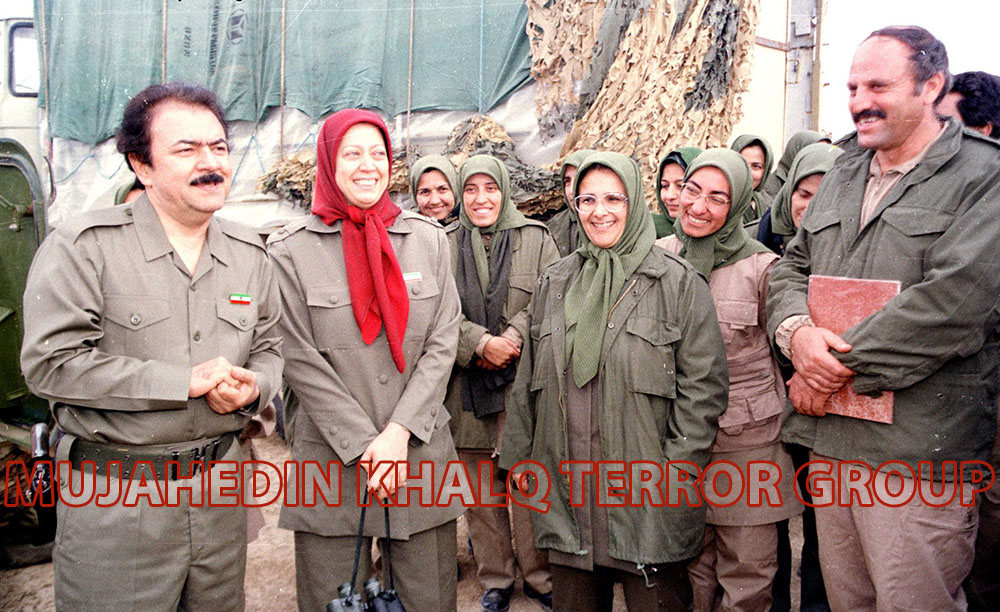
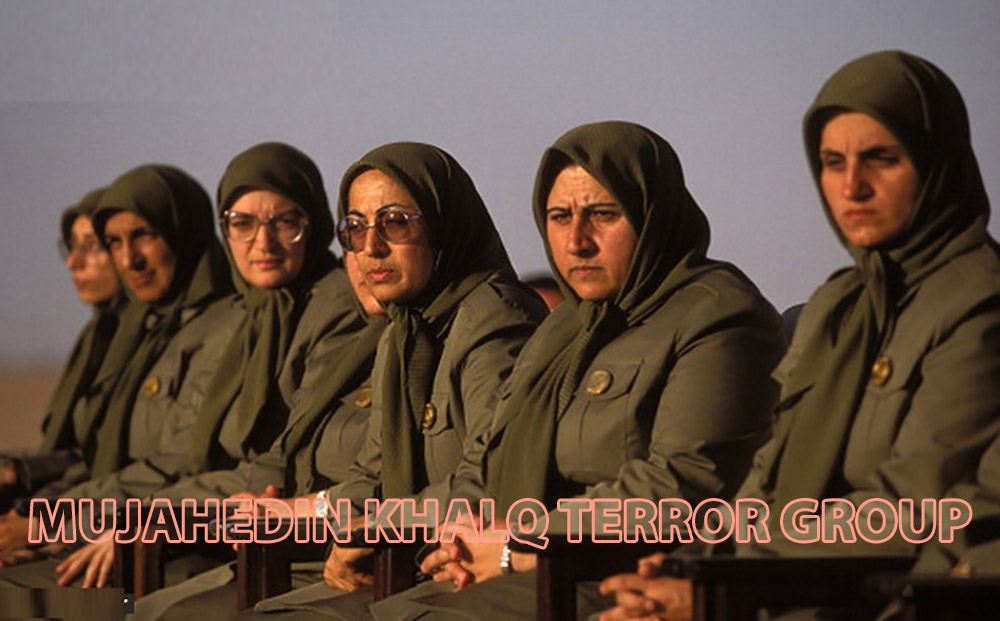
What worries experts is that ISIS almost certainly gained the expertise it used to carry out the attacks in Iran from the exiled Mojahedin Khalq (MEK) organisation. The MEK has a three-decade history of terrorist violence against Iran and continues to cling to an agenda which promotes violent regime change. Whilst the MEK is widely regarded as a defunct force due to the age and health of its fighters, experts warn that although the MEK no longer constitutes a fighting force, the members remain fully radicalised and capable of acting as logistics facilitators and training and planning consultants for any other terrorist group. Certainly, they are all capable of conducting suicide missions.

MKO members in Albania

Since America ensured the MEK were transferred from Iraq to Albania this danger has become more acute. Albania is still struggling to overcome the political and media corruption, drug crime, gun smuggling and people trafficking which will prevent it joining the European Union anytime soon. The presence of 3000 radicalised MEK members in a country known as a route between Europe and Syria for modern terrorist forces is not just controversial, it is dangerous.

Even so, the real danger does not lie in Albania; it is a NATO country dominated by the US and the MEK can and will, therefore, be contained and re-purposed for whatever the US needs them for. The recent visits to the MEK by John Bolton and Senator John McCain are an indication of this agenda.

Maryam Rajavi presents a list of anti-Imperialist MEK martyrs to Senator McCain in Tirana 2017

The real danger lies in France and Western Europe. The MEK has been headquartered for the past thirty-six years in Auvers-sur-Oise just outside Paris. This year, as always, the MEK will use its front name the ‘National Council of Resistance of Iran’ to hire the Villepinte salon outside Paris, pay disproportionate speakers fees to advocates and round up a paid audience to wave flags and dutifully applaud the ‘regime change’ speeches. This annual event is known inside the MEK as a celebration of armed struggle – the raison d’être of the MEK group.

This year the event is being held on July 1, but it was originally timed to celebrate the MEK’s challenge to Ayatollah Khomeini’s leadership on 30th Khordad (June 21, 1981). These dates matter. Analysts now say that the MEK has moved the date of the celebration to distance it from the association with defeat – after the coup d’état failed, senior MEK leaders fled to France with CIA backing and left the rank and file to face mass arrests and executions inside Iran. Instead the new date is closer to what the MEK regards as a major victory in its three decade long terrorist campaign against Iran. On the 7th Tir (June 28, 1981) MEK operatives blew up the headquarters of the Islamic Republic Party in Tehran during a meeting of party leaders. Seventy-three leading officials of the Islamic Republic were killed.

The significance of this becomes clear when we link the MEK’s core beliefs to the recent terrorist attacks in Tehran. The message which the MEK event gives to observers is that the pattern of attacks by ISIS in Tehran was glorious and righteous and is a legitimate response to a scenario in which Iran is the world’s leading sponsor of terrorism. (For the record, neither the MEK nor Saudi Arabia condemned the attacks.)

This scenario – Iran as the world’s leading sponsor of terrorism – has been promoted ad nauseam by the MEK throughout western political circles. The work of national parliaments as well as the European Parliament have been held hostage to this narrative. Normalisation of relations with Iran following the nuclear agreement have been stymied by the MEK. Indeed, MEK bullying and intimidation in pursuit of this agenda was recently discussed in the European Parliament. The MEPs concluded that Europe cannot properly challenge Iran’s human rights situation as long as a group which promotes regime change and abuses the human rights of its own members artificially imposes itself centre stage of these discussions.

The fact is that over the past year the western political landscape has changed dramatically. Two distinct blocs have emerged: a cohort of anti-Iran countries including the US, UK, Israel and Saudi Arabia on one side blindly pursuing regime change against Iran apparently at all costs, and Europe – minus the UK after Brexit – (and incidentally Russia and China) pursuing rapprochement and trade opportunities.

In this context, the spotlight for action must fall on France, home to the MEK headquarters. We must ask the French government ‘these people belong to the regime change bloc, why do you continue renting your land to them after 36 years? What have the Americans or the MEK done for you that is worth the bad reputation attached to supporting this group? What is the cost benefit of having the MEK in your country? What implications does its continued presence have for your foreign policy and trade relations? How can the Republic continue to allow this group to promote violent extremism and terrorism on French soil?’

In the past, of course, it was pointless asking these questions – even though they were asked as permanent unresolved issues. Removing the MEK from France and other European countries was problematic – expelling them to Iraq was impossible because their human rights could not be guaranteed. But in 2016 the Americans facilitated the MEK’s removal from Iraq to safety in Albania. There is no reason to believe that Europe cannot similarly facilitate the safe removal of the MEK leaders from France and other European countries to Albania. The MEK leader Maryam Rajavi has already spent several weeks in Tirana. There is nothing to prevent her setting up a permanent headquarters there with further help from the Americans.

President Emmanuel Macron’s new centrist movement has won a large majority in the French parliament giving him a strong hand to play. He already revealed himself to be a shrewd and masterful challenger in international relations almost before opening his mouth when he out manoeuvred President Donald Trump at the NATO summit in Brussels in May. Perhaps the time is finally ripe for a new appraisal of what zero tolerance means for France. The MEK’s messages promoting violent regime change should no longer be tolerated.

By Massoud.khodabandeh

June 28, 2017 0 comments
FacebookTwitterPinterestWhatsappTelegramSkypeEmail
Mujahedin Khalq Organization members' families

Letter of the families of the members of MEK in Albania to the UNHCR and the Albanian Interior Ministry

 With regards,

According to evidence and the testimony given in recent years by over a thousand former members of the Mojahedin-e Khalq (MEK, Rajavi cult) inside and outside Iran, the MEK organization operates as a destructive mind control cult which denies all the most basic human rights to its own members.

For decades, this cult has deceived honest but inexperienced youth using different tricks, and taken them to Iraq where it has enslaved them both mentally and physically. Psychological techniques are used in this cult for brainwashing and mind control. The answer to any dissent or doubt is solitary confinement, torture, psychological and physical pressures, coercing members to commit suicide, and even murdering them.

Over the past decades, thousands of members have taken any opportunity open to them to flee from this destructive cult and separate themselves from it. Yes, that is right – the Rajavi cult is a place that people have to escape from. It is not easy to leave the group at all since they are held in conditions of modern slavery.

Now that the Rajavi cult, despite all the resistance and obstacles created not to leave Iraq, has been forced to settle in Albania, there is a chance for the families who could not visit their loved ones in Iraq to contact them in Albania.

We, the families, are certain that our children are under severe mind manipulation and brainwashing and therefore have no free will at all. Since their youth when they were first recruited they have been denied any form of contact with the outside world. After decades of this treatment they have lost all their hope for, even knowledge of, a normal life and therefore need their families to deprogram them and return them to normal society.

Based on reports given by countless former members, we are absolutely certain that more than 90% of the members are discontent and are seeking a way out of the cult. We also know that because of this the cult will not allow them access to the outside world and, in particular, contact with their families. Most of the members would like to be in contact with their families, but Massoud Rajavi, like all other cult leaders, is the enemy of the family and uses every propaganda and psychological trick to prevent members from having any contact with their families.

We learned that the Rajavi cult is trying to replicate the conditions it imposed on the group in Iraq and wants to move all the members to a remote location in Albania where they can be kept in total isolation. This means that their contact with the outside world and the families would be almost impossible.

We also learned that the individual UN refugee allowances of all the members who have been accepted into Albania as refuges are being paid directly to the MEK organization, and this even includes those who have left the cult. This means that these people are forced still to be dependent on the cult and have to obey the cult’s dictates as before.

We, the suffering families who in some cases have had no news of our loved ones for decades, urge the UNHCR and the Albania Interior Ministry to cooperate fully to arrange, firstly direct contact between us and our loved ones, secondly to deal with them individually and not as a group and pay their refugee allowances to them directly, and thirdly to ensure that the members are not imprisoned in any location where they have no contact with the outside world.

Some families of the members of MEK in Albania

June 24, 2017 0 comments
FacebookTwitterPinterestWhatsappTelegramSkypeEmail
Iran Interlink Weekly Digest

Iran Interlink Weekly Digest – 194

++ Many former MEK members have written personal memories of the events of 30 Khordad, 7 Tir and the 2003 self-immolations. They remind us that this is what is behind the Villepinte event – it is a celebration of armed struggle and violent extremism. Others have exposed further information about Villepinte over the past few years: how the MEK paid the audience, speakers and how the recruitment drives were organised and by whom. Most writers remark that the money spent now is nothing compared to the days of Saddam Hussein and that year on year it is getting less as the MEK’s money dries up. Some, however, comment that while this is true, the money the MEK does spend comes from Saudi Arabia and Israel and is intended to create hysteria against Iran. The lesson we can take from this though is that the anti-Iran pundits have no other tool to spend their money on or they would not be so silly.

++ Several former MEK members write regularly from Albania for Iran Interlink and Sahar Family Foundation. Some are completely out of the organisation, others have separated but are still dependent on the MEK for accommodation and living expenses and therefore write underpseudonym. The latter have informed us that the MEK held an Iftar gathering for them. Everyone who attended was taken aside by the MEK and asked individually to become an informer on the others. The MEK will pay, they are told. They are asked to say if anyone is in contact with Iran Interlink, Sahar or their own family. If they are, the MEK will cut their payments. As a result, some ex-members have been identified as team leaders of these informants working for the MEK. Their names have been published to warn everyone who they are. (The same situation developed in the American run TIPF in Iraq.) The situation is now chaotic since nobody trusts anybody else at all. Ironically though, everyone has learned to trust Iran Interlink and Sahar. ‘If you want to talk to anyone who will not sell you to the devil, it is Iran Interlink’ people are saying.

++ In Albania, the MEK has put up posters in the places that formers accumulate – including round the UNHCR offices – showing drug addicts and homeless individuals who left the MEK, sometimes fifteen years ago, with the message ‘this is what will become of you if you turn your back on your leaders’. The person who sent this information to Iran Interlink said: “We don’t see this as the MEK’s work. Instead we believe that McCain and the Pentagon and the UNHCR are behind this”.

++ In Albania the MEK have named the price they will pay to former members (current members have to do it for free) if they publicly denounce their families. This is especially aimed at those whose families are actively trying to contact them. Iran Interlink has issued a message saying ‘don’t worry, if you are desperate and need the money then go ahead and do this, your families will understand, they know what is happening there. We had the same experience in Iraq and we gave the same message then. Many of those who did this are now established in Europe as normal citizens with families of work and homes of their own. When they wrote bad things about their families in Iraq not a single family – including Iran Interlink – complained or did not understand. It became standard that when the members escaped, their families would immediately joke with them, asking ‘what were the worst things you said about me? Let’s laugh about it!’

++ This week’s political joke: After Iran launched its missile attack against ISIS in Syria and after every news agency in the world reported it, the MEK came out three days later with a statement claiming the [fake] missile attack was a bluff by the Iranian regime because they were shaking in their shoes over US sanctions. This attracted a lot of ‘Crying with Laughter’ reactions on Facebook.

In English:

++ Mazda Parsi for Nejat Bloggers examines remarks made by American Congressman Rohrabacher following the ISIS terrorist attack in Tehran. It is no surprise that Rohrabacher is an advocate of the Mojahedin Khalq as are several other Congressmen and Congresswomen. Their support for regime change in Iran ‘allows’ them to give vocal, public advocacy to groups (proxy forces) which use extremism and violence for political aims. Parsi concludes that such activity only causes the Iranian people to become more united.

++ A former MEK member who cannot be named asked Massoud Khodabandeh to publish his analysis of similarities between ISIS terrorist attacks in Iran with those of the MEK over the past thirty-five years. The writer concludes that while the MEK were not involved in the incidents, ISIS clearly drew on MEK expertise to conduct the attacks.

++ Patrick Henningsen in 21st Century Wire, quotes Massoud Khodabandeh (from the article mentioned above), in a long analysis of what the repercussions will be for the US after Iran launched a missile attack against ISIS in Syria last week. Under the heading ‘Tehran Attack: Who Did It?’ Henningsen says that “The MEK factor is extremely worrying because it signals a new leg in Washington’s asymmetric war in the region. History shows us that when great powers sow this level of chaos, the chances for a multi-country conflagration becomes more likely.”

June 23 2017

June 24, 2017 0 comments
FacebookTwitterPinterestWhatsappTelegramSkypeEmail
Mujahedin Khalq Organization members' families

Mr. Bidari at Nejat Society office

Mr. Abbas Bidari whose brother is hostage of Mujahedin-e Khalq Cult  visited Nejat Society – Khuzestan branch – on Wednesday June7th.

Nejat Society members defined the current situation of the MKO Cult in Albania. They also clarified the condition of the Cult members as well as those who managed to defect the group.

Referring to the cult manipulation practices, Mr. Bidari said that the cult of MKO has relied its existence on the members’ unawareness from the outside world so that it denies members to have any contact with the outside world and the families.

Mr. Bidari at Nejat Society office

June 22, 2017 0 comments
FacebookTwitterPinterestWhatsappTelegramSkypeEmail
Mujahedin Khalq; A proxy force

Reacting to the Tehran Attacks in Europe and the US

The European Parliament started its plenary session last week with a minute of silence to honor the victims of the recent terrorist attacks in London and Tehran. In this way, the EP has joined a number of other institutions, as well as leaders of the EU and its member states, in offering sympathy to the Iranian people.

For a country like Iran, which cannot boast of an abundance of international support and empathy, such a gesture from a leading Western institution was extremely valuable. The news and pictures of the minute of silence spread through the Iranian media immediately and boosted the good will towards the EU among the officials and general public.

There is a deep democratic significance for a parliament to offer its solidarity to a fellow parliament that was a target of a terrorist attack. In this particular case it also conveys a symbolic recognition by the European Parliament of the legitimacy of the Iranian parliament as a relatively democratic pillar of the Iranian political system.

This matters, given the background of intense efforts over the years to de-legitimize the Iranian institutions, including the elected ones, with the aim of building support for regime change. The well-financed exile dissident group Mojaheddeen-e Khalk (MEK), in particular, has developed a strong lobby in the European Parliament promoting this cause.

The times, however, are changing. The images of Iranians voting in the last presidential elections, in a region where few other populations go to the polls, and re-electing their moderate president in a landslide, have certainly made an impact. They have also debunked, once again, the MEK’s claims that the Iranian elections are void of any meaning. In fact, such efforts are provoking a growing backlash among the Euro MPs.

In this context, the fact that the European Parliament perceived the minute of silence dedicated to Iran as completely “normal” and appropriate is itself a testimony of the changing climate in EU-Iran relations.

Contrast this with the attitude in the United States. Although the State Department did issue a proper statement, the majority in the Senate rejected the proposal of Senators Bernie Sanders and Diane Feinstein to postpone the consideration of new anti-Iran sanctions. Instead, the Senate overwhelmingly approved the measures the week after the attacks in Tehran—despite a warning from former Secretary of State John Kerry that it could jeopardize the nuclear agreement with Iran.

Such an attitude reflects Washington’s dominant view of Iran as a country unworthy of minimal sympathy even in such tragic circumstances. Hence, Trump’s infamous words about states becoming targets of the “evil they promote.” The sheer ignorance and insensitivity of these remarks is highlighted by the fact that the “evil” that hit Iran was also responsible for the terrorist attacks in America on 9/11 and in subsequent years in Paris, Brussels, London, Madrid, Manchester, and so on. Such attacks are not inspired by anything that has to do with Iran, but rather an extreme version of Wahhabism, the official creed of Saudi Arabia, whose vision for the Middle East Trump seems to have eagerly embraced.

In an irresponsible escalation shortly after the attacks, Secretary of State Rex Tillerson has endorsed the idea of a regime change in Iran. He issued his comment, ironically, on the same day that his State Department released documents pertaining to the role the US played in overthrowing the popular government of Mohammad Mossadeq in 1953, an event to which today’s poisoned state of the US-Iran relations could arguably be traced.

EU foreign policy chief Federica Mogherini, by contrast, has reaffirmed once again the EU’s strong commitment not only to the nuclear agreement, but also to a deeper engagement with Iran in diverse areas, from economy and energy to conflict resolution in the Middle East.

Recent history, particularly the process leading up to the conclusion of the nuclear deal, suggests that when Iran is shown a modicum of respect and recognition, it is more likely to respond positively to the concerns of its international counterparts than when bullied and insulted. The EU way of showing such respect puts it in a much better position to persuade Iran to abandon some of its more objectionable ways than threats coming from Washington.

The US could have built on the channel established by Tillerson’s predecessor John Kerry with his Iranian counterpart Javad Zarif in trying to solve outstanding issues, in particular regarding regional conflicts. Instead, the current administration is making sure not only to destroy that channel but also, with its callous and insulting response to the anti-Iranian terrorism, to create damage to US-Iranian relations that may well outlast Trump. This will not advance any of America’s core interests in the Middle East. However, there is nothing to suggest that this administration realizes that.

Photo: Federica Mogherini (Wikimedia Commons)

by Eldar Mamedov

About the Author

Eldar Mamedov has degrees from the University of Latvia and the Diplomatic School in Madrid, Spain. He has worked in the Ministry of Foreign Affairs of Latvia and as a diplomat in Latvian embassies in Washington D.C. and Madrid. Since 2007, Mamedov has served as a political adviser for the social-democrats in the Foreign Affairs Committee of the European Parliament (EP) and is in charge of the EP delegations for inter-parliamentary relations with Iran, Iraq, the Arabian Peninsula, and Mashreq.

June 21, 2017 0 comments
FacebookTwitterPinterestWhatsappTelegramSkypeEmail
Terrorist groups and the MEK

ISIS Drew On MEK Expertise For Terror Attacks On Tehran

The following piece has been written by somebody I know well. He does not want his real name to be used because that would jeopardize the sensitive nature of his current work in counter terrorism in Europe – Massoud Khodabandeh.

As a former member of the Mojahedin Khalq terrorist organization (MEK), I followed the news of terrorist attacks on Tehran with shame, guilt and anger.

My shame and guilt stem from having been involved in such attacks in the past as a member of the MEK. My anger springs from what I see as th MEK’s ongoing influence in these current attacks. Based on my inside knowledge of the MEK I believe this organization has now helped the most notorious terror organization in the world to attack our country and our people.

As I followed news of the attacks I was forced to remember my own role in a similar mission and how my membership of the MEK had almost cost me my life. While analyzing the details of the ISIS attack as they emerged, it was easy to see that these operations in Tehran had been based on the expertise of MEK operations in several ways. I have identified some of these similarities which I have given in outline below.

Planning

The targets selected by ISIS were sites constantly targeted by the MEK. The Iranian Parliament and its members had always been primary targets for the MEK since the 1980s. The group had managed to assassinate several members of the Parliament and tried to plant a bomb there at one point. They were unsuccessful and some members were killed by security forces while other terrorist teams were arrested. Similarly, after Ayatollah Khomeini’s shrine was created, Massoud Rajavi, the late MEK leader, announced that “Khomeini’s grave must be exploded”. It became a mantra among MEK members which they would chant in indoctrination sessions. The MEK tried unsuccessfully to send terrorist teams there in 1991 and 2002.

While ISIS and the MEK have the same interests in attacking Iran, ISIS could have caused much greater anti-government fear and hatred among the civilian population in line with its regime change agenda if they had bombed a civilian target like transport infrastructure or a shopping mall. They could have done more damage by targeting the Revolutionary Guards whose forces are in Syria. Instead, the ISIS targets matched those which had been constantly under attack by the MEK for thirty years.

Logistics

ISIS used locally recruited Iranians for this attack. Their main challenge was to get their weaponry to Tehran without being detected by Iranian security forces. This had always been the main challenge for MEK terrorists. They used different methods to get their weapons to Tehran. For example, hiding the weapons in a small truck loaded with food or inside an empty computer case. The MEK experiences were helpful to the ISIS attackers. They paid a female acquaintance to join them to go to Tehran, pretending it is a family visit. This was to raise less suspicion. Between 2000-2003, the MEK used the same approach to get their terrorists from Iraq to Tehran. The first suicide bomber in Iran was a female MEK member. Since then, the MEK used women in suicide operations to ‘normalize’ their terrorist teams.

The suicide mission

An important similarity is the human factor. Just like the MEK, ISIS terrorists selected and trained for suicide missions are thoroughly brainwashed first. They undergo intensive indoctrination and psychological manipulation sessions and afterwards they are not allowed to think of anything else but their mission; terror. From the videos and reports, it is clear that the terrorists are numbed and fearful people who are prepared to use weapons as a first resort against innocent unprepared people. The ISIS terrorists exploded their vests in their first moments of contact with security forces. A couple of them even exploded their vests as soon as they just saw the security forces. This is similar to MKO terrorists who were brainwashed to assassinate unarmed civilians or perform a mortar attack in a large city like Tehran. They were also armed with cyanide pills and a hand grenade and ordered that rather than risk capture they must commit suicide and hurt as many of the people around them as possible.

Governmental backing

It has been widely reported that, just like the MEK, ISIS also gets support from inside Saudi Arabia. After the Tehran terrorist attacks neither Saudi Arabia nor the MEK condemned the events. This echoes MEK behaviour under the Saddam regime. The MEK could not and would not condemn any action of Saddam or the Saudis because they were being paid and supported by them.

The MEK needed governmental level backing to move across national borders. Saddam arranged for MEK operatives to get inside Iran from Pakistan and Turkey rather than cross the Iraqi border which was under international scrutiny. ISIS has also been able to cross borders and move weapons and fund its activities in a way that indicates governmental level of support.

There is no indication that the MEK were directly involved in the Tehran attacks. But from my inside knowledge and based on having performed a similar style of suicide attack in Tehran myself some years ago, there is little doubt in my mind that ISIS have been able to use MEK expertise to pursue this modern terrorist attack.

Massoud Khodabandeh, Iranian.com,

June 21, 2017 0 comments
FacebookTwitterPinterestWhatsappTelegramSkypeEmail
Mujahedin Khalq; A proxy force

Dangerous Development: Iranian Missile Launch into Syria Against ISIS Puts US in Precarious Position

Yesterday, Iran’s Revolutionary Guard announced that it had fired several missiles at ISIS positions in the Deir Az Zor province in Syria. The reason given for this unprecedented military strike was retaliation for a double terrorist attacks which struck Tehran two weeks ago. Readers should not underestimate the significance of this event.

21st_WIRE_Patrick_HenningsenAccording to a statement issued by the news agency for the Iranian Revolutionary Guard Corps, Sepahnews, “Multiple medium-range missiles were fired from the Iranian provinces of Kermanshah and Kurdestan, and a large number of terrorists were killed and their weapons were destroyed.”

Regarding the alleged ISIS attack which killed 13 people and wounded 50 others, the Revolutionary Guard added, “The spilling of any pure blood will not go unanswered.”

Make no mistake about it – this was a major media event. It’s been 30 years since Iran has fired missiles at targets outside of its own borders.

Iranian television featured images of the IRGC missiles being launched at night…

1 Iran Missile SyriaThe following image (above) was released in a media handout from Iranian news agency, Sepahnews, showing a missile launched by the Revolutionary Guards Corps in the west of Iran, targeting an ISIS position near the city of Deir Az Zor.

The IRGC has also warned that more missile strikes will follow should ISIS militants plot any future attacks on Iran. “If they carry out a specific action to violate our security, definitely there will be more launches, with intensified strength,” said General Ramazan Sharif of the IRGC (also cited by AP).

Fars News Agency added, “The IRGC warns the Takfiri terrorists and their regional and trans-regional supporters that they would be engulfed by its revolutionary wrath and flames of the fire of its revenge in case they repeat any such devilish and dirty move in future.”

This latest move by Iran is worrying for a number of reasons. Justified or not, Iran’s launch from its western provinces, over Iraqi airspace and into Syria will most certainly heighten tensions in an already tense Syrian theatre. If the situation escalates, the question of who has the upper hand may not matter should the situation descend into all-out war involving the US.

Syria: A Crowded Theatre

Iran’s missile strike took place on Sunday June 18th, targeting an ISIS command center located near the embattled city of Deir Az Zor, a key choke point on the road to the ISIS-held city Raqqa in northeastern Syria. This area is currently a hive of international military activity featuring a host of players – the Syrian Army, Russia, Iran, Lebanese Hezbollah militia and opposing US, UK, Australia, France, Turkish and German forces positioned alongside numerous US-allied (and paid for) militias like the Kurdish SDF, YPG militias – all presumably camped in the region to “defeat ISIS.” Add to this the problem of US having repeatedly attacked Syrian military forces in a manner which has aided the strategic advances of ISIS. Following from this point, it should be well-known by now, based on successive US aggressions inside Syria, that the Pentagon is probing both Syrian and Russian defenses, testing their level of patience, perhaps in the hope that either Syria or Russia might retaliate against an US aircraft, or US support positions on the ground. In the event that the US loses a single aircraft, or loses one member of its combat team to hands of a Syrian or Russian military asset, then Washington will no doubt seize on this event as an “act of aggression,” initiate its media machine to begin consensus-building internationally, ramping-up military operations on par with Iraq in 2003. This would be the excuse that the US-led Coalition has been needing in order to blow the Syrian theatre open into a wide regional or possibly, world-wide war.

The missile strike by Iran could be a mid-term game changer in the sense that it places Iran squarely into the frame of fighting international terrorism, and ISIS. Up until this point, parties in the US led by the Neoconservative right, the Trump White House, and the sister lobbies of Israel and Saudi Arabia – have tried hard to enforce a strict party line that Iran is somehow, “The number one state sponsor of terror on the planet,” despite the fact that no evidence is ever presented to back-up this sensational geopolitical plank. One of the main beneficiaries of this talking point is the Kingdom of Saudi Arabia, who gains on two fronts; the ‘Iranian terror’ line deflects from Saudi’s own sordid role in supporting and funding armed militants, terrorist groups (including active factions in Syria) and radical mosques worldwide. This dovetails well with the Trump Administration’s current embrace of Saudi in the ‘War on Terror’ and the simultaneous casting-out of gulf state Qatar from the US-led Coalition’s inner circle in Middle East military and diplomatic affairs. This week, Turkish troops were deployed to Qatar, in a show of support for the gulf state by Ankara. This is just another signal that the geopolitics of the region and around Syria, is getting more complicated by the day.

trump saudi arabia5BFFs? Trump and the Saudis, sword dancing at the Arab Summit in Riyadh last month.

However, Washington and Riyadh’s efforts to bracket Qatar with ‘state sponsor of terror’ Iran will be even more difficult following the Tehran’s twin-terror attack and Sunday’s retaliatory missile strike. For this reason, the IRGC believes that Saudi and the US are linked to the Tehran attacks. The FT explains:

However a statement from the Revolutionary Guards linked the “brutal attack” to Donald Trump’s visit last month to Riyadh, where the US president singled out Iran for fuelling “the fires of sectarian conflict and terror”.

“This terrorist act took place a week after a joint meeting between the US president and head of a reactionary regional country [Saudi Arabia] which has been a constant supporter of terrorism,” the statement said. “The fact Isis claimed responsibility proves that they [Saudi Arabia] were involved in the brutal attack.”

Despite all of this, Trump has placed all his chips on Saudi Arabia as Washington’s only major Arab partner in the region. Does Washington really think Saudi is of high moral standing in the region? You can blame their decline in popularity for a number of reasons – supporting Wahhabi extremism, beheading Shia clerics, or Saudi’s ability to buy their seat at the head of the UN Human Rights Committee, or cynically acquiring the UN Womens Rights chair. Perhaps Washington is over-estimating Saudi Arabia’s position in the Middle East.

Tehran Attack: Who Did It?

Another interesting but under-reported component of this story has to do with the reason for Iran’s missile retaliation. Although ISIS apparently claimed credit for the Tehran attacks on June 6th, other evidence suggests that another well-known international terrorist entity might have been involved.

After events in Tehran, the US-backed regime change terrorist proxy, the MEK (Mojahedin-e Khalq) was named by senior Iranian politician Mr. Hamid-Reza Taraghi, as a partner in the terrorist attacks. This theory gains a bit more credence following a statement from former member of the MEK, Massoud Khodabandeh, who has stated that ISIS drew on MEK ‘expertise’ for the terror attacks on Tehran. Certainly, the MEK have been active in carrying out operations inside of Iran for decades now, while ISIS has not. Massouds analysis of the attacks is stunning, and raises two essential points:

“The targets selected by ISIS were sites constantly targeted by the MEK. The Iranian Parliament and its members had always been primary targets for the MEK since the 1980s. The group had managed to assassinate several members of the Parliament and tried to plant a bomb there at one point. They were unsuccessful and some members were killed by security forces while other terrorist teams were arrested. Similarly, after Ayatollah Khomeini’s shrine was created, Massoud Rajavi, the late MEK leader, announced that “Khomeini’s grave must be exploded”. It became a mantra among MEK members which they would chant in indoctrination sessions. The MEK tried unsuccessfully to send terrorist teams there in 1991 and 2002.”

“While ISIS and the MEK have the same interests in attacking Iran, ISIS could have caused much greater anti-government fear and hatred among the civilian population in line with its regime change agenda if they had bombed a civilian target like transport infrastructure or a shopping mall. They could have done more damage by targeting the Revolutionary Guards whose forces are in Syria. Instead, the ISIS targets matched those which had been constantly under attack by the MEK for thirty years.”

The MEK factor is extremely worrying because it signals a new leg in Washington’s asymmetric war in the region. History shows us that when great powers sow this level of chaos, the chances for a multi-country conflagration becomes more likely.

Regardless of where blame is apportioned in this case, Iran seems to have accepted the claim by ISIS for these attacks on Iranian soil, effectively giving Tehran an internationally recognized green light to act unilaterally against ISIS assets inside Syria. For those who subscribe to the school of thought that implicates Saudi Arabia and the US for aiding and supporting ISIS covertly, then Iran has not only called their bluff, but co-opted their own ‘anti-ISIS’ narrative too. Presently, Iran has military assets deployed in Syria at the invitation of the government in Damascus, so it’s certain that both Damascus and Moscow were aware of Iran’s missile strike in advance, but not the US – once again demonstrating that without significant ground assets deployed in the region the US cannot really control the situation around Raqqa. This means that Washington, no matter how hard its media machine can spin, are simply not able to dictate facts on the ground in Syria.

Clearly, Iran seized an advantage here, but how this plays out in terms of increased tensions with the US-led Coalition in Syria remains to be seen.

Timing is Everything

The most worrying aspect of this development is the timing. On the same day as Iran fired missiles into Deir Az Zor province in Syria, a US F/A-18E Super Hornet shot down a Syrian SU-22 fighter jet near Raqqa. Washington claimed it as an act of ‘collective self-defense’ as the Syrian jet had dropped bombs “near US-backed forces.” As a result of this overt act of aggression by the US, the Russian Defense Ministry announced this morning that it is halting its “Deconfliction” cooperation with its US counterparts set out in their bilateral Memorandum on the Prevention of Incidents and Ensuring Air Safety in Syria.

Add to this the fact that each day the US continue to kill more Syrian civilians during their supposed ‘anti-ISIS’ strikes in Raqqa, and it’s not difficult to see that the US position is becoming increasingly isolated in the Middle Eastern theatre, leaving its only two remaining solid partners as a pair who themselves are now widely regarded as rogue states in the region: Saudi Arabia and Israel.

The scene has now been set for a wider war. All it will take is a small spark between the two major opposing geopolitical forces or their allies.

Patrick Henningsen is an American-born writer and global affairs analyst and founder of independent news and analysis site 21st Century Wire and host of the SUNDAY WIRE weekly radio show broadcast globally over the Alternate Current Radio Network (ACR).

By Patrick Henningsen, 21st Century Wire,

June 21, 2017 0 comments
FacebookTwitterPinterestWhatsappTelegramSkypeEmail
Mujahedin Khalq; A proxy force

Path to Persia: The Proxy War Path through MEK/ISIS

US Legislator Brookings´ “Path to Persia” II: The Proxy War Path through ISIS

Iran has just been hit for the first time by ISIS – the tool of the US, Turkey, the UK  and Israel – so this is a declaration of war by those powers on Iran!

The BBC  7 June 2017

Twin attacks on the Iranian parliament and Ayatollah Khomeini’s mausoleum in the capital, Tehran, have killed at least 12 people and injured many more. The Islamic State (IS) group has said it carried out the attacks, which would be a first in Iran.

NATO-General Wesley Clark sagte im Jahr 2001 auf  Pentagon-Insider-Informationen basiert voraus, der Iran sei die Letzte von 7 Regierungen, die die USA  zu stürzen plane.

Brookings/US incredible hypocrisy to fool the world

On 29 Nov. 2013, I wrote, referring to Tony Cartalucci:  The Brookings Institution is a very influential US think tank that has been building US policies over the past 70 years.

 In Brookings´paper “Which Path to Persia?“, 2009, Brookings writes on p. 39:

“…any military operation against Iran will likely be very unpopular around the world and require the proper international context. The best way to minimize international opprobrium and maximize support (however, grudging or covert) is to strike only when there is a widespread conviction that the Iranians were given but then rejected a superb offer—one so good that only a regime determined to acquire nuclear weapons and acquire them for the wrong reasons would turn it down. Under those circumstances, the United States (or Israel) could portray its operations as taken in sorrow, not anger, and at least some in the international community would conclude that the Iranians “brought it on themselves” by refusing a very good deal.”

Indeed, Iran may come under attack according to plan. Brookings writes:  Goading Provocations for an Air Strike, p. 97-98): “…it would be far more preferable if the United States could cite an Iranian provocation as justification for the airstrikes before launching them. Clearly, the more outrageous, the more deadly, and the more unprovoked the Iranian action, the better off the United States would be. Of course, it would be very difficult for the United States to goad Iran into such a provocation without the rest of the world recognizing this game, which would then undermine it. One method that would have some possibility of success would be to ratchet up covert regime change efforts in the hope that Tehran would retaliate overtly, or even semi-overtly, which could then be portrayed as an unprovoked act of Iranian aggression.”

Now the US is using proxies to bring about regime change in Iran – so far mostly letting ISIS fight against Iran.

However, the problem is that all Syrian anti-Assad warriors cooperate with IS(IS) and Al Qaeda! So, the Brookings article indirectly admits IS(IS) as a US ally.

This plan is not new in principle: Divide and rule – as already the ancient Romans said, using Muslim mujahedeens – in this case ISIS – as a tool to smash the order of states like Afghanistan, Iraq, Libya, Syria, indeed even Europe, and here and here

Tony Cartalucci, Activist Post  9 May 2017 writes: 

Armed Violence Targeting Tehran Was the Stated Goal of US Policymakers

The recent terrorist attacks in Tehran are the literal manifestation of US foreign policy. The creation of a proxy force with which to fight Iran and establishing a safe haven for it beyond Iran’s borders have been long-stated US policy. The current chaos consuming Syria and Iraq – and to a lesser extent in southeast Turkey – is a direct result of the US attempting to secure a base of operations to launch a proxy war directly against Iran.

In the 2009 Brookings Institution document titled, “Which Path to Persia? Options for a New American Strategy toward Iran,” Es gelang then US State Department-listed foreign terrorist organization Mujahedin-e Khalq Organization (MEK) as a proxy for instigating a full-fledged armed insurgency not unlike that which is currently unfolding in Syria was discussed in detail.

The report explicitly stated:

The United states could also attempt to promote external Iranian opposition groups, providing them with the support to turn themselves into full-fledged insurgencies and even helping them militarily defeat the forces of the clerical regime.

The United states could work with groups like the Iraq-based National council of resistance of Iran (NCRI) and its military wing, the Mujahedin-e Khalq (MeK), helping the thousands of its members who, under Saddam Husayn’s regime, were armed and had conducted guerrilla and terrorist operations against the clerical regime. although the NCRI is supposedly disarmed today, that could quickly be changed.

Brookings policymakers admitted throughout the report that MEK was responsible for killing both American and Iranian military personnel, politicians, and civilians in what was clear-cut terrorism. Despite this, and admissions that MEK remained indisputably a terrorist organization, recommendations were made to de-list MEK from the US State Department’s Foreign Terrorist Organization registry – which happened in 2012 – so that more overt support could be provided to the group for armed regime change. and the group would receive significant backing from the US openly.

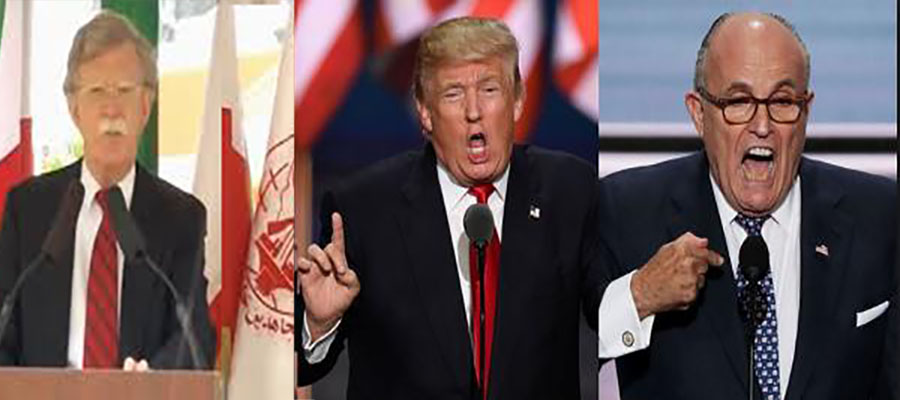
This included support from many members of current US President Donald Trump’s campaign team – including Rudy Giuliani, Newt Gingrich, and John Bolton.

However, despite these efforts, MEK was not capable then or now of accomplishing the lofty goal of instigating full-fledged insurrection against Tehran, necessitating the use of other armed groups.

Under a section of the paper “Which Path to Persia 2009” titled, “Finding a Conduit and Safe Haven,” Brookings notes:

Of equal importance (and potential difficulty) will be finding a neighboring country willing to serve as the conduit for U.S. aid to the insurgent group, as well as to provide a safe haven where the group can train, plan, organize, heal, and resupply.

For the US proxy war on Syria, Turkey and Jordan fulfill this role.

Brookings noted in 2009 that:

A group not mentioned by Brookings in 2009, is the Islamic State. Despite claims that it is an independent terrorist organization propelled by black market oil sales, ransoms, and local taxes, its fighting capacity, logistical networks, and operational reach demonstrates vast state sponsorship.

The Islamic State reaching into Iran, southern Russia, and even as far as western China was not only possible, it was inevitable and the logical progression of US policy as stated by Brookings in 2009 and verifiably executed since then.

The Islamic State represents the perfect “proxy”.Surrounding the Islamic State’s holdings are US military bases, including those illegally constructed in eastern Syria.

Here US-Senator John McCain meets in Syria with ISIS. The head in the red circle belongs to al-Baghdadi,  the Jewish Mossad-Agent, who is the boss of the Isis

The use of terrorism, extremists, and proxies in executing US foreign policy, was demonstrated definitively during the 1980s when the US with the assistance of Saudi Arabia and Pakistan – used Al Qaeda to expel Soviet forces from Afghanistan. This example is in fact mentioned explicitly by Brookings policymakers as a template for creating a new proxy war – this time against Iran.

For the US, there is no better stand-in for Al Qaeda than its successor the Islamic State.  With terrorists now killing people in Tehran, it is simply verification that this agenda is advancing onward.

In reality, the Islamic State – like Al Qaeda before it – depends on the state sponsorship the US, Europe, and its regional allies in the Persian Gulf are providing. It is also sponsorship they can – at anytime of their choosing – expose and end. They simply choose not to in pursuit of regional and global hegemony.

The 2009 Brookings paper is a signed and dated confession of the West’s proclivity toward using terrorism as a geopolitical tool. While Western headlines insist that nations like Iran, Russia, and China jeopardize global stability, it is clear that they themselves do so in pursuit of global hegemony.

by Anders , new.euro-med.dk

June 20, 2017 0 comments
FacebookTwitterPinterestWhatsappTelegramSkypeEmail
Mujahedin Khalq; A proxy force

Americans take responsibility for recent joint Saudi/ISIS/MEK terror

Delighted by Tehran attacks, GOPer says they ‘may be Trump strategy’

A US congressman says a recent deadly attack by Daesh Takfiri terrorists against Iranian people may be American President Donald Trump’s “strategy.”

Republican Congressman Dana Rohrabacher, 69, who is a member of the US House of Representatives representing California’s 48th congressional district, made the provocative remarks on Thursday, during a House Foreign Affairs Committee hearing on Lebanon’s Hezbollah resistance movement.

Rohrabacher, while apparently hailing the deadly attacks as a positive development, said he believed that the terror attacks were conducted by “Sunni forces,” which he said had to be provoked to stage attacks in Iran.

“Isn’t it a good thing for us to have the United States finally backing up Sunnis who will attack Hezbollah and the Shia threat? Isn’t that a good thing?” he asked, adding that the attacks could be “a signal, a ratcheting up of certain commitments by the US” against Iran.

Rohrabacher’s comments came a day after several gunmen stormed Iran’s parliament and the Mausoleum of Imam Khomeini in two coordinated attacks. At least 17 people lost their lives and nearly 50 others were wounded in the assaults, which involved shootings and blasts. Daesh claimed responsibility for the near-simultaneous assaults.

“If this is so, may be this is a Trump’s strategy of actually supporting one group against another, considering that you have two terrorist organizations,” he further said.

Resorting to history, Rohrabacher even implied that he advocated the idea of teaming up with Daesh to battle Iran, asserting that even though Joseph Stalin was a “horrible guy,” US leaders cooperated with him in defeating Adolf Hitler and the Nazi Germany.

“Maybe we should consider having” Daesh on the one hand, and Iran and Hezbollah on the other, “fighting each other,” he concluded.

Washington considers Hezbollah as a terror organization despite the fact that its fighters have fended off several Daesh attacks inside Lebanon. They have also been providing assistance to Syrian army forces to counter the ongoing foreign-sponsored militancy.

Rohrabacher’s remarks came on the same day as Trump made contradictory comments on the Tehran attacks, almost condemning the victims instead of the Daesh terrorists.

“We underscore that states that sponsor terrorism risk falling victim to the evil they promote,” claimed Trump on Thursday.

June 20, 2017 0 comments
FacebookTwitterPinterestWhatsappTelegramSkypeEmail
Mujahedin Khalq; A proxy force

With ISIS or MKO! Proxy War Go on for the US Warmongers

While American Congressman Rohrabacher believes that terror attacks by ISIS that kill innocent people in Iran are legitimate when directed against a hostile regime, his country’s Secretary of State Rex Tillerson confirms that his goal about Iran, remains regime change.

According to Think Progress, Tillerson said the US policy as it stands is to rely on “elements inside of Iran” who can be supported toward the end goal of regime change, with the hope it would be a “peaceful transition of that government.” [1]

As Think Progress asserts, “elements inside of Iran who can be supported toward the end goal of regime change” might be the Mujahedin Khalq terrorist organization (the MKO/ MEK/ Cult of Rajavi). [2] Coincidently the MKO has bribed several US Congressmen such as Dana Rohrabacher in exchange for their support.

On Thursday, June 8th, the day after the twin attacks in Tehran, Rep. Dana Rohrabacher (R-CA) praised the recent Islamic State attack as a “good thing” and suggested that maybe the United States should work with the militant organization. [3]

“It’s no surprise that Rohrabacher is so anti-Iran he is willing to praise the Islamic State for conducting an attack in the country”, writes Adrienne Mahsa Varkiani of Think Progress. “The congressman is a vocal supporter of regime change as well as a huge advocate of the Mujahedin-e Khalq (MEK), a cult-like group known for human rights abuses which wants to overthrow the Iranian government and which was classified as a terrorist organization by the U.S. government until 2012.”[4]

On the other hand, we see Congressman Ted Poe who is also an ardent supporter of the MKO and he is the very person who encouraged Secretary Tillerson to imply his support for the anti-Iran groups like the MKO. “Tillerson’s remarks were in response to questioning from Rep. Ted Poe (R-TX), a vocal supporter of the Mojahedin-e-Khalq (MEK), whose members were in attendance at the briefing”, states Daruis Namazi of National Iranian American Council (NIAC). “Rep. Poe (R-TX) asked Tillerson whether the U.S. supports “a peaceful regime change” and whether it is U.S. policy “to lead things as they are or set up a peaceful long-term regime change.” Tillerson implied that, it was U.S. policy to move toward supporting regime change, stating the U.S. would “work toward support of those elements inside of Iran that would lead to a peaceful transition of those governments.” [5]

As a matter of fact, “Peaceful transition of government” is nothing but a mirage. As far as the US hardliners count on terrorist violent groups like the MKO, ISIS etc. nothing will be peaceful. Namazi believes, “Such an endorsement is more likely to be a boon to groups seeking to violently overthrow the Iranian government, such as the MEK. As a result, the Trump administration could be headed toward repeating the mistakes of the U.S.-sponsored overthrow of Mohammad Mossadeq in 1953.” [6]

The American journalist Tony Cartalucci goes further implying that the US has already started the agenda of violent regime change in Iran using proxy forces like the MKO. He bases his arguments on the official document of the Brookings Institution 2009, titled, “Which Path to Persia? Options for a New American Strategy toward Iran”. In the paper, “the use of then US State Department-listed foreign terrorist organization Mujahedin-e Khalq Organization (MEK) as a proxy for instigating a full-fledged armed insurgency not unlike that which is currently unfolding in Syria was discussed in detail.” [7]

As Cartalucci reports, Brookings policy makers admit the MKO’s violent past including the assassination of six US military personnel and civilians in the 1970s in Iran. However, the group was delisted in 2012 following a multi-million-dollar lobbying campaign. Since then the group reopened its Washington office and ratcheted up its large scale anti-Iran drive but it was not successful.  “However, despite these efforts, MEK was not capable then or now of accomplishing the lofty goal of instigating full-fledged insurrection against Tehran, necessitating the use of other armed groups,” Cartalucci writes. [8]

Other armed group’s seems to include the ISIS for the US warmongers which will not substantially be able to lead a “peaceful” transition of governments. The so-called “peaceful transition” will not be fulfilled by using the MKO either. The group’s violent past with terrorist attacks that claimed the lives of thousands of innocent civilians and government officials is undeniable. Moreover, the MKO’s alliance with the then Iraqi dictator Saddam Hussein during the eight years of the Iran-Iraq war eradicated the little support they enjoyed among the Iranian public opinion.

Pual Pillar of the National Interest clarifies how the MKO’s violent past helped the Iranian security forces get experienced enough to cope with such incidents. “The principal perpetrator of terrorism in Iran over the past four decades has been the Mujahedin-e Khalq (MEK), the Marxist/Islamist cult/terrorist group that prior to the revolution had claimed Americans among its victims,” Pillar writes.  “Thanks largely to the MEK’s activity, Iran necessarily has had much experience in countering terrorism.  Khamenei lost the use of his right arm when he was injured by an MEK bomb in an assassination attempt in 1981.” [9]

Obviously, proxy wars using terrorist groups and/or ethnic minorities is of no use but causing the Iranian people more united. As they proved it after the last week’s terrorist attacks in Tehran sharing images and messages of solidarity like #together-with-Iran and #united-we-stand.

By Mazda Parsi

References:

[1]Varkiani, Adrian Mahsa, Tillerson calls for regime change in Iran, Think Progress, June 15, 2017

[2] ibid

[3] Varkiani, Adrienne Mahsa, Republican congressman praises ISIS attack in Iran, says US should, Think Progress, June 10, 2017

[4] ibid

[5] Namazi, Darius, Secretary Tillerson Eschews Iran Diplomacy in Favor of Regime Change, NIAC Council, June 15, 2017

[6] ibid

[7] Cartalucci, Tony, Tehran Was Always America’s And Thus The Islamic State’s Final Destination, New Eastern Outlook, June 11, 2017

[8] ibid

[9] Pillar, Paul R, Terrorism in Tehran: Reality Confounds Rhetoric Mujahedin Khalq, the National Interest, June 11, 2017

June 19, 2017 0 comments
FacebookTwitterPinterestWhatsappTelegramSkypeEmail
Newer Posts
Older Posts

Recent Posts

  • The black box of the torture camps of the MEK

    December 24, 2025
  • Pregnancy was taboo in the MEK

    December 22, 2025
  • MEPs who lack awareness about the MEK’s nature

    December 20, 2025
  • Why did Massoud Rajavi enforce divorces in the MEK?

    December 15, 2025
  • Massoud Rajavi and widespread sexual abuse of female members

    December 10, 2025
  • Facebook
  • Twitter
  • Instagram
  • Youtube

© 2003 - 2025 NEJAT Society . All Rights Reserved. NejatNGO.org


Back To Top
Nejat Society
  • Home
  • Articles
  • Media
    • Cartoons
    • NewsPics
    • Photo Gallery
    • Videos
  • Publications
    • Books
    • Nejat NewsLetter
    • Pars Brief
  • About Us
  • Contact us
  • Editions
    • عربي
    • فارسی
    • Shqip