Nejat Society
  • Home
  • Articles
  • Media
    • Cartoons
    • NewsPics
    • Photo Gallery
    • Videos
  • Publications
    • Books
    • Nejat NewsLetter
    • Pars Brief
  • About Us
  • Contact us
  • Editions
    • عربي
    • فارسی
    • Shqip
Nejat Society
Nejat Society
  • Home
  • Articles
  • Media
    • Cartoons
    • NewsPics
    • Photo Gallery
    • Videos
  • Publications
    • Books
    • Nejat NewsLetter
    • Pars Brief
  • About Us
  • Contact us
  • Editions
    • عربي
    • فارسی
    • Shqip
© 2003 - 2024 NEJAT Society. nejatngo.org
Mujahedin Khalq; A proxy force

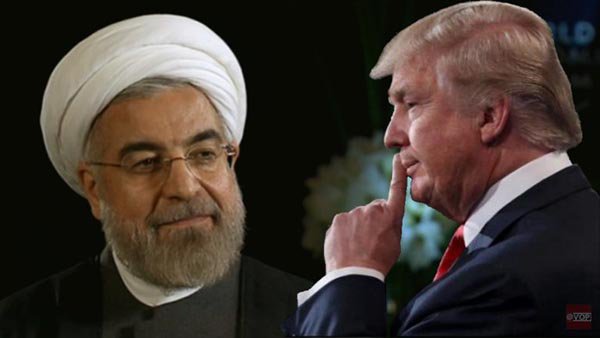
Secretary Tillerson Eschews Iran Diplomacy in Favor of Regime Change

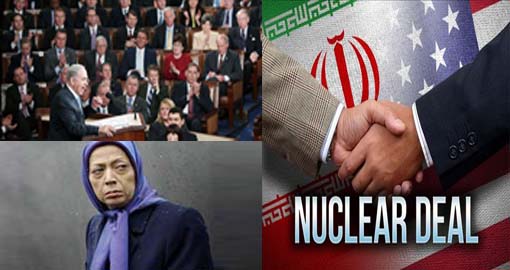
Secretary of State Rex Tillerson indicated he has no plans for negotiations with Iran and expressed favor for moving to support elements within Iran intent on regime change during testimony on the State Department budget in the House Foreign Affairs Committee yesterday. Tillerson’s remarks are certain to ratchet up tensions with Iran, where elements remain deeply suspicious of U.S. intentions and have levied charges on ordinary citizens for alleged collaboration with hostile powers.

Tillerson’s remarks were in response to questioning from Rep. Ted Poe (R-TX), a vocal supporter of the Mojahedin-e-Khalq (MEK), whose members were in attendance at the briefing. Rep. Poe (R-TX) asked Tillerson whether the U.S. supports “a peaceful regime change” and whether it is U.S. policy “to lead things as they are or set up a peaceful long-term regime change.” Tillerson implied that, it was U.S. policy to move toward supporting regime change, stating the U.S. would “work toward support of those elements inside of Iran that would lead to a peaceful transition of those governments.”

The Obama administration was careful to avoid associating itself definitively and publicly with efforts to topple the regime, recognizing that it could undermine the cause of the Iranian people seeking to move their government in a more moderate direction as well as opportunities for negotiations. Further, given Tillerson’s dismissal of Iran’s elections when the moderate Hassan Rouhani trounced the hardline Ebrahim Raisi, it is unlikely Tillerson is endorsing the method that Iranian voters have chosen – gradual change through participation. Such an endorsement is more likely to be a boon to groups seeking to violently overthrow the Iranian government, such as the MEK. As a result, the Trump administration could be headed toward repeating the mistakes of the U.S.-sponsored overthrow of Mohammad Mossadeq in 1953.

On top of Tillerson’s effective endorsement of regime change, the top diplomat gave no indication that he had considered engaging Iran diplomatically. In response to a question from Rep. Ted Deutch (D-FL) on whether he would press his Iranian counterparts on the whereabouts of his constituent, Bob Levinson, who disappeared in Iran in 2007, Tillerson stated “I have no current schedule to meet with the Iranians.”

Similarly, in testimony before the Senate Foreign Relations Committee on Tuesday, Tillerson dismissed suggestions from Sen. Murphy to engage in direct negotiations with Iran over Yemen. According to Tillerson, “The Iranians are part of the problem…They are not directly at the table because we do not believe they have earned a seat at that table. We would like for the Iranians to end their flow of weapons to the Houthis, in particular their flow of sophisticated missiles to the Houthis. We need for them to stop supplying that, and we are working with others as to how to get their agreement to do that.”

In a further departure from the Obama administration, Tillerson ascribed hegemonic aspirations to Iran, despite the fact that it is being outspent militarily 5 to 1 by Saudi Arabia. Tillerson stated that the U.S., “must counter Iran’s aspirations of hegemony in the region.” President Obama described Iran as a regional power and urged Saudi Arabia to learn how to coexist.

However, Tillerson did decline to endorse the designation of the Iranian Revolutionary Guard Corps (IRGC) as a terrorist organization when questioned by Rep. Poe, stating, “we continually review the merits both from the standpoint of diplomatic but also from international consequences of designating the Iranian Revolutionary Guard in its entirety as a terrorist organization.” An Iran sanctions bill that just passed the Senate (S. 722) would push the Trump administration to issue such a designation, and Poe has been pushing a similar measure in the House.

While the Iran policy review is currently still underway, Sec. Tillerson’s effective endorsement of regime change, disinterest in Iran negotiations and continued harsh rhetoric bodes ill for the administration’s yet-to-emerge strategy.

By Darius Namazi

June 17, 2017 0 comments
FacebookTwitterPinterestWhatsappTelegramSkypeEmail
Iran Interlink Weekly Digest

Iran Interlink Weekly Digest – 193

++ Among reactions to the MEK’s planned event at Villepinte in France on 1 July are those who point out that the MEK first became a mercenary force on 30 Khordad (21 June 1981) because from that time the decision had already been made that the MEK could not survive as an opposition group but only as a mercenary force for sale to foreign powers. What is happening now therefore is not a surprise. Other Farsi commentators ridicule the MEK’s advertising campaign. Saber from Tabriz writing in Iran Interlink selects an MEK piece titled ‘The Great Wave of People of the World in Villepinte’ and asks “are you deluded or do you think the people of the world are deluded? What ‘great wave of people’ are you talking about? You have lost the plot. You might believe this inside the organisation, but the rest of the world is laughing at you.”

++ On the subject of Villepinte, yesteday new documents were exposed by several Arab academics in Paris along with former MEK members. These documents show the MEK price list for hiring speakers and audience at the Villepinte event. For hiring an Arab minister or MP the price is 10,000 Euros for 100 minutes attendance including a speech. For academics and lecturers the price is 5,000 Euros for a ten minute speech. For a Team Leader who can recruit audience members, the pay is 1,500 euros. Individual asylum seekers who attend will be paid 30-50 Euros per day. On top of this, expenses for transport, hotel accommodation and meals will be paid according to the hired person’s ranking whilst in Paris.

++ Several articles following the terrorist attack in Iran identify similarities between the MEK and the so-called Islamic State’s (IS) modus operandi. None claim that the MEK were involved but say that IS learned from them tactics. The techniques and ideological systems have a lot in common; the MEK were the first to use suicide bombing in Iran for example, the actual targets, the involvement of women, etc.

++ There are reports from Tirana that the MEK are inviting ex-members who are still under their control to gather for meals under the pretext of the evening Ramadan meal of Iftar. During these gatherings MEK agents recruit and groom people to fight with each other or to follow each other or report on each other. There are some ex-members who refuse to remain with the MEK and are vocal about these conditions and don’t bow to MEK threats. The MEK tells controlled dissidents not to speak to three specific people. They ask the controlled ex-members to write to the UNHCR and Albanian government to complain against these three people.

In English:

++ Tony Cartalucci writing in Activist Post says that the terrorist attacks on Tehran are “the literal manifestation of US foreign policy”. Examining the Brookings Institution document ‘Which Path to Perisa?’, Cartalucci identifies the MEK as a proxy force that could be used to engineer regime change in Iran. Similarly, Al Qaida was used as a proxy force in Afghanistan against Soviet Russia. This time a template for a new proxy war is being created against Iran and Islamic State now substitute AQ.

++ Paul Pillar, The National Interest, ‘Terrorism in Tehran: Reality Confounds Rhetoric’. “For anyone looking beyond rhetoric and at reality, the attack is no surprise. Iran has been one of the staunchest and most active foes of ISIS. Probably the main reason an attack like this had not happened any earlier is the difficulty that ISIS has had in finding recruits among Iranians… The principal perpetrator of terrorism in Iran over the past four decades has been the Mujahedin-e Khalq (MEK), the Marxist/Islamist cult/terrorist group that prior to the revolution had claimed Americans among its victims. Thanks largely to the MEK’s activity, Iran necessarily has had much experience in countering terrorism.”

++ Ali Vaez, International Crisis Group, ‘Iran Unites as Tehran Struck by Middle East’s Proxy Wars’. “If this indeed was, as it claimed, an attack by the Islamic State of Iraq and Syria (ISIS), it would constitute the first time the organisation has been able to strike Iran inside its borders. But terrorist attacks are not new to Iran. In the early years of revolutionary turmoil, the leftist-Islamist Mojahedin Khalq (MEK) resorted to violence. In the 1980s, up to 120 terrorist attacks occurred in Tehran perpetrated by MEK and other violent groups…

“Consequently, the Islamic Republic developed a powerful counter-terrorism capacity through intelligence and security forces that, along with its paramilitary Basij militia, turned Iran into one of the most stable countries in the region – at the cost of highly repressive methods. The only exception to Iran’s successful counter-terrorism record was the assassination of Iranian nuclear scientists at the height of the standoff over Iran’s nuclear program. But those were targeted assassinations as opposed to indiscriminate terrorist attacks.”

++ Eric Draitser, Mint Press News, ‘The Sordid History of State Sponsored Terrorism Against Iran’. The article details the long-term use of the MEK as a proxy force to commit terrorism and violence against Iran and Iranians. “For instance, take the oft-touted “freedom fighters” of the Mujahideen-e-Khalq (MEK; also known as MKO), a terrorist group hailed as heroes by the U.S. neoconservative establishment, despite having been officially recognized by the U.S. government as a terrorist organization from 1997 through 2012.  Indeed, so warm and cozy were these terrorists with policymakers, including key government officials, that through an intensive lobbying campaign, including advocacy from former Secretary of State Hillary Clinton, the MEK was officially removed from the State Department’s list of foreign terrorist organizations.

“Never mind the fact that MEK was implicated by the Obama Administration itself as having colluded with Israel in assassinating Iranian nuclear scientists, a blatant violation of international law. But of course, this was nothing for MEK, whose history is one of assassination and terror against Iran.”

++ An analysis by Adam Garrie in The Duran ‘A communist terrorist group in Albania must be condemned by all friends of Iran’, claims that “the Albanian based MEK could have helped Saudi funded ISIS to carry out the terrorist attack on Iran”. Garrie’s article points out that the ideological differences between the groups could be overcome because both are mercenary forces. Although no-one believes the MEK are capable of carrying out such an attack using its own forces, there is scope for an alliance on things like intelligence sharing. “Furthermore, studies have shown that like ISIS, the MEK also receives funding from Saudi Arabia…  the NATO member state of Albania is guilty of harbouring and facilitating terrorism, something that Serbia has warned of for many years. Albania is the place where the MEK, ISIS, NATO and Europe meet. If Iran wants to truly avenge this atrocity, it must focus on not only its traditional Middle Eastern enemies, but also on Albania.”

++ Mazda Parsi in Nejat Society writes about ‘The legacy of the MKO in ISIS attacks in Tehran’ finds traces of MEK influence in the ISIS attacks on Tehran. “ The role of the MKO terrorists in the bloody parts of the Iranian modern history is so highlighted that no journalist could conceal the fact. Any news report that covered the recent terrorist acts in Tehran had to name the MKO as the first suicide terrorists to launch massive acts of violence against Iranian civilians and authorities… A lot of MKO operations were suicidal. Firing grenades in public places, throwing fire into public places and other violent acts by the MKO agents were the shocking scenes that the Iranian citizens eye-witnessed repeatedly during the 1980s. In case the MKO operatives were at risk of being arrested by the security forces they would swallow cyanide capsules. And now after four decades the MKO methods is exactly used by the ISIS terrorists in Tehran assaults.”

June 16, 2017

June 17, 2017 0 comments
FacebookTwitterPinterestWhatsappTelegramSkypeEmail
Mujahedin Khalq; A proxy force

The Sordid History Of State Sponsored Terrorism Against Iran

For decades, Western empires have waged a silent war against Iran, using tactics ranging from supporting known terrorist groups to deposing the country’s leaders and leveraging regional rivalries. The war continues today, even as the U.S. condemns Iran for sponsoring terrorism itself.

People gather around a car as it is removed by a mobile crane in Tehran, Iran, Jan. 11, 2012. Two assailants on a motorcycle attached magnetic bombs to the car of an Iranian university professor working at a key nuclear facility, killing him and wounding two people. The assassination was later confirmed to be a joint effort by the MEK and Israeli intelligence by U.S. officials. (AP/Meghdad Madadi)

NEW YORK (Opinion)– With blood still fresh on the streets of Tehran after last week’s deadly terror attack, the U.S. was quick to condemn the attacks. But in a sadly predictable move, President Donald Trump’s White House also blamed the victim, condemning Iran as a sponsor of terrorism.

While this may seem like merely the latest instance of insensitivity on Trump’s part, it is, in fact, emblematic of the strategy of supporting terrorism against Iran that Washington has employed for decades.

The official White House statement, while expressing grief over the attacks, was noteworthy for implying that Iran itself was responsible for the tragedy. “We underscore that states that sponsor terrorism risk falling victim to the evil they promote,” reads the second sentence of the statement.

Aside from the sheer tastelessness and callous disregard for the victims of the attack, the irony of the official statement was obviously lost on Trump. Perhaps if Trump would’ve chosen to pull his head out of the posteriors of Saudi oil executives, he might realize that it is the U.S., not Iran, that has a long history of sponsoring terrorism to which it later falls victim

Moreover, if Trump had a sense of history beyond having watched all ten seasons of Ice Road Truckers, he would know that Iran has, for decades, been the victim of a terror campaign backed both directly and indirectly by the United States in the hopes of bringing regime change to the Islamic Republic, returning the country to its place as energy footstool of the West.

Perhaps, Mr. President, you could consider reading on.  You might learn something.

The recent history of terrorism against Iran

The subject of terrorism directed against the Islamic Republic of Iran would likely need a dissertation-length analysis well beyond the scope of this article. However, even a cursory examination of the use of terror against Iran reveals a number of worrying trends, with all roads leading West. 

Put another way, terrorism against Iran is as American as apple pie; as British as shepherd’s pie; as Israeli as stolen Palestinian pie.

For instance, take the oft-touted “freedom fighters” of the Mujahideen-e-Khalq (MEK; also known as MKO), a terrorist group hailed as heroes by the U.S. neoconservative establishment, despite having been officiallyrecognized by the U.S. government as a terrorist organization from 1997 through 2012.  Indeed, so warm and cozy were these terrorists with policymakers, including key government officials, that through an intensive lobbying campaign, including advocacy from former Secretary of State Hillary Clinton, the MEK was officially removed from the State Department’s list of foreign terrorist organizations.

Senator John McCain has meets with the head of the US-designated terrorist organization, Mujahedin-e Khalq Organization (MEK), Maryam Rajavi, in the Albanian capital, Tirana, April, 2017.

Never mind the fact that MEK was implicated by the Obama Administration itself as having colluded with Israel in assassinating Iranian nuclear scientists, a blatant violation of international law. But of course, this was nothing for MEK, whose history is one of assassination and terror against Iran.

As Anthony Cordesman and Adam C. Seitz noted in their book “Iranian Weapons of Mass Destruction: The Birth of a Regional Nuclear Arms Race?”:

“Near the end of the 1980-1988 Iran-Iraq War, Baghdad armed the MEK with heavy military equipment [provided by the US] and deployed thousands of MEK fighters in suicidal, mass wave attacks against Iranian forces…In April 1992, the MEK conducted near-simultaneous attacks on Iranian embassies and installations in 13 countries…In April 1999, the MEK targeted key Iranian military officers and assassinated the deputy chief of the Iranian Armed Forces General Staff…The pace of anti-Iranian operations increased during “Operation Great Bahman” in February 2000, when the group launched a dozen attacks against Iran.”

It should also be remembered that the U.S. opened its military base in Iraq to MEK, which used Camp Ashraf (also known as Camp Liberty) as a safe haven and staging area until it was closed (and MEK members killed) by former Iraqi Prime Minister Nouri al-Maliki.

Perhaps a hundred other examples of MEK terrorism against Iran, sponsored and backed by the U.S., could be provided. Suffice to say that the removal of MEK from the U.S. government’s official terror organization list was the result of a well-funded and well-orchestrated lobbying campaign with many key allies on Capitol Hill and the Beltway, including some of the most influential neoconservative figures, such as Max Boot, Daniel Pipes, David Horowitz and Rudy Giuliani.

Another way of looking at this relationship would be to say that the U.S. has been the principal sponsor of one of the most violent and prolific anti-Iranian terrorist groups.  And they are certainly not alone.

Washington has long been seen by many as a backer of, and potential handler for, the organized crime and terror organization known as Jundallah. This notorious terror organization, which has operated on both sides of the Iran-Pakistan border in the region of Sistan-Baluchestan, has been led for decades by the Rigi family, a well-known anti-government crime family, and has been linked a number of high-profile terror attacks in recent years, including a deadly October 2009 bombing that killed over 40 people, including 15 Iranian Revolutionary Guard members.

During a funeral ceremony, people mourn next to flag-draped coffins of victims of two bomb blasts in the city of Zahedan, Iran, July 17, 2010. Jundallah, which has carried out several other bombings in southeast Iran over the past few years, claimed responsibility for the blasts, which killed 27. (Fars/Ali Azimzadeh)

Counterterrorism experts have long been aware of Jundallah’s historic ties to both U.S. and Israeli intelligence.  As Foreign Policy reported in 2012, Israeli Mossad and U.S. CIA operatives essentially competed with one another for control of the Jundallah network for years. The report noted that:

“The [U.S. government] memos also detail CIA field reports saying that Israel’s recruiting activities occurred under the nose of U.S. intelligence officers, most notably in London, the capital of one of Israel’s ostensible allies, where Mossad officers posing as CIA operatives met with Jundallah officials.”

Consider for a moment the reality of what the report illustrated: U.S. intelligence officials were livid that their Israeli counterparts would meet with Jundallah while posing as CIA agents. Not only does this signal a turf war between the two ostensible allies, it indicates a much deeper and more intimate relationship between Western intelligence agencies and the anti-Iranian terror group. Considering Jundallah became the battleground between the CIA and Mossad, it’s not a stretch to say that the organization is, to some degree, influenced or even directly controlled by the U.S.

Like Jundallah, Jaish al-Adl is a terror group operating in Iran’s southeastern province of Sistan-Baluchestan, as well as Pakistan’s Balochistan Province. The group has carried out numerous attacks against Iranian government institutions, including one infamous incident in March 2014 in which five Iranian border guards were kidnapped, with one being executed later.

According to the Terrorism Research and Analysis Consortium:

“[Jaish al-Adl is] an extremist Salafi group that has since its foundation claimed responsibility for a series of operations against Iran’s domestic security forces and Revolutionary Guards operating in Sistan and Balochistan province, including the detonation of mines [link added] against Revolutionary Guards vehicles and convoys, kidnapping of Iranian border guards and attacks against military bases… Jaish al-Adl is also opposed to the Iranian Government’s active support of the Syrian President Bashar al-Assad, which they regard as an attack on Sunni Muslims…Jaish ul-Adl executes cross-border operations between the border of Iran and Pakistan and is based in the Baluchistan province in Pakistan.”

Jaish al-Adl is certainly not riding alone on the terror train, as their cousins Ansar al-Furqan – a fusion of the Balochi Harakat Ansar and Pashto Hizb al-Furqan, both of which have been operating along Iran’s eastern border with Pakistan – have entered the anti-Iran fray in recent years. 

According to the Terrorism Research and Analysis Consortium:

“[Ansar al-Furqan] characterize themselves as Mujahideen aginst [sic] the Shia government in Iran and are linked to Katibat al Asad Al ‘Ilamiya; Al-Farooq activists; al Nursra Front (JN), Nosrat Deen Allah, Jaysh Muhammad, Jaysh al ‘Adal; and though it was denied for some time, appears to have at least personal relationships with Jundallah…The stated mission of Ansar al Furqan is ” to topple the Iranian regime…”

Here one sees the intersection of the war against Iran and the ongoing war in Syria.  Sunni extremist organizations such as Jaish al-Adl and Ansar al-Furqan see their war against Iran as an extension of the war against Syrian President Bashar al-Assad, itself part of the broader jihad against Shia Islam.

Weaponizing Iraq’s Kurds against Iran?

Thanks to WikiLeaks, it is well-documented fact that Israel, as well as the U.S., have long attempted to use Kurdish groups such as PJAK (an Iraqi Kurdish terror group) to wage continued war against Iran for the purposes of destabilizing its government.  At the same time, however, both Washington and Tel Aviv have been involved on the ground with the Kurdish Special Forces by attempting to use them against Iran.

As Pulitzer Prize-winning journalist Seymour Hersh noted in 2004:   

“The Israelis have had long-standing ties to the Talibani and Barzani clans [in] Kurdistan and there are many Kurdish Jews that emigrated to Israel and there are still a lot of connection. But at some time before the end of the year [2004], and I’m not clear exactly when, certainly I would say a good six, eight months ago, Israel began to work with some trained Kurdish commandoes, ostensibly the idea was the Israelis — some of the Israeli elite commander units, counter-terror or terror units, depending on your point of view, began training — getting the Kurds up to speed.”

Ethnic Kurdish Israelis protest outside the Turkish embassy in Tel Aviv, Israel, July 8, 2010.

Iran’s leaders have been keenly aware of the presence of Israeli special forces and intelligence on the ground in Kurdistan, knowing that ultimately it is Tehran in the crosshairs. And indeed, that has been the recent history of relations between Israel and the Barzani/Talabani-led Iraqi Kurds.  As pro-Israeli blogger Daniel Bart noted:

“During most of that time there were usually some 20 military specialists stationed in a secret location in southern Kurdistan. Rehavam Zeevi and Moshe Dayan were among Israeli generals who served in Kurdistan…The Israelis trained the large Kurdish army of Mustafa Barzani and even led Kurdish troops in battle…The “secret” cooperation between Kurdistan and Israel is mainly in two fields. The first is in intelligence cooperation and this is hardly remarkable as half the world including many Muslim states have such relationships with Israel. The second is influence in Washington.”

Here again one sees the rich diversity of tactics employed by the U.S. and Israel against Iran. And while no one should be surprised that Washington and Tel Aviv would use regional antipathy and rivalries to gain leverage over and ultimately destabilize Iran, the use of terrorist groups as a weapon might come as a surprise to the uninitiated. But indeed, terrorism has been perhaps the most potent weapon in this war.

A new chapter in an old story

For Iran, the last seventy years have demonstrated that so-called “Western democracies” are actually anti-democratic and function as state sponsors of terrorism – precisely the terms hurled at Iran on a near-daily basis in the corporate media. From the CIA and MI6’s “original sin” of deposing Iran’s democratically elected Prime Minister Mohammad Mosaddeq in a coup d’etat in 1953, to imposing the U.S. puppet Shah with his secret police, torture chambers and forced disappearance of dissidents, the U.S. and its allies have been waging a terror war against the people of Iran for decades.

And what exactly is the great sin of the Iranian people? For one, they had the misfortune of residing in a country that sits atop trillions of dollars in energy reserves, making it a prime target for empires throughout the last century. Additionally, with its large, well-educated population, Iran is a lucrative market for Western corporations, so long as the pesky democratically elected government can be removed as an obstacle. And Iran, strategically located along both the Persian Gulf and Caspian Sea, bordering the Middle East and South Asia, forms a critical node in the projection of power for all Western empires, including the U.S.

For these reasons, the Islamic Republic is rightly seen by Tel Aviv and Riyadh as a regional rival, a growing power that challenges Israeli-Saudi hegemony in the region. So it should come as no surprise that Iran has been repeatedly victimized by Western-sponsored terrorism.

And  so, when the Orange Buffoon currently occupying the White House, or any of the neocons who have held the reins of US foreign policy for years, blasts Iran as a sponsor of terror at precisely the moment the country is reeling from a national tragedy, it is rather revealing. Because, indeed, it is the US and its closest allies that have the long and sordid track record of sponsoring terrorism, not Iran.

So when Trump or any of the neocons who have held the reins of U.S. foreign policy for years blasts Iran as a sponsor of terror at precisely the moment the country is reeling from a national tragedy, it is rather revealing.

It is the U.S. and other Western powers that have allowed the ISIS (Daesh) to proliferate, backed al-Qaeda, and sponsored myriad terror groups in waging war against Iran. It is Washington, Tel Aviv and Riyadh that have cast Iran as the villain and painted terror groups as legitimate resistance against the “mullocracy.”

Here again, when it comes to terrorism and U.S. foreign policy, we see the pot calling the kettle black. However, given Iran’s unwillingness to be cowed by terror, no one should be surprised if the kettle finally boils over. 

By Eric Draitser, Mint Press News,

ABOUT THE AUTHOR

Eric Draitser is a geopolitical analyst based in New York and the founder of StopImperialism.

June 15, 2017 0 comments
FacebookTwitterPinterestWhatsappTelegramSkypeEmail
Terrorist groups and the MEK

The legacy of the MKO in ISIS attacks in Tehran

The twin terrorist attacks at Iran’s parliament and Ayatollah Khomeini’s shrine committed by ISIS recalls the very similar attacks that were frequently committed by the te Mujahedin Khalq Organization about three decades ago. Actually, Iranian citizens were the first ones to witness suicide attacks in the early years of the establishment of the Islamic Republic. Today the legacy of the MKO is reproduced by the ISIS.

While Maryam Rajavi the co-leader of Rajavi’s cult of personality (the MKO) condemns the attacks in Tehran, last Wednesday’s terrorist attacks took Iranians back to the first decade after the Islamic Revolution, when her group’s terror operatives slayed many citizens and officials in the streets, residential areas, public and governmental buildings in various cities all over Iran.

,“The principal perpetrator of terrorism in Iran over the past four decades has been the Mujahedin-e Khalq (MEK), the Marxist/Islamist cult/terrorist group that prior to the revolution had claimed Americans among its victims,” Paul R.Pillar of the Strategic Culture website accurately asserts. “Thanks largely to the MEK’s activity, Iran necessarily has had much experience in countering terrorism.”

The role of the MKO terrorists in the bloody parts of the Iranian modern history is so highlighted that no journalist could conceal the fact. Any news report that covered the recent terrorist acts in Tehran had to name the MKO as the first suicide terrorists to launch massive acts of violence against Iranian civilians and authorities.

Ironically, there are only a few days left to the anniversary of the MKO’s iconic date, June 20th 1981 (Khordad 30th) which signals the official start of the group’s armed struggle against the Islamic Republic. At the time, the so-called protest of the MKO agents turned into a bloodbath. The group followers floated in the streets with any type of arms such as cutter, knife, colt and Kalashnikov… opening fire on innocent people. Since then the group committed numerous terrorist acts against the Iranian civilians and officials killing thousands of people.

A lot of MKO operations were suicidal. Firing grenades in public places, throwing fire into public places and other violent acts by the MKO agents were the shocking scenes that the Iranian citizens eye-witnessed repeatedly during the 1980s. In case the MKO operatives were at risk of being arrested by the security forces they would swallow cyanide capsules. And now after four decades the MKO methods is exactly used by the ISIS terrorists in Tehran assaults.

Today, Maryam and Massoud Rajavi should be brought to justice for “shedding blood of innocent people”. They should answer this very question that under which pretext they shed the blood of Leila Nourbahksh, the three-year-old girl who burned alive in a bus the MKO agents set on fire in Shiraz, a city in the South of Iran.

This is the first time the ISIS could manage to launch a terror act in Iran, although it has tried several times in the recent past. ISIS should know that its God father, the MKO, was once eradicated in this country, so there will be no place left of its successors.

By Mazda Parsi

June 14, 2017 0 comments
FacebookTwitterPinterestWhatsappTelegramSkypeEmail
Mujahedin Khalq; A proxy force

Terror as Opportunity: Trump Is Exploiting the Tehran Attacks

It’s strange how US President Donald Trump ignores the logic just because he believes what he likes to believe and ignores the truth.

While officially the White House is condemning the ISIL suicide attacks in Tehran, in keeping with their policy of being against ISIL, Trump’s own statement on the matter appeared less than wholly sympathetic, the man who is always in a tendency to create enemies is attributing the attacks to Iran “falling victim to the evil they promote.”

President Trump has made clear since the campaign that he does not like Iran, and spent much of his recent trip to the Middle East pushing hostility toward Iran, as well as portraying Iran as being to blame for most of the terrorism in the region. That ISIL is the world’s biggest terrorist organization, and that Iran has been heavily supporting both Iraq and Syria in fighting ISIL, doesn’t fit into Trump’s agenda. The fact that ISIL just launched cowardly terrorist attacks in Tehran is particularly damaging to the US agenda of trying to spin everything wrong in the Middle East as being Iran’s fault.

Trump’s desperate answer to this, then, is to remind everyone that Iran is a “state sponsor of terrorism,” an official designation by the US government which means effectively nothing, and only currently applies to three countries that the US doesn’t like, none of whom has anything to do with ISIL, Al-Qaeda, or other major international terrorist groups.

It’s a waste of time and effort, then, to deflect the Trump tweet as misdirected spittle. Iran is busy burying its civilian victims, working with Syria, Iraq, Russia and the Hezbollah movement to coordinate the response to this horrific and cowardly terrorist attack, and provide leadership and reassurance to its people and allies, seeing that:

– Saudi Arabia – and by association, that of US President Donald Trump – are to blame for the first ISIL assaults on potent symbols of Iranian ideology, setting the stage for spiraling tensions with Saudi Arabia, its regional minions and Trump, at a critical moment in the region.

– The consequences of attacks in Tehran will be felt around the world. The suspicious attacks came one week after the meeting of Trump with the leader of Saudi Arabia, one of the region’s reactionary regimes. It shows they are involved in this savage action.

– The attacks will make the Islamic Republic more determined in the fight against regional terrorism, extremism and violence. Tehran says it will prove once again that it will crush the enemies’ plots with more unity and more strength.

– There will be flintier measures against hardcore extremists in Iraq and Syria as well, much of it pointed in the direction of ISIL, Al-Qaeda, and their associates.

ISIL is at war, ideologically and militarily, with Iranian forces and allies in Syria and Iraq. On the other hand, ISIL has natural allies among anti-Iran regional states and terrorist groups in restive south-eastern Sistan-Baluchistan province, which has a large Sunni population. In 2010, Wahhabi extremists linked to the Jundallah network killed 39 people at a mosque in the province. Minority Kurdish terrorist groups and ethnic Arabs also have a history of small-scale attacks in the north-west and south-west respectively.

As Iranian Intelligence Minister Mahmoud Alavi says, Wednesday’s twin attacks in Tehran were not the first terrorist attempts; more than 100 terror plots had been foiled in the past two years. “This was not the first terrorist plot. Terrorists have tried to carry out more than 100 terrorist plots over the past two years, all of which have been thwarted,” Alavi said on Thursday.

In sum, the Wednesday atrocities were set against the backdrop of the anticipated collapse of ISIL’s self-declared caliphate, as Iranian-backed Iraqi and Syrian army forces, plus Russian-backed Hezbollah and volunteer forces, close in on its Mosul and Raqqa strongholds. In response to this pressure, ISIL has called on its followers to take the fight to its enemies wherever they live. Wednesday’s terror attacks fit this emerging pattern of displaced activity by ISIL.

On the other hand, well-documented covert efforts by George W Bush’s administration in the 2000s to destabilize Iran by funding militant internal terror groups are not forgotten in Tehran. Nor is unofficial, on-off American support for the Mujahedin-e-Khalq, or the MKO, a terrorist group backed by the United States that is responsible for numerous terror attacks inside Iran.

It doesn’t take a strategic mind to realize that Trump’s overt hostility is encouraging a repeat of past destabilization efforts, directly or indirectly. Overturning the previous US president Barack Obama’s policy of limited engagement, Trump has launched a blistering attack on Iran. Speaking during a visit to Riyadh, he demanded Iran’s international isolation, claiming Tehran was the world’s main exporter of “the fires of sectarian conflict and terror”.

He even trumpeted a big arms deal with the Saudis. And this week he threw his support behind Riyadh’s diplomatic and commercial ostracism of Qatar, which has tried to keep on good terms with Iran. This has led regional politicians to warn of imminent war.

All told, Riyadh is ISIL’s biggest inspiration and supporter. Iran, the European Union, and the United States are on the same side fighting the ISIL in Iraq. Unlike the autocratic Persian Gulf regimes, Iran also has a democratic political system that just came under attack, with an elected parliament and president, that confounds the “sponsor of terrorism” charge by Trump. This awkward fact seems to enrage Trump, the Saudis and ISIL in equal measure. That’s why those who live in a reality universe are better off ignoring his  tweets exploiting the Tehran attacks.

June 14, 2017 0 comments
FacebookTwitterPinterestWhatsappTelegramSkypeEmail
Mujahedin Khalq Organization as a terrorist group

A communist terrorist group in Albania must be condemned by all friends of Iran

The Albanian based MEK could have helped Saudi funded ISIS to carry out the terrorist attack on Tehran.

ISIS has claimed responsibility for today’s deadly terrorist attack in The Islamic Republic of Iran. Iran in turn has pointed a finger at Saudi Arabia which is well known as an agitator for aggression against Iran and also a major covert supporter of ISIS and al-Qaeda.

But it is another group that historically  has waged terrorist atrocities against Iran. This group is Mojahedin-e Khalq (MEK) also known as the People’s Mojahedin Organisation of Iran.

The group is an expressly stated communist terrorist group whose goal ever since the Islamic Revolution of 1979 is to overthrow the government of Iran. That being said, the group is often more than willing to forgo its ideology in order to make alliances of convenience with any state or group willing to help it pursue its penultimate goal of destroying the Islamic Republic of Iran.

Throughout the 1980s, 1990s and early 2000s the group found shelter in Iraq, but the Shi’a dominated Iraqi government kicked the group out of the country in 2009.

The group then relocated to the NATO member state of Albania, a known sponsor of semi-secular Sunni terrorism in the Balkans.

The group now thrives in Albania as does ISIS. Under the radar of international scrutiny, ISIS has quietly co-opted much of the lucrative narcotics trade in Albania from local mafia lords. The result is the early stages of a perfect storm whereby Albanian political corruption and the effective Albanian mafia state are sharing the same political geography with a communist anti-Iranian terrorist group and also ISIS.

Although there is little doubt that as the Iranian Revolutionary Guard have said, Saudi has a hand in today’s tragic event, but this does not preclude the MEK from having a hand in the attack.

Concerned parties must seriously examine whether the MEK and ISIS have forged some sort of pact beneath the radar. Such a thing is entirely possible for several reasons.

First of all, ISIS has never once carried out an attack on Iranian soil and given the secure and stable nature of Iran, it almost beggars belief that they were able to do so.

Secondly, if indeed the Saudi/ISIS hand was in play and was therefore able to penetrate deeply into Iran, in Tehran no less, which is geographically far from both Iraq and Syria, it means that whoever did this had to penetrate deeply into Iranian territory before carrying out the crime. The MEK, although with difficulty, have managed to penetrate into Iran many times before and carry out terrorist atrocities. They know the internal geography of the country far more than the average ISIS commander. Furthermore, studies have shown that like ISIS, the MEK also receives funding from Saudi Arabia.

Consequently, there is every possibility that ISIS and the MEK have forged some sort of alliance or at minimum an agreement on the sharing of intelligence.

In either case, the NATO member state of Albania is guilty of harbouring and facilitating terrorism, something that Serbia has warned of for many years.

Albania is the place where the MEK, ISIS, NATO and Europe meet. If Iran wants to truly avenge this atrocity, it must focus on not only its traditional Middle Eastern enemies, but also on Albania.

By Adam Garrie ,The Duran

June 13, 2017 0 comments
FacebookTwitterPinterestWhatsappTelegramSkypeEmail
Iran

Iran Unites as Tehran Struck by Middle East’s Proxy Wars

The 7 June attacks in Tehran struck at the symbolic heart of Iran’s revolutionary republic. In this Q&A, Ali Vaez, Senior Analyst for Iran, says the outrages show how the region’s proxy wars are now reaching far beyond the battlefield

How unusual are these attacks for Iran?

If this indeed was, as it claimed, an attack by the Islamic State of Iraq and Syria (ISIS), it would constitute the first time the organisation has been able to strike Iran inside its borders. But terrorist attacks are not new to Iran. In the early years of revolutionary turmoil, the leftist-Islamist Mojahedin Khalq (MEK) resorted to violence. In the 1980s, up to 120 terrorist attacks occurred in Tehran perpetrated by MEK and other violent groups, killing hundreds of Iranian officials, including the president and prime minister in August 1981. Even the current supreme leader, Ayatollah Khamenei, was targeted. He survived the assassination attempt, but lost full use of his right hand.

Consequently, the Islamic Republic developed a powerful counter-terrorism capacity through intelligence and security forces that, along with its paramilitary Basij militia, turned Iran into one of the most stable countries in the region – at the cost of highly repressive methods. The only exception to Iran’s successful counter-terrorism record was the assassination of Iranian nuclear scientists at the height of the standoff over Iran’s nuclear program. But those were targeted assassinations as opposed to indiscriminate terrorist attacks.

That ISIS had failed to attack Iran up until now wasn’t for lack of trying. There have been multiple reports of foiled attacks in several Iranian cities. According to Iranian officials, Iran’s intelligence agencies detected and dismantled 58 ISIS-affiliated terrorist groups in the past few years. In March 2016, the Iranian army reported killing two alleged ISIS recruits in the western province of Kermanshah. In June 2016, Iranian media reported the arrest of eighteen people who were trying to recruit new members through social media. In August that year, the Iranian intelligence minister said that authorities had prevented 1,500 young Iranians from joining ISIS. In recent months there was an uptick in its propaganda against Tehran as ISIS published a rare video in Persian in March, encouraging Iran’s Sunni minority to wage a religious war against the Shia ruling elite.

The attacks are in all likelihood linked to the extreme sectarianism of the fighting in Iraq and Syria. Iran, a Shiite Muslim power, is heavily involved in both conflicts. Salafi and Sunni Muslim groups like ISIS have long heaped vitriol on the Shiites.

In this sense, it’s not the attacks that are surprising, it’s that Iran was able to avoid one for so long. The attacks were a wake-up call for Iran’s security apparatus, but so too will they probably serve as one for jihadists, who will be encouraged to exploit Iran’s vulnerabilities.

What’s the immediate impact of this attack?

There are different voices coming out of Tehran. Some in the leadership have sought to downplay the attacks. The supreme leader said the “terrorists fumbling with fire crackers” won’t affect Iran, while the speaker of the parliament, where twelve people were killed and many were injured, called them a “trivial incident”. The Revolutionary Guards, however, have vowed revenge, drawing an unsubstantiated link between the attacks and a joint Saudi-U.S. effort to push back against Tehran’s regional policies. The minister of intelligence, however, has said it is too early to blame the Saudis. Nevertheless, the harsh rhetoric on both sides is likely to exacerbate tensions between Iran and Saudi Arabia and further diminish the already slim chance of any kind of reconciliation anytime soon.

Still, I don’t see any immediate escalation of friction between Iran and Saudi Arabia. Neither the leadership in Tehran nor the one in Riyadh appears keen on a direct confrontation. Still, with increased tensions, there is higher likelihood of miscalculation on both sides. And of course, all of this fuels sectarianism in the region, which is a gift to ISIS and al-Qaeda.

What was the symbolism of the chosen targets?

The targets seem to have been chosen in order to maximise political impact rather than fatalities. The assailants targeted two key symbolic pillars of the Islamic Republic, the mausoleum of Ayatollah Khomenei, the founder of Iran’s theocratic system, and the parliament, the centre of the country’s republican tradition. Assuming that ISIS was the perpetrator, it is striking that it claimed responsibility for the attack immediately rather than wait as it usually does. This is probably because it considers the attack a rare success as it rapidly loses ground in Iraq and Syria.

 What do you think the domestic impact will be?

Initially at least the attacks are likely to rally Iranians around the flag, but this could change quickly depending on two key questions: first, will anybody in Iran use the event politically, and how? Secondly, how were the perpetrators able to carry out these attacks?

President Rouhani is fresh from an election in which he received a strong mandate to deliver on his promise of de-securitising the domestic sphere. The attacks, however, could better enable the Revolutionary Guards to resist him and crack down on internal dissent. If Rouhani succeeds in quickly creating consensus around a path forward that would rectify security loopholes, while tolerating a higher degree of political pluralism, he might be able to prevent a counterproductive blame game and deeper polarisation. This could be done through the Supreme National Security Council, which comprises key civilian and military leaders and takes all key national security decisions in Iran. Given Rouhani’s extensive experience in the country’s national security establishment, he has the know-how to achieve this goal. But at this stage, it is too early to tell whether he will succeed or not.

The answer to the second question is becoming increasingly clear. According to Iranian officials, the perpetrators appear to be ISIS recruits from Iran’s Sunni majority provinces, who had fought for the group in Mosul and Raqqa. This could be used as a pretext to crack down in the country’s western, south-western, and south-eastern frontier provinces where Iran’s 5-10 per cent Sunni population lives. While there is little support for jihadists among Iran’s Sunni populations, despite their discontent with their treatment by central authorities, a government crackdown – if harsh enough and pursued long enough – is the kind of thing that could change that. The single most relevant factor in the radicalisation of jihadists is harsh government treatment. Interestingly, turnout in recent presidential elections was high in majority Sunni provinces like Sistan-Balouchestan (75 per cent) and Kurdistan (59 per cent). They both overwhelmingly (73 per cent) voted for the more pragmatic candidate, Rouhani.

What has been the reaction in the region?

Some countries like Turkey, Oman and Qatar denounced the attacks, but others like Saudi Arabia and Bahrain had a muted response. Some will see a comeuppance for a country that has freely interfered and stoked sectarianism in Iraq, Syria, Yemen, Lebanon and elsewhere, until now without a backlash inside its borders. The recent attacks represent a different sort of backlash as well. Iran – like every state in the region – has pulled its punches with jihadists, including al-Qaeda, so long as their guns were turned against Iran’s enemies. But tactical relations with these groups often entail collateral damage.

What has been the reaction in the rest of the world?

The U.S. State Department condemned the attacks in strong terms; but President Trump added insult to injury by underscoring that “states that sponsor terrorism risk falling victim to the evil they promote”. On the same days as the attacks, the U.S. Congress also voted to advance sanctions legislation against Iran, particularly targeting the Revolutionary Guards. Iranian foreign minister retorted on Twitter: “Repugnant [White House] statement & Senate sanctions as Iranians counter terror backed by U.S. clients. Iranian people reject such U.S. claims of friendship”.

Following social media in Iran, I was struck by how much Washington’s insensitivity has offended the Iranian public. For years, Iran watchers were baffled by how pro-American the Iranian people remained despite having a highly anti-American government and being exposed to anti-American propaganda for nearly four decades. It appears that the Trump administration, first with its travel ban, then with hostile rhetoric and now with this statement, is succeeding where the Islamic Republic failed in the past 38 years: turning Iranians against the U.S.

For their part, the European and Asian leaders didn’t hesitate to do the right thing and condemned the attacks in Tehran no less strongly than they do attacks anywhere else. The attacks are a reminder that the effects of the region’s ongoing proxy wars are felt far beyond the battlefield. ISIS’s recent losses notwithstanding, so long as those wars and sectarian demonisation continue, we should expect more tragedies of this nature.

June 13, 2017 0 comments
FacebookTwitterPinterestWhatsappTelegramSkypeEmail
Mujahedin Khalq; A proxy force

Terrorism in Tehran: Reality Confounds Rhetoric

For Americans fed a diet of rhetoric about Iran that constantly links it to the sending, not the receiving, end of terrorism—in which “the leading state sponsor of terrorism” is the adjectival phrase routinely affixed to Iran, and in which official rhetoric such as President Trump’s speech in Riyadh mashes Iran together with Sunni Islamist terrorism of the ISIS variety into one undifferentiated blob of evil—the deadly attacks today in Tehran generate much cognitive dissonance.  But however disorienting this news may have been, it is true.  An obviously well-planned operation struck at the heart of Iran, at its parliament and the monument to the Islamic Republic’s founder.  At least a dozen people were killed and dozens more injured.  The credibility of the claim of responsibility by ISIS is enhanced by the group’s posting of video footage from the attack.

For anyone looking beyond rhetoric and at reality, the attack is no surprise.  Iran has been one of the staunchest and most active foes of ISIS.  Probably the main reason an attack like this had not happened any earlier is the difficulty that ISIS has had in finding recruits among Iranians.  Iran has, partly with its own personnel but mainly through material support of clients and allies, been a leader in combating ISIS, especially in Iraq and to a lesser extent in Syria.  Many Iraqis give Iran, with good reason, the main credit for saving Baghdad from ISIS when the group was making its dramatic territorial gains in northern and western Iraq in 2014.  If the United States could overcome its current hang-up about doing any business with Iran, it would find a worthwhile partner in many aspects of counterterrorism, especially as far as the fight against ISIS is concerned.

There has long been a willingness, and a necessary awareness of shared interest, on the Iranian side.  In September 2001, immediately after the 9/11 attacks on New York and Washington, both Supreme Leader Ali Khamenei and then-President Mohamed Khatami strongly condemned the attacks.  Expressions of sympathy in Iran for the American victims included candlelight vigils and observing a minute of silence by tens of thousands of people at a sporting event.  Two weeks after the attack, Khatami stated, “Iran fully understands the feelings of the Americans about the attacks in New York and Washington.”  Khatami correctly noted that American administrations had been at best indifferent about terrorist attacks in Iran since the revolution of 1979, but that Iranians felt differently and were expressing their sympathies accordingly.

We wait to hear from the Trump administration the kind of expression of sympathy and solidarity that commonly is offered to foreign nations that have become victims of major terrorist attacks.  We should not hold our breath while waiting.  The Iranians certainly aren’t.  They have experienced a long history of American postures toward Iran, in the context of a common terrorist threat, that have ranged from indifference at best to door-slamming at worst.  In the first few months after 9/11, Iranian officials worked cooperatively and effectively with U.S. officials to midwife a new regime in Afghanistan to replace the Taliban.  The Iranians thought this could be the beginning of further cooperation against a common threat.  But then the United States slammed the door shut, as George W. Bush declared an axis of evil in which Iran was lumped together with North Korea and Saddam Hussein’s Iraq.

The principal perpetrator of terrorism in Iran over the past four decades has been the Mujahedin-e Khalq (MEK), the Marxist/Islamist cult/terrorist group that prior to the revolution had claimed Americans among its victims.  Thanks largely to the MEK’s activity, Iran necessarily has had much experience in countering terrorism.  [Ayatollah] Khamenei lost the use of his right arm when he was injured by an MEK bomb in an assassination attempt in 1981.  The U.S. handling of the MEK in recent years has seen the U.S. Government succumbing to a well-financed lobbying campaign on behalf of the group, with that campaign winning much support for the group in the U.S. Congress and the group eventually being removed from the U.S. list of Foreign Terrorist Organizations.  If the crippled Khamenei exhibits some reflexive anti-U.S. sentiments, do you suppose this history has something to do with it?

Right now, on the very day of the terrorist attacks in Tehran, the United States Senate is scheduled to take its first vote on a bill that would impose still more sanctions on Iran.  It appears the most immediate American response to the attacks will be sanctions on, not sympathy for, the victim.

In the months ahead, Iran may take actions outside its borders in response to the attacks.  The United States, ever since 9/11, has claimed a right for itself to be ruthlessly aggressive in the name of responding to terrorism, lashing out with force while sometimes being little restrained by collateral damage or international law (not to mention its own constitutional requirements).  Iran may see a need to be more aggressive in places such as Iraq or Syria in the interest of fighting back against ISIS.  Will the United States grant Iran the same kind of slack it grants itself?  Or, as has been customary in opposing anything Iran does and taking no account of exactly what interests are being advanced or threatened, will the Iranian responses be denounced as more “nefarious,” "malign," and “destabilizing” behavior?

 By Paul R. Pillar , National Interest

June 11, 2017 0 comments
FacebookTwitterPinterestWhatsappTelegramSkypeEmail
Mujahedin Khalq; A proxy force

Consequences of attacks in Tehran will be felt around the world

In targeting the Iranian parliament and the tomb of the Islamic Republic’s founder, Ayatollah Ruhollah Khomeini, the terrorists who went on a lethal rampage in Tehran on Wednesday chose the two most potent symbols of the 1979 revolution.

For ordinary Tehranis, comparatively safe in recent years from such outrages, the attacks are deeply shocking.

The apparently coordinated assaults have been blamed by Iran’s hardline Islamic Revolutionary Guard Corps (IRGC) on Saudi Arabia and, whatever the truth of the allegation, they are likely to have a big political impact far beyond Iran, stoking tensions with the US, Saudi Arabia and the Sunni Muslim monarchies of the Gulf.

Islamic State quickly claimed responsibility – if true, it would mean the militant group has finally succeeded in importing its divisive brand of random terror into the home of its principal Shia Muslim adversary.

The mausoleum where Khomeini was laid to rest almost exactly 28 years ago, on 6 June 1989, is an enormous complex dominating the skyline south of Tehran. Its cavernous halls are visited by tens of thousands of Iranians each year, who treat it as a shrine. Unlike the fortress-like Majlis (parliament) building in the centre of the city, security is light. That will change now.

For Iranians, the attack on Khomeini’s tomb is the equivalent of somebody trying to blow up the Lincoln Memorial in Washington DC. If the Isis claim of responsibility proves truthful, this will be the first time the group has successfully struck in the heart of Iran, although it has reportedly tried several times in the recent past.

Isis is at war, ideologically and militarily, with Iranian forces and allies in Syria and Iraq. In a video released in March, it vowed to “conquer Iran and restore it to the Sunni Muslim nation as it was before”. The jihadis claim that Iran’s clerical leaders, and their royal Persian predecessors, have persecuted Sunnis for centuries.

Isis has natural allies among militant groups in Iran’s restive south-eastern Sistan-Baluchistan province, which has a large Sunni population. In 2010, Sunni extremists linked to the Jundallah network killed 39 people at a mosque in the province. Minority Kurdish groups and ethnic Arabs also have a history of small-scale attacks in the north-west and south-west respectively.

Wednesday’s atrocities will be set against the backdrop of the anticipated collapse of Isis’s self-declared caliphate, as Iranian-backed Iraqi and Syrian army forces, plus US and British-backed Kurdish militias, close in on its Mosul and Raqqa strongholds.

In response to this pressure, Isis has called on its followers to take the fight to its enemies wherever they live. Recent terror attacks in Manchester, Kabul, Baghdad, Marawi in the southern Philippines and London may fit this emerging pattern of displaced activity by Isis followers.

Conservative Iranian leaders and commentators will certainly follow the IRGC’s lead and discern the hand of Saudi Arabia – and, by association, that of the US president, Donald Trump – in Wednesday’s attacks.

Well-documented covert efforts by George W Bush’s administration in the 2000s to destabilise Iran by funding militant internal opposition groups are not forgotten in Tehran. Nor is unofficial, on-off American support for the Mujahedin e-Khalq, or People’s Mujahadin of Iran, a group formerly backed by Saddam Hussein that was responsible for numerous armed attacks inside Iran. 

The question now is whether Trump’s overt hostility is encouraging a repeat of past destabilisation efforts, directly or indirectly. Overturning the previous US president Barack Obama’s policy of limited engagement, Trump launched a blistering attack on Iran last month. Speaking during a visit to Riyadh, he demanded Iran’s international isolation, claiming Tehran was the world’s main exporter of “the fires of sectarian conflict and terror”.

His host, King Salman, accuses Iran of “spearheading global terrorism”. Egged on by Israel, Trump has threatened to tear up Obama’s landmark 2015 nuclear deal with Iran.

He trumpeted a big arms deal with the Saudis. And this week he threw his support behind Riyadh’s diplomatic and commercial ostracism of Qatar, which almost alone among Gulf Arab states has tried to keep on good terms with Iran. This has led regional politicians to warn of imminent war.

Iran’s leaders reject Trump’s accusations out of hand. They say Riyadh is Isis’s biggest inspiration and supporter, and point out that Iran and the US are on the same side fighting the jihadis in Iraq.

Unlike the autocratic Gulf regimes, Iran also has a quasi-democratic political system, with an elected parliament and president, that confounds the “sponsor of terrorism” image. This awkward fact seems to enrage Trump, the Saudis and Isis in equal measure.

By Simon Tisdall

June 11, 2017 0 comments
FacebookTwitterPinterestWhatsappTelegramSkypeEmail
Iran Interlink Weekly Digest

Iran Interlink Weekly Digest – 192

++ Maryam Rajavi did not condemn the two terrorist attacks in Iran. Her websites have gone around the subject, condemning terrorism in general but not this event. In response to this MEK formers say that although the MEK is not capable of actually carrying out such an attack, they are involved in this kind of work. Rajavi’s reaction comes about because the MEK is part and parcel of Saudi Intelligence. Just as Rajavi could never condemn anything that Saddam Hussein did, so Rajavi cannot condemn anything the Saudis do. There is every indication therefore that Iran is correct in saying that Saudi Arabia is behind this event.

++ Several MEK formers in Albania have written open letters addressed to various officials and governments. Some write with information about how they are being mistreated – the UNHCR refuses to pay them their individual refugee allowances and pays it instead to the MEK organisation. Some write appealing to the international community to help them not be terrorists. The UNHCR action is forcing them to remain with a terrorist group.

In English:

++ A group of MEK formers in Albania writing as ‘Azadi Association’ have noted that former UN Rapporteur Ahmad Shahid intends to meet with Maryam Rajavi in Albania. They ask him to ensure that he also meets with former and current members, without the presence of MEK minders, to discover what they have to say.

++ Reza  Jebelli of Payvand Rahahee Association writes an open letter to Gerard Collomb, French Interior Minister. Jebelli says that as a European citizen with long experience of MEK terrorist activity, it is his duty to warn the French government of the continued threat posed by the MEK. He highlights the MEK’s annual celebration of armed struggle in June as an example of this.

++ Various articles covering the two terrorist attacks inside Iran last week raise the possibility of MEK involvement. They identify typical hallmarks of MEK terrorist behaviour – including the use of cyanide tablets and the involvement of a female perpetrator. Although none believe that the MEK could have actually been involved directly, they propose that the MEK could have been involved in the planning, training and logistical support from their bases in Paris and Tirana.

++ Press TV reports that in the US, Republican Congressman Dana Rohrabacher expressed his “delight” at the terrorist attacks on Iran and hopes that more such aggression against Iran will follow.

 June 09, 2017

June 11, 2017 0 comments
FacebookTwitterPinterestWhatsappTelegramSkypeEmail
Newer Posts
Older Posts

Recent Posts

  • The black box of the torture camps of the MEK

    December 24, 2025
  • Pregnancy was taboo in the MEK

    December 22, 2025
  • MEPs who lack awareness about the MEK’s nature

    December 20, 2025
  • Why did Massoud Rajavi enforce divorces in the MEK?

    December 15, 2025
  • Massoud Rajavi and widespread sexual abuse of female members

    December 10, 2025
  • Facebook
  • Twitter
  • Instagram
  • Youtube

© 2003 - 2025 NEJAT Society . All Rights Reserved. NejatNGO.org


Back To Top
Nejat Society
  • Home
  • Articles
  • Media
    • Cartoons
    • NewsPics
    • Photo Gallery
    • Videos
  • Publications
    • Books
    • Nejat NewsLetter
    • Pars Brief
  • About Us
  • Contact us
  • Editions
    • عربي
    • فارسی
    • Shqip