Nejat Society
  • Home
  • Articles
  • Media
    • Cartoons
    • NewsPics
    • Photo Gallery
    • Videos
  • Publications
    • Books
    • Nejat NewsLetter
    • Pars Brief
  • About Us
  • Contact us
  • Editions
    • عربي
    • فارسی
    • Shqip
Nejat Society
Nejat Society
  • Home
  • Articles
  • Media
    • Cartoons
    • NewsPics
    • Photo Gallery
    • Videos
  • Publications
    • Books
    • Nejat NewsLetter
    • Pars Brief
  • About Us
  • Contact us
  • Editions
    • عربي
    • فارسی
    • Shqip
© 2003 - 2024 NEJAT Society. nejatngo.org
Mujahedin Khalq; A proxy force

Tehran Was Always America’s And Thus The Islamic State’s Final Destination

Several were left dead and many more injured after coordinated terror attacks on Iran’s capital of Tehran. Shootings and bombings targeted Iran’s parliament and the tomb of Ayatollah Khomeini.

According to Reuters, the so-called “Islamic State” claimed responsibility for the attack, which unfolded just days after another terror attack unfolded in London. The Islamic State also reportedly took responsibility for the violence in London, despite evidence emerging that the three suspects involved were long known to British security and intelligence agencies and were simply allowed to plot and carry out their attacks.

It is much less likely that Tehran’s government coddled terrorists – as it has been engaged for years in fighting terrorism both on its borders and in Syria amid a vicious six-year war fueled by US, European, and Persian Gulf weapons, cash, and fighters..

Armed Violence Targeting Tehran Was the Stated Goal of US Policymakers

The recent terrorist attacks in Tehran are the literal manifestation of US foreign policy. The creation of a proxy force with which to fight Iran and establishing a safe haven for it beyond Iran’s borders have been long-stated US policy. The current chaos consuming Syria and Iraq – and to a lesser extent in southeast Turkey – is a direct result of the US attempting to secure a base of operations to launch a proxy war directly against Iran.

In the 2009 Brookings Institution document titled, “Which Path to Persia? Options for a New American Strategy toward Iran,” the use of then US State Department-listed foreign terrorist organization Mujahedin-e Khalq Organization (MEK) as a proxy for instigating a full-fledged armed insurgency not unlike that which is currently unfolding in Syria was discussed in detail.

The report explicitly stated:

The United states could also attempt to promote external Iranian opposition groups, providing them with the support to turn themselves into full-fledged insurgencies and even helping them militarily defeat the forces of the clerical regime. The United states could work with groups like the Iraq-based National council of resistance of Iran (NCRI) and its military wing, the Mujahedin-e Khalq (MeK), helping the thousands of its members who, under Saddam Husayn’s regime, were armed and had conducted guerrilla and terrorist operations against the clerical regime. although the NCRI is supposedly disarmed today, that could quickly be changed.

Brookings policymakers admitted throughout the report that MEK was responsible for killing both American and Iranian military personnel, politicians, and civilians in what was clear-cut terrorism. Despite this, and admissions that MEK remained indisputably a terrorist organization, recommendations were made to de-list it from the US State Department’s Foreign Terrorist Organization registry so that more overt support could be provided to the group for armed regime change.

 Based on such recommendations and intensive lobbying, the US State Department would eventually de-list MEK in 2012 and the group would receive significant backing from the US openly. This included support from many members of current US President Donald Trump’s campaign team – including Rudy Giuliani, Newt Gingrich, and John Bolton.

However, despite these efforts, MEK was not capable then or now of accomplishing the lofty goal of instigating full-fledged insurrection against Tehran, necessitating the use of other armed groups. The 2009 Brookings paper made mention of other candidates under a section titled, “Potential Ethnic Proxies,” identifying Arab and Kurdish groups as well as possible candidates for a US proxy war against Tehran.

Under a section titled, “Finding a Conduit and Safe Haven,” Brookings notes:

Of equal importance (and potential difficulty) will be finding a neighboring country willing to serve as the conduit for U.S. aid to the insurgent group, as well as to provide a safe haven where the group can train, plan, organize, heal, and resupply.

For the US proxy war on Syria, Turkey and Jordan fulfill this role. For Iran, it is clear that US efforts would have to focus on establishing conduits and safe havens from Pakistan’s southwest Balochistan province and from Kurdish-dominated regions in northern Iraq, eastern Syria, and southeastern Turkey – precisely where current upheaval is being fueled by US intervention both overtly and covertly.

Brookings noted in 2009 that:

It would be difficult to find or build an insurgency with a high likelihood of success. The existing candidates are weak and divided, and the Iranian regime is very strong relative to the potential internal and external challengers.

 A group not mentioned by Brookings in 2009, but that exists in the very region the US seeks to create a conduit and safe haven for a proxy war with Iran, is the Islamic State. Despite claims that it is an independent terrorist organization propelled by black market oil sales, ransoms, and local taxes, its fighting capacity, logistical networks, and operational reach demonstrates vast state sponsorship.

The Ultimate Proxy, the Perfect Conduit and Safe Haven

The Islamic State reaching into Iran, southern Russia, and even as far as western China was not only possible, it was inevitable and the logical progression of US policy as stated by Brookings in 2009 and verifiably executed since then.

The Islamic State represents the perfect “proxy,” occupying the ideal conduit and safe haven for executing America’s proxy war against Iran and beyond. Surrounding the Islamic State’s holdings are US military bases, including those illegally constructed in eastern Syria. Were the US to wage war against Iran in the near future, it is likely these assets would all “coincidentally” coordinate against Tehran just as they are now being “coincidentally” coordinated against Damascus.

The use of terrorism, extremists, and proxies in executing US foreign policy, and the use of extremists observing the Islamic State and Al Qaeda’s brand of indoctrination was demonstrated definitively during the 1980s when the US with the assistance of Saudi Arabia and Pakistan – used Al Qaeda to expel Soviet forces from Afghanistan. This example is in fact mentioned explicitly by Brookings policymakers as a template for creating a new proxy war – this time against Iran.

For the US, there is no better stand-in for Al Qaeda than its successor the Islamic State. US policymakers have demonstrated a desire to use known terrorist organizations to wage proxy war against targeted nation-states, has previously done so in Afghanistan, and has clearly organized the geopolitical game board on all sides of Iran to facilitate its agenda laid out in 2009. With terrorists now killing people in Tehran, it is simply verification that this agenda is advancing onward.

Iran’s involvement in the Syrian conflict illustrates that Tehran is well aware of this conspiracy and is actively defending against it both within and beyond its borders. Russia is likewise an ultimate target of the proxy war in Syria and is likewise involved in resolving it in favor of stopping it there before it goes further.

China’s small but expanding role in the conflict is linked directly to the inevitability of this instability spreading to its western Xianjiang province.

While terrorism in Europe, including the recent London attack, is held up as proof that the West is “also” being targeted by the Islamic State, evidence suggests otherwise. The attacks are more likely an exercise in producing plausible deniability.

In reality, the Islamic State – like Al Qaeda before it – depends on vast, multinational state sponsorship – state sponsorship the US, Europe, and its regional allies in the Persian Gulf are providing. It is also sponsorship they can – at anytime of their choosing – expose and end. They simply choose not to in pursuit of regional and global hegemony.

The 2009 Brookings paper is a signed and dated confession of the West’s proclivity toward using terrorism as a geopolitical tool. While Western headlines insist that nations like Iran, Russia, and China jeopardize global stability, it is clear that they themselves do so in pursuit of global hegemony.

Tony Cartalucci, Bangkok-based geopolitical researcher and writer, especially for the online magazine “New Eastern Outlook”, where this article first appeared.

Activist Post.com

June 11, 2017 0 comments
FacebookTwitterPinterestWhatsappTelegramSkypeEmail
Mujahedin Khalq; A proxy force

ISIS Attacks in Tehran Expose US-Saudi Lies About Iran

On Wednesday June 7 two groups of terrorists staged stunning attacks in Tehran, Iran. Three of the terrorists attacked the mausoleum of Ayatollah Ruhollah Khomeini, the leader of the 1979 Revolution. One terrorist blew himself up, another was killed by the security forces, and a third one, apparently a woman, was arrested. At the same time, three other terrorists entered the Majles [parliament] building and took several people hostage, but were eventually killed by the security forces. Altogether, the terrorist attacks killed at least 12 innocent Iranians and injured more than 40. The Sunni terrorist group Daesh (also known as the ISIS or ISIL) took responsibility, and threatened more terrorist attacks. There are rumors in Tehran that the terrorist were Iranian Kurds recruited by Daesh.

These attacks have occurred exactly two weeks after President Donald Trump’s trip to Saudi Arabia in which he took sides with that nation and other Sunni reactionary regimes in the Persian Gulf area against Iran, and declared that Iran provides “safe harbor, financial backing, and the social standing needed for recruitment” of the terrorist, and “Iran funds, arms, and trains terrorists, militias, and other extremist groups that spread destruction and chaos across the region. For decades, Iran has fueled the fires of sectarian conflict and terror.”

This is, of course, the same man who during his campaign last year told us that the Saudis were “mouth pieces, bullies, cowards,” who were “paying ISIS.” But, milking the Saudis to the tune of over $400 billion in arms sales, weapons that will be used to kill the people of Yemen and other Muslims in the region, has its price, and the price that Trump is paying is encouraging more support for terrorism by Saudi Arabia.

Iran has long been a victim of terrorism. In the 1980s the Mujahidin-e Khalgh Organization, usually referred to as the MEK or MKO, murdered up to 17000 people in Iran. Even the United States listed the MEK as a terrorist organization for well over a decade. The Baluchi terrorist group Jundallah staged several terrorist attacks in Iran from its bases in Pakistan, killing scores of civilians. Just last month, Jaish al-Adl, another Baluchi Sunni terrorist group, attacked from Pakistan and murdered 10 Iranian border guards. Iranian-Arabs, supported by Arab regimes of the Middle East, and in particular Saudi Arabia, have carried out several terrorist attacks in the oil-rich province of Khuzestan in southwest Iran.

At the same time, Iran has been at the forefront of the struggle against radical terrorist groups. It played a pivotal role in toppling the Taliban regime in Afghanistan in the fall of 2001. Without Iran’s help, Iraq’s Capital Baghdad would have fallen to Daesh in June 2014. The war in Syria has been imposed on the Syrian people by the terrorist groups that are supported by Saudi Arabia and its allies, namely, Qatar, United Arab Emirates, Turkey, and Jordan, as acknowledged even by Joe Biden at Harvard University in October 2014, and by Hillary Clinton, and Iran has been fighting Daesh there. This is while Israel supports the Jabhat al-Nusra, the al-Qaeda Syrian branch, by treating their wounded fighters in Israel and returning them to the fields.

And, yet, Trump’s national security team is virulently anti-Iran, espousing false propaganda and lies again that nation. In particular, Defense Secretary James “mad dog” Mattis has said, “Iran is not an enemy of ISIS [Daesh]; they have a lot to gain from the turmoil that ISIS creates,” and, “What is the one country in the Middle East that has not been attacked by ISIS? One. That is Iran. That is more than happenstance, I’m sure.” These statements are pure fabrication and are due to Mattis’ decades-long grudge against Iran. Israel, not Iran, is the only nation that has not been attacked by Daesh. Several plots for terrorist attacks by Daesh against Iran were discovered in the past before being carried out by them. Wednesday’s attacks by Daesh in Tehran exposed the lie propagated by Mattis. Most recently, Mattis said in Saudi Arabia, “Everywhere you look if there is trouble in the region, you find Iran,” which is another lie by the Defense Secretary. To see this, consider just the past six years, since the beginning of the Arab Spring.

Saudi Arabia’s finger prints are on every trouble sport in the Middle East. Not only did Saudi Arabia support NATO attacks on Libya, it also provided “Arab legitimacy” for it by creating the false impression that all Arabs supported the attacks. Saudi Arabia opposed the revolution in Egypt, and supported the military coup that toppled the democratically-elected government of Mohamed Morsi. Saudi Arabia invaded Bahrain in order to prevent the Shiites, who make up 75 percent of Bahrain’s population, from gaining their democratic rights and overcoming discriminations by the Sunni minority.

Saudi Arabia’s role in creating Daesh is well documented. For example, in one secret e-mail Hillary Clinton wrote, “We need to use our diplomatic and more traditional intelligence assets to bring pressure on the governments of Qatar and Saudi Arabia, which are providing clandestine financial and logistic support to Isis and other radical groups in the region.” Saudi Arabia has been bombing Yemen for over two years, committing war crimes, and Mattis and Pentagon support it. After Tunisia, Saudi Arabia provides more terrorists to Daesh than any other nation (and Iran has supplied none).

A few weeks ago, Mohammad bin Salman, Saudi Arabia’s deputy crown prince and defense minister threatened Iran with war, claiming that, “We are a primary target for the Iranian regime,” accusing Iran falsely of seeking to take over Islamic holy sites in Saudi Arabia. “We won’t wait for the battle to be in Saudi Arabia. Instead, we’ll work so that the battle is for them in Iran,” Salman added. Speaking in Paris on June 6, Saudi Arabia’s Foreign Minister Adel al-Jubeir declared that Iran must be punished “for its support of al-Qaeda,” another lie by a fascist regime that spends billions of dollars every year to support terrorism. Al-Jubeir’s memory is short, but the world’s is not: Osama bin Laden was a Saudi citizen, as were 15 of the 19 terrorists that attacked the United States on 11 September 2001. Six out of every ten terrorists that joined al-Qaeda in Iraq, the forebear of Daesh, were Saudi citizens.

Iran and Iranians do not want any war with Saudi Arabia. They just re-elected President Hassan Rouhani because they support his moderate foreign policy that had kept Iran isolated from any attack by the Sunni terrorist groups, his rapprochement with the European Union, and his efforts for lessening tension with the United States. Saudi Arabia and its allies will be fully responsible for any war the might be imposed on Iran and its people.

By Muhammad Sahimi,

June 10, 2017 0 comments
FacebookTwitterPinterestWhatsappTelegramSkypeEmail
Mujahedin Khalq; A proxy force

Iran terror attack: Who gains?

In the past, I had a well-informed Israeli source who confirmed Israeli participation in assassinations of Iranian nuclear scientists and explosions at missile bases. Unfortunately, this source passed away some time ago. So what I write here will be based on informed speculation.

Who gains from the rather spectacular terror attack on two of Iran’s most secure and hallowed institutions: the Majlis and Ayatollah Khomeni’s tomb? Of course, the Islamic State (IS) group, which has claimed responsibility, and with whom Iran is engaged in a vicious battle in Syria and Iraq. Nominally, that is likely the case.

But no terror group, no matter how adept could manage to organise and execute an operation of this sort. It required the help of one or more national intelligence agencies.

Those who have the most to gain and most capability are the Saudis and Israelis. Both hate the Iranians (for different reasons). Since they know they cannot yet sabotage the most important sign of Iranian reconciliation with the West– the P5+1 nuclear deal – the next best thing is a dramatic strike at the heart of Iran itself.

Handing a child to an Iranian security guard during terror attack (Fars/Omid Vahabzadeh via AP)

Not waiting for battle?

As I wrote earlier this week, Saudi Arabia’s new king and crown prince are hardliners flexing their nation’s military might in Yemen and Syria. Iran is yet another enemy they long to defeat.

For this reason, the Gulf states’ newly declared attack and siege against Qatar, a result in some measure of its moderate stance regarding Iran, is part and parcel of this hardening of relations in the region. All of which is directed from Riyadh.

More support for the claim of Saudi support, if not direct involvement, comes from a statement which the kingdom’s deputy crown prince made in early May: “We won’t wait for the battle to be in Saudi Arabia. Instead, we will work so that the battle is for them in Iran,” Salman added.

It’s more than a coincidence that just last month, Voice of Israel’s Persian service went off the air in Israel as a result of the transition to a new broadcasting model, despite the protests of veteran Israeli Persian hands like broadcaster Menashe Amir. On Wednesday, just hours after the terror attack, the Persian service (which is largely funded by the Israeli defence ministry) suddenly resumed operations. Trust me, developments like that in Israel are not accidental.

Exploiting grievances

Meir Dagan, when he was Mossad chief, told an Israeli interviewer that Israel exploited internal ethnic grievances inside Iran to foment strife and terror attacks. Thus it’s no surprise that, according to Muhammad Sahimi, the editor of Iran News & Middle East Reports, the attackers in Tehran were reported to be Iranian (Sunni) Kurds who nurse longstanding aspirations for autonomy within Iran.

The Mujahedeen-e-Khalq (MEK), a long-standing Iranian opposition group, has collaborated with the Israelis on those earlier operations. So they are likely to have played a role as well. The group retains thousands of secret supporters within Iran who would have helped smuggle arms into the country, stashed them once they arrived, located safe houses for the attackers, and helped scout out the targeted sites.

Nor can we discount the newly unleashed terror capabilities of the CIA under its new director of Iran operations, “Ayatollah” Michael D’Andrea. It’s wholly credible that since Trump cannot yet abolish the nuclear deal, that he’s chosen the next best thing: appointing a CIA leader with a “knife in his teeth” primed to shed the blood of Iranians in the streets of Iran.

In terms of who gains, let’s not forget another major beneficiary: Iran’s hardliners in the Revolutionary Guard and clerical class. Their view of the world sees enemies everywhere, especially among Sunni Muslims and the West. Now they can spin a tale of all those parties uniting in desperate measures to spill the blood of Shia martyrs. A perfect script for the conservatives.

Pouring kerosene on a bonfire

But overall, what does this attack gain for anyone involved? Mainly, it serves to unite the anti-Iran coalition. It raises the flag of the rejectionists who see Iran as the ultimate evil. It also strengthens the rejectionists in Iran and weakens the moderates led by newly-re-elected President Hassan Rouhani.

Though Ayatollah Khamenei’s hand-picked candidate lost badly in the election, the supreme leader and his conservative allies will have little trouble arguing that such violence deserves an angry and forceful response: the opposite of the position the moderates would take.

This attack sets the tone for the coming years: tit-for-tat terror attacks against Iranian and Saudi targets, part of an ongoing intra-Muslim feud that could inflame the entire region, if not the world – with the US president doing his level best to pour kerosene on the bonfire.

Those Western nations who envision a different future must unite to fight back against this approach. They must produce a moderate, conciliatory policy which eases sanctions, promotes trade and cultural engagement, and establishes a viable alternative to this bloodbath. They must act now or face the consequences. Inaction means death.

Middle East Eye

This piece originally ran on Tikun Olam.

– Richard Silverstein writes the Tikun Olam blog, devoted to exposing the excesses of the Israeli national security state. His work has appeared in Haaretz, the Forward, the Seattle Times and the Los Angeles Times. He contributed to the essay collection devoted to the 2006 Lebanon war, A Time to Speak Out (Verso) and has another essay in the upcoming collection, Israel and Palestine: Alternate Perspectives on Statehood (Rowman & Littlefield).

June 10, 2017 0 comments
FacebookTwitterPinterestWhatsappTelegramSkypeEmail
Mujahedin Khalq; A proxy force

Fallout from Iran attacks spells trouble to come in wider Middle East

A week after Donald Trump stirred up tensions in the Middle East with his visit to Saudi Arabia, and just after Qatar was ostracised by several other countries for its supposed links to terrorism, a brace of terror attacks in Iran have turned up the heat even further.

In Tehran on June 7, four men attacked one of the gates of the Iranian parliament building. After opening fire on a guard, they entered the lobbies and shot a number of visitors and staff. After several hours and exchanges of gunfire, they were killed by Iranian special forces. At the same time, several attackers fired on visitors at the Mausoleum of Ayatollah Khomeini, founder of the Islamic Republic. All in all, the two events left at least 17 dead and more than 43 injured.

Iran’s Supreme Leader dismissed the attacks as “fireworks … too small to affect the will of the Iranian nation and its officials”. Sure enough, the display of unity inside Iran was immediate and powerful, with social media booming with expressions of solidarity and defiance of terror (#درکنار همیم)

We Stand Together

artwork by: @_AMiRATHAN_ #PrayForTehran #PrayForIran #wearetogether#همه_با_هميم #درکنارهمیم pic.twitter.com/E8wKTgLXdF

— ehsan (@eh_asgari) June 7, 2017

We are Together

ALWAYS AND FOREVER #IRAN#درکنارهمیم #در_کنار_همیم pic.twitter.com/VDUlNlktxQ

— خون آشامِ صورتی ⚜ (@nilooffar) June 7, 2017

The so-called Islamic State (IS) soon claimed responsibility for the attack, reiterating that “in the holy month of Ramadan the reward of killing misbelievers” – that is, the Shia Muslims who constitute the majority of Iran’s population – “is multiplied”.

If the claim of responsibility is to be believed, this isn’t the first time IS has invited its followers to exterminate Shia populations, or attacked them. In recent months, it has attacked a Shia neighbourhood in Baghdad, Iraqi Shia pilgrims near Damascus, and a 12th-century Shia mosque in Herat in Afghanistan. It also left a bomb near Shia stronghold al-Dahiyeh in south Beirut, which was found and dismantled.

The day after the attack, Iranian authorities announced that the terrorists were allegedly connected to Wahabi cells operating under the IS network in Mousul and Raqqa, and that they followed Abu Ayesheh, a high-ranking commander of IS, who had tried in August 2016 to carry out terror attacks in Iran’s religious cities. If this account is accurate, these were therefore IS’s first successful attacks in Iran proper.

That said, the attack was also sophisticated enough that it might have been beyond IS’s abilities inside Iran – and according to Iran’s own Ministry of Intelligence, the attackers were themselves Iranians. Given that IS doesn’t have a popular base inside Iran, this might point to the tactical support of the exiled revolutionary group

A stamp commemorating the victims of the MEK’s 1981 bombing.

MEK or the Baluchi separatist group Jundullah.

Mojahedin-e Khalq (MEK) is an Iranian terrorist group dedicated to violently overthrowing Iran’s government and which had been expelled from the country since the early 1980s. The Obama administration removed it from the US’s list of terror groups after an intense lobbying campaign in Washington DC, but its involvement in violence is well-known in Iran. In 1981, it was blamed for planting a powerful bomb in the headquarters of the ruling Islamic Republic Party, killing dozens of leading state officials.

Then there’s the Jundullah group, a violent separatist organisation that’s previously received the backing of both Saudi Arabia and the US in the hope of undermining Iran’s domestic security and stability. In 2009, it killed 42 Revolutionary Guards, including a top general, with an explosive device in a mosque in Baluchistan.

Wedge issue

As with many terror attacks, the timing of these incidents is particularly relevant. The Revolutionary Guards’ statement after the attacks overtly connected them with Donald Trump’s visit to the Middle East, during which the US president met with his Saudi and Israeli counterparts and decried Iran for supposedly sponsoring terrorism and extremism – basically putting the country back in the George W. Bush-era “Axis of Evil” hall of shame.

This view has gained currency among several Arab countries since Trump’s election. Only a month ago, the Saudi crown prince, while ruling out any possible dialogue with Tehran, stated that the struggle for regional influence will “take place inside Iran”, implying that regime change and support for armed resistance inside Iran were cards on the table.

When the latest attacks struck, the world’s major players found themselves on two sides. The UN Secretary General, Antonio Guterres, condemned the attack and invited everyone to join forces to fight terrorism; the EU High Representative for Foreign Affairs, Federica Mogherini, expressed solidarity with her Iranian counterpart, Mohammad Javad Zarif, and heads of state from all corners sent missives of condolence and support. Similarly, France, Italy, Germany as well as most of the countries in the Global South expressed their condolences to the Iranian authorities. The UK’s Theresa May remained silent, a sign that indicates alignment with the US-Saudi front.

In fact, the Saudi foreign minister declined to address Iran directly, while the Trump White House’s statement was predictably both pointed and tactless: “States that sponsor terrorism risk falling to the evil they promote.” Zarif, for his part, called the statement “repugnant” and claimed it was mounted by IS terrorists with US backing.

The rifts on display here are growing. On the one hand, as Iran-backed military efforts help drive IS back in Iraq and Syria, Tehran is starting to look like a logical strategic partner for the EU in its efforts against radical Islamist terrorism. But on the other hand, this is precisely the sort of cooperation that the US, Israel and Saudi Arabia are keen to curtail.

These hawkish powers look set to keep up sanctions on banking, threaten retaliation against companies willing to invest in Iran, invest in propaganda and intense lobbying, and may yet mount military operations, covert or otherwise.

Trump’s trip to Saudi Arabia yielded a proposed but unconfirmed arms deal that the president announced would amount to more than US$110 billion. Whether or not that’s true is highly disputed, but as a statement of intent, it clearly signals where Trump’s sympathies lie as far as the Middle East’s major powers are concerned.

Hence, Tehran finds itself part of the web of terror attacks that had already touched upon London, Manchester, Paris, Kabul and many other cities. But the stakes at play here risk leading to a regional confrontation with dangerous international underpinnings.

Maziyar Ghiabi, The Conversation,

Maziyar Ghiabi,Doctor in Politics at University of Oxford and Visiting Fellow at the American University of Beirut, University of Oxford

June 10, 2017 0 comments
FacebookTwitterPinterestWhatsappTelegramSkypeEmail
Mujahedin Khalq; A proxy force

Revolutionary Guards blame Saudi Arabia for Tehran terror attack

Military force ratchets up tensions with Riyadh after 12 killed in Iran’s capital

Iran’s Revolutionary Guards ratcheted up the tensions with Saudi Arabia as it accused Tehran’s regional rival of involvement in Wednesday’s double terrorist attack in the capital, which left at least 13 people dead and wounded more than 50.

Gunmen and suicide bombers launched simultaneous attacks on the parliament building in Tehran and the nearby shrine of Ayatollah Ruhollah Khomeini, the Islamic Republic’s founder.

The attacks were claimed by Isis, in what would be the jihadi group’s first significant strike in the Islamic Republic. However a statement from the Revolutionary Guards linked the “brutal attack” to Donald Trump’s visit last month to Riyadh, where the US president singled out Iran for fuelling “the fires of sectarian conflict and terror”.

“This terrorist act took place a week after a joint meeting between the US president and head of a reactionary regional country [Saudi Arabia] which has been a constant supporter of terrorism,” the statement said. “The fact Isis claimed responsibility proves that they [Saudi Arabia] were involved in the brutal attack.”

Speaking in Berlin, Adel Al-Jubeir, Saudi Arabia’s foreign minister, denied the accusation of involvement and said there was no evidence that his country was involved. “We condemn terrorist attacks anywhere they occur and we condemn the killing of the innocent anywhere it occurs,” Mr al-Jubeir was quoted by Reuters as saying.

Hassan Rouhani, Iran’s president, condemned the attacks, without laying the blame at the feet of Saudi Arabia. However, the accusation from the powerful Revolutionary Guards will stoke the increasingly bitter enmity between Tehran and Riyadh, which are involved in proxy wars from Syria to Yemen.

Iran’s foreign minister, Mohammad Javad Zarif, tweeted, “Terror-sponsoring despots threaten to bring the fight to our homeland. Proxies attack what their masters despise most: the seat of democracy.”

Mr Zarif seemed to be pointing at a comment last month by the Saudi deputy crown prince Mohammed bin Salman that any struggle for influence between Riyadh and Tehran would take place “inside Iran, not in Saudi Arabia”.

“We know that the aim of the Iranian regime is to reach the focal point of Muslims [Mecca] and we will not wait until the fight is inside Saudi Arabia and we will work so that the battle is on their side, inside Iran, not in Saudi Arabia,” Prince Mohammed said in a television interview.

The attacks also come at a sensitive moment in the Gulf, where a new rift opened this week pitting Qatar, with whom Tehran has ties, against Saudi Arabia, the United Arab Emirates, Egypt and Bahrain. The quartet on Monday severed diplomatic ties with Qatar and accused Doha of supporting terrorism.

Hamid-Reza Taraghi, a senior politician close to Tehran’s hardliners, blamed a combination of Saudi Arabia, the US, Isis and the exiled opposition group MEK for Wednesday’s attacks. “Saudi Arabia is definitely playing the leading role in these incidents, considering that its foreign ministry threatened Iran two to three days ago,” he said, referring to a call by Riyadh for Iran to be punished for supporting terrorism. He provided no evidence to support his claims.

His view was echoed by others, though they did not provide evidence either. “The fact that these two attacks took place . . . after that [Riyadh] meeting means that both the US and the Saudi regime have ordered their proxies to embark on that act,” Brigadier-General Hossein Nejat of the Revolutionary Guards told a local news agency.

Mohsen Rezaei, a former Revolutionary Guards commander, warned terrorists to expect a “tough and unforgettable” response from Iran.

Mr Trump’s administration is viewed as much more hawkish on Iran than the previous government of Barack Obama. Tehran has long accused Saudi Arabia of supporting Isis.

The assault began at 10.30am local time when three gunmen (earlier reports had said four) in women’s clothing walked into the building and began shooting. One detonated an explosive vest. All the attackers were killed after a stand-off lasting several hours, Iran’s interior ministry said.

Two further gunmen also opened fire at the Ayatollah Khomeini shrine in the Iranian capital. One was reported to have killed himself by detonating an explosive vest. Another was shot dead. Based on a video released by Isis, the attackers spoke Arabic. Brigadier-General Nejat said the nationality of the attackers was not yet clear, but an Iranian official told state television on Wednesday night that they were Iranian.

At least 13 people were killed in the two attacks, Pir-Hossein Kolivand, head of Iran’s emergency department, was quoted as saying by the official Irna news agency on Thursday.

Isis on Wednesday vowed further attacks on Iran, saying “Persia should know that the state of the caliphate will not miss an opportunity for an onslaught against them”.

Iranian officials said security forces remained on high alert.

Terrorist attacks are rare in Iran, which keeps a tight grip on domestic security. The country has largely been spared from militant attacks despite its heavy support of Shia militias in Syria and Iraq, which has increased sympathies among some of those countries’ Sunni populations for radical groups such as Isis.

If Iran steps up its fight against Isis in the wake of Wednesday’s attack, the situation in the region could become even more volatile, analysts say. Charlie Winter, senior research fellow at the International Centre for the Study of Radicalisation at King’s College London, said the attack could boost Isis’s flagging morale and intensify pressure on Tehran to step up its involvement in Syria against the jihadis. “If this happens, a more intense ‘Sunni war against Shia Islam’ will pour petrol on Isis’s ideological fire,” he said.

Security analysts outside of Iran have long argued that it has not been attacked because it tolerated the presence of al-Qaeda and the movement of communications and finances through the country. But for Isis, which is not reliant on foreign financing, Iran has long been a target.

Members of Iranian forces during attack on the Iranian parliament in central Tehran © Reuters

While it is difficult to gauge the extent of an Isis presence in Iran, the group has long sought to attract people from Iran’s Sunni minority. Last March, it released a 36-minute video in Persian, vowing to conquer Iran. In the video, militants used photographs of Iranian leaders for target practice, including Qassem Soleimani, commander of the Revolutionary Guards’ elite Quds force.

The Financial Times Limited 2017. All rights reserved. You may share using our article tools. Please don’t cut articles from FT.com and redistribute by email or post to the web.

by: Monavar Khalaj in Tehran and Erika Solomon in Beirut

June 10, 2017 0 comments
FacebookTwitterPinterestWhatsappTelegramSkypeEmail
Mujahedin Khalq Organization members' families

My Son will Come Back

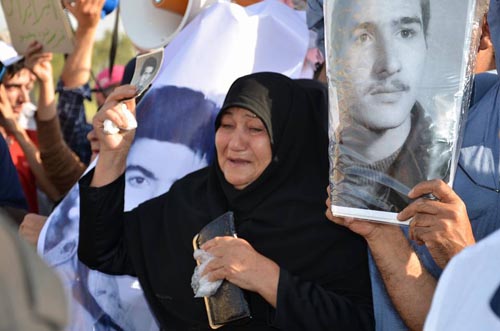
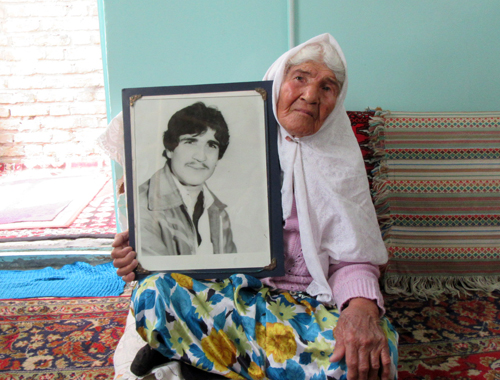
Ms. Shahi is the suffering mother of Abbas Shahi. Abbas is taken hostage by the Mujahedin-e Khalq now for years.

The aged mother says:” we raised our children with difficulty and adversity. Rajavi deceived them. Rajavi will have no good future. I am sure that my dear son will come back to me …”

Abbas’s  brother said:” we will do our utmost efforts to release my brother from this terrorist cult. Rajavi has no place in Iran. ..”

My son will come back

June 8, 2017 0 comments
FacebookTwitterPinterestWhatsappTelegramSkypeEmail
UN

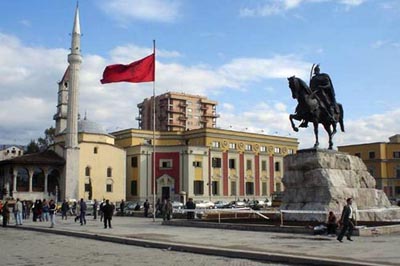
Open letter of “Azadi Associaition”, the survivors in Albania to Dr. Ahmed Shaheed

With respect,

We have been informed that you have travelled to Albania intending to meet with Maryam Rajavi the wife of Massoud Rajavi, leader of the Mojahedin Khalq Organisation (aka MEK, NCRI). We have also discovered that, in an interview with Albanian media and to the question of the reporter about your views about the Mojahedin Khalq (Rajavi cult), you have responded: “I have not yet met them [MEK] but I have heard they don’t have any problems in Albania”.

Dear Dr Shaheed,

We are a group of ex-members of the MEK in Albania who are residing in Tirana. We have all sorts of problems caused by the group. We are amazed that a person like you has not heard about all these problems here.

How can you accept that a political refugee in Albania instead of receiving his/her benefits (housing, payment, medical care, etc.) from the UNHCR and the local authorities and national government of Albania, is forced to get it as a hand-out from the leadership of the Mojahedin Khalq Organisation? And how is it not obvious to you that the MEK uses this arrangement to take all sorts of advantages whether political, social, personal and even extending it to the misuse of our families?

Why don’t you and the UNHCR arrange a situation so that the ex-members and members alike could receive their benefits directly from the UNHCR according to the UN’s own clear laws? Don’t you think that the refusal of the UNHCR office in Tirana to apply the UN laws and the help it gives to the MEK to put pressure on the ex-members and members alike is a breach of UN laws pertaining to refugees and their fundamental human rights?

Don’t you think it would be better that you, instead of only arranging to meet with Maryam Rajavi, would also perhaps visit a few of the ex-members trapped in Tirana? Or even visit a few members inside the Mojahedin Khalq and have private conversations with them without the presence of MEK minders?

Dr Shaheed,

Unfortunately, Iran over the past years has been the main beneficiary of your clandestine and deeply suspicious and corrupt relationship with the Mojahedin Khalq Organisation and its criminal leaders. And unfortunately you alongside the MEK have been the biggest obstacle in pushing forward the issue of human rights in Iran.

Your honor, are you aware of the violation of Human Rights in this Cult like Organization?

Amongst them:

-Prevention of the members from outside world even their children and families.

-Military use of the children.

-Suppression of the dissident members, imprisonment, torture, and killing them at the time of Sadam Hossein the late Iraqi dictator.

-Force divorcing the members from their spouse and separating the children from their parents.

-Running systematic mind manipulation and inquisition sessions, against the members.

Your honor

At the end we would like to express our gratitude and appreciation to your honor and thank you again for all your humanitarian activities.

With best regards

“Azadi Associaition”, the survivors in Albania

Cc:

– UN Secretary General

– Mr Filippo Grandi, UN High Commissioner for Refugees

– Ministers of Affairs of the EU

– Relevant MEPs

Iran Azadi,

June 6, 2017 0 comments
FacebookTwitterPinterestWhatsappTelegramSkypeEmail
France

Open letter to the Honorable Gerard Collomb, French Interior Minister

Dear Honorable Minister,

My name is Reza Jebelli. I am a former member of Rajavi cult, who had been for most of my life in captivity both physically and mentally in Iraq in Ashraf Garrison for many years.

I have learned through my friends that Maryam Rajavi is scheduled on July first to celebrate the anniversary of armed conflict, terror and killing people, to overthrow Iranian government and to establish an Islamic caliphate in Iran.

Dear Minister,

At the time that terrorism and the ideology of hatred have targeted our innocent children in Europe, I would like to bring your urgent attention to the history of Rajaiv’s cult and terrorism so you would be able to see that Rajavi was the creator of such operations 36 years ago in different cities in Iran.

Rajavi started the killing of innocent children precisely like ISIS with seven suicide bombing in the public places but only 36 years ago. As a former member of this cult, I will assure you that cowardly terrorist operations, such as the killing of children in Manchester Concert by Isis has been exactly copied from Rajavi’s operations and those operations inspired ISIS to do the same suicide attacks decade later, and today they are everywhere, including Europe.

These refugees are mostly undocumented and are therefore not allowed to travel due to the threat of ISIS agents among them, but the cult falsely tells them that this trip will be authorized by the authorities. In this respect, the relevant specifications and documents were delivered to the Belgian authorities.

Your Excellency,

While Isis is carrying out terrorist operations throughout Europe and looking for ways to travel between cities and countries in Europe, I would like urgently to draw your attention to the possibility of using this opportunity to travel easily to France.

As a European citizen, it is my duty to warn against this threat and I hope that you and your new government take a firm stance against this terrorist and once for all say a big NO to terrorism especially to Rajavi.

Given my years of experience, all the terrorist groups follow closely and precisely the traces of their ideological brothers in other groups and this method of smuggling would certainly be monitored by ISIS.

Policy of appeasing the terrorist will make them grow bigger, faster and more and more powerful.

Sincerely,

Reza Jebelli

Brussels

3/6/2017

Transcript to:

President office

Department of Justice

President of National Assembly

Reza  Jebelli, “Payvand Rahahee” Association,

June 6, 2017 0 comments
FacebookTwitterPinterestWhatsappTelegramSkypeEmail
Albania

Albanian paper covered the article of Sahar website

The latest article written and published by the Sahar Family Foundation titled

‘For the attention of former MEK members in Albania: What is to be done? Where does the UNHCR refugee allowance of individual MEK members go?’

was fully translated and published in the Albanian paper GAZETA IMPAKT under the title of

‘Çfarë duhet bërë me Muxhahedinët në Shqipëri? Ku shkon ndihma financiare për refugjatët e UNHCR-së për anëtarët individualë të “MEK-ut?’

A link to the above mentioned coverage can be reached below:

Çfarë duhet bërë me Muxhahedinët në Shqipëri?[http://gazetaimpakt.com/cfare-duhet-bere-muxhahedinet-ne-shqiperi/ ]

The original English text is shown in the link below:

What is to be done?

June 6, 2017 0 comments
FacebookTwitterPinterestWhatsappTelegramSkypeEmail
Mujahedin Khalq Organization members' families

Open letter of the MEK members’ families to American lobbies of the group

John McCain, member of the US Senate;

John Bolton, former US Ambassador to the UN;

Robert Torricelli, former member of the US Senate;

We learned that you, prominent US politicians, have been invited by Maryam Rajavi to participate in the Mojahedin-e Khalq’s gatherings in Tirana, Albania on different occasions.

But we, the suffering families of the members of the MEK in Albania, are deprived of any contact with our loved ones. You are supporting an organization whose members do not have the right to any contact with the outside world, in particular their families.

The MEK is a destructive mind control cult which utilizes mind manipulation techniques to control its followers, and like any other cult, is strongly against any family relations. Behind the apparent democratic face of the cult, there is a notorious thought control system which denies the most basic human rights to members.

We urge you to ask the organization that you support to allow its members to benefit from the minimum right of contact with their families, many of whom have had no news from their loved ones for more than 30 years.

Families of the MEK members in Albania

June, 1st 2017

June 3, 2017 0 comments
FacebookTwitterPinterestWhatsappTelegramSkypeEmail
Newer Posts
Older Posts

Recent Posts

  • The black box of the torture camps of the MEK

    December 24, 2025
  • Pregnancy was taboo in the MEK

    December 22, 2025
  • MEPs who lack awareness about the MEK’s nature

    December 20, 2025
  • Why did Massoud Rajavi enforce divorces in the MEK?

    December 15, 2025
  • Massoud Rajavi and widespread sexual abuse of female members

    December 10, 2025
  • Facebook
  • Twitter
  • Instagram
  • Youtube

© 2003 - 2025 NEJAT Society . All Rights Reserved. NejatNGO.org


Back To Top
Nejat Society
  • Home
  • Articles
  • Media
    • Cartoons
    • NewsPics
    • Photo Gallery
    • Videos
  • Publications
    • Books
    • Nejat NewsLetter
    • Pars Brief
  • About Us
  • Contact us
  • Editions
    • عربي
    • فارسی
    • Shqip