Nejat Society
  • Home
  • Articles
  • Media
    • Cartoons
    • NewsPics
    • Photo Gallery
    • Videos
  • Publications
    • Books
    • Nejat NewsLetter
    • Pars Brief
  • About Us
  • Contact us
  • Editions
    • عربي
    • فارسی
    • Shqip
Nejat Society
Nejat Society
  • Home
  • Articles
  • Media
    • Cartoons
    • NewsPics
    • Photo Gallery
    • Videos
  • Publications
    • Books
    • Nejat NewsLetter
    • Pars Brief
  • About Us
  • Contact us
  • Editions
    • عربي
    • فارسی
    • Shqip
© 2003 - 2024 NEJAT Society. nejatngo.org
Iran Interlink Weekly Digest

Iran-Interlink Weekly Digest – 186

++ This week marked the anniversary of the death of General Sayad Shirazi – a war hero during the  Iran-Iraq war. Saddam Hussein ordered the MEK to assassinate Shirazi for a specific amount of money which was then paid to Massoud Rajavi. At the time of his assassination Shirazi was retired and living as an ordinary citizen without any security. The head of the terror team, Zohreh Ghaemi, was later deliberately left in Camp Ashraf without protection by Rajavi to be killed by Iraqi tribes. Former MEK Struan Stevenson then wrote a book for the MEK praising her terrorist activities. Every year at this time Iran broadcasts programmes about Shirazi the war hero to remind people how the MEK betrayed their country and about the crimes of Saddam Hussein.

++ This week Farsi commentators reacted with disdain to Rajavi’s hysterical reporting of Trump’s bombing of Syria. According to these writings Rajavi has become more extreme than the Syrian opposition itself. Rajavi says the American reaction was insufficient, there should be more bombing of Syria and that the ultimate aim should be to bomb Iran. Commentators decried the dirty and treacherous MEK for claiming to be Iranian.

++ Several reports mentioned that more and more members have left the MEK during this week.

++ Alameh Hosseini, of Lebanese origin, has acted as an MEK lobbyist in Iraq. Recently he published a complaint against the MEK alleging that they have not paid him for his services. The MEK response was to quietly remove all his writings from their websites. Iraqis who know the MEK commented that Hosseini is not alone in his troubles with the MEK. The MEK has decided it no longer needs its Iraqi or Arab lobbyists as much since the Arabic lobbying is now done directly by Saudi Arabia. Instead, since moving to Albania, the MEK has shifted more of its budget to its western lobbying efforts and therefore has not paid for the work done by Iraqi and Lebanese lobbyists like Hosseini. He has not been as patient or trusting as others and has complained publicly. Others have complained directly to the Saudis.

In English:

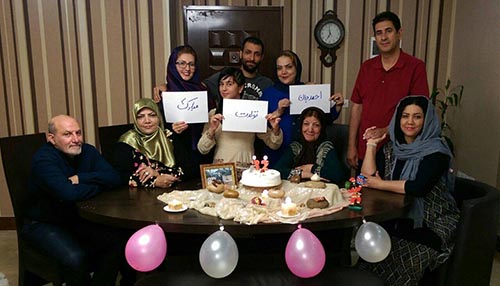
++ Nejat Society reported that the Iranpour family celebrated the birthday of their family member Ahmadreza who is still held hostage by the MEK cult. Ahmadreza and his brother Mohammadreza Iranpour, travelled to Turkey in 2002 attempting to reach Europe to make a better life. They were deceived by the MEK and taken to Camp Ashraf. Their family were without news until 2004 when they managed to meet with them accompanied by 20 MEK minders. Since then the Iranpour family members travelled to Iraq several times but were denied further meetings with the brothers. They have now been transferred to Albania but the family refuse to give up their efforts to free them from the cult.

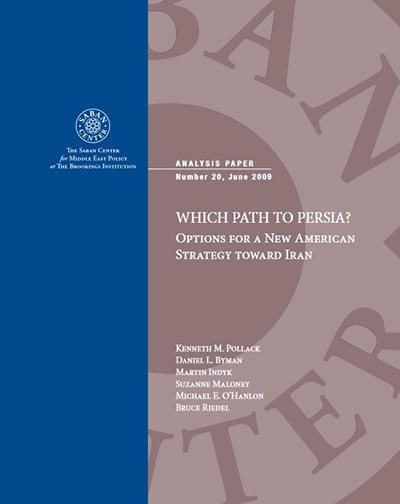
++ Tony Cartalucci in New Eastern Outlook examines the terrorist attack on St. Petersburg’s metro system, saying that “Western analysts are also attempting to cement a narrative that downplays the significance of the attacks and instead attempts to leverage them politically against Moscow.” Cartalucci identifies “US-European support for foreign-funded organizations posing as ‘nongovernmental organizations’ (NGOs) running parallel efforts with terrorist organizations undermining Moscow’s control over Chechnya…” The article mentions US support for the MEK as an example of such sponsorship. “As per US policymakers’ own documented machinations – such as the 2009 Brookings Institution report, “Which Path to Persia?: Options for a New American Strategy Toward Iran” (PDF) – a militant component is prescribed as absolutely essential for the success of any street movement Washington manages to stir up against targeted states.”

++ Mazda Parsi in Nejat Bloggers exposes the double standards of the MEK who cheered the Trump administration’s retaliatory bombing in Syria in response to an alleged chemical gas attack. Parsi reminds us that when Saddam Hussein used chemical weapons against his Kurdish populations the MEK not only failed to condemn the dictator but supported his agenda to crush Kurdish resistance. Parsi also points out that the MEK are quick to condemn the massacre of children in Syria but remain silent about the starvation of Yemeni children.

++ In the lead up to the presidential election in Iran Reza Pahlavi had an interview with Jon Gambrell in AP. Pahlavi expressed his interest in liberating Iran with a peaceful revolution which he envisages could start with “labor unions starting a nationwide strike”. Heedless of the actual power structures in Iran, Pahlavi continued “members of the hard-line Revolutionary Guard, a paramilitary organization established to protect the clerical system, would be assured they wouldn’t be ‘all hung and shot’.” While admitting that he had yet to meet with the Trump administration despite his letters, Pahlavi dismissed the MEK: “Another Iranian exile group, the Mujahedeen-e-Khalq, previously paid a member of Trump’s Cabinet $50,000 for giving a speech. However, the MEK’s siding with Iraqi dictator Saddam Hussein during the Iran-Iraq war in the 1980s and its killing of Americans before the revolution, which the group now denies, makes it an unsuitable partner, Pahlavi said. ‘It’s pretty much a cult-type structure’, he said.”

April 14, 2017
April 15, 2017 0 comments
FacebookTwitterPinterestWhatsappTelegramSkypeEmail
The cult of Rajavi

Crown prince Reza Pahlavi: Mojahedin Khalq, a cult-type structure

Iran’s long-exiled prince wants a revolution in age of Trump

Reza Pahlavi, the son of the last shah to rule before the 1979 Islamic Revolution, has seen his profile rise in recent months following the election of U.S. President Donald Trump, who promises a harder line against the Shiite power.

Pahlavi’s calls for replacing clerical rule with a parliamentary monarchy, enshrining human rights and modernizing its state-run economy could prove palatable to both the West and Iran’s Sunni Gulf neighbors, who remain suspicious of Iran’s intentions amid its involvement in the wars in Iraq, Syria and Yemen.

But the Mideast is replete with cautionary tales about Western governments putting their faith in exiles long estranged from their homelands. Whether Pahlavi can galvanize nostalgia for the age of the Peacock Throne remains unseen.

“This regime is simply irreformable because the nature of it, its DNA, is such that it cannot,” Pahlavi told The Associated Press. “People have given up with the idea of reform and they think there has to be fundamental change. Now, how this change can occur is the big question.”

Pahlavi left Iran at age 17 for military flight school in the U.S., just before his cancer-stricken father Mohammad Reza Pahlavi abandoned the throne for exile. The revolution followed, with the creation of the Islamic Republic, the takeover of the U.S. Embassy in Tehran and the sweeping away of the last vestiges of the American-backed monarchy.

Yet the Pahlavis and the age of the monarchy have retained their mystique in Iran, even as the majority of its 80 million people weren’t alive to experience it. Television period pieces have focused on their rule, including the recent state TV series “The Enigma of the Shah,” the most expensive series ever produced to air in the country. While incorporating romances or mobsters into the tales, all uniformly criticize the royal court.

But Pahlavi, 56, insists young Iranians increasingly look toward Iran’s past. He pointed to recent demonstrations at the tomb of the pre-Islamic King Cyrus the Great, which have been claimed by a variety of anti-government forces as a sign of unrest. Under his father’s secular and pro-Western rule, Iran experienced a rapid modernization program financed by oil revenues.

“If you look at the legacy that was left behind by both my father and my grandfather … it contrasts with this archaic, sort of backward, religiously rooted radical system that has been extremely repressive,” Pahlavi said.

Since the U.S. election, Pahlavi has given a growing number of media interviews, including with Breitbart, the far-right website once run by Trump’s chief strategist, Steve Bannon. Pahlavi also has sent letters to the Trump administration.

Gauging national sentiment toward restoring the monarchy in Iran is impossible, especially after the crackdown that followed the country’s disputed 2009 election. Iranian state media routinely refer to the Pahlavi monarchy as “despotic,” but there has been some reassessing of history in other quarters.

A book published last year, “The Fall of Heaven: The Pahlavis and the Last Days of Imperial Iran,” offered a revisionist view of the shah. While acknowledging the abuses of his feared SAVAK intelligence service and the corruption surrounding his rule, the book portrays him as a fatalist in an era of disappearing Mideast monarchies.

“The regime has repressed discussion of the Pahlavis for so long that it has had the opposite effect of making young Iranians inside the country curious about what they don’t know,” said historian Andrew Scott Cooper, the book’s author. “There’s an interesting generational divide going on here to where young Iranians are saying to their parents and grandparents, the same people who marched against the shah and Pahlavis, ‘Why did you get rid of that system and put this one in place?’”

He added: “The family name still retains a lot of magic, more than ever today among Iranians. How that translates practically into support for Reza as a credible alternative leader, I just don’t know.”

Asked how his envisioned peaceful revolution could play out in Iran, Pahlavi said it would need to begin with labor unions starting a nationwide strike. He said members of the hard-line Revolutionary Guard, a paramilitary organization established to protect the clerical system, would be assured they wouldn’t be “all hung and shot.”

Most importantly, he said Western governments need to keep their distance and not threaten military action.

That’s an exceedingly optimistic vision, especially considering the amount of power the Guard and other hard-liners wield in Iran’s economy. It also largely ignores the concerns many in Iran have about Western meddling. Pahlavi’s father took power following a 1953 coup engineered by Britain and the U.S.

Pahlavi, who still resides in the U.S., said he hasn’t had any “side occupation” since 1979, and has received financial support from his family and “many Iranians who have supported the cause.”

“My focus right now is on liberating Iran, and I will find any means that I can, without compromising the national interests and independence, with anyone who is willing to give us a hand, whether it is the U.S. or the Saudis or the Israelis or whomever it is,” he said.

Pahlavi said he had yet to meet with the Trump administration despite his letters. Another Iranian exile group, the Mujahedeen-e-Khalq, previously paid a member of Trump’s Cabinet $50,000 for giving a speech . However, the MEK’s siding with Iraqi dictator Saddam Hussein during the Iran-Iraq war in the 1980s and its killing of Americans before the revolution, which the group now denies, makes it an unsuitable partner, Pahlavi said.

“It’s pretty much a cult-type structure,” he said.

For now, Pahlavi said he looks forward to meeting with Trump and his administration. But he pins his hopes on Iran’s sense of history, something Cooper also acknowledged.

“For many Iranians, the revolution is unfinished business,” the author said.

By Jon Gambrell,

April 15, 2017 0 comments
FacebookTwitterPinterestWhatsappTelegramSkypeEmail
Mujahedin Khalq Organization's Propaganda System

The MKO cheers Trump’s Syrian missile attack

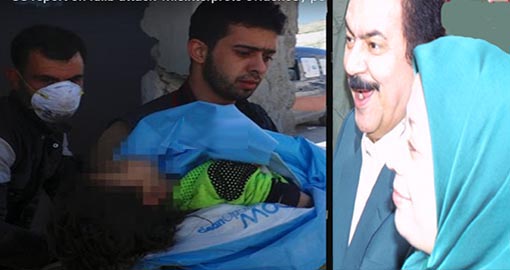
Following last week’s chemical attack in Syria and President Donald Trump’s retaliating missile strike, the Mujahedin Khalq Organization ( the MKO) could not conceal its pleasure to see the United States’ involvement in the Syrian battle.

There are allegations among bloggers and political leaders that the toxic gas attack on April4 in Khan Sheikhoun, Idlib was a “false flag” operation designated to trigger American involvement in the country’s civil war. However, supposing that Assad has attacked his own people with chemical weapons, the MKO leaders should be asked some essential questions.

 About three decades ago, Saddam Hussein – the then military and financial sponsor of the MKO- attacked his own people in Kurdish areas in the North of Iraq and the people in the Western town of Iran, Sardasht. While those chemical attacks at the time, were much more catastrophic than the one in Khan Sheikhan, the MKO not only didn’t condemn Saddam Hussein for the chemical attacks against civilians but also it cooperated with him to suppress more Kurds as well as Shiite uprisings.

Double standards of the MKO leaders is clearly demonstrated in their biased position taking about Syrian civil war while the Iranian foreign Ministry condemned “any use of chemical weapons, regardless of who has used it or who are the victims “ immediately after the incidents on April 5th, according to the Reuters.

Definitely, hypocrisy has always been an iconic feature of the MKO cult. The massacre of children in Idlib and previously in Halab is a matter of focus in the MKO propaganda while the starving and massacred children of Yemen has never been broadcasted in the group’s propaganda media. Humanity is not an issue for the MKO opportunists, they just turn into human rights advocates whenever they find it beneficial for their own propaganda.

In case of Syria the MKO supports Trump’s missile attacks because it is highly motivated by its anti-Iran paid – sponsors at the Trump’s administration – such as John Bolton and Rudy Giuliani and etc.

In contrast, the case of Yemeni children is not a matter of importance for the MKO because they are victims of Saudi Arabian aircrafts! In fact, after the collapse of Iraqi dictator Saddam Hussein, Saudi Arabia has been the top financial sponsor of the MKO in the region. Moreover, as the Saudi prince Turki Al- Faisal declared in the group’s propaganda show, Saudis also want the overthrow of the Iranian government.

Chemical attacks on civilians in Khan Sheikhun provided a pretext for the enemies of Iran as well as Syria, instead of being a warning mark for all sides of the battle to end up the war.

By Mazda Parsi

April 13, 2017 0 comments
FacebookTwitterPinterestWhatsappTelegramSkypeEmail
Former members of the MEK

Pictorial- Former members discuss the MKO tricks to prevent defections

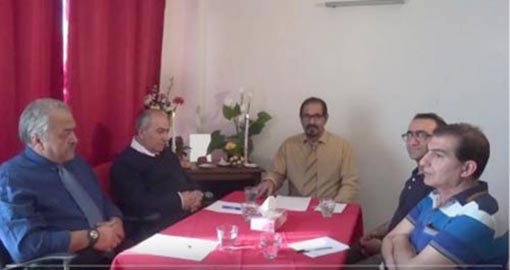
Mujahedin-e Khalq Cult ex-members gathered together to discuss the Cult leader’s tricks to force members stay with the group. They talked over Maryam Rajavi’s travel from France to Albania, the Cult’s efforts to amuse members with different celebrations, meetings, …

The meeting held in Paris.

Mr. Ghorbanali Hosseinenjad, Mr. Issa Azade, Mr. Mohammad Razzaghi and Mr. Mansour Nazari participated the meeting.

The video file of the meeting published on defectors’ websites.

Former members discuss the MKO tricks to prevent defections

April 10, 2017 0 comments
FacebookTwitterPinterestWhatsappTelegramSkypeEmail
Mujahedin Khalq; A proxy force

If Terrorists Targeted Russia, Who’s Behind the Terrorists?

Eleven have been killed and dozens more injured in what is an apparent terrorist attack on St. Petersburg’s metro system. Western analysts are assigning possible blame for the attack on either terrorists operating from Russia’s Chechnya region, or possibly terrorist groups affiliated with fronts fighting in Syria.

Western analysts are also attempting to cement a narrative that downplays the significance of the attacks and instead attempts to leverage them politically against Moscow. A piece in the Sydney Morning Herald titled, “Fears of a Putin crackdown after terror attack on St Petersburg metro,” would attempt to claim:

So who is to blame? No one has said officially. The BBC’s Frank Gardner says suspicions will centre around Chechen nationalists or an Islamic State inspired group wanting payback for Putin’s airstrikes in Syria. Or it could be a combination of both.

Putin has in the past justified crackdowns on civilian protests by citing the terror threat. But will he this time, and will it work?

At least one pro-Kremlin commentator has linked the attack to the recent mass demonstrations organised by Putin’s political opponent.

Yet, in reality, the demonstrations and the terrorist groups being implicated both share a significant common denominator – both are openly long-term recipients of US-European aid, with the latter group also receiving significant material support from US-European allies in the Persian Gulf, primarily Saudi Arabia, Qatar, and the United Arab Emirates (UAE).

US-European support for foreign-funded organizations posing as “nongovernmental organizations” (NGOs) running parallel efforts with terrorist organizations undermining Moscow’s control over Chechnya have been ongoing for decades.

Beyond Chechnya, the United States’ own Defense Intelligence Agency (DIA) would admit in a 2012 memo (PDF) that:

If the situation unravels there is the possibility of establishing a declared or undeclared Salafist principality in eastern Syria (Hasaka and Der Zor), and this is exactly what the supporting powers to the opposition want, in order to isolate the Syrian regime, which is considered the strategic depth of the Shia expansion (Iraq and Iran).

The DIA memo then explains exactly who this “Salafist principality’s” supporters are (and who its true enemies are):

The West, Gulf countries, and Turkey support the opposition; while Russia, China, and Iran support the regime.

In essence, the “Salafist” (Islamic) “principality” (State) was a creation of the US in pursuit of its attempted regime change agenda in Syria. The current, self-proclaimed “Islamic State” is situated precisely in eastern Syria where the DIA memo claimed its state sponsors sought to place it. Its role in undermining Damascus and its allies’ attempts to restore peace and order to the Syrian state is obvious.

The fact that NATO-member Turkey served as a logistical, training, and financial hub for not only the Islamic State’s activities, but also other terrorist groups including Al Qaeda’s regional franchise – Al Nusra – also further implicates not only possible Al Qaeda and Islamic State involvement in the recent St. Petersburg blast, but also these organizations’ state sponsors – those who “support the opposition” in Syria.

Whether the United States played a direct role in the St. Petersburg blast or not is inconsequential. Without the massive state sponsorship both Washington and its European and Persian Gulf allies have provided these groups, such global-spanning mayhem would be impossible. The fact that the US seeks to undermine Russia politically, economically, and in many ways, militarily, and has recently fielded US-European-funded mobs in Russia’s streets – means that it is likely not a coincidence violence is now also being employed against Russia within Russian territory.

As per US policymakers’ own documented machinations – such as the 2009 Brookings Institution report, “Which Path to Persia?: Options for a New American Strategy Toward Iran” (PDF) – a militant component is prescribed as absolutely essential for the success of any street movement Washington manages to stir up against targeted states.

In the Brookings Institution document, it stated unequivocally in regards to toppling the government of Iran, that (emphasis added):

Consequently, if the United States ever succeeds in sparking a revolt against the clerical regime, Washington may have to consider whether to provide it with some form of military support to prevent Tehran from crushing it. This requirement means that a popular revolution in Iran does not seem to fit the model of the “velvet revolutions” that occurred elsewhere. The point is that the Iranian regime may not be willing to go gently into that good night; instead, and unlike so many Eastern European regimes, it may choose to fight to the death. In those circumstances, if there is not external military assistance to the revolutionaries, they might not just fail but be massacred.   Consequently, if the United States is to pursue this policy, Washington must take this possibility into consideration. It adds some very important requirements to the list: either the policy must include ways to weaken the Iranian military or weaken the willingness of the regime’s leaders to call on the military, or else the United States must be ready to intervene to defeat it.” 

The policy document would also openly conspire to fund and arm listed terrorist organizations including the notorious Mujahedin-e Khalq (MEK). The document would state:

The United States could work with groups like the Iraq-based National Council of Resistance of Iran (NCRI) and its military wing, the Mujahedin-e Khalq (MEK), helping the thousands of its members who, under Saddam Husayn’s regime, were armed and had conducted guerrilla and terrorist operations against the clerical regime. Although the NCRI is supposedly disarmed today, that could quickly be changed.

It would also admit that (emphasis added):

Despite its defenders’ claims, the MEK remains on the U.S. government list of foreign terrorist organizations. In the 1970s, the group killed three U.S. officers and three civilian contractors in Iran. During the 1979-1980 hostage crisis, the group praised the decision to take America hostages and Elaine Sciolino reported that while group leaders publicly condemned the 9/11 attacks, within the group celebrations were widespread.

Undeniably, the group has conducted terrorist attacks—often excused by the MEK’s advocates because they are directed against the Iranian government. For example, in 1981, the group bombed the headquarters of the Islamic Republic Party, which was then the clerical leadership’s main political organization, killing an estimated 70 senior officials. More recently, the group has claimed credit for over a dozen mortar attacks, assassinations, and other assaults on Iranian civilian and military targets between 1998 and 2001. At the very least, to work more closely with the group (at least in an overt manner), Washington would need to remove it from the list of foreign terrorist organizations.

If US policymakers have openly conspired to arm and fund known terrorist organizations guilty of murdering not only civilians in nations like Iran but also citizens of the United States itself, why would they hesitate to do likewise in Russia?

While the US poses as engaged in a battle against the so-called “Islamic State” in Syria, it has left its obvious, overt state sponsors unscathed both politically and financially.  If the bombing in St. Petersburg is linked to US-European-Persian Gulf state sponsored terrorism, it will be only the latest in a long and bloody tradition of using terrorism as a geopolitical  tool.

The US, having been frustrated in Syria and having little to no leverage at the negotiation table, is likely trying to “show” Moscow that it can still create chaos both beyond Russia’s borders amongst its allies, and within Russia’s borders – regardless of how well Russians have weathered such tactics in the past.

Tony Cartalucci, Bangkok-based geopolitical researcher and writer, especially for the online magazine “New Eastern Outlook”.

By Tony Cartalucci ,  Journal-neo

April 8, 2017 0 comments
FacebookTwitterPinterestWhatsappTelegramSkypeEmail
Albania

What’s going on in MKO Camps in Albania?

MKO members and ex-members in Tirana!

Hundreds of members of the Mujahedin Khalq Organization left the group after its relocation in Tirana, Albania.

Defectors of the Mujahedin Khalq residing in Europe, reported that five hundred people have left the MKO since its relocation in Albania. According to the source, two hundred of the defected group could not manage to leave Albania. “They are still under the control of the cult”, said Mr. Isa Azadeh a former member of the MKO.

Mr, Azadeh states,” regarding their individual situation and conditions, some of the defectors were sent to other European countries by the cult leaders but some are banned by the group to leave Albania.” Apparently, cult leaders fear the possibility of revelations that defectors may announce against the cult.

MKO defectors who reside in Albania get their monthly financial support from the MKO so they do not dare to take any action against the group.

“The cult has defined this main redline for defectors otherwise their monthly payment is cut,” Issa Azadeh added. The cult has allowed the defectors and even certain elite members in the cult to call their families but they are required to tell their families not to come to Albania to visit them for the time being.”

Mr. Azadeh also gives some explanations about the current situation of cult members inside the camps in Tirana. Based on his revelations, the group leaders have colonized the old members with more than 30 years of membership in a location outside the city, named “Ashraf3” where all regulations of the proper Camp Ashraf are executed. Eventually, residents of “ Ashraf3” are not allowed to leave the camp unless for exceptional occasions such as doctor’s appointment or receiving medical treatment. The average age of these people is 55. They include the most high-ranking members with the most years of experience of acting in the cult of Rajavi.

“the cult leaders keep them outside the Albanian capital, far from civil atmosphere and distanced from defected members because they are terribly afraid of their defection – as old members of the MKO,” Azadeh reveals.

Other members of the MKO who are settled in houses and apartments across Tirana include a large number of dissident individuals who criticize the group’s policies but they are barred from leaving the cult by emotional and organizational tools.” These layers are controlled by peer pressure,” Mr. Azadeh says.

April 6, 2017 0 comments
FacebookTwitterPinterestWhatsappTelegramSkypeEmail
Mujahedin Khalq Organization members' families

Iranpur family celebrate Ahmadreza’s birthday who is held hostage by the MKO Cult

Ahmadreza and Mohammadreza Iranpour, traveled to Turkey in 2002. They wanted to immigrate to a European country to make a better life there.

Unfortunately, in Turkey the MKO recruiters tricked them into joining the group. They were then transferred to Camp Ashraf, Iraq. For a long time the Iranpour family had no news of them until they were informed of Mohammadreza and Ahmadreza whereabouts through some defectors of the MKO cult.

In January 2004 they succeeded to meet their beloved brothers at Camp Ashraf. 20 MKO members accompanied Mohammadreza and Ahmadreza in the meeting in order the meeting not to be private.

From then on the Iranpour family have traveled to MKO Camps in Iraq several times to have a visit with their beloved brothers or at least get a news of them, still they were not allowed.

The two brothers transferred to Albania along with other MKO members last year.

March 29th, is the anniversary of Ahmadreza’s birthday. Iranpur family gathered together and celebrated his birthday from far away.

They published the photo along with a letter to their beloved brother, Almadreza.

Iranpur family celebrate Ahmadreza’s birthday who is held hostage by the MKO Cult

April 4, 2017 0 comments
FacebookTwitterPinterestWhatsappTelegramSkypeEmail
Iran Interlink Weekly Digest

Iran Interlink Weekly Digest – 185

++ Reports from Albania indicate that in spite of Maryam Rajavi sitting with MEK members trying to convince them to stay, the situation is getting worse to the point that just about everyone wants to leave. She has resorted to bringing in the ‘big guns’, that is using threats of ‘the CIA’ to intimidate dissidents. They are told, you can stay in a separate building where you will have to obey certain rules and you must not go out or talk to anyone. If you do, you will suffer attacks.

++ Tehran Tasnim News published an interview with the cultural attaché of the Iranian embassy in Albania. The interview discusses the many issues which connect Iranians and Albanians, including literature. Albania’s most famous poet wrote books of poetry in Farsi. The attaché said that due to the hostility of Israel and the Americans who have a hold over the country, there are no Iranians here and not much contact. Albania’s attempt to open an embassy in Iran was stymied because of the backlash it provoked. According to the attaché, the only Iranians in Albania are the embassy officials or the MEK who have been imposed on the country by the Americans. He explained how ordinary Albanians see their country: the sea of Albania belongs to Italy, the air belongs to NATO and the land belongs to the Americans. But the people and their culture, says the attaché, belong with Iranians. The two countries share a near culture and have a good understanding of one another. Unfortunately, the Albanian government does not encourage this. In recent weeks, there have been many demonstrations against the interference of the Neocons and the corruption of Albania’s government (and opposition politicians) along with the mafia, drugs and arms dealing. Generally, the people of Albania are not happy about life there although they do not have much choice. Out of a population of approximately three million, at least half don’t live there permanently and have dual citizenship. It is a very poor country, its citizens are very poor and yet it continues to be robbed and plundered.

++ This week marked the anniversary of the stand-off at Camp Ashraf between the MEK and the Iraqi army in April 2011. Abdul Karim Ebrahimi writes his memories of that day. He reminds us that on that day, the MEK signed an agreement that the Iraqi army could take land which formed part of the camp and return it to the farmers from whom Saddam Hussein originally stole it. Then, when the army began to take the land the MEK attacked them resulting in 36 MEK and several police and army deaths. Ebrahimi and others who survived and eventually escaped the MEK are witnesses to what really happened that day. Because of the agreement, the army did not expect the attack. The MEK intentionally sent unarmed people to confront the soldiers, telling them ‘the Iraqis won’t shoot you so you can easily disarm them and take their weapons. They frightened the members saying the Iraqis were there to capture them and hand them over to Iran where they would be tortured and killed. The ordinary MEK members didn’t know anything about the land agreement. The MEK leaders wanted people to be shot. The MEK filmed the events and edited them to claim that the Iraqis had intended to kill the MEK. In fact, Rajavi wanted to blackmail them to give money in exchange for the land.

In English:

++ Nejat Society reviews an article in which a CIA veteran examines the myth of regime change using the MEK cult.

++ Eli Clifton in Lobelog digs up revealing information in ‘AIPAC Gave $60K to Architect of Trump’s Muslim Ban’. Inevitably the name of the MEK comes up among the murky deals.

March 31, 2017

April 3, 2017 0 comments
FacebookTwitterPinterestWhatsappTelegramSkypeEmail
Mujahedin Khalq Organization members' families

Pictorial – Ms. Fatemeh Sohrabi pens letter to her brother; Rahim – MKO Cult hostage

My dear brother,

It is long years that we are looking forward for you. When would you liberate yourself from the clutches of the cult of Rajavis? We cant enjoy our life without you..

Maryam Rajavi has come to Albania to pave the way for you and other member’s victimization..

Ms. Fatemeh Sohrabi pens letter to her brother; Rahim – MKO Cult hostage

March 30, 2017 0 comments
FacebookTwitterPinterestWhatsappTelegramSkypeEmail
Mujahedin Khalq; A proxy force

AIPAC Gave $60K to Architect of Trump’s Muslim Ban

The American Israel Public Affairs Committee (AIPAC) has been noticeably quiet about the Trump administration’s slowness to denounce the spike in anti-Semitic attacks and bomb threats, its nomination of an ambassador to Israel who described J Street as “worse than kapos,” and its ties to ethno-nationalists like White House chief strategist Stephen K. Bannon and senior adviser Stephen Miller. But AIPAC has done more than just tolerate the U.S. tilt toward extreme and often xenophobic views. Newly released tax filings show that the country’s biggest pro-Israel group financially contributed to the Center for Security Policy, the think-tank that played a pivotal role in engineering the Trump administration’s efforts to impose a ban on Muslim immigration.

In 2015, AIPAC launched a 501c4 advocacy group, Citizens for a Nuclear Free Iran (CFNI). Expected to spend $20 million in July and August 2015, the group was “formed with the sole mission of educating the public ‘about the dangers of the proposed Iran deal,’” spokesman Patrick Dorton told The New York Times. The Times reported that the $20 million budget would go to ad buys in as many as 40 states as well as other advocacy.

Indeed, the group’s filing (viewable here) show that the AIPAC spin-off paid $18 million for “media related expenses,” $8.35 million for “phone program expenses,” and $58,200 for “survey expenses.”

Shortly after the group launched, my colleague Ali Gharib and I noticed that the group’s website featured two items promoting an exiled, ex-terrorist Iranian opposition group, the Mojahedin-e Khalq (MEK). CFNI even used b-roll footage from a press conference held by the National Council of Resistance of Iran (NCRI), which the State Department deemed the MEK’s “political wing” (earning it a corresponding terrorist designation until the MEK was delisted as a terrorist organization in 2012).

After we reached out for comment, AIPAC’s anti-Iran deal advocacy group scrubbed their website of the MEK related materials, seemingly acknowledging a PR misstep. But the b-roll footage remained in their television commercials and on YouTube.

AIPAC’s flirtation with extreme groups appears to have gone even further than borrowing footage from the MEK.

Tax disclosures reveal that CFNI contributed $60,000 to “Secure Freedom,” a donation to a group with the tax-id number 52-1601976. That tax-id number belongs to Center for Security Policy, a hawkish think tank largely devoted to advocating for greater defense spending (it received funding from Boeing, General Dynamics, Lockheed Martin, Northrup Grumman, Raytheon, and General Electric) and pushing completely unsubstantiated conspiracy theories about American Muslim and Muslim Brotherhood infiltration of the U.S. government.

The contact address for the contribution was a residential address in New Orleans belonging to Jewish Institute for National Security Affairs (JINSA) staffer Marsha Halteman. Halteman did not respond to questions about why her address appeared beneath the donation.

CSP is headed up by anti-Muslim conspiracy theorist Frank Gaffney who baselessly claimed that Hillary Clinton aide Huma Abedin, anti-tax activist Grover Norquist, and former George W. Bush appointee Suhail Khan were part of a Muslim Brotherhood plot to infiltrate the U.S. government. He also asserted that the Missile Defense Agency logo “appears ominously to reflect a morphing of the Islamic crescent and star with the Obama campaign logo” and helped launch an interfaith group to support Trump’s anti-Muslim agenda.

Gaffney and Trump aide Kellyanne Conway played a pivotal role in bringing about the administration’s efforts to ban immigration from seven (and now six) Muslim-majority countries.

In 2015, Gaffney commissioned Conway’s firm to produce a poll about Muslim attitudes. Released in June 2015, the poll found that 51% of Muslims agreed that “Muslims in America should have the choice to being governed according to Shariah,” among other findings. But the poll’s methodology was deeply flawed, relying on an opt-in online survey which industry experts consider unreliable. Conway’s own firm later admitted the data was not “statistically representative of the entire U.S. Muslim population.”

None of that stopped Trump from citing the poll as his justification for a “total and complete shutdown of Muslims entering the United States until our country’s representatives can figure out what is going on,” on December 7, 2015.

It’s possible that the funds went to support CSP’s advocacy opposing the Iran nuclear agreement. Nonetheless, AIPAC’s willingness to partner with an organization whose president, Frank Gaffney, was denounced by the Anti-Defamation League, the Southern Poverty Law Center and the American Conservative Union (which briefly banned him from their events after he accused political opponents of being part of a Muslim Brotherhood conspiracy) raises serious questions about AIPAC’s commitment to fighting bigotry, discrimination, and, in particular, Islamophobia.

Neither AIPAC nor CSP responded to requests for comment.

By Eli Clifton,

About the Author

Eli Clifton reports on money in politics and US foreign policy. Eli previously reported for the American Independent News Network, ThinkProgress, and Inter Press Service.

March 28, 2017 0 comments
FacebookTwitterPinterestWhatsappTelegramSkypeEmail
Newer Posts
Older Posts

Recent Posts

  • How Did Maryam Rajavi Become All-Powerful in the MEK?

    September 29, 2026
  • Soraya Abdollahi’s Letter to International Human Rights Bodies

    September 28, 2026
  • How Did Maryam Rajavi Become All-Powerful in the MEK?

    September 27, 2026
  • Yazdan Teimorian’s Family:  We Are so Heart-Broken!

    September 23, 2026
  • Blackman’s relationship with the MEK should be investigated

    September 19, 2026
  • Facebook
  • Twitter
  • Instagram
  • Youtube

© 2003 - 2025 NEJAT Society . All Rights Reserved. NejatNGO.org


Back To Top
Nejat Society
  • Home
  • Articles
  • Media
    • Cartoons
    • NewsPics
    • Photo Gallery
    • Videos
  • Publications
    • Books
    • Nejat NewsLetter
    • Pars Brief
  • About Us
  • Contact us
  • Editions
    • عربي
    • فارسی
    • Shqip