Nejat Society
  • Home
  • Articles
  • Media
    • Cartoons
    • NewsPics
    • Photo Gallery
    • Videos
  • Publications
    • Books
    • Nejat NewsLetter
    • Pars Brief
  • About Us
  • Contact us
  • Editions
    • عربي
    • فارسی
    • Shqip
Nejat Society
Nejat Society
  • Home
  • Articles
  • Media
    • Cartoons
    • NewsPics
    • Photo Gallery
    • Videos
  • Publications
    • Books
    • Nejat NewsLetter
    • Pars Brief
  • About Us
  • Contact us
  • Editions
    • عربي
    • فارسی
    • Shqip
© 2003 - 2024 NEJAT Society. nejatngo.org
Mujahedin Khalq; A proxy force

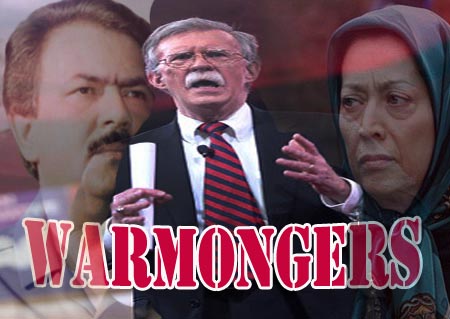
John Bolton, Top Contender For Secretary Of State, Calls For Regime Change In Iran

John Bolton, a top candidate to serve as President-elect Donald Trump’s secretary of state, is publicly calling for the U.S. to help overthrow the existing government in Iran.

“The only long-term solution is regime change in Tehran,” the former U.S. ambassador to the United Nations told SiriusXM’s Breitbart News Daily on Thursday morning. “The ayatollahs are the principal threat to international peace and security in the Middle East.”

The call for regime change is very much in line with past statements from Bolton, a hyper-hawkish Bush administration official who stands by the decision to invade Iraq in 2003. He has repeatedly urged the U.S. to help Israel bomb Iran or do it alone. Even as Iran was in the final stages of negotiating an international agreement that requires it to dramatically scale back its nuclear infrastructure, Bolton recommended a military attack.

Thursday’s remark suggests that he has no plans to tone down his adventurist foreign policy views, which run counter to Trump’s repeated promises to focus resources domestically and to avoid unnecessary entanglements abroad.

The Trump campaign has struggled to outline a cohesive foreign policy vision. But to the extent that the president-elect has a worldview, it seems to lean non-interventionist. He has said he would require U.S. allies to shoulder more of the burden for their own security, even suggesting that some non-nuclear nations could obtain nuclear weapons to defend themselves without help from Washington. He speaks aggressively about “destroying” the Islamic State but hasn’t offered a plan to match his rhetoric. Instead, he’s suggested that he might let Russia, which is backing Syrian President Bashar Assad, take charge of outside efforts to help resolve the civil war in Syria.

One of Trump’s first calls with a foreign leader after the election was with Russian President Vladimir Putin. Russia is allied with Iran in the Syrian conflict, making Bolton’s comments about Iran that much more awkward.

Throughout the presidential campaign, Trump slammed former Secretary of State Hillary Clinton for being too quick to intervene militarily. At every opportunity, he brought up her vote for the Iraq War and her push for NATO airstrikes in Libya ― even though he had backed both operations at the time.

Bolton said Thursday that he finds the debate between interventionism and non-interventionism “unproductive.”

“To me, it’s like saying, ‘Do you prefer a spoon or a knife?” he said. “And the immediate next question is, ‘Well, for what?’ That’s how I view interventionism and non-interventionism. These are the tools in the country’s toolkit and you do what’s appropriate.”

Yet Bolton often prefers the knife of intervention, no matter what the occasion. Much like the proponents of the Iraq War who said the 2003 invasion would be a straightforward undertaking welcomed by the Iraqis, Bolton said Thursday that Iranians want regime change. He also hinted that such regime change could involve the U.S. arming opposition groups.

“I don’t think the regime is popular, but I think it has the guns. I think ― there are ways of supporting the opposition. It does not involve the use of American military force. It does involve helping the opposition to get a different kind of government,” Bolton said.

He did not respond to requests from The Huffington Post for clarification on how regime change in Iran might take place without direct U.S. military intervention.

In the Breitbart interview, Bolton criticized President Barack Obama for not doing more to support the Green Movement protests in Iran in 2009. But he has also supported more extreme opponents to the regime. Bolton has attended rallies in support of Mujahedeen-e-Khalq (MEK), an exiled Iranian dissident group that the U.S. classified as a terrorist organization until 2012.

The obvious disconnect between the worldviews of Trump and Bolton makes it hard to grasp why the president-elect is considering Bolton to be his top diplomat. But lacking any foreign policy experience himself, Trump is easily swayed in this area by the advice of those close to him, multiple sources with knowledge of the transition told The Huffington Post.

Jared Kushner, Trump’s son-in-law and close adviser, likes Bolton, the sources said, in part because of Bolton’s extreme anti-Iran stance and his related unconditional support for Israel. Billionaire Robert Mercer and his daughter Rebekah, Trump’s largest financial backers during the campaign, have been heavy supporters of Bolton as well.

 Trump’s transition team did not respond to a request for comment.

While Trump has called the Iran nuclear agreement a “disaster” and the “worst deal ever negotiated,” he hasn’t urged overthrowing the regime of Ayatollah Ali Khamenei as an alternative. At times during the campaign, Trump said he would rip up the nuclear accord, but more frequently, he made vague promises to “renegotiate” the terms of the deal and extract more concessions from Iran. He said he would “enforce it like you’ve never seen a contract enforced before.”

Sen. Bob Corker (R-Tenn.), the chairman of the Foreign Relations Committee ― who has also been floated as a possible secretary of state ― said Wednesday that it’s more likely that Trump will seek to build consensus among U.S. allies that Iran is violating the agreement than move to tear up the deal immediately.

Ryan Grim contributed reporting.

Jessica Schulberg, Foreign Affairs Reporter,
November 19, 2016 0 comments
FacebookTwitterPinterestWhatsappTelegramSkypeEmail
Iran Interlink Weekly Digest

Iran Interlink Weekly Digest – 168

++ After Donald Trump won the Presidential election, the MEK abruptly changed their tune and began to support him. In addition, this week the MEK held celebrations in Auvers sur Oise and Tirana. Several articles ridiculed this saying ‘they actually think Trump will save them’.

++ Farsi radio channels outside Iran, such as VOA and Radio Farda, have similar articles as the English language media about Giuliani, Bolton and Gingrich and their past financial and lobbying association with a terrorist group which has killed Americans. The MEK tried at first to ignore this media crisis, but then decided to get members and supporters to add comments as individuals to articles in support of the MEK as the ‘main opposition’. Commentators ridiculed this because it is evident this is orchestrated by the MEK. What is worse is that these comments have made it worse for the targets of these articles. They want to whitewash their past support, not have it proven loud and clear in every media outlet.

++ News from Tirana is that two top ranking MEK members were arrested trying to enter the country with false passports. Up to yesterday one was still in prison while the other was released with an electronic tag into the MEK camp. Rumours circulated that Maryam Rajavi had visited Tirana clandestinely. Insiders from the MEK say the group doesn’t deny these rumours. Instead, they want this to circulate because it makes the MEK seem more active and important. Members in Tirana have been calling supporters in other countries to say ‘she came, we cried, we begged forgiveness’. They want to promote Maryam because it is becoming increasingly clear that she is incapable of managing the MEK. The message they want supporters to get is that the close membership worship Maryam as they did Massoud.

++ At the same time, two days ago, a letter from Massoud Rajavi was read to members. In the letter, he congratulates Donald Trump on becoming President of the USA. Rajavi claims things will now change rapidly for the MEK and the regime will soon be overthrown. This has not had the desired effect. People did not cheer and clap. They looked despondent and afterwards began to talk about their problems and the problems of the MEK. Some asked, ‘why does Rajavi write a letter. Now we’re safe in Albania why doesn’t he join us here?’ Some commentators have placed this in the context of Maryam Rajavi‘s effort to replace her husband. But, they say, even if Massoud himself came he could not pick up where he left off, let alone her trying to lead the cult. The same evening this letter was read, five people left the MEK and joined other formers in Tirana.

In English:

++ The close scrutiny of President-elect Trump’s possible choice of cabinet members has allowed journalists to single out Rudi Giuliani, John Bolton and Newt Gingrich – among many others – as problem appointees due to their past support for the Mojahedin Khalq terrorist group. That support was given when the MEK was still on the US terrorism list. As well as revealing corrupt behaviour, Massoud Khodabandeh wrote in the Huffington Post that these links would pose a security threat. The MEK have recorded and filmed private meetings and conversations these three held with MEK members which could be used as leverage (blackmail?) if they are appointed to positions of influence.

++ The MEK may be basking in the warmth of fresh attention and Maryam Rajavi may even believe it heralds a change in the group’s fortunes. But what is really happening is that the ‘cost’ of supporting the MEK is becoming more and more expensive. If neither Giuliani, Bolton nor Gingrich achieves political position because of their past association with this terrorist cult, then other politicians will be more reluctant to support them for fear it will damage their careers.

November 18, 2016

November 19, 2016 0 comments
FacebookTwitterPinterestWhatsappTelegramSkypeEmail
Mujahedin Khalq; A proxy force

Gaffney, Lopez, and the MEK

Phil Giraldi alerts us to some of the bad appointments Trump may end up making. Here is one example:

“ Another former CIA officer who is a particularly polarizing figure and is apparently being looked at for high office is Clare Lopez, who has claimed that the Obama White House is infiltrated by the Muslim Brotherhood. Lopez is regarded by the Trump team as “one of the intellectual thought leaders about why we have to fight back against radical Islam.” She has long been associated with the Center for Security Policy, headed by Frank Gaffney, a fanatical hardliner who believes that Saddam Hussein was involved in both the 1993 World Trade Center attack and the Oklahoma City bombing, that Americans for Tax Reform head Grover Norquist is a secret agent of the Muslim Brotherhood, that Gen. David Petraeus has “submitted to Sharia,” and that the logo of the U.S. Missile Defense Agency reveals “official U.S. submission to Islam” because it “appears ominously to reflect a morphing of the Islamic crescent and star.”

The chance that Lopez or others connected with Gaffney will end up in important positions seems certain to increase now that Frank Gaffney himself has reportedly joined the transition team to “assist on national security issues.” There is even some talk that Gaffney might be considered as a possible nominee for CIA director. That last one seems like a long shot, but if he’s part of the transition team in any way that would still be horrifying.

As if all that weren’t bad enough, Lopez would also be another possible Trump appointee who has been a booster for the Mujahideen-e Khalq over the last few years. Lopez has referred to MEK members as “pro-democracy Iranian patriots,” which would come as news to almost all Iranians and especially to the group’s former members. She has also called for direct U.S. support of the MEK, and has engaged in the usual whitewashing of its record and its ideology that we have come to expect from the group’s supporters.

Eli Clifton concludes a recent report on Lopez and the other pro-MEK figures around Trump this way:

    If Lopez, Giuliani, Bolton, or Gingrich serve in the Trump administrations, the MEK will have the highest level access it’s ever enjoyed in the U.S. government, a remarkable journey for a fringe Islamic-Marxist group that, until 2012, was on the State Department’s terrorism list for its role in assassinating Americans.

Leaving aside the obvious danger these people pose on Iran policy, it is further proof of Trump’s poor judgment that so many people that have been flacking for a foreign totalitarian cult are being seriously considered to serve in his administration.

By Daniel Larison

November 17, 2016 0 comments
FacebookTwitterPinterestWhatsappTelegramSkypeEmail
Mujahedin Khalq; A proxy force

What Will a Trump Foreign Policy Look Like?

So far he has surrounded himself with hardliners

Much of what Trump will do overseas is unknown. He has taken public positions on a few issues, but he has said little or nothing about most of the world. The miserable coverage of foreign policy in this election has helped ensure that he didn’t have to.

What we do know is that Trump has surrounded himself with hard-liners and authoritarians, and he is reportedly considering some of them for top Cabinet posts.

 A Trump administration that includes the likes of Giuliani, Gingrich, Flynn, and Bolton will certainly not be a restrained or realist one, and we can expect increased hostility towards Iran and anyone perceived to be aligned with them. Flynn is one of Trump’s earliest foreign policy advisers, and he co-authored a book with Michael Ledeen, one of the most fanatical Iran hawks of all. He and Ledden wrote this:

We’re in a global war, facing an enemy alliance that runs from Pyongyang, North Korea, to Havana, Cuba, and Caracas, Venezuela. Along the way, the alliance picks up radical Muslim countries and organizations such as Iran, al Qaeda, the Taliban and Islamic State.

This is the delusional thinking of someone who could very well be the next Secretary of Defense.

As I mentioned earlier this week, Gingrich, Giuliani, and Bolton have all been boosters of the totalitarian cult and “former” terrorist group, Mujahideen-e Khalq (MEK), which seeks to replace the current Iranian government with its cult leader. Trump has made denouncing the nuclear deal a major part of his indictment of Obama’s foreign policy, and Iran hawks in Congress will be eager to torpedo it.

I have a hard time seeing Trump fighting to preserve a signature achievement of a president he loathes, and so it is more likely than not the nuclear deal is going to unravel. That will not only be a bad outcome in terms of nonproliferation, but it will also open the door to war with Iran that the deal at least temporarily closed.

One of the bigger challenges facing a Trump administration will be finding people willing to serve in it at lower levels. Many Republican foreign policy professionals have already gone on record opposing Trump’s election in the strongest terms, and it is doubtful that they would now be willing to work for him.

Unlike other Republican presidents-elect, he will not be able to recruit from veterans of the last Republican administration. Since the last Republican administration was a disaster on foreign policy, that is not all bad news, but it does mean that lots of jobs are probably going to go unfilled for a while or will be filled by underqualified loyalists.

In broad strokes, a Trump foreign policy will probably be highly unilateralist, preoccupied with terrorism and Iran, and fixated mostly on the Middle East.

In that sense, it won’t be as much of a radical departure as his supporters hope and his opponents fear, but it will mean continued U.S. entanglement in unnecessary wars for the foreseeable future.

Our foreign policy was already overly obsessed with both terrorism and Iran and has relied on overly militarized responses, and I don’t see a Trump administration advised by the likes of Flynn and Bolton changing that anytime soon.

By Daniel Larison

November 17, 2016 0 comments
FacebookTwitterPinterestWhatsappTelegramSkypeEmail
Mujahedin Khalq; A proxy force

EU-Iran Relations in the Trump Era

One undeniable benefit of the historic nuclear deal, or Joint Comprehensive Plan of Action (JCPOA), is that it opened the channels of communications between Iran and the EU beyond the narrow issue of the implementation of the agreement. As the high-level political consultations between the EU and Iran on November 8-9 in Brussels have shown, the bilateral agenda now includes economic cooperation, discussions on regional issues, notably Syria, and even a nascent dialogue on human rights. Thus, the Brussels meetings have provided a suitable opportunity for both Europeans and Iranians to compare notes on the election of Donald Trump as the US president and what it means for the survival of the JCPOA and broader normalization of EU-Iran relations. What emerged from the conversations shows a considerable convergence of views.

Despite Trump’s pre-electoral pledge to renegotiate the deal that he deemed to be “disastrous,” both Iranians and Europeans have adopted a wait-and-see approach. To illustrate how the electoral rhetoric may not match the real actions in office, Iranians pointed to the quiet removal from Trump’s webpage of his statement vowing to ban Muslims from entering the US. Another glimmer of hope, from the Iranian perspective, lies in Trump’s repeated expressions of willingness to work with Russia in Syria and the broader Middle East on the ultimate goal of defeating the so-called Islamic State (ISIS or IS). Since Tehran’s already works closely with Moscow to achieve these priorities, it would be very hard for Trump to square the circle by simultaneously cooperating with Russia and antagonizing Iran. According to this most optimistic reading, Trump foreign policy’s uncertainty holds out some possibility of a more restrained and realist course—as opposed to Hillary Clinton’s predictably hawkish policies that might have undermined the nuclear deal even without consciously seeking such an outcome.

There is, however, a danger of some neoconservatives moving closer to Trump and setting his administration on a more aggressive course than his campaign pronouncements suggested. Already some notorious uber-hawks, such as New Gingrich, John Bolton, and Rudy Giuliani, are slated for top jobs in the Trump administration, including the crucial secretary-of-state job. All three have deep ties with the Iranian dissident cult MEK, on the US terror list until 2012, bitterly opposed to the current Iranian government and advocating regime change in Iran. Although the Saudis, Iran’s archrivals in the region, cast their lot with Clinton, they may now be busy trying to figure out how they can “buy off” Trump. And one of Trump’s top donors, Sheldon Adelson, a casino magnate with strong pro-Likud views, has threatened Iran with a nuclear strike.

This uncertainty has prompted analysts like Ariane Tabatabai from the Center for Strategic and International Studies to call on the EU to be more assertive in safeguarding and implementing the deal and act as a check on America. The EU might do exactly that. Federica Mogherini, the EU foreign policy chief and chair of the Joint Commission tasked with overseeing the implementation of the JCPOA, explicitly emphasized the multilateral character of the Iran deal, codified by a UN SC resolution. Since Iran, according to the International Atomic Energy Agency, complies with its commitments on the deal, there is absolutely no incentive on the EU side to renegotiate the deal.

Furthermore, the EU’s own interests have been pushing it to invest in its relations with Iran. The EU is closer to the Middle East than the US and is directly affected by the turmoil there in the shape of a terrorist threat and irregular migration. Whether it is the Syrian war or the flow of refugees from Afghanistan, Europeans realize they have to deal with Iran. They also see it as a potentially lucrative market for their businesses. The traffic of officials and businesspeople between Tehran and European capitals is heavy these days. On October 25, the European Parliament (EP) adopted a forward-looking report on relations with Iran. The Council of the EU, the main foreign-policy making body representing the bloc’s 28 member states, is preparing to adopt its new guidelines on relations with Iran, which are expected to overlap significantly with the EP report.

More broadly, there are signs that the election of Trump is already stimulating some hard thinking about the EU’s strategic autonomy. Plans to create a “defense union” are likely to gain further momentum. Of course, transatlantic relations possess a certain inertia that will likely persist. This link is long-standing and deserves to survive the Trump presidency. However, the EU is unlikely to follow the US in doing something as self-defeating as revoking or even re-negotiating the nuclear deal with Iran. What could, however, put the EU in an indefensible position is if Iranian hardliners sabotage the implementation of the deal as a response to American non-delivery on its commitments. It is only to be hoped that cooler heads will prevail in Tehran in the face of possible provocations from the Republican-led White House and Congress.

There is, however, a wild card on the European side as well—Europe’s own right-wing populists, such as the leader of the French National Front Marine Le Pen. Her election as France’s president can no longer be ruled out. Le Pen and her Europe of Nations and Freedom (ENF), a far-right group in the EP, generally sticks to a superficially friendly line on Iran, regularly lambasting Iran’s foes such as Saudi Arabia and Qatar. This, however, is part of a general backlash against the French elites, known for their close relations with the Gulf despots, rather than an expression of support for Iran. Le Pen is known for her staunch support for Israel. In the European Parliament vote on the Iran report, she and most of her colleagues from the ENF group abstained. Should Le Pen, who professed her enthusiastic support for Trump, be elected as the president of France, the Iran deal might suffer another blow.

In a world of growing uncertainty, the current leaders of the EU and Iran must do their utmost to ensure that the Iran deal survives the complicated politics of some of its parties. The stakes could not be higher: the fate of a working agreement that not only defused a potentially devastating conflict but also opened a way for re-engaging with one of the key countries in the Middle East.

Eldar Mamedov has degrees from the University of Latvia and the Diplomatic School in Madrid, Spain. He has worked in the Ministry of Foreign Affairs of Latvia and as a diplomat in Latvian embassies in Washington D.C. and Madrid. Since 2007, Mamedov has served as a political adviser for the social-democrats in the Foreign Affairs Committee of the European Parliament (EP) and is in charge of the delegation for inter-parliamentary relations between the EP and Iran.

By  Eldar Mamedov

November 17, 2016 0 comments
FacebookTwitterPinterestWhatsappTelegramSkypeEmail
Mujahedin Khalq; A proxy force

Giuliani was paid advocate for shady Iranian dissident group

Reports say former New York City mayor Rudolph W. Giuliani has emerged as a leading candidate to serve as secretary of state under President-elect Donald Trump.  (Reuters)

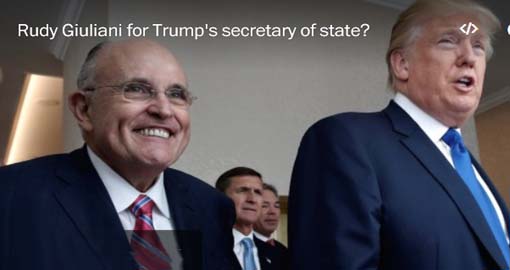
Former New York mayor Rudy Giuliani is reported to be in contention to be Donald Trump’s attorney general or secretary of state. Senators who will be considering his confirmation may want to examine the fact that Giuliani took money to advocate on behalf of an Iranian dissident group while it was listed by the State Department as a foreign terrorist organization, potentially breaking the law.

For years, Giuliani has been one of the most prominent American officials to advocate on behalf of the Mujahideen-e Khalq (MEK), a Marxist Iranian opposition group that claims to be the legitimate government of Iran and resembles a cult. A Treasury Department investigation in 2012 examined whether speaking fees paid by several MEK front groups to a long list of U.S. politicians, including Giuliani, violated laws on Americans receiving money from designated terrorist organizations.

The State Department added the MEK to the list of foreign terrorist organizations in 1997 due to its involvement in the killing of U.S. citizens in Iran in the 1970s and an attack on U.S. soil in 1992. The group, which has about 3,000 members living in exile in Iraq, has not conducted a confirmed act of terrorism in more than a decade. In the aftermath of the U.S. invasion of Iraq, the United States mostly disarmed the MEK and provided its members with protection at their Iraqi base, Camp Ashraf.

Throughout the first term of the Obama administration, Iranian American organizations with extensive links to the MEK paid prominent U.S. national security officials to speak on behalf of the group. They also contributed heavily to the campaign coffers of lawmakers on both sides of the aisle. The payments ran through the lobbying law firm DLA Piper, which passed the money through a speakers’ bureau that cut checks to the officials.

In 2011 and 2012, Giuliani gave several speeches, including at events inside the congressional office buildings, calling on the State Department to take the MEK off of the list of foreign terrorist organizations. He also heavily criticized the U.S. government’s effort to help relocate MEK members when the Iraqi government evicted them from Camp Ashraf.

In March 2012, Giuliani traveled to Paris to speak at an MEK conference alongside the group’s secretive leader Maryam Rajavi. While there, he called the U.S. military base in Iraq where the United States wanted to relocate the MEK a “concentration camp.” Those comments later appeared in an MEK ad in the New York Times.

That same month, the Treasury Department’s investigation into the payments made to American politicians became public when former Pennsylvania governor Ed Rendell admitted that he had received a subpoena related to his work on behalf of the MEK. It’s illegal for American citizens to do business with a group designated as a foreign terrorist organization.

During a pro-MEK protest and rally outside the State Department in 2011, Rendell told me he had received $20,000 for his appearance there. How much money Giuliani received per appearance is unclear, although he spoke on behalf of the MEK several times in 2011 and 2012.

Representatives of several of the front groups, which have names like the Iranian American Citizens of Northern California, have maintained that they have not broken any laws.

Other potential Trump administration appointees took money to advocate for the MEK while it was listed as a foreign terrorist organization, including former ambassador John Bolton and former CIA director James Woolsey, but they were less involved than Giuliani. Other officials who have given pro-MEK paid speeches include Rep. John Lewis (D-Ga.), former FBI director Louis Freeh, former senator Robert Torricelli, former representative Patrick Kennedy, former national security adviser Gen. James Jones, former Joint Chiefs chairman Gen. Richard Myers, former White House chief of staff Andy Card, retired Gen. Wesley Clark, former representative Lee Hamilton, former CIA director Porter Goss and former senator Evan Bayh.

At the time, top State Department officials often complained about the U.S. politicians who were advocating for the MEK, calling their interference unhelpful and misguided. The American supporters of the MEK were increasing tensions between the U.S. government and the MEK while negotiations were ongoing.

“The Americans who ought to know better and claim to be on the side of good solutions are really damaging it. Either they are too lazy or too arrogant to actually do their homework. They don’t spend the time to learn facts, they just pop off. They accept the MEK line without question and then they posture,” one State Department official told me in 2012.

In October 2012, after the MEK finally relented to State Department pressure and moved to Camp Liberty, Secretary of State Hillary Clinton decided to remove it from the foreign terrorist organization list. What happened to the Treasury Department’s investigation after that is unclear.

The MEK story is complicated because the group does have legitimate grievances and has been the target of deadly attacks by Iranian-backed forces inside Iraq. There are also reports that the U.S. and Israeli intelligence services have used the group’s members at various times to conduct covert operations inside Iran.

Giuliani and the other MEK supporters’ argument that the group is the victim of human rights abuses and deserves protection from atrocities is valid. But by profiting from their advocacy while the group was a listed terrorist organization, they may have broken the law.

And if Giuliani really believes that the MEK could represent a viable alternative to the current Iranian government or a even a key pillar in U.S. policy on Iran, his potential tenure as a national security official in the Trump administration will mean a new and uncharted era in U.S.-Iran relations.

By Josh Rogin ,

November 16, 2016 0 comments
FacebookTwitterPinterestWhatsappTelegramSkypeEmail
Mujahedin Khalq; A proxy force

Former Terrorist Group To Enjoy Close Ties to Rumored Trump Cabinet

Donald Trump’s rumored picks for key foreign-policy positions have already set off alarm bells about the future administration’s embrace of war hawks and Islamophobes. Today, Washington Post columnist Josh Rogin pointed out that former New York City mayor Rudy Giuliani, who is currently reported to be under consideration for an appointment to secretary of state or attorney general, potentially violated the law when he made paid speaking appearances for the Mojahedin-e Khalq (MEK), when the State Department listed the Iranian dissident group as a foreign terrorist organization.
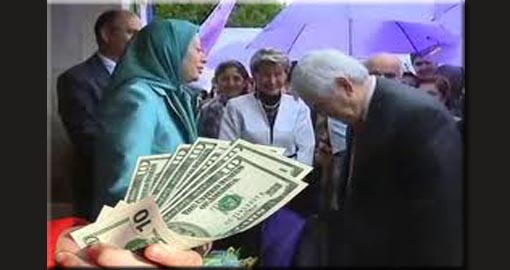
Giuliani isn’t the only likely member of the future administration to have maintained close ties and advocated on behalf of the former terrorist group, which assassinated six Americans in Iran between 1973 and 1976.

John Bolton (another rumored choice for secretary of state), Clare Lopez (who is reportedly short-listed for deputy national security adviser), and Newt Gingrich (who allegedly turned down an offer of secretary of state but has shown interest in serving as a policy adviser in the Trump administration) have all advocated for the former terrorist group and praised its cultish leader, Maryam Rajavi.

Shortly after the overthrow of the Shah, the group experienced a falling out with Ayatollah Ruhollah Khomeini and fled into exile. Over the following years, the group’s leaders, Maryam and Massoud Rajavi, aligned with Saddam Hussein during the Iran-Iraq war (7,000 members fought alongside Saddam Hussein, against Iran) and shifted toward increasingly cultish behavior, mandating divorces and celibacy for their soldiers while cultivating a cult of personality around themselves.

Massoud Rajavi hasn’t been seen since overseeing the surrender of MEK forces to the U.S. following the 2003 invasion of Iraq. This summer,  the former head of Saudi Arabia’s intelligence agency, Prince Turki bin Faisal Al Saud referred to Massoud Rajavi as “the late Massoud Rajavi,” suggesting that he may be deceased. Turki’s participation at an MEK event, meanwhile, was a tacit acknowledgement of Saudi Arabia’s support of the group. Indeed, forming opportunistic alliances has been a hallmark of the MEK. In 2012, U.S. officials told NBC News that Israel’s national intelligence agency, Mossad, was training and arming the MEK to assassinate Iranian nuclear scientists.

The group seeks to portray itself as a government-in-exile and the secular, democratic alternative to Iran’s theocratic government. But the MEK’s lack of influence inside Iran and skepticism about their allegations regarding Iran’s nuclear program—for example, photographic evidence the MEK provided last year allegedly showing evidence of “Lavizan-3,” a secret uranium enrichment facility in the suburbs of Tehran, turned out to be a stock photo from an Iranian safe company – haven’t prevented the group from gaining footholds in Washington through campaign contributions and lucrative speaking gigs for politicians who praise Rajavi and call for regime change in Iran at MEK rallies.

The MEK is known for paying generous sums to former officials who speak at their events. Lee Hamilton, a former chairman of the House Foreign Relations Committee who headed the Woodrow Wilson Center for 12 years, told InterPress Service that he was paid “a substantial amount” to appear on an MEK panel in 2011.

Giuliani, Bolton, Lopez, and Gingrich have all sung the praises of Maryam Rajavi, called for the U.S. to work towards regime change in Tehran, and treated the MEK as a legitimate Iranian government in exile.

Speaking at an MEK rally outside Paris last year, Giuliani, who had taken speaking fees from the group when it was on the foreign terrorist organization (FTO) list, told the audience:

I will not support anyone for President of the United States who isn’t clear on that slogan behind me. What does it say? It says “Regime Change.” … I will not support a candidate who does not have the moral fiber and the courage to stand up to the Ayatollah and tell him “We are going to do everything we can to get you out and you are never going to become a nuclear power.”

Bolton, who also advocated for the group when it was on the FTO list, told an MEK audience outside Paris last summer:

There is only one answer here: To support legitimate opposition groups that favor overthrowing the military theocratic dictatorship in Tehran, and it should be the declared policy of the United States of America and all of its friends to do just that at the earliest opportunity.

Gingrich, who also spoke for the group before it was delisted, told the 2016 gathering in Paris:

There are no moderates in the dictatorship. The dictatorship cannot be trusted. The [nuclear] agreement made with it is insane.

He concluded by praising the commitment of Rajavi’s followers, saying:

I want you to know that the message I will take home to America is that there are thousands and thousands of Iranians who are prepared, who are ready, who are committed to and who believe that we can truly bring democracy to Iran.

Lopez, who serves as a vice president at the Center for Security Policy, a far-right think tank headed by anti-Muslim conspiracy theorist Frank Gaffney, and as executive director of the long-time MEK advocacy group, the Iran Policy Committee, from 2005 to 2006, wrote that Prince Turki’s surprising appearance marked a watershed moment for the MEK.

She wrote:

…[T]he implications of official Riyadh government support for the largest, most dedicated, and best-organized Iranian opposition movement will reverberate through the Middle East.

Although not openly stated by bin Faisal, the new NCRI-Riyadh alliance may be expected to involve funding, intelligence sharing, and possible collaboration in operations aimed at the shared goal of overthrowing the current Tehran regime.

If Lopez, Giuliani, Bolton, or Gingrich serve in the Trump administrations, the MEK will have the highest level access its ever enjoyed in the U.S. government, a remarkable journey for a fringe Islamic-Marxist group that, until 2012, was on the State Department’s terrorism list for its role in assassinating Americans.

by Eli Clifton

November 16, 2016 0 comments
FacebookTwitterPinterestWhatsappTelegramSkypeEmail
Mujahedin Khalq; A proxy force

Trump’s Worse Than Bush and Obama

Trump’s Worse Than Bush and Obama (Mojahdein Khalq terrorists, Maryam Rajavi, Saudi Family, Rudi Giuliani, Newt Gingrich and John Bolton)

US President-elect Donald Trump is already lining up a tell-tale team of Wall Street and Washington insiders as well as warmongering Neo-Conservatives and sponsors of terrorism to fill his cabinet and serve in key positions within his upcoming administration. He’s also openly reneging on his campaign promises, before even getting into office.
The Intercept in an article titled, “Donald Trump Recruits Corporate Lobbyists to Select His Future Administration,” would reveal that:

Trump for America Inc., a nonprofit group chaired by Gov. Chris Christie, R-N.J., to oversee the Trump transition, has quietly moved ahead, meeting with interest groups and reaching out to lobbyists to plan a future Trump administration.

The group has held regular meetings at the Washington, D.C., offices of Baker Hostetler, a law and lobbying firm.

On Thursday, the group hosted a breakfast at Baker Hostetler attended by Microsoft’s Ed Ingle and Steve Hart, two lobbyists who, according to filings, have worked to promote the Trans-Pacific Partnership. Other transition meetings have included briefings with the Financial Services Roundtable and the Investment Company Institute, two lobby groups that represent Wall Street interests, as well as with the BGR Group, a lobby firm that represents Saudi Arabia and the South Korean government.

Perhaps BGR relayed some information to Trump’s team during these meetings on behalf of their South Korean clients, which is why Trump has now already announced a complete reversal regarding his alleged platform of no longer maintaining America’s vast collection of protectorates around the globe – South Korea included.

Vox in its article, “Trump just completely reversed his policy on South Korea — only 2 days after being elected,” would report that:

Trump has tried to put those concerns to rest by speaking directly with Park over the phone and promising to maintain the existing security alliance. “We will be steadfast and strong with respect to working with you to protect against the instability in North Korea,” Trump told the South Korean president, according to a statement from her office.

This is in stark contrast to Trump’s comments during the presidential campaign. Vox stated:

“We are better off frankly if South Korea is going to start protecting itself,” Trump told CNN’s Anderson Cooper back in March. “They have to protect themselves or they have to pay us.” In a January interview on NBC’s Meet the Press, Trump said, “We have 28,000 soldiers on the line in South Korea between the madman and them,” referring to North Korean dictator Kim Jong Un. “We get practically nothing compared to the cost of this.”

But this is relatively minor in comparison to some other warning signs.

As early as August of this year, Trump revealed his consideration of John Bolton as his potential Secretary of State. Breitbart in an article titled, “Trump: We are Seriously Thinking About Picking John Bolton as Secretary of State,” would claim:

“I think John Bolton’s a good man,” Trump replied. “I watched him yesterday, actually, and he was very good in defending me in some of my views, and very, very strong. And I’ve always liked John Bolton. Well, we are thinking about it, Hugh. I will say that. We are thinking about it. I mean, the negative is what I told you. But we are seriously thinking about it.”

John Bolton is a Bush-era Neo-Conservative who helped sell the war in Iraq to the American people under the false threat of “weapons of mass destruction.” The war would claim a million Iraqis and over 4,000 US troops and has left the nation in ruination to this very day. Bolton would go on to use “weapons of mass destruction” as a pretext for America moving on to a narrowly averted war with Iran.

Additionally, Bolton has spent years lobbying for the Mujaheddin-e-Khalq (MEK), an Iranian terrorist group that has killed US military personal, US civilian contractors, as well as Iranian politicians and civilians through decades of terrorist attacks both within and beyond Iran’s borders. Until recently, and including during Bolton’s lobbying activities, MEK was a US State Department-listed foreign terrorist organization, listed side-by-side Al Qaeda, the self-proclaimed “Islamic State,” and Boko Haram. 

Today, Bolton characterizes Russia, China, and Iran as US enemies and seeks expanded military spending and military operations abroad to widen already unprecedented tensions with all three nations.

That Trump even considered making this man his Secretary of State should alarm all Americans, whether they opposed the Iraq War under Bush or US military interventions in Libya, Syria, Yemen, Afghanistan, Pakistan, Somalia, and Iraq under Obama.

Bolton’s consideration for a place within Trump’s incoming administration all but assures the wars not only continue, they will disastrously expand.

Lobbying for MEK terrorists alongside Bolton was former New York mayor Rudy Giuliani and Newt Gingrich. They and other fixtures of American Neo-Conservatism backed MEK along with the Royal Saudi Family, according to the US State Department’s own Voice of America (VOA) media platform.

VOA’s article, “Saudi Backing of Iranian Exile Group Inflames Mideast Conflicts,” would reveal:

Prince Turki al-Faisal, a respected former Saudi ambassador to Britain and the United States, startled many observers when he turned up Saturday at a conference in Paris of the Mujaheddin-e Khalq or MEK.

VOA would also report:

In the course of that campaign, the MEK and its “diplomatic” arm, the so-called National Council of Resistance in Iran, paid millions of dollars to ex-U.S. officials of both major political parties. Saturday’s confab featured many of these individuals including Newt Gingrich, the former speaker of the House and a contender to be Donald Trump’s vice presidential pick, as well as Bill Richardson, a former New Mexico governor and U.N. ambassador under Bill Clinton, and former Vermont governor Howard Dean.

Both Giuliani and Gingrich are also likely to receive positions within Trump’s administration. The fact that Trump has cozied up to men working not only for listed terrorist organizations, but terrorist organizations backed by the Saudis, is particularly alarming not to mention ironic considering Trump’s campaign trail rhetoric.

Continuity of Agenda and How to Break the Cycle

The convergence here between Neo-Conservatism, sponsoring terrorism, warmongering, despotic regimes like that in Riyadh, and all the other abuses and outrages started under Bush and eagerly continued under Obama is no coincidence.

Continuity of agenda continues under Trump, just as it would have under Hillary Clinton, just as it has under Obama and before that under Bush, Bill Clinton, and before that under George Bush Sr.

The only real question America should be asking themselves now is not whether the right-wing claws of this scorpion are more dangerous than the left-wing poisoned stinger, but why we are arguing about it and not just going straight for the head.

Protests in the streets by the left, and a right prepared to go back to sleep for 4-8 years as “their guy” takes the helm of wars they have learned to loved to hate for the past 8 years, does nothing to affect the bottom lines of the corporations and financial institutions that dominate both parties of American politics, benefiting regardless of who is in the White House, moving their agenda and interests forward under the cover of a partisan smokescreen, and all at the cost of not only the American people, but increasingly the peace and stability of the entire planet.

If America’s left and right ever decide to meet in the middle, fighting the multinational corporations festering on Wall Street will be the ground upon which they do so. They will not require “elections” or protests to succeed – simply redirecting the daily financial support, time, and energy Americans pour into these corporations and institutions, instead into local alternatives, is all it will take. Recognizing this as the actual solution, amid increasingly tempting partisan pitfalls, will be the hardest part of reaching toward real progress.

Land Destroyer,

November 15, 2016 0 comments
FacebookTwitterPinterestWhatsappTelegramSkypeEmail
Mujahedin Khalq; A proxy force

Michael Rubin : Outreach to the MKO is the worst possible move

Michael Rubin is a former pentagon official and a resident scholar at the American Enterprise Institute whose major research areas are the Middle East, Turkey, Iran and diplomacy. He publishes his analytical comments onthe Commentary Magazine. He has several times discussed issues relating the Mujahedin Khalq Organization (the MKO). Following the election of Donald Trump as the next US president, Rubin finds it crucial to discuss the possibility of embracing the MKO by the Trump administration. His post on the Commentary Magazine is titled “Will Trump Embrace the MKO?” .

Rubin considers embracing the MKO as “going into an uncharted territory”. “Some Trump advisors appear to have endorsed the group at one point or another, “he asserts. “To be fair, the MKO is no longer designated a terror group, and its advocates argue that the only reason it was in the first place was in order to appease Iran. Not only prominent Republicans but also Democrats have appeared with Maryam Rajavi, the group’s leader.

However he warns the Trump administration about the truth of the MKO, ”Still, it is important to remember that the MKO is a Marxist, authoritarian cult with minimal support inside Iran.” Rubin’s claim on the MKO’s unpopularity inside Iran is based on his authentic experience of spending a seven- month long residence in Iran during the 1990s. Based on his real life account Iranian people have various views about the Islamic Republic and the exiled opposition groups but “the only unifying factor was the absolute antipathy with which they viewed the MKO, a group which allied itself with Iraqi dictator Saddam Hussein during the Iran-Iraq War.” He clarifies his account writing, “Many Iranians view the MKO in the same way as Americans view John Walker Lindh, the American Taliban. That the MKO conducted terrorism which victimized ordinary Iranians has only solidified Iranian public opinion against the group even further.”

 While Rubin is a detractor of the Iranian government and criticizes it ruthlessly, he is very sensible about the fraudulent propaganda of the MKO. He writes, “The MKO’s rhetoric about democracy can be alluring, but if the goal of the Trump administration is to contain, weaken, and roll back the influence of the Islamic Republic, then outreach to the MKO is the worst possible move because it would rally Iranians around the flag and strengthen the current regime.”

He advises President Trump by the ending sentence of his commentary: “The enemy of an enemy is not always a friend.”

Michael Rubin, Commentary Magazine

November 15, 2016 0 comments
FacebookTwitterPinterestWhatsappTelegramSkypeEmail
Former members of the MEK

Possible Trump Cabinet Members’ Links to the Mojahedin Khalq Could Spell Trouble for Iran

Among the foreign policy think tanks and pundits of New York and DC, few supported Trump or even countenanced the possibility of his election. Now that the dust has settled and the populist tycoon is soon to move into the White House, speculations abound as to what his foreign policy will be like.

What makes Trump hard to predict is that the 70-year-old billionaire has a history of zigzagging. He doesn’t seem to be a genuine ideological right-winger, but rather an opportunist who marketed a series of what could only loosely be described as “policies” because he knew they’d play well with his right-wing base. Prior to 1987, he was a registered Democrat, before flipping to the Republican party, then to Ross Perot’s right-wing Reform Party, then back to the Democrats, then—after Obama’s victory—back to Republicans once more.

During the campaign, too, he took vague and contradictory positions and flip-flopped on major issues. Banking on Hillary Clinton’s reputation as a hawk and the US population’s resentment at their country’s many foreign military adventures, Trump often appeared to take an isolationist stance, which sadly fooled even some left-wingers who claimed he was “less of a threat” to the world than his competitor. But on major issues, he often wanted more not less military intervention.

Trump advocated a higher military budget and an escalation of the fight against ISIS. While initially demanding 20 to 30,000 US boots on the ground, he later retracted this position and said Saudi Arabia should supply these forces. At times he said the UN-backed war in Afghanistan was a mistake and at other times he supported it. At the time of the UN-backed intervention in Libya, he supported bringing down of the country’s ruler, Moammer Gaddafi, but has since changed his position more than once.

It is safe to say that we can’t pretend to know the direction of Trump’s foreign policy. This seems to be evolving as the President-elect starts having to deal with a prospect of actually sitting behind the most powerful desk in the world.

What predictions can we then make regarding the possible Iran policies of the Trump administration?

Even though he promised to tear up the Iran Deal during the all three presidential debates, analysts have pointed out that he “probably” won’t do that, especially as the deal has the support of other world powers such as EU and Russia, whose Tehran-allied president Putin Trump has wooed for a while. On the other hand, the Israeli commentator Zvi Bar’el has pointed out that if Trump actually moves on to “fiddle with the nuclear deal,” this would favor Iran, as it could portray the US as a violating party and enlist the help of others. What remains unsaid is that any such belligerence on Trump’s part would also bolster the anti-reform and anti-deal hardliners in the Iranian establishment, some of whom have spoken favorably of Trump. Iran’s Supreme Leader Ali Khamenei came close to endorsing the business mogul when he said that “they call him a populist because he speaks the truth”.

What might make the Trump policy clearer is the make-up of his cabinet, in particular his national security team. This is where advocates of peace and democracy in Iran and the Middle East should find cause for worry.

Two of the main contenders for the position of Secretary of State are the former House speaker Newt Gingrich and the former UN ambassador John Bolton. Not only have both of these men supported a military attack on Iran and “regime change” there, they are some of the closest American “friends” of a notorious Iranian political-militant organization known as Mojahedin-e-Khalq (MEK) which is almost universally hated inside Iran after having collaborated with Saddam Hussein in the Iran-Iraq War.

MEK was designated a terrorist organization by the US until it was de-listed in 2012. After the overthrow of its patron, Saddam Hussein, in 2003, the group became mostly irrelevant and no figure of repute in Iranian politics would go anywhere near it after the evidence of the major abuses it perpetrated was laid bare over the last few years. 

John Bolton also has a long history of support for MEK and is a frequent guest at its rallies. In March 2015, as the talks surrounding the Iran Nuclear Deal were reaching a sensitive stage, he called for a military attack on Iran and “vigorous American support” for MEK “aimed at regime change in Tehran”. Last summer, Gingrich spoke at MEK’s rally in Paris alongside Turki bin Faisal, the former head of Saudi intelligence. Gingrich went as far as to solemnly bow down to MEK’s leader, Maryam Rajavi, calling her by her favored title, “President-elect”. When running for the Republican party presidential nomination in 2012, Gingrich openly called for “replacing the leadership of Iran”, saying that this could be accomplished within a year.

With Gingrich and Bolton likely to be appointed to two of the highest national security positions in the Trump administration, will Rajavi’s totalitarian cult gain influence?

Other possible members of a Trump administration are also leading anti-Iran hawks. Former New York Mayor Rudy Giuliani, tipped for the position of attorney general, has been paid handsome sums to appear at MEK rallies. New Jersey governor Chris Christie, head of the Trump transition team, has called Iran a “greater threat than ISIS”. Mike Flynn, possibly the next secretary of defense, is on the record as saying, “I’ve been at war with Islam, or a component of Islam, for the last decade” and complaining about Iran’s “lies, their flat out lies, and then their spewing of constant hatred, no matter whenever they talk”.

Last but not least, one of the primary funders of Trump’s campaign is casino-owner Sheldon G. Adelson, who endorsed him in May and gave $25 million to an anti-Clinton Super PAC last week. Adelson is known for having advocated a nuclear strike on Iran. This 25th richest man in the world is also a close ally of Israel’s right-wing Prime Minister Benjamin Netanyahu, and a close associate of Gingrich, whose 2012 campaign he supported. Adelson is so close to Netanyahu that he pumps 50 million dollars a year into a free news daily, Israel Hayom, that attacks Netanyahu’s domestic enemies on both the left and the right. The two are so close that when there a bill that would have hurt Israel Hayom was tabled in the Knesset, Israel’s national legislature, Netanyahu opposed it at the cost of the collapse of his own coalition government. The next coalition government was formed only when his partners promised not to bring media-related bills that could hurt Adelson.

Trump’s Iran policy would depend on many factors, including his relationships with Moscow, Riyadh and Tel Aviv, his position on US military involvement in Iraq, Syria and Yemen, and the demands of the Republican-led Congress, the majority of which opposed the Iran Deal. But the links with MEK are a serious cause for worry, and the reason Iranians should be vigilant and make it clear that this cult doesn’t speak for the people of Iran, nor they are genuine advocates of democracy in the country.

Arash Azizi, Global voice,

November 13, 2016 0 comments
FacebookTwitterPinterestWhatsappTelegramSkypeEmail
Newer Posts
Older Posts

Recent Posts

  • Fourteen years after US delisting, MKO terror cult’s political rebranding collides with its violent legacy

    September 30, 2026
  • How Did Maryam Rajavi Become All-Powerful in the MEK?

    September 29, 2026
  • Soraya Abdollahi’s Letter to International Human Rights Bodies

    September 28, 2026
  • How Did Maryam Rajavi Become All-Powerful in the MEK?

    September 27, 2026
  • Yazdan Teimorian’s Family:  We Are so Heart-Broken!

    September 23, 2026
  • Facebook
  • Twitter
  • Instagram
  • Youtube

© 2003 - 2025 NEJAT Society . All Rights Reserved. NejatNGO.org


Back To Top
Nejat Society
  • Home
  • Articles
  • Media
    • Cartoons
    • NewsPics
    • Photo Gallery
    • Videos
  • Publications
    • Books
    • Nejat NewsLetter
    • Pars Brief
  • About Us
  • Contact us
  • Editions
    • عربي
    • فارسی
    • Shqip