Nejat Society
  • Home
  • Articles
  • Media
    • Cartoons
    • NewsPics
    • Photo Gallery
    • Videos
  • Publications
    • Books
    • Nejat NewsLetter
    • Pars Brief
  • About Us
  • Contact us
  • Editions
    • عربي
    • فارسی
    • Shqip
Nejat Society
Nejat Society
  • Home
  • Articles
  • Media
    • Cartoons
    • NewsPics
    • Photo Gallery
    • Videos
  • Publications
    • Books
    • Nejat NewsLetter
    • Pars Brief
  • About Us
  • Contact us
  • Editions
    • عربي
    • فارسی
    • Shqip
© 2003 - 2024 NEJAT Society. nejatngo.org
Iran Interlink Weekly Digest

Iran Interlink Weekly Digest – 143

++ Payvand Rahai Association met with officials in the Albanian embassy in Paris to present a letter of concern signed by 72 former MEK members in western countries. The delegation discussed the situation of former MEK members now in Albania who are under pressure there.

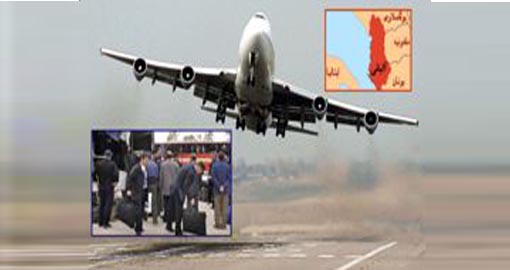
++ 20 more people were removed from Iraq and transferred to Albania and other places. Ashraf News, Arabic website, published photographs of a cluster of the MEK women standing in Baghdad airport looking old and miserable. In an interview, the head of the airport explained they were being transferred under the auspices of the UNHCR but their passports were being stamped with the word ‘deported’. Farsi commentators congratulated the families that there is movement again after a hiatus in the expulsions. Some say that although Rajavi tried for so long to delay the transfers, it is now at the stage that he can’t stop it. Albania is the last stop and Rajavi can’t do anything else beyond that. Majid Rouhi, who writes weekly for Iran-Interlink exposing Rajavi on one particular issue each week, this week wrote about the MEK in Albania. He says “They used to be called Rajavi’s unpaid Gladiators. But now we look at them, we see they are dead people walking.”

++ Iranian media covered the 34th International Film Festival in Tehran. There were two films which were based on the MEK. Ebrahim Khodabandeh who served for 23 years as the head of the MEK’s International Relations department and who left them in 2003, gave a speech about the films and talked about the internal situation of the MEK as a terrorist cult. The film ‘Cyanide’, an action movie directed by Behrouz Shoaibi, is set in the time before the revolution. The film starts with the MEK assassination of two Americans in Iran and then follows infighting within the MEK which resulted in changing the ideology from Islam to Marxism, and the consequent assassination of the remaining Muslim members like Majid Sharif Baghefi and others. The other film ‘Mina’s Choice’, directed by Kamal Tabrizi, takes place after the revolution during the time that Saddam’s army was hitting Iranian cities with missiles. The film exposes the way the MEK provided intelligence to the Iraqis so they could hit these cities. In this context the film follows relationships among the people doing this, and specifically relationships under the restrictions imposed by Rajavi – forced divorce and gender segregation, etc.

In English:

++ The official website of the President of the IRI reported a meeting between President Rouhani and President of the Belgian Senate Christine Defraigne. Without directly naming the MEK, Rouhani highlighted Europe’s sometimes discriminatory approach to the issue of terrorism, saying “Terrorism should be combatted anywhere, with any motto and terrorists should not be divided into good terrorists and bad terrorists for short-term interests,” added the President. He continued: “We were dealing with terrorism in the beginning years of the Islamic Revolution and they brutally killed our authorities and people; and unfortunately, the same terrorists are living and working freely in Europe”.


++ Mazda Parsi writing for Nejat Bloggers says that increasing rapprochement between Iran and the West will render the MEK ever more irrelevant. “As the leading enemy of the Iranian Government on the nuclear affairs, the US is now starting the first financial deals with Iran. The news of the US buying Iran’s heavy water marks a significant message to other players against the Iranian nuclear program. As a vocal opponent of diplomacy, the Mujahedin Khalq Organization (the MKO) has received the message so it has launched an aggressive propaganda against the deal.”

++ Ashraf News, Baghdad: Mr. Rinas Jano Mohammad Younis, a deputy of Kurdistan Democratic Party from Dahuk Province told Ashraf News, “Kurds have been victims of the MKO as it was cooperating with Saddam Hussein… The role of the MKO and the crimes it committed against Iraqi people including Arabs, Kurds and Turkmens is known to everyone,” Mr. Jano added. “Iraqi government has so far tolerated members of this terrorist organization because European countries have promised to receive it in their soil.”

The Kurdish parliament member considers the United Nations as the main responsible body to determine the future of the remaining members of this Iranian organization, in Iraq. “The UN has a heavy responsibility on the issue of the group since it has been a side of the agreement that was signed based on relocation of members of the Mujahedin Khalq out of Iraq,” Mr. Jano said.

The deputy of Kurdistan alliance in Iraqi Parliament denied that Kurdish alliance faction wants the MKO members to remain in Iraq. ”We support the rule of Iraqi government on its territory and the expulsion of any terrorist group that is hostile to neighboring countries of Iraq,” he stated. [Translated by Nejat Society]

May 06, 2016
May 7, 2016 0 comments
FacebookTwitterPinterestWhatsappTelegramSkypeEmail
Iraqi Authorities' stance on the MEK

MP: Iraqi Kurds do not want the MKO in Iraqi territory

Kurd member of Iraqi Parliament asserts that Iraqi Kurds do not want the Mujahedin Khalq Organization in Iraqi territory.

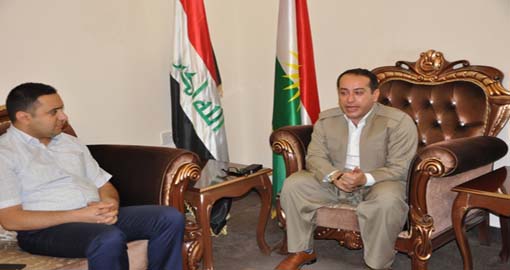
Mr. Rinas Jano Mohammad Younis, a deputy of Kurdistan Democratic Party from Dahuk Province told Ashraf News, “Kurds have been victims of the MKO as it was cooperating with Saddam Hussein.”
“The role of the MKO and the crimes it committed against Iraqi people including Arabs, Kurds and Turkmens is known to everyone,” Mr. Jano added. “Iraqi government has so far tolerated members of this terrorist organization because European countries have promised to receive it in their soil.”

The Kurdish parliament member considers the United Nations as the main responsible body to determine the future of the remaining members of this Iranian organization, in Iraq. “The UN has a heavy responsibility on the issue of the group since it has been a side of the agreement that was signed based on relocation of members of the Mujahedin Khalq out of Iraq,” Mr. Jano said.

The deputy of Kurdistan alliance in Iraqi Parliament denied that Kurdish alliance fraction wants the MKO members to remain in Iraq. ”We support the rule of Iraqi government on its territory and the expulsion of any terrorist group that is hostile to neighboring countries of Iraq,” he stated.   

Translated by Nejat Society

May 4, 2016 0 comments
FacebookTwitterPinterestWhatsappTelegramSkypeEmail
Albania

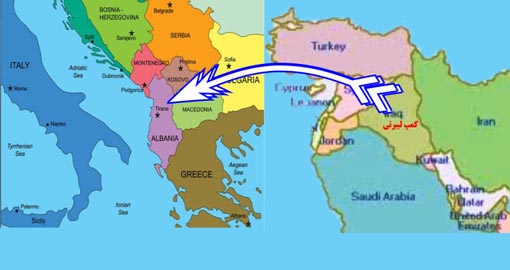
20 more Camp Liberty residents moved to Albania

Another group of 20 Camp Liberty (TTL) residents relocated in Tirana. The new group flied to Albania on Thursday, April28, 2016, Neday-e Haqiqat Website reported.

This was the second group of MKO members who were transferred to Albania since the beginning of the Iranian New year.
Stating the significantly heightened security risks for the residents, in its statement of December2015, the UNHCR emphasized on the need for the relocation of all Temporary Transit Location residents and called on all States to cooperate on the issue.

Names are as follows:

  • Niloufar Alamian
  • Aazam Farsi
  • Parisa Rafiei
  • Naeemeh Haj Hosseini
  • Tuba Bozorgmehr
  • Zahra Rahmatnejad
  • Ashraf Farshid
  • Fahimeh Heidari
  • Adeleh Aghaei
  • Soghra Bozorganfard
  • Mahboubeh Taghipour
  • Athemeh Davarmanesh
  • Mahboubeh Rezaei
  • Zahra Shahkarami
  • Leila Nargesi
  • Somayeh Nemati
  • Reza Haftbaradaran
  • Saeid Arjmandpour
  • Salahoddin Abdollahzadeh
May 3, 2016 0 comments
FacebookTwitterPinterestWhatsappTelegramSkypeEmail
Mujahedin Khalq Organization's Propaganda System

Perils for the MKO, the US purchasing Iran’s heavy water

As the leading enemy of the Iranian Government on the nuclear affairs, the US is now starting the first financial deals with Iran. The news of the US buying Iran’s heavy water marks a significant message to other players against the Iranian nuclear program. As a vocal opponent of diplomacy, the Mujahedin Khalq Organization (the MKO) has received the message so it has launched an aggressive propaganda against the deal.
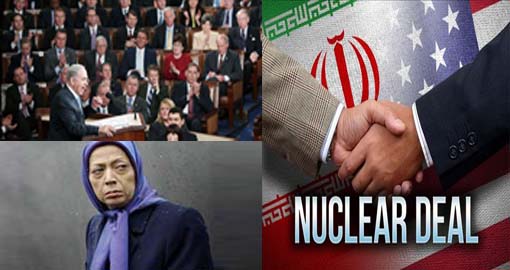
The MKO’s spokesman in the US Alireza Jaffarzadeh called the US decision “another unjustified concession” and “rewarding” the Iranian government. However, certain analysts including Jay Solomon of the Wall Street Journal considers this deal “a new gambit in a growing White House effort to encourage Tehran to stick to the nuclear agreement reached last year”.[1]

The MKO’s stance is as usual shared with their republican sponsors in the US Congress. "The White House wants to ease Iran’s concerns that it is not reaping the expected economic benefits of the nuclear accord”, Jay Solomon writes. ”But its efforts to buttress the Iranian economy have ignited fresh ire among Republicans in Congress who are drafting new legislation to block any Iranian economic integration with the U.S.”. American warmongers criticized the administration for “subsidizing Tehran’s nuclear program”.  [2]

What the MKO fears most is seen in this paragraph by Jay Solomon: “The purchase agreement is the latest sign of rapprochement between Washington and Tehran after decades of hostilities. As part of the nuclear accord, the U.S. and global powers lifted certain sanctions on Iran. And the U.S. Treasury in recent months granted licenses to American companies, including Boeing Co. to return to the Iranian market. “[3]

As a matter of fact, rapprochement between Tehran and Washington results in more isolation for the MKO. While the MKO propaganda do not hesitate to obstruct any agreement between Iran and the West, there is a true fact that the US actually needs Iran’s heavy water. So, the purchase agreement seems to be a mutually beneficial deal for both sides. According to the WSJ, “The U.S. doesn’t produce heavy water domestically, and largely has been purchasing the material from Canada and other foreign countries in recent years. It imports around 75 tons of heavy water annually, according to Department of Energy officials.” [4]

Besides, the director of the Press Office of US Department of State, Ms. Elizabeth Trudeau clarified for journalists in a Press Briefing on April 22, “This heavy water will fulfill a substantial portion of the U.S. domestic demand this year for industry and domestic research applications.” She added, “Our purchase of the heavy water means it will instead be used for critically important research in non-nuclear industrial requirements here in the United States.” [5]

This indicates that the Islamic Republic has officially become an exporter of heavy water to the world. Bad news for the MKO is that the two first costumers of Ian’s heavy water are two super powers, the US and Russia. “Iran is holding talks with Russia to sell it about 40 tons of heavy water from its nuclear program “, reported the Reuters. “The Russian Foreign Ministry later confirmed Moscow was considering the purchase.” [6]

As the MKO detests the notion of rapprochement between Iran and the West, the practically successful nuclear deal will make the MEK more inapt. So far, the MEK has not succeeded to impose a significant challenge to the Iran-West nuclear conflicts, but western politicians should watch the group as a nuisance in the process of reaching peace.

By :Mazda Parsi

Sources:

[1]Solomon, Jay, U.S. to Buy Material Used in Iran Nuclear Program, the Wall Street Journal, April 22, 2016

{2] ibid

[3] ibid

[4] ibid

[5] Trudeau, Elizabeth, Daily Press Briefing, US Department of State Website, April 22, 2016

[6] Reuters, Iran in talks with Russia on heavy water sales, April 25, 2016

May 1, 2016 0 comments
FacebookTwitterPinterestWhatsappTelegramSkypeEmail
Iraq

Corporate report. Iraq – in-year update December 2015

This is an update to the Foreign and Commonwealth Office 2014 Human Rights and Democracy Report. (Published 21 April 2016)

Extract:

(…)

On 29 October, rockets were fired at Camp Liberty, a temporary transit location for members of the Mojahedin-e-Khalq, killing 24 residents and injuring others. FCO Minister for the Middle East, Tobias Ellwood, condemned the incident and called on the GOI to bring those responsible to justice. Officials at the British Embassy in Baghdad raised this issue with the Office of the Iraqi Prime Minister to make clear the need for an urgent and comprehensive investigation into the incident. On 11 November, the UK’s Deputy Permanent Representative to the UN in New York underlined our concerns in the Security Council and to the Iraqi Permanent Representative. The GOI has begun an investigation, which we are following. We continued work with the UN High Commission for Refugees which is assessing applications made by residents for relocation.

(…)

Full Report:

The overall human rights situation in Iraq remained of grave concern between July and December 2015. The government of Iraq (GoI), with the support of the Global Coalition to counter Daesh, has made military progress against Daesh, but the humanitarian situation has deteriorated, with the number of internally displaced persons (IDPs) rising to over 3.3 million.

Daesh and associated armed groups continued to commit atrocities. These included abduction and murder; punishments of stoning and amputations; systematic persecution of communities because of their religion or ethnicity; sexual violence and sexual slavery; forcible recruitment and use of children in conflict; and attacks on religious sites. As areas have been liberated from Daesh, mass graves have been discovered, highlighting the appalling numbers of civilians Daesh have executed. The UN Office of the High Commissioner for Human Rights and the UN Assistance Mission for Iraq recently published a report that highlighted the systematic abuses perpetrated by Daesh. They reiterated their view that these acts may, in some instances, amount to war crimes, crimes against humanity, and possibly genocide.

Violence against women and girls remains common in Daesh-held areas. Reports estimate that over 1,500 women remain captives of Daesh – traded and sold by Daesh fighters as sex slaves. There are also reports of women being stoned to death, often on charges of adultery as a result of coming into contact with men to whom they are not related. Daesh has worked to remove women and girls from public life, taken away their independence, and placed them entirely under the control of men.

Levels of terrorist violence and numbers of civilian casualties in Iraq have remained high since July. According to the UN more than 1,794 people were killed in Baghdad between July and December. The UN reported that at least 3,520 civilians and 2,436 members of the Iraqi Security Forces (ISF) have been killed since July. This does not include accurate figures for Anbar province, meaning that the total number is likely to be higher.

Reports of sectarian atrocities and human rights abuses and violations have increased as areas have been liberated from Daesh. These include allegations of abuses and violations committed by the Iraqi Security Forces (ISF), Kurdish Security Forces (KSF), Popular Mobilisation Forces (PMF) and militias. Human Rights Watch has alleged that the ISF and militias have committed possible war crimes in their fight against Daesh, particularly in areas liberated from Daesh, such as Tikrit.

The GoI did not carry out any executions between July and December, although they retain the death penalty, and death sentences were handed down during this period. President Fuad Masum continued to review all death penalty warrants to ensure that all sentences had been passed by legitimate trials and without the use of forced confessions. An unofficial moratorium on the use of the death penalty had been in place in the Kurdistan Region of Iraq (KRI) since 2008. However, on 12 August, one man and two women were executed by the Kurdistan Regional Government (KRG) for the abduction and murder of two schoolgirls. Media reports suggest that there are currently over 205 people on death row in the KRI.

On 29 October, rockets were fired at Camp Liberty, a temporary transit location for members of the Mojahedin-e-Khalq, killing 24 residents and injuring others. FCO Minister for the Middle East, Tobias Ellwood, condemned the incident and called on the GOI to bring those responsible to justice. Officials at the British Embassy in Baghdad raised this issue with the Office of the Iraqi Prime Minister to make clear the need for an urgent and comprehensive investigation into the incident. On 11 November, the UK’s Deputy Permanent Representative to the UN in New York underlined our concerns in the Security Council and to the Iraqi Permanent Representative. The GOI has begun an investigation, which we are following. We continued work with the UN High Commission for Refugees which is assessing applications made by residents for relocation.

On 29 September, Department for International Development Minister, Desmond Swayne, announced that the UK would provide an additional £20m in UK aid funding to support the humanitarian response in Iraq. This brings the UK’s contribution to £79.5m. The funding will provide medical care, clean water and improved sanitation, shelter, cash support and other essentials to displaced Iraqis.

In October, the FCO hosted the Iraqi Minister of Justice, Haider al Zamali, and the Deputy Head of the Shura Council in London for a three-day fact-finding visit. As part of this, a Prisoner Transfer Agreement between the UK and Iraq was signed. The Minister also visited Belmarsh prison to find out how the UK had modernised an existing prison, talked to the Judicial Training College about possible collaboration, and discussed with the Crown Prosecution Service how they develop evidenced-based prosecution cases.

In November, FCO Minister for Human Rights and the Prime Minister’s Special Representative on Preventing Sexual Violence in Conflict, Baroness Anelay, visited Baghdad and Erbil. Baroness Anelay used the visit to meet Ministers and senior officials to discuss women’s rights, preventing sexual violence in conflict, and justice and accountability issues. She also heard directly from some of the victims of Daesh’s violence and brutality. During her visit the Minister announced the provision of up to £750,000 to help implement Iraq’s National Action Plan on Women, Peace and Security, and over £65,000 for the Iraqi Al-Amal Association to support their work with young people and gender equality. Baroness Anelay also used this opportunity to launch the Arabic version of the International Protocol on the Documentation and Investigation of Sexual Violence in Conflict and encourage its use in Iraq.

Foreign & Commonwealth Office, London

April 28, 2016 0 comments
FacebookTwitterPinterestWhatsappTelegramSkypeEmail
Albania

25 members of the Cult of Rajavi transferred to Albania and Norway

Two groups of 20 and 5 residents of Camp Liberty were relocated respectively in Albania and Norway, Neday-e Haqiqat Website reported.

This is the first group of Liberty residents to be resettled in third countries in Iranian New Year; 1395.

It is worth to know that a number of commandants of the Cult of Rajavi including Fahimeh Arvani were also transferred to Albania. Fahimeh Arvani was detained by the Albanian police for a few days due to the arrest Warrant issued for her criminal activities.

Names of those transferred to Tirana are as follows:

  1. Kobra Hasanvand
  2. Mahin Horri(Purseddigh)
  3. Zinat Majidi
  4. Mohammad Ali Mohajeri
  5. Dariush Nasr Ghajar
  6. Ahmad Hushi
  7. Thaher Eghbal
  8. Kamiyar Izadpanah(Azadi)
  9. Mohammad Mir Ghafuri
  10. Ruzbeh Emadzadeh(imanzadeh)
  11. Ehsan Rahmani
  12. Ehsan Samimiha
  13. Saleh Abbaszadeh
  14. Dara Roheili Khorasani
  15. Farzan Falahatgar
  16. Mohammad Hashemi
  17. Alborz Rahimian
  18. Ali Sarshahi
  19. Bahram Zazani
  20. Meysam Nahid

Those moved to Norway:

  1. Farshid Madadzadeh
  2. Marziyeh Kabiri
  3. Nader Varmazyari
  4. Naser Varmazyari
  5. Adel Varmazyari
April 27, 2016 0 comments
FacebookTwitterPinterestWhatsappTelegramSkypeEmail
Mujahedin Khalq Organization

From Democratic Centralism to Dictatorship in the MKO

Democratic Centralism was once a principal of the Communist Party Organization by which members take part in policy decisions, and elections at all levels but must follow decisions made at higher levels. Many Marxist –oriented groups formed during early years of the 20th century and eventually during the 1960s in Iran tried to follow the principals of democratic centralism. This was a catastrophic legacy that the communist parties have left the Mujahedin Khalq Organization, too.
As for the MKO this legacy turned into a human tragedy. Democratic Centralism became a tool of domination over all members of the group. The so called struggles for liberation of the Khalq – ruled by Massoud Rajavi- produced a totalitarian cult of personality that required members to obey the leader blindly. Massoud Rajavi’s monopoly of power illegalized all criticism and opposition against the leadership.

Democratic centralism was supposed to be based on democracy in deciding and unity in action but this was not practically fulfilled. Particularly in the MKO, while the formulation of democratic centralism traditionally promoted election of all positions, this has not been done in the group. The leader of the MKO has not been changed for nearly 40 years. Besides, all the positions in the group’s hierarchy are assigned by the superior officials. Thus, election is unheard of in the MKO.

In fact, the convergence of power and centralization, created a situation in which the method of determining leaders became shadowy in practice. In the ceremony they call elections in the MKO – which is only held for a few high- ranking members– one person is introduced for a position by his superiors, then the audience is asked: ”Does anyone oppose this election?” definitely, nobody dares to express his opposition. No one raises his hand. This way, the person is determined for the position!

Historically, the decline of democracy has been repeated in all structures under democratic centralism. The most notable example is the former Soviet Union. As the central bodies are empowered in these structures, the power is eventually shifted away from membership. Members of the MKO also became a tool of carrying out orders of Massoud Rajavi rather than being empowered and developed to think and act as creative corps. Moreover, members are forbid from expressing disagreements to their superior officials.

Central bodies of the MKO attempt to manage information and perception of events to maintain their own dominance. Therefore, the democratic centralism has turned into a dictatorship in practice. Centralism seems to be an undemocratic notion in essence. Any kind of dictatorship under any name or motivation is unhuman. Furthermore, the history has showed that these kind of structures of power are not stable and consequently will lead to a lot of negative results. The main and the worst result might be the slavery of thousands of people inside the MKO Camps.

Mazda Parsi

April 26, 2016 0 comments
FacebookTwitterPinterestWhatsappTelegramSkypeEmail
Former members of the MEK

I left, because of the MEK involvement in child labour, execution and torture

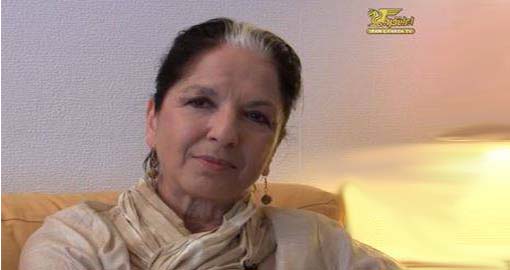
Iran Farda TV broadcasted two interviews with Ms. Fariba Hashtroodi. Ali Limonadi interviewed Ms. Hashtroodi.  

Hashtroodi, a journalist and author, had formerly been with the MEK as a member of the NCRI.

In reaction to the interviews, the MEK went on overdrive everywhere to swear in the most horrible ways imaginable to attack her. They also forced every member of the NCRI to swear at her.

Apparently this is all because in her interview she said “why is Rajavi claiming that anybody going back to their homeland Iran is a mercenary, while he himself has been mercenary for many different parties – Saddam, MOSSAD, CIA, Saudi Arabia, etc, taking money and working for different places against interests of his own country”.

This is why the MEK is so hysterical against her. In the second interview Limonadi recollects trying to interview Marzieh the singer in Rajavi’s house in Paris.

He said “I tried to talk with her, but I was so uncomfortable because she was surrounded by MEK people all the time and couldn’t talk freely. The atmosphere was really horrible, how this old woman was under so much pressure. I felt sorry for her. A friend told me ‘you’ve delved inside the beehive and come out alive. Well done!”

Hashtroodi explains that “I left them for no other reason than that evidence was put in front of me by others which showed the MEK involvement in child labour, execution and torture along with other issues and I found I couldn’t turn my head away and deny it”.

Iran Interlink Weekly Digest,

April 25, 2016 0 comments
FacebookTwitterPinterestWhatsappTelegramSkypeEmail
Human Rights Abuse in the MEK

Rajavi ; inimitable jailor

I was so happy when the travel arrangements were made for my visit to Iraq. I eagerly traveled to Iraq and Camp Liberty where my brother resided. I hoped to see my brother; Hamidreza Nuri after so many years. However, I found myself confronted with feelings of desperation when I reached the Camp Liberty gate. The camp was enclosed with concrete walls. The same as other families, I called my brother. I cried his name. I hopped Hamidreza would hear my voice and reply me. We stayed there for a few days. The cult leaders denied our visit. The MKO Cult leaders had assigned some brainwashed members to curse at families. They welcomed us with placards of insults and swears.  I thought to myself that Rajavi and his elements are inimitable jailors.  
Now I am sure that the Rajavis fear the families. They have kept our family members hostages and abusing their rights. Now I am decided to help those enslaved by the MKO Cult. They need help. I am determined to liberate my brother from the bars of the Rajavi Cult.

April 24, 2016 0 comments
FacebookTwitterPinterestWhatsappTelegramSkypeEmail
Albania

US, EU Back Albania’s Regional Center to Fight Radicalism

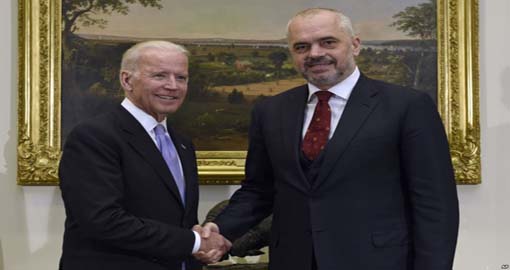
Albanian Prime Minister Edi Rama said Thursday that preparations were underway in his country to set up a regional center for the fight against radicalism.

Image: Vice President Joe Biden shakes hands with Albanian Prime Minister Edi Rama in the Roosevelt Room of the White House in Washington, April 14, 2016.

In comments made immediately following a meeting with President Barack Obama at the White House, Rama said his government had the backing of the United States and the European Union in this undertaking.

He said Albania was also striving to promote religious coexistence among youth. Young people, he said, should not take religious coexistence for granted; they need to invest in it.

Rama said he was also meeting with FBI officials to ask for technical support in improving Albania’s justice system. The changes include the creation of an anti-corruption court and a prosecutor’s office as well as a national investigative body similar to the FBI. The United States has provided $20 million in assistance to support the reforms, and $5 million more is budgeted this year.

During his visit, Rama praised the United States for its strong support of Albania since the collapse of communism in the early 1990s.

Albania, a NATO member since 2009, enjoys a strategic partnership with the United States.

The Balkan nation has been helping relocate thousands of members of the exiled Iranian Mujahedeen-e-Khalq opposition group. Over the past year and a half, Albania has taken in about 1,000 members of the group and has committed to taking 2,000 more.

During his weeklong visit, the Albanian prime minister has drawn attention with comments strongly critical of Republican presidential candidate Donald Trump, saying Americans should not vote for him.

April 23, 2016 0 comments
FacebookTwitterPinterestWhatsappTelegramSkypeEmail
Newer Posts
Older Posts

Recent Posts

  • Fourteen years after US delisting, MKO terror cult’s political rebranding collides with its violent legacy

    September 30, 2026
  • How Did Maryam Rajavi Become All-Powerful in the MEK?

    September 29, 2026
  • Soraya Abdollahi’s Letter to International Human Rights Bodies

    September 28, 2026
  • How Did Maryam Rajavi Become All-Powerful in the MEK?

    September 27, 2026
  • Yazdan Teimorian’s Family:  We Are so Heart-Broken!

    September 23, 2026
  • Facebook
  • Twitter
  • Instagram
  • Youtube

© 2003 - 2025 NEJAT Society . All Rights Reserved. NejatNGO.org


Back To Top
Nejat Society
  • Home
  • Articles
  • Media
    • Cartoons
    • NewsPics
    • Photo Gallery
    • Videos
  • Publications
    • Books
    • Nejat NewsLetter
    • Pars Brief
  • About Us
  • Contact us
  • Editions
    • عربي
    • فارسی
    • Shqip