
++ Marking the anniversary of the execution of some of the MEK founders in 1971, Massoud Rajavi started promoting himself on MEK websites in a way that he wouldn’t do before. He now claims that during the trial he said ‘kill me, I am here to be martyred’. He claims that the judge was afraid of him. Commentators have reminded us of the documents which came out of SAVAK after the fall of Shah which show that Rajavi betrayed each and every founder member and several others and that’s why he was the only one not executed. This week many other documents about this have been posted online, including testimony from the former heads of SAVAK, and various people from inside and outside Iran who were there at the time of the trial and executions. Even some MEK loyalists have criticised Rajavi saying ‘if the founders were alive they would not accept raping women, siding with Saddam and separating children from their families Those founders had nothing to do with you.’
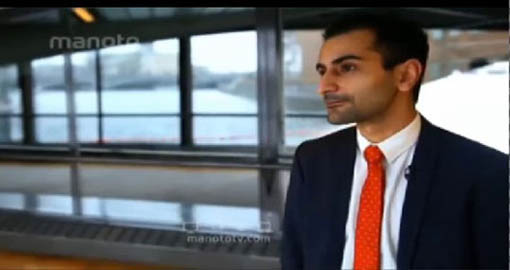
++ In a documentary programme by Manoto TV, Hanif Bali, now an MP in the Swedish parliament, says he is lucky he didn’t end up in Iraq. He was removed from his MEK parents when he was three and fostered by eight different families. He says that when he became a teenager the MEK tried to persuade him to go to Iraq. He refused. Farsi comments on this story remind us that other teenagers under 18 were not so lucky and were deceptively taken to Camp Ashraf. Some were killed, some developed psychotic illnesses and depression, while still others remain trapped in Iraq.
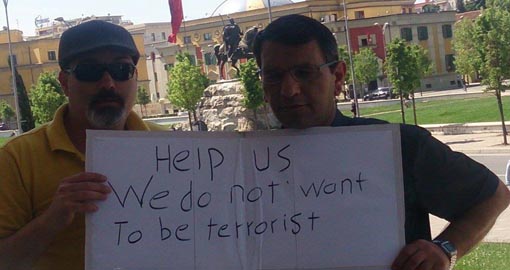
++ There have been several articles about the situation of Tirana and how Massoud Rajavi is desperately spending money to stop people running away and stop defectors talking about the realities there. Commentators jeer that his main worries now are not about politics but about being exposed for all the crimes and immoralities that he has been committing all these years.
++ Last week and this week two interviews with Fariba Hashtroodi by Ali Limonadi were broadcast by Iran Farda TV. Hashtroodi, a journalist and author, had formerly been with the MEK as a member of the NCRI. In reaction to the interviews, the MEK went on overdrive everywhere to swear in the most horrible ways imaginable to attack her. They also forced every member of the NCRI to swear at her. Apparently this is all because in her interview she said “why is Rajavi claiming that anybody going back to their homeland Iran is a mercenary, while he himself has been mercenary for many different parties – Saddam, MOSSAD, CIA, Saudi Arabia, etc, taking money and working for different places against interests of his own country”. This is why the MEK is so hysterical against her. In the second interview LImonadi recollects trying to interview Marzieh the singer in Rajavi’s house in Paris. He said “I tried to talk with her, but I was so uncomfortable because she was surrounded by MEK people all the time and couldn’t talk freely. The atmosphere was really horrible, how this old woman was under so much pressure. I felt sorry for her. A friend told me ‘you’ve delved inside the beehive and come out alive. Well done!” Hashtroodi explains that “I left them for no other reason than that evidence was put in front of me by others which showed the MEK involvement in child labour, execution and torture along with other issues and I found I couldn’t turn my head away and deny it”.
In English:
++ In a series on ‘Elimination Projects in the MEK’ by Nejat Society, various deaths inside the MEK are examined. This week the story of Alan Mohammadi is told. She was among those teenagers returned to Iraq and trapped there as “one crucial sentence was repeated by the MKO leaders on various occasions: ‘Entry doors of Camp Ashraf are open but exit doors are closed’. Alan’s death in 2001 was variously explained as accidental, then suicide. Nasrin Ebrahimi who left the MEK and escaped to Europe says that if she committed suicide “it shows the extremely brutal atmosphere ruling the MKO. Yes, a lot of people [attempted or] committed suicide in Camp Ashraf including me but I’m sure that the 16-year-old Alan was murdered by the MKO”.
++ An article by Massoud Khodabandeh ‘Clinton-Albania deal ensures MEK (Rajavi cult) members stay as terrorists’ says western governments must do more to help defectors from any terrorist entity, including ISIS, to find safe passage out of their group. “if we stand by and allow Daesh, like the MEK, to dictate the conditions of how a defector is treated without making any effort to facilitate their safe exit, if we cannot offer a helping hand to those who wish to redeem themselves, then we are no better than the terrorists ourselves.”
++ Open Letter of 72 former Mojahedin Khalq members in Europe and North America to the UNHCR highlights the plight of Ehsan Bidi and Siavosh Rastar who have been left destitute because they refuse to return to the MEK to claim sustenance in Albania.
++ Voice of America: “Albanian Prime Minister Edi Rama said Thursday that preparations were underway in his country to set up a regional center for the fight against radicalism.”
++ Ashraf News, Baghdad. “Iraqi security sources revealed on Monday that five members of the MKO terrorist organization, who are in Camp Liberty in Baghdad, declared their defection and turned themselves in to security forces stationed near the perimeter of the camp.
“Police Colonel, Mohsen Jaber Al-Kanani, told the reporter of Ashraf News, ‘Five members of the Organization of Iran (PMOI) defected on Sunday from the organization and turned themselves in to security forces after they had enabled them to leave Camp Liberty’.
“Al-Kanani said that the Iraqi police handed over those five to the United Nations mission in Baghdad, noting that ‘the dissidents were Ali Hussein Khodabandeh, Mohsen Tayeb Zadeh, Massoud Bakhshi Zadeh, Syed Jalal Rahimpour, Manouchehr Shirazi,’ noting that ‘three of the dissidents are from Kermanshah province in western Iran’.”
 y sources revealed on Monday that five members of the MKO terrorist organization, who are in Camp Liberty in Baghdad, declared their defection and turned themselves to security forces stationed near the perimeter of the camp.

 during the past two decades have increased the desire and made the MeK leadership drowned in vain desires.