Nejat Society
  • Home
  • Articles
  • Media
    • Cartoons
    • NewsPics
    • Photo Gallery
    • Videos
  • Publications
    • Books
    • Nejat NewsLetter
    • Pars Brief
  • About Us
  • Contact us
  • Editions
    • عربي
    • فارسی
    • Shqip
Nejat Society
Nejat Society
  • Home
  • Articles
  • Media
    • Cartoons
    • NewsPics
    • Photo Gallery
    • Videos
  • Publications
    • Books
    • Nejat NewsLetter
    • Pars Brief
  • About Us
  • Contact us
  • Editions
    • عربي
    • فارسی
    • Shqip
© 2003 - 2024 NEJAT Society. nejatngo.org
Iranian judiciary's notice to MEK members
Iran

Victims’ families ask for full investigation of MEK crimes

Families of Iranian citizens who lost their lives during terror group’s attacks in the 1980s have called on Iran’s Judiciary to fully investigate the entity’s crimes and make a just and accurate ruling.

Victims’ families stated their demand prior to the first public hearing on the Mujahedin-e-Khalq’s terror organization’s crimes in the Iranian capital of Tehran. The trial reportedly addresses the conduct of group’s main ring leaders.

“Unfortunately, the MKO has not been tried in any domestic or international court so far, and have never been held accountable for their lifetime of inhumanity, betrayal, and crimes. Instead, they freely move around in European countries (the self-proclaimed supporters of human rights) and are even based in many of them,” the families said in a joint statement.

The MKO has conducted numerous terrorist attacks against Iranian civilians and government officials following the Islamic Revolution’s triumph in 1979. Within the past four decades, close to 17,000 Iranians have been killed in terrorist incidents, with around 12,000 falling victim to the MKO’s brutal acts of terror, which tragically also targeted innocent women and children.

Notably, the European Union, Canada, the United States, and Japan had previously designated the MKO as a “terrorist organization.”

In 2012, the group was delisted from the U.S. roster of terrorist organizations, signifying Washington’s decision to engage with the notorious terrorist group in efforts aimed at undermining the Islamic Republic of Iran. Subsequently, the EU also removed the organization from its list of terrorist entities.

The group, however, has come under growing pressure in the past year, with Western countries deeming it dangerous for their own security as well.

The MKO, which was initially based in Iraq after fleeing Iran, had its headquarters raided by Albanian Police in June. Albanian authorities, who had been hosting the group under a US-brokered deal since 2016, accused the entity of “terror and cyber-attacks” against foreign institutions. They also imposed entry bans against MKO’s main ringleader, Maryam Rajavi.

The terror organization is now reportedly looking to relocate by transferring its members to Canada and Germany.

January 27, 2024 0 comments
FacebookTwitterPinterestWhatsappTelegramSkypeEmail
Amir Vafa Yaghmaee
Former members of the MEK

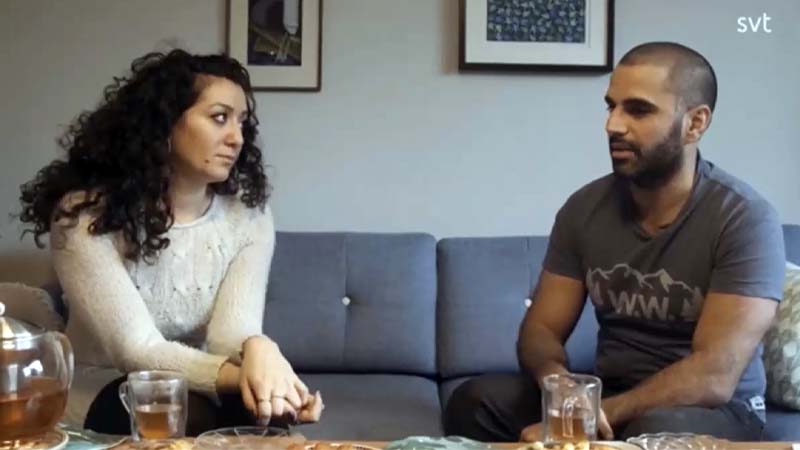
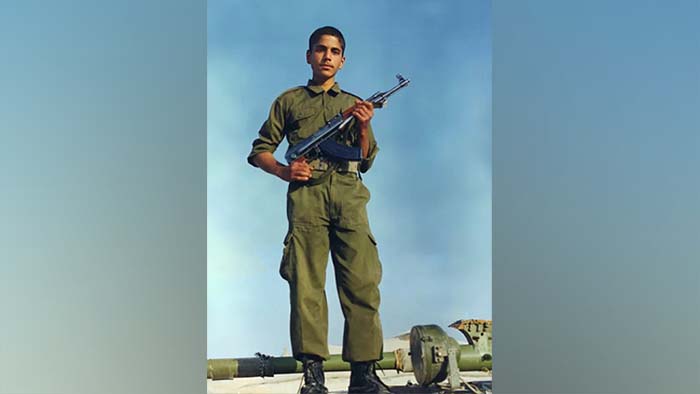
Amir Yaghmai in the documentary, Children of Camp Ashraf

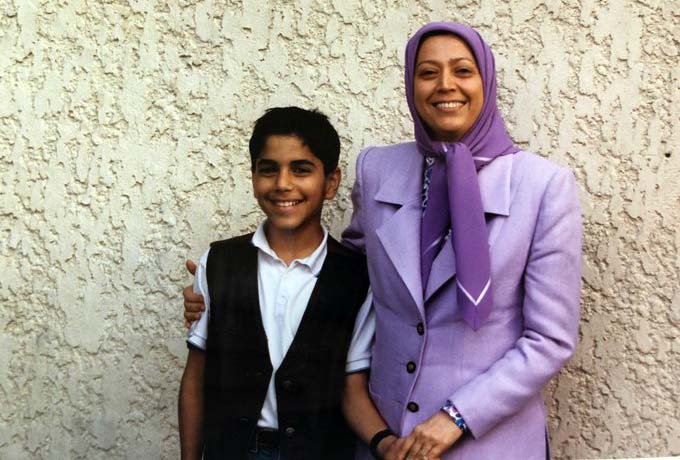
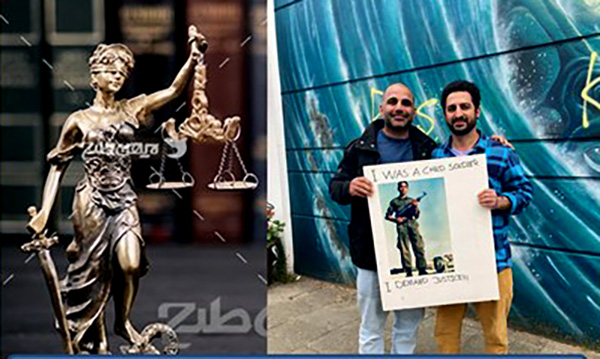
Former child soldier of the Mujahedin-e Khalq (MEK), Amir Yaghmai is one of the relief subjects of the documentary Children of Camp Ashraf. The documentary was directed by Sara Moein and will be played in two Swedish film festivals.

Barnen från Camp Ashraf is the Swedish title of the film which has documented the lives of Amir Yaghmai, Parvin Hossein Nia, Hanif Bali and Atefeh Sebdani as 4 examples of about 120 children of the MEK parents who were resettled in Sweden. The number of MEK children who were smuggled from Camp Ashraf, Iraq to European and North American countries mounts to over 700.

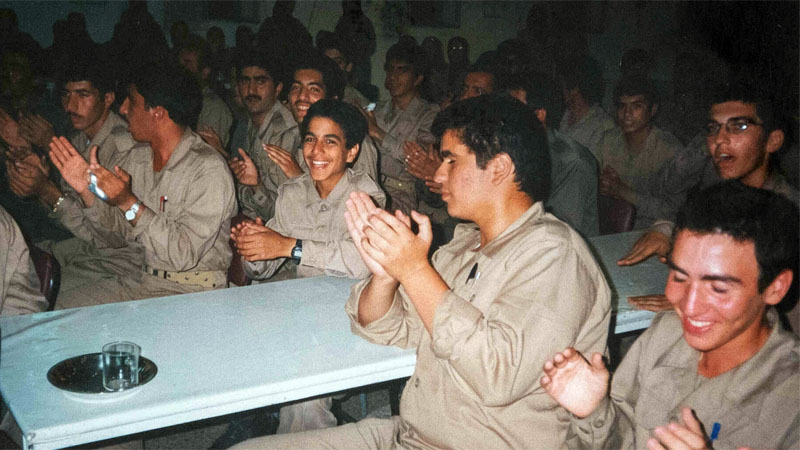
Amir Yaghmai was smuggled back to Iraq when he was 14 years old and he was immediately given a military uniform and recruited as a child soldier of the group’s so-called National Liberation Army.
Amir has so far revealed facts on difficulties, segregation and mental pressure he suffered during his stay in the cult-like structure of the MEK.

Today, Amir has a PhD degree in Eco-logy, working as an environmental scientist. He lives in Sweden with his family.

The documentary, which partly develops on Amir’s testimony of what it is like to escape from a destructive cult, will premiere on January 31st at the Gothenburg International Film Festival and on March 4 at the Tempo Documentary Festival.

January 27, 2024 0 comments
FacebookTwitterPinterestWhatsappTelegramSkypeEmail
Trial of MEK leaders in Tehran
Iran

Iran court holds seventh trial session for the MEK

The seventh session of the trial of commanders of the Mujahedin-e Khalq (MEK) was held in Tehran. The court was chaired by Judge Dehghani in the 11th branch of the criminal court of Tehran province on Tuesday, January 23rd.

The prosecutor’s representative called Hossein Dadkhah, Sepideh Ebrahimi, Sadat Bandari, Fatemeh Davaran, Azadeh Rezai, Hadi Roshan Ravan and 15 others as the main defendants of yesterday’s session.

According to the prosecutor’s representative, Hossein Dadkhah was responsible for identifying the target of the assassination, the address and hours of the assassination, as well as announcing this information to the MEK agents in the murder of Seyed Mohammad Hassan Beheshti Nejad.
Thus, in this terrorist act, in 1381, the members of a five-person team went to the door of the mentioned house and shot at him under the cover of delivering a letter, which led to the murder of him and his young child.

Based on the indictment of Sepideh Ebrahimi, she is one of the interrogator-torturer of the group’s dissident members. She has also been the organizer of the group’s terror teams for mortar attacks in the cities of Iran.

Vaziri, the prosecutor’s representative stated that in a classified document published by the US government, the MEK only seeks to create chaos, but also helps the American government to put more pressure on Tehran.

He added, “It is mentioned in this document that the terrorist MEK can play an important role for Washington as an agent of infiltration and espionage.”.
Mohammad Sadat Darbandi is the 78th defendant in the court investigating the crimes of the MEK. Inside the MEK, he is called Kak Aadel. His name is frequently mentioned as a notorious torturer of the group’s dissident members, in the testimonies of defectors of the MEK.

January 24, 2024 0 comments
FacebookTwitterPinterestWhatsappTelegramSkypeEmail
The Iranian Judiciary spokesperson;Masoud Setayeshi
Iran

MEK responsible for over 100 acts of terror against Iran

The Iranian Judiciary spokesperson says the Mujahedin-e Khalq Organization (MKO) has carried out more than 100 acts of terrorism and betrayal against the Iranian nation over the years.

Masoud Setayeshi made the remarks at a press conference on Tuesday on the sidelines of the seventh trial session for members of the exile terrorist group.

“The Judiciary, in accordance with legal standards, is effectively responding to the public demand,” he said. “In this case, the crimes and acts of terrorism by the central figures of this terrorist group, accompanied by numerous complaints and witnesses, are being addressed.”

The official said that the majority of the crimes and atrocities committed by members of the MKO terrorist group include the murder of ordinary people, including women and children.

“Additionally, the close relationship that this terrorist group had with the oppressive Ba’ath regime (in Iraq) and the Zionist regime in various fields has been presented with documented evidence in the court,” he added.

Setayeshi further said that the Judiciary has made sure that all the defendants in the case have access to legal representation.

January 24, 2024 0 comments
FacebookTwitterPinterestWhatsappTelegramSkypeEmail
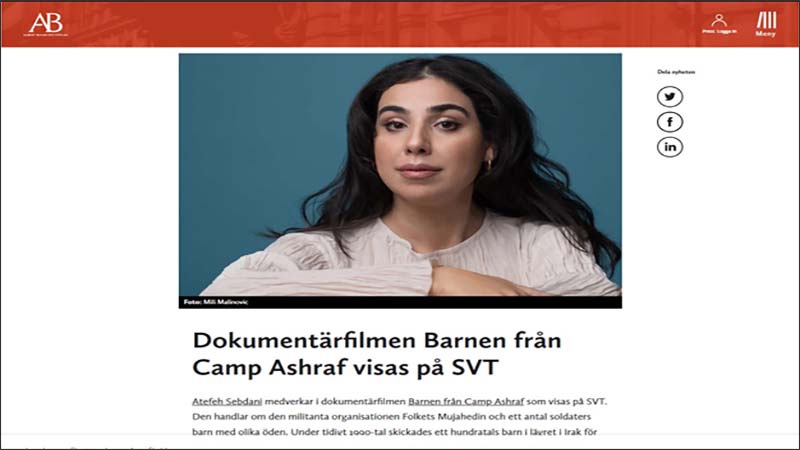
Atefeh Sebdani
Former members of the MEK

Atefeh Sebdani in the documentary Children of Camp Ashraf

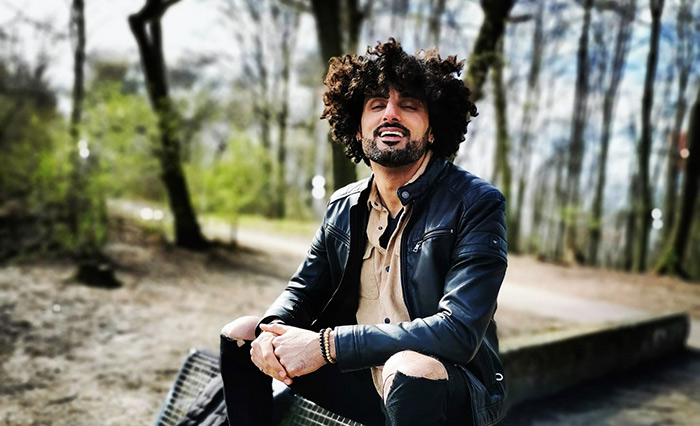
As children, they were taken from their parents and sent abroad, with the aim of one day returning as warriors who would overthrow the current regime in Iran. The Children of Camp Ashraf follows four of the children that were sent to Sweden. One of them is the Swedish-Iranian author Atefeh Sebdani.

Atefeh Sebdani debuted last year with the gripping memoir My Hand in Mine. It is a story about growing up with no one to hold on to but yourself, of abuses that are skillfully covered up and a society that time and again fails to see the vulnerable child. But it is also a story of a stubborn burning vitality and the courage to finally break free.

The documentary, which expands on Atefeh’s vital testimony of what it is like to escape from one country and grow up in another, will premiere on January 31st at the Gothenburg International Film Festival and on March 4 at the Tempo Documentary Festival.

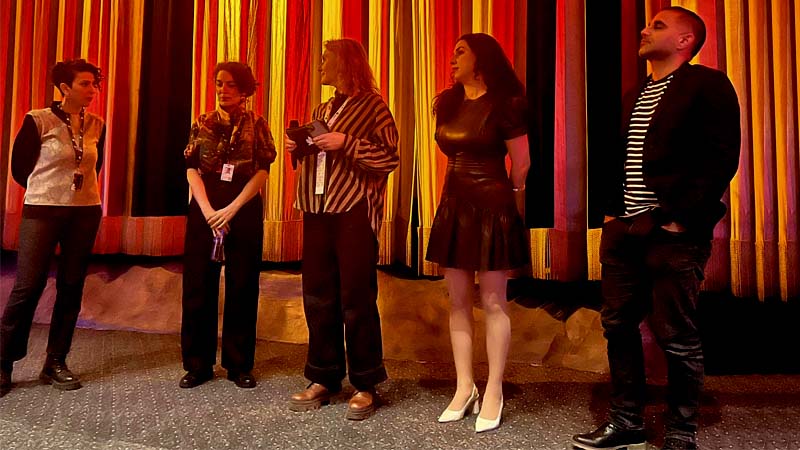
Sara Moien the director of Children of Camp Ashraf, narrates the story of the environmental scientist Amir, the actress Parvin, the politician Hanif and the influencer Atefeh are four of over 700 children of MEK parents who were smuggled from Iraq to Western countries.
These children have experienced traumatic lives in foster families, orphanages and as child soldiers in Camp Ashraf, Iraq.

January 22, 2024 0 comments
FacebookTwitterPinterestWhatsappTelegramSkypeEmail
"The children of Camp Ashraf" in Tempo Festival, Sweden
The cult of Rajavi

“The children of Camp Ashraf” in Tempo Festival, Sweden

The documentary “Children of Camp Ashraf” will be screened at the Tempo Festival in Sweden. This documentary, directed by Sara Moein, tells the story of the children of the Mujahedin-e Khalq (MEK) who were separated from their parents after the First Persian Gulf War under the order of Masoud Rajavi and were sent from Iraq to European and North American countries.

In her film, Sara Moein documented the lives of Amir Yaghmai, Parvin Hossein Niya, Hanif Bali and Atefeh Sebdani as 4 examples of about 120 children of the MEK parents who were resettled in Sweden.

In the review on Sara Moein’s documentary, the website of the festival writes:
The environmental scientist Amir, the actress Parvin, the politician Hanif and the influencer Atefeh are some of the hundreds of children who were smuggled to Sweden in the early 90s so that their parents could devote themselves wholeheartedly to the political struggle in the Marxist-Islamist movement People’s Mujahedin. Thousands of children were shipped from the movement’s military base in Iraq to Mujahedin-sympathizer foster families in Europe. In Sweden, the children were placed with the help of social authorities. Interviews and archival material depict the painful family separations and how the movement becomes increasingly authoritarian and sectarian”.

Tempo is Sweden’s largest documentary festival. Since its founding in 1998, it has showcased hundreds of documentaries from around the world, presenting documentary works in the forms of audio, photography, performing arts, and experimental art.

In 2024, eight films will compete in the Tempo Documentary Award. The winning director will receive an award worth 150,000 kroner. The Tempo Documentary Award is the largest award given to a Swedish documentary film. All nominated films will be screened in the festival from March 4 to 10.

The Children of Camp Ashraf has also participated in the Edinburgh Film Festival in Sweden which will premiere on January 31st.

"The children of Camp Ashraf" in Tempo Festival, Sweden

“The children of Camp Ashraf” in Tempo Festival, Sweden

January 20, 2024 0 comments
FacebookTwitterPinterestWhatsappTelegramSkypeEmail
torture
Mujahedin Khalq Organization as a terrorist group

Get to know an MEK torturer

Hamideh Shahrokhi Amiri is the 50th defendant in the court hearing the case of the Mujahedin-e Khalq (MEK). She has always been one of the group’s officials, a member of the group’s Elite Council. She has also worked as an interrogator-torturer.
Hamideh Shahrokhi, nicknamed Afsaneh, was one of the commanders of the MEK army in the Forough Javidan operation, the group’s cross border operation against its own country sponsored by Saddam Hussein.

His sister, Saeeda Shahrokhi, was also a member of the Cult of Rajavi, and she is considered one of the high-ranking officials of the group. In 1984, she married Massoud Kalani (anchor of the Mujahideen TV channel) in Paris. It was an organizational forced marriage. They were later forced to divorce under the order of Massoud Rajavi, as a ruling of the so-called Maryam ideological revolution.

Afsana was one of the officials who played an active and significant role in suppressing the members who wanted to defect the organization. She appointed her deputy, who was Zohra Akhyani in 1989 to 1990, to administer the meeting and suppress the dissidents.

Dariush Ghanavati is a former member of the MEK who encountered Hamideh Shahrokhi’s violence when he asked to leave the organization. He recounts: “Hamida Shahrokhi told me, do you want to go out? We do not send anyone abroad! I answered, what do I have to do with abroad? I want to return to Iran. He drew an arrow with a marker and said that one end of this arrow is a Mujahid and the other end is an Iranian revolutionary guard. Which one are you?! I said none. I want to go back to my family.”

“She started insulting and cursing and the rest of the crowd followed her,” Dariush continues. “They pressured me so much that I started crying. Then they took me to the southeast side of Camp Ashraf and imprisoned me in a Conex, called Bangal.”

Kambiz Bagherzadeh is another former member of the Cult of Rajavi who recalls Afsaneh as his torturer after he wrote a letter to Massoud Ragavi and asked him to let him leave the group in 1990. “They transferred me to a shanty-like room that we called Bengal, and I was there alone for about a month,” he writes in his memoirs. “I was only allowed to leave the place twice a day to use the restroom, and they kept a guard behind the Bengal door for me 24/7. The Bengal was actually a cell for solitary confinement.”
“Little by little, loneliness and mental pressure pressed me so much so that sometimes I actually thought of suicide!”, Kambiz recalls. “From the 20th day, they made me participate in meetings for those who wanted to leave the organization. Really nauseating meetings that were full of insulting, cursing, and spitting on the targeted person, and everyone was shouting and yelling so loud that no one could understand what others were saying. Everyone was shouting at the poor person! This was where Afsanah was the commander, all these crimes were committed under her orders and supervision.”

In 1993 and 1994, the MEK imprisoned about 700 members of the group under that accusation of being an agent of the Iranian intelligence. The imprisoned ones have been accused of such a charge because they had asked to leave the group or they had criticized the group’s ideology or leaders. According to the defector’s testimonies, Hamida Shahrokhi was one of the torturers in this story, who brutally harassed the disaffected forces as much as possible.

January 17, 2024 0 comments
FacebookTwitterPinterestWhatsappTelegramSkypeEmail
Nejat Newsletter No.90
Nejat Publications

Nejat Newsletter No.109

Inside this issue:

– Happy New Year 2024
As the final whispers of 2023 fade and the world prepares to embrace the unknown promise of
2024, our hearts turn towards those who make life’s tapestry truly vibrant – our loved ones. These are the souls who hold our laughter in their echoes, our tears in their gentle hands, and our dreams in their unwavering support.

Nejat Newsletter No.109

Nejat Newsletter No.109

– MEK do not hesitate to kill civilians
Mohammad Mehdi Chizari, a victim of the terror attacks of the Mujahedin-e Khalq (MEK),said that in addition to losing his leg, he is still suffering from the damages of shrapnel left in his body after the mortar attacks committed by Akbar Khosravi was kidnapped by MEK

– Third session of the court hearing for trial of MEK leaders
The third session of the court hearing the charges against 104 members of the Mujahedin-e Khalq (MEK),as well as the nature of this organization as a legal entity, was held on Tuesday, December 26th, in the eleventh branch of the Criminal Court of Tehran, presided over by Judge Dehghani and court advisors Morteza Turk and Amin Naseri.

– Pooran Navai, a hostage of the MEK for 4 decades
Pooran Navai was a young girl when she joined the MEK, in the early years after the Iranian revolution.
Pooran was one of those youths who got Rashidis’ letter to Mosayeb Rashidi in the MEK’s camp MEK defector: Rajavi builds enemy out of family Ali Sepah Amiri children write letter to their captive father

– Rashidi’s letter o Mosayeb Rashidi in the MEK’s camp in Albania
My dear father, your daughter and grandchildren have been hoping for many years to see you in our hometown among family members. We have always wanted to live with you and experience and enjoy the feeling of having a father and grandfather.

– No to forced hijab, religion and government” a big lie by Maryam Rajavi
The MEK has published a book called “No to compulsory hijab, No to compulsory religion, No
to compulsory government” in English, which apparently contains a selection of Maryam Rajavi’s speeches. Taleb Jalilian admitted torture

– Nejat Society congratulates the Albania’s Independence day
On behalf of the Iranian community in Albania, we congratulate the government and people of Albania and wish everyone a joyous celebration for the 111th Independence Day.

– Taleb Jalilian admitted torture because there was no other way to leave the MEK
He joined the group when he was young but after a while inside the group, he reached a state of mind that he was ready to be imprisoned and tortured as a procedure to leave the group. The cult-like atmosphere of the MEK and its oppressive ruling made Taleb Jalilian,…

To view the pdf file click here

January 17, 2024 0 comments
FacebookTwitterPinterestWhatsappTelegramSkypeEmail
trial of MEK members
Iran

Iran court holds sixth trial session in MEK terrorism case

The sixth session of the trial of the members of the Mujahedin-e Khalq Organization (MKO) terrorist group has been held in Tehran.

At the beginning of the open session chaired by Judge Dehqani in the 11th branch of the criminal court of Tehran province on Tuesday, the prosecutor’s representative named Masoumeh Bolourchi, Yaser Jahannezhadi, Faezeh Khayat Hesari Mohammadi, among others as the main suspects of today’s session.

The prosecutor’s representative had in the fourth session highlighted the connection between the group and the French government.

He pointed out that documents have revealed the MEK’s ringleader Masoud Rajavi’s connection with France and the role of the French intelligence service in the explosion at the headquarters of the Islamic Republican Party (IRP) in Tehran in June 1981.

After the armed action of the terrorist group in June 1981, Rajavi and several members of the MEK discussed whether they should declare that the group had entered the military phase and finally decided to make that announcement, he said.

Afterward, he continued, Rajavi proposed to blow up the office of the IRP and the group decided to make preparations for the move.

Then Rajavi traveled to France, and the bombing happened after his trip, he further explained, adding that Mehdi Abrishamchi, Abolhassan Banisadr, Rajavi, and several others then hijacked a plane to depart Iran for France, the prosecutor’s representative added.

According to the criminal court, the MEK and 104 members of the terrorist group are being sued in the trial for committing inhumane crimes.

The MKO has carried out numerous terrorist attacks in Iran against ordinary people and officials since the victory of the Islamic Revolution in 1979, killing thousands of people over the past four decades.

January 16, 2024 0 comments
FacebookTwitterPinterestWhatsappTelegramSkypeEmail
Basat Ali Meshkin Faam
Mujahedin Khalq Organization as a terrorist group

MEK, Saddam’s Private Army in massacre of Iraqi Kurds

Alongside the trial of the leaders of the Mujahedin-e Khalq (MEK) and the very group as an entity, the news media of the Iranian judiciary, Mizaan, has published interviews with former members of the group who give testimonies on the group’s violent background including its military operations in cooperation with former Iraqi dictator Saddam Hussein to suppress Kurdish and Shiit uprisings.

Basat Ali Meshkin Faam is one of the defectors of the MEK who witnessed the MEK’s military operation to suppress Kurdish uprisings in April 1991. The testimonies of MEK ex-members have been several times confirmed by Iraqi authorities, human rights activists and journalists.

Basat Ali Meshkin Faam

Basat Ali Meshkin Faam

According to Qubad Talabani, son of Iraqi president Jalal Talabani, “Up until the fall of the regime, they were part and parcel of the Iraqi military. And they were heavily involved in suppressing the Kurdish uprising of 1991.”

After First Gulf War and in order to weaken Saddam’s regime, Iraqi Kurds who were chemically bombed by Saddam’s army in Halabja and Khurmal three years before, seized the opportunity to retaliate bloodshed, and took over the Kurdish regions. The Kurds were able to take control of the cities of Mosul and Sulaymaniyah and then advanced towards cities such as Tuz, Kifri and Jalula.

“A civil war had broken out in Iraq which was none of the MEK’s business,” says Meshkin Faam. “But Saddam Asked Massoud Rajavi for help.”

A week after the Kurdish forces took control of the northern cities of Iraq, the MEK forces entered. At this stage, the so-called Liberation Army of the MEK carried out “Morvarid 1 and 2” operations and suppressed the people, and the Peshmerga prevented them from advancing in various cities. The MEK surprised the Kurdish militias and Peshmerga of Kirkuk and aided the Baathist government to regain control of the city of Kirkuk, during which, according to Iraqi Kurdish forces, hundreds of Kurdish residents of Kirkuk were massacred by the members of the MEK. It is estimated that more than 4,000 Kurds lost their lives at the hands of the MEK in Morvarid operations 1 and 2.

Meshkin Faam testifies, “The MEK had occupied a major part of the Kurdish areas, including the cities of Tuz, Kharmato, Kafri, Sulaimanbeg and Khanaqin, before the Kurds came to those areas, and did not avoid any kind of confrontation and killing of protesting Kurds.”

“Why should we participate in the massacre of Iraqi Kurds,” wonders Meshkin Faam. “For Rajavi, it was a way to serve Saddam Hussein in exchange for receiving equipment, supplies and money.”

He recalls Massoud Rajavi’s pleasure for such a satisfying deal with Saddam’s regime. He recounts the speech that Massoud made in a meeting at Camp Ashraf, “Masoud Rajavi explained the story of one of his visits with Ezzat Ibrahim in one of the meetings. Apparently, Ezzat Ebrahim had narrated with tears in his eyes that: On the way to Khanaqin, I saw Mujahid brothers who were defending the country of Iraq. If the country returns to its state of peace, we must repay this service that the Mujahid brothers did to us.”

The former member of the MEK quotes from Masoud Rajavi, who had just received 30 to 40 cannons from the Iraqi army: “This is the result of the efforts you made in Operation Morvarid.”

January 16, 2024 0 comments
FacebookTwitterPinterestWhatsappTelegramSkypeEmail
Newer Posts
Older Posts

Recent Posts

  • A Criterion for Proving the Violent Nature of the MEK

    December 31, 2025
  • Rebranding, too Difficult for the MEK

    December 27, 2025
  • The black box of the torture camps of the MEK

    December 24, 2025
  • Pregnancy was taboo in the MEK

    December 22, 2025
  • MEPs who lack awareness about the MEK’s nature

    December 20, 2025
  • Facebook
  • Twitter
  • Instagram
  • Youtube

© 2003 - 2025 NEJAT Society . All Rights Reserved. NejatNGO.org


Back To Top
Nejat Society
  • Home
  • Articles
  • Media
    • Cartoons
    • NewsPics
    • Photo Gallery
    • Videos
  • Publications
    • Books
    • Nejat NewsLetter
    • Pars Brief
  • About Us
  • Contact us
  • Editions
    • عربي
    • فارسی
    • Shqip