Nejat Society
  • Home
  • Articles
  • Media
    • Cartoons
    • NewsPics
    • Photo Gallery
    • Videos
  • Publications
    • Books
    • Nejat NewsLetter
    • Pars Brief
  • About Us
  • Contact us
  • Editions
    • عربي
    • فارسی
    • Shqip
Nejat Society
Nejat Society
  • Home
  • Articles
  • Media
    • Cartoons
    • NewsPics
    • Photo Gallery
    • Videos
  • Publications
    • Books
    • Nejat NewsLetter
    • Pars Brief
  • About Us
  • Contact us
  • Editions
    • عربي
    • فارسی
    • Shqip
© 2003 - 2024 NEJAT Society. nejatngo.org
Former members of the MEK

Delegation of MKO defectors visit EU MEP

On Friday, November 7th, 2014 a delegation of former members of the Mujahedin Khalq Organization (the MKO) including Mrs. Batoul Soltani member of Iranian Women Society and Mr. Ali Akbar Rastgoo of Aawa Association met Mr. Axel Voss member of Group of the European People’s Party (Christian Democrats) of the European Parliament, in his office.

They discussed the issues of the MKO Refugees in camp Liberty, Iraq.

Former members of the MKO asked Mr. Voss to facilitate the relocation process of residents of Camp Liberty to third countries in order to release them from caotic situation in Iraq and the oppressive rule of the organization over its members.

The delegation stated that the crucial case of the MKO refugees in Iraq is hardly ever exposed to members of the Euro Parliament due to influence of the MKO’s lobbies there. They asserted that Members of the Parliament should look for receiving countries to resettle the refugees instead of calling for more protective forces for Camp Liberty and they should ask their states to play their role to solve a part of this problem as Albania Germany and Italy.

According to dissociated members of the Mujahedin Khalq, if each member state of the European Union receive a small number of Liberty residents, they will save the lives of these individuals without imposing too much pressure on their states.

The meeting lasted over an hour. At the end, Mr. Axel Voss expressed his pleasure over meeting MKO ex-members and hoped that the issue would be solved as soon as possible.

Aawa Association

Translated by Nejat Society

November 17, 2014 0 comments
FacebookTwitterPinterestWhatsappTelegramSkypeEmail
Maryam Rajavi

Parliamentarians lose Maryam Rajavi court battle

Eminent parliamentarians have lost a Supreme Court battle over Home Secretary Theresa May’s decision to ban a dissident Iranian politician from Britain.

An appeal by the cross-party group of 15 MPs and peers, led by Liberal Democrat Lord Carlile, was rejected in a majority ruling by justices at the UK’s highest court today.

They had previously lost actions in the High Court and Court of Appeal over the exclusion of Maryam Rajavi.

The  politicians wished to invite Mrs Rajavi, who is now living in Paris, and is recognised internationally as an expert on Iranian political affairs and the position of women in Islam, to address meetings to be held in the Palace of Westminster to discuss ”democracy, human rights and other policy issues relating to Iran”.

Their complaint related to the “interference with their rights” in relation to freedom of expression, caused by exclusion decisions by the Secretary of State.

Mrs Rajavi, who has been excluded from the United Kingdom since 1997, also unsuccessfully appealed alongside the parliamentarians against decisions made by the Home Secretary to maintain her exclusion.

The Home Secretary stated that lifting the exclusion would cause significant damage to the UK’s interests in relation to Iran and place British people and property in Iran and the region at risk.

Both the High Court and Court of Appeal held that the exclusion was “justified and proportionate”.

The Supreme Court dismissed the appeal by a majority of 4-1.

Lord Sumption, who dismissed the appeal, said the UK “has had a uniquely difficult relationship with Iran for at least a century and a half”.

He said: “The passage of time heals many things, but in an ancient and distinctive national culture like Iran’s, injured pride can subsist for generations.

“In recent years, the participation of the United Kingdom in international sanctions against Iran and a number of violent incidents have revived old suspicions at a time when negotiations with Iran about middle eastern issues, nuclear non-proliferation and human rights have assumed considerable importance for British interests and global security.”

It was against this background that the Home Secretary, on the advice of the Foreign Office, decided that it was not conducive to the public good to allow Mrs Rajavi to enter the UK.

Mrs Rajavi, who has close links with Iranian opposition organisations, is not excluded from any other European country and engages regularly with parliamentarians in the European Parliament.

The bid to lift the ban on her entering the UK began in 2010. Dismissing the latest challenge, Lord Sumption said that “on the undisputed facts before the Secretary of State it has not been shown that she was guilty of any error of principle”.

Lord Neuberger, president of the Supreme Court, said: “I consider that it is not open to a court on the facts of this case to conclude that the decision of the Home Secretary to refuse entry to Mrs Rajavi was unlawful.”


Government may weigh rights against national security without courts’ interference

Crown Office, November 14 2014

Mujahedin-e-Khalq-OrganizatR (on the application of Lord Carlile of Berriew QC and others) (Appellants) v Secretary of State for the Home Department (Respondent) [2014] UKSC 60 – read judgment

The exclusion of a dissident Iranian from the UK, on grounds that her presence would have a damaging impact on our interests in relation to Iran, has been upheld by the Supreme Court. (My post on the Court of Appeal’s ruling is here).

At the heart of the case lies the question of institutional competence of the executive to determine the balance between the relative significance of national security and freedom of speech. The exclusion order was imposed and maintained because the Home Office is is concerned with the actual consequences of Mrs Rajavi’s admission, not with the democratic credentials of those responsible for bringing them about. The decision-maker is not required by the Convention or anything else to ignore or downplay real risks to national security where they originate from people acting for motives which are contrary to the values of this country.

The following summary of the facts is partly based on the Court’s press release. References in square brackets are to the paragraphs in the judgment.

Background facts and law

Mrs Maryam Rajavi is a dissident Iranian politician, resident in Paris. She has close links with Iranian opposition organisations, including Mujahedin e-Khalq, otherwise known as the People’s Mojahedin Organisation of Iran. MeK is a political organisation founded in 1963 by opponents of Shah Mohammed Reza Pahlavi, which participated in the Iranian revolution of 1979 but subsequently fell out with the regime led by Ayatollah Khomeini. It was formerly a proscribed terrorist organisation under Section 3 of the Terrorism Act 2000 but is now designated as non-violent. It goes without saying that the lifting of this proscription is not accepted in Iran, where MeK remains an illegal organisation.

In 1997, the Home Secretary excluded Mrs Rajavi from the UK on the ground that her presence “would not be conducive to the public good for reasons of foreign policy and in light of the need to take a firm stance against terrorism”. That exclusion remains in force. In December 2010, Lord Carlile of Berriew, together with two other members of the House of Lords, asked the Home Secretary for a meeting to discuss lifting the exclusion to enable Mrs Rajavi to address meetings in the Palace of Westminster. After seeking the advice of the Foreign Office, the Home Secretary replied in February 2011 stating that she had concluded that Mrs Rajavi’s admission to the UK would not be conducive to the public good. She set out detailed reasons for this decision, noting in particular that

It is widely recognised that the MeK was actively concerned in terrorist activities between the 1970s and 2001. Acts committed by the MeK during this period include attacks on western interests …The MeK’s history of terrorist violence until June 2001 and involvement in the Iran/Iraq war, where it was fighting with Iraqi forces against Iran, continues to resonate today. It has resulted in there being little support for the group among the general population in Iran, including anti-regime organisations, demonstrators and oppositionists.

Lord Carlile and other members of the House of Lords wrote a letter threatening judicial review, which elicited a response from the Home Office asserting that Articles 9 and 10 of the European Convention on Human Rights were not engaged but that the decision was in any event justified and proportionate. Lord Carlile and others then went ahead with judicial review proceedings, arguing that the decision contravened their freedom of belief and expression rights under the Convention. Mrs Rajavi herself later joined as a claimant. The Home Secretary issued second and third decisions in October 2011 and January 2012, supported by evidence from the Foreign Office, stating that lifting the exclusion would cause significant damage to the UK’s interests in relation to Iran and place British people and property in Iran and the region at risk. It is now common ground that Article 10 is engaged in relation to both Mrs Rajavi and the members of the House of Lords. But was the Home Secretary’s decision justified and proportionate? Both the judge and the Court of Appeal held that it was. The claimants appealed to the Supreme Court.

The Supreme Court dismissed the appeal by a majority of 4-1 (Lord Kerr dissenting).

Reasoning behind the Court’s decision

Lord Sumption delivered the leading judgment. The other three majority judgments give similar reasons, but with differences of nuance.

The threshold argument

The claimants argued that the Home Secretary’s reasons were legally irrelevant, because they depended on the potential reaction of a foreign state which did not share the values embodied in the Convention. The Supreme Court unanimously rejected this argument. Iran’s reaction was plainly factually relevant to the decision, and the correct emphasis was on the democratic values to be protected, not the circumstances prompting the need for protection [14-18, 63, 144-146].

Was the Home Secretary’s decision justified and proportionate?

A predictive judgment of the executive about the likely reaction of a foreign country to a decision of the United Kingdom government is ordinarily entitled to a large measure of respect from the courts both (i) because the constitutional separation of powers assigns such judgments to the executive, and (ii) because the executive has greater institutional competence in this area by virtue of its greater specialised experience and the wider range of advice available to it (see my previous post on Lord Sumption’s recent lecture on this very topic, particularly his point about the overuse of the word “deference” in this context).

A threat to British persons or interests is one potential consequence which in an age of widespread international lawlessness, some of it state-sponsored, is unfortunately more common than it used to be. The existence and gravity of the threat is a question of fact. It cannot rationally be regarded as any less relevant to the public good because it emanates from a foreign state as opposed to some other actor, or because that state does not share our values, or because the threat is to do things which would be unlawful by our laws or improper by our standards, or indeed by theirs. [15]

…The future is a foreign country, as L P Hartley almost said. They do things differently there. Predicting the likely consequences of a step which the evidence suggests will be viewed in Iran as a hostile act, cannot be a purely analytical exercise. Nor can it turn simply on extrapolation from what did or did not happen in the past. There is a large element of educated impression involved. The decision calls for an experienced judgment of the climate of opinion in Iran, both inside and outside that country’s public institutions. The exercise is made more difficult by the intense political emotions engaged in Iran, combined with a large element of irrationality and the involvement of potentially violent mobs. The consequences of a failure to engage with this complex and unstable society are sufficiently serious to warrant a precautionary approach. [46]

Lord Sumption cites with approval Lord Hoffmann’s observation in another exclusion case, on the question of institutional competence of the executive in matters of national security, where “the cost of failure can be high”.

“This seems to me to underline the need for the judicial arm of government to respect the decisions of ministers of the Crown on the question of whether support for terrorist activities in a foreign country constitutes a threat to national security. It is not only that the executive has access to special information and expertise in these matters. It is also that such decisions, with serious potential results for the community, require a legitimacy which can be conferred only by entrusting them to persons responsible to the community through the democratic process. If the people are to accept the consequences of such decisions, they must be made by persons whom the people have elected and whom they can remove.” (Secretary of State for the Home Department v Rehman [2003] 1 AC 153)

The Human Rights Act 1998 did not abrogate the constitutional distribution of powers between the organs of the state which the courts had recognised for many years before it was passed. And even in the context of Convention rights, there remain areas

which although not immune from scrutiny require a qualified respect for the constitutional functions of decision-makers who are democratically accountable. Examples are decisions involving policy choices (R (Alconbury Developments Ltd) v Secretary of State for the Environment, Transport and the Regions [2003] 2 AC 295 at paras 75-76); broad questions of economic and social policy (Wilson v First County Trust Ltd (No 2) [2004] 1 AC 816 at para 70); or issues involving the allocation of finite resources (Wandsworth London Borough Council v Michalak [2003] 1 WLR 617 at para 41 (Brooke LJ)).

Where qualified rights under the Human Rights Convention are engaged, such as the Article 10 rights at issue in this case, the court must decide for itself whether they have been interfered with and if so whether the interference is justifiable. In this case, according to Lord Sumption, the executive’s decision was rational, there were no grounds to challenge the good faith or the evidential base of the decision, and the Secretary of State had committed no error of principle, nor had she underrated the value of Article 10 rights or overstated the risk [19-47, 51].

It does not follow from the court’s constitutional competence to adjudicate on an alleged infringement of human rights that it must be regarded as factually competent to disagree with the decision-maker in every case or that it should decline to recognise its own institutional limitations. [32]

The other judges agreed. In Lord Neuberger’s view, the Home Secretary’s decision was proportionate and the Article 10 rights did not outweigh the risks she had identified [70-74]; in Lady Hale’s opinion, on the basis of evidence now some years old, it had not been shown that the article 10 right claimed was sufficiently important to put at risk the UK’s “fragile but imperative” relationship with Iran [98-109]; and Lord Clarke concluded that there was no evidence before the court permitting it to doubt the strength of the Home Secretary’s reasons [111-117].

It is important to understand the reasons why the United Kingdom has had a more difficult relationship with Iran than other countries have, which still affect the way that it is perceived there. Lord Sumption, taking a characteristically scholarly approach, noted the particular historical context of this fraught association, following British control of the country’s natural resources in the late nineteenth century and the first half of the twentieth, a succession of British-orchestrated coups, and two extended British military occupations, all of which

have combined to leave an enduring imprint on political sentiment. The passage of time heals many things, but in an ancient and distinctive national culture like Iran’s, injured pride can subsist for generations. In recent years, the participation of the United Kingdom in international sanctions against Iran and a number of violent incidents have revived old suspicions at a time when negotiations with Iran about middle eastern issues, nuclear non-proliferation and human rights have assumed considerable importance for British interests and global security.

However sensitive this position may be, it remains the case that the UK has diplomatic relations with Iran. There is a British Embassy in Tehran and an Iranian Embassy in London. As the Secretary of State told the appellants in her letter, the UK has a strong interest in working with Iran on major policy issues including nuclear counter-proliferation, wider issues in the Middle East and human rights. Cooperation between both countries on issues of mutual importance also include reciprocal visa services (both diplomatic and public), consular services and cultural/educational exchanges. Allowing Mrs Rajavi into this country would only exacerbate the perception that “the UK is supportive of anti-Iranian extremist activities, including the sort historically carried out by the MeK.” The lifting of her exclusion may well “result in accusations, however unjustified, of double standards in respect of the condemnation of terrorism”:

The presence of a British Embassy in Tehran means that staff there are particularly vulnerable to anti-Western sentiment in general and anti-UK sentiment in particular. There is substantial concern that if bilateral relations were to deteriorate as a consequence of the lifting of the exclusion order, there could be reprisals that put British nationals at risk and make further consular cooperation even more problematic.

Accordingly, although the Court of Appeal was wrong to approach the issue on the usual domestic judicial review grounds, the appeal was dismissed.

Lord Kerr’s dissent

Lord Kerr acknowledged that the courts should accord respect to the executive’s assessment of the risks and consequences of Mrs Rajavi’s being admitted to the UK, though it is not required to “frank” that decision. However, it was for the court to assess the importance of the right infringed. In his view, contrary to Lord Sumption’s position, the court was both competent and constitutionally required to make such an assessment and it would be an error to attach special weight to the Home Secretary’s view on this point [150-162]. In this case, only the most compelling and pressing circumstances would justify a restriction on the right. The Home Secretary had identified solid countervailing factors, but the court should take into account the fact that these matters are unpredictable and that any retaliation would be perverse and rooted in anti-democratic beliefs. The risks could not be precisely identified but the interference with the Article 10 right is direct and immediate [163-180].

Lord Sumption dealt with this dissent in his speech. He pointed out that the central issue on this appeal was exactly how the court is meant to determine where the balance lies between national security on the one hand, and freedom of expression on the other, if

1. it has no means of independently assessing the seriousness of the risks or the gravity of the consequences were they to materialise, and

2.the Secretary of State is not shown to have committed any error of principle in her own assessment of them.

For that is indeed the position in which the court finds itself. We are not in point of law bound to accept the factual assessment of the Foreign Office about the impact on our relations with Iran of admitting Mrs Rajavi to the United Kingdom. But if we reject it we must have a proper basis for doing so. In this case, there is none. …We have absolutely no evidential basis and no expertise with which to substitute our assessment of the risks to national security, public safety and the rights of others for that of the Foreign Office. [49]

Lord Kerr was, in effect, urging “nothing less than a transfer to the courts of the constitutional function of the Home Secretary, in circumstances where the court is wholly incapable of performing it.”

Hillingdon & Oxbridge Times,

November 16, 2014 0 comments
FacebookTwitterPinterestWhatsappTelegramSkypeEmail
Mujahedin Khalq; A proxy force

The Islamic State (ISIS) is “America’s Dream Rebel Army”

US policy paper reveals desire for construction of full-scale extraterritorial army to invade Syria. Such an army is being built in Iraq and Turkey and it’s called “ISIS.”

The corporate-financier funded and directed policy think tank, the Brookings Institution, has served as one of several prominent forums documenting and disseminating US foreign policy. It would host in part the architects of the so-called “surge” during the nearly decade-spanning US occupation of Iraq, as well as battle plans for waging a covert war against Iran now well under way.

Part of this covert war against Iran involved the arming and backing of listed terrorist groups, and in particular, the Mujahedeen-e-Khalq (MEK) which has killed US servicemen, American civilians, as well as countless innocent Iranians over the decades. Among those signing their name to this plan found within Brookings’ “Which Path to Persia?” report, was Kenneth Pollack. Now, in efforts to overthrow the government of Syria, also a stated and integral part of undermining, isolating, and destroying Iran, Pollack has revealed another element of the plan – to create a full-scale proxy military force outside of Syria, then subsequently invading and occupying Syria with it.

In the report titled, “Building a Better Syrian Opposition Army: How and Why,” Pollack cites the so-called “Islamic State” or “ISIS” as the ultimate impetus for expanded US intervention. However, upon looking at Pollack’s proposal, it merely looks as if the US is using ISIS as a pretext to more overtly intervene in order to overthrow the government of Syria – not in fact neutralize ISIS.

After a considerable preamble assuring readers that the aim of creating a “better Syrian opposition army” would exclude sectarian extremists and result in the same “success” the US had in training the Iraqi army, the document explains:

…building a new Syrian army is best not done in Syria itself. At least not at first. The program would need the time and sanctuary to perform the necessary training, reorganization, sorting  and  socialization  into  a  new  Syrian  army  without the distractions and pressures of Syria itself.  The  Saudi  offer  to  provide  facilities  to  train 10,000 Syrian opposition fighters is one of reasonable possibility, although one of Syria’s neighbors would probably be preferable. Jordan already serves as  training  ground  for  America’s  current  training program and it would be an ideal locale to build a real Syrian army. However, Turkey could also conceivably serve that purpose if the Turks were willing.

Clearly, not only is this already being done as admitted by Pollack himself, it is being done on a scale already eclipsing Pollack’s alleged plan – the only difference is it is being done through the use of sectarian extremists – not the imaginary, nonexistent secular professionals Pollack uses as a marketing gimmick to sell this scheme.

More tellingly, Pollack’s plan continues by stating (emphasis added):

In addition to being armed, trained and officered like a conventional military, a new Syrian army would also have to be equipped like one. That would mean not just small arms and crew-served weapons, such as the United States and its allies are already providing, but heavy weapons and logistical support. Like the Croats and Bosniaks, a new Syrian army will need the wherewithal to defeat both the regime and the Islamist extremists. That will require tanks, armored personnel carriers, artillery, surface-to-air missiles and the like to match the regime’s own heavy weapons—and so eliminate the firepower imbalance that the regime’s forces have employed to such advantage so far.

Surely, Pollack’s plan will never materialize in any practical dimension – however it may be possible to use such a marketing ploy to pour more resources into both the ongoing proxy war against Syria and Iran in general, and more specifically into the terrorist battalions already being armed, funded, trained, equipped, and sent off from Jordan and Turkey into Syrian territory. Handing advanced weapon systems into the hands of front groups consisting of intentionally ineffectual, immensely corrupt, incompetent US proxies is as good as handing the weapons directly to ISIS – and of course – this is precisely how the US is building its actual “new opposition army” – namely, in the form of ISIS itself.

 Removing Pollack’s rhetoric about secular professionals, and inserting “ISIS” reveals Pollack’s paper as the actual already ongoing plan to overrun not only Syria, but pro-Iranian factions in Iraq, and perhaps even Iran itself. ISIS is a massive mercenary army trained and funded abroad by the US with its support laundered via Saudi Arabia, Qatar, Jordan, and Turkey, staged along Syria’s borders in both Jordan and Turkey, and acquiring an impressive arsenal just as what is required in Pollack’s plan to enter into and overthrow the government of Syria – minus eradicating extremists of course.

Even a cursory look at ISIS’ holdings across the region reveal ratlines leading into NATO-member Turkey’s territory and all along the Turkish-Syrian border where news outlets like the New York Times and Washington Post have reported for years the CIA had been operating – unloading billions in aid, gear, weapons, and even vehicles to militants fighting within Syria.

Headlines over the past 3-4 years including, “C.I.A. Said to Aid in Steering Arms to Syrian Opposition,” “First Syria rebels armed and trained by CIA ‘on way to battlefield’,” “Arms Airlift to Syria Rebels Expands, With Aid From C.I.A.,” and “Official says CIA-funded weapons have begun to reach Syrian rebels; rebels deny receipt,” reveal precisely how ISIS acquired its vast resources.

ISIS is organized on a professional level precisely as described by Pollack, most likely the result of US military advisers and their counterparts in Saudi and Qatari special operations. ISIS is also heavily armed precisely as was required by Pollack’s plan. They now possess an impressive and ever growing arsenal of weapons including tanks, missiles of all kinds, artillery, and even a small collection of aircraft including Russian warplanes and American helicopters.

The New York Times, after years of reporting on the CIA’s delivery of weapon systems to “moderate” militants, now laments of ISIS’ possession of advanced anti-air missiles. In its article, “Missiles of ISIS May Pose Peril for Aircrews in Iraq,” it reports:

Syrian rebels have amassed multiple Manpad models since 2012, and the Islamic State has generally had little trouble acquiring any weapon used by Syrian rebels either through purchase or capture, military analysts say.

 Iraqi troops – the result of what Pollack claims as an American “success” – have also augmented ISIS with precisely the weapons needed for Pollack’s dream “opposition army.” No less than 30 M1 Abrams main battle tanks have fallen into ISIS’ hands.

Prolific Neo-Conservative propagandist Michael Weiss in the Wall Street Journal attempts to downplay the implications of such weapons falling into ISIS’ hands by stating in his op-ed titled, “Exploiting the ISIS Vulnerabilities in Iraq – The terrorists’ heavy military equipment is hard to maintain, easy to target from the air,” that:

Today, we estimate that ISIS has less than a total of 30 working M1 Abrams tanks and howitzers that are either self-propelled or towed behind trucks (based on our knowledge of how the Iraqi army is equipped and what divisions were in the north). These are the weapons that gave the Islamic State the advantage over the Peshmerga in recent firefights. Yet ISIS does not have the highly trained maintenance crews that are necessary to keep these weapons in good working order. The same problem exists for its armored Humvees and Mine Resistant Ambush Protected personnel carriers. Without maintenance, these captured U.S. vehicles and weapons will break down.

Only, ISIS’ Saudi, Qatari, and Jordanian sponsors most definitely do possess the highly trained maintenance crews necessary to keep these weapons in good working order – since these despotic regimes each in turn possess a large number of exactly these weapon systems purchased from the United States itself. If the Saudis in particular, can fund, train, and arm ISIS with small arms and missiles, how difficult would it be to supply them with spare parts and properly trained maintenance crews? Turkey also maintains a number of US weapon systems, and possesses the ability to maintain modern battle tanks if not the M1 specifically – and is already harboring, supplying, and backing ISIS – another inconvenient truth challenging Weiss’ attempts to mislead readers.

In fact, Pollack’s “proposal” appears more like an after-action report. ISIS is the “better Syrian opposition army” the West has sought all along. That is probably why attempts by the US to “fight” ISIS appear half-hearted and why those the US is supposedly “saving” from ISIS see Western intervention as more of a threat than ISIS itself believing it is designed simply to prolong ISIS’ existence in the face of growing and increasingly more formidable indigenous opposition.

Any provisions to build Pollack’s “army” will undoubtedly end up only bolstering ISIS and its affiliates – just as military aid policymakers like Pollack at Brookings advocated for the arming of “moderates” resulted in the creation of ISIS in the first place. While the US desperately attempts to disown responsibility for ISIS’ creation and perpetuation through an unconvincing propaganda campaign, false flag terror strikes against the “homeland,” and a series of increasingly ludicrous, orchestrated strawman victories in Iraq and Syria – Damascus, Baghdad, and Tehran are leading the real fight against ISIS.

The US apparently plans on protecting ISIS for as long as possible under the guise of being the sole force “fighting it,” while ISIS consolidates and moves on Western designated targets. In the process of “fighting” ISIS, the US is managing to destroy Syrian infrastructure and defenses. The US, however, has failed in attempts to exclude Syrian, Iraqi, and Iranian forces from countering the ISIS threat and now the region is witnessing a race between ISIS’ inevitable destruction and America’s attempts to topple Damascus before ISIS vanishes from its geopolitical toolbox.

Tony Cartalucci, Bangkok-based geopolitical researcher and writer, especially for the online magazine “New Eastern Outlook”.

globalresearch.ca

November 13, 2014 0 comments
FacebookTwitterPinterestWhatsappTelegramSkypeEmail
UK

MKO Leader loses appeal at Supreme Court to get entry into UK

Parliamentarians (Lord Carlile and others) lose Maryam Rajavi court battle

Maryam Rajavi is one of the leaders of the anti-Iran terrorist group Mujahedin Khalq, or the MKO. The terrorist group has assassinated many Iranian officials and killed many other Iranian citizens since the victory of the Islamic Revolution in 1979.

The MKO also joined forces with former Iraqi dictator Saddam Hussein during his war against Iran in the 1980s and also helped Saddam in his domestic campaigns of repression in Iraq. Until 2008 it was on Europe’s terror list. But since then there’s been efforts to bring the group in from the cold. Rajavi has been banned from entering the UK. But Lord Carlile, who’s an influential member of the House of Lords, has been trying to get the ban lifted at the Supreme Court. Home Secretary Theresa May says Rajavi’s entry to the UK would not be conducive to the public good for reasons of foreign policy and in light of the need to take a firm stance against terrorism. Lawyers linked to the terrorist organization say Home Secretary’s reasons are irrelevant. But that argument has unanimously been rejected by Supreme Court judges. Critics have slammed attempts to downplay the actions of the MKO and put them forward as a democratic opposition. Critics have also accused the House of Lords of committing an illegal act by having been engaged with the terrorist organization The US, the UK and several European countries have been accused of helping and sheltring the terrorist organization. But for now, the latest attempt to get Maryam Rajavi in to Britain has failed.

Download MKO Leader loses appeal at Supreme Court to get entry into UK

November 13, 2014 0 comments
FacebookTwitterPinterestWhatsappTelegramSkypeEmail
Mujahedin Khalq; A proxy force

The MKO happy with GOP victory

Less than a week after the US midterm elections– in which Republicans snatched control of the Congress– the Mujahedin Khalq Organization (the MKO) sounds hopeful for its ambitions for power in Iran. It seems pretty obvious that the MKO is dreaming of failure of nuclear talks between Iran and West and eventually the imposition of more sanctions against Iran and finally military invasion.

The takeover of Republicans over the US Congress may narrow the path for Obama and his foreign policy makers who tend to engagement and diplomacy with the Iranian Government and this is exactly what the MKO wants. The group’s advocates in the Congress mostly belong to the GOP party. However, it has been successful to buy the support of some Democrats too.

The MKO’s multimillion-dollar campaign of lobbying in the corridors of the Capitol Hill ultimately ended in the removal of the group from the List of Foreign Terrorist Organizations of the State Department in September 2012. A few months after its delisting, the MKO reopened its office in Washington a block away from the White House, eating cake with some of its congressional sponsors.

In fact, the MKO has a long list of advocates among republicans. The group has hired the most powerful republican lobbying firms such as Akin Gump to run its agenda in the US government. Rep. Ileana Ros-lehtinen, Rep.  Dana Rohrabacher are two of most vocal supporters of the MKO in the Congress. They often appear in the group’s rallies to speak on behalf of the group and its warmonger belief. Also, former republican figures and hardliners have deep pockets of the MKO dollars.  Tom Ridge, Rudy Guiliani, Fran Townsand, Patrick Kennedy and Micheal Mukasey are other formerly high profiles in the MKO campaign who have been beating on war

drums against Iran for years.

The MKO hopes that the republican majority could be able to stop nuclear talks while the last round of the talks is now taking place in Oman. It means that before next January and the start of republicans’ rule over the Congress the talks will be done. Therefore, it is clear that the result of the midterm elections is not going to affect the negotiations, at least for the time being. However, President Obama has promised that he would try to convince Republicans in case of reaching any agreement with Iran.

Today, the MKO propaganda office has found itself with new supporters of war in the Congress. Thus, the timing to launch the old repeated propaganda against the Iranian nuclear program seems appropriate for the group.

Last Friday, the office of the MKO’s propaganda arm, the so-called National council of Resistance held a press conference show to claim that Iran has installed explosive chambers in Parchin site. Yet, the so-called revelation of the NCR has hardly ever gained attention in the media.

Seemingly the efforts of the MKO’s lobby and huge expenses it paid will not simply bear fruit. By the way, any agreement with Iran that is defendable by Obama and his party can very probably satisfy the Republicans, considering that the US public opinion extensively oppose a new war.

Regarding the current crisis of the Middle East and the threat of terrorists of the Islamic State group, and the Iranian good will to reach an agreement with the West, any agreement between the two sides is considered as a win-win deal, regardless of who won the US congressional elections.

The only loser of the entire story is the MKO and its warmonger opportunist drive that is seeking to overthrow the Iranian government at any cost.

By Mazda Parsi

November 10, 2014 0 comments
FacebookTwitterPinterestWhatsappTelegramSkypeEmail
Mujahedin Khalq; A proxy force

Women of Iran, Washington just doesn’t get it

Discovering Iran

Iran Trip: September – October 2014

Marcel Proust said: “The voyage of discovery is not in seeking new landscapes but in having new eyes.” During the past two decades, I visited Iran on numerous occasions staying 10-14 days at a time. This time around, I stayed for 2 months and, heeding Proust, I carried with me a fresh pair of eyes. I discarded both my Western lenses as well as my Iranian lenses and observed with objective eyes. It was a formidable journey that left me breathless.

Part I – Women of the Islamic Republic of Iran

It is hard to know where to start a travel log and how to describe a newfound world in a few pages. However, given the obsession with the status of women, it is perhaps appropriate to start with the women in Iran as I perceived them.

Western media with help from feminists and Iranians living outside of Iran portray Iranian women as being “oppressed”—foremost because women in Iran have to abide by an Islamic dress code: hijab. Yes, hijab is mandatory and women choose to wear either a chador or a scarf. But what is crucial to understand is the role chador played pre-1979 versus the post Revolution era.

Prior to the 1979 Revolution, the chador was indicative of a thinly veiled caste system. While a few distinguished women of high socio-economical background chose to wear the chador, the rest, the majority of Iranian women, were simply born into the habit. In short, the socio-economically disadvantaged wore the pre-1979 chador. In those days, the chador was a hindrance to a woman’s progress; she was looked down at and frowned upon. She could not move forward or up. She was oppressed. But Western feminists were blind to this oppression. After all, the Shah was modern and America’s friendly dictator.

The Revolution changed the status quo and chipped away at the caste system. A revolution, by definition, is a complete change in the way people live and work. And so it is with the Iranian Revolution. The post 1979 chador is no longer an impediment to a woman’s future. Today’s Iranian woman, the same (formerly) less privileged class, has found freedom in her chador. She has been unshackled and she marches on alongside her (formerly) more privileged colleagues. This emancipation is what the Western/Westernized feminists see as oppression.

I myself come from yesterday’s tiny minority of “privileged” women, far too comfortable in my “Western” skin to want to promote hijab, but I will not allow my personal preferences to diminish the value of the progress made because of hijab. The bleeding hearts from without should simply change their tainted lenses instead of trying to change the lives of others for Iranian women do not need to be rescued, they do not follow—they lead.

On two separate occasions I had the opportunity to sit and talk with a group of PhD students at Tehran University’s Global Studies Department. Frankly, these young women charmed me. Their inquisitive and sharp minds, their keen intellect, their vast knowledge, their fluent English, and their utter confidence dazzled me. Western feminists would consider them “oppressed”. Seems to me that feminism needs rescuing, not Iranian women.

The inordinate success of women goes vastly beyond education; they participate in every aspect of society: motherhood, arts and sciences, high tech, film and cinema, research, business, administration, politics, sports, armed forces, bus and taxi drivers, fire-fighters, etc. Women’s active role in society is undeniable. What I found tantalizing was their role as cultural gatekeepers.

Women – The Cultural Warriors

Cultural imperialism is part and parcel of neocolonialism. The eradication of an indigenous culture and replacing it with a hegemonic one enables the hegemon to exert influence on the subject nation—to own it. And women are the nuclei. They hold the family together and pass on traditions. To this end, in every colonial adventure, regardless of geography, women have been the primary targets (i.e. victims of rescue). Iran has been no different. While some have indeed abandoned their culture in order to embrace that of another, the vast majority have resisted and fought back with authentic Iranian tradition.

One group of these cultural warriors left a deep impact on me. I attended a dance ensemble at the famous Roudaki Hall (Talar Roudaki). Girls aged 6 to 18 sent the packed hall into a thunderous applause when they danced to various traditional songs from around the country. Their dance was not MTV stuff. It reflected the beauty and purity of an ancient culture. Their movements and gestures were not intended to be seductive, they were graceful and poetic ushering in the ancient past and bonding it with the present, strengthening it. These were the women of Iran who would guard Iran’s precious culture and traditions against modern, Western culture deemed central to ‘civilization’ and ‘freedom’ by Western feminists.

It is not my intention to give the false impression that every woman in Iran is happy, successful, and valued. Like any other society, Iran has its share of unhappy, depressed girls and women. It has its share of women who have been abused and betrayed. It has its share of girls and women who turn to drugs, prostitution, or both. I came across these as well. I also noted that laws in Iran do not favor women, be it divorce, child custody, or inheritance. Yet women have leapt forward.

Part II – Esprit de Corps: Washington Just Doesn’t Get It

Numerous visitors have travelled to Iran and brought back reports describing the landscape, the food, the friendliness of the people, the impact of the sanctions, and so forth. For the most part, these reports have been accurate—albeit incomplete. I do not want to tire the reader with my observations on these same topics; rather, I invite the reader to share my journey into the soul of the country—the spirit of the Iranian nation.

Washington’s missteps are, in part, due to the simple fact that Washington receives flawed intelligence on Iran and Iranians. This has been a long-standing pattern with Washington. Prior to the 1979 Revolution, a plethora of US personnel lived in Iran. Thousands of CIA agents were stationed there. Their task went beyond teaching torture techniques to the Shah’s secret police; they were, after all, spies. In addition to the military personnel that came in tow with the military equipment sold to the Shah by the U.S., there were official US personnel who worked at the American Embassy in Tehran. None got it.

They all failed miserably in their assessment of Iranians. These personnel were simply too busy enjoying a lavish lifestyle in Iran. As the aforementioned travellers have all repeated, Iran is beautiful, the food scrumptious, the people hospitable. These personnel attended parties thrown by those close to the Shah (or other affluent Iranians) and lived the kind of life they could not have dreamt of elsewhere. American ambassadors doled out visas to the lazy kids of these same families who would not have otherwise been able to make it to the US under normal student visa requirements.

These same Iranians, the privileged elite, provided Americans in Iran with intelligence—inaccurate, flawed information that was passed onto Washington. Washington was content. After all, why doubt your friends, and how could possibly the secret police trained by CIA not get the facts right? To this end, Washington believed Iran would remain a client state for the unforeseen future. The success of the revolution was a slap in the face, but Washington did not alter course.

For the past several decades, Washington has continued to act on flawed intelligence. Today, it relies on the “expertise” of some in the Iranian Diaspora who have not visited Iran once since the revolution. In addition to the “Iran experts”, Washington has found itself other sources of ‘intelligence’, foremost; the Mojahedeen Khalg (MEK) terrorist cult. This group feeds Washington information provided them by Israel. Previous to this assignment, the cult was busy fighting alongside Saddam Hussein killing Iranians and Kurds. Is it any surprise that Washington is clueless on Iran?

What Washington can’t fathom is the source of Iran’s strength, its formidable resilience. Thanks to its ‘experts’, and the personal experience of some visitors, Washington continues to believe that the Iranian people love America and that they are waiting for Washington to ‘rescue’ them from their government. No doubt Iranians are generous, hospitable, and charming. They welcome visitors as guest regardless of their country of origin. This is part and parcel of their culture. They also believe a guest is a ‘blessing from God’—mehmoon barekate khodast. Karime khodast. But this is where it ends.

While the Iranian people love people of all nationalities, including Americans, they see Washington for what it is. Over the past decades, Washington and its policies have adversely affected virtually every single family in Iran. These include those whose dreams and hopes were shattered by the CIA orchestrated coup against their nascent democracy and its popular leader, Mossadegh. Later, lives were turned upside down the Shah’s CIA/Mossad trained secret police arrested, brutally tortured, killed or simply made disappear anyone who dared venture into politics. Thanks to America’s staunch support, these stories never found their way to the papers. And then there are the millions of war widows and orphans, the maimed soldiers, the victims of chemical weapons supplied to Saddam Hussein by America to use against Iranians while the UN closed its eyes in an 8-year war. Not to forget the victims of American sponsored terrorism, and sanctions. Millions of Iranians have first hand experience of all that has been plagued upon them by Washington.

It is these victims, their families and acquaintances that fight for Iran’s sovereignty, that are the guardians of this proud nation. They are the source of Iran’s strength. Victor Hugo once said: “No army can withstand the strength of an idea whose time has come.” There simply is no army on earth which can occupy, by proxy or otherwise, the land the people have come to believe belongs to them not by virtue of birth, but because they have fought for it, died for it, kept it from harm.

I met many such families; one in particular was more memorable. During the Shah’s regime, this family worked on my father’s farm. The father and his sons worked the farm and the mother helped around the house. In those days, this family and future generations would have simply continued to work on the farm, remain ‘peasants’ with no prospects for the future. But the revolution rescued them.

Shortly after the revolution, the war started. The boys in the family all went to war. One uncle lost his life to chemical warfare. The rest survived – and thrived. They got themselves free education provided by the same government America wants to dislodge. One of these boys, the man I met after some 35 years, Kazem, once condemned to be a ‘peasant’, had become a successful businessman. I spent hours talking to the family and to Kazem in particular. What impressed me was not just his affluence and his success in business, but the wisdom that only comes with age, and yet he had acquired it in youth. He had intellect and dignity. A gentleman, I found his knowledge of global affairs to be superior to most one would meet at a college in the US. He had experienced war and witnessed death. Iran belonged to him. He would fight for it over and over without hesitating to die for it.

This is the Iran the Diaspora has left behind, the Iran that is unknown to them. This is a far superior country than the one I left behind as a child and visited throughout the years. Iran’s guardians, its keepers, are all Kazems. It has been said that the strength of an army is the support of the people behind it. The whole country is that army. As Khalil Gibran rightly observed: “Out of suffering have emerged the strongest souls; the most massive characters are seared with scars.” With every wrong policy, America adds to the scars, strengthens the character and spirit of this unbreakable nation. This is what Washington is not able to grasp.

Foreign Policy Journal

November 9, 2014 0 comments
FacebookTwitterPinterestWhatsappTelegramSkypeEmail
Iran Interlink Weekly Digest

Iran Interlink Weekly Digest – 72

++ The Mojahedin Khalq are holding a press conference in Washington today to reveal Iran’s nuclear secrets.

++ Farideh Vanaai a long serving MEK member died in a hospital in Tirana this week. Maryam Rajavi blamed Iraq for withholding medicine. Responses in Farsi make it clear that even though their lobbyists repeat their lies wherever and whenever they can, nobody believes this because it is Massoud and Maryam Rajavi who refuse to allow MEK members to leave Camp Ashraf and go to hospital. Mohammad Razaghi and Hamed Sarafpour, who reside in Europe, have written in detail to explain that many of these people are old and ill. Rajavi herself admits the latest victim is the 210th person to die, a number which is much higher than normal for this demographic. Two weeks ago another person died in Camp Liberty called Mohammad Taghi Abbassian. His death was suspicious to the writers because they knew that he had been unhappy in the MEK for a long time and they suspect that the MEK had stopped his medicine because of this. Massoud Khodabandeh posted on Facebook in response to this that in Iraq it is clear, there are 210 beds in accommodation in Tirana which have been ready for months. The only reason residents were not able to go was that Massoud Rajavi blocked it. The UN has now given in to his demands and Rajavi has handed over his own list, of which over half are almost dead. It is clear he is sending them to Albania to die because he won’t let them be taken to hospital in Iraq. We should expect more deaths in Tirana after they arrive and the burden will be on the UN to sort them out. Khodabandeh says that dumping his sick on the UN is a deterrent to render the UN passive.

++ There were several reactions to Maryam Rajavi’s meeting in Paris last week. Commentators point out that the MEK are on the same side as Daesh and yet Rajavi was able to visit the French parliament and ludicrously blame Iran for creating it. Even Israel, America and Saudi don’t say this.

++ This week marked the anniversary of Ashura. Reports from Iran suggest that the MEK was trying to use the occasion to incite disturbances; mixing this event to the acid attacks and the recent increase in executions in Iran. The MEK were very hopeful and their backers very excited about these disturbances, but the MEK proved unable to raise even a finger as the plan was intercepted and thwarted by the Iranian authorities.

++ A. Afshari has sent a letter to Iran Interlink exposing one of the MEK’s agents in the Netherlands called Ali Reza Kazemi. This individual is widely known and has been exposed several times before by many other people on different occasions. His job for the MEK is to manufacture front groups. This latest one is called Iran Academy, and like other MEK groups which don’t admit their association with the MEK, Kazemi says he has nothing to do with them. Kazemi has also infiltrated the Netherlands government paid Farsi language Radio Zamaneh. Afshari warns the radio station to beware of Kazemi as the MEK don’t infiltrate a place for no reason.

++ An open letter by families of residents in Camp Liberty from East Azerbaijan has been published called ‘the true nature of some British MPs’. The letter quotes Brian Binley and other lobbyists who under the guise of sympathy for the victims in Liberty are actually supporting terrorism. The families challenge these MPs and say that “the money you people get for lobbying (even though you are elected representatives of the British people), is stained with the blood of our children who are being held captive. People like you, to save face at least, should ask Rajavi to open the camp.”

In English:

++ Anne Khodabandeh wrote about Maryam Rajavi’s speech in Paris last week. Her article titled ‘ISIS supporter Maryam Rajavi attacks Obama from French parliament’, concludes: “When a supporter of ISIS sits in the French parliamentary building and attacks President Obama, the cracks are seriously beginning to show in the West’s approach to resolving the whole Middle East situation. Observers may not be sufficiently informed to tell Western governments what to do in their own interests, but any schoolchild can point out the damage the MEK is doing to them.”

++ Hannah Allam writing for The Tribune in an article titled ‘Think helping to fight ISIS will get you off terrorist list? Think again’, points to the different treatment of Kurdish nationalists whose groups are listed as terrorists. Although they are fighting against Daesh there are no moves to de-list them. “The main criticism of the process is the seemingly arbitrary way that groups get on and, more rarely, off the list.” An exception Allam identifies is the MEK “a deep-pocketed Iranian dissident group that ran by far the most ambitious campaign to get off the terrorist list. After legal victories in Europe, the group hired top lawyers and paid high-profile speakers tens of thousands of dollars a pop to raise awareness of the MEK cause in the United States.

A Washington lobbying firm received nearly $1 million to work on getting the MEK off the terrorist list, according to an investigation of the group’s payouts by the British newspaper The Guardian. The MEK cultivated an image of a pro-democracy, Western-friendly supporter of the ouster of Iran’s theocratic government; detractors describe it as a cult-like militant group with only fringe support among ordinary Iranians…

“But the official line that lobbying played only a small role in the MEK’s de-listing rings hollow when that case is compared with other designees who slipped from the headlines years ago. One seemingly outdated presence is Abu Nidal, the Palestinian guerrilla group whose eponymous founder was shot and killed in muddy circumstances in Iraq in 2002. Even the State Department’s annual terrorism review calls the group “inactive”.”

++ Mazda Parsi writing for Nejat Bloggers asks for an independent international probe into the suspicious deaths in the MEK after Maryam Rajavi called for just this after the execution of Reihaneh Jabbari the Iranian woman convicted of murdering Morteza Sarbandari. Parsi highlights the hypocrisy of this stance and cites numerous examples of MEK women whose deaths were highly suspicious.

++ Observer Research Foundation, Euroasia Review, asks why, when Iran and the P5+1 appear to be making progress on a nuclear deal in which Iran is making many concessions, has there been an explosion at Iran’s Parchin missile centre. The article points the finger of suspicion at Israel which is desperate to derail any deal. “Iran has been facing targeted killing of its nuclear scientists and precision guided cyber-attacks on its nuclear reactors since the early 2010… Israel’s intelligence agency, the Mossad, was the obvious suspect. It is believed to have acted in collaboration with the Mujahideen e-Khalq, an Iranian émigré organisation banned by the US as a terrorist organisation. The Americans, instead of chastising Israel for working with a banned terrorist organisation, helped them to launch highly sophisticated cyber-attacks on Iran’s nuclear facilities.”

The article concludes: “With such baggage of hostility and mistrust, it is surprising that the Iranian leadership is at all negotiating with the US, yet it seems to have no choice. The economic hardships that its people have borne for all these years leave it with little options. President Rouhani has promised a Government of ‘Hope and Recovery’ and he has to deliver on that.”

November 8, 2014 0 comments
FacebookTwitterPinterestWhatsappTelegramSkypeEmail
Mujahedin Khalq; A proxy force

Think helping to fight ISIS will get you off terrorist list? Think again

The role of Syrian Kurds in the U.S.-led fight against the Islamic State has prompted calls for the removal of an affiliated Kurdish guerrilla group from the U.S. blacklist, bringing fresh scrutiny to a terrorist-designation process that some critics call arbitrary and outdated.

So far, the U.S. government’s response to the fighters of the Kurdish Workers Party, the PKK, could be summed up as: Thanks for the help, but you’re staying on the list.

Shedding a U.S. foreign terrorist designation is a long and complicated undertaking – a feat accomplished by just a handful of the dozens of groups that have landed on the list since its inception in 1997. A designation means that a group has earned the dubious label – and economic sanctions – of being named a “tier-one” foreign terrorist organization. Tier-two members are banned from entry to the United States; tier-three groups are undesignated but closely monitored.

Several organizations have languished on the State Department’s tier-one list even though they’re essentially defunct, with their leaders killed, jailed or engaged in peace talks with the governments they once attacked. Others on the 59-member list have been weakened but are still considered threatening. And, of course, there are the active, high-profile groups that in American minds are synonymous with terrorism: the Islamic State, al Qaida and Hezbollah, for example.

Those three, as well as the PKK, are among a half-dozen U.S.-designated groups now involved in the conflict over the Islamic State’s cross-border fiefdom. The battle is stirring up an unprecedented soup of militants, with five tier-one terrorist groups – both Sunni and Shiite Muslim – on the same side as the United States against the Islamic State, itself a designee. The Obama administration’s unsavory de facto partners against the Islamic State include the Lebanese militants of Hezbollah and the Nusra Front, the Syrian branch of al Qaida.

It’s a fairly unique set of circumstances. The closest you have is Af-Pak,” said a State Department official involved in designations, referring to Afghanistan and Pakistan. He spoke on condition of anonymity so as to freely discuss the sensitive topic. “But even there the groups are mostly working cooperatively. Here, you see them at direct loggerheads.”

It’s that opposition to the Islamic State, which is also known as ISIS or ISIL, that the PKK is hoping to leverage in order to wriggle off the tier-one list. The group has waged a guerrilla war for Kurdish rights in Turkey for 30 years and was blacklisted in the United States more than a decade ago. The PKK is closely affiliated with the group known as the PYD, whose fighters are on the front line of the ferocious battle to keep the Islamic State out of Kobani, a Syrian Kurdish town on the border with Turkey.

Homeland Security Secretary Jeh Johnson even used the group’s fight against the Islamic State recently to rebut claims from Republicans in Congress that terrorists had been caught crossing the Mexican border; Johnson said the four men in question had claimed membership in the PKK – “an organization that is actually fighting against ISIL and defended Kurdish territory in Iraq.”

U.S.-Turkish relations already are fraught, with Washington trying to nudge Ankara toward a more active role in the anti-Islamic State coalition. That task would become only more difficult were the United States to de-list a top enemy of the Turkish government. President Recep Tayyip Erdogan made it clear this month that he wasn’t pleased with recent American overtures to the Syrian Kurds, sowing anger in Washington as lawmakers demanded to know which side Turkey, a NATO ally, was on in the war against the Islamic State.

A U.S. diplomat met with a leader of the PYD for the first time last month, ending a longtime U.S. policy of steering clear of the group because of its PKK ties. The State Department has played down the meeting as exploratory and stressed that, under U.S. law, the PYD and PKK are separate entities, though “we’re certainly aware” of the connections, as a spokeswoman put it.

 The State Department designations official said that tier-one groups are reviewed every five years and that the PKK was just reassessed in 2013, with a determination that it still belonged on the list. That makes it difficult, he said, to find legal grounding for a fresh assessment so soon. He said there was no de-listing effort under way, despite lobbying that notes the Syrian Kurdish fight against the Islamic State.

“The idea that ‘This group’s being very helpful against ISIL so we should remove the designation’ – that wouldn’t merit a sufficient case, in our view, for de-listing,” the official said.

The main criticism of the process is the seemingly arbitrary way that groups get on and, more rarely, off the list.

Why, for example, is Nusra Front designated when Ahrar al Sham, another militant jihadist group in Syria with alleged al Qaida connections, is off the list? Or take the case of Iranian-backed Shiite militias that once waged a deadly insurgency against U.S. forces in Iraq – Kata’ib Hezbollah was designated, but an equally egregious group, Asaib Ahl al Haq, wasn’t.

In both cases, officials have said that designation possibilities were floated but vetoed because national security officials determined that it was more useful to keep them off the list. In the case of Asaib Ahl al Haq, the Iraqi and Western authorities released more than 400 members – including the leader – in negotiations that resulted in the release of British hostage Peter Moore in 2010.

While the State Department official wouldn’t address Asaib or other specific cases, he acknowledged that adding a group to the list is “an extremely interagency process,” with an element of horse trading as national security officials weigh the benefits and costs of a designation. The final step is the personal approval of the secretary of state.

“There could be any number of reasons a designation is denied,” the official said. “Sensitive law enforcement equities, intel equities and diplomatic priorities – those can all be reasons a designation doesn’t go forward.”

Though Americans are most familiar with the Arab and Muslim factions on the list, the roster is diverse and truly global, including the Japanese religious cult behind a deadly chemical attack on the Tokyo subway and two separate splinter groups from the old Irish Republican Army, or IRA.

Latin America’s longest-running war involves another longtime member of the terrorist list – the FARC, a Marxist-Leninist guerrilla group that’s been weakened considerably in recent years and is now engaged in peace talks with the Colombian government under the auspices of Cuba.

Also on the list is Shining Path, the Peruvian communist guerrillas who launched a string of massacres, bombings and assassinations in the 1980s. Another perennial is ETA, the Basque separatists who for more than four decades have targeted Spain’s political class and tourism industry with bombings and assassinations.

The LTTE, better known as the Tamil Tigers, remains on the list, even though the guerrilla organization that gained notoriety for its suicide attacks was defeated by Sri Lankan government forces in 2009 and has been declared finished.

Europe’s second-highest court ruled this month that the European Union’s decision to place the Tamil group on a list of terrorist organizations was procedurally flawed and must be annulled, according to news reports. The Tamil Tigers had challenged the EU’s decision in 2006 to blacklist the group and freeze its assets, perhaps the harbinger to a similar campaign in the United States.

That was the path taken by the Mujahedin e Khalq, or MEK, a deep-pocketed Iranian dissident group that ran by far the most ambitious campaign to get off the terrorist list. After legal victories in Europe, the group hired top lawyers and paid high-profile speakers tens of thousands of dollars a pop to raise awareness of the MEK cause in the United States.

A Washington lobbying firm received nearly $1 million to work on getting the MEK off the terrorist list, according to an investigation of the group’s payouts by the British newspaper The Guardian. The MEK cultivated an image of a pro-democracy, Western-friendly supporter of the ouster of Iran’s theocratic government; detractors describe it as a cult-like militant group with only fringe support among ordinary Iranians.

Over time, so many retired generals, politicians and Cabinet members began agitating for the MEK’s removal from the blacklist that the Treasury Department investigated whether the officials were providing illegal support to designated terrorists.

In the end, the group’s litigation forced the hand of then-Secretary of State Hillary Clinton. In 2012, she faced a court-imposed deadline: Either justify keeping the group on the list or approve a removal. She chose to de-list the group.

By then, officials have said, the MEK no longer met the key criteria for designation and, more importantly, removing the label gave the United States more room to intervene to protect the group’s Iraq encampment from the crackdowns of the Iran-friendly government in Baghdad.

But the official line that lobbying played only a small role in the MEK’s de-listing rings hollow when that case is compared with other designees who slipped from the headlines years ago. One seemingly outdated presence is Abu Nidal, the Palestinian guerrilla group whose eponymous founder was shot and killed in muddy circumstances in Iraq in 2002. Even the State Department’s annual terrorism review calls the group “inactive.”

Abu Nidal was last reviewed in 2009, so it’s due a fresh assessment, the State Department official said. Without speaking to specific cases, he added that groups that might appear benign to the general public sometimes are still engaged in activities that the U.S. monitors through classified channels.

“There’s a rationale for keeping on groups that might seem defunct,” he said, “and it’s not just based on unclassified information that’s available to the public.”

Hannah Allam, Tribune

November 6, 2014 0 comments
FacebookTwitterPinterestWhatsappTelegramSkypeEmail
The cult of Rajavi

Independent Int. Probe Should be Called for Suspicious Deaths in the MKO

Following the execution of Reihaneh Jabbari the Iranian girl convicted of murdering a man Morteza Sarbandari, Maryam Rajavi called for an independent international probe into her execution. This was not the first reaction of the MKO propaganda on the case of Reyhaneh. The group’s media had launched a wide propaganda about her trial. However, their propaganda pushed her towards execution.

Abdusamad Khoramshahi Reyhaneh’s attorney told Radio BBC Persian that the media’s intervention in Reyhaneh’s process of trial was an effective drive for her death. Media’s propaganda including the MKO’s turned out to be an obstacle for Sarbandari family to forgive the murderer of their father. According to the MKO’s propaganda Sarbandari was a former Intelligence agent who wanted to rape Reyhaneh.  Reyhaneh admitted that she had killed her victim with Knife.

 Furthermore, it cannot be said simply that Reyhaneh deserved death penalty or not due to the complexity of her case. In addition, people have different ideas about Capital Punishment.

The main contradiction in Maryam Rajavi’s propaganda about Reyhaneh’s death sentence should be closely investigated in her organization’s record of cases of torture, murder, and execution. Numerous cases of disappearance and abusive conduct against dissident members can be simply found in the testimonies of former members.

As former member of the MKO’s so-called Council of Leadership (Elite Council), Mrs. Batoul Soltani recounts the horrible fate of at least three women who were murdered by the group authorities. According to memoires of Mrs. Soltani, Minou Fathali was a member of the Elite Council who opposed the mass marriage and sexual relationship of elite members with Massoud Rajavi the leader of the cult. She did not attend Salvation Dance Ceremony.  Batoul writes: “Minou left the meeting while she was crying”.  I heard her telling to Maryam Rajavi, “I don’t want. I hate it.”

Minou was under severe pressure by Maryam Rajavi and other high-ranking officials of the cult but she was never convinced to dance undressed in front of Mssoud Rajavi. She was degraded in the cult hierarchy, separated from her comrades and then her death was announced in the group’s Journal.  Soltani reveals that Minou was then killed by the Batoul Rajaiee, a notorious figure of the MKO Elite Council. However, after the fall of Saddam Hussein, the name of Minou was declared as a martyr of the American bombs.

Mehri Mousavi was another member of the cult of Rajavi who was mysteriously murdered in Camp Ashraf.  Batoul Soltani wrote an article in the memorial of Mehri. She remembers the day she found a report written by Mozhgan Parsaiee about Mehri. “She has problem with Salvation Dance and relationship with Christ,”Soltani cites from the report. Christ is the pseudonym of Masoud Rajavi among high-ranking members.

Mehri became a subject of the groups’ peer pressure meetings. Massoud rajavi personally beat her and kicked her out of the meeting, based on memoires of Batoul Soltani.  Mehri Mousavi was then found suffocated by her scarf in her dorm. She was also announced as a martyr of bombardments by American forces.

Among many other victims of the MKO’s efforts to wipe out internal dissidents one can definitely see the name of Maasoumeh Gheibipour. According to Batoul Soltani, Maasoumeh was not observing religious rules well so she was under severe peer pressure in the cult. She was all the time suppressed by the cult officials for her careless covering or for her not performing prayers – despite Maryam Rajavi’s claims of seeking and advocating a secular democratic government in Iran.

During brainwashing sessions Maasoumeh dared to criticize the organization and its leaders’ attitudes and decisions but she was labeled as a “traitor”.   Maasoumeh was no more seen in the group’s meetings!

The three above-mentioned cases are examples of dozens of people who were killed in the MKO’s cult-like system just because their absolute obedience was doubted and questioned by the leaders. The list of Masoud Rajavi’s victims inside the group includes male and female members of whom one can only find the name of Parviz Ahmadi in the report of the Human Rights Watch on abuses in the MKO, “No Exit”, published in 2005. According to HRW’s report, Parviz Ahmadi was killed after he was tortured in the group’s prison in Camp Ashraf.

Therefore, Independent International Probe is certainly needed for murders and mysterious deaths in MKO camps. Maryam Rajavi and her disappeared husband should be brought to justice for unspeakable human rights abuses they have committed for over three decades.

Reyhaneh Jabbari who had actually killed a man might not deserve to be executed but how about Minou, Mehri, Maasomeh and many other individuals who lost their lives for criticizing the cult? Did they deserve to be executed?

Mazda Parsi

November 5, 2014 0 comments
FacebookTwitterPinterestWhatsappTelegramSkypeEmail
Mujahedin Khalq; A proxy force

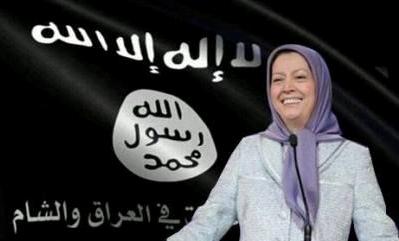
ISIS supporter Maryam Rajavi attacks Obama from French parliament

This week an inter-parliamentary group from Iran visited France for the enhancement of parliamentary, economic and political relations between Tehran and Paris. The Iranian delegation of three senior MPs was headed by Chairman of the Parliament’s National Security and Foreign Policy Commission Alaeddin Boroujerdi. The talks were deemed by both France and Iran to have been constructive.

Boroujerdi’s interview with France 24 indicates that the nuclear issue and ISIS were at the top of the agenda in the meetings: the West wants Iran to help fight ISIS in return for a favourable outcome to the nuclear negotiations.

In a panic at the thought of closer ties between the two countries, Israel set about trying to disturb the atmosphere in the French parliament by pushing the terrorist Mojahedin Khalq leader Maryam Rajavi into a meeting with legislators in order to voice Israeli concerns and demands.

But using the MEK will never work out positively for Israel, for the simple reason that the MEK are incapable of making any difference to anyone or any situation of any real importance. Instead the MEK will only make things worse.

The Iranian delegation did not discuss the MEK, nor did they react to the presence of Rajavi nearby – it could be of course that the French parliamentarians hosting the Iranian delegation had been too embarrassed to bring the impromptu affair to their attention as it was irrelevant to the work of the delegation. However, Iran’s Fars News Agency published without comment the content of Maryam Rajavi’s speech which spoke for itself.

Maryam Rajavi tried to claim legitimacy as a result of the failure of a legal case against her and several other leading MEK members. Fortunately, informed people do not make the same assumptions as she does. Indeed, in June a spokesman for the Ministry of Foreign Affairs said France has “no contact with the “People’s Mujahedin Organization of Iran” which is known for its use of violence. It has no legal existence in France as an organization. Its violent and undemocratic Ideology has been exposed by several human rights organizations, such as Amnesty International who have reported on the organization’s cultic practices and its refusal to formally renounce violence. We also warn about the intense campaign of disinformation and influence it leads.”

Maryam Rajavi’s speech showed what a liability she and her disinformation are even for her own sponsors. She not only attacked Iraq, Iran and Syria as being responsible for the creation of ISIS, but vehemently attacked the USA too for backing the Maliki government saying: “During these years, not only did the United States not voice any protest against these actions, but they praised Maliki’s measures. The by-product of these crimes was the expansion and strengthening of ISIS in Syria and Iraq. This was the outcome of showing leniency towards the most horrendous dictatorship in contemporary times and its proxies.” She warned: “And now, the mullahs of Iran are exploiting this policy by the West; poised to fill the vacuum created by the ISIS retreat as a result of the international coalition attacks with the militias.”

Yet only a few months previously MEK websites were filled with pages showing support for ISIS when Rajavi believed the terrorist army would overrun Baghdad and take over the MEK camp near the airport.

Rajavi’s speech is largely incoherent and certainly adds up to nothing but disparate rants against everyone and everything. But in that it is inspired by the Israeli way of doing politics. Divorced from reality, Rajavi urges the Western coalition not to work with Iran. Clearly nobody told her about the FRANCE 24 interview with Boroujerdi who said that the US-led coalition against the Islamic State group cannot be trusted. “The very countries that created the Islamic State group are now part of a coalition that … wants to destroy them,” he said. “How can a contradiction like this be resolved? It’s only natural that we cannot trust [the coalition]. We don’t want to enter a political game.”

As though to confirm and cement her ignorance and stupidity, Maryam Rajavi finally mentions her hostages in Camp Liberty and says she hopes that with the “removal of Maliki in Iraq, the French government would use all means possible for Camp Liberty to be recognized as a refugee camp under the United Nations’ supervision”.

Maryam Rajavi has clearly not read Massoud Khodabandeh’s fourth report from Baghdad on the current situation of the MEK and Camp Liberty published in October. This report makes it clear that the new government of Iraq led by Prime Minister Abadi has already put in place plans to expedite and speed up the process of removing the MEK entirely from Iraqi territory. Apparently Abadi is even more keen than Maliki to be rid of the MEK, and the UN agrees.

When a supporter of ISIS sits in the French parliamentary building and attacks President Obama, the cracks are seriously beginning to show in the West’s approach to resolving the whole Middle East situation. Observers may not be sufficiently informed to tell Western governments what to do in their own interests, but any schoolchild can point out the damage the MEK is doing to them.

About Anne Khodabandeh (Singleton):

Middle East Strategy Consultants,

Autor of “Saddam’s Private Army” and “The life of Camp Ashraf”

November 2, 2014 0 comments
FacebookTwitterPinterestWhatsappTelegramSkypeEmail
Newer Posts
Older Posts

Recent Posts

  • National Pride of Iranians: Reject the Rajavis and their Patrons

    July 22, 2026
  • Italian legislators fooled by MEK’s polished presentations

    July 18, 2026
  • The Rhetorical Style and Polemical Language of the MEK

    July 15, 2026
  • Death of Lindsey Graham, notorious hardliner against Iran

    July 13, 2026
  • Nejat Society Albania’s 2026 Peace Delegation

    July 11, 2026
  • Facebook
  • Twitter
  • Instagram
  • Youtube

© 2003 - 2025 NEJAT Society . All Rights Reserved. NejatNGO.org


Back To Top
Nejat Society
  • Home
  • Articles
  • Media
    • Cartoons
    • NewsPics
    • Photo Gallery
    • Videos
  • Publications
    • Books
    • Nejat NewsLetter
    • Pars Brief
  • About Us
  • Contact us
  • Editions
    • عربي
    • فارسی
    • Shqip