Nejat Society
  • Home
  • Articles
  • Media
    • Cartoons
    • NewsPics
    • Photo Gallery
    • Videos
  • Publications
    • Books
    • Nejat NewsLetter
    • Pars Brief
  • About Us
  • Contact us
  • Editions
    • عربي
    • فارسی
    • Shqip
Nejat Society
Nejat Society
  • Home
  • Articles
  • Media
    • Cartoons
    • NewsPics
    • Photo Gallery
    • Videos
  • Publications
    • Books
    • Nejat NewsLetter
    • Pars Brief
  • About Us
  • Contact us
  • Editions
    • عربي
    • فارسی
    • Shqip
© 2003 - 2024 NEJAT Society. nejatngo.org
Mujahedin Khalq; A proxy force

The Other Lobby: MEK’s Crusade Against US-Iran Negotiations

If you say it out loud, it seems too preposterous to be true. Four high-profile former government officials are getting paid by an Iranian dissident group that until 2012 was an officially designated terrorist organization to publicly oppose the Obama administration’s diplomatic efforts with Iran.

BuzzFeed’s Rosie Gray attended a briefing in the Dirksen Senate office building on Capitol Hill sponsored by “an Iranian exile group related to the Mujahedin-e-Khalq (MEK).” The former government officials speaking out on behalf of this group against diplomacy with Iran included “former Vermont Governor Howard Dean, former Ambassador to Morocco Marc Ginsberg, General James L. Jones, and and former US Special Envoy for Nuclear Nonproliferation Robert Joseph.”

Robert Joseph described the diplomacy as “appeasement” and urged additional sanctions, which Obama has promised to veto, to stop “Iran’s nuclear quest.”

Howard Dean refused to answer questions as to whether he was still getting boatloads of money from MEK groups and even went so far as to say that U.S.-Iran negotiations should not go forward until the Obama administration agrees to grant some kind of asylum to the 3,000 MEK activists sheltered by the Iraqi regime of Saddam Hussein that are now living in a U.S. military base called Camp Liberty.

“We ought to sign no agreement until those 3000 people are safe,” Dean said.

Rewind to 2003. George W. Bush included Saddam Hussein’s support for terrorists like MEK in his propaganda justifying the invasion of Iraq. “Iraq shelters terrorist groups including the Mujahedin-e-Khalq Organization,” reads a document in the archives of the White House’s website, “which has used terrorist violence against Iran and in the 1970s was responsible for killing several US military personnel and US civilians.”

As recently as 2007, a State Department report warned that the MEK, retains “the capacity and will” to attack “Europe, the Middle East, the United States, Canada, and beyond.”

Many experts, including current senior U.S. officials, believe that the MEK, backed by Israel, is the group responsible for assassinating Iran’s civilian nuclear scientists in what are clear-cut terrorist acts.

This is the group lobbying hard to get high-profile U.S. officials to come out publicly against the U.S.-Iran negotiations, which supporters say is the only thing with any chance of verifiably curtailing Iran’s nuclear program and keeping Washington off the inevitable war path to Tehran.

Like I said, reality seems stranger than fiction in this case.

By: John Glaser

February 1, 2014 0 comments
FacebookTwitterPinterestWhatsappTelegramSkypeEmail
Mujahedin Khalq; A proxy force

Mojahedin Khalq lobbyist Haward Dean refused to disclose his fees

MeK-Paid Officials Blast Deal as ‘Appeasement’

The Mujahedin-e Khalq has been called a lot of things over the years: terrorists, a cult, even (by themselves) a “government-in-exile.” One thing that is undeniable at this point is that they wield considerable influence among US officials past and present, and that lobbying heft is being thrown behind stopping the Iran nuclear deal.

Former Governor Howard Dean (D – VT), a major MeK enthusiast, was among the speech-givers at a recent sponsored “briefing” that condemned the deal, saying any deal must be conditioned on imposing some sort of deal on Iraq to deal with MeK exiles there. Former US Special Envoy Robert Joseph concurred, and blasted the current deal as “appeasement.”

The MeK is putting a lot of effort behind the same Senate sanctions bill that the Israel Lobby is so staunchly behind. The bill would violate the Iran deal by imposing new sanctions, and would effectively kill negotiations.

While the depth of the MeK’s funding of this is, like much of their lobbying, strictly off-the-record (Gov. Dean openly refused to answer questions about how much he was paid for his statement), the group appears to still envision itself being the benefactors of US-imposed regime change in Iran, and is willing to pull out all the stops to see to it that diplomacy does not succeed and rapprochement remains impossible.

By : Jason Ditz

February 1, 2014 0 comments
FacebookTwitterPinterestWhatsappTelegramSkypeEmail
Former members of the MEK

Former MKO member: They armed me by my Mom’s fake will

Yaser Ezzati, a former member of the Mujahedin Khalq Organization was interviewed by Mehr News Agency. Below is an excerpt of the interview.

Yaser was considered as a member of the MKO militia because his parents were also old members of the group; Yaser grew up in the MKO camps in Iraq.

Yaser was sent to Canada under the pretext of the group’s so-called policy to save children.

Yaser was returned to the MKO in Germany where he attended fundraising gatherings.”In 1997 the MKO gave me a fake will allegedly of my mother who was killed in Mersad Operation [Eternal Light],” Yaser said.”It was written:”You must take gun and follow my path”. I was impressed.” Thus, he was sent to Iraq where the group was rebuilding its forces after the horrific failure of the Eternal Light.

…Yaser Ezzati was mobilized to Iranian border to launch cross border mortar attacks.

“After I attended four operations, I declared that I gave up because I had no idea of what and who we were attacking,” he said. “I was told that I was a child of the group and I shouldn’t have disgraced the group.”

Ultimately, the MKO officials accepted his defection on the condition that he went on a six-month solitary confinement and then he would be sent to Iran.

Yaser who was so scared of getting back to Iran – that was terribly demonized by the MKO – stayed in Camp Ashraf until he was fed up with the brainwashing meetings that he had to attend every week.”Weekly Cleansing” was a cult jargon in which members had to confess all their private thoughts and dreams.” I could no more tolerate the condition”. Therefore, he was imprisoned in solitary confinement. He was brought on trial and accused of being the agent of Iranian Intelligence Ministry!

“Again they brought in my Mother’s will; I had no way out.”

The former member of the MKO Cult states that his father is known to be a torturer in the MKO.”He even beat me several times after I declared defection.”!

. Whenever I missed my parents my father would receive me by beating and kicking me.”

He continued,”some children in the MKO went crazy. I remember a person who committed suicide.”

He notifies that the militias are kept in the organization by recruiting them and paying them. They are offered free trips to attend the group rallies.

“I have not forgotten my past yet because an important part of my life, my childhood, my adolescence were lost for the misguided goal of the MKO”, he uttered.

January 30, 2014 0 comments
FacebookTwitterPinterestWhatsappTelegramSkypeEmail
Camp Liberty

MKO Members Fail to Escape Camp Liberty

A number of members of the terrorist Mojahedin-e Khalq Organization (MKO, also known as MEK, NCRI MKO Members Fail to Escape Camp Libertyand PMOI) failed in their attempt to run away from a hospital near the group’s transient settlement facility, Camp Liberty, near the Iraqi capital.

“Over 70 members of the grouplet sought to escape from the hospital where they were treated after going on a forced hunger strike, but they didn’t succeed,” a physician at one of Baghdad’s hospitals wrote in a letter to Iraq’s human rights ministry.

The Iraqi physician wrote in his letter that these people have told him that they were forced by the MKO ringleaders to go on hunger strike, and have given letters to the Iraqi medics to be submitted to human rights organizations in order inform the relevant authorities of vitally bad conditions.

Many of the MKO members have abandoned the terrorist organization while most of those still remaining in the group are said to be willing to quit but are under pressure and torture not to do so.

A recent Human Rights Watch report accused the MKO of running prison camps in Iraq and committing human rights violations.

According to the Human Rights Watch report, the outlawed group puts defectors under torture and jail terms.

The group, founded in the 1960s, blended elements of Islamism and Stalinism and participated in the overthrow of the US-backed Shah of Iran in 1979. Ahead of the revolution, the MKO conducted attacks and assassinations against both Iranian and Western targets.

The group started assassination of the citizens and officials after the revolution in a bid to take control of the newly-established Islamic Republic. It killed several of Iran’s new leaders in the early years after the revolution, including the then President, Mohammad Ali Rajayee, Prime Minister, Mohammad Javad Bahonar and the Judiciary Chief, Mohammad Hossein Beheshti who were killed in bomb attacks by MKO members in 1981.

The group fled to Iraq in 1986, where it was protected by Saddam Hussein and where it helped the Iraqi dictator suppress Shiite and Kurd uprisings in the country.

The terrorist group joined Saddam’s army during the Iraqi imposed war on Iran (1980-1988) and helped Saddam and killed thousands of Iranian civilians and soldiers during the US-backed Iraqi imposed war on Iran.

Since the 2003 US invasion of Iraq, the group, which now adheres to a pro-free-market philosophy, has been strongly backed by neo-conservatives in the United States, who eventually took the MKO off the US terror list.

The US formally removed the MKO from its list of terror organizations in early September 2012, one week after Secretary of State Hillary Clinton sent the US Congress a classified communication about the move. The decision made by Clinton enabled the group to have its assets under US jurisdiction unfrozen and do business with American entities, the State Department said in a statement at the time.

In September 2012, the last groups of the MKO terrorists left Camp Ashraf, their main training center in Iraq’s Diyala province. They have been transferred to Camp Liberty which lies Northeast of the Baghdad International Airport.

January 28, 2014 0 comments
FacebookTwitterPinterestWhatsappTelegramSkypeEmail
UN High Commissioner for Refugees

Letter to Guterres from former MKO members


Letter to António Guterres UNHCR from former members in Eastern Azarbaijan province in Iran

Honorable António Guterres UN High Commissioner for Refugees, Geneva

As your Excellency are aware, Camp Liberty in Baghdad, the temporary camp for nearly three thousand members of the People’s Mojahedin Organization of Iran (PMOI) subjected Thursday night 26 December 2013 to a terrorist attack by rockets and mortars. According to PMOI this attack caused death of 4 of the camp residents and wounding 71 others, many of them in critical condition.

The PMOI has published the names and photographs of the killed, but not the names of the wounded.

We, the undersigned, as a group of former members of PMOI in Eastern Azarbijan province (Northwest of Iran), express our support for the request of the families of the residents of Camp Liberty to ask your honor, as UN High Commissioner for Refugees and international authority are responsible to solve this issue, as well as the competent international bodies, especially the International Committee of the Red Cross and its office in Iraq to obligate the leadership of the PMOI to announce the names of the wounded residents in this incident by any appropriate means, such as informing the families or to allow the wounded to contact or meet their families because according to international humanitarian laws and basic principles of human rights, they are worried about the health and status of their relatives residing in the refugee camp.

We believe that lifting the cultic and organizational restrictions are the basic and fundamental way to liberate captive members in Iraq, from an organization that has known as a reactionary cult with dictatorial internal relations, as has been emphasized in recent UNAMI report for the first half year of 2013, where indicates: “UNAMI continuing concerns about human rights abuses committed by the PMOI/MeK leadership within Camp Hurriya against the residents….The PMOI/MeK, which has a hierarchical and authoritarian structure, imposes a number of severe restrictions on the residents’ rights, including the right of freedom of movement within the Camp and the right to leave the organization, the free right of association, along with restrictions on contacts with family members (including those residing in Camp Hurriya), on access to basic communications, and on access to medical care and treatment.”

We also announce our support for the request of a group of families of the residents of Camp Liberty to speed up the transfer of the residents from Iraq, where there are daily killings of many innocent people in terrorist incidents or in bloody sectarian clashes, to the third countries specially the sick and wounded, while nearly third of them have documents of residency or asylum in European countries or North America.

We join these families to call international bodies, especially the UN High Commissioner for Refugees to put their utmost efforts to urge the member states towards resettling the residents to the third countries as soon as possible.

We would like to express our deep appreciation and gratitude in advance for your efforts in this regard, and informing the families about the fate and status of their relatives in Camp Liberty.

a group of former members of PMOI in Eastern Azarbijan province (Northwest of Iran)

27 January 2014

Signatories:

1. Sirous Ghazanfari

2. Maseoud Taghipouryan

3. Mohammadreza Mobin

4. Akbar khabare

5. Hosen Hemati

6. Ahmad Hosenzade

7. Ahad Rsolpour

8. Karam Kheiri

9. Ali Ghanbarzade

10. Abdolahe Nikbakht tabrizi

11. Ali Amani

12. Alah Verdi Rsolzade

13. Shahryar Samade

14. Saeid pakdel

15. Hedar Abolhasani

16. Nader Chap Chap

17. Alireza Moghadami chbcghloei

18. Hamid Rastegari

19. Jaefar Fraj pour andbili

20. Akbar Dolt negad

21. Jelal Salmani

22. Habibe Monesi ghramlki

23. Jamshid Nazari

24. Mohammad javad Asadi

25. Esmaeil Aghapour

26. Mehdi Pourghasem

27. Reza Shams

A copy to:

– Secretary- General of the United Nations, Mr. Ban Ki-moon – New York

– Mrs. Jane Holl Lute UNSG adviser for relocation of Camp Liberty residents to third countries.

– UN High Commissioner for Human Rights at the United Nations, Ms Nawi. Pillay – Geneva

– the Special Representative of the Secretary- General of the United Nations in Iraq, Mr. Nikola Mladenov

– Chairman of the human rights monitoring in the UNAMI in Iraq, Mr. Ashouri

– Office of the UN High Commissioner for Refugees, in Iraq

– Ashraf – Liberty Project Office in the UN High Commissioner for Refugees, the United Nations in Camp Liberty – Mr. Ahmed Al-Tamimi

– The International Committee of the Red Cross

– Office of the International Committee of the Red Cross in Baghdad

– Office of the Prime Minister of Iraq

– Iraqi Ministry of Human Rights

– Amnesty International

– Human Rights

Community of Independent Bloggers,

January 28, 2014 0 comments
FacebookTwitterPinterestWhatsappTelegramSkypeEmail
Mujahedin Khalq; A proxy force

US should not sabotage diplomacy with Iran

The Geneva interim accord over Iran’s nuclear program signed on November 24 last year was a landmark development in the course of Iran’s relations with other countries, especially the United States, with which it directly negotiated at a high-level for the first time since the Islamic Revolution in 1979.

According to the agreement known as the Joint Plan of Action, Iran will voluntarily limit certain portions of its nuclear activities, in return for relief from some of the sanctions imposed against Iran in the recent years, including the petrochemical and automobile industry sanctions. The P5+1 group(Britain, China, France, Germany, Russia and the United States) have also agreed to release $4.2 billion of Iran’s frozen assets, lift the ban on Iran’s gold trade, refrain from restricting its oil exports and allow the sale of civilian aircrafts’ spare parts to Iran.

Aside from the fact that the agreement signaled a revival of Iran’s economy that was somewhat troubled under the biting international sanctions, it also opened up new horizons for political and diplomatic cooperation between Iran and the international community and provided opportunities for the resuscitation of Iran’s marred relations with the United States and the European Union.

It was immediately following the conclusion of this important agreement that the Western officials, diplomats and parliamentarians began to enthusiastically travel to Iran one after the other to hold talks with their Iranian counterparts, exchange views with them and explore the possibilities of future cooperation with Tehran and bringing to an end the longstanding standoff between Iran and the West.

Delegations from the European Parliament, Italian Senate, German Bundestag, Mexican Chamber of Duties, Irish House of the Oireachtas and UK House of Lords and the foreign ministers of several countries came to Iran, and as reported by the Iranian Foreign Minister Mohammad Javad Zarif, it’s expected that prominent officials will be traveling to Iran in the coming weeks, including the Swedish and Polish foreign ministers, a parliamentary delegation from Romania and a group of Canadian lawmakers. In the diplomatic culture, such exchanges and communications signify the importance of bilateral and multilateral relations and indicate the foreign policy priorities of different countries.

In the wake of these determining developments that seem to be quite vital for the future of Iran’s foreign policy and its international standing, a group of hawkish U.S. Senators unexpectedly came up with the plan of introducing a bill that will impose new sanctions against Iran and will even oblige the U.S. government to give logistical support to Israel in case the Tel Aviv regime decides to launch a military strike against Iran.

S.1881, the “Nuclear Weapon Free Iran Act of 2013,” was introduced by Robert Menendez (D-N.J.), the chairman of the Foreign Relations Committee, and Mark Kirk (R-Ill.), a Republican Senator and former member of the House from Illinois. It’s noteworthy that of the 59 Senators supporting the bill, 16 ones are Democrats.

When it was first reported that the 100-member Senate will be giving the green light to the bill to impose a new round of sanctions against Iran, even the U.S. government officials were disturbed and frightened, because the deal that was signed with Iran after several days of intensive talks in Geneva, and more importantly after some 10 years of inconclusive negotiations, was not something trivial or insignificant which could be overlooked that easily with the obduracy and adamancy of a group of pro-Israeli Senators.

The White House immediately rushed to denounce the call by the Senators to pass the new sanctions and President Obama, likewise, said he will certainly veto any new sanctions that will derail the negotiations with Iran. “Imposing additional sanctions now will only risk derailing our efforts to resolve this issue peacefully, and I will veto any legislation enacting new sanctions during the negotiation,” said Barack Obama in a statement released by the White House.

Following the remarks made by the U.S. President, the Senate minority leader Harry Reid also announced that he will not allow the bill to reach the Senate floor. Any legislation in the 100-member Senate needs at least 67 votes to be able to override the president’s veto, and with the withdrawal of the Democrat signatories, it will not have any chances of being realized.

However, the very fact that there are some lawmakers and politicians in the United States, who contrary to the commitments entrusted to Washington by virtue of the Joint Plan of Action, are still pushing for new sanctions against Iran is alarming and upsetting. One of the commitments made by the United States and the five other countries talking to Iran is for them to refrain from imposing new unilateral or multilateral sanctions against Iran during the 6 months of the implementation of the interim accord, and after that during the talks for bringing forth the comprehensive agreement. So, any new sanctions by the EU or the United States would be a violation of the terms of the Geneva agreement, a deal-breaker action and will eventually force Iran into revising its approach toward the talks.

Like as the Geneva agreement has critics in Europe the United States who believe that the wave of sanctions should continue to be directed against Iran and there should be no removal of the sanctions until the complete dismantlement of Iran’s nuclear program in its entirety, the deal has its own critics in Iran, as well, who believe that the United States and its European allies cannot be trustable partners and holding talks with them will be fruitless and full of loopholes.

President Rouhani and his diplomatic team have a relatively hard job convincing and satisfying the domestic critics and opponents who dissuade the administration from sitting with the United States at the negotiation table, and the imposition of new sanctions will simply further complicate the situation for him. The critics of President Rouhani that include some lawmakers, journalists and public speakers say that the black background of the U.S. interventions in Iran’s internal affairs, its support for the 1953 coup against the government of Prime Minister Mohammad Mossadegh, its support for Saddam Hussein during the 8-year war, its sponsorship of MKO and Jundallah terrorist cults against the civilians and its policy of sanctions and military threats against Iran have all made it an unreliable negotiating partner and insincere interlocutor. They say when Iran was cooperating with the United States on the security of Afghanistan, the former U.S. President George W. Bush dubbed Iran as part of an “axis of evil”, and so the future of cooperation with the U.S. would be unclear.

President Rouhani and his team argue that Iran and the international community should move towards reconciliation and putting aside the disputes and the acrimonies of the past in order to solve the nuclear standoff once for all. Acknowledging the arguments of their domestic critics, they also concede that the continuation of the nuclear controversy is in nobody’s interests, so in order to find a sustainable solution for this controversy, both Iran and the West should forget about the bitter memories they have of each other, and negotiate in good faith, on an equal footing and based on mutual respect.

Iranian Foreign Minister Mohammad Javad Zarif has several times reiterated that Iran’s negotiations with the P5+1 are simply limited to the nuclear issue, and this is how the Iranian government has decided to address the concerns of those inside Iran who believe that Iran should not show leniency toward the United States, a country which has already demonstrated its unconditional animosity and hostility toward Iran well over the past three decades.

But the hawkish, extremist figures in the U.S. political sphere, whether in the government, the Congress or the media, should carefully note that the door for diplomacy would not always remain open, and the chances to reach for a categorical, definite resolution of the decade-long nuclear controversy are limited.

They should pay attention to the fact that President Rouhani’s administration has embarked on a very sensitive endeavor for directly talking to the United States, which many people inside Iran don’t think of positively. Any new sanctions against Iran under any baseless pretext would mean a violation of the Geneva agreement, the termination of its implementation and possibly an end to the long-sought talks. A peaceful and diplomatic resolution of the nuclear controversy would be beneficial to all parties, and will immensely contribute to regional peace and security. These pro-Israeli Senators who are certainly fueled and empowered by Tel Aviv should come to the understanding that pleasing Netanyahu and Shimon Peres at the expense of the interests of their own people and the people of the world is not a logical or relevant decision. Somebody should ask them not to kill the unprecedented chances that have emerged for a peaceful and viable diplomacy with Iran.

By Kourosh Ziabari

AB/AB

Kourosh Ziabari is an award-winning Iranian journalist, media correspondent and peace activist. He has interviewed several prominent politicians, university professors, academics and media personalities. His articles and interviews have appeared on publications in Iran and across the world. He has won a presidential award in the National Iranian Youth Festival and three awards in Iran’s national press festival. His papers have been presented at conferences in Canada, Italy, Turkey and Czech Republic. He is a graduate of English language and literature and was the member of World Student Community for Sustainable Development.” You can visit his website at www.kouroshziabari.com.

January 27, 2014 0 comments
FacebookTwitterPinterestWhatsappTelegramSkypeEmail
Mujahedin Khalq; A proxy force

MEK lobbyist Menendez under investigation again for corruption

Report: Feds probe Bob Menendez on Ecuador banker links

FBI agents are reportedly looking into Democratic Sen. Robert Menendez’s dealings with two fugitive Ecuadorean bankers, according to a New York City TV station.

WNBC in New York — citing anonymous sources — reported on Thursday evening that the New Jersey senator contacted the Department of Homeland Security and the State Department on behalf of W illiam and Roberto Isaias Dassum. The brothers are fighting extradition to Ecuador over charges that they allegedly embezzled tens of millions of dollars from the country’s largest bank before it failed and had to be rescued by the Ecuadorean government.

The brothers were convicted in absentia in 2012, but a Florida court refused to allow the Ecuadorean government to seize $20 million in assets the Dassums held in the United States. Ecuador has already confiscated $400 million worth of property owned by the brothers back home, including media companies

According to WNBC, Menendez contacted Homeland Security in April 2012 on the brothers’ behalf.

WNBC said family members of the fugitives donated $10,000 to Menendez’s successful 2012 relection campaign, as well as $100,000 to the Democratic Party.

Menendez is already the subject of a federal criminal probe into his dealings with Dr. Salomon Melgen, a close friend and financial backer.

Menendez reportedly intervened with federal officials on behalf of Melgen, who was being investigated for reportedly overbilling Medicare by $9 million for eye treatments.

Melgen and his family have donated hundreds of thousands of dollars to Menendez and other Democrats during the past 15 years, federal campaign disclosure records show.

Melgen also gave $700,000 in 2012 to a Democratic super PAC that spent heavily in support of Menendez’s reelection campaign.

The criminal investigation into Melgen and Menendez has dragged on for more than a year with no charges against either man, but this latest report puts Menendez back into scandal mode.

Menendez’s office criticized the WNBC report as based on anonymous sources, and added that Menendez “was not aware” of any criminal probe into his interactions with the Dassum brothers.

“A year after a false smear campaign was launched against Sen. Menendez, once again we see anonymous sources making outlandish allegations,” said Tricia Enright, a Menendez spokeswoman. “Our office works each year with literally hundreds of individuals and families from across the country who are seeking help with the immigration process. We review each and every request we receive, and if we feel any inquiry is appropriate, we make it.”

Enright added: “In this particular case, Senator Menendez believed the Isaias family had been politically persecuted in Ecuador, including through the confiscation of media outlets they owned which were critical of the government. We are not aware of any inquiry into the senator’s actions on this matter.”

JOHN BRESNAHAN, Politico

January 26, 2014 0 comments
FacebookTwitterPinterestWhatsappTelegramSkypeEmail
Mujahedin Khalq as an Opposition Group

Historic deal is working despite MKO-AIPAC- led obstructions

The U.S. Treasury Department on Monday suspended some of its sanctions against Iran, after the Islamic Republic began halting some of its nuclear activity as part of the historic deal with P5+1.Historic deal is working despite MKO-AIPAC- led obstructions

The U.S. Treasury said hours following news of the Iranian move that it has suspended sanctions on foreigners engaged in transactions related to Iran’s oil exports, and some trade in gold and precious metals.

As nuclear deal takes effect easing international sanctions in exchange for slowing Iran’s nuclear work, and buying time for a more comprehensive deal seems to be  a horrible nightmare for the pro-Israel group, the American Israel Public Affairs Committee (AIPAC), and the Mujahedin Khalq terror cult that have been lobbying members of Congress to keep the pressure on Iran. Attempting to make them pass extra sanctions against Islamic Republic their ultimate aim is definitely a violent regime change in Tehran.

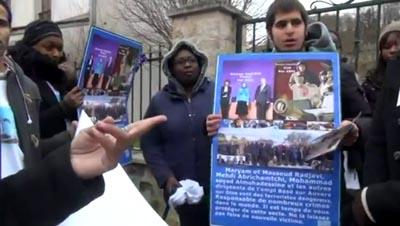
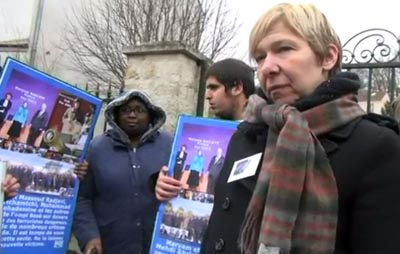
Maryam Rajavi the self-claimed president of the National Council of Resistance the propaganda wing of the MKO, visiting a few French sponsors of the group blamed the West for its "erroneous policies" towards Islamic Republic. "They must compel the mullahs to shut down their nuclear sites completely", she said.

The MKO and Israel as well as Arabic states of the Persian Gulf claim that the nuclear deal with Iran will not work. Indeed, these Middle Eastern allies of the West are mostly worried about the opposite effect of the nuclear accord; they panic it might work!

Regarding the MKO, its role in the relations and equations between Iran and the West is so trivial that the cult leader strives hard to create tension between the two sides more and more in order to achieve the least support they can gain. The MKO’s only means to survive is to convince the West that the proverb "the enemy of my enemy is my friend" is symbolized in supporting a cult of personality with the darkest and dirtiest background of violence and crime against Iranian nation.

The MKO’s anti-Iranian substance is also demonstrated in the large-scale well-funded lobbying by the group in the US Congress to increase sanctions against Iranian people who are already suffering the outcome of the previously imposed sanctions. Senator Robert Menendez was the key MKO lobbyist in US Congress to pass legislation that as stated in Menendez’s press release its goal was “the complete and verifiable termination of Iran’s illicit nuclear weapons program”.

The MKO’s lobbying efforts to launch another war against Iran was seen as a deal-breaker by the Obama administration. Although the group’s efforts to undermine improvements in Iran-West relations do not seem to be influential, one thing is verified, the Mujahedin Khalq Organization is never the representative of the Iranian nation but its true enemy.

Mazda Parsi

January 26, 2014 0 comments
FacebookTwitterPinterestWhatsappTelegramSkypeEmail
Iran Interlink Weekly Digest

Iran Interlink Weekly Digest – 38

++ UNAMI published its Half Yearly Report on Human Rights for January to June 2013. Section 11.1 covered Camp New Iraq (Camp Ashraf) and Camp Hurriya (Camp Liberty). The report points out that the “UNHCR’s efforts to find durable solutions for the residents have been hindered by the non-cooperation of residents, such as the boycotting of UNHCR interviews.” It goes on to say, “UNAMI has continuing concerns about human rights abuses committed by the PMOI/MeK leadership within Camp Hurriya against the residents. These claims have been made to United Nations Monitors during interviews with residents who had managed to leave Camp Hurriya, as well as in a number of private discussions with residents who still reside in the Camp – despite the leadership’s attempts to prevent such discussions. The PMOI/MeK, which has a hierarchical and authoritarian structure, imposes a number of severe restrictions on the residents’ rights, including the right of freedom of movement within the Camp and the right to leave the organization, the free right of association, along with restrictions on contacts with family members (including those residing in Camp Hurriya), on access to basic communications, and on access to medical care and treatment.”

++ This week in Baghdad, Dr Nafeh Issa, a prominent political and human rights activist, says some MPs have shown him evidence that some groups of MPs who still have Saddamist affiliations have been meeting in Jordan with representatives of the MEK. During these meetings the MEK promised unlimited financial backing by the Saddamists in Jordan – the Izzat Ebrahim branch and Saddam’s daughter – in return for the promise that if they are re-elected they will help the MEK to stay in Iraq and get Ashraf camp back to be used as the HQ for their mutual political benefits and activities. The MEK have given examples of how they have been able to financially support and push their own candidates into the European Parliament and the US House of Representatives, etc.

++ Adnan Al Mayahi, MP in Baghdad, member of the security and defence commission in parliament, announced that fresh evidence has shed more light on the relation between the MEK and the Islamic State of Iraq and the Levant (ISIL) and Al Qaida in the Anbar province. He also criticised western governments saying that they love to have these terrorist organisations but only to use them in countries like ours rather than having them in their own countries. With reference to Ban Ki Moon’s appointment of Jane Holl Lute as his Special Adviser for Relocation of Camp Hurriya Residents Outside of Iraq, Al Mayahi says her appointment doesn’t change anything for my country and the continued presence of terrorists here. Our position is clear and simple, he continues, the MEK have been part and parcel of Saddam’s regime, have massacred Iraqis and after Saddam have become proxies to interfere to endanger our people including support for Al Qaida and ISIL and trying to create corruption in the country.

++ This week the MEK tried to sell the idea that by signing a deal with the West, Iran has drunk poison and will collapse soon. Many Farsi commentators reacted by reminding Rajavi that he has been saying this for over thirty years, but the reality is that the poison that will affect the remains of the MEK is if there is rapprochement between Iran and the West because the West is the only place that was feeding the MEK after the fall of Saddam.

++ There have been several articles about the possibility of moving the whole MEK organisation to Romania and the desire of the Americans to keep them intact and to create a new closed-door camp in that country. Many refer to this as a failed attempt but which, if it does go ahead, will open the doors anyway since if the MEK leave Iraq they will leave the organisation anyway. In example they say that when the MEK arrived in Albania over half separated in first few days of arriving in the country. At present the MEK is desperately trying to prevent them from talking by misusing their financial dependency. Many have contacted Iran Interlink and said the MEK will pay $500 per month on condition that they do not openly criticise the MEK or say what happened to them in the camp, and that they do not talk to the UN about anything nor accept the $200 the UN pays to refugees. They have all pointed out that this situation cannot last as they are all talking privately and the word is spreading anyway, but that out of desperation to feed ourselves we have to agree to this for now. Critics point out that if more people arrive, the MEK will not be able to pay for all of them. In this respect Bahar Irani has mentioned this situation in an article in Mojahedin.ws pointing out that the MEK’s silence over the Romanian case and their lobbyists’ silence and refusal to answer on this issue shows they are seriously worried because they know that just moving them at all will precipitate the collapse of the organisation.

++ Mazda Parsi of Nejat Bloggers has written about the threat which the MEK will pose to the West if the group is relocated to the Balkan region, in particular Romania. Citing various experts and journalists the article concludes with a section from Anna MIKHAILENKO’s piece on the new US plan to move “the Cult of Rajavi” to the Balkans, translated from Russian by the ORIENTAL REVIEW. ““It is obvious that the Mojahedin-e-Khalq is not a peaceful organization” she writes. “In fact, it would be better compared to the Taliban, Al-Qaeda, or Jubhat al-Nusrah, other groups which also enjoyed the tacit support of the United States until they became too unruly.” … MIKHAILENKO warns of the threat of “this army of 3,000 militants” at the door of a tensed region. “Harboring so many fighters so close to Ukraine, a country that has been afflicted with EuroMaidan fever for the past month and a half, could pave the way for any number of coercive scenarios for regime change”, she suggests.”

++ This week there were still a few articles about Massoud Dalili who was killed in Camp Ashraf, asking the UN to push the Pentagon back and allow the witnesses to be questioned and the issue to be fully investigated.

++ A few articles have pointed out that Maryam Rajavi has echoed Netanyahu’s statements about Iran this week. Both of them fear Iran having better relations with the West. Many point out that until only a few days ago Rajavi claimed the deal to be as poison and claimed Iran will die from it. Now it seems they have jumped to order and now that Netanyahu has changed the argument, Rajavi has had to obey and change her tune as well.

++ This week the MEK have tried more than before to praise Saudi Arabia and try to get nearer to the security services of the Kingdom. A few Arabic outlets claim the MEK have had new meeting with Saudi Arabia’s secret services in a bid to start more terrorist activities and bombing in Iraq, Syria and Iran with the promise of more money from the Kingdom. (Note that even at the time of Saddam the MEK got money and backing from Saudi Arabia and had good relations with Wahhabis, Al Qaida and the Saudis.)

++ Ashraf news website reported that former MEK member Mohammad Razzaghi said the MKO has been training some militant groups fighting the Syrian government, including the FSA, on bomb manufacturing, planting and detonation methods, assassination and street war. Razzaghi noted that some MEK leaders have had a series of meetings with the Syrian opposition leaders in France and Jordan and discussed help and assistance to the FSA and a number of other extremist Salafi groups in Syria.

++ There has been reaction to Maryam Rajavi’s attack on disaffected members and internal critics in which she clearly asks them to fight against the ex members. She challenges them by claiming that if you are only critics and not agents of the Iranian regime then you have to expose those who are agents of the regime among yourselves. Mohammad Razzaghi has answered by pointing out that what the critics question is nothing other than what you and your husband have been doing and saying, such as the forced divorces, the separation of the children, and now working with MOSSAD and praising Wahhabis, etc. This is what they are criticising.

++ Parviz Khazai the infamous member of the NCRI in Scandinavia has yet again come out with an article swearing at the internal critics of the MEK. He refers specifically to Atefeh Eghbal but without naming her, calling her “that oik” and trying to discredit her by claiming she only wants to be famous. Khazai himself first worked for the Shah and after the revolution switched to the Islamic Republic as civil servant before being bought by Rajavi to become a low paid, low level lobbyist. There are many examples of his immoral and degenerate behaviour, visiting prostitutes and being found drunk in the street. Even inside the MEK he is known as a man with no dignity.

++ Hadi Afshar, (Said Jamali), has published a note about his experiences in Geneva with the MEK attacking and threatening to kill him. He briefly details how Rajavi’s ideology and his teachings have created these kinds of murderous thugs. He warns Rajavi, even if you kill a few of us as you do in Ashraf and Liberty, you will never get rid of all of us and there will always be enough people to expose you and there is no way you can evade justice.

++ The MEK have held their so-called National Council of Resistance of Iran (NCRI) meeting in Paris. Hojjat Seyed Ismaili, an ex Intel officer of MEK and former Central Leadership Council member, has written a short note in Irandidban website titled, ‘Useless members of the NCRI and the boring rants of the Mojahedin Khalq’. He says that their announcements claim they have discussed and talked about the economy of Iran and the effect of the reduction of the subsidies and also about international events surrounding the Middle East etc. Islmaili asks, should they not talk more about their immediate problems such as why they did not evacuate Camp Ashraf until 53 of them had been killed and only then were they ready to come out. Why did they go on hunger strike for over 100 days, why did they stop and what happened to their demands. Wouldn’t they want to ask who is Massoud Dalili and why did he end up in the camp with his face burned beyond recognition. Why don’t they ask about the alliance between the MEK, the ISIL and Al Qaida. Don’t they want to find a solution for the desperate 3000 people in Camp Liberty. Why don’t the MEK give the names of the injured to their families. Wouldn’t they want to know from their leaders why he or she have never mentioned the need to transfer these people to third countries; leaders who are afraid of even saying it. Why are the MEK engaged in the internal politics of Iraq and Syria and have not been engaged in Iran for at least a decade. In this meeting Maryam Rajavi has announced that whoever asks for the names of the injured are all agents of the regime who are trying to find out the exact situation on the ground so as to discover where to aim their missiles next time. Many others who wrote on this affair criticised the members of the NCRI for sitting there passively and not asking ‘what on earth are you talking about?’

++ There are reports from inside both Camp Liberty and Auvers-sur-Oise that there is a ban on questioning and that any questioner will be severely punished. Absolutely forbidden is to ask: 1. why didn’t we leave Ashraf before the attack and why, after giving so much resistance, did we then accept to leave? 2. Was Rajavi in the camp when it was attacked? 3. Why did we stop the hunger strike after 108 days and why have you stopped pursuing what happened to the allegedly missing seven who you say are being held by the Iraqis? 4. Should we stay in Iraq or go? 5. What happened to those who left Iraq, what happened to those who went to Albania and who is going to leave next? Asking any of these questions is forbidden on the grounds that if these things are talked about it will give information to the enemy and therefore the questioner is an agent of the Iranian regime and has no other motivation but this to help the regime attack us again.

24 January 2014

January 25, 2014 0 comments
FacebookTwitterPinterestWhatsappTelegramSkypeEmail
Human Rights Abuse in the MEK

UNAMI: continued concerns about abuses committed by PMOI

UNAMI Half Yearly Report on Human Rights – January to June 2013

The United Nations Assistance Mission for Iraq and the Office of the High Commissioner for Human Rights released the Half Yearly Report on Human Rights, covering the period from January to June 2013.

Extract from the report (PDF file) by Iran Interlink:

[…]

11.1 Camp New Iraq (Camp Ashraf)/ Camp Hurriya (Camp Liberty)

In accordance with the memorandum of understanding signed with the Government of Iraq in December 2011, UNAMI continued to conduct daily monitoring visits to Camp Hurriya, where more than 3,000 members of the People’s Mujahedin Organization of Iran/Mujahedin-e-Khalq (PMOI/MeK) – an organisation formally listed by a number of States as a terrorist organisation – are currently based.

On 9 February and 15 June Camp Hurriya was subjected to rocket attacks. In the first attack, eight residents were killed and, according to staff at the Government-run clinic in the Camp, a further 71 were injured. As a result of the second incident, two residents lost their lives. The SRSG publicly condemned both attacks and called on the Government of Iraq to take appropriate measures to ensure the protection and safety of the residents. In the aftermath of the February attack the residents’ leadership demanded, inter alia, to return to Camp Ashraf and that they be provided with large T walls for all accommodation blocs and amenities (totalling some 17,000 large T walls), personal protective equipment (PPE) for each resident, and 380 bunkers in addition to the 120 already present in the camp. By the end of the reporting period, the Government of Iraq had provided 296 bunkers and 591 small T-walls but had refused the residents’ leaders request for a return to Camp Ashraf, for personal protective equipment and for large T walls.

UNHCR has continued to work towards identifying individuals in need of international protection and durable solutions for the residents of Camp Hurriya. As of 30 June 2013, 1,604 individuals had been identified as requiring international protection. However, UNHCR’s efforts to find durable solutions for the residents have been hindered by the non-cooperation of residents, such as the boycotting of UNHCR interviews. In March, the Government of Albania offered to accept up to 210 residents for resettlement.

However, the PMOI/MeK refused the names accepted by the Government of Albania, and insisted that it should decide who should be resettled there. As a result by the end of June, UNHCR had facilitated the resettlement of 71 residents only. Similarly, in April the Government of Germany decided to accept up to 100 residents for resettlement. At the time of writing, preparations were underway to relocate the first group some time in July.

UNAMI has continuing concerns about human rights abuses committed by the PMOI/MeK leadership within Camp Hurriya against the residents. These claims have been made to United Nations Monitors during interviews with residents who had managed to leave Camp Hurriya, as well as in a number of private discussions with residents who still reside in the Camp – despite the leadership’s attempts to prevent such discussions. The PMOI/MeK, which has a hierarchical and authoritarian structure, imposes a number of severe restrictions on the residents’ rights, including the right of freedom of movement within the Camp and the right to leave the organization, the free right of association, along with restrictions on contacts with family members (including those residing in Camp Hurriya), on access to basic communications, and on access to medical care and treatment.

[…]

January 25, 2014 0 comments
FacebookTwitterPinterestWhatsappTelegramSkypeEmail
Newer Posts
Older Posts

Recent Posts

  • National Pride of Iranians: Reject the Rajavis and their Patrons

    July 22, 2026
  • Italian legislators fooled by MEK’s polished presentations

    July 18, 2026
  • The Rhetorical Style and Polemical Language of the MEK

    July 15, 2026
  • Death of Lindsey Graham, notorious hardliner against Iran

    July 13, 2026
  • Nejat Society Albania’s 2026 Peace Delegation

    July 11, 2026
  • Facebook
  • Twitter
  • Instagram
  • Youtube

© 2003 - 2025 NEJAT Society . All Rights Reserved. NejatNGO.org


Back To Top
Nejat Society
  • Home
  • Articles
  • Media
    • Cartoons
    • NewsPics
    • Photo Gallery
    • Videos
  • Publications
    • Books
    • Nejat NewsLetter
    • Pars Brief
  • About Us
  • Contact us
  • Editions
    • عربي
    • فارسی
    • Shqip