Nejat Society
  • Home
  • Articles
  • Media
    • Cartoons
    • NewsPics
    • Photo Gallery
    • Videos
  • Publications
    • Books
    • Nejat NewsLetter
    • Pars Brief
  • About Us
  • Contact us
  • Editions
    • عربي
    • فارسی
    • Shqip
Nejat Society
Nejat Society
  • Home
  • Articles
  • Media
    • Cartoons
    • NewsPics
    • Photo Gallery
    • Videos
  • Publications
    • Books
    • Nejat NewsLetter
    • Pars Brief
  • About Us
  • Contact us
  • Editions
    • عربي
    • فارسی
    • Shqip
© 2003 - 2024 NEJAT Society. nejatngo.org
UN

Open letter to Mrs. Jane Holl Lute

Dear Mrs Holl Lute, Special Adviser to the UN Secretary General for the Relocation of Camp Hurriya (aka Liberty) Residents Outside of Iraq, please accept our warm greetings as former members of the PMOI.

Mrs Holl LuteWe hope that you complete your mission successfully and very quickly because of the hardship and misery which each one of us tolerated and endured in the PMOI and for the sake of our friends who are still trapped and stuck in this notorious organization.

We, separated members and critics, know very well that because of the egoism of the PMOI leadership and by invoking the fanatical principles of their ideology, the PMOI leadership will try its best to keep those miserable and trapped members in Iraq until they die, and that, as a matter of fact, the leadership welcomes their deaths because they know that the majority of PMOI members, especially the rank and file of this organization, will become their critics as soon as they reach the free world. For that reason we would like to help you in your mission as much as possible.

Mrs Holl Lute, breaking the cult-like and organizational barriers is the basis and fundamental prelude to the release, rescue and exit of those stranded and trapped members in Iraq. The PMOI leadership has robbed them of their ability to think for themselves and make decisions on their own behalf.

Your interlocutors for the rescue mission from Iraq should rightly be the individual members and not the organization and its self-appointed representatives, but because of the problems and obstacles which we would like to discuss with you, any discussion individually with those trapped members may be out of reach at present because all those members are made to obey their leaders’ orders regarding this matter.

We would like to share our experiences with you regarding this subject and how you might best approach this problem.

We wish you every success in your humanitarian mission and we eagerly follow your endeavours and activities in this regard.

Separated members and critics of the PMOI.

21 January 2014

Signatories:

1.Mohammad Karami

2. Hassan Piransar

3. Batul Soltani

4. Saba Shekar Beyghi

5. Mohsen Mahdavi

6. M. Barazandeh

7. Hamid Sistani

8. Mahmoud Sepahi

9. Mehrdad Sagharchi

10. Ghorbanali Hossein nejad

11. Hassan Azizi

12. Seyed Amir movasaghi

13. Alireza Mirasghari

14. Edward Termado

15. Behzad Alishahi

16. Toraj Amiri

17. Massoud Khodabandeh

18. Shirzad Jalili

19. Majid Rohi

20. Niaz Salimi

21. Shamim Rabiee

22. Anne Singelton

23. Bahiee Jeylani

24. Nasrin Ebrahimi

25. Zahra Al Sadat Mirbagheri

26. Homeyra Mohammad Nejad

27. Mahtab Alipour

28. Zahra Moini

29. Mona Hossein Nejad

30. B- Amiri

31. Visha Madej

32. Ahmad Mohammadi

33. Arash Sameti pour

34. Ali Khatami

35. Saeed Soltanpour

36. Ali Ghashghavi

37. Ali Jahani

38. Hamid Dehdar

39. Ehsan Bidi

40. Mehdi Khoshhal

41. Hassan Khalag

42. Jafar Ebrahimi

43. Hamid Yosefi

44. Vahid Saidi

45. Adel Azami

46. Ali akbar Rastgo

47. Mitra Yousefi

48. Massoud Jabani

49. Mohammadreza Najarian kermani

50 . Homayon Kahzadi

51 . Mirbagher Sedaghi

52 .Ghafour Fatahyian

53-Reza Fani Yazdi

54. kobra Kobra

55. Mehdi Sajoudi

56. Ronak Eyazi

57. Hamed Shirmardi

58 . Mehdi Nikbakht

59.Shahrouz Tajbakhsh

Copies to

– Secretary General of the United Nations, Mr. Ban Ki-moon – New York

– UN High Commissioner for Human Rights at the United Nations, Ms Nawi Pillay – Geneva

– Special Representative of the Secretary General of the United Nations in Iraq, Mr Nikola Mladenov

– Chairman of the human rights monitoring in the UNAMI in Iraq, Mr Ashouri

– Office of the UN High Commissioner for Refugees, the United Nations in Iraq

– Ashraf-Liberty Project Office in the UN High Commissioner for Refugees, the United Nations in Camp Liberty – Mr Ahmed Al-Tamimi

– The International Committee of the Red Cross

– Office of the International Committee of the Red Cross in Baghdad

– Office of the Prime Minister of Iraq

– The Iraqi Ministry of Human Rights

– Amnesty International

-Human Rights Watch

Faryade Azadi, Paris

January 22, 2014 0 comments
FacebookTwitterPinterestWhatsappTelegramSkypeEmail
Mujahedin Khalq as an Opposition Group

Mr. Obama’s Iran problem

Congress is not helping the president deal with the Islamic Republic

NEAR the end of George W. Bush’s presidency, his inner circle twice debated whether diplomacy or American air strikes were the best way to stop Middle Eastern foes from building a nuclear bomb. In both debates, involving Syria and Iran respectively, Robert Gates, the defence secretary, argued that Mr Bush could afford to try talking first without sacrificing his credibility. “I suspect no one in the world doubts this administration’s willingness to use force,” Mr Gates told Mr Bush in 2007, with more than a touch of understatement.

Now Iran is again causing angst in Washington. Barack Obama faces acute, bipartisan scepticism in Congress, after his envoys joined other world powers in brokering an interim nuclear agreement with the Islamic Republic. This is due to take effect on January 20th, easing international sanctions in exchange for slowing Iran’s nuclear work, and buying time for a more comprehensive deal. At the time of writing 59 of 100 senators say they back a proposal to hold extra sanctions over Iran’s head, despite warnings from Mr Obama that if Congress votes for new sanctions Iran may abandon the talks. That means Senate sceptics are not far from the two-thirds majority they need to override Mr Obama’s threat of a veto. (The Republican-controlled House of Representatives strongly backs tougher sanctions, either because members think the Iranians are bluffing about walking out, or because their favoured Iran strategy involves regime change.) Team Obama has let rip, asserting that passing new sanctions—even ones whose bite is suspended—will wreck talks, shatter international unity over Iran and trigger a “march toward war”. A National Security Council staffer said that if some members of Congress want military action against Iran, “they should be upfront with the American public and say so.”

Some of the forces at work have changed little since 2007. Friends such as Israel and allies such as Saudi Arabia still believe that Iran is a rogue power that will always break nuclear promises. Many members of Congress sincerely loathe Iran’s regime, partly because it sponsors terrorism and tortures dissidents, but also, perhaps, because of a sense that Iran bested America in the battle for influence in post-Saddam Iraq. If the Iranian government of President Hassan Rohani presents a smiling face to the world, many American lawmakers see that as a trick or as a sign that existing tough sanctions have worked, making it imperative to keep a boot on the regime’s neck, while reminding Iran that fresh cheating will be punished.

Another constant is domestic politics, especially in a mid-term election year. An influential pro-Israel group, the American Israel Public Affairs Committee (AIPAC), has been lobbying members of Congress to keep the pressure on Iran. So have members of the People’s Mujahedeen of Iran (often known by the Persian acronym MEK), a group with a violent past whose opposition to the Iranian regime has nonetheless earned it allies in Congress. Lastly, cynicism remains a lodestar. Democratic leaders in the Senate are not rushing to put plans for extra sanctions to a vote, and insiders say that suits some senators very well. For such opportunists, co-sponsoring a sanctions bill that goes nowhere is an ideal outcome: it avoids hard foreign-policy trade-offs, while warding off attack ads that call them soft on Iran.

Yet at least one big thing is new: a widespread belief, certainly among Republicans, that Mr Obama is in exactly the opposite position to Mr Bush. Plenty of people in the world doubt his willingness to use force, even to prevent Iran from building a nuclear bomb on his watch. If Congress is willing to risk scuppering talks with Iran at this early stage, a big part of the explanation is that Mr Obama is suffering a crisis of presidential credibility. That crisis dates back, most acutely, to his failure to secure congressional approval for promised strikes on Syria for using chemical weapons. Put bluntly, Washington critics think Mr Obama talks endlessly and wields only sticks small enough to be delivered by drone.

Putin and Assad take him seriously

Obama supporters inside and outside government offer two big counter-arguments about credibility. First, they offer a different interpretation of what happened over Syria last year. At the very moment that Washington was focused on Mr Obama’s apparent weakness, they say, the people who counted—Presidents Bashar Assad of Syria and Vladimir Putin of Russia—found talk of American strikes credible enough—and frightening enough—to dismantle Syria’s chemical arsenal.

Second, it is argued, when such allies as the Saudis or Israelis talk about American credibility, they often mean that they want American troops to fight and die to advance their own foreign- policy interests. In their bleakest moods, American officials accuse the Gulf monarchies of being willing to hold the coats of the last American soldiers to fall on their behalf, but not much more.

In public, Israel and the Gulf monarchies say their fear is that a nuclear deal with Iran cannot work. In private, Obama-backers suggest, such Middle Eastern allies are almost as frightened of the opposite outcome: that a nuclear accord might work, paving the way for Iran to resume its pre-revolutionary role as a Shia regional power and a counterweight to the influence of the mostly-Sunni Gulf monarchies. There are few signs of Congress pondering these questions very hard. “There aren’t five senators who have really thought through what it means for the geopolitical balance of power, if we do reach a [nuclear] deal,” growls a senior figure on Capitol Hill.

Much simpler for Congress to cover its back while planning for failure. Overall, Mr Obama’s handling of foreign policy is far from flawless: his approach to Syria is a mess, for instance. But with Iran he is right to try talking, not least because international unity has probably peaked. He could do with more help at home—but is unlikely to get it.

January 21, 2014 0 comments
FacebookTwitterPinterestWhatsappTelegramSkypeEmail
Terrorist groups and the MEK

Defected Member: MKO Training Militants in Syria

The terrorist Mojahedin-e Khalq Organization (MKO, also known as MEK, NCRI and PMOI) has been providing military training to the Free Syrian Army (FSA) and other militant groups in Syria, a defected Defected Member: MKO Training Militants in Syriamember disclosed on Monday.

Speaking to Ashraf news website, former MKO member Mohammad Razzaqi said the MKO has been training some militant groups fighting the Syrian government, including the FSA, on bomb manufacturing, planting and detonation methods, assassination and street war.

He noted that some MKO leaders have had a series of meetings with the Syrian opposition leaders in France and Jordan and discussed help and assistance to the FSA and a number of other extremist Salafi groups in Syria.

Following similar reports in the last two years, Iranian officials stated that the collaboration between the ringleaders and members of the MKO and the FSA “displays the real face and goals of insurgents in Syria”.

"The invitation of the deputy commander of the FSA, the armed forces who are opposed to the Damascus government, to the MKO shows that they themselves are terrorists," member of the parliament’s National Security and Foreign Policy Commission Ebrahim Aqa-Mohammadi said.

He added that the invitation of the Syrian group to the MKO to visit Damascus displays that the terrorist MKO is a role model for the Syrian insurgents.

In late 2012, an FSA commander said the MKO played as a role model for Syrian insurgents.

“Mojahedin-e Khalq is our role model, and we inform them that all doors of our houses are open to them,” Malek al-Kurdi, a deputy commander of the so-called Free Syrian Army, said, addressing a joint meeting of the MKO and the ringleaders of the anti-Assad armed rebel groups.

The last group of MKO terrorists at Camp Ashraf, now called Camp New Iraq, was evicted by the Iraqi government on September 11 to join other members of the terrorist group in the former US-held Camp Liberty, now called Camp Hurriya, near Baghdad International Airport where they are awaiting relocation to other countries.

The MKO, founded in the 1960s, blended elements of Islamism and Stalinism and participated in the overthrow of the US-backed Shah of Iran in 1979. Ahead of the revolution, the MKO conducted attacks and assassinations against both Iranian and western targets.

The group started assassination of the citizens and officials after the revolution in a bid to take control of the newly-established Islamic Republic. It killed several of Iran’s new leaders in the early years after the revolution, including the then President, Mohammad Ali Rajayee, Prime Minister, Mohammad Javad Bahonar and the Judiciary Chief, Mohammad Hossein Beheshti who were killed in bomb attacks by the MKO members in 1981.

The group fled to Iraq in 1986, where it was protected by Saddam Hussein and where it helped the Iraqi dictator suppress Shiite and Kurd uprisings in the country.

The terrorist group joined Saddam’s army during the Iraqi imposed war on Iran (1980-1988) and helped Saddam and killed thousands of Iranian civilians and soldiers during the US-backed Iraqi imposed war on Iran.

Since the 2003 US invasion of Iraq, the group, which now adheres to a pro-free-market philosophy, has been strongly backed by neo-conservatives in the United States, who eventually took the MKO off the US terror list.

The US formally removed the MKO from its list of terror organizations in early September 2012, one week after the then Secretary of State, Hillary Clinton, sent the US Congress a classified communication about the move. The decision made by Clinton enabled the group to have its assets under the US jurisdiction unfrozen and do business with the American entities, the State Department said in a statement at the time.

The conflict in Syria started in March 2011, when sporadic pro-reform protests turned into a massive insurgency following the intervention of western and regional states.

The unrest, which took in terrorist groups from across Europe, the Middle-East and North Africa, has transpired as one of the bloodiest conflicts in recent history.

As the foreign-backed insurgency in Syria continues without an end in sight, the US government has boosted its political and military support to Takfiri extremists.

Washington has remained indifferent to warnings by Russia and other world powers about the consequences of arming militant groups.

January 21, 2014 0 comments
FacebookTwitterPinterestWhatsappTelegramSkypeEmail
Mujahedin Khalq Organization as a terrorist group

The threat of MKO in Balkan

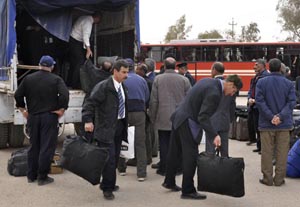
The relocation of the Mujahedin Khalq Organization from Iraqi has been a problematic issue from the very start phase. Although the process started near a year ago it has been rather slowly and it has faced different frustrations whether by the group leaders or by the host countries. Leaders of the MKO seek to relocate the group as a whole body in order to prevent the collapse of the cult-like structure of the group while third countries hesitate to accept a crowd of 3000 militants with a dark background of violent acts and cult-like attitudes.

 Albania was the first country in the Southeast Europe that accepted to receive 210 residents of Camp Liberty. The United States welcomed the Government of Albania’s "generous offer".  However, the move has not been accomplished yet. [1]

Germany was another European country to accept members of the MKO but it did not agree to accept more than 97 individuals. German authorities ordered to relocate 77 of these people in Koln but the decision was disputed by the officials of the city, according to German newspaper, Kolner Stadt –Anzeiger. [2]

The United States is now planning to move 3000 members of the MKO from Iraq to Romania — again in Balkan region. According to the Romanian Foreign Ministry employees the U.S. State Secretary and the Romanian Foreign Minister discussed the issue of militants’ migration during the meeting in Brussels in early December. This time the US seems to seek to compactly resettle the group members near the city of Craiova. [3]

Ilya Kharlamov of the Voice of Russia believes that by such mass relocation "Washington may turn Romania into a hotbed of tension, which will prove quite a headache both to Romania proper and the neighboring countries." The VOR’s correspondent suggests that the action on the US plan is fraught with danger quoting an expert with the Moscow-based Institute for Strategic Studies and Analysis, Sergei Demidenko: "A transfer of a large group of people, drilled ideologically and militarily, to an unstable European area will clearly add no quiet to the area."[4]

Besides, another Russian expert in Oriental Studies Boris Dolgov considers the US plan as inappropriate. He told VOR," If the Romanian leaders have certain doubts, and they will certainly question the correctness of the decision, then they should stiffly oppose the move."  Pointing to terrorist history of the MKO he added, ”The US plan is at variance with the recent trend towards improving relations between Washington and Tehran.” [5]

The author of the VOR article puts the responsibility on the Romanian Government that is free to accept or refuse to persecute the US plan and warns on the risk of the presence of "well-trained fighters" of the MKO in the unstable situation of the neighboring Ukrain.

Anna MIKHAILENKO’s piece on the new US plan to move "the Cult of Rajavi” to Balkan was translated from Russian by the ORIENTAL REVIEW. She also criticized the US for delisting the MKO in 2012 and "trying to move militants from this group out of Iraq and closer to sites that are being readied for future armed hostilities."[6]

"It is obvious that the Mojahedin-e-Khalq is not a peaceful organization" she writes. "In fact, it would be better compared to the Taliban, Al-Qaeda, or Jubhat al-Nusrah, other groups which also enjoyed the tacit support of the United States until they became too unruly." [7]

MIKHAILENKO  warns on the threat of "this army of 3,000 militants" at the door of an tensed region.  "Harboring so many fighters so close to Ukraine, a country that has been afflicted with EuroMaidan fever for the past month and a half, could pave the way for any number of coercive scenarios for regime change", she suggests. [8]

Is it really worth to maintain the supremacy of a cult like terrorist group by risking the peace in an already-tensioned area? Will Romania buy the danger of receiving "Saddam’s Private Army" the MKO to the cost of appeasing the US?

By: Mazda Parsi

References:

[1]  Psaki, Jen, Thirty MEK Camp Hurriya Residents Depart Iraq for Relocation to Albania, US Press Statement, June 3, 2013

[2]https://www.nejatngo.org/en/posts/5423

[3]Martov, Delyan, U.S. to move 3000 MKO terrorists to Romania, Sofia, December25,2013

[4] Voice of Russia, US to flood Romania with terrorists, January 10, 2014

[5]ibid

[6]MIKHAILENKO , Anna , Is the US preparing to stash 3,000 terrorists near the Ukrainian border? ,Orientalreview, January 11,2014

[7]ibid

[8]ibid

January 20, 2014 0 comments
FacebookTwitterPinterestWhatsappTelegramSkypeEmail
Iraqi Authorities' stance on the MEK

MKO intervening in Iraq’s internal affairs

Former deputy prime minister of Iraq denounced Mujahedin-e Khalq organization’s (MKO, a.k.a. MEK) media attacks against the Iraqi army’sas intervention in the country’s internal affairs.

“I have no respect for politicians who are supporting an illegal entity in Iraq, Salam al-Zubaie told Habilian’s correspondent in Baghdad,” referring to some Iraqi politicians’ support for the MKO.

“We are against the presence of any group threatening the neighboring countries,” al-Zubaie added.

Asked about the late expulsion of MKO members in Iraq, he said that is because of the incompetence of the Iraq’s government and justice system.

“This issue is none of the MKO’s business and their action is an obvious intervention in internal affairs of the country and we as Iraqi citizens do not allow insult against our army,” the Iraqi politician added, pointing to MKO media’s attacks on the Iraqi army over its offensive against al-Qaeda militants.

The MKO describes the ISIL terrorists as Iraqi tribes combatants who have established the "Tribes Military Council" to confront the Maliki government, while the UN Security Council strongly condemned recent attacks committed by al-Qaida terrorists in Iraq’s western province of Anbar.

“Contrary to belief of some TV channels, Iraqi army has not invaded Fallujah and it doesn’t seek al-Anbar’s occupation. The main responsibility of the Iraqi Army is to protect the citizens and to stand against the groups seeking to destroy the public property and scare people.”

January 18, 2014 0 comments
FacebookTwitterPinterestWhatsappTelegramSkypeEmail
Iran Interlink Weekly Digest

Iran Interlink Weekly Digest – 37

++ In a press statement, US Rep. Ileana Ros-Lehtinen (R-FL), Chairman of the Subcommittee on the Middle East and North Africa, embarrassingly refers to Maryam Rajavi as ‘Maryam’ as though the two are BFF, and describes the woman responsible for thousands of deaths as a human rights advocate. Ros-Lehtinen then goes on to, unintentionally perhaps, reveal that her best use of the MEK is as a stick to beat the government of Iraq and the UN with. While careful not to attribute blame to the GOI – as do the MEK – for the September attack on Camp Liberty she declared ,”These parties – the Government of Iraq and the UN – made promises of security, but these promises have yet to be fulfilled, as is evidenced by the hundreds of protective T-walls that have yet to be installed despite assurances that they would go up and the inability of the parties to bring those accountable to justice.”… While mentioning the seven MEK members allegedly missing from Camp Ashraf Ros-Lehtinen makes no mention of the 42 surviving eye witnesses who are incarcerated incommunicado inside Camp Liberty.

++ Many people on the web this week have joined the demand for the UN to investigate the murder of ex member Massoud Dalili in Camp Ashraf. Evidence is emerging that he was imprisoned there and has more than likely been killed by the MEK and the disfigurement to his body (uniquely among the victims) was an attempt to destroy evidence.

++ This week marked the anniversary of death of Takhti, the legendary wrestler during the reign of the Shah who was widely admired for his sporting ethic and for helping people and charities. Much has been written in Persian against what they describe as the “opportunistic support of Rajavi”, and through examples writers have concluded that there is no relevance between the activities of the cult leaders and their abuse of human rights with Takhti and his passion for humanitarian ethics.

++ Baghdad has officially welcomed the appointment of Ban Ki Moon’s new special representative and her role in moving the MEK out of Iraq. Baghdad said any help in getting rid of this terrorist organisation by anyone and for any reason is most welcome. Observers, however, believe that the sticking point rests with the MEK’s American backers, specifically the Pentagon, who do not want this terrorist organisation to be dismantled. Hence they are trying to move them all together to another closed camp as hostages, something that European countries do not accept.

++ Following on from a revelation in a Bulgarian article earlier this month, both Voice of Russia and 21st Century Wire wrote about attempts by the United States to negotiate the en masse transfer of the residents of Camp Liberty to a new camp in Romania. Russian expert in Oriental Studies Boris Dolgov said “Washington’s plan to deploy the Islamists in Romania is inappropriate at the very least”, and elaborates, “If the Romanian leaders have certain doubts, and they will certainly question the correctness of the decision, then they should stiffly oppose the move. The organization acts against Iran, Tehran sees it as terrorist, Mujahedin-e Khalq is known for numerous terrorist attacks and life attempts. Besides, the US plan is at variance with the recent trend towards improving relations between Washington and Tehran. Also, a presence of Islamic militants will serve to aggravate tension in the region. It’s obvious that peaceful coexistence with the people of other religions is the last thing the Islamists will think of when arriving in Romania”. So far, the US attempts have proved futile, even though Romania heavily depends on Washington.

++ After declaring support for Rajavi and the MEK during announcements for the “Islamic government of Iraq and Syria”, an off-shoot of Al Qaeda which is engaged in fighting the Iraqi Government in Al Anbar province, many have written in Farsi about reasons Rajavi must support Al Qaeda as well as the remnants of the Saddam regime in Iraq and Syria. As much as Rajavi has tried to change master and become a western supported mercenary, until he is in full possession of such support he dare not let go of the vital life saving support he gets from the Saddamists office in Jordan, in particular the Ezzat Ebrahim branch of insurgents and Saddam’s own daughter.

++ This week many have written open letters to Romanian politicians warning them of the formation of a new lobbying committee in their parliament after America started putting pressure on Romania to accept them. Many comparisons have been made with the lobbying committees in the European Parliament and the Houses of Parliament in the UK and the problems they have caused in these establishments’ international relations especially with Iraq.

++ Families of Camp Liberty residents have asked for the names of those injured in the December attack on the camp to be made public. The MEK reacted by labelling the families as ‘agents of Iran’ who want sensitive information. Commentators have responded by pointing out that the injured are in Iraqi hospitals and since Rajavi claims Iraq is a subsidiary of Iran then there is nothing secret for Iran. The families this week have turned to the UN, particularly the UNHCR to ask for their help in discovering the names of the injured.

++ This week Rajavi and the MEK have on a daily basis posted announcements on Facebook and secondary sites rather than in their official sites, warning that the Iraqis want to attack us. In one of these they claim that Iraqi security have climbed the walls of the camp to take pictures. This is while Iraqi forces have been in charge of the camp even before they moved the MEK there. Writers about this are warning that this is another attempt to kill more hostages and blame Iraq for it. Interestingly in all the MEK propaganda there is not a single instance of a demand for getting out of Iraq, instead they and their benefactors in the Israeli lobby and House of Representatives in Washington ask for the expansion of the camp, and demand that the American army be brought in to protect them and all other sorts of peculiar and impossible demands to bide time to kill and get rid of as many people and witnesses as possible.

++ Iraqi media outlets have reported that the British parliamentarians who visited Iran met with the families of MEK terrorism and quote Jack Straw, former British Foreign Secretary, describing the MEK as a terrorist group, while another delegate said it is possible that the MEK be put back on the British terrorism list. Iraqi media also reported on interviews with former high ranking MEK members who have given evidence of the MEK massacre of Kurdish people to quell their uprising against Saddam in the 1990s.

++ Swearing on Rajavi’s paid sites and outlets against their internal critics has continued to the point that many outsiders are now reminding the group that this kind of behaviour against their own members and internal critics cannot be in their favour and the effect of this line of action which was intended to make others afraid of talking is wearing thin and in fact has the opposite effect.

++ It was reported that after Deputy Assistant Secretary of State Brett McGurk visited and spoke directly with members of the MEK in Camp Liberty, the diplomat stressed the urgency of relocating the residents to another country. Since then the MEK have refrained from swearing at the US State Department. but have not mentioned the visit on their sites either. Commentators believe that because the US representative asked them to cooperate and move individually, Rajavi has panicked, and the MEK are now working with AIPAC to intervene and stop them being removed from Iraq and reintegrated into normal society. Many believe that now Rajavi has seen how people have left immediately after arriving in Tirana, he is now determined not to let the rest of the hostages get out of his hands.

17 January 2014

January 18, 2014 0 comments
FacebookTwitterPinterestWhatsappTelegramSkypeEmail
Mujahedin Khalq Organization members' families

53 signatories to Guterres – Families need the names of wounded residents

Honourable António Guterres UN High Commissioner for Refugees, Geneva

As your Excellency is aware, Camp Liberty in Baghdad, the temporary camp for nearly three thousand members of the People’s Mojahedin Organization of Iran (PMOI) was subjected Thursday night 26 53 signatories to Guterres – Families need the names of wounded residentsDecember 2013 to a terrorist attack by rockets and mortars. According to the PMOI this attack caused the death of 4 of the camp residents and the wounding of 71 others, many of whom are in a critical condition.

The PMOI published the names and photographs of those killed, but not the names of the wounded. We, the undersigned, as a group of Iranian critics of the People’s Mojahedin Organization of Iran (PMOI), as well as former members of the organization, express our support for the request of the families of the residents of Camp Liberty to speed up the transfer of the residents from Iraq to third countries.

So, we urge your honour, as UN High Commissioner for Refugees and international authority who is responsible for solving this issue, as well as the competent international bodies, especially the International Committee of the Red Cross and its office in Iraq, to oblige the leadership of the PMOI to announce the names of the wounded residents from this incident by any appropriate means, such as informing the families or by allowing the wounded to directly contact or meet their families.

We consider the request of the families to conform to the rights and requirements of international humanitarian laws and basic principles of human rights, including the right of families to know the fate of their relatives in such events because of their family relation, of course, and by virtue of emotions and natural humanity and they are worried about the health and status of their relatives residing in the refugee camp.

We also announce our support for the request of a group of families of the residents of Camp Liberty to speed up the transfer of the residents from Iraq, where there are daily killings of many innocent people in terrorist incidents or in bloody sectarian clashes, to the third countries, while nearly a third of them have documents of residency or asylum in European countries or North America.

We join these families to call on international bodies, especially the UN High Commissioner for Refugees to put their utmost efforts into urging the member states towards resettling the residents in third countries as soon as possible.

We would like to express our deep appreciation and gratitude in advance for your efforts in this regard, and for informing the families about the fate and status of their relatives in Camp Liberty.

A group of Iranian critics of the People’s Mojahedin Organization of Iran (PMOI) and former members of the Organization

16 January 2014

Signatories:

1.Mohammad Karami

2. Hassan Piransar

3. Batul Soltani

4. Saba Shekar Beyghi

5. Mohsen Mahdavi

6. M. Barazandeh

7. Hamid Sistani

8. Mahmoud Sepahi

9. Mehrdad Sagharchi

10. Ghorbanali Hossein nejad

11. Hassan Azizi

12. Seyed Amir movasaghi

13. Alireza Mirasghari

14. Edward Termado

15. Behzad Alishahi

16. Toraj Amiri

17. Massoud Khodabandeh

18. Shirzad Jalili

19. Majid Rohi

20. Niaz Salimi

21. Shahin Rabiee

22. Anne Singleton

23. Bahiee Jeylani

24. Nasrin Ebrahimi

25. Zahra Al Sadat Mirbagheri

26. Homeyra Mohammad Nejad

27. Mahtab Alipour

28. Zahra Moini

29. Mona Hossein Nejad

30. B- Amiri

31. Visha Madej

32. Ahmad Mohammadi

33. Arash Sameti pour

34. Ali Khatami

35. Saeed Soltanpour

36. Ali Ghashghavi

37. Ali Jahani

38. Hamid Dehdar

39. Ehsan Bidi

40. Mehdi Khoshhal

41. Hassan Khalag

42. Jafar Ebrahimi

43. Hamid Yosefi

44. Vahid Saidi

45. Adel Azami

46. Ali akbar Rastgo

47. Mitra Yousefi

48. Massoud Jabani

49. Mohammadreza Najarian kermani

50 . Homayon Kahzadi

51 . Mirbagher Sedaghi

52 .Ghafour Fatahyian

53 – Reza Fani Yazdi

Copies to:

– Secretary General of the United Nations, Mr. Ban Ki-moon – New York

– Mrs Jane Holl Lute UNSG adviser for relocation of Camp Liberty residents to third countries

– UN High Commissioner for Human Rights at the United Nations, Ms Nawi Pillay – Geneva

– Special Representative of the Secretary General of the United Nations in Iraq, Mr Nikola Mladenov

– Chairman of the human rights monitoring in the UNAMI in Iraq, Mr Ashouri

– Office of the UN High Commissioner for Refugees, the United Nations in Iraq

– Ashraf-Liberty Project Office in the UN High Commissioner for Refugees, the United Nations in Camp Liberty – Mr Ahmed Al-Tamimi

– The International Committee of the Red Cross

– Office of the International Committee of the Red Cross in Baghdad

– Office of the Prime Minister of Iraq

– The Iraqi Ministry of Human Rights

– Amnesty International

– Human Rights Watch

Mohammad Karami blog, Paris

January 18, 2014 0 comments
FacebookTwitterPinterestWhatsappTelegramSkypeEmail
UN High Commissioner for Refugees

Families demand UNHCR name injured MEK members

Families demand UNHCR name injured MEK members from Camp Liberty missile attack

Honorable António Guterres UN High Commissioner for Refugees, Geneva

As your Excellency are aware, Camp Liberty in Baghdad, the temporary camp for nearly three thousand members of the People’s Mojahedin Organization of Iran (PMOI) subjected Thursday night 26 December 2013 to a terrorist attack by rockets and mortars. According to PMOI this attack caused death of three of the camp residents and wounding 71 others, many of them in critical condition, while 4 were taken to the hospitals in Baghdad.

The PMOI has published the names and photographs of the killed, but not the names of the wounded. We are members of the families of the residents of Camp Liberty, are deeply concerned about the safety and security of our relatives who live in the Camp, so according to the most basic international laws of human rights and humanitarian principles, have the right to know about the fate of our relatives after such a bloody event.

So, we urge your honor, as UN High Commissioner for Refugees and international authority are responsible to solve this issue, as well as the competent international bodies, especially the International Committee of the Red Cross and its office in Iraq to obligate the leadership of the PMOI to announce the names of the wounded residents in this incident by any appropriate means, such as informing the families or to allow the wounded to contact or meet their families.

We the families of the residents of Camp Liberty are waiting impatiently to speed up the transfer of the residents from Iraq, where there are daily killings of many innocent people in terrorist incidents or in bloody sectarian clashes, to the third countries, while nearly third of them have documents of residency or asylum in European countries or North America.

We call international bodies, especially the UN High Commissioner for Refugees to put their utmost efforts to urge the member states towards resettling the residents to the third countries as soon as possible.

We would like to express our deep appreciation and gratitude in advance for your efforts in this regard, and inform us about the fate and status of our relatives in Camp Liberty .

A group of families of the residents of Camp Liberty , in Baghdad

29 December 2013

Ghorban Ali Hussein Nejad a resident of France and father of Zainab Hussein Nejad a resident of Camp Liberty and a former refugee in France.

Mona Hussein Nejad, an Iranian citizen and sister of Zainab Hussain Nejad a resident of Camp Liberty and a former refugee in France.

Shamim Rabiey an Iranian citizen and sister of Said Rabiey a resident of Camp Liberty.

Masuma Rezaiy an Iranian citizen and mother of Said Sayyed Farajollah Hosseini a resident of Camp Liberty.

Hassan Karbalaiey Sabbaq an Iranian citizen and father of Ali Reza Karbalaiey Sabbaq a resident of Camp Liberty.

Ali Aloofete an Iranian citizen and father of Hadi Aloofete a resident of Camp Liberty

Homeyra Mohammad Nejad a resident of Germany and cousin of Bahman Mohammad Nejad a resident of Camp Liberty.

Murtaza Hamzaluiyjan a resident of France and brother of Mohsen Hamzaluiyjan a resident of Camp Liberty and a former refugee in France.

Jokar family residing in Britain and brothers of Abdolreza Jokar a resident of Camp Liberty former refugee in the United States.

Family Ghafoorian: Asia and Asefe and Ehsan Ghafoorian residing in France sons of sister of Jawad Zaerian a resident of camp Liberty.

A copy to:

– Secretary- General of the United Nations, Mr. Ban Ki-moon – New York

– UN High Commissioner for Human Rights at the United Nations , Ms Nawi. Pillay – Geneva

– the Special Representative of the Secretary- General of the United Nations in Iraq, Mr. Nikola Mladenov

– Chairman of the human rights monitoring in the UNAMI in Iraq, Mr. Ashouri

– Office of the UN High Commissioner for Refugees, the United Nations in Iraq

– Ashraf – Liberty Project Office in the UN High Commissioner for Refugees, the United Nations in Camp Liberty – Mr. Ahmed Al-Tamimi

– The International Committee of the Red Cross

– Office of the International Committee of the Red Cross in Baghdad

– The Iraqi Ministry of Human Rights

Hossein Nejad weblog

January 16, 2014 0 comments
FacebookTwitterPinterestWhatsappTelegramSkypeEmail
Iraq

Maliki: Gov’t Struggling to Accelerate MKO’s Expulsion from Iraq

Iraqi Prime Minsiter Nuri al-Maliki underlined his government’s resolve to speed up efforts to expel the Mojahedin-e Khalq Organization (MKO, also known as MEK, NCRI or PMOI) members from Iraq.

Speaking in a joint press conference with UN Secretary-General Ban Ki-moon in Baghdad, Maliki blamed the UN fMaliki: Gov’t Struggling to Accelerate MKO’s Expulsion from Iraqor prolonging the presence of the MKO members in Iraq.

“We have again repeated our demand from the UN on the necessity for transferring the members of the MKO from Iraq since their remaining entails huge costs for Iraq,” he said.

“The presence of the MKO members is illegal based on all criteria and standards and the Iraqi people are dissatisfied with their presence,” Maliki underlined.

On Sunday, Ban Ki-moon appointed a former US Homeland Security Undersecretary as his special advisor for relocation of the MKO members from Camp Liberty in Iraq.

According to Habilian Association, Jane Holl Lute’s appointment came after two years of quite fruitless painstaking efforts of the UN’s refugee agency and UN Assistance Mission for Iraq for the resettlement of MKO members in third countries.

“Holl Lute will work with a wide range of stakeholders, in particular the (UN) Member States, to assist in relocating the camp residents,” read a statement from Mr. Ban’s spokesperson, adding that she will also collaborate with Nickolay Mladenov, the UN representative in Iraq.

Earlier last week, the UNHCR said 1,400 MKO members in Iraq are ready for relocation to third countries.

Former UN Special Representative had formerly asserted that finding homes for the MKO members “is the most difficult part of the story.”

The last group of MKO terrorists at Camp Ashraf, now called Camp New Iraq, was evicted by the Iraqi government on September 11 to join other members of the terrorist group in the former US-held Camp Liberty, now called Camp Hurriya, near Baghdad International Airport where they are awaiting relocation to other countries.

The MKO, founded in the 1960s, blended elements of Islamism and Stalinism and participated in the overthrow of the US-backed Shah of Iran in 1979. Ahead of the revolution, the MKO conducted attacks and assassinations against both Iranian and western targets.

The group started assassination of the citizens and officials after the revolution in a bid to take control of the newly-established Islamic Republic. It killed several of Iran’s new leaders in the early years after the revolution, including the then President, Mohammad Ali Rajayee, Prime Minister, Mohammad Javad Bahonar and the Judiciary Chief, Mohammad Hossein Beheshti who were killed in bomb attacks by the MKO members in 1981.

The group fled to Iraq in 1986, where it was protected by Saddam Hussein and where it helped the Iraqi dictator suppress Shiite and Kurd uprisings in the country.

The terrorist group joined Saddam’s army during the Iraqi imposed war on Iran (1980-1988) and helped Saddam and killed thousands of Iranian civilians and soldiers during the US-backed Iraqi imposed war on Iran.

Since the 2003 US invasion of Iraq, the group, which now adheres to a pro-free-market philosophy, has been strongly backed by neo-conservatives in the United States, who eventually took the MKO off the US terror list.

The US formally removed the MKO from its list of terror organizations in early September 2012, one week after the then Secretary of State, Hillary Clinton, sent the US Congress a classified communication about the move. The decision made by Clinton enabled the group to have its assets under the US jurisdiction unfrozen and do business with the American entities, the State Department said in a statement at the time.

January 15, 2014 0 comments
FacebookTwitterPinterestWhatsappTelegramSkypeEmail
Human Rights Abuse in the MEK

Rajavi’s absurd claim of equality !

Maryam Rajavi’s claim for promotion of equality in her cult is absurd and ludicrous.

Many argue that the hijab is oppressive to women and removing it would enhance women’s equality and freedom. They argue that veiling prevents and limits women’s activities in public. On the other hand, Muslim believers of hijab argue that It not only makes a woman feel confident and liberated, but encourages society not to see women as sex objects. They believe that Islam promotes sexual equality, and Hijab allows women to be an instrumental part of the society without being discriminated and looked down. Hijab can also prevent men from ogling look. What about Maryam Rajavi, the leader of the Mujahedin Khalq Organization, the MKO as an Islamic Marxist group? What is her stance about hijab?

Actually, Maryam Rajavi’s idea about hijab is very controversial. She claims in her so-called “ten point plan for future of Iran” that women “will enjoy the right to freely choose their clothing”. However, evidences on what is really going on inside her group indicates that there is no freedom of clothing in the MKO camps.

Perhaps, Elizabeth Rubin the New York Times correspondent, was the first to reveal the cult-like atmosphere ruling the MKO camps including uniform clothing of members, in 2003 after she visited Camp Ashraf. Rubin titled the MKO as “The Cult of Rajavi”. “As you pass the checkpoints and dragons’-teeth tire crunchers into the tidy military town, you feel you’ve entered a fictional world of female worker bees. Of course, there are men around; about 50 percent of the soldiers are male”, she recounts. “But everywhere I turned, I saw women dressed in khaki uniforms and mud-colored head scarves, driving back and forth along the avenues in white pickups or army-green trucks, staring ahead, slightly dazed, or walking purposefully, a slight march to their gaits as at a factory in Maoist China.”

Following the collapse of Iraqi dictatorship and the main financial supporter of the MKO in 2003, the US forces disarmed the MKO. Camp Ashraf was since then guarded by the American army. Having been disarmed and guarded by the MKO’s former enemy the US, members started doubting the group’s ideology. Moreover, the group’s leader Masssoud Rajavi was disappeared. The process of defection of members began.

Disassociated members of the MKO –hundreds of individuals—including female members disclosed shocking realities about the life inside MKO camps. They revealed cult-like and suppressive practices of the MKO authorities. The testimonies of women who had left the group exposed cases of forced divorce, forced celibacy, forced hysterectomy surgeries to make female members barren and particularly sexual abuse by Massoud Rajavi.

Among such abusive treatment against female members of the MKO, forced clothing might be very trivial but it certainly proves the invalidity of Maryam Rajavi’s claims about freedom of choosing clothes in future of Iran. Zahra Sadat Mirbaqeri is a defector of the group who was a member of the second layer of the group’s Elite Council. She was a candidate to marry Massoud Rajavi. She was given the famous necklace with the portrait of Massoud. Fortunately she managed to escape the Cult of Rajavi before she was raped by Massoud.

Mirbaqer challenges Maryam Rajavi’s promise to let Iranian women “enjoy the right to freely choose their clothing’’. She recites her firsthand account of living under regulations and obligations of Rajavi’s cult of personality:

“I was a member of this destructive cult for 23 years. I was not allowed to wear any clothes except the khaki uniform and the green head scarf. Forced hijab was ruled everywhere even in places that only belonged to female members…

“In the cult, women are not allowed to use any kind of hijab except green, khaki and red scarves. However, red and khaki scarves are allowed only for special occasions. You would be punished if you wore your red or khaki scarf in occasions other than the group’s propaganda ceremonies and marches.”

Zahra Sadat Mirbaqeri criticizes Maryam Rajavi’s propaganda for freedom of women quoting a renowned sentence that female rank and files of the MKO were always told:” Scarf is the official uniform of the organization.”

Mazda Parsi

January 14, 2014 0 comments
FacebookTwitterPinterestWhatsappTelegramSkypeEmail
Newer Posts
Older Posts

Recent Posts

  • National Pride of Iranians: Reject the Rajavis and their Patrons

    July 22, 2026
  • Italian legislators fooled by MEK’s polished presentations

    July 18, 2026
  • The Rhetorical Style and Polemical Language of the MEK

    July 15, 2026
  • Death of Lindsey Graham, notorious hardliner against Iran

    July 13, 2026
  • Nejat Society Albania’s 2026 Peace Delegation

    July 11, 2026
  • Facebook
  • Twitter
  • Instagram
  • Youtube

© 2003 - 2025 NEJAT Society . All Rights Reserved. NejatNGO.org


Back To Top
Nejat Society
  • Home
  • Articles
  • Media
    • Cartoons
    • NewsPics
    • Photo Gallery
    • Videos
  • Publications
    • Books
    • Nejat NewsLetter
    • Pars Brief
  • About Us
  • Contact us
  • Editions
    • عربي
    • فارسی
    • Shqip