Terrorist Mojahedin Khalq executes US-Israeli anti-Iran plots: Ex-member
Congressmen bid to resettle MKO in the US
A new Bill sponsored by Dana Rohrabacher aims to resettle Mujahedin-e Khalq (MEK, a.k.a. MKO) members inside the United States.
The primary objective of the Bill, H.R.3707, is “to ensure the emergency of Iranian dissidents living in Camp Liberty/Hurriya and to provide for their admission as refugees to the United States.”
Referred to the Subcommittee on Immigration and Border Security earlier this week, the Bill says that it shall be the policy of the US to “take all necessary and appropriate steps in accordance with international agreements to support the commitments of the United States to ensure the physical security and protection of Camp Liberty/Hurriya residents, members of the opposition Mujahedeen e-Khalq (MEK).”
Earlier in April 2013, Rep. Dana Rohrabacher (R–CA) who is also a staunch supporter of the MKO in Congress, introduced a new resolution redoubling his efforts to promote ethnic separatism in Iran. There he wanted the Broadcasting Board of Governors to beam news broadcasts in Azeri and Baloch languages into Iran and its border regions with Pakistan to promote ethnic tensions.
Rep. Rohrabacher has so far attended so many meetings of the terrorist MKO group, a group which was on the list of foreign terrorist organizations for some 15 years for its acts of violence against Iranian and US citizens.
The US supporters of the MKO seem to spare no effort in defending the violent terrorist group. Earlier in November, the former Secretary of Homeland Security Tom Ridge described the Mujahedin-e Khalq’s murder of US citizens in 1970s as “allegations.”
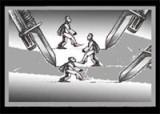 PMOI/MeK leadership within Camp Hurriya against the residents."[1]
 imposes new sanctions on Iran if passed, even though we are engaged in historical negotiations that would end any attempts by Iran to build a nuclear weapon—and even though there is no actual proof they are. The legislation demands Iran give up its legal civilian nuclear program entirely, and would commit the U.S. to join any attack that Israel launches against Iran.
 attended a briefing in the Dirksen Senate office building on Capitol Hill sponsored by “an Iranian exile group related to the Mujahedin-e-Khalq (MEK).” The former government officials speaking out on behalf of this group against diplomacy with Iran included “former Vermont Governor Howard Dean, former Ambassador to Morocco Marc Ginsberg, General James L. Jones, and and former US Special Envoy for Nuclear Nonproliferation Robert Joseph.”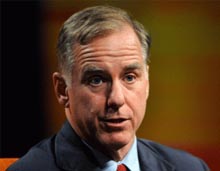
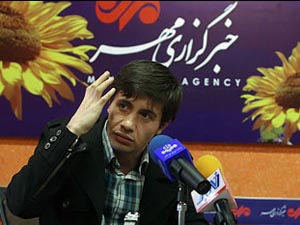 the group; Yaser grew up in the MKO camps in Iraq.
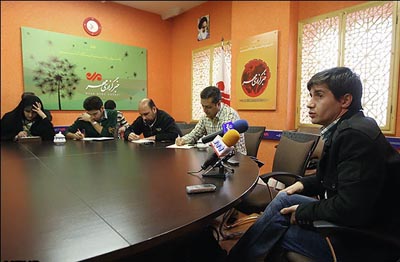 confinement. He was brought on trial and accused of being the agent of Iranian Intelligence Ministry!
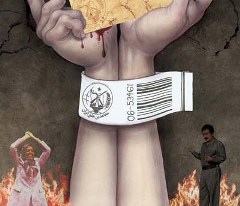 and PMOI) failed in their attempt to run away from a hospital near the group’s transient settlement facility, Camp Liberty, near the Iraqi capital.