
Rajavi hideout in Camp Ashraf
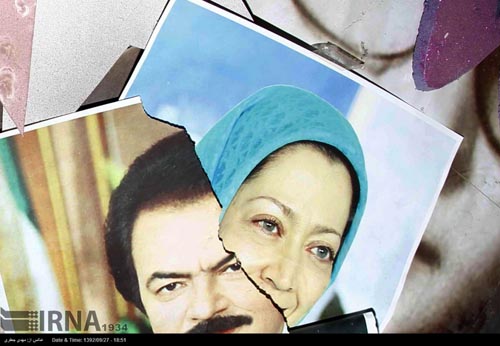
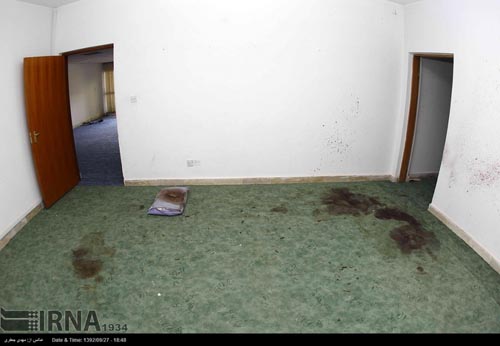
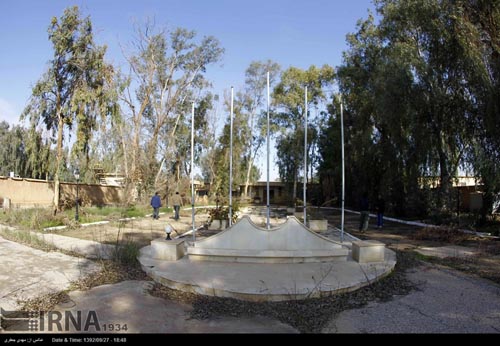
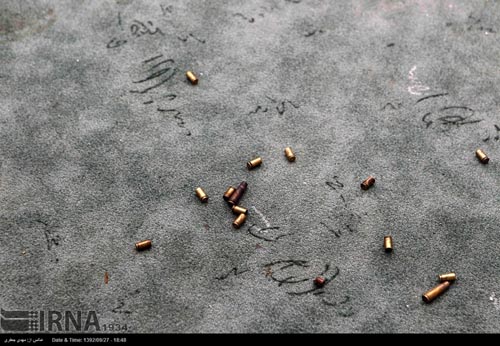
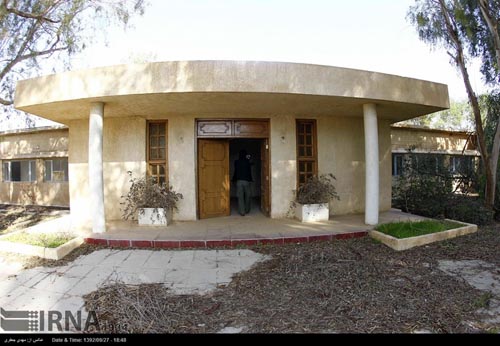
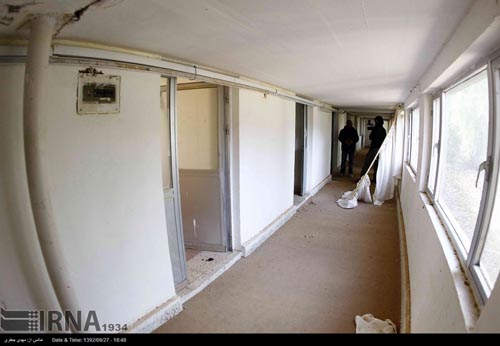
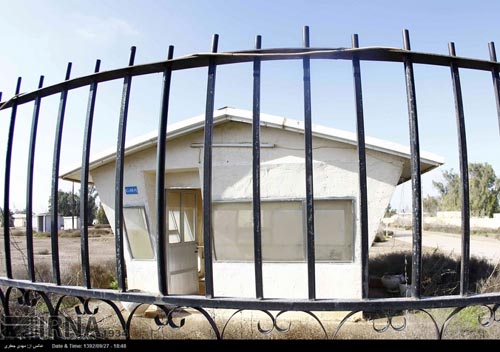
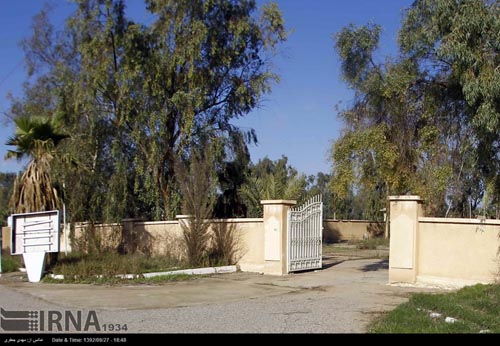
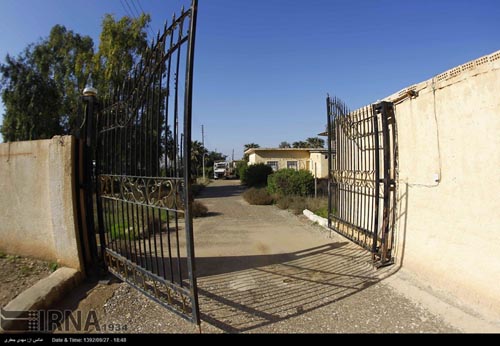
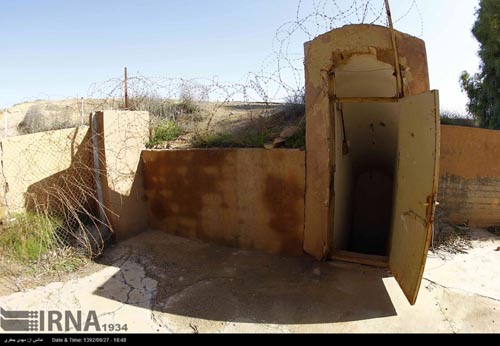
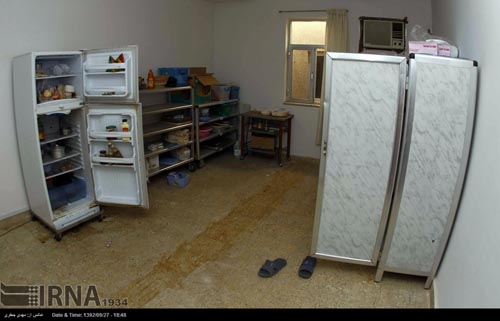
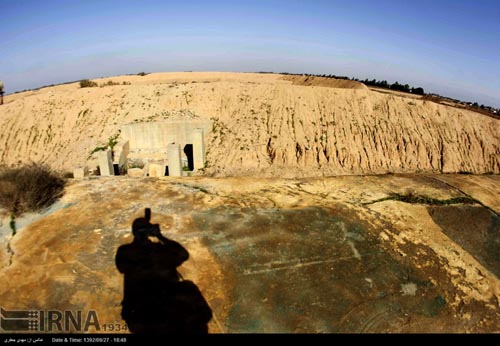
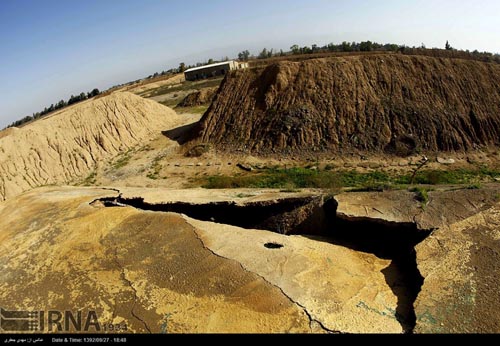
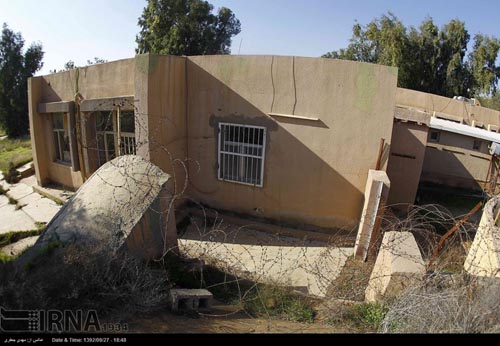
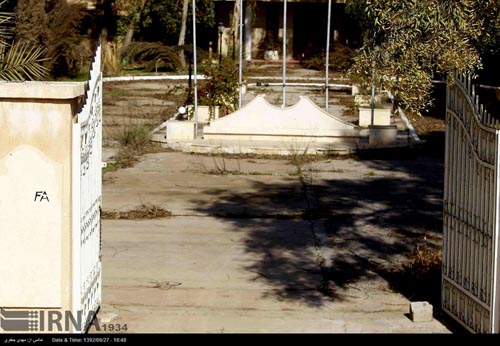
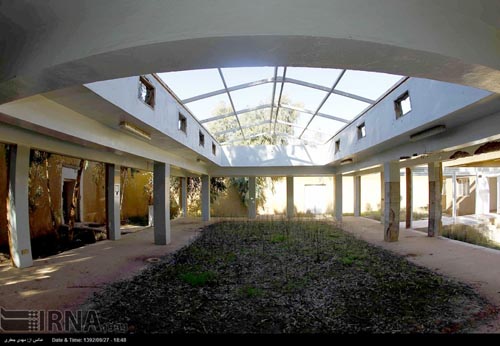
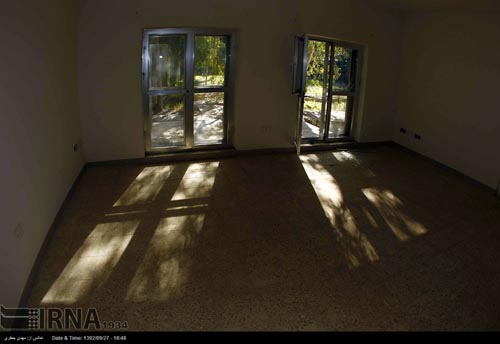
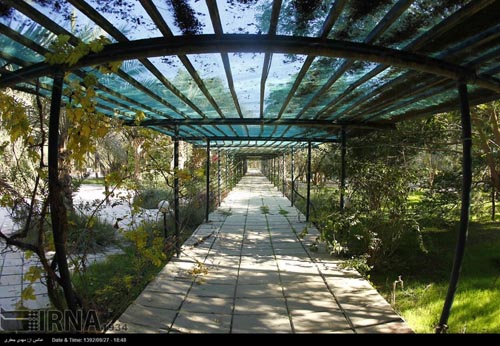
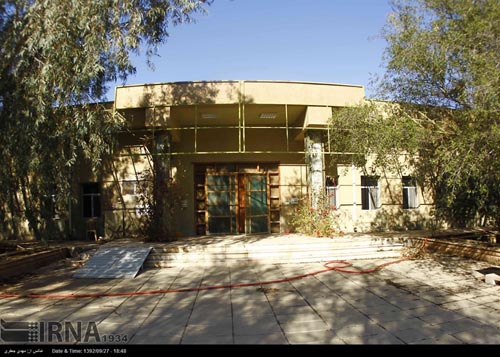
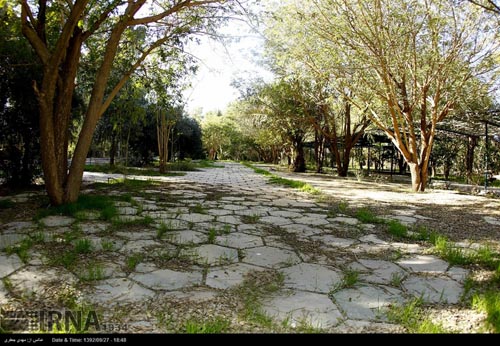
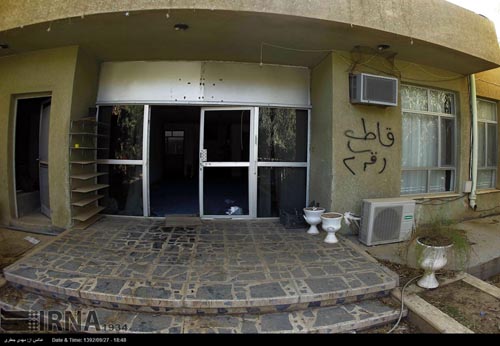
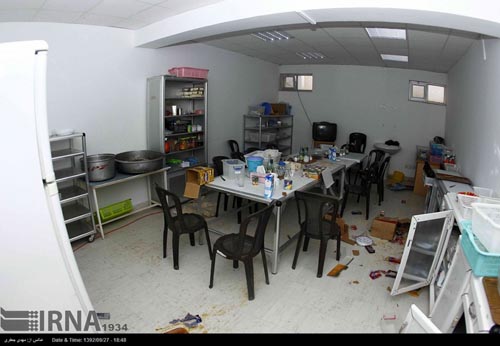
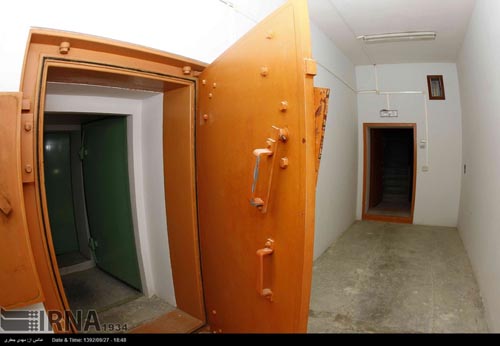
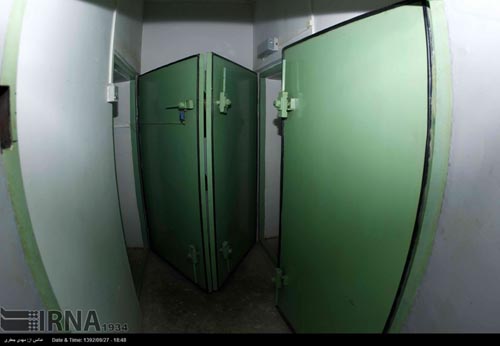
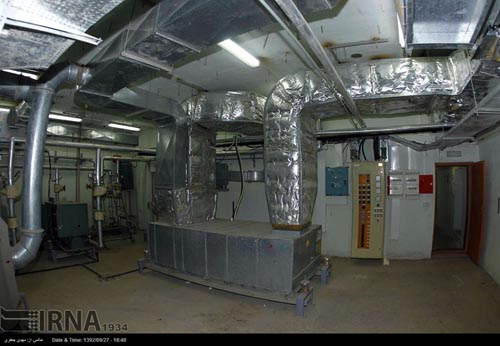
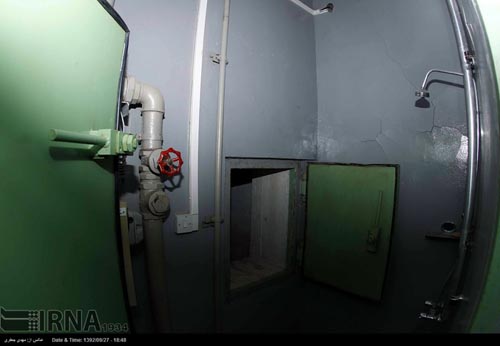
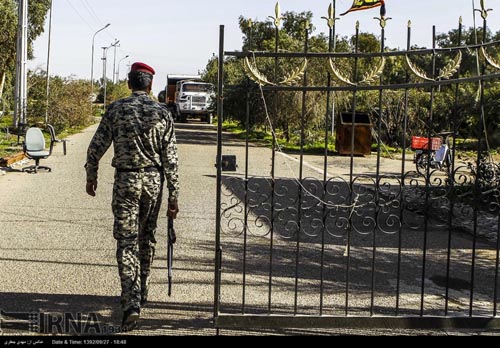
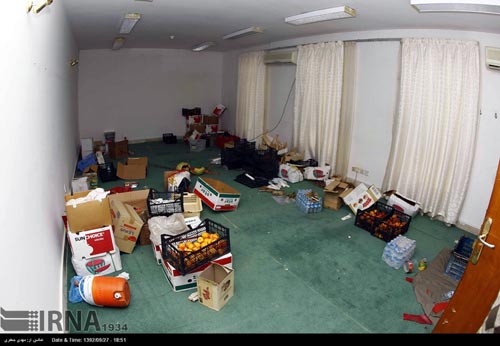
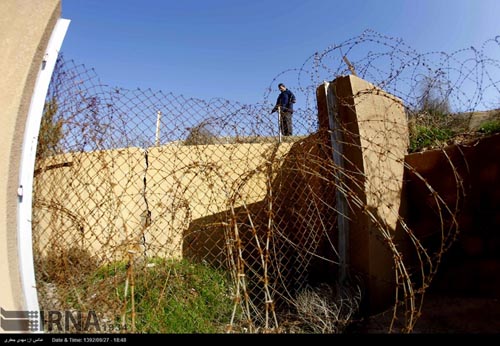
Rajavi hideout in Camp Ashraf
Iraqi Security Advisor, Faleh Al-Fayad, and Martin Kobler, Head of UNAMI hold a Press Conference in February 2012 to extend the deadline for the relocation and expulsion of the Mojahedin Khalq from Iraq. The residents were transferred to the temporary transit Camp Liberty during 2013, consequently the camp was opened to reporters in December 2013.
The second film shows reporters exploring Rajavi’s hideout and the nuclear bunker at Camp Ashraf in Iraq. The camp was home to the Saddam backed Mojahedin Khalq, a terrorist cult, for three decades.
Now, a couple of months after Maryam Rajavi claimed the MKO members’ hunger strike was voluntarily, she is urging them to end their strike, apparently because of a Spanish court’s ruling against the Iraqi  Prime Minister’s Advisor.
Mujahedin e-khalq organization has been recognized by many credible western sources as a cult-like organization. In mid-2009, the Rand Corporation published a report titled ‘Mujahedin-e Khalq in Iraq: A Policy Conundrum’. The report was written by a team of four who worked for 15 months in the US and Iraq to produce the most thorough analysis to date of the group’s cultish aspects. MKO is referred to as a cult 88 times in this report. It is stated in the report that ‘an examination of MKO activities establishes its cultic practices and its deceptive recruitment and public relations strategies.’ Over time, the MKO was imbued with many of the typical characteristics of a cult, such as authoritarian control, confiscation of assets, sexual control (including mandatory divorce and celibacy), emotional isolation, forced labor, sleep deprivation, physical abuse, and limited exit options.’
In May 2005, Human Rights Watch issued a report describing prison camps within Iraq run by the MKO and severe human rights violations committed by the group against former members. The report described how the MKO was held under tight control of the husband and wife team of Massoud and Maryam Rajavi and has a history of cult-like practices that include forcing members to divorce their spouses and to engage in extended self-criticism sessions.
A 2011 declassified U.S. State Department cable from the U.S. embassy in Baghdad, details interviews with MKO members who managed to escape from Camp Ashraf. The escapees – referred to as defectors in the cable “reaffirmed existing perceptions of the MKO as a cult-like organization that thrives on maintaining control of its members and those lured to Ashraf under false pretenses.”
Although the MKO has always denied its cultic nature, the terrorist group has once more proved unconsciously that these documents are thoroughly accurate.
MKO members at Camp Liberty were forced by their leader, Maryam Rajavi, to go on a hunger strike after an unknown group of people attacked Camp Ashraf on September 1, 2013 and 7 MKO members allegedly disappeared. After MKO was criticized by some former members as a cult which forces its members to go on hunger strike, Maryam Rajavi tried to cover the whole story up in a conference held in Paris by saying: “On the basis of many requests by you, I have appealed to the residents at Liberty to end their strike. But they have said that the only way they can convey their protest with respect to the 7 hostages and the issue of protection at Liberty to everyone else is to make sacrifices with their own bodies.” Critics continued blaming MKO leadership regardless of Rajavi’s claims. As reported by NEJAT Society, a group of former MKO members issued a statement to condemn “forced and useless hunger strike” in Camp Liberty. A part of the statement reads: “In fact, all political and propaganda affairs including self-immolations and hunger strikes are basically organized acts and actually under the order of the leadership and members are due to execute them”.
Now, a couple of months after Maryam Rajavi claimed the MKO members’ hunger strike was voluntarily, she is urging them to end their strike, apparently because of a vote against Faleh Fayad, the Iraqi Prime Minister’s Advisor, by a Spanish court. MKO leader has issued the order without even achieving the announced goals of the hunger strike. Maryam Rajavi seems to be forced to finish the whole show mainly due to the increasing pressure on the cult’s leaders following the forced hunger strike.
Now a question is raised here: “How can the West, including the United States, trust such a cult whose members are fully brainwashed and potentially capable of doing anything if ordered by their leaders? What if MKO leader had ordered the cult’s members to wear explosive belts and blow themselves up in European cities? A similar case has occurred when Maryam Rajavi was arrested by the French Police in 2003. As a protest action following Rajavi’s arrest, 10 MKO members immolated themselves in Paris. The organization has also a long record of using suicide terrorism to take out Iranian political or religious elite. How can the European Union and the United States justify their support for such a cult and still claim to be the pioneers of promoting Human Rights throughout the world?”
Seventeen members of the terrorist Mujahedin-e Khalq Organization (MKO) have fled Camp Liberty near Baghdad International Airport in Iraq.
“Since the beginning of the current year, 17 … MKO members have fled Camp Liberty near Baghdad International Airport,” an Iraqi security official said Wednesday.
The defectors were among the senior and older members of the organization, who left the Iraqi soil after parting ways with the organization, said the official who was speaking on condition of anonymity.
The MKO is listed as a terrorist organization by much of the international community and has committed numerous terrorist acts against Iranians and Iraqis.
The group fled Iran in 1986 for Iraq, where it received the support of Iraq’s executed dictator Saddam Hussein and set up Camp Ashraf near the Iranian border.
Out of the nearly 17,000 Iranians killed in terrorist attacks since the victory of the 1979 Islamic Revolution, 12,000 have fallen victim to the acts of terror carried out by the MKO.
In December 2011, the United Nations and Baghdad agreed to relocate some 3,000 MKO members from Camp New Iraq, formerly known as Camp Ashraf, to the former US-held Camp Liberty.
The last group of the MKO terrorists was evicted by the Iraqi government on September 11 to join the other members of the terrorist group at Camp Liberty and await potential relocation to other countries.
++ In the week that Roya Daroudi, one of the second generation MEK members, died in Tirana, many Farsi writers questioned why a woman in her mid-30s died, and why the MEK remain silent on this issue. Mohammad Karami informs us through his weblog that her mother, two brothers, her uncle and his wife are among the ex-members who have left the MEK. This, and the fact she was kept in Iraq and then mysteriously died after arriving in Albania provokes unanswered questions.
++ Irandidban and many others, in both Farsi and English articles, have referred to MEK veteran Medi Abrishamchi. His past, his work as a torturer for Saddam, his giving his wife to Massoud Rajavi, all expose him as the most corrupt person in the MEK. The fact he is now trying to act as spokesman for the group has resulted in everyone laughing at him.
++ Among the paid speakers at Maryam Rajavi’s show in Paris last week was the daughter of Archbishop Desmond Tutu, Naomi Tutu. In this way the MEK are trying to link themselves with Nelson Mandela. Several writers have pointed out that until only a few weeks ago the MEK was vehement in its rants against Mandela, and contrast this with the sudden change of tune after his death. The MEK previously swore at him for visiting Iran three times, defending Palestinian rights and refusing to visit America or meet with an American president.
++ Ghorban Ali Hossein Nejad was the guest of Mardom TV this week. He talked, among other things, about how the MEK manipulate people to take part in hunger strikes and other self-damaging acts.
++ Further articles in Farsi about Roya Daroudi’s death in Tirana point out that she was among the children evacuated from Camp Ashraf in 1991. As they grew older, some were able to escape the clutches of the MEK, but others like Daroudi were unfortunately taken back to Iraq and now she is dead.
++ The MEK issued a long statement in Farsi against one of those recently arrived in Tirana called Ehsan Bidi. The MEK accuse him of being an agent of the Iranian regime. The MEK name him alongside Ghorban Ali Hossein Nejad whose photograph with Bidi’s family taken in a hotel in Baghdad two years ago, and taken from the Sahar website, is also published. Both Bidi and Hossein Nejad wrote about this allegation pointing to the fact that anything the MEK claim has already been said, whether by picture or text, and shows they have nothing to hide. Bidi says the MEK only started attacking him when they found out he is speaking out against them. He says they are worried that his friends in Tirana will talk to him and they will leave as well. Hossein Nejad has ridiculed Maryam Rajavi saying ironically, ‘Sorry, we didn’t know that even when we have escaped from Camp Liberty we are not allowed to meet with our families’. Bidi announced in his reply that there are 120 torturers and mercenaries among the members who are wanted by Iraqi courts. One of the reasons the MEK are after Bidi is because he has evidence which has given to the courts in Iraq and will now pass on to other countries. He says this is the reason Rajavi is trying to demonize him as an agent.
++ Arash Sametipour has started a new weblog. He had many interviews with BBC and other media after being released from prison in Iran once he had served a sentence for terrorism while an MEK member.
++ Many, including Kanon-e Iran Galam writing in English, continue to address open letters and articles to MEPs and parliamentary groups asking that they intervene and use their good relations with the Mojahedin Khalq to demand that Maryam Rajavi stop deliberately depriving the hunger strikers in Camp Liberty of food. Many remind the MEPs that they can help, and if they don’t and anyone dies then they must bear some responsibility. Most have pointed to the fact that this so-called hunger strike amounts to a further attempt to eliminate members and is aimed at reducing the number of live witnesses. Other articles protested against the presence of the terrorist MEK leader Maryam Rajavi in a session of the EP committee sessions. “Maryam Rajavi is a terrorist and there is no place for terrorists in the parliament,” one letter said, adding, “Some EP members who have close cooperation with MKO should rather spend their energy on transferring Camp Liberty residents to a third country and in this way prevent the MKO leaders from victimizing these people.” The letter reminded the European Parliament that the MKO has killed thousands of Iranian and Iraqi citizens as well as seven Americans.
++ Anne Singleton wrote an article for Iran Interlink titled ‘Maryam Rajavi holds her followers in contempt – where is her compassion?’ Focusing on the MEK tactic to demonize critics and the futility of the so-called hunger strike, the article asks people to “Think! Who, in the past ten years, has done more to harm the members than Massoud and Maryam Rajavi. The cruelty and corruption which govern the group’s internal relations are known intimately by those who suffered under that regime. Where is Maryam Rajavi’s compassion? Why does she show no sympathy or kindness toward her own people, yet lash out against those who do?”
++ In Farsi, many people, from MEK supporters to critics, have pointed out that it is many years since we saw any Iranian standing alongside Maryam Rajavi in her public shows, and it is years also since we have seen anyone standing there who does not admit to being paid.
++ Irandidban published an article about the Paris show, which attracted no media coverage, pointing out that the MEK believe they can survive with money and paid speakers. But to have the money and this support they have to offer themselves as mercenaries. Unfortunately they are discovering they are too old and out of touch even for this.
++ In Iraq, Emad Youkhenna MP, member of the Foreign Affairs Committee, announced that there is a plan to deport the MEK faster and in bigger numbers and that the MEK know about is, so they must start packing. He also referred to the disaster they made for the country with Saddam Hussein.
++ In Iraq, Raad Al-Dehlaki, an MP from Al Iraqieh Coalition, announced this week that until the MEK leave Iraq, he is sympathetic to these hostages inside Camp Liberty and believes they should be kept safe. He and others in Al Iraqieh are regularly paid by the MEK.
++ Forat Al Shareh from the National Coalition emphasised again that Iraqis suffered greatly at the hands of these people at the time of Saddam, and because of this people are putting pressure on the government to take them to court, bring them to justice and deport them as quickly as possible.
++IRNA has referred to Al Jazeera as ridiculing the West for using Maryam Rajavi and reproducing her jargon. IRNA has published the whole of Maryam Rajavi’s speech in Paris for Iranians to read, in which she is basically asking western countries not to negotiate with Iran and to go only for regime change. IRNA quotes Rajavi and other Zionist media as claiming, ‘Iran will never give up trying to acquire an atomic bomb therefore American should go to war’.
++ Soraya Abdollahi has started a new series of open letters addressed to her son, Amir Aslan, in Camp Liberty. She has tried for four years without success to contact him and been rebuffed by the MEK who refuse to allow her any contact with him. Amir is now among the hunger strikers who are known to be deliberately denied food by MEK commanders.
++ The 100th day has been and gone! Some writers express concern for the health of the hunger strikers, saying they will never fully recover from the damage. Others ridicule it asking, ‘How come they are still alive? Everyone can see that Rajavi is stuck with it and doesn’t know how to proceed. We all know it is aimed at getting rid of people, but now this has been is exposed, Rajavi doesn’t know how to stop it.’
++ Abbas Moussavi from Habilian Association has written about the Paris show and Tutu’s daughter as a paid speaker. He points to the MEK’s sudden changes of direction and says it is a mark of desperation. The MEK know how the world sees them, but still can’t afford to stop doing it. Naomi Tutu said, ‘the swearing that all the world throws at you should not reduce your will, you should put your head down and continue what you are doing’. Moussavi says, ‘Even the MEK themselves know the whole world is swearing at them’. He says their new slogan is ‘the whole world is swearing at us, therefore we are’.
December 13 2013
The Mujahedin Khalq ringleaders are desperate to use any means possible to gain the support and favor of the West. They stage rallies, hold conferences and events and hire prominent political figures as paid speakers to speak out on their behalf.
The latest show of MKO was held on the eve of Human Rights Day in Paris, in which Maryam Rajavi marked the Human Rights Day and also tried to link its group to Nelson Mandela as his funeral and commemoration of his life and legacy was coincided with the HR Day. Needless to say that Mandela was a global symbol for the struggle for Human Rights.
The sight of Maryam Rajavi offering condolences for the passing away of Nelson Mandela was disturbing, considering that her husband as the fugitive leader of her group actively opposed and criticized Mandela’s legacy.
Unlike Mandela, who earned profound international respect, Rajavis cannot claim that they have sought to establish policy and practice in order to protect fundamental Human Rights.
Despite concrete evidences and most shocking examples of the group’s callous disregard for Human Rights, the deceitful cult leaders claim charming support for democracy and Human Rights.
On MKO website under the title of “NCRI position on Human rights” the third Agenda is: [the NCRI] “Promotes and adheres to the Universal Declaration of Human Rights”. [1]
The Universal Declaration of Human Rights (UDHR) is a declaration adopted by the United Nations General Assembly on 10 December 1948 at Palais de Chaillot, Paris. The Declaration represents the first global ex
This UDHR is proclaimed as a common standard of achievement for all peoples and all nations, to the end that every individual and every organ of society, keeping this Declaration constantly in mind, shall strive to promote respect for the rights and freedoms entitled and enlisted in the 30 articles of the declaration.[3]
Based on the agenda inserted on its website, the Mujahedin Khalq Organization aka MKO/MEK/NCRI has obliged itself to respect the Human Rights declaration. Thus the group should implement it within its own organization as a sample society of the bigger it wishes to create and govern. Yet the group doesn’t apply even one out of 30 articles of the Declaration. U.N. envoy Martin Kobler accused the leaders of Mujahedin Khalq of human rights abuses. Kobler told the Security Council:" Of increasing concern are the human rights abuses in Camp Hurriya itself by the camp leadership,…Hundreds of daily monitoring reports suggest that the lives of Camp Hurriya members are tightly controlled."[4]
A glance at the Declaration’s articles shows that none of them are being applied by the group.
To name some; the third article of the HR declaration reads: “Everyone has the right to life, liberty and security of person.” The forth articles reads:” No one shall be held in slavery or servitude; slavery and the slave trade shall be prohibited in all their forms.” And the fifth Article reads:”No one shall be subjected to torture or to cruel, inhuman or degrading treatment or punishment.”[5]
Yet according to Human Rights watch report the former MKO members reported abuses ranging from detention and persecution of ordinary members wishing to leave the organization, to lengthy solitary confinements, severe beatings, and torture of dissident members.[6]
The MKO violates the Article 9, which urges no unfair detainment.
According to Human Rights Watch report the MKO held dissidents in its internal prisons during the 1990s and later turned over many of them to Iraqi authorities, who held them in Abu Quraib. One of the former MKO members interviewed, according to the report, recalled that during the mid-1990s a prisoner died after an intense beating. Two other former MEK members said they were held in solitary confinement for extensive periods of time, one for five years, and the other for eight and a half years.[7]
The MKO violates the article 12, which insists on the right to privacy. Nonetheless, authoritarian control, confiscation of assets, sexual control (including mandatory divorce and celibacy), emotional isolation, forced labor, sleep deprivation, physical abuse, and limited exit options are examples of the group’s leaders abusing the followers. [8]
The MKO violates the Article13, which urges the freedom to move and take residency.
According to the RAND report, to prevent MEK/MKO members from departing the camps, almost all MEK/MKO recruits were obliged to turn over their identity documents to the MKO for “safekeeping”. By bringing members into Iraq illegally and then confiscating their identity documents, the MKO was able to trap them. [9] Among the numerous references to the Mujahaddin e-Khalq (MEK) revealed by Wikileaks were cases of forced detention at Ashraf:"The MEK was also violating human rights by holding residents at Ashraf against their will." [10]
The MKO violates the Article 14, which asserts the right to seek a safe place to live.
The deadly incidents in Camp Ashraf and Camp Liberty caused all concerned individuals to be worried about the fate and life of MKO members to be worried about their fate. All parties concerned have reached to the consensus that the only way to resolve situation of Camp Liberty residents is to relocate them somewhere out of Iraq. António Guterres, UNHCR chief insisted: “The residents of Camp Hurriya urgently need solutions to relocate out of Iraq".[11] Still the leaders of the group are reluctant to let members relocate to third countries as this way they will lost their cultic hegemony on members.
Martin Kobler, the former Special Representative of the UN Secretary-General for Iraq, several times deplored the lack of cooperation of the residents and of their leadership with the UNHCR and UN monitors. In an interview with The Associated Press in Baghdad Kobler said that “residents of an Iranian dissident camp are denied freedom of movement by the exile group.”[12]
Wendy Sherman, the Undersecretary of State for Political Affairs also noted that the MEK’s leadership in Paris was obstructing the process to resettle MEK members.[13]
The MKO violates the article 16 which avows the right of marriage and family.
Cult leaders instructed members not just to move into gender-segregated housing but also to divorce their spouses, maintain complete celibacy, and even cut off communication with friends and family, both within and beyond MeK compounds. Love for the Rajavis was to replace love for spouses and family. Martin Kobler former UN envoy in Iraq addressing the UN Security Council on July 2013 said that Camp Liberty residents are not free to “contact family members outside Iraq, or to have contact with other relatives even within the camp itself “ [14]
The MKO violates the article 18 which insists on the freedom of thought.
MKO members are required to keep daily records of their thoughts and nighttime dreams, as well as observations about their fellow members. They must submit their journals to their supervisors. The leadership requires members to study MKO ideology and to participate in indoctrination sessions that are characterized by a mix of propaganda and fear tactics. Group members are required to watch films of the Rajavis’ speeches. They are allowed to listen and watch only the group’s own broadcasts. The members are allowed to read only internal reports and Bulletins. Violators are punished. [15] The increasing number of defections and those willing to leave the Camp Liberty has caused the leaders to push more pressure on members implementing constant bombardment of indoctrination and manipulation cult methods.
The MKO violates the article 19 which avers the freedom of ex
Former MKO members say that punishment is frequently meted out for such offenses as expressing or fomenting disagreement with the political or military strategy of the MeK or sharing individual political views with other members.[16]
All mentioned above are just instances of harsh human rights abuses taking place within the affairs of the Mujahedin Khalq Cult. This is why the people being trapped within the double prison of MKO camp risk everything to run away. In one case for example, Zahra Bagheri crawled combat-style over a kilometer for hours in the dark to escape Camp Ashraf. Her body was so lacerated and bleeding that the Iraqi soldiers who found her were shocked and shed tears by seeing her deplorable condition.[17]
The defectors testimonies point to deteriorating Human Rights conditions in Camp Liberty. Still the Camp residents have no voice. Nobody takes care about their fates and their sufferings. The MKO Cult leaders on their turn have been “actively obstructive, indeed provocative, toward those wishing to investigate and alleviate this suffering” as Ann Singleton put it correctly. [18]
By: A.Sepinoud
References:
[1] Nejat bloggers are either former MKO members or have a family member who is currently held in Camp Ashraf. They have suffered deeply because of Massoud Rajavi’s crimes. While the Nejat Bloggers recognize that citing sources of information is essential ,we, as a society feel so strongly against the MKO that we have agreed to not include the group’s websites or links in our articles because we consider it as kind of publicity for the cult.
[2] Universal Declaration of Human Rights ,Wikipedia
[3] The Universal Declaration of Human Rights,UN.org,
[4] Charbonneau, Louis, Iran dissidents in Iraq, accused of rights abuses, slam UN envoy, Reuters News, July16,2013
[5] The Universal Declaration of Human Rights,UN.org,
[6]Human Rights Watch, NO Exit, May2005
[7]ibid
[8] Goulka, Jeremiah, Hansell, Lydia, Wilke, Elizabeth, Larson, Judith, The Mujahedin-e Khalq in Iraq, A Policy Conundrum, RAND, August2009
[9]ibid
[10] WikiLeaks Releases involving Mujahaddin e-Khalq (MEK) , National Iranian American Council (NIAC),September 9,2011
[11] Bobb, Donn, UNHCR welcomes Albanian offer to Hurriya residents, unmultimedia.org, March 2013
[12] SCHRECK, ADAM, AP Interview: UN Iraq rep Martin Kobler urges exile cooperation, Associated Press, June 27, 2013
[13] NIAC, MEK leader in Paris obstructing the process to resettle members, October 4, 2013
[14] Charbonneau, Louis, Iran dissidents in Iraq, accused of rights abuses, slam UN envoy, Reuters News, July16,2013
[15] Goulka, Jeremiah, Hansell, Lydia, Wilke, Elizabeth, Larson, Judith, The Mujahedin-e Khalq in Iraq, A Policy Conundrum, RAND, August2009
[16] ibid
[17]Singleton,Ann, Silencing the victims of the MeK to promote Maryam Rajavi’s phoney feminism,March7,2013
[18] Singleton, Anne & Khodabandeh ,Massoud, The Life of Camp Ashraf – Mojahedin-e Khalq, Victims of Many Masters, September 2011
The last quarter century has been a time of great change across the globe, much of which has been for the better. The number of electoral democracies has grown from 69 in 1989 to 118 today. Despite
 Russia’s resurgence, the instability wrought by the Arab Spring, and the dangers posed by rogue regimes, the world remains far freer now than at any point in history.
How tragic it is, then, that so many tens of thousands remain effectively imprisoned in political concentration camps. North Korea, of course, is the world’s worst violator. According to the Guardian, the left’s flagship paper, up to 200,000 North Koreans remain imprisoned. CNN has detailed some of the ongoing horror in the six camps, and any report from the Committee for Human Rights in North Korea is worth reading. The Hermit Kingdom is not alone, though.
For decades, China has also maintained a series of “re-education through labor” [laojiao] camps. And while the Chinese government has recently promised to dismantle its network, actions ultimately speak louder than words.
The United States might have little leverage over China and North Korea, but low-hanging fruit which could be resolved with American diplomatic pressure does exist. The Mujahedin al-Khalq (MKO) is correct to castigate those who believe that the Iranian government or its militia proxies should enjoy an open season on group members. Opposing massacres is not synonymous with support for the group, however; it may no longer be a U.S.-designated terror group, but remains just as much an authoritarian cult. And while MKO spokesmen may castigate the Iraqi government and the Iranian regime, the real victims of the MKO lay within the group itself. Camp Liberty—the successor to Camp Ashraf—exists as much if not more to keep MKO members insulated from the real world and under the control of MKO leader Maryam Rajavi’s commissars than as a means of protection for group members.
Other camps exist in the Tindouf province of southwestern Algeria. Here, perhaps 40,000 residents of southern Morocco, Algeria, western Mali, and northern Mauritania languish in camps controlled by the once-Marxist Polisario Front, largely kept from returning home by the group’s political commissars and the Algerian government. During a recent visit to Dakhla, in Western Sahara, I had the opportunity to speak to former members who described not only their own escape from the camps, but the attempts by others who were forcibly returned to the camps, where Polisario authorities punished them for the audacity of seeking to return home rather than languish in camps 22 years after the war between Morocco and Algeria ended. Simply put, Polisario realizes that if the camps close, the gravy train of international assistance would end and the Polisario would lose its raison d’être.
The Polisario is not the only Cold War remnant stubbornly holding hostages. The Revolutionary Armed Forces of Columbia also engages in the practice, holding some prisoners for more than a decade. While some journalists parachute in and whitewash just what happens in FARC camps, it is hard to see “cultural programming” as anything other than an attempt at ideological re-education.
The Obama administration came into office seemingly committed to prioritizing human rights, never mind the debates about how best to guarantee rights, freedom, and liberty. The State Department became a revolving door not only for journalists, but for human-rights advocates, most notably Human Rights Watch’s Tom Malinowski and writer Samantha Power. Increasingly, however, it seems such figures are either window dressing for an administration so disinterested in human rights that it is willing to sanction political concentration and re-education camps or, worse yet, that these figures are so permeated by moral equivalency and skewed in their understanding of what universal human rights are that they are willing to normalize with the regimes, sponsors, and groups which engage in such practices.
Concentration camps and slavery (discussed in a previous post) are two phenomena that simply should not exist in the 21st century. That they do is a sad testament to the reality of regimes like North Korea’s, China’s, Algeria’s, Venezuela’s, and Cuba’s, and the choices which successive U.S. administrations–both Democrat and Republican–have made to not let such issues be stumbling blocks to engaging with the United States on other issues.
Michael Rubin, Commentary Magazine
Forty two eye witnesses to the attack on Camp Ashraf on September 1st 2013 have mysteriously disappeared after they were transferred to Camp Liberty on September 11th. Officials from the 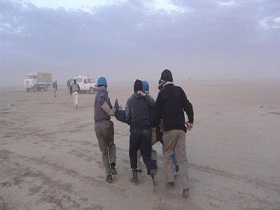 Government of Iraq (GOI), which has been tasked by the United Nations to investigate the attack in which fifty three people died, have been unable to contact the survivors since they were relocated under UNAMI supervision, and Camp Ashraf was finally closed.
At the time the attack took place, the Mojahedin Khalq had maintained a symbolic force of around one hundred loyalists at Camp Ashraf, ostensibly to sell off MEK assets although this never happened. Fifty three residents were killed in brutal execution style during the attack by unknown assailants, but afterwards MEK leaders refused to fully cooperate with teams of concerned visitors and investigators from the UN, the US embassy and the GOI.
Deputy Special Representative of the United Nations Secretary-General (DSRSG), Mr Gyorgy Busztin visited the camp on September 3rd and tasked the Iraqi government to “ensure that a thorough, impartial and transparent investigation into this atrocious crime is conducted without delay and that the results of the investigation are made public”. After extensive searches inside Camp Ashraf and widespread enquiries in the immediate vicinity and beyond, Iraqi investigators are still unable to say who perpetrated the attack, nor what actually took place inside the camp. It did not help that the MEK have refused to hand over many films and photographs which they took themselves just before, during and in the aftermath of the attack. It soon became clear however that the MEK had interfered with the scene by moving several bodies to create visual scenarios for propaganda purposes and had also destroyed key evidence before investigators were able to get inside the camp.
Speaking on the day Camp Ashraf was finally evacuated and closed, one Iraqi official claimed that videos of the clashes at the camp released by the MEK reveal that “most of the dead were actually killed by their own fellows at the camp.” However, the forty two individuals who were in the camp during the attack have not subsequently been produced to help with enquiries. The official again complained about the refusal of MEK commanders to cooperate with the investigators.
The MEK claimed that seven of its named members went missing from Camp Ashraf after the attack and, in what experts on MEK behaviour regard as a diversionary tactic, alleged, “they were taken hostage by Iraqi forces and flown to Amara province to be extradited to Iran”. Both the GOI and the Iranian government have denied any involvement in the attack and say they have no knowledge as to the whereabouts of the seven named persons who were Massoud Rajavi’s closest cohort inside Iraq. Rajavi himself has been in hiding for ten years and is therefore unavailable for comment.
Rajavi and his wife, Maryam, ordered their followers to go on a hunger strike – which has now incredibly passed one hundred days – to demand the return of the seven, who, like Rajavi himself, have apparently disappeared without trace. Because it is not known where the seven are being held nor by whom, or indeed whether they are still alive, the hunger strike is awkwardly open ended as it addresses no party known to be able to ‘hand them over’. Commentators have pointed out anyway that the logic behind the hunger strikers’ demand does not tally with the accusation that those who brutally murdered fifty three people are now holding the missing seven. Wouldn’t such people actually be glad if more MEK members starve to death?
Western media sympathetic to the MEK’s role in Iraq have recently reported that unknown ‘independent UN experts’ want the GOI to speed up its investigation into this specific issue. According to Reuters, the UN Working Group on Enforced or Involuntary Disappearances said in a statement, “We call upon the Government of Iraq to speed up the investigations in order to disclose the fate and whereabouts of the [seven] individuals.”
The working group added that “the impunity with which these crimes have been committed is particularly flagrant given the severity of the offences and the alleged evidence of engagement by Iraqi forces in the commission of these crimes.”
A UN Special Rapporteur – this time on extrajudicial, summary or arbitrary executions – Christof Heyns, said “international law clearly requires governments to ensure that all allegations of killings are investigated in a prompt, effective and impartial manner, irrespective of who the perpetrator is.”
But while Rajavi used these media reports to justify continuing the hunger strike, Iraqi investigators have stressed that even though this statement empowers Iraq to interview the forty two individual eye witnesses to the events at Camp Ashraf, until now the UN has failed to produce them and has instead allowed them to be swallowed up by the Rajavi cult’s camp commanders at Camp Liberty, to which neither the UN nor the GOI has access. This is in spite of the fact that these are key witnesses and without their testimony the investigation cannot be completed.
MEK experts working with the GOI on this issue, have warned United Nations human rights officials responsible for the camp of their grave concerns for the wellbeing of the forty two as well as the hunger strikers in Camp Liberty. News leaked from inside the camp by dissident members still held there, indicates that the forty two are being held incommunicado and that nobody has seen or heard of them since their arrival there. It is evident that the forty two hold vital information which the MEK leaders do not want to be made public. There can be no doubt they are under severe pressure to conceal the truth about what happened at Camp Ashraf. The concern is that, if they do not succumb to this pressure they may be killed. The United Nations Special Rapporteur should demand immediate and unmediated access to these missing persons to ascertain their wellbeing. As it is also alleged that the MEK commanders are deliberately withholding food from the hunger strikers in Camp Liberty, and this abuse should also be investigated as a matter of urgency.
The GOI has said on several occasions it would like to be more assertive in finding ways to get inside the camp and have free and unfettered access to all the individuals residing there, and to be able to separate those who would like to leave voluntarily. They are, however, severely hampered by obedience to UNAMI and what Iraqi MP, Rafe’ Abdul Jabbar, described as “the glacial pace in the relocation process of the MEK members to third countries. He said, “Baghdad is obeying the UN in this regard and this organization is obeying the US. We should admit that Iraq’s independence is still far away”.
Iranian.com
Tehran Has Documents to Prove US Beligerent Moves including the use of Terrorism
Washington is not inclined towards rapprochement with Tehran as hostility towards Iran is in the nature of the US and Tehran has sufficient evidence and documents to prove this, a legislator said.
“The US has taken extensive measures against our country, including waging military aggression in Tabas (on April 24, 1980, the Operation Eagle Claw was a United States military operation to free its embassy staff from Iran that failed due to a ferocious sandstorm that overturned US warfare and killed many including former Iranian regime officers who accompanied the US forces), plotting and organizing the Nojeh coup (a plan to overthrow the newly-established Islamic Republic of Iran in 1980), all-out confrontation against Iran during the imposed war (Iraqi-imposed war against Iran 1980-1988), financial and intelligence assistance to Iran’s enemies, supporting (the anti-Iran terrorist) Mojahedin-e Khalq Organization (MKO, also known as MEK, NCRI or PMOI) as well as the seditionists in the post-presidential election unrests 2009, imposing continued sanctions against different Iranian sectors, introducing Iran as the supporter of terrorism in the region and …,” member of the parliament’s National Security and Foreign Policy Commission Mohammad Hassan Asafari said on Monday.
“The Americans level accusations against us without any proof and evidence, but we have document to substantiate 70 cases of their hostile measures against Iran,” he added.
In relevant remarks in November, Secretary of Iran’s Human Rights Council Mohammad Javad Larijani lambasted the US for leading the global front against Iran, and said Washington’s hostilities towards Tehran have a long record.
“Today, the US is holding the flag of a front which has the silliest animosity towards Iran and our people’s hostility towards the US is not limited to the last 30 years and has a long record back in the history,” Larijani said at the time.
He described the US-led sanctions against Iran as cruel, and said the embargos are a clear violation of human rights and have grown so tough that the western states don’t allow our university students to study in other countries.
Western countries, led by the US, accuse Iran of trying to develop nuclear weapons under the cover of a civilian nuclear program, while they have never presented any corroborative evidence to substantiate their allegations. Iran denies the charges and insists that its nuclear program is for peaceful purposes only.
Tehran stresses that the country has always pursued a civilian path to provide power to the growing number of Iranian population, whose fossil fuel would eventually run dry.
Despite the rules enshrined in the Non-Proliferation Treaty (NPT) entitling every member state, including Iran, to the right of uranium enrichment, Tehran is now under four rounds of UN Security Council sanctions and the western embargos for turning down West’s calls to give up its right of uranium enrichment.
We have informed our readers in previous articles that discontent amongst the members of Mojahedin-e Khalq Organization (MEK or MKO), stationed in Camp Liberty near Baghdad in Iraq, is escalating and 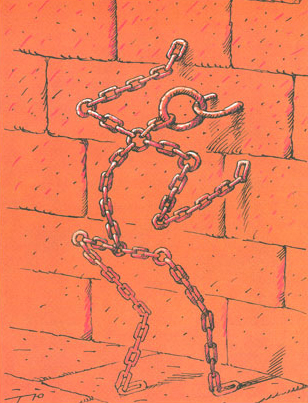 more and more individuals seek to leave Rajavi’s cult. The situation is so tense that the commanders of the cult have openly declared a state of alert. The main task of the officials of the cult is to identify discontented members, place them under scrutiny and to employ their inhumane psychological techniques against them. The commanders have been warned that if any of the members under their command escapes, they will be severely punished.
In order to bring the members under tighter control and make them forget about escaping, the officials of the cult have increased the peer pressure in the sessions named “current operation” and, as they say, have heated them up. In these sessions the person who is the subject is put under severe harassment by others using insults and accusations. This is done to break down the subject mentally. The situation is so hard that after the session they closely watch the subject so they do not commit suicide.
In these sessions for instance they tell the subject that he or she has become a vampire sucking the blood of the organization. This is related to an address by the cult leader Massoud Rajavi to his followers in which he warned them against sucking the blood of the organization. Rajavi, like all cult leaders, instead of being responsible toward his followers for leading the organization into catastrophe is claiming that they are sucking the blood out of his cult.
Other examples are calling the subject ‘empty minded’ or a ‘stinky inhumane body’. They make the subject confess that all these years they were busy sucking the blood of the organization and have betrayed the leader. They make the subject feel ashamed of being alive.
In these sessions they ultimately, after shattering the subject mentally, accuse the person of still having ties with their family in their heart and that they must cut out these reactionary ties. What the person must do practically is to confess this and then publicly denounce all his or her loved ones.
One interesting issue is that the cult keeps calling the officials of the UN and the ICRC spies and elements of the enemy, and has announced that approaching them is passing a red line. Approaching these people or asking for them and even talking about them is equivalent to betraying the organization and the consequence is to become the subject of these devastating daily sessions. In each meeting Rajavi and other leaders of the cult talk against the UN and the ICRC in relation to Camp Liberty and call them the agents of Iran and Iraq. All the cult officials think about is how to prevent the members from escaping.
The way the cult treats its followers in the big prison called Camp Liberty under the absolute rule of Massoud Rajavi is an obvious violation of human rights. The treatment and conditions of the captives in the camp is most certainly inhumane. The international organizations are fully aware of these things but for some political interests close their eyes and remain silent. Such behavior is not acceptable under any standard but unfortunately the victims of Rajavi have no voice.
We have repeatedly announced that the lives and psychological health of Rajavi’s captives are in danger, and that the international officials who deliberately do not fulfill their duties and have given Rajavi an open hand, and do not ever openly say what they see with their own eyes, are responsible.
Sahar Family Foundation once again repeats previous warnings that appeasing Massoud Rajavi, the cult leader of MKO, is against the interests of his captives in Camp Liberty and makes him even more impudent and will have no benefit for anyone.