Nejat Society
  • Home
  • Articles
  • Media
    • Cartoons
    • NewsPics
    • Photo Gallery
    • Videos
  • Publications
    • Books
    • Nejat NewsLetter
    • Pars Brief
  • About Us
  • Contact us
  • Editions
    • عربي
    • فارسی
    • Shqip
Nejat Society
Nejat Society
  • Home
  • Articles
  • Media
    • Cartoons
    • NewsPics
    • Photo Gallery
    • Videos
  • Publications
    • Books
    • Nejat NewsLetter
    • Pars Brief
  • About Us
  • Contact us
  • Editions
    • عربي
    • فارسی
    • Shqip
© 2003 - 2024 NEJAT Society. nejatngo.org
The cult of Rajavi

Prepare for more mystery deaths of MEK members

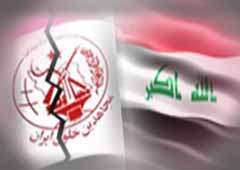
Since yesterday the MEK propaganda machine and its related resources have been on overdrive to claim that Prepare for more mystery deaths of MEK membersthe seven people who the MEK claim are missing from Camp Ashraf are in the custody of the Iraqis. Before this they had been on overdrive to claim that the 1st September attack on Camp Ashraf had been carried out by the government of Iraq. Both allegations have been repeatedly dismissed as completely unfounded by Iraq, but this has not silenced the MEK’s propaganda machine.

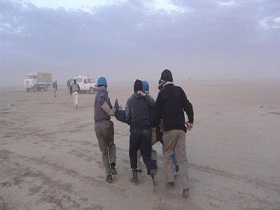
There is strong evidence that the aim of the attack on Camp Ashraf was to capture or kill Massoud Rajavi on the understanding he has been in hiding there. If that is the case, then the seven missing people, who have been identified as Rajavi’s close inner circle, have been part of a pre-planned manoeuvre to rescue him in the event of such an attack. The other members have been there to resist any incursion to allow Rajavi and his protectors time to run away.

Apparently inside the MEK there is currently an internal indoctrination message which compares the dead in this situation to the circumstances when Prophet Mohammad moved from Mecca to Medina and used Imam Ali who slept in his place as a decoy so that when they came to kill him they found Ali there instead. If this scenario is right then after Rajavi has saved his own skin from Ashraf, the last thing he wants is to be in the presence these seven known people. But he can’t let them go either because of the information they carry. The untenable MEK claim that these seven missing people were in Baghdad and have now been transferred by helicopter by the Prime Minister’s office to the south of Iraq indicates that there is some kind of plan behind it – governments do not work like this. The strongest possibility is that these seven people will be eliminated and the government of Iraq will be blamed. This is a typical MEK ploy to disguise the mysterious deaths of unwanted people, something they have done frequently.

In this case it is entirely possible that following this build up, these seven are discovered dead in the next few days, perhaps handcuffed and executed as the others were.

Certainly, for a man who basically can’t stop talking, the silence from Rajavi since the attack on Camp Ashraf makes it all the more likely that he is on the run and heading for a safe residence out of the country.

September 12, 2013 0 comments
FacebookTwitterPinterestWhatsappTelegramSkypeEmail
The cult of Rajavi

Source: Mojahedin Khalq Comrades Killed Fellows at Camp

An Iraqi source revealed that a large number of victims in a recent attack on the camp of the terrorist Mojahedin-e Khalq Organization (MKO) were killed by their own colleagues, namely members of the terrorist group.

Mojahedin Khalq Comrades Killed Fellows at Camp

A well-informed Iraqi source, which spoke on the condition of anonymity, told Tasnim on Wednesday that the released video of recent clashes in the MKO’s training camp reveal that “most of the dead were actually killed by their own fellows at the camp.”

The terrorist group said that dozens of its members died in a raid on September 1 and blamed the Iraqi security forces for the deaths. Iraqi officials, however, strongly denied the allegations, and said that a preliminary investigation suggested they died as a result of infighting among camp residents.

“In the released video of the recent clashes in Camp Ashraf, footages of the victims of the group showed that most of them had been killed execution style,” the source added.

“Given its track record in liquidating certain members, MKO took advantage of the incident for more bloodshed and killed its members for propaganda purposes and to play the victim,” the source said.Mojahedin Khalq Comrades Killed Fellows at Camp

On September 1, 52 MKO terrorists, including some top commanders, were killed in clashes in MKO’s Camp Ashraf in Iraq’s eastern Diyala province.

The MKO is considered a terrorist group since it has been behind many cases of bombings and assassinations against the Iranian officials and people.

The group also fought alongside the regime of former Iraqi dictator Saddam Hussein during the 8-year Iraqi-imposed war on Iran in 1980s.

Download Mojahedin Khalq Comrades Killed Fellows at Camp

September 12, 2013 0 comments
FacebookTwitterPinterestWhatsappTelegramSkypeEmail
MEK Camp Ashraf

Iranian exiles leave disputed Camp Ashraf in Iraq

KHALIS, Iraq — The transfer marks the end of a years-long effort by Iraqi authorities to evict members of the Mujahedeen-e-Khalq dissident group from Camp Ashraf, an isolated Saddam Hussein-era compound that the group was extremely reluctant to leave.Iranian exiles leave disputed Camp Ashraf in Iraq

The MEK is staunchly opposed to Iran’s clerical regime, and thousands of its members were granted sanctuary inside Iraq by Saddam. It carried out a series of bombings and assassinations inside Iran in the 1980s and fought alongside Iraqi forces in the 1980-88 Iran-Iraq war.

Its fortunes inside Iraq turned sharply with Saddam’s ouster following the 2003 U.S.-led invasion. Iraq’s current Shiite-led government, which has been bolstering ties with neighboring Shiite powerhouse Iran, considers the group’s presence inside Iraq illegal and wants its followers out of the country.

Most of the residents of Camp Ashraf, where members of the group had lived for decades, reluctantly moved to a former U.S. military base near Baghdad airport last year. A core of about 100 MEK followers had stayed behind to protect and sell off the group’s remaining property.

A shooting on Sept. 1 left 52 of those residents dead. Another seven people are missing, according to the MEK. The group blames Iraqi security forces loyal to Prime Minister Nouri al-Maliki for the killings. Iraqi officials deny involvement and say an internal dispute is to blame.

United Nations officials visited the camp shortly after the shooting and condemned the bloodshed, but they have not reported any findings as to who was responsible.

Maj. Gen. Jamil al-Shimmari, the police chief of Diyala province, where the camp is located, and the mayor of the nearby town of Khalis, Oday al-Khadran, told The Associated Press that a convoy carrying the residents and their belongings left the camp Wednesday evening.

"This took a lot of patience. We dealt with them according to the law," al-Shimmari said. None of the Iraqi officials reported any incidents of violence during the transfer.

The residents were searched by Iraqi forces before departing and were allowed to visit the graves of loved ones who are buried at a cemetery inside the compound, al-Shimmari said. The residents initially refused to leave, but were eventually persuaded after representatives from the U.N. intervened, he added.

Authorities have prevented journalists from getting near the camp since the shooting this month.

A spokeswoman for the U.N. in Iraq, Eliana Nabaa, earlier in the day described the transfer process as "ongoing." She could not be reached for further comment after Iraqi officials confirmed the transfer had begun.

Representatives for the for MEK’s parent organization, the Paris-based National Council of Resistance of Iran, later confirmed the departure.

Mohammed Mohaddessin, chairman of the NCRI’s foreign affairs committee, said in an interview that the council’s president-elect, Maryam Rajavi, urged the remaining residents to leave over the past few days.

By QASSIM ABDUL-ZAHRA and ADAM SCHRECK,

September 12, 2013 0 comments
FacebookTwitterPinterestWhatsappTelegramSkypeEmail
Iraq

Iraq dismisses MKO’s new allegations as baseless

Iranian exiles claim Iraq plans to deport 7 members to Iran, a charge Baghdad denies

An Iranian dissident group whose camp in Iraq was the scene of a disputed outbreak of violence last week claimed Tuesday that Iraqi authorities plan to hand over seven allegedly detained members to Iran. Baghdad denies having any such plans.

The latest dispute comes as Iraqi officials prepare to relocate the remaining residents of Camp Ashraf, about 95 kilometers (60 miles) northeast of the Iraqi capital. The compound has long been a source of irritation to the Iraqi authorities, who want it closed and its current and former residents moved out of the country altogether.

A total of 52 members of the Mujahedeen-e-Khalq were killed in a shooting at the Saddam Hussein-era compound on Sept. 1. The group, which opposes Iran’s clerical regime and was labeled a terrorist organization by the U.S. until last year, blamed Iraqi security forces for the killings. Iraqi officials have said an internal dispute erupted inside the camp.

A team from the United Nations mission to Iraq visited the camp after the killings and confirmed the number of fatalities, but it has not released further findings into what happened or ascribed blame for the deaths.

About 100 MEK members had been living at the camp before the killings. The U.N. refugee agency says 42 remain.

A spokesman for the MEK’s parent organization, the Paris-based National Council of Resistance of Iran, alleged that the seven people he said were “taken hostage” at the time of the killings are being held by Iraqi forces near Baghdad airport and will be transferred to Iran in the coming days. MEK members fear they will be persecuted if returned to the Islamic Republic.

“The government of Iraq has made no announcement about arresting these individuals and wants to return them to Iran surreptitiously at the first convenient opportunity without making any noise and raising attention,” Shahin Gobadi charged.

He said he knew this via sources within Iran’s “clerical regime,” but he did not identify them, expressing concerns about security. He said he did not know why those seven were abducted while dozens were killed and others survived.

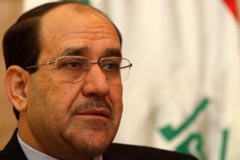
Ali al-Moussawi, the spokesman for Iraqi Prime Minister Nouri al-Maliki, said he had no information about any missing residents. He denied there are any plans by Iraq to forcibly send former Camp Ashraf residents to Iran, and he pressed for help in resettling them safely abroad.

“These new allegations are baseless. The Iraqi government calls on all countries to accept them,” he said.

Maj. Gen. Jamil al-Shimmari, the police chief of Diyala province, where the camp is located, said no Ashraf residents have been transferred out since the shooting.

The U.N. on Saturday said Iraqi authorities plan to relocate the surviving Camp Ashraf residents to a former U.S. military base near Baghdad airport where more than 2,800 former camp residents are staying. That facility, known as Camp Liberty, is meant to be a temporary way station while the U.N. works to resettle the exiles abroad.

The move would likely mark the end of the MEK’s presence at Camp Ashraf, which the group has been extremely reluctant to leave.

The MEK carried out a series of bombings and assassinations inside Iran in the 1980s and fought alongside Iraqi forces in the 1980-88 Iran-Iraq war. Saddam granted several thousands of its members sanctuary inside Iraq, and they turned Camp Ashraf into a self-contained, isolated community.

The MEK’s continued presence inside Iraq long has irritated Iraq’s postwar leadership, which has worked to bolster ties with neighboring Shiite powerhouse Iran. The government is highly suspicious of those linked to the former regime.

The group says it renounced violence in 2001. Camp Ashraf residents were disarmed by U.S. troops after the invasion.

Efforts to relocate the exiles abroad have moved slowly. The U.N. has struggled to find countries to accept them, and officials have cited a lack of cooperation by some of the exiles. They do not want to return to Iran because they fear persecution there.

A total of 198 former residents of the two camps have been resettled abroad so far, most to Albania.

___

Associated Press writer Qassim Abdul-Zahra contributed to this report.

By ADAM SCHRECK

September 11, 2013 0 comments
FacebookTwitterPinterestWhatsappTelegramSkypeEmail
Massoud Rajavi

Massoud Rajavi victimized Ashraf residents

The raid on Camp Ashraf on September 1st that resulted in the killing of 52 residents is a matter of concern and sorrow.

To probe the situation and the main causes of such an incident, it is crucial to review the mutual quadra agreement signed by the American and Iraqi governments, the United Nations and the Mujahedin Khalq Organization ( MKO).

The relocation of about 3000 members of the MKO to Camp Liberty – while 100 members remained in Ashraf – was part of the process to expel the group out of Iraqi territory. The Iraqi government was responsible to ensure the security and safety of the MKO forces for a specific period of time, until they would be transferred to Iran or third countries.

However, the strategic aim for the leader of the MEK cult, Massoud Rajavi was to return to Ashraf and to reinstall his entire forces there after sometime. For Rajavi Camp Ashraf had turned into a strategic notion or even an ideological one.

Actually the evacuation of Camp Liberty depends on third countries’ willingness to accept them. Third countries have not welcomed such a plan and so far a few numbers of residents have managed to move to Albania and Germany. Obviously, the cult leaders have never been willing to let members leave the MKO in groups or individually (in absence of the cult’s regulations and influence).

On the other hand, the MKO had to leave Iraqi territory up to December 2011, regarding numerous warnings by the Iraqi government and rulings of the Iraqi courts and also according to the MOU signed between the MKO and the UN.

The case of the MKO forces in Iraq got very complicated because the group leaders want to maintain Camp Ashraf. They make a number of members stay there under the pretext of taking care of and selling the group properties in an unlimited period.

Due to the disorders taking over the entire Iraqi soil, the Iraqi government has not obtained complete control over insecurities. Considering previous attacks on the group’s camps, the MKO leaders were well aware that sooner or later their camps would be attacked again. If the MKO leaders cared about the safety and security of their members, they wouldn’t ask them to defend to the death Camp Ashraf so members could leave the camp and disperse. In fact, Massoud Rajavi is responsible for the killing on his forces. Iraqi government has the right to abstain from keeping them in their territory although it has to provide safety and security for the residents of Ashraf and Liberty.

In photos released on Camp Ashraf incidents, dead bodies are shown, shot in the head and handcuffed behind their backs. Regarding the fact that dead bodies and photographs both belong to the MKO, itself, the reality cannot be simply verified. Nejat Society is not pleased with victimization of the imprisoned members of the MKO who are abused by Massoud Rajavi’s evil manipulative system and his ill-minded ambitions. The victims of the MKO are not able to realize the conditions they are stuck in so they can not liberate themselves from the bars of this horrible, criminal cult.

The residents of Camp Liberty should be able to choose their future path with their own free will. They should admit that the “Cult of Rajavi” has no right to stay in Iraq.

Iraqi government is also responsible to investigate the case and find the perpetrators of the attack to be brought to justice.

Nejat Society

September 10, 2013 0 comments
FacebookTwitterPinterestWhatsappTelegramSkypeEmail
Iran

Group of Iraqi youth attacked MKO in Camp Ashraf

Lieutenant Commander of the Islamic Revolution Guards Corps (IRGC) Brigadier General Hossein Salami said Iraqi people’s attack on a camp housing members of the terrorist Mojahedin-e Khalq Organization (MKO) will have a strategic impact on the future developments in the region.

“Last week’s incident at Camp Ashraf will have wide strategic significance for the region’s future developments,” the Iranian commander said in a TV program on Saturday evening.

His comments came after an attack on Camp Ashraf in Iraq’s eastern province of Diyala on September 1 killed 52 members of the terrorist organization, including some top MKO commanders and members of its leadership council.

Brigadier General Salami further clarified that the attack was carried out by a group of Iraqi youth who were outraged by the presence of the notorious terrorists inside their country.

He went on to say that the strategic impact of the latest move on the continuation of the terrorist organization’s existance was much more enormous than that of Operation Mersad, although it was smaller in scale.

Operation Mersad, which began on July 28, 1988 and lasted a few days, was a counterattack by the Iranian Armed Forces against an incursion carried out by the MKO and supported by the Iraqi army. In that operation thousands of MKO members were killed while others fled to Iraq.

Brigadier General Salami also stated that last week’s operation was a testimony to the Iraqi nation’s hatred for the MKO terrorist organization and its cruel activities in the Arab country.

The attack by the Iraqi people was so quick that neither the Iraqi army noticed it nor MKO members were able to react to it, the commander added.

He described the operation as an event that helped the Iraqis to become more self-confident as a nation, which he said will undoubtedly reject the presence of MKO terrorist group in their country anymore.

“With these incidents, Iraq will not be a haven for Monafeqin (MKO members). The Monafeqin seem to lack a safe refuge in Iraq even with the US support,” he concluded.

In a relevant development, the United Nations office in Baghdad announced on Saturday that Iraqi authorities are planning to relocate dozens of the MKO members from Camp Ashraf (now Camp of New Iraq).

The UN office added that the authorities will transfer the remaining residents of Camp Ashraf in northeastern Iraq to another facility in the Baghdad area.

Also, Ali Mussawi, spokesman for Iraqi Prime Minister Nuri al-Maliki, had stressed on Saturday that Baghdad has “the right to order them to leave.”

Camp Ashraf houses members of the Mujahedin-e Khalq Organization (also known as MEK), which Baghdad says is in the country illegally.

The MKO is considered as a terrorist group since it has been behind many cases of bombings and assassinations against the Iranian officials and people.

The group also fought alongside the regime of former Iraqi dictator Saddam Hussein during the 8-year Iraqi-imposed war on Iran in the 1980s, and later turned its guns on the Iraqi people.

Reported from Tasnim News,

September 9, 2013 0 comments
FacebookTwitterPinterestWhatsappTelegramSkypeEmail
Maryam Rajavi

Does she still want to return to Ashraf ?

The attack Sunday September 1st on Camp Ashraf ended with the killing of 52 high ranking members of the Mujahedin Khalq Organization (the MKO). Those members had been remained at the Camp to allegedly watch Back to Ashraf; Back to disasterthe group’s properties. The attack was reportedly the most bloody of the several mortar attacks on MKO camps in Iraq. However, the MKO leaders and supporters view “return to Ashraf” as the best solution to guarantee the security and safety of MKO members!

The news on the recent attack on Camp Ashraf is controversial. No credible report has been published on details of the incidence except those released  by the group propaganda but one thing is sure: Camp Ashraf is not a safe place for former partners of Saddam Hussein who aided him in operations to suppress Kurdish and Shiite uprisings during the 1990’s. Iraqi people have sought to expel the MKO from their territory since the collapse of Baath regime but the MKO leaders’ unyielding position was to stay in Iraq. The group leaders have urged to return the members to Camp Ashraf since February 2013 when the majority of members were transferred to Camp Liberty, a former US military base near Baghdad airport.

 In February 2013, following a much slighter attack on Camp Liberty –only five people were killed – Maryam Rajavi claimed that there was no guarantee of protection and safety for the residents at Camp Liberty and “the only way to prevent further killing is to compel the Iraqi government to return 3000 defenseless residents of Camp Liberty to Ashraf, their home for 26 years”.

Since then, running the agenda of “Return to Ashraf” became a nonstop approach to prolong the group’s stay in Iraq. Advocates of the MKO among European MPs including their long-time sponsor Struan Stevenson also emphasized on “return to Ashraf” as “ the first step “ to rescue Liberty residents before their relocation to third countries. Stevenson and his peers state that Ashraf is “much more secure” against attacks.

Besides European sponsors of Maryam Rajavi, a delegation of her advocates in the US congress including Ted Poe who visited her at that time tried to appease her by saying that “the full protection of the residents of Camp Liberty can only be ensured by moving them out of the harm’s way and returning them to their home for 26 years at Camp Ashraf.”

The so called “home for 26 years” is actually a part of Iraqi territory granted by former Iraqi dictator, Saddam Hussein to foreign insurgents – the MKO members. Iraqi nation do not want the MKO as the remnants of the former dictator in their soil anymore.

Why do not the MKO leaders and their Western supporters “emphasize” on the residents’ urgent relocation to third countries?

 Regarding the fact that previous attacks on Ashraf (April 2011 and July 2009) and Liberty (February 2013 ) were warnings for the group leaders to act more seriously to transfer residents out of Iraq and to cooperate more willingly with the UN. Nonetheless, Maryam Rajavi and her disappeared husband, Massoud Rajavi are so reluctant for the relocation process that one can conclude that they benefit more from staying in Iraq than leaving it ! Their agenda of “Return to Ashraf” is now considered absolutely questionable. The process of martyr-making out of attacks on the MKO camps using them to draw the World attention to the group or at least to gain their sympathy provides more fuel to the group’s propaganda machine. Bad for the group leaders, this time the world’ attention is focused on Syria.

By Mazda Parsi

September 9, 2013 0 comments
FacebookTwitterPinterestWhatsappTelegramSkypeEmail
Mujahedin Khalq Organization as a terrorist group

Top commander of assassination team among Ashraf dead

According to Fars News, Tehran’s Friday Prayer speaker, Ayatollah Khatami, spoke on a range of issues, including Syria, Iraq and other international and national issues.

In his second sermon Ayatollah Khatami thanked the “brave children of the intifada” for the attack on the “hypocrites” [Mojahedin Khalq] in Camp Ashraf, in which seventy top Mojahedin commanders were killed, saying “it was no less important than the Mersad operation [aka Forough-e Javidan] in quality”.

Ayatollah Khatami said that the top commander of the Mojahedin Khalq team which assassinated martyr General Sayad Shirazi was among those killed in this operation. He described this as “God’s revenge using the hands of the proud people of Iraq. The uprising of the people of Iraq was crushed by Saddam and the Mojahedin Khalq during the Shaban intifada, and now the children of the victims have come to take revenge”.

Ayatollah Khatami went on to criticize America for using the excuse of chemical attack and attaching it to the Syrian government, and said they didn’t bat an eyelid over Saddam Hussein’s widespread use of chemical weapons, in fact they supported him in whatever way they could.

Translated by Iran Interlink

September 8, 2013 0 comments
FacebookTwitterPinterestWhatsappTelegramSkypeEmail
Iraq

Iraq To Relocate Iranian Exiles From Camp Ashraf

Some 3,000 MKO members were relocated to Camp Liberty (pictured) on the outskirts of Baghdad last year but some 100 people stayed on at Camp Ashraf to deal with leftover property and goods.

The United Nations says Iraqi authorities are planning to relocate dozens of Iranian exiles from a camp where 52 residents were killed last week.

The UN office in Baghdad said on September 7 that the authorities will transfer the remaining residents of Camp Ashraf in northeastern Iraq to another facility in the Baghdad area.

Camp Ashraf houses members of the Mujahedin-e Khalq Organization (MKO), an Iranian exile group opposed to the Iranian government that Baghdad says is in the country illegally.

An attack on the camp on September 1 left fewer than 50 residents left.

The group has accused Iraqi troops of carrying out the assault.

The office of Iraqi Prime Minister Nuri al-Maliki has set up a probe into the incident. Iraqi officials say no Iraqi troops entered the camp.

Some Iraqi officials allege the violence began with infighting among camp residents. Others suggest explosions at the camp were triggered by mortar fire.

Some 3,000 MKO members were relocated to Camp Liberty on the outskirts of Baghdad last year but some 100 people stayed on at Camp Ashraf to deal with leftover property and goods.

The MKO was founded in the 1960s. The group seeks the overthrow of Iran’s Shi’ite clerical rule, and some of its members fought alongside former Iraqi leader Saddam Hussein’s forces in the Iraq-Iran War of the 1980s.

Based on reporting by AFP and AP

September 8, 2013 0 comments
FacebookTwitterPinterestWhatsappTelegramSkypeEmail
MEK Camp Ashraf

UNAMI urges all parties to act responsibly in the relocation process to Camp Hurriya

UNAMI

The United Nations Assistance Mission for Iraq (UNAMI) has been informed that the Government of Iraq has served an order to relocate the remaining residents of Camp Ashraf to Camp Hurriya. The United Nations believes that the Iraqi Government will move to enforce this order without delay.

“We strongly hope all parties will act responsibly and that the process of relocation to Camp Hurriya will be peaceful and voluntary,” the Deputy Special Representative of the United Nations Secretary-General (DSRSG) for Iraq, Mr. Gyorgy Busztin, said.

The UN Envoy repeatedly urged both sides to act responsibly and to show restraint to prevent any violence during the relocation process. “The United Nations has made tireless efforts to facilitate an agreement between the two sides, and went every extra mile for peaceful relocation,” Mr. Busztin added.

“The UN stands ready to monitor the process, should an agreement be reached between all parties involved to relocate voluntarily to Camp Hurriya,” Mr. Busztin concluded.

September 8, 2013 0 comments
FacebookTwitterPinterestWhatsappTelegramSkypeEmail
Newer Posts
Older Posts

Recent Posts

  • National Pride of Iranians: Reject the Rajavis and their Patrons

    July 22, 2026
  • Italian legislators fooled by MEK’s polished presentations

    July 18, 2026
  • The Rhetorical Style and Polemical Language of the MEK

    July 15, 2026
  • Death of Lindsey Graham, notorious hardliner against Iran

    July 13, 2026
  • Nejat Society Albania’s 2026 Peace Delegation

    July 11, 2026
  • Facebook
  • Twitter
  • Instagram
  • Youtube

© 2003 - 2025 NEJAT Society . All Rights Reserved. NejatNGO.org


Back To Top
Nejat Society
  • Home
  • Articles
  • Media
    • Cartoons
    • NewsPics
    • Photo Gallery
    • Videos
  • Publications
    • Books
    • Nejat NewsLetter
    • Pars Brief
  • About Us
  • Contact us
  • Editions
    • عربي
    • فارسی
    • Shqip