
The SFF has written a letter concerning the latest developments in the Interim Transit Camp Liberty to Mr 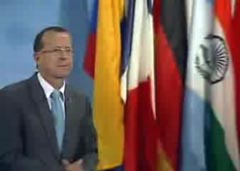 Martin Kobler, the Special Representative of the UN Secretary General to Iraq, which was handed over in person during a meeting.
Mr Martin Kobler,
UNAMI, Baghdad, Iraq
Dear Mr Kobler,
With regards, we wish to share with you what we learned from some members of the MKO who very recently managed to escape from the camp and gain their freedom.
As you know, Camp Liberty has the area of one kilometer by one kilometer which is much smaller than Ashraf Garrison. The entrance contains check posts belonging to UNAMI and to the Government of Iraq separately. This place is now called ‘the triangle’ since the MKO has also established a post there.
All traffic in and out of the camp is controlled by the two posts of UNAMI and the GOI, and the third one, which belongs to the MKO, is merely keeping watch on these events and their job is to inform the various MKO units when the UN authorities are entering the camp. In this case residents in the unit that the officials are approaching are obliged to return to their dormitories and lock the doors and do not come out until they are told everything is clear. “Security reasons” is the excuse they give to the members for such a bizarre act.
When the UN officials enter the camp, the MKO post immediately warns leaders and they issue a state of alert to all units. In this situation, those residents who might try to contact the UN officials must be watched carefully and kept away. Everyone has been warned not to approach any visitor.
According to the information we have received, each unit of the Rajavi cult inside Camp Liberty has a legal and political liaison ‘representative’ who is the only person authorized to have contact with UN officials when they enter the camp. They are instructed to continuously complain about conditions in the camp. Everyone else must stay inside the dormitories until they are told to come out when the officials have left.
The MKO authorities say that they have been promised the same facilities they had in Ashraf and now they understand that this is because the UN wanted to separate off the discontented members. The MKO is following a policy of causing disruption in their present situation in an attempt to be allowed to return to Ashraf.
In this regard they have ordered the members to deliberately create terrible and unbearable conditions inside the camp and, according to them; if some die doing this it is worthwhile.
The Sahar Family Foundation which represents the ex-members and the families of trapped members of the MKO would like to urge you to deal with the above mentioned matters and make every effort so that:
1. The inhabitants of the camp have free access to the outside world, particularly to the UN officials who visit the camp;
2. The suffering families who have been waiting in Iraq for three years will be able to visit their loved ones.
Sahar Family Foundation
Baghdad, Feb 1, 2013
MEK lies silenced by U.K. Government
David Anderson (Blaydon, Labour (
(
To ask the Secretary of State for Foreign and Commonwealth Affairs what recent reports he has received on the condition of residents of Camp Ashraf and Camp Liberty; and what representations he has made to the Iraqi Government on that matter.
Alistair Burt (Parliamentary Under Secretary of State (Afghanistan/South Asia, counter terrorism/proliferation, North America, Middle East and North Africa), Foreign and Commonwealth Office; North East Bedfordshire, Conservative):
The UN visit Camp Liberty, where the majority of former residents of Camp Ashraf now live, several times a week, and report that facilities at the camp meet international humanitarian standards. For example, residents have access to electricity 24 hours a day and over 200 litres of water per person per day. This compares well to the situation for many Iraqis. I raised the situation at Camp Ashraf and Camp Liberty with the Iraqi Minister for Foreign Affairs and the Minister for Human Rights in July 2012. We continue to monitor the situation at Camps Ashraf and Liberty through our embassy in Baghdad, and to raise issues with the UN and the Government of Iraq where appropriate.
The incontrovertible facts about MKO’s genocidal campaign against the Iraqi Kurds are so hard that even the organization itself prefers to keep silent over it and even abstains from getting into efforts to attribute it to Iranian regime as an anti-MKO campaign. The Swedish Parliament is just a few steps from making a decision to recognize MKO’s Operation Morvarid (Pearl), a post-Persian Gulf military campaign in collaboration with Saddam to suppress Iraqi Kurds uprising, as genocide and crimes against humanity as it has already recognized Saddam’s Anfal campaign. The following from David Gethin’s New Al-Qaeda in Europe: Iranian Terrorists-Good or Evil provides adequate evidence to dispel any doubt.
The Wall Street Journal reported that in March 1991, after the Persian Gulf War and the operation by American Forces called Desert Storm in Iraq, Saddam Hussein, the then President of Iraq ordered Masoud Rajavi, the President of NCRI, who was at the same time the Leader and the Commander in Chief of MKO and NLA, to help Iraq in suppressing the Kurds uprising in the northern part of the country. Those who were involved in this operation have testified to this fact.
The US Department of State in a comprehensive report to Congress at the end of 1994 also certified that NCRI/MKO forces were involved in the suppression of Iraqi Kurds by saying the followings:
“Following the Operation dubbed “Desert Storm”, Iraqi Kurds claimed that MOW helped the Iraqi army in the suppression of Kurds. Those who fled the operation zone and took refuge near Iranian borders corroborated this allegation.
In this connection, Jalal Talebeni the Leader of the “Patriotic Movement of Iraqi Kurdistan”, (and the present Iraqi President) told reporters:
“In Karkouk Battle, five thousands MKO members joined Saddam’s forces.”
In a book entitled “For the Judgment of History”, the text of the negotiation between Masoud Rajavi, the President of NCRI, with Iraq’s intelligence officials at the time of Saddam Hussein’s rule in Iraq is published. Part of the book is about negotiations between Masoud Rajavi and General Saber Eldori, the then Head of Iraq’s Intelligence Service, right after the 1991 uprising in Iraq. From these negotiations the role of the Leader and members of NCRI in the suppression of the Iraqi people and the extent of their loyalty to Saddam Hussein’s Regime becomes clear.
“General Saber: The President (Saddam Hussein) thanked and appreciated Brother Masoud Rajavi and NLA for the valuable contribution of this army in the suppression of the recent agitations. I explained to him, in detail, the role played by the organisation in this suppressive opera-tion. In the course of operation, I was reporting minute after minute your activities and told him that organisation. Despite little facilities at your disposal and we are sorry that we cannot satisfy all your needs, you have done a great job, beyond our expectations. …I have asked the President to send a thank you letter to Masoud, but the President told me that sending a letter is not enough and he should meet Masoud in person and thank him himself.”
The documentary film of the meeting between Masoud Rajavi, President of NCRI and the Head of the Intelligence Service of Iraq is attached.
Other members of NCRI who accompanied Masoud Rajavi, the President of NCRI, in this meeting and were involved directly in the genocide of 1991 were:
1Mehdi Abrishamchi, Head of NCRI’s Peace Committee 2Abass Davari, Head of NCRI’s Labour Committee 3Ebrahim Zakeri, Head of NCRI’s Security and Counter Terrorism Committee 4Mahdi Boraei, Member of NCRI
It is noteworthy to mention Masoud Rajavi, the President of NCRI was in charge of commanding this genocide operation dubbed “Pearl Operation” against the Kurds. Furthermore, according to the testimonies of the members of NCRI, Mrs. Fereshteh Yeganeh, Chair of Educations and Training Committee of NCRI was responsible for providing logistics and sup-port for the operation.
The crime of genocide against Iraqi Kurds was committed in March 1991 in two regions in the northern parts of Iraqi Kurdistan namely “Kafri” and “Kalar”. The Governor of Iraq’s Kurdistan province in a statement issued the names of persons killed, injured or captured by MKO forces.
The names of those who lost their lives as a result of this operation are as follows:
1. Samad Rahim Hassan Mohammad
2. Ali Mahmoud Khalil
3. Aboubakr Saddigh Hussein
4. Mostafa Mohammad Saddigh
5. Hussein Rahim Hassan
6. Sami Nasser Ismaeil
7. Servat Ahmad Rahim
8. Omar Ashraf Majid
9. Borham Ali Rostam
10. Ali Mahmoud Khalifeh Hamid
11. Aziz Ahmad Mohammad Ali
12. Mohammad Ahmad Mohammad Ali
13. Salah O Edin Mohammad Ahmad Rahim
14. Najib Hussein Hassan
15. Farhad Rahman Rahim
16. Ali Abdollah Sadigh
17. Samad Rahim Hassan
18. Jamileh Hassan Hamid
19. Salar Mohammad Amin
20. Adalat Jabbar Hussein
21. Ahamad Mohammad Ghader Mahmoud
22. Mohammad Hussein Hamid
23. Jalal Hussein Abodllah
24. Mohammad Ebrahim Abdollah Farah
25. Aziz Mohammad Hadar
26. Rafigh Farigh Rahim
27. Sareif Faeigh Maha El Din
28. Hakim Aziz Ahmad
29. Abdolkarim Abdolrahman Fattah
30. Omar Mohammad Amin
31. Hamid Fattah Mohmmad
32. Yadegar Halah
33. Glaviz Abdolgahder Abdolkarim
34. Akram Ali Rostam
35. Ali Hassan Abdolrahman
36. Adalat Jabar Hussein
37. Kaveh Dara Ahmad
38. Aref Baban
39. Adnan Mahmoud
40. Adnan Hassan Ahmad
41. Haji Mahmoud Mohammad Rashid
42. Omar Mahmoud Mohammad
43. Osman Mohammad Gharib
44. Shokr Rashid Najmeh
45. Shalan Rashid Najmeh
46. Salar Hamid Raouf
47. Omar Ahmad Hassan
48. Nomid Omar Saleh
49. Dara Rashid Abdolgader
50. Mohammad Rashid Ghanbar
51. Ali Hassan Lafteh
52. Jalil Khalil Ebrahim
53. Mohammad Shokr
54. Loghman Abdolrahim Fars
55. Tahssin Saeid Abdollah
56. Ehssan Vahab
57. Talaat Shokat Majid
58. Mohammad Namegh Tabib
59. RibovarAhmad Mohammad
60. Majid Aziz Abdollah
61. Omar Ahmad Solyman
62. Zojiya Fazel Marhoud Owdah
63. Lyla Fazel Marhoud Owdah
64. Bakir Ali Saleh
65. Borham Jabar Majal
66. Maheh Mohammad Rahim Karim
67. Youssef Hussein Ali Ghader
68. Mohmmad Sharief Mohammad Saeid
69. Nor Edin Ali Ahmad
70. Noshirvan Ahmad Rostam
71. Ali Ahmad Abdollah
72. Osman Ghader Sadoun
73. Abdorahman Ahmad Karim Khadr
74. Omran Krim Mohammad Saleh
75. Fatah Ahmad Ali
76. Hussein Abdolrahman Ahmad
77. Adel Mahmoud Saeid Sharief
78. Loghman Mohammad Saleh Madouf
79. Omar Mohah Saeid Ahmad
The death certificates of some of those killed in this massacre are attached.
List of those who were injured as a result of this operation:
1. Hadim Hussein Ali (injured in the feet and abdomen)
2. Hassan Ahmad Rahim (injured in the toes and abdomen)
3. Khalil Ebrahim Abdolghader (injured in the neck)
4. Nori Sofi Mahmoud Khossrow (injured in eyes and hands)
5. Jamal Vahid Amin (injured in throat)
6. Hoywa Mohammad Ahmad
7. Mojhdeh Hussein Darvish
8. Khandeh Hussein Darvish (injured in the right hand)
9. Hussein Darvish Ahmad
10. Hatam Mahmoud Vahab Mohammad
11. Dara Ahmad Ali (injured in the abdomen, head and feet)
12. Nabard Assi Mohammad
13. Hmzeh Mohammad Darvish
14. Shilan Mohammad Darvish
15. Salmeh Mohammad Abdoljabar
The medical certificates and some photos of those injured in this operation are attached.
List of those who were captured and jailed in the prisons belonging to NCRI Group for almost five months are as follows:
1. Abdollah Mohammad Rashid
2. Ebrahim Mohammad Rashid
3. Adel Saleh Mohammad
4. Salar Mohammad Khan
5. Mohammad Javad Solyman
6. Shalan Hassan Fathollah
7. Mohammad Hassan Ali
8. Mohammad Ali Fars
9. Edris Ghader Shaker
10. Jalal Hassan Kaki
11. Omar Hassan Mohammad
12. Shir Ali Sharief
13. Mostafa Hassan Mohammad
Iraqi officials announced on Sunday that they have found the bodies of a large number of Iraqi citizens and officials slain by the terrorist Mojahedin-e Khalq Organization (MKO, also known as the MEK, PMOI and NCR) in a mass grave in MKO’s Camp Ashraf in the Northern Diyala province.
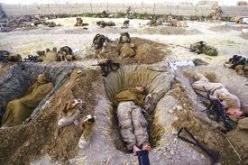 "As proofs and evidence show, the corpses of Iraq’s Shiite citizens, officials, officers, sheikhs and religious scholars have been buried in the mass grave," a high-ranking Iraqi political source said in an interview with al-Mustaqbal al-Iraq news agency.
He said that the corpses belong to the people who were killed by the MKO from 2006 to 2009.
An Iraqi official had informed in early January that several mass graves had been unearthed in Camp New Iraq, formerly known as Camp Ashraf, in the Diyala Province, which was the headquarters of the terrorist MKO before a majority of the group members were transferred to Camp Liberty around Baghdad a few months ago.
Sadeq al-Husseini, the deputy chairman of Diyala’s provincial council, added that the Iraqi Ministry of Human Rights was in charge of determining the identities of the bodies and whether they were Kurds, the residents of southern provinces or from the town of Khalis in Diyala Province.
He said that the bodies were being examined in medical laboratories in Arbil Province, adding that human rights violations in the camp did not seem improbable.
The MKO is behind a slew of assassinations and bombings inside Iran, a number of EU parliamentarians said in a recent letter in which they slammed a British court decision to remove the MKO from the British terror list. The EU officials also added that the group has no public support within Iran because of their role in helping Saddam Hussein in the Iraqi imposed war on Iran (1980-1988.)
Many of the MKO members abandoned the terrorist organization while most of those still remaining in the grouplet are said to be willing to quit but are under pressure and torture not to do so.
A May 2005 Human Rights Watch report accused the MKO of running prison camps in Iraq and committing human rights violations.
According to the Human Rights Watch report, the outlawed group puts defectors under torture and jail terms.
The group, founded in the 1960s, blended elements of Islamism and Stalinism and participated in the overthrow of the US-backed Shah of Iran in 1979. Ahead of the revolution, the MKO conducted attacks and assassinations against both Iranian and Western targets.
The group started assassination of the citizens and officials after the revolution in a bid to take control of the newly established Islamic Republic. It killed several of Iran’s new leaders in the early years after the revolution, including the then President, Mohammad Ali Rajayee, Prime Minister, Mohammad Javad Bahonar and the Judiciary Chief, Mohammad Hossein Beheshti who were killed in bomb attacks by MKO members in 1981.
The group fled to Iraq in 1986, where it was protected by Saddam Hussein and where it helped the Iraqi dictator suppress Shiite and Kurd uprisings in the country.
The terrorist group joined Saddam’s army during the Iraqi imposed war on Iran (1980-1988) and helped Saddam and killed thousands of Iranian civilians and soldiers during the US-backed Iraqi imposed war on Iran.
Since the 2003 US invasion of Iraq, the group, which now adheres to a pro-free-market philosophy, has been strongly backed by neo-conservatives in the United States, who argued for the MKO to be taken off the US terror list.
The US formally removed the MKO from its list of terror organizations in early September, one week after Secretary of State Hillary Clinton sent the US Congress a classified communication about the move. The decision made by Clinton enabled the group to have its assets under US jurisdiction unfrozen and do business with American entities, the State Department said in a statement at the time.
Manama: Bahrain’s foreign minister has denied online reports that Manama was ready to host members of the Mujahedeen-e-Khalq (MEK) organisation, the Iranian dissident militant group.
 “The report is baseless and lacks credibility and I am not at all aware of anything related to it,” Shaikh Khalid Bin Ahmad Al Khalifa told local Arabic daily Al Watan.
Websites claimed a United Nations official in the Iraqi capital Baghdad said that Bahrain had informed the US administration it was willing to host elements of the Iranian exiled opposition group currently staying in Camp Liberty, a former US base outside Baghdad, Al Watan reported on Monday.
MEK was taken off the US terror list in September after the US State Department said it had not committed terror for more than a decade.
The militant group had also complied with a US requirement that more than 3,000 of its once-armed members leave their Camp Ashraf base in the eastern province of Diyala in Iraq near the Iranian border and move to Camp Liberty.
The Iranians condemned the US decision to delist the group, saying that it was an “irresponsible move that is against the international and legal commitments of the US.”
MEK, as a guerrilla movement, fight Shah Mohammad Reza Pahlavi in the 1970s, but could not agree with the new Iranian regime of Ayatollah Ruhollah Khomeini when it came to power in 1979.
The group ended up teaming up with Iraq to battle Iran in the 1980s and won the protection of Iraqi former leader Saddam Husain.
However, the group was disarmed after the 2003 US invasion of Iraq and had difficult relations with the new Iraqi leadership.
Habib Toumi
Dena Peace and Freedom Association interviewed a European intellectual on the Cult of Rajavi(MKO/MEK). Ms. Shemeltz who is an expert and scholar on psychotherapy has personal and scientific experience about cults.
As the representative of Dena Peace and Freedom Association, Mr. Mohsen Abbasslou talked with the honorable expert, Ms. Shemeltz.
Mr. Abbaslou: Ms. Shemeltz can we regard Rajavi’s organization a cult? If yes, why?
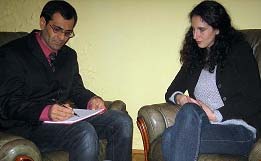 Ms. Shemeltz: yes, I consider the MKO as a cult. Its leaders and members think that their ideology is the best of all and only their own ideology is right. This is one of the signs of cults. The other reason is that the member inside the organization cannot realize the true nature of the cult unless he gets out of it.
In a cult-like system, the main decisions are made behind the scenes. The truth is hidden, dark clouds surround the organization. Members can hardly ever see and understand what’s going on beyond these dark clouds.
The reality and the true face of the cult-like organization is only known to a very very few people who are completely trusted by the leader.
The leader of cult exposes his true intentions to those few confident members around him. We can investigate and psychologically, scientifically analyze just a few aspects of the reality and true substance of a cult based on experiences, knowledge and testimonies of its survivors.
We can scientifically analyze Mr. Rajavi’s true personality and intentions only if we can keep him under control and treatment in a clinic. By clinic, I mean that cult leaders usually have evil inner thoughts so they are considered dangerous psychos. We should view them as dangerous lunatic patients.
Such a patient that should be under 24-hour supervision, is now inaccessible . More dangerous is that, besides power and money he has a large number of individuals under his command. This can be very disastrous. Rajavi’s organization is also in line with cults and groups that have inhuman financial resources such as drug smuggling groups, human smuggling groups … If you push away the dark clouds around the cult of Rajavi, you will definitely find signs of these activities. Signs of human smuggling, drug trafficking, money laundry and document forging can be certainly found in the MKO. These activities are some of the ways they use to earn money. As I have studied the cults and have done a lot of research on the issue, I’m sure that the cult of Rajavi is not an exception.
To be continued
Dena Peace and Freedom Association – Translated by Nejat Society
"The Al Khalifa regime is trying to support the terrorist MKO to suppress public protests in Bahrain and use the group in line with its objectives,” Mohammad-Saleh Jokar, a member of Majlis National Security and Foreign Policy Committee, said on Saturday.
 The Bahraini uprising against the Al Khalifa rule in the Persian Gulf island nation began in February 2011. The regime promptly launched a brutal crackdown on peaceful protests and called in Saudi-led Arab forces from neighboring states.
Jokar, however, said that neither the MKO, nor any other force can confront Bahraini people’s rightful protests.
An informed source at the UN office in Baghdad, Iraq, said earlier that Bahraini Foreign Minister Sheikh Khaled bin Ahmad Al Khalifa had handed a message from King Hamad bin Issa Al Khalifa to US Ambassador to Manama Thomas Krajeski, announcing Bahrain’s willingness to host the group.
The MKO is responsible for numerous acts of terror and violence against Iranian civilians and officials.
The group fled to Iraq in 1986, where it received the support of Iraq’s executed dictator Saddam Hussein and set up its headquarters, Camp Ashraf, near the Iranian border.
Following the US-led invasion of Iraq in 2003, the members of the group, in several stages, were relocated to Camp Liberty near the Baghdad airport, which was a former US military site.
The group is also known to have cooperated with Saddam in suppressing the 1991 uprisings in southern Iraq and carrying out the massacre of Iraqi Kurds.
After international pressure was brought to bear on the Mojahedin-e Khalq Organization (MKO) cult in Iraq by the governments of Iraq and the US, the organization was eventually persuaded to move from Ashraf Garrison to Camp Liberty in return for its removal from the US list of foreign terrorist organizations (FTO). According to Rajavi this move was a tactical setback from which to prepare the group for further advances.
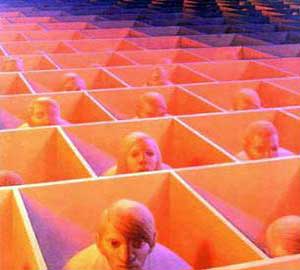 In recent years Rajavi’s major strategy, as the totalitarian leader of the MKO cult, has been to have the MKO name removed from the American FTO list, and the members and supporters were constantly promised that ‘once this “obstacle” is removed, the Iranian regime will immediately be toppled’. The cult leader Massoud Rajavi, who prefers to remain in hiding in order not to be required to answer any questions, must now be confronted with this logical query: ‘now that the obstacle has been removed, when will the Islamic Republic collapse?’
Now that Rajavi’s followers have been re-located to Camp Liberty, the cult is pursuing the line of ‘returning to Ashraf Garrison’; although in Camp Liberty the same cultic relationship is being imposed and Rajavi’s captives are under the same severe mind control regime as before. In an audio communiqué delivered to the inhabitants of Camp Liberty on December 5, 2012, Massoud Rajavi announced that he is now more proud than ever about his past terrorist activities.
The MKO leadership in Liberty has instructed the members to show the conditions of Liberty being as difficult and inhumane as possible to use in a propaganda campaign to force the authorities to allow them to go back to Ashraf. They have even been advised that ‘if some die in this campaign it is for a worthy cause’.
For instance they obstruct the water outlets in order to flood the ground with waste and then send the films and pictures around the world and blame the UN and the Iraqi government for it. They also prevent the sick from receiving medical care and even let them die just for propaganda purposes. Rajavi even uses the dead to achieve his ruthless goals.
The cult leadership has also instructed those in charge to keep the members as busy as possible in order to prevent them from thinking about the deadlock they are trapped in. This is a routine cultic practice, to occupy and exhaust the followers in so many useless tasks that they have no time to think about anything.
A prime example of the imposition of this micro-control regime is that the male members have been told to count the number of times they have managed to ‘control their gaze’ and the number of times they failed to do so and therefore let their eyes see what they should not.
The fact that Liberty is much smaller than Ashraf means that gender apartheid cannot be imposed in the same way as before so it is much more likely that the male members see the female members. In such a case the male member must immediately ‘control their gaze’ (close their eyes and stop looking) since it is a terrible sin to look at Massoud Rajavi’s wives and sully their chastity (this is the way all female members of the organization are generally described inside the organization). Each male member is told to count during the week how many times he managed to control his gaze and stop looking at a female member and how many times he did not manage to do so and then write a report about it in detail and discuss the reasons. These reports must be read out by individuals in weekly sessions and then they will be insulted and humiliated for acting indecently toward Rajavi’s wives.
Imagine the how excruciating is for a person to live for a whole week just complying with such an outrageous demand. He must be constantly vigilant as to whether he might spot a female member, and then make a note whether he controlled his gaze or not, and then, at the end of the week, he must write a report about it.
The MKO led by Massoud Rajavi is a perfect example of a destructive mind control cult which must be dealt with by cult psychiatrists and cult experts. For anyone conducting research into destructive cults, this one certainly provides an excellent illustration.
After more than six years of hard efforts by the Kurdocide Organization and many other supporters, in early December 2012, the Swedish Parliament in a majority vote formally recognized the Anfal Operation, launched by ousted Iraqi dictator Saddam against the Kurds in the late 1980s, as genocide and crimes against humanity. The Anfal Operation refers to the deadly attacks on the Kurds in the final stages of the 1980-88 Iran-Iraq war, which included Saddam’s use of poison gas to decimate inhabitants of the Kurdish town of Halabja.
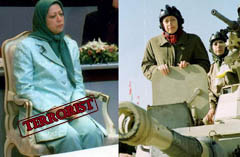 Just about three weeks after the justly made decision, some defected members of the terrorist Mojahedin Khalq Organization (MKO, MEK, PMOI, NCR) voiced their preparedness to give a testimony before the Swedish parliament about MKO’s key role in the massacre of Iraqi Kurds during the rule of the ousted Saddam. Reportedly, through last few weeks the Swedish Parliament is working to also officially recognize this joint Saddam-MKO military plot, called Operation Morvarid (Pearl), as another crime against the Iraqi Kurds.
The presence of MKO in Iraq for the accomplishment of joint strategic objectives in line with local and regional transitions expanded MKO-Saddam coalition far beyond a simple collaboration that ended in an ideological unity. The extent of their cooperation covered a broad range of issues, but here the focus is on the role of Mojahedin in the bloody suppression of Iraqi Kurds that made many internal and external critics to strongly disapprove of the heinous crime as a blatant violation a nation’s rights.
Besides many documentaries and confessions of the eye-witnesses, the Department of State in a 1992 report has clearly stated that “The NLA’s last major offensive reportedly was conducted against Iraqi Kurds in 1991, when it joined Saddam Hussein’s brutal repression of the Kurdish rebellion”. The fact is also stated in The State Department Office of the Coordinator for Counter-terrorism when it released the list of designated terrorist organizations; “The MEK’s relationship with the former Iraqi regime continued through the 1990s. In 1991, the group reportedly assisted in the Iraqi Republican Guard’s bloody crackdown on Iraqi Shia and Kurds who rose up against Saddam Hussein’s regime. Press reports cite MEK leader Maryam Rajavi encouraging MEK members to “take the Kurds under your tanks”. Elizabeth Rubin of the New York Times quoted former members of MKO on Mariam Rajavi’s commandment: “Take the Kurds under your tanks, and save your bullets for the Iranian Revolutionary Guards”.
There are more than enough evidences that corroborate MKO’s collaboration in suppression of the Kurds and even the group’s own high-ranking insiders have vehemently insisted on the necessity of the joint operation although hardly making any direct reference to the Kurds-killing crime. For instance, Bijan Niyabati, the detached leftist ideologue still a zealous supporter indirectly writing in behalf of MKO, has referred to the key role MKO played in Operation Morvarid and its necessity. He points to the fact that MKO took part in this operation as a token of their gratitude to the regime of Saddam Hussein and also in order to win his absolute trust:
“The Operation Morvarid may be considered as a remarkable military and political victory for Mojahedin as well. Morvarid stabilized MKO’s stance on Iraqi soil. Both Iraqi regime, somehow owing its survival to the presence and resistance of Mojahedin, and Mojahedin, for the first time making alliance with a regional and strategic ally tolerating one of the extraordinary revolutionary and radical organizations that is a remnant of the cold war era and bears to pay the regional as well as international costs of such an alliance, see in each other the features of a strategic ally. Mojahedin proved to be not only a trustful ally but also accounted as a parameter of power in regional fluctuations.” (A Different Look at Mojahedin’s Internal Revolution, p. 108)
Iraq’s invasion of Kuwait had the consequent international reactions. Saddam’s suppression of Iraqi Shi’it and Kurd insurgents caused widespread internal backlashes against Saddam’s regime that lost its control over a number of cities and angry dissidents began to march towards Baghdad. Located in the northern region, Rajavi’s forces could well help Saddam to impede the advance of the uprising people. Receiving the order, Rajavi launched the Operation Morvarid (Pearl) to suppress the insurgents. The bloodshed sent many Iraqi Shi’ts and Kurds to their death and Rajavi justified the operation as a self-defense but he never explained the reason and logic behind the involvement of MKO in Iraq’s internal affairs and suppression of Saddam’s opponents.
Inside this Issue:
· MKO Given New Deadline to Leave Camp Ashraf
· 17 MKO members defect from terrorist group, reports say
· Ex-MKO member slams UK terror support
· Canada’s delisting of MEK ‘dangerous’: Iran
· MEK seeks Syria-style recognition
· Iraqi Deputy FM: No Country Willing to Shelter MKO Terrorists
· Iraq; Several mass graves unearthed in former MKO camp, Camp Ashraf
· Martin Kobler: The Government of Iraq’s patience is wearing thin. Ashraf residents should cooperate
· 30,000 Iranian spies? Library of Congress withdraws report
Download Pars Brief – Issue No.70
Download Pars Brief – Issue No.70