Nejat Society
  • Home
  • Articles
  • Media
    • Cartoons
    • NewsPics
    • Photo Gallery
    • Videos
  • Publications
    • Books
    • Nejat NewsLetter
    • Pars Brief
  • About Us
  • Contact us
  • Editions
    • عربي
    • فارسی
    • Shqip
Nejat Society
Nejat Society
  • Home
  • Articles
  • Media
    • Cartoons
    • NewsPics
    • Photo Gallery
    • Videos
  • Publications
    • Books
    • Nejat NewsLetter
    • Pars Brief
  • About Us
  • Contact us
  • Editions
    • عربي
    • فارسی
    • Shqip
© 2003 - 2024 NEJAT Society. nejatngo.org
Iran

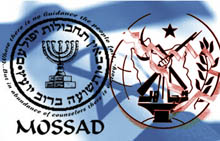
Plan to relocate MKO to third countries Israeli/American propaganda

A top Iranian lawmaker says the recent claims over relocating members of the terrorist Mujahedin-e Khalq Organization (MKO) to a third country after they were expelled from Iraq are only meant for propaganda purposes.

Head of Iran Majlis (parliament) National Security and Foreign Policy Committee Alaeddin Boroujerdi noted on Tuesday that due to the terrorist nature of the MKO, no country is willing to shelter its members.

“Experience has shown that wherever the MKO goes, due to its terrorist nature, it will foster insecurity and crisis in the host country. Therefore, the plan to relocate the group in a third country is only meant for propaganda purposes,” he added.

Boroujerdi noted that none of Iran’s neighboring countries is ready to accept the terrorist group and the Republic of Azerbaijan will certainly not make such a mistake due to its neighborly relations with Iran.

On May 3, Press TV reported that Israel is seeking to relocate the MKO members to the Republic of Azerbaijan.

The report said Israeli lobbyists are pressuring Azerbaijani authorities to allow in the MKO terrorists and station them in bases and deserted air fields.

Referring to the recent escape of three MKO members from their new residence, Camp Liberty, near the Iraqi capital of Baghdad, the lawmaker said the MKO is run by a dictatorial system which has put its members under the worst psychological conditions.

He added this is why the MKO members are looking for their first opportunity to flee the group.

Following the Iraqi government’s decision to expel the MKO terrorist group from its soil, the White House has been in talks with senior officials from Azerbaijan, Jordan, Pakistan, Qatar and Saudi Arabia in a bid to coax them into sheltering the MKO members in their countries.

The MKO fled to Iraq in 1986, where it enjoyed the support of Iraq’s executed dictator Saddam Hussein, and set up its camp, known as Ashraf, near the Iranian border.

The group is also known to have cooperated with Saddam in suppressing the 1991 uprisings in southern Iraq and carrying out the massacre of the Iraqi Kurds. The group has, as well, conducted numerous acts of violence against the Iranian civilians and government officials.

May 19, 2012 0 comments
FacebookTwitterPinterestWhatsappTelegramSkypeEmail
Mujahedin Khalq; A proxy force

State Department Poised to Raise Chances of War With Iran

The State Department, according to a report in today’s Wall Street Journal, is poised to do something that could increase the chances of war with Iran.Hillary Clinton

Let’s set the context:

We’re in the midst of negotiations with Iran, trying to keep it from building a nuclear bomb. Within Iran there is disagreement about how hard a line to take in the negotiations. Obviously, all other things being equal, it would be good to strengthen moderate voices within Iran and undermine hardliners–particularly hardliners who want the talks to fail altogether so that Iran can proceed to build a bomb.

Here is part of the narrative the hardliners are pushing:

Iran needs nuclear weapons to defend itself. It is beset by enemies. The Sunni states would love to overthrow our government. Just recall that Iraq, when it was a Sunni-run state, attacked us, starting a war that killed hundreds of thousands of Iranians. And note that Sunni states are currently trying to abet the overthrow of our ally in Syria–just one domino away from the fall of our own government. And don’t forget about the American-Zionist axis: prominent Americans and Israelis openly call for regime change in Tehran, and we suspect that this is the secret goal of the Obama administration.

OK, so that’s the narrative that we don’t want to strengthen–particularly the America-Zionist-axis-is-bent-on-regime-change part. Here, then, is an example of something we probably shouldn’t go out of our way to do: Take an Iranian-exile group that is devoted to overthrowing the Iranian government, and that has long been on America’s list of terrorist organizations, and give it our seal of approval by taking it off that list.

That would be stupid, right? Yet that’s what, according to today’s report in the Journal, the State Department is leaning toward.

The group in question is the Mujahedin-e Khalq, or MEK, which got onto our list of terrorist organizations decades ago by, among other things, killing Americans.

Now, if MEK had, as it claims, left its terrorist ways behind, this "delisting" of it, though geopolitically unfortunate, might be legally or morally defensible. However, within only the last few months, according to NBC News, MEK agents have murdered people by placing bombs on their cars.

The murdered people were Iranian scientists, and the assassinations were apparently orchestrated by Israel–facts that may raise MEK in the esteem of some Americans. But that doesn’t make the killings any more legal or less terroristic. What it does do is make them very powerful talking points for Iranian hardliners who want to derail negotiations by warning about the American-Zionist axis: "America embraces Israel’s proxy anti-Iranian terrorists, terrorists who openly favor regime change in Iran, and then tells us we don’t need a nuclear deterrent to keep us safe from America and Israel?"

There’s more bad news: the campaign to delist MEK is well financed (the source of funding is unclear), and includes paying large speaking fees to influential American politicos–transactions that tend to be accompanied by these politicos suddenly saying nice things about MEK. And for all we know the people funding this scheme would be willing to make big campaign contributions to a sufficiently compliant Obama administration.

The good news is that the final decision may not be imminent and could be months off–and will probably be made by Hillary Clinton. And surely she knows that if she caves in to the political pressure being mustered on behalf of MEK, she’ll be guaranteeing herself a place in the diplomats’ hall of shame.

By Robert Wright ,The Atlantic.com

May 19, 2012 0 comments
FacebookTwitterPinterestWhatsappTelegramSkypeEmail
Mujahedin Khalq; A proxy force

NDAA Provisions attacking Freedom of Speech Struck Down

A federal judge has ruled unconstitutional portions of this year’s National Defense Authorization Act (NDAA) which provided for indefinite imprisonment for journalists and activists who reported Juan Coleon organizations deemed ‘terrorist’ by the US government.

Judge Katherine Forrest ruled,

“The statute at issue places the public at undue risk of having their speech chilled for the purported protection from al-Qaeda, the Taliban, and ‘associated forces’ – i.e., ‘foreign terrorist organizations.’ The vagueness of Section 1021 does not allow the average citizen, or even the government itself, to understand with the type of definiteness to which our citizens are entitled, or what conduct comes within its scope.”

The vagueness is such that prominent figures such as Rudy Giuliani have palled around with the MEK (Mojahedin-e Khalq or People’s Holy Jihadis) of Iran, which was on the terrorism watch list for years, with no adverse reaction from the government. But now the Israel lobbies have succeeded in getting the MEK, which has a secret alliance with Israeli intelligence, removed from the list! So could you meet them before? Report on their views? Now? Note that remaining on the list is Lebanon’s Hizbullah, a national liberation organization that got back Lebanese territory from an illegal Israeli invasion and occupation that killed tens of thousands of people.

If we let the US government determine to whom we can speak and what we can say, assuming our words represent no clear and present danger of provoking violence, we may as well just trade in our US passports for an Iranian one.

You know, the Right Wing in Congress has been pulling this stuff for decades, and it only stops when the real Americans put their feet down. Ted Kennedy used to just rule this kind of bullcrap out of bounds in the Senate. But apparently Harry Reid and Nancy Pelosi just don’t care, and neither does Barack Obama. There are a whole series of bad decisions that the three of them could have stopped if they had bothered.

May 19, 2012 0 comments
FacebookTwitterPinterestWhatsappTelegramSkypeEmail
Mujahedin Khalq; A proxy force

Of Terrorists and Freedom Fighters

Conor Friedersdorf passes along a bit of “insight” from Jonah Goldberg’s The Tyranny of Cliches. Goldberg wrote:

It is simply absurd to contend that because people may argue over who is or is not a terrorist that it is therefore impossible to make meaningful distinctions between terrorists and freedom fighters.

As usual, Goldberg has missed the point. The phrase “one’s man terrorist is another man’s Of Terrorists and Freedom Fightersfreedom fighter” is a cliche because the truth it conveys is so banal and obvious that it often seems redundant to mention it. A group can employ terrorist tactics while also seeking to achieve self-determination for the people it claims to represent. While the phrase may sometimes be used to justify terrorist attacks, it expresses a truth about the nature of political violence that partly explains but does not excuse the atrocious acts carried out by “liberation” groups.

The LTTE (Tamil Tigers) really were terrorists (they pioneered suicide bombing), and for the Tamils in Sri Lanka and southern India they were also freedom fighters. The IRA really were terrorists, and Irish republicans and more than a few Irish-Americans saw them as fighting the good fight against the remnants of the British Empire. The KLA really were terrorists, but many Albanians in Kosovo and elsewhere perceived them as the “liberation” army they claimed to be. The point is that terrorists can be perceived by many people in their own community as freedom fighters in spite of their atrocious tactics. Their status as terrorists is determined by the civilian targets they attack or the indiscriminate tactics they use to attack them. Their political reasons for targeting civilians or killing indiscriminately don’t change anything.

Some governments refuse to tolerate the use of terrorist tactics under any circumstances, but some tacitly or openly endorse the use of such tactics when the targets happen to be the “right” ones. Unfortunately, when it comes to dealing with Iran, the U.S. has adopted the second approach. The U.S. attitude towards the MEK over the decades is a good example of how very changeable governments can be. At one point, the MEK was obviously an anti-American terrorist organization responsible for the deaths of American citizens. Later, Hussein’s support for the MEK was unimportant, because Hussein was perceived as the lesser of two evils in the conflict between Iran and Iraq. Once Hussein’s Iraq became the main regional enemy, his support for the MEK was suddenly turned into part of the indictment against him. Once Hussein was overthrown, not only was the MEK no longer to be considered a terrorist group, but in some circles it was seen as a valuable ally in opposing the Iranian regime. According to some reports, the Obama administration is on the verge of capitulating to the disgraceful campaign to have this terrorist group removed from the FTO list. It is somewhat fitting that the MEK is a terrorist group that is not recognized by the vast majority of Iranians in Iran or in the diaspora as “freedom fighters.” The only people foolish enough to believe that the MEK is interested in anyone’s freedom are those paid to say so and those so hostile to Iran that they will ally with anyone with the same goal of regime change.

By Daniel Larison

May 19, 2012 0 comments
FacebookTwitterPinterestWhatsappTelegramSkypeEmail
Former members of the MEK

6 people escaped TTL in a week

Following the relocation of the MKO members in Temporary Transit Location (Camp Liberty), a new wave of defection started among the cult forces.6 people escaped TTL in a week

Six dissociated members of the group who were kept as hostages by the leaders could manage to run away, last week.

The first group of escapees who left TTL last week included four people: Hassan Yazdani, Meysam Panahi, Shahin Karimi and Shahab Karimi.

The second group included two members named Mojtaba Hashemi and Majid Mohammadi.
Nejat Society congratulates these people for their release from the cult of Rajavi. It also sends congratulations to the defectors’ families who have been awaiting their return for years.

May 19, 2012 0 comments
FacebookTwitterPinterestWhatsappTelegramSkypeEmail
Mujahedin Khalq; A proxy force

Is One Man’s Terrorist Another Man’s Freedom Fighter?

The ongoing saga of Mujahedin-e-Khalq is a good example of how the unfortunately imprecise cliche ought to be understood.

In his new book, The Tyranny of Cliches, Jonah Goldberg goes on a rant against the phrase, Is One Man's Terrorist Another Man's Freedom Fighter?"One man’s terrorist is another man’s freedom fighter," writing, "It is simply absurd to contend that because people may argue over who is or is not a terrorist that it is therefore impossible to make meaningful distinctions between terrorists and freedom fighters." Is that what those who invoke the phrase are saying? Like a lot of cliches, it doesn’t really make literal sense and is probably best avoided, but I suspect what many people mean when they use it is something like, "As a descriptor, terrorist is almost never applied rigorously and consistently to describe the tactics a group is using — rather, it is invoked as a pejorative to vilify the actions only of groups one wishes to discredit. People who agree with the ends of the very same groups often don’t think of them as terrorists, the negative connotation of which causes them to focus on what they regard as the noble ends of allies they’re more likely to dub freedom fighters."

Put more simply, it’s possible to rigorously determine who is a terrorist if you go by the actual meaning of the word, but in practice the term is almost never applied in accordance with a strict definition.

And today I can alert you to an especially Orwellian example.

Back when the Bush Administration wanted to go to war in Iraq, despite the fact that it had nothing to do with 9/11, they did their best to persuade terrorist-hating Americans that Saddam Hussein was a sponsor of terrorism. For example, the Bush White House published a document called "Saddam Hussein’s Support for International Terrorism." Check out this bullet point especially:

Iraq shelters terrorist groups including the Mujahedin-e-Khalq Organization (MKO), which has used terrorist violence against Iran and in the 1970s was responsible for killing several U.S. military personnel and U.S. civilians.

Nowadays, Iran is Public Enemy Number One. Mujahedin-e-Khalq, also known as MEK, is still a terrorist organization. That is to say, it both uses violence to terrorize civilian employees of the Iranian regime and appears on America’s official list of foreign terror-sponsoring organizations. But various prominent Americans are being paid big bucks to help get MEK off the official list of terror groups.

And they’re reportedly poised to succeed. As my colleague Bob Wright puts it:

If MEK had, as it claims, left its terrorist ways behind, this "delisting" of it, though geopolitically unfortunate, might be legally or morally defensible. However, within only the last few months, according to NBC News, MEK agents have murdered people by placing bombs on their cars. The murdered people were Iranian scientists, and the assassinations were apparently orchestrated by Israel — facts that may raise MEK in the esteem of some Americans.

But that doesn’t make the killings any more legal or less terroristic.

As Glenn Greenwald writes:

The application of the term "Terrorist" by the U.S. Government has nothing to do with how that term is commonly understood, but is instead exploited solely as a means to punish those who defy U.S. dictates and reward those who advance American interests and those of its allies (especially Israel). Thus, this Terror group is complying with U.S. demands, has been previously trained by the U.S. itself, and is perpetrating its violence on behalf of a key American client state and against a key American enemy, and — presto — it is no longer a "foreign Terrorist organization."

If you want to know the intended rather than literally expressed meaning of, "One man’s terrorist is another man’s freedom fighter," you need look no further than the story of MEK.

By Conor Friedersdorf ,The Atlantic

May 17, 2012 0 comments
FacebookTwitterPinterestWhatsappTelegramSkypeEmail
Mujahedin Khalq; A proxy force

Report: MEK to be taken off US terror list

Months of lobbying by prominent Democrats and Republicans and an assist from a high-powered lobbying firm that specializes in sanitizing the records of dictators seem to have paid off for Mujahideen-e-Khalq. The Obama administration is preparing to remove the Iranian exile group from the State Department’s official list of terrorist organizations, the Wall Street Journal reported Tuesday:

The Obama administration is moving to remove an Iranian opposition group from the State Department’s terrorism list, say officials briefed on the talks, in an action that could further poison Washington’s relations with Tehran at a time of renewed diplomatic efforts to curtail Iran’s nuclear program.

The exile organization, the Mujahedin-e Khalq, or MeK, was originally named as a terrorist entity 15 years ago for its alleged role in assassinating U.S. citizens in the years before the 1979 Islamic revolution in Iran and for allying with Iraqi strongman Saddam Hussein against Tehran.

De-listing MEK comes at an opportune time for several high-profile public officials. A number of former officials who allegedly recieved money in exchange for advocating for MEK are reportedly the targets of a federal inquiry into whether they violated US anti-terrorism laws, which forbid even non-violent advocacy on behalf of listed terrorist groups. MEK has American blood on its hands, but today the group is reportedly a huge help to Israel in assassinating Iranian nuclear scientists—perhaps part of the reason it is being delisted. Memo to terror groups: If you want to get off the US terrorism list, make sure you kill the "right" civilians and offer generous speaking fees.

This whole affair hints at a double standard in enforcement: High profile politicians can advocate for listed terror groups without fear, but someone like Tarek Mehanna, the Bostonian who was convicted of material support for terrorism in part for posting Al Qaeda propaganda on the Internet, can look forward to long prison terms.

By Adam Serwer

May 17, 2012 0 comments
FacebookTwitterPinterestWhatsappTelegramSkypeEmail
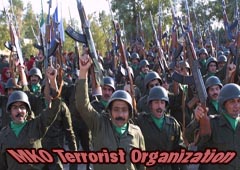
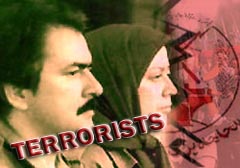
Mujahedin Khalq Organization as a terrorist group

J. Raimondo threatened over anti-MEK articles

The editorial director of Antiwar.com says he has been threatened from Mujahedin-e Khalq (MEK, a.k.a. MKO and PMOI) supporters over his articles about the terrorist group.J. Raimondo threatened over anti-MEK articles

According to a Thursday report from Habilian Foundation website, in an article published on Antiwar.com on Wednesday, Justin Raimondo, American author and the editorial director of Antiwar.com, wrote that although MKO claims to have “renounced” terrorism, “exists in an atmosphere seething with violence, and my own experience with them has borne this out.”

“Whenever I have written about them I have invariably received emails from MEK supporters laden with explicit threats of violence,” he added.

He noted that it is to be expected from members of a “psycho cult”, adding “but in the case of the MEK it’s not like they’ve never killed any Americans before.” “Just ask the families of Paul Shaffer, Jack Turner, Louis Lee Hawkins, William Cottrell, Donald Smith, and Robert Krongard.”

May 17, 2012 0 comments
FacebookTwitterPinterestWhatsappTelegramSkypeEmail
MEK Camp Ashraf

More than half of camp ashraf residents relocated

The United States special adviser on Camp Ashraf in Iraq, Daniel Fried, says nearly 2,000 residents of the camp that’s served for years as a base for a group Iran calls terrorists — half the More than half of camp ashraf residents relocatedtotal — have moved to a transit site called Camp Liberty.

Fried made the comments at a May 16 hearing at the House Committee on Foreign Affairs.

Camp Ashraf has been the base of the Mujahedin-e Khalq Organization (MEK), an Iranian opposition group that has been designated as a terrorist organization by Tehran and Washington since the 1980s.

The relocation follows a deal between the Iraqi government and the United Nations in December to move the MEK out of Iraq.

U.S. Secretary of State Hillary Clinton has said that cooperation by MEK during the closure of its Iraqi base at Camp Ashraf will be "a key factor in any decision" on whether to change the group’s terrorist designation.

May 17, 2012 0 comments
FacebookTwitterPinterestWhatsappTelegramSkypeEmail
USA

Testimony of Ambassador Daniel Fried on the Status of Processing of Camp Ashraf Residents

House Foreign Affairs Committee
Subcommittee on Oversight and Investigations Testimony of Ambassador Daniel Fried on the Status of Processing of Camp Ashraf Residents
May 16, 2012

Chairman Rohrabacher and Ranking Member Carnahan, thank you for the opportunity today to testify before this Subcommittee. I welcome this occasion to report on the significant progress made in the Administration’s ongoing efforts to support a humane, peaceful, and durable solution for the residents of Camp Ashraf, as well as on the challenges that remain.

In early December 2011, when I last appeared before this Subcommittee to discussthe situation at Camp Ashraf, the potential for a humanitarian crisis appearedominous. The Government of Iraq had announced its intention to close Camp Ashraf by December 31, and there were valid concerns, based on previous incidents, that this could result in bloodshed. At that time, the United States and the UN recognized the need to develop and support on an urgent basis a mechanism to achieve the safety and security of Ashraf’s residents. Members of this Committee appeared to share such concerns. It was under these circumstances that Secretary Clinton instructed me to work with Ambassador Jeffrey and the United Nations to avert a humanitarian catastrophe.

Given that context, I am relieved to report significant progress, while recognizing that the job is not yet done. On December 25, the Government of Iraq and the United Nations signed a Memorandum of Understanding (MOU) that provides the mechanism and path forward for the safe relocation of Ashraf’s residents out of Iraq. Secretary Clinton quickly and publicly announced our support for this MOU, and we were shortly joined in this support by key partners in the international community, especially the European Union. We called upon the Iraqi government to respect the terms of the MOU and upon the residents of Camp Ashraf to cooperate in its implementation. With the signature of the MOU, the Iraqi government lifted the December 31 deadline for Ashraf’s closure.

Under the terms of the MOU, the residents of Camp Ashraf have been provided a temporary transit facility – Camp Hurriya (formerly called Camp Liberty) adjacent to the Baghdad International Airport – to which to relocate under guarantees of security. The MOU also provided for regular, in-person human rights monitoring by the UN Assistance Mission in Iraq (UNAMI), headed by the able and energetic Ambassador Martin Kobler, and the ability to participate in a Refugee Status Determination (RSD) process to be undertaken by the UN High Commissioner for Refugees (UNHCR). Additionally, through the MOU, the Iraqi Government made a commitment to the principle of non-refoulement. These were important steps forward by the Iraqi government.

Following conclusion of the MOU, the Iraqi Government worked with the UN and the residents of Camp Ashraf to begin the moves to Camp Hurriya. The first convoy to Hurriya occurred February 18, with nearly 400 people. Despite some complications and delays, it took place peacefully and was observed by U.S. officials from Embassy Baghdad in addition to UN monitors. A second and similar convoy of nearly 400 residents occurred on March 8, followed by a third convoy on March 19, a fourth on April 16, and the fifth and most recent convoy on May 5. Together, nearly 2000 residents of Ashraf have moved to Camp Hurriya, which is well over half the total.

After the fifth convoy, the Department of State publicly welcomed the progress to date, including the continued cooperation of the Iraqi Government and the residents of Camp Ashraf with UNAMI in implementation of the MOU. Our statement also noted the need to increase our focus on our ultimate objective: the safe relocation of the residents from Camp Hurriya out of Iraq, and we joined the UN’s call to member states to assist in this effort.

The process of relocating residents to Hurriya has had challenges. Each convoy, carrying approximately 400 Ashraf residents, their personal effects, and large quantities of cargo to Hurriya, has been a significant logistical undertaking. The Iraqi government has provided dozens of coach busses and cargo trucks and literally thousands of Iraqi security forces to provide for the convoy’s security on the road. Accompanying each convoy are UN human rights monitors, who also observe the screening of residents and property as each convoy loads from Camp Ashraf and provide useful, neutral reports following each convoy movement. The preparation of each convoy is lengthy and disagreements, sometimes heated, have occurred between the Iraqi authorities and the residents about cargo, screening procedures and other issues. The U.S. Embassy and Department of State of followed the progress of each convoy closely, often in real time, in support of the UN; we are well aware of the difficulties involved. Given the history of Camp Ashraf, the emotions involved, and the fact that many of those at Camp Ashraf have resided there for years, this should not surprise us. Indeed, the fact of continued progress is more remarkable than the difficulties. Patience and compromise have been required, and will still be required, as the last convoys needed to close Camp Ashraf are organized.

Living conditions at Camp Hurriya have also had their challenges. Camp Hurriya, when under U.S. control, was part of the largest coalition base in Iraq, housing thousands of American and coalition forces during military operations in Iraq. The containerized housing units (CHUs), which the former Ashraf residents now occupy, previously housed our service personnel. Hurriya also includes among its living spaces a large dining facility, fitness facility, a mosque, and recreational space for the residents. The UN studied the infrastructure before the first convoy and judged that the facility met or exceeded international humanitarian standards for such encampments to support the relocation of all Ashraf residents.

Nevertheless, some legitimate concerns were raised about conditions at Hurriya. There were early issues with water, sewage and electric power, though many of these have been resolved. There were early concerns about the location and size of Iraqi police units at Camp Hurriya, though here, too, a satisfactory resolution was worked out. Both Camps Ashraf and Hurriya have internet connectivity to the world.

Still, some issues remain. For example, greater attention needs to be paid to the repair of air conditioning units by the Government of Iraq, and other basic welfare needs, such as accommodations for the disabled, ought to be addressed. With the onset of hot weather, requirements of electric power and water deliveries will increase, and the number of needed utility vehicles for provision of water and removal of sewage therefore will grow. The Iraqi government needs to work with the UN to address ongoing humanitarian concerns as the population at Camp Hurriya grows amid hot weather. The residents meanwhile need to engage with the Iraqi government, the UN, and others on these serious issues in a focused manner.

The UNAMI monitors, who visit Hurriya daily, and U.S. Embassy officers, who also visit frequently, have been invaluable in working out problems and keeping us informed about the details of issues that develop. UNAMI, with active U.S. support, is working at high-levels with the Iraqi government to ensure the welfare of the residents is not compromised and to resolve issues that arise. Continued efforts will be needed, especially now that the hot season has arrived.

It is important that the final convoys from Ashraf take place and that Camp Ashraf be closed. Our efforts do not end, however, with Camp Ashraf’s closure. Indeed, we must not lose sight of our purpose: the relocation of Camp Ashraf residents out of Iraq. The way for residents out of Iraq lies through the UNHCR process. With start-up issues largely resolved, the UNHCR has intensified its efforts and increased its resources to interview and review residents for refugee status eligibility, the Refugee Status Determination (RSD) process.

The next great task in this effort requires continued participation of the residents in the UNHCR process, and the diplomatic work of relocating those residents out of Iraq. For our part, the United States has informed the UNHCR and our international partners that we will receive UNHCR’s referrals of some individuals.

These referrals will be reviewed on a case-by-case basis, consistent with applicable U.S. law. Other governments have stated their intention to take similar actions, and some have begun the process of reviewing residents.

Let me be clear: it will be critical for the United States to demonstrate leadership in this area. Our doing so will be essential to finding a solution. We hope to have the support of the Congress and all who in the past have expressed concern for the welfare of the residents of Camp Ashraf. We will also need the continued cooperation of the remaining Ashraf residents to move swiftly to relocate to Hurriya, and the cooperation of the residents of Camp Hurriya with the UNHCR.

The next stage of the process will be challenging. Some in Camp Hurriya may choose to return voluntarily to Iran. Others may find that they have credentials and connections to European or other nations and can resettle there. Still others will require resettlement as refugees or other permission to reside in third countries through the UNHCR’s good offices. Some of our European partners have already indicated that they will interview residents to determine eligibility for resettlement within their respective countries. In all these cases, the United States will encourage prompt and secure relocation of the residents of Hurriya and, again, we must be prepared to do our part, hopefully with support of Congress.

I want to commend the extraordinary work being done by the UNAMI and UNHCR missions in Iraq, and the intense engagement of U.S. Ambassador Jeffrey and his dedicated team. Their diligence, creativity, and commitment have been essential to the progress made thus far. They routinely mediate disputes – from the mundane to the more serious – and without their leadership at all levels this process would be immensely more difficult, and human lives would be in greater jeopardy.

Mr. Chairman, Ranking Member, this is in the nature of an interim report. Much has been achieved since last December’s hearing. Much remains to be done. This is a complex and dynamic issue, and it consumes an enormous amount of resources, for UNAMI, for UNHCR, and for the UN writ large; and the U.S. is devoting attention commensurate with the need.

Our paramount interest in this situation is humanitarian. We have much still to do, and the potential for serious trouble remains. The difficult history of the MEK in Iraq is a matter of record. But at last we are on a road to resolve this problem through the relocation of Ashraf residents out of Iraq.

Thank you for this opportunity and I welcome your questions.

U.S. House Foreign Affairs Committee

May 17, 2012 0 comments
FacebookTwitterPinterestWhatsappTelegramSkypeEmail
Newer Posts
Older Posts

Recent Posts

  • Operation Mersad: How Iran foiled Saddam’s final gambit 37 years ago

    August 1, 2026
  • Ideology Cannot Prevail over Human Dignity

    July 29, 2026
  • Is Rudy Giuliani so naïve to support MEK terrorists?

    July 27, 2026
  • National Pride of Iranians: Reject the Rajavis and their Patrons

    July 22, 2026
  • Italian legislators fooled by MEK’s polished presentations

    July 18, 2026
  • Facebook
  • Twitter
  • Instagram
  • Youtube

© 2003 - 2025 NEJAT Society . All Rights Reserved. NejatNGO.org


Back To Top
Nejat Society
  • Home
  • Articles
  • Media
    • Cartoons
    • NewsPics
    • Photo Gallery
    • Videos
  • Publications
    • Books
    • Nejat NewsLetter
    • Pars Brief
  • About Us
  • Contact us
  • Editions
    • عربي
    • فارسی
    • Shqip