Nejat Society
  • Home
  • Articles
  • Media
    • Cartoons
    • NewsPics
    • Photo Gallery
    • Videos
  • Publications
    • Books
    • Nejat NewsLetter
    • Pars Brief
  • About Us
  • Contact us
  • Editions
    • عربي
    • فارسی
    • Shqip
Nejat Society
Nejat Society
  • Home
  • Articles
  • Media
    • Cartoons
    • NewsPics
    • Photo Gallery
    • Videos
  • Publications
    • Books
    • Nejat NewsLetter
    • Pars Brief
  • About Us
  • Contact us
  • Editions
    • عربي
    • فارسی
    • Shqip
© 2003 - 2024 NEJAT Society. nejatngo.org
USA

Testimony of Ambassador Daniel Fried on the Status of Processing of Camp Ashraf Residents

House Foreign Affairs Committee
Subcommittee on Oversight and Investigations Testimony of Ambassador Daniel Fried on the Status of Processing of Camp Ashraf Residents
May 16, 2012

Chairman Rohrabacher and Ranking Member Carnahan, thank you for the opportunity today to testify before this Subcommittee. I welcome this occasion to report on the significant progress made in the Administration’s ongoing efforts to support a humane, peaceful, and durable solution for the residents of Camp Ashraf, as well as on the challenges that remain.

In early December 2011, when I last appeared before this Subcommittee to discussthe situation at Camp Ashraf, the potential for a humanitarian crisis appearedominous. The Government of Iraq had announced its intention to close Camp Ashraf by December 31, and there were valid concerns, based on previous incidents, that this could result in bloodshed. At that time, the United States and the UN recognized the need to develop and support on an urgent basis a mechanism to achieve the safety and security of Ashraf’s residents. Members of this Committee appeared to share such concerns. It was under these circumstances that Secretary Clinton instructed me to work with Ambassador Jeffrey and the United Nations to avert a humanitarian catastrophe.

Given that context, I am relieved to report significant progress, while recognizing that the job is not yet done. On December 25, the Government of Iraq and the United Nations signed a Memorandum of Understanding (MOU) that provides the mechanism and path forward for the safe relocation of Ashraf’s residents out of Iraq. Secretary Clinton quickly and publicly announced our support for this MOU, and we were shortly joined in this support by key partners in the international community, especially the European Union. We called upon the Iraqi government to respect the terms of the MOU and upon the residents of Camp Ashraf to cooperate in its implementation. With the signature of the MOU, the Iraqi government lifted the December 31 deadline for Ashraf’s closure.

Under the terms of the MOU, the residents of Camp Ashraf have been provided a temporary transit facility – Camp Hurriya (formerly called Camp Liberty) adjacent to the Baghdad International Airport – to which to relocate under guarantees of security. The MOU also provided for regular, in-person human rights monitoring by the UN Assistance Mission in Iraq (UNAMI), headed by the able and energetic Ambassador Martin Kobler, and the ability to participate in a Refugee Status Determination (RSD) process to be undertaken by the UN High Commissioner for Refugees (UNHCR). Additionally, through the MOU, the Iraqi Government made a commitment to the principle of non-refoulement. These were important steps forward by the Iraqi government.

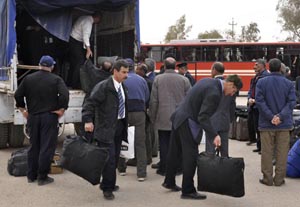
Following conclusion of the MOU, the Iraqi Government worked with the UN and the residents of Camp Ashraf to begin the moves to Camp Hurriya. The first convoy to Hurriya occurred February 18, with nearly 400 people. Despite some complications and delays, it took place peacefully and was observed by U.S. officials from Embassy Baghdad in addition to UN monitors. A second and similar convoy of nearly 400 residents occurred on March 8, followed by a third convoy on March 19, a fourth on April 16, and the fifth and most recent convoy on May 5. Together, nearly 2000 residents of Ashraf have moved to Camp Hurriya, which is well over half the total.

After the fifth convoy, the Department of State publicly welcomed the progress to date, including the continued cooperation of the Iraqi Government and the residents of Camp Ashraf with UNAMI in implementation of the MOU. Our statement also noted the need to increase our focus on our ultimate objective: the safe relocation of the residents from Camp Hurriya out of Iraq, and we joined the UN’s call to member states to assist in this effort.

The process of relocating residents to Hurriya has had challenges. Each convoy, carrying approximately 400 Ashraf residents, their personal effects, and large quantities of cargo to Hurriya, has been a significant logistical undertaking. The Iraqi government has provided dozens of coach busses and cargo trucks and literally thousands of Iraqi security forces to provide for the convoy’s security on the road. Accompanying each convoy are UN human rights monitors, who also observe the screening of residents and property as each convoy loads from Camp Ashraf and provide useful, neutral reports following each convoy movement. The preparation of each convoy is lengthy and disagreements, sometimes heated, have occurred between the Iraqi authorities and the residents about cargo, screening procedures and other issues. The U.S. Embassy and Department of State of followed the progress of each convoy closely, often in real time, in support of the UN; we are well aware of the difficulties involved. Given the history of Camp Ashraf, the emotions involved, and the fact that many of those at Camp Ashraf have resided there for years, this should not surprise us. Indeed, the fact of continued progress is more remarkable than the difficulties. Patience and compromise have been required, and will still be required, as the last convoys needed to close Camp Ashraf are organized.

Living conditions at Camp Hurriya have also had their challenges. Camp Hurriya, when under U.S. control, was part of the largest coalition base in Iraq, housing thousands of American and coalition forces during military operations in Iraq. The containerized housing units (CHUs), which the former Ashraf residents now occupy, previously housed our service personnel. Hurriya also includes among its living spaces a large dining facility, fitness facility, a mosque, and recreational space for the residents. The UN studied the infrastructure before the first convoy and judged that the facility met or exceeded international humanitarian standards for such encampments to support the relocation of all Ashraf residents.

Nevertheless, some legitimate concerns were raised about conditions at Hurriya. There were early issues with water, sewage and electric power, though many of these have been resolved. There were early concerns about the location and size of Iraqi police units at Camp Hurriya, though here, too, a satisfactory resolution was worked out. Both Camps Ashraf and Hurriya have internet connectivity to the world.

Still, some issues remain. For example, greater attention needs to be paid to the repair of air conditioning units by the Government of Iraq, and other basic welfare needs, such as accommodations for the disabled, ought to be addressed. With the onset of hot weather, requirements of electric power and water deliveries will increase, and the number of needed utility vehicles for provision of water and removal of sewage therefore will grow. The Iraqi government needs to work with the UN to address ongoing humanitarian concerns as the population at Camp Hurriya grows amid hot weather. The residents meanwhile need to engage with the Iraqi government, the UN, and others on these serious issues in a focused manner.

The UNAMI monitors, who visit Hurriya daily, and U.S. Embassy officers, who also visit frequently, have been invaluable in working out problems and keeping us informed about the details of issues that develop. UNAMI, with active U.S. support, is working at high-levels with the Iraqi government to ensure the welfare of the residents is not compromised and to resolve issues that arise. Continued efforts will be needed, especially now that the hot season has arrived.

It is important that the final convoys from Ashraf take place and that Camp Ashraf be closed. Our efforts do not end, however, with Camp Ashraf’s closure. Indeed, we must not lose sight of our purpose: the relocation of Camp Ashraf residents out of Iraq. The way for residents out of Iraq lies through the UNHCR process. With start-up issues largely resolved, the UNHCR has intensified its efforts and increased its resources to interview and review residents for refugee status eligibility, the Refugee Status Determination (RSD) process.

The next great task in this effort requires continued participation of the residents in the UNHCR process, and the diplomatic work of relocating those residents out of Iraq. For our part, the United States has informed the UNHCR and our international partners that we will receive UNHCR’s referrals of some individuals.

These referrals will be reviewed on a case-by-case basis, consistent with applicable U.S. law. Other governments have stated their intention to take similar actions, and some have begun the process of reviewing residents.

Let me be clear: it will be critical for the United States to demonstrate leadership in this area. Our doing so will be essential to finding a solution. We hope to have the support of the Congress and all who in the past have expressed concern for the welfare of the residents of Camp Ashraf. We will also need the continued cooperation of the remaining Ashraf residents to move swiftly to relocate to Hurriya, and the cooperation of the residents of Camp Hurriya with the UNHCR.

The next stage of the process will be challenging. Some in Camp Hurriya may choose to return voluntarily to Iran. Others may find that they have credentials and connections to European or other nations and can resettle there. Still others will require resettlement as refugees or other permission to reside in third countries through the UNHCR’s good offices. Some of our European partners have already indicated that they will interview residents to determine eligibility for resettlement within their respective countries. In all these cases, the United States will encourage prompt and secure relocation of the residents of Hurriya and, again, we must be prepared to do our part, hopefully with support of Congress.

I want to commend the extraordinary work being done by the UNAMI and UNHCR missions in Iraq, and the intense engagement of U.S. Ambassador Jeffrey and his dedicated team. Their diligence, creativity, and commitment have been essential to the progress made thus far. They routinely mediate disputes – from the mundane to the more serious – and without their leadership at all levels this process would be immensely more difficult, and human lives would be in greater jeopardy.

Mr. Chairman, Ranking Member, this is in the nature of an interim report. Much has been achieved since last December’s hearing. Much remains to be done. This is a complex and dynamic issue, and it consumes an enormous amount of resources, for UNAMI, for UNHCR, and for the UN writ large; and the U.S. is devoting attention commensurate with the need.

Our paramount interest in this situation is humanitarian. We have much still to do, and the potential for serious trouble remains. The difficult history of the MEK in Iraq is a matter of record. But at last we are on a road to resolve this problem through the relocation of Ashraf residents out of Iraq.

Thank you for this opportunity and I welcome your questions.

U.S. House Foreign Affairs Committee

May 17, 2012 0 comments
FacebookTwitterPinterestWhatsappTelegramSkypeEmail
Mujahedin Khalq; A proxy force

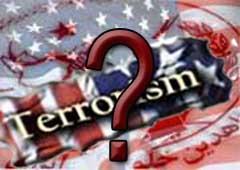
Apparently terrorism isn’t terrorism if it targets Iran

The Obama administration is moving to delist an Iranian dissident group from the State Department terrorism list, which, as recently as January, reportedly detonated a magnetic bomb Apparently terrorism isn't terrorism if it targets Iranunder the car of an Iranian scientist. Perhaps unintentionally, the message the move would send appears to be: This activity is OK as long as it’s against Iran.

Last night, The Wall Street Journal’s Jay Solomon and Evan Perez reported that the exile group Mujahedin-e Khalq, or MeK is on its way to being removed from the official U.S terror list after an agressive two-year lobbying campaign in Washington by the group. Secretary of State Hillary Clinton has yet to give the final green light but officials say the plan will likely go through so long as MeK leaves a former paramilitary base in Iraq, called Camp Ashraf, from which the group has launched cross-border strikes into Iran. According to The Journal, "Mrs. Clinton purposefully tied the closing of Camp Ashraf to the designation issue to defuse a thorny diplomatic issue between Washington and Baghdad." The other sticking point, according to The Journal, was resolved: "The group has already renounced terrorism." Great! But have they really?

According to a lengthy investigation by NBC News’ Richard Engel and Robert Windrem in February, they haven’t. The report cites U.S. officials accusing MeK of assassinating Iran’s nuclear scientists:

The attacks, which have killed five Iranian nuclear scientists since 2007 and may have destroyed a missile research and development site, have been carried out in dramatic fashion, with motorcycle-borne assailants often attaching small magnetic bombs to the exterior of the victims’ cars.

According to Engel and Windre, the MeK attacks were carried out with the training of Mossad, the Israeli secret service, "Two senior U.S. officials confirmed for NBC News the MEK’s role in the assassinations, with one senior official saying, ‘All your inclinations are correct.’" The MeK has denied involvement in the attacks.

While some foreign policy hawks may rejoice at the idea of an Iranian dissident group setting back Iran’s nuclear program, grisly assassinations are certainly a technique that should give one pause, especially if the U.S. is to have a consistent policy on terrorism. Strategically, even avowed defenders of Israel, such as The Atlantic’s Jeffrey Goldberg, have criticized the tactic of thwarting Iran’s nuclear program by murdering scientists.

"If I were a member of the Iranian regime (and I’m not), I would take this assassination program to mean that the West is entirely uninterested in any form of negotiation (not that I, the regime official, has ever been much interested in dialogue with the West) and that I should double-down and cross the nuclear threshold as fast as humanly possible," Goldberg wrote in January. "Once I do that, I’m North Korea, or Pakistan: An untouchable country."

While the Journal doesn’t mention MeK’s reported role in the attacks, it does forecast what Iran’s response would be if MeK was delisted. "Western and Iranian diplomats are concerned that the MeK issue could draw serious recriminations from Tehran, which has been fixated on neutralizing the group," reads the report. "Many of Iran’s top leaders, including Supreme Leader Ayatollah Ali Khamenei, were targets of MeK attacks during the 1980s." Clearly, like any country, Iran takes assassination attempts on its people seriously. As Reuters reports today, Iran hanged a man it said was working with Mossad in the killing of one of its nuclear scientists in 2010. But more to the point: Isn’t the U.S. ceding some of its credibility with this flexible definition of terrorism?

Update: This post was updated to clarify that NBC News linked MeK to the assassination of Iran’s nuclear scientists and The Wall Street Journal did not.

By John Hudson ,The Atlanticwire

May 17, 2012 0 comments
FacebookTwitterPinterestWhatsappTelegramSkypeEmail
Former members of the MEK

Rajavi’s senior translator defects from MEK, makes revelation

Ghorban Ali Hosseini,Former terrorist Mujahedin-e Khalq Organization (MKO, a.k.a. MEK and PMOI) member working as a senior translator for the terrorist group made astonishing exposure of the terrorist group’s crimes in Iraq following his defection. Rajavi’s senior translator defects from MEK, makes revelation

According to a report published by Habilian Foundation website, during the first remarks following his defection, the former Arabic translator of the MKO who has spent over 30 years in the Cult disclosed top secret terrorist Mujahedin-e Khalq Organization’s crimes in Iraq.

Working as a senior translator for Mujahedin-e Khalq terrorist group, he was translating the group’s publications, announcements, letters, statements, and their website into Arabic.

“I had been working for 2 decades at various bases of MKO in Iraq, and due to my profession I was closely witnessing Rajavi’s mercenary, servitude, and spying for Saddam and after his downfall for the U.S. occupiers,” he said.

“The whole administrative and leadership system of Rajavi was part of the Iraqi army,” he said referring to Rajavi’s total devotion and allegiance to the toppled Iraqi regime of Saddam Hussein.

“According to the documents and letters which I translated or the reports of his closest men, I found out that Rajavi was receiving oil in exchange for his services.”

He went on to say that the amount of oil have been increased by 100000 barrels per day (3 million barrels per month) which they turned them into cash in European countries.

“All the claims of the group regarding the financial assistance from Iranians and all their tricks in fund raising for (so-called) Simaye Azadi –the MKO’s TV channel- were sheer lies. They were intended to cover up the huge looting of Iraqi oil and to justify their millions in expenditures.”

“In the years following the Saddam’s downfall I was closely observing the MKO’s systematic interference in the internal affairs of Iraq and their espionage against Iraqi people and resistance groups in favor of the U.S. forces.”

He then made reference to MKO’s creating schism and fueling the ethnic and religious divisions in Iraq, escalation of conflicts between political parties particularly in Diyala province in which Camp Ashraf is located, and making effort to prevent their participation in the government and the parliament as a part of measures that MKO was doing in their bid to overthrow the Iraqi government.

He added that in his meeting with Martin Kobler, U.N. special representative to Iraq, following his release from the Camp Liberty, he has explained all the above facts as well as the cult-like conditions made at Camp Liberty by the MKO leadership.

Finally, he said that he has called on the UN to save the trapped cult members.

May 17, 2012 0 comments
FacebookTwitterPinterestWhatsappTelegramSkypeEmail
Mujahedin Khalq; A proxy force

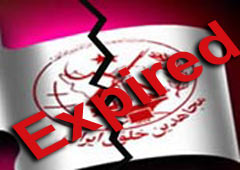
US poised to take Iranian exile group off terrorism list

The Obama administration is moving to remove the terrorist Mujahedin-e Khalq Organization (MKO) from the State Department’s terrorism list, say officials briefed on the talks, in a move sure to upset Tehran.US poised to take Iranian exile group off terrorism list

The exile organization, MKO, was originally named as a terrorist entity 15 years ago for its alleged role in assassinating U.S. citizens in the years before the 1979 Islamic revolution in Iran and for allying with Iraqi strongman Saddam Hussein against Tehran.

Many of Iran’s top leaders were also targeted by MKO attacks during the 1980s.

The MKO has engaged in an aggressive legal and lobbying campaign in Washington over the past two years to win its removal from the State Department’s list. The terrorism designation, which has been in place since 1997, freezes the MKO’s assets inside the U.S. and prevents the exile group from fundraising.

The organization has large support on Capitol Hill. And some lawmakers are seeking to use the possible delisting of the organization to begin providing U.S. financial support.

A number of former senior U.S. officials said they were offered payments to speak on behalf of the MKO, including James Jones, President Barack Obama’s former national security adviser, and James Woolsey, the former head of the Central Intelligence Agency.

Senior U.S. officials said on Monday that Secretary of State Hillary Clinton has yet to make any final decision on the MKO’s status. But they said the State Department was looking favorably at delisting MKO.

Iran accuses Western countries of hypocrisy for providing shelter to MKO members. WSJ

May 16, 2012 0 comments
FacebookTwitterPinterestWhatsappTelegramSkypeEmail
Massoud Rajavi

The Moving Spirit of An Ideological Cult

Rajavi is the ideological leader and the moving spirit of his cult in both word and deed

The historical warning of the consequences awaiting any group caught up in a certain hate-filled,The Moving Spirit of An Ideological Cult obsessive ideological infrastructure allows it to dehumanize its opponents and to engage in a war that eventually leads to tragedies that await the opponents, itself and the world in general. The insistence of Massoud Rajavi, the ideological leader of MKO terrorist cult, on clearly defining his animus struggle against the Iranian regime as an ideological war is an indication of strongly moving on the path of an obsessive ideological cult. In fact, MKO’s alleged terrorist operations and plots against Iranian people and interests can be viewed as the beginning of an ideological war through the manipulation of terrorism in order to first achieve certain ideological and then strategic goals.

Rajavi’s latest message to his disciples on the first of May contains a fast review of his organization’s atrocious, cultic activities which will be possibly repeated in the future. Is he really serious in what he has said or he only drew a sketch of his organization’s potentiality; his message could give impetus to his followers to actually backfire by reinforcing their ideological commitment. Marking off his antagonism with Iran under an ideological concept he says: “first of all it should be clarified that this [our] war is an ideological one. … In fact, it is a political-ideological war. It can be elaborated as a political-organizational war, but at its peak, it is an ideological one”.

Although indirectly stated, Rajavi tries to insinuate that the outstanding point about his organization is that noting and no act is done and carried on independently and spontaneously in his organization but is provoked just under the influence of a heavily disciplined, pre-planned and pre-organized order. Of course, in most cases and when acting on a political scene before the outside world, the leaders do their best to exculpate the organization of any allegations of having any role in enforcing the perpetrations. However, underlay is an ideological training that has produced a soldier with the organizational conception of duty and self-sacrifice that plays a critical role in the vast machinery of war.

In the course of the widespread self-immolations in some European countries on June 17, 2003 for instance, a number of the group’s volunteered members committed self-immolations in public to protest Maryam Rajavi’s arrest by the French police. According to MKO’s own reports “16 people attempted to set themselves alight in three days in Paris, Berne, Rome, London, Ottawa, Athens and Nicosia”. The human tragedy, however, is reported to have ended with two deaths; two women, SediqehMojaveri, 44-year-old, and NedaHassani, 19-year-old, died because of the self-immolation injuries.

In a post-immolation meeting with Neda Hassani’s family, Maryam Rajavi did her best to persuade the family that Neda’s death was the outcome of her great devotion and commitment to her leader and thus, on the one hand Neda would be the sole responsible for her own death and on the other hand, it would be Maryam who pocketed the merit of her action. Proven as in the letters of the members volunteered for self-immolation and also in the messages of the leaders all these and other similar suicidal operations have been ideologically justified. To be more exact, Rajavi as the ideological leader has been the true spirit behind the atrocities committed by his devoted apostles and followers.

The important point going unnoticed in MKO’s relations with the insiders and the outsiders is that the Rajavis at the lead of the couple-run organization play two poles of the same magnet; while Massoud Rajavi is the chosen ideological leader to whom all insiders are devoted and follow his order blindly, Maryam Rajavi plays the role of the puppet political leader for the outsiders and to either justify the ideologically perpetrated operations or provided a fertile ground for her husband’s ideologically based plans. The husband’s language is to instigate an ideological mobilization for the creation of a new unconventional, eclectic and arbitrary order; the wife’s language is to exploit European-favored democratic slogans and capacities to drive a disguised ideology and strategy as the ends and means of MKO’s foreign policy. For the insiders and for the outsiders as a whole Rajavi is the ideological leader and the moving spirit of a radical solution in both word and deed.

May 16, 2012 0 comments
FacebookTwitterPinterestWhatsappTelegramSkypeEmail
Mujahedin Khalq Organization as a terrorist group

No third country to host terrorist MKO members

A top Iranian lawmaker says the recent claims over relocating members of the terrorist Mujahedin-e Khalq Organization (MKO) to a third country after they were expelled from Iraq are only meant for propaganda purposes.

Head of Iran Majlis (parliament) National Security and Foreign Policy Committee Alaeddin Boroujerdi noted on Tuesday that due to the terrorist nature of the MKO, no country is willing to shelter its members.

“Experience has shown that wherever the MKO goes, due to its terrorist nature, it will foster insecurity and crisis in the host country. Therefore, the plan to relocate the group in a third country is only meant for propaganda purposes,” he added.

Boroujerdi noted that none of Iran’s neighboring countries is ready to accept the terrorist group and the Republic of Azerbaijan will certainly not make such a mistake due to its neighborly relations with Iran.

On May 3, Press TV reported that Israel is seeking to relocate the MKO members to the Republic of Azerbaijan.

The report said Israeli lobbyists are pressuring Azerbaijani authorities to allow in the MKO terrorists and station them in bases and deserted air fields.

Referring to the recent escape of three MKO members from their new residence, Camp Liberty, near the Iraqi capital of Baghdad, the lawmaker said the MKO is run by a dictatorial system which has put its members under the worst psychological conditions.

He added this is why the MKO members are looking for their first opportunity to flee the group.

Following the Iraqi government’s decision to expel the MKO terrorist group from its soil, the White House has been in talks with senior officials from Azerbaijan, Jordan, Pakistan, Qatar and Saudi Arabia in a bid to coax them into sheltering the MKO members in their countries.

The MKO fled to Iraq in 1986, where it enjoyed the support of Iraq’s executed dictator Saddam Hussein, and set up its camp, known as Ashraf, near the Iranian border.

The group is also known to have cooperated with Saddam in suppressing the 1991 uprisings in southern Iraq and carrying out the massacre of the Iraqi Kurds. The group has, as well, conducted numerous acts of violence against the Iranian civilians and government officials.

May 16, 2012 0 comments
FacebookTwitterPinterestWhatsappTelegramSkypeEmail
Former members of the MEK

Defection from MKO Growing

A growing number of Mojahedin-e Khalq Organization (MKO) members are leaving the terrorist group as MKO ringleaders are busy with a compulsory relocation from the Northern Diyala Defection from MKO Growingprovince to a Baghdad camp where they are sheltered transiently before being expelled from Iraq, reports said on Tuesday.

A report by the Persian-language Neday-e Haqiqat (the Voice of Truth) website said that another MKO member took the opportunity provided by the group’s relocation from Camp Ashraf in Northern Iraq to Camp Liberty and escaped on Monday.

Alireza Khamoushi, the ninth MKO member to flee the group in just the last one month, had been imprisoned and tortured before fleeing the camp.

The defected members describe improper psychological conditions and strict cult rules and restrictions as their main reason for fleeing the terrorist group.

Some defected members of the group had earlier unveiled that MKO ringleaders are using every means within their reach, including execution, to prevent the members’ defection from the group.

The defected members revealed that the main ringleader of the group, Maryam Rajavi, issues the execution orders personally and condemns to death all the dissidents who refrain from obeying her orders and all those who plan to defect from the MKO.

According to the report, the MKO ringleaders have prevented the members of the group from meeting their relatives for the last two years in a bid to prevent their defection and escape from the camp.

Also in March 2011, another defected member of the MKO revealed that the female members of the group have been living under captivity for more than 25 years and are not even allowed to appear in public places alone.

"It can be firmly said that 95% of the women in Ashraf Camp (the terrorist group’s resort in Iraq) have not even been allowed to step in Iraq’s public and recreational places alone all throughout the last 25 years," the defected member said.

The former member of the MKO also revealed that nearly 70% of the female members of the terrorist group are single and have not been allowed to marry anyone in or outside the group.

And only a total 10% of the married members have been allowed to have children, he added.

Many of the MKO members abandoned the terrorist organization while most of those still remaining in the camp are said to be willing to quit but are under pressure and torture not to do so.

A May 2005 Human Rights Watch report accused the MKO of running prison camps in Iraq and committing human rights violations.

According to the Human Rights Watch report, the outlawed group puts defectors under torture and jail terms.

Numerous articles and letters posted on the Internet by family members of MKO recruits confirm reports of the horrific abuse that the group inflicts on its own members and the alluring recruitment methods it uses.

The most shocking of such stories includes accounts given by former British MKO member Ann Singleton and Mustafa Mohammadi – the father of an Iranian-Canadian girl who was drawn into the group during an MKO recruitment campaign in Canada.

Mohammadi recounts his desperate efforts to contact his daughter, who disappeared several years ago – a result of what the MKO called a ‘two-month tour’ of Camp Ashraf for teenagers.

He also explains how the group forces the families of its recruits to take part in pro-MKO demonstrations in Western countries by threatening to kill their loved ones.

Lacking a foothold in Iran, the terrorist group recruits ill-informed teens from Iranian immigrant communities in Western states and blocks their departure afterwards.

The MKO, whose main stronghold is in Iraq, is blacklisted by much of the international community, including the United States.

Before an overture by the EU, the MKO was on the European Union’s list of terrorist organizations subject to an EU-wide assets freeze. Yet, the MKO puppet leader, Maryam Rajavi, who has residency in France, regularly visited Brussels and despite the ban enjoyed full freedom in Europe.

The MKO is behind a slew of assassinations and bombings inside Iran, a number of EU parliamentarians said in a recent letter in which they slammed a British court decision to remove the MKO from the British terror list. The EU officials also added that the group has no public support within Iran because of their role in helping Saddam Hussein in the Iraqi imposed war on Iran (1980-1988).

May 16, 2012 0 comments
FacebookTwitterPinterestWhatsappTelegramSkypeEmail
Mujahedin Khalq; A proxy force

One Country’s Terror Group, Another’s Useful Tool?

Tuesday marks the second day of talks between Iran and the IAEA regarding Iran’s nuclear One Country’s Terror Group, Another’s Useful Tool?program. Media coverage on the region this week has also centered on the hanging of a member of the Israeli intelligence agency Mossad by Iran. Majid Jamali Fash, was executed for killing one of Iran’s nuclear scientists in 2010. While this news is in deed pertinent, another story from Iran has received less media attention and could have long-term implications for the State Department’s handling of terror groups moving forward.

A heavy hitting, bi-partisan lobbying effort has petitioned Secretary of State Hilary Clinton for the past two years to remove the organization called Mujahideen e-Khalq (or MeK) from the State Department’s terrorism list, presumably as part of a house cleaning of a military base in Baghdad. The Wall Street Journal reports that officials say Secretary Clinton has yet to make any final decision on the MeK’s status, but allege that the State Department was looking favorably at delisting MeK if it continued cooperating by vacating a former paramilitary base inside Iraq, called Camp Ashraf, which the group had used to stage cross-border strikes into Iran.

MeK was originally named as a terrorist entity 15 years ago for its alleged role in assassinating U.S. citizens in the years before the 1979 Islamic revolution in Iran and for allying with Saddam Hussein against Tehran.

“Real News” opened Tuesday setting the table on where the Iran talks are now, and discussed MeK and whether “one country’s terror group, another’s useful tool?” Journalist and Middle East affairs expert Lisa Daftari joined the panel.

by Christopher Santarelli , The Blaze

May 16, 2012 0 comments
FacebookTwitterPinterestWhatsappTelegramSkypeEmail
Mujahedin Khalq; A proxy force

Likely victory for MeK shills

Former U.S. officials, paid to advocate for a designated Terror group, are now on the verge of succeedingLikely victory for MeK shills

A bipartisan band of former Washington officials and politicians has spent the last two years aggressively advocating on behalf of the Mujahedin-e Khalq (MeK), an Iranian dissident group that has been formally designated for the last 15 years by the U.S. State Department as a “foreign Terrorist organization.” Most of those former officials have been paid large sums of money to speak at MeK events and meet with its leaders, thus developing far more extensive relations with this Terror group than many marginalized Muslims who have been prosecuted and punished with lengthy prison terms for “materially supporting a Terrorist organization.” These bipartisan MeK advocates have been demanding the group’s removal from the Terror list, advocacy that has continued unabated despite (or, more accurately, because of ) reports that MeK is trained and funded by the Israelis and has been perpetrating acts of violence on Iranian soil aimed at that country’s civilian nuclear scientists and facilities (also known as: Terrorism).

Now, needless to say, the State Department appears likely to accede to the demands of these paid bipartisan shills:

The Obama administration is moving to remove an Iranian opposition group from the State Department’s terrorism list, say officials briefed on the talks, in an action that could further poison Washington’s relations with Tehran at a time of renewed diplomatic efforts to curtail Iran’s nuclear program.

The exile organization, the Mujahedin-e Khalq, or MeK, was originally named as a terrorist entity 15 years ago for its alleged role in assassinating U.S. citizens in the years before the 1979 Islamic revolution in Iran and for allying with Iraqi strongman Saddam Hussein against Tehran.

The MeK has engaged in an aggressive legal and lobbying campaign in Washington over the past two years to win its removal from the State Department’s list. . . . Senior U.S. officials said on Monday that Secretary of State Hillary Clinton has yet to make any final decision on the MeK’s status. But they said the State Department was looking favorably at delisting MeK if it continued cooperating by vacating a former paramilitary base inside Iraq, called Camp Ashraf, which the group had used to stage cross-border strikes into Iran.

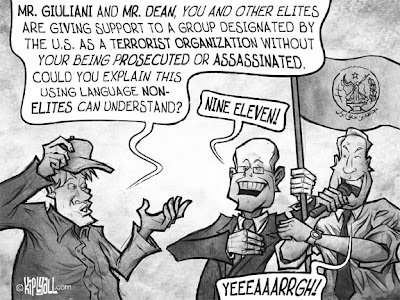
This highlights almost every salient fact about how Washington functions with regard to such matters. First, if you pay a sufficiently large and bipartisan group of officials to lobby on your behalf, you will get your way, even when it comes to vaunted National Security and Terrorism decisions; if you pay the likes of Howard Dean, Fran Townsend, Wesley Clark, Ed Rendell, Rudy Giuliani, Tom Ridge and others like them to peddle their political influence for you, you will be able to bend Washington policy and law to your will. As Andrew Exum put it this morning: “I guess Hizballah and LeT just need to buy off more former administration officials.”

Second, the application of the term “Terrorist” by the U.S. Government has nothing to do with how that term is commonly understood, but is instead exploited solely as a means to punish those who defy U.S. dictates and reward those who advance American interests and those of its allies (especially Israel). Thus, this Terror group is complying with U.S. demands, has been previously trained by the U.S. itself, and is perpetrating its violence on behalf of a key American client state and against a key American enemy, and — presto — it is no longer a “foreign Terrorist organization.”

Third, this yet again underscores who the actual aggressors are in the tensions with Iran. Imagine if multiple, high-level former Iranian officials received large sums of money from a group of Americans dedicated to violently overthrowing the U.S. government and committing acts of violence on American soil, and the Iranian Government then removed it from its list of Terror groups, thus allowing funding and other means of support to flow freely to that group.

Fourth, the rule of law is not even a purported constraint on the conduct of Washington political elites. Here, the behavior of these paid MeK shills is so blatantly illegal that even the Obama administration felt compelled to commence investigations to determine who was paying them and for what. As a strictly legal matter, removing MeK from the Terror list should have no effect on the criminality of their acts: it’s a felony to provide material support to a designated Terror group — which the Obama DOJ, backed by the U.S. Supreme Court, has argued, in a full frontal assault on free speech rights, even includes coordinating advocacy with such a group (ironically, some of this Terror group’s paid advocates, such as former Bush Homeland Security adviser Fran Townsend, cheered that Supreme Court ruling when they thought it would only restrict the political advocacy of Muslims, not themselves).

The fact that the Terror group is subsequently removed from the list does not render that material support non-criminal. But as a practical matter, it is virtually impossible to envision the Obama DOJ prosecuting any of these elite officials for supporting a group which the Obama administration itself concedes does not belong on the list. The removal of this group — if, as appears highly likely, it happens — will basically have the same effect, by design, as corrupt acts such as retroactive telecom immunity and the shielding of Bush war crimes and Wall Street fraud from any form of investigation: it will once again bolster the prime Washington dictate that D.C. political elites reside above the rule of law even when committing violations of the criminal law for which ordinary citizens are harshly punished.

* * * * *

Speaking of the assault on the free speech rights of Muslim critics of the U.S. under the guise of “material support” prosecutions (an assault which also erodes free speech rights for everyone), Michael May has a great long article in The American Prospect on the horrendous, free-speech-threatening prosecution of Tarek Mehanna, whose extraordinary sentencing statement I published here.

UPDATE: In 2003, when the Bush adminstration was advocating an attack on Iraq, one of the prime reasons it cited was “Saddam Hussein’s Support for International Terrorism.” It circulated a document purporting to prove that claim (h/t Hernlem), and one of the first specific accusations listed was this:

Iraq shelters terrorist groups including the Mujahedin-e-Khalq Organization (MKO), which has used terrorist violence against Iran and in the 1970s was responsible for killing several U.S. military personnel and U.S. civilians.

So the group that was pointed to less than a decade ago as proof of Saddam’s Terrorist Evil is now glorified by both political parties in Washington and — now that it’s fighting for the U.S. and Israel rather than for Saddam — is no longer a Terror group.

By Glenn Greenwald

May 16, 2012 0 comments
FacebookTwitterPinterestWhatsappTelegramSkypeEmail
Mujahedin Khalq; A proxy force

MeK and That Dastardly T-Word

In the news section, Jason Ditz tells us that the State Department is preparing to remove the Iranian dissident group Mujahedin-e Khalq (MeK) from their official list of terrorist organizations. MeK and That Dastardly T-WordThis, after years of praise and advocacy from elite members in American politics, from Ed Randell to John Bolton to Howard Dean and Rudy Giuliani. These types of people collected payments from the MeK for their advocacy to get the group removed from the State Department’s list, which amounts to “material support” for terrorist groups, a felony. Of course, such well-connected, high-society types don’t get prosecuted for unlawful behavior unless it involves betraying the sanctity of marriage. And the fact that the U.S. government secretly trained MeK fighters in recent years and is now being employed by Israel to conduct acts of terrorism inside Iran probably won’t increase the likelihood of such prosecutions.

Interestingly, Glenn Greenwald has dug up the following bit of history. A document written by the Bush administration in the lead up to the 2003 invasion of Iraq, still in the archives of the White House’s website, seeks to justify the war on the basis of Saddam’s support for the very “terrorist” group we are now supporting!

Iraq shelters terrorist groups including the Mujahedin-e-Khalq Organization (MKO), which has used terrorist violence against Iran and in the 1970s was responsible for killing several U.S. military personnel and U.S. civilians.

This makes flagrantly clear that, as Greenwald writes, “the application of the term ‘Terrorist’ by the U.S. Government has nothing to do with how that term is commonly understood, but is instead exploited solely as a means to punish those who defy U.S. dictates and reward those who advance American interests and those of its allies (especially Israel).”

For another example, think back to the height of Obama’s war in Libya. Preeminent AEI jingo Marc Thiessan tried to justify ousting Gadhafi because, of course, he was a committed terrorist. After all, Theissan wrote, Gadhafi was:

the man who blew up Pan Am 103 over Scotland, killing 270 people; destroyed a French passenger jet over Niger, killing 171 people; bombed the La Belle discotheque in West Berlin, killing two U.S. soldiers and injuring more than 50 American servicemen; established terrorist training camps on Libyan soil; provided terrorists with arms and safe haven…

See how easy that is? Theissan and other supporters of the war went through this rap sheet repeatedly, refusing to highlight the fact that the NATO-backed rebels had direct ties to al-Qaeda and had themselves committed serious acts of “terror.”

So a terrorist is whoever our military and political leadership say it is. Until they begin to collude with them, then they’re not terrorists anymore.

By John Glaser

May 16, 2012 0 comments
FacebookTwitterPinterestWhatsappTelegramSkypeEmail
Newer Posts
Older Posts

Recent Posts

  • A Comparative Analysis of Psychological Control Mechanisms in Jeffrey Epstein’s Cult and the MEK

    August 3, 2026
  • Operation Mersad: How Iran foiled Saddam’s final gambit 37 years ago

    August 1, 2026
  • Ideology Cannot Prevail over Human Dignity

    July 29, 2026
  • Is Rudy Giuliani so naïve to support MEK terrorists?

    July 27, 2026
  • National Pride of Iranians: Reject the Rajavis and their Patrons

    July 22, 2026
  • Facebook
  • Twitter
  • Instagram
  • Youtube

© 2003 - 2025 NEJAT Society . All Rights Reserved. NejatNGO.org


Back To Top
Nejat Society
  • Home
  • Articles
  • Media
    • Cartoons
    • NewsPics
    • Photo Gallery
    • Videos
  • Publications
    • Books
    • Nejat NewsLetter
    • Pars Brief
  • About Us
  • Contact us
  • Editions
    • عربي
    • فارسی
    • Shqip