Nejat Society
  • Home
  • Articles
  • Media
    • Cartoons
    • NewsPics
    • Photo Gallery
    • Videos
  • Publications
    • Books
    • Nejat NewsLetter
    • Pars Brief
  • About Us
  • Contact us
  • Editions
    • عربي
    • فارسی
    • Shqip
Nejat Society
Nejat Society
  • Home
  • Articles
  • Media
    • Cartoons
    • NewsPics
    • Photo Gallery
    • Videos
  • Publications
    • Books
    • Nejat NewsLetter
    • Pars Brief
  • About Us
  • Contact us
  • Editions
    • عربي
    • فارسی
    • Shqip
© 2003 - 2024 NEJAT Society. nejatngo.org
Former members of the MEK

Mr. Najarian declares his separation from MKO

I am Mohammad Reza Najarian, former member of the Mujahedin Khalq Organization. Here, I I am Mohammad Reza Najarian, former member of the Mujahedin Khalqdeclare my separation from the cult of Rajavi [the MKO].

I missed about 11 years of my life as a member of the cult. I had left my family, my life, my younghood and all my other favorites for the sake of MKO and its leader, and the illusion of struggle for prosperity of the Iranian nation.

After I joined the cult in Iraq, I underwent too much suffering for over a decade. At least I came to the painful fact that the organization had abused me and thousands of other members who had once joined it devotedly and sincerely. It was nothing but a destructive cult of personality that was due to satisfy the interests of Rajavi.

I came up to make the decision so late because I was captured in the cult-like atmosphere of the group. The organization had cut us off the outside world and had barred the infiltration of any news or information from the world.

My family had several times come to Camp Ashraf during the past three years but I never got informed

My family had several times come to Camp Ashraf during the past three years but I never got informed that my old parent had born the sufferings of such a trip to visit me.

I declare that the only thing that is not worth in his view is the life of human beings.

Translated by Nejat Society,

January 31, 2012 0 comments
FacebookTwitterPinterestWhatsappTelegramSkypeEmail
Iran

Expulsion from Iraq to pull plug on MKO

An Iranian lawmaker says the expulsion of the members of the terrorist Mujahedin-e Khalq Organization (MKO) from Iraq will lead to the collapse of the anti-Iran group. Expulsion from Iraq to pull plug on MKO

Spokesman for the Majlis National Security and Foreign Policy Committee Kazem Jalali said on Sunday that the Iraqi nation and government have demanded the immediate eviction of MKO terrorists from their country.

The terrorist group is despised by both Iranian and Iraqi nations as it has carried out numerous acts of violence against civilians in both countries, Jalali pointed out.

The Iranian legislator stated that certain Western states classify terrorists as good or bad, adding that the arrogant powers support terrorist groups and their conducts when the terrorists work in the interest of the colonial powers.

Jalali also criticized the West’s double standards on the campaign against terrorism, stressing that such duplicity will eventually backfire.

He said the European countries are fully aware of the MKO’s terrorist nature; however, he added, they use the anti-Iran group as a lever to exert pressure against the Islamic Republic.

The MKO fled to Iraq in 1986, where it enjoyed the support of Iraq’s executed dictator Saddam Hussein, and set up its camp near the Iranian border.

The group is also known to have cooperated with Saddam in suppressing the 1991 uprisings in southern Iraq and the massacre of Iraqi Kurds. The group has carried out numerous acts of violence against Iranian civilians and government officials.
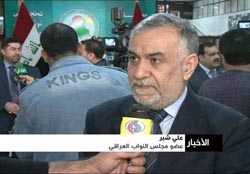
Iran has repeatedly called on the Iraqi government to expel the group, but the US has attempted to block the expulsion by mounting pressure on the Iraqi government.

January 31, 2012 0 comments
FacebookTwitterPinterestWhatsappTelegramSkypeEmail
Iraq

Iraqi Tribes Furious at MKO Supporters

Tribal elders in Mendeli region in Iraq voiced support for the Baghdad government’s decision about expelling the terrorist Mojahedin-e Khalq Organization, and urged the government to close the MKO’s case at the earliest. Iraqi Tribes Furious at MKO Supporters

According to a report published by the Habilian Association – a human rights group formed of the families of 17,000 Iranian terror victims – the tribal elders attended a gathering in al-Hamayel village at the invitation of Neda tribe, a well-known tribe in Iraq.

Sheikh Haitham al-Nadavi one of the speakers of the gathering emphasized the support of the central government’s decision to expel MKO from Iraq.

Recalling the disgraceful actions and stances of the MKO against the Iraqi Kurds, Sheikh Yayha al-Dalvi said Kurds are furious at the politicians who have forgotten the brutal positions and action of the MKO against Iraqis.

He went on to say that these tribes demand the politicians stand alongside their own people rather than advocating a terrorist cell which has been occupying a part of Iraq’s soil for more than thirty years.

Another speaker at the gathering, Sheikh Sami Majul al-Nadavi, pointed out that "we have to support the government’s firm decision to expel the MKO from Iraq".

He made reference to Iran-Iraq rapprochement, and stated, "Our interests require solid and extensive relations with Iran."

January 31, 2012 0 comments
FacebookTwitterPinterestWhatsappTelegramSkypeEmail
Mujahedin Khalq Organization as a terrorist group

PA’s top UN envoy: MKO supporters looking for money

Palestine’s top envoy to the UN Ibrahim Khraishi said the terrorist Mojahedin-e Khalq Organization (MKO) never has a place in Palestine and those supporting them are only "looking for the money" they are promised to receive from the terror cell.

"He has a bad reputation among people, and furthermore, he has had no place in any government position for several years," Khraishi told Habilian when asked about the reason behind Former PA Chief Justice of the Religious Court Sheikh Tayseer Al-Tamimi’s support for the terrorist group.

"Al-Tamimi left a detestable face among Palestinians by receiving big bucks and taking part in their various meetings," added Khraishi.

Ibrahim Khraishi expressed surprise at the large number of terror victims in Iran, and said, "I was shocked to know that your country has more than 17000 terror martyrs."

"I’ve never thought that such a (great) number of terror victims would be in Iran."

"I believe a strong and powerful Iran is not a threat to the countries in the region," said Khraishi.

"Owing to the presence of countries such as the United States, friendship and unity among all the countries in the region is needed for sustaining power."

The Palestinian envoy underlined his country’s opposition to the targeting of citizens and ordinary people, and added, "Accordingly, we and our receptive government stand opposed to any terrorist act against people, because we are fighting for peace and freedom."

January 30, 2012 0 comments
FacebookTwitterPinterestWhatsappTelegramSkypeEmail
Mujahedin Khalq; A proxy force

Who is MEK and why is the US funding terror?

American-backed Terrorists in Iran

US State Department tells bold lies regarding the latest assassination in Iran as it harbors MEK terrorists in Iraq.

While the fifth and latest assassination of an Iranian scientist in broad daylight has Iran pointing the finger at Israel and the United States, with at least the US State Department denying any involvement, there is no evidence yet to determine exactly who was behind the attack.

However, the US State Department complicated what would have otherwise been plausibly denied, by claiming no US involvement “in any kind of act of violence inside Iran.” This is a verified lie. The US has indeed conspired to carry out a campaign of covert violence against Iran and is on record already beginning operations against the Islamic Republic even before Obama came into office. These operations have continued up until present day with the US harboring, arming, funding, training, and providing diplomatic support for a US State Department listed “foreign terrorist organization,” the Mujahedeen e-Khalq (MEK).

Image: US State Department lists MEK as a “Foreign Terrorist Organization.” This page has since been taken down and replaced with this .pdf list.

….

Who Is MEK and Why is the US Funding Terror?

The best profile of MEK is given to us by the Fortune 500 funded Brookings Institution in their report, “Which Path to Persia?” In their report, they also openly conspire to use what is an admitted terrorist organization as a “US proxy” (emphasis added):

“Perhaps the most prominent (and certainly the most controversial) opposition group that has attracted attention as a potential U.S. proxy is the NCRI (National Council of Resistance of Iran), the political movement established by the MEK (Mujahedin-e Khalq). Critics believe the group to be undemocratic and unpopular, and indeed anti-American.

In contrast, the group’s champions contend that the movement’s long-standing opposition to the Iranian regime and record of successful attacks on and intelligence-gathering operations against the regime make it worthy of U.S. support. They also argue that the group is no longer anti-American and question the merit of earlier accusations. Raymond Tanter, one of the group’s supporters in the United States, contends that the MEK and the NCRI are allies for regime change in Tehran and also act as a useful proxy for gathering intelligence. The MEK’s greatest intelligence coup was the provision of intelligence in 2002 that led to the discovery of a secret site in Iran for enriching uranium.

Despite its defenders’ claims, the MEK remains on the U.S. government list of foreign terrorist organizations. In the 1970s, the group killed three U.S. officers and three civilian contractors in Iran. During the 1979-1980 hostage crisis, the group praised the decision to take America hostages and Elaine Sciolino reported that while group leaders publicly condemned the 9/11 attacks, within the group celebrations were widespread.

Undeniably, the group has conducted terrorist attacks — often excused by the MEK’s advocates because they are directed against the Iranian government. For example, in 1981, the group bombed the headquarters of the Islamic Republic Party, which was then the clerical leadership’s main political organization, killing an estimated 70 senior officials. More recently, the group has claimed credit for over a dozen mortar attacks, assassinations, and other assaults on Iranian civilian and military targets between 1998 and 2001. At the very least, to work more closely with the group (at least in an overt manner), Washington would need to remove it from the list of foreign terrorist organizations.”

– page 117-118 of “Which Path to Persia?” Brookings Institution, 2009

It should be noted that both the Brookings Institution and the RAND Corporation note that Iran, even upon possessing nuclear weapons is unlikely to use them or proliferate them to non-state actors. This is based on observations made of Iran’s long standing chemical and biological arsenals that have been under strict control for decades.

There is also recognition of the fact that despite the propaganda found throughout the corporate-media, Iran does indeed value self-preservation and conducts its foreign-policy aggressively but not irrationally. The real danger of Iran’s possession of nuclear weapons, as stated by the Brookings Institution (page 24 & 25), is that they may attempt to then subvert American allies and emboldened by the inability for the US to retaliate, allow them to overturn the Middle Eastern status quo, as currently dictated by Wall Street and London. In other words, it is not American or Israeli national security that is at risk, but rather their unchecked and unwarranted hegemony throughout the region.

It then seems that US support for MEK becomes all the more indefensible when one realizes it is for extraterritorial hegemony, not national security that America is sponsoring bonafide terrorists.

As revealed in Seymour Hersh’s 2008 New Yorker article “Preparing the Battlefield,” not only has MEK been considered for their role as a possible proxy, but the US has already begun arming and financing them to wage war inside Iran:

“The M.E.K. has been on the State Department’s terrorist list for more than a decade, yet in recent years the group has received arms and intelligence, directly or indirectly, from the United States. Some of the newly authorized covert funds, the Pentagon consultant told me, may well end up in M.E.K. coffers. “The new task force will work with the M.E.K. The Administration is desperate for results.” He added, “The M.E.K. has no C.P.A. auditing the books, and its leaders are thought to have been lining their pockets for years. If people only knew what the M.E.K. is getting, and how much is going to its bank accounts—and yet it is almost useless for the purposes the Administration intends.”

Seymore Hersh in an NPR interview, also claims that select MEK members have already received training in the US.

Incredibly, US forces in Iraq had provided MEK’s main camp with security, and with the recent “withdrawal” of US troops from Iraq, the US State Department and even the UN have been scrambling to find a new safe haven for the US listed terrorist organization. Even more unimaginable is the fact that many of the foremost fearmongers and proponents of the “War on Terror” are engaged in desperate lobbying efforts to get MEK delisted. In October of 2011, a full page ad was taken out in the Washington Post on MEK’s behalf.

Image: Full-page treason – US politicians, many the most prominent proponents of the “War on Terror,” appeal to the President of the United States to delist MEK as a terrorist organization. While hand-wringing humanitarian concerns are cited, what the ad fails to mention is that MEK has long been sought after to serve as an armed US-proxy to be turned on Iran and carry out a campaign of terror, as stated clearly in the Brookings Institution “Which Path to Persia?” report. (click image to enlarge)
….

Among those signing the statement made in the ad were John Bolton, Howard Dean, Rudy Giuliani, Ed Rendell, and Tom Ridge. When reading the statement, it must be kept in mind that the Brookings Institution already confirmed that MEK was a terrorist organization and that it had verifiably killed US military personal and civilians. Also keep in mind that Brookings admitted that MEK’s targets in Iran included political and civilian targets. With MEK’s specialty being among other things, assassinations, they are also likely suspects behind the recent spat of targeted killings of Iranian scientists.

Conclusion

The Brookings Institution report, “Which Path to Persia?” confirms that indeed US policy makers have conspired to use MEK as an armed-proxy to commit acts of violence inside Iran, while Seymour Hersh’s 2008 New Yorker article “Preparing the Battlefield confirmed that MEK had already begun receiving weapons, training, and financing to begin their campaign. Foreign Policy’s most recent article, “State Department scrambling to move the MEK — to a former U.S. military base?“confirms that MEK is still receiving considerable support from the US to this very day.

The US State Department’s recent claim that it is not involved “in any kind of act of violence inside Iran,” is clearly false. The US is committing acts of violence inside of Iran to the extent of using not only special forces as noted by Hersh’s 2008 article, but also by using terrorists with a long history of attacking political and civilian targets in Iran.

January 30, 2012 0 comments
FacebookTwitterPinterestWhatsappTelegramSkypeEmail
Mujahedin Khalq; A proxy force

My day with a real Thrill Kill Cult: the MEK

During a recent rally in front of the White House, hundreds of members and supporters of the Mujahideen-e Khalq (MEK) advocated for the MEK’s removal from the State Department’s list of terrorist organizations. The MEK (which also goes by other names, such as the People’s Mujahedin of Iran) is a group of militants and activist front groups, composed largely of Iranian exiles, operating since the 1960s. Their flag-drenched rally featured guest speakers, a “die-in,” and many fliers and pictures, all to promote the group’s overall message: the MEK are freedom fighters and representatives of the aspirations of the Iranian people; their members at Camp Ashraf in Iraq are in mortal danger if the Iraqi government tries to relocate them; and the organization should be removed from the terrorist list. They were not counting on a two-man counter-leafleting team to arrive with a stack of fact sheets delivering a distinctly different message: the MEK is a personality cult with a long history of violence directed at Iranians, Americans, and Iraqi Kurds and Shi’a; they will shift their loyalties as it suits their delusional goal of taking power in Tehran; American neoconservatives (and others) have spoken openly of using the MEK as proxies for a war with Iran’s present government; and, as a result of the above factors, the MEK has no legitimacy within Iran, even among those who despise the current regime.

The MEK supporters who saw these fact sheets reacted with varying levels of outrage. I was accused of being in the pay of the Iranian government (and if not the regime in Tehran, then it surely had to be someone), and, somewhat paradoxically, I was also accused of spreading “Rush Limbaugh propaganda.” I suppose this was because the MEK is often said to be ideologically “Islamo-Marxist,” a label composed of two elements that find considerable disfavor among Limbaugh and his cohorts, even if he and his ilk are not usually averse to war with Iran. In any case, it made little sense. Shortly thereafter, in calmer but seemingly endless conversations with MEK supporters, I heard a repeated list of red herrings having to do with the malevolence of the Iranian regime and the plight of the MEK members at Camp Ashraf, who are apparently in many cases relatives and friends of those demonstrating in Washington. I assured my interlocutors that I shared their disdain for the regime in Tehran, and I did not want any misfortune to befall the residents of Camp Ashraf. They barely addressed the organization’s rap sheet…)

Surely enough, in recent weeks the United Nations and the Obama administration have moved ahead with a plan similar to the course of action I tried to promote to the MEK members/supporters in front of the White House: under UN supervision, the 3,200 residents of Camp Ashraf will be moved to Camp Liberty, a recently vacated American base in Baghdad. From there, they will be processed and resettled. Some members with little “political baggage” are apparently willing to return to Iran; others will build new lives in their adopted country of Iraq; and others will be resettled elsewhere in the world. The MEK’s Paris-based leadership seems to be reluctantly cooperating, as is the Iraqi government, though the situation is still very tense and unsettled.

All of this is probably a pragmatic move on the Obama administration’s part. If the MEK members are first moved away from the border with Iran, and then out of the country entirely, that lowers the possibility of an incident on the border exploding into uncontrollable violence. On top of that, the Iraqi government seemed determined to close Camp Ashraf by any means necessary by the end of 2011, thus presenting the administration with a fait accompli: Obama could not allow Republicans (and others) to blame his administration for the humanitarian catastrophe if a group of so-called “Iranian freedom fighters” were massacred by the new Iraqi government, acting without the oversight of American troops. It would matter not that the withdrawal date was decided upon by the Bush administration, as Obama’s opponents would doubtlessly condemn him for fecklessly abandoning a group of rebels who oppose the enemy du jour.

Proponents of the invasion of Iraq often referred to the oppression of Iraq’s Kurds (and, less often, Shi’a) as an example of why Saddam Hussein should be deposed by force. Now, some of the same people, and their ideological brethren, extol the virtues of an organization with a leader (Maryam Rajavi) who is on record as instructing her followers to “Take the Kurds under your tanks” during the MEK’s period of fighting alongside Saddam Hussein. Even if the MEK is entirely removed from Iraq, they will likely continue their aggressive and well-funded lobbying in the US and Europe for the time being. If their behavior and demeanor at their demonstrations is anything to go by, they are thoroughly convinced of the righteousness of their cause, delusional enough to believe they can one day hold power in Iran, and unlikely to care about any collateral damage they create.

(My Life with the Thrill Kill Kult is an industrial rock band from Chicago. — Ed.)
Scott Charney is a contributor to Foreign Policy in Focus.

By Scott Charney, FPIF.org

January 29, 2012 0 comments
FacebookTwitterPinterestWhatsappTelegramSkypeEmail
Mujahedin Khalq; A proxy force

Smoking gun documents “Found” by US-backed MEK terror group

The people pushing for war against Iran are the same neocons who pushed for war against Iraq. (They planned both wars at least 20 years ago.)Smoking gun documents on Iran “Found” by US-backed MEK terror group

The IAEA report being trumpted as a casus belli contains no new information, but is based on a re-hashing of old, debunked claims stemming from “laptop documents”.

State Department cables released by Wikileaks reveal that the new IAEA head was heavily backed by the U.S., based upon his promises of fealty to the U.S. Indeed, as we’ve seen in the nuclear energy arena, the IAEA is not a neutral, fact-based organization, but a wholly-captured, political agency.

But where did the documents come from originally?

As Gareth Porter noted in 2008:

The George W. Bush administration has long pushed the “laptop documents” – 1,000 pages of technical documents supposedly from a stolen Iranian laptop – as hard evidence of Iranian intentions to build a nuclear weapon. Now charges based on those documents pose the only remaining obstacles to the International Atomic Energy Agency (IAEA) declaring that Iran has resolved all unanswered questions about its nuclear programme.

But those documents have long been regarded with great suspicion by U.S. and foreign analysts. German officials have identified the source of the laptop documents in November 2004 as the Mujahideen e Khalq (MEK), which along with its political arm, the National Council of Resistance in Iran (NCRI), is listed by the U.S. State Department as a terrorist organisation.

Interestingly, the Bush Administration – and especially Dick Cheney – helped to fund the MEK.

And the New York Times, Washington Post and others are reporting that Rudy Giuliani, former Homeland Security Secretary Tom Ridge, former national security adviser Fran Townsend and former Attorney General Michael Mukasey are supporting the MEK as well.

So the terrorist group which “found” the documents is funded by neoconservatives who want to overthrow Iran. What a coincidence!

And as Gareth Porter notes in the above-linked article, the Mossad may have created the documents in the first place:

There are some indications, moreover, that the MEK obtained the documents not from an Iranian source but from Israel’s Mossad.

One thing is clear: the U.S. and its allies have a long history of using forged documents as an excuse for war.

Washington’s Blog – Infowars.com

January 29, 2012 0 comments
FacebookTwitterPinterestWhatsappTelegramSkypeEmail
USA

State Department Documents Expose Terror Group MEK

An Iranian group that has attracted high-level support from former White House and senior national security officials, was dealt a body blow last week in its effort get off the terrorism list, when the State Department released a series of documents the group had sought under the State Department Documents Expose Terror Group MEKFreedom of Information Act (FOIA).

According to the documents the group, known as the Mujahedin-e Khalq (MEK, or MKO), supported the takeover of the U.S. embassy in Tehran in November 1979 – not a position to endear itself to U.S. diplomats – before its “gradual elimination from the ruling coalition” by Ayatollah Khomeini less than two years later.

The new documents describe the MEK terror campaign against the Islamic regime during the 1980s and 1990s, and the group’s alliance with Iraqi dictator Saddam Hussein.

According to hundreds of Iranians interviewed by State Department “Iran watchers” in Dubai, Turkey, Azerbaijan, and Germany, the ties to Saddam were the most damning.

“Ordinary Iranians were almost uniformly dismissive of the MEK, reacting with either disdain or apathy,” a recent cable from the U.S. Consulate in Dubai states.

“The MEK are detested among the young and old in Iran, although many young Iranians don’t know much about them,” the cable quotes one Iranian as having told U.S. diplomats.

“They are hated among Iranians, since their hands are stained with the blood of their fellow countrymen,” another Iranian is quoted as saying in the just-released cable.

A host of former senior U.S. officials have come out in public in support of the group, including, most recently, President Obama’s former National Security Advisor, Gen. Jim Jones.

At pro-MEK event in Brussels on May 25, former White House Chief of Staff Andy Card, former NATO commander Gen. Wesley Clark, former State Department counter-terrorism coordinator Ambassador Dell Dailey, and others, argued that the MEK should be treated as a legitimate Iranian opposition group.

As the U.S. and the European Union continued to ratchet up sanctions on the Islamic Republic of Iran this week, many members of Congress are pressing the State Department to remove the MEK from the terrorism list, as the European Parliament has recently done.

Rep. Michele Bachmann (R-MN), former New York Mayor Rudy Guiliani, and former U.S. ambassador to the United Nations John Bolton have also staked out positions in favor of the group. All three are potential Republican presidential candidates in 2012.

But the newly declassified State Department cables paint a much darker picture of the group, starting with the victimization of its own members if they strayed from the party line or tried to leave the organization.

Several recent cables from the U.S. embassy in Baghdad detail interviews with MEK members who managed to escape from Camp Ashraf, a military base northeast of Baghdad that was assigned to the group by Saddam Hussein in the late 1980s.

Since the liberation of Iraq by the U.S.-led coalition in 2003, the group has been confined to quarters. Tensions with the Iraqi government have been building, and 34 MEK members were killed in April during clashes with Iraqi Army units.

The escapees – refereed to as “defectors” in the State Department cables – painted a harsh picture of repression in the MEK camp, and claimed that the group’s leader had issued standing orders that anyone caught trying to escape should be immediately executed.

“Many of the defectors alleged psychological and physical harm at the hands of the MEK, including solitary confinement in MEK jails in Ashraf,” one cable states.

Some of the MEK escapees said they had been “lured from Iran with promises of study abroad opportunities” or “by offers of travel abroad.” Others were Iranian POWs captured by the Iraqis during the 1980-1988 Iran-Iraq war who were sent to Camp Ashraf with a promise they would soon be repatriated to Iran or resettled in a third country.

The defectors “reaffirmed existing perceptions of the MEK as a cult-like organization that thrives on maintaining control of its members and those lured to Ashraf under false pretenses,” the cable states.

Allan Gerson, a Washington, DC attorney representing the group in its efforts to get removed from the State Department’s list of international terrorist organizations, dismissed the new documents as “much ado about nothing” when he released them at a lavish Capitol Hill reception last Wednesday.

“The question is why, when every single Camp Ashraf residents were taken outside [sic], and interviewed by the U.S. military in American controlled facilities in 2003 and 2004, and each were given the choice to leave, none of those individuals had done so?” Gerson asked.

But the State Department cable that recounts the stories of the MEK escapees, flatly contradicts Gerson’s assertion.

“The defectors confirmed that this was their first encounter with any foreign mission and welcomed future visits,” the cable states. “The defectors were all unified in their desire to leave Iraq… Many accurately pointed out that their failed resettlement has offered little incentive for other residents to leave Ashraf, fearing similar hopelessness and ‘purgatory’ in Iraqi hotels.”

The undated cable, signed “Hill,” appears to have been written in 2009 or 2010, when Christopher Hill was the U.S. ambassador to Baghdad.

Already in 1994, the State Department sent a damning 41-page report to Congress, detailing why it considered the MEK a terrorist organization.

The “original sin” of the group was the murder of three U.S. officers and three civilian contractors working for the Shah’s government between 1973-1976.

MEK representatives claim that the murders were carried out by a “Marxist splinter group” before Massoud Rajavi became MEK leader in 1979. But Mujahedin newsletters published in Iran in 1980 celebrated the murders, calling the U.S. victims “criminal agents of U.S. Imperialism in Iran.”

During an FBI investigation code-named Operation Suture, an FBI agent who infiltrated Camp Ashraf and posed as an MEK member reported that the group continued to celebrate the anniversary of those murders in late 1980s.

The MEK says that it abandoned violence against the Islamic regime in Iran in 2001, after a campaign of mortar attacks and hit-and-run raids against Iranian military and law enforcement personnel failed to win it popular support inside Iran.

Kenneth R. Timmerman is Executive Director of the Foundation for Democracy in Iran and a Contributing Editor at Newsmax Media

January 29, 2012 0 comments
FacebookTwitterPinterestWhatsappTelegramSkypeEmail
Mujahedin Khalq; A proxy force

An alternative to war with Iran

Relations between Iran and the West, fraught with tension and conflict for decades, have in the past few months reached a fever pitch. There is talk of war on a daily basis from both sides. Hundreds of An alternative to war with Iranmillions, if not billions, have been spent both to fuel the Iranian missile and nuclear program and the counter-measures taken by the West to frustrate it. Leaders on both sides have worked themselves into paroxysms of rage regarding the alleged homicidal intensions of the other side.

The situation is volatile and the danger of war real. But the premise of the Western approach to Iran has dangerous shortcomings.

There is a common conception of Western policy as based on a two-pronged, carrot and stick approach: one a diplomatic track and the other a military threat. There is certainly the guise of a real diplomatic track. Both sides have talked at various times of the need for negotiations, and for very short periods there have been talks. Recently, Iran expressed willingness to begin a new round of talks with its opponents about its nuclear program.

But by all appearances, the Western approach is solely designed to achieve Iranian capitulation to Western demands that it dismantle its nuclear research program. It is not designed as an open-ended negotiation in which both sides are open to compromise to achieve a mutually agreed-on objective. The United States and Israel are little interested in acknowledging Iran’s perceived interests or compromising over its nuclear program so that each side will end up with some of its key interests satisfied.

Bad Faith

To study the efficacy of the diplomatic track, let’s look at its history. In 2003, Iranian President Mohammad Khatami made his famous offer to discontinue Iran’s nuclear program in return for the full normalization of its relations with the United States, including an end to sanctions. In the run-up to the Iraq War and in the context of the Bush-Cheney “stand tough” approach to the Islamist militancy of that era, the United States not only spurned the offer, it soundly berated the Swiss diplomat representing U.S. interests in Iran for having the temerity to pass the proposal along.

Barack Obama came into office with some vague notions of pursuing talks with Iran, criticizing the unhelpful threats of the previous administration. Western powers, however, only held talks with Iran for a mere three weeks. At those talks, the West again presented demands on a more or less take-it-or-leave-it basis; this was again not a negotiation of equals. It was one side communicating to the other what it expected of them to end the impasse. That’s why the talks ended almost before they began.

In recent years, Brazil and Turkey successfully negotiated a compromise with Iran involving the transfer of the country’s enriched uranium to a third country. But the Obama administration dismissed the plan and wasn’t even willing to pursue further negotiations about it.

If the diplomatic track was truly what Western officials have claimed it to be, there would be a more flexible and less destructive sanctions regime in place. Even officials in the U.S. government told The Washington Post that U.S. policy toward Iran, including the sanctions plan, is designed to achieve regime change, rather than policy change. The administration later attempted to deny that its officials had made such a claim, but it’s no wonder that Iran understands the U.S. approach as unilateral and categorical, rather than open-ended.

One-Track Policy

So there is not a two-track policy regarding Iran. There is instead a one-track policy with two facets. On the one hand, there is a program of sanctions and covert war designed to intimidate and bloody Iran into capitulation. But if that doesn’t work (and it surely cannot), there is a military option designed to destroy Iran’s nuclear program. It’s no surprise, then, that the Iranians see their enemies closing in on them like a vise. An enemy who believes he has no options left is very dangerous. He is likely to lash out in unforeseen ways. Such desperation is precisely what could fuel not just a bilateral military conflict, but a full-scale regional war.

There is another misconception about Western policy. The liberals among us talk about a “military strike” as an option of last resort. The more clear-eyed, like the Brookings Institution’s Bruce Riedel, talk of a potential war against Iran. Neither is precisely right. As Israeli journalists have pointed out, there already is a war under way against Iran. It is bought and paid for by a $400 million allocation by the Bush administration in 2007. It has funded all the tools in the Mossad arsenal that were used to sabotage Iran’s nuclear program and foment general unrest inside the country.

Former Mossad chief Meir Dagan outlined Israel’s thinking in a Wikileaks cable in which he told the State Department’s Nicholas Burns that Israel planned to sow general discord inside Iran by acts of sabotage perpetrated by domestic minority groups like the Sunnis and Kurds:

Dagan said that more should be done to foment regime change in Iran, possibly with the support of student democracy movements, and ethnic groups (e.g., Azeris, Kurds, Baluchs) opposed to the ruling regime…Iran’s minorities are “raising their heads, and are tempted to resort to violence.”

Dagan urged more attention on regime change, asserting that more could be done to develop the identities of ethnic minorities in Iran. He said he was sure that Israel and the U.S. could “change the ruling regime in Iran, and its attitude towards backing terror regimes.” He added, “We could also get them to delay their nuclear project. Iran could become a normal state.”

Though the cable doesn’t mention the Mujahedeen-e Khalq (MEK), the Mossad clearly views it as a potent force with an extensive internal network within the country, whose muscle could be exploited to further Israeli interests.

Mark Perry recently published an expose of one particular Mossad project, a false flag operation in which it recruited the leader of Jundallah, a Sunni terrorist group operating in Iran, by posing as NATO and CIA agents. When the Bush administration discovered the nature of the program, it was furious. But ultimately it decided it had other fish to fry and would not make a major stink about the danger the duplicitous operation posed to U.S. agents in the region.

Such Israeli tactics suggest that Israel pursues its own interests with little or no regard for how its behavior will impact friend or foe. For example, it utilizes the MEK as a partner in many of its terror operations inside Iran, even though U.S. State Department officially designates the MEK as a terror group.

This, of course, doesn’t stop the MEK and its well-paid domestic allies in the United States from pursuing an aggressive campaign to delist it as a terror group. Millions of dollars have been spent to further this goal, including enlisting prominent figures on both the Democratic and Republican sides to shill for delisting. The MEK appears to believe that terrorist activities in which it may be engaged inside Iran will not have an impact on its delisting by the United States. This is all the more reason for journalists in Israel and outside to make known its cooperation with the Mossad, so that the U.S. government can make an informed judgment about whether or not the MEK has renounced terrorism as it claims.

Some analysts have called this a black ops campaign or covert war. Whatever we call it, it is war by another means. If the United States is serious about seeking a diplomatic solution with Iran, then why would it both encourage and fund such a powerful campaign of terror inside Iran?

The campaign has included the Stuxnet computer worm, most certainly developed by the Israel Defense Force’s cyber warfare Unit 8200 with some U.S. assistance. Israeli security correspondents and a former Israeli minister reported to me that the Mossad and the MEK have jointly engaged in numerous terror operations that have killed five nuclear scientists and resulted in an almost fatal attack on a sixth. There have been crashes of Revolutionary Guard military planes and two more recent explosions: one that wiped out a missile base and killed the Iranian Revolutionary Guard general directing the entire national missile program, and another that sabotaged an Isfahan uranium enrichment facility.

So how much credence should Iran’s leaders put in the claim that the West is pursuing a diplomatic track? If there is no such real option for negotiation to resolve this conflict, is there any other prospect than war?

An Alternative to War

After following Iranian-Western relations for years, I believe the diplomatic track is a mirage and that the sanctions regime, which the West has pursued without success for 30 years, will not gain Iran’s capitulation. That leaves only two options: war, or Western impotence in the face of Iran’s implacable determination to pursue a nuclear option. Either option is bad, but the first is far worse than the second.

The fallout from a war with Iran has been widely discussed. Iran might mine the Straits of Hormuz and activate its shore-based defenses to repel U.S. naval forces. The price of oil would skyrocket, imperiling a global economy already teetering on the brink of recession or worse. Iranian allies in Lebanon, Gaza, and Syria could make mayhem for Israel and the United States alike. Iran could activate elements inside Afghanistan and Iraq to make life even more miserable there than it already is.

Since the United States doesn’t appear prepared for a real negotiation with Iran regarding its nuclear program, there is only one real approach short of war: containment. The United States adopted this approach during the Cold War against the Soviet Union. Though it was never optimal, considering the dysfunction in the relationship between the superpowers, containment worked reasonably well until the Soviet collapse in 1989.

As former Defense Department Undersecretary Colin Kahl argues in his latest Foreign Affairs article, the United States already has the assets in place in the region to pursue a policy of containment: 40,000 troops are stationed in the Gulf, with 90,000 more in Afghanistan. There are two carrier task forces deployed in the Gulf, and various allies view Iran with deep suspicion. They could be a local bulwark against any possible Iranian aspirations that threaten the regional status quo.

Containment still isn’t an optimal approach, but it’s the least bad one considering the current dysfunction characterizing relations between Iran and the West. In the future, Iran may turn to a reformist, more democratic government that might approach these issues differently. Or the climate in the West may change so that it would be willing to seriously engage with Iran on a similar basis to the Khatami 2003 proposals. But given the almost lunatic tone of the Republican presidential debates concerning Iran, and the fact that Barack Obama appears convinced that he must maintain impeccable national security credentials to protect his right flank, the United States is unlikely to adopt a more reasonable, pragmatic approach to Iran.

Under the circumstances, containment is the only remaining option that doesn’t lead to regional war, stalemate, and deeper dysfunction.

Richard Silverstein, Roreign Policy In Focus

January 28, 2012 0 comments
FacebookTwitterPinterestWhatsappTelegramSkypeEmail
Mujahedin Khalq Organization members' families

Warning: MKO to overshadow families’ gathering

The MKO takes action to overshadow the gatherings held by families of Ashraf residents in front of the Camp.

Regarding the deadline announced for its expulsion from Iraq, the terrorist Mujahedin Khalq Organization finds no way to prolong its stay in Iraq although it enjoys the support of US and The MKO takes action to overshadow the gatherings held by families of Ashraf residents in front of the CampEuropean sponsors and it makes too many efforts in the international community. The most disastrous problem the MKO faces now is the demand of families picketing in front of Ashraf gates.

They want to visit their family member held in Ashraf in a private uncontrolled atmosphere.
The MKO has begun to contact families and to promise them a fake private visit.

During the past two years of families’ picketing in front of Camp Ashraf, the MKO has never been able to rationalize for members why it never let them visit their families. Today, it attempts to diminish families’ presence in front of Ashraf. In order to get rid of their current problems, MKO leaders use this deceitful ploy. Families picketing at the Camp gates should be cautious about such sort of tricks used by the group.

January 28, 2012 0 comments
FacebookTwitterPinterestWhatsappTelegramSkypeEmail
Newer Posts
Older Posts

Recent Posts

  • A Criterion for Proving the Violent Nature of the MEK

    December 31, 2025
  • Rebranding, too Difficult for the MEK

    December 27, 2025
  • The black box of the torture camps of the MEK

    December 24, 2025
  • Pregnancy was taboo in the MEK

    December 22, 2025
  • MEPs who lack awareness about the MEK’s nature

    December 20, 2025
  • Facebook
  • Twitter
  • Instagram
  • Youtube

© 2003 - 2025 NEJAT Society . All Rights Reserved. NejatNGO.org


Back To Top
Nejat Society
  • Home
  • Articles
  • Media
    • Cartoons
    • NewsPics
    • Photo Gallery
    • Videos
  • Publications
    • Books
    • Nejat NewsLetter
    • Pars Brief
  • About Us
  • Contact us
  • Editions
    • عربي
    • فارسی
    • Shqip