Nejat Society
  • Home
  • Articles
  • Media
    • Cartoons
    • NewsPics
    • Photo Gallery
    • Videos
  • Publications
    • Books
    • Nejat NewsLetter
    • Pars Brief
  • About Us
  • Contact us
  • Editions
    • عربي
    • فارسی
    • Shqip
Nejat Society
Nejat Society
  • Home
  • Articles
  • Media
    • Cartoons
    • NewsPics
    • Photo Gallery
    • Videos
  • Publications
    • Books
    • Nejat NewsLetter
    • Pars Brief
  • About Us
  • Contact us
  • Editions
    • عربي
    • فارسی
    • Shqip
© 2003 - 2024 NEJAT Society. nejatngo.org
Mujahedin Khalq Organization as a terrorist group

MEK remains on US FTO list after Camp Ashraf deal

In August I was one among several people who wrote about a well-funded lobbying campaign by the Mujahedin-e Khalq (MEK) to get delisted from the US’s foreign terrorist organizations (FTO) list. The MEK is an exiled Iranian group that has killed US and Iranian citizens. It’s also described as a “cult” that has committed human rights abuses against its own members as documented by the Rand Corporation and Human Rights Watch.

Armed and supported by Saddam Hussein, the MEK helped him repress Iraqi Shias and Kurds and fought against Iran during the Iran-Iraq war. Many analysts including neoconservative Michael Rubin have urged against delisting, noting potential blowback and acknowledging that the group would not be able to implement regime change in Iran due to its unpopularity with most Iranians.

President Obama was put in a tough spot by the MEK’s lobbying blitz not only because of the political heavyweights that expressed differing degrees of endorsement after thousands were paid to them in “speaking fees“, but also because of the MEK’s dishonest merging of the humanitarian concerns at their Camp Ashraf base with their FTO listing. Many expected that the Obama administration would announce a decision in September after dragging its feet for over a year following a 2010 Court of Appeals rare order that the designation be reevaluated, but no final announcement has been made and to date the MEK remains FTO-listed.

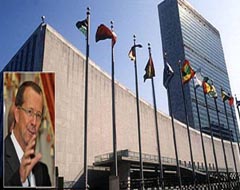
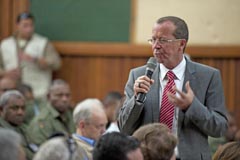
Under increasing Iraqi pressure to relocate and from human rights organizations urging leader Maryam Rajavi to allow independent access to over 3,000 Iranians at the camp, many feared a humanitarian tragedy such as mass suicide. But progress has been made after the UN convinced Iraq to sign a memorandum of understanding to temporarily resettle the residents to a former US military base north of Baghdad. The Head of the UN Assistance Mission for Iraq Martin Kobler said relocation was voluntary.

Secretary of State Hillary Clinton said on Sunday that the temporary solution had the U.S’s “full support” and that the UN High Commission for Refugees (UNHCR) would be conducting refugee status determinations for the members “toward resettlement to third countries.”

She also stressed that for the initiative to be “successful”, the camp’s residents would have to give their “full support” and urged them to “work with the UN”–an indication that resistance is expected from the MEK’s avid supporters (many are believed to be held against their will).

While the majority of MEK members have never left the camp, Rajavi has been living in Paris where she has successfully lobbied the group off the UK and EU FTO lists. The whereabouts of her husband Masoud are unknown, but some suspect he’s inside the camp. It will be interesting to see whether any new information about him is disclosed and if Maryam Rajavi will ultimately relinquish her hold on the group’s members.

So far there have been no independent confirmations of a MEK claim that Iranian rockets struck their camp on Sunday. We’ll also have to wait and see whether the residents allow themselves to be relocated out of Iraq. The only thing that’s certain is that these people–especially those who have been lured and born into Camp Ashraf–deserve a better life.

The following is an excerpt from the RAND report (pg. 38-9) for those who want to understand the MEK better.

The MeK as a Cult

From its earliest days, the MeK had had tight social bonds, but these began to be transformed into something more sinister during the mid- 1980s after the group’s leaders and many of its members had relocated to Paris. There, Masoud Rajavi began to undertake what he called an “ideological revolution,” requiring a new regimen of activities—at first demanding increased study and devotion to the cause but soon expanding into near-religious devotion to the Rajavis (Masoud and his wife, Maryam), public self-deprecation sessions, mandatory divorce, celibacy,enforced separation from family and friends, and gender segregation.

Prior to establishing an alliance with Saddam, the MeK had been a popular organization. However, once it settled in Iraq and fought against Iranian forces in alliance with Saddam, the group incurred the ire of the Iranian people and, as a result, faced a shortfall in volunteers. Thus began a campaign of disingenuous recruiting. The MeK naturally sought out Iranian dissidents, but it also approached Iranian economic migrants in such countries as Turkey and the United Arab Emirates with false promises of employment, land, aid in applying for asylum in Western countries, and even marriage, to attract them to Iraq. Relatives of members were given free trips to visit the MeK’s camps. Most of these “recruits” were brought into Iraq illegally and then required to hand over their identity documents for “safekeeping.” Thus, they were effectively trapped.

Another recruiting tactic was arranged with the assistance of Saddam’s government. Iranian prisoners from the Iran-Iraq War were offered the choice of going to MeK camps and being repatriated or remaining in Iraqi prison camps. Hundreds of prisoners went to MeK camps, where they languished. No repatriation efforts were made.

For coalition forces, the MeK’s cult behavior and questionable recruiting practices are significant insofar as they affect both the daily operations at the camp and the strategic disposition options available to the group. The leadership is unlikely to cooperate with policies that would undermine its ability to exert direct control over its members. Indeed, Human Rights Watch reports that the MeK long ago instituted a complicated process to retain members who expressed a desire to leave, which included a “trial,” forced confessions of disloyalty, and even torture. Although this process has been modified since the group was consolidated at Camp Ashraf, would-be walkaways are still “debriefed” for days or even weeks while held in some form of solitary confinement, during which they are encouraged to change their minds.

Conversely, the long-term indoctrination and isolation experienced by MeK members are likely to have instilled an exaggerated sense of loyalty, causing them to reject offers to separate themselves from their leaders. This would apply in particular to repatriation to Iran, where the expectation of persecution has been dramatically instilled in their minds.

Jasmin Ramsey

December 28, 2011 0 comments
FacebookTwitterPinterestWhatsappTelegramSkypeEmail
MEK Camp Ashraf

Ashraf residents transfer, Families gathering

A large number of families of Camp Ashraf residents gathered in front of the Camp, this morning, reported Nejat Society representative.
Families are hopeful to see or at least get news of their children --after years of no news about them-- while they are transferred from Ashraf to Baghdad.

Families of Ashraf prisoners chanted slogans to once more announce their call to visit their loved ones.

Local and foreign reporters are present in there in order to broadcast the news of the region.

As it was also reported 100 residents of Camp Ashraf are relocated in Camp liberty, a site near Baghdad international airport, today.

Families are hopeful to see or at least get news of their children –after years of no news about them– while they are transferred from Ashraf to Baghdad.

December 27, 2011 0 comments
FacebookTwitterPinterestWhatsappTelegramSkypeEmail
MEK Camp Ashraf

326 MKO members transfer to Baghdad

236 members of the Mujahedin khalq organization are transferred to Baghdad international airport in order to be expelled from Iraq, declared Al-Khalis Governor. 236 members of the Mujahedin khalq organization are transferred to Baghdad international airport

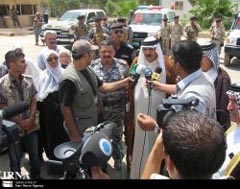
Al-Alam reported from Buratha News that Mr. Ali Al-Khadran , Al Khalis Governor said: ”326 members of terrorist Mujahedin are transferred to Camp Liberty near Baghdad airport, today .”
“The decision was made under terms of the memorandum of understanding signed between Iraqi government and the UN,” he added.

Al-Khadran also asked the Iraqi government to return the land occupied by the MKO to its legal owners.

A memorandum of understanding was signed on Sunday by the UN Assistance Mission and the Iraqi government to relocate Camp Ashraf residents to a temporary site until their complete departure from Iraq.

The UN Office in Iraq declared in a statement,” The MoU produces a process in which Iraq will relocate Ashraf residents to a temporary base”.

Martin Kobler, the UN special representative in Iraq stated that Ashraf residents would be transferred to the new base until they leave Iraq.

Once again Kobler asked UN members to receive MKO members in their soil.
Nouri Al Maliki, Iraqi Prime minister stated last Wednesday that Iraq agreed to extend deadline for the MKO expulsion for six month based on the plan proposed by the UN.

Iraqi nation and officials insist on necessity of the expulsion of the group from their territory.

Terrorist groups are not allowed to reside in Iraq and this country will never be a platform for terrorist groups to attack neighboring countries, according to Iraqi constitution.

Translated by Nejat Society

December 27, 2011 0 comments
FacebookTwitterPinterestWhatsappTelegramSkypeEmail
MEK Camp Ashraf

Mortars hit MKO’s Ashraf Camp in Iraq

Two mortars have struck the Ashraf Camp, the base of the terrorist Mujahedin-e Khalq Organization (MKO) in Iraq’s Diyala province near the Iranian border, according to the Iraqi military.

"Two mortars landed on Ashraf Camp and we cannot identify the number of casualties because we are not allowed to enter the camp," said an Iraqi military official Sunday on the condition of anonymity.

A statement issued by MKO representatives in the camp confirmed the incident but did not mention any possible casualties.

No party has yet claimed responsibility for the attack.

The mortar strike comes just days after the Iraqi government agreed to a UN plea to extend by six months a year-end deadline to shut down the headquarters of the anti-Iran terrorist group on its soil.

Iraqi Prime Minister Nouri al-Maliki announced at a news conference last Wednesday that the move follows a request by the UN to postpone the closure of the camp located northeast of the capital, Baghdad.

Also on Saturday, an Iraqi security official revealed that ten members of the terrorist group had escaped from the camp due to harsh conditions of suppression within the camp by MKO authorities and pleaded with Iraqi officials to help them leave the country.

The Ashraf Camp, about 120 kilometers (74.5 miles) west of the Iranian border, houses more the 3,000 MKO members.

The group fled to Iraq in 1986 where it enjoyed the support of Iraq’s executed dictator Saddam Hussein and set up the Ashraf Camp near the Iranian border.

The group is known to have cooperated with Saddam in suppressing the 1991 uprisings in southern Iraq and the massacre of Iraqi Kurds.

The MKO is listed as a terrorist organization by much of the international community and is responsible for numerous acts of terror and violence against Iranian civilians and officials back in the 1980s as well as anti-Saddam Iraqi civilians mostly in the 1990s.

Iraq considers the MKO base and its residents a threat to its national security but, has been pressured due to US-led efforts to extend the existence of the camp on its soil.
Mon Dec 26, 2011
http://presstv.com/detail/217743.html

December 26, 2011 0 comments
FacebookTwitterPinterestWhatsappTelegramSkypeEmail
Iraq

Iraq agrees to U.N.-brokered deal on fate of MEK exiles

Iraq’s leaders agreed Sunday to a U.N.-brokered deal that could lead to the peaceful emigration of thousands of Iranian dissidents who have lived in the country under U.S. protection since the overthrow of Saddam Hussein eight years ago.Iraq agrees to U.N.-brokered deal on fate of MEK exiles

But the agreement, confirmed by Obama administration officials, has not yet been accepted by the Iranian exiles, who have repeatedly insisted on a U.S. troop presence to guard against possible attacks by Iraqis. Dozens of members of the dissident group, known as the Mujaheddin-e Khalq, have been killed by Iraqis since 2009 in assaults on the desert enclave where they have lived since being invited to Iraq by Hussein in 1986.

With the departure of U.S. troops from Iraq this month, American officials fear further bloodshed if the exiles — who are backed by numerous prominent political figures in the United States — refuse to accept the deal.

“There is mistrust, if not hatred, between the MEK and many Iraqis,” said a senior State Department official involved in negotiations over the group’s fate. “The question is, does the MEK take a deal that is less than perfect, or reject it and get nothing?”

The official, who spoke on the condition of anonymity to discuss diplomatically sensitive negotiations, said the accord would allow the Iranian exiles to move from their remote enclave, known as Camp Ashraf, to the grounds of Camp Liberty, the former U.S. military base near the Baghdad airport. They could then apply for emigration to other countries while under constant watch by unarmed U.N. observers. The official said the Obama administration would separately provide “robust” monitoring of the camp but would not deploy U.S. troops there, as the MEK has requested.

Secretary of State Hillary Rodham Clinton praised the agreement, saying in a statement late Sunday that the United States “welcome[s] this important step toward a humane resolution to the ongoing situation at Ashraf. The UN effort has our full support.”

Shahin Ghobadi of the National Council of Resistance of Iran, the MEK’s political wing, cautioned late Sunday that “we are . . . waiting to see the official document . . . [for] clarifications for the residents of Camp Ashraf. We hope that it would officially include the minimum assurances so that it would be acceptable to Ashraf residents.”

“Of course, in what has been published,” the MEK spokesman added, “the Secretary General’s Special Representative has underscored that in any event, this is a voluntary and not a forcible relocation. Ashraf residents had repeatedly emphasized that they would in no way accept forcible relocation.”

If accepted by the MEK, the deal could spell the end of a years-long standoff over the fate of the controversial group, which the State Department has officially listed as a terrorist group because of its alleged role in the slayings of six Americans in the 1970s. To many Iraqis, the MEK is a hated cult, forever tied to Hussein and his oppression. But many powerful politicians and security officials in Washington view the group’s members as freedom fighters who deserve continued U.S. protection.

U.S. and U.N. officials have been scrambling to resolve the fate of the estimated 3,400 residents of Camp Ashraf. But the officials say the MEK and its backers have complicated matters by insisting on U.S. protection. The possibility that American troops would be ordered back into Iraq to guard the dissidents is remote, at best, said a second senior State Department official involved in the talks.

“It’s not going to happen,” said the official, who also spoke on the condition of anonymity.

Lobbying campaign in U.S.

The government of Iraqi Prime Minister Nouri al-Maliki, which has sought for years to disband the dissident group, decreed this year that the MEK must vacate the camp by Dec. 31.

But after two turbulent years in which dozens of Ashraf residents have been killed in clashes with Iraqi security forces, the MEK insists that it will leave only on its terms, with Iraqi police kept far away and U.S. troops present to provide security. To argue its case, the dissidents turned to their powerful allies in the United States — a who’s-who list of political and security figures that have served both Republican and Democratic administrations.

A lobbying campaign launched on the MEK’s behalf has included advertisements in newspapers and on the sides of Metro buses in Washington. On Oct. 16, an “open letter” to the Obama administration appeared in newspapers bearing the names of 14 politicians and security officials, including Republicans such as former homeland security secretary Tom Ridge and former New York mayor Rudolph W. Giuliani, as well as former Democratic governors Edward G. Rendell of Pennsylvania and Howard Dean of Vermont.

“We call on you to provide U.S. troops to protect the [U.N.] monitors and the residents,” the letter stated.

Some of these officials have previously appeared on panels sponsored by MEK-affiliated organizations, often for speaking fees in the tens of thousands of dollars. At the events and in broadcast interviews, the MEK’s backers have urged U.S. support for Camp Ashraf’s residents as fierce opponents of the Islamic clerics who rule Iran. The MEK does not disclose its funding sources, but members say much of the money comes from Iranian nationals living in the West.

A checkered history

The MEK’s critics are equally forceful. The State Department’s decision to designate the group as terrorists stemmed from a string of attacks in the 1970s, when the MEK established itself as an Islamic-Marxist group that opposed the U.S.-backed rule of Shah Mohammad Reza Pahlavi. After the shah was overthrown, U.S. officials say, MEK leaders supported the taking of American hostages at the U.S. Embassy in Tehran in 1979. Later, the group split with Iran’s emerging Islamic rulers and went into exile. MEK spokesmen attribute the six American deaths to a splinter group.

The MEK was given sanctuary by Hussein and used Iraq as a platform for plotting attacks against the Iranian government. U.S. officials have asserted in documents that the opposition group — armed and equipped by Hussein — supported the Iraqi dictator in his repression of opponents, including the country’s Shiite and Kurdish populations.

After the U.S.-led invasion in 2003, the group gave up its weapons and received active American military protection until 2009.

Outside investigators have repeatedly accused the group of human rights abuses against its own members and recruits, including deceptive recruiting practices and repressive policies that in the past included mandatory divorce for married couples as well as beatings and torture.

“We cannot rule out the possibility that there may be some people still being held in the camp unwillingly,” said Bill Frelick, refugee program director for Human Rights Watch.

MEK officials have denied the abuse reports as a fiction perpetuated by enemies. A spokesman for the group said last week that it was the Iraqi government that has committed abuses.

By Joby Warrick,

December 26, 2011 0 comments
FacebookTwitterPinterestWhatsappTelegramSkypeEmail
USA

Hillary Clinton on Situation at Ashraf

Today, the United Nations and the Government of Iraq signed an important agreement on the temporary relocation and eventual resettlement of the more than 3,000 residents of Camp Ashraf in Iraq. We commend the Government of Iraq for its work with United Nations Special Hillary Clinton remarks on Camp Ashraf sutiationRepresentative Ambassador Martin Kobler, and welcome this important step toward a humane resolution to the ongoing situation at Ashraf. The UN effort has our full support.

The signing of this Memorandum of Understanding represents significant progress on this issue and outlines steps necessary to achieve a peaceful and viable solution for the residents of Ashraf, including their temporary relocation to Camp Liberty, a former U.S. military base near the Baghdad International Airport. At this new location, the UN High Commission for Refugees (UNHCR) will be able to conduct refugee status determinations for the residents of Ashraf — a necessary first step toward resettlement to third countries.

We are encouraged by the Iraqi government’s willingness to commit to this plan, and expect it to fulfill all its responsibilities, especially the elements of the MOU that provide for the safety and security of Ashraf’s residents. We welcome the agreement by the Government of Iraq to allow the United Nations to station monitors at this new location around the clock and to observe the move from Ashraf to this new location. In addition, officials from U.S. Embassy Baghdad will visit regularly and frequently. We also welcome the Iraqi government’s willingness to delay the final closure of Camp Ashraf to give this plan time for implementation.

To be successful, this resettlement must also have the full support of the Camp’s residents, and we urge them to work with the UN to implement this relocation. All those who want to see the people at Camp Ashraf safe and secure should work together to see that the agreed upon plan is carried out.

Press Statement
Hillary Rodham Clinton
Secretary of State
Washington, DC

December 26, 2011 0 comments
FacebookTwitterPinterestWhatsappTelegramSkypeEmail
Mujahedin Khalq; A proxy force

US Troops Guarded Terrorist MEK Camp in Iraq

In a move that almost defies belief, is so brazen and hypocritical many will not believe it no matter how many State Department officials confirm it, the US has been guarding a terrorist training camp inside Iraq with US troops and is planning to relocated them, possibly in a freshly US Troops Guarded Terrorist MEK Camp in Iraqabandoned US military base in Iraq while D.C. lobbyists work feverishly to have them de-listed, armed, and sent to conduct terrorist operations in Iran.

MEK. Admittedly a terrorist organization, listed by the US State Department as being such, it is fully funded, armed, and backed by the United States, based in France and US-occupied Iraq, and allowed to conduct terrorist operations against the Iranian people. The “War on Terror” is a fraud.

….
Foreign Policy Magazine has reported in their article, “State Department scrambling to move the MEK — to a former U.S. military base?” fully admits that Mujahedeen e-Khalq (MEK) is a terrorist organization used by Saddam Hussein to attack Iran in the 80′s and was responsible for the death of US military personnel and civilians. Foreign Policy reports that efforts by the Iraqi Army to evict MEK has resulted in armed clashes.

Foreign Policy then reports the United Nations “Assistance Mission in Iraq” (UNAMI) is working with the US State Department to relocate the terrorists within Iraq and possibly at a US military base near Baghdad’s airport.

Despite being listed as a terrorist organization by the US State Department (#28 listed as “Mujahedin-e Khalq Organization”) its leadership is harbored in Paris, its rank and file harbored by US troops in Iraq, and the US State Department itself overseeing their continued existence and the continuation of their armed terrorist campaign. Foreign Policy also notes a huge lobbying movement in Washington working to de-list MEK as a terrorist organization, including:

Congressman John Lewis (D-GA),
former Pennsylvania Gov. Ed Rendell,
former FBI Director Louis Freeh,
former Sen. Robert Torricelli,
Rep. Patrick Kennedy,
former CIA Deputy Director of Clandestine Operations John Sano,
former National Security Advisor James Jones,
former Vermont Gov. Howard Dean,
former New York Mayor Rudolph Giuliani,
former Joint Chiefs Chairman Gen. Richard Myers,
former White House Chief of Staff Andy Card,
Gen. Wesley Clark,
former Rep. Lee Hamilton,
former CIA Director Porter Goss,
senior advisor to the Romney campaign Mitchell Reiss,
Gen. Anthony Zinni,
former Pennsylvania Gov. Tom Ridge,
former Sen. Evan Bayh

Indeed, warmongering Islamophobist cheerleader Rudolph Giuliani is taking money from a genuine terrorist organization and lobbying the US government to have it removed from the US State Department list. Tom Ridge is also listed as coddling MEK terrorists, ironically after being named the first “Homeland Security Secretary” from 2003-2005. Lee Hamilton, the vice chairman of the 9/11 Commission, is perhaps the most alarming name listed, as it casts serious doubts over the objectivity, integrity, and veracity with which he conducted his “investigation” of the September 11, 2001 terrorist attacks.

Though it isn’t money alone that motivates this eager throng of traitors to remove MEK from the US State Department Foreign Terrorist Organization list, it is their desire to see MEK worked with more closely, armed, trained, and sent into Iran, with open, rather than covert American support, just as Saddam had done decades ago to conduct a campaign of terror against the Iranian people.

MEK has been considered by the Fortune 500-funded Brookings Institution as a prime candidate for US-backing in an effort to undermine and remove the Iranian government. In Brookings’ 2009 report, “Which Path to Perisa?” it is stated:

“Perhaps the most prominent (and certainly the most controversial) opposition group that has attracted attention as a potential U.S. proxy is the NCRI (National Council of Resistance of Iran), the political movement established by the MEK (Mujahedin-e Khalq). Critics believe the group to be undemocratic and unpopular, and indeed anti-American.

In contrast, the group’s champions contend that the movement’s long-standing opposition to the Iranian regime and record of successful attacks on and intelligence-gathering operations against the regime make it worthy of U.S. support. They also argue that the group is no longer anti-American and question the merit of earlier accusations. Raymond Tanter, one of the group’s supporters in the United States, contends that the MEK and the NCRI are allies for regime change in Tehran and also act as a useful proxy for gathering intelligence. The MEK’s greatest intelligence coup was the provision of intelligence in 2002 that led to the discovery of a secret site in Iran for enriching uranium.

Despite its defenders’ claims, the MEK remains on the U.S. government list of foreign terrorist organizations. In the 1970s, the group killed three U.S. officers and three civilian contractors in Iran. During the 1979-1980 hostage crisis, the group praised the decision to take America hostages and Elaine Sciolino reported that while group leaders publicly condemned the 9/11 attacks, within the group celebrations were widespread.

Undeniably, the group has conducted terrorist attacks—often excused by the MEK’s advocates because they are directed against the Iranian government. For example, in 1981, the group bombed the headquarters of the Islamic Republic Party, which was then the clerical leadership’s main political organization, killing an estimated 70 senior officials. More recently, the group has claimed credit for over a dozen mortar attacks, assassinations, and other assaults on Iranian civilian and military targets between 1998 and 2001. At the very least, to work more closely with the group (at least in an overt manner), Washington would need to remove it from the list of foreign terrorist organizations.” page 117-118 of “Which Path to Persia?” Brookings Institution, 2009

Readers may also be shocked to find out that not only has this been proposed, but long ago approved. This was revealed in Seymour Hersh’s 2008 New Yorker article “Preparing the Battlefield,” which stated:

“The M.E.K. has been on the State Department’s terrorist list for more than a decade, yet in recent years the group has received arms and intelligence, directly or indirectly, from the United States. Some of the newly authorized covert funds, the Pentagon consultant told me, may well end up in M.E.K. coffers. “The new task force will work with the M.E.K. The Administration is desperate for results.” He added, “The M.E.K. has no C.P.A. auditing the books, and its leaders are thought to have been lining their pockets for years. If people only knew what the M.E.K. is getting, and how much is going to its bank accounts—and yet it is almost useless for the purposes the Administration intends.”

And as moves are being made to get MEK de-listed as a terrorist organization by the US State Department so that even more aid can be rendered to this admitted terrorist organization, Seymore Hersh in an NPR interview, also claims that select MEK members have already received training in the US.

Quite clearly this reveals that not only is the “War on Terror” an absolute fraud, but so are the politicians, policy wonks, and military “leaders” who have promoted it, pinned medals on their own chests for “fighting” it, and have made immense fortunes and power grabs while burying the American people in unprecedented debt, tyranny, and economic catastrophe in the process. Let’s not forget the thousands of dead US troops duped into fighting this war and the hundreds of thousands maimed and broken, both physically and mentally, for what was essentially a gimmick to justify ravaging and looting the Middle East – a campaign that is still ongoing.

And while the new gimmick is utilizing terrorist groups like MEK or Libya’s LIFG to sow violence within a target country and then send NATO to “rescue” them from the nation’s attempt to defend itself, the “terrorist” card is still in play regarding Iran. It is clear then, that America’s greatest threat is its own “leadership,” bought and paid for by Wall Street and London’s corporate-financier interests and pursuing their agenda at the cost of the rest of humanity. We must identify these interests, boycott them out of business, and replace them entirely with local, pragmatic solutions.

December 26, 2011 0 comments
FacebookTwitterPinterestWhatsappTelegramSkypeEmail
Mujahedin Khalq Organization members' families

Families’ presence guarantees Ashraf residents’ release

Hundreds of families picketing in front of Camp Ashraf held a protest rally on Friday December 23rd and called on the Camp leaders to release their loved ones held as hostages by the leaders.
Families of Ashraf residents started the rally, walking from northern side of the camp to western side and chanted slogans in front of Asad Gate. They vigorously urged on visiting their children.
Relatives of Ashraf prisoners are ready to endanger their life to help with salvation of their family members imprisoned in the cult of Rajavi.
They also played audio messages recorded by some of dissociated members of the MKO, via loudspeakers.
At the end of the gathering families appreciated the cooperation made by all those who make efforts for release of Ashraf residents including, Iraqi, Iranian and American government.
Families presence guarantees Ashraf residents release

December 25, 2011 0 comments
FacebookTwitterPinterestWhatsappTelegramSkypeEmail
MEK Camp Ashraf

The Life of Camp Ashraf

Mojahedin-e Khalq – Victims of Many Masters

Product Description
The fascinating story of the controversial life of Camp Ashraf in Iraq from its foundation in 1986 to the present day is told in this book. Originally created to accommodate the Iranian opposition group Mojahedin-e Khalq (aka MEK, MKO, PMOI, Rajavi cult) and its leader Massoud Rajavi for coordinating the violent overthrow of the regime in Iran, Camp Ashraf became the MEK’s main military and ideological training base. The MEK later became known as Saddam’s Private Army as it became an integral element in the Iraqi dictator’s repressive apparatus.

But, even years after the fall of Saddam the MEK still has the support and backing of many in the West and is therefore able to resist opening its doors to the outside world. It is the hidden life inside Camp Ashraf which renders it so controversial. The isolated garrison became the experimental ground for Rajavi to turn his group into a dangerous, destructive mind control cult.

Rajavi keeps the rank and file in the camp in a state of modern slavery to perform acts of terrorism and to fulfill propaganda roles in Western countries for the group’s many masters.
Massoud Rajavi’s methods of enthralling his followers include banning marriage and having children, instilling irrational phobic reactions to external factors, denying any contact with the outside world through radio, television, letters or telephones. In particular members must have no contact with their families. This book exposes the hidden life of the camp and its inhabitants. It speaks for the silent victims of the Rajavi cult and for the families who wait outside the camp for news of their loved ones.

In conclusion, the book examines the ways to deal with the problem of how to dismantle a dangerous destructive mind control cult and free its members as various parties vie for control over the group for their own agendas.

CONTENTS Page

INTRODUCTION 1
1965 – 1986 THE MEK AND IRAQ 4
1986 – 1991 THE GOLDEN AGE 18
1988 – 1993 THE IDEOLOGICAL PHASE 37
1991 GULF WAR ONE 50
1991 – 1997 THE MEK’S DECLINE 61
1997 – 2003 CAMP ASHRAF PRISON – NO EXIT 84
2003 – 2007 THE MEK PLACED ON LIFE SUPPORT 104
2007 – 2009 A GROWING HUMANITARIAN CRISIS 130
2009 INEVITABLE CHANGE 153
CAMP ASHRAF – PAST ITS ‘BEST BEFORE’ DATE 174
CONCLUSION 196
APPENDICES 201

INTRODUCTION
The controversial life of Camp Ashraf from its foundation to the present day makes a fascinating story in itself. The camp was created by Saddam Hussein in 1986 to accommodate the Iranian opposition group Mojahedin-e Khalq (MEK) and its leader Massoud Rajavi. Founded in 1965 the MEK first took up arms to try to oust the Shah. Two years after the 1979 Iranian revolution Rajavi tried to engineer a coup against Ayatollah Khomeini. It failed and he fled to Paris in 1981. Rajavi then tried to conduct his armed struggle against the new Islamic Republic from Paris but when this failed he was given succour in Iraq where Camp Ashraf became the MEK’s main military and ideological training base.

The close relationship between Saddam and Rajavi led to the MEK being dubbed Saddam’s Private Army; Camp Ashraf played an integral role in the survival of the Iraqi dictator after the First Gulf war when Rajavi used his forces to help crush the Kurdish and Shiite uprisings. In 2003 Camp Ashraf became an enemy target for the Multi National Forces when Operation Iraq Freedom removed Saddam Hussein from power. Then in a paradoxical move the US Government provided military protection for Camp Ashraf for eight years while its inhabitants remained on the US Terrorism List.

Camp Ashraf came under the control of the democratically elected Government of Iraq in January 2009 (under the Status of Forces Agreement). After that time it was inevitable that the camp would close. Successive Iraqi governments since 2003 insisted that the Americans close Camp Ashraf and expel the foreign terrorist group Mojahedin-e Khalq from the country because of the group’s history of terrible crimes against the people of Iraq.

In the course of twenty five years Camp Ashraf has seen many changes. But the real story of course is not about the camp but about the lives of the people who inhabited it; how they came to be there and why they must now leave.

In its forty five year history, the MEK organisation has undergone many public image changes; from guerrilla fighters, resistance army, terrorist entity to feminist democratic opposition. The man who has led the group through all these superficial incarnations is Massoud Rajavi. And behind the glamorous advertisements of a sophisticated and relentless propaganda machine, his single-minded pursuit of power at any cost and his fundamental belief in the use of violence to achieve this aim of power, has not changed one iota in all this time.

Rajavi was a charismatic speaker and skilled psychological manipulator. He discovered in himself a talent for totalitarian control which matched his narcissistic ambition for power. Although he began to convert the Mojahedin-e Khalq organisation into a cult while still in Paris, it was the acquisition of the isolated, closed world of Camp Ashraf which provided the perfect crucible to extend his experiment. In Camp Ashraf he has forced the MEK members along a most extraordinary route of mental and physical anguish to meet his needs.

Over the years former members who escaped from Camp Ashraf have told their stories to a world unwilling or unable to listen. Thousands of them consistently and courageously described the conditions of the internal revolutions and Rajavi’s bizarre requirements for members to divorce and to remove all the children from the camp; to undergo the daily humiliations of public self-confessions which enforce the celibacy and gender apartheid; to suffer micro-management of their every waking moment which imposed deliberately exhausting work schedules and disorienting indoctrination sessions; to be deprived of any information from and contact with the outside world and their families. Rajavi did all this to keep his members from leaving. When this failed, he imprisoned them.

Camp Ashraf is now a double prison for the residents. They are trapped by Rajavi’s psychological manipulations which engender paralysing fear in everyone behind the barbed wire fences which he has had erected to keep them physically inside. But they are trapped ultimately by the misguided ignorance and misplaced sympathy of all those external agencies which could take action to free them but don’t.

The life of Camp Ashraf has reached a critical juncture. It must close. The residents must leave. But over and above Massoud Rajavi’s refusal to leave, there are a host of third parties with their own agendas which militate against closure. The main players are the Americans and the Iranians who have developed their own narratives and myths around the MEK in order to use it as a tool to aggravate and intensify their thirty year enmity. Between the ‘bomb Iran, regime change’ pundits in America and the ‘crackdown on foreign backed violent opposition’ proponents in Iran, all the bases are covered.

It is these voices which dominate political debates and media reporting on Camp Ashraf. But the political and security issues are a decoy to avoid answering the fundamental question. After twenty five years of testimony describing severe human rights abuses why do the individual residents of Camp Ashraf still have no voice? Why do people continue to escape the camp even in spite of the severe restrictions? At the time of Saddam Hussein perhaps these questions could be ignored. But now?

The original inspiration to write the story of Camp Ashraf came from witnessing the determination of the families of the camp’s residents to rescue their loved ones. Since 2003 they braved bombs and bullets to reach the gate of Camp Ashraf in the hope of finding their relatives. They refused to give up, refused to take no for an answer. Even when the MEK began to pelt missiles at them they refused to give up. Their extraordinary love and courage needs to be voiced and this voice needs to reach above the cacophony of the false hand wringing and political wailing to those who are in a position to help.

But as the story unfolded it became obvious that the really voiceless victims of Camp Ashraf are its residents. As the stories of individual members emerged it was clear that many had died and many more had suffered before their information could reach the public domain. Currently around 3500 people continue trapped and held hostage to the callous whims of the various pitiless powerful political forces who do not care about their individual fates. This book must speak out on their behalf.

This book therefore is an attempt to tell their story in the hope that this will halt the diversion of this issue to everything else except this fundamental question – why are people risking everything to run away from Camp Ashraf and the MEK and why is no one listening to them?

By Anne Singleton and Massoud Khodabandeh
First published September 2011 by IRAN-INTERLINK

Download The Life of Camp Ashraf

December 25, 2011 0 comments
FacebookTwitterPinterestWhatsappTelegramSkypeEmail
The MEK Expulsion from Iraq

Iraqis demand promised MKO expulsion

Thousands of Iraqi people held a demonstration in Tahrir square in central Baghdad to demand the immediate expulsion of the terrorist Mujahedin-e Khalq Organization (MKO) from their country.

Thousands of Iraqi people held a demonstration in Tahrir square

Condemning MKO acts of terror, Iraqi protesters on Friday gathered outside Camp Ashraf, the base of the exiled group, to urge the government to close the notorious camp as scheduled for December 31.

The protest rally came one day after Iraqi Prime Minister Nouri al-Maliki rejected a UN appeal for the extension of the year-end deadline to shut down Camp Ashraf, saying that the Iraqi government cannot permit a criminal gang to remain in the country.

Baghdad considers Camp Ashraf and its residents as a threat to its national security and insists it is determined to close down the terrorist base by the end of 2011.

Camp Ashraf, about 120 kilometers (74.5 miles) west of the Iranian border, houses some 3,400 MKO members. The terrorist group has carried out numerous acts of terror and violence against Iranian civilians and government officials after they fled to Iraq in 1986, where it enjoyed the support of Iraq’s executed dictator Saddam Hussein.

The terrorist group is also known to have collaborated with Saddam in the bloody repression of the 1991 Shia Muslims in southern Iraq and the massacre of Iraqi Kurds in the country’s north.
Iran has repeatedly called on the Iraqi government to expel the group, but the US has been blocking the expulsion by mounting pressure on the Iraqi government.

While the MKO is designated as a terrorist organization under the United States law, and has been described by State Department officials as a repressive cult, The New York Times recently reported that Washington is mulling over removing the MKO from its terrorist watch list and giving refuge to its members.

Last month, European Union foreign policy chief, Catherine Ashton, said she would urge EU member states to accept the residents of Camp Ashraf.
Download Iraqis demand promised MKO expulsion

December 25, 2011 0 comments
FacebookTwitterPinterestWhatsappTelegramSkypeEmail
Newer Posts
Older Posts

Recent Posts

  • A Criterion for Proving the Violent Nature of the MEK

    December 31, 2025
  • Rebranding, too Difficult for the MEK

    December 27, 2025
  • The black box of the torture camps of the MEK

    December 24, 2025
  • Pregnancy was taboo in the MEK

    December 22, 2025
  • MEPs who lack awareness about the MEK’s nature

    December 20, 2025
  • Facebook
  • Twitter
  • Instagram
  • Youtube

© 2003 - 2025 NEJAT Society . All Rights Reserved. NejatNGO.org


Back To Top
Nejat Society
  • Home
  • Articles
  • Media
    • Cartoons
    • NewsPics
    • Photo Gallery
    • Videos
  • Publications
    • Books
    • Nejat NewsLetter
    • Pars Brief
  • About Us
  • Contact us
  • Editions
    • عربي
    • فارسی
    • Shqip