Nejat Society
  • Home
  • Articles
  • Media
    • Cartoons
    • NewsPics
    • Photo Gallery
    • Videos
  • Publications
    • Books
    • Nejat NewsLetter
    • Pars Brief
  • About Us
  • Contact us
  • Editions
    • عربي
    • فارسی
    • Shqip
Nejat Society
Nejat Society
  • Home
  • Articles
  • Media
    • Cartoons
    • NewsPics
    • Photo Gallery
    • Videos
  • Publications
    • Books
    • Nejat NewsLetter
    • Pars Brief
  • About Us
  • Contact us
  • Editions
    • عربي
    • فارسی
    • Shqip
© 2003 - 2024 NEJAT Society. nejatngo.org
Mujahedin Khalq Organization members' families

No family visits for MKO hostages in Camp Ashraf

The Iranian families of the Mujahedin-e Khalq Organization (MKO) members, who are kept in Camp Ashraf, say they are not allowed to see their relatives, Press TV reports.

The Iranian families of the Mujahedin-e Khalq Organization (MKO) members

The families of the MKO members complained that they have come thousands of kilometers in the hope of seeing their relatives, but the organization does not permit them to meet their family members.

The Ashraf Camp, about 120 kilometers (74.5 miles) west of the Iranian border, houses more than 3,000 MKO members.

In 1986, the group fled to Iraq where it enjoyed the support of Iraq’s executed dictator Saddam Hussein and set up the Ashraf Camp near the Iranian border.

According to the reports prepared by NGOs and the defected MKO members, the MKO members inside the camp are living in dire conditions and are deprived of their basic rights.

“I don’t know why the MKO is keeping the people against their will. They are isolating them from the world,” said an Iranian woman who came to see her relative in Camp Ashraf.

Iraq, which considers the MKO as a threat to its national security, has agreed to a UN appeal to extend the December 31 deadline to close Camp Ashraf.

The MKO is known to have cooperated with Saddam in suppressing the 1991 uprising in southern Iraq and the massacre of Iraqi Kurds.

The group has also carried out numerous acts of terrorism against Iranian civilians and government officials.

Iran has repeatedly called on the Iraqi government to expel the group, but the US has blocked the expulsion by mounting pressure on the Iraqi government.

December 29, 2011 0 comments
FacebookTwitterPinterestWhatsappTelegramSkypeEmail
Iraq

Iraqi official :MKO expulsion deadline not extended

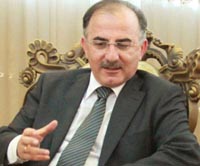
Iraqi government spokesman Ali al-Dabbagh says that Baghdad has not extended the Iraqi government spokesman Ali al-Dabbaghend-of-year deadline to expel the terrorist Mojahedin Khalq Organization (MKO) from Iraq, the Fars News Agency reported on Wednesday.

The deadline has not been extended but the way to expel the MKO members from Iraq has changed, Dabbaq stated.

Up to now, no country has agreed to give refuge to the members of the group, he said, adding that ,however, it takes a long time to move four thousand people and their belongings.

According to an agreement between the UN and Iraq, the MKO members’ expulsion from Iraqi soil will take place in two phases, Dabbaq said.

First, the residents would be relocated to Camp Liberty, a former U.S. military base near the Baghdad International Airport, and then they will leave the country, Dabbaq explained.

He went on to say that as the Iraqi government has earlier announced, the MKO members will leave Camp New Iraq, which was formerly known as Camp Ashraf, by the end of 2011.

The MKO started its activities as a terrorist group based in Iraq in the early 1980s. In addition to the assassination of hundreds of Iranian officials and citizens, the group cooperated with Saddam Hussein’s Baathist regime in its repression of the Iraqi people.

The MKO had fought as a mechanized division in alliance with Saddam Hussein during the 1980-1988 Iran-Iraq war. But it was disarmed and left stranded after the U.S. invasion of Iraq in 2003 that toppled the dictator.

The U.S. government characterized the MKO as a cult and designated it a terrorist group in 1997, holding it responsible for the assassinations of three U.S. Army officers and three civilian contractors before the Islamic Revolution (in 1979). With funding from the Iranian diaspora, the MKO has mounted a major campaign in the U.S. and Europe and enlisted many top national security figures from mostly Republican administrations as well as a number of prominent Democratic politicians to get its terrorist designation lifted.

December 29, 2011 0 comments
FacebookTwitterPinterestWhatsappTelegramSkypeEmail
MEK Camp Ashraf

MEK ending standoff with Iraq government

The head of an Iranian exile group holed up at a camp in Iraq said Wednesday that the first of the camp’s residents are ready to move to a new location picked by the Iraqi government, solving a potential crisis.
The head of an Iranian exile group holed up at a camp in Iraq said Wednesday that the first of the camp’s residents are ready to move
The announcement Wednesday by Maryam Rajavi, the Paris-based leader of the group, averted what could have been a bloody showdown with Iraqi authorities if the residents had refused to move.

“After receiving assurances … and as a sign of goodwill, 400 Ashraf residents are ready to go to Camp Liberty with their moveable property and vehicles at first opportunity,” read the statement. Camp Liberty is the former American military base in Baghdad that has been chosen as the group’s new home.

The agreement comes as militants this week twice tried to target the camp with rockets. No one was injured.

The Iraqi government vowed to close Camp Ashraf, home to about 3,400 Iranian exiles, by the end of this year. The exiles, members of the People’s Mujahedeen Organization of Iran, one-time allies of Saddam Hussein in a common fight against Iran, favor the overthrow of the Iranian government.

But since the ouster of Saddam they have become an irritant to an Iraqi government that is trying to establish good ties with Iran and sees the group as an affront to Iraqi sovereignty. At least 34 people were killed in April during an Iraqi government raid on the camp.

The United Nations on Sunday announced an agreement to move the residents of Camp Ashraf to a temporary location, but until Wednesday, the exiles had not said whether they would go.

Rajavi said 400 residents are ready to move first as a sign of goodwill. The statement made no mention of when the other residents would go, but the group’s residents are believed to want to stay together. If the first move is successful and safe, it’s likely the rest would be relocated soon.

“The transfer of the first group of residents is a test of the Iraqi Government’s attitude in respecting obligations as professed to the U.N. and U.S.,” Rajavi said.

At Camp Liberty, the U.N.’s refugee agency will interview the residents to determine their eligibility for refugee status, before they can eventually be resettled in third countries. Returning to Iran is ruled out because of their opposition to the regime.

Rajavi’s statement also gave rare insight into a camp that was built during the 1980s and has largely been closed off to the outside world. The group’s residents have not left the camp for years, and the little contact they have with outsiders is through the Iraqi military, visiting diplomats and aid agencies. They do have extensive communications equipment that allows them to communicate with the outside world.

The group’s leader said residents had taken a piece of land in the desert and transformed it into a “modern city with their labor and extensive cost.”

“It has a university, library, museum, hospital, power station, cemetery, mosque, parks, lake, sports and recreation facilities, and underground bomb shelters,” she said.

The group carried out a series of bombings and assassinations against Iran’s regime in the 1980s and fought alongside Saddam’s forces in the Iran-Iraq war. The group says it renounced violence in 2001. U.S. soldiers disarmed them during the invasion of Iraq in 2003.

Under the agreement outlined by the U.N., the international organization will monitor the relocation process, and then a team from the U.N.’s refugee agency will be deployed at the new location to process the refugee claims. The U.S. has said that its embassy personnel will also frequently check on the camp’s residents.

December 29, 2011 0 comments
FacebookTwitterPinterestWhatsappTelegramSkypeEmail
MEK Camp Ashraf

MEK group in Iraq agrees to quit Camp Ashraf

The diplomatic standoff over a group of Iranian dissidents in Iraq appeared to be resolved Wednesday when the dissidents agreed to abandon their camp north of Baghdad and move to a former U.S. Army base, where the United Nations will process their applications for refugee MEK group in Iraq agrees to quit Camp Ashrafstatus in Europe and elsewhere.

The first 400 of the more than 3,000 members of the People’s Mujahedeen of Iran – which Iraq earlier this year had threatened with mass expulsion – are ready "as a goodwill gesture" to transfer with their movable property and vehicles "at the first opportunity" to the former Camp Liberty at Baghdad International Airport, the group’s leader, Maryam Rajavi, announced.
Prime Minister Nouri al-Maliki said last week that he had agreed to postpone the deportation, which he’d set for Dec. 31, until at least April.

The group is deeply concerned about its safety and fears deportation to Iran, but Rajavi said a key reason for agreeing to leave its camp, known as Camp Ashraf, in Diyala province was the commitment by Secretary of State Hillary Clinton on Sunday that U.S. Embassy officials would visit "regularly and frequently."

In addition, under an accord signed that day by Martin Kobler, the U.N. special representative in Iraq, the U.N. will conduct "24/7 monitoring at the camp until the last of the residents leaves Iraq." Kobler’s letter, released by the group Wednesday, pledged that no one would be repatriated to Iran against their will but cautioned that resettlement abroad was up to third countries.

The fate of the MEK, as it’s known by its Farsi language initials, has become an international cause celebre. The MEK had fought as a mechanized division in alliance with Saddam Hussein during the 1980-88 war with Iran but was stranded by the U.S. invasion that toppled him in 2003.

The U.S. and Iraq officially view MEK as a terrorist group, although several top former U.S. national security figures have taken part in a major, well-funded campaign to have the group removed from the U.S. list of terrorist organizations.

Al-Maliki, has demanded repeatedly that the MEK leave its camp near the Iraq-Iran border. In April, Iraqi troops attacked the camp in a military operation that reduced its size by about one-third and left at least 35 dead.

The MEK said it had come under rocket attack on Sunday and Tuesday, but no injuries were reported.

After MEK members agreed in late August to file individual applications for asylum in third countries, Kobler began an arduous negotiation with the Iraqi government to ensure that there was adequate time for the U.N. High Commissioner for Refugees to conduct interviews to determine refugee status.

As many as 900 of the camp residents have papers or travel documents from third countries, and these will be among the very first processed, U.N. officials said. Those who wish to return to Iran will be processed rapidly, Kobler said in his letter.

One unanswered question is the fate of some 100 MEK members against whom Iranian criminal charges are pending, according to Iran’s ambassador to Iraq, Hasan Daniaei-Far.
Another is how the transfer to the former U.S. Army base will proceed. Kobler’s letter said that Iraq would provide security for the transfer, but he did not stipulate that residents could travel in their own vehicles and bring their movable property with them as Rajavi insisted they would do.

By ROY GUTMAN

December 29, 2011 0 comments
FacebookTwitterPinterestWhatsappTelegramSkypeEmail
MEK Camp Ashraf

Camp Ashraf exiles to begin leaving Iraq camp

The leader of a group of Iranian exiles living in a camp outside the Iraqi capital, Baghdad, has said 400 of its residents are preparing to relocate.Iranian Camp Ashraf exiles to begin leaving Iraq camp

The group’s Paris-based leader, Maryam Rajavi, said the decision to leave Camp Ashraf was a "goodwill gesture".

It ends a tense standoff with the Iraqi government, which has repeatedly vowed to close the 25-year-old camp.

Earlier this week, Iraq and the UN agreed to resettle the camp’s more than 3,000 residents.

Those living in the camp, about 40 miles (65 km) north of Baghdad, were part of the People’s Mujahideen Organisation of Iran (PMOI), which fought alongside Iraqi soldiers during the Iran-Iraq war.

Several rockets are reported to have hit the camp on Sunday – residents have blamed the attacks on Iranians loyal to the regime in Tehran.

Ms Rajavi said the first group of exiles would leave the camp voluntarily "at the first opportunity" and relocate to a former US military base outside Baghdad, Camp Liberty.

She said they had been reassured by US Secretary of State Hillary Clinton’s support for a peaceful and durable solution to the standoff, and the safety and security of the exiles.

"The relocation of the first group of residents is, at the same time, a test of the Iraqi Government’s attitude toward the commitments it has given to the United Nations and the United States," Ms Rajavi said in a statement.

The statement made no reference to when the remaining residents might also move, but they have previously expressed a wish to stay together so are expected to follow soon.

Once at Camp Liberty, their refugee status will be assessed by the UN – the exiles back the overthrow of the Islamic regime in Iran and say they cannot return home.

The deal reached by Iraq and the UN on Sunday was welcomed by the US, which handed responsibility for the camp to Iraq in 2009.

The PMOI, also known as Mojahedin-e Khalq, was welcomed when it arrived in Iraq in the 1980s by then-President Saddam Hussein, who was fighting a war against Iran. He funded and armed the group, which fought alongside Iraqi troops.

But Iraq’s new leaders have improved relations with neighbours Iran since the overthrow of Saddam Hussein and have sought to close down the camp. In April a raid on the camp by Iraq’s army left at least 34 people dead, according to the UN.

December 29, 2011 0 comments
FacebookTwitterPinterestWhatsappTelegramSkypeEmail
Iraqi Authorities' stance on the MEK

Seyyed Mohssen Hakim: MKO no longer tolerated in Iraq

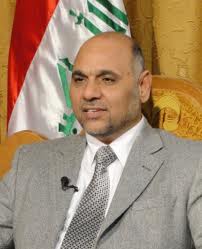
Top advisor to Speaker of Iraq’s Majlis al-Aala Seyyed Mohssen Hakim says that the presence of the members of the Mojahedin-e Khalq Organization (MKO) in the country can be defined as an Top advisor to Speaker of Iraq's Majlis al-Aala Seyyed Mohssen Hakiminternational crime, because the organization is not officially permitted to stay in the country.

In an exclusive interview with ICANA, he said, "The security of two neighboring countries of Iran and Iraq is completely intertwined and the Iraqi people and government can no longer tolerate the presence of the terrorist group on its soil."

He further noted that the withdrawal of the US forces from Iraq on late December will have no impact on the security situation on the ground.

"The Iraqi government is capable of establishing security and stability in the country and there is no need to foreign interferences," he added.

He described the friendly relations between Iraq and neighboring countries including Iran as constructive because it can strengthen the country’s ability to foster and create sustainable development.
ICANA

December 28, 2011 0 comments
FacebookTwitterPinterestWhatsappTelegramSkypeEmail
UN

Ban welcomes the MoU signed by Iraq and UN on Camp Ashraf

The Secretary-General welcomes the signing on 25 December of a Memorandum of Ban welcomes the MoU signed by Iraq and UN on Camp AshrafUnderstanding (MoU) between the United Nations and the Government of Iraq for the voluntary relocation of the residents of Camp New Iraq (formerly Camp Ashraf). He believes that the agreement lays the foundation for a peaceful and durable solution to the situation, respecting both the sovereignty of Iraq and its international humanitarian and human rights obligations. The MoU is the result of intense negotiations between his Special Representative for Iraq, Mr. Martin Kobler, and representatives of the Iraqi government. The residents of the camp have also been consulted.

The Secretary-General welcomes the decision of the Government of Iraq to extend the deadline for the closure of the camp to provide more time and space for the peaceful voluntary relocation of the residents. As reflected in the MoU, the Government of Iraq has a clear and exclusive responsibility to ensure the safety and security of the residents. At the same time, the residents of camp New Iraq have to abide by the laws of Iraq. He appeals to all concerned to continue to demonstrate flexibility and good faith and move towards the swift implementation of the relocation plan. The Secretary-General reminds all concerned that any violence or attempt at a forcible solution would be unacceptable. The Secretary-General also reiterates his call to Member States to accept the residents who are eligible for voluntary return or resettlement as soon as possible.

The United Nations has been involved in this issue from a purely humanitarian perspective and has played the role of an impartial facilitator. Under the leadership of Special Representative Martin Kobler, the United Nations Assistance Mission for Iraq (UNAMI) and the United Nations High Commissioner for Refugees remain committed to continue supporting a peaceful and durable solution to the situation of the residents of the camp.
UN.org

December 28, 2011 0 comments
FacebookTwitterPinterestWhatsappTelegramSkypeEmail
Mujahedin Khalq Organization members' families

Families of MKO members repeat calls to see their relatives

The Iranian families said they have come thousands of kilometers to see their relatives, and now they are few meters away and are unable to meet them.

The Iranian families said they have come thousands of kilometers to see their relatives

According to reports by Iraqi NGOs and the defected MKO members, the group’s members inside the camps have been living in dire conditions and deprived of their basic rights.

Meanwhile, Iraq has agreed to United Nations demand to extend by six months a year-end deadline to close the MKO camp on its soil.

the group's members inside the camps have been living in dire conditions and deprived of their basic rights.

The UN and the Iraqi government signed a deal to relocate more than 3,000 MKO members living in Camp Ashraf while their refugee status is determined.

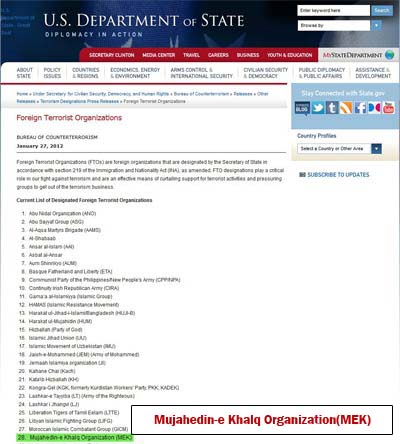
The MKO is listed as a terrorist organization by much of the international community, and is responsible for numerous terrorist acts against both Iranians and Iraqis.

The group is especially notorious in Iran for siding with former Iraqi dictator Saddam Hussein and fighting alongside Iraqi troops during the 1980-1988 Iran-Iraq war.

Wisam al-Bayati,
Download Families of MKO members repeat calls to see their relatives

December 28, 2011 0 comments
FacebookTwitterPinterestWhatsappTelegramSkypeEmail
MEK Camp Ashraf

U.S. wants safe resettlement from Ashraf

The resettlement of Iranian refugees at Iraq’s Camp Ashraf must have the support of camp residents and their supporters, the U.S. secretary of state said.U.S. wants safe resettlement from Ashraf

The United Nations and Baghdad last weekend signed a memorandum of understanding to relocate residents at Camp Ashraf in Diyala province to a temporary location at Camp Liberty, a former U.S. military base near Baghdad International Airport.

The MOU calls on the U.N. High Commission for Refugees to determine the refugee status of Ashraf residents to eventually resettle them in third countries.

Martin Kobler, head of the U.N. Assistance Mission for Iraq, said the MOU made it clear relocation from Camp Ashraf was voluntary.

Camp Ashraf houses members of the People’s Mujahedin of Iran. Members of the PMOI were used as a paramilitary force by Saddam Hussein but surrendered to invading U.S. forces in 2003.

Europeans have relaxed their stance on the organization, though Washington lists it as a terrorist group. PMOI supporters in Europe and the United States are actively lobbying lawmakers to get the organization removed from the U.S. State Department’s terrorism list.

U.S. Secretary of State Hillary Clinton, in a statement, said PMOI supporters needed to ensure the relocation in Iraq is a success.

"This resettlement must also have the full support of the camp’s residents, and we urge them to work with the U.N. to implement this relocation," she said. "All those who want to see the people at Camp Ashraf safe and secure should work together to see that the agreed upon plan is carried out."

Dec. 27, 2011

Read more: http://www.upi.com/Top_News/Special/2011/12/27/US-wants-safe-resettlement-from-Ashraf/UPI-81141325006748/#ixzz1ho8T1TiH

December 28, 2011 0 comments
FacebookTwitterPinterestWhatsappTelegramSkypeEmail
Mujahedin Khalq; A proxy force

Camp Ashraf deal undermines Western pro-MEK advocacy

The Washington Post reports on Iraq’s acceptance of a new deal concerning the MEK’s Camp Ashraf:Camp Ashraf deal undermines Western pro-MEK advocacy

Iraq’s leaders agreed Sunday to a U.N.-brokered deal that could lead to the peaceful emigration of thousands of Iranian dissidents who have lived in the country under U.S. protection since the overthrow of Saddam Hussein eight years ago.

But the agreement, confirmed by Obama administration officials, has not yet been accepted by the Iranian exiles, who have repeatedly insisted on a U.S. troop presence to guard against possible attacks by Iraqis. Dozens of members of the dissident group, known as the Mujaheddin-e Khalq, have been killed by Iraqis since 2009 in assaults on the desert enclave where they have lived since being invited to Iraq by Hussein in 1986.

Put another way, a path has been cleared to free the civilian hostages that the MEK leadership is keeping in Camp Ashraf to use as bargaining chips in their effort to manipulate American opinion to get the government to change the official status of their group. American advocates for the MEK’s de-listing regularly exploit the misfortune of the inhabitants of Camp Ashraf, wrap themselves in the mantle of humanitarianism, and confuse the very different issues of the inhabitants’ safe departure from Iraq and the status of the MEK. Naturally, the MEK is not very interested in accepting a deal that deprives its leaders of the symbolism and political leverage that the plight of Camp Ashraf’s inhabitants provides, and its American advocates will have a harder time pretending that their advocacy for this terrorist group is linked to protecting the rights of a vulnerable population.

The deal seems to have provided an opportunity for the inhabitants of Camp Ashraf to escape from a country that is understandably hostile to their group, and it avoids repatriating them to Iran or anywhere else against their will:

The official, who spoke on the condition of anonymity to discuss diplomatically sensitive negotiations, said the accord would allow the Iranian exiles to move from their remote enclave, known as Camp Ashraf, to the grounds of Camp Liberty, the former U.S. military base near the Baghdad airport. They could then apply for emigration to other countries while under constant watch by unarmed U.N. observers.

This would appear to be a good outcome for everyone except the MEK leadership and its friends in the West.

Daniel Larison

December 28, 2011 0 comments
FacebookTwitterPinterestWhatsappTelegramSkypeEmail
Newer Posts
Older Posts

Recent Posts

  • A Criterion for Proving the Violent Nature of the MEK

    December 31, 2025
  • Rebranding, too Difficult for the MEK

    December 27, 2025
  • The black box of the torture camps of the MEK

    December 24, 2025
  • Pregnancy was taboo in the MEK

    December 22, 2025
  • MEPs who lack awareness about the MEK’s nature

    December 20, 2025
  • Facebook
  • Twitter
  • Instagram
  • Youtube

© 2003 - 2025 NEJAT Society . All Rights Reserved. NejatNGO.org


Back To Top
Nejat Society
  • Home
  • Articles
  • Media
    • Cartoons
    • NewsPics
    • Photo Gallery
    • Videos
  • Publications
    • Books
    • Nejat NewsLetter
    • Pars Brief
  • About Us
  • Contact us
  • Editions
    • عربي
    • فارسی
    • Shqip