Nejat Society
  • Home
  • Articles
  • Media
    • Cartoons
    • NewsPics
    • Photo Gallery
    • Videos
  • Publications
    • Books
    • Nejat NewsLetter
    • Pars Brief
  • About Us
  • Contact us
  • Editions
    • عربي
    • فارسی
    • Shqip
Nejat Society
Nejat Society
  • Home
  • Articles
  • Media
    • Cartoons
    • NewsPics
    • Photo Gallery
    • Videos
  • Publications
    • Books
    • Nejat NewsLetter
    • Pars Brief
  • About Us
  • Contact us
  • Editions
    • عربي
    • فارسی
    • Shqip
© 2003 - 2024 NEJAT Society. nejatngo.org
Mujahedin Khalq Organization members' families

The achievements of two years of families picketing

As you know, an agreement has been struck between UNAMI, the Iraqi Government and the leaders of the Mojahedin Khalq Organisation according to which the camp should be evacuated by the end of year 2011.

Also, according to this agreement the deportation of Mojahedin Khalq will be delayed by another 6 months in which time the UNHCR would be able to register the residents and carry out individual interviews in preparation to transfer them to other countries.

According to the Memorandum of Understanding, an initial 400 of the residents of Camp Ashraf are to be transferred to the former American Camp Liberty adjacent to Baghdad Airport, but to this day, 30th December 2011, the leaders of the Rajavi cult have rejected the planned transfer by bringing all sorts of reasons and excuses, clearly against the agreements accepted by the other two parties involved (UNAMI and the GOI).

Today it is clear to everyone that the leaders of the Rajavi cult like all similar cults anywhere in the world which use destructive mind control methods do not see themselves bound by their words or their signatures. It is now clear that they are more than anything else afraid that their forces (hostages) would run away during this transfer. Sooner or later, Rajavi will have to give up Ashraf garrison – which is situated on land illegally and forcefully confiscated by his benefactor Saddam Hussein where he built a military base which he later gifted to the Mojahedin Khalq. Sooner or later he will have to face the fact that the members will be deported from Iraq.

It is worth mentioning the continuous hard work of the families of the people trapped inside the camp who have stayed by the camp for the last two years and demanded their human rights from their base, which they call Freedom City, built adjacent to Camp Ashraf. They exposed the lies of Rajavi and they proved that the leader of the Mojahedin Khalq cult has no respect whatsoever for the people and the loved ones taken hostage inside the camp.

it is the fathers, mothers, children and spouses of the trapped people who represent the best interest of the hostages

It is now clear to everyone that it is the fathers, mothers, children and spouses of the trapped people who represent the best interest of the hostages and not the leaders of the cult.

it is the fathers, mothers, children and spouses of the trapped people who represent the best interest of the hostages

The agreement between all parties to sort out the problem of Camp Ashraf could not have been achieved without the hard work and the suffering of these families, especially during the last two years. They have worked flat out for the last two years in Freedom City, adjacent to Camp Ashraf for two years and intend to do so for as long as it takes. It is clear that even after the transfer of Rajavi’s hostages to a new location, the families will not rest until they achieve their minimum demand of private visits with their loved ones. The hope of reaching this goal is now greater and nearer than ever and the number of families is continually increasing in number. They have all decided to finish the quest that began two years ago and to not give up until they have achieved their simple humanitarian demand of ‘Right of Visits’ with their captured relatives.

SFF on behalf of the picketing families would like to extend its appreciation to all the survivors and ex-members, as well as human rights activists in Iraq, Iran and other countries who have been aiding and supporting the families and helping their voices be heard in the world.

With the hope that one day soon the goal of the freedom of every one of our loved ones takes the tiredness of all these years off our bodies.

translated by Iran Interlink

January 3, 2012 0 comments
FacebookTwitterPinterestWhatsappTelegramSkypeEmail
Mujahedin Khalq Organization members' families

Families determined to bring hope and love back to Ashraf residents

The Iranian families said they have come thousands of kilometers to see their relatives, and now they are few meters away and are unable to meet them.
According to reports by Iraqi NGOs and the defected MKO members, the group’s members inside the camps have been living in dire conditions and deprived of their basic rights.
Meanwhile, Iraq has agreed to United Nations demand to extend by six months a year-end deadline to close the MKO camp on its soil.
The UN and the Iraqi government signed a deal to relocate more than 3,000 MKO members living in Camp Ashraf while their refugee status is determined.
Families determined to bring hope and love back to Ashraf residents

January 2, 2012 0 comments
FacebookTwitterPinterestWhatsappTelegramSkypeEmail
Mujahedin Khalq Organization

Mujahedin: Holy Warriors or Dirty Traitors?

*Mujahedin-e-Khalq-e-Iran* is the Arabic term used to refer to a group called the People’s Mujahedin of Iran. The term *mujahedin* actually means holy warrior, and to take the definition a Mujahedin: Holy Warriors or Dirty Traitors?step further, it is this term which metaphorically submits to *jihad*, God’s struggle. For Muslims this is a righteous word, but since the attack of 9/11, it has become a rather notorious and widely misunderstood word to non-Muslims. The*Mujahedin-e-Khalq-e-Iran * (MKO/MEK) seemed to have passionate and noble intentions thirty years ago and they called themselves holy warriors with fervor. But now, they have transformed into a cult of personality and their holy warrior image no longer exists in the minds of the Iranian people. The MKO has inflicted so much damage on the Iranian people that instead of being known as holy warriors, their name, *The Mujahedin,* is synonymous with *traitor*.
Treason has always been part of the group’s strategy for struggle, and therefore remain a threat to the Iranian people. Now the MKO is supported by some United States politicians who know very well that their own United States government lists the MKO as a designated terrorist group—a group nonetheless who once despised and described the United States as imperialists, capitalists and Zionists. Dirty facts exist in the glossed over history of the MKO—one includes the murdering of American people, but that was thirty years ago.
Scott Shane of the *New York Times* describes the support for the MKO by US politicians as an “obscure cause” and notes it is a “stellar list of supporters from both parties and the last two administrations, including a dozen former top national security officials.” [1]

Shane furthers that “the M.E.K. advocacy campaign has included full-page newspaper advertisements identifying the group as ‘Iran’s Main Opposition’ — an absurd distortion in the view of most Iran specialists; leaders of Iran’s broad opposition, known as the Green Movement, have denounced the group.” [2]

The very group of Mujahedin-e-Khalq, the enemy of America’s enemy—definitely his friend—is an “anti-American, anti-imperialist and anti-capitalist” group, according to Professor Paul Sheldon Foote. He calls Massoud Rajavi, who is the disappeared leader of the group, the Pol Pot of Iran. [3]

Why is it that the very US government who had despised the MEK in its early years is now coming around to shake hands with them and become an ally?

According to Justin Raimondo of *antiwar.com* “the War Party is bound and determined to drag us, kicking and screaming, into a military conflict with Iran.” Raimondo asserts that the “nexus of this network is the government of Israel and its intelligence services which is coordinating an increasingly frantic campaign to bring the Iran issue to a head.”[4]

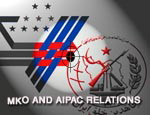
The true face of MKO is revealed in Israel’s recent acts of hostility against the Islamic Republic. In fact, the American Israel Public Affairs Committee (AIPAC) aggressively lobbies US politicians to stand against Iran, and has announced that the MEK has potential as a proxy force against Iran. Raimondo warns that ”The Israel lobby is an octopus with many tentacles, of which MEK is merely one: they are all attached to the same body, however and that is the government of Israel and its intelligence services.” He further quips that the US is just another “Israeli occupied territory”. [5]

If there is a goal to destabilize Tehran, the MEK has become a potential tool for both the CIA and the Mossad. As the MEK feeds them misinformation the MEK gains ground in the intelligence arena, and likewise, as the CIA and Mossad continue to use the misinformation, the MEK becomes more of an ideal proxy. Paul Joseph Watson of *PrisonPlanet.com* writes that “it’s an admitted fact that the CIA uses terrorist proxies,” and “it is widely suspected that the well-known right-wing terrorist organization known as Mujahedin-e-Khalq (MEK), once run by Saddam Hussein’s dreaded intelligence services, is now working exclusively for the CIA’s Directorate of Operations and carrying out remote bombings in Iran.”[6]

Following the explosion at an Islamic Revolutionary Guard’s missile base, west of Tehran, Israel’s Mossad was immediately accused and the Israeli government didn’t deny the accusations. Richard Silverstein, a correspondent of *Haaretz* suggests that it could have been the work of the MEK in a Mossad-led operation. Silverstein notes that it is “widely known within intelligence circles that the Israelis use the MEK for varied acts of espionage and terror ranging from fraudulent Iranian memos alleging work on nuclear trigger devices to assassinations of nuclear scientists and bombings of sensitive military installations.” [7]

The allegations about the MKO’s collaboration with western intelligence agencies were confirmed recently by an arrested Israeli spy, Mohammad Ali Lobnani who was arrested earlier this year in Lebanon. In a court hearing session, Lobnani said that he had phone contacts with Mohammad Alizadeh, an MKO ringleader, but claimed he didn’t know the number was a Mossad contact number, according to Fars News Agency. [9] Responding to a judge’s question about the link between the MKO and the Mossad, he noted, “as far as I know, the group [MKO] has been collaborating with Israel for several years and has massive interactions with the Mossad.”[8]

Western advocates of the MKO need to be aware of the group’s chameleon-like tendencies, because at some point the MKO will turn against the very ones who help them. Ultimately the MKO is a cult and the inner workings of the cult are kept secret from the various politicians they contract with to pursue their objective. Michael Rubin, an American scholar describes the MKO as a group who “sort of combined Islamism with Marxism, but it kind of just evolved into a freaky personality cult," and even warned that secretary of State, Hillary Clinton “should ignore their PR campaign.” Rubin cautions that the “Mujahedin Khalq is not only irrelevant to the cause of Iran’s democratic activities, but a totalitarian cult that will come back to haunt us.”[9]

Richard Silverstein also warns about consequences of lobbying for and working with a terror group like the MKO cult, pointing out that “It is, of course, ironic that the same MEK [which is trusted by Israel for its covert operations against Iran] is paying key political players in U.S. life hundreds of thousands of dollars to lobby on behalf of removing it from the Treasury Department terror list. I suppose when a terror group is harming your enemy then it’s no longer a terror group, eh? Certainly if there was another power than the Mossad willing to pay more for them to attack Israel and the U.S., guess who they’d be wreaking havoc on?” [10]

By Mazda Parsi

References:

[1]Shane, Scott, For Obscure Iranian Exile Group, Broad Support in US, New
York Times,November27,2011
[2]ibid
[3]Sheldon Fooote, Paul, American Demons,Nejatngo.org,November14,2011
[4]Raimondo, Justin, The Armageddon Network,Antiwar.com,November13,2011
[5]ibid
[6]Watson, Paul Joseph, The US Is Already Attacking Iran Through Terrorist
Proxies,Prison Palnet.com,November11,2011
[7]Silverstein, Richard, Mossad – MEK May Have bombed Iranian Missile Base
,40 dead and Wounded, Richard Silverstein.com , Novemebr14,2011
[8]Fars News Agency, Arrested spy in Lebanon Confesses MKO’s Collaboration
with Mossad, Novemebr29, 2011
[9]Rahn, Will, Strange bedfellows: Romney and the militias who hate the
mullahs, the Daily Caller, November15, 2011
[10]Silverstein, Richard, Mossad-MEK May Have Bombed Iranian Missile Base,40 Dead and Wounded,Richardsilverstein.com, November14,2011

January 2, 2012 0 comments
FacebookTwitterPinterestWhatsappTelegramSkypeEmail
Mujahedin Khalq Organization members' families

Gilani families gathering together at Nejat Office

Due to many contacts to Nejat Society Gilan Branch made by families, Gilan office held two gatherings in which families of Ashraf residents and former Ashraf residents took part.
The attendees in the meeting discussed crucial approaches to help rescue their family members imprisoned in Camp Ashraf.
Some former members of the MKO including Akbar Mohebi, Hamid Haji pour, Ghaffar Balafkandeh attended the meeting. They spoke for the families offering them suggestion to help release their loved ones.
The ultimate result of their discussion was that families’ active presence in front of the camp is a very effective tool for residents’ salvation and seems like a nightmare for the Rajavis.
One of the families who is an active member of Nejat Society Gilan Branch also prepared a paper to demand the international and human rights bodies to support the case of Ashraf residents. Other participants of the meeting signed the paper.
At the end of the meeting, the attendees congratulated Mr. Khavari the father of Sadeq Khavari on the release of his son from the cult of Rajavi. Sadeq recently could escape Ashraf. He hasn’t returned home yet because he has engaged to stay with families picketing at camp Ashraf and accompany them with their cause.
Gilani families gathering together at Nejat Office

January 1, 2012 0 comments
FacebookTwitterPinterestWhatsappTelegramSkypeEmail
Former members of the MEK

Thirty Ashraf residents run away

A security source: thirty members of Mujahedin Khalq escaped camp Ashraf for an unknown place. Thirty Ashraf residents run away

A number of members of the Mujahedin Khalq Organization left their Camp for an unknown place said an informed source in Diyala Province, Iraq. The group members are suffering anxiety and confusion following the decision by Iraqi government to relocate the camp, the source added.

The source who is an Iraqi Interior Ministry employee reported the escape of thirty residents on the condition of anonymity. He refused to give further information.

The United Nations earlier this week declared that the residents of Camp Ashraf will be transferred to another place based on the recent Memorandum of Understanding signed by the UN and the Iraqi government.

December 31, 2011 0 comments
FacebookTwitterPinterestWhatsappTelegramSkypeEmail
Mujahedin Khalq Organization as a terrorist group

MKO Scheme to Fan the Flame of Ethnic War

Some Arab news sources report that the MKO plans to carry out a series of bombings at the holy shrines in Samarra in an attempt to fan the flames of a sectarian war and mislead the public opinion in Iraq from the issue of MKO expulsion and closure of Camp Ashraf.

Efforts by the Iraqi Prime Minister Nouri al-Maliki to put things in order and restore stability to the war-torn country which had reached an important and fateful stage with the emphasis on withdrawal of the US military have now entered a sensitive and tense stage with the Baghdad government’s intention to expel the arms of the West’s terrorist operations.

the Iraqi Shia government in addition to issuing an arrest warrant for Deputy Prime Minister Tariq al-Hashimi, a politician close to Saudi Arabia, on charges of planning terrorist operations in Iraq, has also a serious plan on agenda to expel the terrorist members of the Mujahedin Khalq Organization (MKO), another arm of US terrorist operations inside Iraq and close down their Camp Ashraf.

This is while certain currents close to the West by planning a series of extensive terrorist operations in Iraq are seeking to wage a sectarian war in the country. The first blasts in this line occurred in Baghdad last Thursday in which at least 250 people died.

In related news, some Arab news sources report that the MKO plans to carry out a series of bombings at the holy shrines in Samarra in an attempt to fan the flames of a sectarian war and mislead the public opinion in Iraq from the issue of MKO expulsion and closure of Camp Ashraf.

In the meantime, Maryam Rajavi, leader of the MKO hypocrites issued a statement last week giving in to the closure of Camp Ashraf and transfer of the few remaining forces there. Sources close to the MKO have announced that the terrorist group helped by terrorists close to al-Hashimi and a spectrum of al-Iraqiya movement has a special plan to carry out bombings at holy shrines to distract the public opinion and prevent expulsion of the MKO from Camp Ashraf.

Meantime, the MKO leaders at Camp Ashraf have told their advocates that the Maliki government would collapse soon and replaced by Ayyad Alawi and al-Iraqiya spectrum who have good relations with the MKO.

Hassan Tawaliba, an activist close to the MKO who under the cover of support for human rights defends the Ashraf based Mujahedin, has published an article in al-Liwaa newspaper in which he tries to pave the media ground for an important bombing the group apparently intends to carry out in Samarra in the coming days. The pro-MKO writer has tried to already put the blame of the terrorist operation on Iran and thus ignite a widespread religious sedition in Iraq.

The writer who calls himself the head of the media delegation supporting Ashraf, has claimed that a group of 50-60 forces affiliated to the Qods Army and commanded by Abu Hassan al-Rakabi from Zubair city plans to bomb Samarra and stir up a sectarian war.

He has also made a statement against Iranian Qods Army Commander Qasem Suleimni and voiced concern about expulsion of MKO forces from Camp Ashraf.

This claim comes at a time that the Western media have pointed their fingers at al-Qaeda for Thursday’s blasts against Shiite targets and warned against outbreak of ethnic clashes in Iraq.

In its analysis of the Baghdad blasts, the CNN tried to underline the possibility of sectarian clashes in Iraq. It said the deadly explosions had raised concern that the gap caused by the US military pullback from Iraq would pave the way for a power struggle between Sunni militants with links to al-Qaeda and Iran-backed Shia militias.
Raja News

December 31, 2011 0 comments
FacebookTwitterPinterestWhatsappTelegramSkypeEmail
Iraq

Iraqi Gov’t forces MKO members out of Ashraf

The Iraqi government eventually forced members of the terrorist Mojahedin-e Khalq Organization (MKO) out of their main training camp in the Northern Diyala province. Iraqi Gov't Forces MKO Members Out of Camp Ashraf

According to reports, one of the ringleaders of the MKO announced last night that the MKO was about to start relocating its members from their headquarters to a new place in Iraq.

He added that the first group of MKO members were about to be transferred to a new place specified by the Iraqi government.

Iraqi Government Spokesman Ali Al-Dabbaq stressed on Wednesday that Baghdad has not extended the presence of the anti-Iran terrorist Mojahedin-e Khalq Organization (MKO) in Iraq, dismissing western media reports in this regard.

"The deadline for MKO’s presence on Iraq’s soil has not been extended but the way they will leave Iraq has changed and will take place in two phases," Dabbaq stated.

"Based on the agreements made with the UN, the MKO members will leave Iraq’s soil in two phases, they will be relocated to Camp Liberty and then leave the Iraqi soil from the camp," Dabbaq said.

"As we have earlier announced, the MKO members will leave Camp Ashraf (now the Camp of New Iraq) by the end of 2011," Dabbaq underscored.

Based on UN proposal, the MKO members will be moved to Camp Liberty base, the US former base near Baghdad’s airport.

Since the beginning of this year, the Baghdad government has repeatedly assured Iranian officials and people that it is determined to expel the MKO from Iraq by the end of 2011.

Meantime, a report earlier this month disclosed that the main leader of the MKO, Massoud Rajavi, in remarks interpreted as informally declaring war on Iraq cautioned that he would not allow Baghdad to expel the group from Iraq, and stressed that he will keep the MKO in the country even if it costs the lives of all the group members.

According to a report published by the Habilian website, Rajavi has ordered the commanders of Camp Ashraf (the MKO’s main training center located in Iraq’s Northern Diyala province) to be ready to resist against the Iraqi forces, saying that it would not matter if all Camp residents are killed for obtaining his desired goals.

He also ordered his commanders to strengthen the military positions at the camp and in the surrounding areas by erecting numerous bulwarks and hurdles around the Camp and be ready for a war with the Iraqi government.

The MKO has been in Iraq’s Diyala province since the 1980s.

The MKO, whose main stronghold is in Iraq, is blacklisted by much of the international community, including the United States.

The MKO is behind a slew of assassinations and bombings inside Iran, a number of EU parliamentarians said in a recent letter in which they slammed a British court decision to remove the MKO from the British terror list. The EU officials also added that the group has no public support within Iran because of their role in helping Saddam Hussein in the Iraqi imposed war on Iran (1980-1988).

The group started assassination of the citizens and officials after the revolution in a bid to take control of the newly established Islamic Republic. It killed several of Iran’s new leaders in the early years after the revolution, including the then President, Mohammad Ali Rajayee, Prime Minister, Mohammad Javad Bahonar and the Judiciary Chief, Mohammad Hossein Beheshti who were killed in bomb attacks by MKO members in 1981.

The group fled to Iraq in 1986, where it was protected by Saddam Hussein and where it helped the Iraqi dictator suppress Shiite and Kurd uprisings in the country.

The terrorist group joined Saddam’s army during the Iraqi imposed war on Iran (1980-1988) and helped Saddam and killed thousands of Iranian civilians and soldiers during the US-backed Iraqi imposed war on Iran.

Since the 2003 US invasion of Iraq, the group, which now adheres to a pro-free-market philosophy, has been strongly backed by neo-conservatives in the United States, who also argue for the MKO to be taken off the US terror list.

December 31, 2011 0 comments
FacebookTwitterPinterestWhatsappTelegramSkypeEmail
MEK Camp Ashraf

Briefing On the Situation at Camp Ashraf

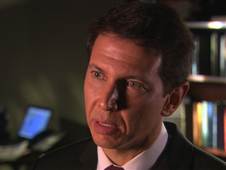
Ambassador Daniel Fried, Special Advisor for Camp Ashraf
Washington, DC

MR. VENTRELL: Okay. So we’ll go ahead and get started. Everybody, this is Ambassador Fried. This session is on the record, unless otherwise indicated. We do have the director of our Ambassador Daniel Fried, Special Advisor for Camp AshrafIraq office here to go into some further detail if necessary. But as we start, this is all on the record, unless otherwise indicated.

So Ambassador Fried, please go ahead.

AMBASSADOR FRIED: I’ll start out with some prepared remarks and then take your questions if that’s all right. Oh, and forgive me if I speak a little slowly. This is the result of Novocain and the dentist this morning.

The U.S. seeks a safe, secure, humane resolution of the impasse at Camp Ashraf. Our interest is humanitarian and independent of our views of the MEK’s past record. Thanks to intense efforts by Ambassador Martin Kobler, the head of the UN Mission in Iraq, a reasonable path forward for a safe and secure relocation from Ashraf to Camp Liberty is at hand. On Christmas Day, Kobler signed with the Government of Iraq an MOU that provides details of the transfer and commitments from the Iraqi Government for the safety and security of the residents of Camp Ashraf.

The residents of Camp Ashraf will be moved from Camp Ashraf to former Camp Liberty, which used to be a U.S. military facility and is located near the Baghdad Airport. UNHCR is – will begin immediately to process these people for refugee status. At the same time, those wishing to return voluntarily to Iran as, by the way, several hundred from Ashraf have already done, will be able to do so.

The UN will conduct 24/7 monitoring at Camp Liberty – or former Camp Liberty. In addition, Embassy Baghdad will visit former Camp Liberty on a frequent basis to provide robust observation. The Government of Iraq has agreed in this MOU to the safety and security of Camp Liberty and those there and not to forcibly repatriate any resident of Camp Ashraf/former Camp Liberty to Iran. The Government of Iraq accepted many of Ambassador Kobler’s suggestions, and the plan agreed now reflects major progress since the discussions began. Secretary Clinton, the EU, UN Secretary General Ban Ki-moon have all publicly welcomed the signing of the MOU and have urged that it be implemented in good faith by all sides.

This is Iraq we’re talking about, however. We must be realistic about the difficulties. We’re also acutely aware of the mistrust and even animosity between the MEK and many Iraqis, given the MEK’s history in Iraq. We’re concerned by the recent series of rocket attacks on Ashraf and we condemn them. While these have not caused injuries or damaged property, they heighten and underscore the risks in this situation. U.S. facilities in the area have also been under attack recently.

The UN has expressed its concerns about these attacks to the Iraqi Government. We are doing so as well. Nevertheless and for – perhaps especially because of these attacks, it’s important to move ahead with the MOU. We welcome the willingness expressed yesterday by the MEK to cooperate with implementation of the MOU, specifically their announcement that they are prepared to move the first 400 persons to Camp – to former Camp Liberty. That move is being prepared now.

The UN is putting its assets in place for monitoring and refugee processing. It’s up to the Iraqi Government to prepare Camp Liberty, to receive the first residents of Ashraf, and this is likely to take several more days at least. It’s important that this first move be followed by other moves from Ashraf to former Camp Liberty. Ashraf is relatively isolated and, frankly, less secure than Liberty will be with its UN monitoring and a frequent U.S. presence. We also hope the day-to-day issues of camp management can be worked out on the ground as, hopefully, confidence grows.

The good news is that we are finally entering a phase of implementing an agreement that’s been painfully negotiated and is understood by all sides. But implementation will take sustained cooperation and patience by all. The U.S. will remain closely engaged in all stages of this process.

So with that, let me take your questions.

QUESTION: So how many people in all are we talking about moving? You said a few hundred have gone back to Iran.

AMBASSADOR FRIED: The MEK says there are about 3,200 people at Camp Ashraf. Years ago, when the – in the early phases of the Iraq conflict, we identified about that number of people, but we don’t know how many people are there now. We don’t know how many have left.

QUESTION: Okay. But several hundred, you said, have gone back to Iran?

AMBASSADOR FRIED: We – yes. We believe several hundred have gone back to Iran voluntarily over the years, not recently. Recently, a number of people at Camp Ashraf have gone back to European countries where they have either citizenship or long-term residency. This has been relatively small in numbers, but it’s picked up in recent weeks.

QUESTION: And do you get the sense that some of these people that will be moving over to Liberty are going to want to move on further or that could be their –

AMBASSADOR FRIED: Well, they all want to move out of Iraq. That seems to be – well, let me back up by saying we don’t know actually what the residents of Camp Ashraf want. We know what their leaders say they want. And what they say they want is for them to leave Iraq in safety and security. There is some number – and estimates vary very widely – of how many will actually want to go back to Iran.

Our view is that if residents of Camp Ashraf want to go back to Iran, this is their right, but it has to be really voluntary and not, quote, “voluntary.” That’s why I mention that some hundreds have gone back already. According to international organizations, there is no evidence that they have been mistreated by the Iranians, but we can’t verify that independently for ourselves.

QUESTION: Have they – have the Camp Ashraf group – have they given you any sort of timeline that – you said the first 400 are going to be ready to move. When do you expect them actually to move? When is the camp going to be able to accept them? And do you have a sense that there’s going to be a clear follow-on from that, that they’re going to keep on moving more and more people? Or is this first 400 sort of a test group?

AMBASSADOR FRIED: In the last 48 hours, we have been heartened by the increased willingness of the leaders of Camp Ashraf and the MEK leadership in Paris to participate in this process. We believe that the first 400 are ready to move soon. The – as I said, former Camp Liberty has to be set up, the infrastructure has to be put in place, and this will – it’ll take, we think, at least several days for this to be done. But under the circumstances, we think that the 400 should move as soon as possible, and this should be followed up by more moves.

There are issues of how the new facility will run. Some of these issues were addressed in the MOU. But in reality, they can be worked out on the ground. It’s important now that people start leaving Camp Ashraf, which is really not a secure place, and move to a place where they can be processed by the UNHCR. So we very much hope that as many people will move out as fast as can be accommodated. The first 400 is a good start; it needs to be followed up.

QUESTION: Well, just on the resettlement issue. I understand in the past there was some demands on the part of the Camp Ashraf or MEK that they be done in groups, that they want (inaudible) all go together. What can you – just walk us through what the current understanding is of how and where they might go?

AMBASSADOR FRIED: You are correct that the MEK in the past made many demands, and it wasn’t until recent weeks that it started working with Ambassador Kobler in a serious way. We are very glad that they decided to do so. Late is far better than never, and it’s never too late to do the right thing. So they have done the right thing by working with Ambassador Kobler.

Specific to your question, the UNHCR does not do group refugee designations. They’ve made it clear that they are prepared look at them as individuals and to begin immediately to process them. We’ve also encouraged the people at Camp Ashraf to send in this – in the early group, in the group of 400 and other early groups, those with the strongest ties to the outside world – that is citizens of European countries, citizens of the United States, if there are more still there. We know of only two left there, but we – there could be more. If they send out those with the strongest ties, those will be the easiest to move out of Iraq. And it’s important to show the Iraqi Government and Iraqis and the people of Camp Ashraf this process can work all the way, meaning from Ashraf to former Camp Liberty and out of Iraq safely.

QUESTION: But isn’t there some risk in that, that if you’re starting with the easiest cases then the hard cases are just going to sit there, right?

AMBASSADOR FRIED: Well, the hard cases aren’t going to get any easier with – easier if you move them up front. Move – our view is move those who can most easily move. There are – in terms of numbers, there are a lot of unknowns. But if you start with a topline of 3,200 people, there is – you have to subtract the number of people who may have left. We don’t have it accounted for, so it’s 32 minus X. Then it is minus those will really want to go back to Iran, and there’ll be arrangements in place for them to do so. Then you take away the number of people with citizenship or strong compelling ties to foreign countries. Then you – what you have left is the group which will be interviewed individually for refugee status by the UNHCR. So hopefully those groups subtracted from the topline number will be as big as possible, but we just don’t know.

QUESTION: Is there a risk that you’re just moving – even if it’s Liberty as a more secure place, you’re just moving the problem a few miles?

AMBASSADOR FRIED: Well, there is no way that Ashraf was going to be the venue for the UNHCR interviews. And for reasons having to do with history and the history of the MEK in Iraq, there was no way that the Government of Iraq was going to allow a Camp Ashraf to exist as it was. So for those reasons, this move is critical to start the process in earnest.

QUESTION: Why do you think the MEK has changed its tune? Have you offered them anything? Like, will it be easier for them to get off the terrorism list if they cooperate?

AMBASSADOR FRIED: We have not offered them anything, but it is, I think – and I can’t read their minds, but I think that it became very clear that the United States was (A) concerned with their welfare and willing to put substantial efforts into this process, and (B) quite serious that we could do nothing if they were going to stand pat with maximalist, unachievable positions.

So I think they realized that they had a reasonable offer made by one of the strongest UN officials I’ve ever worked with, Ambassador Kobler. They had the full engagement of the U.S. Embassy in Ambassador Jeffrey. They had the strong interest of Secretary Clinton and other senior people in the U.S. Government. And I think they realized that now was the time to deal seriously.

QUESTION: Does the designation affect their migration status at all, their eligibility to go to any other country, let alone the U.S.?

AMBASSADOR FRIED: One of the enduring urban legends of this process is that the MEK’s current status as a foreign terrorist organization, so listed by the American Government, is in itself a great impediment to resettlement and that removing them from that list would suddenly make many more eligible that are not now eligible. That apparently, as it has been explained to me by those very familiar with American immigration laws, is not true.

The FTO designation process is quite independent from my office and what we’re doing. I haven’t participated in this, in the paperwork. We will – the United States will look at people at Camp Ashraf or future Camp – those who will be at former Camp Liberty on a case-by-case basis. The status of the MEK as a foreign terrorist organization is not, by itself, disqualifying to any particular individual. And removal of the MEK from that list, if it were to happen in the future, would not necessarily make eligible someone who is now statutorily ineligible.

QUESTION: So you can be a member of a foreign terrorist organization and not an American citizen and be given political refugee status in the United States?

AMBASSADOR FRIED: That isn’t what I said.

QUESTION: Right. But I’m asking –

AMBASSADOR FRIED: What I said was it is not – we are going to look at these people on an individual basis. They may have arrived at Camp Ashraf under all sorts of circumstances.

QUESTION: Okay.

AMBASSADOR FRIED: The reason I’m hesitating and being very careful is because interpretation of our immigration laws is not my business at all, and the Department of Homeland Security has, let’s say, a very great deal to say on this subject. But I’ve – in my conversations with them, it’s clear that they’re prepared to look at individuals, but against, obviously, our immigration laws.

QUESTION: Okay.

QUESTION: They’re going to look at an individual and then say, “No,” right?

AMBASSADOR FRIED: I’m not going to pre-judge how they look at individuals. I will say that people may have found themselves in Ashraf on a variety of circumstances.

QUESTION: Unwillingly, perhaps?

AMBASSADOR FRIED: I don’t want to characterize it that way or any way, but just say what I said.

QUESTION: Okay. Now the UNHCR – I understand when they do their interviews, they have to be private. So they won’t have like a MEK superior watching over them and hearing what they say. But this determination of which ones want to return to Iran – is that done somehow through a private interview process? Because then otherwise you might get the groupthink and the “don’t say you want to go back to Iran” and the numbers would be far smaller than you’d expect maybe.

AMBASSADOR FRIED: Without getting into the details of how individuals will be processed by international organizations, it’s not the U.S. doing it on the ground, I should point out. I would say that the UN and other international organizations are very well aware of the potential problem of, as you said, groupthink or group pressure, and they’re very well aware of the many reports about the atmosphere at Camp Ashraf and the character of that place. And I really shouldn’t say any more than that, but –

QUESTION: So they would be doing it, and – UN and international organizations would handle all of the –

AMBASSADOR FRIED: Well, it’s –

QUESTION: Even the part related to the Iran question, not –

AMBASSADOR FRIED: It’s not the United States doing it.

QUESTION: No, I understand, but –

AMBASSADOR FRIED: Everyone is aware of the problem you identified. I should say also that the MOU does contain an Iraqi commitment not to forcibly repatriate anyone to Iran.

QUESTION: Dan, have you seen these latest statements from the MEK in Paris? There was one this morning that says that they have information that the IRGC is going to launch some new rocket attacks tonight. Whether you’ve seen it or not, the other thing they say is that they’re asking for U.S. and UN monitors at the – at Camp Ashraf until it’s been emptied. Is that something from – at least from the U.S. side, is that something that you guys would be willing to consider, sending people to observe?

AMBASSADOR FRIED: The UN has said that it will monitor the former Camp Liberty. Not Ashraf; that’s not your question. But they’ll be at Camp Liberty on a 24/7 basis. The United States is prepared to mount a very robust monitoring – or I should say observation – a robust observation operation at the former Camp Liberty. It’s not practical, for a number of logistic and security arrangements, for us to be out with anything like that intensity at Camp Ashraf, which is one of the reasons people need to think seriously about moving fast.

QUESTION: Why? Why is it not practical?

AMBASSADOR FRIED: Well, it’s a lot farther away, for one thing.

QUESTION: Right.

AMBASSADOR FRIED: And the move – it is harder to move people back and forth. I don’t want to say much more because that involves the logistics of these kinds of things, but we’re going to be at Camp Liberty a lot – at former Camp Liberty a lot more than we are at Ashraf.

QUESTION: Wait, who – I mean, so in other words, you’re not – that’s not in the cards, this latest request for –

AMBASSADOR FRIED: That’s not in the cards. That’s not – that’s right. That’s not in the cards.

QUESTION: And who runs Liberty now? Is it the Iraqi army or –

AMBASSADOR FRIED: It’s an Iraqi – that’s right. We turned over Camp Liberty to the Iraqi military. They’re there. There have been some – a lot of discussions about the security arrangements in future Camp Liberty, and Ambassador Kobler has had these in some detail with his – with his Iraqi counterparts. It will be an Iraqi facility. It’s not going to be a kind of independent, self-governed, autonomous, extraterritorial facility, which is what Camp Ashraf has been for many years.

And the – Ambassador Kobler has had extensive and detailed discussions with both the people at Camp Ashraf – well, the leaders at Camp Ashraf and with – and in Paris. So the MEK knows very well what he is – what the circumstances will be and what the arrangements are.

QUESTION: Are these two Americans who remain?

AMBASSADOR FRIED: We know of two American citizens that are still at Camp Ashraf.

QUESTION: Are they high-level or more of the –

AMBASSADOR FRIED: I – because of – because they are American citizens, Privacy Policy and Act means I can’t talk more about it.

QUESTION: Okay. If they were to return, would they face possible prosecution?

AMBASSADOR FRIED: I can’t talk about any of that. Now there are some at Camp Ashraf – some of the leaders say there are more American citizens there, that there are more permanent residents. We know of just two that remain.

QUESTION: Okay.

QUESTION: Have others come here?

AMBASSADOR FRIED: Yes. Recently, two have come here from – American citizens have come here from Camp Ashraf. And the – I think I can say that the Iraqi Government facilitated that, and it was – when they finally left, it was very smooth.

QUESTION: Are these Iranian-Americans or Americans of Iranian descent?

AMBASSADOR FRIED: I believe they are, but I’m not sure.

QUESTION: As far as you know, there isn’t anyone who’s a non-Iranian in Camp Ashraf, are – I’m just curious. You said there are – some people might have gotten there by very – in different ways.

AMBASSADOR FRIED: Different means, that’s right.

QUESTION: Can you –

AMBASSADOR FRIED: I just don’t know. I don’t think so. I have not heard reports. But I’m not trying to prove a negative. I don’t think so, but I don’t know.

QUESTION: And when you talk about it, can you just say, I mean, just for example, what kind of means would one have gotten there other than voluntarily going in?

AMBASSADOR FRIED: Sorry?

QUESTION: Well, I mean, like the North Koreans, are they running around kidnapping people and bringing them to Camp Ashraf? How do you get there involuntarily? How would one get there?

AMBASSADOR FRIED: There – well, let me refer you to some of the outside studies that have been written – the Rand Corporation report, for one. Take a look at that, or Human Rights Watch. They’ve described what they think are some of the problems. The MEK denies it. Right now, our concern is humanitarian and getting the people out of Ashraf over to Liberty, and then we’ll deal with the next set of really tough problems, which is repatriation/resettlement of these folks.

QUESTION: Some of those other reports that you mentioned have also discussed potential threats to the residents of Camp Ashraf may be internal rather than external. Without going into what your assessment is of where the threats are, is it the U.S. Government sort of understanding or feeling now that the immediate threats that they may have been facing to life and limb in the camp have decreased significantly? Are they not as at-risk as they were prior to this MOU being signed?

AMBASSADOR FRIED: Well, certainly the developments of the – the good developments of the past several days – that is, the signing of the MOU and the MEK’s expressed willingness to work with Ambassador Kobler on the basis of the MOU and move 400 people out – have the effect of lowering the temperature and putting us on an implementation track rather than a negotiation and imminent disaster track.

Now that’s better, right? That’s a better place to be, but implementation is not easy. It’s fraught with the problems we can imagine and probably some we can’t. So no one who’s working on this issue is putting their feet up and saying, well, job is now done, we can just – it’s just on autopilot. Far from it. It will take a lot of work, a lot of work.

QUESTION: Thanks.

QUESTION: Thank you.
Sophia Jenson on 12 30, 2011 – vadvert.co.uk

December 31, 2011 0 comments
FacebookTwitterPinterestWhatsappTelegramSkypeEmail
MEK Camp Ashraf

Iraq sole responsible for Ashraf residents security

The United Nations and Iraq have signed a memo-of-understanding (MOU) Monday to achieve a humanitarian and peaceful settlement of the inhabitants of the anti-Tehran Mujahedin E-Khalq’s Iraq sole responsible for Ashraf residents security during relocationAshraf Camp in northeast Iraq to a new location, a UN statement, copy of which was received by Aswat al-Iraq news agency, reported.

It pointed out that the MOU was signed by the UN Secretary-General’s Special Representative in Iraq, Martin Cobler and the Iraqi Council of Ministers’ Adviser for National Security Affairs, Faleh al-Fayad.

"The United Nation’s attention in this issue had stemmed from a mere humanitarian viewpoint, as it had exerted its utmost effort to find out a neutral, peaceful and permanent settlement for the affairs of Ashraf residents conditions," the statement stressed.

The statement added that "the MOU respects Iraq’s sovereignty and international humanitarian commitments, related to Human Rights, as well as those stemming from the human rights of Ashraf Camp’s residents, "confirming that the residents of the new location of Ashraf would commit themselves for Iraqi laws.

It also stressed that "the MOU was reached through several joint meetings between representatives of the UN and the Iraqi government, and following serious consultations by the UN with the Camp’s residents."

The UN Representative had made it clear that "the MOU would pave the way for a process, according to which the Iraqi government would help to transfer the Camp’s resident to a temporary location, in such a way that would help the United Nations Commission for Refugees Affairs to appoint a team in the new location, that would begin to check demands for immigration that it would receive and finalize such demands."

It also confirmed "a clear commitment by the government of Iraq that it would secure the safety and security of the residents of the new location, as well as the government’s commitment to assure the Iraqi Human Rights Ministry’s active participation in all the stages of the process, including the appointment of a special officer to organize the relationship among all parties."

The UN Representative said: "We would like to make it very clear that this MOU is related to the voluntary transfer, and its implementation strongly depends on the participation of all parties to act in a peaceful manner and good intention, in such a way that would allow the UN to contribute in the process."

"I would like to point out that the (Iraqi) government is the sole responsible for the safety and security of the said residents, during the process of their transfer and in their new location, till their departure from the country; and I repeat my call for the UN member-states to accept the residents of the Camp in their countries," he said.

Noteworthy is that the Iraqi government had issued a decision to end the presence of Mujahedin E-Khalq Organization in Iraq before the end of the current year of 2011, charging it as being a "terrorist" organization, that had participated in killing Iraqis.

The anti-Tehran Organization uses the Ashraf Camp in northeast Iraq’s Diyala Province, as its location since it had moved its command for Iraq in 1985, during which it had enjoyed support by the former Iraqi regime, including the launching of attacks against Iran.

December 29, 2011 0 comments
FacebookTwitterPinterestWhatsappTelegramSkypeEmail
Germany

Rights group warn German Interior Minister of MKO

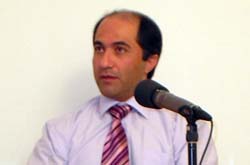
According to Habilian Association database (families of terror victims in Iran), Ali Akbar Rastgou, defected member of MKO terrorist group, now living in Germany, in an open letter to German Ali Akbar Rastgou, MKO former memberInterior Minister Hans-Peter Friedrich requested him not to let MKO members enter the country under the cover of wounded patients.

The full text of the letter is as follows:

As you know Iraqi government has given an extension to a deadline for the closure of the base of the Mojahedin-e Khalq, Camp Ashraf.

By contrast, we were surprised to see Maryam Rajavi’s expression of readiness to cooperate with Iraqi government and the UN for the closure of the Camp.

We would like to warn you against a premature decision for accepting "refugees" of Camp Ashraf.

Rajavi’s retreat from her propaganda campaign and spending billions of dollars for retention of Camp Ashraf, her collaboration for the dissolution of the camp and resettlement of hundreds of MKO members all confirms the suspicion that Mujahedin-e Khalq organization sees the struggle for Ashraf a futile effort, and at the present time she is trying to help the leadership (in Camp Ashraf) escape with their lives.

There are many rumors swirling around the MKO leader’s efforts to transfer the leadership and top militants to Europe.

This week Switzerland announced its readiness to resettle refugees of Camp Ashraf, though it did not provide any medical services to 11 wounded patients of them, since after some investigation they found out that "these individuals pose a great threat to Switzerland’s national security."

It is rumored that MKO attempts to transfer its leadership members by Doctors Without Borders (Medecins Sans Frontieres) under the cover of wounded people and patients.

According to Iraqi government’s recent plans, 800 members will be moved to Camp Liberty to be transferred to out of Iraq. It is strongly possible that they are the high rankings and trained militants. The cult hereby intends to save its valued members and transfer them to Europe.

The fate of the members of little value, especially critics, dissidents, and those who want to defect (from the cult) is not important for the MKO leadership. It is said that the cult wants to exploit them as martyrs and victims in clash with Iraqi security forces.

It is obvious that Mujahedin-e Khalq spends a lot of cash lobbying to get off US terrorist list and reinstate the camp. It shows that this cult does not spare any effort to achieve its goals.

Therefore we request you to:

Support UN plan for conducting interviews individually with each person in a safe location without the cult’s leadership presence.

Make the visit of MKO member’s families outside the camp with their relatives possible.

Do not let Germany become a haunt for terrorists! Germany has always been MKO’s backyard. Make sure of their organizational status before accepting them!

Sincerely Yours,

Ali Akbar Rastgou,Aawa Association

December 29, 2011 0 comments
FacebookTwitterPinterestWhatsappTelegramSkypeEmail
Newer Posts
Older Posts

Recent Posts

  • A Criterion for Proving the Violent Nature of the MEK

    December 31, 2025
  • Rebranding, too Difficult for the MEK

    December 27, 2025
  • The black box of the torture camps of the MEK

    December 24, 2025
  • Pregnancy was taboo in the MEK

    December 22, 2025
  • MEPs who lack awareness about the MEK’s nature

    December 20, 2025
  • Facebook
  • Twitter
  • Instagram
  • Youtube

© 2003 - 2025 NEJAT Society . All Rights Reserved. NejatNGO.org


Back To Top
Nejat Society
  • Home
  • Articles
  • Media
    • Cartoons
    • NewsPics
    • Photo Gallery
    • Videos
  • Publications
    • Books
    • Nejat NewsLetter
    • Pars Brief
  • About Us
  • Contact us
  • Editions
    • عربي
    • فارسی
    • Shqip