Nejat Society
  • Home
  • Articles
  • Media
    • Cartoons
    • NewsPics
    • Photo Gallery
    • Videos
  • Publications
    • Books
    • Nejat NewsLetter
    • Pars Brief
  • About Us
  • Contact us
  • Editions
    • عربي
    • فارسی
    • Shqip
Nejat Society
Nejat Society
  • Home
  • Articles
  • Media
    • Cartoons
    • NewsPics
    • Photo Gallery
    • Videos
  • Publications
    • Books
    • Nejat NewsLetter
    • Pars Brief
  • About Us
  • Contact us
  • Editions
    • عربي
    • فارسی
    • Shqip
© 2003 - 2024 NEJAT Society. nejatngo.org
Iraq

Iraqis rally demanding MKO expulsion

Thousands of Iraqi people held a demonstration in Tahrir square in central Baghdad on Friday calling for the expulsion of the terrorist Mojahedin Khalq Organization (MKO) from their country.
Thousands of Iraqi people held a demonstration in Tahrir square in central Baghdad on Friday calling for the expulsion of the terrorist MKO
The MKO, The terrorist group, was granted asylum in Iraq in the 1980s under Saddam Hussein’s regime and set up home at Camp of New Iraq (which was formerly known as Camp Ashraf) in Diyala province. But after the 2003 U.S.-led invasion, they became an irritant to Iraq’s government.

According to AP, the demonstrators were urging the government to abide by an end-of-year deadline to expel the group from Iraq and close their camp here.

Shouting some slogans, the protesters condemned the MKO and warned the Iraqi government about the terrorist group’s plans to kill the Iraqi people and to plague the country by internal divisions.

Issuing a statement, the protesters also called on the government to prevent the European Union from interfering in the issue of expulsion of the MKO.

They also urged the government to bring to trial the MKO criminals who have the Iraqi people’s blood on their hand.

Decision to close MKO camp ‘irreversible’

In an interview with AFP on Thursday, Iraqi Prime Minister Nouri al-Maliki said that Baghdad’s decision to close Camp of New Iraq by year-end is ‘irreversible.’

“The decision we made is irreversible, especially because this organization refused the visit of a UN representative to Camp Ashraf,” Maliki said.

“They’ve rejected the UN plan, which means this is a criminal gang and we cannot permit a criminal gang to remain here,” he added.

The Iraqi government has reiterated that the camp, which is a threat to its relations with neighboring Iran, will be closed by December 31.

But last week the United Nations appealed for an extension to the end-of-year deadline to allow more time for a solution to be negotiated with the camp’s residents who are refusing to move unless they are given UN protection.

ICRC has not requested extension of MKO expulsion deadline

Speaking to the Fars News Agency, the representative of the International Committee of the Red Cross (ICRC) in Iran, Pierre Ryter, said that the Committee has never negotiated with Iraqi officials to persuade them into extending the deadline for the expulsion of the MKO members from Iraq.

To View the Video File Click Here

December 17, 2011 0 comments
FacebookTwitterPinterestWhatsappTelegramSkypeEmail
MEK Camp Ashraf

ICRI: situation remains uncertain for residents of Camp Ashraf

Camp Ashraf, 80 km north-east of Baghdad, is home to over 3,000 Iranian nationals who belong to the People’s Mujaheddin Organization of Iran. In recent months, the Iraqi authorities have repeatedly said that they intend to close the camp at the end of 2011. Beat Schweizer, head of the ICRC delegation in Iraq, explains the ICRC’s role and response.

The Iraqi authorities have said they will close the camp at the end of 2011. What is the ICRC’s Beat Schweizer, head of the ICRC delegation in Iraqview on this?

The ICRC welcomes the Iraqi authorities’ commitment not to transfer Camp Ashraf residents to Iran against their will, and will continue to monitor the situation, to ensure that the Iraqi authorities fulfil this commitment. The ICRC will also continue to insist that the authorities meet their obligation to preserve the dignity, physical well-being and mental well-being of the camp’s residents. While it is true that the residents of camp Ashraf must comply with Iraqi laws and regulations, it is also true that the Iraqi authorities must ensure ICRCrespect for these people’s fundamental rights, just as they would for anyone else on Iraqi territory. Furthermore, the Iraqi authorities must ensure that the residents of Camp Ashraf have access to such basic services as food, water and medical care, under all circumstances.

I must emphasize that the ICRC is not part of any mechanism to close down the camp or transfer its residents, and we are not going to be.

What will the ICRC do if force is used to transfer Camp Ashraf’s residents?

The ICRC will continue to call on all concerned to exercise restraint and to comply with applicable law. One legal requirement is that any use of force be in accordance with internationally-recognised principles governing law-enforcement operations. And respect for human dignity must be maintained whatever happens.

What will the ICRC do if residents are arrested?

The ICRC is prepared to visit anyone from Camp Ashraf whom the Iraqi authorities may detain. We would assess their conditions of detention and treatment, and would help them restore contact with their relatives, through Red Cross messages for instance. The ICRC is already making regular visits to detainees in Iraq, and we would assist any detained persons from Ashraf Camp in the same way.

In 2009, the ICRC visited 36 Ashraf residents detained by the Iraqi authorities. In April 2011, the ICRC visited six people arrested in relation with clashes between Iraqi security forces and residents of the camp. The authorities released those six people shortly after detaining them.

What is the ICRC doing for residents of Camp Ashraf who are seeking asylum and want to be resettled in a third country?

We have been facilitating the repatriation of former residents of Camp Ashraf who wish to go back to Iran. Since 2003, the ICRC has arranged for the repatriation of over 250 Camp Ashraf residents to their home country, in cooperation with its delegation in Tehran. The ICRC has helped repatriate seven former residents in 2011 so far, with the most recent repatriation taking place in August.

The ICRC is prepared to continue helping repatriate residents of Camp Ashraf to Iran at the request of the people concerned, with their full consent, and in agreement with both the Iraqi and the Iranian authorities. If residents of the camp want to seek asylum or resettlement in a third country, the ICRC will refer them to UNHCR. We may offer direct help in certain cases, for instance by issuing travel documents once the authorities of a particular country have agreed to take a person. The ICRC can also facilitate contact with relatives abroad.

What was the ICRC’s response to last April’s clashes between Iraqi forces and residents of the camp?

The ICRC maintained constant dialogue with the Iraqi authorities, in an effort to ensure that the use of force by law-enforcement personnel conformed to the standards that govern law-enforcement operations. We also dispatched kits of dressing material to Baquba Hospital, where casualties obtained treatment, and visited six residents arrested by the Iraqi authorities during the clashes.

What is the current situation in Camp Ashraf?

The ICRC has not made any visits to Camp Ashraf recently. The situation there is being monitored by the United Nations Assistance Mission for Iraq.

The ICRC remains committed to providing independent, humanitarian assistance to the residents and their families. While we have no precise figures, the population of the camp is estimated at over 3,200.

December 14, 2011 0 comments
FacebookTwitterPinterestWhatsappTelegramSkypeEmail
Iraqi Authorities' stance on the MEK

Iraqi speaker urges MKO expulsion by year end

Iraqi Parliament Speaker Osama Nujaifi called on the UN to take proper measures to facilitate expulsion of the anti-Iran terrorist Mojahedin-e Khalq Organization (MKO) from Iraq’s soil. Iraqi Parliament Speaker Urges MKO Expulsion by Year End

Speaking to reporters, Nujaifi reiterated Baghdad’s decisive stance on MKO’s expulsion from Iraq’s soil, and said their expulsion should take place through coordination with the United Nations.

He added that the main suggestion seems to be moving MKO member to a third country and not to another area in Iraq.

Earlier, Iraqi Ambassador to Tehran Mohammad Majid al-Sheikh underscored Baghdad’s serious decision for expelling the MKO, and said the decision is irreversible.

"Based on the Iraqi government’s decision, the MKO members should leave our country by the end of 2011," al-Sheikh told FNA on Monday, and reiterated, "The decision is irreversible and definite."

He also said that Iraqi officials in their different meetings with their counterparts at the EU, the UN and the International Committee of the Red Cross (ICRC) have underlined their seriousness in expelling the MKO from their country’s soil.

"We have always stressed that there is no possibility for their longer presence in Iraq at all and we have declared this to the international organizations," al-Sheikh said.

The MKO, whose main stronghold is in Iraq, is blacklisted by much of the international community, including the United States.

The MKO is behind a slew of assassinations and bombings inside Iran, a number of EU parliamentarians said in a recent letter in which they slammed a British court decision to remove the MKO from the British terror list. The EU officials also added that the group has no public support within Iran because of their role in helping Saddam Hussein in the Iraqi imposed war on Iran (1980-1988).

The group started assassination of the citizens and officials after the revolution in a bid to take control of the newly established Islamic Republic. It killed several of Iran’s new leaders in the early years after the revolution, including the then President, Mohammad Ali Rajayee, Prime Minister, Mohammad Javad Bahonar and the Judiciary Chief, Mohammad Hossein Beheshti who were killed in bomb attacks by MKO members in 1981.

The group fled to Iraq in 1986, where it was protected by Saddam Hussein and where it helped the Iraqi dictator suppress Shiite and Kurd uprisings in the country.

The terrorist group joined Saddam’s army during the Iraqi imposed war on Iran (1980-1988) and helped Saddam and killed thousands of Iranian civilians and soldiers during the US-backed Iraqi imposed war on Iran.

Since the 2003 US invasion of Iraq, the group, which now adheres to a pro-free-market philosophy, has been strongly backed by neo-conservatives in the United States, who also argue for the MKO to be taken off the US terror list.

Since the beginning of this year, the Baghdad government has repeatedly assured Iranian officials and people that it is determined to expel the MKO from Iraq by the end of 2011.

December 14, 2011 0 comments
FacebookTwitterPinterestWhatsappTelegramSkypeEmail
MEK Camp Ashraf

A U.S. plan to save MEK members who remain in Iraq

TO SOME, including the U.S. government, the Mujahedin-e Khalq (MEK) is a terrorist organization that is responsible for the deaths of hundreds, if not thousands, of civilians, including Americans in Tehran in the 1970s. To others, it is the voice of democratic Iranian opposition.A U.S. plan to save MEK members who remain in Iraq

This debate, fueled in part by the group’s handsomely paid stable of former U.S. officials who act as advocates, should be put aside to focus on a much more immediate and potentially explosive problem.

Come Dec. 31, Iraqi Prime Minister Nouri al-Maliki has ordered the closure of Camp Ashraf, an encampment 35 miles north of Baghdad that has been home for 25 years to members of the MEK. The camp currently houses some 3,400 people. The MEK fled Iran in the mid-1980s and took up arms with Saddam Hussein in the fight against Iran; the group has also been linked to Hussein’s violent suppression of Iraqi Shiites and Kurds, according to the Council on Foreign Relations. Incidents of terrorism attributed to MEK have significantly declined since 2001, but hostility to the group still runs high and was evident in the April massacre of dozens of Camp Ashraf residents by Iraqi forces.

The bloodshed could be even worse if the remaining residents are not moved out of the camp by Mr. Maliki’s deadline, which coincides with the pullout of U.S. troops. Some fear that Mr. Maliki could turn a blind eye to violence at Camp Ashraf or forcibly send to Iran MEK members, who fear persecution.

The Obama administration has won Iraqi agreement for a plan that could avoid these outcomes. Overseen by Martin Kobler, the U.N. envoy to Iraq, it calls for the MEK members to be moved to the United States’ former Camp Liberty base, near Baghdad’s international airport, where they would be interviewed and processed by the United Nations’ refu­gee agency. Interviews would be done individually, allowing each person to state his or her wishes for relocation without intimidation from the group’s leaders. The United Nations would monitor the process to protect against abuses. Officials say none of the MEK members would be returned to Iran against their will.

This is a decent solution to a thorny problem. The sticking point is the MEK’s Paris-based leadership, which is demanding that U.S. troops or U.N. peacekeeping forces provide security at the new camp. With the last U.S. soldiers on the way out and U.N. peacekeepers nowhere in sight, which is a condition that can’t and won’t be met. It’s time for the MEK — and its American mouthpieces — to drop unrealistic demands and accept a plan that offers the best chance to safeguard its members.

December 14, 2011 0 comments
FacebookTwitterPinterestWhatsappTelegramSkypeEmail
Mujahedin Khalq; A proxy force

US backed MEK assassinated Iranian Scientists

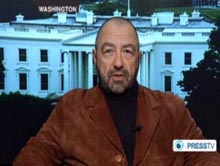
Former CIA officer Philip Giraldi discusses his article “Washington’s Secret Wars;” Obama’s newly signed “findings,” authorizing covert operations to destabilize the Iranian and Syrian governments; how the US and Israel use the Baluch Jundallah, Kurdish PJAK and MEK groups to commit terrorism-by-proxy; the MEK’s energetic and well funded campaign to get de-listed as a terrorist group (in order to more easily commit terrorist acts); and how the 1996 neoconservative policy document “A Clean Break: A New Strategy for Securing the Realm” is going according to plan.

Philip Giraldi, a former CIA officer, is a contributing editor to The American Conservative and executive director of the Council for the National Interest. He writes regularly for Antiwar.com.
Download US backed MEK assassinated Iranian Scientists

December 13, 2011 0 comments
FacebookTwitterPinterestWhatsappTelegramSkypeEmail
Mujahedin Khalq Organization as a terrorist group

Khalis police arrest MEK members on terrorism charges

Khalis police arrest gang of Saddamists, American contractors and Mojahedin-e Khalq members on terrorism charges

A source in the Iraqi security services said that the police arrested eleven people on Sunday 11 December in the Khalis district who were of different nationalities, all with fake IDs. Khalis police arrest MEK members on terrorism charges

They were arrested while in vehicles which were masquerading as governmental vehicles coming out of Camp Ashraf. The source, who declined to be named at this point of time, said that two of the suspects where U.S. citizens and three of them were members of the Mojahedin Khalq, all speaking fluent Arabic. The remaining six were former (Saddamist) Iraqi army officers, all dressed in uniforms of the Iraqi army.

The source confirmed that the U.S. embassy had intervened and pulled its citizens out on the same day before the other nine were referred to judicial authorities for investigation. The U.S. citizens were revealed to be from a private American security company which has its HQ in Mansour Street. Major General Qassim Atta the official spokesman for Baghdad operations refused to give details of this incident.

Al- Bayyana, Baghdad, Translated by Iran Interlink

December 13, 2011 0 comments
FacebookTwitterPinterestWhatsappTelegramSkypeEmail
Iraq

Protesters renew demand to shut down Camp Ashraf

Diyala – Thousands of Iraqis gathered in front of Camp Ahsraf, where almost 3,500 Iranian Iraqis remember MEK for their cooperation with Iraqi Baath regime and quenching Shiite and Kurdish uprising in Iraq.dissidents of the Mojahedine Khalqe Iran Organization reside, in order to renew a demand for closing down the Camp.

Camp Ashraf is situated northeast of the Iraqi town of Khalis, about 120 kilometers west of the Iranian border and 60 kilometers north of Baghdad.

MEK came to Iraq in 1986 and are regarded by coalition forces as a protected people under the Geneva Convention.

Iraqis remember MEK for their cooperation with Iraqi Baath regime and quenching Shiite and Kurdish uprising in Iraq.

The Iraqi government has repeatedly voiced its intensions to terminate the residency of the MEK in Iraq by the end of this year.

The protest rally today was arranged by the Islamic Supreme Council of Iraq (ISCI) and the organizations and parties opposition the Camp residents. Children, political leaders as well as chieftains from different parts of Iraq were among the protesters.

ISCI chief in Jadida Shat in Diyala, Qasem Awdat al-Maamuri, told AKnews the gathering is to readdress the demand for expelling the Camp residents out of Iraq before Iraqi officials as well as the international community.

He added the protesters demand the government "restore the land that the Iranian dissidents have occupied for more than two decades under a rule by the former Iraqi regime."

He added this year alone 20 protest rallies were held for terminating the Camp residency.

Mr. Maamuri urged the federal government to "take swift and serious decision" to expel MEK members whom he described "terrorists".

"They should be banned in Iraq, considering that they impose a threat on the security in Diyala, the whole country and the neighbors," he said.

The security forces imposed strict measures to avoid any violence or disputes between the protesters and the Camp residents.

Elements of the dissident organization used loudspeakers to call on the crowd to disperse and keep away from the Camp.

Though some have proposed for the Camp residents to relocate to other provinces of Iraq, the idea has received strong oppositions from many parties. Only one choice seems to have been left for MEK members: relocation to a third country. But so far no country has expressed willingness to grant refuge to the Camp residents.

MEK was founded in Iran in 1965 and cooperated with the rest of the opposition parties in toppling down Mohammed Reza Shah’s regime in 1979.

Disputes with the Islamic Republic led MEK relocate to Iraq and Europe.

By Mahmoud al-Jobour

December 12, 2011 0 comments
FacebookTwitterPinterestWhatsappTelegramSkypeEmail
MEK Camp Ashraf

Camp Ashraf victims prayed for their torturer forgiveness

The MEK cemetery was previously inaccessible as it lay inside the former boundaries of Camp Ashraf. Following the Iraqi military operation to reclaim illegally held land from the MEK in April 2011, the cemetery is now open to view and to independent investigation.

Families and former MEK members arriving at the cemetery led by Mr Hassan Azizi

Families and former MEK members arriving at the cemetery led by Mr Hassan Azizi a veteran former member. He spent years struggling to get himself and his children out. Still later his wife also managed to escape. The family now live in the Netherlands. Mr. Azizi was part of the European delegation recently visiting Iraq and the Camp.

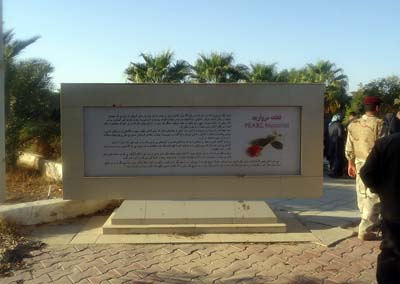
a memorial to the MEK who died in the MEK’s Operation Pearl

This is a memorial to the MEK who died in the MEK’s Operation Pearl in Iraqi Kurdistan in which Rajavi took orders from Saddam to massacre Kurdish villagers. Maryam Rajavi famously ordered her forces to run over the victims with their tanks so as not to waste bullets unnecessarily. The MEK, acting as Saddam’s Private Army, were used to viciously quell the Kurdish uprisings in the north.

memorial to three of the top MEK commanders killed by the people of Karbala during the Shiite uprising

In the south in 1991 the MEK were also used to suppress Shiite uprisings. This picture is a memorial to three of the top MEK commanders killed by the people of Karbala during the Shiite uprising when they took over Saddam’s Secret services HQ in the province. The bodies were never recovered. The three central graves are flanked by the graves of Neda Hassani and Sediqeh Mojaveri who died as a result of self-immolation ordered by Maryam Rajavi to protest her arrest by French anti-terrorism police at Auvers-sur-Oise in 2003.

Before the Iraqis gained control of the cemetery Rajavi had ordered that the pictures of the graves in the whole graveyard be mixed up so they do not correspond to the names on the graves. Perhaps only Rajavi can explain his motive for such a bizarre act.

The Iraqis have reported however that some of the graves have been found to contain more bodies than the single named person indicated on the headstones.

Ex members identified many graves of people who have been killed in the hands of the leaders of the organisation.

Among the graves they also found the grave of Nader Rafi’ee Nejad

The grave of Nader Rafi’ee Nejad

The grave of Nader Rafi’ee Nejad

Nader Rafi'ee Nejad acted as a torturer for the Mojahedin-e Khalq leader Massoud Rajavi

Nader Rafi’ee Nejad acted as a torturer for the Mojahedin-e Khalq leader Massoud Rajavi. He was a veteran member of the MEK who, along with Reza Khaksar (later killed during an armed clash in 1981) and Hassan Mohassel (a former police officer and later a guard in the MEK’s prisons in Iraq), served with the Revolutionary Court in Evin prison after the Iranian revolution.
Rafi’ee Nejad interrogated and tortured former officials of the ousted regime of Shah. Due to the MEK’s pursuit of its own radical policies after 1980, Rafi’ee Nejad, Mohassel and Khaksar were later dismissed from the Revolutionary Court by the government of the Islamic Republic at that time.

After the armed struggle began in 1981, Rafi’ee Nejad fled to Europe and was appointed to the MEK’s foreign relations department. In 1985, he was introduced as a leading member and in 1991 as deputy to an executive board in the MEK. In 1990, he shed his ‘diplomatic’ suit and donned the uniform for jailors of the MEK in Iraq.

In that year, he attended a course with Iraq’s intelligence and security service to undergo classic training by Iraqi interrogators.

He was involved in torturing Mohammed Hussein Sobhani and also the killing of Parviz Ahmadi who died under torture.

In recent years after the fall of Saddam, Nader Rafi’ee Nejad frequently appeared on the clandestine satellite TV station of the organisation pretending to be a legal expert, promoting the punishment of the ex-members wherever they could be found. He always referred to the cult leader’s fatwa that ‘the people who have managed to run away from the cult have to be killed…’
Two of the victims who have been directly tortured by Nader Rafi’ee Nejad are Mohammad Hussein Sobhani and Ali Ghashghavi. In the picture above, they are standing beside the grave of their former torturer. Both men were sent to Abu Ghraib political prison by Massoud Rajavi after extensive imprisonment, isolation and torture inside the MEK’s own prisons failed to force them to submit to Rajavi. Rafi’ee Nejad frequently visited them even when they were in Abu Ghraib. They were released during the fall of Saddam in 2003. There were over 50 registered ex-MEK prisoners in Abu Ghraib at that time labelled as a group as ”Mojahedin Deposits”.

victims of Rajavi and Saddam prayed for forgiveness for their torturer.

Remembering the brutality of Rajavi’s torturers and prisons, both victims of Rajavi and Saddam prayed for forgiveness for their torturer.

December 12, 2011 0 comments
FacebookTwitterPinterestWhatsappTelegramSkypeEmail
The MEK Expulsion from Iraq

Iraq’s decision to expel MKO irrevocable

Iraqi Ambassador to Tehran Mohammad Majid al-Sheikh underscored Baghdad’s serious decision for expelling the anti-Iran terrorist Mojahedin-e Khalq Organization (MKO) from Iraq, and said the decision is irreversible.

"Based on the Iraqi government’s decision, the MKO members should leave our country by the end of 2011," al-Sheikh told FNA, and reiterated, "The decision is irreversible and definite."

He also said that Iraqi officials in their different meetings with their counterparts at the EU, the UN and the International Committee of the Red Cross (ICRC) have underlined their seriousness in expelling the MKO from their country’s soil.

"We have always stressed that there is no possibility for their longer presence in Iraq at all and we have declared this to the international organizations," al-Sheikh said.

Earlier this week, Iraqi Prime Minister Nouri al-Maliki in the article "building a stable Iraq" published by US daily Washington Post, underlined Baghdad’s determination to end the presence of the terrorist MKO on his country soil.

Al-Maliki pointed to the presence of thousands of MKO terrorists in the main training camp in the country’s Diyala province, and said, "The residents of Camp Ashraf (the Camp of New Iraq) have caused a great deal of controversy here (Iraq) and in the United States. I would like to see this complex issue resolved peacefully and with the help of the United Nations."

"The camp’s residents are classified as a terrorist organization by many countries and thus have no legal basis to remain in Iraq," Maliki added.

The MKO, whose main stronghold is in Iraq, is blacklisted by much of the international community, including the United States.

The MKO is behind a slew of assassinations and bombings inside Iran, a number of EU parliamentarians said in a recent letter in which they slammed a British court decision to remove the MKO from the British terror list. The EU officials also added that the group has no public support within Iran because of their role in helping Saddam Hussein in the Iraqi imposed war on Iran (1980-1988).

The group started assassination of the citizens and officials after the revolution in a bid to take control of the newly established Islamic Republic. It killed several of Iran’s new leaders in the early years after the revolution, including the then President, Mohammad Ali Rajayee, Prime Minister, Mohammad Javad Bahonar and the Judiciary Chief, Mohammad Hossein Beheshti who were killed in bomb attacks by MKO members in 1981.

The group fled to Iraq in 1986, where it was protected by Saddam Hussein and where it helped the Iraqi dictator suppress Shiite and Kurd uprisings in the country.

The terrorist group joined Saddam’s army during the Iraqi imposed war on Iran (1980-1988) and helped Saddam and killed thousands of Iranian civilians and soldiers during the US-backed Iraqi imposed war on Iran.

Since the 2003 US invasion of Iraq, the group, which now adheres to a pro-free-market philosophy, has been strongly backed by neo-conservatives in the United States, who also argue for the MKO to be taken off the US terror list.

Since the beginning of this year, the Baghdad government has repeatedly assured Iranian officials and people that it is determined to expel the MKO from Iraq by the end of 2011.

December 12, 2011 0 comments
FacebookTwitterPinterestWhatsappTelegramSkypeEmail
Iraqi Authorities' stance on the MEK

Iraqi PM: No Legal Basis to Keep MKO in Iraq

Iraqi Prime Minister Nouri al-Maliki underlined Baghdad’s determination to end the presence of the terrorist Mojahedin-e Khalq Organization (MKO) on his country soil.
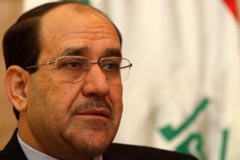
Iraqi Prime Minister Nouri al-Maliki
In the article "building a stable Iraq" published by US daily Washington Post, Nouri al-Maliki pointed to the presence of thousands of MKO terrorists in the main training camp in the country’s Diyala province, and said, "The residents of Camp Ashraf (the Camp of New Iraq) have caused a great deal of controversy here (Iraq) and in the United States. I would like to see this complex issue resolved peacefully and with the help of the United Nations."

"The camp’s residents are classified as a terrorist organization by many countries and thus have no legal basis to remain in Iraq," Maliki added.

He reiterated the terrorist nature of the group, and added, "No country would accept the presence of foreign insurgents on its soil, but we will work hard to find a peaceful solution that upholds the international values of human rights."

The MKO, whose main stronghold is in Iraq, is blacklisted by much of the international community, including the United States.

The MKO is behind a slew of assassinations and bombings inside Iran, a number of EU parliamentarians said in a recent letter in which they slammed a British court decision to remove the MKO from the British terror list. The EU officials also added that the group has no public support within Iran because of their role in helping Saddam Hussein in the Iraqi imposed war on Iran (1980-1988).

The group started assassination of the citizens and officials after the revolution in a bid to take control of the newly established Islamic Republic. It killed several of Iran’s new leaders in the early years after the revolution, including the then President, Mohammad Ali Rajayee, Prime Minister, Mohammad Javad Bahonar and the Judiciary Chief, Mohammad Hossein Beheshti who were killed in bomb attacks by MKO members in 1981.

The group fled to Iraq in 1986, where it was protected by Saddam Hussein and where it helped the Iraqi dictator suppress Shiite and Kurd uprisings in the country.

The terrorist group joined Saddam’s army during the Iraqi imposed war on Iran (1980-1988) and helped Saddam and killed thousands of Iranian civilians and soldiers during the US-backed Iraqi imposed war on Iran.

Since the 2003 US invasion of Iraq, the group, which now adheres to a pro-free-market philosophy, has been strongly backed by neo-conservatives in the United States, who also argue for the MKO to be taken off the US terror list.

Since the beginning of this year, the Baghdad government has repeatedly assured Iranian officials and people that it is determined to expel the MKO from Iraq by the end of 2011.

December 11, 2011 0 comments
FacebookTwitterPinterestWhatsappTelegramSkypeEmail
Newer Posts
Older Posts

Recent Posts

  • A Criterion for Proving the Violent Nature of the MEK

    December 31, 2025
  • Rebranding, too Difficult for the MEK

    December 27, 2025
  • The black box of the torture camps of the MEK

    December 24, 2025
  • Pregnancy was taboo in the MEK

    December 22, 2025
  • MEPs who lack awareness about the MEK’s nature

    December 20, 2025
  • Facebook
  • Twitter
  • Instagram
  • Youtube

© 2003 - 2025 NEJAT Society . All Rights Reserved. NejatNGO.org


Back To Top
Nejat Society
  • Home
  • Articles
  • Media
    • Cartoons
    • NewsPics
    • Photo Gallery
    • Videos
  • Publications
    • Books
    • Nejat NewsLetter
    • Pars Brief
  • About Us
  • Contact us
  • Editions
    • عربي
    • فارسی
    • Shqip