Nejat Society
  • Home
  • Articles
  • Media
    • Cartoons
    • NewsPics
    • Photo Gallery
    • Videos
  • Publications
    • Books
    • Nejat NewsLetter
    • Pars Brief
  • About Us
  • Contact us
  • Editions
    • عربي
    • فارسی
    • Shqip
Nejat Society
Nejat Society
  • Home
  • Articles
  • Media
    • Cartoons
    • NewsPics
    • Photo Gallery
    • Videos
  • Publications
    • Books
    • Nejat NewsLetter
    • Pars Brief
  • About Us
  • Contact us
  • Editions
    • عربي
    • فارسی
    • Shqip
© 2003 - 2024 NEJAT Society. nejatngo.org
Former members of the MEK

Three Ashraf Residents Escape the Cult of Rajavi

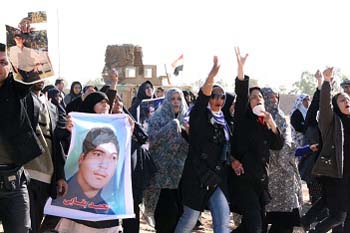
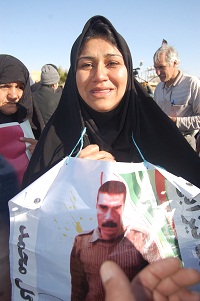
On Friday December 2nd, 2011, three residents of Ashraf Garrison escaped their headquarters and submitted to Iraqi forces. They then joined the families picketing in front of Camp Ashraf, in Azadi installation. Family members of one of the defectors were among the picketing families.
He said that he had heard his sister’s voice via loudspeakers and had recognized her. Thus he was encouraged to endanger his life and ran away.

“Thank God, I could release myself” he said. He hugged and kissed his brother and sister. The three escapees were warmly welcomed by the families who had tears of happiness in their eyes.

The defectors said that a lot of Ashraf residents are waiting for an opportunity to flee the camp and set themselves free.

The names of the new separated members will be soon published if they are willing to.

Translated by Nejat Society

December 4, 2011 0 comments
FacebookTwitterPinterestWhatsappTelegramSkypeEmail
Mujahedin Khalq; A proxy force

Shahram Heidary, Declaration of Separation from the MKO

I am Shahram Heidary. I was born in Khuzestan, Iran in, 1966. I became an MKO sympathizer in 1987. I left Iran to join the MKO by the help of a human smuggler who was sent to me by the group. I arrived in Camp Ashraf in 2005. Shahram Heidary, Declaration of Separation from the MKO

I attempted to escape “Ashraf Prison” on September 15th, 2011 but I was arrested by the MKO guards. I was then tortured and interrogated severely. After a period of imprisonment, I went on hunger strike, which ultimately resulted in my release. They submitted me to the Iraqi Police.

When I was in Iran, I was manipulated by the MKO’s propaganda. I thought that it was every body’s desire to join the MKO in Ashraf but after a short while I found out that Ashraf was just a mirage. Once I realized the truth, I was captured in the cult and had no way back.

I scarified my wife and children for a deceitful organization. Although I lost everything, I could release myself from the terrifying hell of Rajavi.

I hope that my friends who are still under exploitation and imprisonment by the cult of Rajavi will be released from that nest of hypocrisy and deception with the help from the outside world as soon as possible.

Translated by Nejat Society

December 3, 2011 0 comments
FacebookTwitterPinterestWhatsappTelegramSkypeEmail
Mujahedin Khalq; A proxy force

MKO, part of US-Israeli warmonger campaign

Iran and Iraq are close neighbors whose socio-religious-cultural ties are inextricably bound. Two issues that affect Iran and Iraq right now are the fate of the Mujahidin Khalq Organization (MKO), a group hanging in limbo in Iraq, and the US-Israeli plans to topple Iran’s government. The US-Israel relationship is tight, and it is likely that they share their illusion to overthrow Iran’s Islamic Republic. It is likely that they are planning conspiracy projects to start another war in the Middle East—all while US troops are still occupying both Iraq and Afghanistan.

What is the MKO’s part in the war mongers’ scenario for Iran? The Brookings Institution report, titled “Which Path to Persia?” published in 2009 speculates a role for the MKO. The report states that “clearly the more outrageous, the more deadly, and the more unprovoked the Iranian action,
the better off the United States to goad Iran into such a provocation without the rest of the world recognizing this game, which would then undermine it. (One method that would have some possibility of success would be a ratcheted up covert regime change effort in the hope that Tehran would retaliate overtly, or even semi-overtly, which could be portrayed as a provoked act of Iranian aggression).”[1]

The recent allegations on the so-called Iranian terror plot to assassinate the Saudi Arabian ambassador announced by the US Attorney General implied that besides funding, arming and sheltering the terrorist group the MKO, the US is determined to entirely fabricate “such provocations.”

A few days after the attorney’s claim was broadcast, the Mehr News Agency speculated that the Iranian government revealed that Gholam Shakouri, who US officials claimed was a member of Quds Force and was linked to Mansour Arbabsiar in the terror plot – is actually a key member of the MKO.[2]

Mehr News Agency said that Interpol “has found new evidence that suggests Shakuri is associated with the MKO and was last seen in Washington and Camp Ashraf.”[3]
As expected, the MKO exploited the “terror plot” news. On October 22, the group held one of their regularly scheduled propaganda rallies in Washington, once again, calling on president Obama to remove them from the US list of terrorist organizations. The American advocates of the group include former Pennsylvania governor, Tom Ridge who spoke on behalf of the MKO. He also accused the Iranian government of being a terrorist government.[4]

The MKO’s extensive background on fabricating intelligence about the Islamic Republic and then exploiting the so-called intelligence in their propaganda is nothing new. Most journalists and experts know about the true nature of the MKO, but a lot of what the MKO does goes unreported. What is reported, however, in main stream media is mostly done by the group itself and the fancy right wing organizations they belong to. This time, however, the MKO’s link is too prickly to be ignored by serious journalists. The so-called terrorist plot on the Saudi ambassador is presented as follows:

Richard Silverstein a journalist and blogger whose articles appear in Haaretz, The LA Times and Al Jazeera, writes “I’ve been able to confirm with enough certainty to feel comfortable publishing the report from Iranian media that Gholam Shakuri, the alleged Iranian revolutionary Guard co-conspirator in the Iran terror plot, is a member of the Mujahedin al-Khalq (MEK/MKO). This is the group which engages in acts of terror within Iran in order to overthrow the regime. It also collaborates with the Mossad in spreading disinformation about the Iranian nuclear program.”[5]
Silverstein finds that according to the MKO’s history, it seems only natural that the group would fabricate evidence against the Islamic Republic. He points out that, “the MEK has a history of planting fraudulent evidence designed to support the claim that Iran is pursuing a nuclear weapon. It therefore is entirely possible that it cooked up this scheme to further tarnish Iran’s reputation and relations with Western countries. My only question is wouldn’t they care if they hatched such a slipshod plot that it made Barack Obama end up looking like an utter fool?”[6]
Moreover, Saeed Kamali Dehghan’s (The Guardian) comments on the plot summarize the predicament the US faces. He suggests that, “if the MEK alleged link turns out to be true, it would be a big embarrassment for Washington, which has already met widespread skepticism over its version of events of Iran’s’ involvement in the assassination plot.”[7] Dehghan adds, “little evidence has been provided by the US in support of its claim and the amateurish and sloppy nature of it have led to many analysts speculating that the alleged plot might have been the work of rogue elements.”[8]

Michael Rubin, the prominent journalist who criticized both the Islamic Republic and the MKO, shares the idea that US intelligence lacks enough information on the MKO. He writes, “certainly we can add a lack of information about Iranian MKO members to the list of our intelligence failure regarding Iran.” [9] Furthermore, he submits, “it will be interesting to see how this plays out. It would not be the first time the Mujahedin Khalq has forced intelligence agencies and the press to scramble with an elaborate hoax. And even if the evidence against the Islamic Republic is overwhelming, the fact that Iranian leaders can seize on past Mujahedin al-Khalq fabrications is ample reason not to trust anything the MKO says today either, no matter how many Americans and European officials are willing to embrace them.”[10]

Hillary Mann Leverett, a former American diplomat, and an advisor on Iran in George W. Bush’s administration, told CNN on October 12 that Iranian government involvement in the suspected plot “makes no sense.” She also mentions that “there is no benefit; there is no payoff from them pursuing this kind of hit against Al-Jubeiri.”[11] The only subjects who might benefit from a confrontation with Iran is the US itself, Israel, and of course the dissident cult, the Mujahedin Khalq. The cult, since 1978—since the early years of the Iranian Revolution—has always tried to find a pretext to engage in a war against those in charge of Iran. The group is notorious for its deadly stance against Islam and the Islamic Republic. In fact, they are the most hostile terrorist group against the Republic.

Simply put, they have little or no respect inside Iran; outside Iran, they have managed to fool masses of people under a loudmouth human rights disguise. Given this scenario, it’s entirely possible that the MKO, the CIA, and the Mossad managed to recruit someone assassinate the Saudi ambassador.

The warmongers in the US government and Israel are preoccupied with operations which would bring them closer to a military strike and topple the government of Iran. The Mujahedin Organization has a huge interest in cooperating with anyone who is against Iran because their sole interest is to step in to replace the current regime with their own government.

Previous acts of the group indicate that they never hesitate to cooperate with Iran’s enemies—as they formerly did by siding with Saddam Hussein during the 80’s and 90’s. It is clearly documented that the MKO will do anything to achieve power, even turn against their own countrymen.

Philip Giraldi, former CIA official, who wrote “How To Kill an Ambassador,” an article on Anti.War.com, analyzed the alleged plot as “not only completely implausible but also possibly the contrivance of an intelligence or security service other than that of Iran.” [12] Giraldi also suggests
that "another possibility is that it might have been an operation planned by Mujahedin-e-Khalq, or MEK.” He believes that “the MEK would not have the resources or technical expertise to carry out such a deception, unless it were working in cooperation with the CIA or the Mossad, which raises the possibility that this has been from the work of an intelligence agency rather than law enforcement.” [13]

By Mazda Pa

References:

[1] M.Pollack,Kenneth/L.Byman,Daniel/Indyk,Martin/Maloney, Suzanne
E.O’Hanlon Michael/Riede, Bruce. Which Path to Persia? Options for a New
American Strategy toward Iran, The Saban Center for Middle East policy at
the Brookings Institution, November 20, June 2009
[2]Mehr News Agency, Number Two Suspect in Plot Case is MKO Member, Oct.17,
2011
[3]ibid
[4]Associated press, Hundreds rally in support of Iranian opposition, Oct.
2011
[5]Silverstein, Richard, Iran: Alleged Terror Conspirator MEK leader,
Eurasia Preview, Oct. 22, 2011
[6]ibid
[7]Kamali Dehghan, Saeed, Iran Blames CIA’s Favorite pets, Mujahedin
e-Khalq (MEK),for Saudi Ambassador plot, Guardian.co.uk, Oct. 21,2011
[8]ibid
[9]Rubin Michael, Iran says plot was Mujahedin put-up job, commentary
Magazine, Oct.18, 2011
[10]ibid
[ 11]Ottens, Nick, Former Diplomat: Iran Plot ”Makes No Sense",
atlanticsentinel.com, Oct. 13, 2011
[12]Giraldi, Philip, How to Kill an Ambasador?,Antiwar.com, Oct.20, 2011

December 3, 2011 0 comments
FacebookTwitterPinterestWhatsappTelegramSkypeEmail
European Union

EU member states urged to accept camp Ashraf residents as refugees

High Representative Catherine Ashton will urge member states to take in some of the Iranians who are settled in the Ashraf refugee camp in Iraq, according to an EU official. The diplomat saidEuropolitics that the EU was looking at ways to take in some of the refugees who have strong ties with member states, as the Iraqi government announced it wanted to close the camp before the end of the year. Of the 3,200 refugees in the camp, between 800 and 900 might have enough links with third countries to be repatriated there, the diplomat said. Negotiations are currently underway to evacuate the camp in the most peaceful manner and agreements should be found with the refugees, but the EU official warned that other ways had to be studied in advance in case the refugees refused to evacuate – a hypothesis that is being taken very seriously. The diplomat also said that Tehran had offered immunity to the refugees who were willing to go back to Iran.

The International Committee of the Red Cross has estimated that as many as 1,000 refugees where thinking of doing so.

The camp was established under Saddam Hussein’s regime during the Iran-Iraq war for the military training of the main opposition People’s Mojahedin Organisation of Iran (MEK). In January 2009, control of the camp was transferred from the US, which obtained command in 2003, to the Iraqi authorities, who have since attacked the camp on numerous occasions on the grounds that the refugees might have collaborated with the former dictator. According to the United Nations, on 8 April Iraqi security forces killed at least 31 refugees and wounded another.

Europolitics

December 3, 2011 0 comments
FacebookTwitterPinterestWhatsappTelegramSkypeEmail
Former members of the MEK

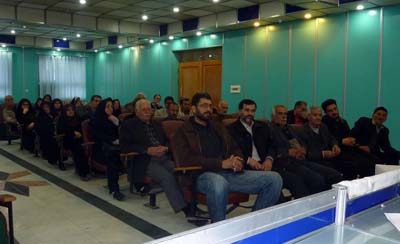
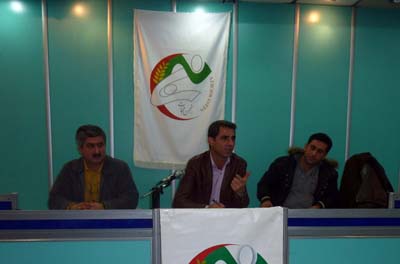
Conference Speech on the book ‘The Life of Camp Ashraf’

Conference Speech at Baghdad University to introduce the book
‘The Life of Camp Ashraf – Mojahedin-e Khalq Victims of Many Masters’
by Anne Singleton and Massoud Khodabandeh

Massoud Khodabandeh, from Middle East Strategy Consultants introduced the book ‘The Life of Conference Speech at Baghdad University to introduce the bookCamp Ashraf – Mojahedin-e Khalq Victims of Many Masters’ to the Conference. The book places the MEK in the context of its foreign ownership and concludes that these owners have invested heavily in the MEK’s ability to commit acts of violence and terrorism, and that this is the reason for western resistance to closing the camp. The book particularly highlights the MEK’s refusal to allow residents of the camp to have contact with their immediate families as a fundamental human rights abuse of every person in the camp.

The book was written primarily to give a voice to the people trapped inside Camp Ashraf and to their families who are camped outside waiting to find them and help them.
Why these families are there at all is the big question and one which is fairly easy to answer.

What is harder to answer is how to help them.

The Mojahedin as a terrorist group is not a new problem for Iraq. The MEK collaborated with Saddam Hussein to kill thousands of Iranians and Iraqi citizens.

Unfortunately, after the invasion of 2003, the Americans failed to dismantle the camp and remove this terrorist entity from the country.

So, the nation of Iraq is entitled to ask how did we end up here, nearing the end of the US military presence, but the terrorist cult they protected is still here?
And the families of people trapped inside Camp Ashraf who are still outside the locked gates of the camp, desperate to find their loved ones, they are entitled to ask, why can we not meet with our relatives in peace and freedom after all these years?

After 2003 there were some half-hearted efforts to deal with the MEK in the international political arena. For example, in Germany, Canada and Australia where action was taken by various state agencies to curtail the group’s illegal activities. In France Maryam Rajavi was arrested in 2003 along with 150 others by counter-terrorism police.
But when Maryam ordered her people to set fire to themselves the French Government gave in to the pressure and Rajavi is now free to continue promoting the European Union’s anti-Iran and anti-Iraq agenda.

The covert Western political support for the terrorist MEK, which had been in place even before the fall of Saddam Hussein became overt after the 2003 invasion. In 2004 America deliberately protected Massoud Rajavi when then Secretary of Defense Donald Rumsfeld misapplied – against all logic – the UN Fourth Geneva Convention to the group. Designed to protect foreign civilians – the MEK were foreign but were certainly not civilians – the designation gave the MEK a free hand to continue its illegal and violent activities in Iraq on behalf of Rajavi’s Western masters, this time protected by American servicemen and women. America wanted and still wants to keep the MEK in spite of the facts. These facts were clearly described in both the 2005 Human Rights Watch report and the 2009 RAND Report.

In 2009 the Americans were obliged under the terms of the Status of Forces Agreement to hand over control of Camp Ashraf and the people inside it to the democratically elected government of Iraq. It should have been possible at this stage to begin to deal properly with the group from a legal and moral point of view. Certainly, the Iraqi constitution does not allow the group to stay. Nor will Iraq allow the MEK to enjoy refugee status in the country because of the crimes committed against Iraqi citizens. The Iraqi Judiciary has confirmed it has grounds to prosecute at least 150 MEK members for such crimes.

At the same time, the Government of Iraq has been clear that as well as being a terrorist organisation the MEK operates as a pernicious mind-control cult. Because of this, all the Iraqi agencies and NGOs involved have been vehement in declaring that the human rights of Camp Ashraf residents must be protected and that Iraq will not repatriate anyone who does not wish to return home to Iran.

But even after 2009, Rajavi was still refusing to obey Iraqi and international law.

Iraq has been extremely patient and reasonable in the face of extreme provocation; what must be described as pre-planned and coordinated suicidal and violent resistance.

Today the residents of Camp Ashraf find themselves with no protection and no refugee status and are also designated as terrorists in Iraq and America.

So, if the MEK is so unwanted, why is it so difficult to get rid of them?
There are two reasons. One is the nature of the MEK itself, and the other is the role of external agencies in preventing Iraq from expelling the group.
First let us look at the MEK itself.
On both occasions when Iraqi security forces attempted to impose law on the camp, Rajavi ordered his followers to kill themselves in his defence. Some victims were shot by the MEK, some threw themselves under Iraqi vehicles. The message from Rajavi was clear – come near the camp and I will kill everyone in it.

The book ‘The Life of Camp Ashraf’ explains with detailed evidence that this is no ordinary group. It is a dangerous, destructive mind control cult. Without getting too deep into explaining what this means, basically they brainwash and exploit the members to the point they have no will of their own and will obey the leader without question, even if this means killing themselves to order.

Rajavi has trapped the members inside the camp – physically and mentally.
The gates to the camp are locked from inside. The perimeter fence is reinforced from inside.

Residents are made to believe they will be killed by Iraqi soldiers if they try to escape or if they survive they will be sent to Iran to be tortured and executed.
Iraq’s government understands what it is dealing with. Iraq’s problem is that other external parties do not see the group in the same way.
The international community (US and EU) have clearly sided with the cult leader for their own political gains.

The biggest favour Iraq could do for America and Europe now is to become involved in the mass deaths of the MEK. That way the West would be rid of the problem and could still point the finger at Iraq and say ‘what savages, how inhuman you people are’.

But Iraq will not fall for that trick.

Clearly, it is the unwarranted western political support for the MEK leaders which prevents the rescue of the camp’s residents.
In a meeting of the Iraq Delegation on November 22, what did the European Parliament chose to talk about in relation to Iraq? While Iraq has all kinds of issues, trade links, reconstruction, security, health, social and religious issues which could be discussed, the only item on the agenda was the MEK and how to protect them.
The MEK killed 25,000 Iraqis. What is there to talk about?

Two major questions remain – how to get in and who should go in?
The United Nations High Commission for Refugees has agreed to go into the camp to interview residents individually for refugee status.
So far they have not succeeded.

Unfortunately, if external agencies don’t understand the cult nature of the MEK they will fall into the trap of manipulative lies and deception.
Certainly, the biggest deception must be exposed.

Rajavi does not represent the hostages. He is the hostage taker – therefore neither he nor his minions are able to negotiate on behalf of the 3500 people trapped inside. Until it is possible to go into the camp and speak individually to the residents without MEK oversight it is not possible to say what should happen to them. At this moment, nobody knows how many of the residents remain loyal to Rajavi. From the testimonies of recent escapees – from all levels of the organisation – we can estimate that only five or ten percent of the residents in the camp are loyal to Rajavi. This means that everyone else is being kept there against their will. For this reason Iraq’s Human Rights Ministry has been insistent that it is necessary to get inside the camp to protect the residents against the abuses of those leaders.

Once this simple fact has been recognised it will become clear that the key to opening the gate of Camp Ashraf is to involve the families of the people inside.
Why? Because this is Rajavi’s greatest fear. How do we know this? Rajavi has deliberately separated the MEK from all relationships with mother, father, sister, brother, husband or wife or child.

Rajavi knows that once a member re-discovers the love and affection of their family and friends, they will abandon him forever.
A wonderful example of this is Mahmoud Rostami who escaped the camp two months ago.

Rostami was a Prisoner of War in Iraq and was deceived into joining the MEK.
He had not seen his family for twenty two years.

Rostami’s mother visited Camp Ashraf three times.

Hearing his mother’s voice over the loudspeakers finally brought Rostami back to reality.

When Rostami also heard the other family members crying out to their loved ones his humanity was re-awakened.

After months of planning Rostami escaped and met with his mother and father after two decades of forced separation.

There can be no legitimate or moral objections to opening the gate of Camp Ashraf to allow people to go inside; whether family members or humanitarian agencies. This has nothing to do with the Iraqi timetable to evacuate Camp Ashraf. It is a purely humanitarian gesture. The only barrier is the leader Massoud Rajavi and his second-in-command Maryam Rajavi who refuse to do the right thing.

Of course, there must be a proper framework if those inside are to be accorded effective help.

United Nations interviews should be supplemented by visits from cult experts and family members or representatives of the families of residents.

Each person interviewed must be given information about their rights and their possible future steps.

The families have no political agenda, they come in a spirit of love and concern to rescue their loved ones. They are there to help the residents.

Families are the key to opening the locked gates of Camp Ashraf and opening the locked hearts of the imprisoned residents. The families are the solution, not the problem.

December 1, 2011 0 comments
FacebookTwitterPinterestWhatsappTelegramSkypeEmail
MEK Camp Ashraf

Iraq & Mojahedin-e Khalq : Cooperate With UN

Iraq/Mojahedin-e Khalq Organization: Cooperate With UN
Provide Safe Location to Assess Camp Ashraf Refugee Claims

With each tick of the clock, the danger to camp residents grows. The best way forward for the Iraq/Mojahedin-e Khalq Organization: Cooperate With UN Provide Safe Location to Assess Camp Ashraf Refugee Claimssafety of the Camp Ashraf residents is to give them the chance to press their individual claims for refugee status with the UN in a safe location.
Bill Frelick, refugee program director

(New York) – Both the leadership of the exiled Iranian opposition group Mojahedin-e Khalq Organization and the Iraqi government should fully cooperate with the UN refugee agency, Human Rights Watch said today.

Both sides should allow the more than 3,200 Iranians at Camp Ashraf, in Iraq, to move to a protected location under UN supervision before the Iraqi government’s December 31, 2011 deadline for closing the camp, Human Rights Watch said. And both should allow the UN refugee agency sufficient time to conduct private and confidential interviews with each person to assess their refugee claims.

“With each tick of the clock, the danger to camp residents grows,” said Bill Frelick, refugee program director at Human Rights Watch. “The best way forward for the safety of the Camp

Ashraf residents is to give them the chance to press their individual claims for refugee status with the UN in a safe location.”

Camp Ashraf, recently renamed Camp New Iraq, has already been the site of two bloody confrontations between Iraqi security forces and camp residents. Most recently, on April 8, 2011, 36 camp residents were killed. On July 29, 2009, 9 were killed. After these incidents Human Rights Watch called on the Iraqi authorities to protect camp residents and open transparent investigations into the killings.

Both the Iraqi security forces and the leadership of Mojahedin-e Khalq (MEK/PMOI) should avoid bloodshed and allow residents to leave Camp Ashraf and meet privately with the UN refugee agency without fear of harm from either camp leaders or the Iraqi authorities, Human Rights Watch said.

The UN has offered to monitor the entire process when residents leave Camp Ashraf and to be present with them in a safe transit location. The UN High Commissioner for Refugees (UNHCR) has also agreed to assess refugee claims among camp residents who seek asylum and to seek durable solutions for refugees among them.

Human Rights Watch has documented abuses by the leadershipof the MEK in Camp Ashraf against camp residents who questioned their authority.

Human Rights Watch called on the Iraqi government to allow former Camp Ashraf residents who qualify as refugees to stay in Iraq subject to Iraqi law and respect for their basic human rights, until a durable solution can be found on their behalf.

The Iranian government should agree to the voluntary repatriation of those former residents from Camp Ashraf who wish to return in safety and dignity, Human Rights Watch said. The camp residents should not, for example, be subjected to televised confessions, and the government should ensure their freedom of movement, including the right to leave Iran. Iran’s government should also allow independent international organizations full access to monitor their return.

Because some former Camp Ashraf residents will not be able safely to stay in Iraq or return to Iran, Human Rights Watch also called on other governments to respond favorably and promptly to UNHCR referrals of former Ashraf residents for resettlement or for governments to allow Ashraf residents to whom they had previously issued passports to return to those countries.

The Iraqi government should ensure that any MEK members accused of crimes in Iraq or for whom extradition requests have been issued receive all procedural rights in open and fair proceedings and ensure that none are subjected to torture or cruel, inhuman, or degrading treatment or punishment in either Iraq or Iran.

The MEK was founded in 1965 as an armed group to challenge the Shah of Iran’s government. In 1981, two years after the Iranian revolution, the group went underground after trying to foment an armed uprising against Ayatollah Ruhollah Khomeini. After a period of exile in France, most of the group’s leaders relocated to Iraq in 1986, although its top leadership remains in France.

In 1997, the United States State Department designated the group a foreign terrorist organization and it remains on the State Department’s list of foreign terrorist organizations. The European Union also listed the group as a foreign terrorist organization, but has removed it from the list. Many Iraqis also have alleged that the group’s members actively participated in campaigns against opponents of Saddam Hussein’s government. The fall of Hussein’s government in April 2003 put an end to Iraqi financial and logistical support to the group.

December 1, 2011 0 comments
FacebookTwitterPinterestWhatsappTelegramSkypeEmail
Mujahedin Khalq; A proxy force

Arrested Spy Confesses MKO’s Collaboration with Mossad

A Lebanese national, who was arrested earlier this year in Lebanon for spying for the Israeli spy agency, confessed that his agency, Mossad, and the anti-Iran terrorist Mojahedin-e Khalq Organization (MKO) have long had tight cooperation against Tehran.

According to a report published by the Habilian website, the official website of Iran’s Habilian Association – a human rights group formed by the families of 17,000 terror victims in Iran – the confessions were made by Mohamed Ali Lobnani, who spied for Israel under the cover of a Shiite cleric in Lebanon and was arrested this May by the Lebanese Army.

In a court hearing session, Lobnani said that he had phone contacts with Mohammad Alizadeh, an MKO ringleader, but he didn’t know that the number was a Mossad contact number.

Responding to a judge question about the link between MKO and Mossad, he noted, "As far as I know, the group (MKO) has been collaborating with Israel for several years and has massive interactions with Mossad."

Earlier this month, a senior American analyst underlined the Zionist regime’s all-out support for the MKO, and said the Israeli lobby is an octopus with many tentacles, of which MKO is merely one.
Justin Raimondo made the comments in an article in the Antiwar website, where he reminds MKO’s terrorist nature, and says that the group has even assassinated many US diplomats and agents throughout the region before the Iranian revolution.

The MKO, whose main stronghold is in Iraq, is blacklisted by much of the international community, including the United States.
Before an overture by the EU, the MKO was on the European Union’s list of terrorist organizations subject to an EU-wide assets freeze. Yet, the MKO puppet leader, Maryam Rajavi, who has residency in France, regularly visited Brussels and despite the ban enjoyed full freedom in Europe.

The MKO is behind a slew of assassinations and bombings inside Iran, a number of EU parliamentarians said in a recent letter in which they slammed a British court decision to remove the MKO from the British terror list. The EU officials also added that the group has no public support within Iran because of their role in helping Saddam Hussein in the Iraqi imposed war on Iran (1980-1988).

The group started assassination of the citizens and officials after the revolution in a bid to take control of the newly established Islamic Republic. It killed several of Iran’s new leaders in the early years after the revolution, including the then President, Mohammad Ali Rajayee, Prime Minister, Mohammad Javad Bahonar and the Judiciary Chief, Mohammad Hossein Beheshti who were killed in bomb attacks by MKO members in 1981.

The group fled to Iraq in 1986, where it was protected by Saddam Hussein and where it helped the Iraqi dictator suppress Shiite and Kurd uprisings in the country.
The terrorist group joined Saddam’s army during the Iraqi imposed war on Iran (1980-1988) and helped Saddam and killed thousands of Iranian civilians and soldiers during the US-backed Iraqi imposed war on Iran.

Since the 2003 US invasion of Iraq, the group, which now adheres to a pro-free-market philosophy, has been strongly backed by neo-conservatives in the United States, who also argue for the MKO to be taken off the US terror list.

Meantime, earlier media report said that the US is trying to convince Iraqi officials to relocate MKO members within Iraq.
Under the US plan, the approximately 3,400 residents of Camp Ashraf would be temporarily relocated within Iraq, farther from the border with Iran, a US State Department official announced.

The relocation would be temporary, the official said, with final settlement of the inhabitants in other countries.
That would not include the United States, the official said, "Since US law bars anyone associated with a terrorist organization from settling there".

Since the beginning of this year, the Baghdad government has repeatedly assured Iranian officials and people that it is determined to expel the MKO from Iraq by the end of 2011.
"Expulsion of the MKO from Iraq’s soil and termination of its presence which has lasted for several years is a definite decision," Iraqi Government Spokesman Ali Al-Dabbaq told FNA in April, adding, "The MKO will be expelled from Iraq by the end of the current year."

"The only option for the members of the MKO is leaving Iraq and they have no other choice," he reiterated.

Reminding to the black record of the terrorist group and its crimes against the Iraqi people, Dabbaq said, "Collaboration with the former Iraqi dictator and massacre of thousands of our people is just part of their crimes".

Dabbaq announced in early April that the cabinet is determined to shut down Camp Ashraf located North of the capital, Baghdad, and disband the terrorist group.

"The council of ministers has committed to implement an earlier decision about disbanding the terrorist group by the end of this year at the latest, and the necessity of getting it out of Iraq," the official noted.

December 1, 2011 0 comments
FacebookTwitterPinterestWhatsappTelegramSkypeEmail
Human Rights Abuse in the MEK

Mojahedin Khalq leader orders defectors executed

Leader of the Mujahedin-e Khalq Organization terrorists Maryam Rajavi has reportedly ordered the execution of MKO members who try to leave the cult.

A number of former MKO members who managed to escape made the revelation, Fars News Agency reported on Monday.

The MKO has barred its members from visiting their families for more than two years and tries to prevent its members from fleeing the horrendous conditions in any possible way, the report continued.

Founded in the 1960s, the outlawed MKO fled to Iraq in 1986, where it enjoyed the support of former Iraqi dictator Saddam Hussein’s Ba’athist regime and set up Camp Ashraf, about 120 kilometers (74.5 miles) west of the Iranian border.

Testimonies made by former MKO members reveal an immense pressure on many residents of Camp Ashraf who want to escape but are afraid and unsure of the future. They say scores of members have recently been killed by the organization and that MKO guards open fire on defectors before they can exit the camp.

The MKO is notorious for carrying out numerous acts of terror against Iranian civilians and officials, and collaborating with Saddam in the bloody repression of the 1991 Shia Muslims in southern Iraq and the massacre of Iraqi Kurds in the country’s north.

Iran has repeatedly called on the Iraqi government to expel the group, listed as a terrorist organization by much of the international community, but the US has been blocking the expulsion by pressuring the Iraqi government.

In April, Iranian Justice Minister Morteza Bakhtiari said 12,000 Iranians have fallen victim to MKO’s acts of terror. He also condemned the US and Europe for their continued support for the terrorist group, referring to the EU decision to remove the group from its list of terrorist organizations in 2009.

While the MKO is designated as a terrorist organization under United States law, and has been described by State Department officials as a repressive cult, The New York Times recently reported that Washington is mulling over removing the MKO from its terrorist watch list and giving refuge to its members.

November 30, 2011 0 comments
FacebookTwitterPinterestWhatsappTelegramSkypeEmail
Mujahedin Khalq; A proxy force

MEK exile terrorist has bipartisan support in Washington

The New York Times reports: At a time of partisan gridlock in the capital, one obscure cause has drawn a stellar list of supporters from both parties and the last two administrations, including a dozen former top national security officials.
MEK exile terrorist group has bipartisan support in Washington
That alone would be unusual. What makes it astonishing is the object of their attention: a fringe Iranian opposition group, long an ally of Saddam Hussein, that is designated as a terrorist organization under United States law and described by State Department officials as a repressive cult despised by most Iranians and Iraqis.

The extraordinary lobbying effort to reverse the terrorist designation of the group, the Mujahedeen Khalq, or People’s Mujahedeen, has won the support of two former C.I.A. directors, R. James Woolsey and Porter J. Goss; a former F.B.I. director, Louis J. Freeh; a former attorney general, Michael B. Mukasey; President George W. Bush’s first homeland security chief, Tom Ridge; President Obama’s first national security adviser, Gen. James L. Jones; big-name Republicans like the former New York mayor Rudolph W. Giuliani and Democrats like the former Vermont governor Howard Dean; and even the former top counterterrorism official of the State Department, Dell L. Dailey, who argued unsuccessfully for ending the terrorist label while in office.

The American advocates have been well paid, hired through their speaking agencies and collecting fees of $10,000 to $50,000 for speeches on behalf of the Iranian group. Some have been flown to Paris, Berlin and Brussels for appearances.

Tom Ridge expresses the sentiment and rationale shared by most of the MEK’s Washington supporters: the enemy of my enemy is my friend. No doubt the MEK itself used the same reasoning when aligning itself with Saddam Hussein (as did the U.S.). For the MEK’s current allies in Washington it apparently matters little that the organization actually has a long history of befriending America’s enemies and opposing America’s friends — but maybe that says more about the capricious nature of American friendship than it says about the MEK.

Maybe the solution is not the removal of the MEK from the State Department’s list of Foreign Terrorist Organizations. Instead, the U.S. government can simply start designating countries and organizations as “Enemies” and “Friends” and then at the beginning of the springtime awards season, before the Oscars, there can be a televised event where the president hands out awards and opprobrium to this year’s winners in each category.

As far as what might be the implications for Iran (apart from continuation of the current campaign of terrorism targeting Iranian scientists), there is one curious dimension to the support the MEK now enjoys in Washington: the defining event in modern US-Iranian relations — the 1979 takeover of the US embassy in Tehran — turns out not to have been so unforgivable as it is generally portrayed.

“MEK members participated in and supported the 1979 takeover of the U.S. Embassy in Tehran and … the MEK later argued against the early release the American hostages,” says the State Department. But let’s not dwell on the past, says Woolsey, Ridge et al.

On the other hand, for those who retain an interest in the past and the State Department’s description of the MEK’s activities, here it is:

The group’s worldwide campaign against the Iranian government uses propaganda and terrorism to achieve its objectives. During the 1970s, the MEK staged terrorist attacks inside Iran and killed several U.S. military personnel and civilians working on defense projects in Tehran. In 1972, the MEK set off bombs in Tehran at the U.S. Information Service office (part of the U.S. Embassy), the Iran-American Society, and the offices of several U.S. companies to protest the visit of President Nixon to Iran. In 1973, the MEK assassinated the deputy chief of the U.S. Military Mission in Tehran and bombed several businesses, including Shell Oil. In 1974, the MEK set off bombs in Tehran at the offices of U.S. companies to protest the visit of then U.S. Secretary of State Kissinger. In 1975, the MEK assassinated two U.S. military officers who were members of the U.S. Military Assistance Advisory Group in Tehran. In 1976, the MEK assassinated two U.S. citizens who were employees of Rockwell International in Tehran. In 1979, the group claimed responsibility for the murder of an American Texaco executive. Though denied by the MEK, analysis based on eyewitness accounts and MEK documents demonstrates that MEK members participated in and supported the 1979 takeover of the U.S. Embassy in Tehran and that the MEK later argued against the early release the American hostages. The MEK also provided personnel to guard and defend the site of the U.S. Embassy in Tehran, following the takeover of the Embassy.

In 1981, MEK leadership attempted to overthrow the newly installed Islamic regime; Iranian security forces subsequently initiated a crackdown on the group. The MEK instigated a bombing campaign, including an attack against the head office of the Islamic Republic Party and the Prime Minister’s office, which killed some 70 high-ranking Iranian officials, including Chief Justice Ayatollah Mohammad Beheshti, President Mohammad-Ali Rajaei, and Prime Minister Mohammad-Javad Bahonar. These attacks resulted in an expanded Iranian government crackdown that forced MEK leaders to flee to France. For five years, the MEK continued to wage its terrorist campaign from its Paris headquarters. Expelled by France in 1986, MEK leaders turned to Saddam Hussein’s regime for basing, financial support, and training. Near the end of the 1980-1988 Iran-Iraq War, Baghdad armed the MEK with heavy military equipment and deployed thousands of MEK fighters in suicidal, mass wave attacks against Iranian forces.

The MEK’s relationship with the former Iraqi regime continued through the 1990s. In 1991, the group reportedly assisted the Iraqi Republican Guard’s bloody crackdown on Iraqi Shia and Kurds who rose up against Saddam Hussein’s regime. In April 1992, the MEK conducted near-simultaneous attacks on Iranian embassies and consular missions in 13 countries, including against the Iranian mission to the United Nations in New York, demonstrating the group’s ability to mount large-scale operations overseas. In June 1998, the MEK was implicated in a series of bombing and mortar attacks in Iran that killed at least 15 and injured several others. The MEK also assassinated the former Iranian Minister of Prisons in 1998. In April 1999, the MEK targeted key Iranian military officers and assassinated the deputy chief of the Iranian Armed Forces General Staff, Brigadier General Ali Sayyaad Shirazi.

In April 2000, the MEK attempted to assassinate the commander of the Nasr Headquarters, Tehran’s interagency board responsible for coordinating policies on Iraq. The pace of anti-Iranian operations increased during “Operation Great Bahman” in February 2000, when the group launched a dozen attacks against Iran. One attack included a mortar attack against a major Iranian leadership complex in Tehran that housed the offices of the Supreme Leader and the President. The attack killed one person and injured six other individuals. In March 2000, the MEK launched mortars into a residential district in Tehran, injuring four people and damaging property. In 2000 and 2001, the MEK was involved in regular mortar attacks and hit-and-run raids against Iranian military and law enforcement personnel, as well as government buildings near the Iran-Iraq border. Following an initial Coalition bombardment of the MEK’s facilities in Iraq at the outset of Operation Iraqi Freedom, MEK leadership negotiated a cease-fire with Coalition Forces and surrendered their heavy-arms to Coalition control. Since 2003, roughly 3,400 MEK members have been encamped at Ashraf in Iraq.

In 2003, French authorities arrested 160 MEK members at operational bases they believed the MEK was using to coordinate financing and planning for terrorist attacks. Upon the arrest of MEK leader Maryam Rajavi, MEK members took to Paris’ streets and engaged in self-immolation. French authorities eventually released Rajavi.

By Paul Woodward

November 30, 2011 0 comments
FacebookTwitterPinterestWhatsappTelegramSkypeEmail
MEK Camp Ashraf

Prisoners of Camp Ashraf

The members who reside in Camp Ashraf are just like babies who are in their mothers’ womb and have no idea of the outside world to which they have no contact. They listen to no news except that of the Resistance TV or Freedom TV [MKO channels]. They have been banished from visiting their families.Prisoners of Camp Ashraf

Renee C. Behinfar in an article for a daily internet publication presented such descriptions for hostages in Camp Ashraf as Cult-like, Brainwashed, Victims of mind control.
Camp Ashraf is a prison where marriages have been banned and male members have been ordered to suppress their attraction to women, all by the orders of the camp’s absentee leaders, Massoud and Maryam Rajavi.

The declared purpose of Camp Ashraf — to serve as a headquarters for the Mujahedeen-e-Khalq (MEK), a militant group designated as a terrorist organization by the U.S., and to start another revolution — came as a welcome opportunity for Rajavi’s suggestible supporters.

The price Rajavi charged for admission to Camp Ashraf was a complete surrender to the cause. Members had to relinquish their pasts, their current lives, and whatever hold they had on their tenuous futures. And now, after enduring 25 years of manipulative tactics to keep their minds and hearts suppressed, the residents of Camp Ashraf face imminent difficulties. In 2003, U.S. troops were able to force them to relinquish their weapons in exchange for U.S. protection.

Now the Iraqi government has given a deadline of December 2011 for the residents to evacuate. With the downfall of Saddam Hussein, who provided Rajavi with financial and military support, they are no longer welcome. Nor can it be believed that they are any longer relevant to their original cause.

The Rajavis, meanwhile, have left the residents to the camp. Maryam resides comfortably in Paris, and Massoud is in hiding. What reason, then, for the continued existence of Camp Ashraf? Why do the Rajavis hang onto their followers in their prison-like enclave, even with the deadline fast approaching? They understand well that without the camp, the MEK would lose its legitimacy, and so, therefore, would the Rajavis.

According to a report by Fars News Agency, the MKO ringleaders have prevented the members of the group from meeting their relatives for the last two years in a bid to prevent their defection and escape from the camp.

The Rajavis have collected millions of dollars from supporters, yet none of their money has been used to free the people in Camp Ashraf. They have spent millions on legal fees to fight the foreign terrorist designation and on advertisements in major U.S. newspapers naming several U.S. figures as supporters of their delisting, even hiring a top lobbying firm in the U.S. to help them in their efforts. And yet, where are the ads to promote the freeing of the people in Camp Ashraf?

Camp Ashraf is their bargaining tool. They falsely claim that they must be delisted in order to free the camp residents, despite the fact that they were offered several opportunities over the years to be relocated to safe locations outside of Iraq. Rajavi halted such actions, as he would no longer be able to use the human rights issue as a scapegoat to elicit sympathy. It is in his best interests to keep the residents in harm’s way, as this is his key to accessing and manipulating U.S. politicians and the American public.

Recently, Maryam Rajavi, issued the execution orders personally and condemns to death all the dissidents who refrain from obeying her orders and all those who plan to defect from the MKO, reported FNA.

The international community must defy the wishes of Massoud Rajavi to keep his hostages there for his own self-interest.

November 30, 2011 0 comments
FacebookTwitterPinterestWhatsappTelegramSkypeEmail
Newer Posts
Older Posts

Recent Posts

  • A Criterion for Proving the Violent Nature of the MEK

    December 31, 2025
  • Rebranding, too Difficult for the MEK

    December 27, 2025
  • The black box of the torture camps of the MEK

    December 24, 2025
  • Pregnancy was taboo in the MEK

    December 22, 2025
  • MEPs who lack awareness about the MEK’s nature

    December 20, 2025
  • Facebook
  • Twitter
  • Instagram
  • Youtube

© 2003 - 2025 NEJAT Society . All Rights Reserved. NejatNGO.org


Back To Top
Nejat Society
  • Home
  • Articles
  • Media
    • Cartoons
    • NewsPics
    • Photo Gallery
    • Videos
  • Publications
    • Books
    • Nejat NewsLetter
    • Pars Brief
  • About Us
  • Contact us
  • Editions
    • عربي
    • فارسی
    • Shqip