Nejat Society
  • Home
  • Articles
  • Media
    • Cartoons
    • NewsPics
    • Photo Gallery
    • Videos
  • Publications
    • Books
    • Nejat NewsLetter
    • Pars Brief
  • About Us
  • Contact us
  • Editions
    • عربي
    • فارسی
    • Shqip
Nejat Society
Nejat Society
  • Home
  • Articles
  • Media
    • Cartoons
    • NewsPics
    • Photo Gallery
    • Videos
  • Publications
    • Books
    • Nejat NewsLetter
    • Pars Brief
  • About Us
  • Contact us
  • Editions
    • عربي
    • فارسی
    • Shqip
© 2003 - 2024 NEJAT Society. nejatngo.org
Mujahedin Khalq; A proxy force

Why Is Rudy Giuliani Lobbying for a Designated Terrorist Group?

Thanks to a loophole intended for human rights activists, political leaders are making big bucks advocating for Iran’s Mujahedeen Khalq.

What do the tax dodges of billionaires and the advocacy efforts of former high-ranking officials on behalf of a designated terrorist group have in common (aside from their exposure on the front What do the tax dodges of billionaires and the advocacy efforts of former high-ranking officials on behalf of a designated terrorist group have in commonpage of the Sunday New York Times)? They exemplify the extraordinary legal privileges enjoyed by economic and political elites.

Ronald Lauder, a legacy member of the upper reaches of the top 1 percent, legally avoids paying millions of dollars in taxes through extravagant use of loopholes available only to the super-rich, according to the Times. Prominent politicos, from former Bush Administration officials to Howard Dean, engage in the lucrative business of lobbying for the Mujahedeen Khalqa (M.E.K.), a "fringe Iranian opposition group, long an ally of Saddam Hussein, that is designated as a terrorist organization under United States law," the Times reports.

In doing so they run no apparent risk of being prosecuted under material support provisions of federal anti-terrorism law, enjoying an extra-legal privilege the Times does not report: Last year the Supreme Court rejected a First Amendment challenge to material support bans, ruling that they may be used against human rights advocates who counsel designated terrorist groups in peaceful conflict resolution.

The gross inequities of federal taxation are frequently critiqued by mainstream pundits and politicians; the discriminatory use of vague and far-reaching federal anti-terror laws is targeted mostly by civil libertarians who exert tragically little influence on policy. David Cole exposed the arbitrary, inconsistent enforcement of material support laws in a January 2011 New York Times op-ed that highlighted the illegal but effectively immunized M.E.K. lobbying efforts of Michael Mukasey, Rudy Giuiliani, and other prominent, right wing anti-terror warriors.

Mukasey and Giuliani, et al, responded in the National Review, claiming un-persuasively that laws prohibiting peaceful human rights work by David’s Cole’s client (the Humanitarian Law Project) on behalf of one designated terrorist group simply did not apply to their work on behalf of another. They claimed additionally that the designation of M.E.K. as a terrorist group is inaccurate, but as they must know, the arguable inaccuracy of a designation is legally irrelevant: The law does not allow for lobbyists and other citizens to substitute their judgments for the judgments of State Department officials. That the State Department is sometimes wrong, that terrorist watch lists are arbitrary and inaccurate, is not a defense for violating the law; it’s a strong argument for amending it, which Mukasey and company oppose. Why should they support amending a law criminalizing political speech that their status allows them to evade, and perhaps apply to their political enemies?

It’s not fair to attribute this self-entered vision of justice to political and economic elites exclusively. Millions of middle class taxpayers as well as the very rich naturally tend to support tax laws that work to their advantage. Millions of politically unconnected voters offer general support for expansive anti-terror laws, partly out of ignorance about their contents and partly in the risky belief that the most repressive or intrusive provisions will not be applied to them. "How does the law serve me" is an understandable and useful question, but it’s a treacherous one for people concerned with redressing inequality. While we understand laws most viscerally by experiencing their effects on us, justice requires attending, as well, to their effects on others.

By Wendy Kaminer – the Atlantic

November 30, 2011 0 comments
FacebookTwitterPinterestWhatsappTelegramSkypeEmail
Mujahedin Khalq; A proxy force

Arrested spy in Lebanon: MKO is spying for Israel

In his latest court session held recently, “Mohammad Ali Lobnani” (Husseini) who was arrested by Lebanese army on charge of spying for Israel, referred to other aspects of MKO spying for “Mussed” and said: ”It’s been for so many years that the MKO is collaborating with the Israeli intelligence services and I am aware of this collaboration.”

Below is the conversation between the court’s judge and the so called cleric:

Judge: “You were contacted via a specific number after returning from Belgium and this connection lasted for 4 months.

Mohammad Ali Husseini: “I have a certain agreement and a direct connection with the MKO and the chief of their political committee and this number belongs to him.”

Judge: "This number is from Belgium and belongs to Mussed, what is your explanation of this?”

Mohammad Ali Husseini: "I am in touch with Mohammad Alizade, one of the MKO officials, but it was not proven to me that the number belonged to Mussed.

Judge: "You were also contacted by a number from England in 2008 which belongs to Mussed.”

Mohammad Ali Husseini: "This number belongs to the MKO.”

Judge: "Do you think there is any connection between MKO and Mussed?”

Mohammad Ali Husseini: "Yes. This group has been working with Israel for years and it has had wide collaborations with Mussed.”

The spurious cleric’s records

Mohammad Ali Husseini is a hardliner supporter of MKO who was arrested last May after one year of investigations on charge of spying for Israel. He is widely popular in the western media because he usually takes a hard line against Hezbollah and Iran. He had declared that he had formed the “Arabic Islamic resistance” with 1500 armed forces to fight Israel but the pictures released from these forces in the internet show just 5 men in different figures!

During the Iraqi army presence in the Ashraf camp, Husseini referred to this presence as an assault. Condemning the so called assault, he named the killed people martyrs and also called for supporting the Khuzestan separatists!

As reported by Lebanese press, his multiple travels to European countries and his suspicious phone calls had alerted the Lebanese security organizations. He was under observation by the Lebanese security office, the army intelligence service and the Hezbollah’s intelligence service for one year. Ultimately the Lebanese army intelligence forces arrested him in his apartment last May.

November 29, 2011 0 comments
FacebookTwitterPinterestWhatsappTelegramSkypeEmail
Iraq

Terrorist MEK to be expelled from Iraq

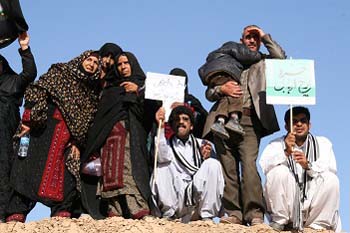
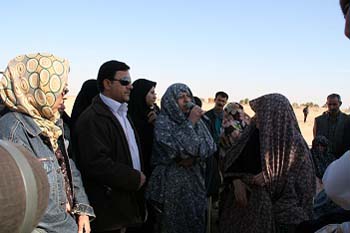
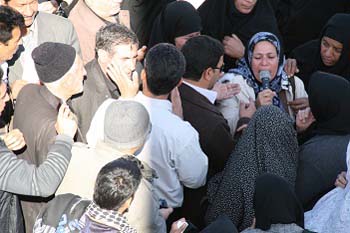
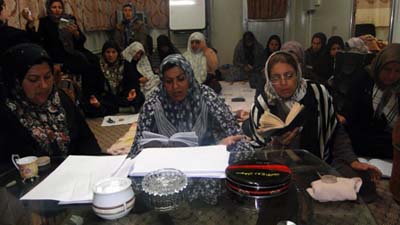
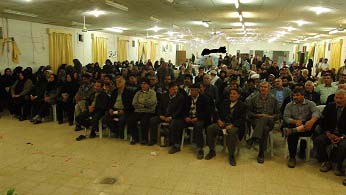
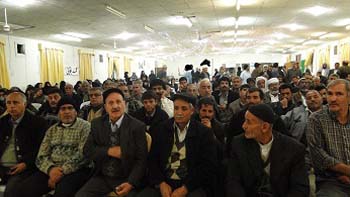
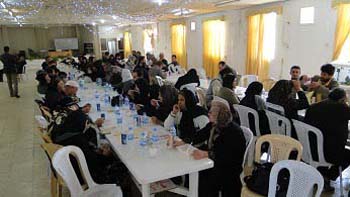
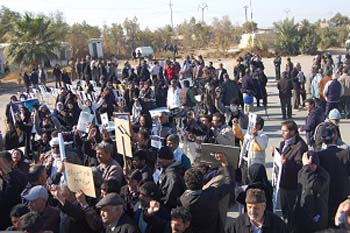
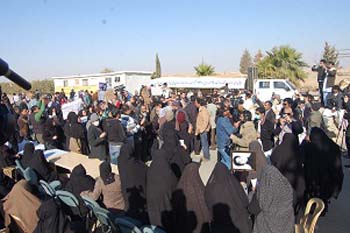
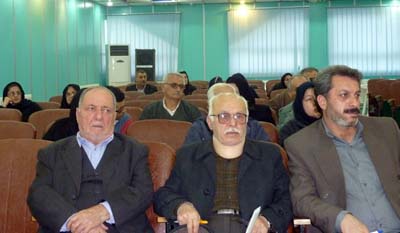
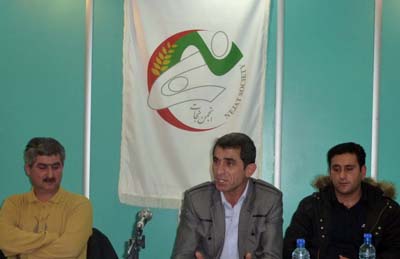
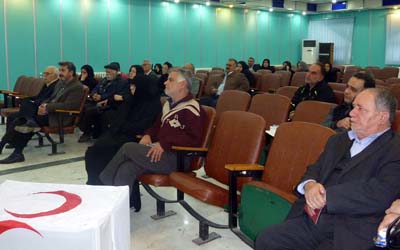
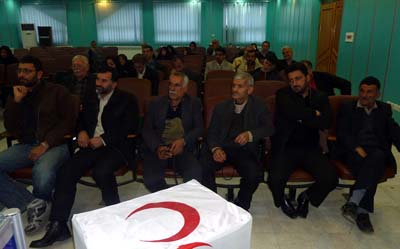
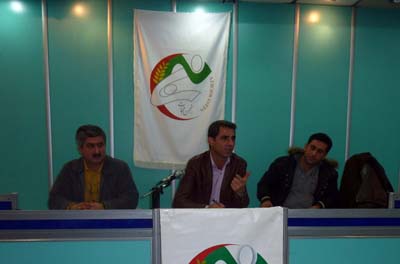
A Conference in Baghdad University on Friday 25 November was organised by Al-Edalat Al-Iraqi Society, headed by Dr Nafe Al-Isa, which represents the families of 25,000 Iraqi victims of the MEK.
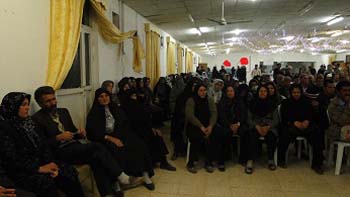
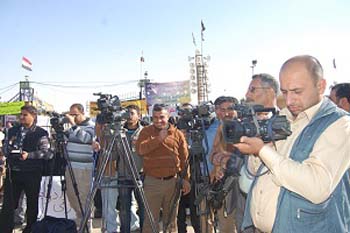
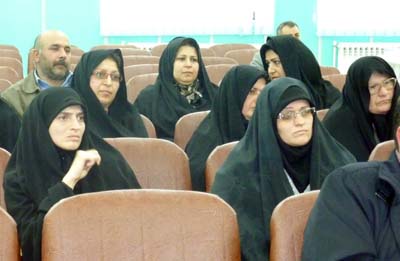
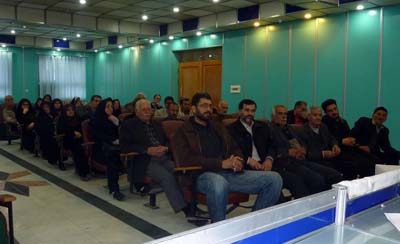
The Conference was held in Al-Hakim Conference Centre in Baghdad University and hundreds of tribal leaders, University lecturers, Governmental representatives and officials, NGOs and media representatives filled the salon. Although Camp Ashraf and the MEK is an issue specific to the government and citizens of Iraq, the Conference organisers made sure to invite Western agencies, such as the UN, EU and diplomats who have claimed or expressed an interest in Camp Ashraf. Unfortunately, however, any such invitees were apparently unable to leave the Green Zone to attend the Conference and talk to the delegates.
Opening the Conference, Dr Nafe, speaking on behalf of the families of victims of MEK violence, asked that those MEK leaders who were responsible for this violence be brought to justice before their deportation.
Speakers from the government and NGOs all emphasized that the deadline for deportation must be strictly adhered to and that Iraqi and international law against terrorism and crime must be upheld. Other speakers, in particular the tribal leaders spoke about the MEK’s crimes which they have witnessed in recent years in Diyala province. They were highly critical of the failure of the American military to dismantle the camp after 2003, and were scathing of the continued American backing which allowed the camp to be used for training and inciting terrorism against Iraqis.
On this theme, Jasem Al- Ebadi, Member of Parliament and member of the parliamentary Human Rights Commission used his speech to criticise EU efforts to keep the terrorist group intact and their opposition to the deportation process. He commented that if they are so in love with this terrorist group, why don’t they take them to their own countries?

(Mr. Al- Shahmani, MP)

Mr Adnan Al-Shahmani, head of the Parliamentary Committee to oversee the expulsion of the MEK announced in the Conference that the deadline would not be extended and that the camp will be closed by the end of the year. He also explained that the Iraqi Judiciary had issued its final verdict that the camp should be closed and the land handed back to the original owners.
Mr Al- Shahmani also criticized the West for its silence toward the crimes committed by the group against civilians, and asked international communities not to remain silent in the case of the abuse of the rights of the families of the victims of the MEK.

(Mr. Al- Shahmani, meeting families)

Mr Al-Shahmani also met with the representatives of the families of hostages inside Camp Ashraf and the delegation from European countries who are campaigning to ensure a peaceful outcome to the standoff at the camp.

(Mr. Khodabandeh)

Massoud Khodabandeh, from Middle East Strategy Consultants which is working with the Iraqi government to resolve the situation at Camp Ashraf, introduced his book ‘The Life of Camp Ashraf – Mojahedin-e Khalq Victims of Many Masters’ to the Conference. The book places the MEK in the context of its foreign ownership and concludes that these owners have invested heavily in the MEK’s ability to commit acts of violence and terrorism, and that this is the reason for western resistance to closing the camp. The book particularly highlights the MEK’s refusal to allow residents of the camp to have contact with their immediate families as a fundamental human rights abuse of every person in the camp.

(Ms. Abdollahi)

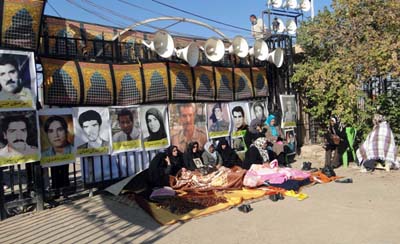
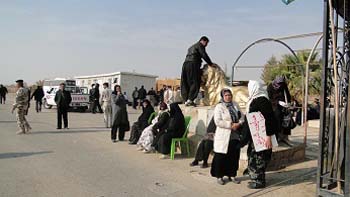
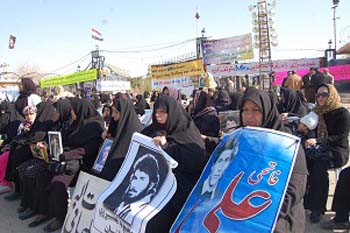
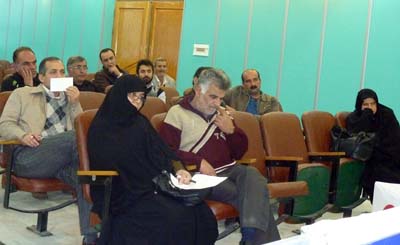
Ms Abdollahi represented the families and asked for help to release the hostages (including her own son) from the camp. Ms Abdollahi reminded the Conference that the families’ struggle to find their relatives had been going on since 2003 and that a permanent picket had been established two years ago. She stressed that when searching for a solution the families of course have the security and safety of all the residents as their utmost priority. The families have the simplest and easily granted request – to visit their loved ones who are in the camp. This does not depend on the removal of the MEK from Iraq and would be simple to do. The only barrier to this request is the order of the MEK leaders Massoud and Maryam Rajavi. They can easily resolve this issue by ordering that the families of MEK members be allowed to have free and unfettered contact with their loved ones.

(Ms. Sanjabi)

Ms Sanjabi is an ex-member of the MEK’s women only Leadership Council. She managed to escape from Camp Ashraf very recently, and explained the dire situation of the women inside the camp, detailing disturbing and shocking human rights abuses which are currently being carried out against the residents by the MEK leaders.

(Ms Mahdian)

Ms Mahdian, whose husband is a hostage inside the camp, explained how Saddam’s Intelligence services gave her husband to the MEK as a slave, even though he had been and is still a registered POW, captured at the start of the Iran-Iraq war. Ms Mahdian explained that her son has not seen his father for the past 25 years and the MEK would not allow this visit even after two years of picketing.

(Mr. Sadeghi)

Mr Sadeghi from Germany, who is one of the few members who managed to run away from the camp successfully during the time of Saddam Hussein, presented and explained evidence of recent MEK interference in the internal affairs of Iraq, their collaboration with Saddamists and other terrorist groups, and the MEK’s active role in intensifying the insurgency.

(Mr. Ghashghavi)

Mr Ghashghavi also from Germany, served eight years without trial in Saddam’s prisons including Abu Ghraib for refusing to carry out Massoud Rajavi’s orders to commit criminal acts. Mr Ghashghavi explained how Rajavi and Saddam would force people to either kill others or be sent to the torture chambers themselves and be killed.

(Mr. Ezati and Ms. Sanjabi)

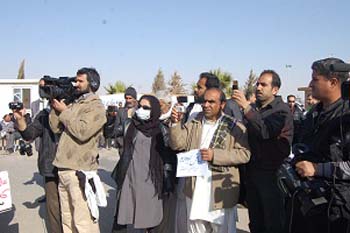
Another ex-MEK member, Mr Ezati who now lives in the Netherlands, gave interviews to the media explaining the situation inside the camp and the constant abuse of human rights of the victims. Mr Ezati strongly criticized the unfortunate media silence over these human rights abuses which he ascribed to the pervasive influence of the MEK’s powerful backers who regard the MEK as “good terrorists”.

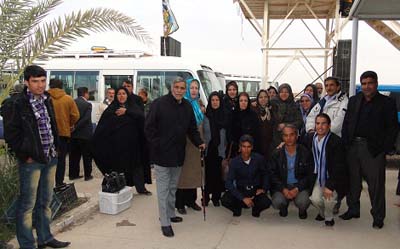
(Nejat delegation)

Tens of ex-MEK members who work with Nejat Association in Iran, also attended the Conference and were interviewed by the media. They explained that Nejat Association, which works closely with the families of the hostages, now has the capacity to help those survivors who wish to do so, to go back to their country under the amnesty which was granted by the Iranian authorities in 2003 (which is based on the understanding that the MEK members have been subjected to the coercion and control of cult leaders) and which to date has been upheld under the supervision of the ICRC.
Conference attendees were particularly interested in the testimony of three recently escaped camp residents who gave full and detailed explanations to the media about the harsh reality of being a captive inside Camp Ashraf. They spoke about the total information blackout and social and emotional isolation they experienced there. They emphasized that the leaders and the hostage takers lie constantly to the residents so that the captives have no idea about the outside world. They are made to believe that the MEK leaders are directly supported by the Americans and that if they tried to escape the camp they would be immediately shot, or now, after being tortured by the Iraqis they would be handed over to Iran to be executed without trial. They said that if they were given the true facts and information, there is not one person in the camp who would still want to stay in the desert of Iraq nearly nine years after disarmament. They urged international organizations, especially the US representatives and UNAMI, who are the only organizations with close relations with the hostage takers, to take advantage of their weekly meetings inside Camp Ashraf with the hostage takers, to persuade them to open up the flow of information and convince them to give people the right to family visits as well as normal means of communication such as writing and telephones, etc.
These recently escaped hostages also urged UNAMI not to present the hostage takers as the representatives of the hostages in the media outputs. Instead they should be clear that Rajavi is no one’s representative and as long as the negotiators have not met with the hostages without the presence of the MEK commanders – the hostage takers – outside the camp, they have no right to claim anything on their behalf. They said they believe that UNAMI and the American backers of the cult are in breach of international law for siding with the terrorists as these are people who have abused the human rights of over 3000 people for decades. The survivors of Camp Ashraf are now taking legal advice to claim compensation for their suffering and losses from the MEK leaders.

November 29, 2011 0 comments
FacebookTwitterPinterestWhatsappTelegramSkypeEmail
Iraq

Iraq’s decision on MEK expulsion irreversible

To review the issue of Camp Ashraf, a meeting was held at the European Parliament, with the presence of Struan Stevenson, Alejo Vidal-Quadras, and Esther Dang (MeK supporters in EU To review the issue of Camp Ashraf, a meeting was held at the European ParliamentParliament); Jean De Ryte, Catherin Ashton’s advisor on Camp Ashraf; and the representative of Iraqi embassy. In the absence of the Iraqi Envoy, his representative explained the government’s position, and stressed its decision to close Camp Ashraf by the year end.

During the meeting, it was so clear that the MeK supporters are extremely disturbed because the EU officials have ignored their blackmails. This turbulence was to such an extent that Vidal Quadras warned Jean De Ryte and Catherin Ashton that if they do not cover their demands, they will be faced with the reaction.

He said De Ryte:

Mr. Ambassador! This Parliament has the right and duty to control the European Commission and Mrs. Ashton is the Vice President of the Commission. So I say to you that, from now on, if the Foreign Service, which is in maximum charge of Mrs. Ashton, does not fulfill its obligations with this sensitive issue, with the determination and commitment that we expect, you do not doubt that Parliament will apply his right to control, up to maximum. Since, for a long time we have explained and warned that what will happen, and that what should be done. We are exhausted!

The interesting point of this meeting was statements of Iraqi embassy’s representative, who once again addressed audiences the Irreversibleness of the Iraqi government’s decision:

…Let me welcome to Ambassador Jean De Ryte, who participated in this important meeting. We are sure that diplomatic experience and wisdom of Mr. Ambassador will help the evacuation of Camp Ashraf. The deadline set by the Iraqi government to close Camp Ashraf by the year end should be respected. On Sep 23, on the sidelines of the UN General Assembly meetings, Iraqi FM had a conversation with Mrs. Ashton.

In the past 2 months, he has sent 3 letters in this regard to Mrs. Ashton. These letters describe Iraqi government’s decision to close the camp by the end of 2011. The international society knows this group as a terrorist organization. According to the constitution of Iraq, MeK presence is illegal.

The Iraq’s constitution prohibits presence of any terrorist organization in the country (Article 7 of the constitution). This presence is a threat to security in Iraq and neighboring countries, and gives them an excuse to interfere in the internal affairs of Iraq.

As a democratic and peaceful country, Iraq seeks to form passive relations with the neighbor countries, and not to interfere in their internal affairs. Also, Iraq does not tolerate the presence of terrorist organizations on its territory.

After hearing statements of Iraqi government’s representative, MeK supporters began to taunt the EU that why, e.g, they do not use financial and economic tools to force Iraqi government to accept MeK presence on his soil.

During the meeting, Jean De Ryte said that the UN High Commissioner for refugees is the only responsible for this issue. He remarked that, the only work that European Union can do, simply, is to accept some of them.
Iran Didban

November 28, 2011 0 comments
FacebookTwitterPinterestWhatsappTelegramSkypeEmail
Iraq

Iraq closes camp of MEK

Iraq has announced to close Camp Ashraf of Mujahdeen-e-Khalq (MEK) by the end of this year.

A statement issued by embassy of Iraq here said the MEK has been declared a terrorist organization at global level and existence of such organization on the Iraqi territory is prohibited as per the article 8 of the Iraqi constitution that stipulates adoption of policy of non-interference in internal affairs of the neighbouring countries.

The statement said organization was creating problem with the neighbouring countries and the Iraqi law does not grant the status of political refugees to the individuals of this organization.

Pakistan Observer

November 28, 2011 0 comments
FacebookTwitterPinterestWhatsappTelegramSkypeEmail
Mujahedin Khalq; A proxy force

US mulls harboring MEK terrorists

The United States is mulling over removing the anti-Iranian Mujahedin-e Khalq Organization (MKO) from its terrorist watch list and giving refuge to its members, a move which indicates Washington’s support for terrorism. US mulls harboring MEK terrorists

Former CIA directors James Woolsey and Porter Goss together with former FBI director Louis Freeh are among those lobbying President Barack Obama to delist the MKO from the US terrorist list, The New York Times reported.

Others include former attorney general Michael Mukasey, President George W. Bush’s first homeland security chief Tom Ridge, President Obama’s first national security adviser General James Jones, former New York mayor Rudolph Giuliani and former Vermont governor Howard Dean.

The MKO is designated as a terrorist organization under United States law, and has been described by State Department officials as a repressive cult.

The Iraqi government has made clear its plans to close down the notorious Camp Ashraf , located about 120 kilometers (74 miles) west of the border with Iran, which hosts about 3500 MKO terrorists, before US troops pull-out by the end of the year.

Members of the terrorist Mujahedin-e Khalq Organization will be then moved elsewhere in Iraq in order to reassert Iraqi sovereignty over the land where Camp Ashraf is located.

The MKO has carried out numerous acts of terror and violence against Iranian civilians and government officials.

The group fled to Iraq in 1986, where it enjoyed the support of Iraq’s executed dictator Saddam Hussein, and set up camp in Diyala Province, near the Iranian border.

The organization is also known to have cooperated with Saddam in suppressing the 1991 uprisings in southern Iraq and the massacre of Iraqi Kurds.

Iran has repeatedly called on the Iraqi government to expel the group, but the US has been blocking the expulsion by mounting pressure on the Iraqi government.

The extraordinary lobbying effort to reverse the terrorist designation of MKO comes as Washington is seeking to stop Iran’s nuclear program by means of maximum covert operations including the assassination of Iranian scientists.

Speaking at the Republican presidential debate in Spartanburg, South Carolina, on November 12, former Republican Speaker of the House Newt Gingrich openly advocated increased covert terrorism against Iran.

He suggested employing “maximum covert operations to block and disrupt the Iranian program including taking out their scientists, including breaking up their systems. All of it covertly, all of it deniable.”

Gingrich advocated “actively funding every dissident group in Iran.”

US Senator Rick Santorum explicitly advocated a preemptive strike against Iran’s nuclear facilities and said, “We would be working with Israel right now to do what they did in Syria, what they did in Iraq, which is take out that nuclear capability.”

Mitt Romney, former Massachusetts governor, also criticized the US president for not being pretty tough on Iran. “If we reelect Barack Obama, Iran will have a nuclear weapon.”

When asked whether he would choose to strike Iran militarily, Romney said “absolutely.”

The calls for assassination and terrorist acts come as Iran has lost a number of its scientists to terrorism in recent years.

On November 29, 2010, unidentified terrorists slapped adhesive bombs onto the vehicles of Iranian university professors Majid Shahriari and Fereydoun Abbasi. Professor Shahriari was killed immediately, but Dr. Abbasi and his wife sustained minor injuries and were rushed to hospital.

On Nov. 4, 2011 Secretary of Iran’s Supreme National Security Council Saeed Jalili announced that Tehran has irrefutable evidence that proves the US government was involved in anti-Iran conspiracies as well as in dispatching elements to carry out acts of sabotage and terror in Iran and other regional countries.

Jalili said that the documents show Washington has been directing and funding terrorist rings to achieve its regional objectives, adding that Tehran would be passing on the evidence to the UN.

November 28, 2011 0 comments
FacebookTwitterPinterestWhatsappTelegramSkypeEmail
European Union

Open Letter to Catherine Ashton

Dear High Representative of the Union for Foreign Affairs and Security Policy, Mrs. Ashton,

Dear Foreign Ministers of the EU-Member States, We want to warn you explicit to avoid a harum-scarum acceptance of MEK

During the 1 December session of the Foreign Affairs Council in Brussls, the situation of the Peoples Mojahedin of Iran (PMOI) and their base “Camp Ashraf” in Iraq, will surely come up.

The clashes between Iraqi security forces and Camp Ashraf residents in the past, as the imminent bloodshed during the announced closing of the camp on 31 December led you, Mrs. Ashton, to appoint Mr. Jean de Ruyt as advisor in this special issue.

Following the Press, the acceptance in the member countries of some of the Iranians living in Camp Ashraf will be discussed at the 1 December session.

We want to warn you explicit to avoid a harum-scarum acceptance of those people.

The Camp Ashraf inhabitants are part of a cult-like Organisation with a personality cult on the leaders Massoud and Maryam Rajavi. In the last decades they were separated from the outer world, especially from their families, to put their lives completely at the service of the organisation. Most of them are not at the height of technology and even do not know, how to use a cell phone or the internet. To wrench those people out of “their world” and put them in a foreign country and in an unknown world, will tighten them to the organisation.

The UNHCR told that in order to determinate their refugee status, individual interviews will need to take place in a safe, neutral and confidential location. Also the Iraqi government has signalled to support this procedure.

We would suggest, bringing the people from Camp Ashraf in contact to their families in connection with this interviews.

Based on the fact, that nearly 70% the Ashraf inhabitants live there because of the pressure and under the influence of the PMOI propaganda, several even against their will, bringing them in contact to their families could be a possibility to solve the problem.

The return to Iran, witch is vehement preached by the PMOI to be no option, could be a possibility for the people to reunite with their families and free from the influence of the PMOI.

The ICRC has repatriated several hundred Ashraf defectors to Iran during the last years, without them being persecuted or oppressed by the Iranian regime.

Only up to 350 of the 3400 people in Camp Ashraf are facing a persecution by Iranian or Iraqi law enforcement agencies, which those people are committed cadres and PMOI leaders.
There are whispers, that the organization is working on “evacuating” their leaders from Camp Ashraf and bring them through Turkey to the EU illegal,while the other members should be immolated as “Martyrs” in the battle against the Iraqi troops.

To prevent such a bloodshed we are convinced, that it is necessary to offer the Ashraf residents the contact to their families and the “real world” outside the organization and the gates of Camp Ashraf, to reveal them alternatives to the violent fight for Camp Ashraf, which they presumably do not beware of because of the PMOI propaganda and indoctrination.

We want to give the people in Camp Ashraf the possibility to recognize, that they can decide on themselves, if they want to get back home to their families, or try to get asylum in other countries or fight for Camp Ashraf.

Certainly it will be necessary to accept a certain number of people in the EU and we urge each EU member country to do their bit to a humanitarian solution of this problem. But to prevent the Ashraf residents from the PMOI influence, it is essential to bring them together with their families and show them, the reality is not like the PMOI has constituted it since decades.

For some time past, there is a network of PMOI defectors, families of Ashraf residents and several NGOs who work hand in hand with the Iraqi government and so were able to bring PMOI defectors, who managed to escape from Camp Ashraf by their own, back to their families. The UNHCR and the EU can fall back to this network to make this way possible to all people in Camp Ashraf.

On this reason we urge you to take a stand for this way at the session of the Foreign Affairs Council in Brussels on 1 December and discuss it as a serious option and as a preliminary step to a resettlement to third countries.

With best regards
Ali A. Rastgou
Cologne, November 28, 2011

November 28, 2011 0 comments
FacebookTwitterPinterestWhatsappTelegramSkypeEmail
The MEK Expulsion from Iraq

Iraqi leaders call for MKO expulsion

A group of Iraqi tribal leaders and officials, as well as some foreign agencies have called members of the Mujahedin-e Khalq Organization (MKO) to be expelled from the country, Press TV reports.

At a Friday conference held in Iraq’s capital Baghdad, the participants discussed the presence of the MKO in the country and its consequences for the Iraqi people .

“The Iraqi government has responded to the people’s calls and decided to evacuate the MKO camp in Iraq and expel its members from Iraq by the end of the year,” said Nafe al-Esawi, an organizer of the conference  .

Members of the MKO fled to Iraq in 1986, where they enjoyed the support of executed Iraqi dictator Saddam Hussein, and set up Camp Ashraf in Diyala near the Iranian border .

Conference participants criticized the US for its failure to help put an end to the presence of the terrorist group in Iraq

.

“Unfortunately the American forces have failed to dismantle this camp and have left it on the hands of the Iraqi government. I thank the Iraqi government for their patience; I thank the Iraqi people for their patience,” said head of the Middle East Strategic Delegation Massoud Khodabandeh .

The group has carried out numerous acts of terror and violence against Iranian civilians and government officials  

The terrorist organization is also known to have cooperated with former Iraqi dictator Saddam Hussein in suppressing the 1991 uprisings in southern Iraq and the massacre of Iraqi Kurds in the north .

“The MKO has left bloody memories in the Iraqi people’s minds, and the Iraqis today will not tolerate their presence. No country will accept to allow such terrorists on its soil,” said Adnan al-Shahmani, Iraq’s State of Law Coalition MP .

Tehran has repeatedly called on the Iraqi government to expel the group, but the US blocks the expulsion by pressuring the Iraqi government.

Download Iraqi leaders call for MKO expulsion

November 27, 2011 0 comments
FacebookTwitterPinterestWhatsappTelegramSkypeEmail
European Union

EU to urge members to accept MEK Terrorists

EU foreign policy chief Catherine Ashton will urge EU states next week to accept as many residents as they can of a camp of Iranian dissidents in Iraq that Baghdad plans to close by the end of the year, EU officials said on Thursday.

Ashton will make the call as part of efforts to resolve the issue of Camp Ashraf, a base of the People’s Mujahideen Organisation of Iran, which mounted attacks on Iran before the U.S.-led removal of Iraqi leader Saddam Hussein.

The United Nations High Commissioner for Refugees has been trying to arrange to interview the more than 3,000 residents to determine who among them qualifies for refugee status and thus resettlement, but Iraq has yet to allow this.

A senior EU official said the United Nations and Iraq were working to resolve "a logistical problem" caused by Iraq’s refusal to allow the interviews to take place at the camp.

 
Hundreds have links to third countries, including EU states, while another 1,000 were thought to want to return to Iran.

He said Iraq had proposed that the interviews take place at a Baghdad hotel. Talks were also under way on the possibility of housing those not immediately relocated to third countries at a former U.S. base near Baghdad for up to six months.

The official said the United Nations had estimated in the past that about 800-900 of the residents had sufficient links to third countries to allow their resettlement, while another 1,000 were thought to want to return to Iran.

Another EU official said Ashton would call on EU states at a meeting of EU foreign ministers next week to take responsibility for those entitled to resettle in their countries.

"We have a deadline coming up," he said. "We are doing all we can to make sure member states take their responsibility."

The senior EU official was unable to estimate how many residents might be entitled to resettlement in EU countries. He said many claimed links to France and Germany but both countries showed a reluctance to accept them.

The EU removed the PMOI from its terrorism list in 2009, but it is still considered a terrorist organistion by other countries, including the United States.

The senior EU official said Iraq had issued arrest warrants for up to 120 of the residents, some of whom had helped Saddam in his campaigns against Iran and Iraq’s Kurdish minority.

"I guess the Iraqis will want to put them on trial," he said, adding that he did not think any EU country would want to give this group asylum.

The official said that while some EU countries were willing to take in limited numbers, the best hope for the others was for resettlement in countries such as Australia and Canada.

"The International community will do its best to relocate them, but it won’t be easy because many people consider them (the PMOI) terrorists."

The future of Ashraf’s residents became uncertain in 2009 after the United States turned the camp over to the Iraqi government, which considers its residents a threat to security.

Amnesty International says they are subject to harassment by the government and denied access to basic medicine. More than 30 were killed in a clash with Iraqi security forces in April.

On Tuesday, members of the European Parliament called on Ashton to step up pressure on Iraq to extend the deadline for closing the camp.

Reporting by David Brunnstrom; Editing by Jon Hemming

November 27, 2011 0 comments
FacebookTwitterPinterestWhatsappTelegramSkypeEmail
Mujahedin Khalq; A proxy force

For Obscure Iranian Exile Group, Broad Support in U.S.

At a time of partisan gridlock in the capital, one obscure cause has drawn a stellar list of supporters from both parties and the last two administrations, including a dozen former top national security officials. For Obscure Iranian Exile Group, Broad Support in U.S.

That alone would be unusual. What makes it astonishing is the object of their attention: a fringe Iranian opposition group, long an ally of Saddam Hussein, that is designated as a terrorist organization under United States law and described by State Department officials as a repressive cult despised by most Iranians and Iraqis.

The extraordinary lobbying effort to reverse the terrorist designation of the group, the Mujahedeen Khalq, or People’s Mujahedeen, has won the support of two former C.I.A. directors, R. James Woolsey and Porter J. Goss; a former F.B.I. director, Louis J. Freeh; a former attorney general, Michael B. Mukasey; President George W. Bush’s first homeland security chief, Tom Ridge; President Obama’s first national security adviser, Gen. James L. Jones; big-name Republicans like the former New York mayor Rudolph W. Giuliani and Democrats like the former Vermont governor Howard Dean; and even the former top counterterrorism official of the State Department, Dell L. Dailey, who argued unsuccessfully for ending the terrorist label while in office.

The American advocates have been well paid, hired through their speaking agencies and collecting fees of $10,000 to $50,000 for speeches on behalf of the Iranian group. Some have been flown to Paris, Berlin and Brussels for appearances.

But they insist that their motive is humanitarian — to protect and resettle about 3,400 members of the group, known as the M.E.K., now confined in a camp in Iraq. They say the terrorist label, which dates to 1997 and then reflected decades of violence that included the killing of some Americans in the 1970s, is now outdated, unjustified and dangerous.

Emotions are running high as Secretary of State Hillary Rodham Clinton completes a review of the terrorist designation. The government of Prime Minister Nuri Kamal al-Maliki of Iraq has said it plans to close the camp, Camp Ashraf, by Dec. 31 and move the people elsewhere in Iraq in order to reassert Iraqi sovereignty over the land where it is located, 40 miles north of Baghdad.

Two earlier incursions by Iraqi troops into Camp Ashraf led to bloody confrontations, with 11 residents killed in July 2009 and at least 34 in April of this year. The M.E.K. and its American supporters say that they believe the Maliki government, with close ties to Iran, may soon carry out a mass slaughter on the pretext of regaining control of the camp.

If that happens, the supporters say, the United States — which disarmed the M.E.K. and guaranteed the security of the camp after the invasion of Iraq — will bear responsibility.

“We made a promise,” said Mr. Ridge, a former congressman and governor of Pennsylvania. “Our credibility is on the line. They’ve been attacked twice. How can we possibly accept assurances from the Maliki government?”

Mr. Ridge suggested that the M.E.K.’s implacable hostility to the rulers of Iran should be a point in their favor.

“In my view, if you’re a threat to Ahmadinejad,” — Mahmoud Ahmadinejad, Iran’s president — “well, the enemy of my enemy is my friend,” Mr. Ridge said. He noted that the M.E.K. had provided information on Iran’s nuclear program during the Bush administration.

The M.E.K. advocacy campaign has included full-page newspaper advertisements identifying the group as “Iran’s Main Opposition” — an absurd distortion in the view of most Iran specialists. The M.E.K. has hired high-priced lobbyists like the Washington firm Akin Gump Strauss Hauer & Feld. Its lawyers in Europe won a long fight to persuade the European Union to drop its own listing of the M.E.K. as a terrorist group in 2009.

The group’s spending, certainly in the millions of dollars, has inevitably raised questions about funding sources.

Ali Safavi, who runs a pro-M.E.K. group in Washington called Near East Policy Research, says the money comes from wealthy Iranian expatriates in the United States and Europe. Because “material support” to a designated terrorist group is a crime, advocates insist that the money goes only to sympathizers and not to the M.E.K. itself.

Congress has taken note of the campaign. A House resolution for dropping the terrorist listing has 97 co-sponsors, including the chairman of the House Intelligence Committee, Mike Rogers, Republican of Michigan. At a hearing this month, senators pressed the defense secretary, Leon E. Panetta, about the threat to Camp Ashraf.

A State Department spokesman, Mark Toner, said officials there were “working as quickly as possible” to complete a review of the M.E.K.’s terrorist designation. American officials are supporting an effort by the United Nations to resettle Camp Ashraf residents voluntarily to other countries, a process that is making slow progress.

Other State Department officials, addressing the issue on the condition of anonymity because it is still under deliberation, said that they did believe the 3,400 residents of Camp Ashraf were in danger as the Dec. 31 deadline approaches.

“We’re in constant talks with the Iraqis and the Ashraf leadership to show maximum flexibility on the closure of the camp,” one official said.

But the officials expressed frustration at what they described as the American supporters’ credulous acceptance of the M.E.K.’s claims of representing the Iranian opposition and of embracing democratic values.

In years of observation, the official said, Americans have seen that the camp’s leaders “exert total control over the lives of Ashraf’s residents, much like we would see in a totalitarian cult,” requiring fawning devotion to the M.E.K.’s leaders, Maryam Rajavi, who lives in France, and her husband, Massoud, whose whereabouts are unknown.

Moreover, the official said, the group is “hated almost universally by the Iranian population,” in part for siding with Mr. Hussein in the Iran-Iraq war in the 1980s. A State Department cable this year concluded that any indication of United States support for the M.E.K. “would fuel anti-American sentiment” in Iran and would “likely empower Iranian hardliners.”

In Iraq, the M.E.K. is also widely despised, especially by the country’s Shiite majority, because it is accused of helping the Iraqi dictator crush a Shiite revolt in 1991 — a charge the group denies. Because of deep Iraqi hostility, American officials argue that merely dropping the terrorist designation would not end the danger of attacks on the group.

While the M.E.K. carried out a campaign of attacks from the 1970s to the 1990s, mostly targeting Iranian officials, supporters say it has renounced violence and has not engaged in terrorist acts for a decade. The designation law, however, allows Mrs. Clinton to keep the label for a group that “retains the capability and intent to engage in terrorist activity or terrorism.”

Such a decision would outrage the American advocates of reversing the terrorist label.

Mr. Dean, chairman of the Democratic National Committee from 2005 to 2009, said the administration’s failure to act decisively threatened a “humanitarian catastrophe.” Mr. Mukasey said he did not believe the claim that the M.E.K. was a cult, but even if true, it was no reason to keep the terrorist listing. “These people are sitting in the camp, completely harmless,” he said.

Like other advocates, Mr. Mukasey said he had been paid his standard speaking fee — $15,000 to $20,000, according to the Web site of his speakers’ agency — to talk at M.E.K.-related events. But he insisted that the money was not a factor for him or other former officials who had taken up the cause. “There’s no way I would compromise my standing by expressing views I don’t believe in,” he said.

Artin Afkhami contributed reporting from Boston.

By SCOTT SHANE

November 27, 2011 0 comments
FacebookTwitterPinterestWhatsappTelegramSkypeEmail
Newer Posts
Older Posts

Recent Posts

  • A Criterion for Proving the Violent Nature of the MEK

    December 31, 2025
  • Rebranding, too Difficult for the MEK

    December 27, 2025
  • The black box of the torture camps of the MEK

    December 24, 2025
  • Pregnancy was taboo in the MEK

    December 22, 2025
  • MEPs who lack awareness about the MEK’s nature

    December 20, 2025
  • Facebook
  • Twitter
  • Instagram
  • Youtube

© 2003 - 2025 NEJAT Society . All Rights Reserved. NejatNGO.org


Back To Top
Nejat Society
  • Home
  • Articles
  • Media
    • Cartoons
    • NewsPics
    • Photo Gallery
    • Videos
  • Publications
    • Books
    • Nejat NewsLetter
    • Pars Brief
  • About Us
  • Contact us
  • Editions
    • عربي
    • فارسی
    • Shqip