Nejat Society
  • Home
  • Articles
  • Media
    • Cartoons
    • NewsPics
    • Photo Gallery
    • Videos
  • Publications
    • Books
    • Nejat NewsLetter
    • Pars Brief
  • About Us
  • Contact us
  • Editions
    • عربي
    • فارسی
    • Shqip
Nejat Society
Nejat Society
  • Home
  • Articles
  • Media
    • Cartoons
    • NewsPics
    • Photo Gallery
    • Videos
  • Publications
    • Books
    • Nejat NewsLetter
    • Pars Brief
  • About Us
  • Contact us
  • Editions
    • عربي
    • فارسی
    • Shqip
© 2003 - 2024 NEJAT Society. nejatngo.org
Mujahedin Khalq Organization

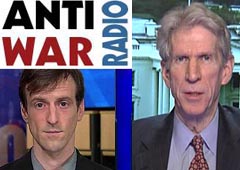
Scott Horton Interviews Philip Giraldi

Former CIA officer Philip Giraldi discusses the MEK’s rightful place on the State Department’s (admittedly flawed and politicized) terrorism list; why a lack of determined opposition (unlike to, say, Jonathan Pollard’s pardon) will probably get the MEK what it wants; why Americans never seem to catch on even after being lied into war again and again; Rupert Murdoch’s newspaper empire that specializes in printing propaganda about Iran from Israeli and British intelligence agencies; and the best way to get a “Persian summer” after the Arab spring: leave Iran alone and stop giving the regime an external enemy to blame for its problems.

Philip Giraldi, a former CIA officer, is a contributing editor to The American Conservative and executive director of the Council for the National Interest. He writes regularly for Antiwar.com.
Download Scott Horton Interviews Philip Giraldi

August 13, 2011 0 comments
FacebookTwitterPinterestWhatsappTelegramSkypeEmail
Mujahedin Khalq Organization

Scott Horton and Trita Parsi discuss MKO terror group

Trita Parsi, founder and president of the National Iranian American Council, discusses the Mujahideen-e Khalq’s tendency to accuse their critics of working for the Iranian government; how constant US belligerence and the MEK’s violent radicalism serve as useful foils for the Iranian regime – discrediting dissidents and keeping the people in fear; how violent coups beget radical authoritarian governments, while nonviolent methods often deliver democratic results; the many former US officials now employed as well-paid lobbyists, working toward the MEK’s de-listing from the State Department’s terrorist group list; and the implausibility of a Hamas, al-Qaeda or Hezbollah fundraising and lobbying event on Capitol Hill (though they share the same terrorist designation as the Congress-friendly MEK and MEK’s loyal service to Saddam Hussein, helping put down the 1991 uprisings and acting as his shock troops throughout the 1990s.

Dr. Trita Parsi is the author of Treacherous Alliance: The Secret Dealings of Israel, Iran, and the United States, recipient of the Council on Foreign Relation’s 2008 Arthur Ross Silver Medallion and the 2010 Grawemeyer Award for Ideas Improving World Order.

He wrote his Doctoral thesis on Israeli-Iranian relations under Professor Francis Fukuyama (and Drs. Zbigniew Brzezinski, R. K. Ramazani, Jakub Grygiel, Charles Doran) at Johns Hopkins University School of Advanced International Studies while heading the largest Iranian-American organization in the US, the National Iranian American Council (NIAC).
Download Scott Horton interviews Trita Parsi

August 13, 2011 0 comments
FacebookTwitterPinterestWhatsappTelegramSkypeEmail
Mujahedin Khalq; A proxy force

MEK;U.S. politicians’ favorite terrorist group

Given the supreme importance of the fight against terrorism and the terrible ramifications which ostensibly exist for providing material support to terrorists, it is puzzling to see prominent individuals within the U.S. political establishment openly lobbying for, and taking money from, an Iranian organization which is designated by the State Department as a terrorist group.

Mujahedin-e-Khalq (MEK) is an organization with a history of violent terrorism against Americans and others, and was a key strategic asset of Saddam Hussein during his brutal crackdown on Iraqi Kurds in the early 90’s. Despite being implicated in the deaths of numerous American and Iranian civilians, (and being designated as a terrorist organization by countries around the world for its actions) U.S. political figures such as Ed Rendell, Andrew Card and John Bolton are openly advocating for MEK and are in many cases receiving significant sums of money for doing so.

Supporting designated terrorist organizations, especially in the context of the indefinitely ongoing War on Terror, is something for which a great number of individuals in the United States are currently serving lengthy prison sentences. It seems to defy logic then that members of MEK, a group which has attacked U.S. interests all over the world, are able to stroll the halls of Congress and exercise significant financial influence over U.S. government representatives in order to achieve their objectives. Make no mistake, the MEK is no less “terrorist” than any of the other groups for which one can go to jail for merely having contact with. In addition to openly acknowledging to have killed thousands of Iranians, MEK is directly implicated in the deaths of American civilians and military officials in Tehran during the 1970’s, killings for which no MEK member has ever been brought to justice. As recently as 2007 the State Department had this to say about the organization which currently enjoys the open support of so many prominent figures within the U.S. political establishment:

"MEK leadership and members across the world maintain the capacity and will to commit terrorist acts in Europe, the Middle East, the United States, Canada, and beyond."
"MEK has also displayed cult-like characteristics…. members are also required to undertake a vow of "eternal divorce" and participate in weekly "ideological cleansings." Additionally, children are reportedly separated from parents at a young age. MEK leader Maryam Rajavi has established a "cult of personality."
"….. uses propaganda and terrorism to achieve its objectives and has been supported by reprehensible regimes, including that of Saddam Hussein."

Not only did they receive the support and patronage of Saddam Hussein; the MEK were instrumental in the massacre of the Iraqi citizens whom the United States purportedly fought the Iraq War to "liberate." MEK leader Maryam Rajavi had these words for her followers about how to deal with Iraqi Kurds during the 1991 crackdown: "Take the Kurds under your tanks, save your bullets for the Iranian Revolutionary Guards"; this is the same woman about whom Howard Dean said last March, "Madame Rajavi does not sound like a terrorist to me; she sounds like a president….We should be recognizing her as the president of Iran." The fact that U.S. officials are lobbying for the leader of a cult-like terrorist group with zero popular support in Iran to become the next president of that country should surely be filed for future reference under the heading, "Why Do They Hate Us."

That an organization which is acknowledged to be involved in terrorism enjoys the open support of so many prominent figures in the U.S. political establishment is a prime example of the fundamental hypocrisy at the heart of the War on Terror. The fact that many of these individuals are receiving significant financial compensation in return for their support of MEK’s agenda is even more egregious; try and imagine the reaction if a non-favored terrorist group were using cash contributions to openly lobby the support of American politicians for its objectives.

What the U.S. relationship with Mujahedin-e-Khalq does is further clarify the inherent meaningless of the designation of individuals or groups as being "terrorist." For their perpetration of deadly attacks against civilians and for their links to brutal regimes, MEK members could perhaps expect to be interned in Guantanamo Bay without due process; instead they are unabashedly lobbying for their cause in Washington and using large sums of money to exert influence over U.S. politicians. That these politicians are engaged in providing support for an FTO (Foreign Terrorist Organization), an activity for which countless individuals have been interned, tortured and killed, further illustrates that "supporting terrorism" in today’s parlance simply refers to providing support to an organization which commits violence of which the U.S. does not approve. MEK’s actions undoubtedly fit the objective definition of terrorism and they have been recognized for decades as being terrorists, but since their violence is convenient for U.S. foreign policy hawks at present they avoid that dangerous label and are instead able to freely propagate their agenda in the United States without fear of retribution.

The fact that U.S. officials are openly consorting with, and receiving funding from, a group with American blood on its hands in order to promote that group’s interests is something which may escape the notice of its citizenry, but it is keenly watched by Iranians and others who are looking to the gauge the level of integrity and consistency in U.S. policy. The selective application of the label of “terrorist” based on who the U.S. is choosing to fight at any given point is further evidence of the bankruptcy of this term. "Terrorists" are those who are interred in CIA black sites, subject to legally sanctioned torture and killed without public outcry; but as the case of the MEK shows the very definition of who is a terrorist is based not upon what acts individuals or groups commit, but upon how favorably or unfavorably those acts are viewed in Washington. The level to which the term is demonstrably hollow and meaningless can be glimpsed here in the fact that U.S. officials themselves feel little reticence about openly engaging in an act which they condemn others for; providing material support to terrorist groups.

By Murtaza Hussain – Salon.com

August 13, 2011 0 comments
FacebookTwitterPinterestWhatsappTelegramSkypeEmail
Mujahedin Khalq Organization's Propaganda System

Inside Mujahidin-e Khalq’s Massive Lobbying Push

The Christian Science Monitor has an extensive article on the Mujahidin-e Khalq’s lobbying efforts. It reviews the terrorist group’s history and the debate over removing it from the Foreign Terrorist Organization (FTO) list, but it goes into much greater detail in describing how the MEK has been getting the support of many prominent American advocates. The most disturbing thing in the article is the claim that top national security officials wouldn’t have heard about the MEK prior to being approached by the group’s representatives:

“Top-level national security officials never heard about the MEK; it never rose to their level until now,” says another US official. “So when MEK representatives show them a political platform comprised of the ’15 greatest ideas of Western civilization,’ it looks pretty compelling.”

If you knew nothing about the group until now, and you were extremely gullible, I suppose it could be. Ignorance would help to account for why so many former officials and politicians would be willing to associate themselves with the cause of a terrorist group, but it is hardly reassuring that “top-level” national security officials are so ignorant of the recent history of Iran and Iraq that being approached by representatives of this group wouldn’t raise any red flags. It shouldn’t come as a surprise that these officials don’t understand the region’s politics and history very well, but that is just one more reason not to heed their recommendations on how to treat the MEK.

The article goes on to list quotes from Rudy Giuliani, Howard Dean, and a number of former Bush administration officials, all of whom are on the record saying embarrassing things in praise of the MEK. Pennsylvania Gov. Ed Rendell may have qualified for the most egregious flattery when he said, “MEK is a force for good, and the best hope we have.” While these people may not be able to appreciate what this sounds like to most Iranians, having so many prominent national figures in the U.S. singing this group’s praises signals to Iranians that Americans see both the Iranian people and the regime as our enemy. If the State Department were so unwise as to remove the MEK from the FTO list, that would mark this administration as being more hostile towards Iran than the two administrations before it.

Confirming just how creepy the cult of personality built around Maryam Rajavi is, the article describes Camp Ashraf:

Her portrait – along with that of husband and co-leader Massoud Rajavi, who has been in hiding since 2003 – is as ubiquitous at Camp Ashraf as Saddam Hussein’s once was across Iraq, and Ayatollah Khomeini’s still is in Iran. Every day at the camp, the MEK motto is heard: “Iran is Rajavi, Rajavi is Iran. Iran is Maryam, Maryam is Iran.”

Obviously, a new totalitarian political cult is not what Iranians need or want. The group has eagerly started saying all of the right things about democracy, but the group’s organization and practices show that it has no values in common with the Iranian opposition or with the United States. In the past, the State Department has understood this:

A US State Dept. report in 1994 dismissed MEK efforts to reinvent itself. Noting the MEK’s “dedication to armed struggle”; the “fact that they deny or distort sections of their history, such as the use of violence”; the “dictatorial methods” of their leadership; and the “cult-like behavior of its members,” the State Dept. concluded that the MEK’s “29-year record of behavior does not substantiate its capability or intention to be democratic.”

Nothing about the MEK has changed in the last seventeen years, except that it has become more adept at getting Americans opposed to the Iranian government to work on its behalf. As Trita Parsi explains, the only thing that has made the decision to keep the MEK on the list remotely controversial is that the group’s lobbying is much greater this time around:

The momentum to remove the terrorist status “is all about [the MEK’s] ability to muster a political lobbying campaign,” says Parsi. If the decision were based on “the merits of the case, this would be as uncontroversial as the four times that the Bush administration re-listed them. Four times. No controversy.”

Put another way, not even the Bush administration was willing to accept the MEK’s reinvention, and they were hardly interested in fostering good relations with Tehran. The Obama administration should likewise reject the appeals of these paid advocates for a terrorist group.

Daniel Larison

August 10, 2011 0 comments
FacebookTwitterPinterestWhatsappTelegramSkypeEmail
Mujahedin Khalq Organization as a terrorist group

MEK Threatens Antiwar Radio Guest

So say the Mujahedeen e-Khalq terrorists in the comment section below my recent interview of Huffington Post writer Shawn Amoei. They’re angry with him for having the temerity to say that they are the enemies of Iranian reformers and friends of the Israelis and Americans who want war with Iran. And that they are terrorists.

At least they only threatened to sue me. Not that I would mind making the case in court for what commie-murderer-cultist former puppets of the Ayatollah Khomeini, Saddam Hussein, Donald Rumsfeld, disgraced neocons and the Israeli Mossad they are — or what a pathetic pile of lies their K-Street front, the NCRI, is constantly pushing about Iran’s nuclear program — not at all.

But fair warning. I’ll counter-sue for court costs. And will win. And will have fun humiliating you.
Herr Hillary, of course, is planning to de-list the MEK from the State Department’s list of officially designated terrorist organizations.

Speaking of which, here’s a nice little summary of the MEK’s crimes by the U.S. State Department:

“The group’s worldwide campaign against the Iranian government uses propaganda and terrorism to achieve its objectives and has been supported by reprehensible regimes, including that of Saddam Hussein. During the 1970s, the MEK assassinated several U.S. military personnel and U.S. civilians working on defense projects in Tehran and supported the violent takeover in 1979 of the U.S. Embassy in Tehran. Despite U.S. efforts, MEK members have never been brought to justice for the group’s role in these illegal acts.

“In 1981, MEK leadership attempted to overthrow the newly installed Islamic regime; Iranian security forces subsequently initiated a crackdown on the group. The MEK instigated a bombing campaign, including an attack against the head office of the Islamic Republic Party and the Prime Minister’s office, which killed some 70 high-ranking Iranian officials, including Chief Justice Ayatollah Mohammad Beheshti, President Mohammad-Ali Rajaei, and Prime Minister Mohammad-Javad Bahonar. These attacks resulted in a popular uprising against the MEK and an expanded Iranian government crackdown which forced MEK leaders to flee to France. For five years, the MEK continued to wage its terrorist campaign from its Paris headquarters. Expelled by France in 1986, MEK leaders turned to Saddam Hussein’s regime for basing, financial support, and training. Near the end of the 1980-1988 Iran-Iraq War, Baghdad armed the MEK with heavy military equipment and deployed thousands of MEK fighters in suicidal, mass wave attacks against Iranian forces.

“The MEK’s relationship with the former Iraqi regime continued through the 1990s. In 1991, the group reportedly assisted in the Iraqi Republican Guard’s bloody crackdown on Iraqi Shia and Kurds who rose up against Saddam Hussein’s regime; press reports cite MEK leader Maryam Rajavi encouraging MEK members to ‘take the Kurds under your tanks.’”

And I don’t know what they’re saying here, but the MEK’s former cult leader (it’s now run by his widow, the cult leader runner-up) looks like he had a much warmer thing going with Saddam Hussein, that great ally of the Iranian people, than even Rumsfeld had back in their mutual good old days:

Scott Horton

August 10, 2011 0 comments
FacebookTwitterPinterestWhatsappTelegramSkypeEmail
MEK Camp Ashraf

What to do about Camp Ashraf

Any day now the U.S Department of State will announce whether or not it will remove the Mujahedin-e Khalq (MEK) from its Foreign Terrorist Organizations list. Well-funded and mostly unmonitored lobbying activities led to the group’s delisting in the EU and UK and now leader What to do about Camp AshrafMaryam Rajavi (her husband Masoud Rajavi mysteriously disappeared in 2003) is standing outside the U.S.’s door. (I examine the group and some of its U.S. supporters in Al Jazeera English.)

Some Washington-based US-Iran analysts argue that the Obama Administration views the MEK as an annoyance and is dragging its feet on the decision to delist or not because of the human rights concerns at Camp Ashraf. The 3,000+ inhabitants there face a serious threat by the Iraqi government which has carried out deadly raids against them. But Rajavi refuses to allow human rights organizations full access to the inhabitants so they can assess the situation clearly. She also won’t allow the members to accept refugee status so they can be relocated elsewhere. Once armed to the teeth by Saddam Hussein’s regime, the inhabitants are now living in a country that does not want them, near the border of a government that they have been at war with for most of their existence. They are in a political no man’s land, but as I argue in my article, to conflate this issue with the decidedly political question of delisting may only exacerbate the already fragile US-Iran relations.

After reading reports by Human Rights Watch, the RAND Corporation and conducting an interview with a former member, there is no doubt that this group operates as a cult and that many of the Ashraf inhabitants want to leave. (Also see this 2007 documentary by Maziar Bahari). It is also undeniable that the Rajavis will do anything to maintain their power and funding sources (which are unknown) and go to extremes to reach their goal. Now more than ever human rights groups need access to the people there and I sincerely hope they will help them reunite with their families which they were forced to give up.

But according to veteran U.S. diplomat Ambassador John W. Limbert who has years of experience with Iran, the solution to the human rights issues at Camp Ashraf is clear and is only complicated because of broken US-Iran relations:

…Perhaps 90-95 percent of Camp Ashraf residents could return to Iran under International Red Cross supervision, abandon their MEK activity, and benefit from an amnesty that, by all accounts, the Tehran authorities have respected for earlier returnees. Once that group has left Iraq, those hard-core members remaining–perhaps fewer than 50–would be a very different and much more manageable problem.

Except for the MEK’s hired mouthpieces, everyone can see this obvious solution that removes a major irritant to all parties. Once again, however, the two sides’ historic inability to “get to yes” at the same time has played havoc with rational policy. The crux of the problem is this: any deal one side accepts or proposes is, by definition, seen as bad for the other. Each is convinced that the other’s purpose in life is to annoy and mislead “our side”. Therefore–in this curious universe–both sides assume that anything the other proposes or accepts contains a hidden motive to deceive.

Others have suggested relocating the members to developing countries, but Rajavi, who is based out of Paris, insists that they must remain in Iraq even though the MEK never formally sought citizenship.

lobelog.com – By Jasmin Ramsey

August 10, 2011 0 comments
FacebookTwitterPinterestWhatsappTelegramSkypeEmail
Mujahedin Khalq Organization's Propaganda System

MKO’s big-money push to get off US terrorist list

SPECIAL INVESTIGATION: A roster of influential former US officials is speaking at rallies in support of removing the MEK, an Iranian opposition group with a violent anti-American history, from the US terrorist list. A decision is expected within weeks.

A high-powered array of former top American officials is advocating removal from the US terrorist list of a controversial Iranian opposition group with a long anti-American history.
With a decision due within weeks by Secretary of State Hillary Clinton, former US four-star generals, intelligence chiefs, governors, and political heavyweights are calling for the US government to take the Mojahedin-e Khalq (MEK/MKO) off the terror list it shares with Al Qaeda and Hezbollah.

Many of these former high-ranking US officials – who represent the full political spectrum – have been paid tens of thousands of dollars to speak in support of the MEK.

They rarely mention the MEK’s violent and anti-American past, and portray the group not as terrorists but as freedom fighters with “values just like us,” as democrats-in-waiting ready to serve as a vanguard of regime change in Iran. Some acknowledge that they knew little about the group before they were invited to speak and were coached by MEK supporters.
Their efforts may be working: Knowledgeable officials say the millions of dollars spent on the campaign have raised political pressure to remove the MEK from the Foreign Terrorist Organization (FTO) list to the highest levels since the group – whose record includes assassinations of US military advisers and attacks on US diplomats – was one of the first to be put there in 1997.[…]

"The people who are saying [the MEK] are no longer terrorists are also saying they are democratic," says John Limbert, a former US hostage in Iran from 1979-1981, who was US Deputy Assistant Secretary of State for Iran until last year.

"The issue is, have [the MEK] changed their terrorist nature?" asks Ambassador Limbert. "If they say, ‘We renounce terrorism,’ I have no confidence in that. What is it in their past – or in their present – that leads you to have confidence in such a statement?"

The State Dept. will be weighing many ramifications, from how this will play out in the streets of Tehran to how it will affect US strategic credibility.[…]
Legal cases have seen the MEK removed from terror watch lists on procedural grounds in the UK and European Union in recent years. A decision on the US designation is now imminent; a federal appeals court in Washington last year ruled that the State Dept. had violated the group’s right to due process, because it had not been allowed to contest unclassified information used to justify its designation.

That information, submitted in autumn 2009, disclosed that “the MEK trained females at Camp Ashraf in Iraq to perform suicide attacks in Karbala” – a charge the group called “manifestly implausible” in court. It also included a US intelligence community assessment that the MEK “retains a limited capability and the intent to use violence to achieve its political goals.”
A detailed 2009 report, prepared for the US Department of Defense by the RAND Corp., notes further that the MEK has made "repeated requests … to have its weapons returned" at Camp Ashraf, the military camp given to the MEK by Saddam Hussein, where 3,400 members remain, disarmed.
Roots of the American label

American antipathy to the MEK stretches back four decades, when it was first formed in the 1960s with an anti-US, Marxist-Islamist ideology. Violent “armed struggle” was glorified from the start.

The group assassinated at least six US military advisers and citizens in Iran in the 1970s, supported the Islamic revolution and then the seizure of the American Embassy in 1979, and tried to block any deal with what it then called "the US, this satanic force threatening the world … the main adversary."

US government documents frequently use the term "cult-like" when describing the MEK, and describe "years of ideological training" for members akin to "brainwashing." The MEK has long denied that it is a cult and routinely charges critics with being agents of the Islamic Republic.

The MEK says it renounced violence in 2001, after claiming responsibility for 350 attacks in 2000 and 2001, according to a RAND tabulation. It is not known to have carried out any attacks for several years, though a 2004 FBI report found that the group was "currently actively involved in planning and executing acts of terrorism."

That conclusion was based on wiretaps of calls between MEK bases and headquarters in Iraq, France, and Los Angeles that discussed "specific acts of terrorism to include bombings" – and were corroborated by French intelligence and German police wiretaps, according to the FBI report

Yet current US officials and many Iran experts – hawks and doves alike – question the MEK’s ability to change in light of the group’s unique history and its cult-like characteristics. They say the fact that it is widely despised inside Iran also makes it a dangerous tool to change Iran’s Islamic regime.
All have been stunned by the speed, heft, and sheer wealth of the current delisting campaign, after years of determined but fruitless efforts.

Dismissing the terrorist label
Removing the terrorist designation is critical to the MEK to bolster its legitimacy. It would also enable the MEK to openly fund-raise in the US – despite having used fraudulent techniques in the past that prompted FBI investigations into smuggling rings, forgery, and fraud schemes that resulted in prison time for dozens of members.
A host of former American officials, in speech after speech since December, dismiss the MEK’s terrorist designation. At more than a dozen events in Washington and Europe since December, they assert instead that the group offers a popular "third way” between failed dialogue with the Islamic Republic and military action.

"With Al Qaeda and Hamas, you would never think they would be able to drum up this kind of support," one State Dept. official told the Monitor. "But with the MEK, they trawl the halls of Congress. Picture this with any other terrorist group; find one."

Talking points for the former US officials often include demanding that the Obama administration "free" the MEK from the terrorist list and ensure "protection" of Camp Ashraf before the controversial enclave is closed at the end of the year by the Iraqi government of Prime Minister Nouri al-Maliki.

Some argue that the MEK “provided invaluable information” to the US during the Iraq war, as Gen. Hugh Shelton, the former Chairman of the Joint Chiefs of Staff, did last month. Yet current US officials have publicly disputed that view, and the 2009 RAND report states that "the CIA unsuccessfully attempted to persuade some MEK leaders to leave the group and provide intelligence information about Iran."

The group is often credited with announcing in 2002 the existence of Iran’s undeclared uranium enrichment facilities at Natanz, but experts widely believe the intelligence came from Israel and was funneled through the MEK. The State Dept., in its October 2009 court filing, noted that UN inspectors say “much” of the information they receive from the MEK about Iran’s nuclear program “has a political purpose and has been wrong.”

Substantial fees

Former US officials taking part in MEK-linked events told the Monitor or confirmed publicly that they received substantial fees, paid by local Iranian-American groups to speaker bureaus that handle their public appearances.

Rajavi has indeed inspired fanatical loyalty among some MEK members. Her brief arrest in France in 2003 on terrorism charges sparked a wave of self-immolations.

Her portrait – along with that of husband and co-leader Massoud Rajavi, who has been in hiding since 2003 – is as ubiquitous at Camp Ashraf as Saddam Hussein’s once was across Iraq, and Ayatollah Khomeini’s still is in Iran. Every day at the camp, the MEK motto is heard: "Iran is Rajavi, Rajavi is Iran. Iran is Maryam, Maryam is Iran.”

Such praise therefore often features at MEK-linked events addressed by prominent Americans, mixed with other MEK talking points.

Howard Dean, the former chairman of the Democratic National Committee, hailed Rajavi in Berlin last March.

"Madame Rajavi does not sound like a terrorist to me; she sounds like a president," Mr. Dean said, gesturing toward the MEK leader from the dais. "And her organization should not be listed as a terrorist organization. We should be recognizing her as the president of Iran."
Mr. Dean confirmed to the Monitor that he received payment for his appearances, but said the focus on high pay was “a diversion inspired by those with a different view.”

Influence and money

Lee Hamilton, former co-chair of the 9/11 Commission, told the Monitor he received a "good fee" to speak in Washington. He "approved" of the MEK’s 10-point platform, which enshrines democracy, gender equality, and freedom, but added: "We all know it’s a piece of paper…. Now is that in fact their practice? I don’t think I am the one to judge that."
Hamilton told the audience he remains "really puzzled" about why the MEK remains on the terrorist list.
Former Pennsylvania Gov. Ed Rendell also spoke at an MEK-linked event and was paid $20,000 for a 10-minute speech. Mr. Rendell confirmed that figure to the Monitor, and said: “No amount of money could make me say something I didn’t believe.”
During his mid-July speech in Washington, however, Rendell stated that he had received a call on Monday, inviting him to appear the following Saturday. He told the audience that at first he declined, telling his would-be hosts: "I don’t know hardly anything about this subject, so … I don’t think I’m qualified to come."
Rendell thanked them for convincing him to come anyway, for briefing him during the week, for the material they sent, and for further discussions that morning.
"It’s been a great learning experience for me, and as a result of what I’ve learned, on Monday I will send a letter to President Obama and Secretary Clinton, telling them … that the United States is morally bound to do everything we can to ensure the safety of the residents of Camp Ashraf," said Rendell.
That comment prompted a standing ovation, followed by Rendell’s call for removal from the terrorist list if, as his fellow speakers had indicated, the "MEK is a force for good, and the best hope we have."
Judge Mukasey told the Monitor he received money for some of his appearances, but added that “the issue of fees is a red herring. Al Gore gets paid to speak about global warming; does anyone question the sincerity of his beliefs?”

One former US diplomatic official told the Monitor he was offered $25,000 to speak in Paris last December, but declined. He was told he could deliver general remarks about human rights in Iran and did not have to mention the MEK, though "the MEK link was clear; there was no hiding of it at all." In his case, he was told "rich Iranians in Europe" would foot the bill.
"Those who speak … have every right in the world to issue statements and make speeches that say [the MEK] ought to be off the terrorism list," says this former official, who asked not to be named. "I just don’t think they should do it for money."

Top-flight speakers include Bill Richardson, the former secretary of Energy; Gen. Peter Pace, former Chairman of the Joint Chiefs of Staff; Wesley Clark, the former Supreme Allied Commander Europe of NATO; and James Jones, President Obama’s former national security adviser.

“You are credible, you are connected, you are respected. And I am amazed that we’ve not reached out,” Gen. Anthony Zinni, the former commander of CENTCOM, said at a January event in Washington. “No one is asking for money, for military support, and guns. They are asking for a hand to be reached out, a light to be shined on what they are doing.”
Speakers also include former CIA chiefs James Woolsey, Porter Goss, and Michael Hayden. Several others confirmed to The Financial Times that they received cash to speak, including John Bolton, former US ambassador to the UN; Louis Freeh, former FBI director; Gen. James Conway, former Commandant of the Marine Corps; and Shelton.
"It’s a very formidable list, full of national security experts, and each of us recognizes the importance of Iran to US security," P.J. Crowley, the former US State Dept. spokesman until March, who spoke at a June event in Washington, told the Monitor.

Among Mr. Crowley’s talking points at State was that the MEK belonged on the terrorism list. He says he was therefore "deliberately circumspect" in his speech and did not take a
position on MEK delisting.

"I was offered a fee to appear, but what I said were my own comments, uninfluenced by what I was paid," said Crowley.

A large-scale operation

In scale and effectiveness at drawing in big names, this campaign stands alone, says Trita Parsi, president of the National Iranian American Council (NIAC), a group that for years has sought to increase the voice of Iranian-Americans in Washington and advocated US-Iran engagement.
The NIAC has launched a counter-campaign, concerned that delisting the MEK would "radicalize" Iran’s homegrown democracy movement, and "unleash a major force for war" between the US and Iran.

"We’ve never seen this kind of money," says Mr. Parsi. "At one conference with 10 speakers, if they average $50k a pop, that is half a million dollars just in speaker fees."
The momentum to remove the terrorist status "is all about [the MEK’s] ability to muster a political lobbying campaign," says Parsi. If the decision were based on "the merits of the case, this would be as uncontroversial as the four times that the Bush administration re-listed them. Four times. No controversy."

One reason may be the caliber of the MEK’s advocates today, and their insistence that they would not back a group with links to terrorism.
For example, Mr. Freeh, who was in charge during some of the FBI’s investigations of the MEK in the 1990s, told an MEK-linked conference in Washington in March that there is "absolutely no credible evidence, we think even on a classified basis," that justifies the MEK’s terrorist listing.
He made no mention of the FBI’s 2004 report that found the MEK “actively involved in planning and executing acts of terrorism.”
At a similar event in mid-July, Mr. Freeh praised the "bravery" of the MEK for "leading the fight for freedom in Iran. Just as our military forces fight for freedom on the battlefields, you fight in a more difficult and much more dangerous place."
Freeh asked the audience if such prominent panelists – which on that day included Shelton, Dean, Rendell, and Anita McBride, the former chief of staff for Laura Bush – would be there if there was "even a remote possibility" the MEK were in fact terrorists.

Raising doubts about change

But the MEK’s history has raised doubts among Iran specialists and in US government reporting about its ability to turn away from violence after embracing it for decades.
The MEK was just one popular faction that toppled the pro-West Shah in Iran’s 1979 revolution – but the only one that assassinated Americans. One MEK song from the time revels in anti-US sentiment: “Leave American, your blood is [already spilling] on the ground.”

The MEK lost out in the post-revolution power struggle; thousands of its members were killed. MEK actions peaked at a rate of three assassinations and attacks per day – its propaganda included how-to assassination guides. The MEK has claimed responsibility for killing thousands of Iranians it called “agents of the regime.”

Among numerous actions abroad, in 1982 the MEK seized the Iranian Interest Section in Washington, taking nine people hostage and doing $500,000 in damage.

On a single day in 1992, the MEK orchestrated attacks on 12 diplomatic facilities in 10 countries. In New York, the Iranian Mission to the UN was “invaded” by five men with knives, who took three hostages and went on a two-hour rampage “behind chained doors,” according to news reports. In Ottawa, the Iranian Embassy was “attacked and pillaged” by some 55 people armed with sticks and hammers.

Expelled from Iran in 1981, and then evicted from France, the MEK in 1986 set up in Iraq where they "became a wholly owned subsidiary of Saddam Hussein’s regime," according to Ken Pollack, a former CIA analyst and National Security Council director for Gulf affairs, in his book "The Persian Puzzle."
Saddam "armed them, paid them, and sent them on missions into Iran during the later stages of the Iran-Iraq War," notes Mr. Pollack, adding that they became "such creatures of the Iraqi regime" that they helped crush Shiite and Kurdish revolts in 1991 that the White House had encouraged – actions that today are one reason for enduring anti-MEK hostility from Iraq’s Shiite-led government.

The MEK denies fighting in Saddam’s wars and often claims it was "independent" of the Iraqi dictator’s regime, but Pollack’s description is confirmed by numerous independent sources.

A US State Dept. report in 1994 dismissed MEK efforts to reinvent itself. Noting the MEK’s “dedication to armed struggle"; the “fact that they deny or distort sections of their history, such as the use of violence”; the “dictatorial methods” of their leadership; and the “cult-like behavior of its members,” the State Dept. concluded that the MEK’s “29-year record of behavior does not substantiate its capability or intention to be democratic.”

That report describes tactics that foreshadow the MEK’s lobbying campaign today, 16 years later. It notes a “formidable Mojahidin outreach program,” which “solicits the support of prominent public figures,” and the “common practice … to collect statements issued by prominent individuals.”

The more recent 2009 RAND study came to similar conclusions. It speaks of the MEK’s "long history of deception," and how it has become "increasingly adept at crafting … its image as a democratic organization that seeks to bring down Iranian tyrants."
When the US invaded Iraq in 2003, it also took ownership of the sprawling MEK base at Camp Ashraf, north of Baghdad near the Iranian border. US forces did not disband the camp; hawkish talk in Washington was that the thousands of MEK militants might be recycled for future use against Iran.
Who pays?

The sources of funding for the campaign to rehabilitate the MEK are not clear, even to US officials. The Monitor sought contact with more than a dozen speakers which, combined with news reports and official disclosures, paint a picture of several Iranian-American groups – some with past links to the MEK, and all engaged in pro-MEK activities – bankrolling the effort.

Besides the string of well-attended events at prestigious American hotels and locations, and in Paris, Brussels, and Berlin, the campaign has included full-page advertisements in The New York Times and Washington Post – which can cost $175,000 apiece – that demand delisting the MEK and protection of Camp Ashraf.
Several conferences have been sponsored by ExecutiveAction, LLC, whose CEO Neil Livingstone has long been active with MEK issues. His company has produced lengthy reports rebutting official US positions on the MEK.
According to his company website, Mr. Livingstone is also a member of the Iran Policy Committee (IPC), which in 2005 laid out a regime-change plan for Iran; its top priority was delisting the MEK.

An IPC panel in 2007 lists one speaker as Alireza Jafarzadeh, the MEK spokesman in Washington who the RAND report notes had "directed the MEK’s US lobbying apparatus" until it was designated an FTO. Mr. Crowley told the Monitor that Mr. Jafarzadeh – who today runs a Washington consultancy and conducts pro-MEK work – is "the driving force” behind the current campaign.

Mukasey, the former attorney general, was photographed speaking with Jafarzadeh at a July 7 hearing on Capitol Hill titled "Massacre at Camp Ashraf: Implications for US Policy." He told the Monitor that Jafarzadeh was "as far as I know, liaison to the Iranian-Americans who attended the hearing."

Jafarzadeh did not respond to communications from the Monitor asking for comment.

Several speakers at MEK-linked events told the Monitor they were paid by the Iranian American Community of Northern California. Director Ahmad Moein did not respond to multiple telephone and e-mail attempts to reach him; the group’s website is dedicated to pro-MEK issues and events.

The California group hired the powerful Washington law firm Akin Gump Strauss Hauer & Feld to lobby on its behalf to remove the MEK from the terrorism list.
Also supplying some funds has been Colorado’s Iranian American Community, according to a disclosure report filed in early July by Rep. Bob Filner (D-CA) and posted at legistorm.com. That group paid $6,589.62 for six days of first class travel and lodging expenses for Rep. Filner to attend the June MEK rally in Paris.

The House disclosure form describes him attending a "Grand meeting of Iranians in support of human rights and democracy for Iran." It makes no mention of the MEK, nor meeting Rajavi. In his speech, Filner said: "I bring you greetings and support from the Congress of the United States … I want to congratulate Madame Rajavi … we will succeed."
In 2007, Filner also accepted $7,949.40 worth of travel to attend a "rally for Iranian human rights" in Paris. Both trips were paid for by Tim Mehdi Ghaemi of the Colorado group, according to the required "Private Sponsor Travel Certification Form."

In 2004, this Colorado group was among 23 co-sponsors of a fundraiser for Iran’s Bam earthquake victims that turned into a “night of resistance.” Seventeen were found to have MEK connections, including the Colorado group, according to news reports at the time. Then-Pentagon adviser Richard Perle delivered a paid speech, unaware of the MEK link. The US government froze the assets of the primary sponsor, the Iranian-American Community of Northern Virginia.

Such groups are familiar to US agencies as a means for MEK supporters to raise and spend funds, despite the terrorist designation. The State Dept. has described how the MEK “has formed associated groups with benign names” to raise cash and sympathy.

"I am not aware of any activities they undertake that are not MEK-related," says one US official about these regional organizations. "I couldn’t begin to count them all…. They’ve got so many shells and fronts among their organizations that we can’t keep up with them all."

Camp Ashraf

But a top priority for speakers at pro-MEK events is Camp Ashraf and its 3,400 occupants, who after years of military training during the Saddam era were disarmed with a promise of protection from US commanders.

The camp – due to be closed by the end of the year – has largely cut itself off from the outside world, with restricted access to telephones, Internet, and satellite television. MEK members, their identity documents long ago confiscated by the MEK, take part in frequent self-criticism sessions and must pledge to “eternal divorce.”
"Love for the Rajavis was to replace love for spouses and family," notes the 2009 RAND report, which found that perhaps 70 percent of the people there "may have been recruited through deception" and are kept at Ashraf "against their will."

Severe gender segregation means that "lines are painted down the middle of hallways separating them into men’s and women’s sides," the RAND report reads. "Even the gas station at Camp Ashraf has separate hours for men and women."

Prior to 2003, all MEK members carried cyanide tablets in leather pouches around their necks, according to RAND. Since then, "the MEK frequently used the threat of suicide as a negotiating tactic or to frustrate investigations."

US officials are trying to convince the MEK to temporarily shift elsewhere in Iraq before disbanding, pinning their hopes on United Nations refugee status and resettlement elsewhere.

Mukasey told the Monitor that “What is developing [at Camp Ashraf] is another Srebrenica, with US complicity,” because Iraqi security forces – hostile to the MEK as past agents of Saddam – have several times in two years engaged in clashes at the camp, most recently in April when 34 were killed.
Former Governor Dean told an MEK-linked audience in July: "Let’s stop the name-calling and foolishness and look at this for what it is. This is genocide, and we will not have it!" Then he spoke of broader ambitions: “We will free the people of Ashraf, and we will free the people of Iran from the tyranny of the mullahs.”
Still uncertain, however, is the path that will lead there. Despite the warning by many Iran experts that the MEK belongs on the terrorism list, the high-powered campaign to resurrect the group carries on.

Also speaking in July, Shelton called the Camp Ashraf resettlement proposal a "recipe for ethnic cleansing," adding: "Wake up, State Department! Take the MEK off the FTO list today."

He said the "10-point program and human rights platform" published by Mrs. Rajavi "makes it a no-brainer."

Then Shelton posed the question: "Why would we not want to put the weight and power of this country behind an organization that we know stands for the same principles we stand for, and that is the best-organized, the best-led organization to take on the current Iranian regime?"

By Scott Peterson

August 9, 2011 0 comments
FacebookTwitterPinterestWhatsappTelegramSkypeEmail
Mujahedin Khalq; A proxy force

MEK: Former U.S. Officials Make Millions Advocating For Terrorist Organization

WASHINGTON — The ornate ballroom of the Willard Hotel buzzed with activity on a Saturday morning in July. Crowded together on the stage sat a cadre of the nation’s most influential former government officials, the kind whose names often appear in boldface, who’ve risen above daily politics to the realm of elder statesmen. They were perched, as they so often are, below a banner with a benign conference title on it, about to offer words of pricey wisdom to an audience with an agenda.

That agenda: to secure the removal of the Mujahideen-e Khalq (MEK) from the U.S. government’s list of Foreign Terrorist Organizations. A Marxian Iranian exile group with cult-like qualities, Mujahideen-e Khalq was responsible for the killing of six Americans in Iran in the 1970s, along with staging a handful of bombings. But for a terrorist organization with deep pockets, it appears there’s always hope.

Onstage next to former FBI director Louis Freeh sat Ed Rendell, the former Democratic governor of Pennsylvania and current MSNBC talking head; former Vermont Gov. Howard Dean; former Chairman of the Joint Chiefs of Staff Gen. Hugh Shelton; former Secretary of Veterans Affairs Togo West; former State Department Director of Policy Planning Mitchell Reiss; former Commandant of the Marine Corps Gen. James T. Conway; Anita McBride, the former chief of staff to First Lady Laura Bush; and Sarah Sewall, a Harvard professor who sits on a corporate board with Reiss.

All told, at least 33 high-ranking former U.S. officials have given speeches to MEK-friendly audiences since December of last year as part of more than 22 events in Washington, Brussels, London, Paris and Berlin. While not every speaker accepted payment, MEK-affiliated groups have spent millions of dollars on speaking fees, according to interviews with the former officials, organizers and attendees.

Rendell freely admits he knew little about the group, also known as People’s Mujahedin of Iran (PMOI), before he was invited to speak just days earlier. But he told the audience that the elite status of his fellow panelists and the arguments they made for delisting the group were enough to convince him that it was a good idea.

The event where Rendell spoke was just part of a surge in pro-MEK lobbying efforts in Washington during the past year, spurred by an ongoing State Department review of the group’s status, which is expected to be completed this month. In addition to funding conferences with influential speakers, supporters have taken out issue ads in newspapers, placed op-eds in major publications, commissioned academic papers, hired new lobbying firms and made scores of visits to lawmakers.

At first glance, these methods seem like standard Washington lobbying practices. But the MEK is a designated Foreign Terrorist Organization, and providing direct assistance or services to them is against the law, as is taking payment from them. So why isn’t Howard Dean under arrest? The operative word is "direct".

The MEK’s delisting campaign is funded by a fluid and enigmatic network of support groups based in the United States. According to an MEK leader, these groups are funded by money from around the world, which they deliberately shield from U.S. authorities. These domestic groups book and pay for their VIP speakers through speaker agencies, which in turn pay the speakers directly and take a fee for arranging appearances. That way, the speakers themselves don’t technically accept money from the community groups. If they did, they might discover what their speaker agents surely know: That most of the groups are run by ordinary, middle-class Iranian Americans working out of their homes — people who seem unlikely to have an extra few hundred thousand dollars laying around to pay speaker fees and book five-star hotels to bolster the MEK’s cause.

The speakers are just the type of national-security heavyweights a plaintiff terrorist organization needs. In addition to those named above, the commissioned figureheads include Obama’s recently-departed National Security Adviser Gen. James Jones; former Bush Homeland Security Secretary Tom Ridge; onetime State Department Counselor Philip Zelikow and former CIA directors Porter Goss and James R. Woolsey.

Retired military officers are popular — former NATO Supreme Allied Commander Gen. Wesley K. Clark and former Commander in Chief of United States Central Command Gen. Anthony Zinni have both addressed MEK groups. Yet more speakers appear to have been chosen for their deep political ties, such as former New York City Mayor Rudy Giuliani, former New Mexico Gov. and U.N. Ambassador Bill Richardson, former Bush White House Chief of Staff Andy Card, former Indiana Sen. Evan Bayh and former 9/11 Commission Chairman Lee Hamilton.

Hamilton acknowledged to IPS News that he was paid for his appearances, describing his fee at the time as "significant." Dean also acknowledged that he was paid for at least a portion of the speeches he gave to MEK groups in London, Paris and Washington, as did Gen. Clark. Gen. Jones told The Wall Street Journal that he received a "standard speaking fee." Gen. Zinni’s speaker agent confirmed that Zinni was also paid his "standard speaking fee" for an eight-minute address at an MEK-related conference in January — between $20,000 and $30,000, according to his speaker profile. The same firm arranged for Zelikow to speak at two MEK-affiliated events this spring, and it recruited John Sano, the former deputy director of the National Clandestine Service, for his first MEK-related appearance on July 26.

Goss’s first speech to an MEK support group was in April. He told The Huffington Post that it had been handled entirely by his speaker agent and that his payment came from his agent. According to his profile, Goss commands a minimum of $20,000 to $30,000 per engagement.

"I never discuss my speaking fees," Card told HuffPost when asked how much he was paid for seven minutes’ worth of remarks in late July on Capitol Hill. His standard fee, however, is between $25,000 and $40,000 per speech. Gov. Richardson’s office referred questions to his speaker agent, who did not return a call for comment, but Richardson’s standard speaker fees are the same as Card’s.

Woolsey was the only one of the speakers who reported that he waived his standard fees for MEK-supporting events, citing his belief in the cause as his motivation for appearing.
Sewall, on the other hand, carefully distanced herself from the MEK’s objectives. “I was invited to speak at a conference on the Arab Spring and I received a speaker fee,” she said of her July 16 speech. “My remarks were aimed at an Iranian American audience that was concerned about Camp Ashraf. I, too, am concerned about the ongoing humanitarian situation there. But I would not want my presence at the conference to be equated with a position on the delisting of the MEK."

The rest of the speakers did not respond to repeated requests for comment by email and phone from The Huffington Post. Nevertheless, the sheer size of the roster of marquis names illustrates just how far some elder statesmen on government pensions will go to fund their (very) golden years.

But not everyone accepts invitations to speak at MEK-related events. Despite offers of up to $40,000 for notably brief remarks, sources with knowledge of speaker negotiations said at least four invited speakers have declined this year because they had questions about the ultimate goals.

The payment of a speaker’s fee does not, of course, imply that the speaker has been told what to say. Indeed, while most of the panelists at MEK-affiliated conferences support at least part of the Iranian network’s agenda, others avoid mentioning the exile group at all.

In both cases, what they say is less important to the group’s cause than the mere fact that they show up and say it. Unless a speaker has a can’t-lose stock tip, nobody is inherently worth $20,000 for a six-minute speech — it’s the shine of the speaker’s credibility that the MEK’s supporters are buying. The group has a well-documented history of conflating speakers’ attendance at these events and deducing from that a broad endorsement of their agenda. Facilitating this is the point of the invitation, and both sides are sophisticated enough to know it, whether it’s written in their speaker contracts or not.

On July 16 at the Willard, first-time MEK conference speaker Rendell said that he initially declined the invitation to speak because, "I don’t know hardly anything about this subject …[and] I don’t think I’m qualified to come." To his surprise, conference organizers wanted to book him anyway. To help prepare for the event, Rendell told the audience that he had a long phone call with one of the group’s representatives. He also studied a packet of materials the organization sent him about the MEK and their Iraq compound, Camp Ashraf. On the morning of the conference, Rendell met with more MEK supporters, as well as with Dean, a frequent MEK conference speaker.

Rendell’s rhetorical ability to quickly distill an issue didn’t fail him behind the podium. "It’s been a great learning experience for me," he told the crowd. "As a result of what I’ve learned [from the MEK supporters], on Monday I will send a letter to President Obama and to Secretary Clinton telling them [first], that the United States is morally bound to do everything we can to ensure the safety of the residents of Camp Ashraf. And two, if Director Freeh and General Shelton and General Conway and Governor Dean and the rest of these great panelists say that MEK is a force for good and the best hope we have for a third option in Iran, then, good Lord, take them off the terrorist list! Take them off the terrorist list!"
As Rendell’s applause died down, he added that he had never heard of Camp Ashraf until the group invited him to speak.

Conference organizer Ahmad Moein later defended the decision to book Rendell, despite his professed ignorance on the topic at hand. "It is the responsibility of Iranian American communities, including ours, to invite officials with impeccable service to this country … and to provide them the opportunity to speak about the issues of mutual concern," Moein wrote in an email, noting that, like the organization, Rendell had previously condemned the Iranian regime.

The former governor’s decision and subsequent endorsement highlights a kind of intellectual peer pressure that pervades MEK-related conferences and seeps into the public debate. Fueled by standing ovations, the speakers shower praise on one another and on their hosts, leading one speaker to even compare the aura around events to that of a religious revival.
Rendell isn’t the only paid speaker MEK supporters have personally prepped in recent weeks. After Sano accepted a last-minute invitation to speak at a July 26 event, he described how he "sat down with two members of the Iranian committee for a couple of hours … and they gave me some background" on the organization and related issues. Sano added that their information "meshed up with some of the things I had done in the government."
As for whether he had any qualms about how much the speakers were compensated for addressing the groups, Sano, who delivered the day’s longest remarks with a 14 minute speech, paused and thought. "I mean, I guess you can interpret it either way. I was familiar with the situation in Iran both from my previous life and from what I’ve read in the press," he said, adding that he believes in delisting the group. But in the end, Sano admired the panel’s big names more than anything else. "That was convincing for me … the other panel members.”
On May 12, a large-type, full-page ad appeared in The Washington Post demanding that the United States, "Delist the MEK, Iran’s Main Opposition." Listed below the call to action were the names of 10 prominent national security bigwigs — some of whom never agreed to be on the list. Asked why his name was on the ad, Zelikow told The Huffington Post that he had "nothing to do with" it and that "no one had asked for my permission to sign off on it." He added that he was "surprised to see it." The same ad also listed Gen. Clark without his permission, according to a spokeswoman who said Clark never authorized the use of his name, and first learned of the ad when he saw it in print.

The promotion was paid for by a British MEK support group, but neither the phone nor email address listed on the ad was functioning at press time. At least two of the listees — Dean and Woolsey — agreed to have their names used. The other individuals did not reply to inquiries on the matter.

Zelikow and Clark’s experiences are typical of interactions with MEK groups, said Dr. Trita Parsi, president of the National Iranian American Council (NIAC) and a critic of the MEK. "You do one thing with [MEK-related groups], and from then on they sign your name to anything they want to. They figure it’s more difficult for a public figure to complain and draw attention to themselves than it is to just live with it," he said.

Given the organization’s controversial history, it’s easy to see why some speakers might choose not to publicize their affiliation.

Founded on Marxist principles in 1963, the Mujahideen-e Khalq carried out a number of bombings and assassinations in Iran during the 1970s, including one that killed six Americans. It was initially aligned with the 1979 Islamic revolution, but Ayatollah Khomeini quickly deemed the MEK a threat to his newly-installed government. Forced out of Iran, they eventually settled near Khalis, Iraq, at Camp Ashraf, a desert compound about 75 miles from the Iranian border where the majority of MEK loyalists reside today.

From 1980-’88, a militant wing of the MEK supported Saddam Hussein in his war against their former countrymen, a conflict which resulted in massive casualties on both sides — further fueled by U.S. financial support for Iraq. As a result of their actions in the war, the group is reviled today within Iran by major segments of the pro-democracy Green Movement and by those loyal to the ayatollahs. In post-Saddam Iraq, the MEK is best known for having allegedly carried out attacks on Kurds and Shiite Iraqis during the early 1990s, under orders from Hussein. MEK supporters deny that the group participated in either of the conflicts. If the alliance with Saddam in the 1980s helped to keep them on the U.S.’s good side throughout the decade, that changed in the 1990s. In 1996, Congress created the Foreign Terrorist Organization List as part of the Antiterrorism and Effective Death Penalty Act, and when it went into effect in 1997, the MEK was one of the first groups placed on the list.

Following the U.S. invasion of Iraq in 2003, the MEK agreed to give up its weapons arsenal in exchange for protection from the U.S. military. But following a review in 2007, the U.S. State Department maintained the organization’s classification as a Foreign Terrorist Organization when it ruled the group still possessed the "capacity and will" to commit terrorist acts.
Throughout all this, the MEK has been led by the same two charismatic figures: Maryam Rajavi and her husband, Massoud Rajavi. Mrs. Rajavi is based in Paris, where she leads an Iranian shadow-government known as the National Council of Resistance in Iran (NCRI). Massoud Rajavi’s whereabouts are unknown. Members have long argued that the NCRI is a separate organization from the MEK, but an extensive FBI investigation concluded in 2004 that the NCRI is "not a separate organization, but is instead, and has been, an integral part of the MEK."
As part of its advocacy, the NCRI offers itself as the viable alternative to the current regime, and a democratic opposition. But U.S. officials don’t see it that way. “We do not view the MEK as a viable opposition movement for Iran,” a senior government official with knowledge of the issue told The Huffington Post. “Its own structure is not democratic, so how can the Iranian people expect it to enact democratic change within the country? There is a viable democratic movement afoot in Iran, and the world saw that in 2009.”

The question of the MEK’s structure arouses intense debate. Independent reports from Human Rights Watch and from the RAND Corporation have cataloged the group’s cult practices at Camp Ashraf, which according to RAND, include "a near-religious devotion to the Rajavis … public self-deprecation sessions, mandatory divorce, celibacy, enforced separation from family and friends and gender segregation." MEK members and supporters deny that the group is a cult, and they dismiss the reports as propaganda by the Iranian regime.

Visitors to the White House surely recognize the name Camp Ashraf. For months, MEK supporters have stationed themselves in a tent on Pennsylvania Avenue, pleading for U.S. troops to protect the encampment from retaliation by Iraqi forces aligned with Iran, and providing passersby with evidence of massacred supporters.
Following a particularly brutal assault on the camp by Iraqi soldiers in April of this year, Howard Dean defended the Mujahideen-e Khalq on MSNBC.

As the U.S. military prepares to leave Iraq later this year, the fate of Camp Ashraf’s 3,400 residents is uncertain. Most recently, officers on the ground hoped to convince Ashraf residents to relocate to a safer camp, but they have so far refused. Complicating matters, the House Foreign Affairs Committee recently approved an amendment aimed at preventing the "forcible relocation" of Ashraf residents. At a recent Capitol Hill conference, members of Congress and some of the group’s past paid speakers passionately objected to any attempts to move followers out of camp. But time is running out — without the U.S. military’s constant protection, the residents are in very real danger of more attacks by local troops like the one in April.

MEK supporters argue that the only way to save the residents of Ashraf is by delisting the MEK from the State Department’s terrorist list. But the group’s detractors say this is false, and that other military and diplomatic options exist which have nothing to do with the FTO listing. The European Union did remove the group from its terrorist list in 2009, however, following a series of court cases.

In July, Ray Takeyh, a senior fellow at the Council on Foreign Relations, testified at a House Foreign Relations Committee hearing that, "[While] the MEK emphasizes its commitment to democracy and free expression, in neither deed nor word has it forsworn its violent pedigree." Former Bush Attorney General and frequent MEK conference panelist Michael Mukasey disagreed, telling lawmakers that the MEK’s terrorist designation is "based on acts that are alleged to have occurred at the time the Shah was in power in Iran," and "the State Department has no evidence of any violent act even attributed to the group since then."

Mukasey’s claim is disputed by a number of sources, but the question of whether the MEK has renounced its militant origins lies at the core of the State Department’s review. A spokesman for the State Department declined to comment on the ongoing examination.

During the past year, two court cases in the United States have affected the MEK support groups’ U.S. operations. In June 2010, the Supreme Court upheld a broad definition of the kind of "material support" that would be illegal to provide to designated terrorist organizations, including the MEK. The following month, a federal appeals court ruled in favor of a lawsuit brought by the MEK support groups seeking FTO status review, which the State Department has since undertaken.

In the meantime, the MEK’s supporters skirt the financial restrictions placed on Foreign Terrorist Organizations using a web of dozens of Iranian American community groups whose members live in the United States. Many of these groups were created in 2003, when the U.S. government shut down the stateside office of the MEK’s sister operation, the NCRI. In Texas, three separate Iranian American societies were registered between January and April of 2003, with two of them registered within a day of each other, according to state records. Only one of these three groups, the Iranian American Community of North Texas, is still operating.

Members of these groups closely guard the details of their activities and financing, a practice that leads to widespread speculation in foreign policy circles that they serve as illegal front groups for the MEK. "Anytime there’s an influx of money this big, you have to question the motives," said Dr. Parsi.

Spokesmen for active MEK support groups in Missouri and California say their secrecy reflects a need to protect family members in Iran from retaliation, and is not intended to cover up illegal financing. According to Kasra Nejat, president of the MEK-affiliated group the Iranian American Cultural Association of Missouri (IACAM), "The Iranian regime’s agents spy on … community members … [so] the communities have made it their policy to keep details of activities of their members private."

But a senior NCRI leader, Mahin Filabi, says that the secrecy will continue only as long as the FTO restrictions remain in place. A former Iranian Olympic wrestler, Filabi says that the primary reason MEK-related groups in the U.S. hide their funding sources is because of the constraints of the FTO restriction. The State Department "has to take that list off, and let us have bank accounts," he told HuffPost following a congressional briefing in late July. "Then they [will] know where [the money] is coming from. You call me ‘terrorist’ and say, ‘Hey, where is your money coming from?’ I’m not going to tell you."

According to Filabi, the MEK raises money all over the world through televised pledge drives on its Internet TV channel, Sima TV, among other modes of outreach. He described how "for three days [recently] they were collecting money. One guy in Australia, his name was Ahmed, called the TV and said ‘OK, I have a house, worth $250,000, I am selling. I give [the money] to you.’" Filabi claimed not to know where Sima TV is based, or how its proceeds reach the United States, but he said MEK supporters watch it "in every country," including Iran.

For the highly paid speakers, however, the murky origins of the group’s money appear to offer just enough cover for them to deny having ever knowingly provided material support to a Foreign Terrorist Organization. VIP speaker agents offer them another layer of separation by dealing directly with the MEK-related community groups — signing contracts, taking money and conducting the actual financial business involved. Of the 33 MEK speakers, nearly all of them are represented by one of three major speaker bureaus: Leading Authorities, Washington Speakers Bureau (WSB) and the International Speakers Bureau (ISB). Senior executives from each bureau declined to respond to calls and emails from The Huffington Post.

Given how much money MEK support groups spent on speakers this year, it’s no surprise that speaker agencies closed ranks. What’s hard to believe, however, is how these brokers could possibly ignore the obvious disparities between many of the inscrutable, scattered community groups that sign their contracts, and the enormous amounts of money these groups pay to hire the nation’s most prestigious speakers.

One of the groups in question, the Iranian American Community Association of Missouri (IACAM), sponsored two high-profile events in Washington this winter, each of which entailed a half-dozen expensive speakers, according to the events’ organizer, Dr. Neil Livingstone. But the group doesn’t even have a website, and its president Kasra Nejat, refused to say whether his group sponsored the events, or what they cost. The group is headquartered in Nejat’s house, and registered as a non-profit in Missouri, but not with the federal government. Nejat and his wife, Rahelph Nejat, each personally donated $1,000 to Rep. Lacy Clay (D-Mo.) in June of last year, less than two weeks after Clay backed a measure in the House to remove the MEK from the FTO list.

Similar MEK-affiliated organizations are registered as non-profits in Virginia, Colorado, and Florida. Like the Missouri group, none of them has a federal tax-exempt status, and none of them maintains a website.

In January of this year, the Iranian American Community of North Texas (IACNT) hired the K Street lobbying firm diGenova & Toensing specifically to advocate on behalf of MEK delisting. According to lobbying registration forms, the IACNT’s headquarters are a Carrollton, Texas, home belonging to physicist Homeira Hessami, but the crude website offers no indication of how the community is funded. Records do, however, reveal that Hessami has personally donated nearly $5,000 to pro-MEK lawmakers since 2009. A phone call and email to the group by The Huffington Post were not returned.

In March, one of the largest MEK support groups, the Iranian American Community of Northern California (IACNC) hosted a lavish conference on Capitol Hill with eight professional speakers, including Sec. Ridge, Gov. Dean and Mukasey, as well as nine members of Congress. One month later, the group hired a prestigious D.C. law firm, Akin Gump, to lobby directly for delisting the MEK.

Reached via email, a spokesman for the IACNC claimed that all their funding comes from "community members," and that his community is "fully responsible for paying [Akin Gump] and we raise the reasonable fee for the firm among our community members." He acknowledged that his group sponsored four major speaker events in Washington this spring, including the July 16 Willard conference, but said he was not "authorized to divulge the information about the cost of our activities such as rallies, demonstrations, conferences and meeting our representatives and church leaders."

But it’s not just the MEK’s support groups that are secretive: The U.S. contractors they do business with keep secrets, too.

One of them is former Sen. Bob Torricelli (D-N.J.), who dropped his reelection bid in 2002 amid allegations of accepting improper donations. Torricelli founded a lobbying firm, Rosemont Associates, and in 2007 watchdog groups questioned donations he made from his leftover campaign account. Torricelli has denied any wrongdoing in either case. In 1995, Torricelli received $2,000 in campaign contributions from Nejat, the president of the Missouri-based MEK support group, the IACAM.

In January, February and July of this year, Torricelli moderated well-publicized Washington conferences for MEK-affiliated groups. Asked about his pay structure for the first two events, a spokesman for Rosemont Associates said that Torricelli "is part of the legal team involved in the FTO delisting effort of the MEK. He works through the law firm Mayer Brown … [and] any questions about the legal team [should be directed to the firm]."

Mayer Brown partner Andrew Frey confirmed that Torricelli had been retained as part of a legal team, but told HuffPost the firm had "no involvement in the conferences or in payment for them," and Frey did not "really know," how Torricelli was involved in the events.

Another of the MEK-related groups’ go-to men in Washington is Dr. Neil Livingstone, a security expert who has worked for unnamed MEK supporters since at least 2005. Livingstone is currently mounting a campaign for governor of Montana on the GOP ticket.

During the past six years, Livingstone has written three reports and organized three conferences that were paid for by MEK-related entities following with a massive 2005 report he co-authored with FreedomWorks founder Dick Armey, then a partner at DLA Piper. The 236 page document contains 1,194 references to the MEK, as well as a disclaimer that “[None of this report was] prepared under the direction, control, or with any financing from MEK or NCRI.”

Livingstone’s next two reports both accuse other groups of anti-MEK bias. The first attacks the RAND Corporation study on the MEK. The second report accuses the State Department of bias against the MEK. Livingstone refused to say who paid for any of the reports, which are occasionally distributed at MEK supporters’ conferences.

The three events Livingstone organized were all in Washington, on Dec. 17 of last year, Jan. 20 and Feb. 19. According to transcripts, Livingstone told guests that his company, ExecutiveAction LLC "sponsored" two of the events, but he later told The Huffington Post that the bills were in fact paid by the Iranian American Cultural Association of Missouri. He declined to say how much the MEK-affiliated groups paid him for planning the events. Now that the State Department’s decision regarding the MEK is imminent, Livingtsone is moving on. He is in the process, he told The Huffington Post, of closing down his company to focus on his gubernatorial campaign.

Christina Wilkie

August 9, 2011 0 comments
FacebookTwitterPinterestWhatsappTelegramSkypeEmail
Mujahedin Khalq; A proxy force

Michele Bachmann in Support of MKO Terrorists

We first blogged about Bachmann supporting the MEK in this November 22, 2010 post. Here is a re-post:

Last week, Michele Bachmann appeared at a press conference at a Freedom Watch symposium titled "National security, freedom, and Iran—is it time for U.S. and Western intervention?" Bachmann voiced her support for The People’s Mujahideen Organisation of Iran (PMOI, also known as the MEK), asking that they be removed from the U.S. State Department list of Foreign Terrorist Organizations.

Who is the People’s Mujahideen Organization of Iran?

Reuters:

— The U.S. State Department has said the PMOI assassinated at least six U.S. citizens as part of the struggle to overthrow the Shah, backed the takeover of the U.S. embassy in Tehran and opposed freeing U.S. hostages. The U.S. government designated the PMOI a "terrorist" organisation in 1997.
— In the 1980s, the group’s leaders fled to France and also collaborated with Iraq during the 1980-88 war with Iran.
— In April 1992, the PMOI carried out attacks on 13 Iranian embassies around the world, causing significant damage.

Human Rights Watch had a report a while back on the Mojahedin Khalq (MEK, People’s Mujahideen Organisation of Iran). HRW says the People’s Mujahideen Organization of Iran required its members to divorce their spouses:

The leadership asked the members to divorce themselves from all physical and emotional attachments in order to enhance their “capacity for struggle.” In case of married couples, this phase of the “ideological revolution” required them to renounce their emotional ties to their spouses through divorce.
When a reporter asked Bachmann about the lack of trust Iranian dissidents have for the People’s Mujahideen Organization of Iran, Bachmann replied with this money quote:
"Not every vehicle is a perfect vehicle and we don’t want to defeat the good because we are in search of the perfect."
Oh, the irony…

In the following video, Bachmann begins at 8:30, calls for supporting The People’s Mujahideen Organization of Iran, asking that they be removed from the U.S. list of terrorist organizations. Bachmann is followed by Alan Keyes who says the U.S should declare war on muslim "imperialism":

 
View the Video File

Michele Bachmann Using "Terrorist" Quote by Biden to Raise $$$

Bachmann’s campaign website:
The Democrats have stooped to a new low. Yesterday, Vice President Joe Biden reportedly referred to the Tea Party as "terrorists." Sign our petition and call on Biden to apologize for his outrageous remarks.

The irony is Bachmannn herself supports a real terrorist group, the Mujahedin-e Khalq(MEK/PMOI) See Wednesday’s post "Larry Klayman, Bradlee Dean’s Lawyer Appeared With Michele Bachmann at Presser in Support of Terrorist Group".

There’s an article today in Al Jazeera about all the support the MEK is getting in Washington from politicians like Bachmann:

Known for its cult-like behavior, the MEK (also known as the People’s Mujahedin of Iran, PMOI or MKO) fought alongside Saddam Hussein’s regime against its own country during the bloody Iran-Iraq war. This is one reason why it has almost no Iranian support, even if it refers to itself as the "most popular resistance group inside Iran" on its official website. It does, however, enjoy the backing of several US heavyweights with high national security credentials.

Besides having a history of supporting Sadaam Hussein, the MEK is a freaky cult:

Banisadr, 57 years old, has written a memoir about his life in the MEK until his departure in 1996 – an event he attributes to "luck". He said mind control was a normal occurrence at Camp Ashraf: "I remember being forced to attend a speaking session lasting for 3 days. In total I think we got around 2 hours of sleep a night." He was also forced to leave his family. "They told us to imagine sleeping with the corpses of our spouses. Not to think that they had been dead for a long time, but just long enough so that the body was still warm."
Camp Ashraf is closed to most outsiders, but in 2005 Human Rights Watch released a report describing the "mass divorce" that was imposed on Banisadr and all other members and "abuses ranging from detention and persecution of ordinary members wishing to leave" to "lengthy solitary confinements, severe beatings, and torture of dissident members". The former MEK members interviewed also reported "two cases of deaths under interrogation".

The article goes on to speculate why prominent politicos are supporting the MEK:

But strategic reasoning may not be the sole concern motivating this advocacy: some of the MEK’s prominent supporters have also reportedly received massive payments for speaking at their events. The New York Times reported that Ambassador Lawrence E. Butler, who has been trying to negotiate with the group, guessed that "about a million dollars was spent" on MEK lobbying "over the last six months". When he asked how much retired General Clark received, adding that "[h]e doesn’t get out of bed for less than $25,000", one member replied that the group’s advocates were not "doing it for the money".

And Bachmann may have committed a crime by supporting the MEK:

But in January, law professor David Cole wrote that Mukasey, Giuliani, Ridge and Frances Fragos Townsend could have committed a crime simply by vocally supporting the MEK’s cause in Paris. While proving liability is again the issue, the Patriot Act’s material support law makes it a felony to support an FTO by engaging "in public advocacy to challenge a group’s ‘terrorist’ designation or even to encourage peaceful avenues for redress of grievances," wrote Cole.

Reporters need to ask Bachmann why she supports the MEK.

The Dump Bachmann Blog

August 8, 2011 0 comments
FacebookTwitterPinterestWhatsappTelegramSkypeEmail
MEK Camp Ashraf

Mojahedin Khalq and Camp Ashraf

Camp Ashraf in Iraq belongs to the terrorist group Mujahidin-e Khalq (MEK), and recently the plight of the inhabitants of the camp has been used as a smokescreen to advance the argument to take the group off of the foreign terrorist organization list. Barbara Slavin relates the main issues concerning the camp:

American diplomats have been trying to arrange new homes for the camp residents but have been hampered by the fact that their leaders refuse to accept refugee status.

Maziar Bahari, an Iranian-Canadian journalist imprisoned in Iran after disputed 2009 presidential elections, said the MEK needs to keep the camp to maintain control of its foot-soldiers. He said that US officials feared a “Jonestown in Ashraf” if attempts were made to remove camp residents by force. He was referring to the mass suicide in Guyana in 1978 of hundreds of fanatical followers of a self-styled prophet, Jim Jones.

Bahari, speaking at a conference in Washington on Thursday sponsored by the National Iranian American Council, a non-partisan group that advocates for Iranian Americans and opposes the MEK, expressed sympathy for MEK members but said it would be a mistake to take the group off the State Department list at this time.

Jasmin Ramsey wrote a long article on the push to de-list the MEK, and she explains why it is wrong to link the issues of de-listing with the treatment of the inhabitants of Camp Ashraf:

However, even the Bush administration had ignored neoconservative entreaties to delist the MEK, which would make it strange for Obama to adopt a position that his predecessor found too risky. The humanitarian concerns at Camp Ashraf are legitimate, but they could be resolved through the assistance of organisations like the ICRC and UNHCR. To conflate this issue with the decidedly political question of delisting may only exacerbate the already fragile US-Iran relations.
Daniel Larison, American conservative

August 8, 2011 0 comments
FacebookTwitterPinterestWhatsappTelegramSkypeEmail
Newer Posts
Older Posts

Recent Posts

  • A Comparative Analysis of Psychological Control Mechanisms in Jeffrey Epstein’s Cult and the MEK

    August 3, 2026
  • Operation Mersad: How Iran foiled Saddam’s final gambit 37 years ago

    August 1, 2026
  • Ideology Cannot Prevail over Human Dignity

    July 29, 2026
  • Is Rudy Giuliani so naïve to support MEK terrorists?

    July 27, 2026
  • National Pride of Iranians: Reject the Rajavis and their Patrons

    July 22, 2026
  • Facebook
  • Twitter
  • Instagram
  • Youtube

© 2003 - 2025 NEJAT Society . All Rights Reserved. NejatNGO.org


Back To Top
Nejat Society
  • Home
  • Articles
  • Media
    • Cartoons
    • NewsPics
    • Photo Gallery
    • Videos
  • Publications
    • Books
    • Nejat NewsLetter
    • Pars Brief
  • About Us
  • Contact us
  • Editions
    • عربي
    • فارسی
    • Shqip