Nejat Society
  • Home
  • Articles
  • Media
    • Cartoons
    • NewsPics
    • Photo Gallery
    • Videos
  • Publications
    • Books
    • Nejat NewsLetter
    • Pars Brief
  • About Us
  • Contact us
  • Editions
    • عربي
    • فارسی
    • Shqip
Nejat Society
Nejat Society
  • Home
  • Articles
  • Media
    • Cartoons
    • NewsPics
    • Photo Gallery
    • Videos
  • Publications
    • Books
    • Nejat NewsLetter
    • Pars Brief
  • About Us
  • Contact us
  • Editions
    • عربي
    • فارسی
    • Shqip
© 2003 - 2024 NEJAT Society. nejatngo.org
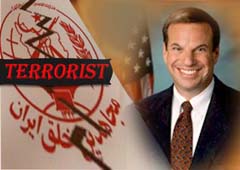
Mujahedin Khalq Organization as a terrorist group

From U.S. Silent on Raids against PJAK to aggressive lobbying for MKO

Iran and the United States don’t agree on much these days, but there are a few views they hold in common.

Both regard the Kurdish Party of Free Life for Kurdistan (PJAK) and the Mujahedin-e Khalq (MEK) or People’s Holy Warriors as terrorist organisations.

In the last few weeks, Iranian forces have been shelling PJAK camps and fighters near and across the Iranian border in Iraqi Kurdistan.

According to an Iranian source who has been reliable in the past and who spoke on condition of anonymity, U.S. forces observed the fighting from the air and did nothing to stop it. In fact, the source said, "There was good coordination [between Iran and the United States] to destroy this terrorist organisation."

An Iraqi Kurdish official, also speaking on condition of anonymity, disputed the report of U.S. tacit cooperation against PJAK. The official said the U.S. military presence in Iraq is "insignificant" and far from the Iraq-Iran border. He added that the United States would be more inclined to back PJAK because "it’s anti-Iran".

Asked if the U.S. had, at a minimum, condoned Iranian attacks on three PJAK camps, however, George Little, the chief Pentagon spokesman, had no comment. He also declined to comment on any possible links between the Iranian Kurdish operation and a recent decrease in attacks on U.S. forces in Iraq by Iran-backed Iraqi Shiite militants.

The world’s largest ethnic minority without its own state, Kurds are scattered across mountainous regions of Iran, Iraq, Turkey and Syria. They have the greatest freedom in Iraq, thanks to U.S. protection since the 1991 Gulf War and an autonomous status confirmed after the toppling of Saddam Hussein’s regime in 2003.

Patrick Clawson, a Middle East expert at The Washington Institute for Near East Policy, said U.S. tacit approval for the Iranian raids was "entirely plausible" given U.S. opposition to Kurdish militants.

"The U.S. was signaling the KRG [Kurdistan Regional Government] that you can’t just let this problem fester," Clawson told IPS. He noted that the PKK or Kurdistan Workers Party, the parent organisation of PJAK, had recently intensified attacks in Turkey. A State Department official told IPS in an email that "PJAK was created in 2004 as a splinter group of the PKK to appeal to Iranian Kurds." The official, who asked not to be named, noted that the PKK was "a designated Foreign Terrorist Organization that has been involved in the targeting of the Turkish government for more than 20 years."

The State Department also regards the MEK – an Iranian opposition group that has about 3,000 members in Iraq – as terrorist but that designation is currently under review and has provoked growing controversy in Washington.

Originally a Marxist-Islamist group that killed Americans in Iran before the 1979 revolution and Iranian officials both before and after the revolution, it has been designated since the terrorist list’s inception in 1997. MEK officials insist the group has renounced violence and deserves to come off.

In recent months, MEK supporters have engaged in an aggressive lobbying campaign in Washington that has included a number of events at which former senior U.S. officials have received hefty sums to speak. Among them: ex-FBI chief Louis Freeh, former attorney general Michael Mukasey and former Central Command head Anthony Zinni.

The MEK has scant support within Iran because it sided with Iraq during the 1980-88 Iran-Iraq war. Former members say the organisation is a cult fixated on leader Maryam Rajavi and her husband, Massoud, whose whereabouts are unknown. A State Department official told IPS that "attempts to paint the MEK as the poster child for the democracy movement in Iran are grossly ironic."

Unlike PJAK, however, the group has not committed violent acts in recent years. It has been unable to attack Iran because its main base in Iraq – Camp Ashraf – has been under U.S. control since 2003 and in the Iraqi government’s hands since 2008.

One argument used by supporters of de-listing is that it will help resolve the humanitarian plight of MEK members who remain at Camp Ashraf. However, the State Department official said that taking the group off the list would not mean that they could come to the United States.

U.S. law "places a permanent, non-waivable bar to immigration in the way of anyone who has ties to a Foreign Terrorist Organization," the official told IPS. He said this includes "those who provided material support to, or received military-type training from the group, as many MEK members have".

U.S. diplomats have been trying to arrange new homes for the camp residents but have been hampered by the fact that their leaders refuse to accept refugee status.

Maziar Bahari, an Iranian-Canadian journalist imprisoned in Iran after disputed 2009 presidential elections, said the MEK needs to keep the camp to maintain control of its foot-soldiers. He said that U.S. officials feared a "Jonestown in Ashraf" if attempts were made to remove camp residents by force. He was referring to the mass suicide in Guyana in 1978 of hundreds of fanatical followers of a self-styled prophet, Jim Jones.

Bahari, speaking at a conference in Washington Thursday sponsored by the National Iranian American Council, a non-partisan group that advocates for Iranian Americans and opposes the MEK, expressed sympathy for MEK members but said it would be a mistake to take the group off the State Department list at this time.

Given the group’s violent past and violent potential, Bahari said, "It would send a very wrong signal [to Iranians] about America’s intentions in Iran."

*Barbara Slavin also spoke at the NIAC event but did not advocate keeping the MEK on the terrorist list or removing it. She did question the group’s democratic credentials.

Barbara Slavin, IPS

August 7, 2011 0 comments
FacebookTwitterPinterestWhatsappTelegramSkypeEmail
Mujahedin Khalq; A proxy force

How The Mojahedin Khalq Buys Its Support in the U.S.

The Financial Times had a good story from last Friday on the Mujahidin-e Khalq’s payments to former officials and politicians in the U.S. to get them to speak on behalf of the terrorist group:

An Iranian exile group is spending millions of dollars in a lobbying effort to be removed from the US’s list of foreign terrorist organisations, recruiting a group of US national security luminaries to be its advocates.

Dozens of former officials across the political spectrum – from conservative John Bolton to liberal Howard Dean – have been paid tens of thousands of dollars to speak at events organised by supporters of the Mujahedin-e-Khalq, or People’s Mujahedin, in the US, the Financial Times has learnt.

The response from some of the people tied to these MEK payments is a curious one. Some of them seem to think that it is all right to be paid to speak on behalf of the MEK because they genuinely support the group, as it that made everything all right. Here is one example:

None would disclose how much they had been paid but Ed Rendell, the former Pennsylvania governor, said he received $20,000 for an 11-minute speech. “But even if I was paid $50,000, I wouldn’t do it if I didn’t believe in it,” he said.

Is it supposed to be a consolation that the people the MEK has been paying aren’t just advocating on behalf of a listed terrorist group for the money? It seems to me that it is far worse that they “believe in” the MEK.

Another FT story from Friday explains that the MEK’s funding has allowed it to exaggerate its importance as an anti-regime group:

“Because of this campaign, they have been able to delude many into thinking that it is a rather powerful opposition organisation, which it is not,” said Wayne White, a former Middle East intelligence official in the State Department.

P.S. Paul Pillar commented last week on the Treasury Department’s announcement and related it to the MEK lobbying push:

The Treasury announcement also does not address Iranian motives in fooling around with al-Qaeda, notwithstanding the sharply different interests and objectives between the regime and the group. The motives have to do with shared antagonism from the United States. In particular, they have to do with the United States’ own fooling around with the terrorist group-cum-cult known as the Mujahedin-e Khalq, which some in the United States foolishly believe should be accepted as a legitimate actor because it opposes the Iranian regime. Tehran is in effect saying, “If you are going to flirt with a terrorist group that is of particular concern to us, we will flirt with a terrorist group that is of particular concern to you.” It is important to remember this amid the renewed push, backed by vigorous lobbying on Capitol Hill and the paying of fat fees to notables who will speak on the MEK’s behalf, to get the group off the U.S. list of foreign terrorist organizations. If delisting were to occur, the harmful effects would include substantial damage to the pro-democracy movement in Iran.

Daniel Larison – Amconmag

August 7, 2011 0 comments
FacebookTwitterPinterestWhatsappTelegramSkypeEmail
Mujahedin Khalq; A proxy force

Iranian terrorist group, MKO has close US allies

The Mujahedin-e Khalq, which the US designates a terrorist group, has the backing of prominent American conservatives

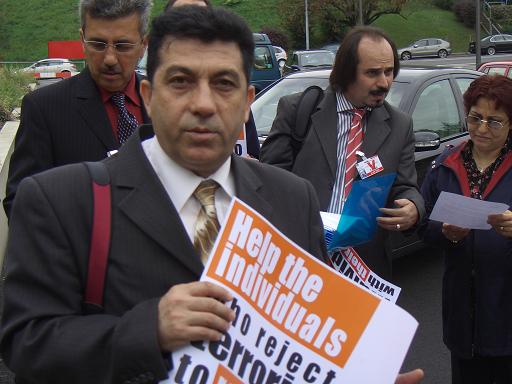
Members of the Mujahedin-e Khalq lobby US politicians to remove their organisation from the terrorist list [EPA]

Something strange is happening in Washington. In August, the Obama administration is expected to announce whether it will keep the Mujahedin-e Khalq (MEK), an exiled Iranian group that killed American civilians and officials in the 1970s, on its foreign terrorist organisations (FTO) list.

Known for its cult-like behavior, the MEK (also known as the People’s Mujahedin of Iran, PMOI or MKO) fought alongside Saddam Hussein’s regime against its own country during the bloody Iran-Iraq war. This is one reason why it has almost no Iranian support, even if it refers to itself as the "most popular resistance group inside Iran" on its official website. It does, however, enjoy the backing of several US heavyweights with high national security credentials.

George W. Bush’s attorney general Michael Mukasey has described MEK members as "courageous freedom fighters". President Barack Obama’s former national security advisor, General James L. Jones, gave a speech at a MEK conference dominated by non-Iranians. Their events have also been attended by former Homeland Security chief Tom Ridge, former NATO supreme commander Wesley Clark and former New York mayor Rudy Giuliani.

MEK supporters point to the humanitarian issues at its headquarters in Camp Ashraf near the Iran-Iraq border as the reason for their advocacy. But it also has a "parliament in exile" called the National Council of Resistance of Iran (NCRI) with a "president-elect" named Maryam Rajavi who intends to rule Iran for a "transitional period" after the government is "overthrown". The calls to protect Camp Ashraf have merit, but the Obama administration is being simultaneously lobbied to delist a FTO with a known anti-Iran agenda, thereby upsetting the already delicate political balance between Iran and the US.

The president does not want to be accused of being soft on Iran while it is pounding its chest in Iraq, but succumbing to the MEK’s well-organixed lobbying effort will not only further harm US-Iran relations, it will also negatively affect Iran’s internal opposition. Since the FTO list is seen as a diplomatic weapon rather than a national security tool, the delisting of the MEK will be read in Iran as an escalation in hostilities and force President Obama into a position that is not his own.

From Iran to Iraq

For an organisation that has been attempting to cultivate alliances with officials on both sides of the Atlantic for years, the MEK began as a radical, anti-Western, anti-monarchist movement in the 1960s. Its mix of Islamic ideology and Marxist analysis attracted young, educated Iranians, and with other anti-monarchist groups it helped overthrow the pro-American regime. Among its myriad victims in Iran were three American civilian contractors, an incident the State Department would later cite as a reason for its terrorist designation. In 1979, the MEK also supported the takeover of the US embassy in Tehran.

According to Iran scholar Ervand Abrahamian, "the Muhjahideen tried to work within the regime from 1979 until 1981". But after it became clear that the Islamic government was not going to share power, the regime itself became its main target. It was the first group to conduct a suicide bombing in Iran, and it carried out a series of assassinations and bombings that left many Iranian officials dead. The state department lists an MEK attack in April 1992 on 13 Iranian embassies in different countries as proof of "the group’s ability to mount large-scale operations overseas".

The response of Iran’s clerical government was brutal, torturing and executing thousands of MEK members and other dissidents. In 1981, the MEK leadership fled to Paris and many of its surviving members went to Iraq in 1986. Policy analyst Vali Nasr told PBS’s Frontline that that during this period the MEK acted "as an arm of Iraqi intelligence against Iranian operatives in Iraq, against Shi’ites and against the Kurds".

According to a 2009 report by the RAND Corporation, while the MEK denies killing Kurds, MEK press reports "quote Rajavi encouraging MEK members to ‘take the Kurds under your tanks, and save your bullets for the Iranian Revolutionary Guards’". The report also states a "substantial number" of members who "were lured to Iraq under false pretenses … particularly with respect to its cult behavior – and many have been forced to remain against their will".

Well-armed by Hussein’s regime, the MEK tried to invade Iran in the last stage of the Iran-Iraq war. According to Abrahamian, this may have been because it was their last chance to take Iranian territory before a cease-fire made it impossible to do so.

When I asked former high-ranking member Masoud Banisadr how he thought this might have affected the Iranian perception of them, he told me members were trained to believe that "95 or 99 per cent of Iranians supported them". But when they entered the Iranian city of Eslamabad, they realised that everyone had fled in fear of them. "We had been told that Iranians would welcome us with roses and we never really asked why that didn’t happen."

From "fighters of the people" to a "cult"

Banisadr, 57 years old, has written a memoir about his life in the MEK until his departure in 1996 – an event he attributes to "luck". He said mind control was a normal occurrence at Camp Ashraf: "I remember being forced to attend a speaking session lasting for 3 days. In total I think we got around 2 hours of sleep a night." He was also forced to leave his family. "They told us to imagine sleeping with the corpses of our spouses. Not to think that they had been dead for a long time, but just long enough so that the body was still warm."

Camp Ashraf is closed to most outsiders, but in 2005 Human Rights Watch released a report describing the "mass divorce" that was imposed on Banisadr and all other members and "abuses ranging from detention and persecution of ordinary members wishing to leave" to "lengthy solitary confinements, severe beatings, and torture of dissident members". The former MEK members interviewed also reported "two cases of deaths under interrogation".

Do Iranians support the MEK?

MEK members who are estimated in the thousands decry their negative descriptions. According to a Talking Points Memo (TPM) interview with US-based MEK lobbyist Ali Safavi, "When you talk about the MEK, and you say they are a cult …we take it very personally … Because in our view … it is an insult to our [loved ones] who have been murdered by this regime". According to US foreign policy analyst Barbara Slavin who interviewed current and former members, it’s the family of MEK who were killed by the Iranian government that make up the majority of its base today.

MEK advocates do not take criticism lightly; they are known to discredit their critics by smearing them, disseminating misinformation in the US and Europe. According to a 2004 FBI report, the MEK brands "former members and witnesses as Iranian government agents". This information is then "often picked up by Western Intelligence agencies as factual information and is disseminated as intelligence". [..]

Tehran-based Green supporter Hossein Barmaki says he has never met anyone who publicly or privately supports the MEK: "The only government people in Iran could accept for the future is a democratic one, and that’s never going to be the MEK."

But the devotion of the MEK’s hardcore supporters is undeniable. According to the RAND report, ten people immolated themselves simply because leader Rajavi was briefly arrested in Paris in 2003. Two died from their burns.

"The enemy of my enemy is my friend"

As with the MEK’s inner workings, questions also arise from its reported ties to Israel and its advocates. In 2006, the New Yorker’s Connie Bruck suggested that the verified MEK intelligence provided to the US about Iran’s Natanz nuclear site was given to them by the Israelis:

"An Iranian-American political activist … said that Israel had earlier offered it to a monarchist group, but that that group’s leaders had decided that ‘outing’ the regime’s nuclear programme would be viewed negatively by Iranians, so they declined the offer. Shahriar Ahy, Reza Pahlavi’s adviser, confirmed that account-up to a point. ‘That information came not from the M.E.K. but from a friendly government, and it had come to more than one opposition group, not only the mujahideen,’ he said. When I asked him if the ‘friendly government’ was Israel, he smiled. ‘The friendly government did not want to be the source of it, publicly. If the friendly government gives it to the US publicly, then it would be received differently. Better to come from an opposition group.’"

The information about Natanz was publicised by MEK spokesman Alireza Jaferzadeh, who appeared in a number of media outlets following his Natanz revelation as a political analyst. Jaferzadeh has been heavily promoted by the Iran Policy Committee (IPC), a hawkish DC-based organisation focused on the US’ Iran policy. Founder Raymond Tanter, who produces the majority of the IPC’s output, is a scholar at the Washington Institute for Near East Policy (WINEP), a think tank founded by the main Israel lobby organisation in the US, the American Israel Public Affairs Committee (AIPAC). Tanter advocates regime change in Iran and has spent considerable time lobbying the government to remove the MEK from the FTO list. During a 2005 IPC National Press Club briefing (now removed from the IPC website) Tanter explained his views on the MEK:

"The National Council of Resistance of Iran (NCRI) and the Mujahedeen-e Khalq (MEK) are not only the best source for intelligence on Iran’s potential violations of the nonproliferation regime. The NCRI and MEK are also a possible ally of the West in bringing about regime change in Tehran."

Last year investigative journalists Ali Gharib and Eli Clifton also revealed that the IPC once shared an address, accountants, and some staff with multiple organisations that either "fronted for or had direct ties" to the Iraqi National Congress (INC) headed by Iraqi conman Ahmed Chalabi.

Legal or political?

According to Slavin, the reason Iran hawks and pro-Israel supporters have come out in support of the MEK is because of the old Washington mantra "the enemy of my enemy is my friend". But she says that’s not a good enough reason to delist them: "You have to look at the nature of this organisation. It’s like saying you support Nazis because you don’t like communists." National Iranian American Council research director Reza Marashi, who worked for the Bush administration’s Iran desk, said, "It’s like the ‘anything but Obama’ attitude turned onto the regime. They look at the six inches in front of their face and don’t look beyond that. You’d think they’d learn their lesson from Iraq."

But strategic reasoning may not be the sole concern motivating this advocacy: some of the MEK’s prominent supporters have also reportedly received massive payments for speaking at their events. The New York Times reported that Ambassador Lawrence E. Butler, who has been trying to negotiate with the group, guessed that "about a million dollars was spent" on MEK lobbying "over the last six months". When he asked how much retired General Clark received, adding that "[h]e doesn’t get out of bed for less than $25,000", one member replied that the group’s advocates were not "doing it for the money".

To the question of how this can be legal, Shayana Kadidal, an attorney at the Center for Constitutional Rights said the transaction may have been done through a lobbying organisation, and to be held criminally liable, the government needs to show that you knowingly provided aid to an FTO. "Proving liability simply because there was a transaction could be difficult," he said.

But in January, law professor David Cole wrote that Mukasey, Giuliani, Ridge and Frances Fragos Townsend could have committed a crime simply by vocally supporting the MEK’s cause in Paris. While proving liability is again the issue, the Patriot Act’s material support law makes it a felony to support an FTO by engaging "in public advocacy to challenge a group’s ‘terrorist’ designation or even to encourage peaceful avenues for redress of grievances," wrote Cole.

According to Chase Madar, a lawyer specialising in US terror laws, the application of this law is highly selective. "It will be applied very strictly to, let’s say, the Holy Land Foundation in Texas, whose leadership is in jail for raising money that was several degrees removed from Hamas, but not when it comes to former government officials."

Madar also says that there would be no legal obligation for the US to protect Camp Ashraf simply because they were taken off the FTO list and "can’t see what good it would do". He says that the kind of attention this case has received on Capitol Hill suggests it has more to do with political concerns than with legal or humanitarian ones: "This is all part of a pattern in Washington among neoconservatives and neoliberals that America has a duty to shove political change down Iran’s throat."

Blowback and US Policy in the Middle East

MEK supporters’ talk of facilitating "democratic change" in Iran through a group that does not have support there recalls memories of the UK-US engineered coup against the government of Mohammad Mossaddegh, who is still revered by Iranians as their first and only democratically-elected prime minister. What resulted was decades of authoritarian rule, from a pro-US but repressive and deeply unpopular monarchy, to a clerical establishment that enforces Iranian independence from foreign control through equally repressive means. This was the US’ "blowback", and as the late Chalmers Johnson noted, the term was first used by the CIA in an after-action report about Mossaddegh’s 1953 overthrow.

In her book on US-Iran relations, Slavin reports that in 2003 the Iranians offered to exchange some key members of Al Qaeda who had fled from Afghanistan for members of the MEK based at Camp Ashraf in Iraq. Some figures in the Bush administration supported this, but Slavin notes that former Deputy Secretary of State Richard Armitage said that the deal was blocked by neoconservatives Paul Wolfowitz and Doug Feith, who thought that the MEK could be used as a force against Iran. A comprehensive peace offer by Iran was likewise scuttled by the neoconservatives in 2003, thereby discrediting the moderates in Iran and facilitating the ascent of the hardliner Mahmoud Ahmadinejad.

However, even the Bush administration had ignored neoconservative entreaties to delist the MEK, which would make it strange for Obama to adopt a position that his predecessor found too risky. The humanitarian concerns at Camp Ashraf are legitimate, but they could be resolved through the assistance of organisations like the ICRC and UNHCR. To conflate this issue with the decidedly political question of delisting may only exacerbate the already fragile US-Iran relations.

In 2009, Obama earned much praise for admitting US responsibility in the 1953 coup against Mossadegh, even if he has failed to follow it up with a genuine move towards rapprochement. Despite the three decades of intransigence, however, the position is far from intractable. But any possibility of a thaw in relations might indefinitely evaporate should Obama take the MEK off the FTO list. It would also further harm the chances of Iranian democracy to develop unfettered.

Jasmin Ramsey, Aljazeera

August 6, 2011 0 comments
FacebookTwitterPinterestWhatsappTelegramSkypeEmail
Mujahedin Khalq Organization's Propaganda System

Silencing the Moderate Middle

The recent terrorist attacks in Norway gave the world a glimpse of what happens when violent fanatics take the fore and moderates are sidelined. To paraphrase Edmund Burke, the silence of good men is all it takes for evil to triumph. Today, we in the United States face our own Norwegian moment as a massive lobbying campaign is underway to remove the Mujahedin-e Khalq (MEK) from the list of Foreign Terrorist Organizations. How we respond to this test will be a defining moment for American democracy and the rejection of fanaticism in our midst.

To provide a little background, the MEK is an Islamic organization that was put on the list of Foreign Terrorist Organizations (FTO) since the establishment of the list in 1997. Born on a profoundly anti-American platform, the MEK has murdered Americans and is considered by Human Rights Watch to be an anti-democratic cult. After joining Saddam in his war against Iran in what Iranians almost universally regard as an act of treason, the group lost virtually all popular support.

Based in France today, the group is well aware of its lack of support among Iranians. Because of its lack of support, the MEK has implemented a policy of putting forth front organizations and individuals who do not openly claim to be part of the organization, but push the group’s agenda while simultaneously attacking all other opposition.

The term used in France to describe these "fellow travelers" is compagnon de route. These people in effect share the agenda of the MEK and answer only to the cult’s leadership, while freeing themselves of the burden of responding to criticism of the group. In attempting to retain its place in the opposition, the MEK has employed these individuals as attack-dogs to destroy everyone else.

One obvious example is the case of the former Paris perfume merchant convicted of selling stolen perfume. Seyyed Hassan Daioleslam — who dropped the Seyyed and the Eslam from his name to appeal to the anti-Arab sentiments held by his neoconservative backers — has spearheaded much of the MEK’s attacks in recent years. He denies any ties with the MEK. But former members of the MEK and other former associates of Daioleslam dispute that claim.

One of the leading experts on the organization is a former member of the MEK by the name of Massoud Khodabandeh. Regarding Daioleslam he wrote:

I can say without doubt that Hassan Daioleslam is a member of what I call for accuracy ‘the Rajavi cult’ [referring to MEK leaders Massoud and Maryam Rajavi]. In this respect he is obedient to the Rajavi leadership and would not act in a way inconsistent with their requirements and certainly not without their knowledge or consent (if not to say actual order). The term ‘membership’ describes his relationship to the Rajavis. The MEK, just like Al Qaida, does not have ‘membership cards’. But I doubt very much the MEK would deny that he is a member, just as they never have denied that Alireza Jafarzadeh is a member. Daioleslam’s writings are on the MEK websites. They do not publish just anyone’s writing. Only those obeying organizational constraints.

In a 2007 article by Mohammad Hussein Sobhani, this former high-ranking MEK member says the following:

Hassan Daioleslam, who is also considered as a member of the Mojahedin Khalq Organisation (Rajavi Cult) had been under harsh criticism for a long time by the cult leader Massoud Rajavi because he would not leave the USA and join the cult under the rule of Saddam Hussein in Iraq. But now, in the new circumstances in which the remnants of the Rajavi cult after the fall of Saddam Hussein find themselves in western countries, Hassan’s social position and his ability to speak English has grabbed the attention of Rajavi. He seems to be next in line to be consumed [for the group’s interests].

Mehdi Noorbakhsh, a professor at the Harrisburg University and a long time acquaintance of also Daioleslam, says that Daioleslam:

Was living in Europe for several years until he moved to the United States in Phoenix, Arizona. He was re-bought by MEK one more time and he is now active in selling and defending the positions of this terrorist organization.

The attacks are not just aimed at destroying all other opposition to the Islamic Republic, but crucially to undermine any policy short of violent confrontation with Tehran. Hassan Dai, as he now introduces himself, has hysterically gone after much respected academics like Ray Takeyh of the Council on Foreign Relations. As one of the leading Iran experts in the United States, Takeyh has provided serious and sober analysis of the MEK and its countless violations of human rights. For this he has been viciously attacked and referred to as an "appeaser."

And of course there is the group that has become the primary target of Dai’s attacks, the National Iranian American Council (NIAC). The motive behind those attacks has been no different.

NIAC in many ways has become the Iranian-American equivalent of J-Street. Both J-Street and NIAC have caused panic among established groups in their respective communities because they give voice to a moderate middle who never felt at home with their community’s far-right traditional organizations.

In an email obtained through NIAC’s lawsuit against Daioleslam, he writes to neo-conservative operative Kenneth Timmerman that "I strongly believe that Trita Parsi is the weakest part of the Iranian web…" Daioleslam goes on to say that "I believe that destroying him will be the start of attacking the whole web. This is an integral part of any attack on Clinton or Obama." Clearly it is not just the position of the MEK that Daioleslam feels threatened, but more importantly a pro-war policy …

Not surprisingly, Daioleslam is in favor of delisting the MEK from the list of Foreign Terrorist Organizations. In another private email that was recently made public as part of the lawsuit against him, Daioleslam states that the MEK should be "included in a general support of Iranian opposition as a whole" and "it has been a great mistake to discard them."

Even lower on the totem pole is an individual named Safar Gerabagi, known to some as "Dr. Arash Irandoost." His organization, the Pro-Democracy Movement of Iran (PDMI) features portraits of brutal dictators prominently on its website, while the irony seems to be lost on him. The so-called "movement" does not appear to have any members other than himself.

Predictably, on the blog of the self-declared "next most outspoken Iranian" the MEK are referred to as Iran’s "main opposition." When I contacted him to present a list of his group’s accomplishments, he repeatedly declined to present even one.

By taking out of context a quote here and there and radically reinterpreting it, Daioleslam and the MEK have been able to convince a tier of the Iranian-American community that speaks little to no English that Ray Takeyh, Vali Nasr, NIAC and others are the representatives of the Islamic Republic in Washington. Of course, being unable to read the original English documents that Daioleslam relies on to make his claims, they have been forced to take at face value his wildly off-the-mark interpretations. These accusations against the MEK’s perceived enemies have been thrown around so casually on Persian satellite television that to many they now appear as fact.

The MEK’s battle however is a losing one. With a median age of over 60, the MEK is becoming increasingly less effective in the Iranian Diaspora’s political arena. ..Whereas until recently Iranian-Americans in positions of influence were afraid to be too critical of the MEK, groups like NIAC are today openly taking the fight to them in an environment where ideas are more powerful than brute force.

The challenge for the Iranian-American community is in how it reacts to this new reality. As the community finds its voice and the stance of the traditional establishment comes to reflect an ever decreasing portion of the community, Iranian-Americans sitting on the fence will have to decide whether to maintain the failed status quo, or bravely and openly make the voices of the moderate middle heard.[..]

Shawn Amoei, Foreign policy writer

August 6, 2011 0 comments
FacebookTwitterPinterestWhatsappTelegramSkypeEmail
Iraq

Iraq orders MKO terrorist group to return occupied land

An Iraqi court has mandated the Mujahedin-e Khalq Organization (MKO) to return thousands of hectares of land that the terrorist group occupied to set up its military base in eastern Iraq.

Sheikh Ali al-Zahiri, head of the support council of the Iraqi city of Khalis, said on Tuesday that the Diyala Province court has ordered the terrorist group to return 5,000 hectares of land located inside Camp Ashraf, where the MKO terrorists are located, to the Iraqi owners, IRIB reported.

The outlawed MKO fled to Iraq in the 1980s, where it enjoyed the support of executed Iraqi dictator Saddam Hussein and set up Camp Ashraf in the northeastern town of Khalis, Diyala.

The court ruling also required the MKO to pay compensation to 150 Iraqi families for the terrorist group’s illegitimate use of the land over the past three decades.

The development comes as hundreds of Diyala residents staged a demonstration last Tuesday, calling for the expulsion of the MKO elements in Iraq. The Iraqis also demanded the return of more than 36,000 hectares of their land occupied by the notorious terrorist organization.

The MKO — listed as a terrorist organization by much of the international community — has committed numerous terrorist acts against Iranian officials and civilians as well as the people of Iraq.

The MKO cooperated with Saddam in the massacres of Iraqi Kurds and in suppressing the 1991 uprisings in southern Iraq.

Since Saddam was deposed in 2003, the Iraqi government has set numerous deadlines for the terrorist group to leave the country but the MKO has managed to maintain its base with US support.

August 6, 2011 0 comments
FacebookTwitterPinterestWhatsappTelegramSkypeEmail
Mujahedin Khalq Organization as a terrorist group

The Repercussions of Delisting the Mujahedin-e Khalq

Experts Warn Delisting Iranian Terror Group Would Carry Damaging Repercussions

Washington, DC – An expert panel convened today to discuss the potential repercussions of an pending decision by the State Department regarding the terrorist designation of the Iranian Mujahedin-e Khalq (MEK) organization. Secretary of State Hillary Clinton is expected to issue her decision on the group’s designation imminently.

Human rights defender and filmmaker Maziar Bahari explained that delisting the MEK would have serious negative implications for Iran’s peaceful democratic movement.

Center for American Progress national security expert Brian Katulis agreed that support for MEK would contradict the Obama Administration’s support of Iranian human rights. He discussed the negative consequences that support for MEK would portend for U.S. policy.

"I personally oppose the notion of providing active us support to MEK," he said. "If we have a rewind of the Iraqi liberation act of 1998-we have learned from our mistakes. Been there done that."

Iran expert and Atlantic Council Non-resident Senior Fellow Barbara Slavin highlighted the MEK’s lack of support in Iran, noting that, in her travels to Iran as a journalist, she had only met a single individual who was a supporter of the group.

Slavin highlighted the MEK’s deceptive recruitment practices and abuses against its members. "The MEK is not a democratic organization. They make Ahmad Chalabi’s Iraqi National Congress look like a paragon of democracy in comparison," she said, referencing the exile organization that was instrumental in taking the U.S. into war with Iraq.

Bahari and the rest of the panels stressed the humanitarian concern for individuals based in Camp Ashraf, the MEK compound in Iraq, where a RAND study indicates up to 70 percent of the inhabitants are kept against their will. "These individuals are victims of the Iranian government and they are victims of the MEK leadership," Bahari said. Delisting the MEK, he said, would empower both camps.

High ranking former-U.S. officials have acknowledged receiving cash to advocate in support of the MEK. The panelists at Thursday’s event noted that they did not receive any compensation for their participation.

For video, images, and further information regarding the event, please contact NIAC at (202) 386-6408. Further information regarding MEK can be found at www.mekterror.com.

August 6, 2011 0 comments
FacebookTwitterPinterestWhatsappTelegramSkypeEmail
Mujahedin Khalq; A proxy force

Aftermath of backing the MKO terrorist cult

The complicated case of the terrorist, cult-like Mujahedin-e- Khalq Organization has been a controversial debate among US politicians for years now. The group’s lobbying campaign including a number of US former officials pushes the US government to delist the group for its further use against Islamic Republic while a large number of critics blame the campaign of support for a group which has been on the FTO list of the State Department since its formation in 1997. The list also includes terrorist groups like Al-Qaida and Liberation Tigers of Tamil.

The American authorities who oppose the removal of MKO from the blacklist, argue that the group’s terrorist cult-like nature has not changed and it still maintains the capacity and will to commit terrorist acts. They suggest that giving speeches to advocate a terrorist designated group is illegal — against Material Support for Terrorism Law.
In July 2011, the MKO’s terror designation was testified in a hearing at the US Congress. Ray Takey; Senior fellow of the Council on Foreign Relations of the US House of Representatives presented a testimony on the group’s background and its current isolation among Iranian public. Mr. Takey notifies the group’s basic anti-imperialism ideology. The statement includes:

“The core of MEK’s ideology has always been anti-imperialism which it has historically defined as opposition to U.S. interests. The MEK opposed the Shah partly because of his close associations with the United States. MEK’s anti-American compulsions propelled it toward embracing an entire spectrum of radical forces ranging from the Vietcong to the PLO. Given its mission of liberating the working class and expunging the influence of predatory capitalism, the United States has traditionally been identified as a source of exploitation and injustice in MEK literature. As the organization has lost its Iraqi patron and finds itself without any reliable allies, it has somehow modulated its language and sought to moderate its anti-American tone. Such convenient posturing should not distract attention from its well-honed ideological animus to the United States.

"Terror has always been a hallmark of MEK’s strategy for assuming power. Through much of its past, the party exulted violence as a heroic expression of legitimate dissent. One of the central precepts of the party is that a highly-dedicated group of militants could spark a mass revolution by bravely confronting superior power of the state and assaulting its authority. Once, the masses observe that the state is vulnerable to violence, than they will shed their inhibitions and join the protest, thus sparking the larger revolution. Thus, the most suitable means of affecting political change is necessarily violence. Although in its advocacy in Western capitals, the MEK emphasizes its commitment to democracy and free expression, in neither deed nor word has it forsworn it violent pedigree.

"During the 1970s, at the height of its revolutionary ardor, the MEK was fairly indiscriminate about its targets of violence. Among the victims of MEK terror have been American installations and military personnel. The MEK’s Communiqué Number 3 stressed that violence against the United States was permissible given America’s suppression of legitimate revolutionary movements in Palestine and Vietnam. The first such attack came in May 1972 on the occasion of President Richard Nixon’s visit to Iran. To derail that visit, the MEK bombed the U.S Information Office and targeted American companies such as General Motors and Pan-American airways. That same year, the party attempted to assassinate General Harold Price, the Chief of U.S. Military Mission in Iran. Although General Price escaped his assassins, the MEK did tragically succeed in murdering Colonel Lewis Hawkins, the Deputy Chief of Military Mission outside his house.”[1]

About the MKO’s current status in Iranian society particularly inside Iran the testimony reads, “The MEK commands very little support within Iran. Its alliance with Saddam Hussein and its cult-like disposition have alienated even the radical segments of intelligentsia that once found its ideological template attractive”. [2]

On the other side of the issue, dozens of former officials across the political spectrum – from conservative John Bolton to liberal Howard Dean – have been paid tens of thousands of dollars to speak at events organized by supporters of the Mujahedin-e-Khalq, or People’s Mujahedin, in the US, according to Financial Times.[3] Whether they are financially motivated to back a terrorist designated group or not, some of the advocates of MKO Cult including John Bolton, the former ambassador to the UN under President Bush, call for military action against IRI and openly support MKO and its removal from the black list. Seemingly, Bolton and other US officials who back delisting of the group are beating the drums of another war in the Middle East by means of the same pattern they used to push the war against Iraq in 2003 based on Chalabi’s allegations about Saddam’s Weapons of Mass Destruction which never were proved true.

On June24, Howard Dean claimed that Maryam Rajavi is the president of Iran. Even the mujahedin themselves do not call Maryam Rajavi “president of Iran” but they call her ”president of the National Council of Resistance of Iran". His assertion seems to be the consequence of MKO’s deceitful- but booming- propaganda campaign that has long portrayed the group as a democratic movement representing Iranian nation but the cable recently released on Iranian popular attitude towards the MKO verifies the opposite. The report which is based on input from State Department Iran-watchers and consular interviewing officers in the main posts that interact with Iranians on a regular basis, reveal:

”Showing a unanimity rare among Iranians, anecdotal information gleaned from both ordinary Iranians living inside Iran and abroad and from Iran analysts strongly indicates that the ‘Mujahedin-e Khalq’ (MEK) opposition group has not significant popular support inside Iran.” [4]

Removing the MEK from the US’s terrorism blacklist would make already frosty relations between Tehran and Washington even icier, believes Michael Theodoulou, foreign correspondent of The National acceptably.

“It also would allow the Mujahedin to receive US funding and become a powerful force in support of war with Iran, just like the Iraqi exiles who deceived us into war with Iraq, Trita Parsi, president of the National Iranian American Council (NIAC) warned,” he quotes from Parsi. [5]

Actually if the MKO is removed from the FTO list, it means that the group’s demonization campaign against Islamic Republic and its propaganda to depict itself as Iranians’ prodemocracy movement are capable of manipulating American authorities and leading them to another disastrous war.

“the fact that they [MKO] are against the government in Iran doesn’t make them good” said Gary Sick, an Iran expert in his recent interview with Theodoulou ,”Their support in Iran is very, very limited “,he said.[6]

In October 2007, PBS documentary series on the MKO titled “Showdown with Iran: the Mujahedin –e-Khalq (MEK)" quotes from Richard Armitage, US deputy secretary of State –currently an ardent advocate of the group. "I don’t know about that specifically, but we had discussed the MEK more pointedly after the invasion [of Iraq]. And there were some in the administration who wanted to use Mujahedin-e-Khalq as a pressure point against Iran, and I can remember the National Security adviser, Dr. [Condoleeza] Rice, being very specific about it saying no, a terrorist group is a terrorist group", Armitage said. ”That was exactly the point of view of the State Department as well,” he added.[7]

Besides, in a recently published report by Federal Bureau of Investigation, (FBI) you read: “Los Angeles investigation has determined that the MEK is currently actively involved in planning and executing acts of terrorism.”[8]

August is the time that may result in MKO’s success after its long-time efforts to deceive the hawks at the US administration but the fact is that the MKO’s terrorist cult-like nature never changes weather it is or is not in the list.

Furthermore, unleashing the MKO would result in more complexities in international relations. It would definitely worsens Iran-US relations, it might deteriorate the situation of Camp Ashraf residents in Iraq where the authorities and people are seriously against the presence of a Saddam’s ally in their territory, it would harm US popularity in the international community and mainly, it would violate the rights of American taxpayers who have to pay for cost of another war in the Middle East.

By Mazda Parsi

References:
[1] Takey, Ray, Council on Foreign Relations, United States House of Representative http://www.internationalrelations.house.gov/112/tak070711.pdf
[2]ibid
[3] Fifield, Anna, Financial Times, Iranian exiles pay US figures as advocates, July 29, 2011
[4] https://www.nejatngo.org/en/posts/3748
[5] Theodoulou, Michael, The National, US move to delist MEK as terror group worries Iran’s opposition, July 26, 2011
[6]ibid
[7] PBS, Frontline, Showdown with Iran , the Mujahideen-e khalq, Oct. 27, 2011
http://www.pbs.org/wgbh/pages/frontline/showdown/themes/mek.html
[8] http://www.american.com/archive/2011/FBI%20-%20REPORT.pdf

August 3, 2011 0 comments
FacebookTwitterPinterestWhatsappTelegramSkypeEmail
Mujahedin Khalq; A proxy force

Issue subpoena to MEK advocates

If you speak out against U.S.-sponsored human rights violations, and you are not rich or powerful, you might get a visit from the FBI. The recent “witch-hunt” against peace activists is expanding, and there are now 24 grand jury subpoenas served to peace activists based mostly in Minneapolis and Chicago. Although there have been no charges, the activists were informed that this investigation is about providing material support for foreign terrorist groups. Material support? I know the activists in Minneapolis, and they are union members, a retired nurse, a high-school teacher, a kitchen worker, a woman on disability–none who have the material means to support a “terrorist group.” The Anti-War Committee, whose office was raided by FBI agents, has a yearly garage sale to meet its meager expenses.

Predicting no political gain for assisting a little-known group of “leftists” who criticize U.S. foreign policy, our senators in Washington have avoided protecting the activists’ rights, using the excuse that “it is unethical to interfere with an ongoing investigation.” Bradley Manning, a 22-year-old soldier from Oklahoma, is being investigated by the FBI for providing information to WikiLeaks. Senator Amy Klobuchar stated on CBS: “A lot of people believe he could get a prison term for the rest of his life and I think that would be appropriate.” Wait a minute—isn’t this an ongoing investigation? Do double standards apply when a senator’s career might be enhanced by spouting the government line? What about International Law? The Nuremberg Laws, established after the horrors of WWII, declare that soldiers have a legal obligation to resist war crimes. Is it more criminal to expose U.S.-sponsored war crimes, as Bradley Manning and the FBI-harassed peace activists have done?

Although it is a federal offense to provide material support to any terrorist organization listed by the State Department, double standards apply when powerful politicians decide that a terrorist organization can be helpful in doing Uncle Sam’s dirty work, like destabilizing the government of Iran.

Mujahedin-e Khalq (MEK), an Iranian exile group that worked side-by-side with Saddam Hussein and killed Iraqi and Iranian civilians, is a designated terrorist organization. Former NYC Mayor Rudy Giuliani, former Homeland Security Secretary Tom Ridge, former White House adviser Frances Townsend and former Attorney General Michael Mukasey flew to Paris in December and spoke at a conference sponsored by wealthy MEK supporters. Double standards again—the FBI has not issued any subpoenas to or raided the homes of these powerful politicians for openly and proudly supporting a State Department-designated terrorist organization.

Money and political connections can be powerful, but the truth is more powerful. If the activists are guilty of anything, they are guilty of exercising their free speech rights to expose the truth about U.S.-sponsored war crimes and human rights violations in Palestine, Colombia, Iraq, Afghanistan, and other parts of the world. We can stop this “witch hunt” aimed at intimidating those who dare speak the truth about U.S. foreign policy. Please go to stopfbi.net to learn how you can help.

by Margaret Sarfehjooy, WAMM Middle East Committee – FREE SPEECH ZONE

August 2, 2011 0 comments
FacebookTwitterPinterestWhatsappTelegramSkypeEmail
Former members of the MEK

Mr. Khodabandeh interview with NIAC

I am here today with Mr. Massoud Khodabande,a former member of the Mujahedin-e Khalq Organization.

The MEK has been designated by the US State Department  as a Foreign Terrorist Organization or FTO ever since the FTO was established in 1997 ….
Download Mr. Khodabandeh interview with NIAC

August 2, 2011 0 comments
FacebookTwitterPinterestWhatsappTelegramSkypeEmail
Nejat Publications

Nejat News Letter- Issue No.31

Inside This Issue:

1.    New U.S. approach to Mojahedin-e Khalq (MKO, MEK) in Camp Ashraf overlooks the victims‘ human rights

2.    Journalism versus Terrorism – Part 1

3.    The Foolish Embrace of the Mojahedin Khalq(MEK, MKO, Rajavi cult)

4.    France step nearer to putting MKO back on EU list

5.    Washington’s Favorite Terrorists

6.    Congressman Kucinich to Attorney General Eric Hoder: Investigate the case of lobbyists for Mojahedin Khalq (MKO, MEK, Rajavi cult) terror group in Washington

Download Nejat News Letter- Issue No.31

August 1, 2011 0 comments
FacebookTwitterPinterestWhatsappTelegramSkypeEmail
Newer Posts
Older Posts

Recent Posts

  • A Comparative Analysis of Psychological Control Mechanisms in Jeffrey Epstein’s Cult and the MEK

    August 3, 2026
  • Operation Mersad: How Iran foiled Saddam’s final gambit 37 years ago

    August 1, 2026
  • Ideology Cannot Prevail over Human Dignity

    July 29, 2026
  • Is Rudy Giuliani so naïve to support MEK terrorists?

    July 27, 2026
  • National Pride of Iranians: Reject the Rajavis and their Patrons

    July 22, 2026
  • Facebook
  • Twitter
  • Instagram
  • Youtube

© 2003 - 2025 NEJAT Society . All Rights Reserved. NejatNGO.org


Back To Top
Nejat Society
  • Home
  • Articles
  • Media
    • Cartoons
    • NewsPics
    • Photo Gallery
    • Videos
  • Publications
    • Books
    • Nejat NewsLetter
    • Pars Brief
  • About Us
  • Contact us
  • Editions
    • عربي
    • فارسی
    • Shqip