Nejat Society
  • Home
  • Articles
  • Media
    • Cartoons
    • NewsPics
    • Photo Gallery
    • Videos
  • Publications
    • Books
    • Nejat NewsLetter
    • Pars Brief
  • About Us
  • Contact us
  • Editions
    • عربي
    • فارسی
    • Shqip
Nejat Society
Nejat Society
  • Home
  • Articles
  • Media
    • Cartoons
    • NewsPics
    • Photo Gallery
    • Videos
  • Publications
    • Books
    • Nejat NewsLetter
    • Pars Brief
  • About Us
  • Contact us
  • Editions
    • عربي
    • فارسی
    • Shqip
© 2003 - 2024 NEJAT Society. nejatngo.org
Iraqi Authorities' stance on the MEK

Adnan Seraj: Baghdad is resolved to expel the MKO

The US military forces in Iraq are actively involved in training members of an anti-Iranian terrorist group in the Taji military base in the suburbs of Baghdad. The American soldiers are reportedly training the Khalq-e Arab separatists in the Taji military base in Baghdad governorate on how to carry out bombing and other terror operations, Press tv reported. Iran arrested five members of the terrorist group in the past month over involvement in the assassination of Iranian police forces.

A member of the Iraqi parliament had earlier blasted Washington’s political games in the region, including its support for the terrorist Mojahedin-e Khalq Organization (MKO) as a pressure lever against Iran.

Speaking to FNA, Adnan al-Seraj underlined in April that Baghdad is resolved to expel the terrorist group from the country, but it has faced tough Washington opposition to the move.
"Washington is supporting and defending the group (MKO) in Iraq and its support for the group is aimed at imposing pressure on Iran."

"The Iraqi government’s decision for the expulsion of the MKO is very obvious and clear and the group should leave the country by the end of the current year."

The Iraqi lawmaker said that Baghdad is trying to find diplomatic ways to expel the group, and added, "If the US stops interfering in the expulsion process, the Iraqi government knows several peaceful ways to expel the group."

In April, Iraq announced that members of the terrorist group holed up in the country must leave by the end of the current year (2011).

Iraqi Government Spokesman Ali al-Dabbagh said that the cabinet is determined to shut down Camp Ashraf located north of the capital, Baghdad, and disband the terrorist group.

"The council of ministers has committed to implement an earlier decision about disbanding the terrorist group by the end of this year at the latest, and the necessity of getting it out of Iraq," the official noted.

The MKO has been in Iraq’s Diyala province since the 1980s.
Iraqi security forces took control of the training base of the MKO at Camp Ashraf – about 60km (37 miles) north of Baghdad – in 2009 and detained dozens of the members of the terrorist group.
The Iraqi authority also changed the name of the military center from Camp Ashraf to the Camp of New Iraq.
The MKO, whose main stronghold is in Iraq, is blacklisted by much of the international community, including the United States.
Before an overture by the EU, the MKO was on the European Union’s list of terrorist organizations subject to an EU-wide assets freeze. Yet, the MKO puppet leader, Maryam Rajavi, who has residency in France, regularly visited Brussels and despite the ban enjoyed full freedom in Europe.
The MKO is behind a slew of assassinations and bombings inside Iran, a number of EU parliamentarians said in a recent letter in which they slammed a British court decision to remove the MKO from the British terror list. The EU officials also added that the group has no public support within Iran because of their role in helping Saddam Hussein in the Iraqi imposed war on Iran (1980-1988).

The group started assassination of the citizens and officials after the revolution in a bid to take control of the newly established Islamic Republic. It killed several of Iran’s new leaders in the early years after the revolution, including the then President, Mohammad Ali Rajayee, Prime Minister, Mohammad Javad Bahonar and the Judiciary Chief, Mohammad Hossein Beheshti who were killed in bomb attacks by MKO members in 1981.

The group fled to Iraq in 1986, where it was protected by Saddam Hussein and where it helped the Iraqi dictator suppress Shiite and Kurd uprisings in the country.

The terrorist group joined Saddam’s army during the Iraqi imposed war on Iran (1980-1988) and helped Saddam and killed thousands of Iranian civilians and soldiers during the US-backed Iraqi imposed war on Iran.

Since the 2003 US invasion of Iraq, the group, which now adheres to a pro-free-market philosophy, has been strongly backed by neo-conservatives in the United States, who also argue for the MKO to be taken off the US terror list.


May 15, 2011 0 comments
FacebookTwitterPinterestWhatsappTelegramSkypeEmail
Mujahedin Khalq; A proxy force

Giuliani, Dean Paid To Advocate For Terrorist Group

An article in today’s Wall Street Journal looks at the considerable support that the exiled Iranian Islamist-Marxist cult Mujahideen-e Khalq — which is designated by the U.S. State Department as

Are US Politicians Giving Support to "Terrorist" Mujahedin-e-Khalq?

a foreign terrorist organization — has been able to cultivate, both in European capitals and in DC, getting people like Rudy Giuliani and Howard Dean to speak at their events.

The article notes that these speakers “wouldn’t disclose their speaking fees, but many of them charge between $25,000 and $40,000 per appearance.” Dean also said that “he has made both paid and unpaid speeches for MeK.”

As I noted back in December, such activities skirt very close to violating U.S. law in regard to “material support” for terrorism. Responding to this charge when it was raised by attorney David Cole, Giuliani and his colleagues quoted the relevant law: “Individuals who act entirely independently of the [FTO] to advance its goals or objectives shall not be considered to be working under the [FTO]’s direction and control.”

“As a result,” Giuliani et al concluded, “we felt quite secure, thank you, in relying on the protection Congress placed in the statute, backed up by the First Amendment.”

But can Giuliani and others really be said to be “acting entirely independently” of the MEK if they’re getting paid explicitly to advocate on their behalf?

That question aside, the MEK is clearly ramping up its lobbying effort here in DC. Yesterday, the Washington Post ran a full page ad calling on State Department ed-list the MEK. The ad claims that the MEK is “Iran’s principal opposition movement,” which would surely come as a surprise to Iran’s actual opposition movement.[..]
The Washington Post ad was paid for by the National Association of Iranian Scholars in Britain, which is listed as one of a number of MEK aliases by the Iran Interlink website, run by former MEK members.

Also yesterday, the Washington Times ran a pro-MEK ad of a different sort, in the form of a ridiculously misleading op-ed by Daniel Pipes. “The MeK issue reveals Iraqi subservience to Iran with special clarity,” wrote Pipes, suggesting that that the Iraqi army’s recent violent entry into Camp Ashraf north of Baghdad — where MEK members have lived since 1986, protected first by Saddam, then by the U.S. — was done on Iran’s orders.

While I appreciate the fact that neocons like Pipes have awakened to the fact of Iranian influence in Iraq (enabled, of course, by the U.S. intervention), the idea that Iraqis should need special Iranian encouragement against the MEK is amusing. The MEK fought alongside Hussein’s forces after the 1991 Gulf War to put down the Shia uprising in Iraq’s south and the Kurdish uprising in the north, driven by MEK leader Maryam Rajavi’s infamous command to “Take the Kurds under your tanks, and save your bullets for the Iranian Revolutionary Guards.” Given the significant Shia and Kurdish presence in the new Iraqi government, it should come as no surprise that that government is not positively disposed toward the MEK.

The question of what to do with the residents of Camp Ashraf — which includes a number of children — is a tough one, but it should be separated out from whether they should be taken off the terrorism list. Barbara Slavin had a very good piece in March, looking at the delusion of some high-profile MEK supporters that the U.S. could support them as a credible Iranian political opposition force. It’s clear that some would like to treat the MEK as an Iranian version of Ahmad Chalabi’s Iraqi National Congress. Responding to that comparison yesterday, Kombiz Lavasany wrote via Twitter, “In Chalabi’s defense, not sure Iraqis knew or cared about him. Everyone in Iran just hates the MEK.”

wonkroom.thinkprogress

May 15, 2011 0 comments
FacebookTwitterPinterestWhatsappTelegramSkypeEmail
France

Is France doing Washngton’s Dirty work?

France drops charges against Iran opposition group

PARIS – French investigators have dropped terror charges against 24 members of an exiled Iranian opposition group whose arrest in 2003 triggered several sympathizers to set themselves alight in protest.
France drops charges against Iran opposition group
Judicial officials said Thursday that nine people remained under investigation for financial misdoings, including suspicion of financing terrorist groups. The officials were not authorized to speak publicly and asked not to be named.

Maryam Rajavi, the leader of the People’s Mujahedeen Organization of Iran, was among 150 people detained in a sweep of their European headquarters in suburban Paris by hundreds of masked police in June 2003. During the raid, police discovered $9 million in cash. After questioning, most of those detained were let go.

France’s counterintelligence agency claimed the group was planning attacks on Iranian diplomatic missions and assassinations of Iranian secret agents in Europe.
There also were suspicions the group — which advocates the overthrow of the Tehran regime — was planning to make its headquarters outside Paris a nerve center for terrorism after losing its firepower in Iraq, where it mounted attacks on neighboring Iran. The military wing, the Mujahedeen Khalq, was disarmed by U.S. forces in Iraq in April 2003.

The group has vehemently denied all charges against it, saying the case was mounted to appease Iran. Rajavi said Thursday the decision to drop most charges "nullifies and devastates a decade-long investment, demonization and disinformation campaign by the clerical regime (of Iran), its agents and witnesses against the Iranian resistance and its symbols."

The arrests and detention of Rajavi set off protests in France and several other European countries, with people setting themselves ablaze. Two died — one at a Paris protest, one outside the French Embassy in London — and six others were injured.

Rajavi, who married Mujahedeen Khalq leader Massoud Rajavi in Iraq, has been named "president-elect" in a future Iranian government. She was freed on $93,000 bail.
Founded by Iranian leftists opposed to Iran’s U.S.-backed Shah Mohammad Reza Pahlavi, the People’s Mujahedeen Organization of Iran is an arm of the Mujahedeen Khalq, a guerrilla organization under Iran’s Shah Mohammed Rez Pahlavi that briefly allied with the Islamic clerical regime that came to power in 1979, but its blend of Marxism and secular Islamism eventually pitted it against the mullahs.

It insists it is a peaceful umbrella movement of exiled Iranian opponents based in Auvers-Sur-Oise, north of Paris, and says its members are not Islamists, although female members, including Rajavi, wear headscarves.
The People’s Mujahedeen is listed as a terrorist organization by the United States. The European Union removed the group from its terrorist list two years ago.
——————————————————————————————————————

Paris pardons Mojahedin Khalq terrorists

PressTV
France has dropped charges against two dozen members of the notorious Mujahidin-e Khalq Organization (MKO) that were arrested and charged back in 2003.

A file photo shows a member of the Mujahedin-e Khalq (MKO)
holding his weapon as he stands guard near the terrorist group’s base in
Camp Ashraf in northern Iraq.

In June 2003, French anti-terrorist police rounded up 165 MKO members in and around Paris for associating with criminal elements in connection with committing terrorist acts.

French investigators announced on Thursday they have decided to drop terror charges against 24 of the detainees, the Associated Press reported.
However, judiciary officials said that nine members remained under investigation for financial crimes, including financing terrorist groups.

During the June 2003 operation, French police forces discovered USD 9 million in cash amid suspicions that the group was planning to relocate its headquarters from Camp Ashraf in northern Iraq to a suburb of Paris.

France’s counterintelligence agency also stated that the group was planning attacks on Iranian diplomatic missions as well as assassinations of Iranian officials in Europe.
French authorities, however, later released most of the MKO members detained in the 2003 raid.
The decision to drop terror charges against MKO members is the latest move by a European country to act in favor of the notorious terrorist group since the European Union removed the organization from its terrorist list in 2009.

Most members of the MKO fled to Iraq in 1986, where they enjoyed the support of former Iraqi dictator Saddam Hussein. They set up Camp Ashraf in Diyala province, where they launched attacks against neighboring Iran.

April 27, Iranian Justice Minister Morteza Bakhtiari said 12,000 Iranians have fallen victim to MKO’s acts of terror since the Islamic Revolution in 1979 and blasted the US and western Europe for their continued support of the terrorist group.

The terror organization is also known to have cooperated with the late dictator Saddam Hussein in suppressing the 1991 uprisings in southern Iraq and the massacre of Iraqi Kurds in the north.
Last month, the Iraqi government said Baghdad was determined to shut down the MKO base in the country and to disband the terrorist group.

May 14, 2011 0 comments
FacebookTwitterPinterestWhatsappTelegramSkypeEmail
Human Rights Abuse in the MEK

MKO Barring Family Meetings to Choke Flow of Info

Ringleaders of the anti-Iran terrorist Mojahedin-e Khalq Organization continue to bar meetings between families and MKO members in the terrorist group’s main training camp in Northern Iraq in a move to keep the confined group separated from the real world to keep a leash on the flow of information into and out of the camp.

The MKO ringleaders continue to insist on their inhuman policy while family members have camped out of the training base for over 16 months now to see their relatives.

MKO ringleaders have also cut all communication means and contacts between the camp residents and the outside world.

Families have, thus far, staged several protest outside the camp and called for the freedom of their relatives and children who are under various types of torture and pressure by their ringleaders inside the camp.

The MKO ringleaders are reported to be using torture and pressure on their own dissident members, barring the dissident members from leaving the organization and joining their families.

Earlier this month, an Iraq-based right group unveiled that ringleaders of the MKO have resorted to various forms of mass killing in a bid to exercise control over the group members and also to bring the group out of the current impasse in Iraq.

According to a report by Iraqi daily Motamar, also published by Edalat (Justice) Society web site – an organ of the families of the Iranian victims of terrorism – the Iraqi right group has sent serious warnings to civil society and human rights bodies as well as the Iraqi government about the ongoing humanitarian disaster in the MKO’s main training camp in Northern Iraq.

The Sahar Family Foundation also said that the MKO ringleaders are forcing the dissident members of the group to commit suicide, and if they refuse to do so, the leaders massacre defectors themselves.

The right group called on the Iraqi judiciary system, international court of justice and all international human rights bodies as well as the Iraqi and international media to take urgent action to stop the human catastrophe in the camp which, they said, now looks more like a slaughterhouse.

A November report by the Habilian Association, an Iran-based human rights group, said that under the direct order of MKO’s Ringleader Maryam Rajavi, leaders of the terrorist group in the Camp of New Iraq (formerly known as Camp Ashraf) allow their members to receive medical aids, healthcare and other services in return for given levels of cooperation.
Based on the order, dissident members are deprived of medicine and other medical services or, at least, face much hardship and difficulty in procuring their necessary medicines.
The right group added that the new measure came after protests remarkably increased inside the group, specially in the camp. Right groups are gravely concerned that a large number of MKO members may lose their lives soon if UN, human rights and Iraqi officials do not force the group leaders to end their tortures and pressures against the dissident members.
In relevant development, a report revealed in November that Ahmad Razzani, a veteran member of the MKO, had been killed inside the Camp.
According to an August report by the Habilian Association, the MKO leaders have increased their pressures and control over the members of the terrorist group to prevent possible defection and escape by unsatisfied members.
Reports also said that all exit and entry doors have been locked and none of the members, even those suffering from acute diseases and illnesses, are allowed to leave the camp.
MKO ringleaders have ordered the camp guards to stage snap inspections of the group’s members and their personal belongings under the pretext of finding the lost weapons.
Such behaviors have sparked discontent among a number of MKO members and made them escape the camp and return to their anguished families.

The MKO, whose main stronghold is in Iraq, is blacklisted by much of the international community, including the United States.
Before an overture by the EU, the MKO was on the European Union’s list of terrorist organizations subject to an EU-wide assets freeze. Yet, the MKO puppet leader, Maryam Rajavi, who has residency in France, regularly visited Brussels and despite the ban enjoyed full freedom in Europe.
The MKO is behind a slew of assassinations and bombings inside Iran, a number of EU parliamentarians said in a recent letter in which they slammed a British court decision to remove the MKO from the British terror list. The EU officials also added that the group has no public support within Iran because of their role in helping Saddam Hussein in the Iraqi imposed war on Iran (1980-1988).

Many of the MKO members abandoned the terrorist organization while most of those still remaining in the camp are said to be willing to quit but are under pressure and torture not to do so.

A May 2005 Human Rights Watch report accused the MKO of running prison camps in Iraq and committing human rights violations.
According to the Human Rights Watch report, the outlawed group puts defectors under torture and jail terms.
Numerous articles and letters posted on the Internet by family members of MKO recruits confirm reports of the horrific abuse that the group inflicts on its own members and the alluring recruitment methods it uses.

The most shocking of such stories includes accounts given by former British MKO member Ann Singleton and Mustafa Mohammadi — the father of an Iranian-Canadian girl who was drawn into the group during an MKO recruitment campaign in Canada.
Mohammadi recounts his desperate efforts to contact his daughter, who disappeared several years ago – a result of what the MKO called a ‘two-month tour’ of Camp Ashraf for teenagers.

He also explains how the group forces the families of its recruits to take part in pro-MKO demonstrations in Western countries by threatening to kill their loved ones.
Lacking a foothold in Iran, the terrorist group recruits ill-informed teens from Iranian immigrant communities in Western states and blocks their departure afterwards.
The group, founded in the 1960s, blended elements of Islamism and Stalinism and participated in the overthrow of the US-backed Shah of Iran in 1979. Ahead of the revolution, the MKO conducted attacks and assassinations against both Iranian and Western targets.

Leaders of the group have been fighting to shed its terrorist tag after a series of bloody anti-Western attacks in the 1970s, and nearly 30 years of violent struggle against the Islamic Republic of Iran.

In recent months, high-ranking MKO members have been lobbying governments around the world in the hope of acknowledgement as a legitimate opposition group.
The UK initiative, however, prompted the European Union to establish relations with the exiled organization now based in Paris. The European Court of First Instance threw its weight behind the MKO in December 2009 and annulled its previous decision to freeze its funds.

The group started assassination of the citizens and officials after the revolution in a bid to take control of the newly established Islamic Republic. It killed several of Iran’s new leaders in the early years after the revolution, including the then President, Mohammad Ali Rajayee, Prime Minister, Mohammad Javad Bahonar and the Judiciary Chief, Mohammad Hossein Beheshti who were killed in bomb attacks by MKO members in 1981.

The group fled to Iraq in 1986, where it was protected by Saddam Hussein and where it helped the Iraqi dictator suppress Shiite and Kurd uprisings in the country.
The terrorist group joined Saddam’s army during the Iraqi imposed war on Iran (1980-1988) and helped Saddam and killed thousands of Iranian civilians and soldiers during the US-backed Iraqi imposed war on Iran.

Since the 2003 US invasion of Iraq, the group, which now adheres to a pro-free-market philosophy, has been strongly backed by neo-conservatives in the United States, who also argue for the MKO to be taken off the US terror list.
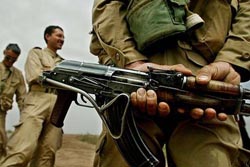
The MKO has been in Iraq’s Diyala province since the 1980s.

Iraqi security forces took control of the training base of the MKO at Camp Ashraf – about 60km (37 miles) north of Baghdad – in 2009 and detained dozens of the members of the terrorist group.

The Iraqi authority also changed the name of the military center from Camp Ashraf to the Camp of New Iraq.

May 14, 2011 0 comments
FacebookTwitterPinterestWhatsappTelegramSkypeEmail
Mujahedin Khalq; A proxy force

For as little as 25k we will take MEK off the list

MEK Banned Terror Group Seeks U.S. Rebirth

WASHINGTON—An Iranian exile group once allied with Saddam Hussein has enlisted former top U.S. officials—including heads of the CIA, FBI, the Joint Chiefs of Staff and politicians from both parties—to try to get it removed from the State Department’s terrorist list.

The Mujahedin e-Khalq, or People’s Holy Warriors, has deployed the heavyweights on speaking tours in Washington and European capitals, hoping to convey the image of a popular, democratic alternative to Tehran’s ruling clerics.

Obama administration and European officials, however, fear the campaign could undermine Washington’s policy of reaching out to opposition forces in Iran. They say that’s because the U.S. would appear to be aligned with a group that is widely unpopular due to its military alliance with Iraqi leader Saddam Hussein during the 1980s and ’90s and a string of terrorist attacks the U.S. says it launched inside Iran.

Among the group’s newfound cheerleaders are recently departed members of President Barack Obama’s national security team, including Jim Jones, the former national-security advisor, Dennis Blair, the former director of national intelligence and James Woolsey, who headed the Central Intelligence Agency.

These officials, and others including former New York City Mayor Rudy Giuliani and former heads of the military Joint Chiefs of Staff, have taken the podium to praise the group. The speakers wouldn’t disclose their speaking fees, but many of them charge between $25,000 and $40,000 per appearance.

"We should take the MeK off the [terror] list and recognize them for what they are, which is the legitimate government of the Republic of Iran," former Democratic National Committee Chairman Howard Dean said at a recent event in London. Mr. Dean said he has made both paid and unpaid speeches for MeK.

MeK’s backers cite intelligence it has provided the West on Iran’s nuclear program and aid to U.S. troops in Iraq as reasons to remove the listing. They also cite MeK’s democratic platform.

Mohammed Mohaddessin, a senior member of MeK’s political arm in Paris, said Iranian communities in the U.S. and Europe organized and funded the lobbying effort. He said that in 2001, "the MeK rejected all kinds of violence, so there is no excuse for keeping them on the list."

The MeK, led by Maryam Rajavi, was founded in 1965 to fight the Shah of Iran, and the U.S. says it killed several Americans in Tehran in the 1970s. The group briefly allied with, then turned violently against, the clerical regime that came to power in 1979. In the early 1980s, the MeK retreated to Paris. By 1986, it relocated to Iraq and fought alongside Saddam’s forces in the eight-year war against Iran.

The State Department first listed MeK as a terrorist group in 1997. In its latest terror report, in 2009, it blames MeK for many attacks on Iranian embassies, military officers and politicians, though not since 2001 until 2001, when it was based in Iraq. The report says the MeK took part in the deadly suppression of Kurdish and Shiite revolts inside Iraq. Mr. Mohaddessin denies allegations that MeK was involved in internal Iraqi security operations. "Those are rumors spread by the Iranian regime,’ Mr. Mohadessin said.

The group says its main motivation for the campaign is to help protect its ranks in Camp Ashraf, north of Bagdad, whose residents suffered a deadly Iraqi army crackdown last month. About 3,400 MeK members have lived there since allied forces disarmed them after invading Iraq in 2003. MeK officials say its designation lets Iraq treat it as terrorists.

Two senior State Department officials dismissed that argument, saying a delisting wouldn’t help Ashraf’s residents and that the U.S. hoped to move them to another Iraqi location as a prelude to relocating them to third countries.

Getting off the list, which can keep members from entering the U.S., would also allow MeK to raise funds from unaffiliated Iranian-Americans and better organize towards its goal of overthrowing Iran’s goverment.[..]

Mr. Mohadessin blames MeK’s unpopularity on misinformation spread by the government.

The last time the State Department had to consider MeK’s status was during the waning days of the George W. Bush administration. In upholding the terrorist designation, then-Secretary of State Condoleezza Rice wrote in a 2009 internal cable released by anti-secrecy group Wikileaks: "The most powerful myth the MeK has been able to lodge in the minds of most supporters is that they are the democratic alternative to the current regime in Tehran." She also referred to the MeK’s "terrorism and cult-like repression of its members."

In response to an MeK lawsuit, a federal court ordered the State Department last year to review the listing again. U.S. officials say that should be done by mid-summer. A State Department spokeswoman said the federal-court ruling acknowledged that classified information provided "substantial support" for keeping the MeK on the terror list. Both the U.K. and the European Union have taken the MeK off their terror lists in recent years under court orders after legal action by the group.

The U.K. court found that since 2001 it was no longer "concerned in terrorism" and thus must be de-listed. The EU court ruled that the European Commission’s 2008 decision to keep the terror listing violated the MeK’s due process rights and failed to demonstrate why they should stay on the list. On Thursday, French investigators dropped an eight-year terrorism probe of 24 MeK members, including Mrs. Rajavi.

Since December, the MeK has hosted about a dozen events in Washington, London, Paris, Berlin and Brussels.

"We shouldn’t just de-list the MeK; we should applaud them," Mr. Giuliani, the ex-mayor, said at a Washington event last month. "We should join with them, we’re on the same side," he said to rousing applause from a few hundred MeK supporters from across the U.S. He declined to comment.

Other speakers at recent events include Hugh Shelton, Richard Myers, and Peter Pace, all former chairmen of the Joint Chiefs; Tom Ridge, the first head of Homeland Security; and Louis Freeh, former director of the Federal Bureau of Investigation.

In an interview, Mr. Woolsey, who said he waived his usual speaker’s fee at a recent MeK event, said Tehran’s condemnation of MeK was "like a backwards weathervane—wherever they’re pointing, we should do the opposite"

Ex-CIA chief Mr. Jones, who said he received his standard speaking fee, said, "I’m not saying I’m convinced this is the future government of Iran, because that’s for the people to decide, but our policy is at odds with reality."

KEITH JOHNSON, JAY SOLOMON and SCOTT GREENBERG

May 14, 2011 0 comments
FacebookTwitterPinterestWhatsappTelegramSkypeEmail
Nejat Publications

Pars Brief – Issue No.59

1.    UN to probe shooting of 34 Iranian dissidents in Iraq

2.    Iraq: Ashraf camp victims killed by own guards

3.    MKO defectors offered suicide option

4.    German Human Rights Commissioner calls on Ashraf Camp Leader (to forego violence and grant access to Camp residents

5.    Politicians in Diala renew rejection to Mujahideen Khalq presence

6.    The West has its own good and bad terrorists

7.    Will Giuliani invite MEK “freedom fighters” to relocate in Manhattan?

Download Pars Brief – Issue No.59

May 12, 2011 0 comments
FacebookTwitterPinterestWhatsappTelegramSkypeEmail
Iraqi Authorities' stance on the MEK

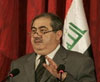
Zebari: Time is ripe to solve the question of Ashraf

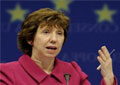
EU Foreign Minister Catherine Ashton had a telephone call with Iraqi Foreign Minister Hoshiar Zebari (Tuesday night) during which bilateral relations were discussed.

EU Foreign Minister Catherine Ashton had a telephone call with Iraqi Foreign Minister Hoshiar Zebari

Minister Ashton expressed the concern of the European Union for the future of Ashraf camp residents.

In a statement by Iraqi Foreign Ministry, Minister Ashton said " the European Union is keen to develop and activate its relations with Iraq according to the agreement signed between the two sides, which reached its final stages for ratification".

"The EU is keen to cooperate in the fields of oil and gas", Ashton added in the statement.
Zebari expressed the stand and decision of the Iraqi government "to close the camp by the end of this year" and to demand from European countries "to accept the residents of the camp in their countries."

"The Iraqi government will abide by its humanistic obligations towards the inhabitants of the camp," Zebari added.

The "time is ripe to solve the question of Ashraf camp residents, particularly when considered that the Iraqi constitution does not accept any foreign organizations that defy its sovereignty and jurisdictions," he added.

Zebari extended an invitation to Minister Ashton to visit Iraq, the statement noted.

May 12, 2011 0 comments
FacebookTwitterPinterestWhatsappTelegramSkypeEmail
European Union

MEPs warned not to fall victim to misleading MKO lobby

Massive human rights violations inside the MEK must be investigated: individual screening and resettlement by UNHCR needed

MEPs from five political groups have sent a letter to their colleagues to brief them about the PMOI lobby in the European Parliament. The letter says that while the deaths at Camp Ashraf were uncacceptable, MEPs should not ignore the MEKs history in Iraq and the overwhelming evidence of human rights abuses inside the MEK. The letter called for screeing and resettlement of individual camp residents and fair trials for members which Iraq alleges have committed crimes against humanity in their country.

 An excerpt of the letter:

European Parliament
Strasbourg, 10 May 2011

Dear colleagues,
Before Easter vacation, Vice-President Vidal Quadras has addressed a letter to all members of the European Parliament accusing the Chair of the Iran delegation, Ms. Lochbihler, of diffusing false information about the Iranian People’s Mujahedin, also known as Mujahedin e Khalq (MEK), PMOI, MKO or National Council of Resistance. For your information we attach the two letters.
The PMOI was protected by Saddam Hussein who hosted them from the mid-1980s until his demise. They collaborated in his internal repression against Kurds and Shiites and have since that time had a military camp known as Camp Ashraf. When the US disarmed the camp in 2003 it housed over 3000 PMOI fighters. The group has developed a very strong lobby in the European Parliament over the last couple of years claiming to be the only serious Iranian opposition group.

The events of April 8, when the Iraqi security forces tried to force their way into the camp with armoured vehicles brought the existence of this group into the lime light again. We fully support the serious concern and condemnation expressed by Ms Lochbihler over the killing of some 30 camp residents and the injury of many more. While the main responsibility for the incident seems to be with the Iraqi security forces, they have so far only acknowledged responsibility for the death of three inmates. We therefore fully support the call of the High Commissioner for Human Rights Navi Pillay for an independent investigation into the incident.

This unacceptable blood shed should not, however, distract us from an objective and level headed analysis of the track record of the PMOI. We urge all members to seriously consider the history, actions and behaviour of the PMOI before signing any declarations or letters of support in favour of this group in the future. Their method is very simple: they mobilise MEPs justified outrage at the nuclear issue, the human rights violations and the very character of the Iranian regime, but instrumentalised such opinion for a different purpose – the political legitimation of the Mujahedin organisation itself.

Surprisingly, the allegations of massive human rights violations inside the Mujahedin organisation are never subject of debate. According to overwhelming evidence the former militant group has turned into a repressive sect far removed from the respectable image the representatives of this group display when visiting the European Parliament. The human rights violations the leaders are committing against the group’s members are amply documented, starting with Human Rights Watch (HRW) and many witness reports of ex-members who were able to flee (including testimonies in the European Parliament).

The European Court of Justice removed the PMOI from the EU terrorist list in 2009 on a formality – the Member States who asked them to be included on the list refused to transmit the evidence on which their request was based to the court. This ruling does not make any statement as to the group’s practice of internal repression.

The support the PMOI receives from members of Parliament allows its leadership to perpetuate their absolute power over the rank and file, of which most are believed to want to desperately leave the group. The hundreds of members who have managed to escape from Ashraf and have been screened by the UNHCR bear witness of their plight.

Instead of boosting the PMOI, with all its criminal activities, we should urge the High Representative and the member states to help to find a humanitarian solution for the remaining camp residents (screening by the UNHCR and individual resettlement) and a fair trial for the approximately 50 persons in the camp wanted by the Iraqi authorities for alleged crimes against humanity.

Sincerely Yours,
Michael Gahler, Elmar Brok (EPP), Kurt Lechner (EPP), Maria Muniz, Ana Gomes, Hannes Swoboda (S&D), Marietje Schaake, Annemie Neyts, Jelko Kacin (ALDE), Isabelle Durant, Ulrike Lunacek (Greens/EFA), Helmut Scholz (GUE/NGL)


May 12, 2011 0 comments
FacebookTwitterPinterestWhatsappTelegramSkypeEmail
Iran

Iran hails return of repentant MKO members

Iranian Intelligence Minister Heidar Moslehi said on Wednesday the country hails return of repentant individuals residing in Camp Ashraf, Iraq.

Members of the terrorist Mujahidin Khalq Organization (MKO) are now living in Camp Ashraf in Iraq.

In April, Iraqi government spokesman Ali al-Dabbagh said Baghdad is determined to shut down Camp Ashraf and disband the terrorist group.

Members of the MKO fled to Iraq in 1986, where they enjoyed the support of former Iraqi dictator Saddam Hussein, and set up Camp Ashraf near the Iranian border in Diyala.

The group has carried out numerous acts of terror and violence against Iranian civilians and government officials.

The terror organization is also known to have cooperated with Saddam in suppressing the 1991 uprisings in southern Iraq and the massacre of Iraqi Kurds in the north.

Tehran has repeatedly called on the Iraqi government to expel the group, but the US has been blocking the expulsion by pressuring the Iraqi government.

"Families of these people (MKO members) come to us frequently, calling for visiting the camp and meeting with their family members to convince them return to Iran," Moslehi told reporters on the sidelines of cabinet meeting.

"As you know people living in the camp are in a specific situation (military situation). People living there do not have access to any other media except that of their selves. However we welcome return of those members willing to go back home and are feeling remorseful."

Also regarding a new computer worm which may have damaged computer systems, he said, "we have taken appropriate measures in this regard. We have given required warnings for confrontation of the virus as we managed to do regarding stuxnext."

"Americans have acknowledged that the Islamic Republic of Iran had best confronted the virus (stuxnet)," Moslehi noted.

May 12, 2011 0 comments
FacebookTwitterPinterestWhatsappTelegramSkypeEmail
Missions of Nejat Society

Nejat Society Statement on the US plan to relocate MKO Cult in an Iraqi area

The American plan to relocate Mujahedin Khalq Cult in an Iraqi area far from Iranian border, pending their final resettlement, is a trick to support the group. Nejat Society does not approve such a support for a terrorist destructive cult.

The visit between Tariq Aziz and Massoud Rajavi in the 1980’s and their eventual agreement on MKO’s settlement in Iraq was a mutually beneficial deal for both MKO and Iraqi Baath Regime:

1. Formation of MKO’s military wing, National Liberation Army(NLA) in order to overthrow Islamic Republic .Indeed, NLA turned into a tool in hands of Saddam Hussein to launch attacks against Iranian and Iraqi people.

2. Building enclosed garrisons as the Cult’s essential containers where the leaders brainwash forces .Camp Ashraf is one of the most important containers.

3. Funding MKO with huge amount of money by Saddam’s Baath regime and some other Arabic countries in the region.

Families of Nejat Society believe that their children are paying the cost of Rajavi’s treasonous acts. Nejat Society calls for the shutdown of Camp Ashraf and MKO expulsion from Iraq because:

1. Breaking the bars of the cult in Camp Ashraf or any other new camp can lead our children to decide for their own fate freely.

2. It prevents the cult from deceiving and then recruiting new forces that causes the collapse of more families.

3. Consequently following the closure of Camp Ashraf, and separation of more than 90 percent of dissident members, the cult leader will face numerous problems and ultimately a cul-de-sac.

Nejat Society believes that there is no need for relocation of Camp Ashraf. A look at recent cases indicates that so far about 1000 defectors of MKO could manage to live a free life in European countries as well as Iran and no judicial obstacle was on their way. If the cult leaders are honest in their words, they should allow the members to decide whether to leave the group or stay in the cult, with their own free will not under the atmosphere of fear and pressure. Then they will see that there will be no more residents to move to another Iraqi area.

The US and EU countries that support MKO Cult looking for a decision to make for future of the cult, can make their mind within the deadline Iraqi government has assigned for MKO expulsion. The American plan is actually a solution to preserve the cult of Rajavi that Nejat families do not approve.

May 11, 2011 0 comments
FacebookTwitterPinterestWhatsappTelegramSkypeEmail
Newer Posts
Older Posts

Recent Posts

  • Expectations of human rights bodies regarding censorship within the MEK

    October 13, 2026
  • The Jamalis’ Plea for Help: Save Our Brother from the MEK!

    October 11, 2026
  • Testimonies of Participants in the MEK’s Staged Propaganda Stunt in Karaj

    October 7, 2026
  • Giuliani’s MEK ties have dogged him for years

    October 6, 2026
  • The Tragic Impact of MEK Isolation on Yazdan Teimorian and His Family

    October 5, 2026
  • Facebook
  • Twitter
  • Instagram
  • Youtube

© 2003 - 2025 NEJAT Society . All Rights Reserved. NejatNGO.org


Back To Top
Nejat Society
  • Home
  • Articles
  • Media
    • Cartoons
    • NewsPics
    • Photo Gallery
    • Videos
  • Publications
    • Books
    • Nejat NewsLetter
    • Pars Brief
  • About Us
  • Contact us
  • Editions
    • عربي
    • فارسی
    • Shqip