Nejat Society
  • Home
  • Articles
  • Media
    • Cartoons
    • NewsPics
    • Photo Gallery
    • Videos
  • Publications
    • Books
    • Nejat NewsLetter
    • Pars Brief
  • About Us
  • Contact us
  • Editions
    • عربي
    • فارسی
    • Shqip
Nejat Society
Nejat Society
  • Home
  • Articles
  • Media
    • Cartoons
    • NewsPics
    • Photo Gallery
    • Videos
  • Publications
    • Books
    • Nejat NewsLetter
    • Pars Brief
  • About Us
  • Contact us
  • Editions
    • عربي
    • فارسی
    • Shqip
© 2003 - 2024 NEJAT Society. nejatngo.org
Iraq

Iraq: MKO should leave by end of 2011

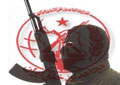
Iraq says members of the terrorist group Mujahedin-e Khalq Organization (MKO) holed up in the country must leave by the end of the current year.
Iraqi government spokesman Ali al-Dabbagh
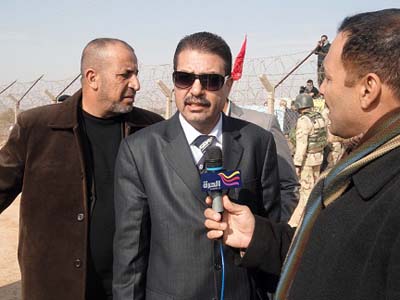
Iraqi government spokesman Ali al-Dabbagh said on Monday that the cabinet is determined to shut down Camp Ashraf located north of the capital, Baghdad, and disband the terrorist group, AFP reported.

"The council of ministers has committed to implement an earlier decision about disbanding the terrorist group by the end of this year at the latest, and the necessity of getting it out of Iraq," said the official.

Dabbagh further underlined that the ministers had decided that the MKO members would be forced to leave Iraq "through all means, including political, diplomatic, and cooperation with the United Nations and international organizations."

According to AFP, 10 people were reportedly killed in clashes between Iraqi security forces and MKO terrorists at Camp Ashraf last Friday.

The MKO has carried out numerous acts of terror and violence against Iranian civilians and government officials.

The group fled to Iraq in 1986, where it enjoyed the support of Iraq’s executed dictator Saddam Hussein, and set up Camp Ashraf in Diyala province, near the Iranian border.

The organization is also known to have cooperated with Saddam in suppressing the 1991 uprisings in southern Iraq and the massacre of Iraqi Kurds.

Iran has repeatedly called on the Iraqi government to expel the group, but the US has been blocking the expulsion by pressuring the Iraqi government.

April 12, 2011 0 comments
FacebookTwitterPinterestWhatsappTelegramSkypeEmail
Iraqi Authorities' stance on the MEK

Iraqi Commander: MKO Attack on Iraqi Forces Aimed at Killing Dissidents

The terrorist Mojahedin-e Khalq Organization sparked the armed conflict with the Iraqi security forces responsible for guarding the camp in a move to kill its dissident members during the clashes, said an Iraqi commander who was present on the scene of clashes last week.

According to a report published by the website of the Habilian association – a human rights group formed of the family members and relatives of the Iranian victims of terrorism – the Iraqi commander, who was speaking on the condition of anonymity, said that the move by the MKO was not unprecedented since the group had previously forced its dissident members to start armed clashes with the Iraqi forces.

"The MKO’s foremost front was formed of the dissident members of the group during the recent clash. They were forced to be there and be killed," the Iraqi commander reiterated.

Iran on Saturday praised the Iraqi Army for taking prompt action and standing against the terrorist group.

"The presence of any terrorist organization on Iraqi soil, to use it as a launch pad and to conduct operations against Iraq’s neighbors, is not accepted by Iraq’s own constitution," Foreign Minister Ali Akbar Salehi told reporters on Saturday.

"Iraqis must not allow activities of such groups and not shelter such terrorist groups. We appreciate the move by the Iraqi government," Salehi said.

Also earlier today, the Iranian Supreme Leader’s Advisor for Military Affairs, Major General Yahya Rahim Safavi, praised the Iraqi Army for its recent attack on the strongholds of the anti-Iran terrorist Mojahedin-e Khalq Organization (MKO), and asked Baghdad to continue attacking the terrorist base until its destruction.

Speaking to FNA here on Monday, Safavi praised Iraqi Prime Minister Nouri Al-Maliki for having ordered the attack on the criminal Monafeqin (i.e. Hypocrites, as MKO members are called in Iran) "and we hope that such measures will continue until the Monafeqin are fully purged from the country".

He reminded the 1991 massacre of the Iraqi people by the Baath regime in collaboration with the MKO, and expressed the hope that the Iraqi government would continue its attacks against the terrorist group and expel all its members from the country.

Pointing to the crimes committed by the terrorist group against the Iranian nation, Safavi reminded that the MKO has martyred 12,000 Iranian people since the 1979 Islamic Revolution in Iran.

On Sunday, a senior Iraqi MP said that the Iraqi people, legislators and government are all resolved to expel the MKO from their country’s soil immediately.

"The Iraqi people and parliament seek expulsion of MKO from their country’s soil and they want to end its presence in Iraq, which has lasted for several years," Hossein Ali told FNA yesterday.
The MKO has been in Iraq’s Diyala province since the 1980s.

Iraqi security forces took control of the training base of the MKO at Camp Ashraf – about 60km (37 miles) north of Baghdad – in 2009 and detained dozens of the members of the terrorist group.
The Iraqi authority also changed the name of the military center from Camp Ashraf to the Camp of New Iraq.

The MKO, whose main stronghold is in Iraq, is blacklisted by much of the international community, including the United States.

Before an overture by the EU, the MKO was on the European Union’s list of terrorist organizations subject to an EU-wide assets freeze. Yet, the MKO puppet leader, Maryam Rajavi, who has residency in France, regularly visited Brussels and despite the ban enjoyed full freedom in Europe.

The MKO is behind a slew of assassinations and bombings inside Iran, a number of EU parliamentarians said in a recent letter in which they slammed a British court decision to remove the MKO from the British terror list. The EU officials also added that the group has no public support within Iran because of their role in helping Saddam Hussein in the Iraqi imposed war on Iran (1980-1988).

The group started assassination of the citizens and officials after the revolution in a bid to take control of the newly established Islamic Republic. It killed several of Iran’s new leaders in the early years after the revolution, including the then President, Mohammad Ali Rajayee, Prime Minister, Mohammad Javad Bahonar and the Judiciary Chief, Mohammad Hossein Beheshti who were killed in bomb attacks by MKO members in 1981.

The group fled to Iraq in 1986, where it was protected by Saddam Hussein and where it helped the Iraqi dictator suppress Shiite and Kurd uprisings in the country.

The terrorist group joined Saddam’s army during the Iraqi imposed war on Iran (1980-1988) and helped Saddam and killed thousands of Iranian civilians and soldiers during the US-backed Iraqi imposed war on Iran.

Since the 2003 US invasion of Iraq, the group, which now adheres to a pro-free-market philosophy, has been strongly backed by neo-conservatives in the United States, who also argue for the MKO to be taken off the US terror list.

April 12, 2011 0 comments
FacebookTwitterPinterestWhatsappTelegramSkypeEmail
The MEK Expulsion from Iraq

Diyala calls on Government to expel Washington backed MKO terrorists

The administrators of Diyala province called on Sunday for the Federal Government to remove the MKO of Iran from the country in line with the Iraqi constitution, and confirmed that it will offer to invest in Camp Ashraf, where they are now, in the event of their exit. One economist described the camp as a "Pearl of the Desert", which he estimated would become the most beautiful tourist area in the country, if invested in correctly.

The first deputy governor of Diyala province, Furat al-Tamimi, in an interview for Alsumaria News, said the role of the Mojahedin-e Khalq "was and remains negative in the security landscape through its support for acts of violence and abuse of Iraqis over three consecutive decades”, adding that a clause in the Iraqi constitution, which was voted for by the millions, "indicates that to clearly ensure the state does not allow the presence of any terrorist organization inside Iraqi territory, it is necessary for federal government to expel the Iranian MKO known as terrorists at the regional and global level."

Tamimi said that Camp Ashraf, which is the headquarters of the Iranian Mojahedin-e Khalq Organization, (55 km north of Baquba), "has the great advantage of being a strategic location, it is important because it is located on the road between Baghdad and the governorates of the Kurdistan region of Iraq, not to mention the fertility of the land in that area".

He continued by saying that the administration of the province "would move with a view to investing in the land occupied by the camp the moment the MEK leave it as it represents an opportunity to support a successful local economy."

For his part, Zayed Humairi, the economic expert in Baquba, described Camp Ashraf as "the pearl of the desert, due to the beauty of nature there", adding that the camp "contains airports, major roads and integrated services such as water, electricity and other basic pillars required for any tourism project."

Humairi added that the strategic location of the camp "will reward major international tourist investment companies which work with it". His region expected it to become "a destination for millions of Iraqis in the event of directing this project after the departure of the MEK".

The Mujahedeen-e Khalq (MEK) was founded in 1965 to overthrow the Shah of Iran. After the Islamic revolution in 1979 it opposed the Islamic regime, and many of its members sought refuge in Iraq in the eighties during the war between Iran and Iraq from 1980 to 1988. The organization is considered as the armed wing of the National Council of Resistance in Iran, based in France, but announced it renounced violence in June 2001.

The MEK increased the area of Camp Ashraf to about 50 square kilometres which is now home to more than 3400 Iranian opponents of the government of their country.
The Government of Iraq changed the name of the camp to Camp New Iraq after it assumed responsibility for its security from American troops. The residents were subjected to strict security measures.

The relationship between the Iraqi government and residents of the camp were marred as tensions and clashes continued. The most recent occurring last Friday, 8th April, between the forces of the Iraqi army and the population of the camp in which one MEK member was killed and 12 injured. In addition, 13 members of the Iraqi army were wounded including five officers and one lieutenant-colonel, and provoked both local and global reactions.
Alsumaria News, Diyala

April 12, 2011 0 comments
FacebookTwitterPinterestWhatsappTelegramSkypeEmail
Iran

MKO asylum grant violates intl. norms

A senior commander of the Islamic Revolution Guards Corps (IRGC) says granting political asylum to the terrorist Mujahedin-e-Khalq Organization (MKO) violates international norms.

“The MKO is a notorious terrorist group, and granting asylum to them (MKO members) is against all international standards,” IRGC Deputy Commander Brigadier General Hossein Salami was quoted by IRNA as saying on Sunday.

He touched upon Washington’s objection to the Iraqi Army’s Friday raid on Camp Ashraf, the MKO base in Iraq, saying, “The West always looks at the world with double standards.”

The top general underlined the West backs any country and group which is of benefit to it, even if they are terrorists or dictators, but counters any nation which is opposed to the West.

“In contradictory behavior, they (the West) try to show they are against terrorism by attacking Iraq and Afghanistan, and on the other, fully back the MKO,” he said.

Blacklisted as a terrorist entity by Tehran, the MKO was removed from the EU blacklist in 2009 but remains on the US State Department’s list of terrorist organizations.

The MKO set up Camp Ashraf in the 1980s as a base to launch attacks against Iran.

The terrorist group is also known to have collaborated with former Iraqi dictator Saddam Hussein in the massacre of Iraqi Kurds in the north and the Shia community in the south.

April 11, 2011 0 comments
FacebookTwitterPinterestWhatsappTelegramSkypeEmail
Iraq

Six Mojahedin Khalq members arrested in Diala, Iraq

DIALA- Six members of the Iranian opposition group Mujahideen-e-Khalq were arrested in Diala on charges of involvement in the acts of riot in Camp Ashraf on Friday, an official government source in the province said on Sunday.

“The six MEK members were arrested by Iraqi forces in accordance with Article 413 of the law after they were suspected of involvement in recent incidents in the camp that left dozens of its inhabitant and Iraqi security forces killed or wounded,” the source told Aswat al-Iraq news agency.

He did not elaborate on the nature of charges that will be pressed against them.

Iraqi security forces had said on Friday that three Iranian MEK refugees in Camp Ashraf in were killed while the Iraqi security forces were trying to set up a security point inside the camp.
“The Iranian group clashed with the Iraqi forces, prompting the Iraqi security to open fire on them, killing three MEK refugees,” an Iraqi security source said.

“Two Iranians set themselves alight in front of the Iraqi forces prior to the clashes, while others pelted the Iraqi soldiers with stones, injuring six of them,” he added.

However, MEK sources had said on Friday that a Youtube clip showed an Iraqi army force storming Camp Ashraf, leaving 28 people killed and dozens others wounded.

The clip, shot by MEK supporters, showed Iraqi forces using armor vehicles in their raid on the camp, which had been under the protection of U.S.

forces after they entered Iraq in 2003 prior to transferring the responsibility of its protection to Iraqi security agencies.

MEK has been based in Camp Ashraf in Diala province, 57 km northeast of Baghdad, since 1980s during the eight-year-long Iran-Iraq war.

Several politicians within the Iraqi government have been striving to drive the organization out of the Iraqi territories, claiming that the MEK fighters took part in suppressing the Shiite uprising that broke out in southern Iraq after the second Gulf War in 1991 against the former regime.

April 11, 2011 0 comments
FacebookTwitterPinterestWhatsappTelegramSkypeEmail
Iraq

Iraqi government says it is fed up with the MKO terror group

Ten people have been killed in clashes between Iraqi security forces and members of the terrorist Mujahedin-e Khalq Organization (MKO) in the central province of Diyala.

The incident occurred on Friday when the armed forces clashed with stone-pelting crowds at Camp Ashraf where the members of the notorious group are based, AFP quoted an Iraqi security official as saying.

"The clashes started at around 4:40 a.m. (0140 GMT) as the army was taking positions inside a cemetery in Ashraf," said Major Hassan al-Tamimi of the Iraqi army in Diyala’s provincial capital, Baqouba.

"The latest toll is three people killed and 27 wounded, among them 13 members of the security forces," Tamimi said.

A source at Baqouba’s main hospital confirmed they had received three bodies.

The MKO, however, claimed 31 of its members had died and 300 were wounded in what it alleged was a full military assault.

AFP reported that ten people had been killed and over 40 injured.

Visiting a US military base in northern Iraq, Pentagon chief Robert Gates expressed concern at reports of casualties and urged Iraqi authorities to exercise restraint.

But the Iraqi government said it is fed up with the terrorist group which has been launching attacks against people and officials in neighboring Iran over the past three decades.

The terrorist group is also known to have collaborated with former Iraqi dictator Saddam Hussein in the massacre of Iraqi Kurds in the north and the Shia community in the south.

Baghdad would no longer tolerate an organization that had been involved in "terrorist activity and harms relations with neighbors," Prime Minister Nouri al-Maliki’s media advisor Ali Musawi stated.

Musawi said Maliki has asked European Union ambassadors to "accept them (MKO) and put them wherever they like, because Iraq cannot bear this any longer. It harms our relations with our countries."

Blacklisted as a terrorist entity by Tehran, the MKO was removed from the EU blacklist in 2009 but remains on the US State Department’s list of terrorist organizations.

The MKO set up Camp Ashraf in the 1980s as a base to launch attacks against the Islamic Republic.

April 11, 2011 0 comments
FacebookTwitterPinterestWhatsappTelegramSkypeEmail
Iraqi Authorities' stance on the MEK

Iraqi MP: Iraqi people call for expulsion of MKO

The Iraqi people want the anti-Iranian terrorist group Mojahedin Khalq Organization (MKO) to be expelled from Iraq, a member of the Iraqi parliament member said on Sunday.

In an interview with the Fars News Agency in Baghdad, Iraqi MP Hussein Ali said, “In the past, the group has been responsible for several crimes against the Iraqi people, including the people of Iraqi Kurdistan.”

“Cooperating with the repressive Baathist army, the members of the group killed innocent people, and Iraqis suffered very much during the Saddam era. Thus the Iraqi government is determined to expel the group from its soil,” he added.

The Iraqi MP dismissed the reports published by Western and Israeli media outlets claiming that Iran is pressuring the Iraqi government to expel the group, saying, “Iran has the right to be sensitive about the terrorist group in its neighborhood because the MKO has carried out many terrorist attacks against the Iranian nation. However, the Iraqi government’s decision to expel the group has not been made under any pressure from neighboring countries.”

Backed by the U.S. and some European countries, the MKO started its activities as a terrorist group based in Iraq in the early 1980s. In addition to the assassination of hundreds of Iranian officials and citizens, the group cooperated with Saddam Hussein’s Baathist regime in its repression of the Iraqi people.

Recently, following orders of the government and in line with the new Iraqi Constitution, the Iraqi army tried to dismantle the terrorist group’s residential area, called Camp Ashraf, but the MKO members residing in the camp clashed with the Iraqi soldiers.

Afterwards, the MKO tried to exaggerate the incident and said that 25 people were killed during the clashes.

The Iraqi Constitution states that the country has no place for terrorist groups, especially those which attack neighboring countries.

April 11, 2011 0 comments
FacebookTwitterPinterestWhatsappTelegramSkypeEmail
Iran

Iran refutes MKO’s ‘secret’ factory claim

Iran has refuted claims by a terrorist group that Tehran has a “secret” factory which produces components to make nuclear centrifuges.

A spokesman for the terrorist Mujahedin-e Khalq Organization (MKO) in Washington claimed on Thursday that a company site west of the capital Tehran produced "aluminum casing, magnets, molecular pumps, composite tubes, centrifuge bases."

Iranian Foreign Minister Ali Akbar Salehi said on Saturday the factory mentioned by the MKO was not a “new discovery.”

Salehi said the factory located in the city of Karaj, west of Tehran, has been visited by reporters.
"We manufacture components there [in the factory], but it is in no way a secret," he said.

“There are plenty of factories in the country that manufacture equipment needed by the Bushehr nuclear power plant and the Atomic Energy Organization of Iran,” he added.

Western powers claim Iran’s nuclear program has military objectives.
Iran strongly denies the charges, saying its nuclear activities are fully supervised by the International Atomic Energy Agency (IAEA), which has repeatedly confirmed the non-diversion of Tehran’s nuclear program towards military objectives.
The MKO is blacklisted as a terrorist organization by much of the international community and is responsible for numerous acts of terror and violence against Iranian civilians and government officials.
PressTV – Sat Apr 9, 2011

April 11, 2011 0 comments
FacebookTwitterPinterestWhatsappTelegramSkypeEmail
Iraq

Government forbids MKO terrorists from operating in Iraq

Iraq Forces impose security in Ashraf Camp

Iraq’s government took control of Ashraf Camp in the wake of violent clashes between Mujahideen Khalq and Iraqi Forces on Friday.

Iraqi State Minister and Cabinet spokesman Ali Al Dabbagh said in a statement to Alsumaria News that riots were spurred by Mujahiddeen Khalq members around the camp which required the intervention of security forces.

Iraqi security forces showed high self-restraint with rioters, Dabbagh said adding that 5 officers were seriously wounded after Mujahideen Khalq members attacked them by throwing stones.
Mujahideen Khalq group on the other hand accused Iraqi security forces of killing 28 people and wounding around 300. No sources confirmed this death toll while Baaquba public hospital confirmed it received 9 killed and 20 wounded, a medial source told Alsumaria.

Alsumaria TV, April 09 2011

Also on Al Iraqiyah TV (Reported by BBC Monitoring Middle East):

Iraqi official says Iranian opposition camp raid legal
Baghdad Al-Iraqiyah Television in Arabic, in its evening newscasts on 8 April, reports on the assault against the Al-Iraqiyah TV cadre that was covering the protests in the Al-Tahrir Square; Ali al-Musawi, media adviser to the prime minister, saying that the Iraqi Constitution rejects hosting any terrorist organizations in Iraq; Sayyid Hazim al-A’raji, leading figure in the Sadrist Trend, calling for supporting the Bahraini people in achieving their constitutional demands; and other political and security developments. Political Developments

Within its 1300 gmt newscast, the channel reports on the following:
– "The Al-Iraqiyah TV cadre, which was covering today the peaceful protest in the Al-Tahrir Square, has been assaulted by individuals who were backed by some media outlets with private agendas and forces that oppose the patriotic views of the channel. Some of the protestors assaulted correspondent colleague Haday Shakkur and attacked the cameraman, destroyed his camera, cut the transmission cables, and then headed towards the car to destroy the live broadcast equipment. The protestors banned the [Al-Iraqiyah reporters] to broadcast events in the Al-Tahrir Square."

Within its 1700 gmt newscast, the channel reports on the following:
– "Ali al-Musawi, media adviser to the prime minister, says that the Iraqi forces were executing a judicial decree to return 50 square kilometres around the camp [Ashraf] to their owners. Al-Musawi described the [Iranian] Mojahedin-e Khalq Organization as a terrorist organization that cannot force an independent country such as Iraq to approve its existence on its territories. He highlighted that the Iraqi Constitution rejects hosting any terrorist organization that severs ties with neighbouring countries."
– "Sayyid Ahmad al-Safi, representative of the religious authority in Karbala, has stated in the Friday sermon that the reason behind the widespread administrative and financial corruption is the result of a weak sense of loyalty to Iraq felt by a large population of employees and officials."

At 1716 gmt, the channel conducts a telephone interview with Ali al-Dabbagh, state minister and spokesman for the Iraqi Government, to comment on the Camp Ashraf incident.

Al-Dabbagh says that the government is working to forbid terrorist organizations from operating in Iraq.

– "Sayyid Hazim al-A’raji, leading figure in the Sadrist Trend, has called for standing by the Bahraini people in achieving their constitutional demands. Al-A’raji highlighted in the Friday sermon that the United Nations and Arab League has been called on to stop the bloodshed in the kingdom." Security Developments

Within its 1300 gmt newscast, the channel reports on the following:
"Tahah Ja’far al-Alawi, leading figure in the Iraqi Al-Da’wah Party and manager of the Al-Masar Satellite Television, has been martyred in a terrorist assault in southern Baghdad. A security source said that terrorists driving a civilian Mitsubishi car opened fire at Al-Alawi and Abd-Farhan Diyab, employee at the Department of Political Prisoners, in the Uwarij area near Al-Durah."

April 10, 2011 0 comments
FacebookTwitterPinterestWhatsappTelegramSkypeEmail
The MEK Expulsion from Iraq

Right Group Calls on Iraqi PM to Close the MEK file forever

The recent assaults and armed clashes sparked by the anti-Iran terrorist Mojahedin-e Khalq Organization (MKO) at the group’s main camp in the Diyala province necessitate the Baghdad government to accelerate expulsion of the terrorist group from Iraq, a human rights group stressed.

The Habilian association, a human rights group formed of the family members and relatives of the Iranian victims of terrorism, in a statement issued on Saturday praised the Iraqi army for repelling the attack and soothing the new tension stirred by the MKO members in the Camp of New Iraq (formerly known as Camp Ashraf).
Meantime, the right group stressed that such moves by the Iraqi forces merely present temporary solutions to the grave problems and serious threats posed by the terrorist group both to the Iraq and Iranian nations, and asked the Iraqi Prime Minister, Nouri al-Maliki, to take the opportunity to materialize the Iraqi people’s call for the expulsion of the terrorist group from Iraq’s soil.

“No doubt, you (Maliki) should take the chance and close the case of the MKO,” Habilian reiterated.

Iraq’s government took control of Ashraf Camp in the wake of violent clashes between the MKO and Iraqi forces on Friday.

Iraqi State Minister and Cabinet spokesman Ali Al Dabbagh said in a statement that riots were spurred by MKO members around the camp which required the intervention of security forces.

Iraqi security forces showed high self-restraint with rioters, Dabbagh said adding that 5 officers were seriously wounded after MKO members attacked them by throwing stones.
The MKO has been in Iraq’s Diyala province since the 1980s.

Iraqi security forces took control of the training base of the MKO at Camp Ashraf – about 60km (37 miles) north of Baghdad – in 2009 and detained dozens of the members of the terrorist group.

The Iraqi authority also changed the name of the military center from Camp Ashraf to the Camp of New Iraq.
The MKO, whose main stronghold is in Iraq, is blacklisted by much of the international community, including the United States.
Before an overture by the EU, the MKO was on the European Union’s list of terrorist organizations subject to an EU-wide assets freeze. Yet, the MKO puppet leader, Maryam Rajavi, who has residency in France, regularly visited Brussels and despite the ban enjoyed full freedom in Europe.

The MKO is behind a slew of assassinations and bombings inside Iran, a number of EU parliamentarians said in a recent letter in which they slammed a British court decision to remove the MKO from the British terror list. The EU officials also added that the group has no public support within Iran because of their role in helping Saddam Hussein in the Iraqi imposed war on Iran (1980-1988).

Many of the MKO members abandoned the terrorist organization while most of those still remaining in the camp are said to be willing to quit but are under pressure and torture not to do so.
A May 2005 Human Rights Watch report accused the MKO of running prison camps in Iraq and committing human rights violations.
According to the Human Rights Watch report, the outlawed group puts defectors under torture and jail terms.

The group, founded in the 1960s, blended elements of Islamism and Stalinism and participated in the overthrow of the US-backed Shah of Iran in 1979. Ahead of the revolution, the MKO conducted attacks and assassinations against both Iranian and Western targets.

The group started assassination of the citizens and officials after the revolution in a bid to take control of the newly established Islamic Republic. It killed several of Iran’s new leaders in the early years after the revolution, including the then President, Mohammad Ali Rajayee, Prime Minister, Mohammad Javad Bahonar and the Judiciary Chief, Mohammad Hossein Beheshti who were killed in bomb attacks by MKO members in 1981.

The group fled to Iraq in 1986, where it was protected by Saddam Hussein and where it helped the Iraqi dictator suppress Shiite and Kurd uprisings in the country.
The terrorist group joined Saddam’s army during the Iraqi imposed war on Iran (1980-1988) and helped Saddam and killed thousands of Iranian civilians and soldiers during the US-backed Iraqi imposed war on Iran.

Since the 2003 US invasion of Iraq, the group, which now adheres to a pro-free-market philosophy, has been strongly backed by neo-conservatives in the United States, who also argue for the MKO to be taken off the US terror list.

April 10, 2011 0 comments
FacebookTwitterPinterestWhatsappTelegramSkypeEmail
Newer Posts
Older Posts

Recent Posts

  • Preserving the authenticity of protests, rejecting the violence of the MEK

    January 7, 2026
  • A Criterion for Proving the Violent Nature of the MEK

    December 31, 2025
  • Rebranding, too Difficult for the MEK

    December 27, 2025
  • The black box of the torture camps of the MEK

    December 24, 2025
  • Pregnancy was taboo in the MEK

    December 22, 2025
  • Facebook
  • Twitter
  • Instagram
  • Youtube

© 2003 - 2025 NEJAT Society . All Rights Reserved. NejatNGO.org


Back To Top
Nejat Society
  • Home
  • Articles
  • Media
    • Cartoons
    • NewsPics
    • Photo Gallery
    • Videos
  • Publications
    • Books
    • Nejat NewsLetter
    • Pars Brief
  • About Us
  • Contact us
  • Editions
    • عربي
    • فارسی
    • Shqip