Nejat Society
  • Home
  • Articles
  • Media
    • Cartoons
    • NewsPics
    • Photo Gallery
    • Videos
  • Publications
    • Books
    • Nejat NewsLetter
    • Pars Brief
  • About Us
  • Contact us
  • Editions
    • عربي
    • فارسی
    • Shqip
Nejat Society
Nejat Society
  • Home
  • Articles
  • Media
    • Cartoons
    • NewsPics
    • Photo Gallery
    • Videos
  • Publications
    • Books
    • Nejat NewsLetter
    • Pars Brief
  • About Us
  • Contact us
  • Editions
    • عربي
    • فارسی
    • Shqip
© 2003 - 2024 NEJAT Society. nejatngo.org
Iran

MKO would leave Iraq by March

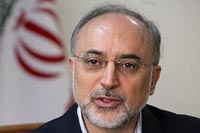
The Iranian ambassador to Baghdad has predicted that the members of the terrorist Mojahedin Khalq Organization (MKO) would leave Iraq by the end of the current Iranian calendar year, which started on March 21.

The Iraqi government has issued a declaration and the Iraqi cabinet has approved a ratification, both of which require that the MKO members leave Iraq, Ambassador Hassan Danaiifar told the Mehr News Agency in an interview published on its website on Tuesday.

The Iraqi National Coalition and other political groups in Iraq as well as Iraqi Prime Minister Nouri al-Maleki and President Jalal Talebani are seeking the expulsion of the MKO members, Danaiifar stated.

“We think that would happen this year since the expulsion of MKO members is the demand of the Iraqi government and nation,” he added.

On April 8, following orders of the government and in line with the new Iraqi Constitution, the Iraqi army tried to dismantle the terrorist group’s residential area, called Camp Ashraf, but the MKO members residing in the camp clashed with the Iraqi soldiers.

The Iraqi government has also set a deadline for Camp Ashraf residents to leave the country.
Recently Iraqi Foreign Minister Hoshyar Zebari said, “The Iraqi Constitution prohibits the presence of mujahedin or any other militia groups from neighboring countries, whether it’s the PKK (Kurdistan Workers Party), whether it’s the PJAK (Party for a Free Life in Kurdistan), or whoever to have presence on Iraqi territory and to launch attacks against our neighbors.

Constitutionally, this is not allowed and the mujahedin of the Ashraf Camp have to respect Iraqi law.”

On April 13, the Iranian ambassador to Baghdad announced that Camp Ashraf residents can return to Iran under certain conditions.

“These persons can travel to Iran or any other country if they are willing to do so and if no criminal case has been filed against them in Iran or Iraq. They will also be given passports,” Danaiifar stated at the time.

— A number of Iranians imprisoned in Iraq may be granted clemency
Elsewhere in his remarks, Ambassador Danaiifar announced that the Iraqi president has made a promise of cooperation to take measures necessary to grant clemency to a number of Iranians held in Iraqi prisons.

So far a list of 200 Iranian prisoners has been submitted to the Iraqi officials, he added.

However, the prisoners would be granted clemency “on condition that they do not enter Iraq without passport again and take the officials’ recommendations seriously, since illegal entry into Iraq will create enormous problems for them and 6 years’ imprisonment will await them, which is not a short time,” Danaiifar stated.

April 27, 2011 0 comments
FacebookTwitterPinterestWhatsappTelegramSkypeEmail
The cult of Rajavi

Mujahedin Khalq members deprived of basic rights

A former member of the terrorist Mujahedin-e Khalq Organization (MKO) who has defected says MKO members are deprived of basic human rights at their Camp Ashraf base in Iraq.

Maryam Sanjabi told Press TV on Tuesday that MKO members have no freedom and are not allowed to decide whether to stay with the organization or leave it.

Maryam Sanjabi told Press TV on Tuesday that MKO members have no freedom and are not allowed to decide whether to stay with the organization or leave it.

She said, “According to the organization’s regulations, members must follow orders and have no rights to ask any questions or make any comments,” she explained, adding, “Inside Ashraf, there is no access to the free world. Members are not allowed to read newspapers, use the internet or telephone, or meet their families.”

Sanjabi recently defected from the MKO and surrendered herself to Iraqi forces.

She says that anyone who wants to defect from the group faces the death penalty.

On April 8, a number of people were killed in clashes between Iraqi security forces and MKO members residing at Camp Ashraf, which is located in Diyala province.

The Iraqi army initially said that three people had been killed and 27 wounded, among them 13 members of the security forces.

AFP reported that ten people had been killed and over 40 injured.

A source at Baqouba’s main hospital confirmed they had received three bodies.
However, the MKO claimed that 31 of its members had been killed and 300 were injured.
But Iraqi forces say there is evidence that some of the MKO members who died in the incident were killed by MKO members themselves.

On April 11, Iraqi government spokesman Ali al-Dabbagh said the cabinet was determined to shut the camp down.

The MKO fled to Iraq in the 1980s, where it enjoyed the support of former Iraqi dictator Saddam Hussein and set up Camp Ashraf in the eastern province of Diyala, near the Iranian border.
Over 3,000 MKO members are currently residing at the camp. In addition, the group sends elements to Iran on spying and terrorist missions.

The MKO also cooperated with Saddam in the massacres of Iraqi Kurds and in suppressing the 1991 uprisings in southern Iraq.

Since Saddam was deposed in 2003, the Iraqi government has set numerous deadlines for the terrorist group to leave the country but the MKO has managed to maintain its base due to US backing.

The MKO is listed as a terrorist organization by much of the international community and has committed numerous terrorist acts against both Iranians and Iraqis.

Iran has repeatedly called on the Iraqi government to expel the group, but the US has been putting pressure on the Iraqi government to block the expulsion.Download MKO members deprived of basic rights

April 27, 2011 0 comments
FacebookTwitterPinterestWhatsappTelegramSkypeEmail
UN

UN to probe shooting of 34 Iranian dissidents in Iraq

Why they were killed is a matter of bitter and angry disagreement for the investigation to sort out

During the night of April 8, there was a hail of gunfire at Camp Ashraf, about 60 kilometres north of the Iraqi capital of Baghdad, in which 34 people were killed and another 325 wounded.

The victims are Iranian dissidents who fled their country in the early 1980s and were given refuge in Iraq by Saddam Hussein, then at war with the new Islamic regime of Ayatollah Khomeini in Tehran.

But why these people were killed and wounded two weeks ago, and by whom, is a matter of bitter and angry disagreement that a United Nations investigation will try to sort out.

The Iraqi government of Prime Minister Nuri Kamal al-Maliki admits its troops killed three of the Camp Ashraf Iranians when they threw rocks at army vehicles.

But the Baghdad government says the rest were shot by the Camp Ashraf guards themselves.
This plays to widely circulated reports that the People’s Mujahideen Organization of Iran (PMOI), which controls the 3,400 people in the camp, has become a cult.

Former members and human rights organizations have reported the leadership bans anyone leaving on pain of death and maintains prisons where torture is frequently used.

Some escaped PMOI camp inmates claim the organization recruits young people from overseas Iranian communities, including Canada.

The youths go to Camp Ashraf for a "tour" of several weeks and in many cases have not been allowed to leave or have chosen not to.

Some human rights organizations have documented dozens of cases of both teenage boys and girls remaining at the camp after their "tours."

In 2004, Canadian officials visited the camp to interview a young woman, 17-yearold Somaye Mohammadi, on behalf of her Iranian-Canadian father, Mustafa Mohammadi, who believed she was being held against her will.

The purpose of the interview was frustrated when PMOI officials refused to allow the Canadian diplomats to interview the young woman in private.

A 2006 report from Toronto’s Centre for Thought, Dialogue and Human Rights in Iran names seven Canadian girls and three boys among the dozens of teenagers at Camp Ashraf.
Their status now is unknown.

The PMOI is listed as a terrorist organization by the United States and Canada, and until recently was on a similar European Union list.

But supporters of the PMOI, including among the Iranian diaspora from which the group draws its funds and considerable political support, say the attack on Camp Ashraf was a planned and purposeful massacre by Iraqi troops on behalf of, or as a favour to, the Iranian government in Tehran.

PMOI leaders, such as Massoud Rajavi and his wife Maryam, point out that like Iran, Iraq is now ruled by the country’s Shiite Muslim majority after the 2003 ouster by the U.S.-led coalition of the secular Sunni Muslim regime of Saddam Hussein.

This scenario carries some weight because in July 2009, six months after the Americans handed over control of Camp Ashraf to the al-Maliki government, Iraqi security forces raided the camp.
Eleven Iranians were killed and 500 injured.

The al-Maliki government has said PMOI will no longer be allowed to mount operations against Iran from Iraqi soil.

In the past few days, Baghdad has said that all camp members must leave Iraq by the end of this year, either for Iran or some third country.

The PMOI was founded in Iran in 1965 by a group of Islamic Marxist college students opposed to the corrupt and degenerate rule of Shah Mohammed Reza Pahlavi.

But the group has always, and continues to arouse, strong emotions not least among American movers and shakers.

Some, such as hard line officials in the administration of former president George W. Bush and including his vicepresident Dick Cheney, see the PMOI as a liberation movement and a useful ally against the Iranian regime.

Officials claim to have received from PMOI important intelligence about Iran’s nuclear development program.

Others point out that PMOI began life as a vehemently anti-American organization that used terrorist attacks to kill at least six Americans in Iran during the reign of the Shah.

This view holds that nothing much has changed, that despite the PMOI claiming to have become purely a political party, its ideology remains antipathetic to American and western civic values.

Iran with the PMOI in power would be no better than the Islamic regime now ruling in Tehran, says this view.
By Jonathan Manthorpe

April 26, 2011 0 comments
FacebookTwitterPinterestWhatsappTelegramSkypeEmail
MEK Camp Ashraf

MKO Ringleaders Kill Dissidents to Control Iraq Base

 A defected member of the anti-Iran terrorist Mojahedin-e Khalq Organization unveiled that MKO ringleaders are using every means within their reach to control their dissident members, including life threats, to keep members in the group’s main stronghold in Northern Iraq.
"Massoud Rajavi (the main ringleader of the MKO) has announced many times that if anybody wants to escape from (the camp) Ashraf (in Iraq), he/she will be killed or executed," Abdollatif Shadvari said.

He reiterated that the ringleaders of the MKO also prevent the members who are residing in Camp Ashraf from taking refuge in other countries, saying, "Ashraf is the only place you have."
Asked why MKO ringleaders force the dissident members to remain in the stronghold in Iraq, Shadvari said, "It is clear, if people leave (the camp), the Organization will collapse and there will be no MKO anymore."

Also in March, another defected member of the MKO revealed that the female members of the group have been living under captivity for more than 25 years and are not even allowed to appear in public places alone.

"It can be firmly said that 95% of the women in Ashraf Camp (the terrorist group’s resort in Iraq) have not even been allowed to step in Iraq’s public and recreational places alone all throughout the last 25 years," the defected member said.

The former member of the MKO also revealed that nearly 70% of the female members of the terrorist group are single and have not been allowed to marry anyone in or outside the group.

And only a total 10% of the married members have been allowed to have children, he added.
The MKO has been in Iraq’s Diyala province since the 1980s.

Iraqi security forces took control of the training base of the MKO at Camp Ashraf – about 60km (37 miles) north of Baghdad – in 2009 and detained dozens of the members of the terrorist group.

The Iraqi authority also changed the name of the military center from Camp Ashraf to the Camp of New Iraq.

Many of the MKO members abandoned the terrorist organization while most of those still remaining in the camp are said to be willing to quit but are under pressure and torture not to do so.

A May 2005 Human Rights Watch report accused the MKO of running prison camps in Iraq and committing human rights violations.

According to the Human Rights Watch report, the outlawed group puts defectors under torture and jail terms.

Numerous articles and letters posted on the Internet by family members of MKO recruits confirm reports of the horrific abuse that the group inflicts on its own members and the alluring recruitment methods it uses.

The most shocking of such stories includes accounts given by former British MKO member Ann Singleton and Mustafa Mohammadi — the father of an Iranian-Canadian girl who was drawn into the group during an MKO recruitment campaign in Canada.

Mohammadi recounts his desperate efforts to contact his daughter, who disappeared several years ago – a result of what the MKO called a ‘two-month tour’ of Camp Ashraf for teenagers.
He also explains how the group forces the families of its recruits to take part in pro-MKO demonstrations in Western countries by threatening to kill their loved ones.

Lacking a foothold in Iran, the terrorist group recruits ill-informed teens from Iranian immigrant communities in Western states and blocks their departure afterwards.

The MKO, whose main stronghold is in Iraq, is blacklisted by much of the international community, including the United States.

Before an overture by the EU, the MKO was on the European Union’s list of terrorist organizations subject to an EU-wide assets freeze. Yet, the MKO puppet leader, Maryam Rajavi, who has residency in France, regularly visited Brussels and despite the ban enjoyed full freedom in Europe.

The MKO is behind a slew of assassinations and bombings inside Iran, a number of EU parliamentarians said in a recent letter in which they slammed a British court decision to remove the MKO from the British terror list. The EU officials also added that the group has no public support within Iran because of their role in helping Saddam Hussein in the Iraqi imposed war on Iran (1980-1988).

Iraq had announced earlier this month that members of the terrorist group must leave by the end of 2011.

April 26, 2011 0 comments
FacebookTwitterPinterestWhatsappTelegramSkypeEmail
Iraq

Iraqi people want MEK terrorists out of Iraq

Al-Masar television presented a one hour live discussion on the topic ‘people want Monafeqin Khalq terrorists out of Iraq’. (The term Monafeqin is a religious term meaning hypocrites and is the preferred name among Muslims for the Iranian Mojahedin-e Khalq cult.)

Al-Masar television presented a one hour live discussion on the topic ‘people want Monafeqin Khalq terrorists out of Iraq’.

Guests, Mrs Ahlam al-Maliki, head of the Baghdad based humanitarian NGO Baladiyeh Foundation and Anne Singleton, leading expert on the Mojahedin-e Khalq terrorist cult from Iran-Interlink in the UK, took part in the one hour live programme.

Presenter Dr. Qeis al-Atwani described the problems caused by having this foreign terrorist group left in Iraq after the removal of the group’s former mentor Saddam Hussein in 2003..
The programme focused on the efforts of the Iraqi government to effect the removal of the group from Iraq. The Mojahedin-e Khaq was clearly responsible for thousands upon thousands of deaths among the Iraqi population, including the Anfal and the suppression of the Kurdish and Shiite uprisings following the 1991 First Gulf War. Iraqis across the political, religious and tribal spectrum bitterly resent that the Americans failed to deal properly with the group and that it was allowed to attempt to interfere in the democratisation process which has produced three freely elected governments since 2003.

Anne Singleton replied to viewers’ concerns that the group must be removed immediately. She told viewers they must step aside from their understandable anger and allow their government to take actions which will reflect well on their new democratic government. Rather than looking for quick political solutions which would inevitably involve more bloodshed – because this is what Mojahedin leader Massoud Rajavi wants – the government should involve groups like Iran-Interlink and the Baladiyeh Foundation to provide an effective and humanitarian outcome for the problem.

Al-Masar television

April 26, 2011 0 comments
FacebookTwitterPinterestWhatsappTelegramSkypeEmail
Former members of the MEK

Right Group Slams Independent for Releasing Biased Report in Defense of Terrorists

The Association for Defending the Victims of Terrorism condemned a recent report released by the Independent website in defense of the terrorist Mojahedin-e Khalq Organization (MKO), The Association for Defending the Victims of Terrorismreminding the news website that MKO is responsible for the assassination and massacre of tens of thousands of innocent people in Iran, Iraq and other countries.

The following is the detailed text of the ADVT statement:

This letter is an explanation for the report published in the website of Independent on 12 April under the title of "Crime against humanity at Camp Ashraf". We consider it a responsibility for ourselves to mention some points about the terrorist group of Mojahedin-e Khlaq Organization (a.k.a MKO/Mek/PMOI) in order to increase the public knowledge about it. At first let’s take a look at the recent events which occurred in Ashraf Camp. On the day of the event and after two days of being stoned by Ashraf residents, Iraqi forces, stationed near the base, were forced to react.

Despite the constant demand of the Iraqi people and emphasis of the various parties on the expulsion of this group from Iraqi soil, this measure has faced delay for many years. The terrorist group of MKO has taken different reactions in the face of these demands including activities for weakening the legal Iraqi government, displaying human rights postures, propaganda fool plays like attacks against Ashraf residents, anti-human crimes and the violation of rights of the members. These are all conducted in order to represent a critical condition in Iraq which needs the interference of the US forces and accordingly the continuance of members’ residence in Ashraf. An evidence of such acts which once more proves the cultic structure of this terrorist group was the self-immolation of two Ashraf members for inciting other members on April 8th.

Self-immolation is the most common way of suicide in MKO which implies the cultic feature of this terrorist organization. The cultic characteristics of this group have been widely reported by former MKO members and Human Rights Watch report. Another example of the application of this technique was the self-immolation of 2003 in which a number of MKO members set themselves on fire in protest to the arrest of Maryam Rajavi. Ashraf Camp with its military framework is applied by MKO leaders for controlling the members. Let’s review some facts about this terrorist cult:

Investigating and identifying the efforts of this cult for defining itself as a banished opposition group worth consideration. A glance at the background of this terrorist cult clarifies that it has not been banished but its inhuman activities led to the disapproval of people and finally the cult chose a base outside the country in order to continue its terrorist operations. The more ominous fact is that MKO started cooperation with the Baath regime which was hated by Iranian people due to its aggression on Iranian territory. In fact Rajavi’s escape from country as the leader of this cult after the referendum and the sabotage activities of the cult including various measures for worsening the situation in the early days of the revolution shows that the name of Iranian opposition group is quite contrary to the nature of this terrorist group. Many international documents like Human Rights Watch report of May 2005 and US National Defense Institute report of 2009 along with the confessions of the defected members disclose the dangers of this terrorist cult to the global security. The agents of MKO have murdered more than 12000 Iranians and thousands of Iraqis. The assassination of 7 American counselors, high-jacking, armed robbery and attacks against the military units or civilians are among the other crimes of the MKO.

The second issue is the importance of Ashraf Camp for the MKO terrorist cult. The question is that why MKO leaders should make such a great deal of effort for keeping the members in Ashraf base? Why have the doors of Ashraf never been opened to the families of the members? Why are the members of this cult being kept as captives, being prevented from outside world? In other words, the Ashraf base, as a cultic structure, imposes inhuman features on its members which manifest the true identity of the cult.

The obstinacy of the MKO leaders in protecting the Ashraf Base should be sought in the following issues: the MKO finds its survival in resorting to various techniques like suppression of any suspicion and resistance through which it can give a new sense of attachment. It is an issue which frequently comes along with suppressing common emotional human senses and feelings. In this regard, removing the non-cultic ideas by repeating some slogans or limited phrases, the cult leaders try to deny the previous beliefs and establish some new values in which the cult is at the center and every instrument for attaining the defined goals is legitimate. Setting up the principles of a cult, any sense of personal judgment or valuation, individual decision or thinking are all denied and blind obedience is being developed between members. Wearing uniforms, confessing the internal drawbacks or any sense of doubt, isolation from the outside world, families and friends, exaggerating the faults and sins… are all among the common techniques that cults resort to for protecting their nature.

For the same reason the MKO terrorist group keeps its members in a socially and mentally isolated environment in order to pull out the members’ abilities to think and make decisions. The leaders of this terrorist cult are completely aware of the role of Ashraf camp in preserving the cultic structure of MKO and their authority over members. Therefore they have decided to keep the Camp by any possible way. In doing so, many capabilities have been displayed by MKO like the self-immolation of members or throwing them in front of the Iraqi vehicles with the aim of exposing the ability of the cult in degenerating the members and sacrificing them.

Based on the above, the necessity for the dissolution of Ashraf Camp as a cultic structure which imposes inhuman features upon its members, becomes obvious. Then the best efforts should be made in order to return back these members to the bosom of the family, relatives and society. Although the US department of State reported that its aim is to dissolve the Mojahedin-e Khalq Organization which was involved in terrorist activities and to prevent it from rebuilding as a terrorist organization, but practically the coalition forces did not encourage the members to defect the group. They even violated many items of the Geneva Conventions in which the appropriate ways for the dissolution of this terrorist cell and reducing its power, were considered permissible.

According to the anti-democratic history of this group which is based on Marxism, the consecutive electoral failures and people’s disapproval in first Consultative Assembly elections, and their refusal of the constitution, one can understand the anti-human nature of this group.

The group fled to Iraq in 1986 and joined Saddam’s army during the Iraqi imposed war on Iran (1980-1988) and helped Saddam to kill thousands of Iranian civilians and soldiers. It was funded by Saddam Hussein and helped the Iraqi dictator to violently suppress Shiite and Kurd uprisings in the country in 1991. These measures were conducted to strengthen the power of Saddam Hussein. Therefore, most of the Iraqi people consider the MKO as the private army of Saddam which acted on behalf of the Iraqi army against the people. The Iraqi people call for an investigation into all the crimes of the Iraqi dictator and accordingly the MKO as his tool in suppressions. People are now emphasizing on the expulsion of this group, as the ally of the former Iraqi dictator, from their country. People of the Al-Khalis city of Iraq have also complained against the MKO for committing crimes and seizing their lands. Meanwhile, the ratifications of the Iraqi parliament are supporting these legal demands. The people of the Diyala province have held many demonstrations for accelerating the expulsion of the MKO from Iraq and trial of its leaders. The resolution adopted in December 2003 by the Iraqi governmental council specifically asks for the MKO’s exit from Iraq. The Iraqi authorities have repeatedly emphasized on this stance too.

Having mentioned a few of the features and measures of this cult, we hope that fighting against terrorism would step into its correct path in which the Iranians, Iraqis, Kuwaitis and even Americans whose families were killed by the terrorists of this cult could achieve their rights. Also we urge the international authorities to take into consideration the way of confronting this cult which degrades its members and to call for Ashraf camp’s immediate dissolution. We wish to see the day when the incarcerated members of Ashraf Camp freely live a happy life with their families.

April 25, 2011 0 comments
FacebookTwitterPinterestWhatsappTelegramSkypeEmail
Former members of the MEK

Right Group Blasts US Daily for Politicizing Campaign against Terrorism

The Association for Defending Victims of Terrorism, an Iran-based right group, strongly criticized a US daily for its support for the terrorist Mojahedin-e Khalq Organization (MKO) and its politically-tainted attitude towards terrorism.

"We the families of the terror victims of the Middle-East, including Iraq, Turkey, Kuwait and thousands of Iranians who have been suffering years of pain, condemn any terrorist act, anywhere in the world and against any one, avoiding any classification between good and bad terrorism," the association said in a letter to the US daily, Boston Globe.

"Therefore, we believe that considering this phenomenon under any political issue in which the centrality and priority of human beings are sacrificed for short-term political interests brings about a challenge in the global fight against terrorism that keeps us away from the basic humanitarian goals," the letter added.

"However, countries should fight against all terrorist groups in the same way that they condemn the Al-Qaeda. They have to consider it as a humanitarian issue (beyond political ups and downs) and seriously fight against terrorist cults such as the Mojahedin-e Khlaq Organization (MKO) which has a complete record of terrorist crimes, including the murder of 7 American military counselors, thousands of Iraqis (25000 people) and thousands of Iranians (12000 Iranians) and the citizens of other countries, including Kuwait."

"In fact the danger of this group is no less than the Al-Qaeda and we, the families of terrorism victims in the Middle East who are themselves the victims of this group, consider the danger of this group far more than the Al-Qaeda," the letter concluded.

After clashes between Iraqi security forces and MKO members in the group’s main training camp in Iraq, the US daily called the attack as "massacre" and claimed that the Iraqi forces’ attack on Camp Ashraf proves what it called Iran’s dangerous influence in Iraq.

The daily also said in its editorial that the United States and its allies must act quickly to relocate abroad some 3,000 MKO members still stationed in Camp Ashraf.
"Toward this end, the State Department needs to remove the group from its terrorist list," the daily wrote.

The MKO has been in Iraq’s Diyala province since the 1980s.
Iraqi security forces took control of the training base of the MKO at Camp Ashraf – about 60km (37 miles) north of Baghdad – in 2009 and detained dozens of the members of the terrorist group.

The Iraqi authority also changed the name of the military center from Camp Ashraf to the Camp of New Iraq.
Many of the MKO members abandoned the terrorist organization while most of those still remaining in the camp are said to be willing to quit but are under pressure and torture not to do so.

A May 2005 Human Rights Watch report accused the MKO of running prison camps in Iraq and committing human rights violations.
According to the Human Rights Watch report, the outlawed group puts defectors under torture and jail terms.
Numerous articles and letters posted on the Internet by family members of MKO recruits confirm reports of the horrific abuse that the group inflicts on its own members and the alluring recruitment methods it uses.
The most shocking of such stories includes accounts given by former British MKO member Ann Singleton and Mustafa Mohammadi — the father of an Iranian-Canadian girl who was drawn into the group during an MKO recruitment campaign in Canada.
Mohammadi recounts his desperate efforts to contact his daughter, who disappeared several years ago – a result of what the MKO called a ‘two-month tour’ of Camp Ashraf for teenagers.
He also explains how the group forces the families of its recruits to take part in pro-MKO demonstrations in Western countries by threatening to kill their loved ones.
Lacking a foothold in Iran, the terrorist group recruits ill-informed teens from Iranian immigrant communities in Western states and blocks their departure afterwards.

The MKO, whose main stronghold is in Iraq, is blacklisted by much of the international community, including the United States.

Before an overture by the EU, the MKO was on the European Union’s list of terrorist organizations subject to an EU-wide assets freeze. Yet, the MKO puppet leader, Maryam Rajavi, who has residency in France, regularly visited Brussels and despite the ban enjoyed full freedom in Europe.
The MKO is behind a slew of assassinations and bombings inside Iran, a number of EU parliamentarians said in a recent letter in which they slammed a British court decision to remove the MKO from the British terror list. The EU officials also added that the group has no public support within Iran because of their role in helping Saddam Hussein in the Iraqi imposed war on Iran (1980-1988).

Iraq had announced earlier this month that members of the terrorist group must leave by the end of 2011.
Earlier this week, the Baghdad government assured Iranian officials and people that it is determined to expel the terrorist organization from Iraq by the end of 2011.
"Expulsion of the MKO from Iraq’s soil and termination of its presence which has lasted for several years is a definite decision," Iraqi Government Spokesman Ali Al-Dabbaq told FNA, adding, "The MKO will be expelled from Iraq by the end of the current year."

"The only option for the members of the MKO is leaving Iraq and they have no other choice," he reiterated.
Reminding the black record of the terrorist group and its crimes against the Iraqi people, Dabbaq said "collaboration with the former Iraqi dictator and massacre of thousands of our people is just part of their crimes".

April 25, 2011 0 comments
FacebookTwitterPinterestWhatsappTelegramSkypeEmail
Iran

US mocking its alleged support for human rights by backing MKO

Iranian Majlis Speaker Ali Larijani has said that the United States is deriding its own alleged support for human rights by pressuring the Iraqi government over its crackdown on Camp Ashraf residents.

“The U.S. had better not make a further mockery of its hollow slogan of supporting human rights by pressuring Iraq over its clampdown on the members of the Mojahedin Khalq Organization (MKO),” Larijani stated at the open session of the Majlis on Sunday.

On April 8, following orders of the government and in line with the new Iraqi Constitution, the Iraqi army tried to dismantle the terrorist group’s residential area, called Camp Ashraf, but the MKO members residing in the camp clashed with the Iraqi soldiers.

The Iraqi government has also set a deadline for Camp Ashraf residents to leave the country.

Elsewhere in his remarks, Larijani criticized the recent remarks by U.S. Secretary of State Hillary Clinton against the Islamic Republic of Iran as “weird”.

During a press conference in Berlin on Friday, Clinton said that the U.S. saw no evidence that Iran had instigated protests in the Middle East, “but we do see activities by Iran to try to take advantage of these uprisings, they are trying to exploit unrest. They are trying to advance their agenda in neighboring countries. They continue to try to undermine peace and stability, to provoke further conflict.”

Larijani said that such remarks are not based on the realities of the region.

He added that on the one hand, the U.S. and certain other Western countries voice their concern about Iran’s support for popular uprisings in the region, but on the other hand they say that Iran is seeking to exploit the unrest.

U.S. officials are in a daze and their confusion is reflected in the remarks they make, Larijani stated.

“They are in a state of confusion because they do not have or do not want to obtain a clear understanding of the realities on the ground,” he added.

He also said that the U.S. is the main culprit behind the problems facing the region since the people have risen up against the dictators who are close allies of the United States.

The fact that the U.S. is condoning the use of violence against the people in Bahrain and Yemen has complicated the issues, Larijani stated.

The people of regional nations are getting fed up with the U.S. behavior, he concluded

April 24, 2011 0 comments
FacebookTwitterPinterestWhatsappTelegramSkypeEmail
The MEK Expulsion from Iraq

Justice Minister: Iraq determined to expel MKO

The Iraqi justice minister says Baghdad is determined to expel members of the terrorist Mujahedin-e Khalq Organization (MKO) from Camp Ashraf.

Iraqi Justice Minister Hassan al-Shammari

Hassan al-Shammari made the remarks on the sidelines of a meeting with his Iranian counterpart Morteza Bakhtiari in Tehran on Saturday, IRNA reported.

The Iraqi justice minister noted that the decision was made in line with the Iraqi Constitution, which prohibits the presence of any militia group in Iraqi territory.

He went on to say that the parliament has voiced support for the move, and at a cabinet meeting, it was decided that the prime minister would oversee the process.

Al-Shammari also said that the MKO members are living in a very bad situation and the leaders of the organization do not allow them to leave the camp.

On April 8, a number of people were killed in clashes between Iraqi security forces and MKO members residing at Camp Ashraf, which is located in Diyala province.

The Iraqi army initially said that three people had been killed and 27 wounded, among them 13 members of the security forces.

AFP reported that ten people had been killed and over 40 injured.

A source at Baqouba’s main hospital confirmed they had received three bodies.

However, the MKO claimed that 31 of its members had been killed and 300 were injured.

But Iraqi forces say there is evidence that some of the MKO members who died in the incident were killed by MKO members themselves.

On April 11, Iraqi government spokesman Ali al-Dabbagh said the cabinet was determined to shut the camp down.

The MKO fled to Iraq in the 1980s, where it enjoyed the support of former Iraqi dictator Saddam Hussein and set up Camp Ashraf in the eastern province of Diyala, near the Iranian border.

Over 3,000 MKO members are currently residing at the camp. In addition, the group sends elements to Iran on spying and terrorist missions.

The MKO also cooperated with Saddam in the massacres of Iraqi Kurds and in suppressing the 1991 uprisings in southern Iraq.

Since Saddam was deposed in 2003, the Iraqi government has set numerous deadlines for the terrorist group to leave the country but the MKO has managed to maintain its base due to US backing.

The MKO is listed as a terrorist organization by much of the international community and has committed numerous terrorist acts against both Iranians and Iraqis.

Iran has repeatedly called on the Iraqi government to expel the group, but the US has been putting pressure on the Iraqi government to block the expulsion.

April 24, 2011 0 comments
FacebookTwitterPinterestWhatsappTelegramSkypeEmail
The cult of Rajavi

Camp Ashraf Escapee Says MKO Bans Marriage, Radio, Internet

Iraq’s Defense Ministry has announced that several residents of Camp Ashraf have fled the camp and appealed to Iraqi military forces for help.

Camp Ashraf, which is located some 60 kilometers from Baghdad and 100 kilometers from the border with Iran, is home to some 3,500 members of the Iranian opposition group Mujahedin-e Khalq Organization (MKO, aka People’s Mujahedin of Iran). Iran has banned the group, and like the United States, considers it a terrorist organization. Iraq has said the camp must go.

Last week, 34 camp residents were killed during a raid by Iraqi forces under circumstances that are not clear.

The MKO says camp residents were killed by Iraqi forces. The Iraqi government, however, says it believes about 30 people were shot dead by guards at the camp.

The UN and rights groups have called for an independent investigation into the deaths.

Amnesty International has said that video clips of the April 8 clashes that the MKO has uploaded to YouTube appear to show Iraqi soldiers indiscriminately firing into the crowds and using vehicles to try and run others down.

Iraq’s Defense Ministry said that three MKO leaders were among the camp residents who escaped.

On April 19, Defense Ministry spokesman Muhammad al-Askari reportedly told a press conference in Baghdad that "three leaders of the People’s Mujahedin of Iran managed to escape Camp Ashraf." He named them as "senior leader Maryam Sinjari, leader Abdul Latif Shardouri [Abdollatif Shadvari], and leader Ibrat Kikhai."

I interviewed Shadvari last week. He told me he escaped from Camp Ashraf two months ago and turned himself in to Iraqi forces. He also said some of the other residents of the camp were being held there against their will.

Former MKO members have described the group as a cult that promotes celibacy and martyrdom, takes away members’ children, and uses psychological methods to pressure members and force them to remain obedient and follow orders.

The MKO has rejected the claims and accuses former members of being tools of Tehran.
Shadvari, who spoke to me from Baghdad where he said he’s staying at a hotel, said he joined the MKO when he was 15 years old. Here’s some of our conversation:Abdollatif Shadvari

Persian Letters: Can you tell me something about yourself and describe how you came to join the Mujahedin-e Khalq Organization?

Abdollatif Shadvari:
My name is Abdollatif Shadvari, I’m from Baluchistan. I’ve been with this organization for 25 years. I joined the MKO from Pakistan and through a friend who has been martyred.
I haven’t had any contact with my family during the [past] 25 years because there was no possibility of contacting them. My family thought I was dead. Using the telephone, mobile phone, Internet, and even listening to radio is forbidden in the organization.
During these 25 years I was under a lot of pressure and I decided to hand myself over to Iraqi forces. I did that two months ago and now I’m at a hotel. I’ve been in touch with the Red Cross and also with the Iraqi government. I hope to go to another country.

Persian Letters: Do you know which country you might go to? What will be your situation once you get there?

Shadvari: I’m supposed to discuss it with the Red Cross and the United Nations. The issue is, as [MKO leader Massoud] Rajavi has said many times, whoever wants to escape from Ashraf will be punished with death and execution. Not only me, but many of my friends who are now in Ashraf don’t have the possibility to leave the camp. Escape is the only way.
Escaping from there requires two or three months of preparation. I thought a lot about it and planned it so I could finally escape. [MKO leaders] always tell us: "You can’t enter any [other] country. Ashraf is the only place you have."

Persian Letters: Are you saying that some people are held in Ashraf against their will? They’re forced to stay there?

Shadvari: Yes, many are under pressure. They’re worried about their future; they don’t know what will be with them. I call on the Red Cross and international organizations to talk with each of the camp residents individually. This issue must be solved and the bloodshed must be stopped.

Persian Letters: Why do you think the MKO wants to keep people in Camp Ashraf? Why don’t they let those who don’t want to be there go?

Shadvari: It’s obvious. If people [leave Ashraf], the organization will fall apart, there won’t be any Mujahedin-e Khalq Organization anymore.

Persian Letters: Are you married?

Shadvari: No. I was 15 when I joined the organization. Now I’m 40.

Persian Letters: Why didn’t you get married? Was it your choice?

Shadvari:
Getting married is banned in Camp Ashraf. Not only getting married, but talking to women is banned.

Golnaz Esfandiari, Persian letters, Radio Free Europe

April 24, 2011 0 comments
FacebookTwitterPinterestWhatsappTelegramSkypeEmail
Newer Posts
Older Posts

Recent Posts

  • A Child behind the Ideological Bars of Massoud and Maryam Rajavi

    August 8, 2026
  • A Comparative Analysis of Psychological Control Mechanisms in Jeffrey Epstein’s Cult and the MEK

    August 3, 2026
  • Operation Mersad: How Iran foiled Saddam’s final gambit 37 years ago

    August 1, 2026
  • Ideology Cannot Prevail over Human Dignity

    July 29, 2026
  • Is Rudy Giuliani so naïve to support MEK terrorists?

    July 27, 2026
  • Facebook
  • Twitter
  • Instagram
  • Youtube

© 2003 - 2025 NEJAT Society . All Rights Reserved. NejatNGO.org


Back To Top
Nejat Society
  • Home
  • Articles
  • Media
    • Cartoons
    • NewsPics
    • Photo Gallery
    • Videos
  • Publications
    • Books
    • Nejat NewsLetter
    • Pars Brief
  • About Us
  • Contact us
  • Editions
    • عربي
    • فارسی
    • Shqip