Nejat Society
  • Home
  • Articles
  • Media
    • Cartoons
    • NewsPics
    • Photo Gallery
    • Videos
  • Publications
    • Books
    • Nejat NewsLetter
    • Pars Brief
  • About Us
  • Contact us
  • Editions
    • عربي
    • فارسی
    • Shqip
Nejat Society
Nejat Society
  • Home
  • Articles
  • Media
    • Cartoons
    • NewsPics
    • Photo Gallery
    • Videos
  • Publications
    • Books
    • Nejat NewsLetter
    • Pars Brief
  • About Us
  • Contact us
  • Editions
    • عربي
    • فارسی
    • Shqip
© 2003 - 2024 NEJAT Society. nejatngo.org
Mujahedin Khalq 's Function

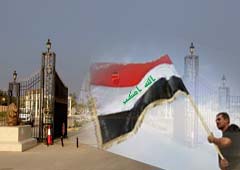
PMOI separatists: The group interferes in Iraq’s issues

Iraqi Defense Ministry announced on Tuesday that three leaders from “People Mujahedeen of Iran (PMOI)” have seceded from the group.

They flew Ashraf Camp and handed themselves to Iraqi authorities, the Ministry said.
The separatists accused PMOI commands of interfering in Iraq’s affairs and training Ashraf Camp residents on using arms to attack Iraqi Forces. The group was accused as well of training Iraqis and giving them positions in the government in order to endorse the group’s presence in Iraq.

“Three leaders of People Mujahedeen of Iran managed to escape Ashraf Camp along with tens others. Separatists are namely senior leader Maryam Sanjabi, leader Abdul Latif Shadvari and leader Ibrat Kikha’i”, Defense Ministry spokesman Mohammed Al Askari said in a press conference in Baghdad attended by Alsumarianews.
“There are confirmed reports and data from the new Iraq camp formerly known as Ashraf Camp about many residents trying to escape the camp and leave Iraq. Tens of them managed to flee the camp and handed themselves to the Iraqi government seeking help”, Al Askari said.

“Iraq’s government is dealing humanitarianly with these people and is trying to help them at their ease by coordinating with the international organizations and friend countries they wish to resort to. The government seeks to help camp residents who wish to leave the country upon their preferences”, he stressed.

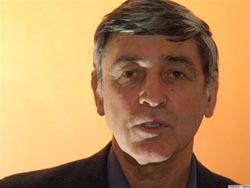
Separatist Ibrat Kikha’i argued during the press conference that the group People Mujahedeen of Iran “does not care about the losses of life inside the group due to the latest incidents given that casualties include its regular members not its general command. The high commands of PMOI do not acknowledge international laws and do not respect the laws of their host country”, he continued.

Kikha’i revealed that head of PMOI group Massoud Rajavi always calls for war and says: “If there is no war, I will make the war”.
The group always looks to interfere in Iraq’s affairs, separatist Ibrat Kikha’i said.

“During the first years of war, Rajavi was drawing in Iraqis to train them and give them positions inside the government. His aim was to stay in Iraq by using these people as a support for PMOI group”, Kikha’i said.

“Rajavi formed a committee inside the camp and established work departments for social communication with Iraqis. He drew in a number of Iraqi citizens and gave them personal salaries and handouts to turn against the government”, he added.

Separatist Abdul Latif Shadvari explained that he joined the PMOI group when he was 15 years old. He held important positions since 25 years and decided to secede from the group due to the pressures he has been subject to all these years. “PMOI members did not have the chance to express themselves freely during the last eight years”, Shadvari said.
“The group prepares us inside the camp for war even against the Iraqi Government. Members are trained on how to clash with Iraqi Forces and take away their arms. The group interferes in Iraq’s affairs. It interfered even in protests and spurred violence and sabotage”, he added.

“The group leaders believe in bloodsheds, suicide bombings and war which they regard as the main grounds of the group. Armed operations are one of the most important ideologies to the group”, separatist Latif Shadvari concluded.

Separatist leader Maryam Sinjari stated during the press conference that she is “a member of the command office in the group People Mujahedeen of Iran and a member of the Iranian opposition”. She seceded from the group after “a 20 year old enduring experience inside the group”, she said stressing that “head of the group Massoud Rajavi rejects others’ opinions and refuses any other command. He has been so for 30 years and is getting more oppressive day by day”.

“The group members do not enjoy any human rights since more than 25 years. The group’s internal structure does not allow anyone to express his view, call his family or use the phone or the internet”, she added.

“It is forbidden to have a family and children. Members of the group are not allowed to get engaged and married. The group counts for 3400 members and it is a few number facing 80 million people in Iran”, Sinjar continued.

“Anyone who secedes from the group is sentenced to death. This is what Rajavi always says. Two leaders of the high command were killed for this reason during the last years. Others are imprisoned inside the camp. Many members would like to get out of the camp but they don’t in fear for their life”, she concluded.

The presence of People Mujahedeen of Iran in Iraq has taken a new perspective lately. While the issue has been coming to light irregularly since the fall of the former regime, the settlement of this crisis seems to be imminent mainly after Iraq’s government issued a decision to end the presence of PMOI in Iraq by the end of 2011 considering the group as a terrorist group implicated in the killing of Iraqis.

The decision was backed by a Defense Ministry order to form an investigation committee into riots at Ashraf Camp that erupted on April 8. Iraq’s Defense Ministry suspects that PMOI group has used riot incidents to kill some of its members who wanted to leave the camp.

People Mujahedeen of Iran on the other hand accused Iraqi security forces of killing 30 of its members and wounding at least 300 others in clashes that erupted at Ashraf Camp.

AlsumariaTV
May 2, 2011 0 comments
FacebookTwitterPinterestWhatsappTelegramSkypeEmail
The MEK Expulsion from Iraq

MKO Begs Iraqi Gov’t Not to Expel Members

The ringleaders of the anti-Iran terrorist Mojahedin-e Khalq Organization have pleaded the Iraqi government to avoid closing down the terrorist group’s main training base in Northern Iraq and extend the MKO’s presence in the country, a human rights group revealed on Sunday.
MKO Begs Iraqi Gov't Not to Expel Members from Camp Ashraf
The Habilian association, a human rights group formed of the family members and relatives of the Iranian victims of terrorism, announced on Sunday that the MKO ringleaders who had earlier claimed ownership of Camp Ashraf and violated Iraq’s territorial integrity have now resorted to mediators to ask the Iraqi government to rent the Camp to them.

According to the human rights group, the Iraqi government has rejected the demand, stressing that it would never enter negotiations with foreigners over Camp Ashraf, which it described as an occupied part of Iraq.

In a bold and surprising action, Massoud Rajavi, the main ringleader of the terrorist group, had announced earlier that he would evacuate the MKO members from Camp Ashraf only if he received $200mln from the Baghdad government.

The MKO has been in Iraq’s Diyala province since the 1980s.

Iraqi security forces took control of the training base of the MKO at Camp Ashraf – about 60km (37 miles) north of Baghdad – in 2009 and detained dozens of the members of the terrorist group.

The Iraqi authority also changed the name of the military center from Camp Ashraf to the Camp of New Iraq.

The Baghdad government has assured Iranian officials and people that it is determined to expel the MKO from Iraq by the end of 2011.

"Expulsion of the MKO from Iraq’s soil and termination of its presence which has lasted for several years is a definite decision," Iraqi Government Spokesman Ali Al-Dabbaq told FNA in April, adding, "The MKO will be expelled from Iraq by the end of the current year."

"The only option for the members of the MKO is leaving Iraq and they have no other choice," he reiterated.

Reminding to the black record of the terrorist group and its crimes against the Iraqi people, Dabbaq said, "Collaboration with the former Iraqi dictator and massacre of thousands of our people is just part of their crimes".

Baghdad had earlier this month announced that members of the terrorist group must leave Iraq’s soil by the end of 2011.
Dabbaq announced in early April that the cabinet is determined to shut down Camp Ashraf located North of the capital, Baghdad, and disband the terrorist group.
"The council of ministers has committed to implement an earlier decision about disbanding the terrorist group by the end of this year at the latest, and the necessity of getting it out of Iraq," the official noted.

The MKO, whose main stronghold is in Iraq, is blacklisted by much of the international community, including the United States.

Before an overture by the EU, the MKO was on the European Union’s list of terrorist organizations subject to an EU-wide assets freeze. Yet, the MKO puppet leader, Maryam Rajavi, who has residency in France, regularly visited Brussels and despite the ban enjoyed full freedom in Europe.

The MKO is behind a slew of assassinations and bombings inside Iran, a number of EU parliamentarians said in a recent letter in which they slammed a British court decision to remove the MKO from the British terror list. The EU officials also added that the group has no public support within Iran because of their role in helping Saddam Hussein in the Iraqi imposed war on Iran (1980-1988).

The group started assassination of the citizens and officials after the revolution in a bid to take control of the newly established Islamic Republic. It killed several of Iran’s new leaders in the early years after the revolution, including the then President, Mohammad Ali Rajayee, Prime Minister, Mohammad Javad Bahonar and the Judiciary Chief, Mohammad Hossein Beheshti who were killed in bomb attacks by MKO members in 1981.

The group fled to Iraq in 1986, where it was protected by Saddam Hussein and where it helped the Iraqi dictator suppress Shiite and Kurd uprisings in the country.

The terrorist group joined Saddam’s army during the Iraqi imposed war on Iran (1980-1988) and helped Saddam and killed thousands of Iranian civilians and soldiers during the US-backed Iraqi imposed war on Iran.

Since the 2003 US invasion of Iraq, the group, which now adheres to a pro-free-market philosophy, has been strongly backed by neo-conservatives in the United States, who also argue for the MKO to be taken off the US terror list.

May 2, 2011 0 comments
FacebookTwitterPinterestWhatsappTelegramSkypeEmail
Iran

Most MKO members can return to Iran

Iran’s Ambassador to Iraq Hassan DanaifarIran’s Ambassador to Iraq Hassan Danaeifar says Tehran has pardoned most of the residents of Camp Ashraf except those with criminal records.
“Currently 3,400 people reside in Camp Ashraf, 1,000 of them have already returned to Iran and 750 have requested to leave the camp through the [International] Red Cross,” Danaeifar said on Sunday.

Danaeifar added that Tehran has pardoned all the residents of the Camp Ashraf except for less than 100 individuals who have criminal records, and ”the rest can return to the country or travel to wherever they want,” ISNA reported.

The members of the Mujahedin-e Khalq Organization (MKO) fled to Iraq in 1986, where they enjoyed the support of Saddam Hussein, and set up Camp Ashraf in Diyala Province near the Iranian border.

The group is known to have cooperated with Saddam in suppressing the 1991 uprisings in southern Iraq and the massacre of Iraqi Kurds.

Commenting on the harsh situation of life in the Camp Ashraf, Danaeifar said the residents were under immense pressure, and “they must confess to their sins, and even their sinful thoughts, every day.”

According to the reports coming out of Camp Ashraf and the revelations of former MKO members, telephones, cell-phones, the Internet and other mass media, and even listening to the radio or marriage is forbidden in the camp.

Danaeifar added that even though the MKO guard the camp to prevent the residents from escaping, and insist to remain in the Camp Aashraf, “Iraq’s government is against their presence in the country.”

Earlier in April, Iraq’s government spokesman Ali al-Dabbagh said that the cabinet is determined to shut down Camp Ashraf and disband the terrorist group.

The MKO has also carried out numerous acts of terror and violence against Iranian civilians and government officials.

Iran has repeatedly called on the Iraqi government to expel the group, but the US has been blocking the expulsion by pressuring the Iraqi government.

May 2, 2011 0 comments
FacebookTwitterPinterestWhatsappTelegramSkypeEmail
Mujahedin Khalq Organization as a terrorist group

US keeps MKO terrorists armed in Iraq

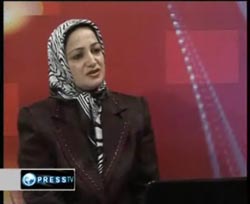
US troops have allowed the Mujahedin-e Khalq Organization (MKO) to secretly keep weapons inside their camp in Iraq, a defected member of the group says.

“After the 2003 invasion and occupation of Iraq, US troops appeared to have disarmed the MKO members at the camp, but in reality this did not happen,” Maryam Sanjabi, an ex-MKO member, told Press TV.


Link to the Video File

According to the organization’s defected members, since 2003 the leaders of the camp have been training the members on how to launch attacks against Iraqi forces if they tried to enter the camp.

“When the Iraqi government decided to set up a police station inside the camp, the situation got complex and the organization decided to fight back by preventing its members from communicating with the outside world,” Sanjabi added.

Former members have described life at the MKO’s Camp Ashraf as miserable, saying the organization has been brainwashing its members for the last two decades.

They say that the MKO members who reside in the camp are deprived of basic human rights. For example, they are not allowed to use the phone or internet or even communicate with the outside world by any means.

They further explained that the residents of the camp have to show blind obedience to their leaders or face the death penalty.

“MKO is a cult with an ideology of its own. Those in the camp are deprived of basic rights and must follow their superiors without any questions asked ,”Sanjabi went on to say.

The MKO is listed as a terrorist organization by much of the international community, and is responsible for numerous terrorist acts against both Iranians and Iraqis.

The group is especially notorious in Iran for siding with former Iraqi dictator Saddam Hussein during the 1980-1988 Iran-Iraq war.

It has also claimed responsibility for numerous terrorist attacks and the assassination of significant figures and ordinary civilians in Iran over the past three decades.

May 2, 2011 0 comments
FacebookTwitterPinterestWhatsappTelegramSkypeEmail
Former members of the MEK

MEK brainwashes members

As recently defected MKO members speak about their ordeals, Iraqi security forces have gained more insight into the torturous workings of the terrorist organization.

The members have described life at their Camp Ashraf base in Iraq as miserable saying the organization has been brainwashing its members for the last two decades.

They say that the MKO members who reside in the camp are deprived of basic human rights. For example, they are not allowed to use the phone or internet or even communicate with the outside world by any means. They further added that the residents of the camp have to show blind obedience to their leaders or face the death penalty.

According to the defected MKO members, after the US-led Invasion in 2003, US troops have allowed the MKO to secretly keep some of their weapons inside the camp.

They also said since 2003, the leaders of the camp have been training the members on how to launch attacks against Iraqi forces if they tried to enter the camp.

The MKO is listed as a terrorist organization by much of the international community, and is responsible for numerous terrorist acts against both Iranians and Iraqis.

The group is especially notorious in Iran for siding with former Iraqi dictator Saddam Hussein during the 1980-1988 Iran-Iraq war.

Wisam al-Bayati, Diyala

May 1, 2011 0 comments
FacebookTwitterPinterestWhatsappTelegramSkypeEmail
MEK Camp Ashraf

Our Political Responsibilities

A group of prominent Iranian human rights activists and intellectuals have responded to the horrendous killings of the Mojahedin Khalq Organization members by publishing an open letter condemning the killings. The moderate and peaceful spirit of the letter is commendable and deserves support. Our Political Responsibilities

Harm to MKO members was feared from the day Saddam Hussein’s regime came to its end. Iranian freedom-lovers knew that in view of the nature of the new regime in Iraq the MKO would have difficulty in maintaining its camp, Ashraf Camp and organization. The new political realities would one day come bring their status to a dead-end. It was clear from many years ago that it was prudent for MKO leaders to decide to that its members should migrate to other countries.

When the US handed over Iraq’s complete sovereignty to the Iraqi government concerns amplified about the imminent catastrophe. Many Iranian organizations, including Etehade Jomhurikhahan Iran (The Union of Iranian Republicans) rightfully stressed the need for the MKO to immediately depart Iraq while also emphasizing governments to encourage the MKO to do this.

Unfortunately the leadership of the MKO spent its greatest and most effective resources on a campaign whose goal was to attain the right to remain at Ashraf Camp.

In view of the political goals and policies of the MKO today vis-à-vis the governments of Iran and Iraq, it is clear that attempts to maintain the MKO in Ashraf Camp will only lead to more violence and clashes. When the Mojahedin settled in Iraq Saddam Hossein ruled over Iraq and the war between his government and the Islamic republic of Iran was in full swing. The MKO too wanted to continue their war with the Islamic republic. Because of this, they received the full support of the Iraqi government and at the least their security was completely provided to them. Saddam’s relations with the MKO were very cordial while those with the Shiites and the Kurds were deeply inimical.

Today, the MKO is active in toppling both regimes ruling Iran and Iraq. On the other hand, the governments of Iran and Iraq are closely cooperating with each other.

In recent months, some very influential politicians and political circles in the US have been actively supporting Mrs. Rajavi – as president – and strive to use the force at Ashraf Camp to change the Iranian regime. During the last three months alone, six important conferences were held in this regard and all six looked at this force as the agent of change in Iran.
At these conferences US general James Jones, Obama administration’s former national security advisor is the key driver.

As these conferences began and progressed, it was clear that the Iranian and Iraqi regimes would not tolerate General Jones’s proposals regarding Iran. At the time I wrote a piece explaining that a new game had begun which was another source of danger for the country and the region.

The condemnation of the tragedy that took place on the morning of April 8 in Ashraf Camp is the least and simplest response that Iranian pro-democracy activists can undertake. But our responsibility goes further. We have a deep responsibility towards the 3,500 individuals who are trapped in the neo-conservatist policies of the US and Israeli dreams for Iran. The policy of staying and preparing itself for the eventual outcome pursued by the MKO cannot last. Pressure and insistence of the neo-conservatists for using this force as a pressure against the Iranian regime must end.

Before the tragedy repeats itself, now is the time to approach the MKO and its powerful international supporters and press for the organization to submit its request to the UN Secretary General to resettle the group and its members in a secure country, while at the same time condemning any killing or bloodshed by the Iraqi army and to press the Iraqi government to announce a moratorium on the MKO.

I specifically request of the MKO, General Jones, John Bolton, Mrs. Mary Robinson, and Messrs. Howard Deen and Patrick Kennedy who are the most influential supporters of keeping the MKO and recognizing it as the alternative to the Iranian regime to facilitate the departure of this group from Iraq and set a specific date for this. At the same time, the Iraqi government should provided assurance that it would not enforce its sovereignty over Ashraf Camp until the departure of the MKO.

Translated by Rooz online

May 1, 2011 0 comments
FacebookTwitterPinterestWhatsappTelegramSkypeEmail
Mujahedin Khalq Organization

Narrative of Ahmad Reza karimi about MKO

A Report from “A Description of the History of MOJAHEDIN KHALGH of Iran and Its Stand Point” Written by Ahmad Reza Karimi, one of the Previous Members of the Organization”. It deals with its
A Description of the History of MOJAHEDIN KHALGH of Iran and Its Stand Point
origins and Alteration
The recently published book "A brief history of Mojahedin-e Khalq Organization and its policies" is originally the personal notes of Ahmad Reza Karimi, one of the former members of the organization, written in 1984 (1364 solar Islamic year ). The author has tried to trace the incidents from the starting days of foundation through all later phases of change. Detailed and interesting information has been referred to in this text, useful to come to know the organization.

Ahmad Reza Karimi had some organizational and non-organizational contacts with a number of members of MKO between 1968 -1971 (1348 and 1351 solar Islamic year). He founded a new group along with an Iraqi student in the summer of 1351. His group was discovered by SAWAK in the beginnings of 1972 (1352 solar Islamic year). , he, then, took part in a TV interview show. From that time, he was accused of cooperation with the regime. In the initial months of the victory of the Islamic Revolution, he was imprisoned where he spent a couple of months with Mohammad Taqi Shahram. For a while, one of his fellow inmates was Dr. Ali Shari’ati. After quitting his cell, he wrote a 30-page report on him by SAWAK order.

It is worth mentioning that karimi had spent his teenage and youth days in Qom, so topics related to Qom are here reflected. After the revolution, he remained in prison until 1365 but nothing is known about him after freedom.

In the opening section of the book, the author discusses the way the organization came into existence. He asserts that after some years of debate and discussion among a number of educated, believing Muslims in the early years of 1940 (1320 decade solar Islamic year). , the main people involved -Muhammad Hanifnejad, Saeed Mushin and Abdi NikBin, came to the conclusion that peaceful struggle was futile and only an armed struggle inside a modern and ideological frame and having a powerful and strategic leadership would serve the purpose.

"In the fall of 1967 (1347 solar Islamic year) in a session held in Tabriz, the organization was founded. The founders were the aforementioned three (the organization omitted the name of NikBin and in its propaganda named Ali Asghar Badi-zadegan as the third co-founder: because he had been previously executed, had taught in university and was well-known. Despite the fact that Badi-zadegan’s membership was more recent than Rohani and Mihandoost. They declared their foundation date as 1344 not the real date of 1345 to seem older than the Jazani group who was the initial core of Cherik’hay-e Fadaiy-e Khalq Organization.)

The prominent figures of Tabriz session were:

1. Muhammad Hanifnejad (one of the co-founders of MKO)
2. Saeed Mushin (one of the co-founders of MKO)
3. Abdi NikBin (one of the co-founders of MKO)
4. Hussein Ahmad Rohani (from the head-office members) whose personal notes by the name of "The MKo" has recently been published by the Centre for Publication of Islamic Revolution Documents.
5. Ali Mihandoost
6. Naser Sadeq
7. Torab Haqshenas
8. Abdolrasool Meshkinfam
9. Muhammad Bazargani
10. Bahman Bazargani
11. Ali Bakeri
12. Mahmud Askarzadeh
13. Ali Asghar Badi-zadegan (who later as was explained was declared as one of the co-founders)

The organization had initially not been named and only in 1970 (1350 solar Islamic year) and in prison was named "Mojahedin-e Khalq Organization" (1)

Throughout the book, the author has referred in several places to the ideology, organization, internal and external ties and the operations against the regime as well as SAWAK offensives against it. (2) In his personal notes, Ahmad Reza Karimi describes the different phases of ideological transformation of the organization, "to instill the Marxist ideology in the minds of the people, interesting phases were needed, some samples are mentioned in here:

The first phase, brainwashing:

In the first phase, the Marxist leader of the session would very subtlety start to slacken the religious sensitivities of the group members, for instance after the end of a session, he might have told that he had not said his prayers and after some repetitions of this he made the members ask for an explanation ; his possible answer could be his occupation with other good deeds and performing the prayer at a later time for compensation … throughout, the pamphlet of "what is translation?" written by NikBin in 1346 were interpreted by the leader. In the part that were intended for discussion it is a said that "self-correction is good to the extent that it does not block the path of struggle". Prayers and fasting were mentioned as the examples of self-correcting acts. As a result in 1962 – 1973 (1342 and 1353 solar Islamic year )., the majority of the religious members did not fast by the order of their chief for the excuse that they would lose the energy for fighting….in the final stage, the religious member would have become indifferent to performance of rituals and practical worships.

The second phase, cutting the religious teachings:

Asserting that in general, the members had accepted Islam, Quran and Nahjul-Balagha but their weakness was unawareness of the revolutionary texts, the religious teachings gradually diminished.

The third phase, replacement by Marxist texts:

Simultaneously with cutting the religious teachings, Marxist texts occupied more of the teaching materials. In this phase, the teachings were focused on Lenin’s work "what must we do", Stalin’s "the brief history of communist party of USSR" and also Stalin’s "Leninism subjects".

The Fourth Phase, Shedding Doubts by green pamphlets:

From the earliest days of the fall of1972 (1352 solar Islamic year) Taqi Shahram brought up questions and brief answers in his article published in the organizations internal publications. By this he intended to destroy the religious base of the organization.

The Fifth Phase, Declaration of Marxism:

After all these phases and observing the potential inclinations of the member, the chief informed them that organization had become Marxist and they had to make their mind about it. The result was evident, in almost all cases; all the members would accept it." (3)

In page 97 of the book, Karimi points out that:

"From 1972 (1352 solar Islamic year), the time that the Marxist Taqi Shahram entered the head-office, he started to change the mixture of Marxist ideology and religious references of the organization to a total and pure Marxism. Therefore, the theory that says he had done a coup is irrelevant. The ideological basis of the organization was in essence Marxism but with a make up of Islam. Taqi Shahram cleaned this superficial enamel of religion."

In another part of the book, the author mentions the meeting of some of the members with three of the clergy (the late Ayatollah Taleqani, the late Lahooti and Mr. Hashemi Rafsanjani). There they informed them of their new stances. In connection with the meeting with Mr. Hashemi Rafsanjani, he has written:

"Bahram Aram met with Mr. Hashemi Rafsanjani in the house of Haj Mehdi Ghayooran and informed him of this ideological shift. Hashemi Rafsanjani gave a negative response for their support continuation… after the arrest of Vahid [Afrakhteh] and the return of Mr. Rafsanjani from abroad, he was arrested.

Another important point in connection to these matters is Vahid [Afrakhteh]’s confessionary comments about the late Martyr Beheshti: in his private report t Taqi Shahram, Vahid’s last line is that the band of Shahram wanted to assassinate Dr. Beheshti in 1974 (1354 solar Islamic year). (probably because they saw him as the reason of the opposition of the clerics). I saw this confession in the dossier of Taqi Shahram in 1979 (1359 solar Islamic year); unfortunately it was not taken serious. Finally, the assassination plot drawn up by the head-office of 1974 (1354 solar Islamic year) was put into action in the July 1981(7th of Tir of 1360 solar Islamic year) by the head-office of that time. (5)

Elsewhere in the book, the author cites the unlawful male-female relations and organizational marriages:

"The MKO was originally in 1967 (in 1347 until 1351 solar Islamic year) a male’s organization and had no female elements. The need for safe houses with good covering made the organization decision makers use women and girls. The first members could be the relatives of the executed and imprisoned members…in that time Reza Rezayi had two marriages inside the organization which was the start of moral corruption: his first marriage with Leyla Zomorrodiyan (the next wife of Sharif Vaqefi) and the second marriage with Simin Salehi who had not even officially divorced his husband after going into hiding… some of the women and girls had the least political and organizational dispositions and were only kept as a coverage for safe houses and for sexual exploitation. (An element like Leyla Zomorrodiyan who after Reza Rezayi and Sharif Vaqefi as her husbands, became for a short while the spouse of Taqi Shahram and then by changing her safe houses changed her husbands is a tell-tale example)

…the sexual monopolism of the leaders of the organization was another consequence of this corruption. Taqi Shahram had five wives in the time of his activities… other consequences of this moral corruption of the organization were sexually-motivated suicides resulting from sexual and moral repressions". (6)

"Intra-organizational crimes" is another part of Ahmad Reza Karimi’s book where he explains the assassinations inside the organization for organizational settlement of accounts. The cases mentioned are the assassination of Javad Saeedi October 1972 (Mehr of 1352 solar Islamic year), Majid Sharif Vaqefi may 1974 (Ordibehesht 1354 solar Islamic year), failed attempt to kill Morteza SamadiyeLabbaf may 1974 (Ordibehesht 1354), assassination of Hassan Hasanan July 1974 (the last days of Ordibehesht or first days of Khordad 1354), assassination of Ali MirzajafarA’llaf fall 1974(fall 1354) solar Islamic year) and the murders of Muhammad Yaqini, Raf’at Afraz and Mahboobeh Afraz. (7)

Majid Sharif Vaqefi who was assassinated after the ideological shift of the organization (the Sharif University of Technology has been named after this Martyr).

In the nest section, the reasons of organization’s tendency to Marxism through the leadership and the deviation of the organization1974 (until 1354 solar Islamic year) have been elaborated. (8)

Counterfeiting SAWAK documents by the MKO in the first days of revolution, collaboration of some members with SAWAK, the complete list of the individuals’ names in analytical-pedagogical books, the explanations of Shahram’s bands for the change of ideology, ideological war and its different phases, resistances, troubles and impediments, and reasons behind the disillusionment of the members and their membership in other groups in pre- and post-revolution era, and other chapter-heads are included in Ahmad Reza Karimi’s book.

Also, the MKO’s stances and views on Imperialism bloc (US and …), Socialist bloc (USSR and …), China, Iraq and the Baath, right wing and left wing organizations, the clergy, Imam Khomeini, controllable classes of the society, war with Iraq, Dr. Shari’ati…have been treated and in the final part, the reasons behind MKO’s inclination towards the imperialism bloc is mentioned:

"Every power-seeking movement or individual creates ties with foreign powers to achieve its temporary aims…because of the anti-imperial atmosphere of the post-revolution era, in a period of its reshaping, MKO created connections with intelligence USSR. From 1981(1360 solar Islamic year), when on one hand the USSR were not able to publicly oppose the Islamic Revolution and on the other hand, the western powers like US and France had focused their subversive efforts against the government in Iran, they found the prepared ground in cooperation with the west. Another important point is their loss of ground inside the country which led to their tendency to seek help foreign aid for gaining power. The tactical silence of the eastern social bloc to oppose Iran facilitated their connection with the west. The collection of political movements in the west which supported this organization is dependent on Zionist circles that have been in charge of all efforts against the Islamic regime from the first days. From their point of view MKO is a probable alternative and a good puppet for the maintenance of their long-term interests. Particularly when they make Rajavi an infallible Imam and like all unreal Mahdis, they have a far-sighted vision in their makings. (9)

Footnotes:

1. P. 11
2. Pp. 12-44
3. P. 44
4. P. 97
5. P. 74
6. P. 92
7. P. 94
8. P. 96
9. P. 133

April 30, 2011 0 comments
FacebookTwitterPinterestWhatsappTelegramSkypeEmail
ICRC
MEK Camp Ashraf

Iraq: ICRC responds to situation in Camp Ashraf

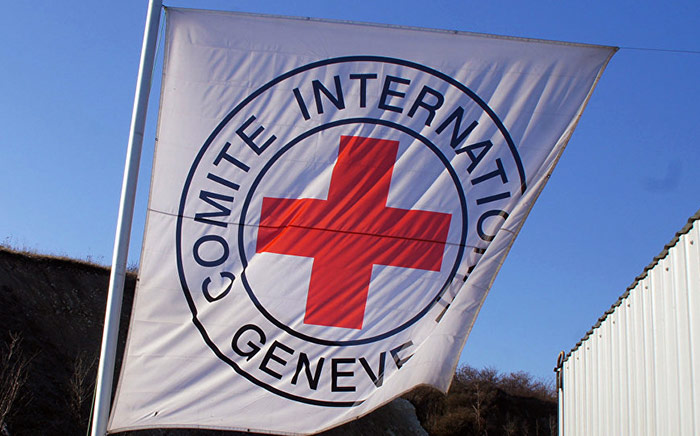
Violent clashes in Camp Ahsraf, 60 km north-east of Baghdad, recently left a number of people dead or injured. Over 3,000 Iranian nationals belonging to the People’s Mujaheddin Organization of Iran (PMOI) live in the camp. Magne Barth, head of the ICRC delegation in Iraq, explains the ICRC’s role and response.

ICRC

ICRC-1

What happened during the clashes at Camp Ashraf? What is the current situation?

Clashes on 8 April between Iraqi forces and Iranian nationals belonging to the People’s Mujaheddin Organization of Iran (PMOI) living in Camp Ashraf resulted in a number of deaths and injuries. According to our information, a number of casualties were taken to Baquba Hospital. These latest events have aggravated a situation that had been tense for quite some time.

We call on all those involved to exercise restraint and to comply with applicable law. This means, among other things, that the use of force by law-enforcement personnel must conform to the standards that govern law-enforcement operations. In addition, the dignity and physical well-being of all individuals must be preserved at all times.

What is the ICRC doing?

We are closely following the latest events, particularly the provision of medical care for the casualties and the evacuation of the dead and injured. Less than 24 hours after the clashes started, the ICRC provided dressing materials for Baquba Hospital, where casualties have been taken, and we remain in close contact with the hospital management. Should there be further needs, we are ready to assist.

After hearing that six people had been arrested and taken to Khalis Police Station, ICRC delegates visited the facility on 13 April to assess conditions of detention and the treatment of people being held there, and to give detainees the opportunity to contact their families.

Do you have regular contact with the residents of Camp Ashraf?

The ICRC has visited Camp Ashraf in the past in order to meet the residents and, in particular, to offer to help them contact their families in Iran and elsewhere through the exchange of Red Cross messages.

After the clashes on 8 April, people outside Iraq who have relatives living in Camp Ashraf contacted the ICRC and various national Red Cross and Red Crescent Societies, as they were worried about what might have happened to their relatives. We will try to help people obtain information on those who were caught up in the clashes.

What are the obligations of the authorities?

The authorities have the obligation to respect the rights that Ashraf residents enjoy under national and international law. In particular, the authorities must preserve the residents’ physical and mental well-being at all times, and must allow families to remain together as far as possible.

Furthermore, the ICRC has regularly reminded the authorities of their obligation to respect the principle of “non-refoulement,” which is a principle of international law that prohibits a State from transferring people to another State or authority if there is a risk that they may be subjected to any kind of ill-treatment, or that they may face persecution on account of their race, religion, nationality, membership of a particular social group or political opinion.

We have also reminded the authorities of their obligation to ensure that civilians in Camp Ashraf – as elsewhere in Iraq – have access to such basic necessities as food, water and medical care.

April 30, 2011 0 comments
FacebookTwitterPinterestWhatsappTelegramSkypeEmail
MEK Camp Ashraf

Give the Mojahedin Khalq an amnesty

As far as I can remember, Mojahedin Khalgh or MEK, an armed opposition group, has never enjoyed national support in Iran. When the MEK’S leader left Iran for Iraq and set up a camp to launch operations against the Iranian regime from Iraq, people shied away from them.
Iran was at war with Iraq and this group stood by Saddam Hussein, helping Iraq in their struggle against Iran.

The MEK’s operations were deadly. On one occasion they assassinated key revolutionary figure Ayatollah Motahari; on another occasion, they bombed the Republic Party’s headquarters in Tehran, killing about 70 people, including Prime Minister Masoud Rajai. I was at primary school at the time; the father of one of my classmates, Mr. Akbari, was one of those killed in the bombing.

After the Iran-Iraq War, the MEK faded from the scene, only to regain prominence when the US invaded Iraq.
Thousands of MEK members, most of them middle-aged, were residing in the Ashraf camp when it was taken over by the Americans in 2003. Iran wondered what their fate might be. Eight years later, still nothing has happened to them.

Iran won’t have them back and they’re struggling to stay in Iraq. Who’s going to offer a safe haven to 3,500 MEK members, all on the US terrorist list?

Last Friday, Iraqi forces last Friday killed at least 10 of them and injured more than 100 more.

Nouri Al-Malki’s spokesman said that they refused to let Iraqi soldiers enter the camp for a routine inspection.

On Tuesday April 11, the Iraqi government gave the residents of Ashraf camp an ultimatum: they must leave Iraq by the end of 2011.

But where they can go? What makes it more difficult is that the leadership refuses to let individual members leave.

Disarmed in Iraq by the Americans back in 2003, they blame the latter for not protecting them.

But the real problem is with their leadership. At least one-third of the MEK members in Ashraf camp are from North America or other Western countries, but the leadership won’t let them leave and go home.

In fact, no-one has heard anything about their leader, Masoud Rajavi, since 2003. His wife Maryam, who lives in France, is now running the show and she’s reluctant to hand over power to any of the members in the camp in Iraq.

Many Iranians think that the MEK are finished. Most of them feel sorry for these stranded MEK members. They regret that Rajavi trapped them and are also upset to see them being killed like animals in Iraq by Iraqis.

Some Iranians want the government to show the residents of Ashraf camp a little mercy, allowing them to come home to Iran and their families.

“These people have been wasting away for many years. It’s wrong. They are getting old and ought to come home. No-one knows who they were and what they did. An amnesty would save them from this nasty situation,” a journalist in Tehran told me.

Camelia Entekhabifard, Al Arabiya –  Published in the Egyptian Gazette on April 27

April 30, 2011 0 comments
FacebookTwitterPinterestWhatsappTelegramSkypeEmail
Mujahedin Khalq; A proxy force

Will Giuliani invite MEK “freedom fighters” to relocate in Manhattan?

The MEK issued a statement late last week that not only casts serious doubt on their claims to have renounced terrorism but demands that they be allowed to come to the U.S.
The group cites a disarmament deal they negotiated with the U.S. as the basis for the demand:

The Ashraf residents, in their two-day negotiations with (former Commanding General of U.S. Forces in Iraq) General Odierno on 9 and 10 May 2003, announced that after their disarmament, upon conditions that the US is incapable of giving them protection in Iraq, they are ready to go to the US.

The referenced deal, negotiated after the toppling of the MEK’s chief patron Saddam Hussein, apparently requires the United States to relocate MEK members in Iraq to the U.S. or E.U.:

…it is up to the US, in return to [sic] their disarmament and in accordance with the agreement signed with each of the residents, to transfer every one of them without exception to the US or European Union member States.

The fact that the MEK is designated as a Foreign Terrorist Organization would prevent them from legally coming to the U.S., but an assortment of prominent U.S. politicians, lobbyists, and consulting firms are working to reverse that terror designation. However, the MEK statement also raises new questions about whether the group has truly renounced terrorism as they have claimed:

Hence, if in the future similar to the past, the goal of establishing various committees in Iraq’s Prime Ministry is for the sole purpose of the residents’ repression, killing and closing down Ashraf, there will be no choice left for Iran’s freedom fighters other than resistance at any price.

So now that the MEK is threatening “resistance at any price” and demanding relocation to the U.S., the question is: will U.S. officials supporting MEK, some of whom have acknowledged receiving “substantial amount” of cash, invite these “freedom fighters” into their own backyards?

Perhaps Rudy Giuliani, who told an MEK conference in Paris last year that “the United States should not just be on your side…it should be enthusiastically on your side,” knows of a good place in Lower Manhattan to relocate the group. Never mind that MEK leaders Massoud and Maryam Rajavi reportedly celebrated September 11th by broadcasting the attacks at Camp Ashraf. Rudy apparently has no problem with the Rajavis’ declarations following September 11th that, “if (Al Qaeda) could do such a sophisticated military operation we must be able to do so in a much better manner,” and, “wait and see the fruits of our revolutionary Islam!”

Or maybe Congressman Ted Poe (R-TX), the lead sponsor of a resolution calling for MEK to be removed from the U.S. terror list, could invite the group to Texas. I’m sure he would enjoy informing his constituents in Liberty County that 3,500 Marxist-Islamist “freedom fighters” will be moving in down the street.

Or who knows, maybe the MEK’s U.S. supporters will be given pause by these new revelations, not to mention previous findings of torture and cult-like practices at Camp Ashraf. Maybe they will be convinced to focus not on legitimizing the MEK’s leaders but instead on the estimated seventy percent of Camp Ashraf residents that RAND estimates were brought there against their will and would leave MEK if given the chance.

But don’t hold your breath. If officials are being paid “substantial” amounts of money to advocate on behalf of MEK and have a change of heart, they might have to give the money back.

NIAC INSight

April 28, 2011 0 comments
FacebookTwitterPinterestWhatsappTelegramSkypeEmail
Newer Posts
Older Posts

Recent Posts

  • Expectations of human rights bodies regarding censorship within the MEK

    October 13, 2026
  • The Jamalis’ Plea for Help: Save Our Brother from the MEK!

    October 11, 2026
  • Testimonies of Participants in the MEK’s Staged Propaganda Stunt in Karaj

    October 7, 2026
  • Giuliani’s MEK ties have dogged him for years

    October 6, 2026
  • The Tragic Impact of MEK Isolation on Yazdan Teimorian and His Family

    October 5, 2026
  • Facebook
  • Twitter
  • Instagram
  • Youtube

© 2003 - 2025 NEJAT Society . All Rights Reserved. NejatNGO.org


Back To Top
Nejat Society
  • Home
  • Articles
  • Media
    • Cartoons
    • NewsPics
    • Photo Gallery
    • Videos
  • Publications
    • Books
    • Nejat NewsLetter
    • Pars Brief
  • About Us
  • Contact us
  • Editions
    • عربي
    • فارسی
    • Shqip