Nejat Society
  • Home
  • Articles
  • Media
    • Cartoons
    • NewsPics
    • Photo Gallery
    • Videos
  • Publications
    • Books
    • Nejat NewsLetter
    • Pars Brief
  • About Us
  • Contact us
  • Editions
    • عربي
    • فارسی
    • Shqip
Nejat Society
Nejat Society
  • Home
  • Articles
  • Media
    • Cartoons
    • NewsPics
    • Photo Gallery
    • Videos
  • Publications
    • Books
    • Nejat NewsLetter
    • Pars Brief
  • About Us
  • Contact us
  • Editions
    • عربي
    • فارسی
    • Shqip
© 2003 - 2024 NEJAT Society. nejatngo.org
MEK Camp Ashraf

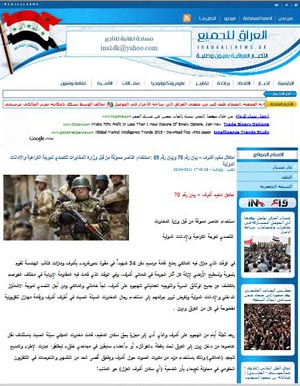
Hidden arsenal found in Ashraf Camp

The Iraqi local officials in the Province of Diyala have revealed that the Iraqi security forces found a hidden arsenal inside camp Ashraf.

Camp Ashraf was for years the armed training base in Iraq for the members of the Mojahedin Khalq Organization known as MKO, where the group was sheltered by former President Saddam Hussein.

The local officials stated the US troops already claimed they had disarmed the MKO members but it seems that was not true.

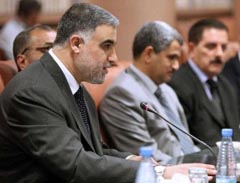
The mayor of Al Khalis where the camp is located showed the pictures of the weapons and said that they were buried inside the camp near the shacks of the MKO members.

Diyala’s police chief said the MKO leaders also claimed that they had handed over more than 17 thousands of weapons to the US troops since the US invasion in 2003.

Recently MKO said the Iraqi security forces killed more than 34 of its members in the latest clashes on April.

Clashes reportedly erupted when Iraqi security forces began to regain control of the land confiscated by Saddam Hussein to setup the MKO camp. Officials say, members of the camp began hurling stones and attacking the security forces with knives and other weapons as they were carrying out their duty.

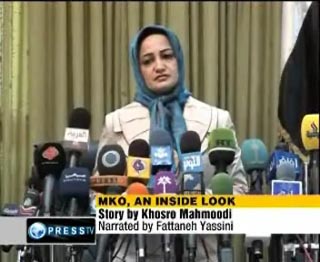
Iraqi defense ministry also held a press conference inside the camp to show that the MKO claims were baseless.

The MKO is listed as a terrorist organization by much of the international community, and is responsible for numerous terrorist acts against both Iranians and Iraqis.

Since the 2003 US invasion of Iraq, the group has been backed by some in the US, who also argue for the MKO to be taken off the US terror list. However, in line with the new Iraqi constitution, Baghdad government has assured it is determined to expel the MKO from Iraq by the end of 2011.

Wisam al-Bayati

April 19, 2011 0 comments
FacebookTwitterPinterestWhatsappTelegramSkypeEmail
The MEK Expulsion from Iraq

Iraq determined to expel MKO

Iraq has expressed determination to expel the terrorist Mujahedin-e Khalq Organization (MKO) from the country by the end of the current year after issuing ultimatums over the past eight years.
In an interview with Fars News Agency in Baghdad, Iraqi government spokesman Ali al-Dabbagh said the only option open to MKO members was leaving Iraq.
Iraqi government spokesman Ali al-Dabbagh
The senior Iraqi official added that helping Saddam Hussein massacre thousands of innocents in Iraq is merely an example of the crimes committed by the MKO.

The Iraqi government announced on April 11 that the cabinet was determined to shut down Camp Ashraf in Diyala Province, located some 60 kilometers (37 miles) north of the capital Baghdad, and expel the terrorist MKO group.

The MKO was founded in Iran in the 1960s, but its members fled to Iraq in the 1980s after carrying out a series of assassinations and bombings inside the country.

The MKO cooperated with Saddam in suppressing the 1991 uprising in southern Iraq and the massacre of Iraqi Kurds.

Following the ouster of Saddam in 2003, the Iraqi government has set numerous deadlines for the terrorist group to leave the country but MKO has managed to maintain Camp Ashraf due to US backing.

April 18, 2011 0 comments
FacebookTwitterPinterestWhatsappTelegramSkypeEmail
Ann SingletonFormer members of the MEK

Singleton visits Camp Ashraf in wake of violence by Rajavi cult loyalists

Anne Singleton from Iran-Interlink visited Camp New Iraq (Formerly Ashraf) in the wake of violent clashes between MEK loyalists and Iraqi security forces. The Iraqi commander in charge of the camp showed some of the pre-manufactured missiles used by the MEK as they attacked Iraqi soldiers at the base.

It is thought that up to 200 MEK members loyal to Massoud Rajavi took part in the violence. It is not known how many of the 3400 residents at the camp continue as members of the terrorist group.

Human Rights organisations have called for an independent investigation into events at the camp.

Singleton visited the camp at the start of a week of meetings with Iraqi officials to demand that the organisational infrastructure of the group be dismantled, and that the leaders are prosecuted under Iraqi and international law. The remaining residents should be enabled to determine their own futures without pressure from the MEK leaders. Their families should be involved to help in this process. Over 1000 Camp New Iraq (Formerly Ashraf) residents have residency or citizenship rights in Europe and North America. The embassies of these countries can facilitate their return.

Detailed reports will follow soon

Large metal missiles pre-manufactured by MEK in readiness for violent clashes with Iraqi military

MEK used different coloured headgear to coordinate place and timing of pre-planned actions

Small metal missiles catapulted at soldiers and observers from inside the camp by Rajavi loyalists

April 18, 2011 0 comments
FacebookTwitterPinterestWhatsappTelegramSkypeEmail
Former members of the MEK

MKO treats members like prisoners

Reports coming out of Camp Ashraf point to the inhumane treatment of residents by the terrorist Mujahedin-e Khalq Organization (MKO), which has recently engaged in an exchange of fire with Iraqi security forces.

The punishment of those who try to escape from Camp Ashraf… is death and execution,” Shadvari explained

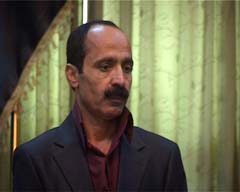
“I worked with the organization for 25 years… during these years I could not contact my family… using the phone, cell-phone, Internet, other mass media and even listening to the radio is forbidden in the organization,” Abdullatif Shadvari, a former MKO members said.

Shadvari escaped Camp Ashraf two month ago and surrendered himself to Iraqi forces.
“The punishment of those who try to escape from Camp Ashraf… is death and execution,” Shadvari explained.

Shadvari added that the only way of exiting Camp Ashraf is through escaping, “and escaping requires three or four months of preparation… if you are arrested while escaping they will put you in a room for three or four years, and will not hand you to Iraqi forces.”

He said many of his friends at the camp suffer from similar problems and “during the past eight-nine years no international organization has talked with members individually to perhaps help them out of this situation.”

Shadvari believes many residents of Camp Ashraf, who are under immense pressure, want to escape but are afraid and unsure of the future.

In response to a question about why the MKO keeps residents imprisoned, Shadvari explained that if people exit the camp the organization would fall apart.

The former MKO member also said that marriage is forbidden at Camp Ashraf, and male residents are not even allowed to speak to women.

On April 8, 34 people were reportedly killed in clashes between Iraqi security forces and MKO members residing in Camp Ashraf in Diyala Province.

Iraqi forces claim that according to evidence, these people have been killed by the organization itself.

On April 11, Iraqi government spokesman Ali al-Dabbagh said the cabinet is determined to shut down Camp Ashraf.

The group fled to Iraq in 1986, where it enjoyed the support of Saddam Hussein, and set up Camp Ashraf in Diyala near the Iranian border.

More than 3,000 MKO members are residing at Camp Ashraf. In addition to cooperating with US soldiers in Iraq, the MKO sends elements to Iran on spy and terrorist missions.

The organization is also known to have cooperated with Saddam in suppressing the 1991 uprisings in southern Iraq and the massacre of Iraqi Kurds.

The MKO has carried out numerous acts of terror and violence against Iranian civilians and government officials.

Iran has repeatedly called on the Iraqi government to expel the group, but the US has been blocking the expulsion by pressuring the Iraqi government.

April 18, 2011 0 comments
FacebookTwitterPinterestWhatsappTelegramSkypeEmail
Mujahedin Khalq; A proxy force

Support for MKO, a classic example of US unsustainable policy in ME

Interview with Mark Dankof, former United States Senate candidate

Foreign forces move into Pearl Square in Manama, March 16, 2011
Bahrain’s turmoil has become extremely critical as political analysts think the Saudi Arabian troops have had the United States’ green light to step on the soil of the Persian Gulf nation.
Mark Dankof, former United States Senate candidate
The following is a rush transcript of a Press TV interview with Mark Dankof, former United States Senate candidate, in which he commented on the role that Washington plays in the events currently taking place in the Middle East.

Press TV: Why should we not believe that the green light was given by the United States to Saudi Arabia to intervene in the crisis in Bahrain? Because based on credible reports, Washington has also recently asked Saudi Arabia to supply weapons to revolutionaries in the Libyan city of Benghazi.

Dankof: I think you are exactly right. I am part of the American Right in this country … that has consistently opposed the type of foreign policy that the United States has been pursuing in the Middle East. Well does it relate to supporting the Zionist state, without question, as it also relates to supporting a series of regimes in that part of the world that clearly do not have popular support, and in the long run, it is simply going to take a foreign policy based in force for this whole status quo to continue.

There is only one problem. Aside from the immorality of this, the United States does not have enough men and enough money to continue this type of an imperial policy any more than their British predecessors did. And when we look at (United States Secretary of Defense) Robert Gates’ history as Ray McGovern chronicles that — Ray of course was Gates’ superior at the CIA (Central Intelligence Agency) for a number of years — and when we read what McGovern has said about Gates and the nature of Gates’ relationship with Barack Obama, I think it is entirely reasonable to postulate that, in fact, there was an agreement between Gates and the Saudi regime that they would carry this out either at the behest of the United States or the bare minimum with a green light from the United States to proceed.

And one simply has to look at these pictures on your television network, and some of the coverage that has been on the Australian media in the last day in regard to what has been going on in Bahrain, to see that once again the United States is clearly being linked around the world to these killings. When we start talking about reprehensible governments and American-supplied arms, the blowback from this is going to be absolutely incredible.

Press TV: We can see many inconsistencies in the statements made by the United States, the major one of which standing out being the idea of “restraint.” We see what is going on in Bahrain, and yet we compare the other countries. What is the United States’ stance and why do you think they are coming out with these inconsistencies in their stance?

Dankof: The inconsistencies reflect the inconsistencies in American foreign policy all the way down the line in terms of what we say we stand for as opposed to what our actual agenda is. A classic example of this is when you look at the American and Israeli support of the Mujahedin-e-Khalq, which was killing Americans in Iran back in the 1970’s during the Pahlavi era. But it has certainly become convenient for the United States and Israel to have an alliance with this so-called Marxist terrorist organization as long as these people are doing their bidding in Iran and committing a series of acts which by any definition are criminal, and which have the fingerprints of the American and Israeli intelligence communities all over them. It is also noteworthy that the Saudi Arabian regime has been helping to bankroll this Mujahedin-e-Khalq or MEK organization in their activities around the world, and especially those directed at Iran.

So the United States, on the one hand, claims to be for human rights; for constitutional government; for the protection of the lives of the innocents, and yet of course, when you look at any of these situations that are transpired in recent weeks in Tunisia, in Egypt, in Yemen, in Bahrain and elsewhere, the implication is that we have a problem here, because the folks that we want to keep in power are clearly people who, historically and presently, have not been for any of these things that we say that we believe in. Nonetheless, we will try to help them keep the lid on these mass protests, because ultimately, where American foreign policy is concerned in the Middle East, it is almost about three things: supporting Israel at all costs; supporting international central banking interests at all costs, and it is not an accident of course that Bahrain is home to many international banking institutions; and then of course, the natural gas and oil consortiums. And in the case of Bahrain, fourthly, there is the American Fifth Fleet sitting there, which is part of the enforcement arm that the United States, by implication, would use to try and enforce the interests of these first three constituencies that I have mentioned.

There is a rising perception among the average American in this country, left and right, politically, that their government has involved them in something that is a complete loser. It is a loser in terms of our linkage, as a people, to the deaths and suffering of all of these innocent people in your part of the world. It is a loser as more American money continues to be borrowed from China, Japan and Saudi Arabia to finance these military expeditions in the Middle East. And ultimately more American young men and women will lose their lives in trying to enforce and to perpetuate this older British foreign policy. It is unsustainable. The British found out how unsustainable it was. The United States is, unfortunately, is about to find out, much to its own detriment, and much to a great degree of tragedy, that this whole thing is headed in no good direction for anybody concerned.

April 18, 2011 0 comments
FacebookTwitterPinterestWhatsappTelegramSkypeEmail
Nejat Publications

Pars Brief – Issue No.58

1.    Camp Ashraf residents announce readiness to leave Iraq

2.    Camp Ashraf clash leaves 3 dead-Two Mojahedin Khalq members set themselves alight prior to the clash

3.    UNHCR: Camp Ashraf residents have to renounce violence before applying for refugee status

4.    Iraqis continue to protest Mojahedin Khalq camp

5.    MKO; New Chalabi for the West

6.    An Unholy Alliance

7.    What’s Behind the Campaign to Delist the Mujahedin al-Khalq Organization?

8.    Double standard on terror

9.    Israel using Mojahedin Khalq (MKO, MEK, NCRI, Rajavi cult) to push pre-emptive war against Iran agenda

10. Ex-Officials Say They Were Paid To Attend Pro- Mojahedin Khalq Events

11. Don’t Support the Mojahedin Khalq (MEK, MKO, NCRI, Rajavi cult)

12. Iraq parliament recognizes chemical attack on Halabja as genocide

13. UK Government confirms – MKO leaders deny families’ access to their captive relatives inside Camp Ashraf

Download Pars Brief – Issue No.58

April 18, 2011 0 comments
FacebookTwitterPinterestWhatsappTelegramSkypeEmail
MEK Camp Ashraf

Could the MEK be evicted from Camp Ashraf?

Iraqi Government is determined to expel Mujahedin Khalq Organization from its territory but in order to fulfill its desired decision; Iraqi officials have to challenge the absolutely cultlike structure of the group. The problematic obstacle against Iraqi will is the nature of the terrorist destructive cult of MKO . Rania Abouzeid of the Time describes the incidents at Camp Ashraf based on Rupert Colville, spokesman for the UN who himself seems to be not enough informed on what exactly happened in Camp Ashraf:
Could the MEK be evicted from Camp Ashraf by Iraqi Military?
For years, Iraq’s increasingly pro-Iranian government has threatened to evict the 3,400 Iranian members of the Mujahedin-e Khalq (MEK), a fiercely anti-Tehran group, from its sprawling former military base at Camp Ashraf, some 40 miles (65 km) from Baghdad, the Iraqi capital, and 50 miles (80 km) from the Iranian border. Despite the heated rhetoric, however, Baghdad has never fully articulated how it will uproot the exiles — who refuse to leave their decades-old enclave — beyond saying it will not forcibly do so. The dead include at least seven women, according to Rupert Colville, spokesman for the U.N. Office of the High Commissioner for Human Rights. "Most of those killed appear to have been shot. However, several suffered other types of injuries that would suggest they were hit by vehicles," he told TIME from Geneva. "It has been extremely difficult to gain access to the camp, and many details about the exact circumstances surrounding this tragedy remain unknown at this point. The Iraqi authorities and the [MEK] are giving wildly differing accounts."

The TIME correspondent view Camp Ashraf and Mujahedin Khalq as a source of contention in US-Iran-Iraq relations :
The camp is a major irritant to Baghdad’s ties with Tehran and is perhaps one of the strangest holdovers from the dramatic shift in relations between Iraq, its once bitter foe Iran and their former and current mutual enemy the United States. The MEK, which is also known by the acronym MKO and by the name the People’s Mujahedin, was given Camp Ashraf by Hussein during his bitter eight-year war with neighboring Iran. He funded and armed the group, which launched attacks on Iran from Iraq.

Although the camp was disarmed in 2003 by the U.S. military, both Baghdad and Washington consider the MEK a terrorist organization. Washington has blacklisted the group for its attacks against U.S. interests in the 1970s and ’80s. Iraqi officials have frequently said the Iranian exiles are "illegal aliens" with no legal right to remain in the country and that they must travel to either Iran or another country. They have repeatedly warned that they will close the camp, which was under U.S. military protection until 2009, when responsibility was transferred to Iraq under a comprehensive bilateral agreement. Deadlines for closing Camp Ashraf have come and gone. This week Iraq said the group must leave the country by the end of the year.

She describes the cult-like structure of MKO:
Camp Ashraf, with its gender-segregated dormitories, manicured lawns, flower beds and tree-lined streets, is the only home many of the residents have known. The MEK maintains firm control over its members, preventing them from marrying and restricting or preventing contact with family elsewhere.

Abouzeid views the issue of Camp Ashraf as a difficult problem to cope with due to the stubbornness of the MKO and the hatred of Iraqi people towards MKO:
The standoff is unlikely to end well or soon, given that the MEK won’t even consider relocating within Iraq (the government wants to move the group away from the Iranian border), let alone overseas, unless strict (and some say unrealistic) conditions are met. Kia, the MEK representative, says the group will consider returning to Iran if "freedom of speech and political activities are guaranteed," an impossibility for a group determined to bring down Tehran’s clerical leaders. "The second option is to transfer all of the residents to the U.S. or one of the E.U. member states," he says.
..
The recent raid wasn’t the first instance of bloodshed between the Iraqi military and the camp’s residents since the U.S. handed over responsibility for it, but it was the most serious. In mid-2009, Iraqi security forces briefly tried to wrench control of the MEK base from its leaders after the Iraqis were denied a request to establish a police station inside the camp. At least six residents were killed and dozens wounded in the ensuing clashes. Things can rapidly devolve into violence once again, given growing Iraqi frustration with the organization, whose members exhibit a cultlike obedience and willingness to sacrifice themselves for their cause.

MKO propagates the residents of Camp Ashraf with it’s increasingly accelerate machine:
The MEK’s slick and efficient p.r. machine is well primed to exploit the situation. It has a ready list of European and American political figures eager to defend it (and who are looking for reasons to argue against its terrorist designation in the U.S.). These include former Secretary of Homeland Security Tom Ridge, former National Security Adviser General James Jones and former Democratic presidential candidate Howard Dean. After a legal battle, the E.U. removed the organization from its terrorist list in 2009; the U.K. did so in 2008.

April 17, 2011 0 comments
FacebookTwitterPinterestWhatsappTelegramSkypeEmail
Iraqi Authorities' stance on the MEK

Iraqi MPs Renew Support for Expulsion of MKO

Members of Iraq’s legislative body voiced their support for Baghdad’s recent decision on the expulsion of the member of the terrorist Mojahedin-e Khalq Organization (MKO) from Iraq’s soil, and urged the Nouri Al-Maliki’s government to immediately put the decision into effect.

The decision was first adopted by the Baghdad government last year but the country’s state officials reiterated this week that they are resolved to accelerate implementation of the decision after the terrorist group started an armed conflict with the Iraqi security forces responsible for guarding the MKO’s main training camp in Iraq, the Camp of New Iraq (formerly known as Camp Ashraf).

Zeinab al-Taei, a member of Ahrar Party at the Iraqi parliament, told the Iraqi Kurdistan New Agency, AKnews, that the bloc supports expulsion of MKO members, and expressed the hope that the decision would be put into effect soon in future.

Meantime, Abbas al-Bayati, a member of Iraq’s National Alliance, said that the decision will be implemented by the end of 2011.

Safiyeh Soheili, an independent lawmaker, reminded the terrorist group’s assistance with the former Ba’ath regime’s confrontation against the Iraqi people, and told AKnews that the MKO’s case in Iraq should be closed.

Earlier this month, Iraq announced that members of the terrorist group must leave by the end of the current year (2011).

Iraqi Government Spokesman Ali al-Dabbagh said that the cabinet is determined to shut down Camp Ashraf located North of the capital, Baghdad, and disband the terrorist group.

"The council of ministers has committed to implement an earlier decision about disbanding the terrorist group by the end of this year at the latest, and the necessity of getting it out of Iraq," the official noted.

The MKO has been in Iraq’s Diyala province since the 1980s.

Iraqi security forces took control of the training base of the MKO at Camp Ashraf – about 60km (37 miles) north of Baghdad – in 2009 and detained dozens of the members of the terrorist group.

The Iraqi authority also changed the name of the military center from Camp Ashraf to the Camp of New Iraq.

The MKO, whose main stronghold is in Iraq, is blacklisted by much of the international community, including the United States.
Before an overture by the EU, the MKO was on the European Union’s list of terrorist organizations subject to an EU-wide assets freeze. Yet, the MKO puppet leader, Maryam Rajavi, who has residency in France, regularly visited Brussels and despite the ban enjoyed full freedom in Europe.

The MKO is behind a slew of assassinations and bombings inside Iran, a number of EU parliamentarians said in a recent letter in which they slammed a British court decision to remove the MKO from the British terror list. The EU officials also added that the group has no public support within Iran because of their role in helping Saddam Hussein in the Iraqi imposed war on Iran (1980-1988).

The group started assassination of the citizens and officials after the revolution in a bid to take control of the newly established Islamic Republic. It killed several of Iran’s new leaders in the early years after the revolution, including the then President, Mohammad Ali Rajayee, Prime Minister, Mohammad Javad Bahonar and the Judiciary Chief, Mohammad Hossein Beheshti who were killed in bomb attacks by MKO members in 1981.

The group fled to Iraq in 1986, where it was protected by Saddam Hussein and where it helped the Iraqi dictator suppress Shiite and Kurd uprisings in the country.
The terrorist group joined Saddam’s army during the Iraqi imposed war on Iran (1980-1988) and helped Saddam and killed thousands of Iranian civilians and soldiers during the US-backed Iraqi imposed war on Iran.

Since the 2003 US invasion of Iraq, the group, which now adheres to a pro-free-market philosophy, has been strongly backed by neo-conservatives in the United States, who also argue for the MKO to be taken off the US terror list.

April 17, 2011 0 comments
FacebookTwitterPinterestWhatsappTelegramSkypeEmail
MEK Camp Ashraf

Camp Ashraf residents announce readiness to leave Iraq

 According to a report published by the Fars news agency on Saturday, the members of the terrorist Mojahedin Khalq Organization (MKO) who are based at Camp Ashraf has announced their readiness to leave Iraq.
The senior members of the MKO sent a letter to the UN Special Representative (for Iraq Ad Melkert) yesterday (Friday), in which they expressed (the group’s) readiness to leave Iraq
The Fars news agency quoted a close source at the United Nations office in Iraq as saying, “The senior members of the MKO sent a letter to the UN Special Representative (for Iraq Ad Melkert) yesterday (Friday), in which they expressed (the group’s) readiness to leave Iraq.”

“In their letter, the senior members of the MKO called on the UN representative to prepare the ground for the group’s exit out of Iraq and their travel to a European country or the United States,” the source stated.

According to the source, Melkert is discussing the issue with officials of the French, British, and U.S. embassies in Baghdad.

On April 8, following orders of the government and in line with the new Iraqi Constitution, the Iraqi army tried to dismantle the terrorist group’s residential area, called Camp Ashraf, but the MKO members residing in the camp clashed with the Iraqi soldiers.

The Iraqi government has also set a deadline for Camp Ashraf residents to leave the country.
On April 13, the Iranian ambassador to Baghdad announced that Camp Ashraf residents can return to Iran under certain conditions.

“These persons can travel to Iran or any other country if they are willing to do so and if no criminal case has been filed against them in Iran or Iraq. They will also be given passports,” Ambassador Hassan Danaiifar stated.

Backed by the U.S. and some European countries, the MKO started its activities as a terrorist group based in Iraq in the early 1980s. In addition to the assassination of hundreds of Iranian officials and citizens, the group cooperated with Saddam Hussein’s Baathist regime in its repression of the Iraqi people.

April 17, 2011 0 comments
FacebookTwitterPinterestWhatsappTelegramSkypeEmail
Mujahedin Khalq; A proxy force

The West has its own good and bad terrorists

Iran’s Foreign Ministry is demanding that the European Union stop supporting the terrorists carrying out attacks against the Islamic Republic. Iran’s Foreign Ministry press secretary, Mehmanparast Ramin, said that the EU should stop providing asylum for terrorist organizations like Mujahedin-e Khalq (MEK).

The Iranian Foreign Ministry’s announcement came after an April 8 attack by the Iraqi army on the mujahedin camp at Ashraf in Iraq that resulted in 34 people killed.

For their part, the Western and Iraqi media exploited the attack as a manifestation of Iranian aggression. And Iran’s Foreign Ministry accuses them of supporting "terrorists who have killed more than 12,000 people." However, the West says that Iran is directing the activities of Shiite terrorist groups like Hezbollah.

Center for the Study of Modern Iran Director General Rajab Safarov explained why the West is supporting Mujahedin-e Khalq:

The Mujahedin-e Khalq (People’s Opposition of Iran) is the most reactionary, capable and militarized of all the opposition groups. It periodically carries out terrorist attacks against the Islamic Republic. In fact, the West, the United States and the EU have been strengthening it and using it for their own purposes in an attempt to destabilize Iran. This is an Iranian-style "fifth column" in a multiple combination play against Iran.

The West expects to use the MEK to make Iran an obedient tool in its hands. The "mujahedin" have been actively collaborating with the West for more than 20 years. They previously had one main master/benefactor—Saddam Hussein—Iran’s sworn enemy, who would not hesitate to use them for his own purposes when it suited him.

Despite receiving broad financial, political and information support, this group has very little credibility among the Iranians themselves and mainly relies on marginal organizations, criminal elements, Iranian emigrants and Arab mercenaries. It is hampered by the fact that it openly fought against its own people during the eight-year Iran-Iraq war (1980-1988). The Iranians will never forget that, and the overwhelming majority considers the "mujahedin" traitors.

Now that Hussein has been overthrown, they are supported entirely by the West, as well as by puppet Arab regimes. The EU and the United States fund the MEK and make little effort to hide the fact. Their camps remain in Iraq, and American instructors provide training for the mujahedin. The United States has provided them with up-to-date equipment, which they use to carry out terrorist attacks for their own purposes. So after Saddam they were orphans for only a short time.

And the fact that the "mujahedin" are located in Iraq has been a real stumbling block in Iran-Iraqi relations during recent years. It is interesting that the West never tires of accusing Iran of meddling in Iraqi affairs, even though it does everything it can to see that Tehran reacts adequately to threats emanating from there. Under the circumstances, the Iraqi army is obviously forced for reasons of national security to make regular raids into Iraqi territory to destroy these terrorists, and each time they do so the West condemns it.

The current Iraqi government has been promising Iran for several years that it would eliminate the mujahedin camps, but nothing has been done yet. One of their justifications is that there are supposedly a large number of them; they have numerous families in Iraq, and if pressure is applied to them, they will disperse across Iraq and begin taking revenge. However, Western support for the mujahedin is an important factor keeping them in place.

In 2009, the EU legalized these terrorists when it removed them from the list of terrorist organizations. But that did not prevent it from accusing Iran of supporting terrorism. That is a blatant instance of the application of double standards: if Tehran does something, the West calls it terrorism. But it is not terrorism if the mujahedin with blood up to their elbows attack Iran. However, that is intrinsic to the way the United States and the EU understand "democracy."

We should add that the Iranian mujahedin feel at home both in the Iraqi camps and in Western countries, where they have delegations. It is revealing that the recent execution of the Dutch national Zahra Bahrami for involvement in their activities caused relations between Iran and The Netherlands to deteriorate sharply, and Amsterdam recalled its ambassador from Tehran.

The mujahedin are not simply a group of militants. In addition to the military wing—the National Liberation Army of Iran, or NLA—there are also political structures responsible for contacts with the West and obtaining financial assistance.

The organization’s political wing is located in Paris. That was where the shadow parliament located itself in 1981. It consists of 570 members of various Iranian parties and factions, including members of the Communist Party of Iran, the Tudeh Party of Iran, the Fedayeen-e-Khalk and Howeyyat. There are also large branches of the MEK in the United States (Los Angeles, New York, Washington), Germany (Cologne) Italy and Canada.

The "mujahedin" also place great emphasis on conducting information warfare. They have numerous media outlets for that purpose, including radio stations like Radio-ye Iran e-Farda and Radio Sedaye Iran.

The organization’s current leaders are Massoud and Maryam Rajavi, who travel among Washington, Paris and Baghdad. However, it would be a mistake to think that the mujahedin are evolving into a nonviolent organization.

Currently, they control more than 4500 fighters, most of whom are located in Iraq. But despite the Iranian terrorists’ warm relations with the West, their relations with the Iraqi authorities are quite cool. The fact is that Saddam Hussein, who sheltered them, used Iranian emigrants, including the mujahedin, in punitive operations against the Kurds and Shiites; and American intercession is the only thing forcing the authorities to tolerate them for now.

The organization has an unusual history. It emerged in the late 1960s from student groups that had formed several years earlier. Its members were mostly the sons and daughters of Iranian merchants who were unhappy with the excessive Western influence during the Shah’s time.

Their ideology gradually became a mixture of Marxism and Islamism, combined with a hatred for the West that appears unnatural at first glance. The organization very quickly became a terrorist group that initially fought a guerrilla war against the Shah’s regime and his American masters.

In the 1970s, the Iranian mujahedin killed several American soldiers and civilians who were assisting the Shah. And they committed an act that was anathema to democracy in 1979, when they took part in the infamous attack on the American Embassy in Tehran. They had been instrumental in toppling the US puppet, the Shah. Whereas the people were brought out onto the streets by the ayatollahs, they and the fedayeen, who are now aligned with them, were primarily the ones who successfully fought the Shah’s security forces (for example, they destroyed several of his helicopters over the course of several days).

However, the Americans quickly forgot their past transgressions; after all, when the ayatollahs monopolized power, they became a "clerical regime" that restrained Iran’s growing influence during the eight-year Iran-Iraq war, among other things.

The mujahedin quickly lost support within Iran itself: by the beginning of 1984, the ayatollahs’ security services had smashed their underground, which had primarily been active in the cities. The mujahedin groups concentrated in Iraq, where Saddam Hussein formed them into units that fought their fellow Iranians.

But when the war ended, the Iranian mujahedin again turned to terrorist activities. They primarily operated outside Iran, begging forgiveness for their past offenses from American democracy. In April 1992, the organization attacked 13 Iranian embassies in various countries.

In June 1998, the mujahedin once again attempted to get a terror campaign going in Iran when they exploded three bombs in Tehran and killed the former warden of Evin Prison, Asadollaha Lajevardi.

And although they failed to rebuild their devastated clandestine network in Iran, they did not stop raids against the Islamic Republic. That provides a clear example of how terrorism and democracy can peacefully coexist. After all, the Western defenders of human rights need "their" bad guys to do their dirty work.

Of course, no one today denies the existence of Hezbollah-like pro-Iranian groups that fight their enemies using methods that are clearly not those of Mahatma Gandhi. As far as Iran itself is concerned, its approach looks more honest than that of the West. At least, unlike the Western countries, it does not array itself in democratic clothing.

And if the West is to avoid accusations of double standards, the genuine human rights fighters should not divide terrorists into "ours" and "theirs."

April 16, 2011 0 comments
FacebookTwitterPinterestWhatsappTelegramSkypeEmail
Newer Posts
Older Posts

Recent Posts

  • A Child behind the Ideological Bars of Massoud and Maryam Rajavi

    August 8, 2026
  • A Comparative Analysis of Psychological Control Mechanisms in Jeffrey Epstein’s Cult and the MEK

    August 3, 2026
  • Operation Mersad: How Iran foiled Saddam’s final gambit 37 years ago

    August 1, 2026
  • Ideology Cannot Prevail over Human Dignity

    July 29, 2026
  • Is Rudy Giuliani so naïve to support MEK terrorists?

    July 27, 2026
  • Facebook
  • Twitter
  • Instagram
  • Youtube

© 2003 - 2025 NEJAT Society . All Rights Reserved. NejatNGO.org


Back To Top
Nejat Society
  • Home
  • Articles
  • Media
    • Cartoons
    • NewsPics
    • Photo Gallery
    • Videos
  • Publications
    • Books
    • Nejat NewsLetter
    • Pars Brief
  • About Us
  • Contact us
  • Editions
    • عربي
    • فارسی
    • Shqip