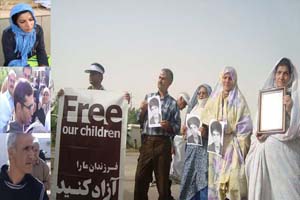
Approaching anniversary of picket to demand family contact with Rajavi’s hostages in Camp Ashraf,Iraqi citizens join with families


Download Iraqi citizens join with families picket demanding contact with Rajavi hostages
Approaching anniversary of picket to demand family contact with Rajavi’s hostages in Camp Ashraf,Iraqi citizens join with families


Download Iraqi citizens join with families picket demanding contact with Rajavi hostages
Iraqi MP Calls US Stumbling Block to Expelling MKO terrorists
A member of the Iraqi parliament on Monday described the US as the stumbling block to the expulsion of the anti-Iran terrorist Mojahedin-e Khalq Organization (MKO) from his country, stressing that Washington strives to block any move made by the Baghdad government to this end.
"The presence of Monafeqin (the hypocrites, as they are called in Iran) on Iraq’s soil violates the country’s constitution and the US is the main impediment to the expulsion of the terrorist group from Iraq’s soil," Ali Alaq told FNA.
He also underlined that the US is the key supporter and sponsor of the MKO.
"The Iraqi government has several times adopted measures to expel the Monafeqin [MKO]from Iraq’s soil, but unfortunately this (their expulsion) has not yet happened in practice due to the US pressures," Alaq added.
He strongly condemned the interference of the US officials in the internal affairs of his country, and described the US embassy’s support for the MKO as a move in support of international terrorism.
A former Iranian diplomat who accompanied Iranian Foreign Ministry Caretaker Ali Akbar Salehi during his recent visit to Baghdad announced on Sunday that Iraqi officials are resolved to immediately expel the anti-Iran terrorist MKO from their country.
"The Iraqi officials are seeking to expel the Monafeqin (MKO members as they are called in Iran) from the country’s soil as soon as possible," former Iranian Ambassador to Baghdad Hassan Kazzemi Qomi told FNA.
Also, Iraqi Foreign Minister Hoshyar Zebari told reporters after a meeting in Baghdad with Salehi on Wednesday that he and his Iranian counterpart had discussed expulsion of the MKO from Iraq at their meeting.
He expressed the hope that Baghdad would expel the terrorist MKO from Iraq soon in future.
Asked about the fate of the MKO, Zebari said the two sides "hope to find a way to close the MKO’s case in Iraq as soon as possible".
"There are some humanitarian commitments to which our government is loyal, but fulfilling these undertakings should not harm Iraq’s national sovereignty," he said.
The MKO has been in Iraq’s Diyala province since the 1980s.
The MKO, whose main stronghold is in Iraq, is blacklisted by much of the international community, including the United States.
Before an overture by the EU, the MKO was on the European Union’s list of terrorist organizations subject to an EU-wide assets freeze. Yet, the MKO puppet leader, Maryam Rajavi, who has residency in France, regularly visited Brussels and despite the ban enjoyed full freedom in Europe.
The MKO is behind a slew of assassinations and bombings inside Iran, a number of EU parliamentarians said in a recent letter in which they slammed a British court decision to remove the MKO from the British terror list. The EU officials also added that the group has no public support within Iran because of their role in helping Saddam Hussein in the Iraqi imposed war on Iran (1980-1988).
Many of the MKO members abandoned the terrorist organization while most of those still remaining in the camp are said to be willing to quit but are under pressure and torture not to do so.
A May 2005 Human Rights Watch report accused the MKO of running prison camps in Iraq and committing human rights violations.
According to the Human Rights Watch report, the outlawed group puts defectors under torture and jail terms.
The group, founded in the 1960s, blended elements of Islamism and Stalinism and participated in the overthrow of the US-backed Shah of Iran in 1979. Ahead of the revolution, the MKO conducted attacks and assassinations against both Iranian and Western targets.
The group started assassination of the citizens and officials after the revolution in a bid to take control of the newly established Islamic Republic. It killed several of Iran’s new leaders in the early years after the revolution, including the then President, Mohammad Ali Rajayee, Prime Minister, Mohammad Javad Bahonar and the Judiciary Chief, Mohammad Hossein Beheshti who were killed in bomb attacks by MKO members in 1981.
The group fled to Iraq in 1986, where it was protected by Saddam Hussein and where it helped the Iraqi dictator suppress Shiite and Kurd uprisings in the country.
The terrorist group joined Saddam’s army during the Iraqi imposed war on Iran (1980-1988) and helped Saddam and killed thousands of Iranian civilians and soldiers during the US-backed Iraqi imposed war on Iran.
Since the 2003 US invasion of Iraq, the group, which now adheres to a pro-free-market philosophy, has been strongly backed by neo-conservatives in the United States, who also argue for the MKO to be taken off the US terror list.
Iraqi security forces took control of the training base of the MKO at Camp Ashraf – about 60km (37 miles) north of Baghdad – last year and detained dozens of the members of the terrorist group.
The Iraqi authority also changed the name of the military center from Camp Ashraf to the Camp of New Iraq.
Rajavi’s Cult and his self-made prison
When I was released from Rajavi’s prison and found myself in free world, I was still mentally captured by Rajavi’s indoctrinations so all the timeI was challenging myself on the decision I had made. After some time when I saw Iraqis’ warm behavior, I changed my mind that had been manipulated by Rajavi for years.

MKO leader had always tried to make a terrible enemy out of Iraqi new government. Despite my expectations, they offered me all facilities in the hotel including a cell phone that I had never seen during my 25- year period of membership in MKO. I was shocked just like a caveman from ancient time.
After the so-called Ideological Revolution in the group and the consequent forced divorces, we had to attend brainwashing sessions where members had to report their sexual thoughts. I always wondered why such meetings? I couldn’t solve the contradiction of those meetings where members were deeply involved in sexual thoughts. I often tried not to listen to the others’ reports otherwise I was sexually aroused.
Definitely Rajavi has a particular objective of these meetings. He wants to keep members minds busy in order to distract them from thinking about their main problem (slavery in the cult).
Rajavi had killed the whole emotions I might have felt for my parents. Immediately after my escape, I was not willing to contact my family because I was still mentally captured by the organization’s indoctrinations. I hesitated to ask them for finding my home’s phone number but after the first phone call my heart started defrosting. Affections of my family made me find my human aspect to the extent that now I am much eager to see them helping my mother cope with the entire grieve she tolerated in those years of separation.
When you are in MKO, You are never allowed to write a letter or to make a phone call to your family. If there is any contact, it should be along with the organization’s political or financial benefits. Rajavi wants everything for his own interest. He cites from Lenin that he is able to wear skirt in order to achieve his goals. He actually believes in the logic, "The Ends Justify the Means."
I’m thankful to God for my release from Rajavi’s prison. Now I am able to realize what is really going on in the world. It’s true that Rajavi stole 25 years of my life and now I’m not young anymore but I can use my experience as a guide for those who are still imprisoned behind the bars of Rajavi-made mental prison. I can warn those who are at risk of being manipulated and recruited by the cult.
The fearmongers of MKO always terrify the members of leaving the group . When I was in Camp Ashraf I also thought of committing suicide since I was so frightened from my future either inside or outside the camp.
I was absolutely courageous that I dared to make up my mind to run away.
In brainwashing sessions, Rajavi uses all kinds of tricks and lies to control members. For example he says: "If you leave the organization, you will be morphed into pigs and go to nowhere land then you will disappear!" As an eye- witness who was in MKO for 25 years, I’m ready to present my testimonies in any court.
We were told that Iraqi hotels were centers of corruption but when I entered the hotel I was shocked to see none of those lies came true.
I wondered why Rajavi’s words and thoughts were still occupying my mind. After thinking a lot, I figured out that although I was physically released, my mind was still involved with the group’s indoctrinations. Thus, I tried to break those bars of my mind. By observing more realities, I could manage to face my new life. I don’t let any other person to decide for my fate.
Translated by Nejat Society
Iraqi protesters in the North of the country have called for the expulsion of anti-Iranian terrorist group Mujahedin Khalq Organization (MKO) from Iraq.
Scores of protesters gathered outside Camp Ashraf in Diyala on Friday and called for the expulsion of the notorious MKO terrorists from the country, a Press TV correspondent reported.
MKO members responded by throwing rocks at the demonstrators.
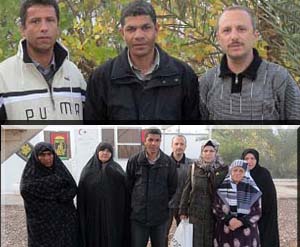
Among the protesters were the Iranian relatives of some MKO members, who were calling for the release of their loved ones said to be held inside the camp against their will.
Diyala has been the scene of similar protests against the presence of MKO members, whose camp used to be guarded by American forces after the US-led invasion of the country in 2003.
Iraqis accuse the terrorist organization of involvement in the killing of their compatriots during the Ba’ath rule of former Iraqi dictator Saddam Hussein.


The US Republicans’ increasing support for the anti-Iran terrorist Mojahedin-e Khalq Organization (MKO) and their extensive lobbying for taking the group off the list of terrorist organizations have received harsh reactions from the side of the US political analysts and media.
Lawrence Davidson, a history professor at West Chester University in Pennsylvania, wrote in an article titled "Republicans Give Aid to Terrorists", published by consortiumnews website, that US hypocrisy regarding terrorism is one of those topics that Official Washington typically ignores.
Politicians and the press wax indignant about "terrorists" who lack powerful American defenders, but then look the other way or find excuses when the "terrorists" are on "our side", Davidson wrote.
The most glaring examples have related to right-wing Cuban terrorists who had close ties to the Bush Family, but there are also double standards regarding Mid-East groups, Lawrence Davidson notes.
Here is an interesting piece of news from the Washington Post: "A group of prominent US Republicans" went to Paris last month to attend a rally of the French Committee for a Democratic Iran. This organization just happens to be intimately connected with the MKO.
"And what is the MKO? It is an Iranian exile group, originally Marxist in ideology that has been on the State Department’s list of terrorist organizations since 1997. And, as we will see, our "prominent Republican" visitors knew of this connection – knew it and apparently were not put off by the fact at all," Davidson added.
As described by the Washington Post, there were former New York Mayor Rudolph Giuliani, former Secretary of Homeland Security Tom Ridge, former White House homeland security adviser Frances F. Townsend and former Attorney General Michael Mukasey publically demanding that "Obama…take the controversial Mojahedin-e Khalq opposition group off the US list of foreign terrorist organizations and incorporate it into efforts to overturn the government in Tehran".
In other words, these four stalwart defenders of the homeland from terrorism were lending material support to a designated terrorist organization through speech that was coordinated to enhance the cause of that group, the report added.
Meantime, David Cole, one of the best civil rights lawyers in the US explains the situation in a New York Times op-ed : "The problem is that the United States government has labeled the Mojahedin-e Khalq a ‘foreign terrorist organization,’ making it a crime to provide it, directly or indirectly, with any material support. And, according to the Justice Department …material support includes not only cash and other tangible aid, but also speech coordinated with a ‘foreign terrorist organization’ for its benefit."
As Cole points out, this law is a serious infringement of the First Amendment rights of US citizens and it was recently challenged in the courts in the case "Holder v. Humanitarian Law Project."
It was the Obama administration that successfully upheld the law before the Supreme Court.
Subsequently, the FBI has been issuing subpoenas and raiding homes of people in Chicago and Minneapolis who allegedly have connections with Palestinian and Columbian resistance organizations.
The actions of these republicans should create a dilemma for President Obama. Consistency in applying the law demands that he make sure that Giuliani, Ridge, Townsend and Mukasey are treated in the same way his Justice Department is treating people in Chicago and Minneapolis.
The MKO, whose main stronghold is in Iraq, is blacklisted by much of the international community, including the United States.
Before an overture by the EU, the MKO was on the European Union’s list of terrorist organizations subject to an EU-wide assets freeze. Yet, the MKO puppet leader, Maryam Rajavi, who has residency in France, regularly visited Brussels and despite the ban enjoyed full freedom in Europe.
The MKO is behind a slew of assassinations and bombings inside Iran, a number of EU parliamentarians said in a recent letter in which they slammed a British court decision to remove the MKO from the British terror list. The EU officials also added that the group has no public support within Iran because of their role in helping Saddam Hussein in the Iraqi imposed war on Iran (1980-1988).
Many of the MKO members abandoned the terrorist organization while most of those still remaining in the camp are said to be willing to quit but are under pressure and torture not to do so.
A May 2005 Human Rights Watch report accused the MKO of running prison camps in Iraq and committing human rights violations.
According to the Human Rights Watch report, the outlawed group puts defectors under torture and jail terms.
The group, founded in the 1960s, blended elements of Islamism and Stalinism and participated in the overthrow of the US-backed Shah of Iran in 1979. Ahead of the revolution, the MKO conducted attacks and assassinations against both Iranian and Western targets.
Leaders of the group have been fighting to shed its terrorist tag after a series of bloody anti-Western attacks in the 1970s, and nearly 30 years of violent struggle against the Islamic Republic of Iran.
In recent months, high-ranking MKO members have been lobbying governments around the world in the hope of acknowledgement as a legitimate opposition group.
The UK initiative, however, prompted the European Union to establish relations with the exiled organization now based in Paris. The European Court of First Instance threw its weight behind the MKO in December and annulled its previous decision to freeze its funds.
The group started assassination of the citizens and officials after the revolution in a bid to take control of the newly established Islamic Republic. It killed several of Iran’s new leaders in the early years after the revolution, including the then President, Mohammad Ali Rajayee, Prime Minister, Mohammad Javad Bahonar and the Judiciary Chief, Mohammad Hossein Beheshti who were killed in bomb attacks by MKO members in 1981.
The group fled to Iraq in 1986, where it was protected by Saddam Hussein and where it helped the Iraqi dictator suppress Shiite and Kurd uprisings in the country.
The terrorist group joined Saddam’s army during the Iraqi imposed war on Iran (1980-1988) and helped Saddam and killed thousands of Iranian civilians and soldiers during the US-backed Iraqi imposed war on Iran.
Since the 2003 US invasion of Iraq, the group, which now adheres to a pro-free-market philosophy, has been strongly backed by neo-conservatives in the United States, who also argue for the MKO to be taken off the US terror list.
The MKO has been in Iraq’s Diyala province since the 1980s.
Iraqi security forces took control of the training base of the MKO at Camp Ashraf – about 60km (37 miles) north of Baghdad – last year and detained dozens of the members of the terrorist group.
The Iraqi authority also changed the name of the military center from Camp Ashraf to the Camp of New Iraq.
Members of the anti-Iran terrorist Mojahedin-e Khalq Organization (MKO) attacked a group of Iraqi protestors outside MKO’s main training camp in Northern Iraq and injured several people, including a reporter.
The incident occurred on Saturday after thousands of Iraqi tribal leaders and figures along with a number of reporters had gathered outside the Camp of New Iraq (formerly known as Camp Ashraf) in Iraq’s Northern province of Diyala to call for the expulsion of the terrorist group from the country’s soil, an informed source told FNA on Sunday.

The members of the terrorist group attacked the protestors by throwing stones, glass splinters and also sticks and injured a number of demonstrators, among them the Al-Alam TV channel reporter.
The Saturday rally was the second day of Iraqi peoples’ gathering outside the terrorist group’s hub during which the protestors condemned the direct interference of MKO in the internal affairs of Iraq and demanded the Baghdad government to expel the group from their country.
Caretaker of the Iranian Foreign Ministry Ali Akbar Salehi said on Saturday that Baghdad officials have reached a consensus that based on the country’s constitution and the parliament’s approvals, no terrorist group can be sheltered in Iraq, specially those which seek to carry out terrorist operations against the neighboring countries.
"Iraqi officials vowed to explore ways to resolve the issue of Monafeqin (hypocrites, as MKO members are called in Iran) as soon as possible based on the international laws and Iraq’s internal rules and constitution," he added.
Earlier this week, Iraqi Foreign Minister Hoshyar Zebari had expressed hope that Baghdad would expel the anti-Iran terrorist Organization from Iraq soon in future.
Speaking to reporters after a meeting in Baghdad with visiting Iranian Foreign Ministry Caretaker Ali Akbar Salehi last Wednesday, Zebari said that he and his Iranian counterpart have discussed expulsion of MKO from Iraq at their meeting.
Asked about the fate of the MKO, Zebari said the two sides "hope to find a way to close the MKO’s case in Iraq as soon as possible".
"There are some humanitarian commitments to which our government is loyal, but fulfilling these undertakings should not harm Iraq’s national sovereignty," he said.
The MKO has been in Iraq’s Diyala province since the 1980s.
The MKO, whose main stronghold is in Iraq, is blacklisted by much of the international community, including the United States.
Before an overture by the EU, the MKO was on the European Union’s list of terrorist organizations subject to an EU-wide assets freeze. Yet, the MKO puppet leader, Maryam Rajavi, who has residency in France, regularly visited Brussels and despite the ban enjoyed full freedom in Europe.
The MKO is behind a slew of assassinations and bombings inside Iran, a number of EU parliamentarians said in a recent letter in which they slammed a British court decision to remove the MKO from the British terror list. The EU officials also added that the group has no public support within Iran because of their role in helping Saddam Hussein in the Iraqi imposed war on Iran (1980-1988).
Many of the MKO members abandoned the terrorist organization while most of those still remaining in the camp are said to be willing to quit but are under pressure and torture not to do so.
A May 2005 Human Rights Watch report accused the MKO of running prison camps in Iraq and committing human rights violations.
According to the Human Rights Watch report, the outlawed group puts defectors under torture and jail terms.
The group, founded in the 1960s, blended elements of Islamism and Stalinism and participated in the overthrow of the US-backed Shah of Iran in 1979. Ahead of the revolution, the MKO conducted attacks and assassinations against both Iranian and Western targets.
The group started assassination of the citizens and officials after the revolution in a bid to take control of the newly established Islamic Republic. It killed several of Iran’s new leaders in the early years after the revolution, including the then President, Mohammad Ali Rajayee, Prime Minister, Mohammad Javad Bahonar and the Judiciary Chief, Mohammad Hossein Beheshti who were killed in bomb attacks by MKO members in 1981.
The group fled to Iraq in 1986, where it was protected by Saddam Hussein and where it helped the Iraqi dictator suppress Shiite and Kurd uprisings in the country.
The terrorist group joined Saddam’s army during the Iraqi imposed war on Iran (1980-1988) and helped Saddam and killed thousands of Iranian civilians and soldiers during the US-backed Iraqi imposed war on Iran.
Since the 2003 US invasion of Iraq, the group, which now adheres to a pro-free-market philosophy, has been strongly backed by neo-conservatives in the United States, who also argue for the MKO to be taken off the US terror list.
Iraqi security forces took control of the training base of the MKO at Camp Ashraf – about 60km (37 miles) north of Baghdad – last year and detained dozens of the members of the terrorist group.
The Iraqi authority also changed the name of the military center from Camp Ashraf to the Camp of New Iraq.
Iraqi officials are resolved to immediately expel the anti-Iran terrorist Mojahedin-e Khalq Organization (MKO) from their country’s soil, said a former Iranian diplomat who accompanied Iranian Foreign Ministry Caretaker Ali Akbar Salehi during his recent visit to Baghdad.
"The Iraqi officials are seeking to expel the Monafeqin (MKO members as they are called in Iran) group from the country’s soil as soon as possible," former Iranian Ambassador to Baghdad Hassan Kazzemi Qomi told FNA on Sunday.
During the visit, the Iraqi officials underlined that their country would not be a stronghold for terrorist groups like the MKO, he added.
"The Iraqi foreign minister (Hoshyar Zebari) in his news conference called the group as terrorist and said they should leave Iraq’s soil," Kazzemi reminded.
Speaking to reporters after a meeting in Baghdad with Salehi on Wednesday, Zebari said that he and his Iranian counterpart have discussed expulsion of MKO from Iraq at their meeting.
He expressed the hope that Baghdad would expel the anti-Iran terrorist MKO from Iraq soon in future.
Asked about the fate of the MKO, Zebari said the two sides "hope to find a way to close the MKO’s case in Iraq as soon as possible".
"There are some humanitarian commitments to which our government is loyal, but fulfilling these undertakings should not harm Iraq’s national sovereignty," he said.
The MKO has been in Iraq’s Diyala province since the 1980s.
The MKO, whose main stronghold is in Iraq, is blacklisted by much of the international community, including the United States.
Before an overture by the EU, the MKO was on the European Union’s list of terrorist organizations subject to an EU-wide assets freeze. Yet, the MKO puppet leader, Maryam Rajavi, who has residency in France, regularly visited Brussels and despite the ban enjoyed full freedom in Europe.
The MKO is behind a slew of assassinations and bombings inside Iran, a number of EU parliamentarians said in a recent letter in which they slammed a British court decision to remove the MKO from the British terror list. The EU officials also added that the group has no public support within Iran because of their role in helping Saddam Hussein in the Iraqi imposed war on Iran (1980-1988).
Many of the MKO members abandoned the terrorist organization while most of those still remaining in the camp are said to be willing to quit but are under pressure and torture not to do so.
A May 2005 Human Rights Watch report accused the MKO of running prison camps in Iraq and committing human rights violations.
According to the Human Rights Watch report, the outlawed group puts defectors under torture and jail terms.
The group, founded in the 1960s, blended elements of Islamism and Stalinism and participated in the overthrow of the US-backed Shah of Iran in 1979. Ahead of the revolution, the MKO conducted attacks and assassinations against both Iranian and Western targets.
The group started assassination of the citizens and officials after the revolution in a bid to take control of the newly established Islamic Republic. It killed several of Iran’s new leaders in the early years after the revolution, including the then President, Mohammad Ali Rajayee, Prime Minister, Mohammad Javad Bahonar and the Judiciary Chief, Mohammad Hossein Beheshti who were killed in bomb attacks by MKO members in 1981.
The group fled to Iraq in 1986, where it was protected by Saddam Hussein and where it helped the Iraqi dictator suppress Shiite and Kurd uprisings in the country.
The terrorist group joined Saddam’s army during the Iraqi imposed war on Iran (1980-1988) and helped Saddam and killed thousands of Iranian civilians and soldiers during the US-backed Iraqi imposed war on Iran.
Since the 2003 US invasion of Iraq, the group, which now adheres to a pro-free-market philosophy, has been strongly backed by neo-conservatives in the United States, who also argue for the MKO to be taken off the US terror list.
Iraqi security forces took control of the training base of the MKO at Camp Ashraf – about 60km (37 miles) north of Baghdad – last year and detained dozens of the members of the terrorist group.
The Iraqi authority also changed the name of the military center from Camp Ashraf to the Camp of New Iraq.
Mathew Partridge of Guardian writes an article on material supporters of Mujahedin Khalq in Paris in last month group’s gathering. He warns British and US politicians on perils of supporting a terrorist designated group. Comparing the support for MKO with Churchill – Stalin coalition against Hitler or US support for anti-Soviet forces in Afghanistan during the 1980s, he criticize the use of the motto "the enemy of my enemy is my friend":
" However, there are limits to the logic of "the enemy of my enemy is my friend". The decision by the US and UK to permit arms sales to Saddam Hussein’s Iraq propped up a regime even worse than the one it was fighting against (Iran), and enabled Saddam to subsequently invade Kuwait.
Similarly, diplomatic overtures to the Taliban in the late 1990s not only failed to detach them from al-Qaida, but meant that the Clinton administration largely stood by while they brutally repressed the Afghan population.
In this light, it is disappointing that the former mayor of New York, Rudolph Giuliani, and the ex-secretary of homeland security, Tom Ridge, recently attended a conference run by supporters of the group Mujahideen-e-Khalq (MEK), currently banned in the United States (though not in Britain or the rest of the EU). "
Describing MKO as a discredited past, he warns about the potential danger of MKO hypocrites and opportunists:
" .. there is a strong credibility gap between the group’s rhetoric and its past actions, especially its associations with Saddam between 1986 and 2003.
According to the Council on Foreign Relations, MEK directly participated in the savage reprisals against those who rose up against the Iraqi tyrant in 1991. Indeed, the extent to which it functioned as an effective arm of Saddam’s totalitarian regime is demonstrated by the fact that, when it surrendered to US forces in 2003, it had "2,000 tanks, armoured personnel carriers, and heavy artillery pieces".Ironically, before its split with Ayatollah Khomeini, its leaders worked closely with Iran’s theocratic government, directly participating in the 1979 takeover of the US embassy in Tehran. This raises the obvious risk that if Britain and America covertly, or overtly, supports MEK, it could then cut a deal with Tehran and turn its guns on Europe and America."
At last, the writer of the article censures American prominent republicans’ stand in favor of Mujahedin Khalq saying :
Although Giuliani and Ridge have a tremendous amount of credibility on foreign policy, especially compared with the current crop of Republicans, their suggestion that MEK be both tolerated and supported is wrong.
People in Iraq’s Diyala province organized a protest in front of Camp Ashraf where the Mujahidin Khalq organization or MKO members are residing.
The protesters who had come from Basra, Tekrit, Baghdad and Diyala called for the expulsion of the terrorist group from Iraq whose presence they said was a source of instability and a cause of
concern for their country. Tribal leaders, clerics and local officials were among those who had taken part in the protest.
The Iranian relatives of some MKO members also joined the protesters, to ask for the release of their family members who are said to be held inside the camp against their will. According to a Human Rights Watch report, the group puts defectors under torture or in jail.
In response to the protest, the MKO members gathered behind the safety of barbed wire, hurling stones and insults at the protesters.
Iraqis accuse the organization of involvement in the killing of their compatriots during the rule of former dictator Saddam Hussein.
Meanwhile the Iranian families praised the initiative taken by the Iraqi citizens who gathered at camp Ashraf to make their concerns heard, saying that those countries supporting the MKO should rethink their stance towards the group.
MKO has been in Iraq’s Diyala province since the mid 1980s and was part of Saddam Hussein’s war against Iran during that period. The group which is listed as a terrorist group by Tehran and much of the international community is especially notorious in Iran for having sided with former Iraqi dictator during the 1980-1988 Iran-Iraq war.
After a recent meeting with the caretaker of Iranian foreign ministry in Baghdad , Iraqi Foreign Minister Hoshyar Zebari expressed hope that his country would expel the group in the future.
Following the 2003 US-led invasion of Iraq, US troops disarmed the MKO members at the camp to hand over control of the place to the Iraqi security forces in 2009.
Wisam al-Bayati, Diyala
Sahar Family Foundation reports from demonstration at the gates of Camp Ashraf
As previous reports, yesterday thousands of Iraqi people including prominent Iraqi dignitaries, heads of tribes, reporters and journalists gathered in front of the gates of camp New Iraq (formerly Ashraf) to protest the presence of the military garrison of Rajavi cult (Mojahedin Khalq, MKO, MEK, NCRI) in this land and their direct interference in the internal affairs of Iraq. They demanded that the terrorist organisation be dealt with according to the constitution of Iraq and expelled from the country.

This popular gathering showed the anger of the people of Iraq against the presence of the terrorist cult backed by the US forces still present in the country. The gathering came under attack by the brainwashed members of the Mojahedin Khalq who threw stones using specially made equipment for launching them. The act resulted in the injury of some of the participants including Dr. Nafe the head of the Iraqi committee for the support of the picketing families.

Sahar magazine number 03 which is now published in Arabic was distributed among the leaders of tribes and the personalities and reporters present at this event. Iraqi dignitaries and the picketing families had various interviews with the reporters from a variety of media.
It is now almost a year that the suffering families of the captives inside the camp are continuing their picket in front of the camp demanding the right to visit their loved ones. The families joined the demonstration repeating their demand of free and unfettered access to their captive loved ones inside the camp.
Some TV channels gave coverage to the event and the Alsabah, Al yom alsabe, Al Khalij, Alanba and many other media reported this event in their morning issues – other coverage is also expected.

The Iraqi tribal leaders and personalities signed a petition asking for the deportation of the Mojahedin Khalq from Iraq. NGOs and others have given out statements which will be reported at a later time.
Translated by Iran Interlink