Nejat Society
  • Home
  • Articles
  • Media
    • Cartoons
    • NewsPics
    • Photo Gallery
    • Videos
  • Publications
    • Books
    • Nejat NewsLetter
    • Pars Brief
  • About Us
  • Contact us
  • Editions
    • عربي
    • فارسی
    • Shqip
Nejat Society
Nejat Society
  • Home
  • Articles
  • Media
    • Cartoons
    • NewsPics
    • Photo Gallery
    • Videos
  • Publications
    • Books
    • Nejat NewsLetter
    • Pars Brief
  • About Us
  • Contact us
  • Editions
    • عربي
    • فارسی
    • Shqip
© 2003 - 2024 NEJAT Society. nejatngo.org
Mujahedin Khalq 's Function

MKO, in a Bid to Change from Coercive Diplomacy to Diplomacy of Begging

In part of her speech made at the International Conference in Paris and in explaining the necessity of the removal of the name of MKO from the State Department’s terrorist list and other similar lists, Maryam Rajavi addressed the audience saying:

… the biggest error in the policy of engagement, reflected specifically in the inclusion of the People’s Mojahedin in the State Department’s Foreign Terrorist Organization list. Today, we need not discuss the substance of this label. The focus of our discussion is the critical impact of this listing, which has resulted in shutting down the engine for change in Iran. When you block the engine for change in Iran, how do you expect sanctions to be effective? (1)

Her words in short highlights two important points to ponder, points containing facts that she Maryam Rajavi the MKO Cult leaderunconsciously opened her lips to admit, while she would deny in other occasions, as she was likely filled with the thrilling excitement of the very presence of some former American personalities and statesmen.

In her words “Today, we need not discuss the substance of this label” Maryam Rajavi simply prefers, instead of arguing and defending terrorist charges against the group, to question the inclusion of the group in the terrorist lists; a ploy that has so far failed to convince the State Department to remove the organization from its terrorist list. This is while many American supporters of MKO present in the conference have insisted on this point that the inclusion of its name on the list of terrorist organizations has its roots in political engagements and instrumental use of the list for political purposes, a move that, they calculate, was followed by other European governments to proscribe it alongside other terrorist organizations. But none of them ever asked that why should the European Union take the first step before the State Department to delist MKO while America has shown no flexibility in this regard? Besides, there are released evidences of untold aspects of cultic and terrorist activities about the organization in the State Departments’ report. Hence, such claims are baseless and are totally arbitrary.

What can be inferred from her speech is that Maryam Rajavi is trying to remark that keeping MKO on the terrorist list not only helps the US in no way to overcome its tensions and problems with Iran but also intensify and aggravate them more than before. In her classification of the existing problems of America and the West with Iran especially over the issues like Iran’s nuclear projects and the issue of Iraq, she asserts that ‘the United States has been standing on the wrong side’ by overlooking a potential alternative like MKO. And of course, the working resolution that may at least work to provide minimum benefits for Americans themselves is to remove MKO from the State Department’s terror list! A move that will also propel ‘the engine for change in Iran’. In fact, the tone and syllogistic manner of Maryam Rajavi is another version of her long begging to attract the attention of the US. However, the existing difference with MKO’s present and past efforts to find favor with the US is that in the past the group would enthusiastically speak and boast of daily perpetrated terror and military actions and dozens of explosions and terror-ridden situations. It would acknowledge itself as one of the most powerful armed underground organizations that had succeeded to spread violence and terror with no fear of being included in any list of terror. And as everything has changed today and it is facing a big problem for its past deeds, it is natural that the tone is also changing.

Another reason for her change of tone is the illusions she has undergone; first being motivated by a political simplicity that America has adopted a desired attitude against Iran and second, the organization has to regain its alternative priority if derogated from the status in anyway. In the past to convince, or better to say coerce, America to consider the sole alternative, MKO’s position takings and statements were totally different. Once, nearly two decades ago, Mehdi Abrishamchi actually warned Americans against espousing any other alternative rather than MKO:

The way we have come to negotiate [with America] we mean ‘we are’ and ‘you’ll have to negotiate with us’. Frankly and outspokenly we notify the imperialists that even if you have decided on a defeated counter-revolutionary and intend to repel us as an alternative, you must remember one thing that we will confront you inside the country. Fighting with American General will be much easier for us than fighting with the Ayatollahs. (2)
 

But the political fluctuations that compelled the organization to comply with the new regulations necessitated a change of language as well. As seen in the statement of a council member of the MKO, he takes a different position that is absolutely different with the past hostile tone:
It should be noted that the necessity of diplomatic activity in the framework of relations of states with states is expedient for an alternative that is at the verge of capturing power rather than continue to be a guerrilla group. Naturally, a guerrilla group has no obligation to worry about the impact of its activities, attitudes and slogans out of the borders. Mojahedin Khalq Organization, for example, how much could it be considered a serious threat to imperialism at the height of its military challenge against the symbols and indices of American imperialism in Iran when it had no idea of capturing state power in near future? Naturally, its deeds and slogans could also draw reactions in the same way. This very same organization today, however, working under its alternative of National Council in its framework of diplomatic relations as that of a state with other states has to defer to new obligations and has a thorough assessment of international reactions in any step it takes. Any unconcern in this regard leads to the marginalization and isolation of the alternative that operates as a government in exile. (3)
In conclusion, when Maryam Rajavi tries to undefile the terrorist reputation of the organizations and paves the way to delist it from the terrorist list, in a sense she is making an attempt to show the other side of a coin that two decades ago Abrishamch had shown its first as a warning to Americans. With the difference that at that time Mojahedin carried machine guns in fighting uniforms while today they are wearing stylish suits, ties and costumes to advance. Maryam Rajavi hops to make it known to Americans that if the United States has been long standing on the side of Iran and designated MKO as a policy of appeasement, now the time has come to turn to a direction of appeasing terrorists instead and provide for a promising result by removing MKO from the terrorist list as a show of challenging the Islamic Republic. That is the point where she intends to end the story when she does her best to transit from a once coercive diplomacy to a new diplomacy of begging.

References:
1 – Maryam Rajavi’s speech in International Conference in Paris, Friday, 24 December 2010.
2 – Revolutionary diplomacy and its difference with counter-revolutionary politics. Mehdi Abrishamchi’ s speech made for the Muslim Students Association in Italy.
3 – The Council’s Revolutionary Diplomacy, by Abdolali Maassoomi, the National Council Monthly, No. 24, P. 55.

January 9, 2011 0 comments
FacebookTwitterPinterestWhatsappTelegramSkypeEmail
Mujahedin Khalq; A proxy force

MEK Part of Fantasies, Falsehoods, and Fear-Mongering campaign

"To tell deliberate lies while genuinely believing in them, to forget any fact that has become inconvenient, and then, when it becomes necessary again, to draw it back from oblivion for just so long as it is needed, to deny the existence of objective reality and all the while to take account of the reality which one denies — all this is indispensably necessary." – George Orwell, Nineteen Eighty-Four

Facts rarely get in the way of American and Israeli fear-mongering and jingoism, especially when it comes to anti-Iran propaganda. For nearly thirty years now, U.S. and Zionist politicians and analysts, along with some of their European allies, have warned that Iranian nuclear weapons capability is just around the corner and that such a possibility would not only be catastrophic for Israel with its 400 nuclear warheads and state-of-the-art killing power supplied by U.S. taxpayers, but that it would also endanger regional dictatorships, Europe, and even the United States.
If these warnings are to be believed, Iran is only a few years away from unveiling a nuclear bomb…and has been for the past three decades. Fittingly, let’s begin in 1984.
An April 24, 1984 article entitled "’Ayatollah’ Bomb in Production for Iran in United Press International referenced a Jane’s Intelligence Defense Weekly report warning that Iran was moving "very quickly" towards a nuclear weapon and could have one as early as 1986.
Two months later, on June 27, 1984, in an article entitled "Senator says Iran, Iraq seek N-Bomb," Minority Whip of the U.S. Senate Alan Cranston was quoted as claiming Iran was a mere seven years away from being able to build its own nuclear weapon. In April 1987, the Washington Post published an article with the title "Atomic Ayatollahs: Just What the Mideast Needs – an Iranian Bomb," in which reporter David Segal wrote of the imminent threat of such a weapon.
The next year, in 1988, Iraq issued warnings that Tehran was at the nuclear threshold.
By late 1991, Congressional reports and CIA assessments maintained a "high degree of certainty that the government of Iran has acquired all or virtually all of the components required for the construction of two to three nuclear weapons." In January 1992, Benjamin Netanyahu told the Knesset that "within three to five years, we can assume that Iran will become autonomous in its ability to develop and produce a nuclear bomb."
Furthermore, a February 1992 report by the U.S. House of Representatives suggested that Iran would have two or three operational nuclear weapons by April 1992.
In March 1992, The Arms Control Reporter reported that Iran already had four nuclear weapons, which it had obtained from Russia. That same year, the CIA predicted an Iranian nuclear weapon by 2000, then later changed their estimate to 2003.
A May 1992 report in The European claims that "Iran has obtained at least two nuclear warheads out of a batch officially listed as ‘missing from the newly independent republic of Kazakhstan.’"
Speaking on French television in October 1992, then-Israeli Foreign Minister Shimon Peres warned the international community that Iran would be armed with a nuclear bomb by 1999. The following month, the New York Times reported that Israel was confident Iran would "become a nuclear power in a few years unless stopped."
The same year, Robert Gates, then-director of the CIA, addressed the imminent threat of Iranian nuclear weapons. "Is it a problem today?" he asked at the time, "probably not. But three, four, five years from now it could be a serious problem."
On January 23, 1993, Gad Yaacobi, Israeli envoy to the UN, was quoted in the Boston Globe, claiming that Iran was devoting $800 million per year to the development of nuclear weapons. Then, on February 24, 1993, CIA director James Woolsey said that although Iran was "still eight to ten years away from being able to produce its own nuclear weapon" the United States was concerned that, with foreign assistance, it could become a nuclear power earlier.
That same year, international press went wild with speculation over Iranian nuclear weapons. In the Spring of 1993, U.S. News & World Report,the New York Times, the conservative French weekly Paris Match, and Foreign Report all claimed Iran had struck a deal with North Korea to develop nuclear weapons capability, while U.S. intelligence analysts alleged an Iranian nuclear alliance with Ukraine. Months later, the AFP reported Switzerland was supplying Iran with nuclear weapons technology, while the Intelligence Newsletter claimed that the French firm CKD was delivering nuclear materials to Iran and U.S. News and World Report accused Soviet scientists working in Kazakhstan of selling weapons-grade uranium to Iran. By the end of 1993, Theresa Hitchens and Brendan McNally of Defense News and National Defense University analyst W. Seth Carus had reaffirmed CIA director Woolsey’s prediction "that Iran could have nuclear weapons within eight to ten years."
In January 1995, John Holum, director of the U.S. Arms Control and Disarmament Agency, testified before Congress that "Iran could have the bomb by 2003," while Defense Secretary William Perry unveiled a grimmer analysis, stating that "Iran may be less than five years from building an atomic bomb, although how soon…depends how they go about getting it." Perry suggested that Iran could potentially buy or steal a nuclear bomb from one of the former Soviet states in "a week, a month, five years."
The New York Times reported that "Iran is much closer to producing nuclear weapons than previously thought, and could be less than five years away from having an atomic bomb, several senior American and Israeli officials say," a claim repeated by Greg Gerardi in The Nonproliferation Review (Vol. 2, 1995).
Benjamin Netanyahu, in his 1995 book "Fighting Terrorism: How Democracies Can Defeat the International Terrorist Network," wrote, "The best estimates at this time place Iran between three and five years away from possessing the prerequisites required for the independent production of nuclear weapons."
At the same time, a senior Israeli official declared, "If Iran is not interrupted in this program by some foreign power, it will have the device in more or less five years." After a meeting in Jerusalem between Defense Secretary Perry and Israeli Prime Minister Yitzhak Rabin, they announced that Iran would have a nuclear bomb in seven to 15 years.
On February 15, 1996, then-Israeli Foreign Minister Ehud Barak told members of the UN Security Council that Iran would be producing nuclear weapons by 2004.
On April 29, 1996, Israel’s then-Prime Minister Shimon Peres claimed in an interview with ABC that "the Iranians are trying to perfect a nuclear option" and would "reach nuclear weapons" in four years. By 1997 the Israelis confidently predicted an active Iranian nuclear bomb by 2005.
In March 1997, U.S. Arms Control and Disarmament Agency director John Holum again attested to a House panel that Iran would develop a nuclear weapon sometime between 2005 and 2007.
The following month, according to a report in Hamburg’s Welt am Sonntag, the German Federal Intelligence Service (BND) believed Iran had an active nuclear weapons development program and would be able to produce nuclear weapons by 2002, "although that timeframe could be accelerated if Iran acquires weapons-grade fissile material on the black market." Eight days later, in early May 1997, a Los Angeles Times article quoted a senior Israeli intelligence official as stating that Iran would be able to make a nuclear bomb by "the middle of the next decade."
On June 26, 1997, the U.S. military commander in the Persian Gulf, General Binford Peay, stated that, were Iran to acquire access to fissile material, it would obtain nuclear weapons "sometime at the turn of the century, the near-end of the turn of the century."
In September 1997, Jane’s Intelligence Defense Review reported that former U.S. Secretary of State Warren Christopher declared, "we know that since the mid-1980s, Iran has had an organized structure dedicated to acquiring and developing nuclear weapons," as then-Israeli Prime Minister Benjamin Netanyahu warned that the Iranian nuclear technology program "may be the most dangerous development in the 21st century."
Writing in the Jerusalem Post on April 9, 1998, Steve Rodan claimed "Documents obtained by the Jerusalem Post show Iran has four nuclear bombs." The next day, U.S. State Department spokesperson James Rubin addressed this allegation, stating, "There was no evidence to substantiate such claims."
On October 21, 1998, General Anthony Zinni, head of U.S. Central Command, said Iran could have deliverable nuclear weapons by 2003. "If I were a betting man," he said, "I would say they are on track within five years, they would have the capability."
The next year, on November 21, 1999, a senior Israeli military official was quoted by AP reporter Ron Kampeas (who was later hired as Washington bureau chief for the Jewish Telegraphic Agency) saying, "Unless the United States pressures Russia to end its military assistance to Iran, the Islamic republic will possess a nuclear capability within five years."
On December 9, 1999, General Zinni reiterated his assessment that Iran "will have nuclear capability in a few years."
In a January 2000 New York Times article co-authored by Judith Miller, it was reported that the CIA suggested to the Clinton administration "that Iran might now be able to make a nuclear weapon," even though this assessment was "apparently not based on evidence that Iran’s indigenous efforts to build a bomb have achieved a breakthrough," but rather that "the United States cannot track with great certainty increased efforts by Iran to acquire nuclear materials and technology on the international black market."
On March 9, 2000, the BBC stated that German intelligence once again believed Iran to be "working to develop missiles and nuclear weapons." The Telegraph reported on September 27, 2000 that the CIA believes Iran’s nuclear weapons capability to be progressing rapidly and suggests Iran will develop an intercontinental ballistic missile capable of reaching London or New York within the next decade. CIA Deputy Director Norman Schindler is quoted as saying, "Iran is attempting to develop the capability to produce both plutonium and highly enriched uranium, and it is actively pursuing the acquisition of fissile material and the expertise and technology necessary to form the material into nuclear weapons."
By the summer of 2001, Israeli Defense Minister Binyamin Ben-Eliezer was warning that Iran could have nuclear weapons by 2005 and that, sometime in the next decade, the Iranian nuclear program would reach a "point of no return," from which time "it would be impossible to stop it from attaining a bomb." By the end of the year, despite an inquiry into the questionable validity of Israeli intelligence regarding the Iranian nuclear program, Mossad head Efraim Halevy repeated the claim that Iran is developing nuclear and other non-conventional weapons.
In early 2002, the CIA again issued a report alleging that Iran "remains one of the most active countries seeking to acquire (weapons of mass destruction and advanced conventional weapons) technology from abroad…In doing so, Tehran is attempting to develop a domestic capability to produce various types of weapons — chemical, biological, nuclear — and their delivery systems." Soon thereafter, CIA Director George Tenet testified before a Senate hearing that Iran may be able to "produce enough fissile material for a nuclear weapon by the end of this decade…Obtaining material from outside could cut years from this estimate."
During his "Axis-of-Evil" State of the Union address on January 29, 2002, George W. Bush declared that Iran was "aggressively" pursuing weapons of mass destruction.
On July 29, 2002, U.S. Deputy Assistant Secretary of Defense Marshall Billingslea testified to the Senate that "Iran is aggressively pursuing nuclear weapons." Three days later, after a meeting with Russian officials on August 1, U.S. Energy Secretary Spencer Abraham stated that Iran was "aggressively pursuing nuclear weapons as well as [other] weapons of mass destruction." By the end of the year, White House Press Secretary Ari Fleischer was reiterating U.S. concerns about, what he termed, Iran’s "across-the-board pursuit of weapons of mass destruction and missile capabilities."
In an interview with CNBC on February 2003, U.S. Undersecretary of State John Bolton said that Iran is seeking technological assistance from North Korea and China to enhance its weapons of mass destruction programs. In April 2003, John Wolf, U.S. Assistant Secretary of State, accused Iran of having an "alarming, clandestine program."
That same month, the Los Angeles Times stated that "there is evidence that Iran is developing nuclear weapons and other weapons of mass destruction," in a polling question regarding American attitudes toward Iran. The question followed, "Do you think the U.S. should or should not take military action against Iran if they continue to develop these weapons?" Fifty percent of respondents thought the U.S. should attack Iran.
The Telegraph reported on June 1, 2003 that "Senior Pentagon officials are proposing widespread covert operations against the government in Iran, hoping that dissident groups will mount a coup before the regime acquires a nuclear weapon." The report contained a quote from a U.S. "government official with close links to the White House" as saying "There are some who see the overthrow of the regime as the only way to deal with the danger of Iran possessing a nuclear weapon. But there’s not going to be another war. The idea is to destabilize from inside. No one’s talking about invading anywhere."
A CNN/USA Today/Gallup poll taken in late June 2003 asked Americans, "How likely do you think it is that Iran is developing weapons of mass destruction?" 46% of those surveyed said "very likely," while another 38% said "somewhat likely." Only 2% replied "not at all likely."
An August 5, 2003 report in the Jerusalem Post stated that "Iran will have the materials needed to make a nuclear bomb by 2004 and will have an operative nuclear weapons program by 2005, a high-ranking military officer told the Knesset Foreign Affairs and Defense Committee."
On October 21, 2003, Major General Aharon Ze’evi, Israel’s Director of Military Intelligence, declared in Ha’aretz that "by the summer of 2004, Iran will have reached the point of no return in its attempts to develop nuclear weapons." A few weeks later, the CIA released a semi-annual unclassified report to Congress which stated Iran had "vigorously" pursued production of weapons of mass destruction and that the "United States remains convinced that Tehran has been pursuing a clandestine nuclear weapons program."
By mid-November 2003, Mossad intelligence service chief Meir Dagan testified for the first time before the Knesset Foreign Affairs and Defense Committee and said that Iran was close to the "point of no return" in developing nuclear arms.
In early 2004, Ken Brill, U.S. Ambassador to the IAEA, reiterated the American position that Iran’s nuclear efforts are "clearly geared to the development of nuclear weapons." One year later, on January 24, 2005, Mossad chief Meir Dagan again claimed that Iran’s nuclear program was almost at the "point of no return," adding "the route to building a bomb is a short one" and that Iran could possess a nuclear weapon in less than three years. On January 28, the Guardian quoted Israeli Defense Minister Shaul Mofaz stating the same thing. He warned that Iran would reach "the point of no return" within the next twelve months in its covert attempt to secure a nuclear weapons capability. A week later, U.S. Defense Secretary Donald Rumsfeld said on CNN that Iran was "on a path of seeking a nuclear weapon," but admitted that Iran was "years away" from building a nuclear bomb.
By August 2005, a "high-ranking IDF officer" told the Jerusalem Post that Israel has revised its earlier estimate that Iran would have a nuclear bomb by 2008, now putting the estimate closer to 2012. The same day, a major U.S. intelligence review projected that Iran was approximately ten years away from manufacturing the key ingredient for a nuclear weapon, doubling its previous estimate.
Two weeks later, however, Israeli military chief General Aharon Zeevi contradicted both the new Israeli and U.S. estimates. "Barring an unexpected delay," he said, "Iran is going to become nuclear capable in 2008 and not in 10 years."
In November 2005, Mohammad Mohaddessin, chair of the so-called National Council of Resistance of Iran (otherwise known as the Islamist/Marxist terrorist cult Mojahadeen-e Khalq, or MEK, which is currently designated as a Foreign Terrorist Organization by the U.S. government) addressed a European Parliament conference and proclaimed that the "Supreme Leader Ali Khamenei is determined to pursue and complete Tehran’s nuclear weapons program full blast…[and] would have the bomb in two or three years time."
On January 18, 2006, Donald Rumsfeld told Fox News that Iran was "acquiring nuclear weapons."
A CNN/USA Today/Gallup survey conducted in late January 2006 asked, "Based on what you have heard or read, do you think that the government of Iran is or is not attempting to develop its own nuclear weapons?" 88% of those polled said Iran is.
82% of respondents to a Fox News/Opinion Dynamics poll taken around the same time believed "Iran wants to use the uranium for military purposes, such as to build a nuclear weapons program." 68% thought "Iran currently has a nuclear weapons program," an increase of 8% from the previous year.
CBS News reported on April 26, 2007 that "a new intelligence report says Iran has overcome technical difficulties in enriching uranium and could have enough bomb-grade material for a single nuclear weapon in less than three years."
In late May 2007, IAEA head Mohammad El Baradei stated that, even if Iran wanted to build a nuclear weapon (despite all evidence to the contrary), it would not be able to "before the end of this decade or some time in the middle of the next decade. In other words three to eight years from now." On July 11, 2007, Ha’aretz reported that "Iran will cross the ‘technological threshold’ enabling it to independently manufacture nuclear weapons within six months to a year and attain nuclear capability as early as mid-2009, according to Israel’s Military Intelligence." The report also noted that "U.S. intelligence predicts that Iran will attain nuclear capability within three to six years."
Fox News/Opinion Dynamics opinion poll taken in late September 2007 found that 80% of Americans believed Iran’s nuclear program was for "military purposes."
Israeli President Shimon Peres issued an official statement on October 18, 2007 that claimed "everyone knows [Iran’s] true intentions, and many intelligence agencies throughout the world have proof that Iran is seeking to develop nuclear weapons for the purpose of war and death."
Less than two months later, the New York Times released "Key Judgments From a National Intelligence Estimate on Iran’s Nuclear Activity," a consensus view of all 16 U.S. intelligence agencies. The analysis, entitled "Iran: Nuclear Intentions and Capabilities," concluded with "high confidence" that the Iranian government had "halted its nuclear weapons program" in 2003, "had not restarted its nuclear weapons program as of mid-2007," and admitted that "we do not know whether it currently intends to develop nuclear weapons." The NIE also found that "Iran does not currently have a nuclear weapon" and that "Tehran’s decision to halt its nuclear weapons program suggests it is less determined to develop nuclear weapons than we have been judging since 2005." Also included in the report was the assessment that, if Iran actually had a nuclear weapons program, "the earliest possible date Iran would be technically capable of producing enough HEU [highly enriched uranium] for a weapon is late 2009, but that this is very unlikely," continuing, "Iran probably would be technically capable of producing enough HEU for a weapon sometime during the 2010-2015 time frame," and adding that "All agencies recognize the possibility that this capability may not be attained until after 2015."
A report released on February 7, 2008 by the Institute for Science and International Security (ISIS) asserted that Iran had tested a new, and more efficient, centrifuge design to enrich uranium. If 1,200 new centrifuges were operational, the report suggested, Iran could produce enough weapons-grade uranium for a bomb in one year.
Less than a week later, Israeli Prime Minster Ehud Olmert told reporters, "We are certain that the Iranians are engaged in a serious…clandestine operation to build up a non-conventional capacity." Secretary of Defense Robert Gates, in a speech at West Point that Spring, claimed that Iran "is hellbent on acquiring nuclear weapons."
On June 28, 2008, Shabtai Shavit, a former Mossad deputy director and influential adviser to the Israeli Knesset’s Defense and Foreign Affairs Committee, told The Sunday Telegraph that "worst-case scenario," Iran may have a nuclear weapon in "somewhere around a year."
In November 2008, David Sanger and William Broad of The New York Times reported that "Iran has now produced roughly enough nuclear material to make, with added purification, a single atom bomb, according to nuclear experts." The article quoted nuclar physicist Richard L. Garwin, who helped invent the hydrogen bomb, as saying "They clearly have enough material for a bomb." Siegfried S. Hecker of Stanford University and a former director of the Los Alamos weapons laboratory said in the report that the growing size of the Iranian stockpile "underscored that they are marching down the path to developing the nuclear weapons option," while Thomas B. Cochran, a senior scientist in the nuclear program of the Natural Resources Defense Council declared, "They have a weapon’s worth." Peter D. Zimmerman, a physicist and former United States government arms scientist, cautioned that Iran was "very close" to nuclear weapons capability. "If it isn’t tomorrow, it’s soon," he said, indicating the threshold could be reached in a matter of months.
David Blair, writing in The Telegraph on January 27, 2009, reported that the International Institute for Strategic Studies (IISS) "has said Iran is months away from crossing a vital threshold which could put it on course to build a weapon," continuing that "Mark Fitzpatrick, the senior fellow for non-proliferation at the IISS, said: ‘This year, it’s very likely that Iran will have produced enough low-enriched uranium which, if further enriched, could constitute enough fissile material for one nuclear weapon, if that is the route Iran so desires.’"
On February 12, 2009, CIA Director-to-be Leon Panetta, told a Capitol Hill hearing, "From all the information I’ve seen, I think there is no question that [Iran is] seeking [nuclear weapons] capability." Later that month, Benjamin Netanyahu, then a candidate for Israeli Prime Minister, told a Congressional delegation led by Maryland Senator Ben Cardin that "he did not know for certain how close Iran was to developing a nuclear weapons capability, but that ‘our experts’ say Iran was probably only one or two years away and that was why they wanted open ended negotiations." Soon after that, Israel’s top intelligence official Amos Yadlin said Iran had "crossed the technological threshold" and was now capable of making a weapon.
In contrast to these allegations, National Intelligence director Dennis Blair told a Senate hearing in early March 2009 that Iran had only low-enriched uranium, which would need further processing to be used for weapons, and continued to explain that Iran had "not yet made that decision" to convert it. "We assess now that Iran does not have any highly enriched uranium," Blair said.
Speaking in private with U.S. Congressmembers in late Spring 2009, Israeli Defense Minister Ehud Barak "estimated a window between 6 and 18 months from now in which stopping Iran from acquiring nuclear weapons might still be viable." In mid-June 2009, Mossad chief Meir Dagan said, "the Iranians will have by 2014 a bomb ready to be used, which would represent a concrete threat for Israel."
On July 8, 2009, chairman of the Joint Chiefs of Staff Admiral Mike Mullen, speaking at the Center for Strategic and International Studies, warned that the "window is closing" for preventing Iran from acquiring a nuclear weapon. Mullen claimed that Iran was only one to three years away from successfully building a nuclear weapon and "is very focused on developing this capability." A week later, Germany’s BND foreign intelligence agency declared Iran was capable of producing and testing an atomic bomb within six months.
The following month, on August 3, The Times (UK) reported that Iran had "perfected the technology to create and detonate a nuclear warhead" and "could feasibly make a bomb within a year" if given the order by head of state Ali Khamenei.
Meanwhile, a Newsweek report from September 16, 2009, indicated that the National Intelligence Estimate stood by its 2007 assessment and that "U.S. intelligence agencies have informed policymakers at the White House and other agencies that the status of Iranian work on development and production of a nuclear bomb has not changed."
Nevertheless, both ABC News/Washington Post and CNN/Opinion Research Corporation polls taken in mid-October 2009 found that, "Based on what [they]’ve heard or read," between 87% and 88% of respondents believed Iran to be developing nuclear weapons.
In November 2009, during a private meeting between U.S. Assistant Secretary of Defense for International Security Affairs, Alexander Vershbow, and a number of senior Israeli defense officials in Israel, the head of Israel’s Defense Ministry Intelligence Analysis Production, Brigadier General Yossi Baidatz, "argued that it would take Iran one year to obtain a nuclear weapon and two and a half years to build an arsenal of three weapons."
The Times (UK) reported on January 10, 2010 that retired Israeli brigadier-general and former director-general of Israel’s Atomic Energy Commission Uzi Eilam "believes it will probably take Iran seven years to make nuclear weapons," despite the dire warnings from Major-General Amos Yadlin, head of Israeli military intelligence, who had recently told the Knesset defense committee that Iran would most likely be able to build a single nuclear device within the year.
In an interview with the U.S. military’s Voice of America on January 12, 2010, the director of the U.S. Defense Intelligence Agency, Lieutenant General Ronald Burgess, said there was no evidence that Iran has made a final decision to build nuclear weapons and confirmed that the key NIE finding that Iran has not yet committed itself to nuclear weapons was still valid. "The bottom line assessments of the NIE still hold true," he said. "We have not seen indication that the government has made the decision to move ahead with the program."
Barack Obama, in his first State of the Union speech on January 27, 2010 claimed that Iran was "violating international agreements in pursuit of nuclear weapons."
Speaking in Doha, Qatar on February 14, 2010, Secretary of State Hillary Clinton addressed, what she called, "Iran’s pursuit of nuclear weapons." Although Clinton said that the United States was attempting to "influence the Iranian decision regarding whether or not to pursue a nuclear weapon," she added that "the evidence is accumulating that that’s exactly what they are trying to do, which is deeply concerning, because it doesn’t directly threaten the United States, but it directly threatens a lot of our friends, allies, and partners here in this region and beyond."
A CNN/Opinion Research Corporation poll, taken at the same time as Clinton’s Doha visit, revealed that 71% of Americans believed Iran already had nuclear weapons. Of those remaining respondents who didn’t think Iran already possessed a nuclear bomb, over 72% thought it either "very likely" or "somewhat likely" that "Iran will have nuclear weapons in the next few years."
At an April 14, 2010 hearing of the Senate Armed Services Committee, Lieutenant General Burgess, stated that Iran could develop a nuclear weapon within a year and in three years build one that could be deployed, despite having judged that Iran didn’t even have an active nuclear weapons program a mere four months earlier.
Perennial warmongers David Sanger and William Broad of the New York Times reported on May 31, 2010 that "Iran has now produced a stockpile of nuclear fuel that experts say would be enough, with further enrichment, to make two nuclear weapons."
On June 11, 2010, U.S. Defense Secretary Robert Gates said that "Most people believe that the Iranians could not really have any nuclear weapons for at least another year or two. I would say the intelligence estimates range from one to three years."
The U.S. House of Representatives passed a bill on June 24, 2010, introduced by Democratic Congressman Jim Costa of California, that "condemn[ed] the Government of Iran’s continued pursuit of a nuclear weapons capability and unconventional weapons and ballistic missile capabilities."
CIA Director Leon Panetta said on June 27, 2010, Iran would need two years to prepare two tested and operational nuclear weapons. "We think they have enough low-enriched uranium for two weapons," Panetta told Jake Tapper of ABC News, continuing to explain that Iran would require one year to enrich the material to weapon-grade levels and "another year to develop the kind of weapon delivery system in order to make that viable."
On July 22, 2010, nearly a third of House Republicans signed onto a resolution which stated that "Iran continues its pursuit of nuclear weapons" and "express[ed] support for the State of Israel’s right to defend Israeli sovereignty, to protect the lives and safety of the Israeli people, and to use all means necessary to confront and eliminate nuclear threats posed by the Islamic Republic of Iran, including the use of military force if no other peaceful solution can be found within reasonable time to protect against such an immediate and existential threat to the State of Israel."
On August 19, 2010, the New York Times quoted Gary Samore, President Obama’s top adviser on nuclear issues, as saying that the U.S. believes Iran has "roughly a year dash time" before it could convert nuclear material into a working weapon.
Following the release of the latest IAEA report on Iran’s nuclear facilities, The Telegraph declared that Iran was "on [the] brink of [a] nuclear weapon," had "passed a crucial nuclear threshold," and "could now go on to arm an atomic missile with relative ease."
In his attention-grabbing September 2009 cover story for The Atlantic, entitled "The Point of No Return," Israeli establishment mouthpiece Jeffrey Goldberg wrote that, according to Israeli intelligence estimates, "Iran is, at most, one to three years away from having a breakout nuclear capability (often understood to be the capacity to assemble more than one missile-ready nuclear device within about three months of deciding to do so)."
Joint Chiefs chairman Mullen, speaking in Bahrain on December 18, 2010, said, "From my perspective I see Iran continuing on this path to develop nuclear weapons, and I believe that that development and achieving that goal would be very destabilizing to the region."
A week ago, on December 22, 2010, the great prognosticator Sarah Palin wrote in USA Today that "Iran continues to defy the international community in its drive to acquire nuclear weapons."
Just today, December 29, 2010, Reuters quotes Israeli Deputy Prime Minister Moshe Yaalon as claiming Iran would soon have a nuclear weapon. "I don’t know if it will happen in 2011 or in 2012, but we are talking in terms of the next three years," he said, adding that in terms of Iran’s nuclear time-line, "we cannot talk about a ‘point of no return.’ Iran does not currently have the ability to make a nuclear bomb on its own."
Despite all of these hysterical warnings, no evidence of an Iranian nuclear weapons program has ever been revealed. The IAEA has repeatedly found, through intensive, round-the-clock monitoring and inspection of Iran’s nuclear facilities – including numerous surprise visits to Iranian enrichment plants – that all of Iran’s centrifuges operate under IAEA safeguards and "continue to be operated as declared."
As far back as 1991, then-Director General of the International Atomic Energy Agency (IAEA), Hans Blix, made it clear that there was "no cause for concern" regarding Iran’s attempts to acquire nuclear technology. Twelve years later, in an IAEA report from November 2003, the agency affirmed that "to date, there is no evidence that the previously undeclared nuclear material and activities referred to above were related to a nuclear weapons programme." Furthermore, after extensive inspections of Iran’s nuclear facilities, the IAEA again concluded in its November 2004 report that "all the declared nuclear material in Iran has been accounted for, and therefore such material is not diverted to prohibited activities."
During a press conference in Washington D.C. on October 27, 2007, IAEA Director-General El Baradei confirmed, "I have not received any information that there is a concrete active nuclear weapons program going on right now." He continued, "Have we seen Iran having the nuclear material that can readily be used into a weapon? No. Have we seen an active weapons program? No."
By May 2008, the IAEA still reported that it had found "no indication" that Iran has or ever did have a nuclear weapons program and affirmed that "The Agency has been able to continue to verify the non-diversion of declared nuclear material [to weaponization] in Iran." On February 22, 2009, IAEA spokesperson Melissa Fleming even issued a statement clarifying the IAEA’s position regarding the flurry of deliberately misleading articles in the US and European press claiming that Iran had enriched enough uranium "to build a nuclear bomb." The statement, among other things, declared that "No nuclear material could have been removed from the [Nantanz] facility without the Agency’s knowledge since the facility is subject to video surveillance and the nuclear material has been kept under seal."
This assessment was reaffirmed in September 2009, in response to various media reports over the past few years claiming that Iran’s intent to build a nuclear bomb can be proven by information provided from a mysterious stolen laptop and a dubious, undated – and forged – two-page document. The IAEA stated, "With respect to a recent media report, the IAEA reiterates that it has no concrete proof that there is or has been a nuclear weapon programme in Iran."
In his Annual Threat Assessment of the US Intelligence Community for the Senate Select Committee on Intelligence, delivered on February 2, 2010, National Intelligence director Dennis Blair stated, "We continue to assess [that] Iran is keeping open the option to develop nuclear weapons in part by developing various nuclear capabilities that bring it closer to being able to produce such weapons, should it choose to do so. We do not know, however, if Iran will eventually decide to build nuclear weapons."
In a Spring 2010 Unclassified Report to Congress on the Acquisition of Technology Related to Weapons of Mass Destruction, Deputy Director of National Intelligence for Analysis Peter Lavoy affirmed that "we do not know whether Iran will eventually decide to produce nuclear weapons."
Speaking with Charlie Rose in November 2010, Blair once again reiterated that "Iran hasn’t made up its mind" whether or not to pursue nuclear weaponry. On November 28, 2010, a diplomatic cable made available by Wikileaks revealed that, in December 2009, senior Israeli Defense Ministry official Amos Gilad told Undersecretary of State Ellen Tauscher that "he was not sure Tehran had decided it wants a nuclear weapon."
Back in October 2003, the San Francisco Chronicle quoted former IAEA weapons inspector David Albright as saying, with regard to new reports about a possible Iranian nuclear weapons program revealed by the MEK, "We should be very suspicious about what our leaders or the exile groups say about Iran’s nuclear capacity."
Albright continued, "There is a drumbeat of allegations, but there’s not a whole lot of solid information. It may be that Iran has not made the decision to build nuclear weapons. We have to be very careful not to overstate the intelligence."
It appears that nothing much has changed in the past seven years, let alone the previous three decades.
Whereas the new year will surely bring more lies and deception about Iran and its nuclear energy program, more doublespeak and duplicity regarding the threat Iran poses to the United States, to Israel and to U.S.-backed Arab dictatorships, and more warmongering and demonization from Zionist think tanks, right-wing and progressive pundits alike, the 112th Congress and the Obama administration, the truth is not on their side.
"Facts are stubborn things," John Adams said in 1770. "And whatever may be our wishes, our inclinations, or the dictates of our passion, they cannot alter the state of facts and evidence."
Here’s hoping that, in 2011, the facts will begin to matter.
Wideasleepinamerica – By Nima Shirazi

January 9, 2011 0 comments
FacebookTwitterPinterestWhatsappTelegramSkypeEmail
Former members of the MEK

Former MEK Members Back Iraqi Citizens and GOI Demand to Oust MEK

Former Mojahedin-e Khalq Members Back Iraqi Citizens and GOI Demand to Oust MEK (MKO, NCRI) in Camp Ashraf from Iraq

In a letter by Massoud Khodabandeh (Iran-Interlink.org), to the Government of Iraq, formerMassoud Khodabandeh'former member of Mujahedin Khalq Organization members of Iranian terrorist group Mojahedin-e Khalq backed “a large and peaceful gathering of citizens, Council representatives from the Diyala Province and NGOs from all over Iraq, calling for the removal of foreign terrorist group Mojahedin-e Khalq from their country.”

As expected, due to “threats in its western based media in the days running up to the gathering”, MEK members attacked demonstrators, reporters and Iraqi security personnel, and even “exhibited self-inflicted head wounds as they followed orders to pretend that Iraqi security forces had attacked them.” Iraqi citizens from Diyala Province where the MEK military garrison Camp Ashraf has remained since 1986, described the MEK presence as a “cancer or a nightmare for their society.” They were joined by Iranian families of MEK members who have remained at the camp gates for eleven months trying to find relatives who they say are held hostage by Massoud Rajavi inside the camp – “a place where no marriage or childbirth has taken place for two decades and from which there is no means of contact with the outside world.”

The letter points to the “clear congruence between the aims of the Iranian families of the hostages and all those Iraqis who have lost loved ones, possessions and land at the hands of the MKO…” and asks the GOI to “invite independent observers from Western countries to visit the camp in order to see for themselves what is happening there”.

The greatest concern says the Open Letter is for current victims inside Camp Ashraf because “MEK leader Massoud Rajavi is denying seriously ill members from accessing life-saving medical treatment because he benefits from the publicity surrounding their deaths which – using lies and misinformation in his western media outlets – he seeks to blame on your government.”
Former MEK members say there is “urgent need for independent human rights investigators to be given free and unfettered access to check on the situation of every person resident in the camp – that is with no interference by MEK leaders…”.

The letter concludes, “it is only fair to ask Europe and America, where we have witnessed extensive favours toward the group, to take and house the remaining aging people trapped in this camp.”

January 9, 2011 0 comments
FacebookTwitterPinterestWhatsappTelegramSkypeEmail
Iraq

Open letter in solidarity with the Iraqi and Iranian victims of MKO

Open Letter to President Jalal Talabani, Prime Minister Nouri Al-Maliki and Hoshyar Zebari, Foreign Minister of Iraq on the situation of Mojahedin Khalq (MKO, MEK, NCRI) at Camp Ashraf

On Friday 7 January 2010, a large and peaceful gathering of citizens, Council representatives from the Diyala Province and NGOs from all over Iraq, calling for the removal of foreign terrorist group Mojahedin-e Khalq from their country, came under attack by leading members of the group who used bottles, stones and other implements to try to deter the demonstrators. This did not surprise anyone as the MKO had been issuing threats in its western based media in the days running up to the gathering.
Demonstrators, domestic and foreign reporters and Iraqi security personnel at the gates of Camp New Iraq (formerly Camp Ashraf) were all among those who suffered injuries, with some taken by ambulance to hospitals in Baquba and Baghdad. The MEK’s typically violent response to the demonstrators further exposes the group’s weakness and lack of legitimacy. Several members of the group exhibited self-inflicted head wounds as they followed orders to pretend that Iraqi security forces had attacked them.

Over the past year, the group has come under increasing pressure to allow Iranian families of MEK members who have been encamped outside the MEK’s garrison for eleven months, to meet with their loved ones who, they claim, are being held hostage by the group’s leaders. These families have also suffered attacks and abuse by the MEK leaders. It is clear that many inside the camp are disaffected and have been touched by the presence of their families and want out.

There is clear congruence between the aims of the Iranian families of the hostages and all those Iraqis who have lost loved ones, possessions and land at the hands of the MEK during the regime of Saddam Hussein who supported them. The Iranian families have joined the demonstrators as they see their only hope to see their loved ones is through the dismantlement of the camp and opening the gates of a place in which no marriage or childbirth has taken place for two decades and from which there is no means of contact with the outside world.

A major aim of the demonstrators was to alert international public opinion to the views of ordinary Iraqis toward the continued illegal presence of this foreign terrorist group in their country, and in particular in their Province. They describe the MEK presence as a cancer or a nightmare for their society, and fully support your government’s stance on the MEK. It is important for them that the international community hear their voices.

Unfortunately, many in the West, particularly lawmakers, have relied almost exclusively on the MEK’s duplicitous propaganda campaigns as a source of information about the events at Camp Ashraf. As such, we believe that it would be helpful for your new government to invite independent observers from Western countries to visit the camp in order to see for themselves what is happening there.

But our greatest concern is for the ordinary members who remain trapped inside the camp.
As you are no doubt aware, over five hundred former members of the MEK have been active for many years in Western countries in exposing the MEK’s abuses of their own members. In particular many former members have given first hand testimony of their brutal treatment at the hands of the MKO leaders. As well as daily, systematic violations of human rights, punishments and beatings, some were, in the past, even incarcerated by the MEK in the infamous Abu Ghraib, the political prison of Saddam Hussein.

We are now increasingly aware that MEK leader Massoud Rajavi is denying seriously ill members from accessing life-saving medical treatment because he benefits from the publicity surrounding their deaths which – using lies and misinformation in his western media outlets – he seeks to blame on your government.

With this past record, and with the fresh testimony of recent escapees, we are sure you would agree that there is now urgent need for independent human rights investigators to be given free and unfettered access to check on the situation of every person resident in the camp – that is with no interference by MEK leaders – accompanied by security personnel to ensure their protection.

We applaud the wisdom of the Iraqi people and those leaders who brought the coalition government into existence – despite a great deal of interference by the outside world. We thank you for the humanitarian approach and patience that the Government of Iraq has shown in dealing with this unwelcome issue. While it was incumbent on the occupying American forces to resolve this problem many years ago, they unfortunately neglected this duty and it has been left on your hands.

As the people of Iran and Iraq are the most affected by the crimes against humanity and war crimes committed by Massoud Rajavi and his wife and lieutenant Maryam Rajavi, it is very difficult to see how they can be pardoned in these countries (considering the social problems which come with bloodshed). Therefore it is only fair to ask Europe and America, where we have witnessed extensive favours toward the group, to take and house the remaining aging people trapped in this camp.

Yours sincerely,
Massoud Khodabandeh
Iran Interlink
U.K.

January 9, 2011 0 comments
FacebookTwitterPinterestWhatsappTelegramSkypeEmail
Iraq

Mujahedin Khalq as a bargaining chip for Allawi bids

Sources: Allawi’s Desperate Call for Iran’s Support Rejected by Tehran

Sources privy to Iraq’s al-Iraqiya alliance unveiled that the alliance’s head, Ayad Allawi, had unsuccessfully tried in October to persuade Tehran to support his bid for Iraq’s premiership, but his offer for cutting a deal with Tehran was strongly rejected by the Iranian officials.

The sources said that Allawi had conveyed his demand and offer in a letter delivered to Tehran through a Syrian national who acted as a third party, but Tehran had strongly rejected Allawi’s demand for Tehran’s interference in Iraq’s internal affairs.

Iraqi Nahrin Net website quoted the unknown sources as saying that the move has sparked fury among the Iraqiya alliance leaders and that they are still mad at Allawi for his call on Tehran.

According to sources, Allawi had pledged to expel members of the anti-Iran terrorist Mojahedin-e Khalq Organization (MKO) from Iraq’s soil in a bid to attract Iran’s help and support for his bid.
Allawi had also vowed that in case Tehran supported his bid, he would support further expansion of bilateral ties with Tehran and establish joint commissions to study developments of common concerns.

Regarding Tehran’s reaction to Allawi’s confidential demand, the sources said, "Tehran’s answer was surprising since they sent a message through the same mediator saying that the Prime Minister’s post is an internal issue and is related to the Iraqis and Iran respects all political groups in Iraq."

The news comes just weeks after the Iraqi parliament finally approved Nouri al-Maliki as the country’s next prime minister and gave a vote of confidence to the three deputy prime ministers and 31 ministerial candidates nominated by Maliki on December 21.

Also :
Sources close to Iraqi political bloc al-Iraqiya said leader Iyad Allawi in October had attempted to persuade Iran to support his bid for prime minister but that Iran rejected the request, Fars News reported Jan. 5. The sources said Allawi sent a letter requesting support through a Syrian national who acted as a third party. In the request, Allawi said if Iran helped him, he would expel members of anti-Iranian militant group Mujahideen-e-Khalq and would support further expansion of bilateral ties. Tehran’s answer was that the post of prime minister is an internal Iraqi issue.
stratfor.com

January 9, 2011 0 comments
FacebookTwitterPinterestWhatsappTelegramSkypeEmail
Mujahedin Khalq; A proxy force

MKO terrorists clearly connected to CIA and MOSSAD

Interview with former US Senate candidate Mark Dankof
Dankof: Mojahedin Khalq terrorist organisation clearly connected to CIA and MOSSAD
(Captain Lewis Lee Hawkins murdered by MEK)
 

The US administration is ramping up a "secret war on terror groups" in hot spots around the globe by establishing a new military targeting center, officials say.

The following is Press TV’s interview with former US Senate candidate Mark Dankof regarding the matter:former US Senate candidate Mark Dankof

Press TV: Some have predicted a positive response from the US public because this is "the only tool where we can see immediate, positive results." Is that true?

Dankof: I think if you count this as a positive result, all the political blowback that is going to occur has already occurred as a result of these previous drone strikes. The fact of the matter is that the military knows and our politicians know that we have already spent one trillion dollars in barred money in both Iraq and Afghanistan conflicts, under very dubious circumstances and now we are resorting to something that frankly is going to get a lot of innocent people killed and I think there is going to be an even bigger backlash against what the United States is doing in both of these countries.

So, I think over the long haul, this is going to be more of the same and nobody seems to have an idea as to how to extricate the United States from both of these situations and I think also the question again is how much money we are spending; to what extent the Israelis are going to be involved in these operations and frankly you should look both at Iraq and Afghanistan. We do not know how much this joint strike operation and joint strike command is going to cost; how many people are working for it and frankly who is going to be making the decisions and who gets targeted and when the shooting starts.

Press TV: Some reports say task force 373 has killed many people in Afghanistan without even firing a single shot; is this an example of the kind of operations that the new global task force may conduct?

Dankof: Presumably so, and I think it is worthy if you take a look at what was said in AP intelligence writer Kimberly Dozier’s release to the press today that becomes clear that the United States is not simply stepping on the gas in Iraq and Afghanistan and Pakistan with these types of operations, but now we are hearing more about Somalia and Yemen and there is also talks about these operations quite possibly being used domestically within the United States according to the Ms Dozier’s report today.

This is all very very ominous and again it seems to me that we have a foreign policy that continues to drain the American economy and drain the American political will and credibility and the whole thing in my judgment is going to be proved to be a complete disaster.

Press TV: NATO says 80 percent of targeted operations result in capture, but as is well reported, the result is actually massive civilian-deaths. Is the public being kept in the dark about the extent of this problem?

Dankof: I think that they are. Quite frankly, I turned to alternative media sources to try to get any semblances of truth as to what is actually going on in these situations. Ex CIA agent Philip Giraldi who writes for The American Conservative and ex CIA agent Ray McGovern have done serious studies about what we are doing with these drone strikes. Paul Craig Roberts is another source that I consult and inevitably the view that they are bringing to the table is being kept out of American corporate media much to the detriment of the information of the American people who are not holding either the president of the United States or our military or our Congress accountable for things that are being done under their name.

Press TV: Sovereignty is an issue for the Afghans and Pakistanis. Does Washington feel these countries long ago gave this up?

Dankof: Sovereignty is a very very important issue and it is an important issue when Iran is involved. The Mojahedin Khalq or MKO, which is a terrorist organization despite the attempts of many in the American government and in the European Union to say it is not, has been doing a series of things in your country in conjunction with this Jundollah group, which is absolutely reprehensible and frankly, as Mr. Giraldi, Mr. McGovern and Mr. Paul Craig Roberts have been covering these things. It becomes clear that there is an American and Israeli intelligence connection to the MKO and to the Jundollah and to many of these individual atrocities that this group has been committing within Iranian borders. So, I think sovereignty is an issue and because it is an issue, there is going to be even more militancy among indigenous groups in these countries, who are frankly sick of these foreign military incursions and a total disrespect for their own nation and their own institutions.

January 8, 2011 0 comments
FacebookTwitterPinterestWhatsappTelegramSkypeEmail
Iraq

Mojahedin Khalq and US join forces to stop Iraqi’s legitimate protest

Mojahedin Khalq and US join forces to stop Iraqi’s legitimate protest
Reporters, security forces and demonstrators injured

Hundreds of people of Diyala are demonstrating against the PMOI – demanding their deportation
Mojahedin Khalq and US join forces to stop Iraqi’s legitimate protestHundreds of people of Diyala province, Friday, demonstrated peacefully in front of Camp New Iraq (formerly Camp Ashraf), headquarters of the Mojahedin-e Khalq Iranian opposition [aka MKO, MEK, PMOI, NCRI], north of Baquba, called for the removal of the group from the country.

The Provincial Council, which participated, described the organization’s presence in Diyala as a nightmare that weighs heavily on the people of the province.

One of the demonstrators called Helaal Omran Al-Zubaidi (40 years) said in an interview with Alsumaria News, "The demonstration came to give a message to the international public opinion that Iraqis reject the existence of an organization accused of terrorism within their territory", and criticized "the attitude of Spanish justice to the Organization by defending it" .

The Spanish judiciary has demanded an international inquiry into the clash last year between the Mojahedin Khalq and US join forces to stop Iraqi’s legitimate protestIraqi security services and members of the organization, which turned the incident into a violation of human rights.

For his part, another of the demonstrators, named as Hassan Fawzi al-Rubaie, 30, interviewed by Alsumaria News, considered that "the existence of the organization is like a cancer in the province and must be uprooted to achieve salvation from it," asserting that "the organization has been supporting terrorism and agents of the former regime over the past years."

For his part, Vice-Chairman of the Diyala Provincial Council, Sadiq al-Husseini, said in an interview for Alsumaria News that "the popular demonstration which was attended by hundreds of people from the province in front of Camp New Iraq (formerly Camp Ashraf earlier), 55 km north of Baquba, came to express the popular demand which calls for removal of the MKO from the country."

Mr. al-Husseini, a leader in the Islamic Supreme Council which is headed by Ammar al-Hakim, called on "the central government to listen to the demands of protesters and meet them," describing the MKO as a "nightmare that has weighed heavily on the people of the province for several decades," and urged they be sent "away to another place."

The Vice Chairman of the Board maintained that "the Organization’s presence in the Province, has become extremely difficult," calling them to gain "political asylum in another country and to move to live in it."

Husseini pointed out that "the organization is accused of violating the human rights of Iraq for the duration of its presence in Camp New Iraq as well as the acquisition of extensive land surrounding the camp."

Thousands of members of civil society organizations [NGOs] from different provinces of Iraq, demonstrated in the Christian month of December last, in front of Camp Ashraf, home to more than 3400 members of the PMOI in Diyala, demanding the Iraqi government to develop mechanisms to remove the members of the organization from Iraq.

The Iraqi forces, composed of nearly a thousand members of the army and police force, have moved into Camp Ashraf at the beginning of this year, but elements of the PMOI used batons and knives to prevent security officers from discharging their functions, which led to the outbreak of fighting and injuring about two hundred and sixty people from both sides and the arrest of twenty five members of the organization.

The Iraqi government changed the name of Camp Ashraf to Camp New Iraq after taking over the task of security responsibility from U.S. forces, and subjected those who enter the camp to strict security measures.

The Mujahedeen-e Khalq (People) was founded in 1965 to overthrow the Shah of Iran, after the Islamic revolution in 1979 it opposed the Islamic regime, and many of its members sought refuge in Iraq in the eighties during the war between Iran and Iraq from 1980 to 1988. The organization is considered as the armed wing of the National Council of Resistance in Iran, based in France, but it said it has renounced violence in June 2001.

Alsumaria News / Diyala – translated by Iran Interlink 


Other reports:

Security forces, Reporters and Demonstrators injured

According to Al Alaam news, reporting from Camp New Iraq, the Mojahedin-e Khalq attacked the demonstrators with bottles, stones and other implements in a bid to intimidate and stop the demonstrators, during which some Iraq demonstrators and security forces were injured. They were taken by ambulance to hospitals in Baquba and Baghdad. According to this report, the Al Alaam reporter, crew and vehicles also came under attack, leaving one reporter injured. 
Alalam
..

Americans intimidate Iraqi people
 

According to IIRB, Ameircan helicopters were flying over the heads of the demonstrators in a clear attempt to intimidate them, and some Iraqis claim that the American forces blocked the road to the camp and stopped them from joining the demonstration, claiming that the situation could be dangerous for them.

IRIB (Persian)

January 8, 2011 0 comments
FacebookTwitterPinterestWhatsappTelegramSkypeEmail
Iraq

Iraqis Protest outside MKO’s Camp in Iraq

A group of Iraqi people gathered outside the main training center of the anti-Iran terrorist Mojahedin-e Khalq Organization (MKO) in Iraq to call for the expulsion of the terrorist group from the country’s soil. A group of Iraqi people gathered outside the main training center of the anti-Iran terrorist Mojahedin-e Khalq Organization (MKO)

The demonstrators gather outside the Camp of New Iraq (formerly known as Camp Ashraf) in Iraq’s northern province of Diyala and demanded that the terrorist group be removed from their country.

Iranian relatives of some MKO members also joined the protesters, calling for the release of their family members who are said to be held inside the camp against their will.

On Wednesday, Iraqi Foreign Minister Hoshyar Zebari expressed hope that Baghdad would expel the anti-Iran terrorist Organization from Iraq soon in future.

Speaking to reporters after a meeting in Baghdad with visiting Iranian Foreign Ministry Caretaker Iraqis Protest outside MKO's Camp in IraqAli Akbar Salehi on Wednesday, Zebari said that he and his Iranian counterpart have discussed expulsion of MKO from Iraq at their meeting.

Asked about the fate of the MKO, Zebari said the two sides "hope to find a way to close the MKO’s case in Iraq as soon as possible".

"There are some humanitarian commitments to which our government is loyal, but fulfilling these undertakings should not harm Iraq’s national sovereignty," he said.
The MKO has been in Iraq’s Diyala province since the 1980s.

The MKO, whose main stronghold is in Iraq, is blacklisted by much of the international A group of Iraqi people gathered outside the main training center of the anti-Iran terrorist Mojahedin-e Khalq Organizationcommunity, including the United States.

Before an overture by the EU, the MKO was on the European Union’s list of terrorist organizations subject to an EU-wide assets freeze. Yet, the MKO puppet leader, Maryam Rajavi, who has residency in France, regularly visited Brussels and despite the ban enjoyed full freedom in Europe.

The MKO is behind a slew of assassinations and bombings inside Iran, a number of EU parliamentarians said in a recent letter in which they slammed a British court decision to remove the MKO from the British terror list. The EU officials also added that the group has no public support within Iran because of their role in helping Saddam Hussein in the Iraqi imposed war on Iran (1980-1988).

Many of the MKO members abandoned the terrorist organization while most of those still remaining in the camp are said to be willing to quit but are under pressure and torture not to do so.

A May 2005 Human Rights Watch report accused the MKO of running prison camps in Iraq and committing human rights violations.

According to the Human Rights Watch report, the outlawed group puts defectors under torture and jail terms.

The group, founded in the 1960s, blended elements of Islamism and Stalinism and participated in the overthrow of the US-backed Shah of Iran in 1979. Ahead of the revolution, the MKO conducted attacks and assassinations against both Iranian and Western targets.

The group started assassination of the citizens and officials after the revolution in a bid to take control of the newly established Islamic Republic. It killed several of Iran’s new leaders in the early years after the revolution, including the then President, Mohammad Ali Rajayee, Prime Minister, Mohammad Javad Bahonar and the Judiciary Chief, Mohammad Hossein Beheshti who were killed in bomb attacks by MKO members in 1981.

The group fled to Iraq in 1986, where it was protected by Saddam Hussein and where it helped the Iraqi dictator suppress Shiite and Kurd uprisings in the country.
The terrorist group joined Saddam’s army during the Iraqi imposed war on Iran (1980-1988) and helped Saddam and killed thousands of Iranian civilians and soldiers during the US-backed Iraqi imposed war on Iran.

Since the 2003 US invasion of Iraq, the group, which now adheres to a pro-free-market philosophy, has been strongly backed by neo-conservatives in the United States, who also argue for the MKO to be taken off the US terror list.

Iraqi security forces took control of the training base of the MKO at Camp Ashraf – about 60km (37 miles) north of Baghdad – last year and detained dozens of the members of the terrorist group.

The Iraqi authority also changed the name of the military center from Camp Ashraf to the Camp of New Iraq.
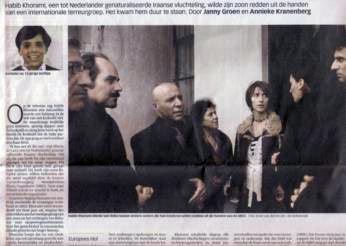

January 8, 2011 0 comments
FacebookTwitterPinterestWhatsappTelegramSkypeEmail
Iraq

Iraqi protesters demand MKO expulsion

Iraqi protesters in the north of the country have called for the expulsion of anti-Iranian terrorist group Mujahedin Khalq Organization (MKO) from Iraq.

A file photo of an anti-MKO protest in Iraq

Scores of protesters gathered outside Camp Ashraf in Diyala on Friday and called for the expulsion of the notorious MKO terrorists from the country, a Press TV correspondent reported.
MKO members responded by throwing rocks at the demonstrators.

Among the protesters were the Iranian relatives of some MKO members, who were calling for the release of their loved ones said to be held inside the camp against their will.

Diyala has been the scene of similar protests against the presence of MKO members, whose camp used to be guarded by American forces after the US-led invasion of the country in 2003.

Iraqis accuse the terrorist organization of involvement in the killing of their compatriots during the Ba’ath rule of former Iraqi dictator Saddam Hussein.

The group is especially notorious in Iran for having sided with Saddam during the 1980-1988 Iraqi-imposed was on Iran.

It has also claimed responsibility for numerous terrorist attacks and the assassination of significant figures in Iran over the past three decades.

The Mujahedeen Khalq Organization is listed as a terrorist group by Tehran and much of the international community.

January 8, 2011 0 comments
FacebookTwitterPinterestWhatsappTelegramSkypeEmail
Nejat Publications

Pars Brief – Issue No.56

1.    Sweden FRII warns citizens not to donate to MKO terrorist fraudulent front organizations

2.    Ahmad Razani a member of Mojahedin Khalq (MKO, MEK, NCRI, Rajavi cult) killed in Camp Ashraf

3.    Iraqi civic organizations demonstrating in front of Camp Ashraf

4.    MKO Supporters in Congress Turn up Pressure on Administration to Take Group off Terrorist List

5.    MKO denies ailing member; Elham Fardipour to access medical care

6.    MKO Ringleaders Cut Medical Supplies to Dissidents in Iraqi Camp Ashraf

7.    MKO hand behind Diyala terror attacks

8.    Mossad and Mujahadeen e-Khalq, Partners in Assassination Campaign

9.    Five Canadian lobbyist MPs defend their holiday trip to Paris paid by MKO terrorist group

Download Pars Brief – Issue No.56

January 6, 2011 0 comments
FacebookTwitterPinterestWhatsappTelegramSkypeEmail
Newer Posts
Older Posts

Recent Posts

  • A Criterion for Proving the Violent Nature of the MEK

    December 31, 2025
  • Rebranding, too Difficult for the MEK

    December 27, 2025
  • The black box of the torture camps of the MEK

    December 24, 2025
  • Pregnancy was taboo in the MEK

    December 22, 2025
  • MEPs who lack awareness about the MEK’s nature

    December 20, 2025
  • Facebook
  • Twitter
  • Instagram
  • Youtube

© 2003 - 2025 NEJAT Society . All Rights Reserved. NejatNGO.org


Back To Top
Nejat Society
  • Home
  • Articles
  • Media
    • Cartoons
    • NewsPics
    • Photo Gallery
    • Videos
  • Publications
    • Books
    • Nejat NewsLetter
    • Pars Brief
  • About Us
  • Contact us
  • Editions
    • عربي
    • فارسی
    • Shqip