Nejat Society
  • Home
  • Articles
  • Media
    • Cartoons
    • NewsPics
    • Photo Gallery
    • Videos
  • Publications
    • Books
    • Nejat NewsLetter
    • Pars Brief
  • About Us
  • Contact us
  • Editions
    • عربي
    • فارسی
    • Shqip
Nejat Society
Nejat Society
  • Home
  • Articles
  • Media
    • Cartoons
    • NewsPics
    • Photo Gallery
    • Videos
  • Publications
    • Books
    • Nejat NewsLetter
    • Pars Brief
  • About Us
  • Contact us
  • Editions
    • عربي
    • فارسی
    • Shqip
© 2003 - 2024 NEJAT Society. nejatngo.org
Mujahedin Khalq Organization's Propaganda System

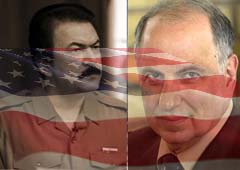
Mojahedin Khalq propaganda machine cannot hide the facts at Camp Ashraf

There are a number of basic facts which even the sophisticated and well-financed MEK propaganda machine cannot make untrue. It is worth repeating them.

The number of MEK members has never risen beyond 6,000 to 7,000. Even in 1988 at the height of their powers the group could only muster 5500 to launch its abortive operation to topple the regime, the infamous Eternal Light operation. American soldiers corralled 3800 members inside Camp Ashraf in 2003. In the rest of the world figures probably do not exceed an additional one to two thousand including the MEK’s non Iranian supporters and backers.

Fourth Geneva Convention Protected Persons’ status was wrongfully applied in 2004 by Defense Secretary Donald Rumsfeld. He gave ‘Pentagon protection’ to his terrorists in Iraq while the UN and ICRC expressed their concern over the issue and argued (fruitlessly) that the MEK is a paramilitary group, not a civilian population and this designation had no legal basis. But in any case the status would not apply after 2006, a year after the first elections in Iraq – a fact repeatedly corroborated by British, European and American officials. A document produced by the Library of the UK’s House of Commons states: “In the case of occupied territory, the Convention continues to apply for a year after the general close of military operations, and partially thereafter if the occupying power continues to exercise the functions of government. The occupation of Iraq formally ended on 30 June 2004.”

The MEK members in Camp Ashraf do not have any legal right to be in Iraq. No MEK member has refugee status in Iraq. Leader Massoud Rajavi ensured they all entered the country illegally in order to be able to use this against them if they defected (he sent scores to Abu Ghraib in this way). After 2003, the UNHCR in Iraq would not grant refugee status to MEK members because it is a paramilitary group and the GOI has refused to grant refugee status to members of what is known throughout Iraq as a terrorist organisation which has killed some 25,000 Iraqi civilians. In Written Answers in the House of Lords on 20 April 2009, Lord Malloch-Brown (then Minister of State, Foreign & Commonwealth Office) told parliament, “The UN High Commission for Refugees has previously determined that Camp Ashraf residents do not qualify as refugees.”

The Government of Iraq has every reason, regardless of Iranian or American influence either way, to wish to expel the MEK from the country. The MEK was responsible for killing 25,000 Iraqi civilians. It is currently the only part of Saddam Hussein’s repressive apparatus which remains intact and active. This is due to the failure of the American military to dismantle the camp and remove the inhabitants. (RAND Report, August 2009) Iraq’s Foreign Minister Zebari a few weeks ago again accused the MEK of trying to maintain a state within a state and said that "the Mojahedin-e Khalq terrorist organization is like many other armed terrorist organizations," adding that "the government is determined to impose its sovereignty and not allow any party to impose its policy orientations."

The Iraqi Judiciary would like to prosecute leading members of the MEK for war crimes and crimes against humanity committed against Iraqis in Iraq. They have been frustrated by the interference of the MEK’s backers in Washington, London and Brussels.

Iraqi soldiers are stationed at Camp Ashraf to provide protection, a role imposed on them by the Americans who failed to deal with the MEK for six years. In the six years that American soldiers protected the terrorist group and its base, fourteen American soldiers were killed during escort missions for MEK shopping in Baghdad. (RAND Report August 2009.)

There is plenty of evidence that the MEK commit serious human rights abuses against their own members inside Camp Ashraf, but to date no independent investigation has taken place into these allegations.

The Iranians outside Camp Ashraf are the families of members trapped inside. The MEK do not allow the members to have contact with them. The families have been recently attacked by MEK special forces from inside the camp which resulted in the hospitalisation of a couple of old people. The American soldiers have repeatedly come to support the MEK in the harassment of the families who have now entered their 13th month of their picket, demanding a simple visit to make sure their loved ones are there of their own free will. So far, no one has established that the people inside Camp Ashraf are there of their own free will.
February 26, 2011 0 comments
FacebookTwitterPinterestWhatsappTelegramSkypeEmail
Mujahedin Khalq; A proxy force

An Unholy Alliance

Strange days! A few days ago, Congressman Poe (T-Texas) introduced House Resolution 60 calling for the Mojahedin-e-Khalq Organization (MKO) to be removed from the terrorist list by the State Department. At the same time, an unknown group calling itself the "Association of Iranian University Professors in Britain" took a full page ad in the major U.S. papers making the same demand. These efforts to get the MKO legitimized is just the last round of efforts by the MKO and its neocon supporters — presumably as a reward to have "outed" the Iranian nuclear program.

The effort is signed by such neocon luminaries such as John Bolton and former CIA director Woolsey, as well as Bush administration alumni such as former Attorney General Mukasey. What strange bedfellows! On one hand, you have the neocons, close allies of the Israeli right-wing and committed to a muscular war against global terrorism, and on the other, the MKO, a radical left-wing Islamist group involved in the 1970s in anti-Shah and anti-U.S. activities — including a failed attempt on the U.S. ambassador to Iran and the killing of several U.S. citizens based in Iran at the time

There is much more to the MKO story. During the early days of the revolution, the MKO promoted a Khmer Rouge-type policy of wholesale elimination of the previous elite and massive reeducation of the population. After losing the power struggle against Khomeini and reappearing in Iraq, the group’s cult-like reputation and its personality cult around its leader Massoud Rajavi intensified. According to the CIA, the MKO was also used by a beleaguered Saddam to crush the Kurdish rebellion that came immediately after Iraq’s defeat in the Persian Gulf War. The MKO organized regular media visits at its base in Iraq, Camp Ashraf, where it exhibited its military arsenal, which included tanks and artillery. Of course, most of this arsenal remained unused, since the MKO was unable to mount anything more than pinprick attacks against the Iranian regime. At the same time, the MKO’s propaganda machine was working overtime in the U.S. and Europe. In fact, it has been quite effective, and the MKO has managed over the years to pull the wool over the eyes of some European politicians as well as Congress (on particular its most conservative GOP members) and present itself as a bona fide moderate and democratic opposition movement and an alternative to the theocratic government of Tehran. Following the Iraq war, they were unexplainably protected by the U.S. forces — presumably because the Bush administration, with its less than profound understanding of Iranian political dynamics, wanted to keep the MKO as a potential weapon against the Islamic Republic. It is only recently that the Shi’ite-led government of Iraq felt strong enough to challenge the U.S. by taking control of Camp Ashraf.

It is no secret that the neocons have been pushing hard for years to get the State Department to remove the terrorist label from the MKO. As a result, there have been numerous efforts by Congress to remove them from the aforementioned list. However, these efforts have taken a new dimension in the past few years with the unholy MKO-neocon alliance. This campaign, which did not succeed even under the Bush administration, is surprisingly reaching a new crescendo under the Obama administration. Nobody can be fooled by the motivation of the MKO supporters in the United States, who have openly promoted either military action against Iran or the dismemberment of the country as the ultimate remedy. That the MKO is complicit in these policies is not surprising for a movement which has already betrayed the Iranian people by siding with Iraq during the Iran-Iraq war. For this, they have been universally reviled both by Iranians in Iran and the world.[…]

While the human rights issue of the refugees trapped in Camp Ashraf has to be dealt with in a compassionate way, the State Department must continue to resist pressures to legitimize the MKO. Pressure to remove the MKO from the U.S. terrorism list is a cynical ploy that can only have negative consequences for both the U.S. and the Iranian people.

Legitimizing the MKO will not change the fact that it remains a terrorist organization, which has betrayed the Iranian people twice and is willing to go to any length to promote its undemocratic goals, including an unholy alliance with the neocons. The State Department must resist the pressure, for the interest of peace as well as the democratic movement in Iran.

Karim Pakravan is a member of the Faculty at DePaul University in Chicago.

February 26, 2011 0 comments
FacebookTwitterPinterestWhatsappTelegramSkypeEmail
Terror Teams of the MEK

Pre planned Assassination by MKO terrorists

Iran’s Intelligence Minister Heidar Moslehi says security forces have managed to identify people behind the assassination of Sane’ Jalleh during a demonstration in Tehran.

“Necessary measures have been taken regarding the matter and the Ministry will announce its next move concerning the issue,” IRNA quoted Moslehi as saying on Wednesday.

Jalleh, a Tehran University student, was assassinated by members of the anti-Iran terrorist group, Mujahedin Khalq Organization (MKO), during an illegal rally in the Iranian capital on February 14.

The intelligence minister further pointed out that Jalleh’s assassination was part of a pre-planned scheme by the MKO, adding “they had identified their victim in advance and had planned to assassinate him.”[…]

Tehran says American NGOs and organizations provided financial support for the post-election unrest in Iran in 2009 in an attempt to topple the Islamic establishment.

February 24, 2011 0 comments
FacebookTwitterPinterestWhatsappTelegramSkypeEmail
Mujahedin Khalq Organization

MEK: Islamic Socialists to Ba’athists to Right Wing Republicans

“Lobbyists labor to get Iranian group taken off of U.S. terror list. Two lawyers well-known for their intelligence and national security work in Washington are lobbying to remove an Iranian group from the State Department’s list of terrorist organizations. On behalf of the Iranian-American Community of North Texas, Joseph DiGenova and Victoria Toensing of DiGenova & Toensing have registered to lobby for removing the Mujahadeen-e-Khalq (MEK) — otherwise known as the People’s Mujahedin of Iran — from the State Department’s Foreign Terrorist Organizations list, according to lobbying disclosure records released last week. Frequent media commentators, husband and wife DiGenova and Toensing were members of the Reagan Justice Department and have worked for prominent Republican lawmakers on Capitol Hill in the past.“They are not a terrorist organization. It’s that simple,” Toensing told The Hill. According to the State Department, the MEK is credited with several terrorist attacks that killed Americans in the 1970s and later found itself in conflict with the new Iranian regime after the Shah was deposed. The group would go on to support Iraq in the Iran-Iraq War and base its operations there in Camp Ashraf, often launching terrorist attacks against Iranian interests…….”

Now they have the support of extreme right-wing Republicans in the U.S. Congress (is there any other kind in Congress?). The MEK (or MKO) have also come full circle with the Arab potentates on the Gulf. They were in good standing during the Iran-Iraq War because they supported Saddam, but after the (Persian) Gulf War in 1990 they were out of favor around the Gulf. Now, with the “wrong” government in Baghdad, the MEK are back in favor among the Gulf oligarchies: their media is calling for their camp to remain in Iraq, near the Iranian border (but they wouldn’t want them in ‘their’ territory). A full circle: but that is the way it is with exile politics, they often create strange bedfellows.

Right now, nobody gives this shadowy group any chance in Iran, except maybe some right-wing Republicans and Gulf potentates. Their pro-Saddam days ensure that they have little popularity inside Iran. That is right now: very few people thought the Bolsheviks had any chance either before 1917. But their association with Republican rightists is ominous to many Iranians: they remember that Operation Ajax (1953) “succeeded” under a Republican administration in overthrowing their last fully freely elected government.

Arabia Deserta

February 23, 2011 0 comments
FacebookTwitterPinterestWhatsappTelegramSkypeEmail
Terror Teams of the MEK

MKO terror teams were managed directly by Mayam Rajavi from HQ in Paris

Source Reveals MKO’s Pivotal Role in Tehran’s Monday Unrests

Sources close to the anti-Iran terrorist Mojahedin-e Khalq Organization revealed that MKO had played a key role in the Monday unrests in the Iranian capital.

The Habilian Association, an Iran-based human rights group formed by the family members of the Iranian victims of terrorism, quoted reliable sources as saying that MKO’s surrogate ringleader Maryam Rajavi had dispatched several operational teams to Tehran and had been in constant contact with the team members until the end of unrests.

"Mayam Rajavi was in direct contact with the operational units dispatched to Tehran and ordered them to spray live fire on the public who had risen to stand against the few seditionists," Habilian said.

"In this terrorist operation which took place in Tehran’s Qasroddasht neighborhood on Monday February 14, the Basiji student, Saneh Zhaleh, was martyred and four others were severely wounded," it added.

"A student activist in France disclosed that over 350 members of the MKO had been sent from several European and Asian countries to Tehran and other major Iranian cities, based on plan drawn by the main ringleader of the MKO, Massoud Rajavi," the Habilian website said.

The website said the MKO teams intended to start riots, set fire on garbage cans, destroy public amenities and private properties and shoot and kill the large number of the self-driven people who had come to defend the Islamic Republic and the government against the seditionists in a bid to provoke the police and security forces into reciprocating the gunfire to create a pool of blood in the capital and to escalate the unrests.

But after police refrained from armed clashes with the seditionists and the public pushed the seditionists back, the MKO plot ended in failure, the website added.

Several groups of seditionists staged riots in western Tehran on Monday afternoon. Rioters damaged public amenities and private buildings and properties and set up roadblocks by setting fire on garbage cans during the rush hour in the Iranian capital.

Rioters opened fire at the public and police troops, killing one university student on the scene and wounding 9 more. One of those wounded in the incident also died at the hospital.

Tehran’s police tried to disperse the rioters, but did not reciprocate the gunfire. Police officials announced on Tuesday that most of those wounded in the incident were security and police troops.

According to police officials, the seditionists had hatched a plot to get the police and security forces involved in armed clashes to allege that they had been treated violently, but they failed to do so.

The MKO, whose main stronghold is in Iraq, is blacklisted by much of the international community, including the United States.

Before an overture by the EU, the MKO was on the European Union’s list of terrorist organizations subject to an EU-wide assets freeze. Yet, the MKO puppet leader, Maryam Rajavi, who has residency in France, regularly visited Brussels and despite the ban enjoyed full freedom in Europe.

The MKO is behind a slew of assassinations and bombings inside Iran, a number of EU parliamentarians said in a recent letter in which they slammed a British court decision to remove the MKO from the British terror list. The EU officials also added that the group has no public support within Iran because of their role in helping Saddam Hussein in the Iraqi imposed war on Iran (1980-1988).

Many of the MKO members abandoned the terrorist organization while most of those still remaining in the camp are said to be willing to quit but are under pressure and torture not to do so.

A May 2005 Human Rights Watch report accused the MKO of running prison camps in Iraq and committing human rights violations.

According to the Human Rights Watch report, the outlawed group puts defectors under torture and jail terms.

The group, founded in the 1960s, blended elements of Islamism and Stalinism and participated in the overthrow of the US-backed Shah of Iran in 1979. Ahead of the revolution, the MKO conducted attacks and assassinations against both Iranian and Western targets.

Leaders of the group have been fighting to shed its terrorist tag after a series of bloody anti-Western attacks in the 1970s, and nearly 30 years of violent struggle against the Islamic Republic of Iran.

The group started assassination of the citizens and officials after the revolution in a bid to take control of the newly established Islamic Republic. It killed several of Iran’s new leaders in the early years after the revolution, including the then President, Mohammad Ali Rajayee, Prime Minister, Mohammad Javad Bahonar and the Judiciary Chief, Mohammad Hossein Beheshti who were killed in bomb attacks by MKO members in 1981.

The group fled to Iraq in 1986, where it was protected by Saddam Hussein and where it helped the Iraqi dictator suppress Shiite and Kurd uprisings in the country.

The terrorist group joined Saddam’s army during the Iraqi imposed war on Iran (1980-1988) and helped Saddam and killed thousands of Iranian civilians and soldiers during the US-backed Iraqi imposed war on Iran.

Since the 2003 US invasion of Iraq, the group, which now adheres to a pro-free-market philosophy, has been strongly backed by neo-conservatives in the United States, who also argue for the MKO to be taken off the US terror list.

The MKO has been in Iraq’s Diyala province since the 1980s.

Iraqi security forces took control of the training base of the MKO at Camp Ashraf – about 60km (37 miles) north of Baghdad – last year and detained dozens of the members of the terrorist group.
The Iraqi authority also changed the name of the military center from Camp Ashraf to the Camp of New Iraq.

February 22, 2011 0 comments
FacebookTwitterPinterestWhatsappTelegramSkypeEmail
Mujahedin Khalq as an Opposition Group

MKO Intends to Open Fire on Civilians

A senior Iranian legislator warned that the hirelings and members of the anti-Iran terrorist Mojahedin-e Khalq Organization (MKO) have hatched a plot to start unrests in Tehran today in a bid to open fire on the civilians to bring the police and security forces into armed clashes.

"The security forces should try to show a firm confrontation (against such unrests) in areas where unlawful gatherings seem likely so that the Monafeqin (hypocrites as MKO members are called in Iran) and enemies cannot misuse the situation," member of the parliament’s Islamic Revolution Fraction Seyed Mohammad Javad Abtehi told FNA on Sunday.

He pointed out that the MKO members plan to kill the people who gather in streets to put the blame on the Iranian security forces in order to create a rift between the nation and government, and demanded the public to avoid watching the protests held by the small number of protestors.
Earlier reports said that a number of MKO members have infiltrated the country in a bid to start illegal gatherings to open fire on the public in a move to bring the country into chaos.

During riots in western Tehran on Monday afternoon, the MKO teams opened fire at the public and police troops, killing one university student on the scene and wounding 9 more. One of those wounded in the incident also died later at the hospital.

Tehran’s police tried to disperse the rioters, but did not reciprocate the gunfire. Police officials announced on Tuesday that most of those wounded in the incident were security and police troops.

According to police officials, the seditionists had hatched a plot to get the police and security forces involved in armed clashes to allege that they had been treated violently, but they failed to do so.

Meantime, Iranian Interior Minister Mostafa Mohammad Najjar announced on Saturday that the country’s security forces will confront those involved in the recent unrests in Tehran, but according to the Islamic Republic’s laws.

"The sedition move has a triangular pattern with the hegemonic system at the top and sedition masterminds at the bottom," he stressed, implying that leaders of the recent unrests in the Iranian capital are only puppets of foreign powers.

He further elaborated on those who run such intrigues, and said, "This triangle has been formed through collaboration among the anti-Iran terrorist Mojahedin-e Khalq Organization (MKO), monarchists and outlaws in a move to take revenge from the Iranian nation."

February 22, 2011 0 comments
FacebookTwitterPinterestWhatsappTelegramSkypeEmail
Mujahedin Khalq; A proxy force

Mujahedin Khalq ; New Chalabi for the West

WHITE HOUSE SUPPORT FOR MIDDLE EAST ‘UPRISINGS’ DEPENDS ON HOW AND WHETHER THEY CAN BE USED AGAINST IRAN
 

Our friend David Frum published an interesting post, “America Can’t Afford to Ignore the Chaos inSupporting MEK; West feckless attempts to manipulate Iran’s politics Bahrain”, see here. David makes some points with which we agree, as when he writes that “An entire American carrier battle group is based in Bahrain—there is no way the United States can avoid being implicated in the actions of the Bahraini government.” But we were disturbed by his bottom-line policy recommendation for the United States:
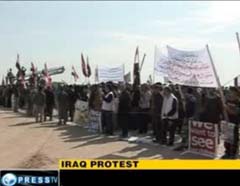
“Always and ever: Iran is the big play in the Middle East…Every regional decision has to be measured against the test: Is this moving us closer to—or further from—a positive change in the Iranian political system? That test should guide decisions about Bahrain and about a lot more than Bahrain.”

One of the reasons we were struck by David’s recommendation—and keep in mind that he is one of the most prominent and thoughtful neoconservatives to be found—is that it already seems to have been taken on board by President Obama and his administration (though they have not explained it anywhere near as clearly as David did). On that point, David Sanger of The New York Times told National Public Radio’s Diane Rehm on Friday, see here, that President Obama believes the uprisings in Tunisia, Egypt, and elsewhere “could create an alternative narrative to Al-Qaeda and an alternative narrative to Iran that the United States ought to make use of”.

It is in this context that we should understand why the Obama Administration, literally seven hours after Omar Soliman announced that Hosni Mubarak would step down as Egypt’s President after all, called the White House press corps back in and, as Sanger put it, “all but urged the protestors” in Iran, such as they were, “to get out and do more”. The Administration has clearly decided, as America’s strategic position in the Middle East erodes before our eyes, to “push back” against the Islamic Republic, in multiple ways.

Some of those ways will be more feckless attempts to manipulate Iran’s internal politics—as with the Obama Administration’s exhortations for domestic unrest in Iran. We were appalled to learn recently that the Administration is considering lifting the MEK’s designation as a foreign terrorist organization.

On that point, Bill Clinton’s Joint Chiefs of Staff chairman, retired U.S. Army General Hugh Shelton, added his voice to those of retired generals James Jones—President Obama’s former national security adviser—and Anthony Zinni, calling for the MEK’s rehabilitation, see here. Shelton argues explicitly that Iran could exploit the wave of pro-democracy protests in the Middle East, and that, to forestall such a scenario, “Iran’s current regime is currently a government that needs to change”.

We have told every Obama Administration official and member of Congress with whom we have discussed the matter that it is hard to imagine a dumber, more counter-productive change in America’s already deeply dysfunctional Iran policy than to lift the MEK’s designation as a foreign terrorist organization and start supporting it as the “vanguard” of some mythical expatriate Iranian opposition. This would make the reliance of the Clinton Administration and the George W. Bush Administration on Ahmad Chalabi and his Iraqi National Congress as the keys to successful “regime change” in Iraq look enlightened by comparison. But the chances of this happening are, sadly, increasing.

In its desperation to look like it can still shape events in the Middle East in some meaningful way, the Obama Administration is looking for other ways to press the Islamic Republic. Just a few days ago, Steve Coll—Pulitzer Prize-winning author and president of the New America Foundation—broke the story in The New Yorker that the Administration has started secret, preliminary talks with the Taliban, see here.

From an Iranian perspective, this is simply one more indicator of America’s unique combination of perfidy and incompetence in Afghanistan. During 2001-2003, the Islamic Republic provided substantial cooperation to the United States in its efforts to unseat the Taiban from power in Kabul and destroy Al-Qa’ida in its Afghan sanctuaries. Iran cooperated with the United States, in part, on the basis of U.S. representations that Washington wanted an independent and stable Afghanistan which would not be under the sway of the Taliban and its chief external backers, Pakistan and Saudi Arabia.

But Iranian officials warned that local populations would see a prolonged U.S. military presence in Afghanistan as occupation—a judgment borne out by subsequent events, as greater geographic penetration by U.S. forces since 2006 and the deployment of additional U.S. troops since 2009 have correlated directly with an escalating spiral of violence and instability. This, in turn, has once again empowered the Saudi- and Pakistani-backed Taliban, which has clearly made a comeback—to a point where Afghan President Hamid Karzai, now seemingly joined by the Obama Administration, judges that the only basis for a political settlement is power sharing with the Taliban.

As we have experienced directly, this leads Iranian policymakers to question not just America’s intentions in Afghanistan, but also its competence—and with good reason. If Karzai and the United States move forward on power-sharing with the Taliban, without engaging the major non-Pashtun factions (many of which have close connections to the Islamic Republic), it could, as Coll notes, “ignite a civil war along ethnic lines”.

And it is becoming apparent that the Obama Administration will back the Bahraini royal family in whatever level of brutality seems necessary to keep Bahrain in the “American camp”. In other words, the Obama Administration is responding to the wave of popular unrest across the Arab world by intensifying its pursuit of the sorts of policies that have so thoroughly alienated most of the Middle East’s inhabitants from U.S. foreign policy in the first place.

Race for Iran – by Flynt Leverett & Hillary Mann Leverett

February 22, 2011 0 comments
FacebookTwitterPinterestWhatsappTelegramSkypeEmail
Nejat Publications

Pars Brief – Issue No.57

1.    Iraqi protesters demand MKO expulsion

2.    MKO terrorists clearly connected to CIA and MOSSAD

3.    MKO Terrorists Attack Iraqi Tribal Leaders, Reporters

4.    With “ENGAGEMENT” failing, Washington voices urge Obama to Embrace the MEK and remove its terrorist designation

5.    Beeman–Mojaheddin-e Khalq (MEK) Can Never Rule Iran

6.    State Dept: Mojahedin Khalq backers claims not true

7.    On ‘Material Support’ And The MKO

Download Pars Brief – Issue No.57

February 20, 2011 0 comments
FacebookTwitterPinterestWhatsappTelegramSkypeEmail
Iraq

Iraqis continue to protest Mojahedin Khalq camp

People in Iraq’s Diyala province organized a protest in front of Camp Ashraf where the Mojahedin-Khalq Organization or MKO members are residing.

Iraqis have been urging the government to deport the MKO members for a long time now…
Iraqis describe the MKO's presence in their country as a chronic diseaseMost Iraqis jeer at the MKO and are concerned about its secret terrorist plots and other illegal activities. So mush so that, in everyday conversations, Iraqis describe the MKO’s presence in their country as a chronic disease.
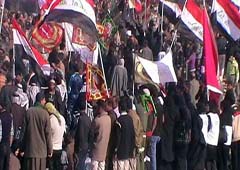
Some important figures turned out for the protest including tribal leaders, clerics and local government officials.

Protesters shouted,”leave our country”, and carried placards with anti-MKO slogans to express their intolerance towards the presence of a terrorist group that they say has caused so much trouble in their country.

The tribal leaders want the government to respect public demands and expel the MKO once and for all.

Some Local officials accuse the west of influencing the Iraqi government to let the MKO stay in Iraq.

MKO has been in Iraq’s Diyala province since the 1980s. It’s been blacklisted as a terrorist group by most countries in the world.

Many accuse the MKO of murdering Iraqi civilians during the 1991 uprisings and so helping Saddam Hussain stay in power.

The group is widely frowned upon in the region for having sided with former Iraqi dictator Saddam Hussein during the 1980-1988 war against Iran.

Wisam al-BayatiDownload Iraqis continue to protest Mojahedin Khalq camp

February 20, 2011 0 comments
FacebookTwitterPinterestWhatsappTelegramSkypeEmail
Iraq

Thousands of citizens of Diyala Province call for MKO expulsion

Thousands of citizens of Diyala Province, Iraq, called for expulsion of Mujahedin Khalq Organization from Iraq. They also called on trial for the group leaders.
Thousands of citizens of Diyala Province, Iraq, called for expulsion of Mujahedin Khalq Organization from Iraq
On Friday February18, 2011, thousands of protestors appealed Iraqi judiciary to punish criminal leaders of MKO.

A protestor who was one of the organizers of the demonstration, Habar Al Amuri told Al Sumaria News: "this morning, thousands of Diyala citizens protested against presence of MKO in their territory. They gathered in front of gates of Camp of New Iraq (formerly Ashraf),the organization’s base in Iraq. They asked the government to expel the organization from Iraqi soil."

He notified that the group was the source of a lot of grieves and violence against Diyala citizens.
A demonstrator, Hassan Al Rabiee expressed his opposition towards MKO’s presence in Iraq:"How late will Iraqi government ignore people’s request? Why haven’t they expelled an organization which is guilty for killing innocent people, yet?"

"The protests will continue until the group is expelled ", he warned the government. 

 Alsumaria News

February 19, 2011 0 comments
FacebookTwitterPinterestWhatsappTelegramSkypeEmail
Newer Posts
Older Posts

Recent Posts

  • MEK agents near schools in Tirana, Albania

    October 17, 2026
  • Expectations of human rights bodies regarding censorship within the MEK

    October 13, 2026
  • The Jamalis’ Plea for Help: Save Our Brother from the MEK!

    October 11, 2026
  • Testimonies of Participants in the MEK’s Staged Propaganda Stunt in Karaj

    October 7, 2026
  • Giuliani’s MEK ties have dogged him for years

    October 6, 2026
  • Facebook
  • Twitter
  • Instagram
  • Youtube

© 2003 - 2025 NEJAT Society . All Rights Reserved. NejatNGO.org


Back To Top
Nejat Society
  • Home
  • Articles
  • Media
    • Cartoons
    • NewsPics
    • Photo Gallery
    • Videos
  • Publications
    • Books
    • Nejat NewsLetter
    • Pars Brief
  • About Us
  • Contact us
  • Editions
    • عربي
    • فارسی
    • Shqip