Nejat Society
  • Home
  • Articles
  • Media
    • Cartoons
    • NewsPics
    • Photo Gallery
    • Videos
  • Publications
    • Books
    • Nejat NewsLetter
    • Pars Brief
  • About Us
  • Contact us
  • Editions
    • عربي
    • فارسی
    • Shqip
Nejat Society
Nejat Society
  • Home
  • Articles
  • Media
    • Cartoons
    • NewsPics
    • Photo Gallery
    • Videos
  • Publications
    • Books
    • Nejat NewsLetter
    • Pars Brief
  • About Us
  • Contact us
  • Editions
    • عربي
    • فارسی
    • Shqip
© 2003 - 2024 NEJAT Society. nejatngo.org
Mujahedin Khalq 's Function

MKO Terrorists create groups against Iraqi People

Right Group Uncovers MKO’s Huge Soft War Funding in Iraq 

Habilian Association, an Iran-based human rights group, reported that the anti-Iran terrorist Mojahedin-e Khalq Organization (MKO) has made heavy investments to gain soft power in Iraq as part of its broader efforts to secure its presence in the country and gain political influence on Baghdad.

According to the Habilian report, the MKO ringleaders have provided financial and structural support for the establishment of over 20 publications and sociopolitical groups in Iraq in recent years in a bid to see their desired government in power.

The report said that the investment was vital for the terrorist group considering that MKO ringleaders tried hard to make Nouri Maliki face failure in his bid for becoming Iraq’s new Prime Minister.

Also, the soft war funding was an urgent necessity for the MKO since its affiliated publications and groups could support the MKO under the pretext of human rights against the Iraqi people and political groups who are growingly demanding MKO’s expulsion from their country, the report added.

Both Iraq’s parliament and government have ratified expulsion of MKO from the country.

Iraqi security forces took control of the training base of the MKO at Camp Ashraf – about 60km (37 miles) north of Baghdad – last year and detained dozens of the members of the terrorist group.

The Iraqi authority also changed the name of the military center from Camp Ashraf to the Camp of New Iraq.

Earlier this month, Iraqi Foreign Minister Hoshyar Zebari expressed hope that Baghdad would expel the anti-Iran terrorist Organization from Iraq soon in future.
Speaking to reporters after a meeting in Baghdad with visiting Iranian Foreign Ministry Caretaker Ali Akbar Salehi, Zebari said that he and his Iranian counterpart have discussed expulsion of MKO from Iraq at their meeting.

Asked about the fate of the MKO, Zebari said the two sides "hope to find a way to close the MKO’s case in Iraq as soon as possible".
"There are some humanitarian commitments to which our government is loyal, but fulfilling these undertakings should not harm Iraq’s national sovereignty," he said.
The MKO has been in Iraq’s Diyala province since the 1980s.

The MKO, whose main stronghold is in Iraq, is blacklisted by much of the international community, including the United States.

Before an overture by the EU, the MKO was on the European Union’s list of terrorist organizations subject to an EU-wide assets freeze. Yet, the MKO puppet leader, Maryam Rajavi, who has residency in France, regularly visited Brussels and despite the ban enjoyed full freedom in Europe.

The MKO is behind a slew of assassinations and bombings inside Iran, a number of EU parliamentarians said in a recent letter in which they slammed a British court decision to remove the MKO from the British terror list. The EU officials also added that the group has no public support within Iran because of their role in helping Saddam Hussein in the Iraqi imposed war on Iran (1980-1988).

Many of the MKO members abandoned the terrorist organization while most of those still remaining in the camp are said to be willing to quit but are under pressure and torture not to do so.

A May 2005 Human Rights Watch report accused the MKO of running prison camps in Iraq and committing human rights violations.

According to the Human Rights Watch report, the outlawed group puts defectors under torture and jail terms.

The group, founded in the 1960s, blended elements of Islamism and Stalinism and participated in the overthrow of the US-backed Shah of Iran in 1979. Ahead of the revolution, the MKO conducted attacks and assassinations against both Iranian and Western targets.

The group started assassination of the citizens and officials after the revolution in a bid to take control of the newly established Islamic Republic. It killed several of Iran’s new leaders in the early years after the revolution, including the then President, Mohammad Ali Rajayee, Prime Minister, Mohammad Javad Bahonar and the Judiciary Chief, Mohammad Hossein Beheshti who were killed in bomb attacks by MKO members in 1981.

The group fled to Iraq in 1986, where it was protected by Saddam Hussein and where it helped the Iraqi dictator suppress Shiite and Kurd uprisings in the country.
The terrorist group joined Saddam’s army during the Iraqi imposed war on Iran (1980-1988) and helped Saddam and killed thousands of Iranian civilians and soldiers during the US-backed Iraqi imposed war on Iran.

Since the 2003 US invasion of Iraq, the group, which now adheres to a pro-free-market philosophy, has been strongly backed by neo-conservatives in the United States, who also argue for the MKO to be taken off the US terror list.
January 17, 2011 0 comments
FacebookTwitterPinterestWhatsappTelegramSkypeEmail
Mujahedin Khalq Organization as a terrorist group

MKO’s Shift in Terrorist Modus Operandi

It has been frequently reiterated that Mojahedin Khalq Organization (MKO, MEK, PMOI, NCR, NLA) for a variety of ideological, strategic and other reasons has failed to alter its long practiced violent and terrorist approaches. The reasons are all grounded on a wholehearted devotion to its inbuilt violence and an understanding of the philosophy of the existence. However, it is not for long that MKO has come to claim it has made a thorough change to stop terrorism in the favor of adopting an alternative peaceful and civil way of democratic struggle.

No convincing theoretical explanation has so far the organization presented for such changes and the ambiguity still prevails for the unexpected, claimed U-turn of a fundamentally terrorist organization. Since MKO persist in dodging from logically convincing reasoning, the transition must be analyzed according to unconventional tactics of the organization and its engagements with other similar terrorist organizations in an attempt to mastermind unusual methods of coverage for its activities. These methods, unfortunately, have drawn less attention while it is of importance to have a study of them concerning the issue. The basic question, with regard to MKO’s claim of denouncing terrorism, one may pose is how practical the pretense could be and in case of a negative answer, how could it help the organization to survive.

The fact is that today the global consensus on the issue of fight against terrorism has forced many terrorist groups to withdraw from violence, go to isolation, temporary cease armed activities and in some way pose as analogous to pro-democratic devotees and parties. As a result, if we suppose that MKO has made a change in the procedures and practices of terrorism and violence, it is a miscalculation according to dozens of political and theoretical justifications and facts. Now the question is that how can such an organization that is struggling hard to be removed from the terrorist blacklists play a double standard of both maintaining its terrorist and militarist potentialities and portray a counter-terrorist in its political and propaganda profile? For sure there are concrete evidences to prove such a hypocritical behavior.

One is shift in modus operandi; that is, from this point on the organization sees no need to engage in terrorism and violence and to accept any responsibility under its commonly known logo and signature. Rajavi knows well that today assuming responsibility for terrorist acts has lost its effectiveness and the international community condemns these activities in any form. Facing a universal restriction, MKO like some other similar terrorist groups made a change in its profile that faces the world at large and has decreased much of its activities done under its old emblem specifically when issuing statements for terrorist perpetrations. Opening new branches under a variety of charity, humanitarian, women’s rights and other aliases, MKO began a new phase of bulwarking and feeding its main military structure. In this way, it strived to operate under a self-made legality and equality with a democratic group that gave it an open hand to have further collaboration with other opposition that operated with a terrorist transparency. We have still the reports of MKO’s support of Rigi’s terrorist group calling him the leader of a liberation movement after his arrest by Iranian forces.

Pushing the political and civil activities to terrorism is another adopted approach in which MKO sets guidelines for non-violent, civil activities. That is, while pretending to be siding with pro-democratic and civil factions, MKO ventures to impress them with its own ideological and political impressions. Interestingly, in contrast to its attempt to convince the international community to have withdrawn from a proven terroristic past to be removed from terrorist lists, MKO is in a never-ending struggle to incite peaceful oppositions to riot and engage in violent and insurgent activities against the Iranian regime. At least in the past two years it has been the prescription Rajavi would formulate for the opposition currents inside Iran. Through several messages sending out from his hideout, Rajavi sought to instill his self-set political and theoretical instructions into motivated protesters to intensify their public anger. Not only he tried to influence the internal protestors to incite domestic violent but also to impose himself as one of the leading figures at the lead.

A support of blind and revengeful assassinations has been another indirect mien of operating under democracy. During all the years that MKO claimed to have stopped terrorist activities, it has unequivocally backed all acts of violence and terrorism even those perpetrated with personal and revengeful motives. A look at its websites well explains how it has been, and is, supporting and sympathizing with the arrested criminals, rubbers, kidnappers and drug dealers as heroes and freedom fighters. Thus we see the footprints of Rajavi and his propaganda machine in provocation of any form of domestic political and criminal violence because he initially rejects any peaceful and public-approved democratic behavior.

Many terrorist organizations are believed to have abnormal potentialities to identify with a pro-democratic profile and to replace their known terrorist image with a leading role in guiding, organizing and managing other violent minorities. Hardly anywhere can you find such a creativity and ingenuity these organizations, regardless of being revolutionaries, freedom fighters or any other name, possess especially when they are on the verge of disintegration. In fact, “The prime tool of the revolutionary terrorism is use of creativity and ingenuity to guarantee the continuity of its organizational activities”. (Reich Walter; Origins of Terrorism, 19)

At the present, MKO does not seem to demonstrate serious threat as a terrorist group especially after being removed from the EU blacklist. That is because it does not directly involve itself in terrorist acts as did before. Instead, it has taken the initiative to impose its hegemony over other terrorist groups for reasons: first to fill the created gap of armed activities against Iranian regime and second, to quantitatively reproduce and educate dependent groups and individuals as well as organizing violent calls. In other words, submission of some pro-violent factions to Rajavi’s hegemony made him to call them under his banner by granting them excessive political, financial, media and propaganda support that in turn have been entrusted to him by his Western supporters. And this is a phase that can be named as a phase of administration of terrorism by disguised terrorists, a phase that has to be taken seriously, even if a temporal modus Vivendi to accomplish a joint political cause.

January 17, 2011 0 comments
FacebookTwitterPinterestWhatsappTelegramSkypeEmail
Iraqi Authorities' stance on the MEK

MKO members’ presence in Iraqi Kurdistan, sheer lie

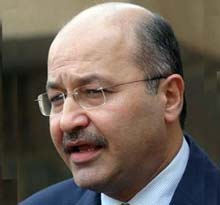
Prime Minister of Iraqi Kurdistan regional government Barham Salih rejected reports on presence of members of Mujahedin Khalq Organization (MKO) terrorist group in Kurdistan. Prime Minister of Iraqi Kurdistan regional government Barham Salih
"Basically, reports on presence of MKO members in Kurdistan are unfounded and sheer lie. We intend to establish joint security with our neighbors and we do not want that Kurdistan be turned into a region for enemies to reach their ends," Salih told ISNA. "We neither interfere in internal affairs of our neighbors nor we are interested in meddling of our neighbors in our internal matters," he continued.

"Kurdistan has been turned into a safe region in Iraq since collapse of regime of Saddam Hossein (former hanged Iraqi President). Kurdistan’s regional government has amicable and secure ties with neighbors and it has been turned into a connection bridge among regional nations. Turkey, Iran and Iraq are doing much of their business through Kurdistan."

The MKO group is dramatically notorious in Iran for having sided with Saddam Hossein during the 1980-1988 Iraqi-imposed was on Iran.

The terrorist group has also claimed responsibility for numerous terrorist attempts and the assassination of significant figures in Iran over the past three decades.

The Mujahedeen Khalq Organization is blacklisted as a terrorist group by Iran and much of the international community.

January 16, 2011 0 comments
FacebookTwitterPinterestWhatsappTelegramSkypeEmail
Former members of the MEK

Abdi talks about his bitter experiences in MKO affairs

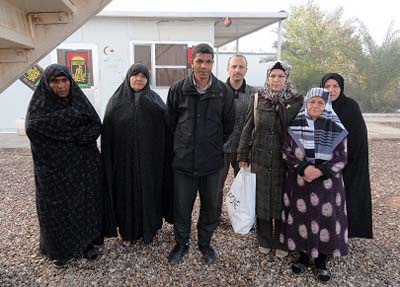
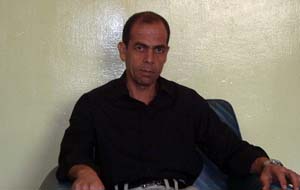
Mr. Ali Abdi succeeded to escape Rajavi’s Cult last week. He joined the families who are on strike at Ashraf gates. Sahar Family Foundation interviewed Mr. Abdi who was taken as a war prisoner by Iraqi forces in 1985 when he was a service-man of Iranian army. In 1988 he was recruited by MKO agent, Mehdi Abrishamchi . Since he was sick and tired of hard life in Iraqi prisons, he was deceived by MKO’s propaganda and entered Camp Ashraf.

Mr. Ali Abdi succeeded to escape Rajavi's Cult last week. He joined the families who are on strike at Ashraf gates.

Two years ago, Mr. Abdi had declared his defection to the group leaders and had insisted on his departure for the last ten months but the cult leaders had told him:

"since families are at Ashraf gates now, your departure signifies a red line. You are not a Mujahed anymore and not a member of the organization but you have to be present in our relations and attend our gatherings. The situation is not appropriate now because of Iraqi election. If we send you out right now, your name will be used as a political trump against us."

Ali Abdi notified for SFF, "families presence at Ashraf gates has enormously impressed members but the group heads have completely blocked any runaway way."

He also clarified the true atmosphere in the cult of Rajavi;

"There is a logic in MKO and that is the entire world is limited to Camp Ashraf which has been created by Massoud Rajavi. In fact, there is an outside reality that Ashraf captives should be let know."

He described the sever controlling system over the risk of members’ runaway from Camp Ashraf,

"Previously we had no patrolling post in our units, but nowadays ,there are 6 of the most loyal members who always patrol the units and a duty officer supervises them . The members have lost their entire confidence to the group and their minds face a lot of contradictions. They should report their contradictory thoughts every day so the leaders doubt every one and fear their escape. "

About the loudspeakers via which families try to encourage their children to visit them, he says ,

"the sound of loudspeakers have made the group leaders really nervous. They try hard to keep members away from loud speakers. If you seem to be listening to their voice, you will be punished."

Translated by Nejat Society

January 16, 2011 0 comments
FacebookTwitterPinterestWhatsappTelegramSkypeEmail
Former members of the MEK

Ahmad Jaafari could escape Camp Ashraf

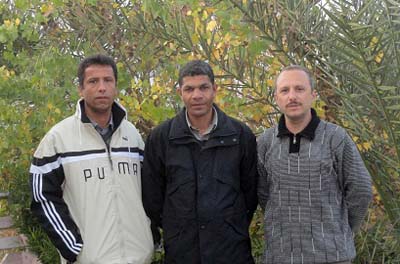
In the afternoon of January 10th, 2011, Mr. Ahmad Jaafari, from Haji Abad , Iran escaped Camp Ashraf where he was captured by Rajavi’s cult for twenty-one years.

Mr. Ahmad Jaafari, from Haji Abad , Iran escaped Camp Ashraf where he was captured by Rajavi's cult for twenty-one years

Immediately after his successful flee, Mr. Jaafari joined families and other defectors settled near Ashraf gates.

Mr. Ahmad Jaafari, from Haji Abad , Iran escaped Camp Ashraf where he was captured by Rajavi's cult for twenty-one years

Having found himself in free world he enjoyed talking with families and his ex-comrade for hours.
Sahar Family Foundation plans to interview with Mr. Jaafari which will consequently publish in near future.

January 15, 2011 0 comments
FacebookTwitterPinterestWhatsappTelegramSkypeEmail
The MEK Expulsion from Iraq

Iraq to expel Mojahedin Khalq by the end of 2011

An official in Iraqi government said that the Iraqi government has done necessary measures to expel Mojahedin khalq by the end of 2011.
Iraq to expel Mojahedin Khalq by the end of 2011
He said that the MKO will be expelled from Iraq because of their enmity towards the Islamic Republic of Iran and their crimes against Iraqi people including innocent people of the Kurdistan region.

The Iraqi people had gathered around Ashraf Camp and called on the Iraqi government to deport the MKO members from the country.

The official said that the American officials opposed deport of MKO group and put the Iraqi government under the pressure to allow MKO stay in Iraq.

January 15, 2011 0 comments
FacebookTwitterPinterestWhatsappTelegramSkypeEmail
Mujahedin Khalq; A proxy force

Helping Mujahideen-e-Khalq

The material-support statute doesn’t need revision to accommodate non-existent defects. What it does need — and does not often enough get for fear of offending some Muslim organizations — is rigorous enforcement against accurately designated organizations, of which MEK is not one. ~Mukasey, Ridge, Giuliani, and Townsend

According to the CFR’s profile of Mujahideen-e-Khalq, the group has been engaged in terrorist activities for the better part of forty years dating back to before the Islamic revolution:
The group has targeted Iranian government officials and government facilities in Iran and abroad, and during the 1970s, it attacked Americans in Iran. While the group says it does not intentionally target civilians, it has often risked civilian casualties. It routinely aims its attacks at government buildings in crowded cities. MEK terrorism has declined since late 2001. Incidents linked to the group include:

the series of mortar attacks and hit-and-run raids during 2000 and 2001 against Iranian government buildings; one of these killed Iran’s chief of staff;

the 2000 mortar attack on President Mohammed Khatami’s palace in Tehran;

the February 2000 “Operation Great Bahman,” during which MEK launched twelve attacks against Iran;

the 1999 assassination of the deputy chief of Iran’s armed forces general staff, Ali Sayyad Shirazi;

the 1998 assassination of the director of Iran’s prison system, Asadollah Lajevardi;

the 1992 near-simultaneous attacks on Iranian embassies and institutions in thirteen countries;

Saddam Hussein’s suppression of the 1991 Iraqi Shiite and Kurdish uprisings;
the 1981 bombing of the offices of the Islamic Republic Party and of Premier Mohammad-Javad Bahonar, which killed some seventy high-ranking Iranian officials, including President Mohammad-Ali Rajaei and Bahonar;

the 1979 takeover of the U.S. embassy in Tehran by Iranian revolutionaries;

the killings of U.S.military personnel and civilians working on defense projects in Tehran in the 1970s.

This is hardly secret information. Prior to the invasion of Iraq, MEK was a group that operated against Iran from inside Iraq. MEK was practically the only terrorist group that Saddam Hussein’s regime did support, but one reason it had never been added to the list of terrorist organizations is that MEK’s ongoing terrorism did not trouble Washington as long as it was primarily directed at the Iranian government. During the early phase of the “war on terror” under the previous administration, it would have been a bit hard to rationalize if the zealous anti-terrorist Bush administration had taken MEK off the list when it had been attacking Iranian targets as recently as 2001.

This silly material-support argument is a distraction from the real issue. The people arguing for changing MEK’s designation are not providing material support for a terrorist group. As of right now, they are merely expressing a repugnant political opinion informed by their hostility to Iran’s government, and they are free to do so. They are engaged in a political campaign to make it possible to provide support to that group after it is no longer designated a terrorist group.

It seems to be the case for now that MEK has been disarmed, and it seems unlikely that the new government in Iraq is going to get back into the business of providing shelter for anti-Iranian militants. That doesn’t mean that MEK isn’t a terrorist organization. It just means that it has become inactive. Of course, the reason for demanding the removal of MEK from the official list of terrorist organizations is so that the MEK can receive support from anti-Iranian hawks here in the U.S. The purpose of all of this is presumably to get MEK to resume its war against the Iranian government, which would be consistent with the previous administration’s policy of supporting violent separatist movements in an effort to destabilize the regime in Tehran. For the moment, their chances of success aren’t very good. The current administration is unlikely to change the MEK’s designation after it has just added Jundullah to the list. 

Daniel Larison – amconmag.com

January 15, 2011 0 comments
FacebookTwitterPinterestWhatsappTelegramSkypeEmail
Mujahedin Khalq Organization as a terrorist group

N. Scientist Rejects MKO Cooperation Offer before Being Assassinated

The terrorist Mojahedin-e Khalq Organization (MKO) had attempted to lure Iranian nuclear scientist Masoud Ali Mohammadi into cooperation, but it went for the option of assassination after Ali Mohammadi turned down the offer, his wife said.

"Ten days before Dr. Ali Mohammadi’s martyrdom, the Hypocrites (as MKO members are called in Iran) had sent him a number of important documents related to Iran’s nuclear issues through the internet and asked him to comment on the accuracy or inaccuracy of the documents, but he didn’t give any response," Ali Mohammadi’s wife, Mansoureh Karami revealed today.

The 50-year-old Ali Mohammadi was killed in a booby-trapped motorbike blast in front of his house in Qeytariyeh neighborhood in Northern Tehran in January 2010.

Iran’s Intelligence Ministry in a statement on Monday announced that it has captured the terrorists who assassinated Ali Mohammadi.

The MKO, whose main stronghold is in Iraq, is blacklisted by much of the international community, including the United States.

Before an overture by the EU, the MKO was on the European Union’s list of terrorist organizations subject to an EU-wide assets freeze. Yet, the MKO puppet leader, Maryam Rajavi, who has residency in France, regularly visited Brussels and despite the ban enjoyed full freedom in Europe.

The MKO is behind a slew of assassinations and bombings inside Iran, a number of EU parliamentarians said in a recent letter in which they slammed a British court decision to remove the MKO from the British terror list. The EU officials also added that the group has no public support within Iran because of their role in helping Saddam Hussein in the Iraqi imposed war on Iran (1980-1988).

Many of the MKO members abandoned the terrorist organization while most of those still remaining in the camp are said to be willing to quit but are under pressure and torture not to do so.

The group, founded in the 1960s, blended elements of Islamism and Stalinism and participated in the overthrow of the US-backed Shah of Iran in 1979. Ahead of the revolution, the MKO conducted attacks and assassinations against both Iranian and Western targets.

The group started assassination of the citizens and officials after the revolution in a bid to take control of the newly established Islamic Republic. It killed several of Iran’s new leaders in the early years after the revolution, including the then President, Mohammad Ali Rajayee, Prime Minister, Mohammad Javad Bahonar and the Judiciary Chief, Mohammad Hossein Beheshti who were killed in bomb attacks by MKO members in 1981.

The group fled to Iraq in 1986, where it was protected by Saddam Hussein and where it helped the Iraqi dictator suppress Shiite and Kurd uprisings in the country.

The terrorist group joined Saddam’s army during the Iraqi imposed war on Iran (1980-1988) and helped Saddam and killed thousands of Iranian civilians and soldiers during the US-backed Iraqi imposed war on Iran.

Since the 2003 US invasion of Iraq, the group, which now adheres to a pro-free-market philosophy, has been strongly backed by neo-conservatives in the United States, who also argue for the MKO to be taken off the US terror list.
January 13, 2011 0 comments
FacebookTwitterPinterestWhatsappTelegramSkypeEmail
Mujahedin Khalq; A proxy force

A Symposium to Betray Democracy

those Americans who supported Mojahedin Khalq, MKO, MEK, NCRI, Rajavi cult

As reported, several Bush-era officials on the last week of 2010 embraced the opportunity of

those Americans who supported Mojahedin Khalq, MKO, MEK, NCRI, Rajavi cult
(Captain Lewis Lee Hawkins one of the Americans murdered by Mojahedin Khalq)

flattering the leader of a globally blacklisted terrorist cult in a symposium held in Paris and, being begged already, urged the Obama administration to strike the group from their own country’s terrorism blacklist. Some believe they were really courageous and had guts to demand unleashing of ruthless terrorists, now carrying their arms under smart suits and costumes and roaming the parliaments and statesmen’s chambers and halls freely, on their own nation. And some other insist that they have violated the country’s regulations by giving support to a terrorist group on the State Department’s list. However, what is really shocking about these participants is that they referred to the group as devoted freedom fighters and apostles of democracy for Iran rather than the terrorists that may have repented of their past atrocities.

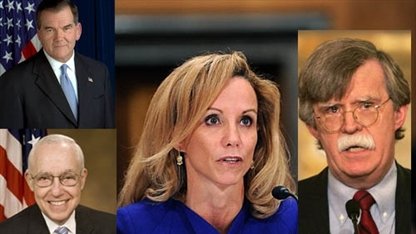
One of these ex-officials, Michael Mukasey, an attorney general under Bush, had earlier told an audience in a Washington hotel "We should take off the list of terrorist organizations the one group that is devoted to restoring freedom in Iran". John Bolton, one of the speakers at the symposium bragged that MKO was the right movement to be supported because it "has renounced nuclear weapons unequivocally, and because it has democratic aims”. And Tom Ridge, the former Homeland Security director, said "let’s delist MKO and show the world the United States is committed to its own values of freedom”.

those Americans who supported Mojahedin Khalq terrorists,

What are the values of freedom they believe in and were they actually contesting the crimes and allegations attributed to the organization in the strong evidences attested by the very same administration they served? To believe that a terrorist cult that started its opposition via violent approaches has devoted to restoring freedom in Iran through claimed democratic avenues oozes only out simplistic minds. From a historical point of view, almost all of struggling political movements, at least in their mottos and sketch of political objectives, chanted democratic slogans and represented the paradigms of a democratic society as a requisite to encourage supporters and to recruit parties. The history tells that the outcome was the most atrocious model of dictatorship that fought under the banner of emancipating man from class and political totalitarian systems.

Stalinism, for instance, was evolved into one of the most influential liberation movements in half of the world. The contemporary world history recognizes Stalinism as a paradigm of all practiced forms of stabilizing an authoritarian party. It theorized and exercised imprisonment, execution, political assassination, terror, and … in many ideologically justifiable forms not only against dissidents but also against the insiders. In fact, the chief victims were the movement’s linchpins rather than the foes of democracy and freedom. The expenses of Stalinism popped out only after its fall; no one denies Stalin’s role as the most fervent patriot fighting against the Nazism invasion, yet, he is indisputably the most tyrant dictator recorded in history. The paradox is the essence of a theorized ideology evolved with the wear of freedom and democracy. That is to say, the thought dealing with freedom and democracy emerged out of a counter-democratic ideology, a criterion to conduct the extent of internal and external violence. It is the ideology that legalizes the conducts and recognizes its innate terrorism as a blessed act; adherents become devotees of a cause constructed on pillars of freedom and democracy.

These are good historical evidences to prove the simplicity of considering MKO as devotees of freedom and democracy. Discrepancy between chanted mottos and actual practice of democracy is a product of disapproving the democracy itself. To bring off democracy, mottos should tally with practices. Mojahedin’s past modus operandi well depict that the group had taken a wrong direction for the cause of democracy. The autocratic structure of its leadership has depreciated it to a kind of Stalinist dictatorship. Thus, how can Mojahedin guarantee that it wouldn’t adapt claims of democracy for practice of autocracy?

That is precisely correct to say those who struggle for democracy cannot be terrorists because democracy absolutely discards any form of violence. But violence has been an innately distinguished feature of Mojahedin from its very formation. The key solution to accomplish organizational and ideological achievements was believed to be through practice of violence, the lack of which led any struggle for democracy and freedom to total failure.

The advocates of the group, particularly those backers at the symposium, are well aware that Mojahedin is at the pass of a critical juncture and in need of applicable instruments and whoever and whatever help and offer to survive. We do not know if those in the symposium were paid well or had a mission to accomplish, but they, for sure, and we know that the great challenge the world faces today is terrorism and Mojahedin has so far failed to prove any commitment to democracy. Consider that Obama’s Administration put trust in Tom Ridge’s urge to “delist MKO and show the world the United States is committed to its own values of freedom”. But, can he guarantee that MKO will also dedicate itself to democratic avenues that contradict its ideologically leftist inclination?

In representing definitions of democracy, Mojahedin oversteps those of the West. By drilling its exaggeratedly theorized democracy into the West, the group reminds the West that it has a rather more enormous capacity to overshoot the Western adopted democracy. At the same time, it has not the least respect for democracy to practice it, not even in its primitive form, neither for the insiders nor for the outsiders. Nowhere can you find so ruthless methods of brainwashing put into practice under the cover of democracy as within the group. The fact is that Mojahedin is innately a terrorist group and its keeping hold of democracy never washes its hands off its past crimes. The supporters of terrorism must keep it in mind that they too share blame if the rampant terrorists betray their trust, especially when they are walking by the side of terrorists like MKO that is the most disreputable hypocrite among others.

January 13, 2011 0 comments
FacebookTwitterPinterestWhatsappTelegramSkypeEmail
Mujahedin Khalq; A proxy force

Rudy Giuliani Proudly Supports Iranian Terrorist Group

What are Rudy Giuliani and several major Bush administration officials doing in Paris this week? Addressing a militant Iranian exile group that the U.S. government has designated a terrorist organization, of course.

This Wednesday, a group of prominent Bush-era Republicans, including former NYC Mayor Rudy Guiliani, former Homeland Security Secretary Tom Ridge, former White House adviser Frances Townsend and former Attorney General Michael Mukasey, flew to Paris to speak in support of an Iranian exile group there — one that’s been designated a terrorist organization by the U.S.

"The United States should not just be on your side," Giuliani told the group, the Washington Post reported. "It should be enthusiastically on your side. You want the same things we want."

The group, known as Mujaheddin-e Khalq or MEK, is a militant group that’s been violently fighting the Iranian government since the 1960s. It has ties to the regime of Saddam Hussein, which trained and outfitted the MEK and for whom the MEK fought in the Iran-Iraq War of the 1980s. According to the State Department, which declared the group a terrorist organization in 1997, the group’s philosophy is a combination of "Marxism, Islam, and feminism."

Giuliani and the others told the cheering crowd that the Obama administration should take a stronger hand against Iranian leaders. Townsend scoffed at the use of negotiations and sanctions, without suggesting a tactic that she believes could work.

"Appeasement of dictators leads to war, destruction and the loss of human lives," Giuliani said. "For your organization to be described as a terrorist organization is just really a disgrace."

The four are not lone wolves in their support for MEK. Last Friday, at a symposium organized by a group called ExecutiveAction and moderated by erstwhile Colorado gubernatorial candidate Tom Tancredo (R), a group of current and former officials called for the U.S. to lift MEK’s terrorist designation and get tougher on Iran.
"The problem is not that a tough approach has failed," Rep. Ileana Ros-Lehtinen (R-FL), the incoming Foreign Affairs Committee chair, said at the forum, "but that it has yet to be fully tried."

Likewise, a resolution surfaced in the House this year to urge the administration to drop MEK from the terror list. It garnered 112 sponsors, including some Democrats, but died in the Foreign Affairs Committee.

Britain and the European Union have dropped terrorist designations for the group, and a U.S. federal court in July ordered Secretary of State Hillary Clinton to review the designation.

January 12, 2011 0 comments
FacebookTwitterPinterestWhatsappTelegramSkypeEmail
Newer Posts
Older Posts

Recent Posts

  • MEK agents near schools in Tirana, Albania

    October 17, 2026
  • Expectations of human rights bodies regarding censorship within the MEK

    October 13, 2026
  • The Jamalis’ Plea for Help: Save Our Brother from the MEK!

    October 11, 2026
  • Testimonies of Participants in the MEK’s Staged Propaganda Stunt in Karaj

    October 7, 2026
  • Giuliani’s MEK ties have dogged him for years

    October 6, 2026
  • Facebook
  • Twitter
  • Instagram
  • Youtube

© 2003 - 2025 NEJAT Society . All Rights Reserved. NejatNGO.org


Back To Top
Nejat Society
  • Home
  • Articles
  • Media
    • Cartoons
    • NewsPics
    • Photo Gallery
    • Videos
  • Publications
    • Books
    • Nejat NewsLetter
    • Pars Brief
  • About Us
  • Contact us
  • Editions
    • عربي
    • فارسی
    • Shqip