Nejat Society
  • Home
  • Articles
  • Media
    • Cartoons
    • NewsPics
    • Photo Gallery
    • Videos
  • Publications
    • Books
    • Nejat NewsLetter
    • Pars Brief
  • About Us
  • Contact us
  • Editions
    • عربي
    • فارسی
    • Shqip
Nejat Society
Nejat Society
  • Home
  • Articles
  • Media
    • Cartoons
    • NewsPics
    • Photo Gallery
    • Videos
  • Publications
    • Books
    • Nejat NewsLetter
    • Pars Brief
  • About Us
  • Contact us
  • Editions
    • عربي
    • فارسی
    • Shqip
© 2003 - 2024 NEJAT Society. nejatngo.org
The MEK; Baath Party Accomplice

MKO’s Response to Tariq Aziz’s Death Sentence out of Character

The former Iraqi foreign minister, Tariq Aziz, who was also a close ally and personal advisor of Saddam Hussein, has recently been sentenced to death. A CNN report of the news states that he was “one of the best-known faces of the Iraqi government for more than two decades.” [1] But this well-known face was not known for his good deeds. The Iraqi tribunal had decided on a MKO’s Response to Tariq Aziz’s Death Sentence out of Characterdeath sentence because of his crimes which include his role in eradicating rival political-religious parties while holding power during the Ba’athist regime. Aziz had been on trial in a long-running case in which he was accused of being part of a campaign of persecuting, killing and torturing members of the Shiite opposition and other banned parties. [2]

For the Shiite population especially, Aziz’s death sentence means a step toward justice, and the majority of Iranians would agree. But for the Mujahedin-e Khalq Organization (MKO), a bizarre Iranian opposition group led by self-appointed husband and wife, Massoud and Maryam Rajavi, news of Aziz’s sentence prompted a statement of condemnation. Tariq Aziz was both their friend and ally. Before Saddam Hussein bankrolled the MKO, Iranians remember clearly in 1983 when Massoud Rajavi signed a treasonous pact with Aziz—a pact which enabled the MKO to become heavily armed and shortly thereafter violently turn against their own countrymen. A detailed report on the People’s Mujahedin Organization of Iran (PMOI/MKO) published by the US Department of State in 1994 points out how Massoud Rajavi’s alliance with Saddam Hussein’s Ba’athist Regime was formed while Iran was being invaded by Iraq during the 1980’s:

*In Paris; the non-Mojahedin members of the NCR encountered the autocratic style of Rajavi. In particular, Rajavi’s unilateral decision to tie the Council to Iraq alienated the others, who viewed the alliance as a traitor’s deed. The Council’s most important participant, former president Bani Sadr [sic], formally split in 1984, castigating Rajavi as "a pawning [sic] the settlement of the Iran-Iraq conflict." (Bani Sadr [sic] asserts that the first formal pact between the Mojahedin and Iraq was negotiated during a January 1983 meeting between Rajavi and Iraqi foreign minister Tariq Aziz in Fragce [sic]. Mojahedin publications also confirm this meeting.)* [3]

Rajavi’s seditious meeting with Tariq Aziz was the starting point of a long-lasting alliance with the former Iraqi dictatorship. The State Department report concludes that "government-controlled Iraqi media accounts of recent Saddam-Rajavi contacts provide further insight into the MKO’s current relationship with Baghdad. Meeting [sic] between the two are announced to buttress Saddam’s isolated position or to send a message to the government of Iran. For example: On July 31, 1994, Rajavi sent Saddam a ‘message of congratulations.’ On January 26, 1994, Rajavi met with Saddam and Tariq Aziz, Iraq’s deputy prime minister."[4]

The State Department’s conclusion regarding the association is confirmed by another source, the former Iranian president, Dr. Abulhassan Banisadr. Banisadr refers to Massoud Rajavi as a "power addict" in his interview with Pen Club’s representative, Muhammad Hussein Sobhani. During the interview, which took place in Farsi, Banisadr recalls the time Rajavi was planning to meet with Tariq Aziz:

*I told him [Rajavi] now that you accepted to visit him [Aziz], you should treat him the way our Iranian Emperor Shahpour the First treated the Roman Valerian. Our Emperor humiliated the invader to our country. He [Aziz] should’ve understood that he has invaded a country which has national pride.
I advised him [Rajavi]: You shouldn’t let the visit last more than half an hour.*

*He said, Ok, I will but instead of behaving like what he was supposed to, the meeting lasted five hours so that the following day Le Monde newspaper wrote that Mr. Tariq Aziz bought Mr. Rajavi or something like that […]. **After that visit, Rajavi’s behavior changed and changed. **[5]*

*Aziz, the MKO, and France*

Tariq Aziz has been under a microscope for a number of years by justice seeking-Iranians, and accordingly the official report of his death sentence comes as a small victory. Many French citizens would agree. Aziz’s relationship with the MKO—whose European headquarters is located in Paris—has always been a political thorn for the French where the MKO is heavily scrutinized because of their cult mindset and their violent terrorist activities. Geoff Hutchison interviewed Amir Taheri, a French–Iranian affairs analyst, in June 2003 following the arrest of Maryam Rajavi and 160 other MKO members, who were located at the MKO compound in Ouver Sur d’Oise, Paris. After the arrest by French police, Taheri suggested two reasons for France’s decision on taking MKO terrorists into custody.

Taheri said that interior minister at the time, Nicolas Sarkozy, "is trying to appear very tough, especially against illegal immigrants and the Mujahedin have been running a racket of political asylum and so-on for many years. The second reason is that the presence of the Mujahedin in France was negotiated by Tariq Aziz, number two of Saddam Hussein in 1981, and now with the fall of the Iraqi regime there is no reason for the presence of the Mujahedin on French soil."[6]

The accounts of MKO activities are agreeably and accurately documented by the governments of France, the United States, and Iran. All have the same opinion that the noteworthy initial visit with the MKO’s Masoud Rajavi and Tariq Aziz signifies a precise turning point in the history of MKO endeavors. That meeting was the start of a long-term strategy in which Rajavi lassoed power and led the group into a bizarre existence as he became an autocratic ideological leader with a cult of personality. For Banisadr, who was one of the main founders of the National Council of Resistance, the meeting was fundamentally immoral. Banisadr points out in his interview that three basic principles, “independence, freedom and non-existence of hegemony” [7] were needed in order to generate positive results in the cause. Massoud Rajavi’s treasonous pact was a contradictory element for Banisadr and others because it violated the most important principles of the NCR. In taking part in this act of treason Rajavi dedicated the NCR’s capacity to act, and his warped vision led the MKO to become a mercenary force for Saddam Hussein. As Rajavi proceeded he rejected the integrity of the NCR, but more importantly, in doing so, he rejected the people of Iran. Rajavi cultivated and broadened hegemony over all the members of the NCR. Many groups did not agree with him and they were excluded. Eventually the NCR consisted only of MKO supporters. Other opposition groups simply left the organization, feeling tainted by the MKO.

Although it has been three decades since the MKO hijacked the National Council of Resistance, it still exists, and still the MKO assumes total control. The MKO is very tight-lipped about synonymy with the NCR and they would rather not disclose that the two are essentially under the same management. This is an important and little known reality for the masses in the West. What is surprising is that the Rajavis decided that the NCR needed to publicly lament the news of the Tariq Aziz’s death sentence. Their website states “the Iranian resistance strongly condemns the death sentence against Tariq Aziz." [8] The statement is a puzzling response from a group who, since the Iraq war started, has been trying to sanitize their image in the West. It’s highly conceivable that the statement is a part of a new strategy to justify the fact that they turned against Iran. Perhaps they are just taking advantage of the fact that the West is still largely unaware of the murderous atrocities the MKO committed against not only their own Iranian countrymen, but against Americans.

Mostly likely the MKO is seeking publicity and they want to make a statement in order to prepare for hitchhiking on the much-anticipated execution of Tariq Aziz. Whatever the case, the MKO knows the world will be watching. The power hungry MKO-controlled NCR has a plan up its sleeve, and it is not in the best interest of the people of Iran; it is for themselves. That much is for sure.

References:
[1] CNN Wire Staff. "Iraqi court sentences Tariq Aziz to death." *CNN* 26
Oct 2010: Web. 17 Nov 2010. <
http://articles.cnn.com/2010-10-26/world/
iraq.aziz.sentence_1_iraqi-high-tribunal-death
-sentence-malcolm-smart?_s=PM:WORLD>.
[2] AP. *CTV News* 26 Oct 2010: Web. 17 Nov 2010. <
http://www.ctv.ca/CTVNews/World/20101026/
tariq-aziz-death-sentence-101026/>.
[3] Note: In 1981, the Mojahedin leadership fled to France and with other
Iranian opposition movements formed the National Council of Resistance
(NCR).
Katzman, Kenneth. US State Department Report, Library of Congress.
Congressional Research Service. The People’s Mojahedin Organization of Iran.
Washington, Nov 1992. Doc. call no.: M-U 42953-1 no.92-824F as posted on the
Iran-interlink.org website:
http://www.iran-interlink.org/files/child%20pages/USstatedept.htm
See also: Office of the United Nations High Commissioner for Refugees
website: http://www.unhcr.org/refworld/pdfid/4ac9c2c52.pdf.
See also: CORI (Country of Origin Research and Information) website:
http://www.unhcr.org/refworld/pdfid/4ac9c2c52.pdf
[4] Ibid
[5] Iranian Pen Club. "The outset of Rajavi’s longtime treason." *NEJAT
Society* 06 Nov 2010: Web. 17 Nov 2010. <
https://www.nejatngo.org/en/posts/3339>.
See also original interview in Farsi: Banisadr, Abulhassan interviewed by
Mohammad Hossein Sobhani
http://www.iran-interlink.org/fa/index.php?mod=view&id=8888
[6] “France targets Mujahedin e-Khalq." (transcript) *Current Affairs*.
Geoff Hutchinson Amir Taheri in Brussels. Australian Broadcasting Company:
702 ABC, Sydney, AM – Wednesday, 18 June, 2003 08:11:05 Radio. 17 Nov 2010.
<http://www.abc.net.au/am/content/2003/s882312.htm
[7] Iranian Pen Club. "The outset of Rajavi’s longtime treason." *NEJAT
Society* 06 Nov 2010: Web. 17 Nov 2010. <
https://www.nejatngo.org/en/posts/3339>.
See also original interview in Farsi: Banisadr, Abulhassan interviewed by
Mohammad Hossein Sobhani
http://www.iran-interlink.org/fa/index.php?mod=view&id=8888
[8] NCR Website

By Mazda Parsi

November 23, 2010 0 comments
FacebookTwitterPinterestWhatsappTelegramSkypeEmail
MEK Camp Ashraf

Mujahedin terrorist group Kills Dissident Member

MKO terrorist group Kills Dissident Member to Suppress Protests Inside Ashraf

Leaders of the anti-Iran terrorist Mojahedin-e Khalq Organization (MKO) killed a dissident member of the group in a bid to suppress growing discontent among MKO members in its main training camp in Northern Iraq.

According to a report by the Habilian Association, an Iran-based human rights group, Ahmad Razzani, a veteran member of the MKO, was killed inside the Camp of New Iraq (formerly known as Camp Ashraf), about 60 km North of Baghdad.

The report said that the move by the MKO ringleaders came after they failed to brainwash their inferiors to convince them to distant themselves from their family members who have been waiting outside the camp for the last 10 months demanding freedom of their relatives.

The right group said after the brainwash policy and efforts of the MKO leaders failed, discontent and protest has both widened and deepened among MKO members.

The report further refuted the claim raised by the MKO leaders that Razzani had hanged himself in the camp’s kitchen in an act of suicide, and stressed that Razzani’s murder on Thursday was the result of this growing discontent and protests among members of the terrorist group.

The report also pointed out that the Iraqi physician and coroner of the camp has refused to confirm the victim’s death as an act of suicide and that Razzani’s body has been sent to Baghdad for post-mortem studies and forensic tests.

Earlier reports coming out from the main training camp of MKO in Northern Iraq had said that a large number of MKO’s deprecating members started riots and angry protests to end their forced presence in Camp Ashraf.

According to an August report by the Habilian Association, the MKO leaders have increased their pressures and control over the members of the terrorist group to prevent possible defection and escape by unsatisfied members.

Reports also said that all exit and entry doors have been locked and none of the members, even those suffering from acute diseases and illnesses, are allowed to leave the camp.

MKO ringleaders have ordered the camp guards to stage snap inspections of the group’s members and their personal belongings under the pretext of finding the lost weapons.

Such behaviors have sparked discontent among a number of MKO members and made them escape the camp and return to their anguished families.

The MKO is behind a slew of assassinations and bombings inside Iran, a number of EU parliamentarians said in a letter last year in which they slammed a British court decision to remove the MKO from the British terror list. The EU officials also added that the group has no public support within Iran because of their role in helping Saddam Hussein in the Iraqi imposed war on Iran (1980-1988).

The group, founded in the 1960s, blended elements of Islamism and Stalinism and participated in the overthrow of the US-backed Shah of Iran in 1979. Ahead of the revolution, the MKO conducted attacks and assassinations against both Iranian and Western targets.

The group started assassination of the citizens and officials after the revolution in a bid to take control of the newly established Islamic Republic. It killed several of Iran’s new leaders in the early years after the revolution, including the then President, Mohammad Ali Rajayee, Prime Minister, Mohammad Javad Bahonar and the Judiciary Chief, Mohammad Hossein Beheshti who were killed in bomb attacks by MKO members in 1981.


The group fled to Iraq in 1986, where it was protected by Saddam Hussein and where it helped the Iraqi dictator suppress Shiite and Kurd uprisings in the country.

The MKO has been in Iraq’s Diyala province since the 1980s.

Iraqi security forces took control of the training base of the MKO at Camp Ashraf – about 60km (37 miles) north of Baghdad – last year and detained dozens of the members of the terrorist group.

The Iraqi authority also changed the name of the military center from Camp Ashraf to the Camp of New Iraq.

Many of the MKO members have abandoned the terrorist organization while most of those still remaining in the camp are said to be willing to quit but are under pressure and torture not to do so.

A May 2005 Human Rights Watch report accused the MKO of running prison camps in Iraq and committing human rights violations.

November 22, 2010 0 comments
FacebookTwitterPinterestWhatsappTelegramSkypeEmail
MEK Camp Ashraf

Call for Rescue of Camp Ashraf patients

Rajavi’s Cult prevents members’ leaving the Camp for medical treatment in Baghdad.

According to the latest information on Camp Ashraf, the Camp leaders do not permit the residents who suffer serious diseases to leave the camp in order Rajavi's Cult prevents members' leaving the Camp for medical treatment in Baghdad.that they are able to receive treatment in Baghdad hospitals. The leaders are especially crucial about those members who are considered as "problematic ". They fear the possibility of their escape in case of their departure from the isolated garrison of Ashraf.

For instance the reports show that Iraqi doctors have insisted on transfer of Ms. Elham Fardipour to hospital but the leaders of the cult procrastinate to send her to hospital since her runaway as a member of Leadership Council might reveal confidential information of the group’s internal relationships.

There are some residents who have been diagnosed of cancer but they are not allowed to go under proper treatment in hospital.


In some cases, MKO leaders have used a trick to prohibit the patient’s escape and to watch him all the time in order that his information on inside of the Camp is not infiltrated by any one. They send to the hospital another member – a more reliable one – with him. The supervisor has to monitor the patient otherwise the group might lose the member.

The bottom line is that barring the prisoners from receiving medical care is a war crime and should be brought into justice in war criminal court. The reports show that several members have so far died in Ashraf Garrison due to lack of proper medical treatment.

November 22, 2010 0 comments
FacebookTwitterPinterestWhatsappTelegramSkypeEmail
Iran

Washington hypocritical attitude in promoting MKO and other terrorists

Speaker: US Seeking to Dominate Region under Pretext of War on Terrorism

Iranian Parliament Speaker Ali Larijani strongly criticized the United States’ double-standard approach towards terrorism, and reiterated that Washington is using the so-called war on terrorism as an excuse to dominate the region.

"The Islamic Republic of Iran has frequently announced that based on information the US pursues a hypocritical attitude towards the issue of terrorism and views it as a pretext for dominating the region," Larijani said on Sunday.

He further referred to the recent remarks made by US Secretary of State Hillary Clinton that the terrorist groups active in the region have been formed through Washington’s collaboration with certain regional countries to confront the former Soviet Union, and asked Clinton, "Why should the regional nations pay for your filthy desires?"
Larijani pointed to the massacre of more than one million people in Iraq and Afghanistan during the last 9 years by the US and its allies under the pretext of the war against terrorism, and said Washington and its agents and proxies should be blamed for the damages they have inflicted on the region.

Iranian officials have on many occasions blasted the West’s double-standard approach towards terrorism, and condemned the intelligence agencies of certain western countries, specially the US, for supporting terrorist groups and organizations against Iran. Iranian Foreign Ministry Spokesman Ramin Mehman-Parast said in a statement in August that while the Islamic Republic of Iran attaches special importance to its cooperation with the international community in anti-terrorism campaign, the western countries and the US in particular followed a double-standard policy towards the issue.

He said the example of such a policy was the extensive activities of the members of the anti-Iran terrorist Mojahedin-e Khalq Organization (MKO) in these countries and their close relationship with the political figures there.

He also pointed to the role of some western countries and their intelligence services, specially those belonging to the US, in supporting the terrorist organizations working against Iran like the grouplet led by Rigi and the PJAK as among other cases of such a double-standard behavior.

Mehman-Parast also reiterated that the US tried to cover up its own terrorist nature by raising claims against other countries and accusing them.

The MKO is behind a slew of assassinations and bombings inside Iran, a number of EU parliamentarians said in a letter last year in which they slammed a British court decision to remove the MKO from the British terror list. The EU officials also added that the group has no public support within Iran because of their role in helping Saddam Hussein in the Iraqi imposed war on Iran (1980-1988).

The group, founded in the 1960s, blended elements of Islamism and Stalinism and participated in the overthrow of the US-backed Shah of Iran in 1979. Ahead of the revolution, the MKO conducted attacks and assassinations against both Iranian and Western targets.

The group started assassination of the citizens and officials after the revolution in a bid to take control of the newly established Islamic Republic. It killed several of Iran’s new leaders in the early years after the revolution, including the then President, Mohammad Ali Rajayee, Prime Minister, Mohammad Javad Bahonar and the Judiciary Chief, Mohammad Hossein Beheshti who were killed in bomb attacks by MKO members in 1981.

The group fled to Iraq in 1986, where it was protected by Saddam Hussein and where it helped the Iraqi dictator suppress Shiite and Kurd uprisings in the country.
The terrorist group joined Saddam’s army during the Iraqi imposed war on Iran (1980-1988) and helped Saddam and killed thousands of Iranian civilians and soldiers during the US-backed Iraqi imposed war on Iran.

Before an overture by the EU, the MKO was on the European Union’s list of terrorist organizations subject to an EU-wide assets freeze. Yet, the MKO puppet leader, Maryam Rajavi, who has residency in France, regularly visited Brussels and despite the ban enjoyed full freedom in Europe.

Some other ranking members of the MKO who have had a role in the assassination of a large number of Iranian citizens and officials are currently living in France.

November 21, 2010 0 comments
FacebookTwitterPinterestWhatsappTelegramSkypeEmail
Mujahedin Khalq Organization members' families

Is there anyone to help the families of MKO terrorists’ hostages? Part2

After ten months of picketing in front of Ashraf garrison:

Is there anyone to help the families whose loved ones have been taken hostage (by Washington backed Mojahedin Khalq aka; MKO, MEK, NCRI, Rajavi cult) terrorists?
Rajavi cult’s powerful speakers used to stop voices of families from reaching the hostages
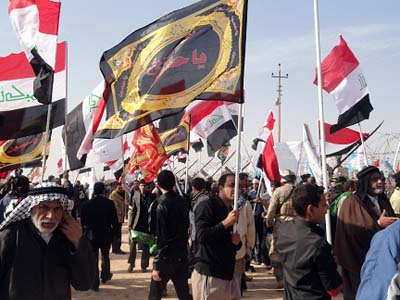
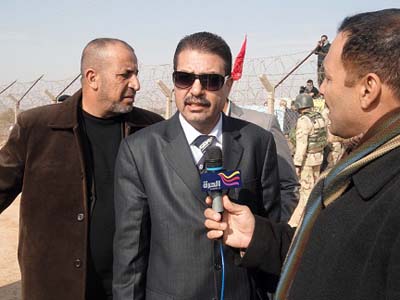
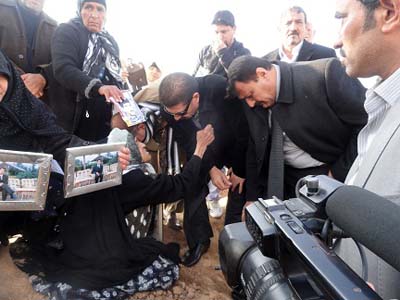
Families according to the pictures:
 
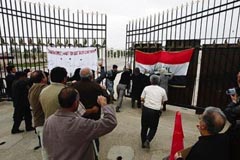
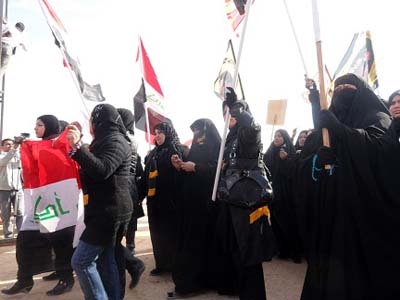
ten months of picketing in front of Ashraf garrison
Never ending wait with the hope of visiting loved ones – the gates of Camp Ashraf base of the Rajavi cult in Iraq where over 3,000 people have been taken hostage by Massoud Rajavi the cult leader. He is openly threatening to massacre them (he calls it the Ashoura of the Mojahedin!!)
Ms. Soraya Abdollahi, the mother of one of the hostages who has been picketing in front of the gates of Ashraf Camp for the last 10 months, has announced that she will not leave until given access to her son. She is welcoming the arrival of new families. More elderly men and women and more children are arriving. Rajavi calls them the ‘special forces of the Iranian Revolutionary Guards’. As if they are coming with their machine guns and missile launchers ready to attack the camp!
 
Never ending wait with the hope of visiting loved ones
Will you never become tired? How long are you going to wait? Do you really believe that in this dirty international political world there is a place for such a thing as human rights? Don’t you think that as the political interests of some at this moment of time dictate, right now the interest of the invaders of the land of Iraq suggests that the west should support the terrorists in continuing their human rights abuse and using your children as gladiators and slaves in their terror campaign to serve their backers in the west?
 
Our children are kept only a few hundred meters from us. Could they not allow them to come nearer to the barbed wire so we can see them
Our children are kept only a few hundred meters from us. Could they not allow them to come nearer to the barbed wire so we can see them after all these years? As you can see in the picture the barbed wire is designed to keep people inside and not to run away (as a prison) and is not designed to protect the camp from intruders trying to get in. It is easy to see Camp Ashraf is a prison without visiting rights.
 
The distance between the families and their loved ones is filled with barbed wire, trenches, walls, surveillance posts, surveillance vehicles etc
The distance between the families and their loved ones is filled with barbed wire, trenches, walls, surveillance posts, surveillance vehicles etc. Can the hand held loud speakers take our voices to our loved ones? Do they know that we are still sitting behind the wire? Do they have the same feeling as we do?
 
A father is saying that he is hopeful that as this palm tree is growing here, Rajavi’s heart would soften enough to let our children free
Families are planting new trees. A father is saying that he is hopeful that as this palm tree is growing here, Rajavi’s heart would soften enough to let our children free. How long is he intending to keep our children hostage?
 
The leaders of the garrison have placed powerful loud speakers between the families and the inside of the camp
The leaders of the garrison have placed powerful loud speakers between the families and the inside of the camp. The speakers are facing towards the inside of the camp, clearly demonstrating that this action is intended to stop the voices of the families from reaching the hostages inside. It is interesting that while Rajavi is doing this, he is also claiming that Ahmad Razani (murdered in the camp a couple of days ago) has committed suicide under the pressure of the loudspeakers used by the families. It is clear from the picture that the powerful loud speakers used by the cult (much more powerful than the ones used by the families) are facing toward the inside of the camp. The simple question is why Rajavi and his cult are so desperately frightened of the voices of the families and so afraid of their presence?

Translated by Iran Interlink

November 21, 2010 0 comments
FacebookTwitterPinterestWhatsappTelegramSkypeEmail
Mujahedin Khalq; A proxy force

US promotion and support for MKO terrorists backfires

Militarization of the World – the Case of Iran

A bully or a mafia godfather would never run out of excuses to punish an insubordinate soul in “his territory.” Accordingly, US imperialism has been very creative in invoking all kinds of excuses to punish Iran for its aspirations to national self-determination.Militarization of the World – the Case of Iran
To justify the criminal economic sanctions against the Iranian people, the US has for years insisted that Iran is supporting terrorism, threatening US national interests, and pursuing a program of nuclear weapons manufacturing. As these harebrained allegations are increasingly losing credibility, the United States is now invoking a new ploy to justify its decision to further tighten the sanctions on Iran: “military dictatorship” and “human rights abuses,” as Secretary of State Hillary Clinton has occasionally grumbled about in recent months.
There are a number of obvious problems with this latest US excuse for escalating sanctions against Iran. To begin with, it is a blatant interference in the internal affairs of Iran.
Second, considering the fact that the US has armed its “allies” in the Middle East (and beyond) to the teeth, its condemnation of the rise of Iran’s military power is clearly hypocritical. According to the Stockholm International Peace Research Institute (SIPRI), cited in Wikipedia, while Iran’s military spending in 2009 was $9.174 billion (or 2.7% of its GDP), that of Saudi Arabia was $39.257 billion (8.2% of its GDP), that of Israel was $14.34 billion (7% of its GDP), and that of the United Arab Emirates was $13.5 billion (or 5.9% of its GDP).
Third, in light of the fact that the US is the most militarized country in the world, it’s belly-aching about “militarization of Iran” (whose military spending is less than one percent of the US) is patently ironic; it is a case of the pot calling the kettle black. Again, while Iran’s military spending in 2009 was $9.174 billion, that of the US was $663.255 billion. However, the official $663.255 billion includes neither the Homeland Security budget, nor the costs of the Iraq and Afghanistan wars, nor a number of supplemental expenditures added to military spending during the fiscal year. Once these omitted (or hidden) expenditures are added to the official Pentagon budget, total US military-security expenditures would easily amount to $1000 billion, or one trillion dollars. Even in relative terms, Iran’s military spending is infinitesimally small compared to that of the United States. For example, while Iran’s per capita military spending is $131 (9,174,000,000 : 70,000,000), that of the US is $3333 (1,000,000,000,000 : 300,000,000). And whereas Iran’s military spending as a share of its GDP is 2.7% (9.174 billion : 340 billion), that of the United States is nearly 7% (1 trillion : 14 trillion) [Ibid.].
Fourth, in light of the fact that the US is altogether silent in the face of heinous human rights violations under the rule of the regimes it calls “allies,” its alleged concern for “human rights abuses” in Iran is hypocritical and utilitarian: it uses the lofty ideal of defending human rights to disguise its nefarious intentions to impose economic sanctions or to embark on military aggression against that country. Hypocritical defense of human rights is often used to justify wars of aggression as humanitarian operations, or “just wars,” as they were called in times past. Just as this ruse was used in 1999 to wreak carnage on Yugoslavia, so it is now used to pave grounds for committing similarly heinous crimes against Iran.
Regrettably, many left/liberal/antiwar individuals and organizations often fall for this hoax, thereby endorsing (or remaining silent in the face of) US wars of aggression on ethical grounds, that is, on grounds of fighting dictatorship or terrorism in the hope of achieving liberation and democracy. Of course, to make the ruse credible, champions of war and militarism usually start with demonization and distortion, and then proceed to aggression and invasion.
It must also be pointed out that the purported US support for human rights tends to be narrowly focused on purely cultural issues such as life style and identity politics, that is, the politics of race, gender and sexual orientation. As such, it is largely devoid of basic economic needs for survival. Even a cursory comparison with the Universal Declaration of Human Rights and Freedoms (UDHRF), adopted on 10 December 1948 by the General Assembly of the United Nations, reveals some fundamental shortcomings of the US human rights protocol. Human rights according to UDHRF include basic economic or survival needs such as:
“the right to work … to protection against unemployment … to just and favorable remuneration ensuring for himself and his family an existence worthy of human dignity, and supplemented, if necessary, by other means of social protection. . . . Everyone has the right to a standard of living adequate for the health and well-being of himself and of his family, including food, clothing, and housing and medical care and necessary social services, and the right to security in the event of unemployment, sickness, disability, widowhood, old age or other lack of livelihood in circumstances beyond his control. . . . Motherhood and childhood are entitled to special care and assistance. All children, whether born in or out of wedlock, shall enjoy the same social protection. . . . Everyone has the right to education.”
Human rights a la USA does not include any of these basic human needs—all the nauseating propaganda of championing human rights notwithstanding. Indeed, many of the basic economic rights, which came to be known as the New Deal reforms, and which were achieved through long and heroic struggles of the working people and other grassroots, are now systematically undermined in order to pay for the gambling losses of the Wall Street financial giants.
Finally, and perhaps most importantly, to the extent that there has been an undeniable rise in the power of armed forces in Iran, as well as a corresponding curtailment of civil liberties there, such unfortunate developments have evolved as a direct consequence of the constant threats posed by the US imperialism and its allies to that country. Iran’s strengthening of its armed forces has become a virtual necessity in self-defense against threats of war, destabilization, sabotage, sanctions, and other kinds of covert and overt operations engineered by the imperialist-Zionist forces.
By dividing the world into “allies” and “enemies,” the powerful war profiteering interests in the Unites States, the military-industrial-security colossus, compel both “allies” and “enemies” to militarize. While “enemies” such as Iran, Venezuela, and North Korea are forced to strengthen their defense capabilities against imperialistic aggressions, “allies” such as the regimes ruling Egypt, Saudi Arabia and Colombia are driven to militarization against their own people, since regimes loved by US imperialism are hated by the overwhelming majority of their own citizens.
Critics tend to bemoan the rise in the power of the Islamic Revolutionary Guards Corps (IRGC) in Iran without bothering to explain how the IRGC came to existence, or why it has expanded to where it is today. Who is to be blamed for the ascendance of its influence in the Iranian politics and economics?
Those even faintly familiar with the history of the IRGC would recall that it came into existence as a resistance force against counter-revolutionary forces in Iran, which have always been supported by US imperialism and its allies. Although it was formed in the spring of 1979 as a small paramilitary revolutionary force in the fight against the Shah’s rule, it remained for the US-instigated invasion of Iran by Saddam Hussein to expand it to a fully-fledged military power in defense of Iran’s territorial integrity. The ensuing brutal 8-year Iran-Iraq war (1980-88), in which the US and its allies wholeheartedly supported Saddam Hussein, and the Guards’ legendry sacrifices and heroic defense of Iran independence drastically enhanced their size, their prestige and their power.

Although Iraq’s war with Iran ended in 1988, other forms of US wars against Iran have continued to this day. These have included destabilizing “soft-power” operations in the name of democracy, covert operations through all kinds of NGOs and fifth-column groupings, promotion of and support for terrorist operations such as those carried out by Jundullah and Mojadeen Khalgh (MKO, or MEK), constant military threats, psychological warfare, and economic sanctions. Not surprisingly, the role and the influence of IRGC and other security forces in Iran have increased accordingly. Also unsurprisingly, as the political power of Iran’s armed forces has thus increased, so has their economic power.
I say “unsurprisingly” because it is altogether in the nature of things that large standing armies gradually extend their military-security power to the realm of economics. The fully-fledged and the best example of this phenomenon is the rise of the monstrous military-industrial complex in the United States—which, contrary to the defensive nature of Iran’s military force, represents an offensive imperialistic force.
It is of course a truism that maintaining large standing armies will sooner or later lead to authoritarianism. It is equally obvious that by the same token that militarization of the world can be blamed largely on imperialistic US foreign policies, so can the rise of many authoritarian regimes around the world can be attributed to those oppressive policies.
When a country (whose only sin is its aspiration to national self-determination) is labeled by US imperialism as “our enemy” and is, therefore, encircled and threatened by the US military monster, that country’s political, economic and democratic growth is bound to be distorted or derailed from a path of a healthy, natural or spontaneous evolution. Finding themselves in the bull’s eye of the menacing US war juggernaut, security forces of such beleaguered countries are bound to react nervously/harshly in the face of protest demonstrations of domestic opposition, even when such demonstrations are for legitimate reasons. The shameful history of covert US operations abroad, including the violent overthrow of many democratically elected leaders through military coup d’états, shows that expressions of indigenous opposition or grievances in such “enemy” countries are often subverted by well-financed and well-armed US agents, either penetrated from outside or recruited from within, thereby warping the development of a “healthy” political/democratic process in those countries.
What is utterly demagogical is that, having thus perverted the politico-democratic process in such countries, US propaganda machine then turns around and blame the religion or culture or leaders of those countries as inherently incompatible with democratic values. Regrettably, not only do most of the American people but also many people elsewhere, including in the countries targeted for destabilization, fall for this ruse—in effect, blaming the victim for the crimes of the perpetrator.
Viewed in this light, the rise in the influence of the military-security forces in the Iranian politics and economics is a direct result of the menacing imperial policies of the United States and its allies toward that country.
Thus, President Obama’s or Secretary Clinton’s or other US policy makers’ bellyaching about the rise of the power of the armed forces in Iran represents a case of gross obfuscation, that is, a case of barking up the wrong tree: instead of blaming IRGC they should blame their own imperialistic foreign policies, which nurtures militarization and curtailment of civil liberties not only in Iran but also in many other parts of the world. Indeed, militarization of the world and the resulting proliferation of many (relatively smaller) military-industrial complexes around the globe are unmistakable byproducts of the monstrous US military-industrial complex. The inherent dynamics of this monster as an existentially-driven war juggernaut compels other countries around the world (both “allies” and “enemies”) to embark on paths to militarism and authoritarianism.
Ismael Hossein-zadeh, author of The Political Economy of US Militarism (Palgrave-Macmillan 2007), teaches economics at Drake University, Des Moines, Iowa.

Ismael Hossein-zadeh

November 20, 2010 0 comments
FacebookTwitterPinterestWhatsappTelegramSkypeEmail
MEK Camp Ashraf

Ahmad Razani a member of Mojahedin Khalq killed in Camp Ashraf

According to the news a member of Mojahedin Khalq stationed in their garrison, Camp Ashraf, in Iraq named Ahmad Razani has been killed by the agents of the Rajavi cult on the morning of Thursday 18th November 2010.

The information suggests that the body of the dead member was transferred to the internal hospital of the camp near the main gates on the morning of Thursday 18th and the cult leaders have claimed that he has killed himself by hanging himself in the main kitchen area.
Ahmad Razani a member of Mojahedin Khalq killed in Camp Ashraf
The Iraqi doctor in the hospital, after preliminary checks has announced that the cause of death was not suicide and therefore he has refused to sign the papers allowing the body to be buried and has sent the body to Iraq for post mortem investigation.

The families of the hostages who have been picketing outside the camp for the last 10 month only to get access and visiting rights with their loved ones, have been deeply affected by the news coming out the garrison.

Also some of the survivors of the cult who are currently in Iraq helping the families have been saddened by the news. They once again emphasised their deep concern over the security and the well being of the hostages taken by the cult in this camp and asked the Iraqi and international bodies to interfere in this ongoing human disaster.

One of the survivors of the cult who knew the murdered member, Ahmad Razani, said, “Ahmad was from Lorestan province and one of the long serving members of the Mojahedin Khalq. He refused to accept the so called ‘Maryam Ideological Revolution’ (cult jargon used to make members divorce and leave their children in order to be available to the cult leader Massoud Rajavi as sex slaves) and has been under severe pressure. He loved his family and this was always brought forward as his weakness in the organisation. He had two children (twins called Bahram and Shahnaz) who were deceived and brought to the camp from Europe and have been kept there ever since”.

Another Survivor of the cult said: “Bahram Razani (the son of Ahmad) was in our unit. He had a wide angle with the organisation and did not believe in the ideological leadership of the organisation and wanted to be allowed to go back to Germany from where he had been deceived and brought to the camp in Iraq. He was under constant pressure because of these demands”.

The Rajavi cult announced that Ahamad Razani committed suicide because of the ongoing noise from the loud speakers of the families picketing outside and the pressure these loud speakers have put on him! Of course everyone knows that the real systematic pressures which are being imposed on the trapped hostages inside this garrison (Camp Ashraf) on a daily basis are not comparable with the noise of some loud speakers.

The news from inside Camp Ashraf also suggests that the cult leaders are putting crippling pressures on the trapped members to write reports and in these reports reject their families and swear at them and lie about them. Every member is expected to use the ultimate swear words against his or her family members and clearly announce that he or she hates them all. According to witness statements, the cult members who show the slightest affection for their families or refuse to write reports and swear at them will undergo severe mental and physical punishments including long hours of interrogation, imprisonment and the threat of murder.

Apparently, in the case of the murder of Ahmand Razani, the leaders of the cult, after giving up about convincing him to cooperate, and after using every available brain washing technique resorted to physical elimination and murdered him. As usual they are now trying to show everything upside down and blame the picketing of the families for their own murderous act.

According to witness statements, the leaders of Rajavi cult have frequently announced that they will have to get rid of the families picketing outside as soon as possible because their presence at the gates of the garrison (Camp Ashraf) is affecting the cult members inside the camp (their presence works against the brainwashing tactics they are using on the victims trapped inside).

It is worth mentioning that the Rajavi cult has a history of murder and killings which they frequently announce as suicide attempts or friendly fire or self inflected gun fire or getting killed in the bombardments (in the case of the wars in Iraq). There are many cases of murder in the file of the Mojahedin Khalq Organisation and its head Massoud Rajavi in the Judicial system of Iraq, but up until now the interference of some foreign backed powers has not allowed the system to pursue the normal judicial procedures.

November 20, 2010 0 comments
FacebookTwitterPinterestWhatsappTelegramSkypeEmail
Iran

US Seeking to Dominate Region under Pretext of War on Terrorism

Iranian Parliament Speaker Ali Larijani strongly criticized the United States’ double-standard approach towards terrorism, and reiterated that Washington is using the so-called war on terrorism as an excuse to dominate the region.

"The Islamic Republic of Iran has frequently announced that based on information the US pursues a hypocritical attitude towards the issue of terrorism and views it as a pretext for dominating the region," Larijani said on Sunday.

He further referred to the recent remarks made by US Secretary of State Hillary Clinton that the terrorist groups active in the region have been formed through Washington’s collaboration with certain regional countries to confront the former Soviet Union, and asked Clinton, "Why should the regional nations pay for your filthy desires?"

Larijani pointed to the massacre of more than one million people in Iraq and Afghanistan during the last 9 years by the US and its allies under the pretext of the war against terrorism, and said Washington and its agents and proxies should be blamed for the damages they have inflicted on the region.

Iranian officials have on many occasions blasted the West’s double-standard approach towards terrorism, and condemned the intelligence agencies of certain western countries, especially the US, for supporting terrorist groups and organizations against Iran.

Iranian Foreign Ministry Spokesman Ramin Mehman-Parast said in a statement in August that while the Islamic Republic of Iran attaches special importance to its cooperation with the international community in anti-terrorism campaign, the western countries and the US in particular followed a double-standard policy towards the issue.

He said the example of such a policy was the extensive activities of the members of the anti-Iran terrorist Mojahedin-e Khalq Organization (MKO) in these countries and their close relationship with the political figures there.

He also pointed to the role of some western countries and their intelligence services, specially those belonging to the US, in supporting the terrorist organizations working against Iran like the grouplet led by Rigi and the PJAK as among other cases of such a double-standard behavior.
Mehman-Parast also reiterated that the US tried to cover up its own terrorist nature by raising claims against other countries and accusing them.

The MKO is behind a slew of assassinations and bombings inside Iran, a number of EU parliamentarians said in a letter last year in which they slammed a British court decision to remove the MKO from the British terror list. The EU officials also added that the group has no public support within Iran because of their role in helping Saddam Hussein in the Iraqi imposed war on Iran (1980-1988).

The group, founded in the 1960s, blended elements of Islamism and Stalinism and participated in the overthrow of the US-backed Shah of Iran in 1979. Ahead of the revolution, the MKO conducted attacks and assassinations against both Iranian and Western targets.

The group started assassination of the citizens and officials after the revolution in a bid to take control of the newly established Islamic Republic. It killed several of Iran’s new leaders in the early years after the revolution, including the then President, Mohammad Ali Rajayee, Prime Minister, Mohammad Javad Bahonar and the Judiciary Chief, Mohammad Hossein Beheshti who were killed in bomb attacks by MKO members in 1981.

The group fled to Iraq in 1986, where it was protected by Saddam Hussein and where it helped the Iraqi dictator suppress Shiite and Kurd uprisings in the country.

The terrorist group joined Saddam’s army during the Iraqi imposed war on Iran (1980-1988) and helped Saddam and killed thousands of Iranian civilians and soldiers during the US-backed Iraqi imposed war on Iran.

Before an overture by the EU, the MKO was on the European Union’s list of terrorist organizations subject to an EU-wide assets freeze. Yet, the MKO puppet leader, Maryam Rajavi, who has residency in France, regularly visited Brussels and despite the ban enjoyed full freedom in Europe.

Some other ranking members of the MKO who have had a role in the assassination of a large number of Iranian citizens and officials are currently living in France.

November 18, 2010 0 comments
FacebookTwitterPinterestWhatsappTelegramSkypeEmail
Massoud Rajavi

Fugitive war criminal Rajavi weeps for another war criminal Tariq Aziz

When MKO feels frightened from Tariq Aziz’s death sentence

MKO’s unhappiness from the death sentence issued for Tariq Aziz is not merely due to this When MKO feels frightened from Tariq Aziz’s death sentenceman’s previous supports from Mojahedin-e Khalq. This is an alarm for people like Massoud Rajavi who are responsible for the death of tens of thousands of people and now are hiding in their shelters. Rajavi and other leaders of the MKO consider the fate of Tariq Aziz as their own coming destiny. Therefore they are frightened from being trapped by justice one day.
The death sentence of Tariq Aziz, former Foreign Minister and Deputy Prime Minister of Iraq and a close advisor of Saddam Hussein, soon lost its importance due to his sickness. However the reactions revealed some realities around us.

Many rejoiced, especially the people who had tolerated many years of Baath party oppressions; they were satisfied of waiting for his execution.

However MKO and National Council of Resistance issued a statement for condemning the death sentence of Tariq Aziz. The so-called National Council of Resistance was worried about Tariq Aziz since he was old and this sentence was unjust for him!

It is obvious that such backing is not meaningless or merely for defending human rights or similar issues.

MKO must defend him; who else should side him other than MKO? MKO owes too much to him. He has helped Mojahedin a lot. Baath regime handed over many bases including Ashraf military base to MKO.

The released photos and videos after the collapse of Saddam regime containing the MKO’s meetings with Massoud Rajavi and Tariq Aziz in Baghdad showed that Tariq Aziz had a significant role in the relations of MKO with Saddam. In one of the photos Tariq Aziz, Saddam Hussein and Massoud Rajavi are greeting warmly with each other.

MKO’s unhappiness from the death sentence issued for Tariq Aziz is not merely due to this man’s previous supports from Mojahedin-e Khalq. This is an alarm for people like Massoud Rajavi who are responsible for the death of tens of thousands of people and now are hiding in their shelters. Rajavi and other leaders of the MKO consider the fate of Tariq Aziz as their own coming destiny. Therefore they are frightened from being trapped by justice one day.

Rajavi, feeling the fear when he sees that his powerful friends i.e. Saddam Hussein and now Tariq Aziz are one by one leaving the scene, founds his final destiny in the same row. This is only because of their similar experiences in murdering and killing innocent Iranian and Iraqi civilians.
All these fears cause them to change their posture, pretend to be defender of human rights and issue statements in supporting the rights of human beings. However, there is no running way for those who have themselves grossly violated these rights.

November 18, 2010 0 comments
FacebookTwitterPinterestWhatsappTelegramSkypeEmail
Human Rights Abuse in the MEK

Letter of SFF executive committee to Ms. Elham Fardipour

Iraq authorities are trying to take you to hospital but Mojahedin Khalq (MKO, MEK, NCRI, Rajavi cult) refuse access

Ms. Faridipour
We do not know how we can inform you about the contents of this letter, as there is no means toIraq authorities are trying to take you to hospital but Mojahedin Khalq refuse access contact trapped members inside cultic Ashraf garrison. The leaders of the Rajavi cult do not let you go to the hospital in Baghdad and yet they claim that the Iraqis are doing so. Truly who is stopping you to go out of Ashraf garrison except the leaders of the cult?

The truth is that the Iraqi authorities and the Iraqi forces have no objections for a nurse and an interpreter to accompany you to the hospital in Baghdad, but the cult demands one of its officials to escort you. This might be quite normal for those mind manipulated members of the cult that no one (even MKO members in Europe and America) is allowed to move to anywhere without being accompanied by a “minder”!, but this is not normal for those who are not living in a cult. The MKO leaders wish to send a minder along with you to make sure that you do not make any contact with the outside world. They do not want you to be away from the regular brainwashing practices for even one night. You think the people outside the cult would understand such a humiliation to an individual?

You might know that it is now more than 9 months that some families of the members seized inside Ashraf garrison are picketing outside Ashraf gates and demand to visit their loved ones after many years. The cult claims that their voice bothers those staying in the hospital; therefore you surely have heard them. Perhaps we can let you know about the context of this letter in this manner. What is your opinion about these families? Do they have the right to visit and embrace their relatives after so many years or not?

We have no doubt that the cult leaders have forced you to talk in front of the camera and pushed you to enter their political game in favor of certain cliques against the Iraqi government. And yet the MKO claims that the presence of the families outside Ashraf garrison and their demand of visiting their loved ones is a political showoff. This has certainly occurred to your mind that the cult leaders do not care about your health and they only think about their political purposes. Their intention is to misuse your situation to create controversy in order to cover up their own deadlock. Why is the cult in a situation that the leaders are scared to let a high ranking member to stay outside Ashraf garrison for a short period and be away from the tight control of the cult?

Actually the government and the authorities of Iraq as well as the Iraqi forces have been ever so compliant against a foreign terrorist organization inside their country. The MKO cult has privileges inside Iraq that many citizens do not have in their own country. No foreign force has experienced the extent of freedom that the MKO is enjoying in Iraq. The MKO terrorist cult backed by warmongering elements in the western policy does interfere inside Iraq’s internal affairs and consider the cult above the law in this country. But what is important is that some have been sacrificed and Rajavi does not care about their comfort and their lives and sees them as his own slaves and tools. Should everything be done and be used for the desires of the leader?

We in the SFF executive committee wholeheartedly wish you well very soon and we would do all in our capacity to make sure that you would be moved to the hospital in Baghdad, Although the cult leaders do not wish so and they would do anything to stop you going to the hospital. We are certain that Rajavi is willing to see something happens to you and he would have some fuel for his propaganda machine.

All the Best
SFF executive committee
Baghdad, 14 November 2010

November 16, 2010 0 comments
FacebookTwitterPinterestWhatsappTelegramSkypeEmail
Newer Posts
Older Posts

Recent Posts

  • A Criterion for Proving the Violent Nature of the MEK

    December 31, 2025
  • Rebranding, too Difficult for the MEK

    December 27, 2025
  • The black box of the torture camps of the MEK

    December 24, 2025
  • Pregnancy was taboo in the MEK

    December 22, 2025
  • MEPs who lack awareness about the MEK’s nature

    December 20, 2025
  • Facebook
  • Twitter
  • Instagram
  • Youtube

© 2003 - 2025 NEJAT Society . All Rights Reserved. NejatNGO.org


Back To Top
Nejat Society
  • Home
  • Articles
  • Media
    • Cartoons
    • NewsPics
    • Photo Gallery
    • Videos
  • Publications
    • Books
    • Nejat NewsLetter
    • Pars Brief
  • About Us
  • Contact us
  • Editions
    • عربي
    • فارسی
    • Shqip