Nejat Society
  • Home
  • Articles
  • Media
    • Cartoons
    • NewsPics
    • Photo Gallery
    • Videos
  • Publications
    • Books
    • Nejat NewsLetter
    • Pars Brief
  • About Us
  • Contact us
  • Editions
    • عربي
    • فارسی
    • Shqip
Nejat Society
Nejat Society
  • Home
  • Articles
  • Media
    • Cartoons
    • NewsPics
    • Photo Gallery
    • Videos
  • Publications
    • Books
    • Nejat NewsLetter
    • Pars Brief
  • About Us
  • Contact us
  • Editions
    • عربي
    • فارسی
    • Shqip
© 2003 - 2024 NEJAT Society. nejatngo.org
The cult of Rajavi

Cultic identity formation in Mojahedin Khalq

To stripe somebody of his individual identity to replace it with a new identity has been a common process in majority of all contemporary cults. This cult identity is created by sophisticated mind control techniques and it does not represent the whole individual. Steven Hassan stresses that “[cult] members are taught to suppress negative personal thoughts and emotions. They are trained to speak only positively of their involvement. When the cult member says he is "happy," it is usually the cult identity who is talking. The cult self is doing what it has been instructed to do”. 1

As cults have developed their own principles and rules, their reactions to the outside world are based on some certain criteria different from that of other political and social organizations that have to exercise the discipline of their own in order to achieve certain objectives; however, rarely they make use of any process to forge identities. At the present, cults are largely in need of obedient and submissive members whose mentality can be shaped through a change of identity and our aim here is to take a brief look at the concepts of individual identity, cult identity and investigate the process of setting up new identity in MKO similar to that of other cults.

We may consider the individual identity as the sum of mental and ideological beliefs of a person and the extent to which he is affected by the environment out of the cult. On the contrary, the detachment of the person from such beliefs and values by means of a system controlling his behavioral, mental and psychological aspects constitute one of the major goals of cults. Such a replacement of values leading to a new cult personality makes the person struggling with many contradictions to adapt his potentiality in line with cult objectives. In other words, cult identity neutralizes the individual identity of the members. In fact all the cultist instructions depend on such a mechanism for actualization.

As such, cults make their best to recruit members with unstable identity and ready to acquire cult identity due to their political, emotional and familial discouragements in order to play the major role in the quantitative growth of cults. Under the impact of a new identity, members easily submit to cultic domination and whatever sacrifices for the cult causes. Eric Hoffer evaluates the factor of devotion based on the cult identity. He believes that the relation between these concepts may clarify the nature of members’ full obedience to cultist instructions:

To RIPEN A PERSON for self-sacrifice he must be stripped of his individual identity and distinctness. He must cease to be George, Hans, van, or Tadao- a human atom with an existence bounded by birth and death. 2

Reviewing the historical cults may reveal the role of such a factor. The earliest religious cults such as Isma’ilis (Hasan Sabbah) tried hard to instill a kind of cult identity into members. They declared openly that members had to do something more than self-sacrifice for leaders and consider the extent of obedience as the main measure for a new cult identity. Therefore, they asked their members to put the principle of absolute obedience into action rather than pretending by merely saying it. What the leaders asked members was to have absolute faith in the cult’s commands:

We don’t ask Fedayeen [self-sacrificers] for passion but for a sound belief. We are to be sure that in case of issuing any order for any of our Fedayeen, there is nothing to prevent it. 3
Cultist relations of Mojahedin, as the most typical political leftist cult, are the same as that of Hasan Sabbah’s cult. The term "spiritual journey" refers to the negation of individual personality and development of a cultist one instead. The theoreticians of Mojahedin resort to mystical concepts in order to justify their procedures and approaches saying:

In spiritual journey, no question is allowed. The wayfarer has to put his faith in Sheikh wholeheartedly and must regard him as the most perfect person to conduct him in spiritual training, guidance and education, be his interlocutor and obey Sheikh far from any inward or outward objection. 4

Then a quotation from Maulavi, the Persian mystic poet, is resorted to:

A wayfarer has no responsibility and should be submissive like a piece of wood in the hands of carpenter. 5
An intellectual outlook does not bear such a procedure and also may denounce it. Mojahedin are against any spiritual identity but have to pretend to its reception. They analyze the

mechanism of such a new identity as follows:

It is evident that such a process does not follow a logical trend. Its dominant factor is not reason nor logic but love and emotion. Its means is not discussion nor justification but blind obedience. Herein Masoud asks for Mojahedin’s hearts. 6

Contemporary cults resort to such techniques in order to establish subordinate identities in which their members have to replace their external ties with internal ones. A new identity is regarded as the origin of cults’ power. Therefore, external bonds are the main barriers in the way of a new identity replaced by cultist models. Hofer refers to such a process saying:
The chief burden of the frustrated is the consciousness of a blemished, ineffectual self, and their chief desire is to slough off the unwanted self and begin a new life. They try to realize this desire either by finding ‘a new identity blurring and camouflaging their individual distinct- and both these ends are reached by imitation. 7
From a cultist viewpoint, a new identity works as a new faith to which a member has to be attached. It may tie an individual to an ideological group, band, political party or any ritual concept. In this regard, Hoffer writes:

Faith here is primarily a process of identification; the process by which the individual ceases to be himself and becomes part of something eternal. Faith in humanity, in posterity, in the destiny of one’s religion, ation, race, party or family -what is it but the visualization of that eternal some- tiling to which we attach the self that is about to be annihilated? 8
The relationship between cults and producing of new identities is a complex one and varies widely from cult to cult. But what is common is that the main goal of producing a new identity in cults is to make insiders dependant on the cult and to be obedient. The mechanisms the cults exploit to achieve the goal are interrelated but each can be discussed separately since they are all prerequisites for insiders’ persuasion and control and the final transformation of the recruits into real cultists. It will not be wrong to say that whatever the cults do is to cut the members off from the outside world to produce a new identity and belief totally different from what the members previously held as right and dear. The process finished, the insiders will adopt a new and reborn personality as Singer states:

As part of the intense influence and change process in many cults, people take on a new social identity, which may or may not be obvious to an outsider. When groups refer to this new identity, they speak of members who are transformed, reborn, enlightened, empowered, rebirthed, or cleared. The group’ approved behavior is reinforced and reinterpreted as demonstrating the emergence of "the new person." Members are expected to display this new identity. 9
The new personality totally split from the outside world is manipulated for a variety of group tasks based on the objectives of the group and cult that consider the outsiders as the enemies who have to be confronted:

The conflicts a mass movement seek and incites serve not only to down its enemies but also to strip its followers of their distinct individuality and render them more soluble in the collective medium. 10

As Hoffer asserts, a cultist personality is formed to be submissive to the inner-cultic relations that have priority to outwardly demonstrated ambitions and goals. The members undergoing overall identity change easily consent to any means of changing behaviour and conduct. Thus, cults can successfully accomplish their goal of binding new members to the group. Considering the stages people will go through as their attitudes are changed by the group environment and the thought reform processes, Singer points to psychologist Edgar Schein’s second stages of three:

During this second stage, you sense that the solutions offered by the group provide a path to follow. You feel that anxiety, uncertainty, and self-doubt can be reduced by adopting the concepts put forth by the group or leader. Additionally, you observe the behavior of the longer, term members, and you begin to emulate their ways. As social psychology experiments and observations have found for decades, once a person makes an open commitment before others to an idea, his or her subsequent behavior generally supports and reinforces the stated commitment. That is, if you say in front of others that you are making a commitment to be "pure," then you will feel pressured to follow what others define as the path of purity. 11

There are also the eight psychological themes that psychiatrist Robert Lifton has identified as central to totalistic environments and cults invoke these themes for the purpose of promoting behavioural and attitudinal changes in the members. The third theme, demand for purity, depicts two opposite world of black and white; the cult being an absolutely white and clean world versus the black and evil world of outside. Of course, the members with a new personality have no other choice but to think and act according to cult’s ideology and drawn strategy:

An us-versus-them orientation is promoted by the all-or-nothing belief system of the group: we are right; they (outsiders, nonmembers) are wrong, evil, unenlightened, and so forth. Each idea or act is good or bad, pure or evil. Recruits gradually take in, or internalize, the critical, shaming essence of the cult environment, which builds up lots of guilt and shame. Most groups put forth that there is only one way to think, respond, or act in any given situation. There is no in between, and members are expected to judge themselves and others by this all-or-nothing standard. 12

The process of producing identity within MKO follows the same mechanism as practiced in other cults and its orientation began with the start of the internal ideological revolution. All the members undergoing the revolution process have admitted, unveiled by the ex-members, their identity change, and the result was development of a long distance between their organizational and personal identities. It was instilled into them that their identity would be prompted based on the extent of adherence to the ideological system of the group and denial of any personal identity. In a written testimony by a member of MKO, he is somehow proud of his new identity that believes has granted him a new insight into his within and without:

Personality, egocentrism, self-reliance and individualism are all souvenirs of the bourgeoisie’s worthless humanism that distanced me from the organization as far as its degree of its impact on me. I was unworthy and this barred me to drink the pure, life-giving instructions of the organization and was leaving me alone in a desolate waste-land with no way out. I was enslaved by dominant ambiguities within me. When I failed to overcome the ongoing struggle inside me, I was even more vulnerable to the outside misfortunes and could not even face them. 13

The member’s confession well depicts his identity destabilization and what psychologists call an identity crisis. He looks back at his own world and values to find out that he has been wrong in the past. This process makes him uncertain about what is right, what to do, and which choices to make and of course, as he admits, only the cult-like instructions of the organization can lead him to what is inspired to be the right path. Consequently, he takes on a new organizational identity which he considers a change for the better. In the process, he, as the member of a cult, detaches from his most dear ideas and attachments which he discovers to have been nothing beyond a barren waste-land for the identity reborn, a utopia in the horizon he fails to dismiss easily. Masoud Banisadr, another separated member of MKO, in his memoir relates of the time when sat tearing whatever attached him to the past under the commands of the organization:

This time I attacked my old photographs from my own childhood till marriage and up to then, my parents photographs as I wanted to deny all of them, my father who was perhaps responsible for my bourgeois tendencies and my mother who was responsible of my own ‘mild’ and ‘gentle’ behaviour known as liberal ones. Anna seeing me taking all those photographs and albums, with anger, was quietly crying, then when I attacked our marriage Album she start crying louder, and asked me to stop it. She said those are not just yours . . . but I was not listening to her and took everything and put them in a rubbish bag. 14

Quoting Lifton’s forth theme, through a cult’s instructions, members are told whatever connects them to their former lives is wrong and has to be avoided, a fact well affirmed by MKO’s ex-members:

Through the confession process and by instruction in the group’s teachings, members learn that everything about their former lives, including friends, family, and non-members, is wrong and to be avoided. Outsiders will put you at risk of not attaining the purported goal: they will lessen your psychological awareness, hinder the group’s political advancement, obstruct your path toward ultimate knowledge, or allow you to become stuck in your past life and incorrect thinking. 15

That is why MKO refer to members’ solubility in the organizational identity as a “reborn” or “identity salvation”. The organization, being transformed into a cult, pursues the same cult mechanism of altering the members’ personal identity to produce a new identity.

References:
1. Steven Hassan’s Releasing the Bonds: Empowering People to Think for Themselves. FOM Press, 2000.2. Eric Hoffer; The true believer, Harper &. Row, Publishers, New York, 1966, p.60.
3. Paul Amir; The Lord of Alamout, p.45.
4. Niyabati, B. A different look at the ideological revolution within MKO, p.32
5. ibid, p.40
6. ibid, p.15
7. Eric Hoffer; The true believer, Harper &. Row, Publishers, New York, 1966, p.94.
8. ibid, p. 62.
9. Margaret Thaler Singer; Cults in Our Midst, JOSSEY-BASS, 2003, p. 78.
10. Eric Hoffer; The true believer, Harper &. Row, Publishers, New York, 1966, p. 112.
11. Margaret Thaler Singer; Cults in Our Midst, JOSSEY-BASS, 2003, p. 76.
12. Ibid, 71.
13. Mojahed, no. 252; Abdol-ali Maasoumi’s letter to the ideological revolution.
14. Masoud Banisadr; Memoirs of an Iranian Rebel.
15. Margaret Thaler Singer; Cults in Our Midst, JOSSEY-BASS, 2003, p. 72.

July 18, 2010 0 comments
FacebookTwitterPinterestWhatsappTelegramSkypeEmail
Mujahedin Khalq Organization as a terrorist group

MKO had a role in the assassination of Iraqi Judge

According to Fars news, the Mojahedin Khalq organisation could have had a hand in the murder of ‘Hassan Ali’ a Judge of the Supreme Criminal Court of Iraq. Judge Hassan Ali had earlier the murder of the Judge of the Supreme Criminal Court was carried out only a week after he issued the arrest warrants against the leaders of MKO..given the order for the arrest of the gang leaders and some other members of this organisation.
In early July, Hassan Ali had issued the order for the arrest of Massoud Rajavi the gang leader of the Mojahedin Khalq Organisation (aka MKO, MEK, NCRI, PMOI, Rajavi cult, Saddam’s private army), and about 40 other members. He had asked Interpol to place Rajavi on the international list of wanted criminals.

Maryam Rajavi and Amir Kazemi who are believed to be the political and military heads of the organisation are among the list of people with international arrest warrants. According to unverified information, Rajavi, his wife and his deputy Kazemi are now living in France.

According to the report, Hassan Ali was killed in front of his house in Baghdad in a terrorist operation carried out last Wednesday.

Hossein Ali, a member of Iraqi parliament and expert in terrorist organisations operating in the region said the murder of the Judge of the Supreme Criminal Court was carried out only a week after he issued the arrest warrants against the leaders of this group. The organisation should be investigated and some of the individuals have to be interrogated.

It is worth mentioning that the Mojahedin Khalq started in 1965 as a group opposing the regime of the Shah. Their aim was to create a Socialist Islamic Republic in Iran. The Mojahedin Khalq welcomed the Islamic revolution in 1979 but soon moved into opposition and moved back to the same terrorist activities they had started in the early 70s.

Facing the effective security forces in Iran, the leaders of the Mojahedin Khalq were forced to go to France and from there in 1986 to Iraq. In Iraq, the Mojahedin Khalq organised an armed group, well equipped with armoured vehicle and helicopters. They frequently attacked Iran from Iraq.
After the defeat of Iraq in the war, Iran became the only remaining enemy of the Americans and British in the region. This is when the Mojahedin were used. The Americans did not dismantle their camp in Iraq even though it managed to disarm them.

It was an obvious calculation. In the case that the situation would deteriorate, the Americans were planning to use the Mojahedin Khalq in their fight against Tehran. From the other side, they had officially (ostensibly) placed the Mojahedin Khalq Organisation on their terrorism list for their cooperation with Saddam Hussein. European countries had also followed the same line.

In this way, America and its European partners kept the Mojahedin Khalq for a rainy day and made sure that they have an open hand. It would be the case that either they would be used against Iran or would be handed over to Iran (for a price).

With the passage of time it became clear that the first choice has been taken (by Americans). Until 2005 Neo conservatives in America and some British politicians who were following American Neo conservatives for regime change in Iran supported the Mojahedin Khalq. Then in 2006 a European court decided that keeping the Mojahedin in the list of terrorist organisations and freezing their bank accounts was not right. In 2007 Britain was the first country which, according to a court ruling, took the MKO off its list of terrorist organisations. The European Union followed Britain shortly and in 2008 a European court ruled that keeping MKO on the list was not just.

July 17, 2010 0 comments
FacebookTwitterPinterestWhatsappTelegramSkypeEmail
Iraq

Judge assassinated after issuing arrest warrant for MKO cadres

After issuing an arrest warrant for 39 MKO members, Iraq’s Criminal Court judge was assassinated suspiciously.

Only a week after issuing an arrest warrant for 39 members of MKO terrorist group, an Iraqi criminal court judge was killed in a suspicious incident.

According to Fars News Agency correspondent in Baghdad, a few hours ago an Iraqi judge of the criminal court who had last week issued an arrest warrant for the MKO top members was killed as a result of a remote control bomb explosion According to received reports, Hassan Aziz was killed in a bomb explosion in front of his house.

Iraqi police announced that he was most likely killed by a terrorist group.

Last week, the Criminal Court of Iraq had issued an arrest warrant for 39 members of the MKO terrorist cult charging them with crimes against humanity in Iraq.

July 17, 2010 0 comments
FacebookTwitterPinterestWhatsappTelegramSkypeEmail
USA

US govt continues to view MEK as a terrorist organization

US govt told to review terrorist list decision

The State Department must review its designation of the People’s Mujahedin Organisation of Iran, or PMOI, as a foreign terrorist organisation, a US appeals court ruled on Friday.

In a 22-page decision, the US Court of Appeals for the District of Columbia said the State Department failed to give the group a fair chance to overturn the listing. It remanded the matter to the department.

PMOI filed a petition on July 15, 2008, saying it should no longer be listed as a terrorist group. On January 12, 2009, in the final days of the Bush administration, the State Department rejected the request after examining material submitted by PMOI and the US intelligence community, including classified information.

If a group is listed as a foreign terrorist organisation, the US government can freeze its assets, bar entry of group members and bring criminal charges against people who knowingly aid it.
The government was obligated under a 1996 anti-terrorism law and 2004 revisions to give PMOI the chance to rebut unclassified information, the appeals court said.

"This did not happen here. The PMOI was notified of the Secretary’s decision and permitted access to the unclassified portion of the record only after the decision was final," it said.

In a statement, the State Department said it would study the decision. Using the abbreviation for another name for the group, Mujahedin-e Khalq, it added, "The US Government continues to view the MEK as a terrorist organisation."

PMOI initially was listed as a foreign terrorist group in 1997. In 2008, it asked for removal of the designation, saying it ceased its military campaign against the Iranian government in 2001, handed over its weapons to US forces in Iraq in 2003 and had provided information to US officials about Iran’s nuclear program.

The State Department said PMOI "has not shown that the relevant circumstances are sufficiently different" to warrant a change. Material that was declassified in the autumn of 2009 contained allegations that PMOI trained women in Iraq to be suicide bombers, had not ended military operations and that much of its information about Iran’s nuclear program was wrong.

July 17, 2010 0 comments
FacebookTwitterPinterestWhatsappTelegramSkypeEmail
Mujahedin Khalq; A proxy force

Western supporters of MKO must be cautious!

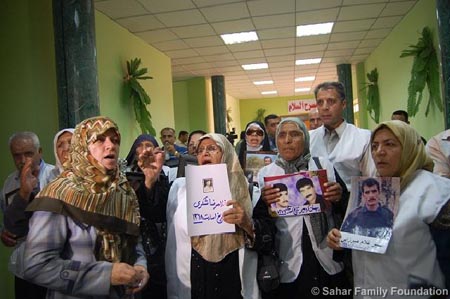
It is now more than 5 months since some families of the members of Mujahedin-e Khalq

Families picketing in front of Ashraf camp for more than 5 months

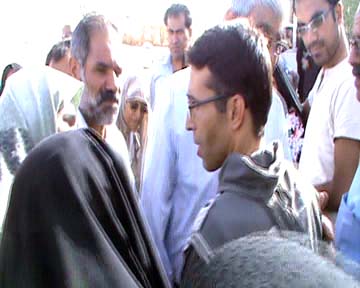
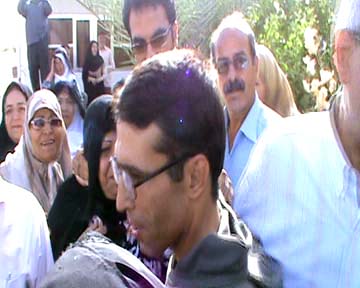
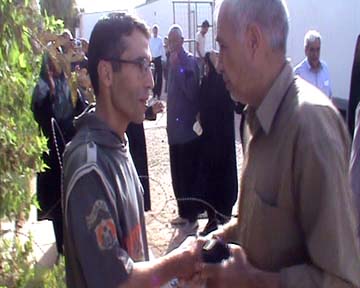
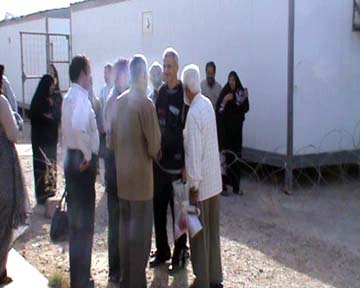
Organization (MKO – Rajavi cult) based in Ashraf camp in Iraq are protesting in front of the camp and their only wish is to visit their loved ones whom they have not seen in some cases for more than two decades. The leaders of MKO cult have of course denied their plea and on the contrary have called their move a conspiracy plotted by the enemies.

Massoud Rajavi the leader of MKO terrorist cult, who was allied with Saddam Hussein, and is on the run since the invasion of Iraq, has called the appeal a circus show and has compared the families to circus animals. These comments were broadcasted in the cult’s satellite television. During this time some mind manipulated elements of the cult residing inside Ashraf camp have tried to intimidate the families and insulted them in several occasions. These actions of course had no impact on the families and did not make them to pull back and on the contrary have made them more decisive to insist on their demands and carry on their picketing until they manage to see their relatives.
 
The cultic behaviors of MKO and its leaders are quite exposed to those who have even little knowledge about the deeds of this terrorist destructive cult. Several researchers, experts and international bodies do recognize MKO as a cult of personality. MKO is a destructive cult which is
Manipulated elements of MKO cult threatening the families
threatening its own confined members more than anyone else and has the capacity of creating a human tragedy.

The families of captive members inside cultic camp of Ashraf have every right to be concerned about their loved ones there. Circus show is exactly what Rajavi has set up in Iraq and innocent people have been moved away from their human nature and have become robots and machines who could be run in any way their desire, and of course the audience of this miserable and sad circus show are the supporters of MKO in the west who try to keep them alive against humanity for their short term benefits.

Rajavi and its associates are undoubtedly the enemies of Iranian people and their positions are clear. But to respond to those who try to keep MKO active and add to the misery and pains of the

Families of MKO cult members call for help

families and the members in Iraq we just quote Dr. Massoud Banisadr from a website in Britain which has recently been published and we hope it finds its wise addressees:

“I wished Mr. Bolton could remember the advice of his Neo Cons friends to President Reagan in arming Taliban and Terrorists of Bin Laden against the Soviet Union, and could understand how unwise it is to use terrorists and cults against those who one might consider as enemies.

Maryam Rajavi is the cult leader of MEK labeled as Terrorists in US and till recently in EU. Being cult means that they can say anything and pretend to be anybody in hope of reaching to power, and when they do so, they will show their real color. Unfortunately then it is too late for people like Mr. Bolton to compensate for their mistakes as catastrophe of cult leaders in power cannot be erased without loss of lives of millions of innocent people. Don’t’ forget that even Hitler came to power using the same democracy that it seems nowadays to be the slogan of Rajavis. Then, there were some Americans and British who were thinking that they can use Hitler against communists and the Soviet Union, but in power Hitler and his cult of personality did what they did. Then it was too late for free world to realize that they cannot trust cult leaders. To reverse their mistakes millions of lives had to be sacrificed. Recent report of American Think Thank RAND for US defense department pointed out very clearly that NCR or MEK under Rajavi is a destructive cult that can change color at any minute to advance its goals. Not long ago their main slogan was death to the US and calling ‘Human Rights’ and ‘liberal democracy’ as ploy of Imperialism against oppressed people, and now they are using the same slogans to gain support of western politicians against Iranian regime. Do we really want friends like this and support cult leaders that soon can change into new enemies like Bin Laden?”
 

Sahar Family Foundation in Iraq once again calls the world community, international organizations, human rights activists, public media, and all humanitarian individuals particularly supporters of MKO in the west, who have just seen its misleading appearance and do not know about its wicked nature, to do whatever in their capacity to satisfy the request of the suffering families.
July 15, 2010 0 comments
FacebookTwitterPinterestWhatsappTelegramSkypeEmail
The cult of Rajavi

Rajavi, the God of Ashraf

In the Alborz Mountains of northern Iran there is an isolated area known as the Valley of the Assassins. It is here where Hassan Sabbah, a charismatic man who died in 1124, founded a In a strikingly similar fashion to Hassan Sabbah, in the early1980’s Massoud Rajavi, came to realize thatnotoriously violent radical Islamic sect referred to by historians as the Hashaashiyun (the Druggers). Interestingly, this word, hashaashiyun is the origin of the English word assassin, which means killer. In this valley, Hassan Sabbah created a small and very successful empire of dedicated followers from whom he demanded total devotion. Iranian literature and lore preserve the fascination and opinion that Hassan Sabbah systematically created one of the most effective terrorist groups in history. Sabbah’s magnetic personality and uniquely efficient leadership promoted such intense belief and devotion that members, with the pledge of martyrdom, were able to commit assassinations without hesitation. The zealous follower’s committed ferocious acts of killing, believing that there was a purpose to their heinous acts—and that they would be sent to paradise if they were killed while serving their leader. In effect, martyrdom was an essential element in Hassan Sabbah’s power scheme. Indubitably Hassan Sabbah and his followers in the infamous Valley of the Assassins helped lay the foundation for today’s continued fascination of—and for a few, total acceptance of—suicide .

Hassan Sabbah was an educated, well travelled, intelligent man who spent many years as a missionary. When he chose to gain power and control over the community in the Alborz Mountains, his plan worked because he was able to inspire commitment and action as well as kindle complete obedience from his followers—to the point that followers’ previous sense of right and wrong was phased out of their mindset. Hassan Sabbah knew how to wash a brain—to erase all notions of good and bad—to let fade right and wrong. He replaced followers’ thinking with distorted morals: the notion of “good” became obedience toward the leader, and the notion of “bad” became disobedience towards the leader. With this immense power, Hassan Sabbah’s wishes were the followers’ commands—if it was his wish for a follower to kill, the follower killed. If it was his wish that a follower die, the follower died. Thus became the association of the word killer with the word assassin.

Hassan Sabbah’s group was by today’s definition a cult. He had created a deliberate agenda in order to serve himself for the purpose of creating power for himself. The Hashaashiyun devotees martyred themselves believing that they would attain fulfillment only through servitude. In this way, they gradually earned degrees, which put them closer to their leader who they believed represented God.

The cult created by Hassan Sabbah was successful given that it lasted upward of three decades . Hassan Sabbah’s cult epitomized the idea of suicide killings, and had a significant impact on other subsequent cult leaders particularly the husband and wife team, Maryam and Massoud Rajavi of the Mojahedin-e Khalq, a modern radical religio-political group (based in Paris) who bedevils Iran. Because there is an acceptance of this radical notion from a tiny minority in the Middle East, it is only natural that the MEK would take advantage of it, and then exercise such a “killing device” in their programme de formation. For the naïve MEK members, leaders implementing this contrivance would not be abnormal in the hearts and minds of the the Mujahidin Organization has all the main attributes of a culttruly dedicated; and committing suicide would not be out of the ordinary because culturally the idea is still present, although most Middle Eastern people and certainly most Iranians would not support such an outrageous “opportunity.”

In a strikingly similar fashion to Hassan Sabbah, in the early1980’s Massoud Rajavi, came to realize that in order to achieve organizational efficiency and maintain his own power, a system must be implemented for the MEK. Professor Ervand Abrahamian—one of the world’s foremost experts on the cult, whose 1989 extensively researched book, The Iranian Mojahedin is still being used to educate professors, politicians and policymakers all over the world—details the cult’s history and evolution. Although it is common knowledge among politically- minded Iranians, Abrahamian affirms that the group officially began in 1963, as a small university student-discussion group. Shortly thereafter, with a revolutionary ideology, they took up arms, and after almost twenty years of growth and some support from Iranians, membership began to dwindle due to the sociological factors which determined their function was not really useful for the Iranian public. Because of this, the group restructured itself into a religio-political sect, and in the mid-1980’s, the Mujahidin, from an outsider’s perspective, had qualified itself as a cult. After renaming itself the “National Council of Resistance of Iran,” the group declared that it was actually founded in 1981. [1]

Abrahamian confirms that “by mid-1987, the Mujahidin Organization has all the main attributes of a cult […] the organization had granted unlimited power to its charismatic leader, [Massoud Rajavi].” He furthers, “Immediately the group had created a rigid hierarchy in which instructions flowed from above and the primary responsibility of the rank and file was to obey without asking too many questions. It has produced its own handbooks, censorship index, world outlook, historical interpretations and, of course distinct ideology—an ideology which, despite the organizations denials, tried to synthesize the religious message of Shiism with the social science of Marxism. It had its own slogans, insignia, icons, relics, ceremonies, rituals and liturgy. It had formulated its own esoteric terminology injecting new meaning into old Islamic words and sometimes coining entirely new terms. It had its own history, martyrs, hagiographies, honored families. It even had its own calendar.

“The organization had adopted its own dress code and physical appearance. It had begun to see the world as divided into two contradictory forces: on one side was the Mojahedin, the vanguard of the select, and those willing to accept its leadership; on the other was Khomeini, the forces of darkness and anyone refusing to accept Mojahedin leadership.
“Essentially the “Mojahedin became increasingly a world unto itself.” [2]

Sadly, in the name of Islam, and in the name of freedom and democracy, after the mid 1980’s, MEK members became increasingly devoted, increasingly isolated—as they were forced to stay on compounds and in camps based in Iraq—the biggest one being Camp Ashraf, where many members are still being housed and are prevented from knowing about the outside world. The MEK leaders, Maryam and Massoud Rajavi remain idols. Members worship them. Today the innocent devotees “volunteer” as suicide bombers or hunger strikers, willing to die for their cause and for their leaders. But the MEK, will never openly admit this practice is required. In January 2009, Iraqi national security adviser Mowaffak al-Rubaie’s made a statement to the Washington Post declaring that “a member of the organization had turned himself in to Iraqi security forces and told them that group leaders had instructed him to detonate explosives at the headquarters of the Iraqi security forces.” [3]

In July 2003 upon the arrest of MEK leader Maryam Rajavi, MEK members took to Paris’ streets and engaged in self-immolation. [4] [At least ten] members set themselves on fire in cities across Europe. [5]

The MEK suicidalists are the modern parallels of Hassan Sabbah’s “Druggers” in the Valley of the Assassins. MEK defectors describe the group as a cult. [6] Former MEK members told Human Rights Watch that when they protested MEK policies or tried to leave the organization, they were arrested, in some cases violently abused and in other instances imprisoned. Two former recruits told the human-rights group that they were held in solitary confinement for years in a camp operated by MEK in Iraq under the protection of Saddam Hussein. [7]

The MEK is a group of misguided individuals who do evil things to themselves and others—not out of malice, but out of faith and devotion to a pair of twisted leaders.

References:
[1] Abrahamian, Ervand. The Iranian Mojahedin. London, New Haven: Yale University Press, 1989. pp.260-1

[2] ibid

[3] Londoño, Ernesto. "Iraq Accuses Iranian Exiles of Plotting Attack". The Washington Post.Wednesday, January 21, 2009
http://www.washingtonpost.com/wp-dyn/content/article
/2009/01/20/AR2009012004051.html.

[4] United States Department of State, Naval Post Graduate School. “Mujahedin-e Khalq organization (MEK), Country Reports on Terrorism, 2007”. Dudley Knox Library. April 2008 ‘
<http://www.nps.edu/Library/Research/SubjectGuides
/SpecialTopics/TerroristProfile/Current/MujahedineKhalq.html>.

[5] BBC News, "Iranian fire protests at Paris arrests". June 18, 2003
 http://news.bbc.co.uk/2/hi/europe/2999652.stm.

[6] Allam, Hannah. "Middle East Diary: MEK in Iraq". McClatchy Newspapers .
August 14, 2009
http://blogs.mcclatchydc.com/cairo/2009/08/mek-in-iraq.html.

[7] Isikoff, Michael. "Terror Watch: Consider the Source". Newsweek. May 18, 2005
<http://www.newsweek.com/2005/05/17/
terror-watch-consider-the-source.html>.

By Mazda Parsi

July 14, 2010 0 comments
FacebookTwitterPinterestWhatsappTelegramSkypeEmail
Iraq

Iraqi court seeks arrest of MKO leaders for crimes against humanity

Massoud Rajavi, Maryam Rajavi, Mojahedin Khalq leaders wanted for crimes against humanity

* Crimes against humanity
* First case against foreigners for Saddam-era crimes
An Iraqi court ordered the arrest of 39 members of an exiled Iranian opposition group, accusing them of crimes against humanity in helping Saddam Hussein to crush a revolt almost two decades ago, a judge said on Sunday.

The 39 are members of the People’s Mujahideen Organisation of Iran (PMOI), a guerrilla movement opposed to the Iranian government. It sided with the toppled Iraqi dictator, a Sunni Muslim, during the Iran-Iraq war in the 1980s but has denied helping Saddam to crack down on long-oppressed majority Shi’ites and ethnic Kurds.

Iran, Iraq and the United States consider the PMOI a terrorist organisation and the now Shi’ite-led Iraqi government has been trying to get it to vacate a base north of Baghdad where around 3,500 of its members have lived for 20 years.

"An arrest warrant has been issued against 39 leaders and members of the organisation including the PMOI’s head Massoud Rajavi, due to evidence that confirms they committed crimes against humanity," said Judge Mohammed Abdul-Sahib, a spokesman of the Iraqi High Tribunal.
Rajavi’s wife Maryam, leader of the French-based National Council of Resistance of Iran (NCRI), the PMOI’s political wing, was also included in the warrant, Abdul Sahib added.

"The 39 Iranian suspects were involved with the former Iraqi security forces in suppressing the 1991 (Shi’ite) uprising against the former Iraqi regime and the killing of Iraqi citizens," he said.
The PMOI began as an Islamist leftist group opposed to Iran’s late Shah, but fell out with Shi’ite clerics who took power after the 1979 revolution. Mujahideen guerrillas carried out attacks against Iranian targets. Iran executed a large number of PMOI prisoners at the end of the Iran-Iraq war.

Last year, Iraq said it wanted the Iranian opposition exiles based at Camp Ashraf north of Baghdad to leave the country. Iraqi forces took over responsibility for the camp on Jan. 1, 2009 from U.S. troops, who had been guarding it.

Violence erupted there last year when Iraqi security forces tried to enter the camp. At least seven exiles were killed.

Mahdi Uqbaai, a spokesman of the PMOI, said the court was pressured by the government to order the arrests.

"This is a politically motivated decision and it’s the last gift presented from the government of (Prime Minister) Nuri al-Maliki to the Iranian government," said Uqbaai.

The Iraqi High Tribunal was set up after the 2003 invasion to prosecute crimes against humanity and genocide committed during Saddam’s rule. Any case against the PMOI would be its first against foreigners for Saddam-era crimes. (Editing by Rania El Gamal; editing by David Stamp)

By Muhanad Mohammed

July 13, 2010 0 comments
FacebookTwitterPinterestWhatsappTelegramSkypeEmail
Massoud Rajavi

The Roots of immorality molded in leader of MKO

The echo of the statements made by Ms. Batool Soltani disclosing facts about the sexual abuse and relations of Massoud Rajavi, the leader of Mojahedin Khalq cult, with the female members had the shocking impact of a bomb explosion among the public. She made the testimony in a meeting held in support of the victims of Rajavi’s castle, Camp Ashraf. Although she did not go into very details, her direct avowal did not take the audience in abroad by surprise since, as the organization is commonly referred to as a cult of personality, the prevalence of the sexual exploitation of women in cults is an undeniable fact that may only take different forms.

Surely, the truth of such claim made by one of the ranking members of the organization and one of the closest layers to Rajavi’s private relations cannot be denied but analyzed. Of course, the question of sexual relations within the armed, underground establishment of the organization was a challenge it was facing from its very days of formation and at time it had to adopt different solution to overcome the problem. Although it is in no way considered a problem among the Marxist-oriented groups, at time it turned into a crisis in Mojahedin Khalq Organization (MKO,MEK, PMOI) because it acted under the guise of a non-secular and religious organization. The instances of illicit relations and sexual scandals in the organization’s split Marxist branch, headed by Taqi Shahram, are undeniable facts confessed by many ex-members and recorded in the files of those Marxist-biased arrested by SAVAK, Pahlavi regime’s notorious security and information apparatus.

Needless to say that Ms. Soltani’s disclosure does not necessarily mean to question morality of many old members of the organization who were devoted, honest Muslims, but to dig into the roots of deviations that has led to the broad scandal. What did really happen that after the execution of the early founders of the organization by the Pahlavi’s court-martials, Rajavi seized the power in their absence, and through an enforced ideological revolution, glamorized an illicit marriage with Maryam Azodanloo? And it became the beginning of a process of female domination promoting women to the ranking, key positions of the organization. The enforcement of the compulsory divorces granted Rajavi the hegemonic monopoly right of exploiting women as his property while he totally deprived other rank and files of their natural right. Sexual control was, and is, seen as the final step taken by Rajavi’s system to objectify members similar to other members of the cults; it took the form of controls of sexuality and sex lives of members through daily and weekly sessions of confession and repentance.

It has become a cult routine inside MKO that requires members to keep daily records of their thoughts and nighttime dreams, particularly sexual thoughts and desires (which are, of course, forbidden), as well as observations about their fellow members. They must submit their journals to their supervisors. During large meetings, members often are forced to read their reports aloud and to make self-critical statements. It is a process going on while Rajavi is unveiled to have been engaged in a rampant, lustful and scandalous relation with female members observing them both as easily controlled subservience and objects of his harem.

It was commonly believed, or instilled into the insiders, that Massoud and Maryam were not married for the sexual purposes as many would think since Massoud, before the initiation of the ideological revolution, had overcome sexual bonds and had made a revolution within himself to bury all lustful bends for the cause of struggle. However, the disclosures about Rajavi’s indecent relations with the female insiders indicate that sexual acting out of all sorts is frequent among cult leaders and can be primarily regarded as a control and power issue. But how Rajavi came to put his feet on the very same road is a question to be studied with great care and scrutiny.

July 13, 2010 0 comments
FacebookTwitterPinterestWhatsappTelegramSkypeEmail
Iraq

Thwarted escape attempt by a disaffected MEK member

Letter to the Iraqi Prime Minister to inform him of the thwarted escape attempt today by a disaffected member of the Rajavi cult from Camp Ashraf, in Diyala province

In the name of God

Mr. Noori Al Maliki, Prime Minister of Iraq

Dear Sir,
May we bring to your kind attention that today July 08, 2010 at about 10 am, a member of the Letter to the Iraqi Prime Minister to inform him of the thwarted escape attempt today by a disaffected member of the Rajavi cult from Camp Ashraf, in Diyala provinceMojahedin Khalq Organisation (aka: MKO, MEK, NCRI, Rajavi cult) while signalling with his hands, tried to approach the families by moving towards them, and one of the families started walking towards him. At this moment the security forces of Mojahedin Khalq Organisation present there attacked the member, tied his hands and beat him up severely. They then moved him in to a car and drove away. While this was going on, they used abusive language and threw stones at the families present there and witnessing this assault which resulted in some injuries. Also, two Iraqi soldiers who were also near by, and who intervened to protect the victim as well as the families also came under attack. Unfortunately, they were also hit and injured by the stones thrown by the Mojahedin Khalq Security forces.

About 20 to 30 minutes later we witnessed an American Military helicopter flying low over the families and filming them!

May we remind your good self that after the escape of several members who managed to get themselves out in the recent months, the Mojahedin have been increasing their security by increasing the barbed wire fencing, and in addition have installed CCTV to monitor the movements of all their members. They have also banned any presence of ordinary members in the streets.

This means that the members are imprisoned in such a manner that escape is almost impossible. Today’s incident happened after a message was read repeatedly from a recent escapee to one of his friends who had asked him to let him know about the outside. It is clear to us that this person has been listening to the announcement and has decided to run away from the camp.

We, the families picketing outside camp New Iraq (formerly Ashraf) are deeply worried about the fate and the health of the arrested person remembering that he could be the child of any of us.
The gates of Ashraf camp have been left open for the reason that if anyone decides to run away from the cult, he or she can walk away from this Dark Age’s garrison. Unfortunately today’s incident showed otherwise. Now only God knows what will be brought upon the arrested person and what tortures are awaiting him.

We have complaints against the leaders of the Mojahedin Khalq cult and would like to ask you as the Prime Minister of our brother neighbouring country Iraq, to order the relevant authorities to attend to this situation.

The Mojahedin are now capable of bringing any kind of harm to our children and no one would even know about it. We ask your intervention to save these lives.

The families picketing outside camp New Iraq (formerly Ashraf)
July 08, 2010

Cc:
The office of President Talebani
The Head of Iraqi Parliament
The office of UN Secretary General
Minister of Human Rights of Iraq
The Iraqi High Court
ICRC
UNAMI
International Human Rights Organisations
The Ambassador of USA in Iraq

Signatories:
…

July 13, 2010 0 comments
FacebookTwitterPinterestWhatsappTelegramSkypeEmail
Iraq

Iraq begins top MKO members’ arrest

Iraq’s Supreme Criminal Court has issued arrest warrants for MKO leaders Masoud Rajavi and Maryam Rajavi.

Iraq has begun an operation to arrest 38 members of the terrorist Mujahedin Khalq Organization (MKO) and hand them over to judiciary officials.

"We have received a letter from Iraq’s Supreme Criminal Court which contains the names of 38 senior members of the MKO," Fars News Agency quoted Iraqi Deputy Interior Minister Ayden Khalid Qader as saying on Sunday.

The letter has called on the Interior Ministry to begin an immediate operation to arrest the criminals and hand them over to the judiciary, he added.

Earlier in July, Iraq’s Supreme Criminal Court issued arrest warrants for the leaders of the terrorist Mujahedin Khalq Organization, including Masoud Rajavi and his wife Maryam Rajavi.
The warrants require the Iraqi Interior Ministry and the Interpol to arrest and hand over the wanted figures to Iraq’s Criminal Court.

Founded in the 1960s, the MKO has masterminded a slew of terrorist operations in Iran and Iraq, killing thousands of people and wounding many more.

The group is especially notorious for taking sides with former Iraqi dictator Saddam Hussein during the 1980-1988 war Iraqi-imposed on Iran.

The Iraq-based MKO is listed as a terrorist group by much of the international community.

July 13, 2010 0 comments
FacebookTwitterPinterestWhatsappTelegramSkypeEmail
Newer Posts
Older Posts

Recent Posts

  • A Criterion for Proving the Violent Nature of the MEK

    December 31, 2025
  • Rebranding, too Difficult for the MEK

    December 27, 2025
  • The black box of the torture camps of the MEK

    December 24, 2025
  • Pregnancy was taboo in the MEK

    December 22, 2025
  • MEPs who lack awareness about the MEK’s nature

    December 20, 2025
  • Facebook
  • Twitter
  • Instagram
  • Youtube

© 2003 - 2025 NEJAT Society . All Rights Reserved. NejatNGO.org


Back To Top
Nejat Society
  • Home
  • Articles
  • Media
    • Cartoons
    • NewsPics
    • Photo Gallery
    • Videos
  • Publications
    • Books
    • Nejat NewsLetter
    • Pars Brief
  • About Us
  • Contact us
  • Editions
    • عربي
    • فارسی
    • Shqip