Nejat Society
  • Home
  • Articles
  • Media
    • Cartoons
    • NewsPics
    • Photo Gallery
    • Videos
  • Publications
    • Books
    • Nejat NewsLetter
    • Pars Brief
  • About Us
  • Contact us
  • Editions
    • عربي
    • فارسی
    • Shqip
Nejat Society
Nejat Society
  • Home
  • Articles
  • Media
    • Cartoons
    • NewsPics
    • Photo Gallery
    • Videos
  • Publications
    • Books
    • Nejat NewsLetter
    • Pars Brief
  • About Us
  • Contact us
  • Editions
    • عربي
    • فارسی
    • Shqip
© 2003 - 2024 NEJAT Society. nejatngo.org
Iran

Iran to probe rumors of US drafting Israeli backed Mojahedin Khalq Terror group

Iranian Interior Minister Mostafa Mohammad-Najjar says Tehran is investigating reports of US plans to mobilize an Iraq-based terror group on Iran’s northwestern border.

Iranian Interior Minister Mostafa Mohammad-Najjar speaks
with reporters following a meeting with government officials
in Tehran, July 21, 2010

"We are investigating this [report]; however, the global arrogance has and will use Mojahedin Khalq Organization (MKO) against the interests of the Iranian nation wherever it can," Fars News Agency quoted Mohammad-Najjar as saying on Wednesday.

Washington has called on the Kurdistan Workers’ Party (PKK) militants to allow members of the anti-Iran terrorist group access to the Qandil mountain rage along Iran’s northwestern border, Fars quoted an informed source close to PKK Leadership Council on Tuesday.

The remarks came hours after an explosion damaged a gas pipeline near the eastern Turkish town of Dogubayazit, close to the Iranian border.

Regarding the July 15 terrorist attack in the southeastern Iranian city of Zahedan, Mohammad-Najjar urged neighboring countries to step up security on their borders and prevent terrorists from crossing into Iran.

"Neighboring countries should not become the backyard of a group of thugs who act against the interests of our establishment. Since Iran’s borders have always been the securest for our neighbors, we expect them to secure their borders and not allow their soil and capacities be used to equip these thugs against the interest of our nation."

Last Thursday, at least 27 people were killed and more than 100 others were injured when two bombs detonated outside the Zahedan Grand Mosque in Sistan-Baluchestan Province.
The attacks have widely been blamed on extremist Wahabis and Salafis trained by US intelligence in Pakistan.

Last month, military sources told Press TV that the US army had moved a select group of MKO terrorists from Camp Ashraf near Baghdad to a US base in central Iraq.

According to the sources, the US army plans to later disperse these MKO members as ‘secret agents’ and terrorists across the border and into Iran.

July 22, 2010 0 comments
FacebookTwitterPinterestWhatsappTelegramSkypeEmail
Iraqi Authorities' stance on the MEK

Iraqi Kurdistan Deplores US Plans for Moving MKO terrorists to Kurdistan

The government of the Iraqi Kurdistan region on Wednesday announced its strong opposition to the US plans for moving the members of the anti-Iran terrorist Mojahedin-e Khalq Organization (MKO) to the mountainous areas on the Iraq-Iran-Turkey borders. The government of the (Iraqi) Kurdistan region and the central government in Baghdad will in no way agree with such a measure," Spokesman of Pishmarga Ministry of the Iraqi Kurdistan

"The government of the (Iraqi) Kurdistan region and the central government in Baghdad will in no way agree with such a measure," Spokesman of Pishmarga Ministry of the Iraqi Kurdistan region Jabbar Yavar told FNA.

Yavar also dismissed media reports that the regional government has been informed of the plan by the US officials, and stressed that nothing has been said to the officials of the Iraqi Kurdistan region in this regard.

The US forces are not entitled to the right to move the MKO members and such a decision should only be taken by the Iraqi government, he underlined.

Iraqi security forces have recently taken control of the training base of the MKO at Camp Ashraf – about 60km (37 miles) north of Baghdad – and detained dozens of the members of the terrorist group.

The Iraqi authority has also changed the name of the military center from Camp Ashraf to the Camp of New Iraq.

An official of the Kurdistan Workers’ Party (PKK), who asked to remain anonymous, told FNA on Tuesday that the White House had in a message called on his group to harbor the members of the MKO in the Qandil Mountains at the Iranian borders.

The source also revealed that Washington has vowed to stop Turkish Army attacks against the PKK in return for the Kurdish group’s cooperation with the White House in this regard.

He underlined that the PKK is still mulling over the deal, but declined to reveal any further detail.
The source also reserved judgment over the PKK’s possible response to the White House demand.

The PKK is listed as a terrorist organization internationally by a number of states and organizations, including the United States, the United Nations, NATO and the European Union.
The organization has been listed as one of the 12 active terrorist organizations in Turkey as of 2007 and Turkey labeled the organization as an ethnic secessionist organization that uses terrorism and the threat of force against both civilian and military targets for the purpose of achieving its political goal.

Also, the MKO, whose main stronghold is in Iraq, is blacklisted by much of the international community, including the United States.

Before an overture by the EU, the MKO was on the European Union’s list of terrorist organizations subject to an EU-wide assets freeze. Yet, the MKO puppet leader, Maryam Rajavi, who has residency in France, regularly visited Brussels and, despite the ban, enjoyed full freedom in Europe.

Some other members of the MKO who have had a role in the assassination of a large number of Iranian citizens and officials are currently living in France.

The group started assassination of Iranian citizens and officials after the Islamic Revolution in a bid to take control of the newly established Islamic Republic. It killed several of Iran’s new leaders in the early years after the revolution, including the then President, Mohammad Ali Rajayee, Prime Minister, Mohammad Javad Bahonar and the Judiciary Chief, Mohammad Hossein Beheshti who were killed in bomb attacks by MKO members in 1981.

The group fled to Iraq in 1986, where it was protected by Saddam Hussein and where it helped the Iraqi dictator suppress Shiite and Kurd uprisings in the country.

The terrorist group joined Saddam’s army during the US-backed Iraqi imposed war on Iran (1980-1988) and helped Saddam and killed thousands of Iranian civilians and soldiers during the war.

July 22, 2010 0 comments
FacebookTwitterPinterestWhatsappTelegramSkypeEmail
Mujahedin Khalq; A proxy force

PKK urged to Shelter Mojahedin Khalq Terrorists at Iran’s Borders

Washington has reportedly called on the Kurdistan Workers’ Party (PKK) militants to allow members of an anti-Iran terrorist group into mountainous area along Iran’s northwestern border.
"On Saturday, White House officials sent a message to the PKK’s Leadership Council, asking it to permit members of the terrorist Mojahedin Khalq Organization (MKO) to set up a base in the Qandil mountain range on the Iranian border," Fars News Agency quoted an informed source with the council as saying on Tuesday.

The Qandil mountain range, where Israeli firms operate, is the stronghold of the PKK militants and their sister terrorist group PEJAK.

The International Strategic Research Organization, a Turkish think tank, warned last month that agents with the Israeli spy agency Mossad as well as the Israeli military’s retirees had been sighted providing training to PKK gunmen in the Iraqi Kurdistan. Washington’s proposal comes as the deadline for complete withdrawal of US troops from Iraq draws near and Baghdad is set to hunt down and expel MKO terrorists.

The US is reportedly seeking to relocate the MKO terrorist before leaving Iraq, the source told the new agency in the Iraqi city of Erbil.

"They (US officials) promised that they would put an end to Turkish military strikes against us (the PKK), should we accept their condition," the senior PKK official told Fars News.

"The offer is being studied at the moment," he added.
The MKO is regarded as a terrorist organization by much of the international community including the United States.

An informed source, speaking on condition of anonymity, told Press TV last month that a group of 150 longtime MKO terrorists has been moved from their base in Camp Ashraf near Baghdad to a US base in central Iraq to be trained as spies.

The US plans to dispatch the trained MKO members as secret agents across the border and into Iran, with plans to carry out terror acts, according to the source.

July 21, 2010 0 comments
FacebookTwitterPinterestWhatsappTelegramSkypeEmail
Mujahedin Khalq; A proxy force

US charged with Iran terror support

Iran experienced terrorist attacks last week in the form of twin bombings outside a mosque in its southeast. Iranian President Mahmoud Ahmadinejad said it had credible evidence that these terrorist groups were being equipped by US and NATO forces inside Afghanistan and Pakistan.
The following is Press TV’s interview with journalist and political analyst Ghanbar Naderi in Tehran and political analyst Dr. Kamel Wazni in Beirut to discuss the charges.

Press TV: Dr. Kamel Wazni, going back to 2009, can you tell us about the secret directive signed by General David Paterues, in which the new order, including anti-Iran covert operations were intended to make US efforts systematic and long term?

The name of the directive was ‘Joint Unconventional Warfare Task Force Execute Order,’ signed in September 30, 2009, known as a clandestine activity, one that does not require the US president’s approval or regular reports to the Congress.

Kamel Wazni: Obviously, the Americans have been conspiring with other intelligence and with NATO and unfortunately with some Arab country against the Islamic Republic. They have been funding and directing some political terrorists in the region and there was evidence by a former Pakistani general which indicated that Jundallah have been funded with millions of dollars from the CIA and other intelligence (agencies) to conduct operations against innocent people inside Iran. What we saw this past week is an example of what the American money has done by encouraging terrorists to launch attack against civilians. This reprehensive act by the CIA should be brought to the international community and should be prosecuted and the finger should be pointed at the American administration which called for dialogue and peace and on the other hand it directed its intelligence operations to conduct this heinous crime against the innocent and civilians.

Press TV: Ghanbar Naderi, Dr. Wazni mentioned Jundallah. The arrest of Jundallah terrorist group’s ringleader Abdolmalek Rigi: he told Press TV that since 2005 he held several "confidential" meetings with FBI and CIA agents in Karachi and Islamabad, the Pakistani capital. He said two female US agents had offered weapons and safe bases in Afghanistan, and professional trainers, while inquiring about how many people the Rigi group could gather for military training. Can you expand on that?

Ghanbar Naderi: All these hostile measures taken against Iran are not something new. This didn’t happen overnight. This hasn’t been going on for the past one or two or three years or since 9/11 attacks, no, this kind of hostilities toward Iran has been going on for the past 30 years. For the simple fact that Iran is not following the orders of the US in the region. That’s as simple as that.

All I am concerned about is that somehow the situation might get out of control and the US might be forced to pay a heavy price for that. We don’t need our president to provide us evidence to prove beyond doubt that the US is training and financing terrorist groups in the region. We don’t need the reports of the US media to tell us exactly the same kind of information. I believe US actions speak louder than words and we haven’t seen anything at all friendly until this point in time since the 9/11 attacks about some kind of actions that is going to restore order in this volatile region.

Press TV: Kamel Wazni, let’s expand more on other Rigi statements, Iran’s Foreign Minister Manouchehr Mottaki said, "The US must explain what AbdolMalek Rigi was doing at the US base in Afghanistan and why he was going to meet high-ranking US officials at the US Manas base near the Kyrgyz capital Bishkek."

Kamel Wazni: This cooperation between Jundallah and its leader who has been executed have been going on more than 2005 and that was actually mentioned in the Financial Times which disclosed that a large sum of money was handed by the CIA to the [Jundullah] leader to conduct clandestine operations inside Iran and attack sites inside the Islamic Republic. The Americans have been inciting this hatred and division between the Muslim world, capitalizing on some of that division and putting arms in the hands of a dangerous terrorist to commit this heinous crime. That’s taking place not only against Iran but is taking place against the people of Iraq. We have been seeing the bloodshed that’s taken place in Iraq and also what happened in Afghanistan.

This has to be brought to international courts and to the international community and I know the Iranians found confessions made by Rigi, they have evidence to show the whole world how the CIA was instrumental in training and helping and funding these terrorists and how they gave him some safe haven inside Pakistan and Afghanistan and other places to hide and to continue their crimes against Iran and other countries in the region.

Press TV: Ghanbar Naderi, Dr Wazni mentioned sowing discord in terms of creating division. That’s taking it a step further than just providing terrorists with intelligence and equipment. Expand on the deep ‘US plan’ to penetrate the Iranian people and the psychology and intention behind that.

Ghanbar Naderi: That’s a very good question. What you are telling us is America is not at war with Iran’s government or the Islamic Republic. America is at war with its people. That’s why it’s trying to create division among ethnic groups and minorities in this country which by the way form the very basis for this country. Iran is formed by these minorities. We don’t have just Balushis or Sistanis. We have so many different minorities in this country such as Kurds, Turks and like that. So we get the impression now that America is actually at war with the Iranian people and that’s why it’s not going to succeed. My sense is that terrorist groups such as Jundallah or MKO in Iraq are like hippies that belong to the past. They don’t belong to this point in time. They are not going to succeed because they don’t have so many members. As far as I am concerned their sort of activities are not going to topple Iran’s government because we don’t have an Iranian government. We have an Iranian nation. The government belongs to the people. That’s why America is not going to topple this country or its regime because we don’t have such a regime. We have people. America is trying to stand up against the Iranian people and has been doing so for the past 30 years and has failed miserably until this point in time.

Press TV: Dr Kamel Wazni, what about reports that US military forces in Iraq are training 150 members of the MKO terrorist organization? The trainings are taking place at Camp Taji, a base located near the central town of Ramadi, capital of Anbar province apparently.

Kamel Wazni: That’s very obvious and they have been giving protection to a lot of these terrorists who have been known to commit crimes against women and children. They have been terrorizing and planting bombs and the US is clearly taking an interest in training and giving protection for these terrorists. That act is unacceptable especially for the Obama administration who wanted to fight terrorism, who wanted to fight evil. This is an act of evil sponsored by the CIA and its military operation and this act should not be tolerated either by the Iranian people and the Iranian government or by the international community. Any act of killing is a murder especially when it comes from a country who sponsors terrorism and claims itself a democratic nation.
Here the US is playing the devil by training the well-known terrorists and they have a history of blood on their hands and that’s a heinous crime. And that should be prosecuted by the international community.

July 21, 2010 0 comments
FacebookTwitterPinterestWhatsappTelegramSkypeEmail
USA

The DOS responses to previous demands of MKO designation review

The judgment of the U.S. Court of Appeals for the District of Columbia urging the State Department to review its decision to label MKO as a terrorist is the last ofthe State Department has never changed its views about the inclusion of the notorious MKO terrorists a quintuple series concerning MKO’s designations by the Secretary of State. The following text is the last response by the Department of State denying MKO petition for review of the order in question. The three previous responses are also linked in this last one. The response well indicates that the State Department has never changed its views about the inclusion of the notorious MKO terrorists and has ever insisted that the group’s designation complied with the governing statute and all constitutional requirements. We have to wait to see how sincere and determined America is in its war against terrorism when it designates a group as a FTO on sound evidences.

National Council of Resistance of Iran, Petitioner, v. Department of State and Colin L. Powell, Secretary of State, Respondents

United States Court of Appeals, District of Columbia Circuit. – 373 F.3d 152

Argued April 2, 2004 Decided July 9, 2004

On Petition for Review of Orders of the Department of State.

Paul F. Enzinna argued the cause and filed the briefs for petitioner. Martin D. Minsker entered an appearance.

Douglas Letter, Litigation Counsel, U.S. Department of Justice, argued the cause for respondents. With him on the brief was Peter D. Keisler, Assistant Attorney General.

Before: HENDERSON, GARLAND, and ROBERTS, Circuit Judges.

Opinion for the Court filed by Circuit Judge ROBERTS.

ROBERTS, Circuit Judge:

1 This is the fourth in a series of related cases concerning the biennial designations by the Secretary of State of the Mojahedin-e Khalq Organization (MEK)1 and its aliases as a foreign terrorist organization (FTO). See People’s Mojahedin Org. of Iran v. Dep’t of State, 182 F.3d 17 (D.C.Cir.1999) (PMOI I); National Council of Resistance of Iran v. Dep’t of State, 251 F.3d 192 (D.C.Cir.2001) (NCRI); People’s Mojahedin Org. of Iran v. Dep’t of State, 327 F.3d 1238 (D.C.Cir.2003) (PMOI II); see generally 8 U.S.C. § 1189. In 1999, and again in 2001, the National Council of Resistance of Iran (NCRI) was determined by the Secretary of State to be an alias of MEK and was accordingly also designated an FTO. See 1999 Designation, 64 Fed.Reg. at 55,112; 2001 Redesignation, 66 Fed.Reg. at 51,089. In May 2003, after a remand to cure certain due process deficiencies, see NCRI, 251 F.3d at 208-09, the Secretary decided to leave in place the 1999 and 2001 designations of NCRI as an FTO. NCRI now again petitions for review. After reviewing NCRI’s arguments, the entirety of the administrative record, and certain classified materials appended to that record, we conclude that the Secretary’s latest designation complied with the governing statute and all constitutional requirements. We therefore deny the petition for review.

2 The Anti-Terrorism and Effective Death Penalty Act of 1996 (AEDPA) empowers the Secretary of State to designate an entity as an FTO whenever the Secretary determines that (1) the entity is foreign; (2) it engages in terrorist activity; and (3) the terrorist activity threatens the security of the United States or its nationals. 8 U.S.C. § 1189(a)(1). A designation as an FTO persists for two years, after which the Secretary may redesignate the entity as an FTO for a succeeding two-year period upon finding that the statutory circumstances still exist. Id. § 1189(a)(4)(B).

3 An FTO designation visits serious consequences on the affected organization: The Secretary of the Treasury may require financial institutions to freeze any assets of the FTO, id. § 1189(a)(2)(C); the members and representatives of the FTO become ineligible to enter the United States, id. § 1182(a)(3)(B)(i)(IV), (V); and anyone who knowingly provides "material support or resources" to the FTO — including any donation of money — may be prosecuted and imprisoned for up to fifteen years, 18 U.S.C. § 2339B(a)(1). The manifest purpose of these provisions is to deny terrorist organizations support — financial or otherwise — in and from the United States. See H.R. REP. NO. 104-383, at 43-45 (1995) (House Report on AEDPA’s primary predecessor bill).

4 Despite these serious consequences of designation, the governing statute affords suspect entities only "truncated" participation in the administrative process leading to the designation and "quite limited" judicial review after the fact. NCRI, 251 F.3d at 196. As we noted in PMOI I, "unlike the run-of-the-mill administrative proceeding," "there is [under AEDPA] no adversary hearing, no presentation of what courts and agencies think of as evidence, [and] no advance notice to the entity affected by the Secretary’s internal deliberations." 182 F.3d at 19. Once the Secretary has designated an entity an FTO, the statute directs us to "hold unlawful and set aside a designation" only if we find it to be:

5 (A) arbitrary, capricious, an abuse of discretion, or otherwise not in accordance with law;

6 (B) contrary to constitutional right, power, privilege, or immunity;

7 (C) in excess of statutory jurisdiction, authority, or limitation, or short of statutory right;

8 (D) lacking substantial support in the administrative record taken as a whole or in classified information submitted to the court [ex parte and in camera], or

9 (E) not in accord with the procedures required by law.

10 8 U.S.C. § 1189(b)(3). Although the statute permits this court to base its review either "solely upon the administrative record" "taken as a whole," or as supplemented by any classified information submitted by the Secretary, the Act makes no provision for the disclosure of that classified material to the designated entity. See id. § 1189(b)(2), (3)(D); see generally 28 C.F.R. pt. 17 (governing access to classified national security information).

11 In 1997, and every two years since, the Secretary has designated MEK an FTO. See 1997 Designation, 62 Fed.Reg. at 52,650; 1999 Designation, 64 Fed.Reg. at 55,112; 2001 Redesignation, 66 Fed.Reg. at 51,089; 2003 Redesignation, 68 Fed.Reg. at 56,861. Starting in 1999, the Secretary added NCRI to the list of designated FTOs, having concluded that NCRI was an alias of MEK. See 1999 Designation, 64 Fed.Reg. at 55,112 ("I hereby designate … the following organization as a foreign terrorist organization: … Mujahedin-e Khalq Organization … also known as National Council of Resistance, also known as NCR."). NCRI now, for the second time, seeks review of that designation. In NCRI’s previous challenge — brought jointly with MEK — we concluded that both the 1999 designation of MEK as an FTO and the designation of NCRI as an alias of MEK satisfied the requirements of the statute. Specifically concerning NCRI, we held — based on the record then presented to us by the Secretary — that the Secretary’s conclusion that NCRI was an alias of MEK "does not lack substantial support and … is neither arbitrary, capricious, nor otherwise not in accordance with law." NCRI, 251 F.3d at 199.

12 As a constitutional matter, however, we determined that the procedures afforded by the statute and employed by the Secretary in arriving at those designations violated both organizations’ due process rights. See id. at 208-09. We did not vacate the Secretary’s designation as to either MEK or NCRI, but remanded to the Secretary with instructions that each entity be afforded the opportunity to: (1) respond to any part of the Secretary’s administrative record that is not classified material; (2) file evidence on its own behalf; and (3) be meaningfully heard by the Secretary. Id. at 210.

13 Both MEK and NCRI availed themselves of these opportunities. NCRI submitted voluminous materials that purported to demonstrate that it was sufficiently independent of MEK that it could not be considered an alias of that organization. On September 24, 2001, the State Department informed MEK and NCRI that the Secretary had decided to leave the 1999 designation of MEK in place but that "no such determination regarding the NCRI as an alias of the MEK is possible at this time." Letter of Ambassador Francis X. Taylor, Coordinator for Counterterrorism, U.S. Dep’t of State, at 2 (Sept. 24, 2001). This was shortly followed, on October 5, 2001, by the Secretary’s redesignation of both MEK as an FTO and NCRI as an alias of MEK. See 2001 Redesignation, 66 Fed.Reg. at 51,089. At that time, the State Department assured NCRI that although "the present situation… requires continued designation of [NCRI] as an alias of MEK for now," upon the completion of review of NCRI’s submissions, "the Secretary will make a de novo determination in light of the entire record, including the material you have submitted." Letter of Ambassador Francis X. Taylor, Coordinator for Counterterrorism, U.S. Dep’t of State, at 1 (Oct. 5, 2001).

14 Nearly a year later, the State Department provided for NCRI’s review additional materials obtained by the FBI in the course of "its long-running investigation of the MEK and NCRI." Letter of Ambassador Francis X. Taylor, Coordinator for Counterterrorism, U.S. Dep’t of State, at 1 (Sept. 4, 2002). Within two months, NCRI submitted its response. See Letter of Paul F. Enzinna, Esq. (Nov. 1, 2002). In May 2003, the State Department completed its review process and, on May 24, the Secretary decided to leave in place the 1999 and 2001 "designations of the National Council of Resistance (NCR) and the National Council of Resistance of Iran (NCRI) as foreign terrorist organization aliases of the Mujahedin-e Khalq (MEK)." Action Mem. from William Pope & William H. Taft, IV to the Secretary of State, at 3 (May 22, 2003) (Action Mem.). NCRI now petitions for review of this latest decision.

15 NCRI’s primary argument is that the Secretary’s conclusion that NCRI is an alias of MEK lacks substantial support in the administrative record. NCRI insists that it is an umbrella organization of Iranian dissident persons and groups of which MEK is only a single member, no more powerful than any other. In addressing this contention, we begin with our earlier holding in this action. In NCRI, we concluded — based on the record then presented to us — that the Secretary’s designation of NCRI as an alias of MEK "does not lack substantial support and … is neither arbitrary, capricious, nor otherwise not in accordance with law." 251 F.3d at 199. Although that decision is obviously not determinative of the question before us today — we are now reviewing a record that has since been supplemented both by the Government and NCRI — its holding must nevertheless inform our decision here. Logically, NCRI’s challenge can succeed only if the new record materials establish its independence from MEK so that we can no longer affirm that "the Secretary, on the face of things, had enough information before [him] to come to the conclusion" that NCRI is an alias of MEK. Id. Having reviewed the supplemented administrative record as a whole and the classified information appended to it, we conclude that NCRI has not met this burden.

16 To explain our decision, we must first review what it means — in the very particular context of AEDPA — for one organization to be an alias of another. On its previous appeal, NCRI argued that the Secretary lacked authority under AEDPA to designate an entity an FTO based on a finding that it was an alias of another designated FTO. See id. at 200. We rejected that contention, finding that the grant of authority to designate FTOs "implies the authority to so designate an entity that commits the necessary terrorist acts under some other name." Id. In so doing, we used a mathematics metaphor — specifically, the transitive property — to describe the alias concept: "Logically, indeed mathematically, if A equals B and B equals C, it follows that A equals C. If the NCRI is the [MEK], and if the [MEK] is a foreign terrorist organization, then the NCRI is a foreign terrorist organization also." Id.; see also id. ("If the Secretary has the power to work those dire consequences on an entity calling itself `Organization A,’ the Secretary must be able to work the same consequences on the same entity while it calls itself `Organization B.’"). Seizing upon our earlier invocation of the transitive property, NCRI now argues that the administrative record does not demonstrate that "A equals B" — that is, that NCRI equals MEK — and therefore NCRI cannot be an alias of MEK. Indeed, NCRI rightly points out that even the State Department acknowledges that NCRI and MEK are not " one and the same." See Pet. Reply Br. 4-6.

17 Implicit in NCRI’s argument, however, is a mistaken assumption that the alias concept, under AEDPA, is bounded by the transitive property. This reads too much into our mathematical metaphor in NCRI. See Berkey v. Third Ave. Ry. Co., 244 N.Y. 84, 94, 155 N.E. 58 (1926) (Cardozo, J.) ("Metaphors in law are to be narrowly watched, for starting as devices to liberate thought, they end often by enslaving it."). While it is certainly correct to use the term alias to describe scenarios where a single entity is known by more than one name — for instance, Mojahedin-e Khalq is an alias for People’s Mojahedin, two names for the same organization, one Farsi, the other English — nothing in AEDPA or any more general rule of logic or language requires that the application of the alias concept be strictly limited to such circumstances.

18 To the contrary, our citation in NCRI to First National City Bank v. Banco Para El Comercio Exterior de Cuba, 462 U.S. 611, 103 S.Ct. 2591, 77 L.Ed.2d 46 (1983), indicates that we intended the alias concept to have a sweep beyond the transitive. In that case, which concerned a suit brought by Banco Para El Comercio Exterior (BPECE) against First National City Bank for performance under a letter of credit, the Supreme Court held that First National could counterclaim for setoff of the value of its assets that had been seized and nationalized by the Cuban government, notwithstanding the fact that BPECE had been established by the Cuban government as a juridical entity separate from the government. See id. at 623-34, 103 S.Ct. at 2598-2603. Acknowledging a presumption that "government instrumentalities established as juridical entities distinct and independent from their sovereign should normally be treated as such," id. at 626-27, 103 S.Ct. at 2599, the Court nevertheless concluded that the normally separate juridical status had to be set aside where the Cuban government was the real party in interest behind BPECE’s letter of credit claim, id. at 632, 103 S.Ct. at 2602. The Court, in reaching its conclusion, looked to ordinary principles of agency law, noting that "where a corporate entity is so extensively controlled by its owner that a relationship of principal and agent is created, we have held that one may be held liable for the actions of the other." Id. at 629, 103 S.Ct. at 2600 (citing NLRB v. Deena Artware, Inc., 361 U.S. 398, 402-04, 80 S.Ct. 441, 442, 4 L.Ed.2d 400 (1960)). We think those same ordinary principles of agency law are fairly encompassed by the alias concept under AEDPA. When one entity so dominates and controls another that they must be considered principal and agent, it is appropriate, under AEDPA, to look past their separate juridical identities and to treat them as aliases.

19 The inclusion of these fundamental precepts of agency law within AEDPA’s alias concept is entirely consistent with — indeed, necessary to — the effective pursuit of the statute’s objective of denying support in and from the United States to terrorist organizations. Just as it is silly to suppose "that Congress empowered the Secretary to designate a terrorist organization… only for such periods of time as it took such organization to give itself a new name, and then let it happily resume the same status it would have enjoyed had it never been designated," NCRI, 251 F.3d at 200, so too it is implausible to think that Congress permitted the Secretary to designate an FTO to cut off its support in and from the United States, but did not authorize the Secretary to prevent that FTO from marshaling all the same support via juridically separate agents subject to its control. For instance, under NCRI’s conception, the Government could designate XYZ organization as an FTO in an effort to block United States support to that organization, but could not, without a separate FTO designation, ban the transfer of material support to XYZ’s fundraising affiliate, FTO Fundraiser, Inc. The crabbed view of alias status advanced by NCRI is at war not only with the antiterrorism objective of AEDPA, but common sense as well.

20 We need not plumb all the complexities of agency law to determine when an agent, under AEDPA, is the alias of its principal. It is sufficient for our purposes to note that the requisite relationship for alias status is established at least when one organization so dominates and controls another that the latter can no longer be considered meaningfully independent from the former. See, e.g., NLRB v. Deena Artware, Inc., 361 U.S. 398, 403, 80 S.Ct. 441, 443, 4 L.Ed.2d 400 (1960) ("`Dominion may be so complete, interference so obtrusive, that by the general rules of agency the parent will be a principal and the subsidiary an agent.’") (quoting Berkey, 244 N.Y. at 95, 155 N.E. 58); Casino Ready Mix, Inc. v. NLRB, 321 F.3d 1190, 1196 (D.C.Cir.2003) ("`agent’ is one who agrees to act `subject to [a principal’s] control’") (quoting RESTATEMENT (SECOND) OF AGENCY § 1, cmt. a (1958)); cf. Transamerica Leasing, Inc. v. La Republica de Venezuela, 200 F.3d 843, 848 (D.C.Cir.2000) ("A sovereign is amenable to suit based upon the actions of an instrumentality it dominates because the sovereign and the instrumentality are in those circumstances not meaningfully distinct entities; they act as one.").

21 We thus frame our inquiry here as whether "the Secretary, on the face of things, had enough information before [him] to come to the conclusion" that NCRI was dominated and controlled by MEK. PMOI I, 182 F.3d at 25. Based on our review of the entire administrative record and the classified materials appended thereto, we find that the Secretary did have an adequate basis for his conclusion. While our determination is buttressed by classified information provided to us on an ex parte and in camera basis — the contents of which we cannot discuss — the voluminous unclassified materials contained in the administrative record by themselves and by a comfortable margin provide sufficient support for the Secretary’s conclusion, given the standard of review. It would serve little purpose to catalogue all the material in the administrative record supporting the conclusion that NCRI is dominated and controlled by MEK, but we will set out below a few of the pieces of information we found to be most compelling. As we do so, it bears repeating that AEDPA does not permit us, in exercising our limited judicial review, to make any "judgment whatsoever regarding whether the material before the Secretary is or is not true," but allows us to inquire only whether the Secretary "had enough information before [him] to come to the conclusion" that NCRI is dominated and controlled by MEK. Id.

22 After an extensive investigation of MEK and NCRI, the FBI reported to the State Department that "[i]t is the unanimous view of the FBI personnel who are involved in and familiar with the FBI’s investigation of the [MEK] that the NCRI is not a separate organization, but is instead, and has been, an integral part of the MEK at all relevant times." Letter of Charles Frahm, Section Chief, International Terrorism Operations Section II, at 1 (Aug. 28, 2002). Contrary to NCRI’s portrayal of itself as an umbrella organization, of which the MEK was just one member, the FBI concluded that it is NCRI that is "the political branch" of the MEK. Id. Attach. at 1.

23 This conclusion was based in large part on evidence gathered from the search — executed in December 2001 pursuant to a valid warrant — of a house in Falls Church, Virginia apparently used as office space by both NCRI and MEK. There, the FBI discovered NCRI and MEK materials "commingled together, and not separated," including bank records, signed blank checks, MEK propaganda, NCRI publications, travel documents, and letterhead which listed the same French address for each organization. Id. Attach. at 2-4. Crucially, among the recovered documents was a schematic breakdown of the "Iranian Resistance," which described NCRI as "The Political Branch" of the movement. Id. at Tab 6.

24 Additionally, earlier investigations of MEK and NCRI had revealed that the two organizations shared an essentially unitary leadership structure. The overall head of MEK, Massoud Rajavi, also leads NCRI. And Rajavi’s wife, Maryam Rajavi, was selected by NCRI to be Iran’s President-inExile. Id. Attach. at 2; see also id. Attach. at 4 ("The leadership of [MEK] and NCRI is intermixed, and the entities operate in a day-to-day way as a single unit."). These facts corroborated the FBI’s earlier conclusion prior to the 2001 designation of NCRI as an FTO that "the NCR/NCRI is in fact controlled by and inseparable from the MEK." Decl. of Agent Michael Rolince (quoted in Action Mem., Tab 2 at 11).

25 The State Department acknowledged that "NCRI has submitted numerous affidavits purporting to show that it is not controlled by the MEK and is not an MEK front," and even credited some of NCRI’s "subsidiary points." Action Mem., Tab 2 at 12, 9. The agency, however, concluded that "the evidence developed by the FBI is convincingly to the contrary." Id. Tab 2 at 12. It may be true that the State Department relied very heavily on the conclusions of the counterterrorism experts of the FBI. As noted above, though, under the narrow powers of judicial review Congress has accorded to us under AEDPA, it is emphatically not our province to second-guess the Secretary’s judgment as to which affidavits to credit and upon whose conclusions to rely. We are to judge only whether the "support" marshaled for the Secretary’s designation was "substantial." 8 U.S.C. § 1189(b)(3)(D). We conclude that the support for the Secretary’s conclusion that NCRI was dominated and controlled by, and thus was an alias of, MEK was indeed substantial, and we therefore reject NCRI’s statutory challenge to its designation as an FTO.

26 This leaves only NCRI’s constitutional challenges to certain procedures employed in making that designation. Specifically, NCRI argues that due process requires that (1) it be provided access to any classified materials that the Secretary relied upon in making the designation, and (2) it have an adversary hearing before the agency at which it could confront witnesses against it. Both these arguments are foreclosed by our earlier decisions in NCRI and PMOI II. See 251 F.3d at 208-09, 327 F.3d at 1242-43. Concerning NCRI’s claim that it is entitled to review classified materials, in NCRI we wrote that the government "need not disclose the classified information to be presented in camera and ex parte to the court under the statute." 251 F.3d at 208. In PMOI II, addressing the same claim, this time brought by MEK, we were even more emphatic: "We reject this contention…. We already decided in [NCRI] that due process required the disclosure of only the unclassified portions of the administrative record." 327 F.3d at 1242. PMOI II also disposes of NCRI’s claim for an adversary hearing. There, we held that NCRI established the constitutional baseline for fair process and, the Government having complied with those commands on remand, that "nothing further is due." Id. at 1243. We reach the same conclusion with regard to NCRI.

1

The Mojahedin-e Khalq translates into English as People’s Mojahedin. [AR268] The Mojahedin-e Khalq Organization (MEK) is known in English as the People’s Mojahedin Organization of Iran (PMOI). Our prior decisions have variously referred to the Mojahedin-e Khalq as MEK, People’s Mojahedin of Iran, and PMOICompare PMOI I, 182 F.3d at 20 ("the People’s Mojahedin Organization of Iran — the MEK, for short"), with NCRI, 251 F.3d at 197 ("petitioner People’s Mojahedin Organization of Iran (`PMOI’)"). To limit confusion, wherever possible we will use the terms Mojahedin-e Khalq and MEK, and, except in case names, not the terms People’s Mojahedin or PMOI. We adopt this convention because it is the Mojahedin-e Khalq Organization that the Secretary has designated as a foreign terrorist organization. See Designation of Foreign Terrorist Organizations, 62 Fed.Reg. 52,650 (Oct. 8, 1997) (1997 Designation); Designation of Foreign Terrorist Organizations, 64 Fed.Reg. 55,112 (Oct. 8, 1999) (1999 Designation); Redesignation of Foreign Terrorist Organizations, 66 Fed.Reg. 51,088, 51,089 (Oct. 5, 2001) (2001 Redesignation); Redesignation of Foreign Terrorist Organizations, 68 Fed.Reg. 56,860, 56,861 (Oct. 2, 2003) (2003 Redesignation).

July 21, 2010 0 comments
FacebookTwitterPinterestWhatsappTelegramSkypeEmail
Former members of the MEK

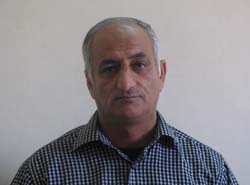
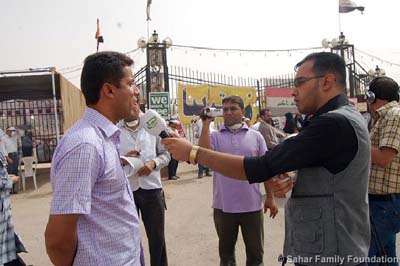
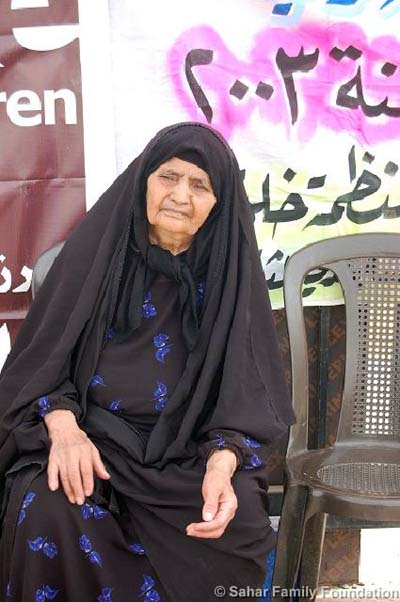
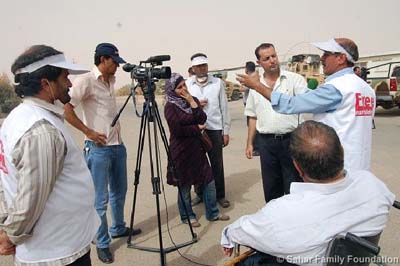
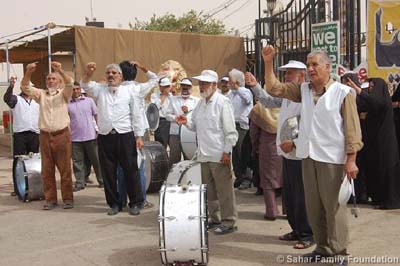
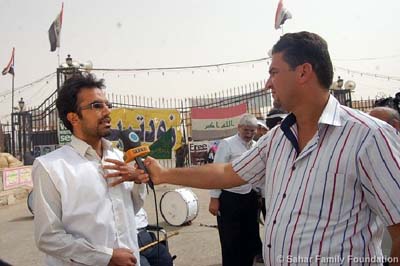
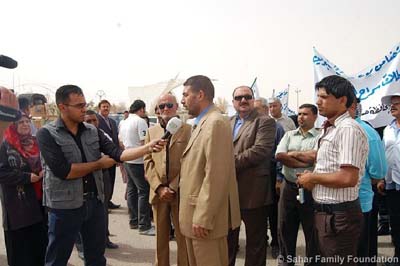
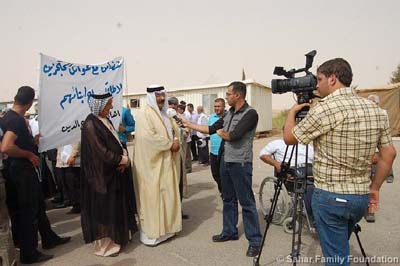
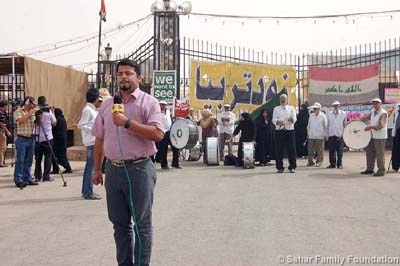
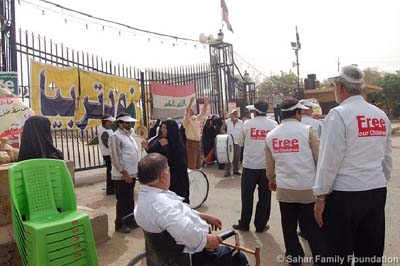
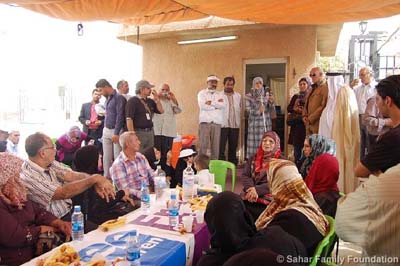
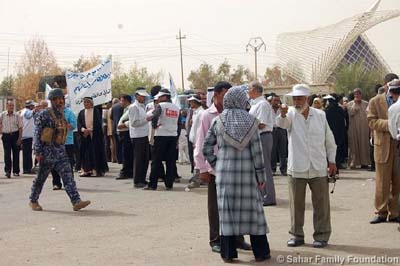
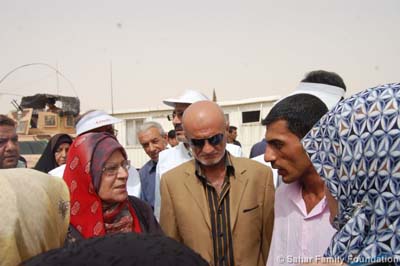
Mr. Alamdar Shaygan joined his family after 22 years

Mr. Shaygan, The most recent escapee from the notorious terrorist cult of MKO, returned home and joined his family on 4th July,2010 after twenty two years of membership in the organization, reported Nejat Society Fars Office.

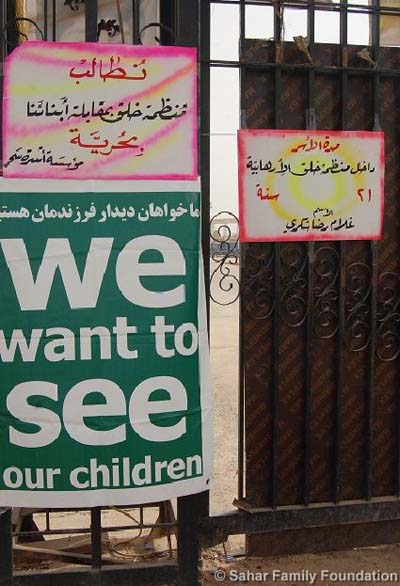
Mr. Alamdar Shaygan, escaped the MKO terror group on 24th April, 2010 after 22 years, and joined the families behind the Ashraf gates.

Mr. Shaygan was welcomed warmly by his family who had been awaiting his return for many years.

Mr. Alamdar Shygan joined his family after 22 years

July 20, 2010 0 comments
FacebookTwitterPinterestWhatsappTelegramSkypeEmail
Mujahedin Khalq; A proxy force

The US, MKO, and the Global War on Terrorism

In a research report by Margaret D. Stock published in Refugee Council USA (RCUSA) in 2006, she has explored one of the stranger and more embarrassing legal conundrums arising out of efforts by the US Congress to tighten the immigration and criminal laws relating to terrorism. The case she delved into is the terrorist organization (MKO, MEK, PMOI, NCR, NLA) that since 1997 the Secretary of State Madeleine Albright designated as a Foreign Terrorist Organization (FTO), a group that has since remained on the list.

As The Department of Justice has been prosecuting and deporting persons who provide material support to MKO, at the same time, the Department of Defense has designated Iraq-based members of the group as “protected persons” under the Fourth Geneva Convention, and is maintaining its members at Camp Ashraf in Iraq, where in full awareness of its designation as a FTO the U.S. military personnel provide “material support” to the group.

Although four years old, the research report gives especial attention to the existing internal conflict in the administration wherein some party equivocate about the nature and the status of the organization for certain political interests. And MKO has long survived in Washington policy crevices and has been rallying support from conflicting factions to challenge its designation on the list. Cunning seizers of opportunity as MKO is, it knows when to take advantage of a created political gap between the administration and the group’s adversary in the political arena. As Ervand Abrahamian, a history professor at Baruch College in New York asserts about MKO,”They have a lot of money. They have spokesmen who know how to deal with congressmen and the press. But people who sign their petitions don’t know anything about the mujahedeen. […] It’s hypocritical. If we are running a war against terrorism and one day we define a group as terrorists and the next day they cease to be terrorists, that undermines U.S. credibility.”

Link to the main text (pdf)

July 20, 2010 0 comments
FacebookTwitterPinterestWhatsappTelegramSkypeEmail
Mujahedin Khalq; A proxy force

MKO: Sophisticated Extremists who Lack Legitimacy

In order for any political group to be successful in achieving a political agenda, the group must have national, public support. And yet, in order to gain public support, the group must—in the The Mujahedin-e Khalq (MEK) aka MKO,PMOI is such a group that has little national, public support, and in turn lacks legitimacypublic’s view—be legitimate. The Mujahedin-e Khalq (MEK) aka MKO,PMOI is such a group that has little national, public support, and in turn lacks legitimacy. By and far, most Iranians will assert that the group is neither an authentic nor viable opposition group and it must be examined more closely by foreign nations, particularly Western foreign nations.

Political figures, particularly in the US and Europe, are largely uninformed of the MKO’s enduring and ugly strategy due to heavy and sneaky lobbying by MKO officials who have scarily managed to gain an ear among some politicians and neoconservative think-tank activists. Journalist, Abigail Hauslohner, who writes for Time asserts that, “despite its position on the U.S. terrorist list since 1997, and reports by former members of abusive and cult-like practices at Ashraf, the MEK has gathered support from some surprising places abroad — especially since the U.S. invasion — by pitching itself as a viable opposition to the mullahs in Tehran.” Hauslohner interviewed Gary Sick, a Persian Gulf expert at Columbia University’s Middle East Institute and the author of All Fall Down: America’s Tragic Encounter With Iran. Sick describes that “the MKO have been extremely clever and very, very effective in their propaganda and lobbying of members of Congress." Sick says, "They get all sorts of people to sign their petitions. Many times the Congressmen don’t know what they’re signing." [1]

Raymond Tanter, a professor at Georgetown University is among those who have “sided” with the MKO, but his pledge to them involves a lot more than just a careless signatures. The Georgetown Voice, Georgetown University’s weekly news magazine since 1969, published an article by Will Sommer, on Tanter’s ties to the MKO which among other findings, exposes Tanter’s influence among congress members in the U.S. and parliament members in Europe. Sommer points out that Tanter uses his own pro-MKO books in class, and many students wonder what makes him loyal to the MKO. One student he interviewed concluded that Tanter sounded like he was “a lobbyist for the MEK.” [2]

Sommer furthers that “as the president of the Iran Policy Committee, a non-profit organization that promotes using Iranian oppositionists against Iran, Tanter is a tireless booster for the Mujahedin-e-Khalq (MEK/[MKO]), an armed group of Iranian exiles that seeks to overthrow the Iranian government. Its efforts are hampered by its placement on the State Department’s list of foreign terrorist organizations, a classification Tanter says should be reversed so the MEK can counter Iran […] Tanter does not consider himself a lobbyist—because the MEK is considered a terrorist group, advocacy on their behalf is illegal.” [3] And yet, as of 7/12/2010, the MKO shows a photograph of Raymond Tanter at its “Grand Gathering” in Paris.

Since 1979, the Iranian government has had little or limited and fragile support from Western nations; it struggles diplomatically as it tries to establish respect among its own population. Meanwhile, the leaders of the MKO have a lofty plan to save Iran, while peddling the idea that the situation Iran will improve if they themselves replace the Iranian government. While this is a noble and exciting cause, and may appear to naive Westerners to be the solution to the “Iran problem”, in fact it is not. The reason why is because, even in the name of peace and democracy, they lack legitimacy and support both abroad and at home—from which they have been exiled.

The MKO evolved from radical beginnings in 1963 to a full blown cult by 1987. By 2006 in order to boost its image and divert the public from its affinity as a cult, (on behalf of the Israeli government) provided dubious information to U.S. officials regarding Iran’s nuclear program. [4] Currently they are focusing on hard lobbying and a massive propaganda campaign which aims to wipe out its cult-image and ugly terrorist activities, with their main goal of being removed from the U.S. State Department’s terrorist list. In order to do this they broadcast their own cable TV program. They publish their own news magazines. Their website epitomizes their effort to glorify themselves while selling the idea that they are the only option for a “free” Iran despite their brutal and dubious past—a past which includes numerous bloody incidents. The Council on Foreign Relations, a think tank which publishes Foreign Affairs, defines the MEK/MKO as having “targeted Iranian government officials and government facilities in Iran and abroad, and during the 1970s, it attacked Americans in Iran. While the group says it does not intentionally target civilians, it has often risked civilian casualties. It routinely aims its attacks at government buildings in crowded cities. MEK terrorism has declined since late 2001. [Some specific] incidents linked to the group include:

– The series of mortar attacks and hit-and-run raids during 2000 and 2001 against Iranian government buildings; one of these killed Iran’s chief of staff;
– The 2000 mortar attack on President Mohammed Khatami’s palace in Tehran;
– The February 2000 “Operation Great Bahman,” during which MEK launched twelve attacks against Iran;
– The 1999 assassination of the deputy chief of Iran’s armed forces general staff, Ali Sayyad Shirazi;
– The 1998 assassination of the director of Iran’s prison system, Asadollah Lajevardi;
– The 1992 near-simultaneous attacks on Iranian embassies and institutions in thirteen countries;
– Saddam Hussein’s suppression of the 1991 Iraqi Shiite and Kurdish uprisings;
– The 1981 bombing of the offices of the Islamic Republic Party and of Premier Mohammad-Javad Bahonar, which killed some seventy high-ranking Iranian officials, including
President Mohammad-Ali Rajaei and Bahonar;
– The 1979 takeover of the U.S. embassy in Tehran by Iranian revolutionaries;
– The killings of U.S. military personnel and civilians working on defense projects in Tehran in the 1970’s. "[5]

For years MKO operatives inside and outside Iran have committed premeditated murder against civilians and government officials, and the murders stem from a terrorist substance, taking place boldly and randomly. The MKO and its supporters call these attacks acts "resistance against the regime," writes Washington Times journalist Kenneth Timmerman. [6]
After the Rajavis’ fled from Iran to France in 1985, France became their sponsor. And then following the rapprochement between France and Iran, the leaders were expelled to Iraq where they became Saddam Hussein’s proxy force against Iranians, Iraqi Kurds and Iraqi Shiites. Following the collapse of Saddam Hussein, Iraqi Prime Minister Nouri al-Maliki wanted them to be expelled from Iraq. In 2009, Abigail Hauslohner documented for Time that, al-Maliki “warned that an Iranian resistance group, the Mujahedin-e Khalq (MEK), would no longer be able to have a base on Iraqi territory.” [7]

Recently, as the MKO focuses on cleaning up their image, their violence against civilians has dwindled—and so has their ability to influence Western politicians and intellectuals, especially the U.S. figures who view MKO’s terrorist acts against their fellowmen unpardonable. In his June article, Timmerman, with a sense of urgency, addresses American readers, that “the MEK has a long record of carrying out violent attacks inside Iran. During the period leading up to the 1979 revolution, the group proudly murdered U.S. military officers and civilians working in Iran. And while the group’s current leadership and its apologists claim that those attacks were carried out by a splinter group no longer associated with the MEK, eyewitnesses tell me that the MEK continued to celebrate the anniversary of those murders in ceremonies and song in their training camps inside Iraq all through the 1980s.” [8]

As Timmerman and other journalists continue to outline the MKO’s history of aggression and eccentricity, perhaps Westerners will become aware that the MKO is counting on the West’s gullibility. In their homeland however, support from foreign aggressors—particularly Iraq and the United States—works against them. Daniel Byman, the author of Deadly Connections: States That Sponsor Terrorism theorizes that “many terrorist groups fight in the name of liberation, whether national or religious. If a group is perceived as being controlled by a foreign power, however its credibility as a liberation force diminishes […] The Mujahedin-e-Kalq (MEK), a terrorist group that opposes the clerical regime in Tehran, lost any legitimacy it had when it began to conduct operations out of Iraq during the Iran-Iraq war.” [9]

The MKO should never replace any form of government in Iran simply because they are not a legitimate group. They are terrorists.

Sources:
[1] Hauslohner, Abigail. "Iranian Group a Source of Contention in Iraq." Time 5 January 2009: Web. 13 Jul 2010.
[2] Sommer, Will. "Foreign Policy Maverick." Georgetown Voice 28 February 2008: Web. 13 Jul 2010.
[3] Ibid
[4] Porter, Gareth. "Iran Nuke Laptop Data Came from Terror Group." Anitwar.com 1 March 2008: Web. 14 Jul 2010.
[5] Fletcher, Holly. "Mujahadeen-e-Khalq (MEK) (aka People’s Mujahedin of Iran or PMOI)." Council on Foreign Relations. Council on Foreign Relations, 18 April 2008. Web. 14 Jul 2010.
[6] Timmerman, Kenneth R. "IRANIAN OPPOSITION: Who are the terrorists? PJAK is a danger only to the Islamic regime.”Washington Times 22 June 2010. Web. 14 Jul 2010.
[7] Hauslohner, Abigail. "Iranian Group a Source of Contention in Iraq." Time 5 January 2009: Web. 13 Jul 2010.
[8] Timmerman, Kenneth R. "IRANIAN OPPOSITION: Who are the terrorists? PJAK is a danger only to the Islamic regime.”Washington Times 22 June 2010. Web. 14 Jul 2010.
[9] Byman, Daniel. Deadly Connections: States That Sponsor Terrorism. Cambridge: Cambridge University Press, 2005. 76. Print.

By Mazda Parsi

July 19, 2010 0 comments
FacebookTwitterPinterestWhatsappTelegramSkypeEmail
Mujahedin Khalq; A proxy force

Is the MEK a Terrorist Outfit?

Bomb Blasts in Iran and The Raymond/Constance Tanter DC Divorce Case: Is the MEK/MKO/PMOI/NCRI a Terrorist Outfit?

 Mark Dankof: The MEK/MKO/PMOI terror organization. Does it have the fingerprints of the CIA, Mossad, and MI6?

Mark DankofMy radio partner, Mark Glenn, sent me the Agency France Presse (AFP) release today containing the tragic-comedic news that a Washington, D. C.-based 3 judge panel on the U. S. Appeals Court has declared that the U. S. State Department “failed to accord the People’s Mujahideen Organization of Iran [PMOI]/Mujahideen-e-Khalq [MEK/MKO] the due process protections” necessary for the latter to appeal its classification as a terrorist organization.

The 3 judge panel has apparently not been let in on the history of the MEK/MKO/PMOI in killing Americans working in Pahlavi Iran a generation ago.  The preferred method of assassination was to block off an unsuspecting American defense contractor or Embassy official in Tehran vehicular traffic, and then to spray the car with automatic weapons fire.  What were the “due process protections” accorded people like American Air Force Colonel Jack Turner of Dayton, Ohio, just one of the victims of the MEK/MKO/PMOI?

My past article on the MEK/MKO/PMOI will serve as an initiation for the uninitiated.  So will Ed Blanche’s research on this organization for The Middle East magazine, in June of 2009.

In my past op-ed on the MEK/MKO/PMOI, I noted the following:

And the ultimate paradoxes are these: First, Mr. Bush’s Operation Iraqi Freedom has resulted in the installation of a central government in Baghdad largely sympathetic to the IRI regime in Tehran, and with identical animosity to the MEK’s presence within its borders. Second, while Ed Blanche notes that it “was the MEK that disclosed the existence of Iran’s nuclear program in August 2002, stunning the U. S. intelligence and military establishments,” he fails to note credible information provided by Barry O’Connell and IPS’s Gareth Porter that the MEK’s role in “disclosing the existence of Iran’s nuclear program,” has been to serve as a clandestine conduit of information on the subject supplied by the Israeli intelligence community. Hello, Mossad, meet your new allies in the ‘Islamic-Marxist’ network worldwide.

There you have it. The Mujahedin-e-Khalq (MEK), or People’s Holy Warriors, is an “Islamic-Marxist” terror organization, which assisted in implementing the Islamic Revolution in Iran in 1979; was subsequently involved in guerrilla warfare operations against the very Iranian Mullahs they helped to bring to power; fought on the side of Saddam Hussein for 8 years in the Iran-Iraq war between 1980-1988; and now, according to Barry O’Connell and Gareth Porter, is working with Jewish neo-conservatives and Israeli intelligence in planting false “intelligence” on Iran’s nuclear program with the American National Security State and Western news media, itching for a confrontation between Tehran and Tel Aviv—even as it now possesses an adversarial role with the very regime in Baghdad installed by Mr. Bush’s War. Confused?  . . .

Apparently, the 3 judge panel on the U. S. Court of Appeals in Washington also failed to consult the web sites of the Habilian Association , the Nejat Society , and Survivors’ Report.org.  Turn off the Israeli propaganda beamed on Rupert Murdoch’s Fox News, and see the reports on these web sites.  One will learn that the MEK/MKO/PMOI has killed approximately 16,000 in Iran after the Islamic Revolution of 1979, along with many other things concealed from the American public by a Zionist-controlled media and national security establishment.

For this trio of black-robed boobs on the U.S. Court of Appeals in the Nation’s Capital (along with the rest of us), two recent developments bear closer watching in the days ahead.  The first is Chris Floyd’s post on the Jundallah-sponsored suicide bombing in Zahedan, Iran this past week, which is especially suggestive.  Not one American in 100 could tell you that Jundallah has a reported working relationship with both United States and Israeli intelligence.  What are the implications of this link, and Jundallah’s criminal activities in Iran?  Are the CIA and Mossad brokering murder and terror in that country?

Floyd, excellent as his writing and research are, missed one essential fact in this week’s analysis, a fact brought to international attention by Dr. Paul Sheldon Foote of Cal State Fullerton in a radio conversation with yours truly.

Foote, a Ron Paul Republican, American Army veteran in Vietnam, and past denizen of the American Embassy in Tehran in olden days, tells us in that conversation that Jundallah has a working relationship with the MEK/MKO/PMOI in criminal acts of terror taking place in Iran with the full connivance of the United States government and Israel.

What in the world is going on here?  Are we forced to conclude that terror and murder are only defined as such when perpetrated by adversaries of the American and Israeli governments, but rationalized as “freedom fighting” when accomplished by our “allies?”  Do once-governing concepts of international law and civilized conduct not apply to the Central Intelligence Agency and Mossad?  And is there a relationship between the American government’s ongoing support for Israel’s lawless, immoral conduct in Iran, Gaza, and Palestine, and the disappearance of a Executive, Legislative, and Judicial Branch committed to the Bill of Rights and the Constitution at home?

Thomas Jefferson and James Madison understood that an American government mired in constant foreign interventionism and militarism abroad, was a threat to the liberties and happiness of its own citizens. What would they have said about the United States government’s service to the Israeli Lobby, and the linkage to the criminals in organizations like the MEK/MKO/PMOI/NCRI?

Development number two involves a divorce case currently being litigated in Washington, D. C., involving Georgetown University professor Raymond Tanter and his estranged wife, Constance.

Dr. Raymond Tanter: The Intersection of Georgetown University, the MEK/MKO/PMOI/NCRI, and the Israeli-influenced WINEP

Tanter’s profile at Right Web makes for interesting reading.  The biography of the professor states that:

Raymond Tanter is an adjunct scholar at the “pro-Israel” Washington Institute for Near East Policy (WINEP), a visiting professor at Georgetown University, and founder of the Iran Policy Committee (IPC), which was established in January 2005 to promote regime-change strategies in Iran. Tanter’s experience also includes serving on the National Security Council during the first Ronald Reagan administration and as a Pentagon arms control advisor.

Tanter has been a key advocate for U.S. support of the People’s Mujahedin Organization (MEK), which has been on the State Department’s list of international terrorist organizations since 1997, after it assassinated six U.S. citizens involved in selling weapons to the Shah. Shortly after the U.S. invasion of Iraq, Tanter vociferously pushed this argument, claiming that supporting the MEK could replace a U.S. invasion of Iran. He said, “I think that regime change ought to be the policy of the Bush administration. But regime change doesn’t mean that you need the 4th Infantry Division to come in from the north and meet up in the south with the 3rd Infantry Division coming in from the south and the Marines coming in from the West. That is, Iran is not Iraq.” Instead, said Tanter, the United States could support the Iraq-based MEK so that it could launch a cross-border insurgency against Iranian targets. Tanter revived these arguments in a February 2010 IPC press release…."

Both NCRI and the MEK also figured prominently during a 2005 IPC National Press Club briefing. Tanter said: “One military option is the Robust Nuclear Earth Penetrator, which may have the capability to destroy hardened deeply-buried targets. That is, bunker-busting bombs could destroy tunnels and other underground facilities. But the Pentagon’s 2001 Nuclear Posture Review states that over 70 countries employ underground facilities for military purposes, while the United States lacks sufficient means to destroy these facilities. In addition, the Non-Proliferation Treaty bans use of nuclear weapons against non-nuclear states, such as Iran. Such a prohibition might not apply as much to Israel. In this respect, the United States has sold Israel bunker-busting bombs, which keeps the military option on the table. . . .

 “Empowerment requires working with Iranian opposition groups in general and with the main opposition in particular. The National Council of Resistance of Iran (NCRI) and the Mujahedeen-e Khalq (MEK) are not only the best source for intelligence on Iran’s potential violations of the nonproliferation regime. The NCRI and MEK are also a possible ally of the West in bringing about regime change in Tehran. . . .

Into this labyrinth maze of American think-tanks, neo-conservatives, the Israeli lobby, an impending Third World War, and the MEK/MKO/PMOI/NCRI, steps one Mrs. Constance Tanter.

Constance Tanter: Targeted by Raymond Tanter and the MEK/MKO/PMOI in divorce settlement proceedings?

Mrs. Tanter publicly alleges in Washington, D. C.-based Divorce Court proceedings, and to many journalistic contacts, that Raymond Tanter utilized agents of the MEK/MKO/PMOI to terrorize her into signing a capitulationist divorce settlement in Paris, France, home to MEK/MKO/PMOI leaders-in-exile Masoud and Miryam Rajavi. She also alleges that Tanter directly, or indirectly, threatened her with “elimination.”

These allegations will presumably be examined by the Court.  While ushering at Washington’s National Cathedral recently,  Mrs. Tanner claims that amidst the throngs of hundreds there, she was approached by a Middle Eastern man, who handed her a napkin.  Her story to Paul Sheldon Foote, a bishop at the Cathedral, and yours truly, is that the napkin contained a simple message:  Drop it, or die.

Alleged Napkin of Greeting for Constance Tanter at Washington Cathedral: Drop It or Die

Are the allegations in this divorce case anger-driven fiction straight out of a Hollywood script for an Edward Woodward episode of The Equalizer?  Or are they a terrifying microcosm of a cosmic tragedy playing itself out in a clandestine battle of governments, intelligence agencies, hoodlums, and terrorists?

One thing is not in doubt.  Netanyahu’s globally public utterances, along with those of the Israeli lobby and American neo-conservative stooges like John McCain and Joseph Lieberman, underscore that war with Iran and the mass murder of Iranians, is the desired outcome for these constituencies, no matter how many thousands of innocents are killed or how far afield of true American national security interests this Zionist-driven madness really is.

You heard it all first from Thomas Jefferson and James Madison.

And as for Constance Tanter, she plans on telling her story to Mark Glenn and Mark Dankof in a future broadcast of The Ugly Truth.  Stay tuned.

July 18, 2010 0 comments
FacebookTwitterPinterestWhatsappTelegramSkypeEmail
Mujahedin Khalq Organization as a terrorist group

US court urges MKO blacklisting review

The MKO insists that the US should delist it as a terrorist organization, a demand which has been rejected so far by Washington.

An appeals court in the US has ruled that the State Department should review the terror status of the Mujahedin Khalq Organization (MKO).

The MKO had filed a petition against the US blacklisting in 2008.

The Bush administration, however, rejected the request in its final days in 2009, after examining material submitted by the group and US intelligence community, including classified information.
Reuters reported on Friday that a three-judge panel of the US Court of Appeals in Washington said in a 22-page decision on Friday that the US government failed to give the group a fair chance to rebut unclassified information that claimed the group supported terrorist activities.

The government was obligated under a 1996 antiterrorism law and 2004 revisions to give the group the chance to rebut unclassified information, the appeals court said, adding that the group was "permitted access to the unclassified portion of the record only after the decision was final."
In a statement, the State Department said it would study the decision, but added that the US government continues to view the group as a terrorist organization.

The European Union (EU) took MKO off its blacklist in January, 2009.

Following EU’s move to delist the MKO, Washington announced that labeling the outlawed group as a terrorist group was an appropriate act and that the MKO had to remain on the US blacklist.
The Iraq-based group is listed as a terrorist organization by much of the international community and is responsible for numerous acts of terror and violence against Iranian civilians and government officials.

The MKO is also known to have cooperated with Iraq’s notorious dictator Saddam Hussein in suppressing the 1991 uprisings in southern Iraq and the massacre of Iraqi Kurds.

July 18, 2010 0 comments
FacebookTwitterPinterestWhatsappTelegramSkypeEmail
Newer Posts
Older Posts

Recent Posts

  • A Criterion for Proving the Violent Nature of the MEK

    December 31, 2025
  • Rebranding, too Difficult for the MEK

    December 27, 2025
  • The black box of the torture camps of the MEK

    December 24, 2025
  • Pregnancy was taboo in the MEK

    December 22, 2025
  • MEPs who lack awareness about the MEK’s nature

    December 20, 2025
  • Facebook
  • Twitter
  • Instagram
  • Youtube

© 2003 - 2025 NEJAT Society . All Rights Reserved. NejatNGO.org


Back To Top
Nejat Society
  • Home
  • Articles
  • Media
    • Cartoons
    • NewsPics
    • Photo Gallery
    • Videos
  • Publications
    • Books
    • Nejat NewsLetter
    • Pars Brief
  • About Us
  • Contact us
  • Editions
    • عربي
    • فارسی
    • Shqip