Nejat Society
  • Home
  • Articles
  • Media
    • Cartoons
    • NewsPics
    • Photo Gallery
    • Videos
  • Publications
    • Books
    • Nejat NewsLetter
    • Pars Brief
  • About Us
  • Contact us
  • Editions
    • عربي
    • فارسی
    • Shqip
Nejat Society
Nejat Society
  • Home
  • Articles
  • Media
    • Cartoons
    • NewsPics
    • Photo Gallery
    • Videos
  • Publications
    • Books
    • Nejat NewsLetter
    • Pars Brief
  • About Us
  • Contact us
  • Editions
    • عربي
    • فارسی
    • Shqip
© 2003 - 2024 NEJAT Society. nejatngo.org
Mujahedin Khalq Organization members' families

Statement of the gathering in Paris

Statement of the gathering in Paris in support of the families of the victims of Rajavi cult in Camp Ashraf Iraq

 With faith in the generosity of people, with the aim of rejecting all kinds of violence, terrorism andStatement of the gathering in Paris in support of the families of the victims of Rajavi cult in Camp Ashraf Iraq cultish behaviours and with the aim of helping the families of the victims of Rajavi cult in Camp Ashraf – Iraq, more than 200 human rights activities are participating in this gathering on the 19th of June 2010 in Paris.

No doubt, in the present circumstances, Iranian society inside and outside the country is in need of peace and awareness more than ever. We see it as our duty to create an atmosphere in which these could be achieved and therefore we reject all kinds of violent ideologies as well as all kinds of cultish beliefs. We believe that dialogue and interaction between different ideas could and should be the way forward. The people gathered here include human rights groups and activists, experts in cults and anti terrorism, as well as families of the victims who have joined us in this gathering.

As the majority of the participants in this gathering are ex members of Mojahedin Khalq Organisation, the following statement is designed to be the focal point for the future co-operation between the signatories as well.

1- We believe that the Mojahedin Khalq Organisation led by Mr. Massoud Rajavi and Mrs. Maryam Rajavi during the past three decades with their insistence on the two parameters of Ideology and Military, have changed the organisation in to a religious-terrorist cult. The brainwashing of the members is aimed at diminishing any resistance to the lifetime leadership of Rajavi and his wife Maryam. The leader of the cult was engaged in mercenary work for Saddam Hussein, the former dictator of Iraq, and in return Saddam allowed the leadership and members of Mojahedin Khalq to be transferred to Iraq where the leadership had all the tools needed to suppress the critics in the known atmosphere of Saddam’s era. Massoud Rajavi and Maryam Rajavi tortured their critics in solitary confinement and if this would not lead to the desired result and the resistance against them persisted, then in co-operation with the Secret Services of Saddam’s regime they would send their victims to the prisons of Iraq, one of which was the infamous Abu Ghraib prison, from where ten surviving inmates (ex MKO members) are available here to testify in any international court.

2- Massoud and Maryam Rajavi, in order to deceive and legitimise their activities and to garner support for the Mojahedin Khalq Organisation, portray themselves s the only democratic alternative to the Iranian regime. This is an organisation which, according to an overwhelming number of European diplomats working in Iran, enjoys no support among the people inside Iran. We ask all international policy makers and politicians and governments not to use such terrorists as Massoud and Maryam Rajavi as tools for short term benefits. This is no more than giving ransom to terrorists when practically all the people of Iran have complaints against them.

3- We the supporters and signatories to this statement warn that after the fall of Saddam Hussein, the leaders and high ranking members of the Mojahedin Khalq have escaped to European countries, taking with them whatever money and documents were given to them by the fallen regime before its collapse. They are using known faces in European parliaments as lobbyists to whitewash their history of terrorism and long-lasting cooperation with Saddam’s dictatorship, and either reject the abundant documents available or to try to legitimise them with excuses. The ideological, organisational, financial and military relation between the MEK and the Baath Party of Saddam is not a secret. Films and documents of the joint criminal activities of Rajavi and Saddam are available and presentable to any court.

4- We announce our support for the French government’s correct move on 17th June 2003 that resulted in the arrest of Maryam Rajavi and over 160 high ranking members of this terrorist cult. We also denounce and deplore the order by the leadership of the cult which ended in self-immolation of some cult members in the streets of Paris in June 2003. We thank the foreign minister of France Mr. Kouchner for his stance against terrorism and announcing this group to be a terrorist group. We ask the French Judiciary to expedite consideration of the complaint files filed by the victims of the Mojahedin Khalq against the leaders of the cult

5- We support the Iraqi government in its attempt to remove the Mojahedin Khalq forces from their country and deplore the various plots of the MEK leadership to prevent the Iraqi government from carrying out its responsibilities; plots which have already resulted in the death of some members. The responsibility for the outcome of such plots, which aim to prevent the transfer of members to wherever they want to go, is solely on the shoulders of the leaders of the cult.

6- Maryam Rajavi who resides in Auvers-sur-Oise in France is working on the concept of keeping the structure of the terrorist cult intact if and when the Iraqi government does remove the MEK forces from Iraq. She wants to have the whole organisation transferred intact to one of the European countries, most probably France or one of the Scandinavian countries. She is planning to re-start her terrorist activities from this new HQ in the heart of Europe. We, the participants of this seminar warn that the presence of the Mojahedin Khalq terrorist organisation is a serious threat to the safety of the people in European countries.

7- The participants in this seminar believe that many victims of Rajavi cult in Ashraf camp once they are freed will need psychological care and attention as they have been exposed to very long term psychological manipulation. For this reason we ask the ICRC, UNHCR, Médecins Sans Frontières, etc to visit and interview every one of the captives separately and evaluate their situation and needs.

8- We condemn the continuous harassment, character assassination and physical attacks carried out by the Mojahedin Khalq Organisation on the direct order of Massoud and Maryam Rajavi in Europe against ex members and critics of the cult as well as Iranians abroad who ask simple questions from the leadership of this organisation.

9- We believe that political and social struggle can not and should not undermine humanitarian feelings and family bonds. Therefore we ask the Mojahedin Khalq leaders to respect these feelings and let the families of those captive in Camp Ashraf visit their loved ones without the presence and harassment of cult leaders. We also call on these leaders to cancel the order of ‘no marriage’ inside the Mojahedin Khalq immediately.

10- Concerning the above paragraph, we ask the governments of Iraq, the US and European governments to become more active concerning the situation of the people trapped in Camp Ashraf by the Mojahedin Khalq leaders; to take more responsibility and act to secure the minimum of human rights, including the right of family visits, right to access to news and media and the right of choosing their future.

At the end we announce to the families of the victims picketing in front of camp Ashraf who have been trying to visit their loved ones for the last four months:

1- Your loved ones are our brothers and sisters. We have suffered alongside these people for years and surely we will stand with you until the day that they are released.

2- We assure you that all the interviews and whatever you hear from them on tapes are made under direct pressure of the organisation and we assure you that their hearts beat for you and that it is only your unconditional family love that can overcome the effects of these pressures.

3- We will do our best to bring your voice to the attention of international society and we adore your resilience and patience.

4- We are as aware as you are about the threats posed to the residents of camp Ashraf. We are afraid of what may possibly happen and will try our best to prevent it by bringing it to the attention of the outside world. We also ask you to neutralise these treats by your presence and vigilance.
On behalf of the Signatories

The conference committee
Paris, June 19, 2010

June 24, 2010 0 comments
FacebookTwitterPinterestWhatsappTelegramSkypeEmail
Mujahedin Khalq Organization members' families

Letter to the Director General of the ICRC (182 signatories)

Director General, Mr. Angelo Gnaedinger,

International Committee of the Red Cross
We are the signatories to the statement of the seminar in “support for the families of victims of the Rajavi cult in Camp Ashraf, Iraq” which took place on the 19th of June 2010 in Paris.
19 avenue de la Paix
CH 1202 Geneva

Dear Mr Gnaedinger,
We are the signatories to the statement of the seminar in “support for the families of victims of the Rajavi cult in Camp Ashraf, Iraq” which took place on the 19th of June 2010 in Paris.
Our aim is to put pressure on the leaders of the Rajavi cult (Mojahedin Khalq Organisation) to allow visits between the captives in camp Ashraf and their families, as one of the most basic human rights for any captive person.

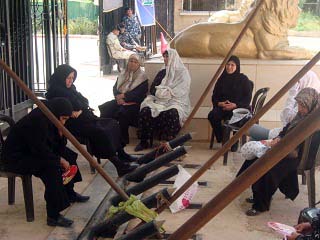
These families, after years not being able to travel to Iraq and years of uncertainty about the fate of their children, now have had the chance to travel to post-Saddam Iraq in order to discover the situation of their loved ones held captive in Ashraf garrison. It is now over 4 months that they have been picketing outside the gates of the camp in the harsh conditions of the desert, without much in the way of facilities, hoping to visit their loved ones.

Although the right to have visitors is one of the accepted rights for any prisoner, it is unfortunate that the leaders of the Rajavi cult block any attempt at reunion and meeting between these captives and their old and tired mothers and fathers. They have announced, in their own cult jargon language, that any contact with family members is considered as a sin.
It is with regret that we must announce that the situation is so bad that after four and a half months of picketing not only has the aim of meeting their loved ones not been achieved, but the leaders of the Mojahedin Khalq have constantly harassed these parents using abusive and threatening language against them. On some occasions, physical attacks on the families have also been reported.

Dear Sir,
Documents and evidence of the violent history of abuse of human rights by the cult of Rajavi (Mojahedin Khalq) clearly shows that during the past two decades, the leaders of the cult have forbidden any kind of affection or love between family members and have considered it as a sin and a punishable crime. The cult members are expected to only show affection and love to the leader solely.

Rajavi, using the opportunity provided by the fallen dictator of Iraq, Saddam Hussein, has used the past two decades to create an atmosphere inside camp New Iraq (formerly Ashraf) in which any marriage, friendship, writing letters, exchanging photos, using telephone, meeting and chatting or any relation between parents and children or between siblings or other relatives has been forbidden and even thinking about it would have resulted in severe, violent punishment and suppression.

We call on all international bodies as well as all relevant governments. We ask specifically from your good self to intervene in a purely humanitarian role and convince the leaders of Mojahedin Khalq to allow free visits between the families and their children outside the walls of camp Ashraf in the presence of representatives of the ICRC and put an end to this hardship and misery.

Signatories:
1.Abas Sadeghi/Germany

2.Rana Samadzadeh Aghdam/Sweden

3. Maryam Ahmadi/Sweden

4. Hossein Samadzadeh Aghdam/Sweden

5. Ariya Abdollahi/Norway

6. Javad Abolhosseini/Netherlands

7. Alireza Bashiri/Norway

8.Batool Maleki/Switzerland

9.Massoud Jabani/ Netherlands

10.Mohammad Hossein Sobhani/Germany

11. Hadi Shams Haeri/Netherlands

12. Noshin Bashiri/Norway

13. Tovartan Babakhani/Netherlands

14. Tamin Abdollahi/Norway

15. Rabeae Shahrokhi/Sweden

16. Hashem Payro/Norway

17.Hamid Yazdanfar/Norway

18Jafar Ahmadi/Norway

19.Maryam Taheriyan Pajoh/Sweden

20.Mehdi Ahmadi/Sweden

21.Omid Ahmadi/ Sweden

22.Massoud Khodabandeh/England

23. Ayob Kord Rostami/Canada

24.Farshid Ahmadi/Sweden

25. Farid Armideh ,The son of Aliakbar Armideh/Sweden

26. Saeed Armideh ,The son of Aliakbar Armideh/Sweden

27.Mitra Yosefi/Sweden

28. Naser Rezvani/Sweden

29. Farshid Nazari/Norway

30. Farzad Farzinfar/SWeden

31. Nima Parniya/Norway

32. Anne Singleton/England

33. Saeed Khodabakhsh/Canada

34. Parvin Haji/Canada

35. Fereshteh Hosseini/Denmark

36. Parya Dabiryan/Greece

37. Hassan Faraji/Sweden

38. Omid Ariyapoor/ Norway

39. Faramarz Afshari/Greece

40. Elham Norouzi/Canada

41. Soheyla Norouzi/Canada

42. Babak A/France

43. Alireza Nasrollahi/France

44. Mostafa Mohammadi/Canada

45. Shan Kord Rostami/Canada

46. Marlen Kord Rostami/Canada

47. Bahareh Nikbakht/France

48. Hassan Piransar / France

49. Hamed Sarrafpour/France

50.Alireza Nabavi/Sweden

51. Anika Nabavi/Sweden

52.Sara Nabavi/sweden

53.Rohi Aslani/Sweden

54.Zahra Makari/Sweden

55. Kenar Jasem Ali/Netherlands

56. Horiyeh Mohammadi/Canada

57.Shirin Aghvami/Sweden

58. Zari Aghvami/Sweden

59. Mehri Nasiri/Sweden

60. Gholam Shirali/Norway

61. Habib Khorami/Netherlands

62. Marziyeh Gonjeshki/ Netherlands

63. Mahbobeh. Hamzeh /Canada

64.Narmin Jasem Ali/Netherlands

65. Zahra MOhammadi/Netherlands

66. Mohammad mohammadi/Canada

67. Morteza Mohammadi/Canada

68.Hamid Tavana /Netherlands

69. Mohammad harati/Netherlands

70. Tol Malavi

71. krigoriyan

72. Mohammad ellami

73. Khalil Taghavi/Netherlands

74. Mina Taghavi/Netherlands

75. Karim Haghi / Netherlands)

76. Khaled Taghavi/Netherlands

77. Zaghik Babakhani/Netherlands

78. Hamid Balfan/Netherlands

79. Maryam Jahanfard/Netherlands

80. Mohammad Karami/France

81. Javad Firozmand/France

83.Mehdi Sojodi/Germany

83. Mehrdad Sagharchi/scandinavia

84. Ali Jahani/ Germany

85. Majid Rohi/Denmark

86. Parvin Jafari/Denmark

87.Roya Haratipour/Norway

88.Bashir Hamdardzadeh/Sweden

89. Javid Hosseini/Greece

90. Mohammad Satari/NOrway

91. Jalil Hasimi/DEnmark

92. zayd Rahmanpour/Norway

93. Ashraf mohammadi/Norway

94. Hamid Balfan/Netherlands

95. Noor Dara/Netherlands

96. Soheyla Behboodi/Germany

97. Nasrin Behboodi/Netherlands

98. Kazem Hosseini/Netherlands

99. Ali Ghashghavi/ Germany

100. Amir Movasaghi/Germany

101. Edvard Tormado/Germany

102. Armineh Tormado/Germany

103. Behzad Alishahi/Netherlands

104. Nahid Amiri/Netherlands

105. Alireza Mirasgari/Germany

106. Mohsen Abaslo/Austria

107. Alireza Naghashzadeh/Germany

108. Elham Kakavand/Netherlands

109. Ali Akbar Rastgo/Germany

110. Majed Dara/Netherlands

111. Noryeh Dara/Netherlands

112. Nona Abdollahi/Netherlands

113. Ali Taghavi /Netherlands

114. Mehdi Fadayee/Germany

115. Khaled Taghavi/Netherlands

116. Yorik Ebrahimiyan /Germany

117. Farideh Barati/Netherlands

118. Mahbobeh Barati/Netherlands

119. Arash Moghadam/Netherlands

120. Batool Soltani

121. Armin Seraj/Netherlands

122. Kardo Dara/Netherlands

123. A Abkhaziyan/Germany)

124. Narineh Artesh/Germany

125. Ali Zirak/Netherlands

126. Sara SAdeghi/Germany

127. Bahadoor Khorami/Netherlands

128. Jafar Gonjeshki/Denmark

129. Jamshid Charlang/Germany

130. Ali Sheykhi/Netherlands

131. Hesam Sheykhi/Netherlands

132. Reza Sadeghi/Belgium

133. Eman Vaseti/Netherlands

134. Khalil Vaseti/Netherlands

135. Faramarz Pashayee / Canada

136. Mohammad Nabi Soleyman Nejat/Canada

137. Khoshnam Hesami/Canada

138. Hassan Saberi/Canada

139. Mehrzad Zardoshtiyan /Netherlands

140. Ghodrat Hamidi/Canada

141. Hasheh Mirza/Netherlands

142. Ershak Naghdali/Netherlands

143. Ebrahim Manaf/Netherlands

144. Sava Manaf/Netherlands

145. Amir Atefeh/Netherlands

146. Sanaz Dara/Netherlands

147. Saeed Soltanpour/Canada

148. Mahnaz Alavi/Netherlands

149. Christin Karkhaziyan/Germany

150. Habib Asadollahi/Germany

151. Millad Ariyayee/Germany

152. Ali GHashghavi/Germany

153. Shadi Doosti/Netherlands

154. Hassan Haghi/Netherlands

155. Mostafa Rahmani/Germany

156. Amir Movasaghi/Germany

157. Saeedeh Jabani/Netherlands

158. Maryam Vaseti/Netherlands

159. Hossein Ghanbari/Finland

160. Mansour Nazari/France

161. Hossein Naghdi/Germany

162. Mohammad Razzaghi/France

163. Nader Naderi/France

164.Yahya Haghjo/Sweden

165. Faramarz Niksefat/Denmark

166. Sepideh Aref/France

167. Dr. Farzad Rahnama/Carolina, USA

168. Mohammad Allavi/France

169. Shiva Mostafavi/France

170. Mehran Taghiabadi/France

171. Jamshid Peyvasteh/Netherlands

172. Mehrdad seyyedian/ Norway

173. Eshrat Fallah / Norway

174. Amir Taherloo / Sweden

175 . Shiwa Mostafavi / France

176. shokoufe Bayat /Sweden

177. Fateme Soleymani / Norway

178. Ali Mirzayi / Norway

179. Ashraf Amrolahi / Sweden

180. Ahmad Nooraei / Germany

181. Zohre Shams / gemany

182. Heydar Ghadiri /

June 24, 2010 0 comments
FacebookTwitterPinterestWhatsappTelegramSkypeEmail
Mujahedin Khalq Organization as a terrorist group

Who are the terrorists?

As Mujahedin-e-Khalq’s propaganda campaigns and lobbies in the United States government make efforts to gain American politicmen’s support in order to remove the name of their notorious organization from the list of Foreign Terrorist Organizations (FTO) of Department of State, Keneth Timmerman ,a contributing editor for Newsmax Media wrote an article "Timmerman: who are the terrorists?" on The Washington Times enlightening his fellowmen on terrorist nature of Mujahedin Khalq, Timmerman suggests that MEK should never be removed from the FTO list ,accusing MEK of committing terrorist activities against American military personnel and Iranian civilians. While Timmerman presents evidences on MEK’s terrorist nature, he believes that MEK is a more dangerous group than PJAK, another terrorist designated Iranian opposition.
Here is an extract of Timmerman’s article:

TIMMERMAN: Who are the terrorists?

By Kenneth R. Timmerman – Washington Times – Tuesday, June 22, 2010

PJAK is a danger only to the Islamic regime
A bipartisan group of House members last week unveiled a resolution in support of the IranianTIMMERMAN: Who are the terrorists? "resistance," a code word for an opposition group known as the Mujahedin-e Khalq (MEK) that has been on the State Department’s list of international terrorist organizations since its inception in the late 1980s.

The MEK has a long record of carrying out violent attacks inside Iran. During the period leading up to the 1979 revolution, the group proudly murdered U.S. military officers and civilians working in Iran. And while the group’s current leadership and its apologists claim that those attacks were carried out by a splinter group no longer associated with the MEK, eyewitnesses tell me that the MEK continued to celebrate the anniversary of those murders in ceremonies and song in their training camps inside Iraq all through the 1980s.

In the power struggle that followed the 1979 revolution, the MEK actively promoted the seizure of the U.S. Embassy in Tehran and planted a bomb that wiped out the leadership of the Islamic Republican Party led by Ayatollah Mohammad Beheshti, arguably the last of the "moderate" leaders of the revolution.

More recently, MEK operatives inside Iran have carried out hit-and-run terrorist attacks on regime officials and have planted bombs in urban areas that have randomly killed civilians. The MEK and its supporters call these attacks acts of "resistance" against the regime.

Senior State Department officials have stated that their condemnation of the MEK’s use of random violence against civilians stems from a desire not to use a "double standard" when it comes to terrorism. The MEK and its supporters claim that keeping the MEK on the State Department’s list of international terrorist organizations benefits the Iranian regime. Some even argue, incorrectly, that the group was placed on the list in 1994 by the Clinton administration as a sop to the regime. (While the Clinton folks kept the MEK on the list in hopes it would encourage a rapprochement with Tehran, the MEK was placed on the list years earlier).

Contrast the MEK’s record of random violence against civilians with the use of violence by the Free Life Party of Iranian Kurdistan, PJAK, a group that was designated by the Treasury Department as a terrorist organization in February 2009.

PJAK guerrillas operate inside Iran in trained groups. Their primary mission is political: That is, they seek to spread a message that Iranian Kurds must abandon tribalism and traditional politics if they want to aspire to democratic self-governance.

Indeed, at PJAK camps I visited in northern Iraq in October 2007, the emphasis was on the political indoctrination of new members, not military training. PJAK prides itself on its inclusiveness: More than 30 percent of its guerrilla fighters and leadership are women.

PJAK makes no bones about its use of violence. Indeed, a Google search of the terms "PJAK attack" results in dozens of incidents in which PJAK guerrillas have attacked Iranian military targets and bases inside Iran. Almost all of these attacks have targeted the Revolutionary Guard Corps.

But PJAK uses violence in defense of the Kurdish population, not as an instrument of terror against civilians. In contrast to the MEK, PJAK has never planted bombs in public areas or targeted regime officials for assassination.

By Mazda Parsi

June 23, 2010 0 comments
FacebookTwitterPinterestWhatsappTelegramSkypeEmail
Mujahedin Khalq Organization members' families

Second report on 19th June families’ gathering

Second report on the 19th June 2010 gathering of the families outside Ashraf garrison

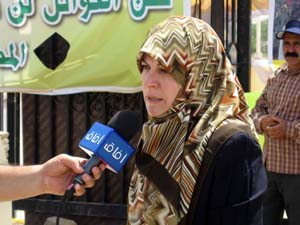
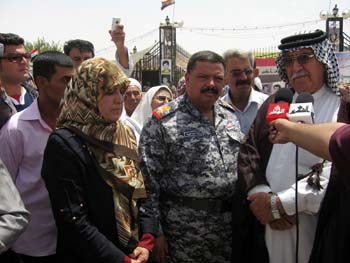
As you were informed previously, some chiefs of tribes as well as officials of Diyala province in Iraq participated in the gathering of the families outside Ashraf garrison and delivered speeches for them. These people went there with the intention of trying to pursue the leaders of Rajavi cult to let the families visit their loved ones, but their attempt failed like the earlier ones and they even faced insults and horrific behavior from the elements of the cult.

if even one person is forced to stay in this confinement garrison against his or her will, we would not leave this place

When the chiefs and officials directly learned about the rules and regulations inside Rajavi cult told by the freed members, they were astonished and described them totally in contradiction with Islamic codes and social norms. They admitted that they did know about the collapse of morals in that cult to this extent.

some chiefs of tribes as well as officials of Diyala province in Iraq participated in the gathering of the families outside Ashraf garrison and delivered speeches for them

They invited the families to travel to the centre of province (city of Baquba) and speak in the gathering of officials and chiefs of the province and also they announced that they are prepared to set an exhibition for the people of the province to let them know more about the nature of MKO.
Describing about topics such as compulsory divorces, weekly immoral sessions, the view of the cult about family, free thinking, friendship with other members and so on inside the cult amazed them and the reporters present in the gathering. Chiefs of tribes of the province of Diyala called such relationships inhuman and disgusting.

some chiefs of tribes as well as officials of Diyala province in Iraq participated in the gathering of the families outside Ashraf garrison and delivered speeches for them

In this regards the Iraqi paper Badr wrote on 20th June 2010 quoting the deputy governor of the city of Khalis (the city near to the Ashraf garrison): “a delegation from the local authorities and tribe personalities went to the Ahraf camp to persuade the leaders of MKO to let the families to visit their relatives on humanitarian grounds, but their attempt failed exactly like the previous ones”.

During this gathering formed outside Ashraf camp, the leaders of the cult brought a few mind manipulated elements to insult and threaten the families. This action well exposed the nature and the situation of Rajavi cult.

Also in a telephone contact between the gathered people and the conference in Paris, Ms Abdullahi and Mr. Akbarzadeh described the situation on behalf of the families. In this conversation which was simultaneously broadcasted for the Paris conference as well as the gathering outside Ashraf camp, Ms Batul Soltani, former member of the MKO leadership council, said in Paris: “your action made us to move more jointly and you all must be sure that we would not rest a moment until we fulfill your demands”.

Ms Abdullahi said: “if even one person is forced to stay in this confinement garrison against his or her will, we would not leave this place. It is nearly 5 months that we are sitting in this place and everyday we learn more about the wicked character of Rajavi cult. We are not afraid of the threats made by the leaders of the cult. Today many reporters and a number of local chiefs and officials are our guests (at this moment the participants in Paris conference applaud)”.

Mr. Iman Yeganeh who has recently been freed from the captivity of the cult talked to the reporters gathered around him and explained about the internal relationship and physical and psychological situation of the members and revealed many facts for them.

The news of the mentioned gathering was covered by many Iraqi and international news agencies, radios, televisions, and newspapers.

June 23, 2010 0 comments
FacebookTwitterPinterestWhatsappTelegramSkypeEmail
The MEK and Jundullah

MKO and the execution of a terrorist ringleader

When Abdolhamid Rigi, the brother of Abdolmalek Rigi the leader of Jundallah terrorist group, was executed MKO media covered the news of his execution with details and analyses, and criticism. However, since Iran announced on Sunday that it had executed the ringleader of the Pakistan-based Jundallah terrorist group, Abdolmalek Rigi, MKO has taken no clear position and only in a brief one-line news announced his execution.
The MKO as well as its official sites and media would support Rigi openly and called him the leader of a democratic movement, while he US and England from the very first day of his arrest denied any cooperation with Rigi despite his confessions of receiving their support. Even before Rigi’s arrest, the heads of his group were reported to have met some heads and commanders of MKO in an area in Pakistan to talk about the details of their mutual cooperation under the title of ‘the Armed Forces Organization of Mojahedin’.
MKO is well aware of the costs it has to pay for its relation with an indisputable terrorist group whose ringleader has already confessed having ties with. However, keeping silent over the execution of Rigi is the best approach taken by the organization to escape charges of glorifying terrorism.
Mojahedi.ws
June 22, 2010

June 23, 2010 0 comments
FacebookTwitterPinterestWhatsappTelegramSkypeEmail
Mujahedin Khalq Organization members' families

Families’ picket in front of Camp Ashraf continues

Today’s Coverage from Iraqi media

A group of Iranian families have been picketing in front of Camp New Iraq (formerly Ashraf) demanding access to their children who have been kept inside. Families’ picket in front of Camp Ashraf continues
The organisers of this picket say that there are a large number of their children inside the camp but the leaders of the Mojahedin Khalq Organisation do not let them meet their families. The families emphasised that they have no choice except to sit in front of the gates of the camp until they are given access to their loved ones.
They are also asking all international humanitarian organisations as well as the United Nations office to engage [with the problem] and provide them with access to their children.

Al Mashregh, June 21, 2010
The Iraqi Ambassador in Tehran announced that Iraq will not let anyone use its soil to attack neighbouring countries. Press TV reported Mohammad Majid Al Sheikh as saying: “Iraq will not allow the Mojahedin Khalq Organisation, or any other armed group, use its soil to carry out attacks against Iran”. Iraqi authorities have repeatedly demanded that the members of this organisation leave Camp Ashraf and Iraqi territory. The problem is, no other country in the world is willing to accept them”.

Addustour, June 21, 2010
The Iraqi government rejected allegations that it has decided to attack Camp Ashraf. An official said that: “The Government of Iraq is serious and working towards expelling the Mojahedin Khalq from the country, but fighting in not a solution. We will resolve this problem through peaceful means. The future Government of Iraq has the responsibility of ending the presence of this group in Iraq. During its presence [in Iraq] this organisation has been deeply involved in security issues and has been a helping hand to the late regime in suppressing the people of Iraq.

Bader, June 21, 2010
Political and social personalities and heads of Iraqi tribes condemned the Mojahedin Khalq Terrorist group’s blockage of meetings between the members and their families. The head of Khalis province said: “A delegation of local officials and tribal personalities have travelled to the camp in order to put pressure on the leaders of the Mojahedin Khalq Organisation to let families reunite with their children on companionate and humanitarian grounds but it is unfortunate that this initiative as many previous ones failed”.

Daraddustour, June 21, 2010
Link to the original news (Arabic)
http://www.daraddustour.com/التفاصيل/tabid/94/smid/427/ArticleID/21804/reftab/58/Default.aspx

June 23, 2010 0 comments
FacebookTwitterPinterestWhatsappTelegramSkypeEmail
The Ideology of the MEK

MKO Armed Warfare, an Ideological Necessity

Mojahedin-e Khalq strategy of armed struggle that constitutes its organizational infrastructure from its very formation has now confronted the organization with a new challenge in spite of its widespread propaganda to convince the West it has made revisions. Although the challenge has failed to break the deadlock over Mojahedin’s proceeding with its revolutionary diplomacy in the outside world, the strategy is the main factor that stabilizes the group’s internal relations especially within Camp Ashraf. That is to say, for the outsiders the organization displays the dual policy of abandoning militarism and armed activities; for the insiders it is a strategically unquestionable principle.

That is a contradiction pervading MKO and, of course, the group has not resolved to convince the Westerners to have adopted a different attitude. It seems that MKO gets much advantage out of an equivocal attitude. In many occasions, MKO has admitted the necessity of armed struggle as an ideological necessity that constitutes the violent ontology of MKO. Definitely stated in the State Department’s report presented to Congress on the People’s Mojahedin of Iran in 1994, MKO developed an eclectic ideological blend of Islam and Marxism that dictated both a war of armed struggle and a war of propaganda to achieve political power.

They [Mojahedin] established an organization dedicated to armed struggle. As they explained in a 1974 newspaper article, "We had to ask ourselves the question, "What is to be done?" Our answer was straightforward: ‘Armed Struggle.,"(1) Commitment to this strategic principle has defined the history of the Mojahedin, from the group’s formal establishment in 1965 until today…. The MKO’s embrace of armed struggle flows from the group’s ideology. Its conceptual framework was painstakingly developed through years of study and discourse and aggressively disseminated throughout Tehran.
 

Being so fervently devoted to a violent strategy, MKO should undergo a complete ideological cleansing before renunciation of terrorism and militarism. But first it has to be investigated that is it possible by any means to change an ideology that institutes infrastructure of an organization?

During the past two decades, majority of MKO’s propaganda and published documents strongly advocate the strategic importance of the adopted tactic of armed warfare following the organization’s first mass movement on 20 June in 1981; the turning point that was broadly being propagated at the time and which was supposed to speed up the inevitable collapse of the regime. In his first series of speeches delivered on the first anniversary of the phase Khordad 30th (20 June 1981), Massoud Rajavi talked about the influential role of MKO’s ideology on the event:

A one-year review of implacable struggle indicates that it is a widespread, organized struggle and resistance matchless in Iranian history. It is not a merely review of political, military, strategic and tactical issues. All of them together, as different organs of body, constitute a cohesive essence that is Mojahedin’s ideology; they all remarkably signify this truth.*

In Rajavi’s analysis of the year-long armed struggle, you come across issues focusing on the inevitability and necessity of armed struggle and violent acts. Rajavi is in no way sceptical about the adopted strategy of armed struggle and is critical of anybody who may oppose the strategy:
All the nonsense woven against the armed struggle during this one year is loathsome and even ludicrous to listen to for those who are in close contact with reality.

In fact, the telling reality Rajavi points out is that armed struggle is the spirit of the organization without which it cannot survive:

In essence, we owe our existence and survival before anything to the widespread armed combat of the Iranian Mojahedin-e Khalq Organization.
 

There are much more evidences found in MKO’s ideological sources that implicitly and explicitly denounce abandoning the strategy of armed warfare adopted by Mojahedin and consider any made criticism and disapproval as definitely illegitimate. Those who are familiar with the group’s dual nature consider MKO’s claimed renunciation of militarism nothing beyond a tactic of duplicity.

Since MKO’s resort to armed combat and militarism is an internalized ideological principle, its renunciation also needs a similar process of ideological revision. If MKO is standing resolute to abandon terrorism as it claims, at least a review of its previously adopted resolutions will imply the earnestness of its decision. Renunciation of terrorism and militarism, although MKO has refrained to denounce publicly, first needs a through ideological polish, something MKO has dodged to go through at least up to now. MKO should explain how commitment to an ideological necessity can possibly be deserted while the ideology itself remains intact.

*All Rajavi’s quotes are from Mojahedin’s published
A one-year review of the armed struggle

June 22, 2010 0 comments
FacebookTwitterPinterestWhatsappTelegramSkypeEmail
Mujahedin Khalq Organization members' families

Camp Ashraf Families of Mojahedin Cult Offered Solidarity by Paris Conference

A conference in Paris on Saturday asked international human rights organisations to be more involved in rescuing victims trapped in a violent cult in Iraq. Families and ex-members of the Iranian Mojahedin-e Khalq (MKO, MEK, Rajavi cult) linked up from Paris with the families who have camped outside Camp Ashraf in the Diyala province of Iraq for over four months. In Iraq, tens of journalists and local tribe leaders joined the families, while in Paris, Swiss author Anton Gessler, Dutch journalist Nelly Tomasini and MKO expert Massoud Khodabandeh analysed the group.

The families’ only demand is unrestricted visits with relatives outside the camp. In a telephone link up with Iraq, Soraya Abdollahi, speaking for the families, thanked supporters, saying, "We have no choice but to stay and insist on our and our children’s’ minimum rights." Camp Ashraf (now Camp New Iraq) has housed Mojahedin-e Khalq members for thirty four years. Once allies of Saddam Hussein, the leaders disarmed in 2003 when American forces attacked their bases. But Mojahedin leaders, Massoud and Maryam Rajavi refused to surrender to the allied forces or Iraqi authorities and for seven years have held their followers hostage inside the camp. Members have no access to outside information and are subjected to a daily regime of indoctrination and hard labour.

Iman Yeganeh, who escaped the camp in April 2010 after 22 years of captivity, described the situation for people inside the MKO as despairing. He said, "People are being told the Iraqis will kill them if they leave. Knowing about Saddam’s security services, when I left I believed I would be killed. Even then I had to plan carefully how to finally get out." In Iraq, victims and their families are helped by Sahar Family Foundation; established in 2008 by ex-members and families with support from Iraq’s authorities who also want to see a swift end to the self-imposed MKO siege. From Iraq, the website www.SaharNGO.com was announced, providing up-to-date information about the camp.

The conference, attended by people from Europe and North America, produced a statement stressing that more must be done to challenge the stalemate at the camp where 3400 people are imprisoned by cult leaders. The statement also forms the basis of a cooperative working document for the next year between the Camp Ashraf families and the conference delegates.

June 22, 2010 0 comments
FacebookTwitterPinterestWhatsappTelegramSkypeEmail
Mujahedin Khalq Organization members' families

Meeting in Paris – Gathering in front of Ashraf garrison

Simultaneously with the meeting in Paris:
Gathering in front of Ashraf garrison in Iraq

On 19 June 2010, a large hall in Paris was a place of a meeting of more than 200 former members of MKO (Rajavi cult), families of present members trapped inside the cult in Iraq, and a number of reporters and human rights activists.

In this meeting titled “rejecting violence, terrorism and cultic behavior, as well as aiding the families of the victims of Rajavi cult in Ashraf garrison in Iraq”, dozens of foreign personalities, reporters and camera men from various organizations and media were present.

In this meeting Iranian and non-Iranian speakers provided reports about the latest developments related to the MKO situation in Iraq and urged the leaders of the cult to let the families who have been waiting outside Ashraf garrison for more than 4 months in the worst psychological and physical situation, to be allowed to visit their loved ones.

Simultaneously, families in front of Ashraf garrison in Iraq made a gathering which many Iraqi officials and personalities and the representatives of various media as well as Iraqi citizens and the chief of tribes of Diyala province and international and humanitarian activists participated. A number of families in this gathering including Mr. Iman Yeganeh made a direct contact with the meeting in Paris and let the participants and reporters present in Paris meeting learn about their demands.

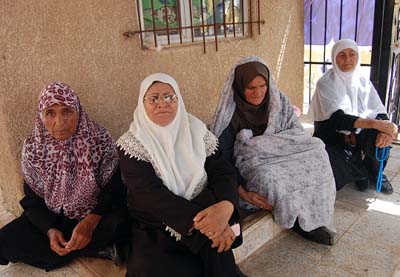
Families in front of the main gate of Ashraf garrison let everyone present know that it is nearly 5 months since they have been waiting there and their only demand is to visit their loved ones freely and without any interference, which the leaders of MKO (Rajavi cult) have denied it. They also emphasized that if the Europeans wish to support Rajavi cult why they do not take them to their own countries and why do they impose them to the nation and government of Iraq. Families welcomed any action to move the inhabitants of Ashraf camp to Europe and vigorously demanded it.

Additional images and reports of this gathering would follow in the coming days.


June 21, 2010 0 comments
FacebookTwitterPinterestWhatsappTelegramSkypeEmail
Terror Teams of the MEK

Intelligence Forces Foil Bombing Plots in Northern Iran

A senior Iranian provincial judiciary official announced on Saturday that the country’s intelligence forces have defused several bombing plots in the northern province of Mazandaran.

Head of Mazandaran’s Provincial Justice Department Hojjatoleslam Hossein Talebi told reporters that intelligence and security forces had arrested several members of the anti-Iran terrorist group, the Mojahedin-e Khalq Organization (MKO), who planned to stage bomb attacks in a number of the cities of Mazandaran province.

"Six suspects have been arrested in this regard," Talebi added.

The official refused to provide any details about the bombing plots or identity of the terrorists, but said that the terrorists were arrested in Ramsar before they could put their plots into action.
Talebi mentioned that further investigations into the case are still underway.

Also, last Tuesday the Iranian intelligence ministry announced that its forces had disbanded two MKO teams before they could stage their planned sabotage and terrorist operations in the capital city of Tehran.

"The terrorist teams aimed to plant bombs in a number of squares in Tehran," Iranian Intelligence Minister Heidar Moslehi said at the time, adding the security forces arrested them in a surprise attack before any the terrorists could make a move.

An Iranian official had also announced on Sunday that several members of the MKO were arrested in Tehran last Friday, while they were seeking to spark tension in the Iranian capital on the anniversary of the last year’s presidential election.

"Based on the information received (thus far), a number of MKO members are among the individuals who were arrested by the people (civilians) yesterday," Governor-General of Tehran Morteza Tammadon said.

The development came as a number of opposition groups sought to stage illegal rallies to repeat their last year claims about the outcome of the presidential election that led to the victory of President Mahmoud Ahmadinejad on June 12, 2009.

Rioters arrested during Iran’s post-election unrests had acknowledged MKO’s leading role in sparking unrests in the Iranian capital last year.

They confessed that they had received trainings in the Camp Ashraf of the MKO in Iraq to conduct sabotage and terror operations in Iran.

The MKO is responsible for numerous acts of violence against Iranian civilians and government officials as well as Iraqis during the rein of Saddam.

The group started assassination of the citizens and officials after the Islamic Revolution in Iran in a bid to take control of the newly established Islamic Republic. It killed several of Iran’s new leaders in the early years after the revolution, including the then President, Mohammad Ali Rajayee, Prime Minister, Mohammad Javad Bahonar and the Judiciary Chief, Mohammad Hossein Beheshti who were killed in bomb attacks by MKO members in 1981.

The group fled to Iraq in 1986, where it was protected by Saddam Hussein and where it helped the Iraqi dictator suppress Shiite and Kurd uprisings in the country.

The terrorist group joined Saddam’s army during the Iraqi imposed war on Iran (1980-1988) and helped Saddam and killed thousands of Iranian civilians and soldiers during the US-backed Iraqi imposed war on Iran.

June 21, 2010 0 comments
FacebookTwitterPinterestWhatsappTelegramSkypeEmail
Newer Posts
Older Posts

Recent Posts

  • Rebranding, too Difficult for the MEK

    December 27, 2025
  • The black box of the torture camps of the MEK

    December 24, 2025
  • Pregnancy was taboo in the MEK

    December 22, 2025
  • MEPs who lack awareness about the MEK’s nature

    December 20, 2025
  • Why did Massoud Rajavi enforce divorces in the MEK?

    December 15, 2025
  • Facebook
  • Twitter
  • Instagram
  • Youtube

© 2003 - 2025 NEJAT Society . All Rights Reserved. NejatNGO.org


Back To Top
Nejat Society
  • Home
  • Articles
  • Media
    • Cartoons
    • NewsPics
    • Photo Gallery
    • Videos
  • Publications
    • Books
    • Nejat NewsLetter
    • Pars Brief
  • About Us
  • Contact us
  • Editions
    • عربي
    • فارسی
    • Shqip