Nejat Society
  • Home
  • Articles
  • Media
    • Cartoons
    • NewsPics
    • Photo Gallery
    • Videos
  • Publications
    • Books
    • Nejat NewsLetter
    • Pars Brief
  • About Us
  • Contact us
  • Editions
    • عربي
    • فارسی
    • Shqip
Nejat Society
Nejat Society
  • Home
  • Articles
  • Media
    • Cartoons
    • NewsPics
    • Photo Gallery
    • Videos
  • Publications
    • Books
    • Nejat NewsLetter
    • Pars Brief
  • About Us
  • Contact us
  • Editions
    • عربي
    • فارسی
    • Shqip
© 2003 - 2024 NEJAT Society. nejatngo.org
Mujahedin Khalq; A proxy force

Study faults US handling of MKO terrorists in Iraq

A recent report by the RAND Corporation, a prominent think tank that does research for the US Government, illustrate that Washington committed a judgmental error when dealing with the terrorist Mujahedin-e-Khalq Organization (MKO) in Iraq. Study faults US handling of MKO terrorists in Iraq

During the 2003 Operation Iraqi freedom, an ongoing military campaign that resulted in the invasion of Iraq by the coalition forces, the MKO was designated as an enemy force.

The "Rajavi cult", as the MKO became to be known, had provided security services to Saddam Hussein from its camps in Iraq and had been listed as a foreign terrorist organization by the US Secretary of State.

It had also targeted Americans in Iran throughout the 1970s. They assassinated a number of American citizens, namely William C. Cottrell, Colonel Lewis L. Hawkins, Donald G. Smith, and Colonel Jack Turner inside Iran.

After a cease-fire was signed, the then US Secretary of Defense designated this group’s members as civilian “protected persons” rather than combatant prisoners of war under the Geneva Conventions

A RAND study, which examined the evolution of this controversial decision, says the designation has left the United States open to charges of hypocrisy in the war on terrorism.

The MKO was founded in Iran in the 1960s, but its top leadership and members fled the country some twenty years later, after carrying out numerous acts of terror inside the country.

The group masterminded a series of assassinations and bombings inside Iran, including the 1981 bombing of the offices of the Islamic Republic Party, in which more than 72 senior Iranian officials were killed, including the Judiciary Chief, Ayatollah Mohammad Beheshti.

The Iraqi dictator Saddam Hussein had invited the MKO into Iraq to fight on his behalf during the eight-year Iraq-Iran War. Once it settled in Iraq and fought against Iranian forces in alliance with Saddam, the group, already hated within Iran for its indiscriminate terror campaign, incurred further ire of the Iranian people.

MKO members where housed in ‘Camp Ashraf,’ in a city approximately 40 miles north of Baghdad, thereby establishing a base for planning operations against the Tehran government during the eight-year war as well as conducting operations against Iraqi Kurds and Shias during the 1991 uprising against Saddam Hussein.

From the early weeks of Iraq’s invasion in 2003 until January 2009, the coalition forces detained and provided security for members of the group, described in the RAND report as “an exiled Iranian dissident cult group living in Iraq".

"Despite their belief that the MKO did not pose a security threat, coalition forces detained the group and provided protection to prevent the Iraqi government from expelling MKO members to Iran, even though Iran had granted the MKO rank and file amnesty from prosecution," RAND says.
"The coalition’s decision to provide security for an FTO (Foreign Terrorist Organization) was very controversial because it placed the United States in the position of protecting a group that it had labeled a terrorist organization," it adds.

In April 2003, US forces in Iraq negotiated a ceasefire between its troops and the MKO, based on claims that later turned out to be false.

"Because they had no information about the characteristics of the group, the Special Forces officers who received the request were persuaded by MKO leaders (who spoke fluent English) that, prior to the invasion, the group had offered to fight on the coalition’s behalf and that many of its members had been educated in the United States."

In May 2003, the Washington establishment agreed to direct coalition forces to secure MKO’s surrender and to disarm the group.

The coalition officers who negotiated with the MKO leadership were dissuaded from carrying out this instruction. Rather than insisting upon the MKO’s surrender, they accepted a cease-fire agreement under which the MKO would be disarmed and its 3,800 members (at the time) would be consolidated and detained through assigned residence (rather than internment) at Camp Ashraf.

Coalition forces, however, took no action to determine the legal status of the MKO for more than a year. The report says this was due to the fact that the US Department of Defense (DoD) was not sure ‘what law should be enforced for the MKO.’

"The United States had adopted the contentious policy of not applying the Geneva Conventions to foreign terrorists fighting in Iraq, though it did apply them to enemy forces while invading Iraq, and war planners had named the MKO an enemy force."
 
To make matters worse, the group, who had a long history of trickery, had asserted that it had not engaged coalition forces in combat. Officers responsible for detaining the MKO accepted this claim, even though at least one special-forces-casualty had resulted from combat with the group.
"If coalition forces, and particularly those involved in any type of negotiations with the MKO, had been appraised of the group’s long history of deception, they would have been far less likely to have made the kinds of concessions that proved so troublesome later on."

In June 2004, the US Secretary of Defense Donald Rumsfeld tried to determine the legal status of the MKO, by designating its members as civilian “protected persons” under the terms of the Fourth Geneva Convention.

The designation, which presumes that the ‘Rajavi cult’ had not engaged coalition forces in battle, went against recommendations by the Department of State, International Committee of the Red Cross (ICRC), and the Office of the United Nations High Commissioner for Refugees (UNHCR).
"It has proven to be extremely controversial because it appeared that the United States selectively chose to apply the Geneva Conventions to a designated terrorist organization and, further, to grant it a special status," RAND reported.

When, in late 2003, the Iraqi government and the Iraqi Governing Council passed a resolution calling for the expulsion of the group from Iraq, the United sates refused to return MKO members to Iran.

The White House, labeling their return as "a ‘gift’ to the Islamic Republic of Iran," announced its intention to seek the MKO’s relocation elsewhere.

According to the Geneva Convention, when detainees are released from assigned residence or internment, they may either be reestablished in their country of residence prior to detention, resettled, or “accommodated” in third or neutral countries or repatriated to the country of their nationality.

Iraq had made it clear that the terrorists had no place within its boundaries. Iran was not an option either. Though Tehran had offered amnesty to the MKO’s rank and file, Washington bluntly refused to send them back.

“Despite the broad-based expectation that the IRI would persecute all former MKO members who returned to the country, that has not proven to be the case for the approximately 250 individuals who have already been repatriated through a process managed by the ICRC," RAND adds.
The only solution was to send them to any country that would accept them. No western country is willing to offer asylum to the individuals — even though 1015 MKO members have a passport or residence permit of a third country.

"The MKO was a minor issue in the overall conflict in Iraq, but it was an important one because the issues that emerged in the course of detaining the MKO were, in many ways, a microcosm of the larger challenges posed by detainee operations in general."

“To date, there is no evidence that any MKO members who were repatriated to Iran through the ICRC have been persecuted or tortured," The report says.

“JIATF (Joint Interagency Task Force) personnel and former MKO members believe that many members of the MKO rank and file would volunteer for repatriation if they were freed of the MKO leadership’s authoritarian, cultic practices,"

The group practices public self-deprecation sessions, mandatory divorce, celibacy, enforced separation from family and friends, and gender segregation.

One of the MKO’s cultic characteristics is a focus on suicide.

"Although it had not used suicide as a tactical weapon in terrorist attacks since 1981, the MKO has frequently used the threat of suicide as a negotiating tactic or to frustrate investigations."
"This proved particularly effective after 10 members immolated themselves in Paris as a protest action following the arrest of Maryam Rajavi, the MKO’s co-leader, in 2003."

Although MKO leaders and supporters vigorously deny that the group is a cult, the report’s findings suggest that these denials are not credible.

As part of the “ideological revolution,” the Rajavis mandated divorce and celibacy.
Compulsory divorce required couples to place their wedding rings in a bowl and renounce their affections for one another.

Masoud Rajavi would separate couples claiming that "such practices would liberate the members" from competing loyalties. Their children were also sent to European countries, former MKO member, Mohammad-Hossein Sobhani, said in August.

Because "the organization forbids matrimony, for the past 25 years no child has been born to a man and a woman inside the organization," he adds.

October 17, 2009 0 comments
FacebookTwitterPinterestWhatsappTelegramSkypeEmail
Former members of the MEK

Primacy of death and violence in the ideology of MKO

An interview with Batool Soltani on MKO self-immolations – Part 29

Sahar Family Foundation: Ms. Soltani, before going on, let’s open a parenthesis to clarify why the organization is primarily motivated by holding at violence as a working strategy; it is either killing others or prompting suicide operations. In fact, a permanent leg among its pillars of relation with the outside is violence and death. Of course, it has been innate from its very beginning and they even believed that when arrested, they had to behave in a way to provoke the Pahlavi’s regime to execute them. A proven fact is its leaders’ fervently presented offensive defenses in the course of their trials. In contrast to the mainstream of the political and struggling groups, the organization has hardly cared about the individuality of its members as the militants definitely framing the main pillars of its structure and to take the decisive precautionary measures to save their lives.

The members of the organization are encouraged to either kill or be killed and there has to be necessarily justifications to convince them choose the either way. Your experience may illuminate some dark aspects of the organization’s resorting to violence. Of course, the organization’s early booklets explicitly chart its worldviews but you are not old enough to be familiar with these early ideological mentalities unless they have been referred to in their ideological instructions. Do you have any perception of the founded innate strategy that can be proved through your personal experiences?

Batool Soltani: It is so sensitive an issue you are referring to. It could have been talked about at the beginning or the end of our discourse about self-immolations. But it is crucial to know why the organization, unlike other similar political or armed groups, cultivates homicidal tendencies with an emphasis on suicidal ones in a struggle to counter its adversaries and exclusively invest on the tactics that highly risk the lives of the insiders. It has to be pointed that when the organization is on a stand to advance with a heavy hand the first priority is an aggressive militarism but it recoils to a defensive suicidal stand when some bottleneck blocks its advance. It can take the form of self-immolations, imposing human shield or any other form and have been adopted as a working strategy from its very formation days.

As a vindication of its rightness in its struggle path, the organization has always boasted about the counts of its killed and imprisoned members believing that these martyrs substantiate its hegemonic legitimacy over all other opposition groups antagonizing the regime. Rajavi is of the opinion that the rightness of any ideology is maintained by the number of its victims and martyrs; in the sphere of his political and ideological imagery, the life and death of man is so simple an issue like drinking water. I remember reading some related sources in the organization but I fail to remind them clearly to give exact details.

Being a product of Rajavi’s own mind-set than a methodological study, I think Rajavi has deduced that when man can so easily sacrifice his life, so he is capable of achieving distant, inaccessible goals. When it is politically and morally, from a certain ideological point of view, acceptable to use unconventional tactics such as violence and fear to achieve certain goals, then why should one waste time to stick to others that fail to be productive at all. The recruited members of the organization that are trained to invoke fear in the opponents and exploit the vulnerability of the victims are themselves the victims that victimize adversaries for certain ambitions. In fact, whether a member kills or is killed it is the organization that profits from all these bloodshed.

I remember my first days in the organization when Rajavi repeatedly highlighted the counts of the casualties the organization had inflicted on the regime, which had been widely covered by the media, as a proof of his organization’s legitimacy and his authoritative hegemony among other opponent groups. Connecting his organization’s terrorist activities with legitimate political struggle, Rajavi played a double-faced role before the Western world; he presented the statistics of his terrorist deeds against the regime as a proof of legitimacy while he exaggerated about the organization’s martyrs as the instances of human rights violation by the regime. Rajavi is not the least concerned about the life of people, either the insiders or outsiders, and even the organization’s press coverage of the executions by the IR is a cunning manipulation of the dynamics of violence to demonize the opponent side.

I have seen plain examples of the glorification of violence and death-seeking attitude within the organization, an experience that can better than any other theoretical sources of ideology lead you to fathom why the organization delights in the martyrdom of its own members. One instance was when the news of the execution of Hojjat Zamani broke inside the organization. I have nothing to do with Zamani’s extent of cooperation and organizational career, the only thing I know is that he was arrested when dispatched on an operational mission. Sentenced to imprisonment, he escaped while he was on leave but was recaptured and at last his antagonistic attitudes led to his execution. My stress on his execution is only to illustrate the organization’s internal reaction after his death. You may be surprised to know that the news of his execution was the cause for a real celebration within Camp Ashraf, I mean a real festivity in which they sang and danced.

Nothing could have pleased them more than Zamani’s execution by the regime since it was a good excuse to appeal to human rights organizations and to condemn the regime for oppressing Mojahedin. Nobody was grieved or became furious about his death as naturally they had to and they openly congratulated his execution as it could influentially fuel the organization’s propaganda machine particularly to array human rights defenders against the regime and to help recruit new forces. Although the organization appealed to a variety of human rights defenders and organizations to bring Zamani’s execution to a halt to advertise a pro-democratic profile, it was also anxious not to have overdone to impede his execution. It will be not wrong to say that the organization prayed the regime would accelerate the process of his execution since it was one way it could boast its position as the sole active alternative the Iranian regime still cared to counter as a trouble-maker.

In a message addressed to the Leadership Council after Zamani’s execution, Rajavi asserted that his execution was equal to one thousand feats accomplished by the council because his death could muster new recruits and scatter seeds of hatred in the hearts of his family and relatives. In general, the organization craved for the execution of all those members in the prisons of the IR regime, people like Saeed Mansouri, Jamil Bassam and Ibrahim Khodabandeh. Hearing no news of their execution against the organization’s expectation, it elicited anger among us in the Leadership Council and we began criticizing and disparaging them for failing to commit suicide as we did when Arash Sametipour was arrested. We would revile them for not provoking the regime to execute them. Massoud and Maryam had reiterated that the IR Ministry of Information had adopted a new policy not to execute any member of the organization; now the organization was resolute to do its best to inflame the regime to spur executions.

Besides, the organization had contrived ways that led to the demise of the members. When, for example, Beheshteh Shadroo was at the charge of the operation teams sent to Iran, after the frequent successful return of a team, she would order the head of the team to take the forces under his/her command to a non-reconnoitered region where they could be easily hit and killed. In this way, the imposed death begot martyrs from among the forces whose date of practical competency had expired and could best serve the organization by their martyrdom. The organization hoped and prayed that the IR would kill so it had an open hand for propaganda.

There were also suggestions of arranging to club a woman to bleeding and to record the scene to use against the regime in abroad propagandas. The organization presumed that such scenes of violence and flow of blood could beget rebellion and social disturbance that could finally lead to the regime’s collapse. Benefitting the organization in its best use, the news of members killed and executed in Iran carried the menace of what destiny could be awaiting other members if they ever dreamed to return to Iran.

To be continued

October 17, 2009 0 comments
FacebookTwitterPinterestWhatsappTelegramSkypeEmail
Mujahedin Khalq; A proxy force

Terrorism transformed

In the past eight years of the post-911 terrorist attacks, the US and the international community have been unanimous to find a decisive solution to overcome the phenomenon of terrorism andterrorism cannot be used as a lever and threat for establishing democracy in other countries its various forms and to fully eradicate it. Meanwhile, the Americans have learned many lessons and have been aware of the inevitable costs of interacting with terrorist groups yet there have remained many more lessons to be learned. The first lesson to be learned by the US is the fact that terrorism cannot be used as a lever and threat for establishing democracy in other countries.

The dual and paradoxical policy of the US toward MKO in recent years confirms this fact. This approach has provoked heated discussions among the government layers of the US. The report of RAND on MKO, regardless of unexpected events due to the hidden aspects of the true nature of Mojahedin, can be considered an evidence of conservative and ambiguous behavior of the US toward MKO. The lack of a defined relationship between the US and Mojahedin is the main mistake made by the Americans.

According to this report, Americans failed to annihilate the organization intentionally or for any reason and also refrained to encourage MKO members to leave camp Ashraf. Although this is considered the main mistake made by the US in dealing with Mojahedin, it has to be pointed out that the US was unfamiliar with the cultic nature of Mojahedin and their intra-organizational mechanisms and potentials. After the disaster of 911 and its feedbacks inside nations and governments, terrorist groups were inevitably influenced. In other words, the terrorist activities of terrorist groups, including MKO, underwent a qualitative and quantitative shift. The public hatred of terrorism made Mojahedin to make effort to be removed from the terrorist list claiming to have denounced armed struggle. However, this claim and the removal of the name of MKO from the terrorist list of the EU failed to be accepted by those European countries that were well acquainted with the nature of the organization. And it did not take long to prove that they had been right in their judgment as Mojahedin practically proved that they could not make any change in their past policy and indoctrinations.

The innate violence has only changed in the application of the approaches. They have just concealed themselves from the global attentions resorting to other forms of cultic-terrorist activities like self-immolation for furthering their totalitarian objectives. The suicide attacks of Mojahedin in 17 June in France, 2003 occurred only two years after the terrorist attacks of 911 and was an inevitable consequence of their critical situation resulting from their presence in global interactions as well their indoctrinations based on which the ideological and strategic solution for all barriers and challenges is considered to be violence and terrorism. The suicide attack of 911 and that of 17 June have the same background and theory yet have different external manifestations. They enjoy the same ideology and mechanisms too yet the former is considered an action on the part of a reactionary and barbaric group and the latter comes from a scientific-evolutionary philosophy.

There is no doubt that despite the superficial differences, the shared point of al-Qaeda and MKO is their internal mechanisms and techniques. However, after the events of 911, Mojahedin came to the belief that resorting to blind terrors and suicide attacks could no more solve their problems but also may lead to the intensification of their tensions and public hatred. Its registration as a terrorist organization on the very same list that recognized al-Qaeda made Mojahedin do whatever necessary to be removed from terrorist list just due to evading the negative and hostile viewpoint of the global society and western governments. Consequently, Mojahedin were enforced to stop their blind terrorist activities for a while. The insistence of Rajavi on the peaceful approach of MKO on the one hand and the critical situation of the organization in Iraq has enforced him to focus on the possibility of a human disaster in the form of self-immolations in case of the intensification of tensions and constraints in camp Ashraf.

This is the reason why Rajavi has resorted to cultic levers like hunger strike and using human shields in camp Ashraf and it is simple-mindedness to dismiss the possibility of Mojahedin’s committing other terrorist activities. The fact is that there is no guarantee for other countries to be secure from the intrinsic violence of such a cultic group unless Mojahedin would abandon their cultic activities like self-immolation, hunger strike, human shields, etc. As it was pointed out, this is the shared point linking Mojahedin and al-Qaeda together as well as to other cultic trends. The only difference is in their power of adoption to conditions at which Rajavi looks with pride.

According to many MKO former members, Rajavi has repeatedly referred to the point that Mojahedin can remove all barriers as long as they have no fear of death and take part in regular inter-organizational cleansing sessions. The present position of Mojahedin can be considered in this regard not as a tactical retreat but a newly adopted form of employing violence. It seems that Americans need to be notified about the dangers of terrorism, its ideology and how it may operate under a variety of disguises and cults.

October 15, 2009 0 comments
FacebookTwitterPinterestWhatsappTelegramSkypeEmail
UK

MKO members to be relocated from Iraq

Rajavi lobby silenced in UK Parliament yet again

David Drew (Stroud, Labour) Rajavi lobby silenced in UK Parliament yet again
To ask the Secretary of State for Foreign and Commonwealth Affairs what recent reports he has received on the detention of 36 Camp Ashraf residents without charge or trial by Iraqi forces; and if he will make a statement.

Ivan Lewis (Minister of State (Foreign and Commonwealth Affairs), Foreign & Commonwealth Office; Bury South, Labour)
The Iraqi Government have given assurances that no Camp Ashraf residents would be forcibly transferred to a country where they have reason to fear persecution, or where substantial grounds exist to believe they would be tortured.

All 36 arrested on 28 July 2009 were released on 7 October 2009 and have returned to Camp Ashraf. The Iraqi authorities have said they intend to resettle all 36 to other countries once suitable arrangements are in place. They had been detained under a combination of charges related to the violence at the camp on 28 July 2009 and immigration violations.

Our ambassador in Baghdad met the Iraqi Human Rights Minister on 6 October 2009 to discuss the detention of the 36. He was briefed on the efforts underway to make arrangements for their release.

During their detention our embassy in Baghdad was in regular contact with the Iraqi authorities, the UN Assistance Mission in Iraq and the International Committee of the Red Cross (ICRC). The UN confirmed that they have been held in acceptable local conditions. Food and water was available throughout, but the 36 men chose to follow a hunger strike in protest at their detention. Medical care was provided during their detention. The 36 had regular access to the ICRC.
House of Parliament, London, October 13, 2009

October 15, 2009 0 comments
FacebookTwitterPinterestWhatsappTelegramSkypeEmail
Mujahedin Khalq Organization

MKO in historic isolation

Today the process of developments in Iran-Iraq relations has created difficult situation for Mujahedin Khalq who are facing a complicated cul-de-sac. Therefore, the MKO’s claim as the most powerful opposition to Iranian regime is viewed as funny by Western politic men

The new phase was accompanied with the takeover of Camp Ashraf’s control by Iraqi government in January.

However, when the Iraqi control on Ashraf base was leading its executive procedures, MKO leaders ended the takeover by Iraqi Police to a bloodshed which risked the lives of hundreds of members, in vain.

After the bloody clashes in Ashraf, MKO leaders did not obey Iraqi decision and did not make a logic decision and launched a new idiot game. Their hunger strike show was to take ransoms from Iraqi government. The leaders allegedly declared their objective as the takeover of control of Ashraf by American forces but actually the main objective of MKO leaders is maintaining their base in Iraq. And the Iraqi government is determined to expel the terrorist destructive cult of Rajavi from its territory.

The destructive cult of MKO has always claimed to be the most viable alternative to IRI and its large scale propaganda machine has always tried to deceive Western politicians with this claim.

The recent protests after the Iranian presidential election in June took MKO’s card. The international community and Western governments are concentrating on Iranian green movement as the main opposition to Islamic Republic. Western governments, who were not satisfied with IRI’s policies, today hope that the green movement could make changes in Iranian policy. Therefore, the MKO’s claim as the most powerful opposition to Iranian regime is viewed as funny by Western politic men. This make MKO leaders to try extremely to find the least support among Western countries including their new propaganda show for the so called revelations on Iranian nuclear program in a press conference in Paris.

Although the act, once more, confirms the MKO’s treasons against Iran, ignoring the MKO’s propaganda, Western governments called 1+5, are negotiating with Iran in Geneva these days. The considerable fact is that for the first time, US’s representative sat at the same table with his Iranian counterpart. The MKO is now in a historic isolation which will definitely end in its death.

The only way to save the cult is the official declaration of its shutdown by its leaders, but they are so politically stupid that they will never make this rational decision.

By Mohsen Abbaslou

October 13, 2009 0 comments
FacebookTwitterPinterestWhatsappTelegramSkypeEmail
Habilian Foundation

“Iran: A Victim of Terrorism”in a Qazvin university

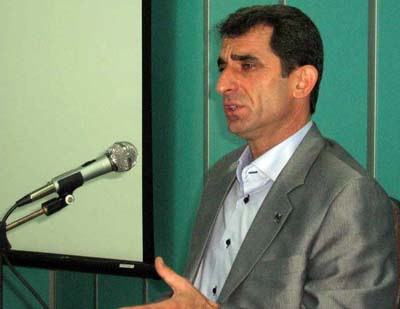
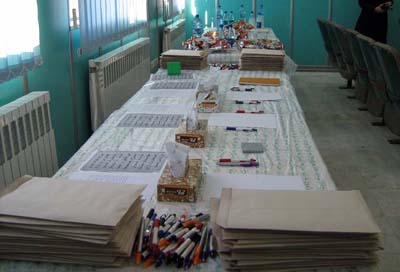
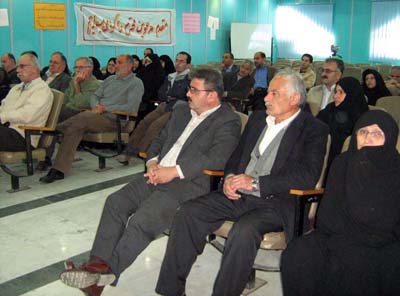
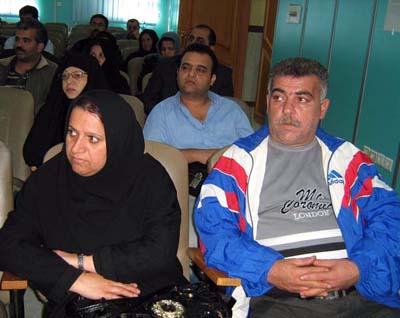
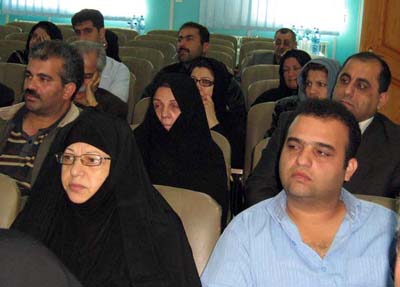
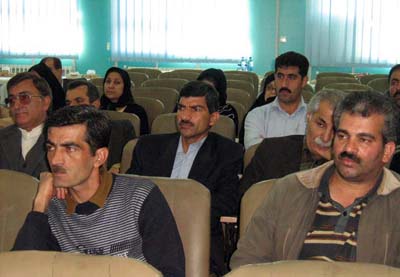
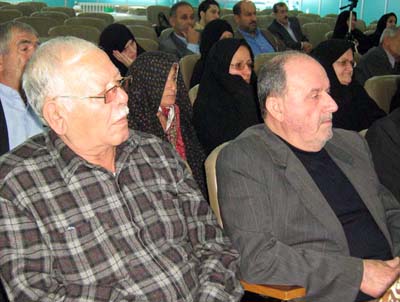
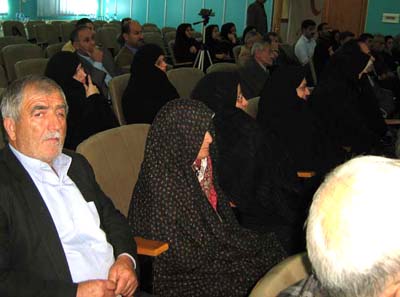
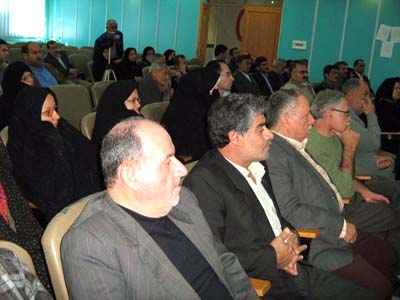
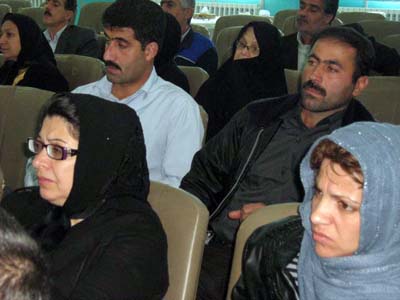
“Iran: A Victim of Terrorism”exhibition was held by Habilian Association in Azad Islamic University of Qazvin. The exhibition was held in order for the students to become familiar with the background and crimes of the Mujahedin-e Khalq Organization (MKO).

Though held in a short period of time, the exhibition was highly welcomed by the students as well as the teachers. More than 3000 students visited the exhibition through 4 days.

With their numerous questions on the crimes of MKO, the students showed their anger towards the terrorist cult. New and shocking dimensions of MKO’s crimes including their pre-evolution team houses, using sex attraction to make students join the cult, Rajavi’s cooperation with Shah regime to save his own life, intra-MKO clashes to elect a leader, exploring Rajavi’s personality,
MKO’s shameful uprising in June 20, 1981, MKO’s mortal attacks on Iran’s president, prime minister and more than 70 senior officials in 1981, theie treasons during the Iran-Iraq war, MKO’s contributions to Iraqi Shiite and Kurd massacres by Saddam Hussein, their treasons regarding Iran’s peaceful nuclear program and their current parasite stay at Iraq’s Camp Ashraf were on show.

The following are only few of students’ positive comments made in the exhibition’s guest book:

– Thank you for holding the exhibition. It introduced the enemies of Islam and Iran openly to the youth who do not have much knowledge about MKO’s background. I hope this will continue through the educational year.

– The exhibition shows the enemy to the Iranian new generation so that they will know how to counter these traitors.

– A very nice exhibition! I had no information on MKO and I’m happy you are uncovering their crimes explicitly.

– Nice exhibition! I hope this will continue.

– Well done! You showed the true face of the anti-people hypocrites (the MKO) very well.

– Thank you for all your efforts. You will be certainly successful by uncovering MKO’s false beliefs.

– Thank you very much. Please hold such exhibitions much more magnificently.

– A great responsibility is put on you. I hope you, representing families of terror martyrs, will do your best to reveal MKO’s crimes.


October 12, 2009 0 comments
FacebookTwitterPinterestWhatsappTelegramSkypeEmail
Iran

In Iran, three ‘terrorists’ are placed on death row

Iran’s Judiciary says three Iranians — two are responsible for a deadly bombing and the remaining convict is a member of a terrorist organization — have been shipped to death row.
Reports indicate that two of the convicts are professed members of the Iran Royal Association, a little known monarchist group that seeks to overthrow the country’s Islamic establishment and replace it with the old monarchy.

The group is responsible for a deadly bombing in the southern city of Shiraz back in April 2008, in which 13 people were killed and hundreds were wounded.

The other convict is a member of the anti-Iranian terrorist organization known as the Mujahedin-e-Khalq Organization (MKO).

The three convicts have a right of appeal, officials said.

The MKO was founded in Iran in the 1960s, but its leaders and members fled the country some twenty years later after carrying out numerous acts of terror inside the country.

The group, which had close ties with former Iraqi dictator Saddam Hussein, masterminded a series of assassinations and bombings inside Iran, including the 1981 bombing of the offices of the Islamic Republic Party, in which more than 72 senior Iranian officials were killed, including the then Judiciary Chief Ayatollah Mohammad Beheshti.

One of the monarchists identified as Mohammad-Reza Ali-Zamani was reported by Amnesty International as "the first person sentenced to death" over Iran’s post-election violence in June.
However, a diplomat, who spoke to Press TV on condition of anonymity, said Zamani is convicted for being a member of "a terrorist group, and for trying to overthrow the Islamic Republic as well as spying on behalf of the [Central Intelligence Agency] CIA."

"He has been arrested for his participation in the Shiraz bombing and killing a number of Iranian nationals," the source said.

October 12, 2009 0 comments
FacebookTwitterPinterestWhatsappTelegramSkypeEmail
Former members of the MEK

Human shield in defense of Ashraf

An interview with Batool Soltani on MKO self-immolations – a précis of parts 27-28

Sahar Family Foundation: Ms. Soltani, if you will, let’s have a discussion on the issue of human shield and mass suicides and what necessitated its application. What are the parameters that influence the operations and to what degree and under what circumstances they extend?
human shield and mass suicides of MKO memebrs under the order of leaders
Batool Soltani: At the threshold of the US invasion against Iraq and when threats were nearing the action, Rajavi was sensitive on two things; defending Ashraf against external threats including closing the camp and expulsion from Iraq and second, adopting an appropriate means to defend Ashraf and resist. He specifically reiterated that Ashraf had to be defended tooth and nail. But the premise developed into more objective form of defense when Saddam collapsed and the suggestion of human shield turned to be a serious option on the agenda of Rajavi. Of course, at the time the organization was busy preparing passports for high ranking members including the members of the Leadership Council to relocate when the right time came.

The option was first brought to attention in a session where Massoud Rajavi addressed the audience through a satellite broadcasted videoconference. Of the subjects he focused on were Ashraf and Auvers, stating that Auvers and Maryam were believed to be the brain of the organization while Camp Ashraf was the beating heart of the resistance against Iran. For sure the brain kept working until the heart beat. Ashraf was the heart that pumped the blood to brain and had to be protected by any means; the two were interconnected and one failed to operate without the other. It was what he talked about from a theoretical point of view.

Following the incidents of the June 17, it was broached that the members of the Leadership Council had to be prepared to protect Ashraf. It was the first time the human shield tactic was implicitly touched on in general. In one of his messages to Mozhgan (Parsai) Rajavi recapitulated that we would stay, die and bury here in Ashraf but never move. It was a question of resisting or dying if the Iraqis decided to repatriate members to Iran or evict from Ashraf to another location. Of course, repatriation to Iran was out of question because of the internationally guaranteed IDs issued for the members under the article four of the Geneva Convention. To tell the truth, it was not at all important for the organization to make any attempt for the safety of the members; all it cared about was survival of the organization and preserving Camp Ashraf and protect it against external threats. Then, the focal point was to think of means to accomplish the end.

The human shield was one of the opted options; mass suicides could effectively frustrate any effort that aimed at dismantling the integrity of Ashraf. It included any other threat like forced entry of American or coalition forces to temporarily close or deactivate the camp. Our first choice to resist against intruders had to be using non-firing weapons; needless to say that the organization actually made no resistance against the American forces and succeeded to take the control and hegemony of the camp in its own hands.

However, the human shield tactic was temporally removed from the agenda since Ashraf continued to be under the organization’s control and there was no need to make use of the ploy.

As Rajavi stated, he preferred the ‘arms carriers’, meaning the disarmed members, to the arms themselves; an incorporated armless army could be much functional and appropriate than the arms. The question of suicide operations and human shield were all directed at safeguarding the entity of the organization and its hierarchical order; it was the red line that could not be crossed and all members had to preserve. It was the policy adopted until 2006 when I left the organization. The deployment of the American forces at Ashraf made no change in the organizational structure and it took the liberty of acting according to its ironbound disciplinary.

The regular commute of individuals into Ashraf followed its routine and they brought anybody into the camp under the cover of the visiting families and they were even present when American forces inspected visitors at the check points.

There is a statement issued by the National Council of Resistance that specifically warns against the outbreak of what the organization refers to as human tragedy in the case of any possible attack against the camp by the IR forces or missile attack. It is what the organization expresses for the outsiders but its real definition for the insiders is the use of human shield to thwart any threat of eviction or expulsion enforced by the Iraqi government. The statement explicitly clarifies the responsibility of members in defense of Ashraf; any member has to become a human shield to impede disintegration of Mojahedin’s main bastion and heart. I remember a time when there came the news of Badr’s 9th army and groups of local Shi’its nearing the gates of Ashraf.

The organization announced full alert and all the members of the Leadership Council began preparations for mass suicide. Some brought arms and cyanides were checked and distributed. So serious were they in carrying out their mission that two members of the council, Marzieh Ali-Ahmadi and Darz Beigi, committed suicide when in their returning to camp they got an impression of being challenged.

SFF: What were the more highlighted factors about mass suicides, the manners, conditions or their reflection in the media?

BS: They were much sensitive to record the scenes of the immolations for immediate and widespread media coverage. In fact, the priority was having the control of media and resources in hands. To air first hand reports, the organization had positioned equips of photography in the vicinity of the scenes of operations.

SFF: How the suicides were planned to be launched and what conditions caused their materialization?

BS: the suicides had to be carried out first individually and one by one. In the next stage, if threatening forces behind the gates of Ashraf were resolute to break into the camp, the members had the order of committing suicides in groups. In the case of a widespread military intrusion that could lead to the fall of camp, all the members were to commit a mass suicide. The Leadership Council had clearly delineated anything to counter threats against the heart of the organization and to coerce a line of human shield before Ashraf.

To be continued

October 12, 2009 0 comments
FacebookTwitterPinterestWhatsappTelegramSkypeEmail
Mujahedin-e-khalq Organization Members

Iraq releases detained MKO members

The MKO members were arrested during the July 28-29 operation at Camp Ashraf.

The Iraqi government has released 36 members of the Mujahedeen-e-Khalq Organization (MKO) detained in a July raid on the notorious Camp Ashraf in Diyala province.The Iraqi government has released 36 members of the Mujahedeen-e-Khalq Organization (MKO) detained in a July raid on the notorious Camp Ashraf

Shahriar Kia, a spokesman for the exiled terrorist group, said the inmates were released on Wednesday ‘after more than two months of hunger strike’, and were immediately taken to Ashraf medical center for treatment.

He said the detainees had recently refused to take water, too, and were in critical condition. The claim could not be independently verified.

The prisoners were arrested by Iraqi police on rioting charges after they clashed with security forces during the July 28-29 operation at Camp Ashraf, north of Baghdad, and were held in custody on grounds of illegal entry into the Iraqi soil.

In September, US Ambassador Christopher Hill vowed to press the Baghdad government not to repatriate Camp Ashraf residents to Iran.

MKO members, together with their families, have lived in Ashraf since former Iraqi dictator Saddam Hussein allowed the armed rebels to erect bases on the Iraqi territory during the 1980-88 war with Iran.

Following the 2003 US-led invasion of Iraq, the camp was protected by the US military until its 3,500 residents were shifted to Iraqi jurisdiction last January under a bilateral security pact.

The MKO, listed as a terror group by both Tehran and Washington, assassinated several leading Iranian figures after the 1979 Islamic Revolution.

It also engaged in bombings and brutal mass killing of civilians, and served as a military arm for the Baath regime in Baghdad during the Iraqi-Iranian war.

October 11, 2009 0 comments
FacebookTwitterPinterestWhatsappTelegramSkypeEmail
Human Rights Abuse in the MEK

Let’s emancipate women enslaved in Rajavi’s cult

In the contemporary history, no cult has overexposed women using them instrumentally as much no cult has overexposed women using them instrumentally as much as MKOas MKO. Although Mojahedin have adopted the false ideological and strategic slogan of setting women free form social, conventional, religious, and historical bonds, yet in practice women have been subject to a kind of modern slavery under the cover of freedom through mental and physical convincing mechanisms.

Rajavi has focused all his efforts in recent years to misuse various social, cultural, religious, and ethical backgrounds to submit women. In this regard, he has exploited the emotional attachments and nature of women as well as their ethical, religious, and traditional constraints to increase their dependence on the organization preventing their leaving from the organization.

Meanwhile, promoting women in leadership cadre of the organization is one of the tricks for intensifying the various aspects of this slavery. In this regard and up to the time when the well-founded documents of these misuses are revealed publicly, we will discuss the open aspects of these misuses and ask all human rights organizations to do their best to save these victims from Rajavi’s slave-house and revive their lost soul.

What is of utmost significance at the time being is setting thousands of women free from the bonds of MKO. As MKO leaders acknowledge, the main role of MKO female members as silent hostages is to be used as human shields for protecting leadership.

However, the difference between these hostages and their reactionary and seemingly outdated counterparts is that the former are captive in invisible and cultic bonds of Rajavis rather than visible chains and bonds. The statements made by the separated members indicate that these women in MKO are used as more than anything accessible instruments and levers in the hands of Rajavi to be victimized whenever necessary. Up to that time their role is securing camp Ashraf as the ideological and strategic container of Mojahedin.
 
Mojahedin media has recently called the world for supporting these women in order to sidetrack the reality. MKO leadership is aware that according to an unspoken consensus, the main efforts of western intelligentsia and the focus of public opinion at the time being is on defending the rights of women hence concentrates all his efforts to win the sympathy of outsiders toward female members of Mojahedin.

However, the issue of misusing MKO female members has been ignored due to Rajavi’s covering it under the banner of the emancipation of women. The former members have repeatedly referred to the significance of women for Rajavi. He is well aware that the special characteristics of these women like their emotional attachments, lack of support and ethical and religious constraints has excluded the possibility of their leaving from the organization.

The affairs of Rajavi with the female members of leadership council in the form of ideological marriages revealed by Mrs. Batool Soltani, a member of MKO leadership council who has recently managed to escape camp Ashraf, as well as flattering them have been levers at the hands of Rajavi for keeping them in the organization.
 
Parallel to the exposure of these issues, Rajavi has focused on these women insisting on the existence of a potential threat for them through an extensive propaganda blitz to sidetrack the public opinion. Evidently, the life of tens of female members of MKO leadership council as well as other Ashraf residents is in danger yet here the question arises that who poses this threat?

During the recent events and conflicts in camp Ashraf, it was observed that these women were used as human shields to prevent the entrance of Iraqi police to camp Ashraf and also to win the sympathy of the world toward Ashraf residents.

Regardless of the achievements of Mojahedin in recent days, what is of significance is the full-scale propaganda blitz of MKO on the necessity of saving the life of thousands of women living in camp Ashraf. Although the efforts of Mojahedin media were focused on MKO leaders, Masoud and Maryam Rajavi, now they have been concentrated on the issue of MKO female members and their security. It is for the first time that Mojahedin dare to put the members of their leadership council in attention.

The reason of this turnabout is to be investigated. Surprisingly enough, these women’s photos have been published and worries for their safety has been expressed. What are the objectives of this approach? The statements of Mrs. Soltani on the role and position of women in leadership council as human shields for defending camp Ashraf may be problem solving. According to the events of June and warnings given by Rajavi, the challenges inside camp tend to be intensified.

However, Rajavi makes his utmost efforts to determine the destiny of Mojahedin in either remaining or leaving camp Ashraf once forever. According to the above reasons, female MKO members are of a high potential to be victimized, therefore, Rajavi has decided to use them as human shields for defending Ashraf. In this regard, taking necessary measures for setting Rajavi’s victims free from cultic relations is of highest priority for Iraqi government and international bodies.

Our main responsibility is making the public opinion and the concerned bodies aware of this imminent disaster. As it was said before, MKO female members have been the most ill-fated and vulnerable stratum of the cult of Mojahedin in recent years and now after years of suffering pain and misuse, they are supposed to be used as Rajavi’s scapegoat of Rajavi.

The fact is that the lack of support and hope has led many of them to submit to Rajavi. Arriving at an international consensus, the world is to provide these women with reliable guarantee and support, let them govern their own destiny and breathe new life into their captive soul.

October 11, 2009 0 comments
FacebookTwitterPinterestWhatsappTelegramSkypeEmail
Newer Posts
Older Posts

Recent Posts

  • Rebranding, too Difficult for the MEK

    December 27, 2025
  • The black box of the torture camps of the MEK

    December 24, 2025
  • Pregnancy was taboo in the MEK

    December 22, 2025
  • MEPs who lack awareness about the MEK’s nature

    December 20, 2025
  • Why did Massoud Rajavi enforce divorces in the MEK?

    December 15, 2025
  • Facebook
  • Twitter
  • Instagram
  • Youtube

© 2003 - 2025 NEJAT Society . All Rights Reserved. NejatNGO.org


Back To Top
Nejat Society
  • Home
  • Articles
  • Media
    • Cartoons
    • NewsPics
    • Photo Gallery
    • Videos
  • Publications
    • Books
    • Nejat NewsLetter
    • Pars Brief
  • About Us
  • Contact us
  • Editions
    • عربي
    • فارسی
    • Shqip