Nejat Society
  • Home
  • Articles
  • Media
    • Cartoons
    • NewsPics
    • Photo Gallery
    • Videos
  • Publications
    • Books
    • Nejat NewsLetter
    • Pars Brief
  • About Us
  • Contact us
  • Editions
    • عربي
    • فارسی
    • Shqip
Nejat Society
Nejat Society
  • Home
  • Articles
  • Media
    • Cartoons
    • NewsPics
    • Photo Gallery
    • Videos
  • Publications
    • Books
    • Nejat NewsLetter
    • Pars Brief
  • About Us
  • Contact us
  • Editions
    • عربي
    • فارسی
    • Shqip
© 2003 - 2024 NEJAT Society. nejatngo.org
Iraq

British Ambassador meets with Iraq’s Human Rights Minister

Under Iraq’s Constitution the government will not forcibly repatriate Mojahedin members to Iran

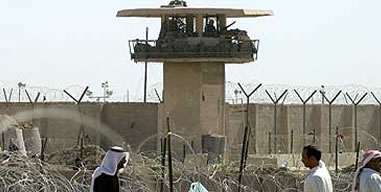
Iraq’s Human Rights Minister, Mikhail SalimIraq’s Human Rights Minister, Mikhail Salim, said her government does not intend to return members of the Mojahedin-e Khalq Organization Iranian opposition, to their country by force.

An official source at the Ministry of Human Rights said: The Ministry, in cooperation with international organizations such as the International Committee of the Red Cross and the Office of the United Nations Commissioner for Human Rights, is fully informed of the situations of residents in the Camp of New Iraq (formerly known as Camp Ashraf), and of the humanitarian and legal aspects, stressing the necessity for them to be subject to Iraqi laws and not to encroach upon the sovereignty of the country.

On the riots which recently took place in the camp, the Minister confirmed to the British Ambassador that the Government of Iraq had investigated the matter and will provide them with detailed facts on the subject. The Minister indicated that the suspects arrested during the recent events were held based on the decision of the Director of Residence, after violating residency law. For his part, the British Ambassador showed interest and praised the Ministry of Human Rights Affairs over the 36 detainees who were released last Tuesday. The MKO has been present in Iraq since the 1980s.

Addustour, Baghdad – translated by Iran-interlink

October 11, 2009 0 comments
FacebookTwitterPinterestWhatsappTelegramSkypeEmail
Mujahedin Khalq Organization's Propaganda System

Hunger strikes, Mojahedin Khalq ploy in Iraq

In the recent three decades, MKO has been charged in some European courts due to committing crimes of a wide range including terrorist attacks and breaking civil law. The reports of France police are full of charges against MKO members including use of violence and intimidation against their dissidents as well as orchestrating rallies under a variety aliases and disturbing rallies organized by other Iranians in different countries. Furthermore, there are many terrorist attacks attributed to Mojahedin hence enlisting their name in the terrorist lists of the Europe and the US State Department. Almost in all theses cases, Mojahedin develop a special relationship with the concerned courts and make false allegations to kill time and evade to met challenges and accusations. A typical case is the dossier of 17 June 2003 investigating the terrorist and cultic activities of Mojahedin after the arrest of Maryam Rajavi as the cult leader.

It was just seventy days ago that 36 members of Mojahedin residing in Camp Ashraf were apprehended for their acts of sabotage during the deployment of Iraqi police in the camp. They are reported to have been released while the Iraqi judicial authorities were to pursue charges against the men after their detention along with some MKO leaders who have to face trial due to numerous accusations made by Iraqi citizens against them. Of course, the organization may celebrate the freedom of the arrested members as a great victory after it resorted to hunger strike in camp Ashraf as well as some European countries including France. The significance of the recent transitions lies in the following factors:

1. After the fall of Saddam and establishment of the legal Iraqi government, the organization has recognized the decisions of the US, not Iraq, to challenge the legitimacy and legality of Iraqi government. Regardless of the strategic objectives of this approach, Mojahedin aim to pave the way for breaking law in Iraq. Soliciting aid from the US for setting MKO convicts free and then giving refuge to them is for furthering the same objective. In this regard, the insistence of Iraq on putting certain ranking members on trial may foil all futile efforts of Mojahedin and ruin false perception that they are under the support of the US and can misuse law.

2. Mojahedin’s soliciting aid from European and American bodies for the release of MKO detainees as well as initiating a propaganda war in this regard is considered a backlash and insult against the Iraqi government. No doubt, by bringing MKO wrongdoers to trial according to international and national rules, the Iraqi government can prove its sovereignty and confirms that despite recognizing the humanitarian rights of Ashraf residents, no crime on their part will be ignored even under the pressure of other governments.

3. The judiciary system of Iraq can demonstrate its jurisdiction, independence and resistance against the interference of foreigners by holding public trials with the presence of international media and reporters to prevent any misinformation by Mojahedin. It is many years that Mojahedin have adopted unethical and illegal procedures and propaganda blitz to sidetrack judiciary systems and legal organs. They just care winning their initiated propaganda war. After the recent detentions in camp Ashraf, Mojahedin have been engaged in another propaganda war that seems to continue up to victimizing a number of members in the Europe and camp Ashraf due to hunger strike.

4. It is likely that Mojahedin are after modeling the events of 17 June, as it seems true after arranging widespread hunger strikes, for enforcing Iraqi officials to forgo the trial of the arrested members. It will not be wrong to say that Iraqis might have been struck by a wave of self-immolation if the strikes failed to finish the job. Evidently, this is the final trick of Mojahedin for evading law. However, the resistance of Iraqi officials against the will of the organization and putting the accused on trials could make it once forever law-abiding.

5. Intentionally or unintentionally, Mojahedin are after winning one of the most reactionary and exploitative procedures in Iraq that is capitulation. In other words, they deem it legitimate to do any illegal action in Iraq under the support of the US. A brief look at the position-takings of the organization in recent years implies this false perception as a clear insult to Iraqi citizens and government. The trial of the arrested ones can foil the delusions of Mojahedin too.

6. In fact, the approaches taken by Mojahedin in Iraq in recent years, at least while the American is taking control of Iraq and camp Ashraf, was that of occupiers toward the occupied. The recent events confirmed that Mojahedin are still under the delusions of grandeur. However, the trial of MKO defendants could bring them to the reality that they no longer can interfere in Iraqi internal affairs and challenge the legal Iraqi government and to claim possession of a part of Iraqi soil. The history shows that no occupier can persist forever even in full political and military power. Mojahedin have to submit to law and sovereignty of Iraq.

The trial of the MKO members by Iraqi judiciary system for charges of assault and riotous assembly and resisting the lawful presence of Iraqi police in camp Ashraf that lead to the death of a number of Iraqi polices could turn into an all-out judgment on all crimes and misdeeds of Mojahedin inside Iraqi soil in recent decades. The Iraqi judiciary system can well make use of former MKO members as live eyewitnesses to Mojahedin crimes by consulting them and using their statements for identifying the key MKO leaders in charge of all terrorist and cultic activities of Mojahedin in Iraq. Even before the recent events, Iraqi government had issued a decree on capturing the suspects. The Iraqi government could use this golden opportunity to try all MKO wrongdoers and restore law and order in Iraq. Any sign of conciliation from the Iraqi part may cause Mojahedin’s boldness to become more inattentive to its warnings and decisions.

October 10, 2009 0 comments
FacebookTwitterPinterestWhatsappTelegramSkypeEmail
Mujahedin Khalq Organization

MKO and continuation of a wrong approach

Reported by Times, a group of ailing hunger strikers from Barnet ended their 72-day fast today after achieving what they called a "huge victory for humanity". A dozen fasters from across Barnet have refused food for more than ten weeks in an attempt to convince international forces to help 36 fellow Iranians in the custody of the Iraqi Government. The detainees were freed and returned to Camp Ashraf from a military base in Baghdad, where they were being held. Many of the arrested were also on a hunger strike and are said to be seriously ill and have been taken to Ashraf medical center for treatment.

Noteworthy in this entire story is application of pressure prompted by the hunger strikers to enforce an organizational will. No doubt, a government like Iraq has to take precautionary measures to guarantee its people’s security at a time when the country is facing violent challenges from a variety of dissident factions and remnants of the ousted dictator and his collaborators. Of course none of these dissidents are willing to abide by the new constitution and rules that restricts their activity in the country, including the terrorists hosted and patronized by Saddam.

Although removed from the EU list of terrorist organizations, MKO is still a recognized terrorist group with the full practice of a cult. The marriage and merger of terrorism and cultism has transformed MKO to a dangerous organization that never abides by any constitution and organizational law to achieve its illegal demands. Look, for example, at its appalling, anti-human and cultic immolations of June 17, 2003 to protest the arrest of its leader, Maryam Rajavi. It did not take long to force French Government to release her only to extinguish human torches and to stop cultic practices that were leading the country into a real social crisis. Then, Mojahedin sang and danced to celebrate the victory.

It is the victory that is important for MKO regardless of the lives it may cost. The story is repeated again. The organization claims to have achieved another victory and nothing but the words stated by the sympathizers and members can describe the truth under the words: "Everyone here is crying, dancing, singing. Celebrations will continue late into the night. It is a truly wonderful moment. "We know we will have health problems later, but that is nothing compared to what we have achieved." The jubilant is natural because the cult believes it has succeeded to win over the law and order through pressure and cultic practices. But the sad part is that it is claimed to be a victory for right demands and democracy. What will really happen if democracy, unless they have a different definition for democracy, is to be achieved through pressure, violence and anti-human practices?

October 10, 2009 0 comments
FacebookTwitterPinterestWhatsappTelegramSkypeEmail
Former members of the MEK

Neda had been tutored from the childhood

An interview with Batool Soltani on MKO self-immolations – Part 26

Sahar Family Foundation: Ms. Soltani, you know better that the organization had highly invested Neda Hassani,had been tutored from the childhood to become a devoted MKO memebron Neda who was hardly of any weight and importance within and without the organization until she was burned to death, an anonymous girl who had suddenly become the focal attention of the media in a week. I believe she achieved preeminence in public and it can be said that she had great impact on the whole situation. Of course, that was exactly what the organization expected. As Neda’s case is sensitive, let’s talk about her and her life and struggle background and I will pose further question if necessary.

Batool Soltani: You are right. Neda was not a preeminent among the members before her immolation. It was possible that in the higher echelons they had given her some attention but nothing amongst the rank and file. Her popularity is considered to be for a variety of reasons especially her age. To talk of my acquaintance with her, we were once on the same team-work in Camp Ashraf before the US invasion of Iraq and when Maryam (Rajavi) was still in Ashraf.the organization had highly invested on Neda who was hardly of any weight and importance within and without the organization until she was burned to death, However, Neda left for the Europe simultaneous with Maryam’s relocation to France. Of course, Neda had been raised and living in Europe and came to Ashraf after she was graduated.

SFF: Pardon me, Ms. Soltani, I prefer to pose questions on the spot. Was Neda an active member of the organization abroad?

BS: Not from the very beginning. The organization first worked on Neda’s family and they became sympathizers through participation in rallies and protest meetings. Gradually, the organization succeeded to recruit Neda and her brother to transfer them to Ashraf. The family, however, remained just sympathizers. You know, it is one of the approaches through which the organization recruits members. There are countless instances of the families that ceased their support for the organization while their children are still enthusiastic cadres who gainsay their own families. There are also instances of the parents detached from the organization while their children are active members or vice-versa; a real tragedy that has been going on all these years within the organization.

SFF: There is a photo of Neda in her seven or eight busy fundraising for the organization. Have you seen the photo?

BS: Yes, I have seen. The very same year Neda set herself on fire, it was one of the many photos they publicized in a biography of her. It is an indication of the organization’s impact on her family to have convinced them to let their daughter to engage in fundraising activities because of her low age. So she was somehow a sympathizer from the childhood. She was naive and emotionally sensitive and could be easily impressed. I think such photos talk enough to condemn the organization of abusing the sympathizer’s children.
SFF: Were Neda’s family political refugees?

BS: I do not know. But it was typical of the organization to establish contacts particularly with the political refugees since a cause of sympathy could easily convince them to cooperate with the organization especially when the families were on the fence or were facing problems. Because of its influence abroad, the organization could attract some of these families under its umbrella to exploit them for its political aims. Noteworthy, many of these families that had been granted political asylum through mediation of the organization faced troubles after they announced their detachment.

SFF: Was Neda born in Europe?

BS: I do not know, but I know she was raised in abroad.

SFF: What about her education?

BS: I have no exact information but I have seen a videotaped celebration of her graduation as well as her photos.

SFF: I think there is something ambiguous about her academic education because of her age. How old was she when she committed suicide?

BS: I think she was twenty-one.

SFF: Naturally, she could not have possibly been a university graduate. Beside her age, she was on a continuous process of moving and relocation.

BS: I may have seen a videotaped party of her becoming a high school graduate. So she must have been nineteen when she came to Ashraf. (Here Ms. Soltany pressed some keys on the laptop at her hands to make sure) Yes, it is here, she was nineteen. However, she was in Ashraf for a year and then left for the Europe accompanying Maryam; she came in 2001 and left in 2002.

SFF: How did she behave in Ashraf?

BS: She was a kind of friendly, I mean, she was warm and intimate and very active.

SFF: What organizational rank did she carry?

BS: She was a K2, the lowest organizational rank. But she caught their attention because of her active potentiality and they were satisfied with her activeness. At the time, they hardly sent anybody abroad and they were sensitive to select one if one had to be sent to Europe. But they selected Neda to send abroad and she was one of the few who accompanied Maryam.

SFF: Did not it raise question when they decided to send someone in her eighteens abroad especially after she had just arrived at Ashraf?

BS: She was too close to organizational standards and was well melted in the relations. These parameters were influentially decisive.

SFF: How is it possible that a young, europeanized girl who had just detached from a common, bourgeoisie world to join a remote camp and whose only distinctiveness was to have been recruited from a sympathizer family could so fast become the main focus of the organization’s attention. Could she in a one-year span reach a practically ideological maturity?

BS: You know, a great drawback that disputed sending members abroad was a risk of sticking to the tastes of the bourgeoisie life there. In contrast to what you think, the age and
struggle background were not the fixed canons to pick a member for a mission abroad.

There were members with a forty-year record of struggle who the organization never consented to send abroad because they could be easily enticed by the threats of the bourgeoisie life. Nasrin Asadi, for example, was a real expert in accounting who had long lived in abroad. Then, she could be a suitable choice to be sent abroad since she was well acquainted with the social atmosphere there to play an influential role but they opposed her dispatch.

Even I, who had been already sent to England for some time to receive computer trainings, had failed to win their trust since there was a possibility of making contacts with my family and children. In general, they never selected exhausted, questionable members to dispatch to abroad where they could be probably magnetized by the bourgeoisie life. It was of great importance for the organization to learn that the selected members had truly despised the bourgeoisie life and abhorred returning to it in the same way that they loathed the imperialism and the regime.

SFF: How is it logically acceptable that a girl in Neda’s age had reached a point to despise such a life? Of course by logic I mean the very logic that rules within the organization. Possibly that is because the organization had worked on Neda from her childhood when values deeply form in man. It can be said that Neda received her ideological trainings from the very childhood which precisely differentiated her with the adults who received their trainings in their young and mid-ages. Besides, Neda voluntarily came to Ashraf while the organization insisted her stay in Europe. She had reiterated many times that she preferred a militia life to political activities and she was absolutely opposed to her transfer to Europe and even cried and begged to stay in Ashraf while others like Laleh Tariqi and Zelal Habibi who had been picked to be sent abroad submitted to orders with pocketed pleasure. I want to know how Neda could overcome the threats of being melted in bourgeoisie life while the more experienced, old members had failed?

BS: Neda was selected for abroad because she felt no attraction for the bourgeoisie life. There was no doubt and the organization had been convinced. She had no craving to return to the world she had divorced. As a rule, the organization dispatched recruits to Ashraf to caulk their bourgeoisie appeals and to obviate threats of returning to it. Talking about Neda, it is different. She was young and standing at the beginning of a long path full of costs and threats and she lacked the organizational maturity to understand these facts in a theoretic, political and ideological framework. Her sympathy for the organization was the result of her childhood enthusiast and the information the organization had instilled into her in a one way relation. Above all, she was so young to face any challenge and adversary.

She was different with those who had been tied in with the organization at least from its post-revolution phase and had long been witnessing repeated losses and Rajavi’s promises that never came true. They had surmounted a tortuous path that had raised further doubts in each step; they had been broken many times but remodeled through Rajavi’s justifications and promises. They know how Rajavi dealt with the dissidents and they were well aware of the costs they had to pay to defect; they have long been engaged in a never-ceasing battle with the past and future and the organization has to devise approaches to monitor them and to discover what passes in their mind. How busy is the young mind of Neda to know anything of these wrestling?

Unlike Neda, these members have lost a precious life with no hope to refurbish. At least they try to take advantage of any possible opportunity to rebuild the remaining days of an unsecure future, let them call it threats of reunion with the bourgeoisie life or anything, for them it is closeness to freedom. They have long been filled with promises but nothing has ever changed. That is the reason why the young Neda is selected while the old veterans are kept behind the closed doors.

To be continued

October 10, 2009 0 comments
FacebookTwitterPinterestWhatsappTelegramSkypeEmail
UK

British Ambassador to Tehran: London has no respect for MKO

Boroujerdi criticizes London’s policy towards Tehran Service: Islamic Parliament
TEHRAN (ISNA)-Chief of Iran Parliament National Security and Foreign Policy Commission Alaeddin Boroujerdi criticized London’s policy towards Tehran saying it is not helpful for bilateral ties. London does not consider the MKO an official organization and has no respect for it.

Boroujerdi told the new British ambassador Simon Gass during a meeting that Iran public opinions have always had a sort of pessimism about Britain’s policies and the British ambassador should focus on removing this mistrust.

Referring to the removal of the terrorist Mojahedin Khalq Organization (MKO) from Britain’s black list and London’s attempt for imposing sanctions on Iran Boroujerdi said, “Britain’s current policies towards Iran do not help promotion of bilateral ties.” Also criticizing UK hardline stances over Iran nuclear issue, he asserted Tehran took a transparent path in cooperation and talks with the UN Security Council five permanent members and Germany in recent Geneva meeting and made a positive step towards resolve of issues.

Also Gass vowed he would do his best to remove the mistrust in Iranian public opinion towards Britain and added London does not consider the MKO an official organization and has no respect for it.

He also denied his country’s interference in post-elections events in Iran.

Gass also emphasized Britain favors Iran’s right to access peaceful nuclear energy according to the Non-Proliferation Treaty and believes it is necessary to continue talks to sort the nuclear issue properly.

October 8, 2009 0 comments
FacebookTwitterPinterestWhatsappTelegramSkypeEmail
Mujahedin-e-khalq Organization Members

Iraqi official: 36 Mojahedin members released but their deportation order stands

Iraqi PM: Number of security forces strains budget, hinders reconstruction

BAGHDAD – The number of Iraqi soldiers and police has strained the government’s budget, hindering reconstruction projects, Iraq’s prime minister said Wednesday. Iraqi official: 36 Mojahedin members released from prison but their deportation order stands

Prime Minister Nouri al-Maliki said more of next year’s budget should go to reconstruction rather than security, setting the stage for possible layoffs at a time when questions have been raised about the ability of its existing force to keep a lid on the violence.

The comments came the same day that a group of 36 Iranian opposition members were returned to an exile camp in northern Iraq after nearly three months in Iraqi custody and despite an ongoing effort to expel them, a government spokesman said.

About three-quarters of Iraq’s budget was used to pay salaries and operations of Iraq’s more than 640,000 security personnel, al-Maliki said.

"This is a dangerous phenomena for the Iraqi economy," he told a group of businessmen gathered in Baghdad. "Instead of allocating 74 percent of this year’s budget to pay salaries, we think that a big part of our budget should go to construction."

The comments came a week after Iraq’s deputy finance minister said that although the proposed $70 billion budget for 2010 is almost 20 percent higher than the one this year, it still falls short of the country’s funding needs.

It is unclear when parliament will vote on the budget.

The 36 Iranian opposition members were returned to Camp Ashraf, where nearly 3,500 members of the People’s Mujahedeen of Iran have been confined since the U.S.-led invasion in 2003, while the Iraqi government works to find a country other than Iran that will take them, said spokesman Ali al-Dabbagh.

"We demand the international community help provide a place for them because they are unwanted persons," al-Dabbagh said. "We are looking for a country that is willing to accept them."

The 36 were detained in July following a deadly melee between the exiles and Iraqi security forces at the camp, an incident that caused an international outcry from human rights groups and raised questions about the Shiite-dominated Iraqi government’s ties to Iran.

The men were detained during two days of confrontations at the camp that left at least 11 people dead — shot, beaten or run over by military vehicles, officials have said.
The opposition group claimed the 36 were on a hunger strike during their detention and were in a weakened state when they arrived back at Camp Ashraf.

The Iraqi government has said it was trying to establish a police station at Camp Ashraf and blamed the violence on the resistance by Iranian exiles.
Iraqi judicial authorities did not pursue charges against the men after their detention and ordered them freed.

The group, known as MEK, operated for years in Iraq under Saddam Hussein. The U.S. military turned over responsibility for Camp Ashraf to the Iraqis on Jan. 1.
The U.S. considers MEK a terrorist organization, though one that has provided the Americans with intelligence on Iran. The European Union removed it from its terror list this year.

SAMEER N. YACOUB
Associated Press Writer Qassim Abdul-Zahra contributed to this report.

October 8, 2009 0 comments
FacebookTwitterPinterestWhatsappTelegramSkypeEmail
Mujahedin Khalq; A proxy force

Open letter to the Archbishop of Canterbury

Secretary General of Habilian Association wrote an open letter to the leader of the Anglican Church in a response to his recent support of the Mujahedin-e Khalq Organization (MKO, aka PMOI).Secretary General of Habilian Association wrote an open letter to the leader of the Anglican Church in a response to his recent support of MKO

"Your support of a terrorist cult highly involved in genocide in Iraq and killing more than 12000 innocent Iranian people surely means supporting their crimes," Mohammad Javad Hashemi Nejad said in his letter to Rowan Williams.

On September 20, the Archbishop of Canterbury issued a statement highlighting his concerns for the residents of Camp Ashraf in Iraq.

Below is the full version of the letter according to Habilian Association (families of over 16000 Iranian terror victims) website.

The Most Reverend and Right Honourable Dr Rowan Williams
The Archbishop of Canterbury

To the noble people of the world, it was both sorry and astonishing to hear about your recent meeting the People’s Mujahedin of Iran (PMOI) terrorist cult and supporting the criminal members detained at Iraq’s Camp Ashraf.

Your support of a terrorist cult highly involved in genocide in Iraq and killing more than 12000 innocent Iranian people surely means supporting their crimes.

Perhaps you don’t know that, in a certain period, the PMOI used to kill Iranian civilians just because of their possible religious beliefs! Perhaps you need to know about their crimes against Iranian nation during and after the Iran-Iraq war by assisting Saddam Hussein as well as launching mortars on Iranian cities and spying for Iraq and some western countries.

PMOI’s crimes include also forcing all member couples to divorce, demanding them not to get married for ever. Following this, there was an obvious moral corruption by the cult’s heads letting the Iraqi Baathist officers to pick from among female members as the PMOI’s gifts. You can be shocked to hear that, according to many human rights observers and separated members, the cult’s leader set up his own harem by abusing female members.

Apart from the US State Department including it in terrorist organizations list, the PMOI is recognized as a dangerous and anti-human cult, what is frequently referred to in the western media and can be traced easily.

We do believe that it is below your dignity to recognize such a terrorist cult by supporting it.

Representing 16000 Iranian terror victims, Habilian Association will be happy to provide your eminence with numerous documents on PMOI’s crimes.
May peace be upon those who follow the right guidance.

Mohammad Javad Hashemi Nejad
Secretary General of Habilian Association (families of over 16000 Iranian terror victims)

October 7, 2009 0 comments
FacebookTwitterPinterestWhatsappTelegramSkypeEmail
Mujahedin Khalq Organization as a terrorist group

Mojahedin’s suicide operation knows no limits

The challenges posed against Iraq to persuade it to bypass the constitutional legitimacy of expelling terrorist groups, and in particular concerning MKO, can be regarded as a warning for those countries that have offered refuge to members of this organization or authorize its organizational activities. governments should put precautionary actions on their agenda from the time being for preventing the negative consequences of accepting a cultic group.

Currently, many MKO members individually or under the cover of organizational activity are residing in the European countries and France in particular as lawful or even unlawful political refugees. As Mojahedin have mostly concentrated their forces in France where they were provided with political refuge, its government has been confronted with many more problems compared to other European countries regarding the terrorist activities of this cultic group.

Mojahedin’s open dossier of 17 June is one of the main challenges the France government has kept fighting against. It is predictable that France has to go through a long and costly process regarding this challenge added to the considerable costs imposed on this government following the widespread immolations of a number of MKO members in Paris just after the arrest of Maryam Rajavi in June 2003. It seems that these costs will have many ups and downs up to the closing of this dossier and impeachment of its main defendants.

The negative consequences of the presence of Mojahedin in Iraq and its bitter conflicts for the Iraqi government can be regarded as a proof of the challenges caused by 17 June dossier for France. The anti-civil actions of Mojahedin in Iraq exemplify the general approach of Mojahedin toward governments willing to give refuge to its members. While there is a long way up to the final decision about the destiny of MKO in Iraq, its government has been faced with considerable political and financial costs as well as casualties including three dead and numerous injured Iraqi police officers. The recent disturbances in Iraq gives a strong warning to all European countries and France in particular to be on full alert regarding the potential dangers of the settlement of MKO members in their soil.

By the termination of the one-month ultimatum of Iraqi government to MKO, Iraqi officials are highly concerned about the intensification of anti-civil and cultic reactions of Mojahedin in camp Ashraf. It seems that in the next phase of the dealing of Iraqi government with MKO members, Iraq is faced with many more appalling actions on the part of Mojahedin like using Ashraf residents as human shield. These conflicts will continue up to the expelling of Mojahedin from Iraq yet what is of utmost importance is that European countries and France in particular are to monitor the anti-civil and cultic activities of Mojahedin in Iraq watchfully.

Evidently, the misbehavior of Mojahedin toward its host countries is a common procedure of this terrorist organization. They have dunned Iraqi government in many instances one of which is their claim of ownership of a part of Iraqi soil where they are settled under the cover of international conventions. Likewise, they may claim the possession of their settling in Auver-sur-Oise in France. Regardless of the basis of this claim, the significant point is that Mojahedin insist on it firmly even at the cost of members’ victimization.

The present position of Mojahedin in Iraq is the other side of the coin of their presence in France. As much as the legal basis of Mojahedin claims in Iraq is unclear, France government may not be aware of the reason why Maryam Rajavi was granted temporal freedom after her arrest in France in 2003. The current misdeeds of Mojahedin in Iraq are in fact renewing its terrorist attacks in France in June 2003 based on which the warning of Masoud Rajavi of the occurrence of a human disaster in camp Ashraf was predictable. According to the statements of MKO former members and confirmed by the suicide attacks of MKO members in France in 2003, the issue of using human shields has no red line.

According to the history of Mojahedin, they are not a reliable group. If the European governments and France in particular monitor the process of decision making on Mojahedin in Iraqi soil, they would be able to foresee their own challenges and problems in future regarding the presence of Mojahedin in their soil. In other words, the present stranglehold of Iraq in dealing with Mojahedin can be a mirror of the future situation of governments concerned with the settlement of MKO members. These governments should put precautionary actions on their agenda from the time being for preventing the negative consequences of accepting a cultic group.

October 7, 2009 0 comments
FacebookTwitterPinterestWhatsappTelegramSkypeEmail
Former members of the MEK

Defining an MKO organizational jargon

An interview with Batool Soltani on MKO self-immolations – Part 25

Sahar Family Foundation: Ms. Soltani, one of the intriguing subjects to talk about is theunlike the world outside, a member of Mojahedin has established a relation of ‘pardakhtgar’ with the family and associates organization’s use of an internal jargon on which one can collect a book. You have repeatedly used such jargons in the course of you interviews and that may be because you have failed to find equivalents for them or you are used to using them. One of these jargons is the term ‘pardakhtgar’. If you please, start by explaining about this jargon.

Batool Soltani: Frankly speaking, you are right and one can compile a terminology of jargons used in the organization’s internal relations. More interesting is when you listen to an inter-organizational debate and for sure you need a jargon expert to interpret so you may understand what they mean. To talk about the stated jargon of ‘pardakhtgar’, the organization always insisted that in contrast to rumors outside that the members displayed no sign of emotion towards their children, families and relatives and denounced them just as heartless people devoid of love and amity would, we do value emotions and are sentimental beyond ordinary people.

To prove, the organization gave examples to show that much of the affection and friendliness dominating the society are conditional, superficial and shows of formality; a trademark only to secure interests. It reasoned that as soon as people felt their interests were threatened, all love and friendly passions would vanish and brothers tried to cheat and tear each other to protect their interests.

It holds the persuasion that unlike the world outside, a member of Mojahedin has established a relation of ‘pardakhtgar’ with the family and associates. To have a better understanding of the term, they would say a member of Mojahedin establishes his relations with his family and associates according to the prevalent social norms but he never engages in an interest-rated relation to turn his back on them for personal interests. A member of Mojahedin, they would say, is a clear-sighted revolutionary highly appreciating feelings and sentiments and who intends to purge them of the filth of caste and exploitation.

It is only possible through cleansing the society and people’s living milieu, or as they would say, to purify the oxygen they intake. In a purged society, motivations transcended worldly interests and feeling were no more means to trick and hoax the intimates and people. In that case, no class system and personal interest could possibly blur the feelings with illusions of materialism and unconditional and true love would find its real value with no relative bond to define it.

Then, they raised the question that the most appreciated love and affection was the unconditional kind the organization was after and it was impossible to achieve unless the society could be purged. As the revolutionary elements undertaking the responsibility to implement the cause, Mojahedin saw no other way but to temporary sacrifice whoever they loved.

Here the term ‘pardakhtgar’ can be defined; that is to say, a member of the organization sacrifices his love and affection for the family and associates so they may transcend the limits of the material world and achieve the sphere of an unconditional love and affection that could include not only the beloved around them but the humanity in general. His struggle and immolation is to stop people paying for the attention and affection they receive and to purify the atmosphere and set up a utopia wherein the unconditional love will reign.

This is a one-way demonstration of love and feeling and only a Mojahed is believed to fully discern the meaning of love and passion for the close and the humanity. He curbs all his feelings and deprives himself of a common give and take interest-rated love for a permanently stable tender and unconditional love. To achieve the goal, one side has to sacrifice and he is a Mojahed.

SFF: Ms. Soltani, the fact is that such claims are much alluring and idealistic. But a question to ask, were they really truthful in what they claimed or it was another abused means to achieve organizational ends? Was Rajavi after creating the claimed utopia or he was channeling the feelings towards a milieu of highly committed relationship?

BS: To tell the truth, Rajavi is a real, ingenious sophist. I have reiterated many times that when you look at the organization from the inside, you see an integrated order wherein everything looks to be at its own place. But the problem begins when you look at it from the outside and try to discern the encountered ambiguities and paradoxes according to the existing system before you, nothing is at its place and you are left in the middle of complete disarray. It is the very same matter with the term ‘pardakhtgar’. In contrast to its internal interpretation, it is meant be spent for and direct all love and affection to the leadership alone and to force all in his obedience. Of course, you will notice a flagrant contradiction in Rajavi’s claims. I think even a revolutionary struggling for a certain cause has to secure an emotional bond first with his own family and relatives before trying to universalize it.

Those who easily turn their back on their children, parents and any beloved one are in fact practicing to cut all attachments with the outside world. When Rajavi states that all love and devotion has to be directed to him, he means to be replaced with all the sources of attachments; he must be the sole entity without whom the promised utopia could not possibly be established.

Such a theory works for a variety of abusive purposes. A member devoid of familial attachments, for instance, can easily carry out a mission of purging a member of his own family just because the victim is claimed to be an agent of the regime. Thus, I believe such rhetoric is mainly aimed for personal interests to guarantee Rajavi’s egocentric dominance over the organization.

To be continued

October 7, 2009 0 comments
FacebookTwitterPinterestWhatsappTelegramSkypeEmail
Iraqi Authorities' stance on the MEK

Iraqi envoy calls for expulsion of MKO members from Iraq

Iraqi Ambassador to Iran on Monday called for expulsion of members of the terrorist Mujahedin-e Khalq Organization (MKO) group from this country. Iraqi Ambassador to Iran on Monday called for expulsion of members of the terrorist MKO

Abu Haidar al-Sheikh made the remark during his visit to the Islamic Republic News Agency Headquarters in Tehran.

The visit of the Iraqi ambassador coincided with the National Day of Iraq.

Al-Sheikh underlined the peaceful nature of Iran’s nuclear activities, adding the program is intended for peaceful purposes such as generation of electricity.

The Iraqi envoy expressed hope that mutual ties would further broaden in all arenas.

He also voiced his respective government’s support for talks with the 5+1 (US, Russia, China, France, the UK + Germany) held recently in Geneva, Switzerland, stating that such negotiations would produce fruitful results for the region and world.

Referring to establishment of an axis by Iran, Iraq, Syria and Turkey as proposed by Syrian President Bashar al-Assad, he noted that Iraqi government fully supports bilateral and multilateral cooperation in this respect.

The Iraqi envoy further expressed hope that Iran and US could negotiate without the presence of third party in near future.

He rejected Iran’s alleged interference in Iraq’s internal affairs.
Al-Sheikh said that Iran never supported terrorist groups in Iraq.

He noted that Iran’s exports to Iraq is increasing year by year, anticipating that the value of Iran’s exports to that country would reach dlrs 4 billion by the end of current Iranian year (started March 21).

The Iraqi envoy put the value of Iran’s exports to Iraq at dlrs 2.3 billion in 2007.

October 6, 2009 0 comments
FacebookTwitterPinterestWhatsappTelegramSkypeEmail
Newer Posts
Older Posts

Recent Posts

  • Rebranding, too Difficult for the MEK

    December 27, 2025
  • The black box of the torture camps of the MEK

    December 24, 2025
  • Pregnancy was taboo in the MEK

    December 22, 2025
  • MEPs who lack awareness about the MEK’s nature

    December 20, 2025
  • Why did Massoud Rajavi enforce divorces in the MEK?

    December 15, 2025
  • Facebook
  • Twitter
  • Instagram
  • Youtube

© 2003 - 2025 NEJAT Society . All Rights Reserved. NejatNGO.org


Back To Top
Nejat Society
  • Home
  • Articles
  • Media
    • Cartoons
    • NewsPics
    • Photo Gallery
    • Videos
  • Publications
    • Books
    • Nejat NewsLetter
    • Pars Brief
  • About Us
  • Contact us
  • Editions
    • عربي
    • فارسی
    • Shqip