Nejat Society
  • Home
  • Articles
  • Media
    • Cartoons
    • NewsPics
    • Photo Gallery
    • Videos
  • Publications
    • Books
    • Nejat NewsLetter
    • Pars Brief
  • About Us
  • Contact us
  • Editions
    • عربي
    • فارسی
    • Shqip
Nejat Society
Nejat Society
  • Home
  • Articles
  • Media
    • Cartoons
    • NewsPics
    • Photo Gallery
    • Videos
  • Publications
    • Books
    • Nejat NewsLetter
    • Pars Brief
  • About Us
  • Contact us
  • Editions
    • عربي
    • فارسی
    • Shqip
© 2003 - 2024 NEJAT Society. nejatngo.org
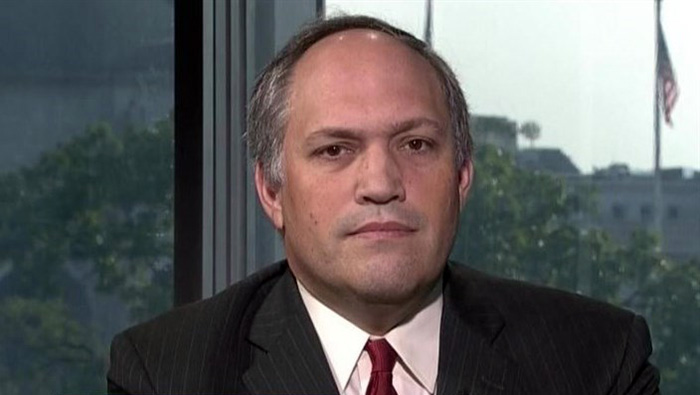
Michael Rubin
Mujahedin Khalq as an Opposition Group

The Incredible Disappearing of the Mujahidin al-Khalq

Michael Rubin, an American journalist critical of the Islamic Republic and a staunch opponent of the Mujahedin-e Khalq (MEK), believes that Israel’s attacks on Iran and its plan to change for regime change are the causes for the destruction of the MEK.

Although his analysis in his recent article in the Middle East Forum is not without flaws, his view on the nature of the MEK and his criticism on the performance of this treacherous and violent group, is worth to know:

Imagine talking about regime change for decades, hosting posh conferences that cost millions of dollars, paying five- and perhaps even six-figure honoraria to retired politicians, cabinet secretaries, and ministers from across the United States and Western world, all the while claiming that a veiled septuagenarian leader who never won an election and consistently polled with less than 1 percent support was Iran’s future popular leader. Then Israel strikes at Iran to end the Islamic Republic, inflicting the regime’s greatest crisis in forty-six years and… crickets. Pro-forma statements that do little and certainly do not call for meaningful regime change. That describes Iran’s Mujahedin al-Khalq (MEK, MKO).

Perhaps the MEK or its political umbrella, the National Council of Resistance of Iran, is upset. After all, despite their rhetoric of opposition, the MEK cannot erase their history. Their leadership embraced Ayatollah Ruhollah Khomeini prior to the Islamic Revolution and worked fist-in-glove with him until Khomeini sought to discard them alongside other allies as he consolidated control. The MEK then fled into exile and offered their services to Iraq’s Saddam Hussein, both to strike into Iran and to help Saddam’s Republican Guards suppress Iraqi Kurds. This is why ordinary Iranians despise the group.

The MEK has always been problematic

The MEK has always been problematic. It operates like a cult, its children notoriously isolated and absent from schools where they might mix with other students from outside communities. Its American proxy groups’ tax forms make little sense. This is problematic given how the MEK channels honoraria for American politicians. When not enticing American officials to endorse them, the group indoctrinates its members in anti-Americanism.

Still, it has long insisted that it was Iran’s most popular movement. It used that repeated claim as a means to block or besmirch other opposition groups or co-opt initiatives such as the referendum movement that called for a new referendum to allow Iranians to endorse or denounce Islamic Republic as form of government more than 15 years ago. The group’s leaders and officials seem more obsessed with the son of the late shah than they do with bringing down the Islamic Republic.

MEK more talk that substance

Traditionally, the MEK has claimed they so deeply penetrated the regime that they could expose intelligence no other groups could. Essentially, the MEK said they were the real deal, and other Islamic Republic dissidents and oppositionists were more talk than substance. In reality, there were red flags. A quarter-century ago, for example, the MEK put a supposed defector it identified as Ahmad Behbahani in touch with CBS’ 60 Minutes for an interview, in which Behbahani claimed he oversaw Iranian terrorism and said that Iran, not Muammar Qadhafi’s Libya, was responsible for the downing of Pan Am Flight 103 over Lockerbie, Scotland. The alleged Behbahani made several other spectacular charges. The problem was that Behbahani was a fraud; physically, he could not have been the real suspect because the man the MEK put forward was several inches too short.

Nor was this the only MEK fraud. MEK representatives often would shop fraudulent documents around Washington; as a Pentagon desk officer, I and my colleagues intercepted several. The MEK goal seemed clear: While they claimed opposition, they hoped Bush administration hardliners who sought regime change in Iran would bite only to be subsequently discredited when the fraud was exposed.

That is not to say that the MEK does not break news. They were the first group to expose publicly the then-covert Natanz enrichment facility in 2002, and have since announced various other sites. Especially now, such announcements appear much more likely a mechanism for foreign intelligence services—most likely Israel’s and/or Saudi Arabia’s—to publicize findings without their own fingerprints.

The MEK will be exposed as frauds

With the regime teetering, the MEK is as well. The group opposed Ayatollahs Khomeini and Khamenei not because they opposed the Islamic Republic, but because the MEK wanted to be in charge of the Islamic Republic. As Iranians make their voice heard, the MEK knows they are toast. They will be exposed as frauds, and those supporting them will rightly have their judgment questioned, much like the many American academics who once embraced the Khmer Rouge in Cambodia as progressives, a phenomenon that scholar Guenter Lewy documented.

As the Islamic Republic collapses, the MEK will fade away as well—for three reasons. First, the regime no longer will need then group as its tool. Second, foreign intelligence agencies have dispensed with shadow boxing and are now at blows.

Once again, the MEK has lost its role. Finally, the Iranian people will speak and put the mutated mixture of Islamism and Marxism to bed, for as Iranians move forward, they will seek democracy.

June 22, 2025 0 comments
FacebookTwitterPinterestWhatsappTelegramSkypeEmail
Maryam and Massoud Rajavi
Mujahedin Khalq Organization

Eurasia Times: MEK has no capacity or support inside Iran

To be honest, Israel’s so-called preemptive strikes on Iran show that Benjamin Netanyahu has gone beyond his government’s “Initiation Doctrine.” According to Netanyahu’s rhetoric to the Iranian nation while dropping bombs on Iranian citizens, he wants to change the Iranian regime and claims to stand with the Iranian nation.

As expected, the leaders of the MEK, as one of the opposition groups, are delighted with these fantasies. The sect’s disappeared leader, Massoud Rajavi, expresses his enthusiasm for Israel’s attacks on his compatriots in a new message every day. But whether the MEK really has a place in this equation is a question that an Indian journalist has addressed in the Eurasia Times.

Prakash Nanda, who seems to have a good understanding of Iranian society and the conditions of the Iranian opposition, first poses the question: “Will the Iranians respond to Netanyahu’s request?” and he himself answers: “Given the history of recent unsuccessful attempts to change the regime in Tehran, it is very difficult to answer this question.”

By enumerating and examining the oppositions existing in these conditions, the author of this article also addresses the situation of the MEK organization and provides a relatively comprehensive analysis of this group:
The People’s Mujahideen, also known as the Mojahedin-e-Khalq (MEK) or People’s Mojahedin Organization of Iran (PMOI), is primarily based in exile. It began in the 1960s as an Islamist-Marxist student militia, which played a decisive role in helping to topple the Shah during the 1979 Iranian revolution.

Anti-capitalist, anti-imperialist, and anti-American, MEK fighters had killed scores of the Shah’s police in often suicidal street battles during the 1970s. The group targeted US-owned hotels, airlines, and oil companies, and was responsible for the deaths of six Americans in Iran.

“Death to America by blood and bonfire on the lips of every Muslim is the cry of the Iranian people,” went one of its most famous songs. “May America be annihilated.”

Such attacks helped pave the way for the return of the exiled Ayatollah Ruhollah Khomeini, but he quickly identified the MEK as a serious threat to his plan to turn Iran into an Islamic republic under the control of the clergy.
The well-armed middle-class guerrillas, although popular among religious students and intellectuals, proved to be no match for Khomeini’s organization and ruthlessness.

Khomeini used the security services, the courts, and the media to choke off the MEK’s political support and then crush it entirely. After it fought back, killing more than 70 senior leaders of the Islamic Republic – including the president and Iran’s chief justice – in audacious bomb attacks, Khomeini ordered a violent crackdown on MEK members and sympathizers. The survivors fled the country.

For almost two decades, under their embittered leader Massoud Rajavi, the MEK staged attacks against civilian and military targets across the border in Iran and helped Saddam suppress his own domestic enemies. But after siding with Saddam, who indiscriminately bombed Iranian cities and routinely used chemical weapons in a war that cost a million lives, the MEK lost nearly all the support it had retained inside Iran.

After the US invasion of Iraq, the MEK launched a lavish lobbying campaign to reverse its designation as a terrorist organization, despite reports implicating the group in assassinations of Iranian nuclear scientists in 2012.
In 2009, the UK delisted the MEK as a terror group. The Obama administration removed the group from the US terror list in 2012, and later helped negotiate its relocation to Albania.

However, in Albania, the MEK is struggling to hold on to its own members, who have begun to defect. No strategic analyst thinks that the MEK has the capacity or support within Iran to overthrow the Islamic Republic.

After examining the Pahlavis and the Green Movement as two other options to replace the Islamic Republic, Prakash Nanda concludes that none of the three groups seem to have the power or support to overthrow the government.

For this to happen, the journalist believes, Israel would have to be in a position to win the war against Iran decisively and without any compromise, something that cannot be assured in the absence of American support and endorsement.

He also acknowledges that the Iranian military is still strong enough to push Israel back, as seen in its missile counterattacks on Israeli cities on June 14 that passed through its powerful Iron Domes. In addition, he believes that there is a possibility that the Israeli attacks will unite all Iranians against this government.

If we assume the above analysis is correct and the latter possibility comes to pass, then the MEK is the only group that will not unite with any other Iranian of any ideology. They remain on the Israeli front.

Mazda Parsi

June 21, 2025 0 comments
FacebookTwitterPinterestWhatsappTelegramSkypeEmail
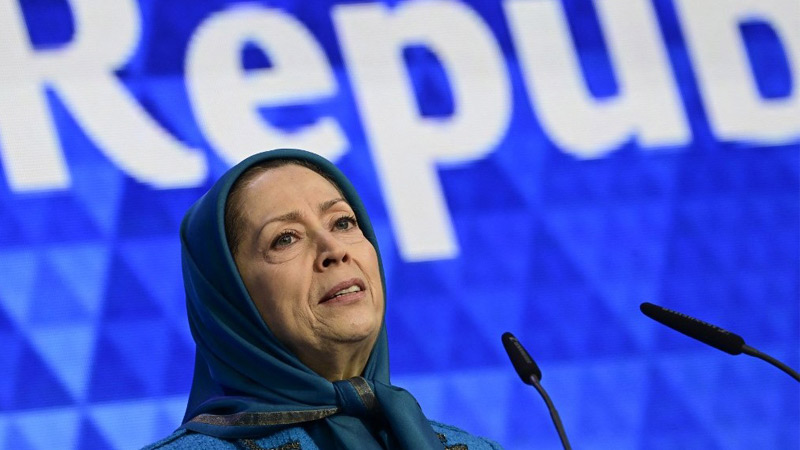
Maryam Rajavi
Mujahedin Khalq as an Opposition Group

Newsweek: MEK cult lack any significant domestic constituency

As Israel claims that its unprovoked attack on Iran is aimed at regime change, analysts wonder which opposition group may be able to take over Iran after the so-called regime change. In this case, the MEK and the Monarchists are the two main oppositions to be analyzed.

Tom O’Connor, Senior Writer of the Newsweek suggests that “as Israel eyes regime change, Iran’s opposition is divisive and divided. He asserts that a number of observers argue that neither Pahlavi nor the MEK hold the necessary influence in Iran to substantially affect the country’s future.

In case of the MEK, he quotes Ali Alfoneh, senior fellow at the Arab Gulf States Institute in Washington. Alfoneh told Newsweek, “The NCRI/MEK, which relocated to Iraq and collaborated with the Iraqi Army throughout the war against Iran, has been reduced to a cult-like political sect lacking any significant domestic constituency.”

O’Conner also has interviewed Muhammad Sahimi, professor at the University of Southern California, who has outlined a difficult situation for both MEK and monarchy supporters.

“The MEK has had long-standing relations with Israel, and they too hope that they can come to power, although they are universally despised by Iranians from all walks of life, due to their siding with Saddam Hussein’s regime in Iraq during its war with Iran,” Sahimi told Newsweek about the MEK. “At the same time, their members are all in their 60s and 70s, and in exile. They are a spent force.”

The author also talked to Sina Toosi, senior fellow at the Center for International Policy. Toosi argued that propping up either Pahlavi or the MEK could ultimately harm efforts for democracy in Iran.

“While these groups will likely seek to use the current crisis to boost their visibility and present themselves as viable alternatives, empowering them would be a grave miscalculation,” Toosi told Newsweek. “It would further discredit any externally backed initiative for political change and would undermine the broader Iranian pro-democracy movement, which overwhelmingly rejects foreign interference and sectarian or authoritarian alternatives.”

“Paradoxically, some of the strongest opposition to U.S. or Israeli interference often comes from grassroots civil society actors and reformist or moderate political currents, not the security establishment,” he added. “Undermining those internal voices—who support democratic change but oppose war and foreign manipulation—could inadvertently strengthen the very forces Israel and the U.S. claim to be opposing.”


June 18, 2025 0 comments
FacebookTwitterPinterestWhatsappTelegramSkypeEmail
MEK; Israel mercenaries
Mujahedin Khalq; A proxy force

The MEK’s clear cooperation with Israel in espionage and terror

The approximate coincidence of the latest MEK propaganda show with the Israeli attack on Iran is not surprising. These two organizations, enemies of each other, are therefore friends. Although this friendship is not obvious, it has been manifested in many espionage and operational matters.

After the MEK’s recent show in Washington DC to supposedly expose an Iranian nuclear weapons program, entitled “Kavir Plan,” Newsweek magazine, publishing a report on Alireza Jafarzadeh’s claims at that meeting, considered the MEK and Israeli efforts to obtain information and spy on Iran’s nuclear program to be parallel:
“The MEK’s efforts to in expose Iranian nuclear secrets dates back to at least 2002, when the group revealed the existence of the Natanz uranium enrichment site and Arak heavy water plant. The campaign has run in parallel with efforts by Israel to target and unveil covert Iranian nuclear activity, including a 2018 raid by the Mossad intelligence agency through which Prime Minister Benjamin Netanyahu claimed to have obtained up to 100,000 documents related to Iran’s nuclear program.”

We do know that there are numerous reports of intelligence and operational cooperation between the MEK and the Israeli intelligence service, Mossad. Following the first wave of attacks on Iranian nuclear scientists, which killed several of them, US officials confirmed the allegations made by Iranian leaders, telling NBC News that the deadly attacks on Iranian nuclear scientists were being carried out by an Iranian opposition group (the MEK) that was financed, trained and armed by Mossad.
In fact, the MEK, as an opposition force with Iranian nationality, familiarity with the Iranian language and culture, and very experienced in organized operations, is the best choice for Mossad.

The role of the MEK organization in spying on the Iranian nuclear program and assassinating nuclear scientists was later confirmed in reports by other investigative journalists. Kevin Jon Heller, professor of international law and security at the University of Copenhagen, discussed the potential role of Israel and the MEK in the assassinations of Iranian nuclear scientists. Specifically, Heller addressed the NBC report that suggested Israel and MEK were responsible for these killings and that Israel was sponsoring the MEK’s actions:

“Under the Terrorist Bombing Convention, “states cannot be terrorist” only insofar as bombings are conducted by the “military forces” of a state; bombings conducted by a civilian intelligence service such as the Mossad are not excluded from the Convention’s definition of terrorism. So yes, the Mossad’s actions in using MEK to kill the Iranian nuclear scientists qualify as terrorism.”

Today, about 13 years after the publication of the above-mentioned analysis, the Newsweek reporter asks Jafarzadeh about the MEK’s cooperation with Israel at a press conference:
“Jafarzadeh declined to comment on whether or not the MeK was cooperating with Israel on the issue. However, he confirmed that the information was being shared with President Donald Trump’s administration as well as the International Atomic Energy Agency (IAEA).”

Gareth Porter, an American investigative journalist, has published numerous reports and even a book on the fabricated intelligence by Israel and the MEK and their collaboration to undermine Iran’s nuclear program.

After the assassination of Mohsen Fakhrizadeh, another Iranian nuclear scientist, he suggested that Israel’s Mossad had spent years on a propaganda campaign aimed at convincing the world that Iran had a nuclear weapons program and legitimizing the assassination of Iranian scientists. According to Porter’s research, the MEK is also the operational arm of Mossad in its propaganda against Iran to justify its assassinations.

According to Porter’s article, “in their 2012 history of Israel’s intelligence service,” Mossad: The Greatest Missions of the Israeli Secret Service”, Michael Bar-Zohar and Nisham Mishal pointed to Mossad as the culprit behind the appearance of the supposed Iranian nuclear documents. The writers recounted how Mossad gathered the personal information on Fakhrizadeh that was later released to the public through the MEK, including his passport number and his home telephone number.”

“This abundance of detail and means of transmission,” Bar-Zohar and Mishal wrote, “leads one to believe that… ‘a certain secret service’ ever suspected by the West of pursuing its own agenda, painstakingly collected these facts and figures about the Iranian scientist and passed them on to the Iranian resistance [MEK].” Porter asserts that this is “a pattern of assassinations justified by disinformation”.

It is obvious that the MEK organization, which has failed to gain the support of the Iranian people by repeating concepts such as “resistance units”, “uprising” and “democracy”, is forced to hang itself in the hands of superpowers and warmongers, just as they once considered Saddam Hussein their master and landlord. Thus, the MEK’s footprint in the tragedies that are occurring in Iran today is evident.

Mazda Parsi

June 16, 2025 0 comments
FacebookTwitterPinterestWhatsappTelegramSkypeEmail
Ebrahim Khodabandeh, the CEO of Nejat Association
The cult of Rajavi

Tehran Times Interview with Ebrahim Khodabandeh- Part 3

In the second part of the interview of Ebrahim Khodabandeh, the CEO of the Nejat Society with Tehran Times, he explained about the tactics the Mujahedin-e Khalq (MEK) use to infiltrate western governments buying the support of their politicians and to raise funds among their citizens. He described cult-like attitudes of the group leaders who violate the basic rights of their own members.

In part 3 of the interview, Khodabandeh describes the actions taken by Nejat society in order to warn the Albanian government about the presence of the MEK in their country. He suggests that the MEK has built a state in state with its autonomy at Ashraf 3.

According to Khodabandeh the MEK, Nejat Society’s goal is to rescue people: those who are stuck at Ashraf 3, Albania and those youngsters in Iran who are at risk of being manipulated by the MEK fake accounts on social media. He warns about the risk of MEK’s cyber army on the Internet.

https://dlb.nejatngo.org/Media/Interview/Tehrantimes-khodabandeh-3.mp4
June 16, 2025 0 comments
FacebookTwitterPinterestWhatsappTelegramSkypeEmail
Trial of MEK leaders in Tehran
Iran

Report on the 35th court session of the MEK’s trial

The 35th court session examining the charges against 104 members of the Mujahedin-e Khalq (MEK) as well as the organization’s nature as a legal entity, was held on June 10th, in branch 11 of the Criminal Court of Tehran Province, presided over by Judge Amir Reza Dehghani.

At the beginning of the hearing, Judge Dehghani explained about the testimonies made by arrested agents of the MEK who committed terrorist attacks in the early years of the 1980s. According to the testimonies of certain MEK agents, named Sohrab Sepehri, Hossein Sheikholhokama, Abbas Sahraiee and abdolkarim Moazez, the leaders of the group had ordered them to kill any individual who seemed to be a sympathizer of the Islamic Republic.

They testified that the murders were usually accomplished based on the beard of the victim or the portrait of ayatollah Khomeini on the wall of his shop. This way, the MEK, as the first defendant of the court, has killed a large number of civilians in Iran.

Maddah, the plaintiffs’ lawyer, asked some of family members of the victims of a terrorist attack, called Qadikalah incident, and a survivor of the attack to take the stand and deliver their testimonies.

Ali Haghpanah, the brother of Mohammad Ali Haghpanah asked the court to bring the MEK to justice for the assassination of his brother. Qiaseddin Mozaffari, the son of Hossein Mozaffari also lost his father in Qadikalah terrorist attack. The MEK agents killed the two men in the road from Qaemshahr to Qadikalah.

Einollah Delpisheh is also a survivor of Qadikalah incident who took the stand to testify about the terrorist attack. He and Mozaffari were teachers; they had no political position in the government.

Abbas Ali Kamalpour Bandari was also a victim of the MEK terror teams. He was only 17 when he was killed by the MEK terrorist. His brother, HosseinAli attended the court to ask for punishment of the group and its leaders.

The wife and children of Yunes Taheri also demanded blood money and severe punishment from the court for the first accused of the court, the legal entity of the MEK. Taheri’s wife told the court that the body of her husband was never found. Yunes Taheri was a member of Iranian revolutionary guard.

Another action of the MEK was the hijacking of a Phantom F-14 fighter jet, which was carried out by agents of the group. This case was reviewed in the 35th session too.

The legal representative of the Islamic Republic Army وIn the previous session, he explained three cases of military plane hijackings carried out by the Mujahedin. In this session, he also explained one of these plane hijackings and the pilots who hijacked the plane with the collusion of the MEK and transferred military information. He submitted the documents to the court.

The next court session will be held on June 28th, 2025.

June 11, 2025 0 comments
FacebookTwitterPinterestWhatsappTelegramSkypeEmail
Nejat Albania Conference in Pogradec
Albania

Conference of Nejat Society Albania in Pogradec

Nejat Society Albania, held a conference in Pogradec, Albania to convey the voices of mothers and families of members of the Mujahedin-e Khalq (MEK). The conference was organized through the efforts and interest of Ms. Eshpersa, head of the Association of Intellectual Women in Albania.

The conference, which had been advertised the day before by distributing brochures by Albanian members of Nejat Society, was attended by about a hundred Albanian women and mothers.

At the entrance to the conference venue, photos, cartoons, and letters from languishing mothers were attracting attention. The conference began at 9:30 a.m. welcoming the participants, with the presence of three Albanian TV stations and about a hundred female participants.

Nejat Albania Conference in Pogradec

Nejat Albania Conference in Pogradec

An Albanian mother supporting mothers in Iran, a psychologist and the head of the Intellectual Women’s Association, and Khalil Ansarian former member of the MEK were the speakers of the event.

Also, in a live video call from two locations in Iran, Alavian from Khuzestan and Leila Ghasemi from Zanjan presented the families’ requests and humanitarian needs to the audience.

The conference ended with questions and answers from the audience. The participants also signed a petition to aid the families with contacting their loved ones taken as hostages at the MEK’s camp, Ashraf 3, in Manez, Albania.

Nejat Albania Conference in Pogradec

Nejat Albania Conference in Pogradec

Nejat Albania Conference in Pogradec

Nejat Albania Conference in Pogradec

Nejat Albania Conference in Pogradec

Nejat Albania Conference in Pogradec

Nejat Albania Conference in Pogradec

Nejat Albania Conference in Pogradec


June 11, 2025 0 comments
FacebookTwitterPinterestWhatsappTelegramSkypeEmail
Nejat Newsletter no.125
Nejat Publications

Nejat Newsletter No.125

INSIDE THIS ISSUE
1. The MEK’s forbidden family bonds
Within the Ashraf camp in Albania, all that matters is how members serve the Mujahideen-e- Khalq (MEK) leadership. Family is considered a distraction from the directives of the leaders.

2. The MEK Illusion of “International Support”
Exposing the Exploitation of Retired Western Officials by the Cult of Rajavi In recent years, the terrorist organization Mujahedin-e Khalq (MEK), under the leadership of Massoud and Maryam Rajavi, has persistently attempted to create a false image of legitimacy by showcasing superficial links with Western officials..

3. Women in the MEK: Trapped, tortured, and silenced
The terrorist group Mojahedin-e-Khalq (MEK) may not consider its killing of over 23,000 Iranians a heinous act, nor its alliance with Saddam Hussein against Iran during the 1980s invasion. A member might even argue that these acts of terror and treason were committed in the name of a just cause. However, what the group would certainly never admit is its systematic abuse of its own members, especially the women it so desperately tries to portray as free and happy.

4. Mothers Protest against MEK’s presence in Durres, Albania
The demonstration, which took place right in front of the municipality of Durres lasted for an hour. Albanian mothers who are members of Nejat Society Albania distributed flyers to the public to enlighten them about the MEK’s inhumane actions, including not allowing mothers to visit their loved ones, not even receiving letters, opposing the Red Cross in this regard.

5. An Analysis on Massoud Rajavi
In his TEDx Talks, he states some facts about power-addict people. The criteria that he clarifies is dramatically compatible with Massoud Rajavi. According to Gabor, some people are addicted to power, to wealth and to acquisition because they want to make themselves bigger.

6. Grieves of a daughter of Mujahed parents
I have never been in the MEK for a single day. I was not among the Ashraf children. My mother was a member of the MEK before the 1979 revolution. She was one of the academic elites at
Tehran University who found her way into the group and dragged my father into this pit. She was arrested with my father in 1961. My father was released a year later and my mother two
years later, but they continued their activities. My mother’s family was generally part of the 1979 uprising in some way.

7. About Nejat Society
Nejat Society is a Tehran-based entity with offices across Iran and Europe that assists families seeking contact with loved ones in the MEK..

To view the pdf file click here

June 7, 2025 0 comments
FacebookTwitterPinterestWhatsappTelegramSkypeEmail
Abdollahi
Human Rights Abuse in the MEK

My Asalan… Come Home

Soraya Abdollahi is the mother of one of the MEK hostages. Her son Amir Aslan Hassanzadeh was recruited by the MEK agents when he was very young.

Ms. Abdollahi has been endeavoring to free AmirAslan from the hands of the MEK leaders, for over two decades. She has taken every kind of legal action to call on the international community for the release of their son.

She has met several authorities in Iran, Iraq, Europe and the United Nations. She has written so many letters to anyone who can do anything for them. She has founded an NGO called ”Mothers, Forgotten Victims”to help the voice of mothers of the MEK members to be heard. She has launched several campaigns to collect signatures to make Albanian government take action in order to help Ashraf residents choose for their fate.

https://dlb.nejatngo.org//Media/Interview/Abdollahi-TehranTimes.mp4

In this video, Soraya Abdollahi recounts her ordeals with her only son captivated behind the bars of Ashraf 3 in Albania:

Amir Aslan; you left me alone for 24 years,
its been 24 years that I haven’t heard from you,
I don’t know where you are,
I don’t know how you live,
I don’t know how can you live without me,
How can a other tolerate 24 years of anxiety awaiting,
How can a mother live 24 years with just pictures and memories,
On what grounds?
For what crime were you imprisoned?
On what ground have you been imprisoned?
You can’t even make a phone call,
You can’t talk to me, …


June 3, 2025 0 comments
FacebookTwitterPinterestWhatsappTelegramSkypeEmail
MEK trial
Iran

Report on the 34th court session of the MEK’s trial

The 34th court session examining the charges against 104 members of the Mujahedin-e Khalq (MEK) as well as the organization’s nature as a legal entity, was held on May 27th, in branch 11 of the Criminal Court of Tehran Province, presided over by Judge Amir Reza Dehghani.

Judge Dehghani once more addressed the host countries of the defendants, saying: “According to international laws, terrorist crimes are separated from the rules on extradition of criminals. Based on Article 11 of the UN Convention on the Suppression of Terrorist Bombings, these charges are excluded from the list of political charges and, regarding the extradition of the defendants, they do not enjoy the protection of the impossibility of extraditing political criminals.

According to Article 11 of the UN Convention on the Suppression of Terrorist Bombings, none of the crimes stipulated in Article 2 of this Convention can be considered as extraditable crimes or legal cooperation between the parties. In Articles 1 and 2 of the 1997 European Union Convention on the Suppression of Terrorism, if the perpetrator is arrested, he is tried or extradited.”

In the 34th session, Massoud Maddah, the plaintiffs’ lawyer filed a criminal complaint against the second defendant, Massoud Rajavi. Based on the testimonies of two members of technical staff of the flight that carried Rajavi to Paris, Massoud Rajavi was armed during the flight trip. He and his comrades forcefully stop the crew at gunpoint and take them onto the plane, effectively carrying out a hostage-taking and flight high jacking.

Iraj Salehi former member of the group, the then personal bodyguard of Massoud Rajavi, testified about the flight highjack. He stated that Massoud Rajavi admitted the fact in his speeches during the meetings in Camp Ashraf in 1994.
Three family members of victims of the MEK’s terrorist acts, also testified in the court, describing how their loved ones were killed by the MEK terror operators.

Mohammad Reza Goli was another former member of the MEK who testified about the MEK’s operations in Iran’s border areas in 1993, Mortar fire by MEK terror teams between 1998 and 2001.

In the end, the judge declared that the next session will be held on June 10, 2025.

June 2, 2025 0 comments
FacebookTwitterPinterestWhatsappTelegramSkypeEmail
Newer Posts
Older Posts

Recent Posts

  • Farman Shafabin, MEK member who committed suicide

    December 3, 2025
  • Nejat Newsletter No.131

    December 3, 2025
  • Israeli Hayom: The case for redesignating the MEK, Learning from history

    November 29, 2025
  • Propaganda and Cyber Operations of the Mujahedin-e-Khalq (MEK) Terrorist Group

    November 23, 2025
  • Mujahedin-e Khalq| resistance or violence

    November 18, 2025
  • Facebook
  • Twitter
  • Instagram
  • Youtube

© 2003 - 2025 NEJAT Society . All Rights Reserved. NejatNGO.org


Back To Top
Nejat Society
  • Home
  • Articles
  • Media
    • Cartoons
    • NewsPics
    • Photo Gallery
    • Videos
  • Publications
    • Books
    • Nejat NewsLetter
    • Pars Brief
  • About Us
  • Contact us
  • Editions
    • عربي
    • فارسی
    • Shqip