
Pulling out the fangs of a viper is much safer than pressing the venom out of it every day. But even the vendors of the venom that keep and feed it to make fortune out of it are cautious enough to protect against its mortal bite by keeping it away in a safe box. A deadly viper pretending to be lying dormant, Mojahedin Khalq Organization (MKO) suddenly went rampant just when the Iranian people tried to recover from the wreaks of a revolution and had just engaged in fending off the invasion of a greedy neighbor. It emptied all its venom into the nation and inflicted irreparable damages to the same people who had feed it.
And just when it was being hunted for to pull out its fangs, it escaped away to be cared by the advocates of democracy who were, of course, concerned a lot about the rights of animals. Soon it was passed to anther monster that provided for its shelter and food to extract voluminous amounts of venom to be used against both Iranian and Iraqi people. Nobody doubts how dangerously the viper has been crawling about after its escape from Iran inflicting harm by ejecting out its venom while taking shelter in the arms of its protectors who know well that it can neither be tamed nor controlled as it is a matter of nature rather than training and instruction.
The list of terrorist organizations that for some time worked as a secure cage to repulse its possible offenses against themselves was suddenly opened to take it out. Does it mean that they intend to pull out its fangs or use it to bully Iranian regime to achieve their own interests? At least they have come to know that Iranian people are waiting with shovels at the door for the vipers unless they are fangless. It is a rule that old and harmless creatures are pitied everywhere in the world.
It is best recommended that they draw the fangs out of the adders to let them free; for sure it will make the world more secure. Some believe that the howl of a toothless wolf has the magic of lullaby causing a calm, deep sleep. It won’t take long to see how wise the viper-keepers have been!
by Mahin Tajimalek
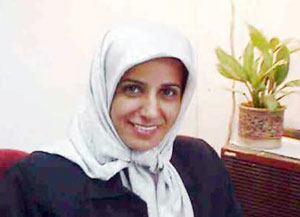 Memoirs of Mrs.Batoul Soltani- Part 7
As I mentioned in “Part 6” there is a practice within MKO’s internal relations called “nil-nil” (a cult type jargon) wherein everyday the members are supposed to allegedly demoralize themselves because they say that anyone who demoralizes himself and releases his energies will reach higher degrees. So they order the members to criticize each other daily and then listen to the others criticizing them. This is called “nil-nil” “criticizing others and being criticized".
There is another internal phenomenon called “Current Operation” (another jargon). This has been practiced in MKO cult since 1994. At the beginning it was oral. I mean that the members moved forward and spoke; but later it became written. In this way the member had to write anything he or she wanted to say and then read it inside the group. Masud Rajavi made too much noise calling the current operation as “Spiritual Jihad” as and even “higher than martyrdom”. Therefore, the members must confess all the sins they commit and they should expect any reaction from their colleagues.
For example, the member who attends the “Current Operation”, reads his confessions saying “Today I saw something precious on my superior’s desk and I took it” or “when I saw my superior this morning I suddenly imagined that she really looks like a torturer” or “when today I was supposed to work from 8 to 12, I just worked until 9 and then I went to the dorm and relaxed.” While the member is reading the facts, the others in the group insult him or her with an abusive language using terms like lumpish, idiot, . . . and punishing him or her orally and put the blames on him or her like “how do you want to liberate Iran while you don’t do your duties just right”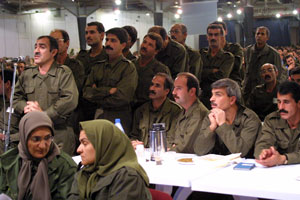
The “Current Operation” includes a stage called “cleansing” (jargon) that for the women in the leadership council should be practiced every moment and for the rest of women it is daily and for the men it is weekly. In these meetings the members must confess their sexual problems or thoughts. For Leadership Council the instruction was that if a female sees a male recalling her fiancé, she would have to confess her thoughts instantly and do the so-called “nil-nil” practice.
For ordinary female members this has to be practiced at the end of each day. For male members, the cleansing meeting is done every week on Fridays. They didn’t want to open up the relations between male and female members so the weekly meetings of men were held only by men (all meetings are generally held by women). As I noted in the previous session, there are some male members who are considered as the pins (jargon) of the organization and their responsibility is to control the members of each section. Their duties include holding the weekly meetings for the men and dealing with the problems between the male members and their female superiors. So the brother who was the pin of the organization in that section holds the meetings.
The women’s meetings are held by a member of Leadership Council and the meetings for a Leadership Council’s member are held by high-ranking members of the Council. If a member of the Leadership Council has a contradiction in mind, she has to declare it and do the so-called “nil-nil” practice. Then if it is found out through the reports, that person will be encountered and taken under more control. In fact, they have a goal. For example, the member thinks “I wish I could do something” or he thinks “How that woman looks like my ex-fiancé”. These are the moments, the moments wherein the member thinks about the outside world. But if she liked a boy (a teenager) and in a moment she liked to kiss him, she has to confess it immediately, this is a functional fact and as soon as the report of this confession is on hand, the situation of the both sides changes. A lot of efforts, in the MKO, are spent for cases such as who you have relations with and who you like.
One of the levers of the organizational control in MKO is the joint movements of female members which I mentioned in the first part of my memoirs. They said:”we order you to move jointly for your own sake. But everybody knows that this claim is baseless. Everybody knows that it’s because everyone should watch the others don’t escape. They even force the most high-ranking officials to move jointly . They said that there shouldn’t be any exclusions, because exceptions in the regulations would discredit them.
Thus everyone have to obey the regulations and execute them in order to control the lower ranks.
Translated by Nejat Society
EU turning blind eye on MKO terrorism, says Iranian Embassy
London – Iran’s Embassy in Norway announced on Thursday that the European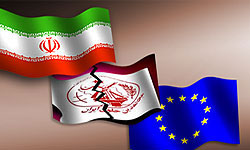 Union has turned a blind eye on terrorist activities of Mojahedin Khalq Organisation by deproscribing it from its terror list. In a statement, the embassy said the MKO has conducted many assassination and terror operations inside Iran and Iraq, claiming thousands of innocent lives.
“The EU’s move to take MKO out of its terror list is in contradiction with its decision several years ago to announce the grouplet a terrorist organisation,” the statement reads.
The embassy also said there is enough evidence that the MKO is a terrorist organisation and its leaders collaborated with Saddam Hussein in his war against Iran and suppression of his own nation.
“Based on verifiable documents and footages from Saddam’s intelligence unit, MKO leaders had met him and other Iraqi officials and briefed them on their involvement in the massacre of Iraqi people, especially the Kurds.”
The Iranian Embassy in Norway further expressed regret that the EU has isolated itself from the global community in its campaign against terrorism.
“The EU instead extended a hand for friendship and cooperation with MKO terrorists,” it said, adding that the EU’s move is in contradiction with the international laws and rights, as well as its commitments towards international anti-terrorism treaties.
zawya.com
A former member of the Mojahedin-e Khalq Organisation (MKO), who abandoned the outlawed group in protest at its terrorist operations, said the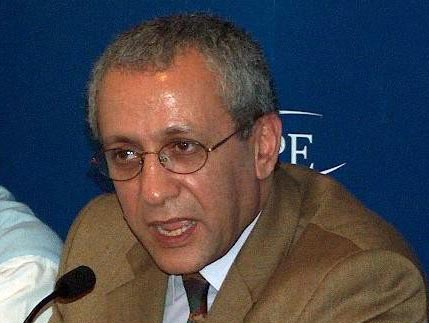 European Union should take responsibility of supporting the MKO in its terrorist acts.
Masoud Khodabandeh said deproscribing the MKO by the EU is a politically-motivated move which leads to support for the terrorism spread by the MKO.
He told the Islamic republic news agency that Europeans should take the responsibility of future measures by MKO terrorists who are going to be allowed to enter Europian countries.
"You [the Europeans] cannot defend terrorists [by deproscribing the MKO] and at the same time claim you are countering terrorism," he said.
Khodabandeh, who is now the spokesman of a non-governmental organisation dedicated to help members abandoning the MKO, said European leaders have adopted a double-standard policy towards the issue of terrorism.
"The MKO case proves that the European Union behaves in a discriminatory manner," he said, adding that Europeans are well-aware that MKO members have conducted many terrorist operations in the past three decades.
He said the MKO bears "no significance" in international developments as "it has now expired".
Khodabandeh added that MKO members, if released from the Ashraf Camp in Iraq and admitted to European countries, would spread insecurity and terrorism across Europe.
He said the terrorist nature of the MKO has never changed as its members are wearing uniforms and taking military drills in the Ashraf Camp.
He added that Mojahedin-e Khalq Organisation has not only slaughtered many Iranians but also "has been directly engaged in killing Iraqi Shiites and Kurds and suppressing even its own members".
Out of around 3,000 MKO members, he suggested, some 2,000 are in critical health conditions "and are willing to leave the Ashraf Camp."
Khodabandeh said if Europeans do really want to extend their help to these people trapped by the MKO, they should welcome them to Europe–a move he said his organisation will favour.
Who is MEHDI ABRISHAMCHI?
MR.ABRISHAMCHI is the second important personality in the male command section after MASSOUD RAJAVI in PMOI. He is one of the long time members of PMOI with more than thirty years record of service and partnership in this organization. He had spent many years in SHAH’s prison during shah’s sovereignty in Iran. He has an important role in PMOI’s affairs especially in the absence of PMOI’s charismatic leader MASSOUD RAJAVI.
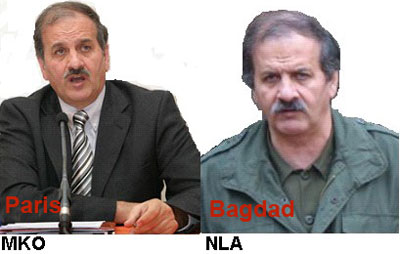
He is ex- husband of MARYAM AZDANLO[ Maryam Rajavi ], who got divorced to get married to MASSOUD RAJAVI in an ideological event, which is known as the ideological revolution. He is totally against western countries’ politics specifically the US- government. He believes that the only way to reach to the true and genuine freedom and democracy is the destruction and annihilation of Imperialism led by the USA. He was the main political mediator between SADDAM HUSSEIN’s government and PMOI. He and MR. ABBAS DAVARI and MR. MEHDI BARAIEE were a team designated by MASSOUD RAJAVI to handle all political and military affairs from PMOI’s side with the dictator of Iraq.
He believes in MASSOUD RAJAVI as a prophet and a representative of God on earth. For that reason he agreed to hand his wife MARYAM AZDANLO over to MASSOUD RAJAVI and watched them get married. He is too devoted to MASSOUD and he worships him and he believes MASSOUD will take him and the rest of PMOI’s combatants to God’s promised paradise after their death. MR. ABRISHAMCHI in his task as a mediator and go between had handed over many of PMOI’s combatants who separated from PMOI, to Iraqi secret police during SADDAM HOSSEIN’s sovereignty, to be exchanged with Iraqi soldiers who were captured by Iranian army in Iran – Iraq war. SADDAM HUSSEIN was paying him and his organization very good money for this transaction. MR. ABRISHAMCHI believed in execution and assassination of the dissidents who wanted to secede and separate from PMOI. He believes in armed struggle and knows it as the only solution to conquer and defeat all kinds of enemies who are against his ideology and the PMOI’s commander in chief, MASSOUD RAJAVI.
This man is very dangerous for European people especially French and Americans. While the catastrophic event of 9/11 happened in USA, MR ABRISHAMCHI congratulated MASSOUD RAJAVI and MARYAM RAJAVI (AZDANLO) in the big gathering of PMOI in Iraq. He mentioned that the destruction of the TWIN TOWERS in USA is a big sign of decomposition and annihilation of USA. He adored those who carried out such an attack. MR. ABRISHAMCHI had a significant and important role in suppressing and killing Iraqi people especially KURDS during the uprising of Iraqi people against SADDAM HUSSEIN. He as a mediator was receiving orders from SADDAM HUSSEIN’s military generals to give to NATIONAL LIBERATION ARMY (NLA) to destroy and demolish any resistance from Iraqi people. MR. ABRISHAMCHI is currently living in FRANCE. He is taking advantage of your freedom and democracy to propagandize his cultish ideology which believes in annihilation and destruction of any thoughts and believes which are against PMOI’s ideology, politics and platforms.
I as a victim of this barbaric cult, would like to inform you and your government that he and the rest of PMOI in FRANCE are very dangerous and they are capable of creating horrifying and horrendous scenes like they did in 2003 in Paris. At the end, I would like to reiterate, do not trust any snake especially MR. MEHDI ABRISHAMCHI.
HASSAN PIRANSAR
A victim of RAJAVI’s cult
many years, the roughly 3,500 members of the Iranian dissident group Mujahedin-e Khalq (MEK) living quietly in Iraq drew little attention. But now the relatively obscure group is at the center of an increasingly contentious argument among leaders in Baghdad, Tehran and Washington, where decisions the new White House makes about the rebels will probably set the tone for U.S. relations with Iran in the near term.
 The simmering issue of the MEK’s fate flashed into the open earlier this month when Iraqi Prime Minister Nouri al-Maliki unexpectedly declared that the group would no longer be allowed to remain in Iraq. Shortly after that, Maliki’s national security adviser, Muwaffaq al-Rubaie, said the MEK’s camp roughly 40 miles north of Baghdad would be disbanded within two months, declaring during an appearance in Tehran that Iraq would not play host to threats toward its neighbor.
The issue grew more complicated on Jan. 26, when the European Union removed the MEK from its list of terrorist organizations, a roster that includes organizations such as Hamas, Palestinian Islamic Jihad and the Revolutionary Armed Forces of Colombia (FARC). The E.U. move, which came after a long lobbying campaign by the MEK’s supporters in Europe, sparked an outcry in Tehran. About 300 people were gathered around noon on Wednesday in front of the British Embassy in Tehran to protest the E.U. decision. Some in the crowd threw stones at the embassy, while others held up shoes on sticks in a show of deep disrespect in the Middle East.
"What people side with the enemy and kill their own people in a war?" said demonstrator Sina Zamanian, 17, referring to the MEK’s alliance with Saddam Hussein during the Iran-Iraq war, which led them to settle in Iraq. "They are the worst kind of opportunistic terrorists and should be forever marked as such."
Nevertheless, some in Baghdad are calling for the group to be allowed to remain in Iraq, or at least to not be turned over to Iran, for political reasons. "We have to deal with this issue very delicately," says Ayad Jamal al-Deen, an Iraqi parliamentarian aligned with Shi’ite cleric Muqtada al-Sadr. "I’m not here to defend this organization. I have no interest in them. But I am looking out for the Iraqi national interest." Al-Deen and other Iraqi political figures see the group essentially as a bargaining chip with Iran, one of the few Iraq holds against its powerful neighbor. They argue that simply shuttering the MEK camp as Iran demands squanders what precious little leverage Iraq has against Iran. Al-Deen adds, "In my opinion, Iraq has only this card, MEK, to pressure Iran."
At the moment, however, the MEK’s ability to remain in Iraq depends on the will of the Americans. The Bush White House continued to use the military to protect the MEK at Camp Ashraf despite its current status as a terrorist organization on the U.S. list and periodic complaints by the emerging Iraqi government and Tehran, which says the group is still involved in subversive activity inside Iran. Outwardly, U.S. officials have said disbanding the camp would be in contravention of international humanitarian law because the group’s members are likely to face persecution in Iran or Iraq. But many Iraqis and Iranians suspect that the U.S. keeps the camp open for intelligence purposes, since the MEK’s spy network played a key role in uncovering Iran’s secret uranium-enrichment program in 2002.
Maliki appears intent on pressing the issue anew with the Obama Administration, which will have to decide soon whether to keep offering U.S. protection to the group or to yield to Iraqi demands to close Camp Ashraf. If the White House allows the Iraqi government to close the camp, the Iranian leadership is likely to see the move as a sign that the new Administration is eager to ease tensions between Washington and Tehran. A continuation of the status quo, however, could chill Obama’s early outreach efforts.
At Camp Ashraf, MEK members simply wait for word on what may happen to them as discussions continue in Baghdad, Tehran and Washington. Shahriar Kia, a spokesman for the group, says a closure of the camp would be a disaster for those living in what amounts to a protective quarantine for roughly the past seven years. "Closing down Camp Ashraf and the displacement of its residents, who are protected by the Geneva Conventions, against their will is a war crime," says Kia. "This will cause a humanitarian catastrophe."
— With reporting by Tariq Anmar in Baghdad
By Mark Kukis / Baghdad
http://www.time.com/time/world/article/0,8599,1875917,00.html
Reported by Al-Sharq , Egyptian diplomatic sources said Egypt has ignored a request by the delegation of the People’s Mojahedin Organization (MKO) that visited recently to demand the support of Egypt for the MKO in the face of growing Iranian influence in Iraq. The source noted that in regard to the strained relations between Cairo and Tehran, which asserts that it can tolerate no more tension, the existence of disparities and problems in the relations in the recent period does not mean interference of Egypt in Iran’s internal affairs.
The sources said that Cairo did not take the request of the group seriously, although it had assented to its visit and to listen to their point of view about the regional issues including the Iranian-Egyptian relations.
Earlier, reported by Al-Masry-Al-Youm , a delegation of MKO had a visit to Cairo last week to discuss their cause with some Egyptian bodies and human rights organizations. It notes that some sources linked the Iranian opponents’ arrival in Cairo to the recently tense relations between Egypt and Iran on the backdrop of Israel’s attacks on the Gaza Strip.
MKO looked like it was on the ropes when Iraqi Prime Minister announced he wanted the group’s military base, Camp Ashraf, near the Iranian border closed within two months. Being a globally designated terrorist group, MKO hopes that the EU’s Jan. 26 decision will unlock untold millions of dollars frozen in European banks allowing it to freely move to any country it wills. But even those countries having a tense relation with Iranian regime are cautious not to aggravate it by letting the opponent terrorists settled in their country regardless of their responsibility towards their nation to protect them against the threat of terrorism.

This is a documentary about the terrorist organization, MKO, told through the eyes of former MKO agents who have turned away from their former terror activities. An insight into this organization which has caused terror and is recognized as a terror organization worldwide.
Download Spite of the Soil – Part1
Download Spite of the Soil – Part2
Download Spite of the Soil – Part3
G.P. Put on line 27/01/2009 – For Josy Dubié (Belgian MP), there is not a doubt that PMOI is "a sect". The Belgian senator draws from his memories ![Josy Dubié :"They[PMOI/MKO] are still as sectarian as before",](https://st.nejatngo.org/Image/Politician/Josy_Dubie/Josy_Dubie_Belgium_MP_1.jpg) international reporter to the RTBF to affirm it. At the end of the Iraq-Iran war, they are the combatants of this organization which Saddam Hussein had sent like "flesh with canon" at the time of the battle of Mehran, in 1989. The treatment that Moujahidine held for their own troops, the women like the men, and that they applied to their Iranian prisoners were abominable, explains in substance Josy Dubié. "I know them from inside" , continues the senator, " and I can say to you that their behavior is to be brought closer to that of the members of Scientologie". Didn’t they evolve since the Eighties? Josy Dubié does not believe in it at all. "They are still as sectarian as before", he ensures. "However, there is in Iran an opposition much more democratic than that of Moujahidine of the people, the laic opponents, the members of the Communist party Toudeh, the sympathizers of the former Prime Minister Mossadegh ". And Josy estimates that one should not count on OMPI, which " do not represent anything the whole in Iran".
international reporter to the RTBF to affirm it. At the end of the Iraq-Iran war, they are the combatants of this organization which Saddam Hussein had sent like "flesh with canon" at the time of the battle of Mehran, in 1989. The treatment that Moujahidine held for their own troops, the women like the men, and that they applied to their Iranian prisoners were abominable, explains in substance Josy Dubié. "I know them from inside" , continues the senator, " and I can say to you that their behavior is to be brought closer to that of the members of Scientologie". Didn’t they evolve since the Eighties? Josy Dubié does not believe in it at all. "They are still as sectarian as before", he ensures. "However, there is in Iran an opposition much more democratic than that of Moujahidine of the people, the laic opponents, the members of the Communist party Toudeh, the sympathizers of the former Prime Minister Mossadegh ". And Josy estimates that one should not count on OMPI, which " do not represent anything the whole in Iran".
Lalibre.be
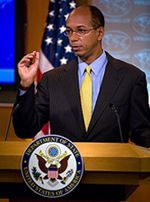
A State Department Spokesman says the US administration will not change the terrorist status of the Mujahedin Khalq Organization (MKO).
“We’ve already done a review and it was determined that there would not be a revocation of that status for the Mujahedin-e Khalq, so nothing has changed from our standpoint,” Robert Wood said at a briefing on Monday, when asked if Washington would follow the action taken by the European Union.
The EU removed the MKO from its list of terrorist organizations on Monday. The move outraged the Iranian Foreign Ministry, which in a statement, called the decision incomprehensible.
Wood added that there had not been ‘any change at this point’ in the status of the MKO, suggesting that the new administration was unlikely to alter its stance on the outlawed group.
The US announced on Jan. 12 that labeling the MKO as a terrorist group was an appropriate act and that the group had to remain on the blacklist.
The MKO, blacklisted as a terrorist organization by many international entities and countries including the US, is responsible for numerous acts of violence against Iranian civilians and government officials.
The group also attempted an unsuccessful invasion of Iran in the last days of the Iraq-Iran war in 1988.The MKO was involved in the massacre of Iraqis under former Iraqi dictator Saddam Hussein.