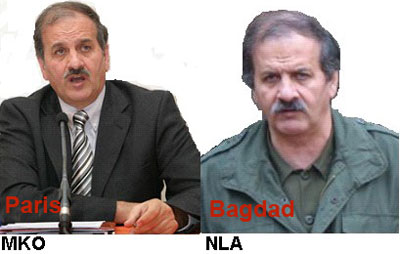
There are a number of gadgets at which cult leaders grab to convince members of their unquestionable leadership and charismatic figure. Eric Hoffer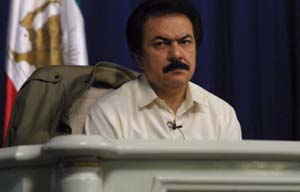 refers to the case of leftist political cult of Stalinism that was developed as a result of indoctrinating individuals with a self-fabricated ideology:
The official history of the Communist party states: "The power of Marxist-Leninist theory lies in the fact that it enables the Party to find the right orientation in any situation, to understand the inner connection of current events, to foresee their course, and to perceive not only how and in what direction they are developing in the present but how and in what direction they are bound to develop in the future." The true believer is emboldened to attempt the unprecedented and the impossible not only because his doctrine gives him a sense of omnipotence but also because it gives him unqualified confidence in the future. 1
There are other factors and tools in the hands of cult leaders to make them immune against challenges and criticism. Almost all cult leaders convince members that they have some problematic personal features that have to be corrected by means of cultic techniques and mechanisms. In order to achieve this objective, cult leaders resort to ideological dogmatism and prevent members from thinking. Also they stop the development of self-confidence on the part of members and replace it with total dependence on cultic relations and absolute submission to the point that members suffer from the loss of physical as well as mental independence for ever.
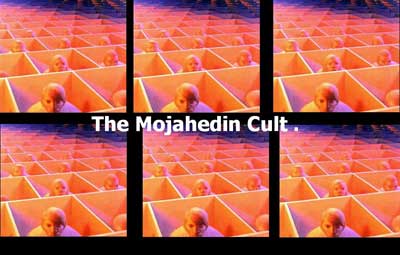
In the ideological revolution of Mojahedin, a phase transforming a political group into a cult of personality, many factors exploited by cult leaders to immunize them against challenges are traceable. Cult leaders make an attempt to convince members that they are endowed with a god-like status and unearthly power in foreseeing future events, a window that is totally closed for followers to see through. Furthermore, they expose members to absolute submission that are in most cases irrational and unreasonable. In this regard, Mohsen Rezaee, an MKO member, says:
The ideological leader has a deeper and greater insight compared to that of ordinary followers. He can foresee and interpret issues in the world that are inexplicable in their own time and it is only the passing of time that reveals their truth. Therefore, a follower has to obey his/her leader devotedly and based on absolute confidence rather than individual understanding. 2
Niyabati, one of the main theoreticians of the ideological revolution of Mojahedin, tries to justify his materialistic viewpoints on the necessity of the absolute submission of followers to cult leader by means of mystical concepts:
A wayfarer [meaning followers of MKO] has no responsibility and should be submissive like a piece of wood in the hands of carpenter. 3
He further adds:
In spiritual journey, no question is allowed. The wayfarer has to put his faith in Sheikh wholeheartedly and must regard him as the most perfect person to conduct him in spiritual training, guidance and education, be his interlocutor and obey Sheikh far from any inward or outward objection. 4
Here, the factor of anathema is added to the factor of sheikh-wayfarer relationship to convince and submit individuals. Furthermore, Rajavi and his apostles have drawn a red line by elaborating on the god-like position of Rajavi and his connection to God and have made attempt to indoctrinate the belief that challenging and disobeying him is an unforgivable sin. Anne Singleton, an MKO ex-member, refers to these factors and writes:
What Rajavi was asking everyone in the Mojahedin to do was to give him total obedience. He implied to them (through the mouths of Maryam and Fahimeh) that he had links with God and therefore knew things that ordinary members couldn’t be expected to understand. This meant that anyone who rejected him was blaspheming against God. The members were mostly willing to allow themselves to be indoctrinated with this new concept. 5
Abrishamchi, a theoretician of the ideological revolution, zealously tries to justify the unquestionable and unfathomable status of MKO leadership and states:
Leadership bears no responsibility downward. His responsibility is determined by the ideological-political considerations of the organization. 6
He further points out that questioning his decisions from lower-ranking members may result in serious disruption of the ideological principles and consequently destabilization of leadership status:
In order to clarify the ideological boundaries, it is necessary to introduce the ideological interpreter of the organization and the person who says the last word. In MKO, it is the thoughts of Masoud that are ideologically problem solving and determine ideological boundaries. Therefore, leader in the organization bears no responsiveness since it may disruptthe leader’s status. 7
In a nutshell, in MKO as in many other cults, there are mechanisms and devices used in order to raise the status of the leader to a point far from that of rank-and-files and to immunize him against criticism and questioning.
References:
1.Hoffer, Eric, The true believer, Harper &. Row, Publishers, New York, 1951, p.58.
2. Rezaee, Mohsen, p.249.
3. Niyabati, Bijan, A different look at the ideological revolution within Mojahedin, p.40.
4. ibid.
5. Singleton, Anne, Saddam’s private army, Iran-Interlink, 2003.
6. Mehdi Abrishamchi’s lecture on the ideological revolution of MKO, 1985, p.44.
7. Mojahed Journal, n. 255, p.23.
Research Bureau – Mojahedin.ws – February 1, 2009

 Memoirs of Mrs.Batoul Soltani- Part 7
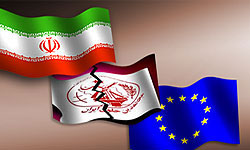 Union has turned a blind eye on terrorist activities of Mojahedin Khalq Organisation by deproscribing it from its terror list. In a statement, the embassy said the MKO has conducted many assassination and terror operations inside Iran and Iraq, claiming thousands of innocent lives.
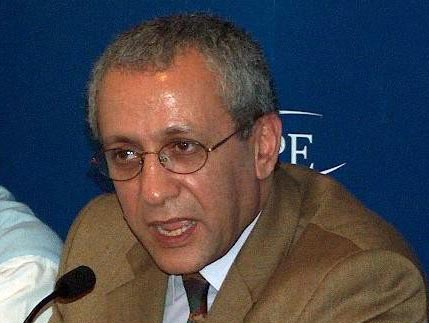 European Union should take responsibility of supporting the MKO in its terrorist acts.