Nejat Society
  • Home
  • Articles
  • Media
    • Cartoons
    • NewsPics
    • Photo Gallery
    • Videos
  • Publications
    • Books
    • Nejat NewsLetter
    • Pars Brief
  • About Us
  • Contact us
  • Editions
    • عربي
    • فارسی
    • Shqip
Nejat Society
Nejat Society
  • Home
  • Articles
  • Media
    • Cartoons
    • NewsPics
    • Photo Gallery
    • Videos
  • Publications
    • Books
    • Nejat NewsLetter
    • Pars Brief
  • About Us
  • Contact us
  • Editions
    • عربي
    • فارسی
    • Shqip
© 2003 - 2024 NEJAT Society. nejatngo.org
European Union

MKO Remains on EU’s List of Terrorist Groups

TEHRAN – A court that ruled that the anti-Iran terrorist group, the Mojahedin-e Khalq Organization (MKO), was wrongly included on list of terrorist organizations refuses to say when it should be taken off it.

The European Court of First Instance has refused to clarify whether member states must immediately apply a judgment requiring an Iranian opposition group to be removed from the EU’s terrorist blacklist.

In a written statement, issued on 17 December, the court rejected a request for clarification by EU member states, represented by the Council of Ministers, saying the request is”manifestly inadmissible”because it”relates to a matter not decided by the main judgment”.

In its judgment, made on 4 December, the court ruled that the Council of Ministers had infringed the legal rights of the MKO when it updated the blacklist in July without explaining its inclusion. It also said the Council failed to provide sufficient evidence to the court that the MKO’s status as a terrorist organization was justified.

The judgment legally annulled the MKO’s inclusion on the list. Member states have until 14 February to lodge an appeal.

The Council of Ministers subsequently requested the court to clarify if the judgment had to be applied immediately, or if the MKO could be left on while member states consider whether to appeal, known legally as”a judgment with suspensive effect”. The Council also sought clarification on whether the suspension would continue if an appeal was launched.

The Council of Ministers argues that the EU courts’ statute says a judgment should have a suspensive effect when it annuls an EU regulation. The Council also argues that a previous ruling, also at the Court of First Instance, said that the blacklist updates are legally similar to regulations.

Since 4 December, member states have been working on the assumption that the judgment is in suspension and MKO’s name features on the blacklist after it was updated on 16 December. The update was limited to adding organizations believed to be linked to Spanish terrorist group ETA. The court’s decision not to provide a clarification means the stand off between the MKO and member states is likely to continue.

The MKO, whose main stronghold is in Iraq, is blacklisted by much of the international community, including the United States.

The MKO is on the European Union’s list of terrorist organizations subject to an EU-wide assets freeze, and has been designated by the US government as a foreign terrorist organization. Yet, the MKO puppet leader, Maryam Rajavi, who has residency in France, regularly visits Brussels and despite the ban enjoys full freedom in Europe.

The MKO is behind a slew of assassinations and bombings inside Iran, a number of EU parliamentarians said in a recent letter in which they slammed a British court decision to remove the MKO from the British terror list. The EU officials also added that the group has no public support within Iran because of their role in helping Saddam Hussein in the Iraqi imposed war on Iran (1980-1988).

A May 2005 Human Rights Watch report accused the MKO of running prison camps in Iraq and committing human rights violations.

According to Human Rights Watch report, the outlawed group puts defectors under torture and jail terms.

The group, founded in the 1960s, blended elements of Islamism and Stalinism and participated in the overthrow of the US-backed Shah of Iran in 1979. Ahead of the revolution, the MKO conducted attacks and assassinations against both Iranian and Western targets.

Leaders of the group have been fighting to shed its terrorist tag after a series of bloody anti-Western attacks in the 1970s, and nearly 30 years of violent struggle against the Islamic Republic of Iran.

In recent months, high-ranking MKO members have been lobbying governments around the world in the hope of acknowledgement as a legitimate opposition group.

The UK initiative, however, has prompted the European Union to establish relations with the exiled organization now based in Paris. The European Court of First Instance threw its weight behind the MKO in December and annulled its previous decision to freeze its funds.

The group started assassination of the citizens and officials after the revolution in a bid to take control of the newly established Islamic Republic. It killed several of Iran’s new leaders in the early years after the revolution, including the then President, Mohammad Ali Rajayee, Prime Minister, Mohammad Javad Bahonar and the Judiciary Chief, Mohammad Hossein Beheshti who were killed in bomb attacks by MKO members in 1981.

The group fled to Iraq in 1986, where it was protected by Saddam Hussein and where it helped the Iraqi dictator suppress Shiite and Kurd uprisings in the country.

The terrorist group joined Saddam’s army during the Iraqi imposed war on Iran (1980-1988) and helped Saddam and killed thousands of Iranian civilians and soldiers during the US-backed Iraqi imposed war on Iran.

Since the 2003 US invasion of Iraq, the group, which now adheres to a pro-free-market philosophy, has been strongly backed by neo-conservatives in the United States, who also argue for the MKO to be taken off the US terror list.

The MKO has been in Iraq’s Diyala province since the 1980s.

December 22, 2008 0 comments
FacebookTwitterPinterestWhatsappTelegramSkypeEmail
The MEK Expulsion from Iraq

Iraq vows to expel Iranian opposition group

BAGHDAD (AFP)- Iraq vowed on Sunday to oust members of the main armed Iranian opposition group from its soil, just days before Prime Minister Nuri al-Maliki is due on a trip to Tehran.

The announcement was made during a visit by a government delegation to the camp in Iraq where about 3,500 members of the People’s Mujahedeen Organisation of Iran (PMOI) are based.

"The Iraqi government is responsible for their security and it continues to implement its plans to shut down the camp and to either deport its population to their country or to a third country," it said in a statement after the visit led by Iraqi national security advisor Muwaffaq al-Rubaie.

"Remaining in Iraq is not an option for them," the statement added.

After being thrown out- of Iran in the 1980s, members of the PMOI sought refuge abroad, notably in Iraq where they established Camp Ashraf in the province of Diyala.

The group, which is considered a terrorist organisation by the European Union and the United States, has been holding demonstrations outside UN offices in Geneva protesting against their expulsion from Iraq.

Militants at Camp Ashraf last month sent an open letter to US President George W. Bush about their situation.

Maliki is due to visit neighbouring Iran and Turkey from December 24, his fourth visit to the Islamic republic since taking office in 2006.

In March, Maliki told visiting Iranian President Mahmoud Ahmadinejad that he would take steps to ensure that Iraqi territory was not used by "terrorists" from Al-Qaeda, or from Iranian rebel groups.

The PMOI was founded in 1965 with the aim of replacing first the shah and then the clerical regime in Iran, and has in the past operated an army inside Iran.

It was financed by Saddam Hussein to carry out attacks against the regime in Tehran but was disarmed by the US military after the 2003 invasion.

December 22, 2008 0 comments
FacebookTwitterPinterestWhatsappTelegramSkypeEmail
UK

UK wants”partnership”not”conflict”with Iran

UK wants”partnership”not”conflict”with Iran, says minister

The British government is insistent that it wants to improve relations with Iran The British government is insistent that it wants to improve relations with Iranbut remains adamant in continuing with its sticks-and-carrots approach in the dispute provoked over the country’s civilian nuclear programme.
“First I would like to make very clear we haven’t got any hostility towards Iran. Iran is a country with a long and distinguished history, a magnificent culture,”Foreign Office Minister Bill Rammell said.

“It is a country we want a strong and cooperative relationship with. We very much want a modern relationship as well one based on partnership not on conflict,”Rammell said.

But setting out Britain’s position in an interview with IRNA, he said that this could not be achieved at the moment because of”serious and legitimate concerns.”

These included not only the dispute over Iran’s nuclear programme but accusations of alleged support for terrorism and the promotion of instability in the region.

The minister, who was recently appointed for the Middle East, cited such claims that Iran was supporting the Taliban in Afghanistan, despite it warning the West about its dangers many years before its overthrow in 2001.

He denied that Britain itself was supporting terrorism by recently deproscribing the Mojahedin Khalq Organisation (MKO), which has been responsible for killing tens of thousands of Iranians, insisting it was a court decision opposed by his government.

When challenged, Rammell was unable to name any other terrorist group that was not outlawed by Britain, but said he wanted to make clear that his government still recognized the MKO’s”long-track record”of involvement in terrorism in Iran and the region.

On Thursday, former UK ambassador to Tehran Sir Richard Dalton suggested a new approach was needed to resolve the dispute over Iran’s nuclear programme after five years of deadlock.

A new report on Iran: Breaking the Nuclear Deadlock, edited by Dalton, recommended that Washington engages with Iran and that US president-elect Barack Obama appoints a special envoy as part of a plan to normalize relations with Tehran.

But Rammell remained adamant that Britain was sticking with its current strategy ahead of Obama coming to power, saying the 5 plus 1 had made a”very substantial offer”of incentives to Iran, which had the choice to take it or face the prospect of”tougher”sanctions.

“We don’t want be in position of being at loggerheads with Iran,”the minister told IRNA.

“We want progressive and forward-looking relations.”

But at the root of the deadlock preventing negotiations remains the demand made on Iran to suspend the enrichment of uranium, which it is entitled to do under the Non-Proliferation Treaty.

Recent calls to drop the precondition to talks have been made among others by former American National Security Adviser Zbigniew Brzezinski and for EU External Affairs Commissioner Chris Patten, but this was rejected by the British Foreign Office Minister.

He argued that the package offer was”very reasonable”and that he remained hopeful Iran would accept it.

At the same time, he threatened that pressure would be stepped up for Iran to”make the right choice.”

But when challenged, Rammell refused to say that the real intentions of the US and UK to deny Iran its right to enrich uranium by wanting to make the suspension permanent.

“We want Iran to suspend and engage,”he said without mentioning any time limit. If Iran does, it can meet its concerns for access to civilian nuclear power through the offer made, he suggested.

December 22, 2008 0 comments
FacebookTwitterPinterestWhatsappTelegramSkypeEmail
Iraq

Iraq says Iranian opposition exiles must leave

BAGHDAD- The Shi’ite-led Iraqi government told nearly 3,500 opposition Iranians living in exile in Iraq on Sunday that it planned to close their camp and they had to leave the country. The Iraqi government "...is keen to execute its plans to close the camp and send its inhabitants to their countries or other countries

A delegation headed by National Security Adviser Mowaffaq al-Rubaie told the Iranians, who have lived for two decades at Camp Ashraf north of Baghdad, that the government was taking over responsibility for their security from U.S. troops.

They told the Iranians the government "…is keen to execute its plans to close the camp and send its inhabitants to their countries or other countries in a non-forcible manner, and that staying in Iraq is not an option for them," the government said in a statement.

The Iranians, who include members of the exiled opposition People’s Mujahideen Organization of Iran (PMOI), have lived in the sprawling township 70 km (40 miles) north of Baghdad for around 20 years.

The Iraqi government, which is friendly toward Shi’ite Iran, regards the Iranians as terrorists. The PMOI is also listed as a terrorist group in the United States and in Europe.

U.S. forces have protected the exiles since the U.S.-led invasion of Iraq in 2003 after persuading the Iranian group, also known as the Mujahideen e-Khalq, to disarm.

The U.S. military seized and destroyed more than 2,000 tanks, armoured personnel carriers and other weaponry at the time. The group had been protected by Saddam Hussein, who welcomed them as fellow enemies of the Iranian ayatollahs.

The PMOI began as a leftist-Islamist opposition to the late shah of Iran but fell out with Shi’ite clerics who took power after the 1979 Islamic revolution.

Its leaders fear many of them will be executed if they are forced to go back to Iran. Tehran has long demanded they be expelled from Iraq.

The United Nations has had trouble finding other countries to accept the Iranian exiles as refugees because of their militant background but has urged Iraq to respect their rights.

In the statement released on Sunday, the Iraqi government said people in the camp had been told that carrying out activities whether legal or illegal "against any neighbouring country, is a dangerous issue."

Iraq will treat those in the camp "in accordance with Iraqi law, Islamic values and international order," the statement said.

Amnesty International has urged Iraq and the United States to regard members of the rebel group as "protected persons" under the Fourth Geneva Convention. (Editing by Tim Pearce)

By Michael Christie

December 22, 2008 0 comments
FacebookTwitterPinterestWhatsappTelegramSkypeEmail
Human Rights Abuse in the MEK

Defenders who offend human rights

It gives me great pleasure to hear there are still people here and there who believe in altruism and condemn widespread misanthropic behaviors practiced by their fellow-creatures under a variety of pretexts. Even in the heart of the most developed and democratic countries you may encounter countless, daily reports of discrimination on the basis of race, religion and gender and other forms of human rights violations. The least can be done is to release true, reliable and unbiased reports of the instances of violations regardless of political interests and appeasement of certain group and party.

But supporters of human rights may err as they are humans. There come circumstances when the very same enthusiastic supporters of humanity and human rights give their support, knowingly or unknowingly, to a political party or a group of freedom fighters whose true anti-human nature is concealed behind a camouflage of widespread democratic propaganda. Can it be really justified especially when the blunderers are the elite in a society and shoulder a great responsibility that represents their nation?

Just on the occasion of ‘International Human Rights Day’, a session was reportedly held at the press building of the Italian Senate with regard to the severe violation of human rights in Iran. The participants in the session are reported to include a number of senators and members of the parliament as well as some personalities and heads of societies in defense of human rights. You may ask what these Italian people have to do with violation of human rights inside Iran when what happens in Italy itself is much more alarming. We have nothing to do with such issues but the question is well responded when you come to know the people orchestrating the session.

Read the excerpt from the report to figure out the sponsors. Senator Vincenzo Fasano, from the ruling coalition, called supporting the Iranian Resistance and said: “I have studied your programs and am aware of your goals for the future and also your support of annulment of death penalty. I also very welcome your genuine motto of your future government which is the separation of church and state, and hence I find myself committed to stand by you”.

That is again Mojahedin Khalq cult that has started a new phase of pro-democratic blitz as a new tactic after being disarmed by the coalition forces invading Iraq. Globally recognized a terrorist group and a cult of personality, the cult of Mojahedin is still holding the members in the heavily guarded enclosed Camp of Ashraf where a matriarchal autocracy holds the control. It does not mean that the organization believes in the superiority of women or recognizes the rights of women; rather it is a cult technique to further enslavement and exploitation of women. Of course, Senator Pasquale Nessa has hardly grasped the real intention of the cult when at the session he states: “I am aware of your struggle for women’s freedom and I wish you success”. Obviously, he is not at all aware of what passes within the Camp Ashraf and that, women are the main victimized human beings under the pretext of fighting for freedom, that is to say, they are deprived of their freedom and coerced to engage in a never-lasting struggle to regain it.

As I said, it is the duty of all influential figures who live in democratic countries to struggle against the violation of human rights. But siding with the violators of human rights and acting as their paid mouthpiece is much despised. I believe that for sure Senator Giorgio Bornacin, from ruling party, knew nothing of Mojahedin’s documented instances of violence and atrocities not only perpetrated against Iranian people but also its own members when he addressed Mojahedin saying: “It is very important today that we are present and struggle against the violation of human rights. This is the duty of all parliamentarians who live in democratic countries. I am with you to restore the rights of the Iranian people’s rights and participate with you in this struggle”. There seems no need to explain the present condition of the members at Camp Ashraf who are dispossessed of primal rights of human.

So, if it is the way these representatives approve for the restoration of the Iranian people’s rights and setting the enslaved members free, I have to admit that they are going astray and are presenting a new definition of defending human rights that shall question the accuracy of the democracy they advocate not only for the world but their own people.

December 21, 2008 0 comments
FacebookTwitterPinterestWhatsappTelegramSkypeEmail
Former members of the MEK

The SYSTEMATIC CONTROL within MKO

Memoirs of Batoul Soltani – Part 6

I believe if you have not been a member of the MKO cult, it is too hard to If a person, in one moment, thinks of family or social life or wishing to have a wife and home …, he or she should tell all the thoughts to the officials of the cult so they will be aware for the threat they feel from the side of that personunderstand what the “systematic control” is. I will mention some aspects of it which I myself used to control members with. I name them one by one:
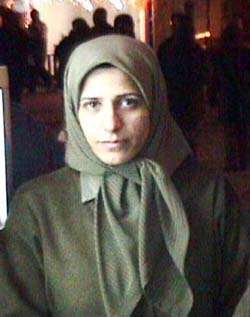
Current Operations Sessions:

that is to speak out mind contradictions and to do self-criticism in front of a large gathering. In these sessions one has to severely self-criticize oneself and be harshly humiliated by others. This a technique used for mind manipulation of the members.

Group Works:

contacting families with the presence of a third person; working on the internet in groups of two or more; scheduled work plan without any spare moment; the minimum sleeping time; hard physical works, and so on.

Divinity:

the guru and the members of the leadership council and some elements close to the leader have a divine kind of ruling authority and a powerful mental influence over the ordinary members. The first rule is to express mind contradictions. That is the individual is persuaded to approach and express the contradictions of his thoughts compared with the instructions of the organization.

What do they mean by “Contradictions”? In the first phase of a person entering into the MKO or during a period of time after that, they indoctrinate the person to know what the criterion of each period is. For example, they indoctrinate that the “criterion of this era is to divorce the spouses”. So the member who enters the organization and its internal relations is supposed to describe the moments when he or she faces contradictions against the valuable phenomenon [divorce] in the ideology of the organization. Or in another example: suppose that the value in the MKO is that the men should keep away from the women. If an individual views a contradiction in such a value, he is encouraged to write them and hand them over to the officials. For instance if he saw a film and liked a woman in it or if he saw a woman in a gathering in Iraq and the woman recalled his wife to him; or if a woman saw a man and she thought of her husband, they would confess them all as their thought contradictions.

They convince the individual that expressing the contradictions is something that might cost any price. They talk about “any price” because the individual should expect insults and maltreatments following expressing his contradictions. A lot of time and effort is used for this issue.

They say that the principals of our doctrine are devotion and honesty. You should be so honest that you should confess all the moments of your feelings contradictory to the organizations’ values although they result to a disaster for you, or in the organizational terms: “You should pay any price” for being honest to the organization.

Rajavi even expressed in his message to the Leadership Council that: “It is much better to have two defectors everyday rather than having a runaway every year.”They want to control the members at any time during the day. They say that being a “Mojahed” is a valuable object. If a person, in one moment, thinks of family or social life or wishing to have a wife and home …, he or she should tell all the thoughts to the officials of the cult so they will be aware for the threat they feel from the side of that person and he/she will be under a higher control after that.
In the organizational hierarchy when an official who is responsible to control a low ranking member, doesn’t notice his problematic situation which ends him defecting or escaping from the group, that official will be deposed from his rank.

The worst punishments are enforced on the officials who are not aware of the problems of their forces who are about to defect. Rajavi even expressed in his message to the Leadership Council that: “It is much better to have two defectors everyday rather than having a runaway every year.”

See, how crucial it is for them. Now, what is the difference between a person who runs away and a person who comes to the groups’ leader asking to leave them? There is a big difference: Someone who escapes had so many contradictions in his mind that he eventually leaves the cult. He costs a high political price for the MKO. On the other hand, allegedly the future of this person has not been burned and he will be used by the enemy. Therefore it is very important for the leaders that if you want to leave, you should come and say so. They can find out when the member expresses his contradictions. They will focus on him. They put too much mental pressure on him in order to manipulate him, torturing him mentally, so as he might admit his regret and show his willingness to remain. If the person is a woman, they will bother her so much that she says “I was wrong”. If the person is a man and they finally find out that they can not keep him in, they will operate the process of “Burning future.”

It means that they have the defector to sign some engagements to allegedly burn his future. I remember a woman (whom I don’t want to tell her name) who wanted to leave the MKO, the officials told her “You want to go to cooperate with Iranian regime, to become a revolutionary guard, a torturer.” She said “No”. They said: “so if you do not want to be used by the regime you should be interviewed.”

They told her that the organization had helped her a lot and she must say it in the interview otherwise they wouldn’t let her go away.

They had dictated her interview. She had said “I am in complete health. The organization has helped me a lot. It struggles for its people’s freedom. It is so good …”

For the MKO leaders, it is not important what the defector wants to do. The only crucial thing is whether she will or won’t talk against the MKO. Only her silence matters. They want the defectors to leave, keep quiet and die… 

Translated by: Nejat Society

December 21, 2008 0 comments
FacebookTwitterPinterestWhatsappTelegramSkypeEmail
Missions of Nejat Society

MKO Ex-Member:US impeding efforts to shut Ashraf Camp

Ex-MKO members: US impeding efforts to shut Ashraf Camp

London – Several former members of the outlawed terrorist Mojahedin Khalq Organization (MKO) have accused the United States of hampering efforts to close the notorious Ashraf Camp in Iraq.

Arash Sameti, Director of Nejat Association’s Foreign Relations Department, told IRNA that Americans do not want the case of Ashraf Camp closed by refusing to cede it to Iraqi officials.

"The doors of the Ashraf Camp should be opened to international organisations and human rights entities to help those who want to leave the camp to save from the critical situation there," he said.

Sameti added that the Nejat Association, a non-governmental organisation trying to save people from the Ashraf Camp, welcomes the position of the Iraqi government on closing down the camp.

"We want western countries to support the Iraqi government and we express readiness to shelter those trapped in Ashraf Camp," he said, adding that many of Ashraf Camp residents are ill and under constant torture by MKO terrorists not to abandon the ill-famed militant group.

MKO, a dissident group which conducts violent operations against Iran, is labeled a terrorist organisation by the United States and the European Union as well as many other countries including Iraq.

Most members of the outlawed group are based in Ashraf Camp north of Baghdad. Sameti and several other former MKO members abandoned the terrorist organisation because of its coercive actions across the world and founded the Nejat Association -translated as save association- in 2003 to help save others who also want to quit MKO.

Most of the Ashraf Camp residents are said to be willing to quit but are under pressure and torture not to do so.

Sameti and other members of the Nejat Association are in London to lobby for their release. They have met members of the British House of Commons, government officials and human rights activists to raise their awareness about the misery in Ashraf Camp.

Babak Amin, the Secretary of Nejat Association, told IRNA they have also met senior officials of the International Committee of the Red Cross and the United Nations High Commissioner for Refugees.

"Many MKO members in the Ashraf Camp do not want to be terrorists and it’s our duty to save them," he said.

Amin suggested that a flag be hoisted outside the Ashraf Camp so that those who want to put aside their "terrorist uniform" could take refuge under the flag.

"The non-political Nejat Association is ready to host them and even move them to Europe," he said.

December 21, 2008 0 comments
FacebookTwitterPinterestWhatsappTelegramSkypeEmail
Massoud Rajavi

The instrumental misuse of MKO history

Rajavi owes his leadership to a number of factors among which misusing and manipulating the history of the organization and its founders is of utmost significance paving the way for imposing Rajavi on the organization and expansion of his authoritarian leadership therein. The short-term relationship of Rajavi with the organization’s founders, and Mohammad Hanifnejad in particular, is an instrument in the hands of Rajavi and his fellows to manipulate the history of the organization in his favor.    

A number of factors like the mass arrests of the early founders and high-rankings in 1971 and their execution as well as Rajavi’s escape from execution made the background for him to manipulate the history of the organization at avail himself of the critical conditions after the schism of the organization. Promotion of Rajavi to the membership of the central cadre after the assertion of Hanifnejad was the beginning of the later seizure of leadership. According to many eyewitnesses it was most accelerated due to Rajavi’s egocentricity and narcissism that prepared for Rajavi and his catalysts to make false interpretations of it. Step by step and especially after the initiation of the armed phase, this illusion turned to reality and many newcomers came to believe that Rajavi was the heir to the leadership after Hanifnejad. It would not be wrong to say that Rajavi’s had a key role in creating this illusion either in gaol or after their freedom in 1979.  

There are evidences that the main part of this process has been taken place since 1985 when Rajavi used the ideological revolution as an instrument to stabilize his totalitarian and egocentric leadership in the organization and to legitimize the ideological revolution and its consequences. In the early days of the ideological revolution, some members like Davari, Abrishamchi, and Hayati were tasked with fabricating false memories of the interest of Hanifnejad in Rajavi and the complimentary statements made by Hanifnejad on the political, organizational, and ideological qualifications of Rajavi.

This process was externalized when the central office of the organization issued a declaration on the initiation of the ideological revolution and the ideological leadership of Masoud Rajavi. The declaration asserted that after the execution of the organization’s founders, and Hanifnejad in particular, Rajavi would be the leader of the organization, responsible for its survival and development. It focused on the point that Hanifnejad himself had appointed Rajavi as his successor and the next leader of MKO. Since Rajavi was well aware that his own fabrication of memories was of no effect, he ordered his fellows and catalysts including those arrested in 1971, to make false statements in the intra-organizational sessions of the ideological revolution. Here some of these fabrications will be reviewed. Abbas Davari, whose some instances of offensive behavior towards Rajavi was quoted by some MKO former members, in his article “The point of perfection” published in the organization’s official organ, Mojahed, writes:

Saeed Mohsen was very sensitive about the freedom of Masoud and when Masoud was offered a clemency and his execution was replaced by life imprisonment as a result of the efforts of Dr.Kazem Rajavi [his brother], Mohsen was too happy and asked me to convey his message to Masoud. He said: “Extend my greetings to Masoud and tell him that his responsibility is very heavy at the time being since he is the only remnant of the central cadre and the manifestation of our principles and experiences. He is endowed with a great responsibility in this phase. He will be beset with many problems and may suffer many disturbances. We will receive all praises since we enter the reign of martyrdom yet he will face all accusations since he will continue the struggle and would have a status much higher than ours. He will be martyred every day and every hour. Yes, he will be an alive martyr. 1

In another article, he has pointed out that:

The necessity of ensuring the continuity of this way and developing the revolutionary Islam was evident to the founders and the person who arrived at the very summits of honor. The organization founders accomplished their responsibility and before their martyrdom appointed Masoud as the next leader not to leave the organization without a head. 2

These statements are pre-determined reactions to the objections and accusations made against the ideological marriage of Masoud and Maryam and the issue of Rajavi’s fabricated Imamate. Mohammad Seyedi Kashani makes a statement in this regard, stating:

The most significant thing I remember from the martyr Asqar Badizadegan is the statements he made about Masoud and his seriousness and rigidity. He always said that Mohammad (Hanifnejad) was more interested in Masoud among all members of the central cadre and loved him more than others doing his best to train and teach him as a true Mojahed. Some years later when I got acquainted with Masoud, I found out the reason why the founders had appointed him preferably as the leader among all members of central cadre and those with a longer history in the organization. 3

References:

1. Davari, Abbas, Mojahed journal, no. 456

2. The book of Founders, MKO publications, 2002, p.91.

3. ibid, the statements of Mohammad Seyedi Kashani, p.111

December 21, 2008 0 comments
FacebookTwitterPinterestWhatsappTelegramSkypeEmail
Missions of Nejat Society

Nejat: Let ailing MKO members out

Defectors from the terrorist Mujahedin Khalq Organization allege the United States is thwarting the closure of MKO’s Camp Ashraf in Iraq.

Director of the Iran-based Nejat [Rescue] Association’s Foreign Relations Department, Arash Sameti, said the United States refuses to hand Camp Ashraf over to the Iraqi government.

Most of the MKO members currently in Camp Ashraf are ailing, and being physically and mentally abused by their terrorist leaders, he added.

The MKO is blacklisted by several countries, including the EU, as a terrorist organization. The group has launched terrorist attacks inside Iran and has killed nearly 12,000 citizens across the country.

Nejat Association members have recently held meetings with the European parliament, human rights organizations, Amnesty International and British government officials in London to raise awareness about the humanitarian crisis occurring within the MKO. The leaders of the group, headed by Maryam Rajavi, are committing crimes against their own members.

According to former members of the MKO, the organization’s leaders have set up a personality cult ‘which brainwashes its supporters.’

“We urged the European officials to open Camp Ashraf doors to doctors and human rights organizations and rescue the trapped members who don’t want to be part of this terrorist group anymore,”Sameti elaborated.

“We welcome the Iraqi government’s decision to take over the control of the Ashraf Camp and seek the European countries’ support for the release of its members.”

After the US-led invasion of the country, the US put the members under protection in north Iraq amid reports that they had been used by Washington for espionage and violence-related activities.

Iraqi government officials believe the Mujahedeen Khalq Organization is playing a significant role in fueling violence and insecurity in the country. They have banned any deal with members of the MKO, calling on the US to stop supporting the terrorist group.

Nejat Association was established in 2003 by former members of the Mujahedin Khalq Organization and families of the members who remain at Camp Ashraf.

December 20, 2008 0 comments
FacebookTwitterPinterestWhatsappTelegramSkypeEmail
Missions of Nejat Society

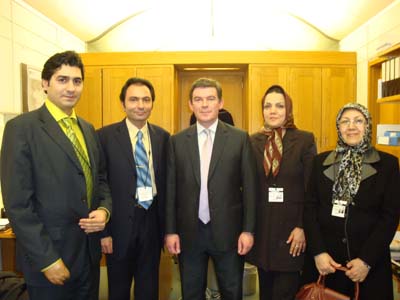
Nejat delegation met Shadow Minister for Sport in London

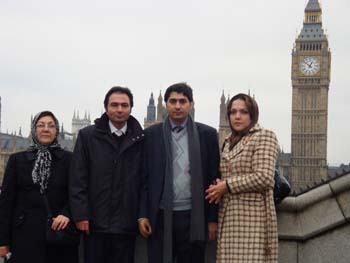
London,Nejat association,December 18 2008 – Shadow Minister for Sport, Mr Hugh Robertson met with the Nejat Society delegation inShadow Minister for Sport, Mr Hugh Robertson met with the Nejat Society delegation in London London to hear about their humanitarian solution for Camp Ashraf in Iraq.

Nejat representatives described conditions inside Camp Ashraf in Iraq. The camp is the military/ideological training base of the Mojahedin-e Khalq (MKO) cult organisation. The group has been detained there by the American army since 2003.  

Mr Robertson was sympathetic to the stories of two women in the delegation who have not seen their relatives for many years because of MKO directives for members to divorce from their spouses, children and families. Mrs Foroushani, from Isfahan, has a son in Camp Ashraf and Mrs Iranpour, from Shiraz, has two brothers in the camp.

Nejat explained that for the past five years the Iraqi government has been demanding the MKO be removed from Iraqi territory as part of Saddam Hussein’s suppressive apparatus. The MKO is officially regarded by the Iraqi government as a foreign terrorist entity. Although the MKO has been on the US list of terrorist entities since 1997, the army has not moved to dismantle the military infrastructure of what the American government itself describes as a foreign terrorist organisation, and its training base in Iraq.

Nejat explained that for the past five years the Iraqi government has been demanding the MKO be removed from Iraqi territory as part of Saddam Hussein’s suppressive apparatusThe US army has agreed to hand over control of the camp to Iraqi authorities by the end of this year when the Iraqi military will take over protection of the camp and its detainees. The Iraqi government is adamant that the MKO must leave Camp Ashraf but has given repeated guarantees that, in line with international humanitarian law, no MKO will be forced back to Iran against their will.

Nejat is asking UK policy and decision makers along with human rights organisations in the UK to support the position of the Iraqi government toward the MKO.

The delegation explained that the first steps toward resolving the problem posed by Camp Ashraf include facilitating free and unfettered reunions between families and their relatives in the camp. A separate camp should immediately be established adjacent to the camp in which members can take refuge if they choose to renounce violence and go back to civilian life. Nobody should be forced to remain a member of a dangerous paramilitary force against their will.

Mr Robertson agreed that a humanitarian approach should be followed in resolving the problem.

Report by Iran Interlink 

December 20, 2008 0 comments
FacebookTwitterPinterestWhatsappTelegramSkypeEmail
Newer Posts
Older Posts

Recent Posts

  • A study on the financial mechanism of the Mujahedin-e Khalq

    August 10, 2026
  • A Child behind the Ideological Bars of Massoud and Maryam Rajavi

    August 8, 2026
  • A Comparative Analysis of Psychological Control Mechanisms in Jeffrey Epstein’s Cult and the MEK

    August 3, 2026
  • Operation Mersad: How Iran foiled Saddam’s final gambit 37 years ago

    August 1, 2026
  • Ideology Cannot Prevail over Human Dignity

    July 29, 2026
  • Facebook
  • Twitter
  • Instagram
  • Youtube

© 2003 - 2025 NEJAT Society . All Rights Reserved. NejatNGO.org


Back To Top
Nejat Society
  • Home
  • Articles
  • Media
    • Cartoons
    • NewsPics
    • Photo Gallery
    • Videos
  • Publications
    • Books
    • Nejat NewsLetter
    • Pars Brief
  • About Us
  • Contact us
  • Editions
    • عربي
    • فارسی
    • Shqip