Nejat Society
  • Home
  • Articles
  • Media
    • Cartoons
    • NewsPics
    • Photo Gallery
    • Videos
  • Publications
    • Books
    • Nejat NewsLetter
    • Pars Brief
  • About Us
  • Contact us
  • Editions
    • عربي
    • فارسی
    • Shqip
Nejat Society
Nejat Society
  • Home
  • Articles
  • Media
    • Cartoons
    • NewsPics
    • Photo Gallery
    • Videos
  • Publications
    • Books
    • Nejat NewsLetter
    • Pars Brief
  • About Us
  • Contact us
  • Editions
    • عربي
    • فارسی
    • Shqip
© 2003 - 2024 NEJAT Society. nejatngo.org
Mujahedin Khalq; A proxy force

Grinches among Canadian politician

Folco Raymonde  David Gilmour

Canadian politician Grinches

There are a few Canadian politician such as Mrs. Folco, Quebec MP, and David Gilmour , former MPs who consistently are supporting Mojahedin Khalgh, MKO an undemocratic cult and warmongers who are in alignment with neo cons . While the Neo cons policy has failed in at cost of hundred thousands of Innocent Iraqis it is a shame theses two Canadian politician supporting such a group.

Mrs. Folco and David Kilgour looks are getting paid by the banned organization in return for the support of the Mojahedin dictator<< Maryam rajavi leader who was illegally appointed by her husband as the president of Iran in 1994 . since we had requested from those to present the facts proving Mojaheidn are pro democracy which they failed to provide that makes it more strong the support is political not humanitarian as they claim.

We suggested them If you have any doubt on the popularity and legitimacy of MKO you can make an inquiry from Canadian Intelligent services and Canadian embassy in Teheran.

Mrs. Folco

Mr. Kilgour

It is Christmas time .

If you care about humanity and human rights then why you do not try to transfer some of the younger Mojahedin who are willing to leave Ashraf , to Canada instead of demanding a legitimate government such as Iraq to keep the Mojahedin who were part of Sadam Hussein ‘s brutal security services.

If you are telling the truth then you can bring some of those young victims who are not engaged in terrorist or military operation such as Somaye Mohammadi who was taken away from to US and while she had Immigrants status.

When the parliament will resume we will take legal action against Mrs. Folco who are violating ethical code of parliament .

Also, we request The minister of Security to shed light on any funding may have been contributed to Folco and David Kigour campaign and offices in exchange for their support and lobbying the fascist organization in which is violation of Canadian criminal code.

Folco and Kilgour can not sell Canadian soldiers to a fascist group because MKO claiming they are freedom fighters . Mojahedin and Iranian Government are both two sides of a coin while Mojahedin are loathed by so many Iranian . Also, Mko are isolated among of the new Iranian generation inside and .

However , to us you look as Grinches who want to deter peace in the Middle East by supporting a brutal and undemocratic organization such as Mojahedin.

December 28, 2008 0 comments
FacebookTwitterPinterestWhatsappTelegramSkypeEmail
Iraq

Iraq rejects security guarantees for MKO

The Iraqi government has refuted recent US claims that it has granted immunity to members of the Mujahedin Khalq Organization (MKO).

A senior Iraqi official said Saturday that, contrary to Washington contentions, Baghdad has not provided security guarantees to the MKO dissidents.

"The Iraqi government is determined to abide by a parliamentary verdict to extradite members of the Mujahedin Khalq Organization," IRIB quoted the high-ranking official as saying on condition of anonymity.

Baghdad announced in a statement on Dec. 22 that MKO members at Camp Ashraf must close their training ground and leave the country no later than six months.

Iraq has also drawn up a list of MKO members who must stand trial for the operations they carried out in the war-torn country. The organization is notorious for the help it extended to former dictator Saddam Hussein in the massacre of Iraqi Kurds.

"Remaining in Iraq is not an option for them," read the statement, which came amid stepped-up Iranian calls for Iraq to expel MKO members.

White House spokesman Benjamin Chang, however, claimed on the following day that Washington had received guarantees from Baghdad that the MKO members residing in Iraq would not be "forcibly transferred" from the country.

The guarantees were claimed by the US to have been provided by the interim Iraq-US security pact recently reached between the two countries.

The Iraqi official disputed the claims, indicating that no country has so far agreed to provide sanctuary to the terrorist organization.

The Mujahedin Khalq Organization, which identifies itself as a Marxist-Islamist guerilla army, was exiled from Iran in 1986 for its many acts of terrorism against Iranian civilians and officials.

Washington has declared the MKO as a terrorist organization but has used the group as a proxy-army to promote espionage activities in the region and to support its campaign against the Iranian nuclear program.

Former CIA agents revealed in 2006 that MKO members received widespread support from upper Washington echelons, such as former attorney general John Ashcroft, Vice President Dick Cheney and former secretary of defense Donald Rumsfeld.

The group masterminded a slew of assassinations and bombings inside Iran, one of which was the 1981 bombing of the offices of the Islamic Republic Party, in which more than 72 Iranian officials were killed, including then Judiciary chief Ayatollah Mohammad Beheshti.

http://www.presstv.ir/detail.aspx?id=79634&sectionid=351020201

December 28, 2008 0 comments
FacebookTwitterPinterestWhatsappTelegramSkypeEmail
The cult of Rajavi

Slaves of a terrorist cult

Unlike the past that the term slavery could easily be defined and discerned, definition of slavery, or better to say modern slavery, is disputed today. But as the unanimous opinion reigns, modern slavery is an institution whereby human beings are divested of their freedom and personal rights and describes a number of conditions involving control of a person against his or her will enforced to surrender to the wills of a master by violence or other forms of coercion. Defined in this way, the slave is wholly subject to the will of another and it has been practiced, in varying degrees, since the earliest of ages into the modern world.

the members of MKO are indeed modern slaves who are spending their life slaving in its camps mastered under the Rajavis

According to some drawn common characteristics that distinguish slavery from other human rights violations, a slave is:


·         forced to work — through mental or physical threat;

·         owned or controlled by an ’employer’, usually through mental or physical abuse or threatened abuse;

·         dehumanized, treated as a commodity or bought and sold as ‘property’;

·         physically constrained or has restrictions placed on his/her freedom of movement. [1]

The public opinion assumes that slavery, the legal ownership of a person before the abolishment of slavery, is now illegal in all countries. Actually, the trade was legally abolished in the early 1800s. It is also prohibited by the 1948 Universal Declaration of Human Rights and the 1956 UN Supplementary Convention on the Abolition of Slavery, the Slave Trade and Institutions and Practices Similar to Slavery. Despite the fact that slavery is banned in most of the countries, it exists today and is usually ignored by most of people in the world and the media as well because it is practiced under a variety of forms and affects people of all ages, sex and race.

Can it be called anything else but slavery when extreme poverty forces parents to offer themselves or their own children to toil in the fields as a guarantee against a loan that they hardly afford to pay? Or when individuals are lured by the promise of a good job but instead find themselves subjected to working without payment while enduring physical abuse, often in harsh and hazardous conditions? Or when the indebted, abducted and trafficked women and children are intimidated by crime families and mafia gangs into any disdainful and reprehensible activity? Or even when people are illegally lured and recruited by individuals, political parties, militia groups, freedom fighters and cults to work, usually under threat of violence or other penalties, in order to accomplish intended ambitions and objectives?

You do not need to be too smart to indicate instances of practiced slavery in the modern world. Endless, mushroom-like emergence of cults that physically and mentally enslave the recruits is one among many nightmares of the modern man. In fact, man’s hope and struggle to find out the right that is in many circumstances identical with the wrong and the false, sets him on a path at the end of which is a gateway at which a man stands to push them through as slaves. As Steven Hassan, the liberated member of a cult, puts it into words:

Throughout the world, people are stressed out, sleep-deprived, and disillusioned with existing political, social, and religious institutions. They are hungry for hope. Charismatic cult leaders with delusions of grandeur or an appetite for power and money are eager to take advantage of this situation by recruiting and indoctrinating people into a form of mental slavery. 2

There are countless unscrupulous religious and political leaders who today use a variety of cultic mind control techniques to deceive and enslave followers and deprive them of their freedom among other worldly possessions. Soon after drawn into the cult, the recruits lose their resistance and accent to be manipulated under the dangers and threats manufactured by manipulators who have sought to silence their courage. In fact, many are of the opinion that among many dangers man is exposed to by his fellow creatures, the mind control techniques practiced by majority of the cults to enslave the recruits are the greatest because they empower the evil men to carry out any evil deed that continue mostly undetected.

Enslaved by political cults, the members are mostly bought and sold in political bargains for the fulfillment of certain political interests. Speaking of one instance in particular, for more than three decades some free Iranian people have been enslaved in the clutches of a terrorist cult globally recognized under a variety of alias. Mojahedin Khalq Organization (MKO, MEK, PMOI, NCRI, NLA, … ) is a notorious political cult that nobody but those in its bound can possibly give details of the rough, cult-like life they have long experienced within it. The victimized insiders of the organization that have managed to tear the bounds are the sole evidences of modern slaves enslaved within the organization’s slave camp located in the heart of a scorching desert in Iraq the group refers to as Ashraf City. It is easy to prove that, according to the above state characteristics of a slave, the members of MKO are indeed modern slaves who are spending their life slaving in its camps mastered under the Rajavis.


References:

www.antislavery.org

Steven Hassan; Releasing the bonds, Freedom of Mind Press Somerville, MA, 2000, p. 10.

December 28, 2008 0 comments
FacebookTwitterPinterestWhatsappTelegramSkypeEmail
Mujahedin Khalq 's Function

Rajavi celebrates massacre in Gaza

Rajavi celebrates massacre in Gaza as victory against Iran

What the BBC reported as ‘Massive Israeli air raids on Gaza’ has, according to a source near to Camp Maryam at Auvers-sur-Oise, been celebrated by the Mojahedin-e Khalq (MKO), aka National Council of Resistance as a ‘massive victory against the Iranian regime’.

MKO members reportedly chanted and applauded in celebration at the news and hailed it as a victory against Iran which supports Hammas.


—-

Link to the News (BBC)

http://news.bbc.co.uk/1/hi/world/middle_east/7800985.stm

Massive Israeli air raids on Gaza

Israeli F-16 bombers have launched a series of air strikes against key targets in the Gaza Strip, killing at least 155 people, medical chiefs say.

Gaza officials and the Hamas militant group said about 200 others were hurt as missiles hit security compounds and militant bases across the territory.

The strikes, the most intense Israeli attacks on Gaza for decades, come days after a truce with Hamas expired.

Israel said the operation would go on "as long as necessary".

Israeli Defence Minister Ehud Barak said "it won’t be easy and it won’t be short".

"There is a time for calm and a time for fighting, and now the time has come to fight," he said, quoted by Reuters.

Israel said it was responding to an escalation in rocket attacks from Gaza.

Palestinian militants frequently fire rockets against Israeli towns from inside the Gaza Strip; large numbers of rocket and mortar shells had been fired at Israel in recent days.

In a statement, Israel’s military said it targeted "Hamas terror operatives" as well as training camps and weapons storage warehouses.

A Hamas police spokesman, Islam Shahwan, said one of the raids targeted a police compound in Gaza City where a graduation ceremony for new personnel was taking place.

At least a dozen bodies of men in black uniforms were photographed at the Hamas police headquarters in Gaza City.

Israel’s Foreign Minister Tzipi Livni defended the air raids, saying Israel had "no choice". "We’re doing what we need to do to defend our citizens," she said in a television broadcast.

Israel hit targets across Gaza, striking in the territory’s main population centres, including Gaza City in the north and the southern towns of Khan Younis and Rafah.

In the West Bank, Palestinian Authority President Mahmoud Abbas – whose Fatah faction was ousted from Gaza by Hamas in 2007 – condemned the attacks and called for restraint.

But Hamas quickly vowed to carry out revenge attacks on Israel in response to the air strikes, firing Qassam rockets into Israeli territory as an immediate reply.

At least one Israeli was killed by a rocket strike in the town of Netivot, doctors said.

"Hamas will continue the resistance until the last drop of blood," spokesman Fawzi Barhoum was reported as saying.

Israel also stood firm, saying operations "will continue, will be expanded, and will deepen if necessary".

It is the worst attack in Gaza since 1967 in terms of the number of Palestinian casualties, a senior analyst told the BBC in Jerusalem.

The air strikes come amid rumours that an Israeli ground operation is imminent.

Calls for ceasefire

International reaction was swift and expressed concern, with many world leaders calling for calm and an immediate ceasefire.

A White House spokesman said the United States "urges Israel to avoid civilian casualties as it targets Hamas in Gaza".


"Hamas’ continued rocket attacks into Israel must cease if the violence is to stop," the spokesman, Gordon Johndroe, added.

The UK Foreign Office said: "We urge maximum restraint to avoid further civilian casualties."

The French presidency of the EU meanwhile called for an immediate halt to the shooting by both sides.

At least 30 missiles were fired by F-16 fighter bombers. Israel’s Haaretz newspaper reported that some 60 warplanes took part in the first wave of air strikes.

Hamas said all of its security compounds in Gaza were destroyed by the air strikes, which Israel said hit some 40 targets across the territory.

Mosques issued urgent appeals for people to donate blood and Hamas sources told a BBC reporter in Gaza, Rushdi Abou Alouf, that hospitals were soon full.

Egypt opened its border crossing to the Gaza Strip at Rafah to absorb and treat some of those injured in the south of the territory.

Most of the dead and injured were said to be in Gaza City, where Hamas’s main security compound was destroyed. The head of Gaza’s police forces, Tawfik Jaber, was reportedly among those killed.

Images from the targeted areas showed dead and injured Palestinians, burning and destroyed buildings, and scenes of panic and chaos on Gaza’s crowded streets.

Residents spoke of children heading to and from school at the time of the attacks, and there were fears of civilian casualties.

Reuters news agency said at least 20 people were thought to have died in Khan Younis.

Israeli security officials have been briefing about the possibility of a new offensive into Gaza for some days now, says the BBC’s Paul Wood, in Jerusalem.

But most reports centred on the possibility of a ground offensive, and Prime Minister Ehud Olmert was not expected to authorise any operation until Sunday at the earliest.

Although a six-month truce between Hamas and Israel was agreed earlier this year, it was regularly under strain and was allowed to lapse when it expired this month.

Hamas blamed Israel for the end of the ceasefire, saying it had not respected its terms, including the lifting of the blockade under which little more than humanitarian aid has been allowed into Gaza.

Israel said it initially began a staged easing of the blockade, but this was halted when Hamas failed to fulfil what Israel says were agreed conditions, including ending all rocket fire and halting weapons smuggling.

Israel says the blockade – in place since Hamas took control of Gaza in June 2007 – is needed to isolate Hamas and stop it and other militants from firing rockets across the border at Israeli towns.

http://www.iran-interlink.org/?mod=view&id=5581

December 28, 2008 0 comments
FacebookTwitterPinterestWhatsappTelegramSkypeEmail
Massoud Rajavi

Rajavi’s new version of his cult history

Rajavi and his catalysts have misused the history of the organization and its founders in order to justify members that early founders of MKO, and Mohammad Hanifnejad in particular, have appointed Rajavi as the next leader of the organization. In this regard, a number of Rajavi’s fellows have fabricated some statements and have attributed them to Hanifnejad in order to legitimize the ideological leadership of Rajavi. Following the previous articles on the statements made by Lotfollah Meisami and others, here we take a look at those made by Mehdi Abrishamchi and one of the MKO former members. Abrishamchi summarizes all we mean by his manipulation of the history of the organization in one sentence, sacrificing all the alive and dead of the organization to Rajavi and says:

When Masoud speaks, it seems as if he speaks as the representative of all the alive and dead of the organization. 1

He further shows the spirit of Hanifnejad full of praise for Rajavi and makes an attempt to raise the status of Masoud, stating:

Evidently, no one but Masoud is aware of his own status, and hardly anybody can grasp that Masoud has arrived at the high summits of our ideals and has developed our revolution, ideas, and organization to a point that would for sure elevate the soul of Hanifnejad to appreciate. 2

Although the organizational principles of MKO are opposed to centering on just one individual, he introduces Rajavi as the history of the organization and says:

Our greetings and songs, cries and slogans, love and affection, will and determination, poems and stories, all aim to imply the fact that if Mojahedin have reached the present position and have developed their revolution up to this point, serving the humanity and achieving many honors, they owe all these to the ideological leadership of Masoud. Also, we owe our recent ideological revolution to Masoud and Maryam. 3

Manipulating the history of the organization and its victims in Rajavi’s favor is so disgraceful and repulsive that Anne Singleton, an MKO former member, refers to Rajavi as misusing the members’ ignorance, writing:

Rajavi is very good at spending from other people’s pockets, especially in using the deaths of his followers. 4

She further expounds on the fact that Rajavi consents to subordinate all the historical achievements of the organization obtained as a result of so much blood shed for achieving his personal ambitions:

Rajavi clearly wanted power and was prepared to subordinate the whole organisation and all its members into a means for him to achieve this. 5

Interestingly, Rajavi and his fellows claim that he is inheritor of all the ideological principles and the history of the organization. However, the fact is that the ideological principles of the organization have been manipulated, distorted, held in archive and even eliminated under the command of Rajavi and in his favor whenever necessary:

It is worth mentioning Rajavi’s other motive for removing and then burning all of the books from the camp libraries and safe houses abroad, (libraries which incidentally only had approved books in them anyway), and that is that these books and documents were in contradiction to having an ideological leader. Even his own speeches in Tehran University in the political phase before 30th Khordad were destroyed. These speeches had been published and avidly read at the time. Their essence was taken from Marx and Mao and was to compare the evolution of species with the evolution of society and, of course, Islamicise it. Another reason was that these books and documents were very much in contradiction with capitalism and harmful to Rajavi’s new approach to his new Western masters. Until now, the whole ideology and activities of the Mojahedin, including the killing of Americans, all their songs etc, had been built on Maoism and the fight against the West and imperialism. 6

She further elaborates on perverting the ideology of the organization by Rajavi for instrumentalizing the ideology:


Rajavi perverted the ideology of the Mojahedin from its original conception to something, which allowed him total control of all aspects of the organisation including the personal lives of the members. Alongside this internal change, the organisation also lost its direction in the political scene. 7

It has to be pointed out that the history of the organization, its founders and its ideological principles, are of no significance for Rajavi. Their value depends on the extent to which Rajavi can abuse them for the achievement of his ambitions and stabilization of his cultic leadership in the organization. He has attempted to fabricate some memories and accounts to present himself and pretend to be the sole inheritor of the organization and its principles to which he is not hew. He has exploited all the resources of the organization for the fulfillment of his personal interests at the hands of a number of his ignorant fellows.

References:

1. The lecture of Mehdi Abrishamchi on the ideological revolution, Mojahed journal, no. 255

2. ibid

3. ibid

4. Singleton, Anne, Saddam’s private army.

5. ibid

6. ibid

7. ibid

December 27, 2008 0 comments
FacebookTwitterPinterestWhatsappTelegramSkypeEmail
Missions of Nejat Society

Nejat Society Letter to The representative of ICRC in Iran

Your Excellency,We hope that the humanitarian efforts of you and your colleagues in Iraq will pave the way for the release of our children from Rajavi’s camp

We would like to inform you that the terrorists of Mujahedin Khalq Organization, according to their cult-like practices, are systematically insulting their dissidents calling them as traitors and mercenaries. 

The families, whose names are attached to the letter, have relatives in Camp Ashraf, Iraq. They have always complained against MKO leaders who do not allow them to leave the cult and to contact their families. Instead of answering these demands, the MKO leaders insult the families with indecent words like “animals”. 

In their TV show called File (Parvande), the MKO tries to make its audience believe that all those who attend Nejat Society’s gathering in front of British Embassy to protest against the removal of MKO from the terrorist list, in order to prevent their children from being abused by the cult, are the agents of Iranian regime. As your Excellency has enough information on cult practices, you would agree that this is the popular method used by all cults that consider themselves as superior to the society and are prepared to revenge from us and our beloved ones in Camp Ashraf. 

We hope that the humanitarian efforts of you and your colleagues in Iraq will pave the way for the release of our children from Rajavi’s camp. We are definitely sure that their freedom is only feasible by reviving their individuality and family relations. The insults made by MKO will not influence the determination of the families to liberate their children.


Cc:

UN office in Tehran

British Embassy in Tehran

Fars News Agency

Press TV website 


 Families signed the Letter:

Tehran:


1.     Mohammad Ali Sasani 

2.     Mohammad Ghayumi 

3.    Masud Nuri 

4.    Mahmoud Ahani

5.    Alireza Ba’ba’ri 

6.    Mehran Diyale  

7.    Majid Amini 

8.    Rouh AllahBorhani 

9.    Hussein Jannat

10. Meitham Sakhaee

11. Ramezan Saeedi

12. Mehdi Nikbakht

13. HassanAli Baha’rlu

14. Hesam A’mel

15. Ziba Moheb Mohammadi

16. Aghil Sa’beri

17. Fahim Azara’ni 


Lorestan:


18. Hadi Arba’bi

19. Nur Mohammad Biranvand

20. Mojtaba Java’heri

21. Masume Shah Karami

22. Ali Asgar JaafarPur

23. Zohreh Qobari

24. Ahmad Golpayegan

25. Gholam Ali Mirzaee

26. Rahman Mohammadian

27. Hamed Moradi

28. Eskandar Arjmandi

29. Sedighe Molaee

30. Mohammad Khatibi


Tabriz:


31. Mohammad Hussein Da’dgar Eghdam

32. Naser Saeedi

33. Mohammad Reza Seddiq

34. Hassan Rahnamay, Ana Khatun

35. Mohammad Reza Purmahdi

36. Mansur Abba’skhani

37. Hamid Sojud

38. Ali Jowdat

39. Mir Mohsen Mortazavi

40. Bakhsh Ali Alizade

41. Ra‘min Hassan pur Showti

42. Ra‘min Hassan pur Showti

43. Majid Hassan Pur Showti

44. Mehdi Sojudi

45. Shahram Bahadori

46. Shahrud Bahadori

47. Abulfazl Sheikh Beglu

48. Ali Asqar Karami haft Cheshme

49. Seyyed Morteza Akbari Nasab

50. Musa Akberi Nasab

51. Salman Dolat Panah

52. Shokrollah Sadeghlu

53. Mehdi Saraee

54. Maryam Torabi

55. Masume Torabi

56. Ghorban Torabi

57. Mohammad Reza Torabi

58. Barat Ali Rigi

59. Hadi Naser Moghaddam

60. Hamid Mohammad Agh Atabay

61. Ashur Mohammad Varshi

62. Ali Khormali

63. Abdolhamid Raufian

64. Leila Nargesi

65. Hushang Gol Ali Pur

66. Iraj Gol Ali Pur

67. Farhan Ghovanlu

68. Marziye Ghafari

69. Ghorban Arab

70. Reza Ali Mirzaiee

71. Yahya’ Ziyarati

72. Esmaeel Shafaghi Kakhaki

73. Ebrahim Rezvani


Mazandaran:


74. Mostafa Asefi

75. Ayub Esta

76. Majid Mohammadi

77. Azar Karim Pur

78. Davoud Karim Pur

79. Yaqub Musavi Uraymi

80. Somaye Mohammadi

81. Kazem Samadi

82. Ali Reza Tavakoli

83. Javad Seddiqi

84. Mohammad Reza Khomeisi

85. Mohammad Reza Qanbar Zade

86. Seyyed Javad Yaqubi

87. Mehdi Thabet rostami

88. Ahmad Rezaiee

89. Mohammad Reza Khaza‘ee

90. Pari Amirzad

91. Rokhsare Zamani

92. Fakhri Amir Ali Pur

93. Musa Izakiyan

94. Hassan Shaa‘ba‘n Pur 

95. Mohsen Shaabani

96. Mir Nezam Hassani Motlagh

97. Parwiz Heidar Zade

98. Mahin Ghobadi

99. Iraj Soltani

100.               Behzad Farokhi

101.               Ali Shirgahi

102.               Zari Akhani

103.               Maryam Motevalli

104.               Ensiye Gol Dust

105.               Mehdi Fard

106.               Eynollah Shaabani

107.               Jamal Mohammad Janpur

108.               Mohammad Taghi Ab Khezr

109.               Ali Asghar Baba pur

110.               Rahim Sohrabi

111.               Masud Daryabari

112.               Dust Mohammad Farahi

113.               Hussein Ali Alizade

114.               Jamal Nateghi

115.               Hadi Shabani

116.               Samad Nazari


Yazd:


117.               Khadije Adib

118.               Massih

119.               Ahmad Paydar Ardekani

120.               Shahin Haeri Zade

121.               Esmaieel Vafa Yaghmaiee

122.               Seyyed Hussein Razavi Zade

123.               Mohammad Zare Zade

124.               Tahere Soltani Gord Faramarzi

125.               Ali Reza Karbalaiee Sabagh

126.               Abual Ghasem Ghafuri Rokn Abadi


Ahwaz:


127.               Mohammad Hamadi

128.               Alireza Moazen Tabrizi

129.               Abdolreza Kalantari

130.               Mohammad Karimi

131.               Rahim Chahar Lang

132.               Leila Dalafi

133.               Maryam Dalafi

134.               Gholam Ali Sajedi far

135.               Amir Mazrae Fard

136.               Seyyed Nader Achrash

137.               Saieed Naseri

138.               Ali Sorkhyan

139.               Ali Akbar Karami

140.               Yaber Hazbavi

141.               Kazem Pur Khafajiyan

142.               Seyyed Reza seyyed Latifi

143.               Iman Tork Ali Askari Rizi

144.               Thaleb Farhan

145.               Seyyed Nader Bani Farahiyan

146.               Yabar Qanava’ti

147.               Hamid Dehdar Hassani

148.               Shahreza Babadi


Qom:


149.               Fazlollah Samieeyan

150.               Abdollah Ostovari

151.               Hadi –Saeed Ahmadiyan Shirdel

152.               Ahmad Jahantab

153.               Jalal –Faride Sharifi

154.               Ali Rasekhi

155.               Ahmad – Yaser Haj Mehdi


Kermanshah:


156.               Mohsen Hassan Kaviyar

157.               Shahab Foruzande

158.               Mehdi Hamid far

159.               Peyman Korde Mir

160.               Ali morad Lotfi

161.               Ali panah Farahnaki

162.               Bahmab Aazami

163.               Saaadollah Seyfi

164.               Bozorgmehr

165.               Suri

166.               Khalu Kakaiee


Gilan:


167.               Hassan Zade

168.               alafteh

169.               Balaiee

170.               Talavati

171.               Pur Hassan

172.               Hamid Haji Pur

173.               Amin Asadiyan

174.               Ashgar Hatam Churi

175.               Khosro Salighe Dar

176.               Mohammad Mahmoudi

177.               Esmaiel Nik Zade

178.               Mohammad Ali Zade

179.               Jahangir Jamali

180.               Jabbar  Sabaiee

181.               Mohammad Javad Noruzi

182.               Ali Tulami Moghaddam

183.               Hamid Ali Akbari

184.               Abdolreza Zahedi

185.               Hojjat Rafiee

186.               Ali Gholi Zade

187.               Narges Latifi

188.               Seyyede Zahra Husseini

189.               Esmaeel Pur Mohammad Ali

190.               Farhad Hassanpur


Karaj:


191.               Fereydun Oqbaiee

192.               Ali Ardalani

193.               Mojtaba Alimardani

194.               Mehdi Fard

195.               Azade Sabur

196.               Kave Pur Hamedani

197.               Mostafa Attar

198.               Mahmoud reza Gholi

199.               Ali Ashrafi

200.               Bijan Reza vandi

201.               Soheyl Khattar


Shiraz:


202.               Mohammad Reza & Ahmad Reza Iranpur

203.               Mahmud Talebi Miyandeh

204.               Mahmud Dashtestani Nejad

205.               Alireza Rahmati

206.               Farhad Bazr Afkan

207.               Alkhas Kuh Peyma

208.               Mohammad Shahriyari

209.               Mohammad Kazem Nematollahi

210.               Abuthaleb Hashemi

211.               Mostafa Zare Mohazabiye

212.               Kaka Jan Azad

213.               Iraj Basiri

214.               Mohammad Bagher Momen Zade

215.               Qolamreza Behruzi


Mashhad:


216.               Mehran Karimi

217.               Abdolmajid Abdollahi

218.               Aliashgar Amini

219.               Qolamreza Sadehgi Abkuh

220.               Qolamreza Ghanbari

221.               Qolamreza Musavi

222.               Teymur Esmaeeli

223.               Reza Almasi Zade

224.               Ramezan Gharban zade


Zanjan:


225.               Asghar Mohamamdi Kamiyab

226.               Naser Yegani Karomchi

227.               Habibollah Ghasemi

228.               Ali Madad Sadeghi

229.               Ali Hussein Jamaati


Bandar Abbas:


230.               Hassan Atash Afzun

231.               Siyavosh Darya Peyma


Qazvin:


232.               Alireza Rahmani

233.               Hussein Shojaiee Ali Abadi

234.               Masume Oladi Salkhurie

235.               Zahra Fonudi

236.               Mohammad Hussein Kam bakhsh

237.               Alireza Gholami

238.               Mahmoud Zulghadri

239.               Ebrahim Mohammadiyan Asl

240.               Bahman Rahimi

241.               Jaa‘far Ba‘ba‘iee Nejad

242.               Fa‘teme Ameli

243.               Mir Mozaffar mir Azizi

244.               Mohammad Hadi Taali

245.               Isa‘ Akbar Zade

246.               Davud Heidari

247.               Hekmatollah Safar Kha‘nlu

December 25, 2008 0 comments
FacebookTwitterPinterestWhatsappTelegramSkypeEmail
Iraq

Iraq wants departure of MKO terrorists

The Iraqi government has ordered main members of the Mujahedin Khalq Organization (MKO) currently residing in Iraq to leave the country.

Baghdad announced in a statement on Sunday that MKO members at Camp Ashraf must close their training ground and leave in a”non-forcible”manner.

“Staying in Iraq is not an option for them,”the statement said.

The Iraqi government intends to take charge of the security of the terrorist training camp.

The MKO has been blacklisted as a terrorist organization by both the United States and the European Union. It was involved in terrorist operations against Iranian and Iraqi nationals following the Islamic Revolution of 1979 and during the Iraq-Iran war from 1980-88.

After the US-led invasion of Iraq in 2003, reports surfaced that Washington had long employed the MKO in launching espionage and violence-related activities in the region. The US fueled speculation on the issue by bringing the camp under its umbrella of protection.

[IMG] In recent months, high-ranking MKO members have been lobbying governments around the world in the hope of acknowledgement as a legitimate opposition group. The White House disarmed members of the camp and seized more than 2,000 MKO tanks, armored personnel carriers and other weaponry. The MKO and anti-Iran lobbyists have been using claims that the group has been disarmed to demand the removal of the group from blacklists worldwide.

Iraqi government officials believe the terrorist group is playing a significant role in fueling violence and insecurity in their country. They have banned dealing with members of the MKO and have called on the US to end its support for the group.

Among the various terrorist activities carried out by the MKO is their massacre of Iraqi Kurds for their opposition to the last dictator of Iraq, Saddam Hussein — from whom the organization received financial support.

The Islamic Republic of Iran has long called for the expulsion of the MKO from Iraq.

In its recent statement, the Iraqi government warned MKO members residing in Camp Ashraf against carrying out activities whether legal or illegal”against any neighboring country”.

“Iraq will treat those in the camp in accordance with Iraqi law, Islamic values and international order,”the statement, issued by a delegation headed by Iraqi National Security Adviser Mowaffaq al-Rubaie, concluded.

December 24, 2008 0 comments
FacebookTwitterPinterestWhatsappTelegramSkypeEmail
Iraq

Iraq calls for international MKO tribunal

A top Iraqi judge has reportedly called on The Hague to probe into the terrorist activities of the Mujahedin Khalq Organization (MKO).

Addressing family members of terrorism victims in Mashhad, an Iraqi judge tasked with investigating war crimes in oil-rich Iraq, suggested that The Hague launch an investigation into human rights abuses and terrorist activities conducted by the MKO, Fars news agency reported.

“The war on terror has a long way to go and to that end governments and nations need to be united,”said Jom’eh Abdul Davoud.

The MKO is blacklisted as a terrorist organization by many countries — including the United States and most EU member states — for launching terror attacks inside Iran and Iraq.

According to the judge, some 150 MKO operatives are wanted in Iraq but any other members of the organization are permitted to leave the country.

Under the leadership of Massoud Rajavi, the MKO helped the Baath regime of Saddam in the suppression of the Iraqi Kurds in ‘Operation Morvarid’. Thousands of Iraqi civilians were brutally massacred in the operation.

Iraq believes the MKO plays a significant role in fueling violence and insecurity in the country. Officials in Baghdad plan to take legal action against the group and have repeatedly called for its expulsion from the war-torn country.

After the invasion of Iraq, Baghdad sought to take control of the main MKO military training area — Camp Ashraf — and banned any Iraqi dealings with the terrorist group.

The United States responded by bringing MKO members under its protection, fueling speculation that Washington had long employed the group for espionage and violence-related activities.

Following the US intervention, an informed source at the Iraqi Foreign Ministry exposed US plans to relocate selected members of the organization.

Defectors accuse the group of resorting to mind control in an effort to brainwash supporters and establishing a cult mindset among members. Most MKO members stationed at the camp now suffer from physical and mental ailments.

Defectors have also called on the British parliament, Amnesty International and human rights organizations to visit Camp Ashraf and liberate members who wish to leave the organization.

December 24, 2008 0 comments
FacebookTwitterPinterestWhatsappTelegramSkypeEmail
Iraq

Baghdad not willing to give shelter to MKO

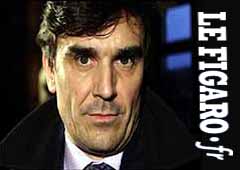
George Malbrunot, special Le Figaro correspondent, TehranAccompanied with a smuggler, having 3000$ in his pocket, several Kalashnikovs and two satellite cell-phones, Babak and another Mojahed tried to infiltrate the Iranian border during the night. A few weeks later, he succeeded to launch grenade attacks against the Defence Ministry in Tehran to show the world that the Islamic Republic can be destabilized internally before the presidential election of 2001.

“Then we had to recruit the Iranians and wait for the supplementary forces and munitions that were sent from Mujahedin’s base, Camp Ashraf, in Iraq” Babak remembers. Neither forces, nor munitions arrived to help Babak who had received the order to return to Iraq. But, one night, the Iranian police arrested him in a shopping center in Tehran. Sentenced to ten years of imprisonment of which he is now spending the ending years.

Today this former member seeks for the return of the last soldiers disappeared from Ashraf where 3300 Mujahedins have been settled for almost twenty years.

On January first, the US army will hand over the control of Ashraf to Iraqi government. But Baghdad is willing to close the camp. ‘’They have no passport any more; Most of them want to go to Europe to get status of political refugee.”, believes Arash who is another defector of MKO. He left Camp Ashraf in 2004 and is now working in an NGO in Tehran.

 Under the pressure of its Iranian allies, Baghdad is likely to decide to send some of them to Iran. Even the Iraqi government has declared that choosing the receiving country could not be “voluntarily”. To escape from an obligatory return to Iran, some of Mujahedin members having no other choice, despite going to Europe, escape to France where more than 300 to 400 members of MKO are seriously supervised by DST but also infiltrated by the Iranian agents. However, a French expert on security issues says that “we do not like them to arrive in our territory.”

The actual problem is that no one is willing to receive them. However, during the recent years, Americans several times solicited France and Jordan to shelter the members but every time, all of them refused to grant refugee to their leader, Masud Rajavi and his militants in Ashraf.

In 2003 when they arrived in Baghdad, the Americans disarmed MKO. “Since the American invasion, they are killing the time as much as they can in Ashraf,” Arash says.”If they had the possibility, Most of the Mujahedin would leave Ashraf” he adds. The Americans consider MKO as a terrorist organization but this doesn’t prevent them from having an ambiguous relationship with MKO.”CIA doesn’t trust them but the Pentagon uses some of them for espionage in Iran “, confess a former member. Using the Americans’ welcome, 600 have left Camp Ashraf for Iran in recent years. ‘Tehran works on this file so intelligently, seeking to hire these defectors rather than eliminating them,” a European diplomat in Iran says. Since the time of the reformist president of Iran, Mohammad Khatami; ” we haven’t  considered them as a political organization any more but as a dangerous cult of which the members are the prisoners of their leaders”, an Iranian official states.

Their capacity of action in Iran was almost zero. The opponents of regime also include the sympathizers inside Iran. “Mujahedin used the opportunity under the presidency of Khatami to recruit the Iranians who were more easily traveling abroad.” explains the foreign diplomat.

With the money that Saddam gave them and the funds they laundered, Mujahedin have launched an intensive lobbying activity among Western Medias and political authorities. With some success: recently 290 French representatives have asked for the removal of MKO from the list of terrorist organizations. And lately in London and Luxemburg, some similar decisions have been made.

George Malbrunot, special Le Figaro correspondent, Tehran

to view the original text in French click here


December 24, 2008 0 comments
FacebookTwitterPinterestWhatsappTelegramSkypeEmail
Mujahedin Khalq; A proxy force

Terrorist groups says Iran NIE wrong…

You could not make this stuff up even if you tried. Under the direction of new owner Rupert Murdoch, the Wall Street Journal is becoming the paper version of Faux News. Here is their latest nonsense on the Iran NIE: "The Iranian opposition group that first exposed Iran’s nuclear-fuel program said a U.S. intelligence analysis is correct that Tehran shut down its weaponization program in 2003, but claims that the program was relocated and restarted in 2004.
 
The claim, to be made public today by the National Council for Resistance in Iran, joins a broad pushback by conservative hawks who say the U.S. analysis has wrongly given the impression that Iran’s nuclear-fuel program doesn’t present an urgent threat." Since when is a terrorist group a credible source for anything, let alone one to be used in a mainstream article? The National Council for Resistance in Iran is the MEK lobby in DC. They call themselves the true government of Iran in exile and their president is Maryam Rajavi. Let’s do a MEK/MKO basics crash course:

• During the 1970s, the MeK was accused of conducting several assassinations of US military personnel and civilians working in Iran, and of actively supporting the takeover of the US Embassy in Tehran in 1979. That same year, the MeK helped to overthrow the Shah and install the new Shiite regime led by the Ayatollah Khomeini. 

• The Secretary of State has amended the designation, under Executive Order 13224 on terrorist financing, of the Mujahedin-e Khalq, known as the MEK, to add its aliases National Council of Resistance (NCR) and National Council of Resistance of Iran (NCRI). That Executive Order blocks the assets of organizations and individuals linked to terrorism. The decision also clarifies that the designation includes the U.S. representative office of NCRI and all its other offices worldwide, and that the designation of the People’s Mujahedin of Iran (‘PMOI’) as an alias of the MEK includes the PMOI’s U.S. representative office and all other offices worldwide. 

• Tehran proposed ending support for Lebanese and Palestinian militant groups and helping to stabilise Iraq following the US-led invasion. Offers, including making its nuclear programme more transparent, were conditional on the US ending hostility. But Vice-President Dick Cheney’s office rejected the plan, the official said. The offers came in a letter, seen by Newsnight, which was unsigned but which the US state department apparently believed to have been approved by the highest authorities. In return for its concessions, Tehran asked Washington to end its hostility, to end sanctions, and to disband the Iranian rebel group the Mujahedeen-e-Khalq and repatriate its members. 

So basically, what the Wall Street Journal is saying is that a terrorist group on the US State Department’s list of terrorist organization – who has also killed US citizens and was close to Saddam Hussein – is unhappy with the Iran NIE.

Moreover this same group is close to the Vice President, who chose to protect his friends rather than hand them over to Iran in exchange for…Iran giving up all enrichment activities – the thing that Cheney has claimed is the problem. Do you follow this logic? Does the WSJ not have a fact-checking crew? Is the Wall Street Journal now aiding a terrorist organization by giving them a say in US foreign policy? This is good to know. So next time there is a Saudi Arabia NIE, perhaps the Wall Street Journal can feature al Qaeda as supporting the conservative position. Like I said, you could not make this crap up if you tried. Propaganda news at its finest folks… and the war on terror at its most laughable.
at-Largely

December 24, 2008 0 comments
FacebookTwitterPinterestWhatsappTelegramSkypeEmail
Newer Posts
Older Posts

Recent Posts

  • Echoes in an Empty Room: MEK Propaganda, Western Media Silence, and the Cuneo Case

    October 24, 2026
  • Various Aspects of Massoud Rajavi’s Disappearance

    October 20, 2026
  • MEK agents near schools in Tirana, Albania

    October 17, 2026
  • Expectations of human rights bodies regarding censorship within the MEK

    October 13, 2026
  • The Jamalis’ Plea for Help: Save Our Brother from the MEK!

    October 11, 2026
  • Facebook
  • Twitter
  • Instagram
  • Youtube

© 2003 - 2025 NEJAT Society . All Rights Reserved. NejatNGO.org


Back To Top
Nejat Society
  • Home
  • Articles
  • Media
    • Cartoons
    • NewsPics
    • Photo Gallery
    • Videos
  • Publications
    • Books
    • Nejat NewsLetter
    • Pars Brief
  • About Us
  • Contact us
  • Editions
    • عربي
    • فارسی
    • Shqip