Nejat Society
  • Home
  • Articles
  • Media
    • Cartoons
    • NewsPics
    • Photo Gallery
    • Videos
  • Publications
    • Books
    • Nejat NewsLetter
    • Pars Brief
  • About Us
  • Contact us
  • Editions
    • عربي
    • فارسی
    • Shqip
Nejat Society
Nejat Society
  • Home
  • Articles
  • Media
    • Cartoons
    • NewsPics
    • Photo Gallery
    • Videos
  • Publications
    • Books
    • Nejat NewsLetter
    • Pars Brief
  • About Us
  • Contact us
  • Editions
    • عربي
    • فارسی
    • Shqip
© 2003 - 2024 NEJAT Society. nejatngo.org
Mujahedin Khalq; A proxy force

Unpardonable Neoconservative Treason

Neoconservative (Neo-Trotskyite) Use of Communist Terrorists

“Iraq shelters terrorist groups including the Mujahedin-e-Khalq Organization (MKO), which has used terrorist violence against Iran and in the 1970s was responsible for killing several U.S. military personnel and U.S. civilians.”

–“A Decade of Deception and Defiance”, the White House’s background paper for President George W. Bush’s September 12, 2002 remarks to the United Nations General Assembly

http://www.whitehouse.gov/infocus/iraq/decade/book.html

A major pretext for the Iraq War was Saddam Hussein’s support of the Iranian Communist MEK (MKO, PMOI, NCRI, Rajavi Cult, or Pol Pot of Iran) terrorists at Camp Ashraf and at other camps in Iraq.  In 2003, American and coalition forces attacked Camp Ashraf, Iraq and killed some of the terrorists.  However, neoconservatives (neo-Trotskyites) in the American government arranged for the protection in Iraq and for the use of these communist terrorists inside Iran.


Fox News Channel Viewers Duped by Neo-Trotskyites

After the Federal government raided the home of Alireza Jafarzadeh, confiscated boxes of his documents, and closed the NCRI office in the National Press Building, Jafarzade became a Foreign Affairs Analyst with the Fox News Channel.  On television and in postings, Jafarzadeh claimed that he was revealing secrets about Iranian terrorist networks and front organizations.  See, for example:

http://www.foxnews.com/printer_friendly_story/0,3566,307452,00.html

Of course, he did not reveal to the dupes who watch the Fox News Channel that he had worked for an Iranian communist terrorist organization responsible for murdering American military officers, Rockwell International employees, and large numbers of Iranian and Iraqi civilians. 


For books by former MEK members, read:


–      Saddam’s Private Army

By Anne Singleton


–      Masoud: Memoirs of an Iranian Rebel

By Masoud Banisadr

http://www.amazon.com/Masoud-Memoirs-Iranian-Rebel-Banisadr/dp/0863563740/ref=sr_1_1?ie=UTF8&s=books&qid=1230001161&sr=8-1


Covert American Military Operations Inside Iran

Some of the guests on the Fox News Channel have bragged about American military forces conducting “boots on the ground” covert operations inside Iran.  There are some others in the American media providing vague details of these operations.  For example, Seymour Hersh’s articles in the New Yorker, such as:


Annals of National Security

The Iran Plans

Would President Bush go to war to stop Tehran from getting the bomb?

by Seymour M. Hersh April 17, 2006

“The Bush Administration, while publicly advocating diplomacy in order to stop Iran from pursuing a nuclear weapon, has increased clandestine activities inside Iran and intensified planning for a possible major air attack. Current and former American military and intelligence officials said that Air Force planning groups are drawing up lists of targets, and teams of American combat troops have been ordered into Iran, under cover, to collect targeting data and to establish contact with anti-government ethnic-minority groups.”

http://www.newyorker.com/archive/2006/04/17/060417fa_fact


Using Communist Terrorists Inside Iran

Americans with international satellite television dishes or who research foreign news sources will discover that the American military has been using Iranian communist terrorists from Camp Ashraf, Iraq on covert missions of gathering information or of committing acts of terrorism in Iran.


On December 21, 2008, former MEK member Arash Sametipoor appeared in London, England on George Galloway’s “The Real Deal” (Press TV and Sky TV).  For the next few days, you can watch this television program online or download it to your computer at:

http://www.presstv.com

You can find other interviews and details posted at Web sites, such as:

–      Iran-Interlink

 http://www.iran-interlink.org/?mod=view&id=5551

–      Nejat Society

https://www.nejatngo.org/en/

Arash Sametipoor reported that he had been captured in Iran during a covert mission.  He attempted to kill himself using an old cyanide pill provided for him.  While he was sentenced to serve eight years in prison in Iran, he was released after four years.  He knows firsthand about life inside a terrorist cult.  While America’s neo-conservatives (neo-Trotskyites) claim that Iraq has its own government now, the truth is that Iraqi political leaders continue to demand that the MEK surrender their weapons or leave Iraq.  Not only has the American military been protecting these communist terrorists, but also the American military has prevented parents of these terrorists from seeing their children at or near Camp Ashraf, Iraq. 


Unpardonable Neoconservative Treason

During the American Revolution, Benedict Arnold was a revolutionary war hero until he betrayed the American Revolution. 

http://www.americanrevolution.com/TreasonofBenedictArnold.htm

Now, America’s neo-conservatives (neo-Trotskyites) have replaced Benedict Arnold as the worst traitors in American history.  There should be no presidential pardons for any of these traitors.

December 23, 2008 0 comments
FacebookTwitterPinterestWhatsappTelegramSkypeEmail
Missions of Nejat Society

Nejat Society Representative on Press TV

Arash Sametipoor reported that he had been captured in Iran during a covert Director of the Iran-based Nejat [Rescue] Association's Foreign Relations Department, Arash Sametimission.  He attempted to kill himself using an old cyanide pill provided for him.  While he was sentenced to serve eight years in prison in Iran, he was released after four years.  He knows firsthand about life inside a terrorist cult.  While America’s neo-conservatives (neo-Trotskyites) claim that Iraq has its own government now, the truth is that Iraqi political leaders continue to demand that the MEK surrender their weapons or leave Iraq.  Not only has the American military been protecting these communist terrorists, but also the American military has prevented parents of these terrorists from seeing their children at or near Camp Ashraf, Iraq.

Director of the Iran-based Nejat [Rescue] Association’s Foreign Relations Department, Arash Sameti, said the United States refuses to hand Camp Ashraf over to the Iraqi government.

Most of the MKO members currently in Camp Ashraf are ailing, and being physically and mentally abused by their terrorist leaders, he added.

Most of the MKO members currently in Camp Ashraf are ailing, and being physically and mentally abused by their terrorist leadersNejat Association members have recently held meetings with the European parliament, human rights organizations, Amnesty International and British government officials in London to raise awareness about the humanitarian crisis occurring within the MKO. The leaders of the group, headed by Maryam Rajavi, are committing crimes against their own members.
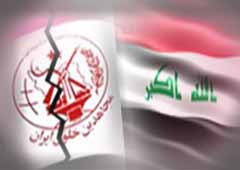

“We urged the European officials to open Camp Ashraf doors to doctors and human rights organizations and rescue the trapped members who don’t want to be part of this terrorist group anymore,”Sameti elaborated.

“We welcome the Iraqi government’s decision to take over the control of the Ashraf Camp and seek the European countries’ support for the release of its members.”

After the US-led invasion of the country, the US put the members under protection in north Iraq amid reports that they had been used by Washington for espionage and violence-related activities.

Iraqi government officials believe the Mujahedeen Khalq Organization is playing a significant role in fueling violence and insecurity in the country. They have banned any deal with members of the MKO, calling on the US to stop supporting the terrorist group.

Real Deal Program

Download Arash Sametipour on Press TV

December 23, 2008 0 comments
FacebookTwitterPinterestWhatsappTelegramSkypeEmail
Massoud Rajavi

The instrumental misuse of MKO history – part 2

The instrumental misuse of MKO founders and history – part 2

Of the current issues prevalent in the world of politics regarding the challenges MKO has risen to is that Rajavi has manipulated the history of MKO and its founders. It is said that he and his fellows have made an attempt to misuse the history of the organization in a way to legitimize his unauthentic leadership imposed on the organization and its members. Here a number of fabricated memories made by a number of self-seeker MKO members are reviewed in order to bring the matter to light. In this regard, Mohammad Hayati, one of the theoreticians of the ideological revolution introduces Rajavi as the sole advisor of Hanifnejad and says:

I saw no one closer and more active than Masoud in discussion and negotiation with Mohammad [Hanifnejad], no one even Saeed [Mohsen] and Asqar [Badizadegan]. 1

Mehdi Khodaee-Sefat who has not met Hanifnejad grabs at other techniques in order to exalt Rajavi, saying:

Once in 1972, I met Masoud in cell No. 3 in Qasr prison and discovered the mysteries of life in him. Again, in 1975, in the cell No. 6 when I heard his voice for the second time, it was as if I got everything in a blink of an eye and considered the tortures of prison and Savak unimportant. 2

Hamid Asadian, Mojahedin’s poet, makes a generalization and states:

Masoud represents the revolutionary values of a generation who had a historical presence in the political, social, and cultural scene of Iran since 1965. 3

He adds:

All resistances, solution findings, victories and in a nutshell the survival of Mojahedin depends on one person who represents the ideals of Mojahed generation. He is the story of Mojahedin and Mojahedin are his story. 4

And Abrishamchi introduces Rajavi as the sole discoverer of Hanifnejad, stating:

His role [Hanifnejad] was a unique historical and ideological one which was unknown at his time. Just one person, Masoud, discovered it and made a close relationship with him and paid a considerable cost for doing so. 5

In order to check the truthfulness of these statements, we’d better take a brief look at the statements made by Lotfollah Meisami, one of the closest cadres to Hanifnejad, and raise the question that why all these fabricated memories have been recalled simultaneously and after a number of decades and all have a similar theme and form. 

Meisami expounds on some points in contradiction to those mentioned before. In contrast to what Rajavi’s allies mean by fabricating theses memories, he says that the main reason Hanifnejad paid more attention to Rajavi was the flaws he had had noticed in Rajavi including selfishness, vanity, egoism and so forth. Thus, Hanifnejad always had him under full control and warned him of his flaws. According to Meisami:

It has to be pointed out that everyone has some traces of egoism and vanity. Yet, in a well-formed organization, all these defects can be surmounted. It was so for Rajavi too and whenever he was in their companion, Mohammad and Saeed kept close to him and controlled him fully. 6

Or:

In the same period of time, the personality of Masoud Rajavi came under question and there appeared many quotations from Hanifnejad. For instance, Hanifnejad was quoted saying that the prevalent egoism in Masoud would be destructive for the organization. The members of central council of leadership were well aware of this statement. 7

Interestingly, in these memories there are some individuals who took a hostile position toward Rajavi at that time and now have changed their mind and come to remember, or better to say fabricating, memories in Rajavi’s favor:


After the schism of 1971 and its consequences, the issue of the leadership was raised in Qasr prison. There were seventy members therein and they needed to be organized so Masoud was already in charge of solving problems. For example, if someone or something was snitched he informed those outside and also made us aware of the outside news. After the imprisonment of Bahman Bazargan, they cooperated with each other, yet when the number of members increased and almost all Mojahedin came to prison, Masoud came under question to some extent. Some members like Musa Khiabani, Fathollah Khamene’i, Kazem Shafiee, Nabi Moazemi, Ebrahim Avoukh, and those gone to Palestine criticized Masoud for his flaws. 8

Furthermore, Meisami points out that Rajavi was so isolated in goal and neglected by MKO prisoners that despite assuming the leadership of the organization, prisoners formed a council of leadership in the prison and conducted polls in which Rajavi was defeated:

There were a lot of members in Qasr prison and it seemed that nothing could fill the void left by the martyrdom of the founders. Also, members were unsure of Rajavi. It was said that there had to open polls for selecting the central cadre in which Musa Khiabani and two other candidates were at the lead; but Rajavi got no vote. 9

In another part of the memories of Meisami, it has been stated that:

Members refrained to accept a fixed leadership. So polls were carried out in which Fathollah Khamene’i, Kazem Shafiee and Musa Khiabani were elected for the first central cadre in the prison yet Rajavi got just a single vote. 10

Most important of all, Meisami believes that Rajavi followed a different path after the execution of founders and even considered them as outsiders:

After the martyrdom of the founders, some members like Masoud Rajavi had a different viewpoint against the early founders and even refrained to consider the former members of the organization as true insiders. 11

References:

1. The book of founders, MKO publications, p.121.

2. ibid, p.138

3. ibid, p.160

4. ibid, p.161

5. ibid, p.87

6. Meisami, Lotfollah; Degeneration of a Mojahed, Mojahed journal, No. 32.

7. The memoirs of Lotfollah Meisami, 2003, p.74

8. ibid, p.194

9. Meisami, Lotfollah; Degeneration of a Mojahed, Mojahed journal, No. 32.

10. The memoirs of Lotfollah Meisami, 2003, p.194.

11. ibid, p.157

December 23, 2008 0 comments
FacebookTwitterPinterestWhatsappTelegramSkypeEmail
Iraq

Iraq Threatens to Expel Iranian Rebels

Iraq Threatens to Expel Iranian Rebels; Exile Group Has Protected Status Under Soon-to-Expire U.N. Mandate Iraq Threatens to Expel Iranian Rebels; Exile Group Has Protected Status Under Soon-to-Expire U.N. Mandate

Iraqi officials say they intend to expel members of an Iranian exile group living in a camp north of Baghdad that is protected by the U.S. military. The expulsion, which the Shiite-led government has long sought, is expected to become feasible once the U.N. mandate that regulates the presence of U.S. troops — and which gave the Iranian opposition group protected status — expires at the end of the year.

Iraqi national security adviser Mowaffak al-Rubaie on Saturday traveled to the camp with several other government officials to deliver the message to members of the Mujaheddin-e Khalq, or MEK, an Iranian opposition group that was closely aligned with deposed Iraqi president Saddam Hussein but has been under U.S. military protection since shortly after the 2003 U.S.-led invasion.

The government informed the group that it would soon assume responsibility for security at Camp Ashraf and that residents would be repatriated unless they find a third country willing to take them. The U.S. military currently protects Camp Ashraf, which is 40 miles north of Baghdad.

“Staying in Iraq is not an option for them,”the government said in a statement issued Sunday. The Iranian government has long called for the group’s expulsion.

The statement did not set a deadline for removing the MEK. Iraqi officials have pledged to treat the group’s members humanely but have made their disdain for the MEK clear. The delegation that visited the camp included officials of the Defense and Interior ministries as well as Iraqi intelligence officials.

The statement also said the group is barred from participating in political activities and ordered it to cease media campaigns.

The Shiite-led Iraqi government, which has close ties to Iran, has for years threatened to shut down Camp Ashraf because it regards the MEK, also known as the People’s Mujaheddin Organization of Iran, as a terrorist organization.

The European Union and the U.S. State Department have also labeled the group a terrorist organization.

The MEK, which has about 3,500 members in Iraq, has strongly resisted the Iraqi government’s expulsion efforts, saying members could be executed if they are forced to return to Iran. The group has aggressively lobbied U.S. and European lawmakers and has relentlessly sought sympathetic coverage in the Western news media.

The MEK was founded in the 1960s as an opponent of the late shah of Iran, Mohammad Reza Pahlavi. It was accused of carrying out several attacks in Iran, including some targeting U.S. officials.

The MEK moved its headquarters to Iraq during the 1980s, when Iraq and Iran were at war. Former Iraqi leader Saddam Hussein embraced the group, providing them weapons and financial support.

Kurds and Shiites have long reviled the MEK because they say the group helped suppress the failed Kurdish and Shiite uprisings that followed the Persian Gulf War.

Shortly after the 2003 invasion, the U.S. military persuaded the MEK to disarm and offered to protect the group. The arrangement was awkward because it tasked the U.S. military with sheltering a group that remains on the State Department’s terrorism list.

The group’s charismatic leader, Maryam Rajavi, is based in Paris, but France and many other countries have been reluctant to resettle the group’s members.

Also Sunday, Iraq’s Interior Ministry issued a statement calling the recent detention of ministry officials by a special unit that reports directly to Prime Minister Nouri al-Maliki”a brazen act of political retribution.”

Interior Minister Jawad al-Bolani had dismissed reports that the roughly two dozen detained officials were plotting to reconstitute Saddam Hussein’s Baath Party, possibly to stage a coup. The statement makes clear Bolani was deeply unsettled by the detentions. Bolani, an independent, secular Shiite, has not previously criticized the Maliki government in such stark terms. With provincial elections a few weeks away, competition among Shiite parties has intensified. Bolani recently created his own party, and the statement appears to indicate he believes that the prime minister ordered the raid to undermine him.

Under Bolani’s stewardship, the ministry has fired or criminally charged tens of thousands of employees accused of corruption. The raid occurred last week while Bolani was out of the country. He said any concerns about misdeeds by ministry officials should be brought to his attention and not handled”Saddam-like under cover of the night under dubious threats of an imminent coup.”

“The Minister was outraged that anyone would interfere in the administration of the Ministry he is sworn to lead,”the statement said.”He alone is responsible for this Ministry and he is accountable only to the Iraqi people.”

The statement, signed by Rafae Munahe, an adviser to Bolani, was e-mailed to reporters late Sunday by a representative of Brown Lloyd James, a public relations firm.

Special correspondent Qais Mizher contributed to this report.

Washington Post, Ernesto Londono,

December 23, 2008 0 comments
FacebookTwitterPinterestWhatsappTelegramSkypeEmail
European Union

A row that is likely to continue

In its judgment made on 4 December, the European Court of First Instance ruled that the Council of Ministers had infringed the legal rights of the MKO when it updated the blacklist on 15 July 2008 without explaining its inclusion. The second clause of the Council Decision (2008/583/EC), however, explicitly states that it has provided for the groups and entities statements of reasons for their proscription:

2.      The Council has provided all the persons, groups and entities for which it was practically possible with statements of reasons explaining why they were listed in Decision 2007/868/EC. Concerning one group and three persons the amended statements of reasons has been provided to them, if possible, in April 2008.

Following the MKO’s application to contest the Council’s decision, the court ruled that it “Annuls Council Decision 2008/583/EC of 15 July 2008 implementing Article 2(3) of Regulation No 2580/2001 on specific restrictive measures directed against certain persons and entities with a view to combating terrorism and repealing Decision 2007/868/EC, in so far as it concerns the People’s Mojahedin Organization of Iran”. Of the restrictive measures was freezing the assets and funds of the listed groups.

The court in its 47 paragraph judgment says that “the Court finds that the continued freezing of the applicant’s funds by the contested decision was the result of a procedure during which the applicant’s rights of the defence were not respected” and consequently annuls the decision concerning MKO’s assets-freezing. Then, what it has to do with the removal of the organization from the terrorist list?

Since the Council applied for interpretation of the Court judgment of the Court of First Instance on 4 December 2008, the court issued a latest order in which the application for interpretation was dismissed as inadmissible. commenting on the court order released on 17 December 2008, MKO states that “the Court of First Instance of the European Communities (CFI), in its fourth ruling over the past two years, rejected a request by the EU Council and France to delay implementation of the December 4 court ruling on the People’s Mojahedin Organization of Iran (PMOI ) until the deadline to submit an appeal against the ruling has ended. It described their demand as ’clearly unacceptable’ and ordered the Council to pay all legal costs incurred by the PMOI. Thus, the Court put an end to unlawful delays and excuses by the Council, leaving it with no alternative but to comply with the court ruling and acknowledge that the PMOI is no longer on the terrorist list”.

But in none of these orders the court has ruled and acknowledged that MKO “is no longer on the terrorist list”. Still, since 4 December, member states have been working on the assumption that the judgment is in suspension and MKO’s name remains on the blacklist after it was updated on 16 December. The court’s decision not to provide further clarification on the nature of its decision means that the row between the MKO and the EU member states is likely to continue.

December 22, 2008 0 comments
FacebookTwitterPinterestWhatsappTelegramSkypeEmail
European Union

MKO Remains on EU’s List of Terrorist Groups

TEHRAN – A court that ruled that the anti-Iran terrorist group, the Mojahedin-e Khalq Organization (MKO), was wrongly included on list of terrorist organizations refuses to say when it should be taken off it.

The European Court of First Instance has refused to clarify whether member states must immediately apply a judgment requiring an Iranian opposition group to be removed from the EU’s terrorist blacklist.

In a written statement, issued on 17 December, the court rejected a request for clarification by EU member states, represented by the Council of Ministers, saying the request is”manifestly inadmissible”because it”relates to a matter not decided by the main judgment”.

In its judgment, made on 4 December, the court ruled that the Council of Ministers had infringed the legal rights of the MKO when it updated the blacklist in July without explaining its inclusion. It also said the Council failed to provide sufficient evidence to the court that the MKO’s status as a terrorist organization was justified.

The judgment legally annulled the MKO’s inclusion on the list. Member states have until 14 February to lodge an appeal.

The Council of Ministers subsequently requested the court to clarify if the judgment had to be applied immediately, or if the MKO could be left on while member states consider whether to appeal, known legally as”a judgment with suspensive effect”. The Council also sought clarification on whether the suspension would continue if an appeal was launched.

The Council of Ministers argues that the EU courts’ statute says a judgment should have a suspensive effect when it annuls an EU regulation. The Council also argues that a previous ruling, also at the Court of First Instance, said that the blacklist updates are legally similar to regulations.

Since 4 December, member states have been working on the assumption that the judgment is in suspension and MKO’s name features on the blacklist after it was updated on 16 December. The update was limited to adding organizations believed to be linked to Spanish terrorist group ETA. The court’s decision not to provide a clarification means the stand off between the MKO and member states is likely to continue.

The MKO, whose main stronghold is in Iraq, is blacklisted by much of the international community, including the United States.

The MKO is on the European Union’s list of terrorist organizations subject to an EU-wide assets freeze, and has been designated by the US government as a foreign terrorist organization. Yet, the MKO puppet leader, Maryam Rajavi, who has residency in France, regularly visits Brussels and despite the ban enjoys full freedom in Europe.

The MKO is behind a slew of assassinations and bombings inside Iran, a number of EU parliamentarians said in a recent letter in which they slammed a British court decision to remove the MKO from the British terror list. The EU officials also added that the group has no public support within Iran because of their role in helping Saddam Hussein in the Iraqi imposed war on Iran (1980-1988).

A May 2005 Human Rights Watch report accused the MKO of running prison camps in Iraq and committing human rights violations.

According to Human Rights Watch report, the outlawed group puts defectors under torture and jail terms.

The group, founded in the 1960s, blended elements of Islamism and Stalinism and participated in the overthrow of the US-backed Shah of Iran in 1979. Ahead of the revolution, the MKO conducted attacks and assassinations against both Iranian and Western targets.

Leaders of the group have been fighting to shed its terrorist tag after a series of bloody anti-Western attacks in the 1970s, and nearly 30 years of violent struggle against the Islamic Republic of Iran.

In recent months, high-ranking MKO members have been lobbying governments around the world in the hope of acknowledgement as a legitimate opposition group.

The UK initiative, however, has prompted the European Union to establish relations with the exiled organization now based in Paris. The European Court of First Instance threw its weight behind the MKO in December and annulled its previous decision to freeze its funds.

The group started assassination of the citizens and officials after the revolution in a bid to take control of the newly established Islamic Republic. It killed several of Iran’s new leaders in the early years after the revolution, including the then President, Mohammad Ali Rajayee, Prime Minister, Mohammad Javad Bahonar and the Judiciary Chief, Mohammad Hossein Beheshti who were killed in bomb attacks by MKO members in 1981.

The group fled to Iraq in 1986, where it was protected by Saddam Hussein and where it helped the Iraqi dictator suppress Shiite and Kurd uprisings in the country.

The terrorist group joined Saddam’s army during the Iraqi imposed war on Iran (1980-1988) and helped Saddam and killed thousands of Iranian civilians and soldiers during the US-backed Iraqi imposed war on Iran.

Since the 2003 US invasion of Iraq, the group, which now adheres to a pro-free-market philosophy, has been strongly backed by neo-conservatives in the United States, who also argue for the MKO to be taken off the US terror list.

The MKO has been in Iraq’s Diyala province since the 1980s.

December 22, 2008 0 comments
FacebookTwitterPinterestWhatsappTelegramSkypeEmail
The MEK Expulsion from Iraq

Iraq vows to expel Iranian opposition group

BAGHDAD (AFP)- Iraq vowed on Sunday to oust members of the main armed Iranian opposition group from its soil, just days before Prime Minister Nuri al-Maliki is due on a trip to Tehran.

The announcement was made during a visit by a government delegation to the camp in Iraq where about 3,500 members of the People’s Mujahedeen Organisation of Iran (PMOI) are based.

"The Iraqi government is responsible for their security and it continues to implement its plans to shut down the camp and to either deport its population to their country or to a third country," it said in a statement after the visit led by Iraqi national security advisor Muwaffaq al-Rubaie.

"Remaining in Iraq is not an option for them," the statement added.

After being thrown out- of Iran in the 1980s, members of the PMOI sought refuge abroad, notably in Iraq where they established Camp Ashraf in the province of Diyala.

The group, which is considered a terrorist organisation by the European Union and the United States, has been holding demonstrations outside UN offices in Geneva protesting against their expulsion from Iraq.

Militants at Camp Ashraf last month sent an open letter to US President George W. Bush about their situation.

Maliki is due to visit neighbouring Iran and Turkey from December 24, his fourth visit to the Islamic republic since taking office in 2006.

In March, Maliki told visiting Iranian President Mahmoud Ahmadinejad that he would take steps to ensure that Iraqi territory was not used by "terrorists" from Al-Qaeda, or from Iranian rebel groups.

The PMOI was founded in 1965 with the aim of replacing first the shah and then the clerical regime in Iran, and has in the past operated an army inside Iran.

It was financed by Saddam Hussein to carry out attacks against the regime in Tehran but was disarmed by the US military after the 2003 invasion.

December 22, 2008 0 comments
FacebookTwitterPinterestWhatsappTelegramSkypeEmail
UK

UK wants”partnership”not”conflict”with Iran

UK wants”partnership”not”conflict”with Iran, says minister

The British government is insistent that it wants to improve relations with Iran The British government is insistent that it wants to improve relations with Iranbut remains adamant in continuing with its sticks-and-carrots approach in the dispute provoked over the country’s civilian nuclear programme.
“First I would like to make very clear we haven’t got any hostility towards Iran. Iran is a country with a long and distinguished history, a magnificent culture,”Foreign Office Minister Bill Rammell said.

“It is a country we want a strong and cooperative relationship with. We very much want a modern relationship as well one based on partnership not on conflict,”Rammell said.

But setting out Britain’s position in an interview with IRNA, he said that this could not be achieved at the moment because of”serious and legitimate concerns.”

These included not only the dispute over Iran’s nuclear programme but accusations of alleged support for terrorism and the promotion of instability in the region.

The minister, who was recently appointed for the Middle East, cited such claims that Iran was supporting the Taliban in Afghanistan, despite it warning the West about its dangers many years before its overthrow in 2001.

He denied that Britain itself was supporting terrorism by recently deproscribing the Mojahedin Khalq Organisation (MKO), which has been responsible for killing tens of thousands of Iranians, insisting it was a court decision opposed by his government.

When challenged, Rammell was unable to name any other terrorist group that was not outlawed by Britain, but said he wanted to make clear that his government still recognized the MKO’s”long-track record”of involvement in terrorism in Iran and the region.

On Thursday, former UK ambassador to Tehran Sir Richard Dalton suggested a new approach was needed to resolve the dispute over Iran’s nuclear programme after five years of deadlock.

A new report on Iran: Breaking the Nuclear Deadlock, edited by Dalton, recommended that Washington engages with Iran and that US president-elect Barack Obama appoints a special envoy as part of a plan to normalize relations with Tehran.

But Rammell remained adamant that Britain was sticking with its current strategy ahead of Obama coming to power, saying the 5 plus 1 had made a”very substantial offer”of incentives to Iran, which had the choice to take it or face the prospect of”tougher”sanctions.

“We don’t want be in position of being at loggerheads with Iran,”the minister told IRNA.

“We want progressive and forward-looking relations.”

But at the root of the deadlock preventing negotiations remains the demand made on Iran to suspend the enrichment of uranium, which it is entitled to do under the Non-Proliferation Treaty.

Recent calls to drop the precondition to talks have been made among others by former American National Security Adviser Zbigniew Brzezinski and for EU External Affairs Commissioner Chris Patten, but this was rejected by the British Foreign Office Minister.

He argued that the package offer was”very reasonable”and that he remained hopeful Iran would accept it.

At the same time, he threatened that pressure would be stepped up for Iran to”make the right choice.”

But when challenged, Rammell refused to say that the real intentions of the US and UK to deny Iran its right to enrich uranium by wanting to make the suspension permanent.

“We want Iran to suspend and engage,”he said without mentioning any time limit. If Iran does, it can meet its concerns for access to civilian nuclear power through the offer made, he suggested.

December 22, 2008 0 comments
FacebookTwitterPinterestWhatsappTelegramSkypeEmail
Iraq

Iraq says Iranian opposition exiles must leave

BAGHDAD- The Shi’ite-led Iraqi government told nearly 3,500 opposition Iranians living in exile in Iraq on Sunday that it planned to close their camp and they had to leave the country. The Iraqi government "...is keen to execute its plans to close the camp and send its inhabitants to their countries or other countries

A delegation headed by National Security Adviser Mowaffaq al-Rubaie told the Iranians, who have lived for two decades at Camp Ashraf north of Baghdad, that the government was taking over responsibility for their security from U.S. troops.

They told the Iranians the government "…is keen to execute its plans to close the camp and send its inhabitants to their countries or other countries in a non-forcible manner, and that staying in Iraq is not an option for them," the government said in a statement.

The Iranians, who include members of the exiled opposition People’s Mujahideen Organization of Iran (PMOI), have lived in the sprawling township 70 km (40 miles) north of Baghdad for around 20 years.

The Iraqi government, which is friendly toward Shi’ite Iran, regards the Iranians as terrorists. The PMOI is also listed as a terrorist group in the United States and in Europe.

U.S. forces have protected the exiles since the U.S.-led invasion of Iraq in 2003 after persuading the Iranian group, also known as the Mujahideen e-Khalq, to disarm.

The U.S. military seized and destroyed more than 2,000 tanks, armoured personnel carriers and other weaponry at the time. The group had been protected by Saddam Hussein, who welcomed them as fellow enemies of the Iranian ayatollahs.

The PMOI began as a leftist-Islamist opposition to the late shah of Iran but fell out with Shi’ite clerics who took power after the 1979 Islamic revolution.

Its leaders fear many of them will be executed if they are forced to go back to Iran. Tehran has long demanded they be expelled from Iraq.

The United Nations has had trouble finding other countries to accept the Iranian exiles as refugees because of their militant background but has urged Iraq to respect their rights.

In the statement released on Sunday, the Iraqi government said people in the camp had been told that carrying out activities whether legal or illegal "against any neighbouring country, is a dangerous issue."

Iraq will treat those in the camp "in accordance with Iraqi law, Islamic values and international order," the statement said.

Amnesty International has urged Iraq and the United States to regard members of the rebel group as "protected persons" under the Fourth Geneva Convention. (Editing by Tim Pearce)

By Michael Christie

December 22, 2008 0 comments
FacebookTwitterPinterestWhatsappTelegramSkypeEmail
Human Rights Abuse in the MEK

Defenders who offend human rights

It gives me great pleasure to hear there are still people here and there who believe in altruism and condemn widespread misanthropic behaviors practiced by their fellow-creatures under a variety of pretexts. Even in the heart of the most developed and democratic countries you may encounter countless, daily reports of discrimination on the basis of race, religion and gender and other forms of human rights violations. The least can be done is to release true, reliable and unbiased reports of the instances of violations regardless of political interests and appeasement of certain group and party.

But supporters of human rights may err as they are humans. There come circumstances when the very same enthusiastic supporters of humanity and human rights give their support, knowingly or unknowingly, to a political party or a group of freedom fighters whose true anti-human nature is concealed behind a camouflage of widespread democratic propaganda. Can it be really justified especially when the blunderers are the elite in a society and shoulder a great responsibility that represents their nation?

Just on the occasion of ‘International Human Rights Day’, a session was reportedly held at the press building of the Italian Senate with regard to the severe violation of human rights in Iran. The participants in the session are reported to include a number of senators and members of the parliament as well as some personalities and heads of societies in defense of human rights. You may ask what these Italian people have to do with violation of human rights inside Iran when what happens in Italy itself is much more alarming. We have nothing to do with such issues but the question is well responded when you come to know the people orchestrating the session.

Read the excerpt from the report to figure out the sponsors. Senator Vincenzo Fasano, from the ruling coalition, called supporting the Iranian Resistance and said: “I have studied your programs and am aware of your goals for the future and also your support of annulment of death penalty. I also very welcome your genuine motto of your future government which is the separation of church and state, and hence I find myself committed to stand by you”.

That is again Mojahedin Khalq cult that has started a new phase of pro-democratic blitz as a new tactic after being disarmed by the coalition forces invading Iraq. Globally recognized a terrorist group and a cult of personality, the cult of Mojahedin is still holding the members in the heavily guarded enclosed Camp of Ashraf where a matriarchal autocracy holds the control. It does not mean that the organization believes in the superiority of women or recognizes the rights of women; rather it is a cult technique to further enslavement and exploitation of women. Of course, Senator Pasquale Nessa has hardly grasped the real intention of the cult when at the session he states: “I am aware of your struggle for women’s freedom and I wish you success”. Obviously, he is not at all aware of what passes within the Camp Ashraf and that, women are the main victimized human beings under the pretext of fighting for freedom, that is to say, they are deprived of their freedom and coerced to engage in a never-lasting struggle to regain it.

As I said, it is the duty of all influential figures who live in democratic countries to struggle against the violation of human rights. But siding with the violators of human rights and acting as their paid mouthpiece is much despised. I believe that for sure Senator Giorgio Bornacin, from ruling party, knew nothing of Mojahedin’s documented instances of violence and atrocities not only perpetrated against Iranian people but also its own members when he addressed Mojahedin saying: “It is very important today that we are present and struggle against the violation of human rights. This is the duty of all parliamentarians who live in democratic countries. I am with you to restore the rights of the Iranian people’s rights and participate with you in this struggle”. There seems no need to explain the present condition of the members at Camp Ashraf who are dispossessed of primal rights of human.

So, if it is the way these representatives approve for the restoration of the Iranian people’s rights and setting the enslaved members free, I have to admit that they are going astray and are presenting a new definition of defending human rights that shall question the accuracy of the democracy they advocate not only for the world but their own people.

December 21, 2008 0 comments
FacebookTwitterPinterestWhatsappTelegramSkypeEmail
Newer Posts
Older Posts

Recent Posts

  • Echoes in an Empty Room: MEK Propaganda, Western Media Silence, and the Cuneo Case

    October 24, 2026
  • Various Aspects of Massoud Rajavi’s Disappearance

    October 20, 2026
  • MEK agents near schools in Tirana, Albania

    October 17, 2026
  • Expectations of human rights bodies regarding censorship within the MEK

    October 13, 2026
  • The Jamalis’ Plea for Help: Save Our Brother from the MEK!

    October 11, 2026
  • Facebook
  • Twitter
  • Instagram
  • Youtube

© 2003 - 2025 NEJAT Society . All Rights Reserved. NejatNGO.org


Back To Top
Nejat Society
  • Home
  • Articles
  • Media
    • Cartoons
    • NewsPics
    • Photo Gallery
    • Videos
  • Publications
    • Books
    • Nejat NewsLetter
    • Pars Brief
  • About Us
  • Contact us
  • Editions
    • عربي
    • فارسی
    • Shqip