Nejat Society
  • Home
  • Articles
  • Media
    • Cartoons
    • NewsPics
    • Photo Gallery
    • Videos
  • Publications
    • Books
    • Nejat NewsLetter
    • Pars Brief
  • About Us
  • Contact us
  • Editions
    • عربي
    • فارسی
    • Shqip
Nejat Society
Nejat Society
  • Home
  • Articles
  • Media
    • Cartoons
    • NewsPics
    • Photo Gallery
    • Videos
  • Publications
    • Books
    • Nejat NewsLetter
    • Pars Brief
  • About Us
  • Contact us
  • Editions
    • عربي
    • فارسی
    • Shqip
© 2003 - 2024 NEJAT Society. nejatngo.org
Missions of Nejat Society

Nejat Society’s Announcement No.3

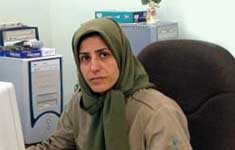
The so called sectarian NCRI claimed that the offices of Nejat Society in Iran forced the families of Ashraf residents, threatening them and putting pressureNejat Society announcement No.3 on them, to go to Iraq and make their children leave Camp Ashraf and return to Iran.

NCRI also claimed that families are told to sign pre-written letters addressed to the International Committee of Red Cross, adding that Nejat Society threatened a family to death because they refused the cooperation.

Nejat Society would like to inform the patriotic and broad-minded people:

The honorable families of Nejat are some of the most respectable  and faithful Iranians who never believe in the terrorist destructive cult of MEK traitors who have a black file of assassinations and spying as Saddam Hussein’s accomplice during the 8 years of Iran-Iraq war.

The slogans like “Down with terrorism “, “there is no good or bad terrorism” , “ leave our children “  and the self-will slogans “ Down with Rajavi” which are chanted  by the families in their gatherings proves their hatred towards MKO cult .

 Having enjoyed the motivation and eagerness of these families, Nejat Society succeeded to return more than 600 of the innocent beloved ones who defected from the hypocrite cult, to the warm embrace of their families and their mother land, Iran of where you are the worst traitor who serve as spies for the United States.

There is no need for Nejat Society to threaten the families or to force them to cooperate with it.

In fact, the respectful families, themselves ,asking for the release of their deceived children captured in Ashraf prison, have an active role in Nejat Society activities.

It is that the cult of Rajavi speaks of the same families whose deceived children were forced to insult their parents or to spit at them and to slap them on the face when had gone to Camp Ashraf to visit them.

Mr. Masud Rajavi,

The families , personally ,in their own style and with their good nature, write the letters to ICRC from their cities or towns. They, personally, bear the difficulties of traveling to submit their complaints to international community.

Speaking of threat to death, you might mean the Mustafa Muhammadi family who were so severely beaten by your bully agents in front of Ashraf until the American forces came saved them from your hands.

Nejat Society including the honorable families of captives of Camp Ashraf is decided to continue its activities until the release of their children to have a free will to choose by their own. MEK cult can not prevent the residents of Ashraf from visiting their families (with lying, threatening and concealment) any more. They can no more tell the members falsely that some of their family members have died in order to kill their will to contact their families.

In Mujahedin’s opinion, the families are refused as poison but in Nejat Society ‘s idea ,the families are the oppressed ones whose children have been manipulated under destructive indoctrinations of Masud Rajavi for three decades and that’s why they have not been able to contact their families.

The same indoctrinations forbid any family relationship or marriage in Ashraf base and force the married ones to divorce and leave their children in the poisonous orphan houses of the cult in Europe. No child has been born in Camp Ashraf for twenty years now.

The announcement of the secretariat of NCRI is another scandal due to their narrow – mindedness. They are still dreaming their mirage.  

October 9, 2008 0 comments
FacebookTwitterPinterestWhatsappTelegramSkypeEmail
Mujahedin Khalq; A proxy force

America to give Iraqi nationality to Mujahedin Terrorist

U.S. promises to elements of the MKO to secure the survival of them in Iraq through the issuance of their certificates of Iraqi nationality.

Sources close to the MKO activists declared in Paris that the leadership of the Organization received promises from the United States to secure their protection in Iraq, especially in Camp Ashraf, despite its decision to hand over the security file of the Status of the Ashraf camp to government forces recently.

The sources revealed that the U.S. is supposed to prevent any attempts the Iraqi authorities might make to crack down on the movement and activity of MKO in Iran, and prevent any attempt to arrest or extradite any of the elements of this terrorist organization to the Iranian authorities.

The sources said that leaders of the organization had told their forces in Ashraf camp that U.S. personnel said they promised to work to ensure the issuance of certificates of nationality and the nationality of an Iraqi organization’s members who are in Iraq, particularly those who master the language of Iraq, in order to keep them in Iraq and In the "components” of security, military and intelligence officers working under the supervision of U.S. military officers in Iraq.

It is worth mentioning that the U.S. occupying forces have kept MKO under protection in Iraq for the last five years in an attempt to benefit from these MKO members to put pressure on the Islamic republic and to launch spying activities and even military action against Iran. Washington’s trying to destabilize Iran’s internal security.

It is unclear how the U.S. will issue certificates of Iraqi nationality for the elements of this terrorist organization.

October 8, 2008 0 comments
FacebookTwitterPinterestWhatsappTelegramSkypeEmail
The MEK Expulsion from Iraq

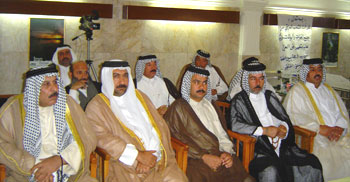
Iraqi tribes: MKO must be expelled from Iraq

In a new statement, Leaders of Iraqi tribes demanded senior Iraqi officials, including Iraqi President and Prime Minister to expel Terrorist groups especially MKO from Iraq’s soil.

They called President Jalal Talabani and Prime Minister Nuri al-Maliki and members of the Iraqi parliament to take a firm decision to expel different terrorist groups, especially the MKO terrorist group from Iraq.

The tribal leaders believe that MKO clique is a symbol of global terrorism because they committed the most crimes and massacres against the Iraqi people; this band is the same terrorist band which assisted Saddam Hussein in suppressing Shiites Intifada in 1991 and other uprisings of Iraqi people. They also mass murdered Kurds under Saddam’s direct command.

The statement stresses that the criminal terrorist group of MKO is one of the pawns of Saddam’s regime to suppress the Iraqi people move further adding to its crimes through intervention in Iraqi affairs and supporting terrorists, particularly in Diyali province and harboring criminals in the Ashraf camp.

This new statement, which was issued by the political office of Islamic assembly of Iraqi Tribes and is sealed by the assembly’s emblem, reveals that the group is still planning financial support for all terrorist acts in Iraq to destabilize the security and political stability throughout the country.

October 8, 2008 0 comments
FacebookTwitterPinterestWhatsappTelegramSkypeEmail
Mujahedin Khalq 's Function

Mujahedin destroyed all documents and books in Camp Ashraf

How the Mojahedin Khalq Organisation (Rajavi cult) destroyed all documents and books in Camp Ashraf Hassan Piransar

After the fall of Saddam Hussein, Rajavi ordered us to search all the camp. Ashraf camp had to be wiped off any material linked to Saddam’s apparatus. He told us, the new hosts (Americans) are stronger and will be able to help us a lot more. He ordered all the anti American and anti imperialist books and documents to be destroyed.

Download Mujahedin destroyed all documents and books in Camp Ashraf

October 8, 2008 0 comments
FacebookTwitterPinterestWhatsappTelegramSkypeEmail
The cult of Rajavi

Instillation of Hatred in the Cult of Mujahedin

Cultist groups put much energy to develop a collective identity. However, in cases of encountering the danger of split and signs of any schism, they may resort to a variety of measures that strictly negates the first preliminaries needed to keep a whole community united. In general, cult leaders unit members and gave them enemies to hate and comrades to love but love towards other members is replaced by hatred and disgust to prevent the formation of dissidence and objection within the cult. In other word, as members are instilled to hate themselves and follow the group, they are forced to hate other members in order not to be motivated to quit the organization. Eric Hoffer refers to such a paradoxical aspect in cultist relations and says:

The revulsion from an unwanted self, and the impulse to forget it, mask it, slough it off and lose it, produce both a readiness to sacrifice the self and a willingness to dissolve it by loosing one’s individual distinctness in a compact collective whole. Moreover, the estrangement from the self is usually accompanied by a train of diverse and seemingly unrelated attitudes and impulses which a closer probing reveals to be essential factors in the process of unification and of self-sacrifice. In other words, frustration not only gives rise to the desire f6r unity and the readiness for self-sacrifice but also creates a mechanism for their realization. Such diverse phenomena as a deprecation of the present, a facility for make-believe, a proneness to hate, a readiness to imitate, credulity, a readiness to attempt the impossible, and many others which crowd the minds of the intensely frustrated are, as we shall see, unifying agents and prompters of recklessness. (1)

The main cause of resorting to controlling procedures is the dissatisfaction on the part of members. For example, such mechanisms were developed within MKO after the initiation of the ideological revolution due to the fact that the shocking Many MKO ex-members point out that they had to express their hatred to their relatives, friends and even their parents in order to pass the phases of the ideological revolutionevent of the marriage between Masoud Rajavi and Maryam Azdanlu, after her divorce from her high ranking member Mehdi Abrishamchi, which led to the discontentment of members, necessitated improvement of security considerations within the organization. The phase of compulsory divorces prepared much more ground for this approach. Although this procedure was justified pointing to the necessity of directing members’ emotions and feelings toward Rajavi, but in the long run it had challenging effects on the internal relations of the organization, detaching all the emotional and family attachments of members and even couples and paving the way for the application of more controlling procedures.  

Under such a repressive atmosphere where the members themselves did the control job, the organization was made secure against possibility of any deviation from principles and policy. The phase of compulsory divorces was the outmost extend of enforcing cult-like process of resentment through which spouses began disparaging each other before other members only to accomplish organizational commands. The organization was well aware of the fact that hatred aroused hatred; members had to show detestation in their words, eyes, hearts and conducts.

Even beyond the milieu of the organization members were compelled to carry this revultion with them in their external relations with the world outside. And they were instructed to cover their hatred with smiles and eloquences. Many MKO ex-members point out that they had to express their hatred to their relatives, friends and even their parents in order to pass the phases of the ideological revolution. The more hatred they showed to outsiders, the more loyal they proved to be to the leader. Some members were even forced to terrify their own family members to increase needed qualification for organizational promotion. The ex-member Masoud Banisadr giving details on one of the ideological sessions writes:

The session was called ‘detachment from the past’. One man had to leave his much-loved black girl friend to become a full time supporter. He put his head on my shoulder and cried for a few minutes, telling me how much he loved her, but with her attitude toward the organization he could not marry her and work with the Mojahedin at the same time. Another had to leave his brother who was working in the Iranian embassy, and show his readiness to kill him if it became necessary. (2)

He also relates a case in which he was ordered to cut all his attachments to the past and burning his photos in order to prove his revolutionary competence and writes:

I wanted to say real good-bye this time once forever. I went home and saw Anna; she asked me what am I doing home. I explained to her, She didn’t say anything, as she knew it is not going to do any good. This time I attacked my old photographs from my own childhood till marriage and up to then, my parents photographs as I wanted to deny all of them, my father who was perhaps responsible for my bourgeois tendencies and my mother who was responsible of my own ‘mild’ and ‘gentle’ behavior known as liberal ones. Anna seeing me taking all those photographs and albums, with anger, was quietly crying, then when I attacked our marriage Album she start crying louder, and asked me to stop it. She said those are not just yours, . . . but I was not listening to her and took every thing and put them in a rubbish bag. And left for the base. Over there every body was worried where I am and thought perhaps I have left the organization or under the immense pressure which I was, in during past few weeks, have killed myself or something like that. I wrote a long report for Tahereh and with that report send that rubbish bag to her. She sent me back the rubbish bag and asked me to burn it all and welcomed me back to the organization. (3)

The applied controlling mechanisms within MKO are far beyond most known cults. Although hardly the term ‘hatred’ is mentioned in the cases where it is meant, the consequent antagonisms, resentment and hostility clearly indicate that members have been taken over willingly or unwillingly. The unbounded hatred in the members is a factor of encourage to antagonize whatever order that contradicts that of the organization’s.

References:

1.    Eric Hoffer; The True Believer: Thoughts on the Nature of Mass Movements, New York: First Perennial Classics 2002, p. 58.

2. Banisadr, Masoud, The memoirs of an Iranian rebel.

3. ibid

October 6, 2008 0 comments
FacebookTwitterPinterestWhatsappTelegramSkypeEmail
Mujahedin Khalq; A proxy force

Bombs ticking on the US soil

Claiming to be the dissident movement seeking democratic reform in Iran, Mojahedin Khalq Organization (aka MKO, MEK, PMOI, NCRI, NLA) is listed by several nations as a terrorist organization for its atrocities against Iranian people and activities under the former Iraqi regime. Being the first of countries to put the group on the terror list, the US is commonly known to have established ambiguous relationship with MKO due to its anti-Iranian stance. However, nobody denies that the US was again the first, among other forces invading Iraq under the pretext of war on terrorism, to grant the group the protected status and to take it under its own protection.

But to grant citizenship to a number of leading terrorist members of MKO, 16 members as reported, might be a truth that hurts. Some may say that it is hard to believe even as gossip.  But, as people say, where there is smoke there is fire. It is not an issue concerning the US government to deal with and let the recognized terrorists freely in and out of the country. It is an issue of national security and no American citizen ever fancies being again eyewitness to another national tragedy even more appalling than that of 9/11.

Being trained under the most sophisticated methods of terrorism as well as enigmatic, destructive cult techniques in the safe haven of Camp Ashraf heavily protected by American themselves, MKO leading members are like time bombs that start ticking in any corner of the world where they opt to detonate. As the media have reported lately, several members of MKO were arrested in France and Switzerland on terrorist charges. Justifying the arrests for no clear reason, some officials familiar with the group’s activities claim that the arrested were sympathizers, not official members. Does it really make any difference to be a sympathizer or an official member when the instilled ideology induces to detonate a bomb, disturb the social order, or commit self-destruction? It is hard to believe that the US is giving assent to bombs ticking rampant on its soil!

October 5, 2008 0 comments
FacebookTwitterPinterestWhatsappTelegramSkypeEmail
The MEK Expulsion from Iraq

So What to Do with Those Mujahedin Terrorists?

Deciding the fate of the Mujahedin

The Bush administration inherited many of Iraq’s problems when it invaded that country, including an Iranian terrorist organization funded and armed by Saddam Hussein, the Mujahedin-e Khalq (MKO). Though in the midst of a war on terror, the Bush administration chose in 2003 to protect 3,000 of the organization’s militants and house them in a camp given to the group by Saddam — Camp Ashraf just north of Baghdad. Trita Parsi

Ever since, the faith of this State Department-listed terrorist organization has been unclear. Hated by Iraqis for its involvement in Saddam’s crimes against the Iraqi people, the Baghdad government wants to expel the group. But no country is willing to take them.

Though the Iranian government wants to put the group’s leadership on trial in Iran, it seems less interested in the organization’s rank and file. The European governments have little interest in taking in 3,000 battle-hardened Muslim militants, fearing that they will use Europe as a base to plan and execute further terrorist attacks.

The U.S., on the other hand, has already contradicted its own principles by giving preferential treatment to an organization on the State Department’s terrorist list — even though President Bush himself pointed to the organization’s patronage under Saddam Hussein as evidence of Iraq’s support for international terrorists in his speech to the United Nations in September 2002.

"Iraq continues to shelter and support terrorist organizations that direct violence against Iran," President Bush said.

To complicate matters further, if reports that the U.S. has used MKO terrorists for cross-border raids into Iran are true, then Washington certainly doesn’t want these militants to end up in Iranian hands.

Washington seems doomed if it does, doomed if it doesn’t.

Members of the terrorist organization have protested outside the White House this past week, angered by the Bush administration’s decision to hand over Camp Ashraf to the Iraqi government. The government of Iraqi Prime Minister Nouri al-Maliki will surrender the MKO members to Tehran, they argue, who in turn will imprison and execute them.

Though approximately 500 MKO fighters have been repatriated to Iran and no reports of abuse have emerged according to the International Committee of the Red Cross, which oversaw their return, sending rank-and-file Mujahedin members to Iran against their will would be irresponsible.

Hated by the Iranian people for having fought on Saddam’s side in the Iraq-Iran war, the Iranian Mujahedin is understandably fearful of the fate awaiting them in Iran.

Yet, contrary to the protesters outside the White House, the issue is not a choice between freedom in Camp Ashraf and captivity in Iran.

The Mujahedin is not an effective opposition to the government in Iran as the organization’s defenders in Washington claim, but a politico-religious cult that brainwashes its members, places children of Mujahedin members with other families in order to prevent parents from defecting, and who according to Human Rights Watch, maintains control by torturing its rank and file. "Members who try to leave the Mujahedin pay a very heavy price," according to Joe Stork of Human Rights Watch.

Its involvement in terrorism is undisputed. It assassinated several Americans in Iran in the 1970s. It supported the taking of the U.S. Embassy in Iran and blasted Ayatollah Khomeini for releasing the American diplomats in 1981, arguing instead that the hostages should have been executed. It made a pact with Saddam Hussein in the 1980s and fought alongside his army against their Iranian countrymen. Later in the 1990s, they became Saddam’s most trusted henchmen, tasked with quelling Kurdish and Shiite uprisings against the Iraqi dictator.

According to defectors, Mujahedin members in Camp Ashraf celebrated the Sept. 11 terrorist attacks.

In 2004, French authorities descended upon the Mujahedin headquarters in France, arresting the leader of the cult, Maryam Rajavi. Immediately, zealous Mujahedin members staged hunger strikes and several set themselves ablaze. Hardly the behavior of a democratically oriented opposition group.

But the vast majority of the Camp Ashraf residents are not so much members of a terrorist cult as they are victims of it. The camp is itself a prison. It may have provided Mujahedin militants with protection against ordinary Iraqis who sought to avenge their relatives killed by the Mujahedin at the behest of Saddam Hussein, but the prison has primarily enabled the leaders of the terrorist organization to prevent the rank and file from defecting.

Rather than debating where to expel the Mujahedin terrorists, help should be provided to the rank and file to break with the cult and make free choices about their future. It’s the only humanitarian solution to this dilemma – and one that defeats rather than protects this anti-American terrorist group.

Trita Parsi

October 5, 2008 0 comments
FacebookTwitterPinterestWhatsappTelegramSkypeEmail
MEK Camp Ashraf

What kind of city is Camp Ashraf?

Mr. Hassan Piransar arrived in Europe a few weeks ago. He is one of the former executive members of the MKO who managed to escape Camp Ashraf by taking refuge with American forces in the TIPF which was established to help people Mr. Hassan Piransarescape the cult. When TIPF was closed earlier this year, Mr Piransar made his way through Iraqi Kurdistan and on to freedom in the west where he is now a political refugee due to his opposition to the MKO and the IRI.

As one of the executive members, he has experienced and witnessed the many abuses and deceptions practiced by the Rajavis not only toward outsiders but in particular against their own members. He attended a meeting of the Iran Delegation of the European Parliament on September 9, 2008 to ask that Camp Ashraf be opened up to humanitarian bodies and that the people trapped inside be rescued. He emphasised that mass of misinformation issued by the Rajavis and their backers such as Robin Corbett, Paulo Casaca and Struan Stevenson, is aimed at keeping human rights organisations out of Camp Ashraf so that Massoud and Maryam Rajavi can continue their inhuman mistreatment of their captives behind closed doors.

Download What kind of city is Camp Ashraf?

October 4, 2008 0 comments
FacebookTwitterPinterestWhatsappTelegramSkypeEmail
The cult of Rajavi

Learning prohibited in the Cult of Mojahedin

Almost all MKO former members unanimously report that the organization leaders are opposed to further extra organizational studies. They reason that members have to give priority to practical considerations rather thanLearning prohibited within PMOI theoretical ones. Absolute pragmatism constitutes one of the main parts of controlling system in MKO. It bans any kind of study aiming at improving theoretical political knowledge. Before reviewing the statements made by Mojahedin ex-members concerning such an approach, it is tried to evaluate it with regard to the new executed value system within MKO after the development of the ideological revolution. The reason why Rajavi, MKO leader, prevents members of obtaining theoretical knowledge has its roots in his worldview and ideological objectives.   

Absolute submission to leadership is considered to be one of the inseparable aspects of all political cults and that of MKO. Mojahedin’s theoreticians have focused on such a feature and calling Rajavi the man of ideology within MKO, point to blind obedience of members as their sole way of salvation. According to Mojahedin leaders, organizational improvement is achieved through absolute submission rather than obtaining political and theoretical knowledge. Taking a brief look at the statements of some MKO former members may prove this claim. It is said that before the initiation of the ideological revolution in MKO, members were qualified according to the following factors:   

Ideological instructions aiming at achieving ideological unity between members and the organization; political-social instructions to make members familiar with experiences of other revolutions; ability to make political analysis and familiarity with political and strategic stances of the organization; economic instructions for detecting the roots of economic crises and their solution and also finding an appropriate economic system; organizational and security instructions to make members aware of the principles of the organization, its internal challenges, how to solve these challenges, and how to act in cases concerned with security considerations. (1) 

In other words practical as well as theoretical competencies were taken into considerations simultaneously as practiced in all political groups and organizations. However, after the start of the ideological revolution, parallel to the change of the value system within MKO, all such criteria change and were replaced with just one criterion, namely blind obedience to leadership. Rajavi asked the members not to speak but act according to what they were ordered to do with no questioning. In fact they needed no further study since they needed no knowledge and understanding. Anne Singleton, an MKO ex-member, refers to this aspect of the ideological revolution and says:

He pushed the members to work harder and not to ask questions. He changed the ethos of the organisation by passing messages down to the membership of what he expected of them. The major theme of the time was that ‘ideology is what you do, not what you say’. In other words, don’t speak, act. (2)

She further compares and contrasts the organization attitude toward members before and after the ideological revolution as follows:

The major change too was in what was meant by ideological competence. In the original Mojahedin organisation this meant someone who had political, social and moral knowledge and experience. Someone who had undergone ideological instruction as had the first members way back in the 1960s. Since the Ideological Revolution, however, it came to mean someone who is, more than others, unquestioningly obedient to Rajavi, with no ability or desire to think for themselves, who will suppress any previous knowledge or experience they had in order to parrot what Rajavi requires of them. (3)

Another former member quotes Rajavi putting forth the new criterion for organizational advancement:

Rajavi told us: ‘You are not capable enough for political discussions and analysis and may go astray. You’d better let me do it, there is no need for you to pursue political events and analyze them, I will do it for you and tell you the results. If not, you may be disappointed since you have no political knowledge. There is no need to be anxious and pour out your heart to others; it is out of your business to know whether the ways are open or not. (4)

In order to develop a deeper understanding of this controlling process in MKO it has to be noted that one of the inherent aspects of all absolutist ideological trends is that they classify outsiders as either friends or enemies. Such a viewpoint has many consequences one of which is their focus on absolute submission of members. According to one of the theoreticians of Mojahedin:

One of the features of groups with ideological absolutism is that in establishing relation with outsiders close to them, they recognize no independence. In other words, the system’s rules necessitate it to have just two options regarding political outsiders, either absolute agreement or absolute opposition. (5) 

It is not possible to understand how organizational limitations and prohibitions result in controlling members unless the value system of the organization is understood since the structure of mojahedin ideological revolution is very complex and intermingled and there is a kind of cause and effect relationship between its strategies and procedures. Therefore, a deep knowledge about the ideological revolution and its consequences is needed in order to evaluate the course of events within MKO.   

References:

1. Niyabati, Bijan, A different look at the ideological revolution within MKO.

2. Singleton, Anne, Saddam’s private army

3. ibid

4. Shams-e Haeri, Hadi, The swamp

5. Niyabati, Bijan, A different look at the ideological revolution within MKO.

October 4, 2008 0 comments
FacebookTwitterPinterestWhatsappTelegramSkypeEmail
Auver-sur-Oise

A Camp Ashraf in France

Once and following the French police raid against MKO’s HQs in Auvers-sur-Oise, M. Bousquet de Florian, the director of French counter-intelligence, confirmed that many MKO leaders had returned to France since the American intervention in Iraq to turn “Auvers-sur-Oise into an operational headquarters for terrorism”. It was hard to believe what he meant. The Camp Ashraf once turned into a bastion of terrorist plots and operational headquarters heavily supported by Saddam, now MKO needed new HQs the patron being fallen.

Reported by VO news on 24 September 2008, a number of elected representatives of Val-d’Oise gathered to support the People’s Mojahedin Organization of Iran (PMOI/MEK). As the report states, “sixty mayors of Val-d’Oise support the PMOI, main opposition to the regime to the mullahs in Tehran. All are demanding the withdrawal of the Iranian Resistance from the list of terrorist organizations of the European Union”.

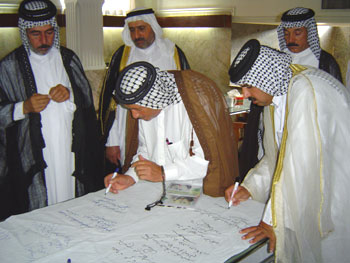
In its 8 October 2006 edition, the paper Al Irak Al-Yom wrote: "72 sheikhs and leaders of the tribes in the vicinity of Ashraf City, while supporting the charter of honor of the tribal sheikhs of all the Province of Diyali which states that the People’s Mojahedin are honorary citizens and members of their tribes, signed a new charter in which they undertake the defense of Ashraf City against all threats constituted from the ruling regime in Iran. They emphasized that any attack against the People’s Mojahedin and Ashraf City amounted to an attack against themselves, their families and their tribes".

Now the Province of Diyali in Iraq becomes known as Val-d’Oise in France in the same way that the mayors of Val-d’Oise replace the Iraqi sheikhs and tribe leaders. Has France really accented to the formation of another Camp Ashraf in the heart of the country?

October 4, 2008 0 comments
FacebookTwitterPinterestWhatsappTelegramSkypeEmail
Newer Posts
Older Posts

Recent Posts

  • MEPs who lack awareness about the MEK’s nature

    December 20, 2025
  • Why did Massoud Rajavi enforce divorces in the MEK?

    December 15, 2025
  • Massoud Rajavi and widespread sexual abuse of female members

    December 10, 2025
  • Farman Shafabin, MEK member who committed suicide

    December 3, 2025
  • Nejat Newsletter No.131

    December 3, 2025
  • Facebook
  • Twitter
  • Instagram
  • Youtube

© 2003 - 2025 NEJAT Society . All Rights Reserved. NejatNGO.org


Back To Top
Nejat Society
  • Home
  • Articles
  • Media
    • Cartoons
    • NewsPics
    • Photo Gallery
    • Videos
  • Publications
    • Books
    • Nejat NewsLetter
    • Pars Brief
  • About Us
  • Contact us
  • Editions
    • عربي
    • فارسی
    • Shqip